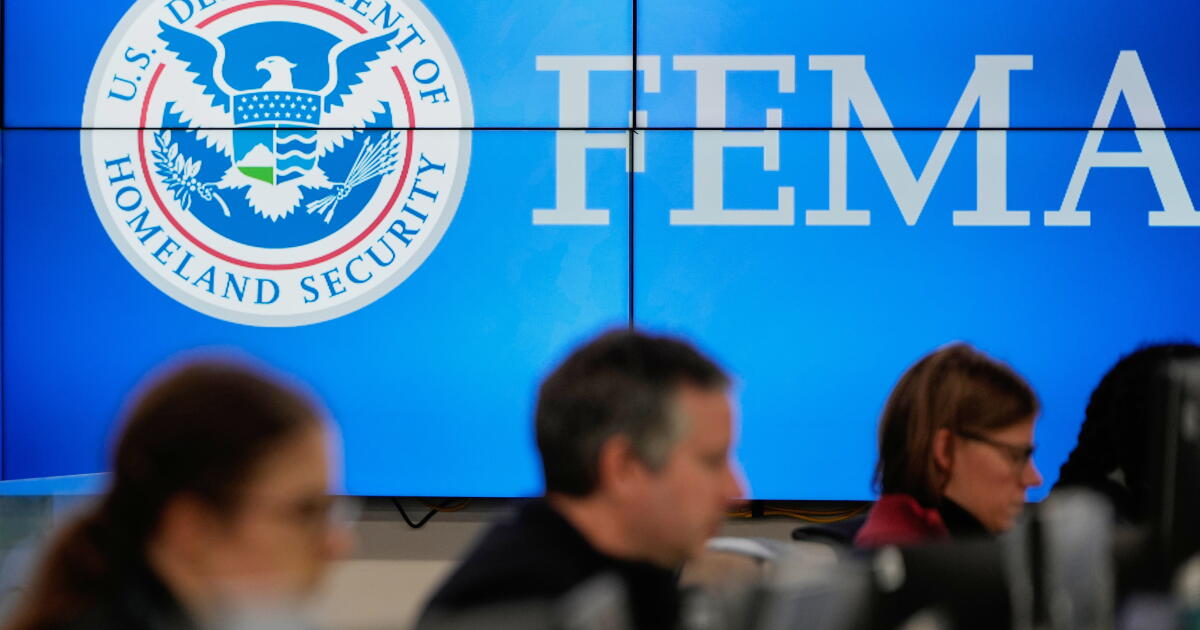
staffing

Federal judge rules Trump plan for 50% FEMA staffing cuts was unlawful

A federal judge has ruled that a plan by the Trump administration to slash staffing at the federal agency tasked with responding to disasters by 50% was unlawful.

The opinion issued late Friday marked a victory for labor groups who had sued the agency. The labor organizations had argued that plans by the Department of Homeland Security, which was then led by Secretary Kristi Noem, violated congressional protections that were designed to safeguard the independence of the Federal Emergency Management Agency.

The issue of the FEMA staffing was part of a much larger lawsuit filed by the American Federation of Government Employees and other labor groups, contesting efforts by the Trump administration to slash the federal workforce.

U.S. District Judge Susan Illston wrote in her opinion that top Homeland Security officials late last year directed FEMA’s leadership to submit a staffing plan that included a 50% staffing cut even though the agency’s own supervisors objected.

“Frankly, the FEMA staffing plan number appears as if pulled from thin air,” wrote Illston.

FEMA responded in a statement late Saturday saying that while it does not comment on personnel matters and ongoing litigation, “DHS and FEMA are ready for the 2026 hurricane season.”

“We’re ensuring workforce stability and a strong, deployable force for upcoming national events and potential disasters; making the agency leaner, faster and laser-focused on supporting state, local, tribal and territorial partners before, during and after disasters,” the statement said. “FEMA continues to maintain a roster of experienced leadership and support staff across headquarters and regional offices.”

The Department of Homeland Security did not immediately respond to requests for comment.

In the opinion, Illston wrote that it was clear that the government violated rules established after 2005’s Hurricane Katrina that put decisions on staffing levels squarely in the hands of FEMA, not the Department of Homeland Security, and that prevented Homeland Security from “substantially” reducing the “functions” of FEMA.

Illston didn’t order a specific remedy to carry out her opinion but directed the two sides to meet and decide on a course of relief.

Although FEMA has experienced terminations, the 50% staffing cuts ultimately were not carried out. In recent months, after top leadership changes at FEMA and the Department of Homeland Security, the agency has rehired some staffers who were let go.

FEMA was one of the agencies targeted for staff reductions in the federal government as part of a broad Trump administration plan to reduce the size of government. The embattled agency has been buffeted by mass staff departures, disruptions of grant programs and delays of disaster aid.

In May, a Trump-appointed FEMA Review Council submitted a final report recommending sweeping changes to how the agency supports states, tribes and territories in disaster.

The final version backed away from the recommendation to cut the FEMA workforce by 50%, which was included in a December 2025 draft reviewed by the Associated Press.

The council instead recommended the agency conduct a “strategic review” to determine “appropriate staffing levels.”

In an August report, the Government Accountability Office said it found that the departures of thousands of staff in 2025 resulted in a “loss of institutional knowledge and experienced personnel” and “exacerbated longstanding workforce challenges.”

More than 4,300 employees, or about 17% of FEMA’s workforce, separated from the agency in the 2025 budget year, with over 1,500 through voluntary reductions. The agency also made about 2,900 new hires.

The GAO recently recommended to Congress that it “consider requiring” FEMA to base “significant workforce decisions” on a more strategic planning process.

Without it, the GAO found, “FEMA cannot be assured that the agency is positioned to effectively meet its mission needs.”

Santana writes for the Associated Press.
Source link

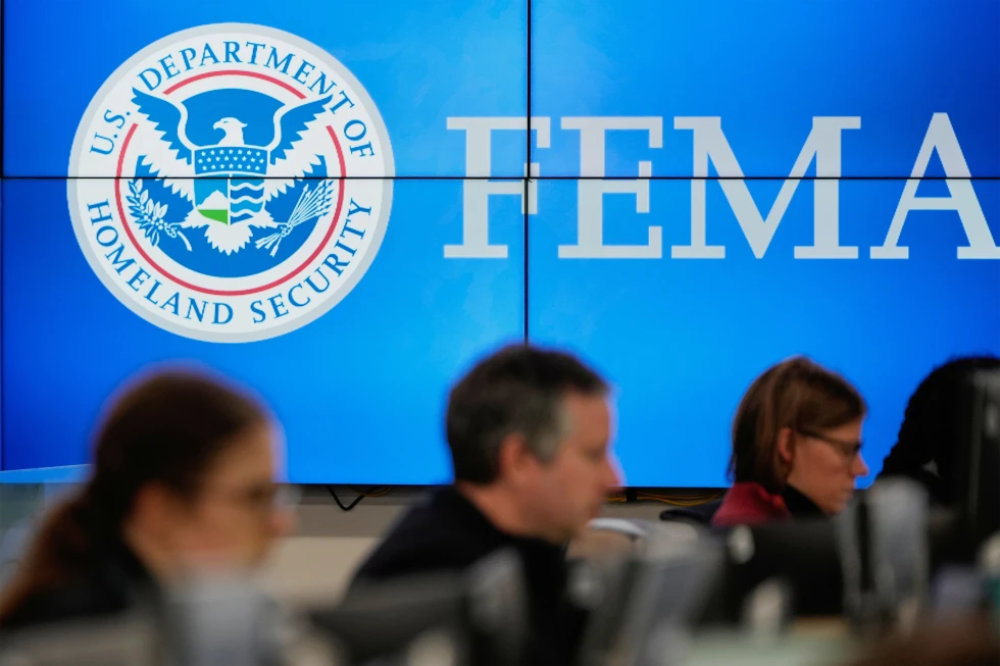
Arab News | Federal judge rules Trump DHS plan for 50% FEMA staffing cuts was unlawful

WASHINGTON: A federal judge has ruled that a plan by the Trump administration to slash staffing at the federal agency tasked with responding to disasters by 50% was unlawful.

The opinion issued late Friday marked a victory for labor groups who had sued the agency. The labor organization had argued that plans by the Department of Homeland Security violated congressional protections that were designed to safeguard the independence of the Federal Emergency Management Agency.

The issue of the FEMA staffing was part of a much larger lawsuit filed by the American Federation of Government Employees and other labor groups, pushing back on efforts by the Trump administration to slash the federal workforce.

U.S. District Judge Susan Illston wrote in her opinion that top Homeland Security officials late last year directed FEMA’s leadership to submit a staffing plan that included a 50% staffing cut even though the agency’s own supervisors objected.

“Frankly, the FEMA staffing plan number appears as if pulled from thin air,” wrote Illston.

The Department of Homeland Security and FEMA did not immediately respond to requests for comment.

Illston wrote that it was clear that the government violated rules established after 2005’s Hurricane Katrina that put decisions on staffing levels squarely in the hands of FEMA, not the Department of Homeland Security and that prevented DHS from “substantially” reducing the “functions” of FEMA.

Illston didn’t order a specific remedy to carry out her opinion but directed the two sides to meet and decide on a course of relief.

Although FEMA has experienced terminations, the 50% staffing cuts ultimately were not carried out. In recent months, after top leadership changes at FEMA and the Department of Homeland Security, the agency has rehired some staffers who were let go.

FEMA was one of the agencies targeted in the federal government for staff reductions as part of a broad Trump administration plan to reduce the size of government. The embattled agency has been buffeted by mass staff departures, disruptions of grant programs, and delays of disaster aid.

In May, a Trump-appointed FEMA Review Council submitted a final report recommending sweeping changes to how the agency supports states, tribes and territories in disaster.

The final version backed away from the recommendation to cut the FEMA workforce by 50%, which was included in a December 2025 draft reviewed by The Associated Press.

The council instead recommended the agency conduct a “strategic review” to determine “appropriate staffing levels.”

In an August report, the Government Accountability Office said it found the departures of thousands of staff in 2025 resulted in a “loss of institutional knowledge and experienced personnel” and “exacerbated longstanding workforce challenges.”

More than 4,300 employees, or about 17% of FEMA’s workforce, separated from the agency in the 2025 budget year, with over 1,500 through voluntary reductions. The agency also made about 2,900 new hires.

The GAO recently recommended to Congress that it “consider requiring” FEMA to base “significant workforce decisions” on a more strategic planning process.

Without it, the GAO found, “FEMA cannot be assured that the agency is positioned to effectively meet its mission needs.”


Source link

Jobs Rebound While Finance-Sector Continues to Suffer

August employment report brings mixed blessings for the U.S. economy.

U.S. employers added a robust 162,000 jobs in August, signaling an employment rebound, even as finance-sector jobs declined, according to the Bureau of Labor Statistics’ latest Employment Situation Summary.

The sectors with the most job growth were leisure/hospitality (62,000 jobs), government (35,000 jobs), private education/health services (29,000 jobs), and construction (22,000 jobs).

In contrast, the financial and insurance sectors lost 7,400 jobs compared to July. The hardest-hit sectors were insurance carriers and related activities (-6,300) and credit intermediation and related activities (-3,400). Securities, commodity contracts, funds, trusts, and other financial vehicles, investments, and related activities was one of two sub-sectors to add jobs (2,200). The other was the monetary authority/central bank, which added 100 new jobs.

Unemployment continues to edge down slightly, remaining at 4.1%, according to the summary.

By historic standards, the low jobless rate has the Federal Reserve pivoting its focus from maximum employment to price stability, said Federal Reserve Chairman Kevin Warsh during his keynote speech at the Jackson Hole Symposium at the end of August.

“There should be no misunderstanding: The Fed’s price-stability objective of 2%, as measured by the personal consumption expenditures (PCE) price index, is a firm, fixed target,” he added.

Private Data Lags BLS

Using their own methodologies, the authors of ADP’s August National Employment Report and Bank of America’s Institute’s August employment report found similar trends, though to a lesser extent. 

“The data can be noisy, partly due to seasonal variation and differences in pay-period timing, but in our view, this suggests labor market momentum may have ebbed a little,” wrote the authors of a Bank of America Institute report released Thursday. “Still, the overall picture from the Bank of America jobs estimate is one of a relatively healthy labor market. This is also the case in Bank of America data on unemployment payments into customer accounts, which showed very little [year-over-year] change in August.”

Using anonymized customer data, the Bank of America Institute estimated that August’s YoY payroll growth fell 3 basis points to 1.5% from the previous month.

Likewise, the ADP authors reported that private-sector employees added 38,000 jobs in August, the slowest pace of job creation since January. The education and health services sector added 45,000 jobs. Other growth sectors include leisure and hospitality (16,000) and construction (12,000).

However, its findings diverge from BLS estimates in a few sectors. The ADP authors were optimistic about financial activities, reporting that the sector added 6,000 jobs. They also estimated that manufacturing and business and professional services shed 17,000 and 4,000 employees, respectively.

Companies with more than 500 employees added the most new positions in August (34,000), followed by companies with fewer than 20 employees (20,000). Small companies (20-49 employees) lost 17,000 jobs. Mid-sized companies’ hiring picture was mixed. Those with 50-249 employees hired 2,000 people, while those with 249-499 employees let 2,000 go.

Although payroll growth is up, it offers little comfort to Wall Street because the financial sector remains under pressure. 

Source link