staff

1 Army staff sergeant wounded in DMZ explosion accident

One soldier was injured Thursday morning after an explosion occurred inside the Demilitarized Zone (DMZ) separating the two Koreas, officials said.

The explosion took place at 9:20 a.m. on the western front of the DMZ in Paju, just northwest of Seoul, for unknown reasons, according to officials.

A 24-year-old Army staff sergeant, who was on a mission to detect land mines on the southern side of the inter-Korean border at the time, sustained what is presumed to be an ankle fracture due to the blast.

He was wearing anti-mine protective gear and sustained non-life-threatening injuries, officials said.

Military authorities are investigating the exact cause of the accident.

Copyright (c) Yonhap News Agency prohibits its content from being redistributed or reprinted without consent, and forbids the content from being learned and used by artificial intelligence systems.

Source link

Officials question sheriff’s report on sex abuse in L.A. jails

There hasn’t been a “substantiated” allegation of sexual abuse by staff against an inmate in the nation’s largest jail system since 2021.

At first glance, the statistic — based on Los Angeles County Sheriff’s Department data — might appear to indicate that a federal law called the Prison Rape Elimination Act has finally accomplished its mission more than two decades after it was enacted by Congress.

But a broad array of local oversight officials and advocacy groups are raising eyebrows over the claim, and bringing new scrutiny to how the Sheriff’s Department investigates allegations of sexual abuse made by inmates against their jailers.

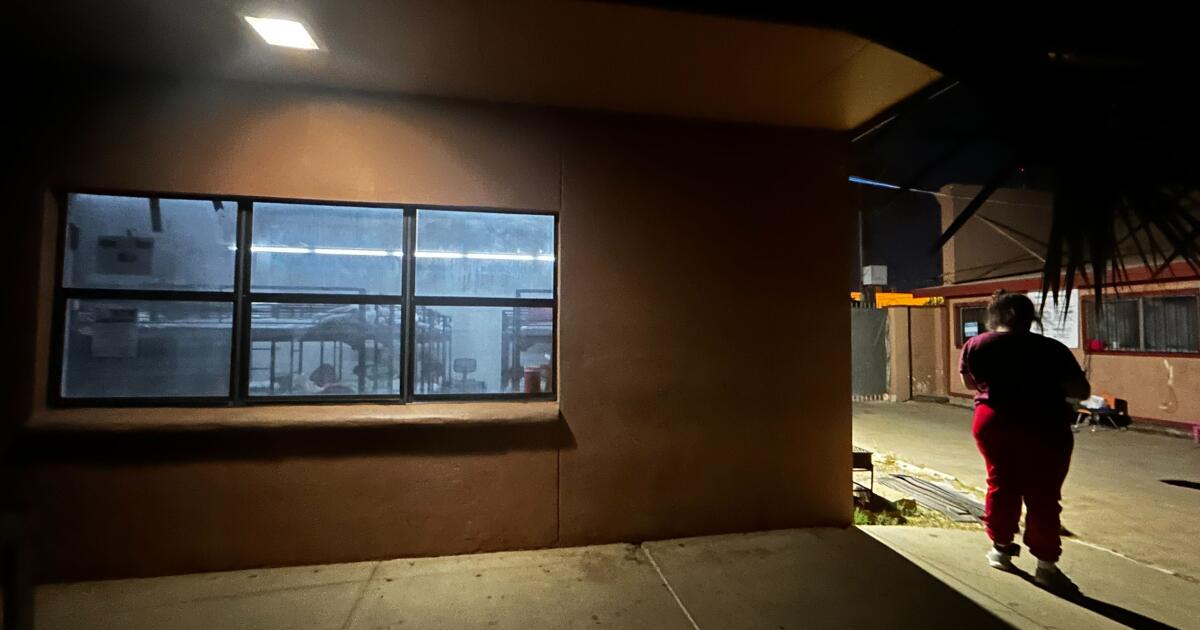
L.A. County incarcerates about 13,000 people — including roughly 1,500 women — throughout its network of jails watched over by sheriff’s deputies.

Sheriff’s Department records show that between January 2022 and September 2025, inmates filed 592 allegations of abuse and harassment against staff. None were deemed “substantiated,” which the Sheriff’s Department defines on its website as “an allegation that was investigated and determined to have occurred.”

The suggestion that there has not been enough evidence to support even one alleged incident by staff against an inmate in nearly four years has struck some tasked with monitoring the Sheriff’s Department as absurd.

“When you have this many complaints and you have zero that are founded, there is something wrong with the process,” said George B. Newhouse, a member of the L.A. Sheriff Civilian Oversight Commission.

L.A. County’s Office of Inspector General and advocacy groups, including the Anti-Recidivism Coalition and Peace Over Violence, also shared concerns about the lack of substantiated allegations during a Nov. 4 virtual discussion of the federal Prison Rape Elimination Act, or PREA. The law was enacted in 2003 in an effort to reduce widespread sexual abuse behind bars.

In 2012, the federal government instituted a set of rules known as PREA standards, which laid out steps that jail and prison operators are required to take to prevent and reduce sexual abuse and harassment between inmates and staff.

L.A. County Sheriff’s Department Sgt. Ryan Vaccaro said the department “has zero tolerance for sexual abuse and sexual harassment.” He added that monthly town hall meetings are held in jails to educate inmates about PREA and record any questions and complaints they have about the federal standards.

“Our team is dedicated to ensuring our residents know we have a zero-tolerance policy and know how to get help when they need it,” he said. “All PREA allegations are documented and processed promptly, thoroughly and objectively.”

During a public meeting last month, Hans Johnson, the chair of the Civilian Oversight Commission, pressed John Barkley, assistant director and PREA coordinator at the Sheriff’s Department, to explain the lack of substantiated reports, and how long it typically takes for allegations to be investigated.

Dozens of the harassment and abuse claims identified in the sheriff’s department records are listed as “pending,” which the department defines on its website as an “allegation still under investigation.”

“It kind of beggars credulity that that number of complaints could be raised and that none could be substantiated,” Johnson said. “It’s just a red flag.”

Barkley said “every case is investigated” and found to be either “substantiated, unsubstantiated or unfounded.” He said “every situation is different. The thing that we’re mandated to do is to do the investigation promptly and to do it thoroughly.”

In a statement a colleague read aloud at the Nov. 4 forum, Portland, Ore., resident Frank Mendoza said that while he was incarcerated at L.A.’s Twin Towers Correctional Facility in 2006, “officers at the jail repeatedly harassed me because I was openly gay” and one beat and raped him in his cell.

“I was then left in the cell naked, bloodied, and completely humiliated,” Mendoza said in his statement. “I tried to report what happened. First, I told the officer on the next shift who found me on the floor of my cell, and all he did was order me to get dressed. That was the norm. Officers didn’t tell on one another.”

Mendoza alleged he wasn’t provided medical treatment or examined for injuries caused by the assault. When he reported the rape, he found that “without a forensic exam, it was impossible to build a criminal case.”

Now, Mendoza gives voice to other people who have been victims of sexual abuse and harassment while incarcerated through his advocacy work as a member of Just Detention International’s Survivor Council.

“It’s clear the county still has a lot of work to do to ensure the safety of people in detention,” he said. “At the same time, the fact that such a hearing is happening is evidence to me of a culture shift and that people are listening.”

The Sheriff’s Department also tracks inmate-on-inmate allegations, which accounted for 296 reports of sexual abuse or harassment between January 2022 and June 2025. Of those, 28 were classified as “substantiated.”

The numbers have spiked since then, with 82 inmate-on-inmate allegations between July and September 2025. Of those claims, the department deemed five involving sexual abuse to be “substantiated,” along with another five claims of sexual harassment.

During that three-month period, inmates made 121 sexual abuse and harassment claims against staff, none of which have been identified as “substantiated” by the Sheriff’s Department.

Arthur Calloway, co-vice-chair of the Civilian Oversight Commission, asked at the October meeting whether the sheriff’s department could be trusted to investigate inmate claims against its own employees.

He added that, “if it was all objective, there would be some substantiated ones actually to trickle out” from claims filed since January 2022.

Barkley responded that “many of those” unsubstantiated outcomes are “dictated on whether the D.A. takes the case.” He added that “if the D.A. decides that they’re not going to prosecute the case with inmate-on-inmate, then it is going to be an unsubstantiated.”

The L.A. County district attorney’s office said in a statement that the Sheriff’s Department first conducts internal investigations of allegations of criminal activity. Then, the department “may present their investigation to our Justice System Integrity Division (JSID) to determine whether criminal charges should be filed,” the statement said.

The Sheriff’s Department can also opt “to discipline their employee administratively in addition to, or in lieu of, seeking criminal charges,” the statement said.

The prosecutor’s office noted that substantiated and unsubstantiated are terms used by the Sheriff’s Department for “administrative purposes,” not legal outcomes.

“JSID reviews all cases presented to them by law enforcement using the standard of whether charges can be proved beyond a reasonable doubt,” the D.A.’s office said.

The Sheriff’s Department said in a statement that sexual abuse cases are investigated internally and that when they are “determined to meet the elements of a crime,” they “are submitted to the District Attorney’s Office.”

The department said that since January 2022, four such cases “resulted in administrative investigations and five were/are being investigated by” the department’s Internal Criminal Investigations Bureau. None of those have been deemed “substantiated.”

“Substantiated allegations, often require cooperation and some sort of evidence, which can make them more challenging,” the Sheriff’s Department said. “However, unsubstantiated allegations are more common because it has a lower threshold.”

Dara Williams, assistant inspector general, said it “would be much better if all complaints were investigated by people who were outside the chain of command.”

Otherwise, she said, when sheriff’s department employees are the ones determining “what triggers an investigation, there is some bias.”

Inspector General Max Huntsman told The Times that he believes the Sheriff’s Department is “not in compliance with PREA in many senses,” such as its internal policies and the physical state of its aging correctional facilities.

At the public meeting last month, Barkley, the PREA coordinator at the Sheriff’s Department, explained that a sergeant must record every sexual abuse and harassment allegation in a dedicated database by the end of the shift when it is received. After that, he said, the allegation is automatically sent to sheriff’s leaders and the inspector general’s office.

At the conclusion of the meeting, Johnson, the chair of the Civilian Oversight Commission, called on the Sheriff’s Department to take steps to ensure it is conducting fair and thorough reviews of all inmate allegations.

“It is unacceptable to have no substantiated cases reported,” he said.

Source link

Feds charge Gov. Newsom’s former chief of staff over alleged fraud, tax crimes

Gov. Gavin Newsom’s former chief of staff was arrested Wednesday on federal charges that allege she siphoned $225,000 out of a dormant state campaign account and wrote off $1 million for luxury handbags and private jet travel as business expenses on her tax returns.

According to the 23-count indictment, unsealed Wednesday morning, political consultant Dana Williamson and her employees Greg Campbell and Sean McCluskie billed the dormant campaign account for bogus consulting services through shell companies they controlled starting in the spring of 2022.

Many of those payments went to McCluskie’s wife, federal authorities allege.

The indictment does not name the California politician whose campaign fund the trio allegedly drained.

Williamson left her job at the statehouse last December.

“Today’s charges are the result of three years of relentless investigative work, in partnership with IRS Criminal Investigation and the U.S. Attorney’s Office,” said FBI Sacramento Special Agent in Charge Sid Patel. “The FBI will remain vigilant in its efforts to uncover fraud and corruption, ensuring our government systems are held to the highest standards.”

Williamson is scheduled to make an initial court appearance Wednesday afternoon in Sacramento.

Source link

LACMA won’t voluntarily recognize union as workers claim burnout

Los Angeles County Museum of Art management on Wednesday declined to voluntarily recognize the union its employees announced they were forming last week. This means LACMA United cannot move forward with collective bargaining efforts until it is formalized by a National Labor Relations Board election. Complicating matters further, NLRB activities — including elections — are on hold amid the federal government shutdown.

The disconnect between staff — a clear majority of whom signed union authorization cards — and management comes at a significant moment in the museum’s history as LACMA works tirelessly to open its $720-million David Geffen Galleries. The new home for its encyclopedic permanent collection, designed by Pritzker Prize-winning architect Peter Zumthor, contains 110,000 square feet of gallery space and is scheduled to open to the public in April after more than a decade of planning, fundraising and building.

In a news release, the union noted that organizing efforts — in the works for more than two years — have taken on added urgency as workloads have increased in the face of opening the new building.

“Staff across departments — many performing demanding physical labor — are stretched thin as deadlines accelerate,” LACMA United wrote. “Without adequate protections, this pace is unsustainable and has already contributed to burnout and turnover among dedicated employees who deserve better from an institution they’ve helped build.”

The union’s organizing committee added in a statement, “We are disappointed that LACMA leadership has chosen to delay rather than embrace the democratic will of its workers. While the museum reimagines itself as a more collaborative, less hierarchical institution in its new David Geffen Galleries, it has declined to extend that same vision to its relationship with the very people who bring LACMA’s mission to life every day.”

“LACMA’s leadership has great respect for our team and for everyone’s right to make their own choice on this important issue,” Michael Govan, the museum’s director and chief executive, said in an email. “No matter the outcome, my commitment to our employees — to listen, to support them, and to continue building a strong and respectful workplace — remains unchanged.”

Management’s decision stands counter to those made by other cultural institutions across the city, including the Museum of Contemporary Art, the Academy Museum and the Natural History Museum, all of which voluntarily recognized their unions over the last six years.

LACMA United represents more than 300 workers from across all departments, including curators, educators, art installers, conservators, registrars, visitor services staff, facilities workers, researchers and designers. The union is asking for improved wages, benefits and working conditions in what has proved to be a challenging climate for museum workers across the county.

The union did not demonstrate at last week’s celebrity-packed LACMA Art + Film Gala, which was co-hosted by Leonardo DiCaprio and fashion designer Eva Chow, and raised more than $6.5 million in support of the museum and its programs.

Source link

Why you should always check into a hotel after 4:30pm according to staff

Husband surprising his wife with a luxury hotel room.

IF you have always loved the idea of getting a free hotel room upgrade, an insider has revealed how to up your chances.

When it comes to getting the best room in the house, it can often mean shelling out hundreds of pounds.

A businessman hands a credit card to a hotel receptionist.
The time you check into a hotel could increase your chance at a free upgradeCredit: Alamy

However, James Callery, Head Chef at Sandford Springs Hotel & Golf Club, explained how the time you check in can make all the difference.

And it’s bad news if you like getting there early.

He explained. “Check-in between 4:30pm and 6pm whenever possible.

“By this time, reception staff know which premium rooms will remain empty for the night and are more likely to offer these at no additional cost.”

UNPLUG

Why you should never use a USB port to charge phones in airports, planes and hotels


SUPER SM-ART

Artist Residence, Bristol hotel review

He added that this is more likely to work in smaller boutique hotels rather than larger chains.

But he also says even just asking can make a difference.

Mr Callery continued: “Being polite but direct about what you want often yields results.

“Start off by asking about paid upgrade options.

“Once the receptionist has explained them, nicely mention your budget constraints.

“They will often give you a free upgrade to compromise.”

“Ask the receptionist if any complimentary upgrades are available today rather than demanding one.”

Even if you didn’t succeed on the first day, you might be able to get an upgrade later in your trip if you are staying longer than one night.

He explained: “Night audits show which high-end rooms won’t be filled, and thus can sometimes unlock a mid-stay upgrade.”

Other methods that he recommends is telling them if its a special occasion such as birthdays and anniversaries, as that can also lead to upgrades.

Just don’t try and lie, as you could be caught out.

Another lie not to tell is being a influencer or content creator if you’re not, as he warned “they hear this every day and it is easily checked”.

Mr Callery ended by saying: “Reception staff really want you to have a great stay.

“A friendly approach and understanding of how the hotel works often results in courtesy perks, which add value to your visit without affecting your budget.”

FESTIVE FEELS

John Lewis reveals tear-jerker Xmas ad set to nostalgic 90s house track


TRAFFIC CARNAGE

Major motorway shut with TWO-HOUR delays after crash between lorry & van

A Premier Inn employee has revealed their top tips on how to get a room upgrade without paying for it.

And here is how a pre-check in email could get you that free upgrade too.

Husband surprising his wife with a luxury hotel room.
Just don’t be temped to lie as you are likely to get caught outCredit: Getty – Contributor

Source link

Dick Cheney, former vice president who unapologetically supported wars in Iraq, Afghanistan, dies at 84

Richard B. Cheney, the former vice president of the United States who was the architect of the nation’s longest war as he plotted President George W. Bush’s thunderous global response to the 9/11 terror attacks, has died.

Vexed by heart trouble for much of his adult life, Cheney died Monday night due to complications of pneumonia and cardiac and vascular disease, according to a statement from his family. He was 84.

“For decades, Dick Cheney served our nation, including as White House Chief of Staff, Wyoming’s Congressman, Secretary of Defense, and Vice President of the United States,” the statement said. “Dick Cheney was a great and good man who taught his children and grandchildren to love our country, and to live lives of courage, honor, love, kindness, and fly fishing. We are grateful beyond measure for all Dick Cheney did for our country. And we are blessed beyond measure to have loved and been loved by this noble giant of a man.”

To supporters and detractors alike, Cheney was widely viewed as the engine that drove the Bush White House. His two-term tenure capped a lifetime of public service, both in Congress and on behalf of four Republican presidents.

It often fell to Cheney, not President Bush, to make an assertive, unapologetic case for the American-led wars in Afghanistan and Iraq and for the controversial antiterrorism measures such as the Guantánamo Bay prison. And after the election of President Obama, it was once again Cheney, not Bush, who stood among the new president’s fiercest critics on national security.

In an October 2009 speech — one emblematic of the role he embraced after leaving the White House — Cheney blasted the Obama administration for opening a probe of “enhanced” interrogations of suspected terrorists conducted during the Bush years.

“We cannot protect this country by putting politics over security, and turning the guns on our own guys,” he said. The rhetoric was textbook Cheney: blunt, unvarnished, delivered with authority.

While Cheney at the time was attempting to occupy the leadership vacuum in the GOP in the age of Obama, there was little doubt that he also was motivated to preserve a legacy that appears to be as much his as former President Bush‘s. For eight years, Cheney redrew the lines that defined the vice presidency in a way no predecessor had. His office enjoyed greater autonomy than others before it, while working to keep much of his influence from plain sight. That way of operating led to a challenge before the Supreme Court as well as a criminal investigation over a leak of classified information.

Moreover, the image of a powerful backroom operator managing the Bush administration’s “war on terror,” combined with his service as Defense secretary during the Persian Gulf War and his stint as a chairman of defense contracting giant Halliburton, made Cheney a towering bête noire to liberals worldwide. To them, he embodied a dangerous fusion of politics and the military-industrial complex — and they viewed his every move with deep suspicion.

To his champions, however, he was the firm-jawed, hulking, resolute defender of American interests.

Standing with the administration was more than a duty to Cheney; it was an article of faith. The invasion of Iraq “was the right thing to do, and if we had to do it over again, we’d do exactly the same thing,” Cheney said in a 2006 interview, even as the nation slowly learned that U.S. intelligence suggesting Saddam Hussein’s regime possessed weapons of mass destruction was simply not true.

Three years earlier, Cheney had pledged that the U.S. would be greeted in Iraq as “liberators” — a comment that haunted him as insurgents in the country gained strength, killed thousands of allied troops and extended the conflict for years. The war in Afghanistan would drag on for 20 years, ending in 2021 as it had begun, with the Taliban back in control.

While Cheney will largely be remembered for his leading role in the response to the 9/11 terror attacks, he had long worked the corridors of power in Washington. He was a White House aide to President Nixon and later chief of staff to President Ford. As a member of the House from Wyoming, he rose quickly to become part of the Republican leadership during the 1980s. In the early ’90s, he ran the Pentagon during the Gulf War.

Richard Bruce “Dick” Cheney was born in Lincoln, Neb., on Jan. 30, 1941, and spent much of his teenage years in Casper, Wyo. His father worked for the U.S. Soil Conservation Service.

As a young man, he was more interested in hunting, fishing and sports than in academics, and a stint at Yale University was short-lived. He eventually obtained bachelor’s and master’s degrees from the University of Wyoming and studied toward a doctorate at the University of Wisconsin.

In 1964, he married Lynne Ann Vincent, who became a lifelong political partner while strongly influencing Cheney’s conservatism. Daughter Elizabeth, who was elected to Congress in 2017, was born in 1966 and her sister, Mary, arrived three years later. The sisters became embittered years later when Elizabeth — who preferred Liz — took a stance opposing same-sex marriage, which seemed a slap to Mary and her wife. Cheney, however, offered his support for such unions, an early GOP voice for same-sex marriage. Years later, he came to Liz’s defense when she broke with fellow Republicans and voted to impeach President Trump following the Jan. 6, 2021 attack on the U.S. Capitol. In addition to his wife and daughters, Cheney is survived by seven grandchildren.

A fellowship sent Cheney to Washington, where he soon began working for a politically shrewd House member who also was a lifetime influence, Donald H. Rumsfeld. When Rumsfeld joined the Nixon administration, Cheney followed.

After Ford succeeded Nixon in the wake of Watergate, Rumsfeld served as chief of staff, with Cheney at his side. Ford eventually appointed Rumsfeld secretary of Defense, and Cheney, at 34, ran the White House. Even then, his calm reserve was a hallmark.

Although nearly everyone working for him was older, “He was very self-assured,” James Cannon, a member of Ford’s White House team, said years later. “It didn’t faze him a bit to be chief of staff.”

Ford lost a narrow election to Jimmy Carter in 1976, but Cheney’s Washington career was just getting underway. He headed back to Casper and in little more than a year was running for Congress.

His health, though, already was a factor. In 1978, at age 37 and in the midst of a primary election campaign, he had a heart attack, the first of several. He would undergo multiple surgeries, including a quadruple bypass, two angioplasties, installation of a heart pump and — in 2012 — a transplant. His frequent trips to the hospital and seeming indestructibility provided fodder for late-night talk show hosts during Cheney’s vice presidency.

With the help of television ads reminding voters that Dwight D. Eisenhower and Lyndon B. Johnson had served full White House terms despite having had heart attacks, he narrowly won the Republican nomination and, in November 1978, secured election to the House of Representatives from Wyoming’s single district.

In Congress, he was known as a listener more interested in problem-solving than conservative demagoguery, even as he quietly built a voting record that left no doubt about where he stood on the political spectrum. He quickly moved into the ranks of GOP leadership.

Cheney stepped into the public spotlight after he was named Defense secretary by President George H.W. Bush in 1989. As the Berlin Wall fell and the Cold War cooled, Cheney was charged with overseeing a Pentagon that was more fractious than usual. In a test of political and managerial will, he oversaw major reductions in the Defense budget, a profound downsizing of forces and the closing of obsolete military bases. He helped implement the U.S. invasion of Panama in 1989 to oust the country’s leader, Manuel Noriega, for drug trafficking and racketeering.

But Cheney — along with his hand-picked chairman of the Joint Chiefs of Staff, Colin Powell — made his mark in the American response to the Iraqi invasion of Kuwait in 1990. Cheney played a key role in persuading the Saudi royal family to allow American troops to be stationed in Saudi Arabia to defend against a looming attack from Hussein’s forces.

The Cheney-led Pentagon then shifted to offense in 1991, amassing an enormous American force that totaled more than 500,000 soldiers, nearly twice the number employed in the 2003 U.S. invasion of Iraq. The U.S. military, with help from allied countries, overwhelmed the Iraqi forces in Kuwait in only 43 days and easily entered Iraq.

Characteristically, Cheney would defend the then-controversial decision to halt the U.S. advance toward Baghdad, which left Hussein in power. “I would guess if we had gone in there, we would still have forces in Baghdad today. We’d be running the country,” he said in a 1992 speech. “We would not have been able to get everybody out and bring everybody home.”

Cheney’s efforts to station U.S. troops in Saudi Arabia, considered critical to the push to repel Iraq, would have unforeseen ramifications. The military presence there helped radicalize young Islamic militants such as Osama bin Laden.

After President Clinton’s victory in 1992, Cheney left government service. Three years later, he assumed the helm of Halliburton, one of the world’s leading oil field companies and a prominent military contractor. The company thrived under Cheney’s leadership: Its relationship with the Pentagon flourished, its international operations expanded and Cheney grew wealthy.

In 2000, then-Texas Gov. George W. Bush, the Republican nominee for president, asked Cheney to head up the search for his running mate, then ultimately chose Cheney for the job instead. He brought to the ticket an element of maturity and Washington gravitas that the inexperienced Bush did not possess.

Cheney’s lack of design on the presidency, and his willingness to return to government 10 days shy of his 60th birthday, seemingly gave Bush the benefit of his experience and earned Cheney a measure of trust — and thus authority — commanded by few presidential advisors.

Once in office, Cheney, mindful of lessons learned in the Ford White House, sought to revitalize an executive office he believed had become too hemmed in by Congress and the courts. He termed it a “restoration.”

“After Watergate, President Ford said there was an imperiled president, not an imperial presidency,” said presidential historian Robert Dallek. Cheney, he said, felt “he badly needed to expand the powers of the presidency to assure the national security.”

In office barely a week, Cheney created a national energy policy task force in response to rising gasoline prices. A series of meetings with top officials from the oil, natural gas, electricity and nuclear industries were closed to the public, and Cheney refused to reveal the names of the participants. Cheney would exert similar influence over environmental policy and, with an office on Capitol Hill, forcefully advance the president’s legislative agenda.

A lawsuit seeking information about the task force made its way to the Supreme Court, which ruled in the vice president’s favor in 2004. One of the justices in the majority was Antonin Scalia, who was a friend and, it was later revealed, had recently gone duck hunting with the vice president.

Another hunting trip gone awry earned Cheney embarrassing headlines in 2006 when he accidentally shot and wounded a member of the party with a round of birdshot while quail hunting on a Texas ranch.

More troubling to Cheney was a federal criminal probe in connection with the 2003 leak of the identity of covert CIA operative Valerie Plame Wilson. The investigation resulted in the conviction four years later of Cheney aide I. Lewis “Scooter” Libby for perjury and obstruction of justice. Libby was later pardoned by President Trump.

Cheney, however, will be largely remembered for his unwavering belief that the U.S. invasions of Afghanistan and Iraq — especially the latter — were essential, a stance he maintained even as the missions in both theaters evolved from rooting out suspected terrorists to nation-building, and even as the casualties skyrocketed and it became clear the 20-year mission was doomed.

When U.S. troops and civilians were pulled out of Afghanistan in a fraught and fatal departure in 2021, it was Cheney’s daughter who spoke up.

“We’ve now created a situation where as we get to the 20th anniversary of 9/11, we are surrendering Afghanistan to the very terrorist organization that housed al Qaeda when they plotted and planned the attacks against us,” Rep. Liz Cheney (R.-Wyo.) said.

The former vice president’s steely resolve was captured years later in “Vice,” a 2018 biographical drama in which Christian Bale portrayed Cheney as a brainy yet uncompromisingly uncharismatic leader.

It was Cheney who insisted early on that Hussein possessed weapons of mass destruction. “There is no doubt he is amassing them to use against our friends, against our allies, and against us,” Cheney said in August 2002. The U.S. eventually determined that Iraq had no such weapons.

He argued forcefully that Hussein was linked to the 2001 terror attacks. When other administration officials fell silent, Cheney continued to make the connections even though no shred of proof was ever found. In a 2005 speech, he called the Democrats who accused the administration of manipulating intelligence to justify the war “opportunists” who peddled “cynical and pernicious falsehoods” to gain political advantage.

Cheney also frequently defended the use of so-called extreme interrogation methods, such as waterboarding, on al Qaeda operatives. He did so in the final months of the Bush administration, as both the president’s and Cheney’s public approval ratings plunged.

“It’s a good thing we had them in custody and it’s a good thing we found out what they knew,” he said in a 2008 speech to a friendly crowd at the Conservative Political Action Conference.

“I’ve been proud to stand by him, the decisions he made,” Cheney said of Bush. “And would I support those same decisions today? You’re damn right I would.”

Oliphant and Gerstenzang are former Times staff writers.

Staff writer Steve Marble contributed to this story.

Source link