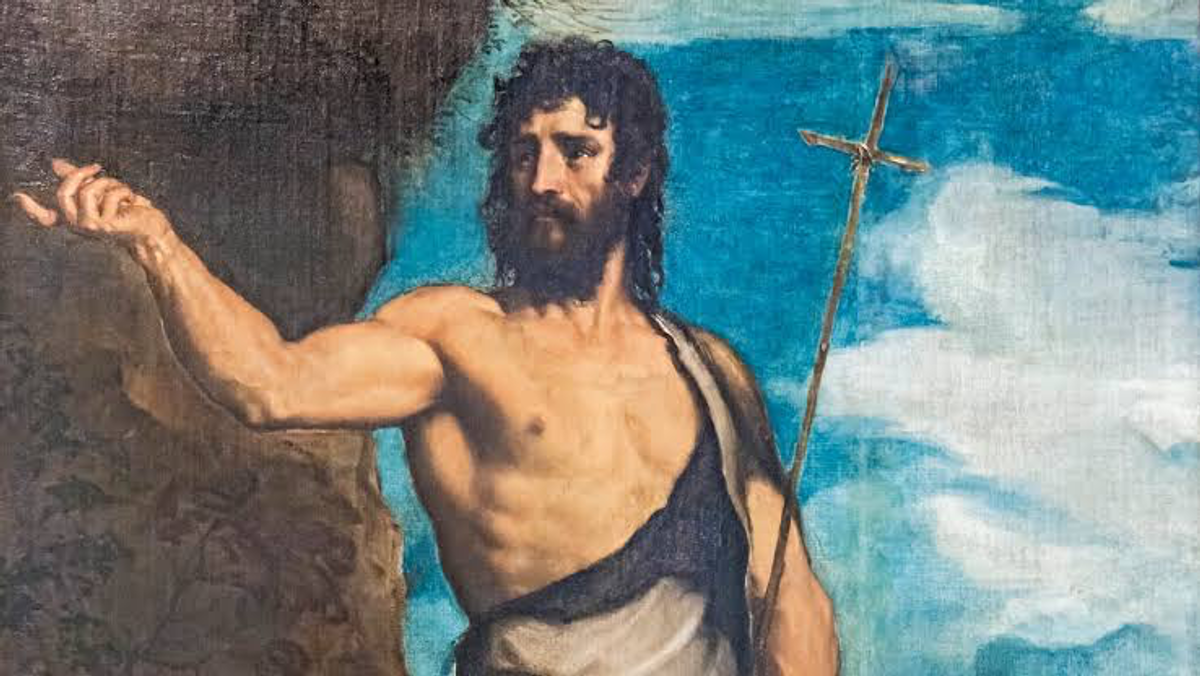
Wednesday 24 June St. John’s Day around the world
Usually, a saint’s feast day is celebrated on the day that the saint died. St. John along with the Virgin Mary are the only two saints whose birthdays are celebrated.
St. John’s death (August 29th) is also marked by Roman Catholic and Orthodox churches.
The feast day of Saint John the Baptist was a popular feast day in many European countries. One reason for this was that its timing coincided nicely with much older pagan holidays that celebrated the summer solstice. It is still celebrated as a religious feast day in several countries, such as Denmark, Norway, Sweden, Finland, Estonia, Latvia and Lithuania and has echos in other holidays such as the Swiss National Day – a central theme in the celebrations is the lighting of bonfires.
It was thought that the Summer solstice was a time when spirits roamed freely, so bonfires were lit to ward off and protect from the evil spirits. Later on, the solstice was seen as a time when witches or even dragons needed to be kept at bay with a bonfire.
John the Baptist is described in the Gospel of Luke as a relative of Jesus who led a movement of baptism at the Jordan River. Most scholars agree that John baptized Jesus by wading into the water with Jesus from the eastern bank of the river.
John is probably best known for foretelling of the Messiah, which in the New Testament predicted the coming of Jesus.
According to the Gospel of Mark, John is imprisoned by Herod for denouncing Herod’s incestuous marriage. John condemned Herod for marrying Herodias (his niece) in violation of Old Testament Law. After Herodias’s daughter Salome has danced before Herod, he grants her a favour. Herodias tells her to ask for the head of John the Baptist, which is delivered to her on a plate.
St. John the Baptist is the patron Saint of Turin.
His feast day is also celebrated in Quebec as the Fete Nationale du Quebec.