Sri

From stunning elephant safaris to must-see temples, Sri Lanka offers an unforgettable adventure

Collage of Sigiriya rock fortress, an elephant in a field, a hotel in the mountains, and birds flying over a lake.

JUST one hour into our safari, we’ve hit the jackpot!

“Look, you can just make out its outline,” our guide Dinuka shouts, as he passes his binoculars to me and my boyfriend Andy.

Winging it at the Gal Oya Valley National ParkCredit: Getty Images/Collection Mix: Sub
Spill the tea at the Tea & Experience FactoryCredit: Supplied by hotel

Standing on a grass bank surrounded by water, a majestic elephant comes into focus.

As we approach to get a better look, I feel like I’ve just stepped into a David Attenborough documentary.

This reservoir in Sri Lanka’s Gal Oya Valley National Park is home to an abundance of wildlife – we also spot crocodiles basking in the water, a herd of buffalo, eagles and a host of other birds.

With only four tourist boats allowed out on the water at a time, it feels very much like the nature in this national park is being protected.

ON TRACK

New Eurostar rules to make travelling by train to Europe MUCH easier


SI YA

Jet2 boss reveals the three holiday spots that Brits are booking over Spain

And from colonial cities to mountainous tea plantations, vast jungles and sandy beaches, everywhere we turn on this stunning island, there’s wonder to behold.

Valley High

We begin our trip in Kandy, Sri Lanka’s second-largest city and home to nearly 1.5 million people, plus a riot of cars, buses, tuk-tuks and scooters.

Mountbatten Bungalow, a 15-minute drive away from the bustle, was the hillside hideaway of Lord Louis Mountbatten during WW2 and is steeped in history.

Explore Kandy’s Temple Of The Sacred ToothCredit: G&M Therin-Weise/robertharding
Sri Lanka’s wildlife is elephant-astic!Credit: Alamy Stock Photo

It’s also an oasis of calm, with vistas of rolling hills, space for just 26 guests, Victorian trinkets and a swanky infinity pool overlooking the valley.

High tea, £12, is served on the deck and it’s the most beautiful place I’ve ever eaten a cucumber sandwich.

Double rooms here cost from £143 B&B.

Our driver, Nuwan, recommends the nearby Temple Of The Sacred Tooth Relic, as a must-see, and we’re so glad we take his advice.

A UNESCO World Heritage Site, it’s well worth the £5 entry fee as we look on in awe at the intricate Kandyan architecture and one of the holiest shrines in Buddhism, which houses the canine tooth of Gautama Buddha (Sridaladamaligawa.lk).

Tranquili-tea

Meanwhile, sitting amid marvellous mountains a two-hour drive away, the Tea & Experience Factory is a hotel unlike any I’ve stayed in before.

With the clouds rolling in, the surroundings are hauntingly atmospheric and, as the name suggests, this is a former tea factory built in the 1800s.

Mountbatten Bungalow is a haven of calmCredit: Pradeep Gamage
Go off-grid in a luxe glamping tentCredit: Pradeep Gamage

This stylish sleepover still has a small working factory showing how tea is produced, and from picking the leaves to seeing them being ground down in the various machines still in operation, it’s fascinating to find out how our daily cuppa is created.

The hotel also offers free guided waterfall treks with plenty of gorgeous photo stops in the lush landscape.

Double rooms cost from £114 B&B.

Jungle is Massive

Our favourite stop is still to come.

Three days spent at Wild Glamping Gal Oya is nothing short of a dream, and is where we spot the Sri Lankan elephant on our boat safari, which costs £85 per person.

It may not roar, but Lion Rock is majesticCredit: Getty Images/iStockphoto

Tents here have air-con, electrical sockets, huge comfy beds and alfresco bathrooms with waterfall showers.

A swimming pool sits in the middle of the camp with a breathtaking mountain backdrop – and with no phone reception, we fully embrace off-grid living.

The Veddas, one of Sri Lanka’s last remaining indigenous groups, work closely with the camp.

The first-known aboriginal people of the country, they were once forest dwellers, foraging, hunting and living in the jungle and caves.

These days, they make up less than 1% of Sri Lanka’s population and are a dying community who wish to teach others about how they live.

Gunabandilaaththo has a very simple life and shows us the ways in which his ancestors used to live, from mud huts to rustling up a traditional meal.

It’s an eye-opening two hours, £30 per couple, and a real honour to learn about his culture.

That night, we indulge in a Sri Lankan lamb curry and rice, £8, with creamy green beans, dal and coconut sambal, and chat about all we’ve learned.

Glamping tents at Gal Oya cost from £191 B&B.

Girl Power

Our last stop takes us to Amba Yaalu, set on the tranquil banks of the Kandalama Lake and the country’s first hotel fully managed and staffed by women.

Sitting next to a mango farm, rooms here look out over a glorious reservoir and the ancient Pidurangala Rock, which from some angles, resembles a person lying down.

Fashion Editor Abby McHale in Sri LankaCredit: Supplied by Abby McHale

Each room comes with an outdoor Jacuzzi bath to take in the views while soaking in bubbles.

Stays here cost from £121 B&B.

Sigiriya (also known as Lion Rock), is half an hour’s drive away and famous for its 200m-high granite column topped with the ruins of a 5th-century royal palace.

It’s a two-hour steep climb, but the views at the top are worth it.

Entry costs £26 (Sigiriyafortress.com).

Once back down on more solid ground, it’s the perfect time to reward ourselves with a Lion Beer, £2.50, from a street vendor and watch as the sun sets on an adventure just as golden.

FYI

Book your stay at Themacollection.com.

Direct flights from the UK to Colombo cost from £644 return.

Source link

Australia lose to Sri Lanka by eight wickets, staring at T20 World Cup exit | ICC Men’s T20 World Cup News

Nissanka’s unbeaten century batters former cricket champions Australia, who now need other results to go their way to survive.

Sri Lanka’s opener Pathum Nissanka scored the first century of the T20 World Cup to put his side into the Super Eights of the cricket tournament and leave Australia on the brink of elimination.

Nissanka scored 100 not out off 52 balls with five sixes and 10 fours as Sri Lanka, chasing Australia’s 181, reached 184-2 with two overs to spare in Kandy to win by eight wickets on Monday.

“We’re in the lap of the gods now, I think,” Australia captain Mitchell Marsh said after the match.

“Lot of emotions in the room right now,” he said of the 2021 champions. “Haven’t been at our best. Disappointed bunch at the moment.”

Nissanka was involved in a 97-run stand off 66 balls with Kusal Mendis for the second wicket, with the wicketkeeper-batsman posting his third fifty in the competition.

Nissanka became the first Sri Lankan to score two hundreds in T20 internationals.

After Mendis’s dismissal, Nissanka and Pavan Rathnayake put on 76 off 34 balls to see Sri Lanka to victory.

Nissanka played some glorious cover drives off the spinners and played some elegant flicks against the quicks.

Rathnayake hit the winning runs straight after Nissanka reached his century off 52 balls and was greeted by massive cheers in Pallekele International Stadium.

The packed crowd roared again one delivery later when Rathnayake finished the match with a boundary to deep square.

Sri Lanka came into the World Cup after a 3-0 drubbing at the hands of England, but have gained momentum and have won all three games so far.

Australia’s campaign has been plagued by injuries.

Their captain Marsh, who missed the first two games, returned and gave them a rollicking start by scoring 54.

Marsh and Travis Head (56) scored 104 runs off 51 balls for the first wicket.

With Australia eyeing a total in excess of 200, Sri Lanka’s slow bowlers kept them to 181 with leg spinner Dushan Hemantha picking up 3-37.

Australia collapsed as they looked for quick runs, losing their last six wickets for 21 in 24 balls.

Australia's captain Mitchell Marsh looks on after his team's loss against Sri Lanka at the end of their 2026 ICC Men's T20 Cricket World Cup group stage match in the Pallekele International Cricket Stadium, Kandy on February 16, 2026. (Photo by Ishara S. KODIKARA / AFP)
Australia’s captain Mitchell Marsh looks on after his team’s loss against Sri Lanka [Ishara S Kodikara/AFP]

Super Eights: Sri Lanka through; Australia on the brink of elimination

A victory by Zimbabwe over Ireland in Group B on Tuesday, or against Sri Lanka on Thursday, would eliminate Australia.

If Zimbabwe lose both matches, Australia will need to beat Oman in their final game on Friday by a big margin to get through on net run rate.

Meanwhile, Australia could fail to get out of the group stage for the first time since 2009 if unbeaten Zimbabwe beats Ireland on Tuesday.

England have also reached the Super Eights after surviving a scare from Italy in Kolkata. England came back from 105-5 to post 202-7. Italy were cut short on 178.

In New Delhi, Afghanistan shrugged off back-to-back defeats to finally register a win after beating the United Arab Emirates by five wickets. That helped them stay in the tournament and saw South Africa secure a spot in the Super Eights.

Source link

India vs Pakistan match is a godsend for T20 World Cup hosts Sri Lanka | ICC Men’s T20 World Cup News

Colombo, Sri Lanka — Almost 30 years ago today, India and Pakistan formed a combined cricket team to take on Sri Lanka ahead of the 1996 Cricket World Cup in an unprecedented moment of unity in the sport’s history.

The two age-old rivals put aside their differences and came together in an act of solidarity to support a fellow South Asian team, who faced the threat of match boycotts in a tournament they had battled hard to host.

Recommended Stories

list of 4 itemsend of list

India versus Pakistan is the most highly marketed fixture at every multination tournament – the World Cup, Asia Cup or Asian Games – whether it’s a men’s, women’s or Under-19 event.

Few sporting events globally carry the weight and anticipation of an India-Pakistan cricket match. So, when Pakistan’s government ordered its team not to face India at the ongoing T20 World Cup, the tournament was briefly pushed into a state of chaos.

It also left Sri Lanka, the designated host of the fixture, holding its collective breath.

A week of negotiations led to a dramatic late U-turn by the Pakistani government and the match will now take place as scheduled on Sunday at the R Premadasa International Cricket Stadium in Colombo.

But what if the boycott had gone ahead? The impact could have been catastrophic, not just for Pakistan, but also for the International Cricket Council (ICC), as well as Sri Lanka.

With the crisis seemingly averted, the island nation stands poised to reap the benefits in its financial landscape, diplomatic standing and community.

‘Massive impact’ on tourism

For a country that is still grappling with the aftermath of the economic crisis of 2022, an India-Pakistan cricket fixture at a World Cup could prove to be a godsend.

The tourism and hospitality industry was one of the hardest hit during Sri Lanka’s financial meltdown and this match will see an enormous influx of fans from India and Pakistan coming into the country.

Hotels in and around Colombo were fully booked out well ahead of the tournament but the industry braced itself for heavy losses after Pakistan threatened a boycott.

“There’s been a massive impact since the boycott was announced,” Sudarshana Pieris, who works in Sri Lanka’s hospitality sector, told Al Jazeera.

“All major hotels in Colombo were fully booked by Indian travel agencies well ahead [of the match] and once the boycott was announced, we lost almost all of those bookings,” he said.

“But after Pakistan reversed their decision, hotel room rates shot up by about 300-400 percent at five-star establishments in Colombo.”

It’s not just hotels but several other local businesses – from street vendors to high-end restaurants – who are hoping for an increased footfall and spending over the weekend.

These short trips and the experiences they offer could influence visitors to extend their stay or return to Sri Lanka on holiday, long after the game has ended, in a potential long-term benefit to the industry.

Another relatively underestimated impact of the game would be the employment opportunities it creates, albeit temporarily, in the media, event management, security and transportation industries.

Asanka Hadirampela, a freelance journalist and broadcaster currently working as a Sinhala language commentator for the World Cup, recognises the marquee match as a great opportunity from a personal standpoint.

“This is my first World Cup as a broadcaster,” Hadirampela said.

“The India-Pakistan fixture is the biggest and most-watched game of the tournament. So to get to work on such a match is exciting and I consider it a special achievement.”

A geopolitical win

The lines are always blurred between sport and politics in South Asia.

So while the financial gains are expected to be significant, the fixture’s impact on the region’s geopolitical environment cannot go amiss.

Pakistan’s boycott, too, was explicitly political, as confirmed by the country’s Prime Minister Shehbaz Sharif when he said that they were offering support to Bangladesh after the Tigers were kicked out of the tournament by the ICC.

The reversal of Pakistan’s decision, which they said came after requests to reconsider the boycott by several regional “friends”, was steeped in politics, too.

Sri Lanka’s President Anura Kumara Dissanayake reportedly had a phone conversation with PM Sharif, urging his government to rethink their decision to boycott the game as the successful staging of this encounter would not only position Sri Lanka as a capable host of global sporting events but also reinforce its standing as a neutral mediator in a region fraught with geopolitical complexities.

Sri Lanka and Pakistan have always maintained strong diplomatic relations, which have extended to the cricket field as well.

Sri Lanka were one of the first teams to travel to Pakistan following their 10-year ostracisation from international cricket, which came as a result of a terrorist attack targeting the Sri Lankan team in March 2009.

When Al Jazeera reached out to Sri Lanka Cricket (SLC), its vice president Ravin Wickramaratne confirmed that SLC did, indeed, reach out to the Pakistan Cricket Board (PCB) after the boycott was announced.

“We asked them to reconsider the decision,” Wickramaratne said.

“It [boycott] would have impacted Sri Lanka economically, whether directly or indirectly.

“We have always had a good relationship with the PCB and we have always supported them, so we’re happy with their decision.”

A little over 24 hours ahead of the match in Colombo, there is a sense of palpable excitement and a growing buzz around the fixture as it returns from the brink of cancellation.

As of Saturday morning, 28,000 tickets had been sold for the game but local organisers expect a capacity crowd of 40,000 to make it into the stands.

Come Sunday, thousands more will line the streets in and around Maligawatte, the bustling Colombo suburb that houses the famous Premadasa Stadium.

INTERACTIVE -STADIUMS- T20 MEN'S CRICKET WORLD CUP - 2026 - FEB3, 2026-1770220847
(Al Jazeera)

Source link

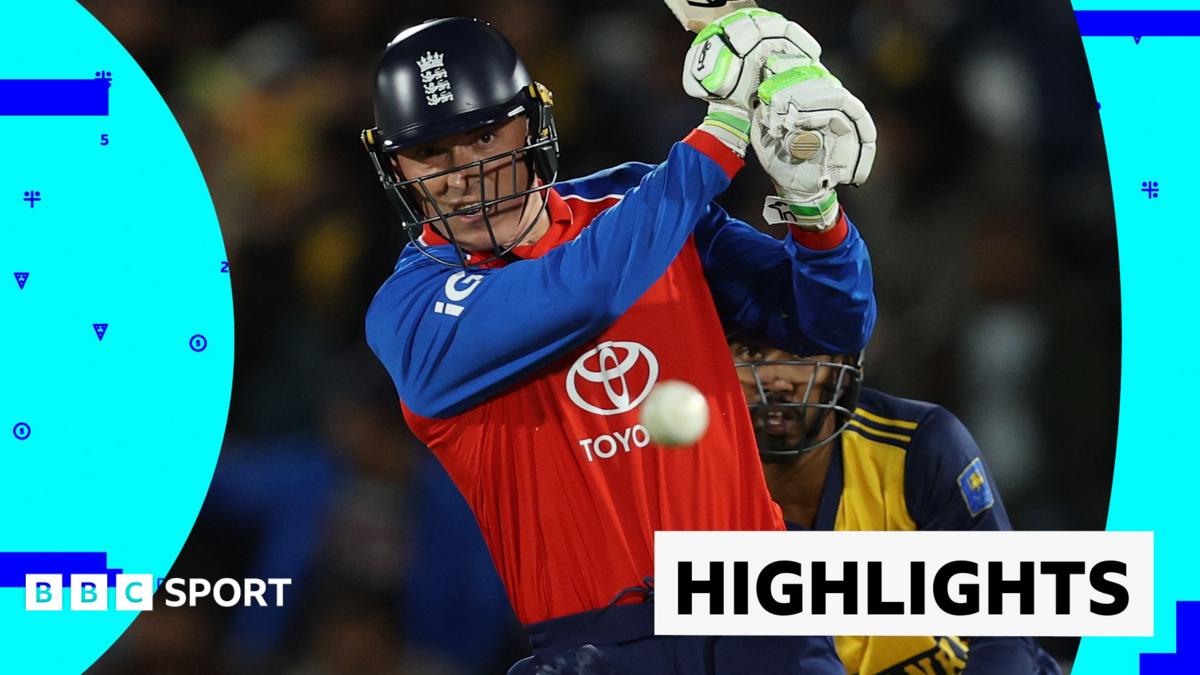
England cricket: Tourists sweep series against Sri Lanka in low-scoring thriller

England successfully defended a target of 129 to win by 12 runs against Sri Lanka in an enthralling contest, completing a 3-0 T20 series sweep and entering the World Cup with momentum.

Sam Curran hit a career-best 58 after a top-order collapse as England finished on 128-9, before the tourists’ spinners took nine wickets to pull off an unlikely victory.

Will Jacks took 3-14, while Jacob Bethell secured the last four Sri Lankan wickets, including three in one over, to finish with 4-11 as the hosts were bowled out for 116.

Having chosen to bat, opener Ben Duckett was dismissed lbw for a golden duck, while Jacob Bethell, Tom Banton and Harry Brook were all removed for single figures prior to Curran taking his side to a score that still looked challenging to defend.

Having already lost the series with defeat in the first two games, Sri Lanka bowled superbly, with seamer Dushmantha Chameera taking 5-24, including the wicket of Curran with the penultimate ball of the innings.

Luke Wood and Liam Dawson took early wickets on a worn pitch, before Kusal Mendis and Pavan Rathnayake fell to consecutive deliveries from Adil Rashid and Jacks.

Sri Lanka were still favourites and reached 90-4 before Jacks struck again, removing Kamindu Mendis and Janith Liyanage in consecutive overs.

Part-time spinner Jacob Bethell then took control, dismissing Dunith Wellalage, Chameera and Dasun Shanaka in the 18th over.

Having been handed the final over, he wrapped up the match with the dismissal of Maheesh Theekshana, helping England set a record for the lowest total they have ever successfully defended in T20s.

England start their World Cup campaign against Nepal on Sunday, 8 February (09:30 GMT).

Source link

Sri Lanka v England: Tom Banton’s unbeaten half-century secures victory by six wickets in DLS chase in second T20 international in Pallekele

Encouragingly for England on the eve of a subcontinental T20 World Cup, their spin department is holding up well.

A combined 12 overs yielded three wickets for 81 runs at an economy rate of 6.75, a return that underlined their growing control and reliability.

Rashid remains the ace in the pack, capable of stifling momentum and producing breakthroughs at key moments.

The experienced leg-spinner’s googly may have been well studied by opposition batters, but it remains a potent weapon, as Sri Lanka captain Dasun Shanaka discovered when he was trapped lbw slogging to leg.

Dawson’s left-arm spin provided much-needed control through the middle overs, slowing down his speeds to left vs right handers, while Jacks continues to mature as a bowling option, and used his angles well.

Brook has plenty of options to turn to even when the pitch does not spin big.

A slight concern for England, with just under a week to go before a major tournament, was that their seam bowling did not quite hit the mark.

That caveat comes with the acknowledgement that the surface at the Pallekele International Cricket Stadium was a used one, offering little margin for error.

Nevertheless Jamie Overton struggled with his length, while Curran, fresh from an expensive hat-trick in the opening T20, surprisingly lacked conviction after conceding 14 from his first over.

Archer fared slightly better, picking up two wickets despite being targeted early on, with Nissanka launching him out of the ground in his opening over.

Archer, however, recovered well to bowl effectively at the death as Sri Lanka pushed for a total in excess of 200.

More to follow.

Source link