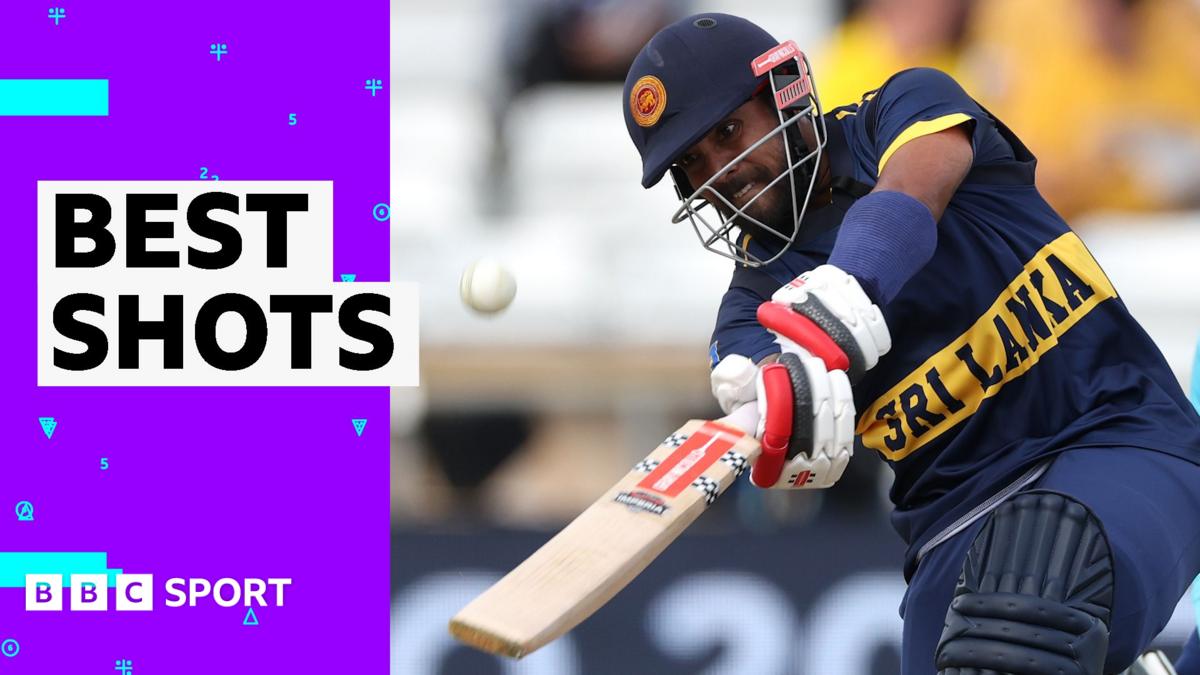
Kusal Mendis produces a captain’s innings at Headingley as he scores 121 off 100 balls to put Sri Lanka on course for a big score as they bat first against England in the second One Day International.
In a small coastal town just south of the Sri Lankan capital, Colombo, a young Rumesh Pathirage daydreamed about running away from school to a field where he could practise fast bowling, running, or anything other than being buried in books.
Academic excellence was not the promised path to glory for him. No, his path was on a synthetic rubber track, from which he would launch his javelin until it landed in the history books and made him world number one. Pathirage was destined to carry Sri Lanka to the upper echelons of sporting glory.
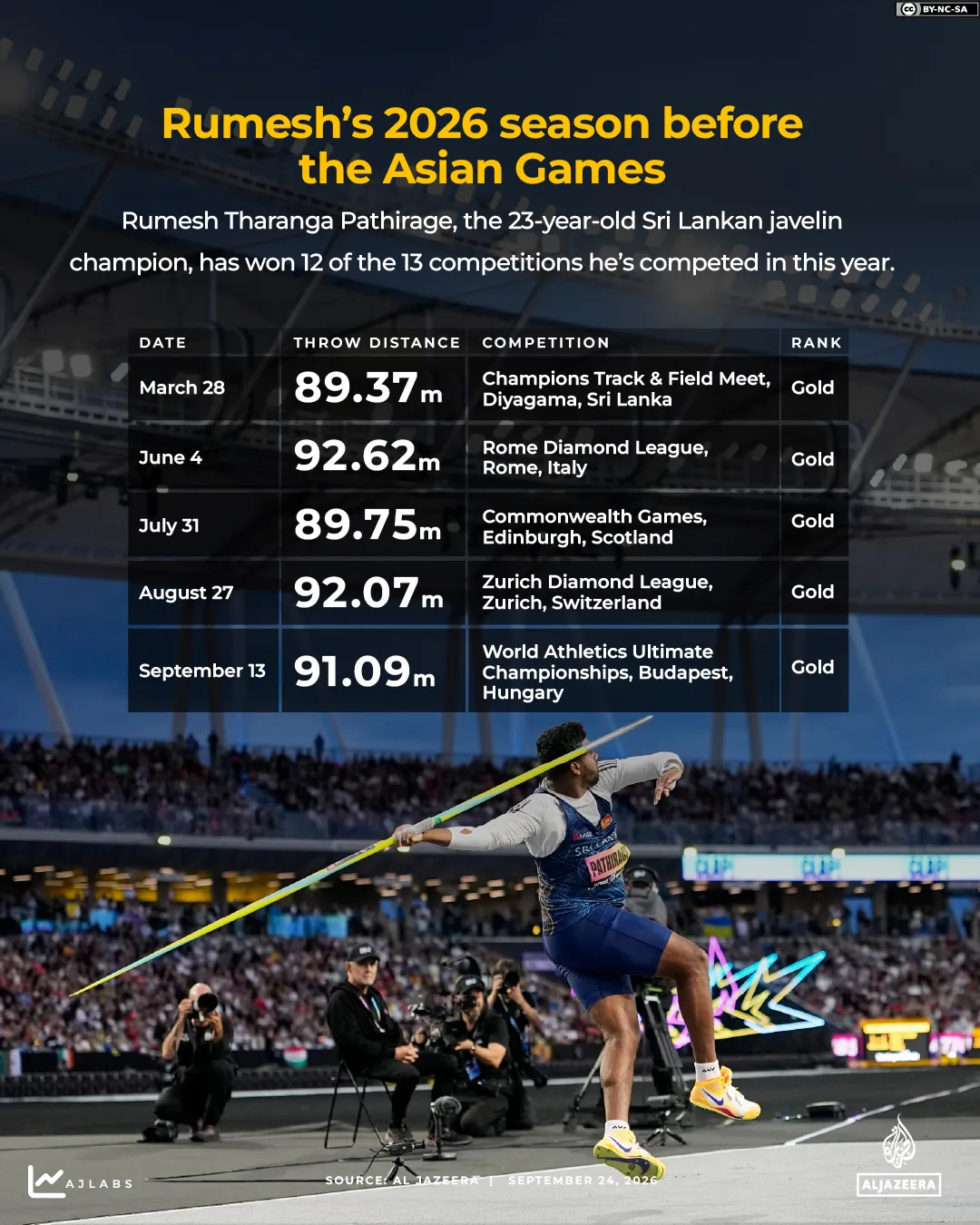
Losing is not in Pathirage’s vocabulary for 2026. Since February, he has won all but one of the competitions he has contested. He is the only thrower this year and the fourth in history to breach the 92-metre mark twice in a season — rare in the javelin books — and the only Sri Lankan to win the prestigious Diamond League final, the island nation’s first Commonwealth gold medallist in 20 years and the only South Asian to win a medal at the inaugural Ultimate Championships this month.
Come Saturday, the 23-year-old from Kalutara will attempt to win his final title of the season — the Asian Games gold — and attempt to break the 92.97m Asian record en route to continental triumph.
“The biggest prize is winning Olympic gold for Sri Lanka,” a nonchalant Pathirage told Al Jazeera in an online interview after the Zurich Diamond League victory, which saw him cross the 92m mark for a record second time. Given his track record, the 6-foot-1-inch (185.4cm) phenom could very well make that happen too.
An Olympic gold would be a first for Sri Lanka, as many of Pathirage’s accolades have been. But an Olympic podium finish was first achieved by Susanthika Jayasinghe, Sri Lanka’s track star who won bronze in the women’s 200m sprint at Sydney 2000, before it was upgraded to silver due to a doping disqualification.
Like Pathirage, Jayasinghe found international success in the junior circuit before bagging major wins in the big league. Her legacy, however, was bittersweet, marred by political interference, alleged tampered drug tests and sexual violence by federal sports officials, and next to no support from Sri Lanka’s athletics federation. But it paved the way for young athletes like Pathirage to dream of a future as track and field’s biggest stars.
Pathirage is already paying his success forward. When well-wishers offered financial assistance to replace his javelins broken days before the Asian Games, he requested that the money be redirected to struggling athletes instead. After all, he was in their shoes not too long ago.
His main source of support has been the Sri Lankan air force, which Pathirage represents as an athlete, and a generous diaspora have helped fund his training, equipment and extensive international travel for competitions.
That no major international sportswear brand has signed Pathirage, despite him being world number one, speaks volumes about the European chokehold that overshadows success from South Asian athletes like Pathirage and Pakistani javelin thrower Arshad Nadeem.
“If you take athletes of my level, I’m the only one who doesn’t have international brand sponsorship,” Pathirage rued of the “sorry situation”, although he understands that Sri Lanka is a small market for sportswear giants. In comparison, European athletes who are nowhere near the top even in their region have sponsorship deals with brands like Adidas, Puma and Nike.
That the Sri Lankan diaspora has repeatedly stepped up to support Pathirage en route to sporting greatness reflects just how much his triumphs at this level mean to them.
They have followed him across the Diamond League circuit, cheering and waving the Sri Lankan flag, stepped in spontaneously to translate English to Sinhalese for media interviews, and waited patiently for an autograph after he’s bagged yet another gold medal.
Many were Pathirage’s age when they fled Sri Lanka during the devastating 1983-2009 civil war. For them, he is the future of a nation they never experienced, his translator Ranil Jayaneththi told Al Jazeera from Zurich, Switzerland, where the Sri Lankan businessman is now based.
“He’s the most exciting thing to happen to us since Susanthika,” said Jayaneththi, whose smile seemed permanent from the night before when he saw the javelin star in all his glory.
“To go through the history that Sri Lanka went through,” he paused before continuing, “it was sports that gave people hope.”
Jayasinghe celebrates finishing in third place in the Women’s 200m at the 2007 World Athletics Championships [File: Michael Steele/Getty Images]
Meanwhile, his family has always been his pillar of strength, safety net and loudest cheerleaders.
“I wouldn’t be where I am without them,” Pathirage said of his parents and two siblings. “Right from when they let me pursue athletics full-time instead of academics till my early career, I owe them everything.”
Athletics is somewhat of a family thing; Pathirage occasionally mentors his younger brother in javelin, which he switched to after excelling in discus throw, the event their father contested decades ago.
Sri Lanka is not a sporting powerhouse, nor does it boast exceptional facilities, but it gave the likes of Pathirage and Jayasinghe a grassroots platform to springboard to global stardom.
Across the country, school- and regional-level competitions prepare younger athletes for the national stage under the guidance of local coaches, some of whom receive international training. Coaching and sports management are also offered at several Sri Lankan universities now.
Under the tutelage of Tony Prasanna, Pathirage’s throws have steadily progressed from the 60m range in 2019 to mid-80m figures more recently that have secured gold at the Asian Throwing Championships. He also competes regularly in Australia, home to a sizeable Sri Lankan population who fled the civil war.
It was there that Pathirage met Ella Wardlaw, an athlete representative who manages his competition schedule, media commitments and sponsorships.
“Rumesh is unstoppable; he’s been hungry for wins all season,” Wardlaw told Al Jazeera from Zurich. The Australian lawyer-turned-manager has seen Pathirage’s rise from an underdog nervously navigating the international stage to dominating it.
“He thrives on pressure, but he’s really in competition with himself a lot of the time.”
When asked whether the goal is consistency with his wins or 90m-plus throws, Pathirage said, “The goal is to improve on what I have achieved … My mindset is to stay a winner. I concentrate on achieving what I can.”
He is indifferent to the media hype that many of his competitors crave. “I’m only doing this interview because my manager said I have to,” he joked. Neither does he care for celebrity status. His humility is apparent in the low-key social media presence he maintains, the demure victory celebrations born of a performance that does all the talking for him.
What he really wants is to be a role model for future athletes in the cricket-crazy nation.
“I want to inspire the younger generation to see my success and know that other pathways await them,” said Pathirage.
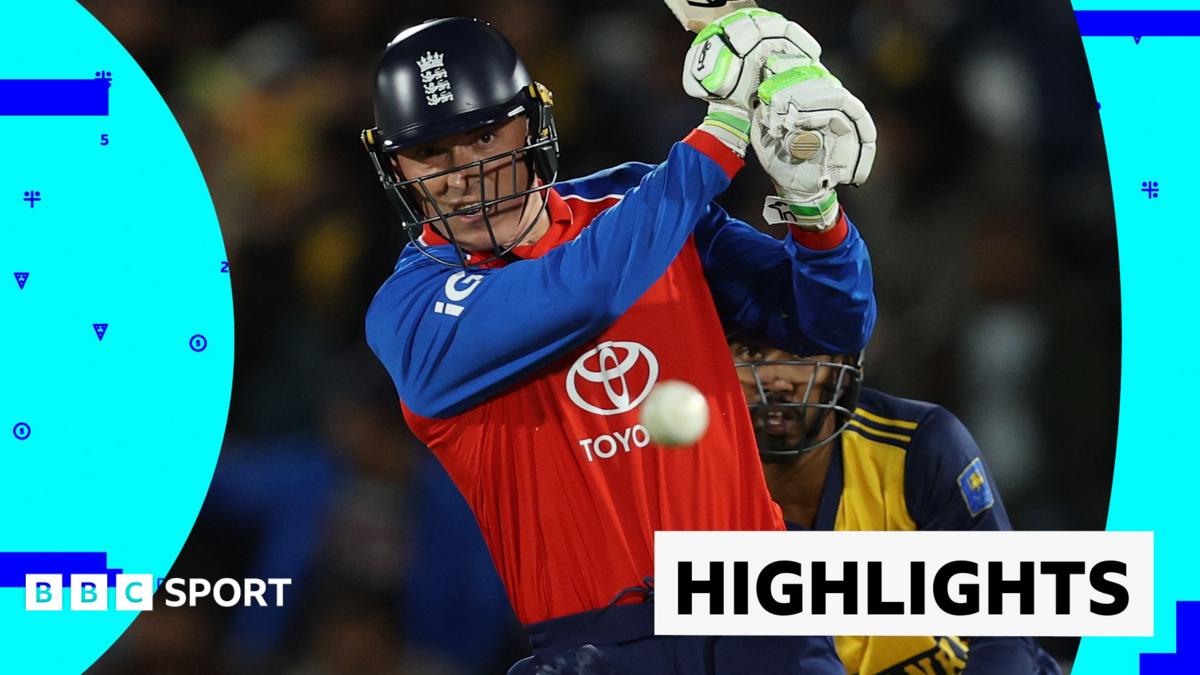
Jacks’ match in the north east also included an important 46 not out with the bat.
Though he was eventually left stranded, he batted responsibly, hitting only one four in his first 43 deliveries, to make sure England’s innings was extended from 211-7 in the 39th over to 265 in the penultimate.
“I came in and found it really difficult to start off,” he said.
“I just re-evaluated what I thought was a good score and obviously what then happened with wickets falling around me a change of the role, just try and bat out the overs.”
For so long “batting out the overs” has not been the England way, but Jacks is a player growing in maturity.
He is also vice-captain to Harry Brook for these Sri Lanka series in the absence of Jacob Bethell and has become an increasingly vocal member of the group.
It was telling that when England’s T20 World Cup campaign began earlier this year amid the cloud of Brook’s Wellington episode, Jacks was first put up to speak to the media.
“He’s just a good leader,” Brook said, plainly.
Reliable off the field, Jacks is becoming increasingly so on it.
It is 18 months since he moved from the top of the order to the middle as England’s finisher in T20 and 50-over cricket.
“I feel very comfortable going out there on the day and any situation can arise which I really enjoy,” Jacks said.
“It is not the same every day which you get opening so it keeps that fresh element to the game.
“At the beginning of my career it felt like you are just fighting to play in the next game, which is not the best place to be.
“It is a luxury to know, say when we go to Headingley [for the second ODI], that I will be in the team. You can’t take that for granted and appreciate the hard work you have done to get there.”
It is also easy to forget Jacks began the year in England’s Test side, as their spinning all-rounder during the Ashes – a role now filled by Dan Lawrence.
Jacks, who met new Test coach Stephen Fleming when the New Zealander joined the white-ball squad at Old Trafford last weekend, has is signed up for a stint with MI Cape Town in the SA20 this winter.
There would no clash there with Fleming’s first tour in charge in South Africa over Christmas, but the later part of the T20 competition overlaps with England’s two Tests in Bangladesh, where English spinners will be needed.
“I don’t know about what would happen or even if they would want me,” he said.
“We will finish the summer before getting into the winter.”
For now, Jacks will focus on white-ball trips to Pakistan, Australia and South Africa as England build towards the 50-over World Cup next autumn.
One downside of a Test recall would be losing more time to rearrange that Edinburgh trip.
“It didn’t go how we planned but we will have to find time to redo it,” Jacks smiled.
Fifteen people have been convicted over Sri Lanka’s 2019 Easter Sunday bombings, which killed 279 people at churches and luxury hotels. The verdict comes amid continued scrutiny over intelligence warnings received before the attacks and whether officials failed to act.
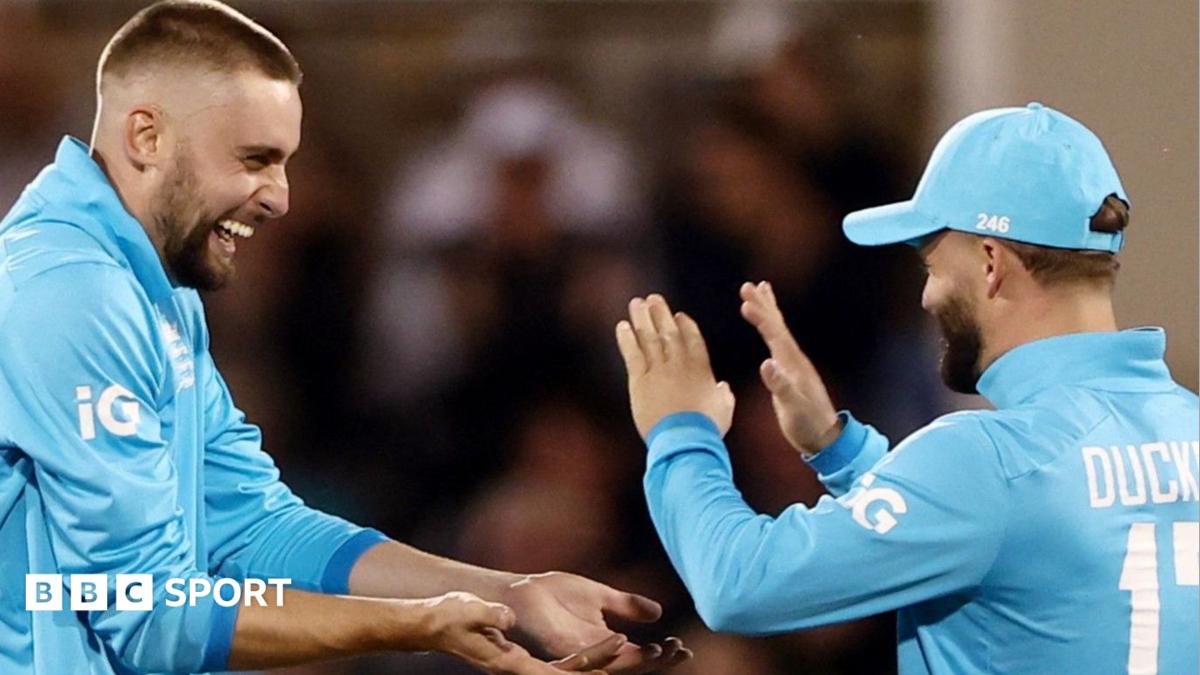
Will Jacks produces a match-winning performance to help England to a comfortable 89-run victory over Sri Lanka at Chester-le-Street in the first one-day international of the three-match series.
England maintained their excellent one-day form as they eased to a comfortable victory against Sri Lanka, as Will Jacks’ stars with bat and ball to help the home side to an 89-run win at Chester-le-Street in the first ODI.
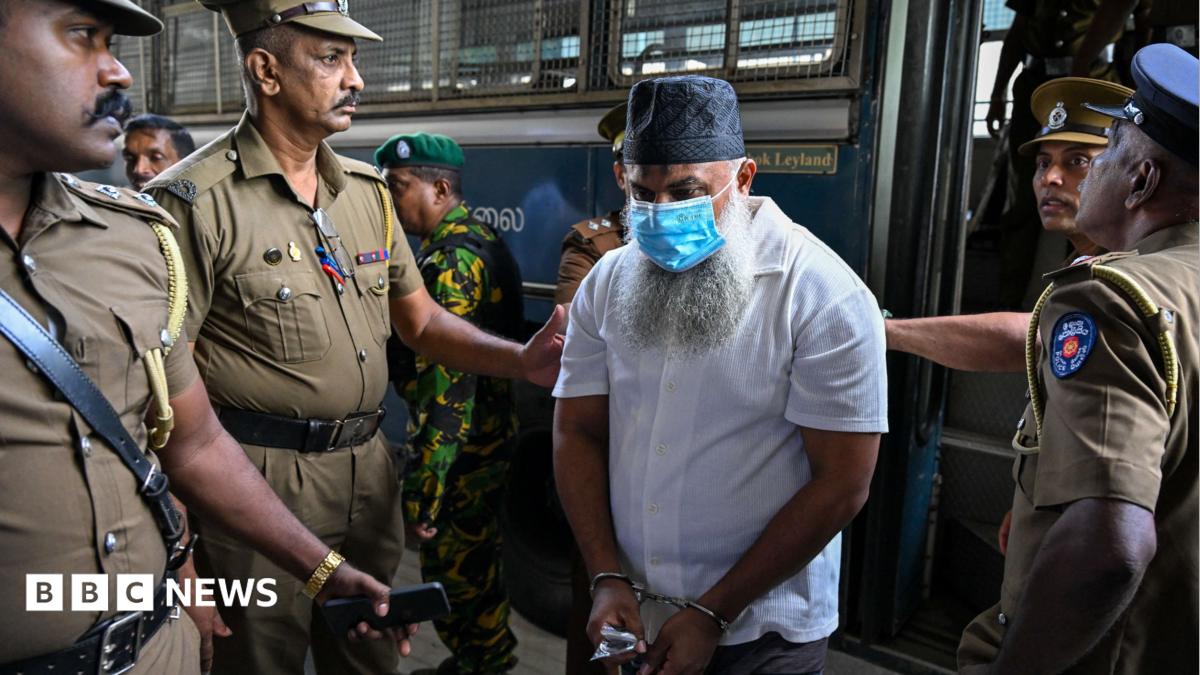
Sri Lanka’s High Court has convicted 15 men who had been charged with plotting the 2019 Easter Sunday bomb attacks that killed 270 people and injured more than 500.
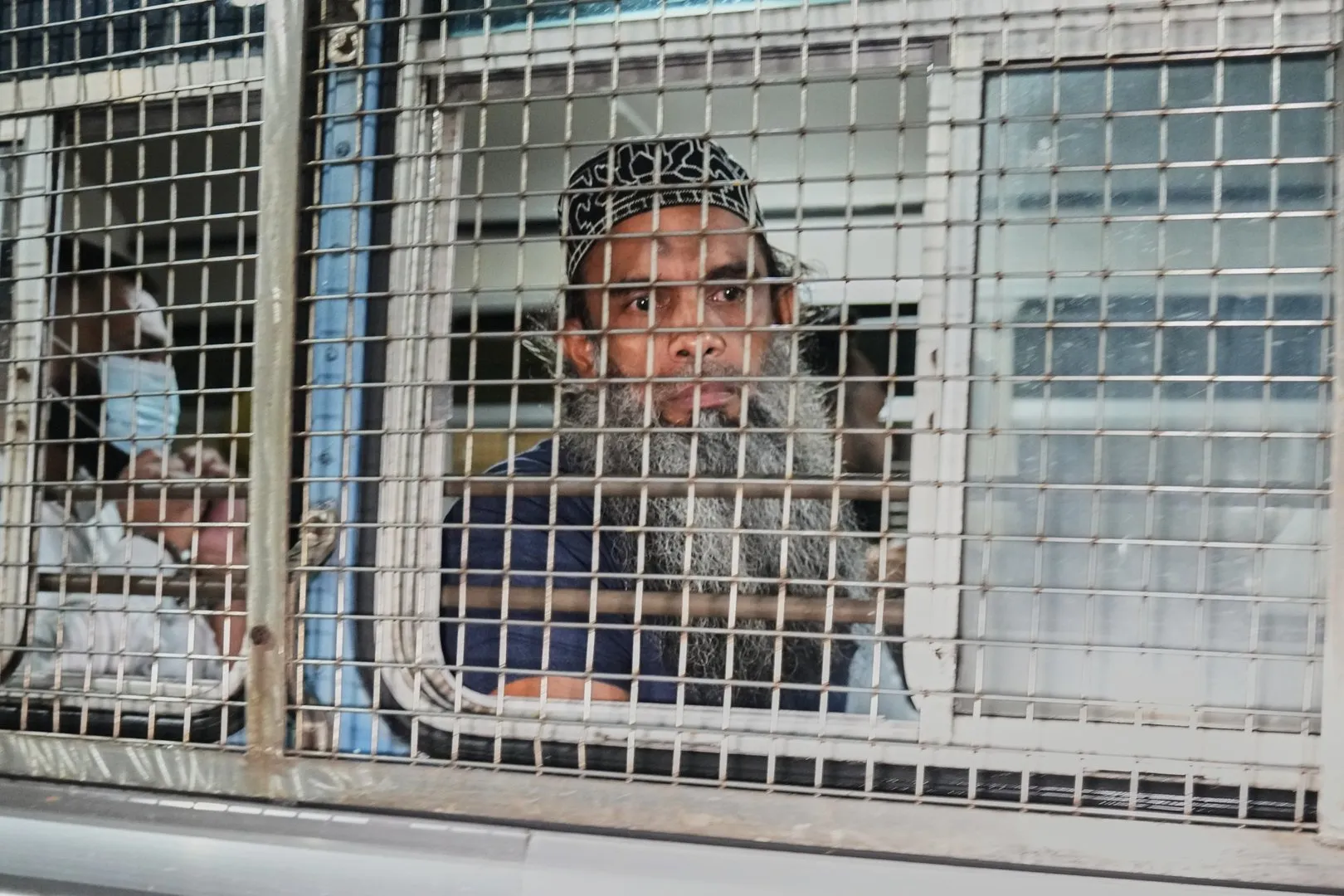
Those found guilty include Naufer Moulavi, who prosecutors said masterminded the suicide bombings. Nine other men were acquitted.
The co-ordinated blasts at three churches and three luxury hotels were the deadliest in Sri Lanka since the end of its civil war in 2009. Forty-five foreigners were among the dead.
All the bombers who carried out the attacks died in the blasts. Investigators have previously blamed the bombings on Islamist extremists, and the 25 men indicted were from Sri Lanka’s Muslim minority. One died in custody.
The accused had been charged with more than 23,000 offences, including murder, conspiracy to commit terrorism and possessing firearms.
More than 2,300 people gave evidence for the prosecution.
There were also 2,076 pieces of evidence, including explosives, swords and firearms.
In the wake of the attacks, Sri Lankan authorities pointed to a “major intelligence lapse”. Its parliament heard that a tip-off from India about the attacks was not properly shared with the authorities.
In 2023, the Supreme Court ordered former president Maithripala Sirisena to pay millions in compensation to the victims of the bombings, after finding him responsible for national security failures that led to the attacks.
Last month, two former senior officials were sentenced to death for criminal negligence that led to the bombings. Death sentences are usually commuted to life in prison in Sri Lanka due to a decades-old moratorium on executions.
For years, Sri Lankans have held regular demonstrations demanding justice for the victims of the Easter attacks.
The verdict comes as a separate investigation on former intelligence chief Suresh Sallay is under way. Sallay is accused of orchestrating the bombings with Islamist extremists.
The allegations echo those aired in a 2023 documentary by British broadcaster Channel 4, which heard whistleblower testimony claiming the attacks were allowed to happen to boost the popularity of the Rajapaksa family, which long dominated Sri Lankan politics.
Sallay, who was arrested in February, denies the allegations. Former president Gotabaya Rajapaksa, who was elected months after the 2019 attacks, with a campaign of tackling Islamist extremism has also denied the allegations.
Rajapaksa, who has been banned from leaving the country, has asked the court to prevent his potential arrest in connection with the ongoing investigations.
Sri Lanka were bowled out for 69 runs, 10 less than Mandhana’s belligerent match-winning innings as India retained gold.
Published On 22 Sep 202622 Sep 2026
Smriti Mandhana’s whirlwind innings of 79 runs helped India crush Sri Lanka by 147 runs and win a second consecutive women’s cricket gold at the Asian Games.
India smashed 216-3 off their 20 overs, the highest women’s total in Asian Games history, with 18 fours and 13 sixes in the final on Tuesday.
Richa Ghosh and Bharti Fulmali plundered 25 off the final over from the hapless Mithali Ayodhya, who did not help her cause by conceding eight wides.
Sri Lanka were never in the hunt, and captain Chamari Athapaththu’s 29 was their only innings of note as they were skittled for 69 in 15.4 overs and had to settle for silver.
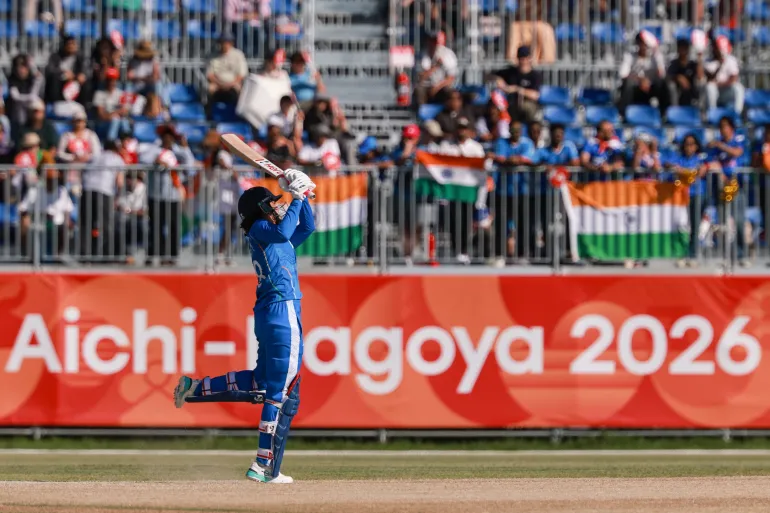
Opening batter Mandhana hit seven sixes and five fours in a 45-ball knock that sent the ball to all parts of the Korogi Athletic Park ground in Nagoya.
Smriti Mandhana hits a six [David Gray/AFP]
After India captain Harmanpreet Kaur won the toss and opted to bat, Shafali Verma, who made an unbeaten century in the semifinal, and Mandhana put on a blistering opening partnership.
The pair had raced to 99 in the 10th over when Verma had a rush of blood, playing a needless reverse sweep which she top-edged to Kawya Kavindi at point to fall for 48 off 29 balls.
Mandhana, the greatest run-scorer in women’s T20 cricket history, had reached her fifty earlier in the over and sailed on in style, clubbing anything loose to the boundary.
Harmanpreet joined her, and the pair took the score to 141 before the captain holed out to long-off for 19.
Mandhana, looking to accelerate further in the latter overs, skied an attempted six and was out in the 17th over with the score on 163.
Ghosh clattered 49 off 22 balls with three sixes and six fours to take India past 200 in the final over.
Mandhana scored 79 off 45 balls [Mark Baker/AP]
Earlier, some late-order hitting by Pakistan captain Fatima Sana set up a 31-run win over Bangladesh in the bronze medal match.
Sana came in with her side rocking at 67-5 in the 12th over but plundered 45 off 30 balls, including three fours and three sixes, and was out off the last ball of the 20 overs after seeing Pakistan to 145-8.
Her 67-run partnership with Aliya Riaz (25) for the sixth wicket proved the turning point, and Bangladesh could only muster 114-7 in reply.
Indian players celebrate after winning [Mark Baker/AP]
LISA Snowdon has been soaking up the sun in a bikini during a luxury break in Sri Lanka.
The This Morning regular jetted off with her friend, hairstylist Zoe Irwin, for a getaway filled with cocktails, yoga and delicious looking food.
Lisa Snowdon is enjoying a sunshine getaway in Sri LankaCredit: InstagramThe trip came after Lisa opened up about her split from George SmartCredit: Instagram
Lisa shared a series of bikini snaps from the trip, writing: “The story so far here in Sri Lanka
“Birthdays, best friend and a couple of beers thrown in….. @zoeirwinhair
Lisa’s bikini snaps had her famous friends rushing to compliment her figure.
The TV star shared snaps from her girls’ tripCredit: InstagramLisa jetted off with her friend, hairstylist Zoe IrwinCredit: InstagramLisa’s break included yoga, good food and a couple of beersCredit: InstagramLisa is staying in a luxury villa tucked away in the jungleCredit: Instagram
Actress Claire Sweeney added: “You look amazing”, while presenter Lucy Alexander commented: “Looking wow”.
The friends are staying at Green Escapes, in a luxury villa tucked away in the jungle near Hiriketiya Bay.
The retreat features an infinity pool overlooking the trees, yoga classes and its very own chefs, with the beaches of Sri Lanka’s south coast just a short trip away.
The sunshine break comes after Lisa opened up about feeling emotional following her split from fiancé George Smart, her partner of 12 years.
During an earlier wellness trip to Bali, she wrote on Instagram: “Wellness, for me, has never been about perfection. It’s about connection.
“The women you meet, the conversations that stay with you, moving your body, slowing your mind, little soul searching, maybe a good old cry and sometimes having a cold beer barefoot on the beach.”
She added: “I am feeling stronger mentally and physically and it’s not over yet.”
Speculation about the couple’s relationship began after Lisa was spotted without her engagement ring, while George had been largely absent from her Instagram since January.
The pair first dated around 20 years ago before rekindling their romance in 2014. They got engaged in 2016.
Lisa had previously said she was in no rush to marry George, telling Hello!: “A lot of women imagine walking down the aisle. They imagine their flowers, their dresses, and I just have never had that vision.
“I’m just really relaxed and so is George. It will happen, but I just don’t know what that looks like.”
Who: India vs Sri Lanka What: Women’s T20 Asia Cup final Where: Dubai International Stadium, Dubai, United Arab Emirates When: Sunday, September 13, 6:30pm local time (14:30 GMT) How to follow: We’ll have all the build-up on Al Jazeera Sport from 3:30pm local time (13:30 GMT) before our live text commentary stream.
Record seven-time winners India face defending champions Sri Lanka in the Women’s T20 Asia Cup final on Sunday, as the 15-match competition in the United Arab Emirates readies itself for its closing act.
Recommended Stories
list of 4 itemsend of list
In a tournament which has largely yielded low-scoring contests, both Indian and Sri Lankan spin units have tasted success – Deepti Sharma spearheading the heavyweights’ charge and captain Chamari Athapaththu leading by example for the title holders.
Shafali Verma and Smriti Mandhana’s terrific top-order pairing has further strengthened India’s title bid at the tournament, where both teams boast a perfect record.
Having reached the final in every edition of the Women’s Asia Cup they have played, India are favourites to add another trophy to their glittering cabinet.
But Sri Lanka possess a threat of their own – they are one of only two sides who have beaten India in the title clash in past and will be eager to retain the trophy they proudly lifted two years ago.
Before Sunday’s showdown, Al Jazeera Sport takes a closer look at the game:
Who did India and Sri Lanka beat in the semifinals?
India defeated Bangladesh in the first semifinal on Thursday by 40 runs before Sri Lanka beat Pakistan by four wickets in Friday’s low-scoring thriller.
When did India and Sri Lanka last meet?
The pair last met in a T20 international in Thiruvananthapuram on December 30, 2025, as hosts India defeated Sri Lanka by 15 runs, sweeping that series 5-0.
Records swing heavily in India’s favour – they have won nine of their last 10 T20Is against Sri Lanka.
How many Women’s Asia Cup titles have India won?
India are the most successful team in the Women’s Asia Cup, having won a record seven titles.
They won the 2004, 2005, 2006 and 2008 editions, when the tournament was played in a one-day international format, as well as the 2012, 2016 and 2022 T20 editions.
How many Women’s Asia Cup titles have Sri Lanka won?
Sri Lanka have won the Women’s Asia Cup once, winning the last edition in 2024 after beating India by eight wickets in the final.
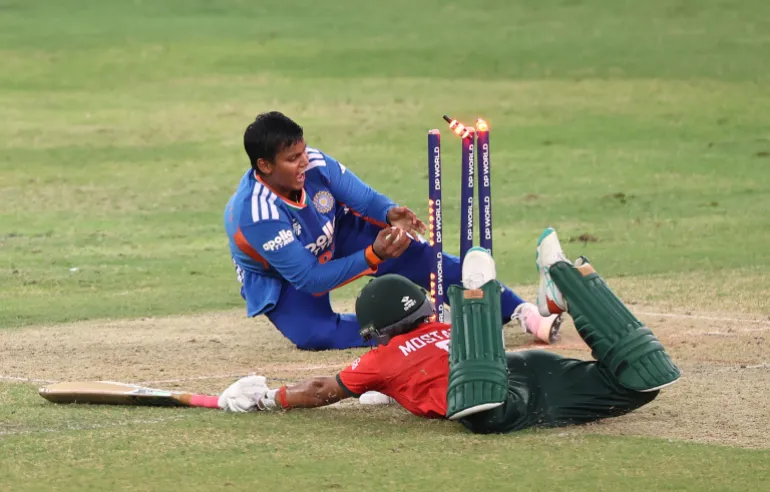
Deepti Sharma attempts to run out Sobhana Mostary during the Women’s T20 Asia Cup semifinal match between India and Bangladesh [Francois Nel/Getty Images]
Who are India’s key players?
India’s openers Shafali and Mandhana are the top two leading scorers in the ongoing edition, having scored 168 and 154 runs each in four matches.
Shafali has registered two half-centuries – scoring identical 64s against Thailand in the opener and Bangladesh in the semifinals – while Mandhana hit an incredible 124 against Hong Kong in the league phase.
With the ball, all-rounder Deepti has been most impactful with her spin bowling, bagging a joint-highest 11 wickets with an average of 3.63.
N Shree Charani has also played a key role with eight wickets and holds the record for the second-most economical bowler (3.27).
Who are Sri Lanka’s key players?
Captain Athapaththu, who bowls right arm off-break, has been Sri Lanka’s most impactful player, sharing the honours of the most wickets with Deepti at 11, with an average of 5.36. Left-arm orthodox bowler Sugandika Kumari has also contributed with six wickets.
With the bat, top-order left-hander Harsthitha Samarawickrama has chipped in 89 runs for the fourth-highest scorer in the competition.
Chamari Athapaththu has been impactful with the ball for Sri Lanka [File: Sameera Peiris/Getty Images]
Form guide
Last five matches, most recent first:
India: W-W-W-W-L
Sri Lanka: W-W-W-W-L
What have the players said?
India’s Deepti Sharma: “[This] team doesn’t take any team lightly … We always think as a team, ‘How we can do better in each and every game. As a collective team performance, how we can do better.’”
Sri Lanka’s Chamari Athapaththu: “If we can execute our plans in the final, I think we can beat any team.”