Srebrenica

Obituary: Ratko Mladic, war criminal convicted of Srebrenica genocide, dies | Obituaries News

Ratko Mladic, a war criminal convicted over the first genocide on European soil since the second world war, has died prison in The Hague at the age of 84.

Earlier this year, Serbia requested that Mladic be allowed to receive medical treatment outside prison, saying his health condition was “serious” and that he “required serious medical treatment”.

Recommended Stories

list of 4 itemsend of list

The United Nations International Residual Mechanism for Criminal Tribunals said that Mladic was receiving adequate medical care while in detention.

Known as the “Butcher of Bosnia”, Mladic was one of the best-known and most notorious military commanders of the wars that followed the breakup of Yugoslavia.

International courts convicted him of genocide, crimes against humanity and war crimes committed during the 1992–1995 war in Bosnia and Herzegovina. He was sentenced to life in prison

The most notorious part of his criminal legacy is linked to the genocide in Srebrenica, in eastern Bosnia and Herzegovina, near the border with Serbia.

Bosnian Serb forces under Mladic’s command seized Srebrenica in July 1995, despite the UN declaring the municipality a “safe area”. After the enclave fell, more than 8,000 Bosniak (Bosnian Muslim) men and boys were killed by Mladic’s forces in the days that followed.

Some of the civilians were captured and executed at locations in and around Srebrenica. Others were killed after attempting to flee through the forests towards territory controlled by the army of the Republic of Bosnia and Herzegovina.

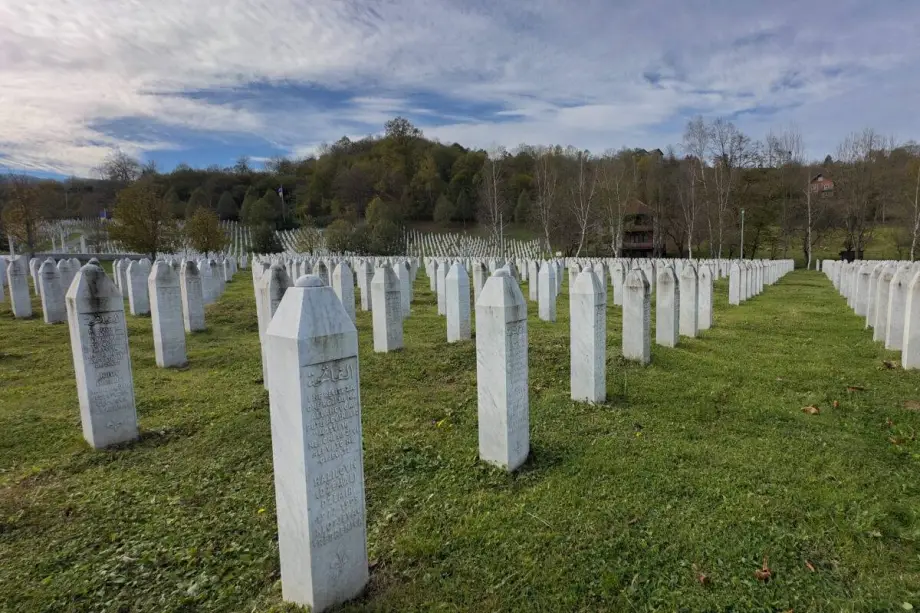
The bodies of victims were later discovered in numerous mass graves, while many were identified years after the war. The remains of around 1,000 victims are still being sought. International courts established that the killings constituted genocide.

Srebrenica has remained a symbol of one of the gravest crimes committed in Europe since the second world war.

From the Yugoslav army to commander of the army of Republika Srpska

Mladic was born in the village of Bozanovici near Kalinovik, about 40km (25 miles) south of Sarajevo.

He began his military career in the Yugoslav People’s army and gradually rose through the military’s command structure.

When Bosnia and Herzegovina declared independence from Yugoslavia in the spring of 1992, following Slovenia and Croatia, Bosnian Serbs established their own political and military structures and proclaimed Republika Srpska, which controlled territory covering roughly half of Bosnia and Herzegovina at the time.

In May 1992, Mladic was appointed commander of the Republika Srpska’s army. Over the next three and a half years, he sought to seize parts of Bosnia and Herzegovina controlled by the army of the Republic of Bosnia and Herzegovina, including the capital Sarajevo, devastating areas in his path. However, his forces failed to achieve major territorial gains in several key areas.

The political and military leadership of Republika Srpska sought to separate Serb-controlled territories from Bosnia and Herzegovina and create a separate, territorially contiguous Serb state within the country. Republika Srpska would formally become one of Bosnia and Herzegovina’s two entities under the 1995 Dayton Peace Agreement.

Mladic’s forces were involved in a large number of atrocities across Bosnia and Herzegovina.

In addition to the Srebrenica genocide, international courts found Mladic responsible for a campaign of terror against Sarajevo’s civilian population, the hostage-taking of UN peacekeepers and other crimes.

The Siege of Sarajevo

Sarajevo was surrounded by Bosnian Serb forces for almost 44 months. From positions on the surrounding hills, they shelled the city and used snipers against its residents.

More than 11,500 people from all ethnic groups were killed, while many others were wounded or displaced.

The Sarajevo Siege, which Mladic directed, became one of the defining episodes of the Bosnian war and one of the longest sieges of a capital city in modern history.

After the war ended in 1995, Mladic evaded arrest and spent almost 16 years in hiding. He became one of Europe’s most wanted fugitives accused of war crimes.

He was arrested in Serbia in May 2011 in the village of Lazarevo, near Zrenjanin, at the home of a relative. Several days later, he was transferred to The Hague, where his trial began before the International Criminal Tribunal for the former Yugoslavia.

His arrest was one of the key conditions set by the international community for Serbia’s progress towards closer relations with the European Union. Belgrade faced political and financial pressure from Western countries to cooperate with the tribunal and transfer Mladic to The Hague.

In 2017, the tribunal sentenced him to life imprisonment. The courts established his individual criminal responsibility for a number of crimes.

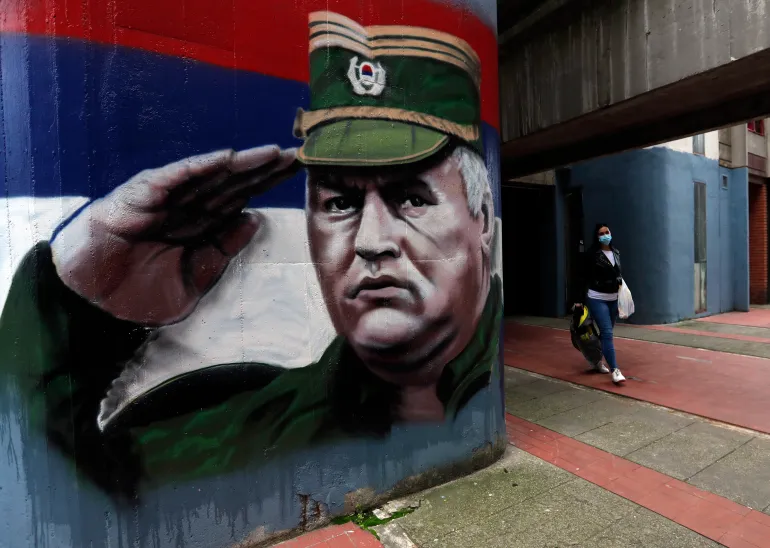
A woman wearing a face mask walks past graffiti depicting former Bosnian Serb wartime general Ratko Mladic in Belgrade, Serbia, Thursday, Nov. 12, 2020. Mladic was convicted by a UN war crimes tribunal in 2017 and sentenced to life imprisonment for masterminding crimes by Bosnian Serb forces throughout the war that left 100,000 dead. (AP Photo/Darko Vojinovic)
A woman wearing a face mask walks past graffiti depicting former Bosnian Serb wartime general Ratko Mladic in Belgrade, Serbia, November, 2020. Mladic was convicted by a UN war crimes tribunal in 2017 and sentenced to life imprisonment for masterminding crimes by Bosnian Serb forces throughout the war that left 100,000 dead [AP Photo/Darko Vojinovic]

Mladic in Serbia

Although his convictions were final, Mladic continues to have support among sections of the Serbian public and political circles in Serbia and Bosnia and Herzegovina.

In Banja Luka, Belgrade and other areas with predominantly Serb populations, murals depicting him can still be seen. Some members of the public continue to portray him as a military hero rather than a convicted war criminal.

That attitude towards Mladic is part of a broader problem of confronting the legacy of the war in Bosnia and Herzegovina. While international courts have established facts concerning the genocide and other crimes, political and social divisions over the country’s wartime past remain deeply entrenched.

Denial of the Srebrenica genocide and the glorification of convicted war criminals remain serious problems in Bosnia and Herzegovina.

According to data from the Srebrenica Memorial Centre, 149 cases of public denial of the Srebrenica genocide were recorded during the first quarter of 2026, including statements by public figures. That represents an increase compared with 2025, when 99 such cases were recorded.

The UN General Assembly adopted a resolution in May 2024 establishing July 11 as the International Day of Reflection and Commemoration of the 1995 Genocide in Srebrenica.

The resolution was intended to preserve the memory of the victims and promote a culture of remembrance, while also reaffirming the importance of confronting genocide denial and preventing the recurrence of such crimes.

Source link

Thousands gather in Srebrenica to mark 31 years since genocide | Srebrenica genocide News

Ten newly identified victims were buried as the more than 8,000 slain Bosnian Muslim men and boys were remembered.

Thousands have gathered in Bosnia and Herzegovina to mark 31 years since the Srebrenica genocide, as leaders and activists worldwide use the anniversary to call on people to fight dehumanisation.

On Saturday, mourners, survivors, foreign dignitaries and religious leaders gathered at the Srebrenica-Potocari Memorial Center to commemorate those who were killed in 1995. People took part in the annual peace march before 10 newly identified victims were buried.

Recommended Stories

list of 3 itemsend of list

Bosnian Serb forces overran the eastern Bosnian town of Srebrenica on July 11, 1995, killing more than 8,000 Bosnian Muslim men and boys over several days. Srebrenica had been declared a protected “safe area” by the United Nations Security Council two years earlier.

Denis Becirovic, Chairman of the Presidency of Bosnia and Herzegovina, said honouring those who were killed was crucial to maintaining stability.

“If we fail to preserve the truth about our past, we will have neither a present nor a future,” he said.

The Dutch ambassador to Bosnia and Herzegovina, Henk van den Dool, said education was key to preventing a repeat of similar atrocities.

“One of the common goals we share with the Srebrenica Memorial Center, with the mothers, and with the survivors is to translate this enduring warning into meaningful action. One of the most meaningful and effective ways to do that is through education,” he said.

Pursuit of justice

Every year on July 11 , newly identified victims are buried at the Srebrenica-Potocari Memorial Center, as investigators continue to search for the remains of people buried in mass graves in surrounding areas.

More than a thousand victims remain missing following the genocide, which is widely recognised as the worst atrocity committed in Europe since the Holocaust during the Second World War.

Pakistani Prime Minister Shehbaz Sharif called the massacre “a crime against humanity”, while the Mayor of London, Sadiq Khan, posted on X that he was “deeply moved” during his trip to Srebrenica last week.

“Today, as we stop to remember the victims and families who mourn them, we must also commit ourselves to fighting violence and dehumanisation wherever we encounter it and stopping hatred from taking hold,” Khan said.

More than 100,000 people were killed during the Bosnian War between 1992 and 1995. The conflict followed the dissolution of Yugoslavia, triggering a series of ethnic conflicts and wars of independence among the Balkan states that had previously formed a single country.

In recent days, campaigners have drawn comparisons between the Srebrenica genocide and Israel’s genocidal war on Gaza. Kenneth Roth, former executive director of Human Rights Watch, decried that senior Israeli officials are yet to be held legally accountable for their crimes.

“The United Nations this week remembered the genocide in Bosnia – the 8,000+ Muslim men and boys killed in Srebrenica in July 1995. The leaders of the genocide were convicted. The perpetrators of Israel’s genocide in Gaza remain at large,” Roth said on X.

Source link

Revisiting Srebrenica and the siege of Sarajevo, and the similarities to events in Gaza – Middle East Monitor

The world is witnessing one of the most horrific onslaughts and siege against Palestinian civilians in Gaza by the Israeli occupation forces, which show no end to their appetite for death and destruction. As we watch helplessly while the people of Gaza search for food and water, amid Israeli air strikes destroying building after building, town after town, including civilian infrastructure, we are reminded of an earlier genocide and siege in the early 1990s. Sarajevo and Srebrenica are bywords for siege and genocide during the Bosnian War of 1992-1996, and carry striking similarities to what is happening in the “complete siege” of Gaza. The siege of Sarajevo lasted for four years, and while the siege in Srebrenica lasted for “only” three years, it proved to be more detrimental due to the genocidal killing of 8,000 Bosnian Muslim men and boys. These prolonged sieges, including the one in Gaza (which has actually been blockaded by Israel and its allies since 2006), serves as a sobering reminder of how oppressive powers use such tactics to inflict collective punishment on whole populations.

While it is essential to recognise the specific histories, approaches and geopolitical factors that contribute to each situation, both the war in Bosnia and the war in Palestine remain a struggle for control over land.

In Palestine, the occupation of the land in question took place within living memory.

What is unfathomable is the “genocidal conduct” committed with intent to destroy, in whole or in part, a national, ethnical, racial or religious group by military forces involved in these conflicts. The actions of the Bosnian Serb army in Bosnia and the Israel Defence (Occupation) Forces in Gaza have an unsettling resemblance, particularly in imposing a blockade and restricting the movement of civilians. In both cases, civilians faced (and in Palestine continue to face) immense human rights violations, including indiscriminate shelling, sniping, the demolition of religious buildings and the destruction of civilian infrastructure, including homes, schools and medical facilities. As this reign of terror is unleashed, the entire territory is cordoned off and people are unable to seek safety elsewhere. Mass graves tend to be a common factor. When Israeli soldiers left Gaza’s Al-Shifa and Nasser Hospitals after ransacking and destroying both, hundreds of decomposed dead bodies were dug-up in the hospital compounds. In Bosnia, mass graves were found across the country.

READ: Bodies of 73 more Palestinians found in Nasser Hospital mass grave

During the Bosnian War, the Serb army used hunger as a tactic to create unbearable conditions before launching a final offensive. Similarly, in Gaza, Israel has weaponised starvation against civilians. The task was made easier by the occupation state being in a position to cut off water, food and fuel supplies completely, and block humanitarian aid.

Moreover, humanitarian workers are often attacked. Since 7 October, at least 249 aid workers have been killed in Gaza, including 181 UN staff. In Bosnia, thousands of humanitarian workers were killed. Such killings are deliberate, and intended to deter NGOs and their staff from entering conflict zones, exacerbating the humanitarian catastrophe affecting the local population in desperate need. EU foreign policy chief Joseph Borrell blamed Israel for blocking aid and closing land crossings used for transporting essential supplies. Such acts reduce the potential for peace and security.

Another disturbing aspect witnessed in both Bosnia and Palestine is the dehumanisation of the people. For instance, Bosnian Muslims were often called “balijas” (“dogs”) that must be left to die without food and water. After announcing the “complete siege” of Gaza and cutting off the food, fuel and water supplies, Israeli Defence Minister Yoav Gallant announced that, “We are fighting human animals and we will act accordingly.” Such abuse exposes deep-seated religious and racial hatred. Moreover, the denial of the very existence of an “undesirable population” of Muslims in Bosnia and Palestine is common among hyper-ethnonationalist forces; the Serbs and Israelis share this characteristic.

The targeting of journalists in Palestine is yet another common feature shared with Bosnia. Local and foreign journalists are often harassed, intimidated and physically attacked while doing their job. Such actions perpetuate a culture of fear and censorship, making it increasingly difficult for the international community to gain on the ground knowledge and a comprehensive understanding of what is going on.

Whether in Bosnia or occupied Palestine, the displacement of millions of people has far-reaching consequences.

They include not only the immediate loss of homes, belongings and security, but also the long-term challenges of rebuilding lives and addressing the physical and psychological effects on displaced individuals. The war in Bosnia displaced at least 2.2 million people, and the ongoing war in Gaza has already displaced 80 per cent of the population: that’s 1.8m people.

READ: Pro-Palestine protests at US universities reach UK shores across Atlantic

In any war, women face a higher risk of sexual and physical violence, which has severe and long-lasting physical and psychological consequences. Although, the violence in Gaza mirrors that in Bosnia with civilians targeted disproportionately, it is the vulnerable sections of society such as children, pregnant women and the elderly and sick people who are most at risk. This, of course, is entirely deliberate on the part of the aggressors.

Thirty years after Bosnia, we are again seeing a world watching as genocide unfolds. Political and diplomatic bias, as well as military support for one side or the other, makes members of the international community complicit in what is happening. In Bosnia, the West was determined to make sure that a Muslim state did not materialise in Europe after the break-up of the former Yugoslavia. In occupied Palestine, the settler-colonial state of Israel acts as a “bastion of European civilisation in a sea of barbarism”, to quote its early proponents. The latest crisis is entirely man-made.

Although, the US Congress and the EU have condemned starvation as a weapon of war, both have failed to take strong action to hold Israel accountable for its actions in Palestine. Similarly, the US and Europe condemned the genocide in Srebrenica but failed to take any measures while the mass slaughter was going on. In fact, the US responded very differently to the situation by saying that, “We are not and we cannot be the worlds’ policeman.”

As a Senator, Joe Biden openly blamed the West for its failure to intervene with air power in Bosnia. He also visited the country at the time of the siege and expressed his anger over the atrocities: “Shame on the West,” he railed. As US president, though, he has an altogether different stance towards Bosnia, whereby he favours Bosnian Serb and Croat hardliners while side-lining the Muslims. Palestinians and Bosnians alike have called Biden’s foreign policy ‘hypocritical’ and ‘deeply flawed’. Unquestioned US support for Israel echoes Senator Biden’s 1986 statement that, “If there were not an Israel, we’d have to invent one.” He repeated that in October, as America’s commitment to uphold international law and its own federal law flew out of the window in order to protect the Zionist state.

OPINION: Every university should divest from the military-industrial complex

The genocide in Srebrenica was recognised by the International Criminal Tribunal for the former Yugoslavia and the International Court of Justice as such, but the ICJ failed to classify the entire conflict as genocidal in nature. The current appalling situation in Gaza also raises the same questions about the international community’s responsibility to prevent genocide occurring, whether in Gaza or elsewhere. It also challenges the credibility of the West in claiming to uphold international laws and conventions in the pursuit of peace and justice around the world, not least in Bosnia and Palestine.

The views expressed in this article belong to the author and do not necessarily reflect the editorial policy of Middle East Monitor.

Source link

Bosnia’s Esmir Bajraktarevic: Child of Srebrenica | Digital Series

Game Theory

How does a football penalty become a story about survival? As Bosnia and Herzegovina prepare to face Canada in their 2026 World Cup opener, many eyes will be on Esmir Bajraktarevic. Born in the US, to a family affected by the Srebrenica genocide, his journey is about far more than just football.

Source link