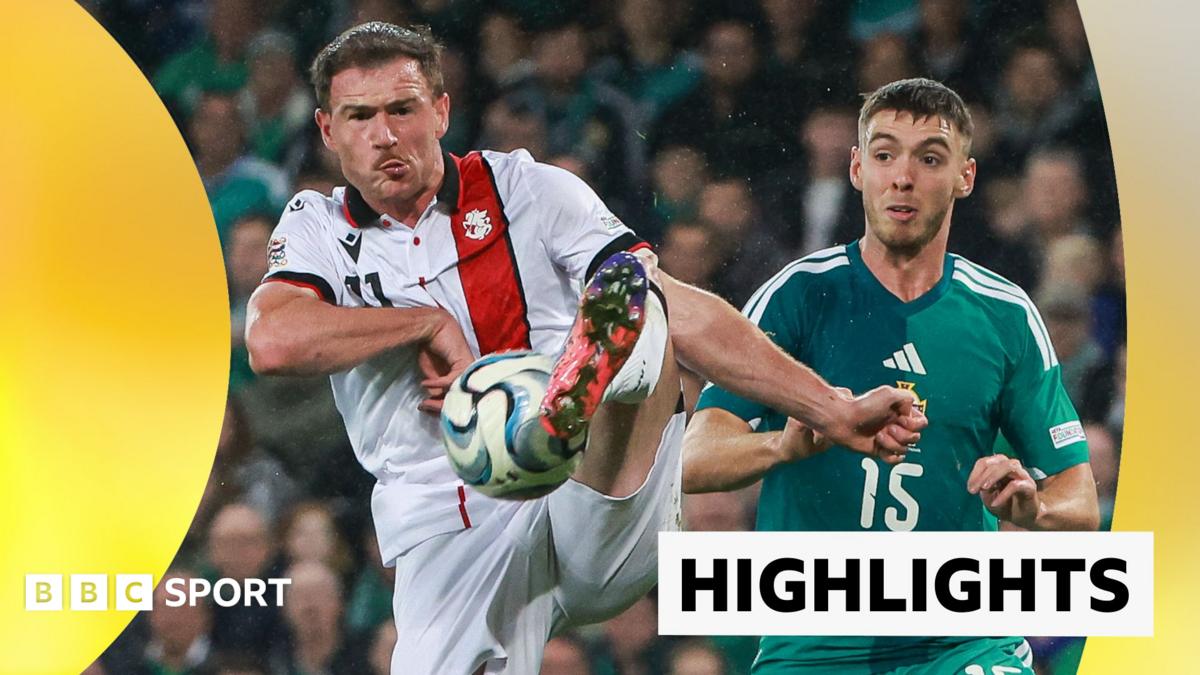
Highlights: Northern Ireland frustrated by Georgia
Watch highlights as Northern Ireland end the extended window with a 0-0 Nations League draw against Georgia at Windsor Park.
Source link
Watch highlights as Northern Ireland end the extended window with a 0-0 Nations League draw against Georgia at Windsor Park.
Source link
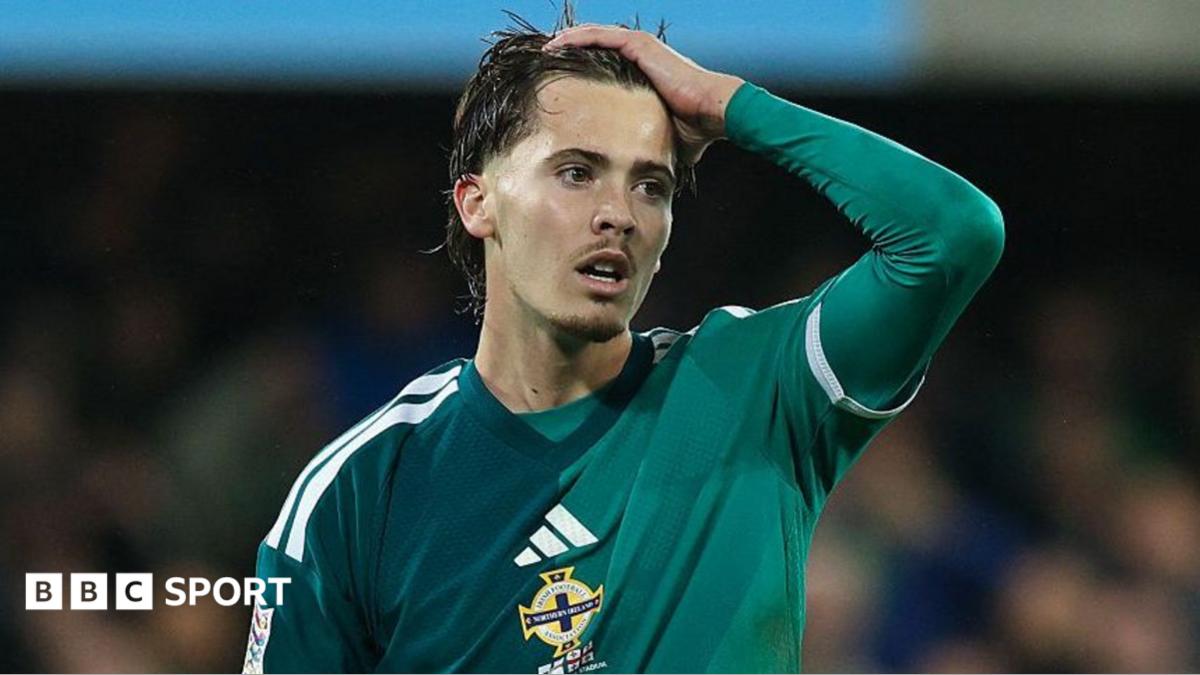
With this new four-game window presenting something different for managers across Europe to tackle, a myriad of approaches emerged.
Germany boss Jurgen Klopp named virtually two separate squads for his side’s two pairs of games, while Ukraine made 10 changes between their first two games and then nine for their defeat by Northern Ireland.
Having spoken before the start of the campaign about how the condensed schedule would be more difficult for smaller nations, O’Neill kept changes to a minimum.
He started only 15 different players across the four games with two of his changes enforced by Ballard’s injury and Ethan Galbraith’s absence against Ukraine to attend the birth of his child.
Despite the relatively small pool of starters, this still feels like a window when Northern Ireland’s depth was tested and passed with flying colours.
O’Neill was without talisman Bradley and the reliable Ali McCann coming into the window, and then lost Ballard to a hamstring injury after the first game in Tbilisi.
Young centre-backs McConville, 21, and Tom Atcheson, 20, looked ready to play at this level, while Ciaron Brown started all four games and drew plaudits having often had to bide his time in past squads.
Kieran Morrison, Terry Devlin and Brodie Spencer all impressed when given a chance against Ukraine.
O’Neill’s praise for his squad is across the board.
“For me it’s been one of the most enjoyable windows I’ve had as an international manager, and that’s been because of the players,” said O’Neill.
“How they’ve applied themselves, how desperate they are to do well, that’s a real positive.
“We’ve a brilliant group of players and a lot of them I think will play international football for a long time.”
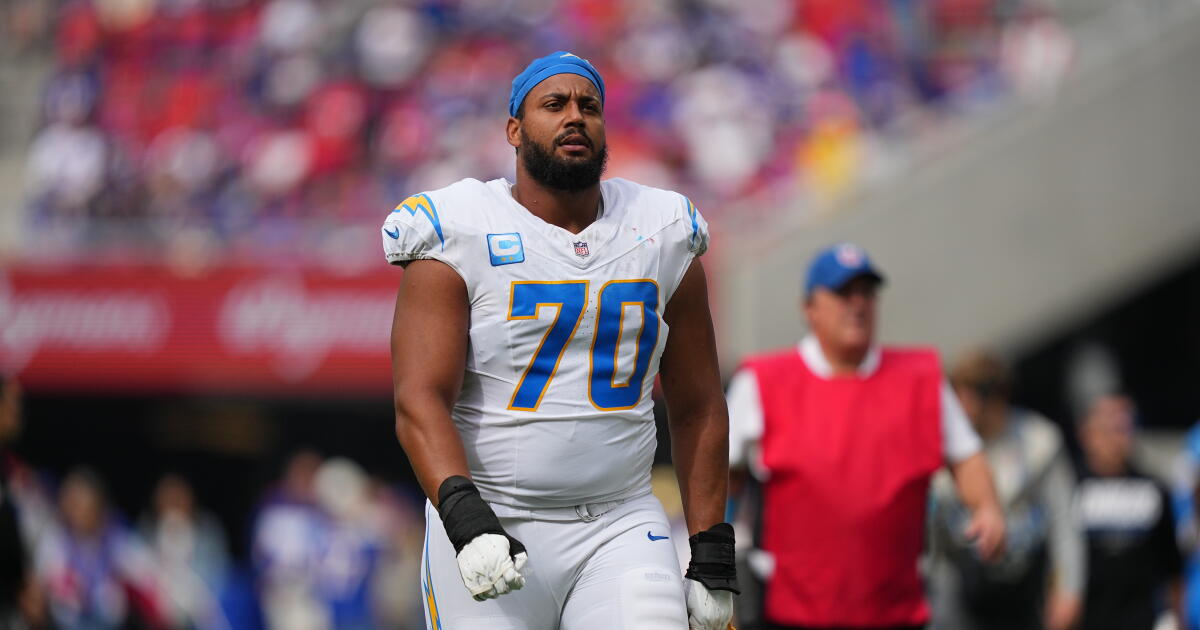
Chargers coach Jim Harbaugh shared several sobering injury updates Monday in the wake of Sunday’s loss to the Seattle Seahawks.
Left tackle Rashawn Slater sustained a high ankle sprain and is a candidate for injured reserve, Harbaugh said. Right tackle Joe Alt (neck) is still being evaluated but is less likely to be placed on IR. Offensive lineman Trevor Penning is in concussion protocol.
Safety Derwin James Jr. (hamstring) is week-to-week, but is expected to stay off IR. Cornerback Donte Jackson (hamstring) is also week-to-week.
Wide receiver Ladd McConkey, who has already fought through a cracked rib this season, is day-to-day with a foot injury.
“Next man up,” Harbaugh said. “Putting the plan together and treating it like it’s a one-game season. That’s what we’re doing.”
Harbaugh said guard Kayode Awosika (fibula), wideout Brenen Thompson (quad), defensive tackle Dalvin Tomlinson (hamstring) and tight end Charlie Kolar are “all making good progress” with their injuries.
Harbaugh added that offensive lineman Branson Taylor and fullback/defensive lineman Scott Matlock, who were placed on injured reserve for undisclosed reasons before Week 1, have a “good chance” to open their practice windows this week. However, linebacker Denzel Perryman (undisclosed) isn’t “quite there yet.”
The 0-4 Chargers host the Denver Broncos (2-2) on Sunday at SoFi Stadium.
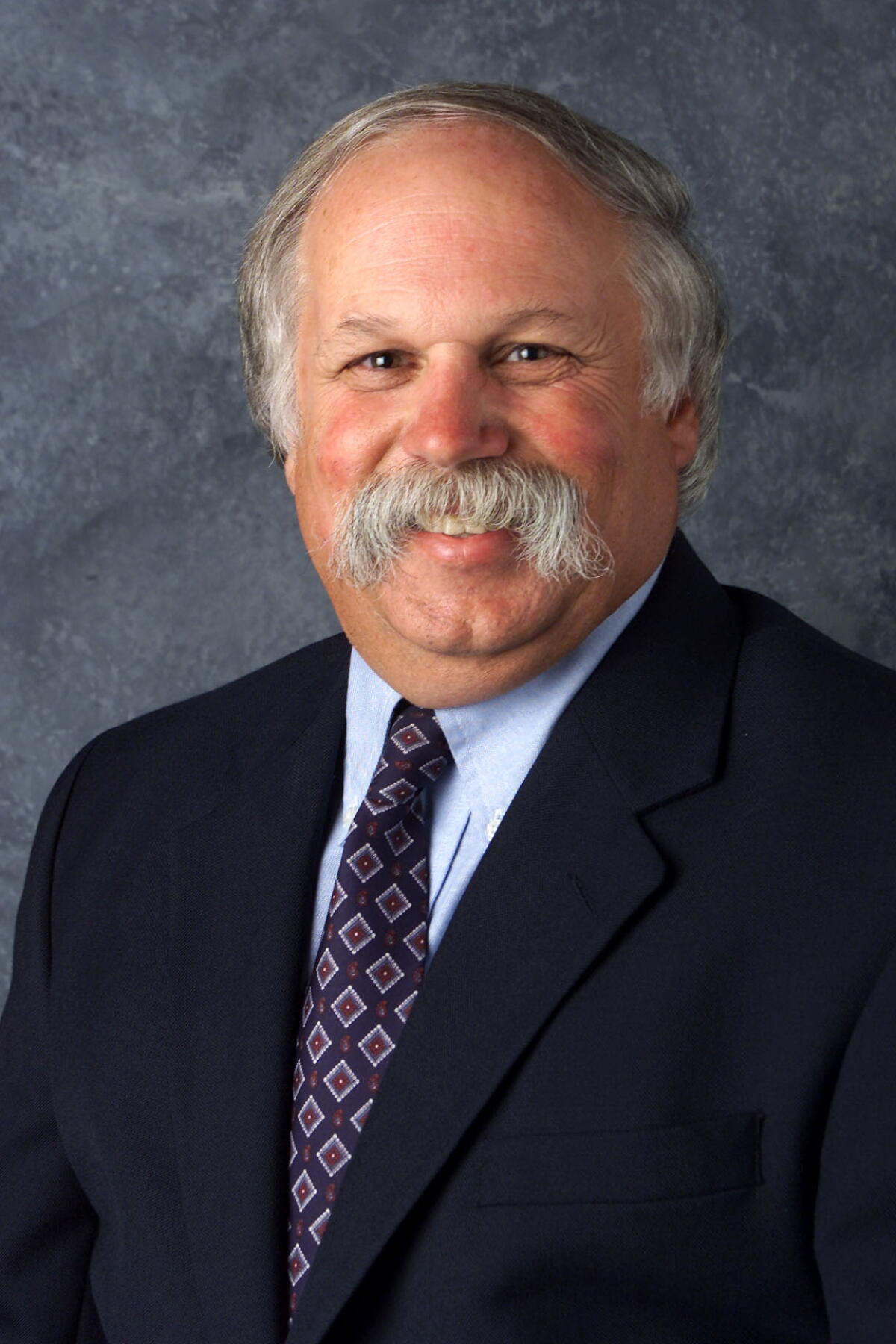
The baseball world was captivated by left-handed pitching prospect Jim Abbott ahead of the 1988 major league draft mostly because he didn’t have a right hand. Seven teams passed on him before the Angels picked him.
Why? Largely because Angels scouting director Bob Fontaine Jr. ignored the potential limitations that others fixated on when evaluating Abbott. Rather than dwelling on the absence of a right hand, Fontaine saw something wondrous coming out of Abbott’s left hand — a cut fastball.
“He’s actually more suited to the pro game than the amateurs with the aluminum bats,” Fontaine told The Times after the draft. “He’s going to be breaking off a lot of these wood bats with that cut fastball.”
As usual, Fontaine, who died Saturday at age 73, was prophetic in his assessment. Abbott became the rare pitcher to go straight from college — he’d starred at Michigan — to the major leagues, skipping the minors entirely and enjoying a 10-year MLB career while inspiring numerous fans in disabled communities.

Bob Fontaine Jr. as director of player development for the Seattle Mariners.
(Seattle Mariners)
“I think every scout, if they scout for any length of time, is going to have one player that just is special to you. Jimmy Abbott was that,” Fontaine told JapanBall in 2022. “There were people that were even kind of saying, ‘Oh, they did it for a publicity stunt.’ I remember saying, ‘Yeah, we took the eighth player in the country for a publicity stunt? Give us some credit!’”
Fontaine was showered with plenty of posthumous credit over the weekend. He scouted for six teams, and a highlight of his resume was drafting the nucleus of the Angels’ roster that won the 2002 World Series.
“What a character … what a storyteller … and what a talent evaluator … there is no 2002 World Series title for the #Angels without Bob Fontaine Jr. … RIP,” wrote former longtime Times baseball writer Mike DiGiovanna on X.
What a character … what a storyteller … and what a talent evaluator … there is no 2002 World Series title for the #Angels without Bob Fontaine Jr. … RIP https://t.co/1eHIStuWWY
— Mike DiGiovanna (@MikeDiGiovanna) October 5, 2026
“Crushed regarding Bob Fontaine Jr.’s passing, as he was a special man who I was lucky to work closely with three times @WhiteSox @Mariners, and @BlueJays. Fun as hell, elite evaluator, and phenomenal people skills. RIP, Robert,” added former Dodgers general manager Dan Evans.
“A gifted talent evaluator and mentor, Bob helped shape generations of Angels by overseeing the signing and development of numerous Halos, including Jim Abbott, Jim Edmonds, Garret Anderson, Tim Salmon and Darin Erstad,” the Angels said in a statement. “Bob left a lasting mark on baseball by devoting over five decades to the game. Our thoughts are with his family and loved ones.”
The Angels frustrated Fontaine at times by declining to spend big on players from talent-rich Latin America. Rather than sulk, however, he scoured the globe, in 1992 signing three players from Russia and a fast-pitch softball player from New Zealand named Gus Leger.
Asked by The Times’ Bill Shaikin if he had ever played baseball, Leger responded, “I haven’t. Would it help?”
The experiment failed — none of the quartet advanced beyond Class A — yet Fontaine maintained the sunny outlook he inherited from his father. Bob Fontaine Sr. was a scout who worked under the legendary Branch Rickey with the Brooklyn Dodgers before becoming scouting director of the Pittsburgh Pirates for 18 years and the first scouting director of the expansion franchise San Diego Padres. He also served as general manager of the Padres from 1977 to 1980.
“[My father] told me when I got started, ‘Don’t you ever, ever not appreciate where you are and what you’re doing, because you’re lucky. You’re going to a ballpark to make a living, so your bad days aren’t that bad,’” Fontaine Jr. said. “I never forgot that, I never forgot how lucky I am.
“Hey, you’re looking at a guy that barely squeaked through high school, who doesn’t have any ability, and I lasted almost 50 years. It’s because in baseball, if you listen, and you’re not afraid to take a chance once in a while, even somebody with my lack of ability can stay around for a while,” he said.
Fontaine got his foot in the door through his father. His first job as a teenager was as a minor league bat boy with the Pirates. Next he became a peanut vendor at Forbes Field. By age 19, he caught on with the Padres as an area scout.
Both Fontaines were scouts well ahead of the deep empirical and objective analysis of baseball data — sabermetrics is the catchall term — that some believe has made scouts obsolete. Fontaine maintained the best evaluations come when scouting is utilized along with numbers.
“What the traditional scout gives you is personal reference, like with things I learned on players that I missed on,” he said. “Analytics didn’t do that. I’m a firm believer that the best video camera is your eyes, the best model is your brain, and the best way to make a tough decision is with your heart.”
Fontaine’s methods produced results. Under his guidance in 1977, the Padres drafted future Hall of Fame shortstop Ozzie Smith in the fourth round. Four years later Fontaine plucked another future Hall of Famer, taking outfielder Tony Gwynn in the third round.
And when Fontaine moved to the Montreal Expos in 1985, he took a 6-foot-11 left-handed pitcher out of USC named Randy Johnson in the second round — another Hall of Famer.
Fontaine co-authored a memoir in 2021, “In Search of Millionaires (The Life of a Baseball Gypsy): The Accounts of Bob Fontaine Jr.”
“Baseball has provided me with a fabulous opportunity to see the world and work in an industry that most people envy,” he wrote in the book. “I didn’t get rich, except in experiences. To meet and work against so many fine people, as well as some great general managers and owners, has been a privilege.”
Times sports columnist Bill Shaikin contributed to this story.
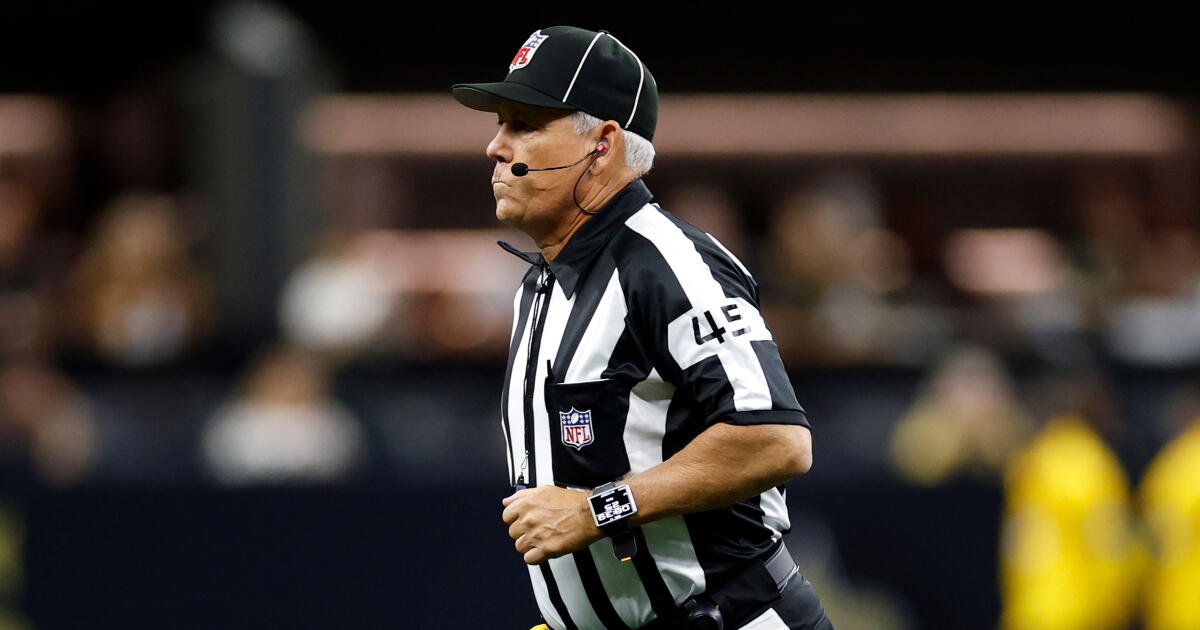
The NFL has issued suspensions for two officials involved in confrontations with players during Sunday’s games, including one who was caught on camera apparently cursing at Arizona Cardinals tight end Trey McBride.
“The NFL confirmed today that line judge Jeff Seeman has been suspended for two games and referee Adrian Hill has been suspended for one game, each for an instance of unprofessional conduct toward a player in Sunday’s Arizona-New York Giants (Seeman) and Miami-Minnesota games (Hill),” the league said Monday in a statement. “The suspensions were issued by NFL Vice President of Officiating Ramon George.”
Late in the Cardinals’ 36-24 loss to the New York Giants, McBride argued a non-call with Seeman. A video of part of the interaction between McBride and Seeman, posted on X by ESPN’s Adam Schefter, appears to show the line judge shouting, “F— you!” at McBride two times.
NFL Players Assn. executive director JC Tretter posted a clip of the interaction that zoomed in on Seeman as he shouted toward McBride.
“This kind of behavior from an official towards a player is unacceptable,” Tretter wrote. “Players are consistently held accountable when the roles are reversed. We expect the NFL to hold officials to the same standard.”
CBS reporter Aditi Kinkhabwala reposted Tretter’s post and commented that she was “standing right there” during the interaction between McBride and Seeman.
McBride “was heated for sure, but I never heard a curse from him,” Kinkhabwala wrote. “The harshest he got was, ‘You’re ruining the game.’”
The other incident took place early in the Minnesota Vikings’ 15-10 victory over the Miami Dolphins. On a play that was whistled dead because of a neutral zone infraction, Vikings linebacker Eric Wilson appeared to be shoved into Hill, who was knocked to the ground. When Wilson attempted to help Hill to his feet, the official jumped up and appeared to yell at the player and point for him to move away.
“That was funny, honestly,” Wilson told reporters. “I ended up apologizing to him and explained the situation. He was cool about it. He understood what was happening. He just said he was trying to get me — he didn’t want us fighting apparently, me and the Dolphins guy. So he was just trying to break us up.”
The NFLPA said it had no further comment on either incident other than Tretter’s X post. The NFL Referees Assn. did not immediately respond on Monday to multiple requests for comment.
The Associated Press contributed to this report.
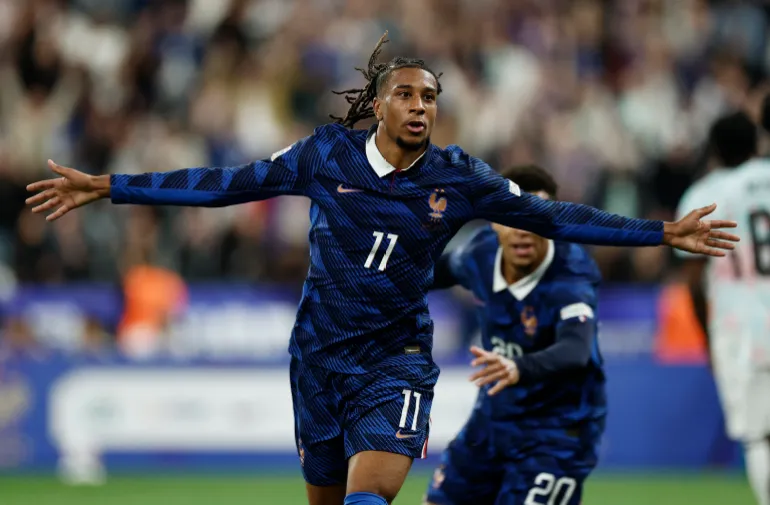
Michael Olise and Desire Doue help France score four goals in closing stages to overturn 1-0 deficit at home to Belgium in Nations League Group A1.
Published On 5 Oct 20265 Oct 2026
France came from a goal down to beat Belgium 4-1 in their Nations League Group A1 meeting at the Stade de France on Monday.
Zinedine Zidane secured his first home win in charge, three days after a 1-1 draw against Italy, thanks to his substitutes.
list of 4 itemsend of list
Belgium’s Dodi Lukebakio put the visitors ahead in the 35th minute, but Desire Doue, Rayan Cherki and Michael Olise, all on the bench at kickoff, turned the match on its head in the final 15 minutes.
Doue levelled with a left-footed shot from the edge of the box in the 77th minute. Four minutes later, Cherki put his side in front, finishing from an Olise cross.
Olise then completed a brace just before and during stoppage time, the second latching onto Doue’s slick pass after a clinical break.

In the same Nations League group, Italy secured a 3-1 victory over Turkiye with Gianluca Scamacca, Riccardo Calafiori and Pio Esposito scoring. Turkiye’s Aral Simsir had equalised earlier, just after the hour mark.
France sit top of Group A1 with 10 points, three ahead of Italy and four clear of Belgium. Turkiye are at the bottom with four defeats from four matches.
France head to Milan to face the Azzurri in their penultimate group game next month before hosting Turkiye.

Tyreek Hill once was a superstar receiver with the Kansas City Chiefs, winning a Super Bowl and making six Pro Bowls during his six seasons with the team.
While that was several years ago at this point, it appears that Hill and the Chiefs have mutual interest in a possible reunion.
The Chiefs have a void at wide receiver. Fifth-year player Tyquan Thornton was having the game of his career Sunday against the Las Vegas Raiders — registering triple-digit yardage (11) and multiple touchdowns (2) for the first time — before suffering a dislocated ankle in the fourth quarter that will have him out indefinitely.
Star receiver Rashee Rice suffered a hamstring injury in the first quarter of the Chiefs’ 30-27 win over the Raiders and did not return. His injury isn’t believed to be serious, though, with the team’s bye next week giving him a chance at possibly returning without missing a game.
His former team’s injuries at his position seemed to catch Hill’s attention on Sunday.
“Hm,” he wrote on X.
Hill played for the Miami Dolphins from 2022 through last season. He dislocated a knee and tore several ligaments, including his ACL, during a game against the New York Jets on Sept. 29, 2025, and was released by the Dolphins during the offseason. As Hill continues to recover from the injuries, his agent, Drew Rosenhaus has indicated that he could be ready to play in November.
In fact, Rosenhaus said he plans to begin negotiating a deal for his client on Monday with multiple teams, with the Chiefs in that mix, ESPN’s Adam Schefter reported. The Chiefs were interested in possibly bringing back Hill even before Sunday’s injuries, according to The Athletic’s Michael Silver, and the team reached out to Rosenhaus about that possibility after those injuries occurred.
Silver also quoted several Chiefs players who said after the game that they’d be in favor of such a move. Star quarterback Patrick Mahomes said “it’d be pretty cool” if Hill came back to Kansas City.
“I’d love to have ‘The Cheetah’ back in this building,” tight end Travis Kelce added. “He’s a brother. He’s one of those people who, when he sets his mind to something, he usually delivers. You saw that with Miami, when all the haters were saying he couldn’t play and he went and had his best year. I’d be excited by what he could do.”
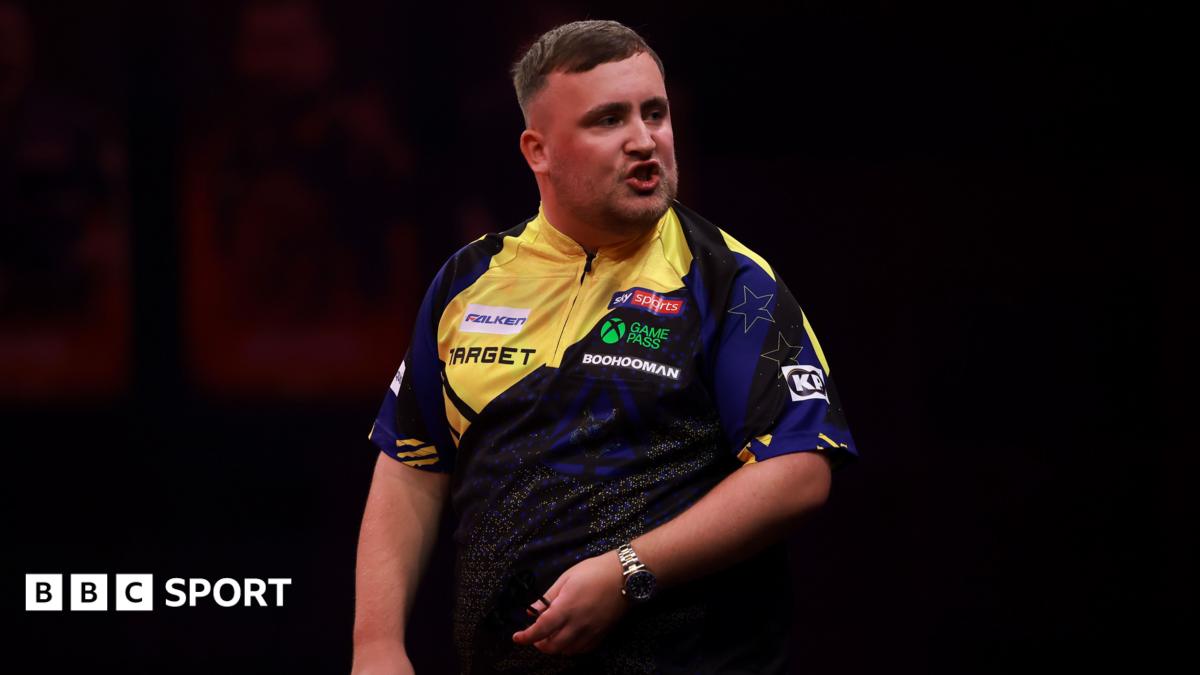
Luke Littler missed out on the chance to hold the senior and youth world titles simultaneously after suffering a surprise semi-final defeat at the World Youth Championship.
The 19-year-old world number one was beaten 6-5 by world number 68 Cam Crabtree, who will face German Jan Schmidt in the final on 29 November.
That match will take place on finals day at the Players Championship Finals in Minehead – an event Littler has also yet to qualify for having skipped the majority of Pro Tour events this season.
He is currently ranked 126th in the Players Championship order of merit and only the top 64 qualify.
Four Players Championship events remain, but two of those are in Den Bosch in the Netherlands – where Littler withdrew from events recently after being subjected to boos by the crowds.
Littler has won successive full World Championships and won the youth title as a 16-year-old in 2023, but the semi-final loss to 23-year-old Crabtree was his second successive exit at that stage having lost to Beau Greaves in 2025. He could though enter four more times, with the tournament open to players aged 23 or under at the start of the season.
The loss is the latest in a series of surprise exits for Littler, who was knocked out of the World Grand Prix in the first round by Luke Woodhouse and lost to Jonny Clayton in the quarter-finals of the World Series of Darts finals.
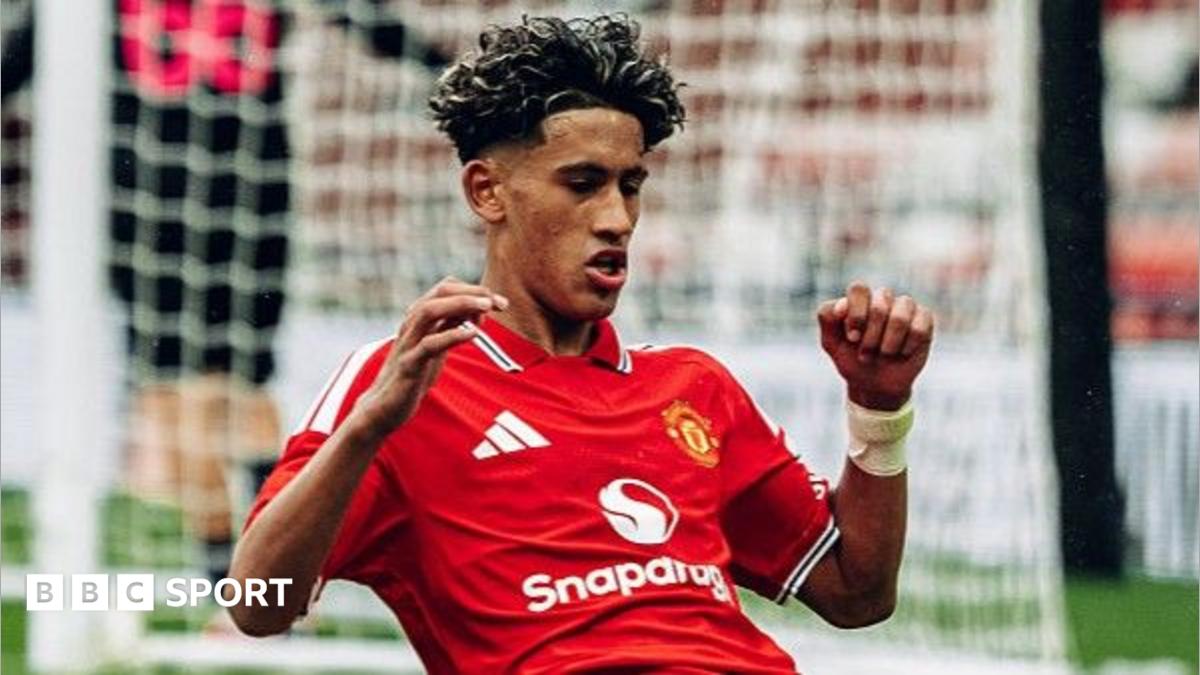
While tensions between Gabriel’s camp and United had been simmering for a number of months, sources have told BBC Sport the player’s decision to seek a move away was ultimately triggered by his non-inclusion in Michael Carrick side for the Champions League encounter with Azerbaijani champions Sabah FK on 10 September.
The youngster’s camp had expressed a desire for Gabriel to be used as a substitute against Sabah – which, on paper, was the easiest of United’s league-phase games.
Sources say the prospect of the Londoner coming on against Brighton in the EFL Cup on 16 September was also discussed, with United officials subsequently insistent that was the plan.
Had he played in either match, Gabriel would have become United’s youngest ever player.
However, by the time the encounter with Fabian Hurzeler’s side arrived, the striker had already told the club of his intention to quit and had left the country.
Gabriel could not play against Sabah because he had not been registered on United’s Uefa A list of players when it was announced on 3 September. The precise reasons for this have not been made clear.
It did not prevent him scoring a hat-trick in a Uefa Youth League game against them at Leigh Sports Village earlier on 10 September. While he has not been back to United since, it is not clear whether anything significant happened after that game.
For their part, United believe they made it clear they view Gabriel as immensely important to their first-team future, even though sources have indicated the player did not report for the start of the academy’s pre-season training schedule at the beginning of July – a week earlier than the senior squad – despite being asked to do so.
Sources also say they lobbied the Premier League to allow the forward to use “JJ Gabriel” on the back of his shirt – which they believe underlined their commitment to the academy prospect.
Gabriel’s real name is Joseph Junior Andreou O’Cearuill – but he is reported to have changed his name for commercial purposes.
In addition, United say they have provided Gabriel with first-team care and services – included regular meetings with senior coaches and nutritionists.
That he was included in the senior team photo is also viewed as further evidence of their commitment to his development and transition into first-team football.
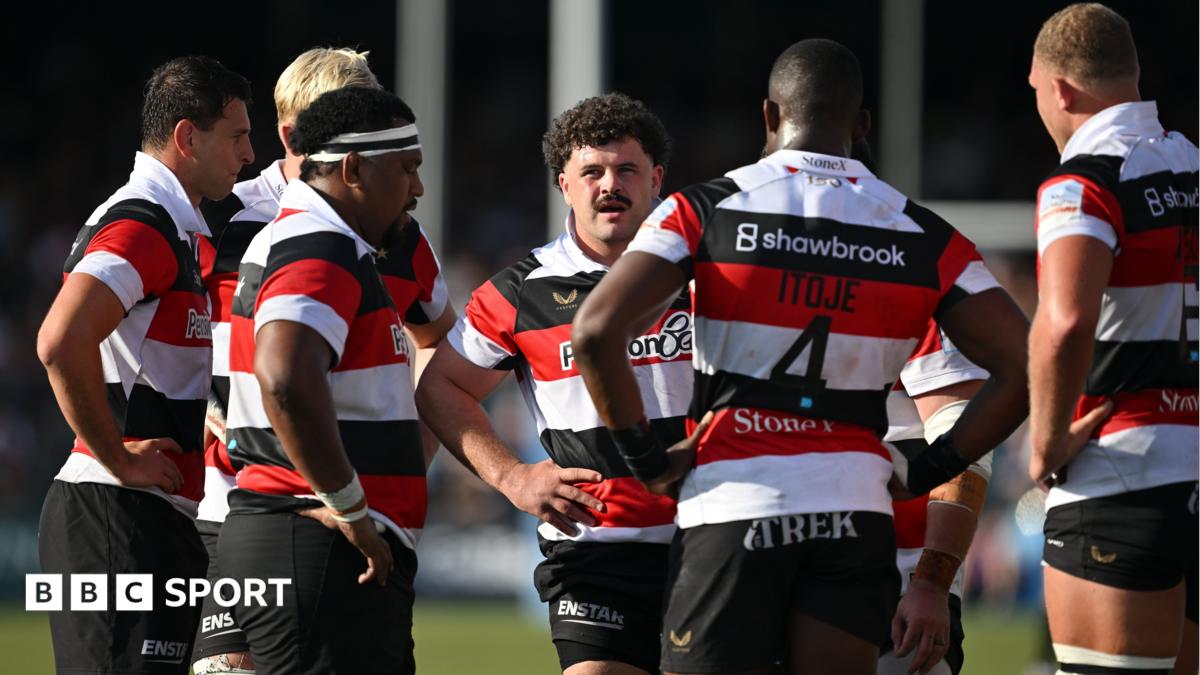
New Saracens chief executive Ed Coetzee confirmed on Friday that Venter’s job title, which differs to the one he was said to have when appointed to succeed Mark McCall, includes “significant media duties”.
Venter duly spoke to TNT Sports before the match with Sale and said he refused the director of rugby job title because he had “absolutely nothing” to do with other departments of the club, such as the academy and women’s section.
The 56-year-old also insisted the wine consultant reference was not a joke aimed at the media.
“Our whole theme this year was all about wine,” Venter said. “Everything in our theme was about a blend and getting the blend right.”
But Care said the stories around Venter’s role looked to have had a negative impact on the pitch.
“Sarries have done some amazing things in the last year or so, bringing a new energy, a new vibe,” he said.
“But then it just feels like they’re taking the mickey out of everyone by [saying] ‘he’s not doing interviews today’ and taking fines and changing his job title.
“You can only do that when you are so much better at rugby than everyone else and at the moment, they’re not.
“[The performance against Sale] looked flat. It looked quiet. I don’t blame the players. I blame the management for that.”
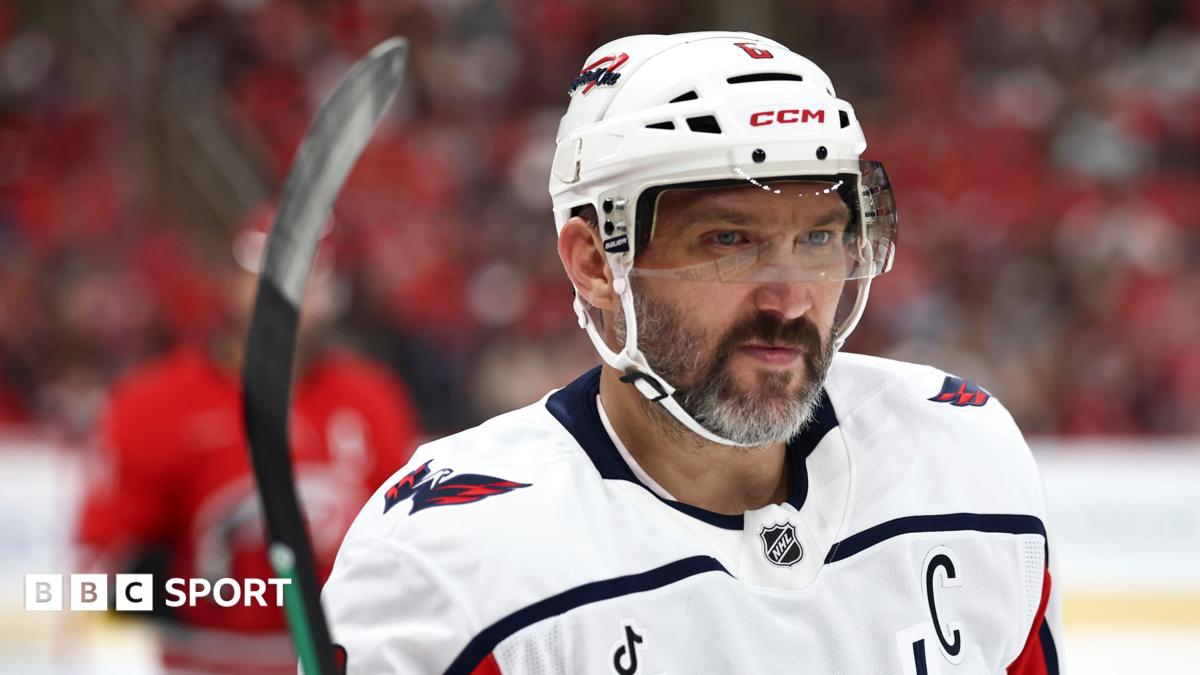
National Hockey League all-time leading goalscorer Alex Ovechkin says he will retire at the end of the season.
The 41-year-old Russian, who plays for the Washington Capitals, claimed the record in April 2025 when he scored his 895th career goal to surpass the legendary Wayne Gretzky’s NHL regular season tally.
Canadian Hall of Famer Gretzky held the record for 31 years having previously overtaken compatriot Gordie Howe in 1994.
Ovechkin said in a statement that he “loves this game so much” but knew that in his “heart it’s the right decision”.
“It was important for me to make this announcement before our first home game, so I have the chance to thank all the people around the game,” Ovechkin said.
“Everyone who has been so important to me and my family and helped me through good times and tough losses.
“I wouldn’t have been able to achieve everything I have in my life without them.”
Ovechkin has 1,688 career points (929 goals, 759 assists) in 1,575 games for the Capitals, the 10th-most points in NHL history.
He’s 11 goals away from passing Gretzky for most total goals (regular season and play-offs combined) in NHL history and four assists away from passing Nicklas Backstrom for the franchise career assists record (762).
Ovechkin will play his first Western Conference home game of the new season on Wednesday when the Pittsburgh Penguins are the visitors to the Capital One Arena.
“I am excited about this season with my team-mates, and we will do everything we can to make this year special,” he added.
“I am going to enjoy every moment with my family, my boys, our fans and everyone who has been part of my hockey career.”
Portugal manager Jorge Jesus fires back at a question from the media over his handling of Cristiano Ronaldo after the veteran forward left the squad in a row over playing time.
Source link
Hi, and welcome to another edition of Prep Rally. I’m Eric Sondheimer. Football forfeits have been happening. Athletic directors and coaches have been scrambling to make sure players are eligible and parental paperwork is accurate. That’s just a small part of the ethical dilemmas taking place in the high school sports world.
Nobody likes to be told what to do. Nobody likes to be told they are wrong. Nobody likes bureaucracy because it moves slowly. Everybody likes to find shortcuts and to be told they are right. It’s almost a daily experience working in the high school sports world, figuring out ethical dilemmas and how to proceed.
Prep Rally is devoted to the SoCal high school sports experience, bringing you scores, stories and a behind-the-scenes look at what makes prep sports so popular.
By continuing, you agree to our Terms of Service, which include arbitration and a class action waiver. You agree that we and our third-party vendors may collect and use your information, including through cookies, pixels and similar technologies, for the purposes set forth in our Privacy Policy such as personalizing your experience and ads.
Coaches are supposed to tell their players every season that hazing is wrong and won’t be tolerated. Then hazing happens, and the coach is the one held accountable, sometimes even losing their job.
There always are internal politics at play. A winning coach will be treated differently from a losing coach. That’s a fact. In my job as a sportswriter, I’ve been monitoring decisions on ethics for decades. I was around when the California Interscholastic Federation adopted lessons from the influential Michael Josephson, who created the Character Counts coalition. Awards continue to be given out to those who hold their ground and choose the ethically right decision to make.
Do you go out and check the address of transfer student or trust the paperwork submitted? Do you report another team using an ineligible player immediately or hold it back until right before the playoffs, causing the entire team to lose out on the playoffs because of forfeits?
Here’s a look at some of the challenges.

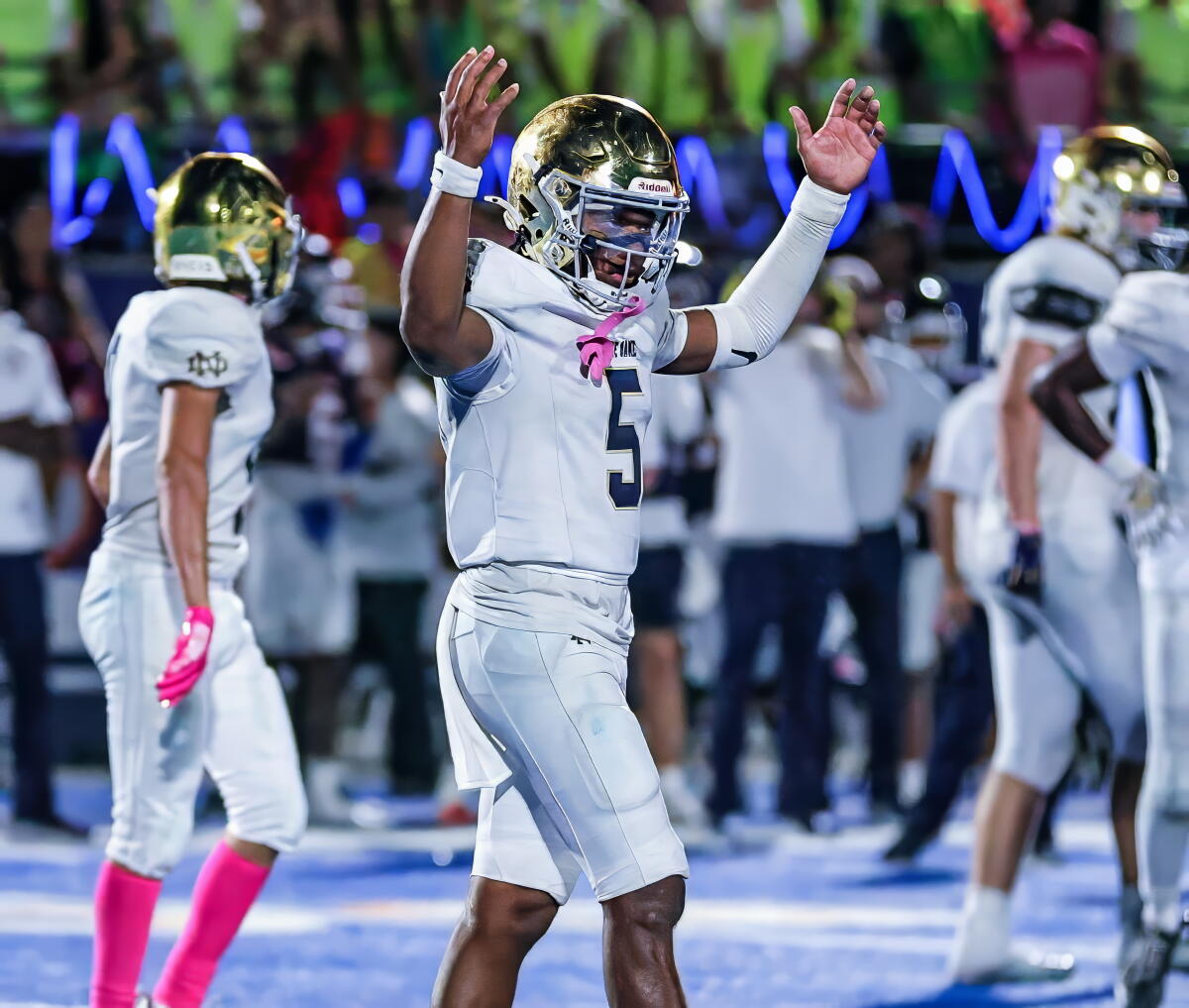
Tahj Skinner of Sherman Oaks Notre Dame accounted for four touchdowns — throwing for three and returning an interception for another— in a 28-21 win over Chaminade.
(Craig Weston / For The Times)
Tahj Skinner of Sherman Oaks Notre Dame intends to play safety for UC Davis. But he’s been doing such a fantastic job playing quarterback for the unbeaten Knights that being a wildcat quarterback could be in his future. He had three touchdown passes and returned an interception for a touchdown in a win over Chaminade. Here’s the report.
In a battle of very good defenses, Santa Margarita defeated Mater Dei 14-7. Here’s the report.
Another week, another historic win for unbeaten Cleveland in the City Section. The Cavaliers defeated longtime power Birmingham 14-9 in the West Valley League opener. Here’s the report.
In a battle of unbeaten teams, Corona del Mar got past Villa Park, 24-10. Here’s the report.
Granada Hills Kennedy (6-0) has won 20 consecutive Valley Mission League games.
Ceasar Reyes of Garfield continues to pile up rushing yards. He had 374 yards in 39 carries and scored five touchdowns in a 42-28 win over Bell. He‘d better bring doughnuts to his offensive linemen on Monday mornings.
Quarterback Shawn Sanders of Paracete had a game for the ages in a 56-36 win over St. Paul. He was 14 for 15 passing for 205 yards and two touchdowns. He rushed for 188 yards and two touchdowns. He kicked seven PATs and seven balls into the end zone for touchbacks. Did he bring out the water bottles too?
Corona Centennial has nine players in its football program with variations of the same first name. Here’s the report.
Here are this week’s top 25 rankings by The Times.
Here’s a look at top individual performances from the past week.
Here’s the schedule for this week’s games.
Here are this week’s top 10 rankings by The Times.
One of the great teams from the 2026-27 school year is going to end up being JSerra flag football. The Lions won the Southern Section Division 1 title last season and are even better this season with 21 consecutive victories. If any opponent gets close, that will be news.
You need to go watch the duo of quarterback Kate Meier and receiver Tessa Russell.
Carson has taken over as No. 1 in the City Section.
There’s a clear pecking order in the Southern Section. Mater Dei and Sierra Canyon have been the top teams all season. Mira Costa, Los Alamitos and Marymount are right behind.
Here are the latest Southern Section rankings.
Sierra Canyon, at 26-1, plays host to Marymount on Tuesday in a huge Mission League matchup.
Venice, Cleveland, Palisades and Chatsworth hold down the top spots in City Section rankings.
Left-handed pitcher Joe Bell of La Cañada has committed to the Naval Academy….
Pitcher Ricky Aguilar from Gahr has committed to Cal State Bakersfield….
Sean Compton of Bonita has committed to play baseball at UC Riverside….
Offensive lineman Adam Fogleson of Mater Dei has committed to UC Davis….
Junior softball standout Scarlett LaBriola of Santa Margarita has committed to Stanford….
Junior softball standout Anna Plotke of Santa Margarita has committed to Maryland….
Gunner Welch is the new boys’ volleyball coach at Campbell Hall….
Senior basketball guard Cole Holden from Harvard-Westlake has committed to UC Riverside….
Defensive back Dean Gibson from Corona Centennial has committed to San Diego….
Leah Reynolds of Bonita has committed to play softball at Colorado State…..
Junior catcher Annabel Raftery of JSerra has committed to Stanford for softball….
It’s strange times at Van Nuys High, where baseball coach Andres Sepulveda was dismissed for building an illegal batting cage. The softball program also faces scrutiny for an unapproved fence and dugouts…
From Chaminade AD: Bryan Cantwell is taking personal leave and we have named long time assistant coach Chris Johnson as interim Head Coach. We expect Bryan to return at some point in the future. Basketball.
— eric sondheimer (@latsondheimer) September 30, 2026
Yorba Linda’s football team has been forced to forfeit four victories, which means its record is 0-6 and making the playoffs would require earning an automatic berth from the Alpha League. The school district indicated there were violations involving bylaws 503.B (1) and 510, which involve administrative oversight and undue influence….
Todd Therrien, a former football coach at St. Bonaventure who won two state Division III championships, died on Sept. 30, the Ventura County Star reported. He was 47. He recently had a stroke and was a quadriplegic after a spinal cord injury from a car accident in 2022. He succeeded Jon Mack in 2007….
Newport Harbor is No. 1 in the first Southern Section boys’ water polo rankings….

Freshman Emiliano Plascencia of Whitter has more than 100 goals for his water polo team this season.
(Los Angeles Times)
Whittier has a freshman water polo player scoring goals in bunches. Here’s the report. …
JSerra made it to the championship game in water polo at the Elite 8 tournament before losing to Cathedral Catholic….
The Southern Section football playoff pairings will be announced on Sunday, Nov. 1 at 10 a.m. That’s also the end of daylight savings time when the clocks move back one hour, so no sleeping in for coaches, parents or players….
The Luderer twins, Keira and Kelsey, from Sherman Oaks Notre Dame committed to Florida State for softball. Here’s the report….
Chaminade has begun construction of a $66-million project that will include new baseball and softball diamonds. Here’s the report.
Jamie Dixon was a star guard at Sherman Oaks Notre Dame, went on to Texas Christian, became a top assistant to Ben Howland at Northern Arizona, then an assistant at Pittsburgh before becoming coach. He has been TCU’s coach since 2016.
Here’s a story from 2019 when Dixon was being considered for the UCLA coaching opening.
From Pittsburgh Magazine, a story on Dixon’s past in 2015.
From the Los Angeles Times, a story on Inglewood football coach Mil’Von James saying he played three ineligible players in Texas because he didn’t know they were ineligible outside of California.
From the Los Angeles Times, a story on how unbeaten Sierra Canyon’s football team has found a top sophomore linebacker in Eli Zamorano, who spent nearly three months living on Easter Island when he was 15.
From Yahoo, a story on former Mater Dei receiver Cooper Barkate having a breakout performance for Miami.
𝘿𝙚𝙢𝙤𝙡𝙞𝙨𝙝𝙚𝙙 𝙗𝙮 𝘿𝙞 𝙈𝙖𝙜𝙜𝙞𝙤
Matti Di Maggio crushes one for a leadoff solo shot!
T4 | 🇺🇸 1 – TPE 1 pic.twitter.com/wy8fwRb3uN
— USA Baseball 15U (@USABaseball15U) September 29, 2026
One reason why it’s going to be so difficult to get high school softball teams to play in state championships instead of club ball is seen in X profiles. Players mention their club team, not their high school team.
— eric sondheimer (@latsondheimer) September 29, 2026
The JSerra Girls Flag Football team improved to 20-0 on the season, as the Lions defeated the Santa Margarita Eagles 34-20 in a Trinity League game on Tuesday at JSerra Catholic High School.
JSerra has now won 48 straight games dating back to last season.
Santa Margarita took… pic.twitter.com/DyuverPFGB
— JSerraAthletics (@JSerraAthletics) September 30, 2026
The City Section will soon consider a proposal that would punish an individual student for playing on outside team (think soccer) when discovered in the playoffs and not eliminate the team.
— eric sondheimer (@latsondheimer) October 1, 2026
BREAKING: Moorpark High striker Bella Sanabria Cora, the cousin of former Boston Red Sox manager Alex Cora and MLB All-Star Joey Cora, was named to the U17 World Cup team for Puerto Rico.
Keep an eye out for my exclusive interview with Sanabria Cora in The Star early next week. pic.twitter.com/aw3JmJPSN7
— Dominic Massimino (@VCSDominic) October 1, 2026
Matti Di Maggio (Dos Pueblos) and Bryant Ju (Cypress) are coming home with gold medals after USA won the 15U World Cup in Mexico with a 5-4 walk-off win over Dominican Republic in the B 8th.
— eric sondheimer (@latsondheimer) October 5, 2026
Officials making HER-story ✨
A special night was had tonight as this ALL FEMALE officiating crew made history in Orange County! 👏✨
White Hat: Mary Margaret Montgomery
Head Lines: Kristi Wilson
Umpire: Maryann Menlove
Line Judge: Nina Berbiglia
Back Judge: Sarita Stamps pic.twitter.com/DrM86nO8ku— CIF Southern Section (@CIFSS) October 2, 2026
Former El Camino Real catcher Jim Wolf is on the umpire crew for Dodgers-Braves.
— eric sondheimer (@latsondheimer) October 2, 2026
The GOAT got his jersey number retired. Russell White of Crespi. https://t.co/jilu3MraNL
— eric sondheimer (@latsondheimer) October 3, 2026
I’m hearing a growing concern of high school football players directing the N word at opponents. Enough. And coaches need to intervene before someone gets fired, suspended, kicked off. Just like hazing, it’s unacceptable. Officials have already thrown flags trying to stop the taunting.
— eric sondheimer (@latsondheimer) October 4, 2026
Former Gardena Serra running back Kai Honda rushed for 219 yards and scored four touchdowns for Princeton in win over Columbia. Always knew his time would come in the Ivy League. https://t.co/SpDT0qeXDq
— eric sondheimer (@latsondheimer) October 4, 2026
Have a question, comment or something you’d like to see in a future Prep Rally newsletter? Email me at eric.sondheimer@latimes.com, and follow me on X at @latsondheimer.
Did you get this newsletter forwarded to you? To sign up and get it in your inbox, click here.
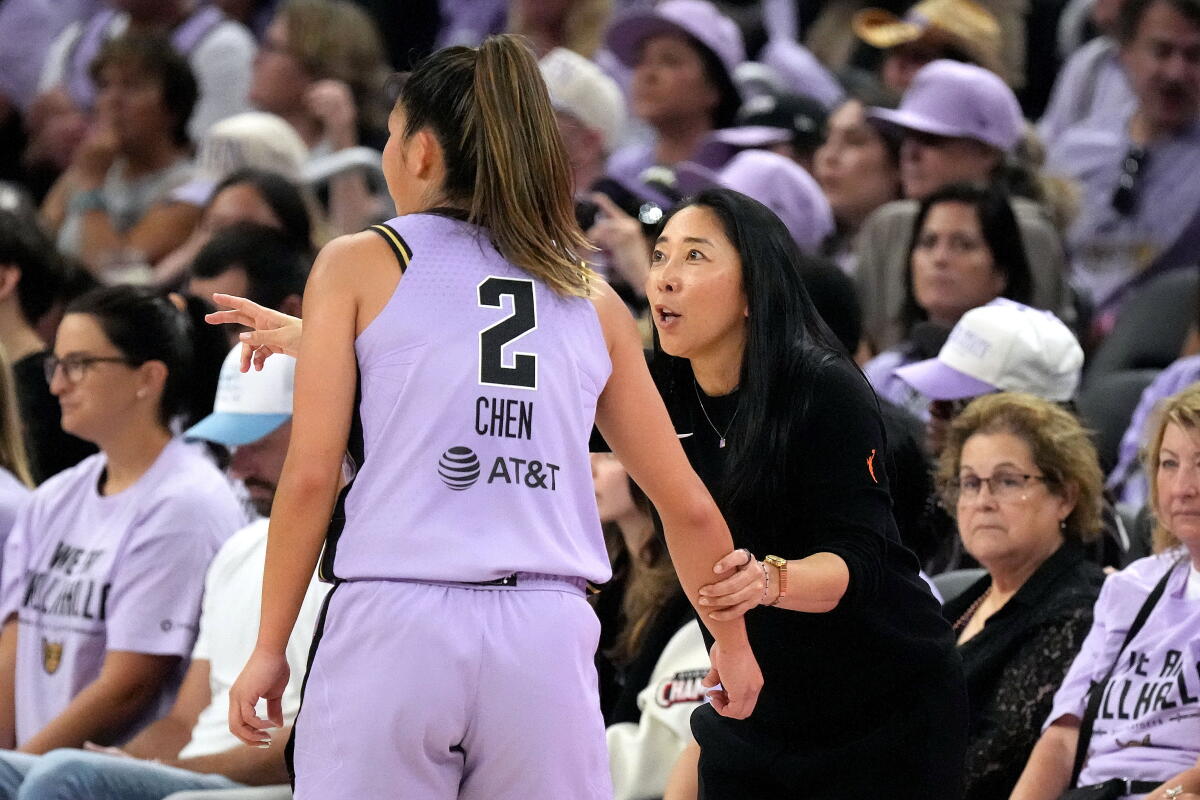
All season long, Golden State Valkyries coach Natalie Nakase has been begging her team to empty the tank. In the winner-take-all Game 3 win over Dallas on Friday, it seems she took that too literally.
“The stress at this time of year is real,” said Becky Hammon, Las Vegas Aces coach and Nakase’s former mentor. “The pressure, you don’t get a lot of sleep. You’re not eating as well as you probably should. There’s a lot of factors that go into that. That was kind of scary actually to watch, and just you know, that little sucker popped right back up, though. Got right back up on that marker and kept it pushing.”
Nakase said Sunday she is fine and just battling exhaustion, something she is taking seriously in her quest to prioritize self-care.
“[My father] told me about 10 years ago when I never knew what I was going to do with my career, and he just said, ‘do not let your career ever get involved if your mental health or your health gets complicated,’” she said. “So when that happened, it definitely was like a wake-up call for me.”
Newsletter subscription change
Starting Sept. 21, this newsletter will be available to Los Angeles Times subscribers only. A free press isn’t free, and we depend on reader support to report on the stories that make a difference. If you’re already a subscriber, nothing will change. If you’re not, there’s never been a better time to sign up. Get started here.
But anyone who knows Nakase is not surprised to see her truly empty the tank like this. Ever since the Huntington Beach native and Marina High graduate was a walk-on to UCLA’s team in 1998, she has had an unwavering intensity.
“She has that [intensity] but with a smile on her face,” said her high school coach Pete Bonny. “From the get-go, this is who she is.”
In her second season as a WNBA coach, those around her have seen her willingness to adapt to the situation.
“She has always found ways to keep us winning,” Valkyries assistant coach Landon Tatum said. “Her ability to change in real time and make adjustments I think is the biggest difference for her this year.”

Golden State Valkyries coach Natalie Nakase talks with Kaitlyn Chen during Game 1 of a WNBA semifinal series against the Las Vegas Aces in San Francisco on Sunday.
(Tony Avelar / Ap Photo/tony Avelar)
Nakase walked on at UCLA after turning down a scholarship offer from UC Irvine. With the Bruins, she became a starter and captain, earning honorable mention All-Pac-10 honors in 2002 and finishing her career ranked 10th in program history with 358 assists.
The Bruins made two NCAA tournament appearances during Nakase’s four seasons.
In her first year as a WNBA head coach, Nakase led the Valkyries to the postseason, the first time an expansion team ever accomplished that feat. It earned her the league’s coach of the year award.
“If you put all 44 games together, all 44 of the regular season, I don’t know if there’s a team that played harder than her team every [game] for the 44 games, and that’s that’s a tribute to her,” Hammon said. “That’s the highest compliment I can give someone.”
This year, Golden State went even deeper with a first-round series win over Dallas after finishing the regular season with the league’s second-best record. After top seed Minnesota was upset in the first round, the Valkyries now have home court throughout the postseason.
“She always sticks to her plan,” said Valkyries point guard Veronica Burton about how she has seen Nakase grow this season. “Every single game she approaches with the utmost respect. I think it says a lot about her as a coach, and then what she expects of us. I think every single game I know what to expect going in, and I know what she wants of me, and I know what she expects of me. She makes us feel prepared.”

Golden State Valkyries coach Natalie Nakase raises the WNBA Coach of the Year award before a playoff game against the Minnesota Lynx on Sept. 17, 2025, in San José.
(Thearon W. Henderson / Getty Images)
Nakase was back on the sidelines on Sunday to face Hammon, wearing a heart monitor and trying to practice what she preaches about recovery. She ultimately led Golden State to a 71-60 win in Game 1 of the series.
Nakase does not plan on tempering her trademark fervor, even if this was an important learning experience. After all, she built an unlikely UCLA career and surging WNBA coaching career by sticking with who she is.
“She’s never been afraid that she knows she is going to mess up sometimes,” Tatum said. “Her ability to create a culture that fast, like that’s not easy. I think that’s when you kind of knew off top in training camp, like, oh yeah, I think she’s ready for this. She’s got this.”

Dream guard Jordin Canada dribbles between New York Liberty center Han Xu, left, and guard Marine Johannes, right, during Game 1 of a WNBA semifinal series Sunday in Atlanta.
(Colin Hubbard / Associated Press)
The Associated Press’ Alan Cole highlighted a banner Sunday for UCLA alum Jordin Canada:
Jordin Canada scored 20 of her 25 points in the second half and had five steals to help the Atlanta Dream beat the New York Liberty 92-82 on Sunday in Game 1 of the best-of-five WNBA semifinals series.
DeWanna Bonner added 23 points and helped fill the void when Allisha Gray went down with a left hand injury in the second quarter. Atlanta once again played stellar defense, scoring 32 points off 21 forced turnovers, including 16 in a dominant third quarter. The 32 points off turnovers tied an all-time WNBA playoff record.
“Everybody stepped up, and that’s what we need,” Canada said. “Next-man up mentality. I just tried to do what I do best. I tried to be aggressive, find my shots and take my shots with confidence.”
Gray’s injury was the key moment of a very even first half. Neither team led by more than six points in a half that had 14 lead changes. New York went into the locker room with a slim 40-37 advantage. But Atlanta outscored New York 32-15 in the third quarter, seizing control with relentless defensive pressure.
“We knew we didn’t play our best in the first half,” Canada said. “We gave up a lot of defensive assignments, we weren’t playing up to our schemes and we just weren’t being aggressive enough on the offensive end.”
Angel Reese and Canada had three steals apiece in the third, keying a 13-3 run to start the half which gave Atlanta a lead it never surrendered. Seven New York players recorded at least one third-quarter turnover, and the team shot just four of 14 from the floor in a stretch that created a margin too big to overcome.
Oregon coach Dan Lanning dodged questions this past week about the health of quarterback Dante Moore following a brutal hit during a win over USC by trying to focus on UCLA.
USC linebacker Desman Stephens II charged forward to tackle Moore on a run play on Sept. 26. Moore slid late and Stephens didn’t change course, lowering his shoulder and running into Moore’s head. Oregon players and fans were more offended after Stephens celebrated the play that nearly triggered a fight among the two teams and he was captured by NBC cameras smiling on the sideline while Moore was treated on the field before being transported to the hospital by ambulance. Stephens was ejected for targeting, but new NCAA rules allowed him to remain on the sideline and try to fire up his team during the second half.
A day after USC coach Lincoln Riley said he did not see Stephens’ sideline behavior and defended keeping him on the sideline in the second half, the school issued statements from Riley and Stephens apologizing for the hit and Stephens’ behavior while Moore received treatment. Stephens was suspended for one game.
Lanning called the play “disgusting” during his postgame news conference.
Oregon announced that Moore was diagnosed with a concussion, but tests showed no further injuries. Lanning said the team would be cautious as Moore recovers from the head injury.
Oregon, like UCLA, had a bye this past week and Lanning didn’t see reporters again until Wednesday. When asked for updates on Moore and for his thoughts on USC’s apologies and discipline, Lanning punted and instead compared UCLA to last year’s national champion.
“We’re about to play a UCLA team that reminds me a lot of Indiana from last year,” Lanning told reporters. “…Let’s just be honest. We’re not remotely close to what we need to be. We’re not remotely close.”
Lanning also said UCLA coach Bob Chesney texted him after the Ducks’ win over USC, offering to visit Moore if he had to remain in the hospital in Los Angeles. Moore instead was released and allowed to fly back to Oregon with his teammates.
The No. 1 UCLA men’s water polo split its marquee matchups to open Mountain Pacific Sports Federation play during the weekend.
The Bruins fell 19-15 to No. 2 Stanford on Saturday, but they rebounded for a 13-11 win over No. 4 California Sunday. Junior Ryder Dodd had five goals and three assists during the victory over the Golden Bears.
The Cardinal set a tougher pace on Saturday, leading by one goal at the end of the first, second and third quarters before extending their lead during a pivotal 7-4 fourth quarter. Dodd again paced the Bruins with four goals and five assists.
UCLA hosts Golden West College and California Baptist this weekend before the pressure rises again with a match at No. 3 USC on Oct. 17.
A weekly newsletter offering big game takeaways, recruiting buzz and everything you need to know about UCLA sports — exclusive to L.A. Times subscribers. Free Members receive a partial preview of each edition.
By continuing, you agree to our Terms of Service, which include arbitration and a class action waiver. You agree that we and our third-party vendors may collect and use your information, including through cookies, pixels and similar technologies, for the purposes set forth in our Privacy Policy such as personalizing your experience and ads.
Here are all UCLA games scheduled to be played this week across all sports, with all times Pacific:
Tuesday, Oct. 6
Men’s soccer vs. Westmont, 7 p.m.
Thursday, Oct. 8
Women’s soccer vs. Indiana, 7 p.m.
Friday, Oct. 9
Men’s tennis at UC Santa Barbara Fall Classic, All day
Cross country at Wisconsin’s Nuttycombe Invite, Time TBA
Women’s volleyball at Maryland, 3:30 p.m.
Saturday, Oct. 10
Men’s tennis at UC Santa Barbara Fall Classic, All day
Football at Oregon, 12:30 p.m.
Men’s water polo vs. Golden West College, 1 p.m.
Women’s volleyball at Rutgers, 4 p.m.
Men’s water polo vs. California Baptist, 6 p.m.
Men’s soccer vs. Ohio State, 6 p.m.
Sunday, Oct. 11
Men’s tennis at UC Santa Barbara Fall Classic, All day
Women’s soccer vs. Illinois, 1 p.m.
How UCLA built one of the most dominant rushing attacks in the country
Ultimate SoCal college football sports bar guide: Where to watch your team
UCLA Unlocked: Bob Chesney’s Bruins enter bye week with momentum
Do you have a comment or something you’d like to see in a future UCLA newsletter? Email newsletters editor Houston Mitchell at houston.mitchell@latimes.com. To get this newsletter in your inbox, click here.
Sports editor Iliana Limón Romero contributed to this report.
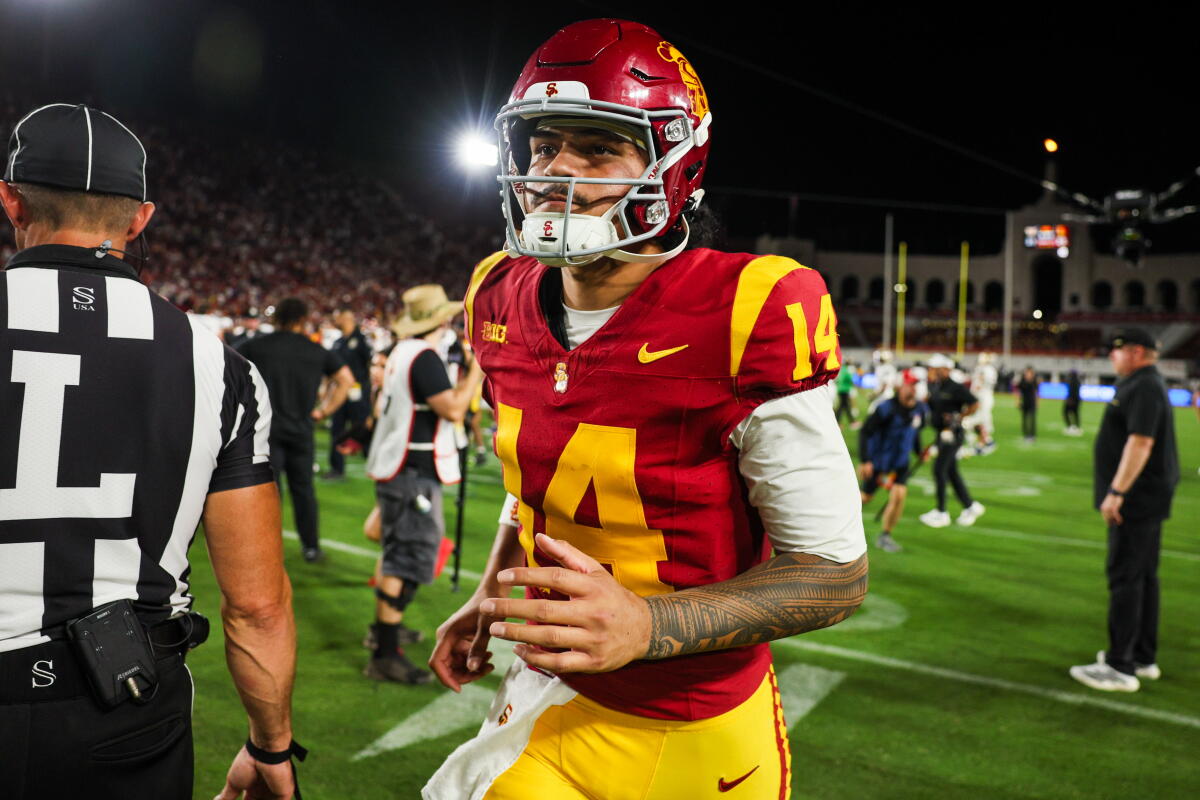
Welcome back to the Times of Troy newsletter, where I, like many of you, can’t help but wonder: What’s going on with Jayden Maiava?
As USC’s quarterback kneeled out the final seconds of an unsatisfying win over Washington on Saturday, he didn’t waste any time celebrating on the field. Maiava spotted an NBC camera trained on him, turned toward the Coliseum tunnel and took off.
The camera followed Maiava and caught USC sports information director Katie Ryan sprinting to reach him. But even after Ryan caught up to the quarterback, Maiava barely broke his stride. He just kept running, the first one up the tunnel, while his Trojan teammates remained on the field.
Get our Times of Troy newsletter for USC insights, news and much more — exclusive to L.A. Times subscribers. Free Members receive a partial preview of each edition.
By continuing, you agree to our Terms of Service, which include arbitration and a class action waiver. You agree that we and our third-party vendors may collect and use your information, including through cookies, pixels and similar technologies, for the purposes set forth in our Privacy Policy such as personalizing your experience and ads.
It was a strange moment, after a game of strange moments for Maiava. And it certainly was not the sort of body language you want to see from your starting quarterback and team leader. Let alone after a win.
It didn’t get much better afterward, when USC trotted him out for the team’s postgame news conference. Maiava was asked about not being able to get into a rhythm. And he proceeded to answer a question that seemingly wasn’t asked.
“Just being able to trust it, fall back on routine plays,” Maiava said.
That’s not new for Maiava, who has often avoided any questions that he doesn’t want to answer by using a non sequitur football cliche. That’s his right. He’s not obligated to play ball with reporters.

USC quarterback Jayden Maiava jogs off the field without pausing for an NBC interview after the Trojans’ win over Washington at the Coliseum on Saturday.
(Ronaldo Bolanos/Los Angeles Times)
But USC has trumpeted Maiava’s progress as a vocal leader for more than a year now. And as the quarterback, he is naturally a representation of the program’s leadership and its larger culture. Which is what makes the body language of the past two weeks, as USC’s season feels on the brink, particularly concerning. Especially in context with what we’ve seen on the field.
The truth is Maiava hasn’t really looked the same since the shutout of Fresno State on Sept. 4, when he appeared to hurt his right shoulder. Maiava was asked about it the following weeks, but he said that he was “great.”
“It’s a physical game,” Maiava said. “It’s what happens.”
No one has mentioned the injury since, but Maiava has been markedly less accurate in the ensuing four games. He’s completing 60% of his passes over that time, after the first two games had him closer to 90%. Maiava’s mechanics have looked far less consistent over that stretch. And then there were the moments Saturday in which Maiava appeared tentative, like he might actually be shying away from running the ball.
During USC’s opening drive, Maiava scrambled away from pressure and had a chance to take off upfield and potentially pick up the first down with his legs. But instead he sprinted wider toward the sideline, in search of receivers who weren’t there in the corner of the end zone. He ended up getting sacked.
A couple possessions later, Maiava launched a prayer down the field off his back foot. It was intercepted and the quarterback threw his hands, fully aware the turnover was his fault.
USC’s problems certainly can’t be laid at Maiava’s feet. The quarterback has been pretty good this season by normal statistical standards. He’s ninth in the nation in passing yards per game (290) and third in total passing touchdowns (15)
But our eyes also don’t deceive us. Maybe he is hurt. Regardless, in order to actually save their season, the Trojans need Maiava to be more than just a passable Big Ten quarterback. They need him to put the team on his back.
Riley said earlier this season that Maiava has come further than any other passer he’s mentored as a college coach. But midway through his third season at USC, it’s this last step in his development that seems to be most troubling Maiava.

USC defensive coordinator Gary Patterson walked onto the field before the Trojans played Oregon at the Coliseum on Sept. 26.
(Ronaldo Bolanos/Los Angeles Times)
With its defense clearly struggling to communicate, USC moved defensive coordinator Gary Patterson from the field to the press box.
The results at least seemed palpable on Saturday. The defense was much more dialed in on third down, holding the Huskies to just a single conversion on 12 attempts. And the secondary seemed to iron out most of its communication problems.
Whether that can be attributed to Patterson being the one in the booth is impossible for me to say. The bigger question, as I see it, is why there was such a disconnect between Patterson, his scheme and the rest of the staff. Riley seemed to suggest that the way Patterson wanted to do things wasn’t clicking with the rest of the operation.
“Going through some of these first few games, seeing the makeup of the staff, it was a conversation that he and I had on Sunday,” Riley said after USC’s win over Washington. “We thought there were some reasons just kind of in our operation that made sense. He knows this defense obviously better than anyone. He was used to having, I think, a staff at TCU — if you look at his staff there, for years and years, they had little to no turnover, right? So when you had guys who had been coaching with you for 15-20 years, like he had in a lot of ways, you might handle that different. He had a heck of a defensive staff, and it’s kind of like players, right? You’re trying to just move the chess pieces to get everyone in the right position to get the best out of them.”

Ask most people from within the Trojan family when things started to unravel for USC’s football program, and they’ll inevitably point to the Reggie Bush-related NCAA sanctions as an obvious starting place.
Well, what if I told you that the mess that USC would find itself wrapped up in could’ve been so easily avoided?
At least, that’s the opinion of the key former members of New Era Sports & Entertainment, the failed sports agency that said it paid Bush and his family. Bush continues to deny allegations he violated NCAA rules. What could’ve presumably ended with one calm conversation in 2006 ended up snowballing into a yearslong saga that didn’t just upend USC football, it derailed the lives of everyone involved.
You can hear the whole story on Tuesday, at this link and wherever you get your podcasts.
— USC’s pass rush finally played to its potential. The Trojans tallied 25 (!) pressures against Washington and sacked Demond Williams Jr. five times, which was more than its previous three games combined. The most important of those sacks came on the final drive, as Kameryn Crawford dropped Williams on a critical third down, deep in USC’s own territory. Freshman Luke Wafle also got his first college sack, after being close basically 10 other times, and he seemed relieved by that. He wasn’t the only one relieved by the pass rush production. The Trojans’ maligned secondary, in particular, was a major beneficiary.
— Rampant penalties may just be a part of this team’s identity. USC committed nine penalties against Washington and lost 94 yards, but the numbers alone didn’t tell the whole story. Half of those penalties were pretty consequential. An illegal formation call brought back a USC passing touchdown, then a face mask from Wafle kept the ensuing Washington drive moving. The Huskies ended up scoring a go-ahead touchdown. USC has at least eight penalties in three of its past four games.
— Should Desman Stephens II keep his starting job when he returns? Not because of what happened against Oregon, but because of what happened against Washington. I thought his replacement, Ta’Mere Robinson, played the best game of any linebacker at USC this season. Robinson had six defensive stops, twice as many as any other Trojan defender on Saturday. He added a sack and graded quite well in coverage by Pro Football Focus. It’s not like Stephens was playing all that well before his suspension. USC also got a strong showing from reserve linebacker Elijah Newby.
— Alex Graham is clearly essential to USC’s secondary. The Trojans’ Swiss Army knife defensive back returned from injury Saturday and made a marked difference for the whole unit. Graham had four pressures as a blitzer and has looked absolutely lethal in that role. And he played a huge part in taking away Washington’s short-area passing game, which can be dangerous if Williams is able to get loose. There’s no player more valuable on the back end of USC’s defense.

USC’s Brian Cushing blocks Sean Douglas’ punt during the Trojans’ win over Washington on Oct. 7, 2006.
(Matt Sayles / Associated Press)
For the second straight week, USC’s defense was backed up deep into its own territory in the final seconds, in danger of losing to a lesser Pac-10 team.
Washington had gotten the ball back with 1:34 remaining, trailing the Trojans, 26-20, when Husky quarterback Isaiah Stanback proceeded to march down the field on USC’s defense. Stanback scrambled to convert a fourth down with 18 seconds remaining, then completed a 19-yard pass to the USC 15.
But with two seconds left, Washington couldn’t get set in time to spike the ball. The clock ran out on their comeback attempt.
The whole experience gave linebacker Brian Cushing flashbacks of USC’s loss to Texas at the Rose Bowl.
“That last minute just got a little nerve-racking,” Cushing said.
USC’s men’s water polo team was down 12-11 to California when the Trojans collected the ball with five seconds remaining in their Mountain Pacific Sports Federation opener. Somehow, they managed to win the game from there.
It started with an exclusion. Then a goal with a single tick left on the clock, sending the game to overtime.
It went to a second overtime and USC eventually put away the game 15-14 with a golden goal from Strahinja Krstic. A scintillating start to conference play.
Newsletter editor and poll manager Houston Mitchell is out this week, so we’re extending our poll one more week. If you have not voted, feel free to weigh in now.
Will Lincoln Riley be USC’s coach in 2027?
Yes
No
Click here to vote in our survey.

Sienna Miller and Dominic West star in the new HBO series “War.”
(Justin Downing/ Sky / HBO)
I’ve been yearning for a slow-burn HBO drama since the end of “Industry’s” most recent season, and I’m optimistic that the network appears to have delivered.
“War” has that potential, at least. The first season of what is apparently an anthology series follows a high-stakes divorce case between a tech mogul played by Dominic West and a movie star played by Sienna Miller. And while it doesn’t seem to be breaking any new ground as a legal drama, the writing and acting appears to be on point — as usual with an HBO show of this magnitude.
Listen now: Podcast ‘House of Troy’ features inside look at highs, lows of USC Athletics
USC silences the ‘Fire Lincoln!’ chants with thrilling comeback win over Washington
Lincoln Riley backs coordinator Gary Patterson amid USC defensive woes
Jahkeem Stewart eases back from injury at critical time for USC defense
‘All options are on the table’: Fallout from Oregon loss puts Lincoln Riley on hot seat
Ultimate SoCal college football sports bar guide: Where to watch your team
Times of Troy: USC gave Lincoln Riley everything. And for what in return?
That concludes today’s newsletter. If you have any feedback, ideas for improvement or things you’d like to see, email me at ryan.kartje@latimes.com, and follow me on X at @Ryan_Kartje. To get this newsletter in your inbox, click here.
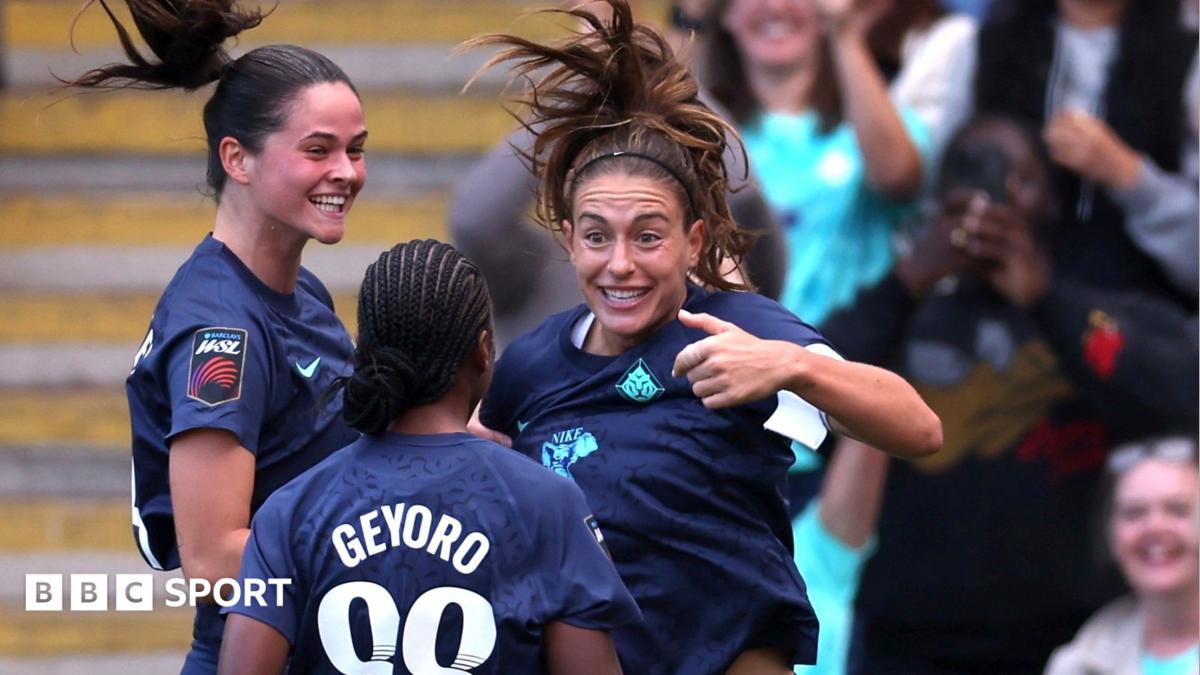
This season is the WSL’s biggest ever, literally, with the league expanding from 12 to 14 teams and three coming up from WSL 2.
But does bigger mean stronger?
Crystal Palace look the most comfortable of the promoted sides, boasting six points from five games and they moved to eighth in the WSL table by drawing at Aston Villa on Sunday.
But things are more difficult for the other promoted sides, Birmingham and Charlton, who prop up the table.
Despite some promising patches, WSL 2 champions Birmingham have just two points and one of those came against Crystal Palace.
At least France forward Oceane Hurtre looks suited to this level, sitting as joint top scorer in the WSL with five goals from five games.
Hurtre scored against Everton in defeat on Sunday but defender Neve Herron summed things up by saying Blues were “second to everything” after the game.
Meanwhile, it looks bleak for Charlton, bottom of the table with zero points, 15 goals against and only two goals scored.
After their 5-1 loss to Brighton on Sunday, goalkeeper and captain Sophie Whitehouse said: “It just wasn’t good enough.
“It’s a tough league. The jump up is so big. You can’t make any mistakes.”
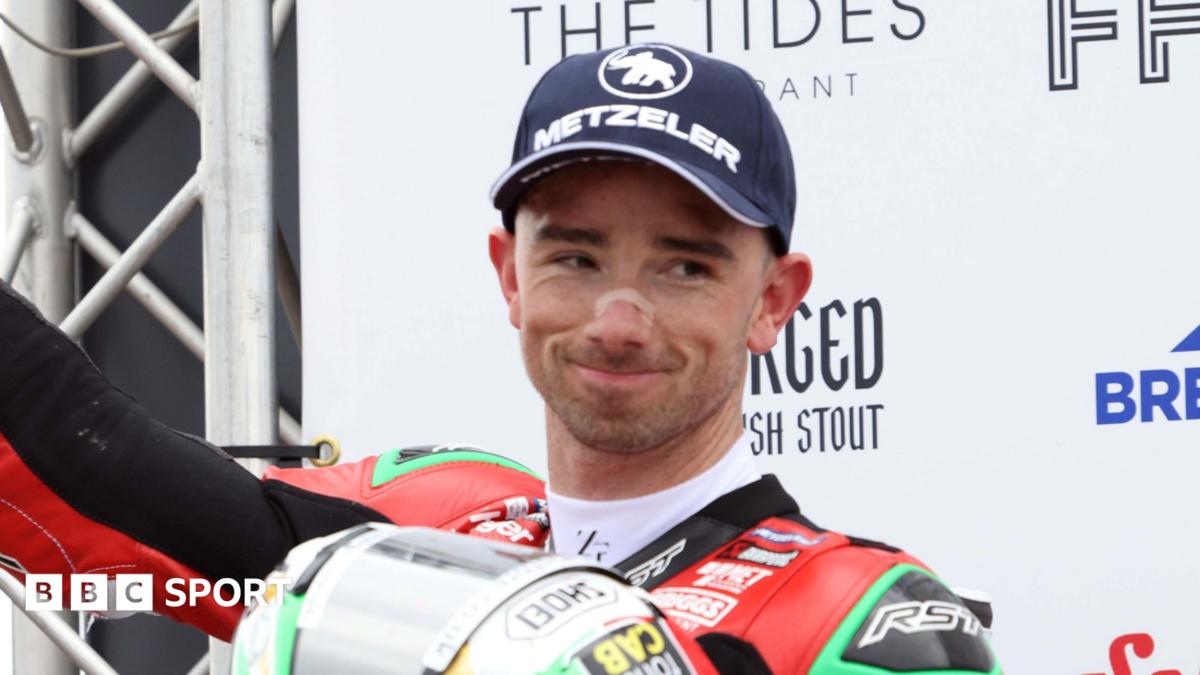
Northern Ireland’s Glenn Irwin has been discharged from hospital after crashing in Sunday’s British Superbike round at Donington Park.
The 36-year-old was moved to Queen’s Medical Centre in Nottingham after the incident because of “concern regarding a possible spinal fracture”.
However, there was a positive update from the British Superbike Championship.
It said that Irwin been “pronounced clear and discharged and will be reviewed for fitness to ride at Brands Hatch”.
Irwin crashed on the penultimate lap of the third BSB race of the weekend at Starkey’s Bridge.
He was assessed and treated at the medial centre at the circuit, and was conscious and stable throughout.
It is the second time that the Ducati rider has been taken to hospital after a crash this season.
Irwin sustained pelvic and neck injuries in a crash at Snetterton in July and missed the two remaining races that weekend.
BSB leader Kyle Ryde won the opening two races of the weekend at Donington but Scott Redding clinched the third and final outing to take the championship to the final weekend at Brands Hatch from 17-18 October.
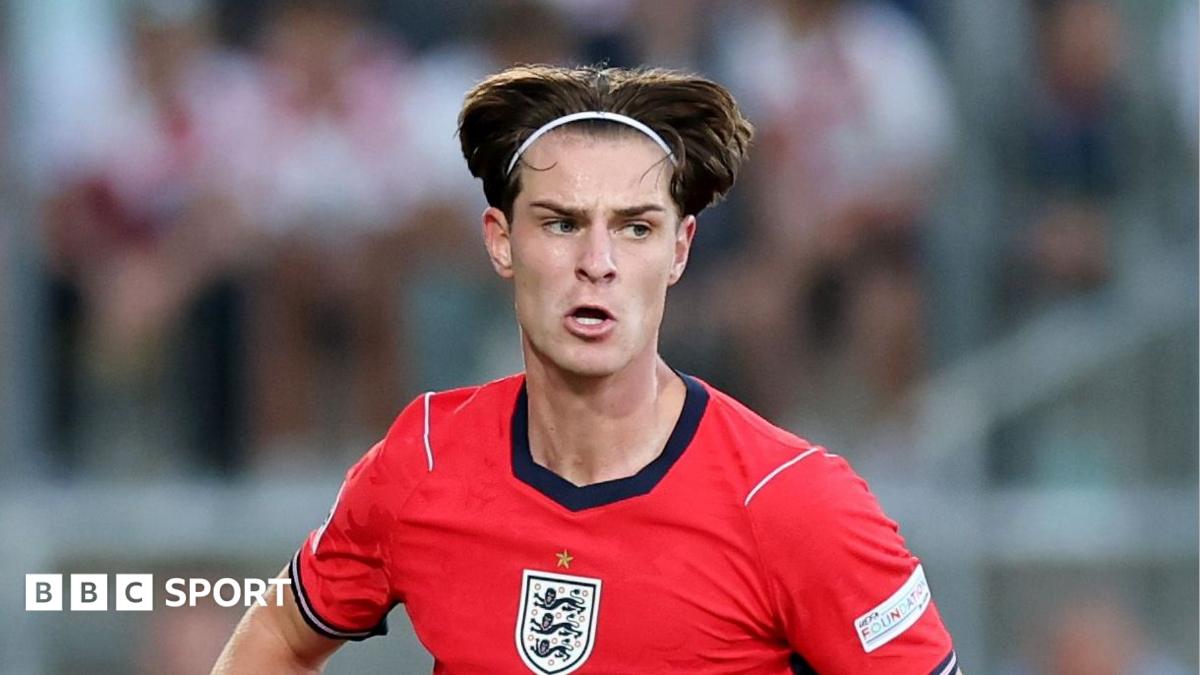
Bournemouth midfielder Alex Scott has withdrawn from the England squad to face the Czech Republic on Tuesday with a thigh injury.
The 23-year-old is set to be out for six to eight weeks with the quadriceps issue.
Scott was excellent on his full debut as England defeated Croatia 7-0 in the Nations League on Saturday.
He felt the issue prior to the match, but played 70 minutes in central midfield alongside Elliot Anderson before being substituted.
Arsenal defender Ezri Konsa has also been ruled out of the fixture at Wembley as a precautionary measure, with the 28-year-old to return to the Premier League champions for treatment on an injury.
Bournemouth are due to play nine games between 10 October and 8 November.
Alongside their weekend Premier League commitments, they will play on Wednesday or Thursday for four consecutive weeks, facing Sturm Graz, AC Milan and Sparta Prague in the Europa League and Aston Villa in the fourth round of the Carabao Cup.
England coach Thomas Tuchel was effusive in his praise for Scott after the Croatia match.
“First start and what a start, what a performance,” said Tuchel. “He is so smooth on the ball, his decision making is at the highest level.
“He plays with so much confidence. He is so active, so confident. The work rate off the ball.
“He is just the complete package. He gave us a lot of mobility and a lot of variety and work rate in the centre of the pitch.”
Scott made his England debut in a 2-0 win over the Czech Republic in Prague on Tuesday, before his full debut four days later.
He joins French forward Eli Junior Kroupi on Bournemouth’s injury list, with the 20-year-old still unavailable after sustaining a foot problem in pre-season.
The Cherries are 17th in the Premier League and are winless after five matches, drawing three times and losing twice.
Marco Rose’s side defeated Lincoln to progress in the EFL Cup, and won 2-1 at La Liga side Real Sociedad on their European debut.
They return to Premier League action at Chelsea on Saturday (15:00 BST) and play Sunderland, Manchester United, Leeds and Ipswich prior to the November international break.
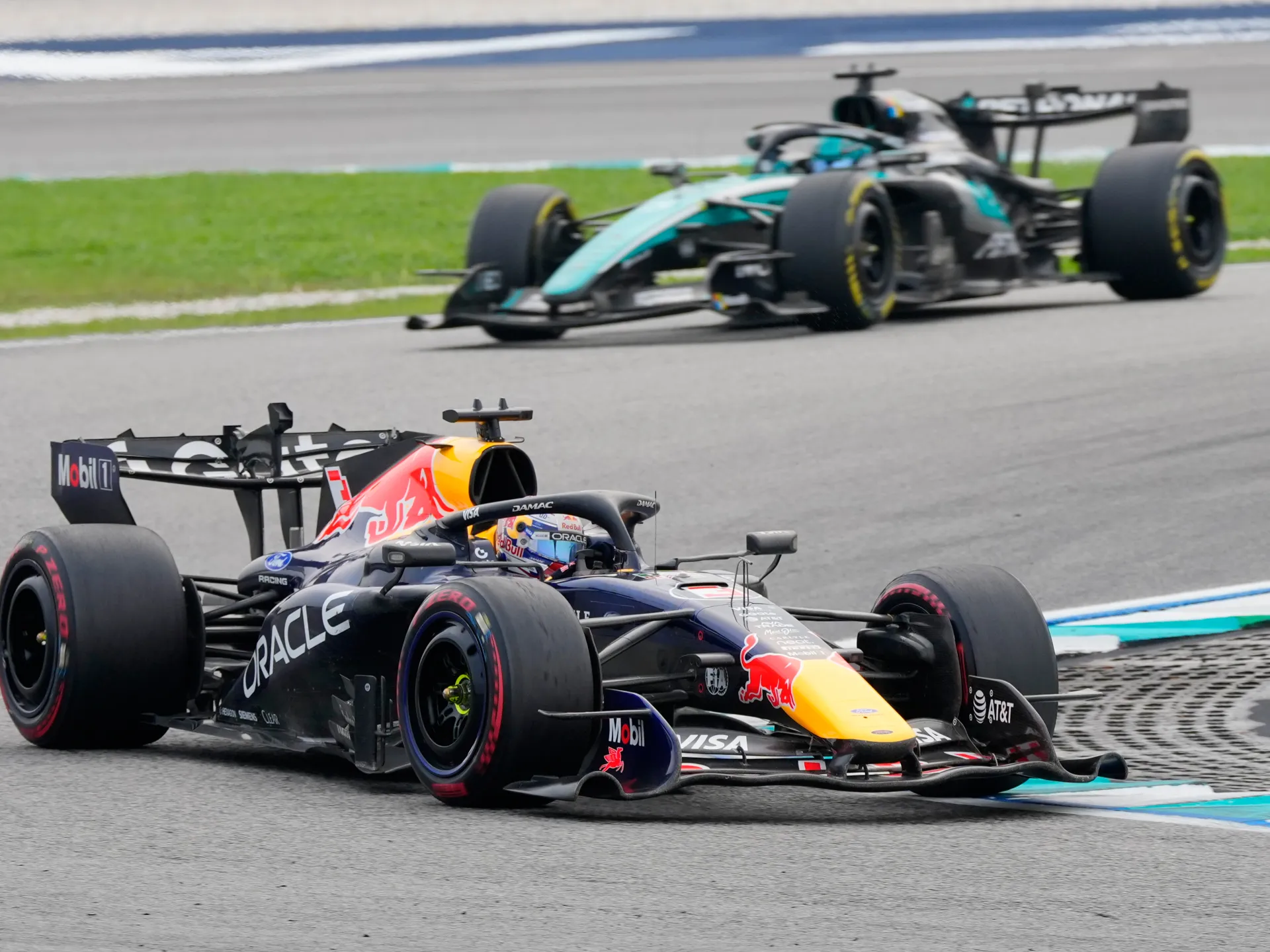
Drivers faced glitches at the race in Malaysia, where Lewis Hamilton had to stop and restart his car on the track.
Published On 5 Oct 20265 Oct 2026
Formula One’s governing body has promised a full investigation into a software bug that caused chaos and forced the start of the Bahrain Grand Prix in Malaysia to be aborted, with drivers feeling like they were in battery-powered cars made of Lego.
Ferrari’s seven-time world champion Lewis Hamilton and Red Bull’s four-time champion and eventual race winner Max Verstappen were among several affected by the glitch on a formation lap after torrential rain and a long delay at Malaysia’s steamy Sepang circuit on Sunday.
list of 4 itemsend of list
Verstappen compared the experience to a “Lego race” held at Silverstone before the British Grand Prix while Hamilton, the sport’s most successful driver of all time, had to stop his car on track and restart it in what he said was a career first.
The episode was the latest in a difficult first season for the new era of cars and engines, with drivers at the pinnacle of motorsport unhappy since the opening race with the power units’ increased electrical component and the need for energy management.
FIA said afterwards that “an unprecedented combination of low engine speed, low-grip conditions, wet-weather energy management settings and the Sepang circuit’s sector configuration led to an unintended loss of power for a number of cars”.
“As a result, the FIA technical department removed the energy limit constraint in the affected sectors through an updated software release distributed to all competitors during the race delay caused by heavy rain, enabling teams to make the necessary changes to the power unit before the start of the race.
“This issue had not been detected by the FIA or the teams during testing or during the laps to the grid. The FIA, together with the teams and power unit manufacturers, will undertake a full review of the issue.”
The FIA’s single-seater director Nikolas Tombazis told reporters the lack of preseason testing in wet conditions had played a part in the chaos.
“Some cars went very slowly, almost came to a standstill. There was a bit of a concertina effect between cars, and some cars almost stopped completely,” he said. “That bug prevented the power from being redeployed, and for the cars to start again.
“I think if we had had a bit more testing, we probably would have managed to catch it in time, and not have such a situation.”
Sepang was the first race weekend of the season with wet conditions, although the track dried during the race.
“Sometimes things fall through the net and people learn, and you do a better job next time,” Tombazis said.

The most impressive number the Dodgers put up this season was 100 — the games they won. They had to do a lot of things right to get there.
No Dodger ranked among the top 16 in the majors in home runs or the top 37 in RBIs, yet they were fourth in runs scored. How? They were third in the majors in walks and near the bottom in strikeouts, which allowed them to manufacture runs by stringing together long innings rather than relying on the long ball.
Two games into the postseason, that script has flipped. After Sunday’s 3-2 loss to the Braves, the Dodgers head to Atlanta with their best-of-five National League Division Series tied. Suddenly the Braves, who will start ace Chris Sale on Tuesday, have the edge.
“Getting the split in this place against these guys, yeah, it’s awesome,” Braves manager Walt Weiss said.
All seven of the Dodgers’ runs in the NLDS have come on five home runs, three of them with the bases empty. The Dodgers are 0 for 9 with men in scoring position, stranding 13 runners. They’ve also struck out three times more often than they’ve walked and are batting .215 against the relay team of 10 pitchers Atlanta has used.
“We didn’t throw out a bunch of hits, but there was still traffic,” Dodgers manager Dave Roberts said. “We didn’t need many hits tonight to have a different result, and we just couldn’t get it.”
Sure it’s a small sample; just two games. Yet it should be a troubling one for the Dodgers, the two-time defending World Series champions.
“Sometimes it’s just you can’t hit,” said Mookie Betts, who walked twice. “I mean, there’s nothing really you can do to explain that. You’ve just got to be in the moment and come through. We had some moments today [when] we didn’t come through.
“That’s part of the game. We’ve just got to keep giving ourselves moments, and eventually something will happen.”

“We’ve got to find a way to score some runs without hitting a home run,” added Freddie Freeman, who homered Sunday and has three hits in the series. “That’s our biggest thing right now. So keep getting guys on base and get that big hit.”
Freeman said the Braves have done a good job keeping the Dodgers hitters off-balance by emptying their bullpen, sending in a fresh pitcher every couple of innings.
“It’s tough because you’re facing a different arm every single time you’re going up there,” Freeman said. “It’s different angles, different velocities, different things. So stringing hits together is very hard.
“This is the playoffs. We’re not going to score eight to 10 runs. It’s hard. Pitching staffs are good.”
Dodgers outfielder Teoscar Hernández wondered whether the Braves’ game plan might soon backfire. Aside from Sale, Weiss has few pitchers left the Dodgers haven’t seen; eventually they’ll catch up, he says.
“We’ve seen basically the best out of the bullpen,” Hernández said. “We can have a better plan for Tuesday and Wednesday.”

Will Smith reacts after popping out during the fifth inning in the Dodgers’ 3-2 loss to the Braves on Sunday.
(Eric Thayer / Los Angeles Times)
Although the Dodgers committed the second-fewest errors and gave up the fewest unearned runs this season, they haven’t looked sharp defensively in the postseason, with all three Atlanta runs Sunday coming with two outs.
The Braves loaded the bases in the first inning on a single and two walks before scoring when a diving Betts snared a Mauricio Dubón grounder up the middle, but threw wild and late to first, enabling Ronald Acuña Jr. to score. They then went ahead to stay in the fifth on a line drive to left that Hernández misplayed into a triple, followed by reliever Kris Bubic’s wild pitch.
“I didn’t think he hit it that good,” Hernández said. “I didn’t break in, but I broke to the side. And then when I realized, it was too late.”
Atlanta’s final run came in the seventh when Michael Harris II one-hopped the wall in right-center, allowing Matt Olson, running from first on the full-count pitch, to score.
Now the advantage swings to the Braves, who go to Truist Park, where they had the second-best home record in the league.
“We knew it was going to be a battle. We knew those guys weren’t going to go down,” Roberts said of the Braves.
“Now it’s a three-game series.”

EXPLAINER
Only one point separates Group A1 leaders France and second-placed Belgium before Monday’s clash.

Published On 5 Oct 20265 Oct 2026
Who: France vs Belgium
What: UEFA Nations League 2026-2027, Group A1 match
Where: Stade de France, Saint-Denis, France
When: Monday at 8:45pm (18:45 GMT)
How to follow: Al Jazeera Sport will bring you all the build-up and live updates from 15:45 GMT.
Two-time world champions France host Belgium in the last of four Nations League games played over this extended international window.
list of 4 itemsend of list
Monday’s clash in Saint-Denis pits the top two teams in A1 against each other with France looking to complete the double in this league phase after their initial victory in Brussels in late September.
France and Belgium both enter this match with their creative stars in red-hot form. Michael Olise scored a goal in back-to-back matches while Kevin De Bruyne’s double steered Belgium to victory last time out.
However, Belgium will have to do without De Bruyne for the Les Bleus test with the midfield sensation suspended alongside their captain, Youri Tielemans.
Here’s all you need to know about France vs Belgium:
The UEFA Nations League was founded in 2018 to reduce the number of friendlies and give nations competitive matches against equally ranked teams.
In this competition, countries from across Europe participate in a league structure that features promotion and relegation.
The teams compete across four divisions, facing every other team in their group twice: once at home and once away. The league phase ends in November.
In the top-most league, League A, the top two teams from each group go through to the quarterfinals, which will take place in March.
The finals will again be contested between four teams. The host and the dates of the finals have not been confirmed yet.
France lead Group A1 with seven points from three games.
Belgium are second in the group with six points.
France: D-W-W-L-L
Belgium: W-L-W-L-W
Zinedine Zidane (France): “We always want to win. We are competitors. The most important thing is to prepare well for matches and to feel comfortable on the pitch. I am very satisfied with the mentality I have seen so far. I have clear convictions. I love the French national team, and I have top-class players, but I know it will take time. I am very happy with what I have seen.”

Mark van Bommel (Belgium): “France have an exceptional amount of quality. They’re a complete team. In the first match, however, we should have taken at least a point. So it is possible tomorrow. We have to be top in all areas.”
Matteo Guendouzi and Dayot Upamecano are suspended, and Warren Zaire-Emery is out with a thigh injury.
Probable France XI: Mike Maignan; Pierre Kalulu, Jeremy Jacquet, Maxence Lacroix, Adrien Truffert; Rayan Cherki, Lucas Da Cunha, Eduardo Camavinga; Michael Olise, Ousmane Dembele, Desire Doue
De Bruyne and Tielemans are both suspended after picking up two yellow cards in successive matches.
Probable Belgium XI: Senne Lammens; Timothy Castagne, Nathan Ngoy, Brandon Mechele, Maxim De Cuyper; Nicolas Raskin, Romeo Lavia, Hans Vanaken; Dodi Lukebakio, Charles De Ketelaere, Mika Godts
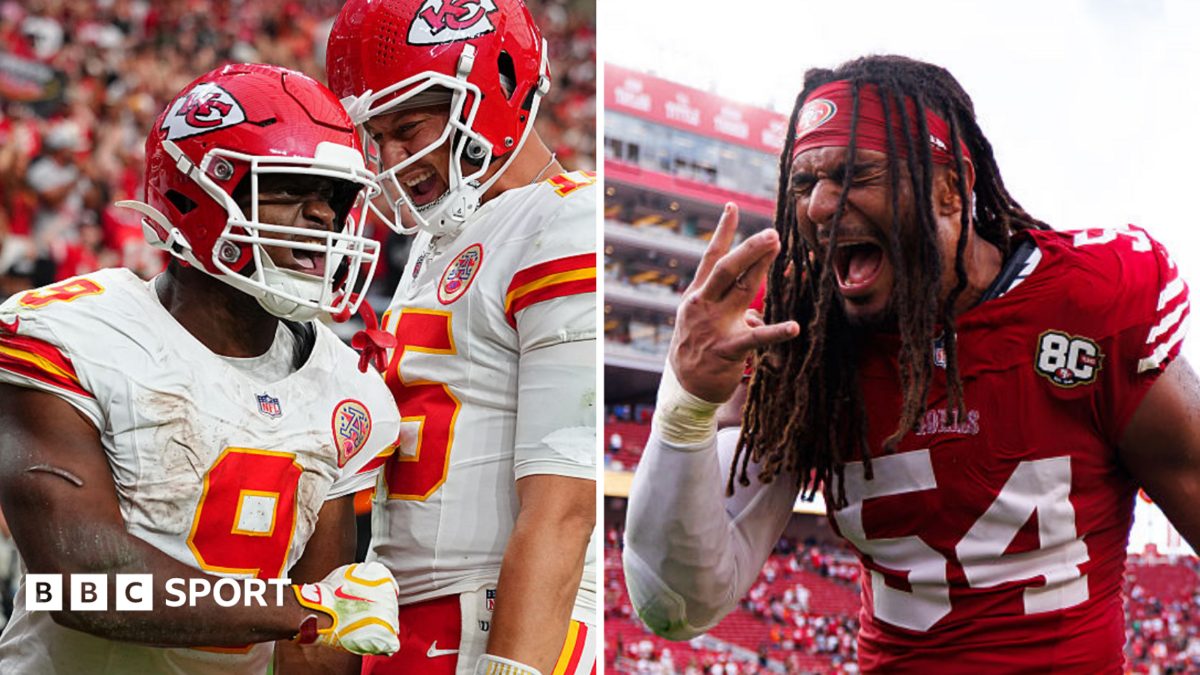
Kansas City have dominated their rivalry with the Raiders in recent years, but Las Vegas are vastly improved after winning only three games last season and pushed the Chiefs all the way.
The Raiders led 13-10 heading into the final quarter in Vegas, which featured three lead changes before Kansas City held on for a 30-27 win.
The turning point came as new running back Kenneth Walker maintained his stunning start by scoring two touchdowns in 19 seconds, with the Chiefs regaining possession immediately by forcing a fumble on the kick-off return.
The Raiders gave themselves hope with a Brock Bowers score and stayed alive until the final play, when Kirk Cousins was tackled as he threw and his wayward pass was intercepted.
Walker finished with 177 yards from 22 carries, while team-mate Tyquan Thornton also had two touchdowns and 111 receiving yards.
After missing last season’s play-offs, the Chiefs look capable of getting back into Super Bowl contention. They next face the Los Angeles Chargers, who are 0-4 after losing 30-23 to defending champions the Seattle Seahawks.