speech

Nixon Clinched Spot on GOP Ticket in ‘Checkers’ Speech 40 Years Ago : Vice presidency: The candidate’s woes on campaign funding brought on a tearful TV address and a place in history for a cocker spaniel.

As Bill Clinton struggles with his draft history and President Bush his tax promises, they might look back wistfully at something that happened 40 years ago last week. Richard M. Nixon, in much worse trouble, talked his way out with a single TV appearance that became famous as the “Checkers” speech.

On Sept. 23, 1952, the newly minted vice presidential candidate of the Republican Party faced allegations that threatened to force him off the ballot and end his political career–the disclosure of an $18,000 fund set up for him by rich businessmen.

Nixon, a first-term senator from California, dealt with the crisis dramatically, gambling everything that the public could be won over to his side with a mixture of pathos and candor in a single speech.

He denied any impropriety in using the private fund. But that part is hardly remembered.

“One other thing I probably should tell you, because if I don’t, they will probably be saying this about me, too,” Nixon told a television audience of 60 million. “We did get something, a gift, after the nomination.”

He explained it was a black-and-white cocker spaniel that 6-year-old Tricia Nixon had named Checkers. “I just want to say this, right now,” said Nixon, in a fight to stay on the ticket with Dwight D. Eisenhower, “regardless of what they say about it, we are going to keep it.”

The “Checkers” speech also included Nixon’s famous reference to wife Pat’s “Republican cloth coat” to point out that she didn’t wear mink. He ended it with a defiant vow not to quit. He urged listeners to tell the Republican National Committee “whether you think I should stay on or whether I should get off.”

The outpouring of sympathetic support cemented his spot on the ticket.

The fund had been set up by Dana Smith, a Los Angeles lawyer who had been finance chairman for Nixon’s successful 1950 race for the Senate. Smith intended it to pay for Nixon’s political travel, printing and mailing of speeches and clerical help, which would not be reimbursed by the Senate.

Once the existence of “the millionaire’s club” exploded in headlines, it ballooned and overshadowed everything else in the 1952 campaign. Eisenhower’s advisers urged the general to dump Nixon and find himself a new running mate.

Nixon got scant comfort from Eisenhower, who told him: “I have come to the conclusion that you are the one who has to decide what to do,” Nixon recalled, in his book “Six Crises.” “I think you ought to go on a nationwide television program and tell them everything there is to tell, everything you can remember since the day you entered public life. Tell them about any money you have received.”

To others, Eisenhower insisted that Nixon prove himself “clean as a hound’s tooth.”

The GOP and the Senatorial Congressional Campaign Committee pledged the $75,000 to buy a half-hour in prime time for Nixon’s speech, which was broadcast from the 750-seat El Capitan Theater in Los Angeles–the same hall where the “Colgate Comedy Hour” and “This Is Your Life” originated.

An hour before he left for the theater, came a call from Thomas E. Dewey, a two-time losing candidate for president and then a member of Eisenhower’s inner circle. He insisted that Nixon end his broadcast with his resignation–and even resignation from the Senate.

“If they want to find out they’d better listen to the broadcast,” Nixon shouted at Dewey. “and tell them I know something about politics too.”

Nixon went on the air in the empty theater. “Not one cent of the $18,000 or any other money of that type ever went to my personal use,” he said. “Every penny of it was used to pay for political expenses that I did not think should be charged to the taxpayers of the United States.”

He listed his assets and his debts, in detail, then said of his wife, “Pat doesn’t have a mink coat. But she does have a respectable cloth coat. And I always tell her that she’d look good in anything.”

The next day, Nixon flew to Wheeling, W.Va., to meet with Eisenhower. Just as he was about to leave the plane, Eisenhower came up the steps.

“You didn’t have to come down here to meet me,” said Nixon.

“You’re my boy,” said the general. And Nixon wept.
Source link

Scottish Rugby issue one-year ban for Alloa president’s ‘racist, homophobic and sexist’ speech

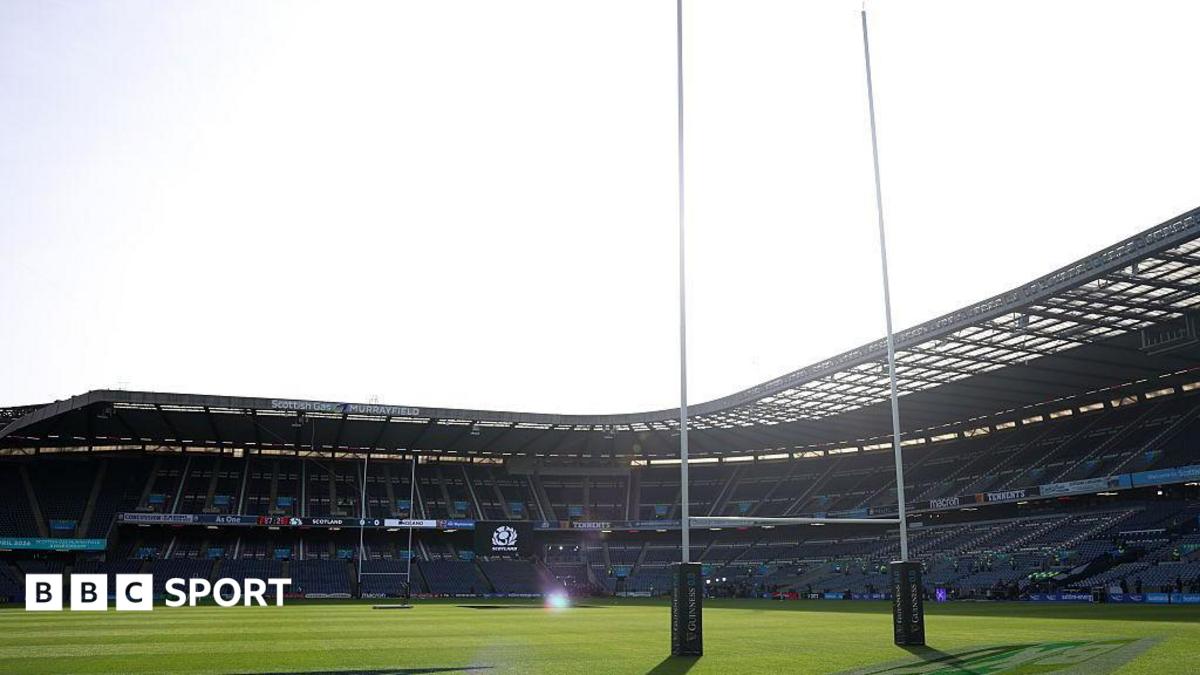
Scottish Rugby has imposed a 12-month ban on Alloa RFC president Alan Stewart attending matches following an after-dinner speech, described as “racist, homophobic and sexist” by some present.

Stewart has also been suspended from holding any role within the game over the same time period.

Multiple objections were made following remarks by Stewart during Musselburgh RFC’s annual dinner on 18 April and an independent disciplinary panel has upheld a misconduct complaint.

Stewart, who can appeal against the decision, has also been instructed to undergo equality, diversity and inclusion training.

Charges against Musselburgh RFC and their president were not upheld.

In April, the board of Musselburgh RFC issued an apology to those who attended, saying: “We particularly wish to recognise and acknowledge the hurt caused to our women’s team, who we are extremely proud of and to whom we are committed to providing a safe and nurturing environment.”

The club criticised the “very poor judgement of the speaker” and said he had sent a written apology.

In a statement issued at the same time, Scottish Rugby said it is “committed to equality, diversity and inclusion at every level of the game”, adding: “There is no place for discriminatory behaviour in our sport, or in wider society.”

BBC Scotland has approached Stewart and Alloa RFC for comment.

Source link

Hegseth invokes immigration and ‘invasion’ in D-day speech in France

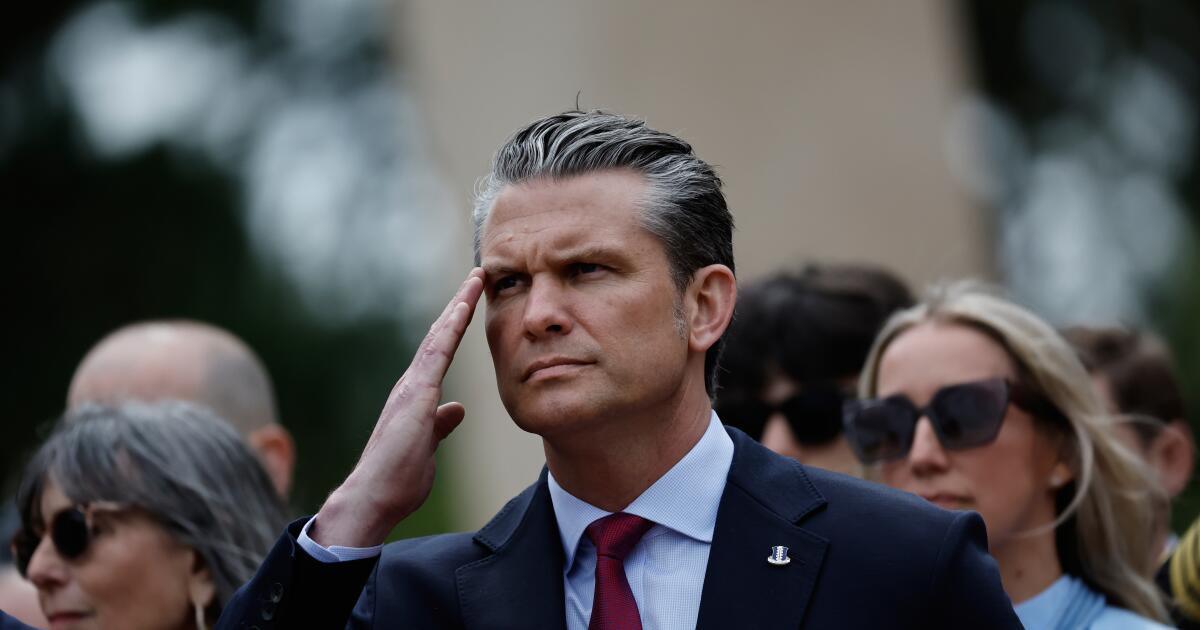
U.S. Defense Secretary Pete Hegseth gave a D-day anniversary speech Saturday that appeared to link immigration by sea to the wartime liberation of Europe, warning that the freedom won by Allied troops could prove temporary if leaders failed to defend it against today’s “invasion.”

Hegseth, speaking at the Normandy American Cemetery in Colleville-sur-Mer overlooking Omaha Beach in northwestern France during commemorations for the 82nd anniversary of the June 6, 1944, landings, said that today, “different European beaches are stormed by different dangerous ideologies.”

“Beaches in Spain and Italy and Greece and Bulgaria. Boats and men arrive,” he said.

“When will European capitals do something about that invasion? Or is it too late?” he added. “I pray not, and I believe not.”

Hegseth did not use the word “immigration,” but his remarks echoed broader Trump administration criticism of Europe over migration, borders and what U.S. officials have described as censorship of nationalist and far-right voices.

On Saturday, British Prime Minister Keir Starmer’s office condemned Vice President JD Vance’s remarks blaming immigration for the killing of Henry Nowak, an 18-year-old British student stabbed to death in Southampton, even though both Nowak and his killer were British.

In December, the Trump administration’s national security strategy warned that Europe faced the “prospect of civilizational erasure” and could become “unrecognizable” within 20 years.

Source link

Arrests of critics in Ghana provokes alarm over free speech under Mahama | News

Accra, Ghana – Ghana has recorded 14 arrests linked to false news and offensive speech in less than 16 months, nearly double the number documented during the previous administration’s entire eight-year tenure, according to the Media Foundation for West Africa (MFWA).

The rise has triggered a sharp debate in one of West Africa’s most stable democracies over whether authorities are simply enforcing long-standing laws in a new digital environment, or edging into a more restrictive approach to public speech.

The controversy carries added political weight because President John Mahama, while in opposition in 2022, warned that using state power to intimidate dissent was a “dangerous blueprint” for democracy.

Government: enforcement not repression

A senior ruling party official dismissed allegations that the arrests amount to a crackdown.

“The opposition intentionally sponsors people to insult the President,” he told Al Jazeera. “When the law catches up with them, they cry persecution to score cheap political points.”

He pointed to the case of TikToker Prince Ofori, known as “Fante Comedy”, who was arrested last August over alleged threats to President Mahama.

Days after his arrest, Ofori appeared at a political rally alongside opposition figures, a development the official said showed how quickly such cases become politicised.

“They paraded him at an opposition rally,” he said.

Opposition: a warning sign for democracy

Opposition leaders see something more troubling taking shape.

Minority leader Alexander Afenyo-Markin has been among the most outspoken critics.

“The state-sponsored persecution must stop,” he told Al Jazeera. “Arresting citizens for words that do not constitute genuine threats is not justice. It is intimidation.”

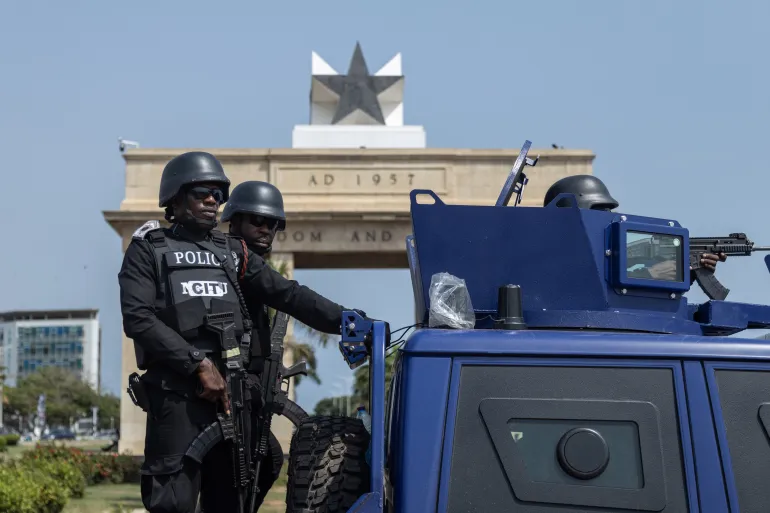
Members of Ghana security forces take part in a joint Show of Force Exercise in Accra, Ghana, 11 December 2025. The exercise featured the Ghana Police Service, Ghana Prisons Service, Ghana National Fire Service, the Customs Division of the Ghana Revenue Authority and the Immigration Service in collaboration with the Ghana Armed Forces, aimed at Police officers on security detail near a police vehicle, with the Ghana Black Star atop a building behind them. [FRANK KPORFOR/Epa]
Police officers on security patrol in front of the Ghana black star symbol [Frank Kporfor/Epa]

He said free speech has limits, but argued that the state is increasingly crossing a line.

“Excessive use of state power risks undoing Ghana’s hard-won democratic gains,” he said.

Where is the line?

At the centre of the debate are long-standing provisions in Ghana’s Criminal Code and Electronic Communications Act, which authorities say are now being applied to a fast-moving digital landscape.

Government supporters argue the increase in arrests reflects the explosion of anonymous and unregulated online content.

Critics say the problem is not the laws themselves, but how they are being used.

A legal consultant who reviewed recent cases said he counted at least 16 alleged misapplications of Section 208 in the past 18 months, compared with roughly a dozen in the previous eight years.

“The law has been abused beyond repair,” he said. “Repeal is the only remedy.”

Veteran journalist Ben Ephson said Ghana needs clearer guidance on where free expression ends and harm begins.

“The government must properly explain the arrests so people can draw the line between press freedom and responsible journalism,” he said.

He added that both journalists and state institutions risk overstepping if the rules remain unclear.

“When you compare the freedom of the media and the rights of the individual, we need to be careful that the media, in trying to do their work, don’t trample on people’s rights,” he said.

A wider global debate

Others say Ghana’s debate mirrors tensions playing out in other democracies.

Tegha King of the Universal Peace Federation Ghana said concerns about shrinking civic space are not unique to Ghana.

“The global civic space must cultivate more free speech, not less,” he told Al Jazeera.

He said stronger institutions, not more arrests, are needed to manage the pressures of the digital age.

“There must be independent courts, transparent enforcement, media self-regulation and digital literacy,” he said.

Civic awareness and external concern

Some analysts point to gaps in public understanding of constitutional rights.

“There is a lack of constitutional education among many Ghanaians,” said David Adofo of the African Chamber of Content Producers. “People must know the consequences of their actions before they act, not after.”

Concerns are also being voiced outside the country.

“We have had many concerns from diasporans about perceived erosion of press and political freedoms, especially news of blogger arrests,” said Nana Kofi Opoku-Agyemang of the NuGhana Expat Center. “Negative news sells fast. The government must be cautious so it does not project a negative image of Ghana in the diasporan community.”

Government stance

Officials insist there is no coordinated effort to silence dissent.

An NDC communicator said the legal framework in question predates the current administration and defended the approach.

“Ghana’s laws, Section 208 of the Criminal Code and Section 76 of the Electronic Communications Act, have been on the books for decades,” he said. “What has changed is the sheer volume of reckless, anonymous and sometimes dangerous content on social media. There is no systematic crackdown. There is simply enforcement of existing law.”

Personnel of Ghana's Police Service stands guard during a Show of Force Exercise in Accra, Ghana, December 11, 2025. [Francis Kokoroko/Reuters]
Police stand guard during a Show of Force Exercise in Accra last December [Francis Kokoroko/Reuters]

A political irony at the centre of it all

Ghana remains one of West Africa’s more open democracies, with a competitive political system and active media landscape.

But the rise in speech-related arrests has sharpened scrutiny of how far the state can go in policing online expression without undermining the democratic culture that helped define its reputation.

The debate is also politically charged because of Mahama’s own past warnings.

As opposition leader, he described the use of state power against dissent as a “dangerous blueprint.” Today, critics say his government faces accusations it once condemned.

For Alexander Afenyo-Markin, the moment calls for restraint — and reflection.

“We should not continue to say that because it happened yesterday, it should happen today and tomorrow. That cycle must end,” he said. “President Mahama has an opportunity to leave a legacy of tolerance and free speech. I hope he takes it.”

Source link

George Santos reported to prosecutors over suspicious Kalshi trades, AP source says

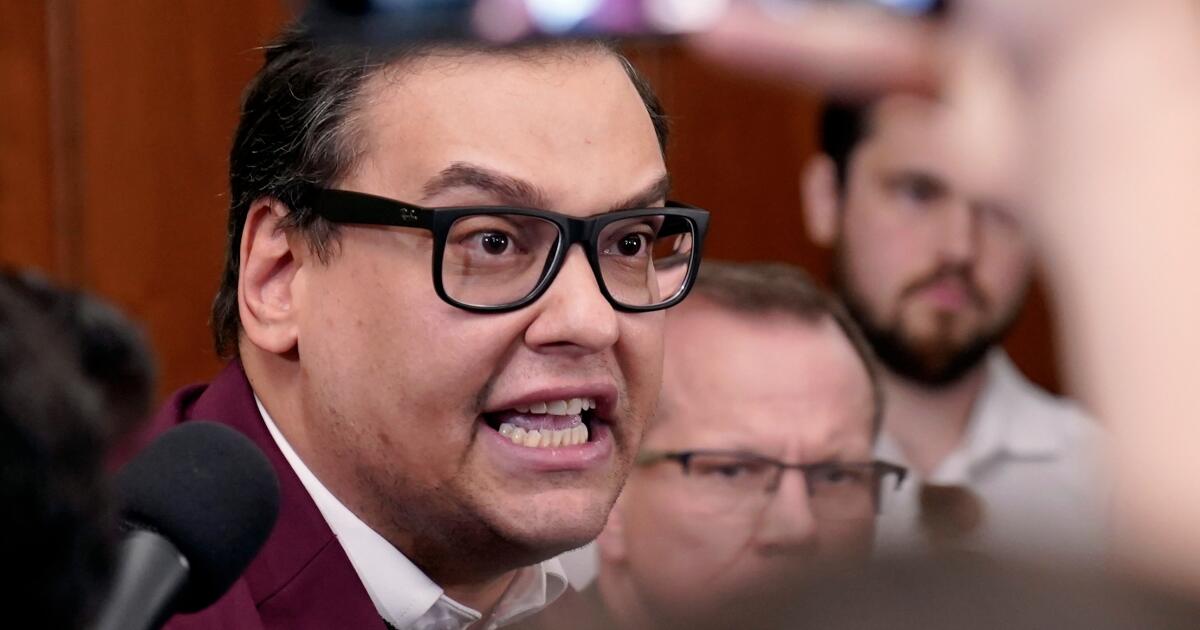
A prediction market reported former U.S. Rep. George Santos to federal prosecutors after he boasted he’d be going to President Trump’s State of the Union address, then bet against his own attendance, according to a person familiar with the investigation.

Kalshi, the online prediction marketplace, referred Santos to the Department of Justice after detecting suspicious trades made by him ahead of Trump’s Feb. 24 speech, the person said. The person spoke to the Associated Press on the condition of anonymity because they weren’t authorized to discuss the matter publicly.

Kalshi also reported the trades to the Commodity Futures Trading Commission, a federal regulatory body that has vowed to crack down on insider trading in prediction marketplaces.

The Justice Department and the CFTC didn’t immediately respond Tuesday to inquiries from the AP.

Santos also did not respond to text messages or phone calls.

The referral was first reported by NPR. Santos told NPR that he wasn’t aware of the investigation. He declined to say whether he had a Kalshi account.

“I’m not saying yes, I’m not saying no,” Santos told NPR.

The convicted ex-congressman had repeatedly discussed his intention to attend the State of the Union, which came just four months after he was granted clemency by Trump in a fraud case that led to his expulsion from the U.S. House.

On the eve of Trump’s speech, Kalshi put the odds of Santos attending at close to 75%.

Then, minutes into the speech, Santos posted on X that he had been waylaid at the airport. Immediately, several social media users accused him of running another scheme.

“Santos talking to his accountant and telling him to open his Kalshi account and bet all his money on No,” one user wrote, alongside a meme of Al Pacino counting money in the movie Scarface.

In March, Santos addressed the complaints on his podcast.

“I guess people lost money,” he said. “Some people made unexpected money. That’s to show you how fragile these markets are.”

Santos, who won office as a Republican after inventing a bogus persona as a Wall Street dealmaker, was sentenced to seven years in prison after pleading guilty to fraud and identity theft in 2024.

After serving just 84 days, he was ordered released by Trump, who called Santos a “rogue” but said he didn’t deserve a harsh sentence and should get credit for voting Republican.

Prediction markets, including Kalshi and its chief rival Polymarket, have drawn scrutiny as their businesses have expanded — with some lawmakers urging the platforms to do more to guard against insider trading.

Both companies have said they are reporting suspicious trades to federal regulators. Some investigations have led to criminal charges. In April a soldier involved in the military operation to capture Venezuelan President Nicolás Maduro was charged with using classified information to win more than $400,000 predicting the date of his capture on Polymarket.

In April, the Senate approved a bipartisan resolution to prevent its own members from using prediction markets.

Offenhartz writes for the Associated Press.

Source link