

THE Costa de la Luz coastline is far lesser-known than its neighbour, the Costa del Sol, which is a shame as it has so much to offer.
It should definitely be on your radar if you want cheap hotels, affordable drinks and the chance to visit another country in 15-minutes.
Sign up for the Travel newsletter
Thank you!
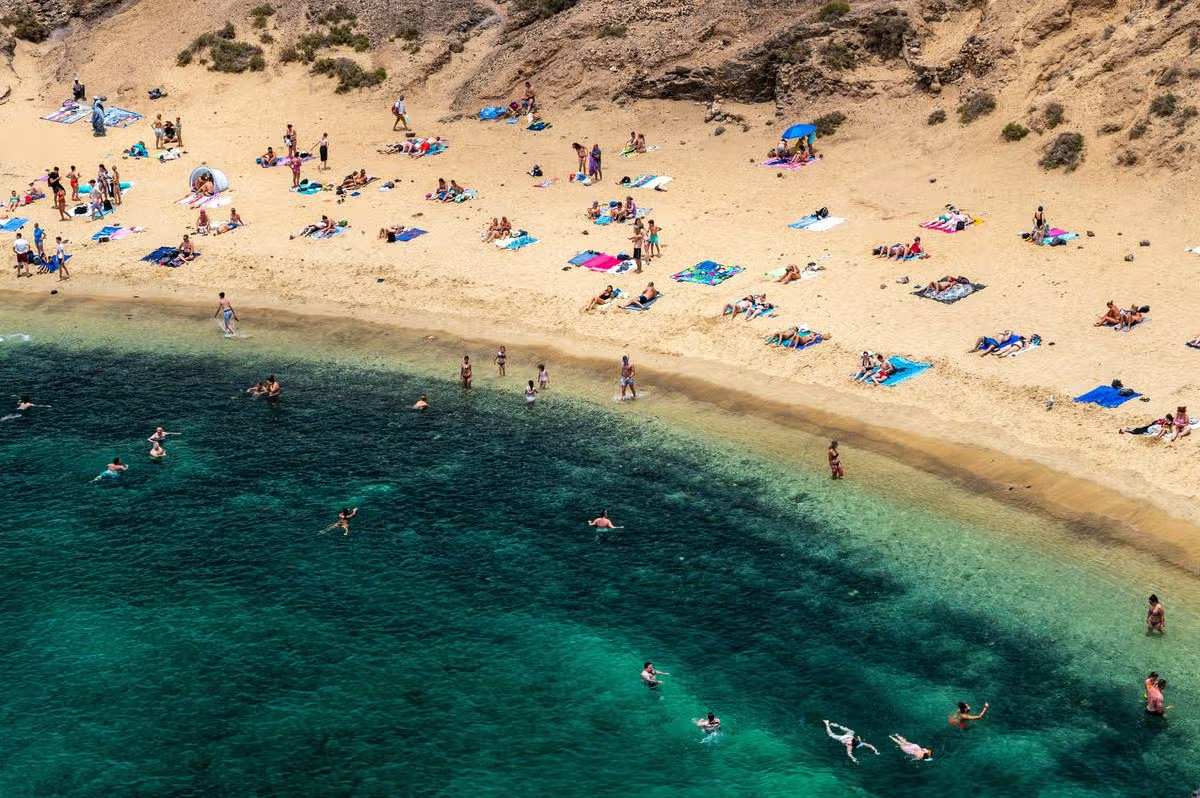
Spain’s lesser-known coastline is Costa de la LuzCredit: First ChoiceIt has beautiful beaches – and you can be in Portugal in less than 15-minutesCredit: Getty
The Costa de la Luz coastline sits along the south of Spain offering beers for under £3 and hotel breaks from £55pppn.
If you’re looking for the beauty of Marbella but without the price tag or the noise, Costa de la Luz is a great, and budget friendly, option.
The most well-known spots along this coastline are the likes of Cadiz and Huelva.
But First Choice suggests heading to Isla Canela, a small beach escape at the very top of the coastline where Portugal is less than 20-minutes away.
It has golden beaches, low-cost but authentic tapas and of course, lots of sun.
One travel expert even said “you can still find really goodtapasand fresh seafood dinners for €10-15 (from £8.65) a head here , if you go local.“
Staying here also means holidaymakers can visit Portugal very easily.
There’s a regular ferry between Isla Canela and Portugal’s Santo Antonio that takes just 15-minutes and costs as little as €2.50 (£2.16).
The ferry crosses the Guadiana River which forms a natural border between the two countries – so travellers wanting to explore both spots can do so in a single daytrip.
There isn’t any need to book multiple hotels and little fuss as the crossings don’t have routine passport checks (although take ID to be safe).
Santo Antonio itself is a city that’s considered a quieter alternative to the Algarve – especially on its sandy beach, Praia de Santo António.
If you’re keen to see more of Spain, just a short trip away from Isla Canela is the town of Ayamonte.
The Hotel Barcelo Isla Canela is a perfect base to explore both Spain and PortugalCredit: First Choice
It’s known to have a traditional Andalusian feel with white-washed streets, riverside promenades and you can pick up a pint from just €3 (£2.60).
One top restaurant choice is Restaurante Le Casona where tapas dishes like garlic prawns and Spanish tortilla starts from €3 (£2.60).
First Choice suggests booking an authentic flamenco show with a tapas dinner at La Puerta Ancha which starts from £48.
If you’re wanting a city feel, then the city of Seville is under two hours away by car.
The pretty hotel is designed to look like a traditional building so it has white-washed buildings and terracotta roof tiles.
For guests, it has two outdoor pools, a huge golf course, tennis court, buffet restaurant and live entertainment.
Each room either has a terrace, full balcony, or French-style balcony – and can be upgraded to have sea views.
Prices at Hotel Barcelo Isla Canela from £383 per person include seven-nights in a twin room on a half board basis, departing Newcastle Airport on May 10, 2026.
THERE’S bad news for Brits heading to Spain this summer as they might not be able to enjoy a drink in the sun on an outdoor terrace.
Under new rules, terraces in Spain will be forced to close when the weather gets too hot.
Sign up for the Travel newsletter
Thank you!
Follow The Sun’s award-winning travel team on Instagram and Tiktok for top holiday tips and inspiration @thesuntravel.
The rules – that were campaigned for by hospitality unions – will apply when the State of Meteorological Agency (AEMET) issue an orange or red alert.
AEMET’s orange alert means there is a major risk such as severe storms, heavy snow or intense heat and then for a red alert, it is an extreme risk and includes extreme rainfall, life-threatening storms and dangerously high temperatures.
In the case of exceptionally hot weather, restaurants, bars and cafes have to close their terraces if there is not enough shade or cooling systems for staff.
The rules are likely to apply during the hottest hours of the day.
Areas across Spain reach high temperatures, especially during July and August, with some destinations reaching over 40C.
Even though closure of outdoor spaces is a last resort measure, if a bar, restaurant or cafe does not follow the new rules then it could face a fine of more than €50,000 (£43,326) in extreme cases.
For tourists, this could mean when temperatures reach high levels they won’t be able to grab a cold drink and sit on a restaurant’s terrace.
If you do want a drink though, you can still head inside as this is a shaded area.
As a result of the new rules, businesses across Spain are being encouraged to create different schedules for staff, with more breaks so they can stay hydrated.
Holidaymakers planning a trip to Spain who haven’t yet booked their flights are being warned to do so know amid speculation that escalating oil prices could soon drive up the costs
Brits should book their travels soon according to one tourism boss(Image: Geography Photos/Universal Images Group via Getty Images)
A Spanish tourist boss has warned that Brits who haven’t yet booked their summer holidays should book flights as soon as possible to avoid “price fluctuations”.
Jordi Hereu, Spain’s Industry and Tourism Minister, made the comments to Spanish news outlet Expansion yesterday (April 27), warning that growth in the tourist industry could be dampened by rises in the cost of flights. Last year, Spain welcomed 97 million tourists through its borders, and was expected to hit the 100 million mark this year.
He said: “What we’re recommending is that people buy their tickets now because it’s true that (airlines) are currently using kerosene that was purchased some time ago, and therefore there’s an element of price fluctuations involved.”
“It’s already clear that prices have risen and this could affect demand.” he added. He went on to reassure holidaymakers that authorities were looking at ways to prevent fuel shortages as the busy summer season looms.
But Mr Hereu also warned: “If the countries that send tourists to Spain had problems, we would have them too.”
Many airlines have been foreced to cancel flights this spring and summer due to the rising cost of jet fuel as supplies run law, as a consequence of the closure of the Strait of Hormuz following the Israeli and US attack on Iran.
Keir Starmer said the UK was doing “everything we can” to reopen the Strait, although the UK PM warned: “I don’t want anybody to think that, once the Strait is open, that that’s the end of the damage. It will go on longer than that.”
He went on to tell Sky News: “I can see that, if there’s more impact, people might change their habits… where they go on holiday this year, what they’re buying in the supermarket, that sort of thing.”
Corneel Koster, Virgin Atlantic’s chief executive, told the Telegraph: “I was looking at improving our financial results by a really significant chunk. And then this happens. We have never seen jet fuel at these levels, with prices more than doubling. The industry cannot absorb increases like this.”
In recent weeks, the cost of a barrel of jet fuel has increased from £63 to as high as £148 amid the conflict in the Middle East. The cost of fuel accounts for around a quarter or more of operating expenses for airlines, meaning it can have a big impact on profits.
According to reports by the BBC, the lowest-priced economy tickets currently cost 24% more on average than this time last year. In response, airlines have asked for measures such as a cut or suspension to Air Passenger Duty to be put in place to balance out the costs for consumers.
A number of airlines have already cut services, such as Lufthansa, which has axed 20,000 European short-haul flights, which it claims will save around 40,000 metric tons of jet fuel. The German airline will offer customers options, including refunding fares or booking them on alternative flights with other airlines.
Have a story you want to share? Email us at webtravel@reachplc.com
In the mood for more sun? Wizz Air are launching six new routes from London to Spanish hotspots this summer, and prices start from just £18 one way to some of the country’s best destinations
New Wizz Air routes mean more people can enjoy the Spanish sunshine(Image: Stefano RELLANDINI / AFP via Getty Images)
Nothing beats some Spanish sunshine, and if the British weather still isn’t warm enough for you, then some new Wizz Air routes can take you somewhere with better weather in less than three hours.
Wizz Air is launching new flights from London Luton Airport to six Spanish destinations, adding to its existing route from the Bedfordshire airport to Palma in Majorca. The new destinations include a mix of city breaks and coastal favourites, so whether you’re looking for a family holiday or a cultural weekend away, there is bound to be something to suit you.
Here are the new destinations now available to book from London Luton and what you need to know about each one.
Bilbao
Bilbao is set in Spain’s lesser-visited north, which has been growing in popularity recently as people look to explore different parts of the country.
This classic Basque city has a mix of old-world and industrial influences, and it’s a cultural hub for the area. There’s the Guggenheim Museum with a Frank Gehry-designed exterior, the medieval Casco Viejo old town, and Mercado de la Ribera, the world’s largest indoor market.
Barcelona
Can’t decide between a city break and the beach? Choose Barcelona, which not only has the long sandy Barceloneta Beach, but also has the gorgeous city center, including Gaudí’s iconic architecture, La Ramblas, a thriving food scene, and endless museums and things to do.
Best of all, the London to Barcelona flight time is just shy of two hours, so it’s perfect for a short break, such as a weekend away, and the compact size means you can fit plenty into a short trip.
Madrid
The vibrant and energetic capital of Madrid is an ideal city break thanks to its short flight times and streets packed with history and culture. It’s home to some of Spain’s most important museums such as the Prado, Reina Sofía, and Thyssen-Bornemisza National Museum. The latter hosts a number of iconic paintings from renaissance to pop art pieces.
Visitors should also visit the grand Royal Palace, and walk along the historic Plaza Mayor, which is full of chic cafés and places serving authentic Spanish cuisine.
Valencia
An underrated city break destination, Valencia sits on the banks of the Mediterranean Sea. While it’s the third-largest city in Spain, it’s not often visited by Brits, despite having an impressive amount of things to do.
From historic markets to green spaces, the modern City of Arts and Sciences to the La Lonja de la Seda, an ornate palace, Valencia packs in the old and new. Its location also means it has an abundance of beautiful beaches, so you can get some time in the sun after sightseeing.
Alicante
Alicante needs no introduction. It’s that city you land in on the way to Benidorm. However, before you board the transfer bus, you may want to spend some time in Alicante itself. Walk the peaceful Explanada de España, lined with palm trees, or the Castell de Santa Bàrbera fort from the 16th century.
Alicante’s hillside Barrio Santa Cruz is full of traditional Mediterranean homes and colourful buildings, and feels a world away from Benidorm. There’s also the sandy Playa del Postiguet beach just steps from the town.
Say olé to Seville and you could be enjoying vibrant flamenco shows, authentic tapas, and the beautiful narrow winding streets of this historic city.
Visit the stunning Alcázar palace, or walk the world-famous Plaza de España, enjoying the intricate mosaic designs. Seville also has the largest Gothic cathedral in the world, and as impressive as it is, it’s just one of the many breathtaking buildings you’ll see around the city.
Have a story you want to share? Email us at webtravel@reachplc.com
Barcelona have announced that Lamine Yamal’s domestic season in Spain is over, but that the international forward should be fit to represent his country at this summer’s World Cup.
The 18-year-old striker helped Spain to the Euro 2024 title, while also lifting La Liga with Barca last season.
Recommended Stories
list of 4 itemsend of list
His club side are well on the way to defending that title, with a nine-point lead over Real Madrid, although they will have to do so now without their iconic starlet.
Al Jazeera Sport looks at how Yamal’s injury grabbed global headlines after their football game on Wednesday, and what the road to World Cup 2026 may now look like for the Catalan.
What happened to Lamine Yamal?
Barcelona were looking to re-establish their nine-point advantage over Real when they played Celta Vigo on Wednesday, April 22.
With the deadlock yet to be broken, Yamal won a penalty for his side – which he scored.
In the immediate aftermath of striking the ball, however, he crumpled to the ground in pain and was quickly substituted.
The strike would prove enough to score a 1-0 win for Barca, but it has come at some cost.
Yoel Lago of Celta Vigo fouls Lamine Yamal of Barcelona, leading to a penalty during the La Liga match [Alex Caparros/Getty Images]
What is Lamine Yamal’s injury?
Rumours swirled into Thursday morning that Yamal’s participation at this summer’s World Cup for Spain could be in doubt.
The early exit from Barca’s win suggested the injury would be serious enough to keep him out for at least a couple of weeks.
The Catalan club, however, confirmed in a statement on Thursday that the injury was to his hamstring and that he would no longer play any part in the club’s defence of their title with six games to play as a result.
How bad is Lamine Yamal’s injury?
“The tests carried out have confirmed that first-team player Lamine Yamal has a hamstring injury in his left leg (biceps femoris muscle),” read Barcelona’s statement, which was first posted on social media platform X.
Such injuries are grouped into three grades: minor, moderate or severe strain/tear.
The recovery periods range from one week to six months.
“The player will follow a conservative treatment plan. Lamine Yamal will miss the remainder of the season, and he is expected to be available for the World Cup,” Barcelona’s statement concluded.
Given the Spanish season runs for another four weeks, until May 24, it is likely that Yamal has at very least a moderate strain.
Such an injury ranges from a four-to-six-week recovery.
Barcelona’s Lamine Yamal reacts to the injury sustained when taking the penalty [Albert Gea/Reuters]
Will Lamine Yamal be fit for Spain’s World Cup opener?
What Barcelona’s statement on Thursday did not reveal was just how long the recovery period is expected to be, as the World Cup is set to begin on June 11, when Mexico face South Africa in the first match.
Spain’s first game is being played four days later, against Cape Verde. They then face Saudi Arabia on June 21, before completing the initial group phase with what could be a crunch game against Uruguay on June 27.
Whether Yamal is risked for the opening match on June 15, only seven-and-a-half weeks after he sustained the injury, remains to be seen.
The final game of the group stages is just over nine weeks from the now infamous penalty kick against Celta. That is more than week clear of the longest expected recovery time for a moderate strain.
Why is Lamine Yamal so important to Spain?
Yamal was an integral part of the Spain side that lifted the Euro 2024 title with their 2-1 win against England.
While he was only 16 years of age at the time, his speed and guile on the ball marked him as one of the hottest properties in global football.
His stock rose dramatically with a memorable curled effort from outside the box – now his trademark effort – against France in the semifinals.
Despite his young age, Yamal has already scored six goals in total for Spain in 25 international appearances.
Has Lamine Yamal given an update following his injury?
“This injury is keeping me off the pitch just when I wanted to be there the most, and it hurts more than I can put into words,” Yamal wrote on his social media accounts on Thursday.
“It hurts not to be able to fight alongside my teammates, not to be able to help when the team needs me … But I’ll be there, even if it’s from the sidelines, supporting, cheering and pushing them on just like one of the lads.
“This isn’t the end, it’s just a break. I’ll come back stronger, more determined than ever, and next season will be better.”
How well did Lamine Yamal do for Barcelona this season?
A year after the Euro 2024 triumph, Yamal lifted the La Liga title for the first time when he helped his native Barcelona pip Real Madrid in a closely fought affair that saw just four points separating the sides in the end.
Yamal scored 18 goals that season, including three in the last four games of the La Liga season.
His penalty against Celta was his 24th goal of this season for Barcelona, which ends for him with his side still having six further games to play.
Madrid, Spain – Venezuela’s opposition leader Maria Corina Machado is aligned with Spain’s main right-wing party on its economic visions, but they are divided by social issues such as abortion, analysts say.
On a visit to Spain this weekend, Machado chose to snub an invitation to meet Socialist Prime Minister Pedro Sanchez and the left-wing coalition government officials.
Recommended Stories
list of 2 itemsend of list
The Nobel Peace Prize winner said she had chosen not to meet Sanchez because he was hosting a summit of left-wing leaders from Latin America in Barcelona.
“What has transpired in the past few hours at the meeting held in Barcelona with various political leaders from different countries is proof that such a meeting was not advisable,” Machado told a meeting in Madrid on Saturday.
Instead, she held a series of meetings with leaders from the opposition conservative People’s Party (PP) and the far-right Vox party.
Machado received a rapturous welcome from Alberto Nunez Feijoo, the PP party leader and Venezuelan emigres in Madrid, on Friday.
On Saturday, the Venezuelan opposition leader met Isabel Diaz Ayuso, the populist conservative Madrid regional leader, one of Sanchez’s fiercest critics and a possible rival to Feijoo.
Ayuso presented Madrid’s gold medal to Machado, while Madrid’s Mayor Jose Luis Martinez-Almeida – also of the PP – handed her the keys to the city before a rally with Venezuelan supporters.
Machado also met Santiago Abascal, the leader of Vox, in the Spanish capital.
Feijoo praised how Machado had championed freedom even at the cost of going into hiding in Venezuela away from her family.
“Spain knows well the value of freedom; it cost us dearly to obtain it. The generations of our parents and grandparents know what it is to live without freedom. That is why we cannot look the other way,” Feijoo said.
What divides Venezuela and Spain’s opposition?
Despite the cordial welcome, there are significant differences between Machado and Feijoo, commentators said.
A liberal conservative, who has said she is an admirer of Margaret Thatcher, Machado has been dubbed Venezuela’s “Iron Lady”.
She moved from the right politically to the centre-ground during the 2024 presidential campaign to attract voters in the middle ground.
As a conservative, Machado heads a Venezuelan opposition that is split and which also contains more liberal factions.
In contrast, Feijoo heads a well-organised conservative political party, which has only recently suffered divisions after the formation of the hard-right Vox party in 2013, analysts said.
Carlos Malamud, an expert on Latin America at the Real Elcano Institute, a think tank in Madrid, said the structure of both opposition groups was different.
“Machado is the leader of a small, disorganised opposition, while Feijoo is the head of the PP, which is a well-organised national political party,” he told Al Jazeera.
Malamud said Machado did not demonstrate the traits of a would-be Venezuelan president by refusing to see Sanchez.
“If Machado wants to be the president of Venezuela next year, she needs to be prepared to meet the head of the Spanish government, whoever that may be,” he explained.
“Perhaps the Venezuelan opposition sees the Spanish Socialist Party as being allied to (former Spanish prime minister) Jose Rodriguez Zapatero.”
Zapatero has played a controversial role in acting as a mediator between Spain and the government of former Venezuelan President Nicolas Maduro, who was abducted by the United States in January.
Maduro faces charges of narcoterrorism, conspiracy to commit narcoterrorism, drug trafficking, money laundering and corruption, which he denies.
Machado ‘more conservative’ on social issues
Malamud said one factor which unites Machado and Feijoo is that they came from political systems which suffered from polarisation.
“Venezuelan politics is the same as Cuban politics, or like Spanish. They all suffer from the same degree of polarisation,” he added.
Ana Ayuso, an investigator in Latin American affairs at the Barcelona Centre for International Affairs, said Machado shared the liberal economic theories of Feijoo, but they differed on social issues.
“She is in favour of freedom of trade and a small state, so she is quite liberal on economic affairs like Feijoo,” Ayuso told Al Jazeera.
“She is also closer to Isabel Diaz Ayuso in terms of economics, in terms of free trade and the participation of the state.”
“However, she is more conservative when it comes to social issues. Machado is against abortion, and religious affairs are important to her. She is close to the [Roman] Catholic Church. Feijoo supports the right to abortion.”
In an interview in 2024 with Spanish newspaper El Pais, Machado said she was against abortion but in favour of changing the law in Venezuela to allow abortion in cases of rape.
At present, the law in Venezuela allows abortion only when there is a risk to the life of the mother or child. Otherwise, it is illegal and can carry a jail sentence of up to two years.
“Machado does not have any similarities with Vox. Venezuela does not have a problem with immigration. Emigration is the problem,” added Ayuso.
She said the Venezuelan opposition leader had initially been a staunch supporter of US President Donald Trump, but he had shunned her in support of Delcy Rodriguez, the acting Venezuelan president.
Machado was now closer to Marco Rubio, the US secretary of state, who supported her cause within the MAGA movement, she added.
BRITS love an all-inclusive from the packed buffets to drinks offerings and having everything at your fingertips.
The tough part is actually exactly which all-inclusive you want to try and if it’s worth the money, well if that’s what you’re after, then this one on the Costa del Sol is top notch.
Sign up for the Travel newsletter
Thank you!
Inside the Ikos Andalusia are 9 restaurants and 8 barsCredit: Ouzo is the hotel’s Greek restaurant with shell decor on the ceilingCredit:
Follow The Sun’s award-winning travel team on Instagram and Tiktok for top holiday tips and inspiration@thesuntravel.
Called Ikos Andalusia, the hotel has claimed number one spot on Time Out’s 2026 list of Europe’s top all-inclusive stays.
The resort has a whopping 451 rooms with nine swimming pools.
Expect great grub at the hotel’s nine restaurants, some of which even have Michelin-starred menus.
Each serves up dishes from around the world, like traditional Spanish to Greek, French, Italian and Japanese food.
There’s also a classic all-inclusive buffet style restaurant, so you can’t go wrong.
They’re beautifully decorated too. Ouzo, which is its Greek restaurant, has little white pots on the ceiling and prints on the walls with views across the pool to the sea.
Chiringuito is another restaurant right on the beach and serves up traditional tapas and lots of seafood.
As for bars, there are eight including a cocktail bar and one at the side of the pool – it has an extensive wine list with over 100 local labels.
The hotel is even sat on a 420-metre beach with an adults-only section.
Other facilities include a splash pad area for younger children, football, basketball, volleyball, cycling, tennis courts and watersports.
There’s plenty for children to do at the kids’ club which is catered for children between 4-17.
The complimentary Heroes Crèche for children 6 months to three years old holds activities like games, face painting, art and dance.
There’s also Heroes Kids Club (4-11 years) and Just4Teens (12-17 years) which has lots of activities on offer from arts and crafts to sports.
There’s even a complimentary 30-minute beach childcare service for kids from four years old.
Activities for adults include wellness sessions and various fitness activities from yoga to Pilates and Zumba.
For more holidays, here are some of our favourites in Spain…
*If you click on a link in this box, we will earn affiliate revenue.
Hotel Best Punta Dorada, Salou
The Spanish resort is a popular destination near PortAventura World, a theme park with over 40 attractions and huge rollercoasters. It’s also close to sandy beaches like Platja de Llevant, and the scenic Camí de Ronda coastal walk.The hotel itself has an outdoor swimming pool to enjoy, as well as two bars along with evening entertainment and shows.
With its palm tree-lined pool and Mediterranean backdrop, it’s a miracle this Majorca resort is so affordable. Expect a classic family holiday feel – where days revolve around soaking up the Spanish sunshine, chilling by the spacious pool and sipping on frozen cocktails. Set away from the busier resorts, it’s a good option if you’re after a more out-of-the-way escape.
The Magic Aqua Rock Gardens Hotel is African-themed and less than a mile from the beach. It has two outdoor pools, including a children’s freshwater pool with a waterfall and a tipping water bucket for the little ones. There’s also an aquapark with slides, and a kids club for both younger children and teens.
For a calmer side of Ibiza, this hillside resort has two pools, a kids’ splash zone, and an all-inclusive buffet with a poolside bar. It’s a 10-minute walk from Cala Llonga’s shallow turquoise bay, offering a scenic, family-friendly base away from the island’s main party zone.
Britain’s Cameron Norrie has been knocked out of the Barcelona Open with a straight-sets quarter-final defeat by Rafael Jodar.
Jodar wrapped up a 6-3 6-2 victory over seventh seed Norrie in 69 minutes with an impressive display on clay at the Real Club de Tenis Barcelona.
The 19-year-old Spaniard, who was ranked outside the world’s Top 600 just 12 months ago, traded breaks with Norrie in the opening five games before he seized control of the first set.
Norrie managed to hold his serve on the first two games of the second set but at 2-2 Jodar seemed to find an extra gear against the British number one.
“Cameron is always a tough opponent. I think I handled the important moments and the pressure moments in the match very well,” said Jodar.
“I am very happy with my performance today, but I know I have to keep going. I have to keep pushing. There are still more matches to come.”
The teenager’s victory was his third over a top-30 player following wins over Norrie at the Mexican Open in February and American Learner Tien in the Next Gen ATP Finals.
Meanwhile, Katie Boulter’s first tour-level quarter-final on clay ended in a straight-sets loss to Veronika Podrez at the Open de Rouen.
The British number three was beaten 6-4 6-1 by the 19-year-old Ukrainian, who is ranked 209th in the world.
Reigning French Open champion Coco Gauff was knocked out of the Stuttgart Open with a first career defeat by Karolina Muchova.
American Gauff, ranked third in the world, went down 6-3 5-7 6-3 to the Czech seventh seed who will play Ukraine’s Elina Svitolina in the semi-finals.
World number two Elena Rybakina of Kazakhstan battled back to clinch a 6-7 (5-7) 6-4 7-6 (8-6) win over Canada’s Leylah Fernandez.
Russian teenager Mirra Andreeva will take on top seed Rybakina next after she defeated Wimbledon champion Iga Swiatek 3-6 6-4 6-3.
IF you thought that ditching long-haul holiday for destinations closer to home will save you money, you’re wrong.
Majorca is just a few hours from the UK and a trusted holiday spot – but in some cases it’s actually cheaper to go to the Caribbean.
Sign up for the Travel newsletter
Thank you!
It’s cheaper for Brits to go to the Dominican Republic than MajorcaCredit: Getty ImagesThe island of Majorca has all-inclusive holidays in August from £953ppCredit: Alamy
The Spanish island has always been a top holiday destination, with two million British tourists going there every year.
It’s not hard to see why – the flight is short at around two and a half hours long, it’s got great weather and lots of pretty beaches.
But if you want to get more bang for your buck, you might want to look elsewhere – like the Caribbean.
In some cases, a two-week holiday to the Dominican Republic came in cheaper than a one-week break to Majorca.
This was highlighted by Pedro Fiol, the president of the Aviba association of travel agencies in the Balearics.
Talking to Majorca Daily on behalf of Spanish citizens, he said: “At certain times of the year it is more affordable to spend 15 days in the Caribbean than to enjoy a week in our own country.”
He continued to add: “For one of the most popular weeks of the year, around August 15, this can cost some €2,300 (£2,000) per person.
“In contrast, for the same dates a trip to the Caribbean, for example to Punta Cana (Dominican Republic), for14 nights in five-star all-inclusive hotelscan be found for around €2,250 (£1,957) per person.”
While Pedro Fiol highlighted the expense for Spanish citizens to go on holiday in their own country – the same applies for Brits heading there too.
Looking at the likes of TUI, a one-week all-inclusive in Majorca during the week of August 17, 2026 can be as high as £3,793per person.
To have an all-inclusive break on the seafront – in similar looking locations to the Dominican Republic – you can book a break from £1,921 per person.
This is for a seven-night all-inclusive stay at the Iberostar Selection Albufera Playa departing on August 15, 2026, which has multiple swimming pools and beach access.
Meanwhile, 14-day all-inclusive to Bahia Principe Explore La Romana in the Dominican Republic departing on August 17, 2026, works out at £1,832 per person.
The Bahia Principe Explore La Romana has everything from multiple swimming pools to bars, a kids’ club and five on-site restaurants.
Overall the trip to the Dominican Republic is £89 cheaper – and you get to stay for twice as long.
At a day-rate, the break to the Dominican Republic resort works out at £130pppn, and the one in Majorca is £274pppn.
A one-week all-inclusive in Majorca in August 17, 2026 starts from £953per personCredit: TUI
Here are some of our favourite Caribbean holidays…
*If you click on a link in this box, we will earn affiliate revenue.
Hotel Capriccio Mare, Dominican Republic
Facing the calm, crystal waters of the Caribbean Sea, Hotel Capriccio Mare looks like a bright white island villa. The hotel’s position on Bavaro’s coastline is perfect for exploring the popular resort town of Punta Cana. Whether it’s strolling the sands to grab a fresh coconut with a straw, or venturing out on a catamaran trip to Saona Island, this dreamy Caribbean resort is not one to miss.
This friendly, family-run hotel is a slice of Caribbean paradise. This hotel sits smak-bang on a sugar-white beach with warm turquoise waters. Enjoy both the beaches of Barbados and its plethora of rum bars – there are about 1,500 of them on the island.
Set on the quiet side of St Kitts’ Frigate Bay, the boutique Sugar Bay Club offers superb value and wonderful views of the Atlantic Ocean. Staff are on hand to assist with island tours, from catamaran cruises to scenic railway excursions.
Amazing Antigua has 365 beaches – one for every day of the year – as well as a fascinating history. This resort in Falmouth Harbour is perfect for exploring the beautiful local area, including Pigeon Point, Nelson’s Dockyard and English Harbour.
Bahia Principe Explore La Romana in the Dominican Republic is much cheaperCredit: Unknown
All-inclusive breaks to Majorca don’t have to be that expensive though – with TUI they start from £953 per person.
At this price you can stay for seven-nights at the Hotel Stil Picafort Park which has an adults-only pool, to entertainment like cabaret and comedy performances as well as bars and a restaurants.
It has four-stars and includes return flights to London Gatwick departing on August 17, 2026.
But, it still works out cheaper to go to the Caribbean island though by £6 a day.
The Dominican Republic is one of the cheapest Caribbean islands, so it’s fairly inexpensive to explore when you get there too.
The average price of coffee in the Dominican Republic is £1.54 and a meal at an inexpensive restaurant can start from as little as £4.96, according to Wise.
In Majorca, a coffee can be as much as £3.04 with a meal ranging from £26 to £43.
The flight to the Dominican Republic is, of course, longer, taking on average nine hours and 15 minutes.
But you can expect better weather all year round too – even its coldest month, the average low is 23C.
Canto de la Playa in the Dominican Repubic is one of the world’s best beachesCredit: Alamy Stock Photo
One of the world’s best is Canto de la Playa which is found on Saona Island and is considered ‘one of the Caribbean‘s best-kept secrets’.
It’s been described as having noticeably soft sand with calm waters for swimmers and vibrant coral reefs just offshore.
Saona Island is found off the southeastern tip of the Dominican Republic and forms part of the East National Park which is known for its mangroves coral reefs and palm-fringed beaches.
In the waters around the island, visitors can expect to see sea turtles, dolphins and even humpback whales.
Jaume Guardeno sustained serious injuries after collision with a car at the end of a Volta a Catalunya cycling race.
Published On 14 Apr 202614 Apr 2026
Young Spanish rider Jaume Guardeno remains in a critical condition in hospital two weeks after a crash while training.
“Jaume continues his fight in the intensive care unit of Tauli Hospital in Sabadell, where he’s been since March 31, when he suffered an accident while training,” the Caja Rural-Seguros RGA team said in a statement on Tuesday.
Recommended Stories
list of 4 itemsend of list
The 23-year-old Guardeno sustained serious injuries when he collided with a vehicle, reportedly head injuries, after his bicycle struck a rock, days after he finished 29th in the Volta a Catalunya race.
Guardeno finished 14th in the Spanish Vuelta last year, and Caja Rural-Seguros RGA is due to make its Tour de France debut this year.
“His condition remains critical, although stable within the seriousness of his condition. He is under constant monitoring and is scheduled to undergo further procedures in the coming days to aid his recovery,” the team added.
Cycling is enjoying a resurgence in popularity thanks to young riders Tadej Pogacar, Mathieu van der Poel, Wout van Aert, Remco Evenepoel and Jonas Vingegaard, but dangers remain. Last month, Olympic champion Tom Pidcock pulled out of the Volta a Catalunya after crashing down a ravine, and Italian cyclist Debora Silvestri was hospitalised after crashing during the women’s Milan-San Remo one-day classic.
Perched high on the battlements of Almería’s 10th-century Alcazaba, looking over the mosaic of flat roofs tumbling down to the sea, I’m reminded of author Gerald Brenan’s travel classic South from Granada, and his impression upon arriving in Almería in 1920: “Certainly, it seemed that the sea was doubly Mediterranean here, and the city … contained within it echoes of distant civilisations.”
A British adventurer, Hispanist and fringe member of the Bloomsbury group, Brenan had walked to Almería from where he was living near Granada, apparently to buy extra furniture in preparation for a visit from Virginia Woolf and friends. A century later, my journey here in a 30-year-old van from London is somewhat less notable, but as I marvel at the almost surreal incandescence of the Med, and the maze of ancient streets below me, I too am aware of a sensation of time travel.
Illustration: Graphics/Guardian Graphics
Brenan would have been a novelty visitor back then. And even today, unlike Málaga, just a couple of hours down the coast, Almería is little visited by international tourists, although the similarities between the two cities are striking. Both are ancient ports of beguiling tree-lined streets, a sparkling beach, a Moorish fort, and a 16th-century cathedral, yet Almería has so far remained under the radar, while Málaga is battling the effects of overtourism. Almería is reminiscent of the old Málaga, before its 1990s makeover, when its reputation as a sketchy port city was transformed by major investment and the overhaul of its waterfront into a soulless shopping and eating development.
Almería is 120 miles east along the coast, in Spain’s impoverished southeastern corner, in Europe’s only desert, and on the edge of the continent. Closer to Morocco than Madrid, it feels like an outpost. There is a tangible sense of being far away from the action – and the funding – but with a new high-speed rail service incoming from Madrid in 2027, and the development of the docks over the next few years to accommodate luxury cruise-ships, including green space, its status as the rough diamond of Andalucía may be about to change.
For now, Almería remains a living, working port, unpretentious in its charm, where ornate but gently crumbling townhouses sit alongside faded mid-century shopfronts, and the tang of diesel and fish in the salty air remind you that its waterfront is strictly for business. While Málaga’s port is now a top destination for superyacht spotting, the main purpose of Almería’s docks is as a ferry terminal for services to Algeria and Morocco. The border feels porous here, the nearby streets more like an extension of north Africa, with signs in Arabic advertising ferry tickets, stores offering Moroccan tea glasses and a handful of African fishers mending nets.
Casa Puga tapas bar. Photograph: Luis Dafos/Alamy
If you don’t mind the walk out of town, through a truck-park wasteland of sun-bleached concrete warehouses, you’ll be rewarded by a sumptuous seafood feast at bar 900 Millas, a genuine hideaway, wedged between loading bays, serving fresh catches from the adjacent fish market. Come at 4am on a weekday for breakfast with the fishers, or join the Almeríenses, dressed to the nines for Sunday lunch.
We stayed in the serene Hotel Catedral, a 19th-century palatial house in the centre of town on the pedestrian Plaza de la Catedral. Its rooftop bar offers close-up views of the cathedral and across to the partly restored Alcazaba, illuminated every night in its hilltop setting.
Wherever you wander in Almería, the Alcazaba looms above. Under the clean Mediterranean sunlight, its cool stone walls, cypress and palm trees, and gardens of flowing water channels provide a haven of rosemary-scented tranquillity. If you’ve ever been herded around Granada’s Alhambra in a strict time slot, a morning at Almería’s Alcazaba is the antidote. Entry is free to European citizens (including Britons), and you can explore at leisure, taking in the spectacular 360-degree views, from the arid mountains behind, to the glittering sea and the narrow streets of La Chanca, the city’s historic Arab quarter, below.
Historically home to Gypsies and fishers, La Chanca plays a significant role in Almería’s identity. A jumble of cave homes and tiny houses, tumbling down the hill to the docks, by turns rough and romantic, it served as a source of inspiration to the Movimiento Indaliano, an avant garde artistic and cultural collective that emerged here after the second world war. A permanent collection of the movement’s paintings, many featuring scenes and the people of La Chanca, is displayed at the Doña Pakyta art gallery in the city centre, providing a captivating insight into mid-century Almería.
‘If you’ve ever been herded around Granada’s Alhambra in a strict time slot, a morning at Almería’s Alcazaba is the antidote.’ Photograph: Marek Stepan/Alamy
Near the Alcazaba, the Moroccan cafe Teteria Almedina serves hot mint tea and chilled mint lemonade on a verdant terrace. In the old town, there are tapas bars at every turn, always packed. At Casa Puga, one of Almería’s oldest tapas bars, you’ll be lucky to squeeze through the door, let alone get a seat. Almería is one of Europe’s sunniest cities, where a four-hour siesta is adhered to like a religion (don’t try to get anything done in the afternoon), and the weekend is devoted entirely to socialising. As we wander from heaving plaza to heaving plaza, I’m envious of this fierce dedication to leisure. There is a pleasing sensation of the 20th-century’s analogue ways still holding sway.
Almería, the city and the province, is an outlier, not just geographically, but also spiritually, says José Antonio González Perez, of the local tourist office: “We are not like the rest of Andalucía. We have our own dialect, our own cuisine. But for a long time, we have been forgotten.”
This spirit of independence is tangible in the pride shown in Almería’s cultural heritage. The fascinating guitar museum celebrates the expert luthier Antonio de Torres Jurado, considered to be the father of the modern guitar, who was born and died in the city. The cinema museum and a walking trail reveal the locations of the many films that have been shot in the city and the surrounding desert, including Sergio Leone’s spaghetti westerns, Indiana Jones and the Last Crusade, and Lawrence of Arabia. There’s even a Russ Meyer-inspired bar, La Mala, tucked away down a side alley.
For a small city Almería’s nightlife and creative spirit are strong. The ever-busy Picasso bookshop is an institution, with a full diary of author events; Paseo79 sells affordable works by local artists; and local music collective Clasijazz has transformed hundreds of lives with its grassroots conservatoire, dedicated to training young musicians, running jam sessions, and putting on gigs.
Isleta del Moro in Cabo de Gata-Níjar natural park. Photograph: Luis Dafos/Getty Images
While Almería boasts its own 2-mile urban beach, it also makes a perfect base for exploring the wilder coast of this corner of Andalucía, and the Cabo de Gata-Níjar natural park. This 180 sq miles of wilderness is Europe’s only desert, hence its role in doubling for the American west in so many films. Its beaches are unspoiled by development, with just a scattering of tiny white villages nestled in coves, their swaying palm trees and bursts of red, pink and purple bougainvillaea mirroring the coast of north Africa across the water. Inland, the Sierra Alhamilla and the ancient Moorish village of Níjar in the foothills, known for its handicrafts including traditional glazed ceramics and jarapas (Andalucian woven rugs), are worth a visit too.
When Gerald Brenan arrived in Almería, his impression was of “a bucket of whitewash thrown down at the foot of a bare, greyish mountain. A small oasis …” He only intended to buy furniture and head back, but while waiting for money to be wired, he became embroiled with a local rascal who led him astray, into the fleshpots and seafarers’ drinking dens. It clearly made an impression on him, as he continued to be drawn back to Almería over the years, describing it as a “poetic” city with a “lost”, “forgotten” atmosphere. He said it produced an excitement in him he had not felt in other Spanish cities. As someone who has been exploring Spain for many years, I know exactly what he means.
SEMANA Santa – also known as Holy Week – is the biggest religious festival celebration across Spain.
During a recent trip to the country, I experienced this nationwide event after staying in a local town and was left stunned how different it was to our Easter.
Sign up for the Travel newsletter
Thank you!
Semana Santa is the biggest religious celebration across SpainCredit: Martha GriffithsIt starts on Palm Sunday and carries on in the days leading up to Easter and I was lucky enough to be thereCredit: Martha Griffiths
Starting on Palm Sunday (March 29 this year) the days leading up to Easter see towns and cities hosting long, dramatic processions.
While cities like Seville and Malaga are famous for their huge crowds of tourists and locals, I discovered the tradition feels much more authentic in a small town.
Oliva, in the Valencian region, is usually calm and laid back, especially compared to Spain’s tourist hotspots.
But during this Holy Week, the town is transformed as the streets I had walked down earlier that day were transformed at night.
Huge ornately decorated floats (pasos) were carried by ‘cofradías’, or brotherhoods made up or local religious groups, including neighbours, families and friends.
The procession started in baited silence, even from the kids.
It was then that the drums began, with haunting brass create a sombre tone.
Hooded figures, or ‘nazarenos’ emerged from the darkness as they moved in unison, with costumes typically only revealing the eyes (designed to make it about the faith rather than the person underneath).
While it certainly sounded eerie, I had never seen anything like it and was swept into the atmosphere along with everyone around me.
I felt like I was part of the local community, as the smaller towns are less focused on making them tourist-friendly.
There are so many other events also on during the week. For example, at 4am on Good Friday, locals climb the nearby mountain barefoot while carrying the floats.
Seeing the small-town community coming together at this hour, sacrificing sleep and comfort showed just how deeply Semana Santa runs here.
But as the week unfolds, the mood slowly shifts from mourning to celebration.
Sweets are thrown in the streets on Easter Sunday, celebrating the resurrection – a definite highlight for the local kids.
Food plays a massive role during Easter traditions, with their pastries stealing the spotlight.
At 4am on Good Friday, locals began their ascent up the nearby mountain, barefoot and carrying religious floatsCredit: Martha GriffithsAs part of the festival, towns have a long processions with live musicCredit: Martha GriffithsThe celebrations also involve traditional pastries, such as Mona De Pacuas – soft, brioche-like breads covered in chocolates and creamCredit: Martha Griffiths
Mona De Pascua – soft, brioche-like breads covered in chocolates and cream – are everywhere.
Traditionally gifted by godparents to children on Easter Sunday, they remain a staple throughout Semana Santa.
Bakeries are filled with them all week and sharing one feels like another way the town comes together to celebrate.
Experiencing it in such a small town away from the tourists and city spectacles is incomparable to just reading about it.
The elaborate floats, music and outfits make it an unforgettable experience – and certainly more of a celebration than the Brits eating hoards of chocolate instead.
I went in curious and came out completely blown away. It was unlike any Easter I have experienced in the UK.
FORGET the white sand beaches of the Caribbean – actress Michelle Keegan has opted for a quiet and beautiful village in Majorca for her latest holiday.
The tiny destination is in the heart of the Tramuntana mountains, but is right next to the coast and is within walking distance to a little bay with clear waters.
Sign up for the Travel newsletter
Thank you!
Deia is a beautiful mountain village near the coast in MajorcaCredit: AlamyMichelle Keegan has posted being in Majorca on her social mediaCredit: Instagram
We’ve all heard of Majorca, the Balearic Island loved by Brits gets over two million visitors every year.
Lots will flock to the capital of Palma, but there are so many other beautiful spots to explore – and Michelle Keegan is exploring it right now.
The former Coronation Street actress posted images of herself enjoying the Spanish sunshine on Instagram.
So what is there to do in the pretty village of Deià?
The coastal village has the best of both worlds as it’s tucked away in the mountains and is minutes from the coast.
To explore Deià, be prepared to take on a hill or two as visitors do comment on how steep the cobbled streets are, with the highest point being the church.
The roads are narrow too so your best bet to get around is taking a local taxi, walking or hiring a bike.
Just a short walk from the village is Cala Deià, a small pebbly cove that has crystal-clear waters and is popular for swimming and snorkelling.
One visitor said: “It is very rocky but absolutely gorgeous and great for swimming.”
Another added: “This cove is amazing – we are already ready to return.”
If you get peckish, there are cliffside restaurants including Ca’s Patró MarchandCan Lluc.
Cala de Deià is just a short walk from the hilltop villageCredit: Alamy
Check out this Majorca hotel near a beautiful beach cove…
*If you click on a link in this box, we will earn affiliate revenue
Gavimar Cala Gran Costa Del Sur, Majorca
This hotel sits on Majorca’s Cala Gran Beach, a beautiful cove just a short drive away from the coastal town centre, with its trinket shops and relaxed bars. The hotel itself has all the activities and entertainment you’d expect, including bingo and live music – as well as some unique extras like mini golf and archery. Week-long breaks start from £478pp.
Back in the 1980s Richard Branson transformed the crumbling mansion into a luxury hotel – which he then sold in 2002.
The Belmond Hotel has pretty suites, a swimming pool and is surrounded by palm trees.
Luckily it’s not all luxury hotels. At Hostal Villa Verde which has simple rooms with enviable views, holidaymakers can book a stay from £60 per person per night.
There are lots of local restaurants to try too. One visitor recommended sitting on the terrace at Es Punt to try padrón peppers and patatas bravas.
Another is Restaurante Miró which has a beautiful patio area and visitors have said it’s a great place to watch the sunset.
If you want to explore Deià, head to Majorca’s capital of Palma and from there it’s a 40-minute drive.
Michelle has also shared snaps of her exploring the neighbouring destination of Valldemossa.
It’s another mountain village which sits around Real Cartuja, a huge palace and monastery.
Just like Deià, Valldemossa is considered one of the most beautiful towns and villages in the country.
THERE’s a Spanish city that is set to be nearly 30C this week – and luckily for Brits it’s less than three hours from the UK.
Seville’s got everything Spain has to offer from affordable wine to beautiful plazas and free flamenco performances.
Sign up for the Travel newsletter
Thank you!
Plaza de Espana is one of the most well-known landmarks in SevilleCredit: AlamyIt has four pretty mosaic bridges over the canal
This week, temperatures in Seville are set to soar with highs of 27C, according to the BBC.
Thanks to its location in southern Spain, Seville often sits 17C and higher – even in the winter months.
It’s very easy to get to as well with direct flights from all over the UK although the cheapest is with Ryanair, who has £14.99 flights from London Stansted next month.
When it comes to what to do there, you’ll be spoiled for choice at the riverside city with lots of beautiful sites and great food for affordable prices.
On average, a meal at an inexpensive restaurant start from £10.50.
As for wine, it tends to sit between £2.50 and £3 – depending on where you go within the city.
Plaza de España is one of the biggest and most well-known landmarks in Seville.
It’s a huge semi-circular plaza stretching over 50,000 square metres with four bridges sitting over a canal decorated with brightly coloured mosaic.
It’s a favourite spot within the city for pretty pictures, and if you’re lucky, you might even spot a free flamenco dance.
If you want to get out onto the water, you can rent pedalos for a few euros.
The square even doubled as the planet of Naboo in the second Star Warsfilm.
In the middle of the city is the enormous Seville Cathedral – which is the biggest Gothic cathedral in the world.
You can choose to go inside if you wish, but as someone who has been you can see plenty of its grandeur from outside.
Seville Cathedral is the biggest Gothic cathedral in the worldCredit: Alamy Stock PhotoThere are lots of horse and carts around the cathedral – and palm trees too
But if you want to head inside a standard ticket costs €13 (£11.25).
Other hot spots include the Real Alcázar palace and La Giralda tower.
Travel Reporter Alice Penwill visited the city two years ago. She said: “I loved strolling about Seville, particularly the Alfalfa neighbourhood.
“It’s got plenty of pretty little cafes and restaurants to explore – one of my favourites was Casa Toni which cooks up tasty paella.
“Salvador Square is beautiful in the morning time, take a stroll there and make sure to pick up some brunch from Sagasta.
“It has outdoor seating too so you can bask in the spring sunshine.”
She said: “The Royal Alcázar of Seville, a palace dating back 1,000 years, offers limited free tickets on Mondays between 6pm and 7pm.
“Or for Seville Cathedral, there are 100 free tickets a day between 2pm and 3pm.”
Kara’s favourite bar is El Rinconcillo which is the city’s oldest tapas bar which dates back to 1670.
And you can get a huge glass of wine for £3.
Our favourite Spain holidays
*If you click on a link in this box, we will earn affiliate revenue.
Hotel Best Punta Dorada, Salou
The Spanish resort is a popular destination near PortAventura World, a theme park with over 40 attractions and huge rollercoasters. It’s also close to sandy beaches like Platja de Llevant, and the scenic Camí de Ronda coastal walk.The hotel itself has an outdoor swimming pool to enjoy, as well as two bars along with evening entertainment and shows.
With its palm tree-lined pool and Mediterranean backdrop, it’s a miracle this Majorca resort is so affordable. Expect a classic family holiday feel – where days revolve around soaking up the Spanish sunshine, chilling by the spacious pool and sipping on frozen cocktails. Set away from the busier resorts, it’s a good option if you’re after a more out-of-the-way escape.
The Magic Aqua Rock Gardens Hotel is African-themed and less than a mile from the beach. It has two outdoor pools, including a children’s freshwater pool with a waterfall and a tipping water bucket for the little ones. There’s also an aquapark with slides, and a kids club for both younger children and teens.
For a calmer side of Ibiza, this hillside resort has two pools, a kids’ splash zone, and an all-inclusive buffet with a poolside bar. It’s a 10-minute walk from Cala Llonga’s shallow turquoise bay, offering a scenic, family-friendly base away from the island’s main party zone.
Travelling with kids can be stressful, but a new data analysis has revealed some of Europe’s most child-friendly city breaks which offer accessibility and plenty to keep kids entertained
The city is a family-friendly choice(Image: Getty Images)
With the Easter break, May half-term, and bank holidays coming up, many parents will be looking for ways to keep the kids entertained. While you might not have considered taking younger kids on a city break, it can be a fun option if you’re looking for a short break.
That’s why LateRooms has put together the Family Breaks Index– a data analysis that pulls together information that’s of interest to people travelling with young children, such as flight and transfer times, walkability, accessibility for those bringing pushchairs, and the child-friendly attractions on offer.
Coming in at number three is a Spanish city that has long been popular with Brits for city breaks, and its short flight time and easy walkability have seen it score highly for family trips too.
Barcelona flights are just over two hours from the UK, and on arrival, visitors can hop on the airport train to the centre, which takes just 25 minutes. This makes it ideal for people travelling with young children who wouldn’t be able to do a long journey.
The city has a flat, walkable centre, with many major tourist attractions just a short walk apart. This means it’s easy to navigate with a buggy, and little legs won’t get worn out from a day of sightseeing.
According to LateRooms, the city has about 400 family-friendly attractions, so you won’t have to deal with kids complaining they are bored. To start, there are classic tourist attractions such as the Sagrada Família and Gaudí’s unique and colourful Park Güell, both of which are impressive enough to keep kids enthralled.
Kids love science museums, and Cosmocaixa is an unforgettable day out. One of Barcelona’s largest museums, the entire experience is interactive, full of engaging activities that teach kids about the creation of the cosmos. The museum takes visitors on a journey through the natural world, from the past to the present.
Tibidabo Amusement Park is a great place to see views of the city and enjoy charmingly old-fashioned fairground rides. It’s set on a hill that overlooks Barcelona, and as you ride the Ferris wheel or drop rides, you can enjoy seeing the city below.
A dream day out for kids could well be the Museu de la Xocolata, the chocolate museum, where you can see huge sculptures made from chocolate, including kids’ TV and film characters. It also runs chocolate tasting and making workshops, and once you’ve explored, you can indulge your sweet tooth at the café with a rich and creamy hot chocolate.
One advantage of Barcelona over other city breaks is that it also has a beach nearby, so you can explore the city in the morning and let the kids swim or build sandcastles in the afternoon. The seaside neighbourhood of La Barceloneta is popular with families thanks to its access to a long sandy beach, and it has its own metro station, making it easy to get around the city.
In May, flights to Barcelona start from just £27 one way based on flights from London-Luton with Wizz Air. The weather in May often hits highs of 23C with little rain, making it an ideal time of year to explore.
La Mangais a 13 mile long strip of sand which is known for its shallow, popular swimming waters and its salt water lagoon.
Visitors have compared it to looking like Florida‘s West Palm Beach and even Miami.
Rooms at the AluaSun Doblemar hotel on La Manga cost as little as £46 per night.
It’s the biggest resort and sits on the beachfront – it daily activities to keep guests entertained, outdoor pools, all-inclusive dining, and a kids’ club.
Another spot holidaymakers might want to consider is Cartagena.
It’s the second largest city in the Region of Murcia and is well-known for its 2,000-year-old Roman theater.
It also has a busy port, seafood restaurants, and Calle Mayor is the busy shopping street with independent shops and boutiques.
There are plenty of beaches too like Playa de Calblanque tucked away in a National Park south of La Manga and the Blue Flag Playa de Calnegre.
La Manga is on the Costa Calida coastline and has been compared to looking like FloridaCredit: Alamy
She said: “There are also places around it like Cartagena which, when I started on the show, wasn’t a desirable place, but now it comes up more and more.
“In the Murcia region and Almería, you could get a two-bedroom apartment with a pool in a complex for £100-£120k, and that’s good in this day and age.
“We still have people that can make £80k stretch in the south of Spain, so Murcia is a place to buy in before it gets too expensive.”
To get to the Costa Calida is simple too because Brits can fly into Murcia Airport and head south.
One-way flights from Bournemouth to Murcia start from just £15 with Ryanair in April.
Chris Webber, Head of Holidays and Deals at TravelSupermarket said: “Spain remains one of the most reliable destinations for British holidaymakers seeking value, and with budgets still under pressure, it pays to be a little flexible about where you go.
“Costa Calida in particular stands out – it consistently delivers on beaches, weather and facilities, but tends to fly under the radar compared to the likes of Costa del Sol or Costa Blanca, and that’s reflected in the price.”