Spain holidays

Beach in Spain closed after authorities find dangerous contamination

The site is popular with tourists but is now sealed with fences, flags and warning signs

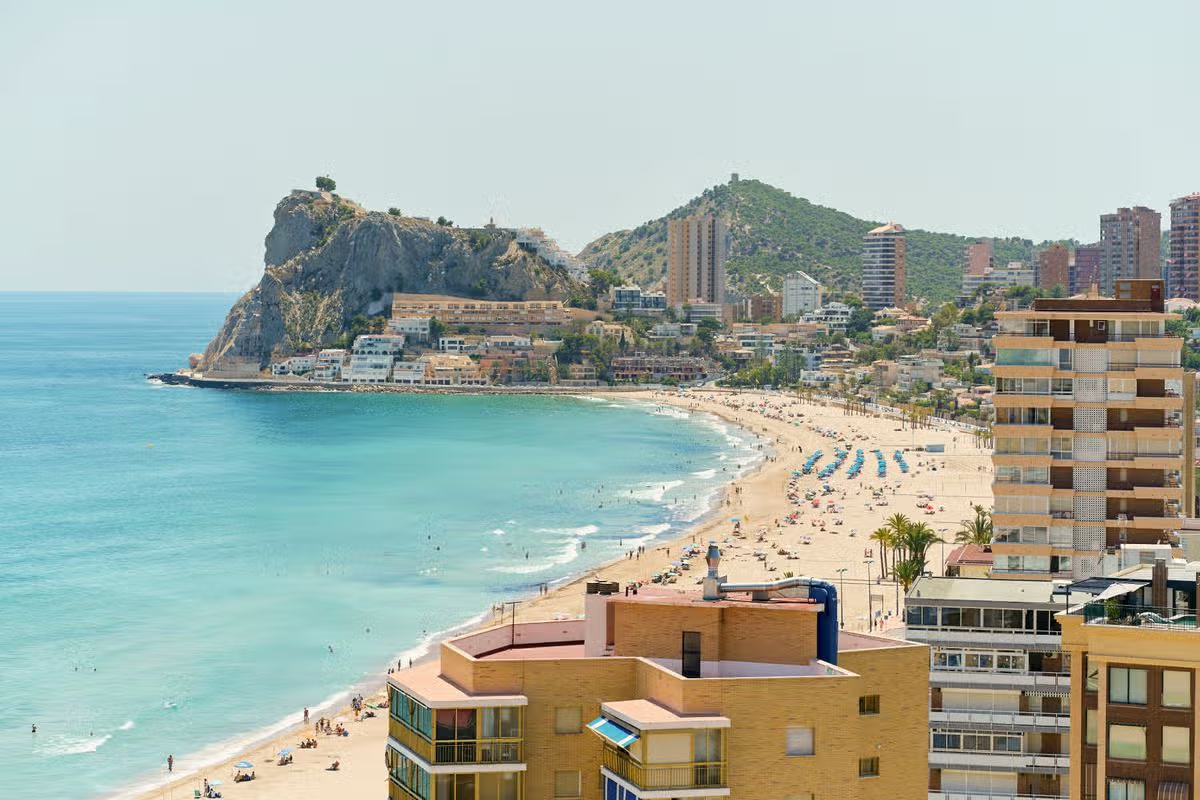
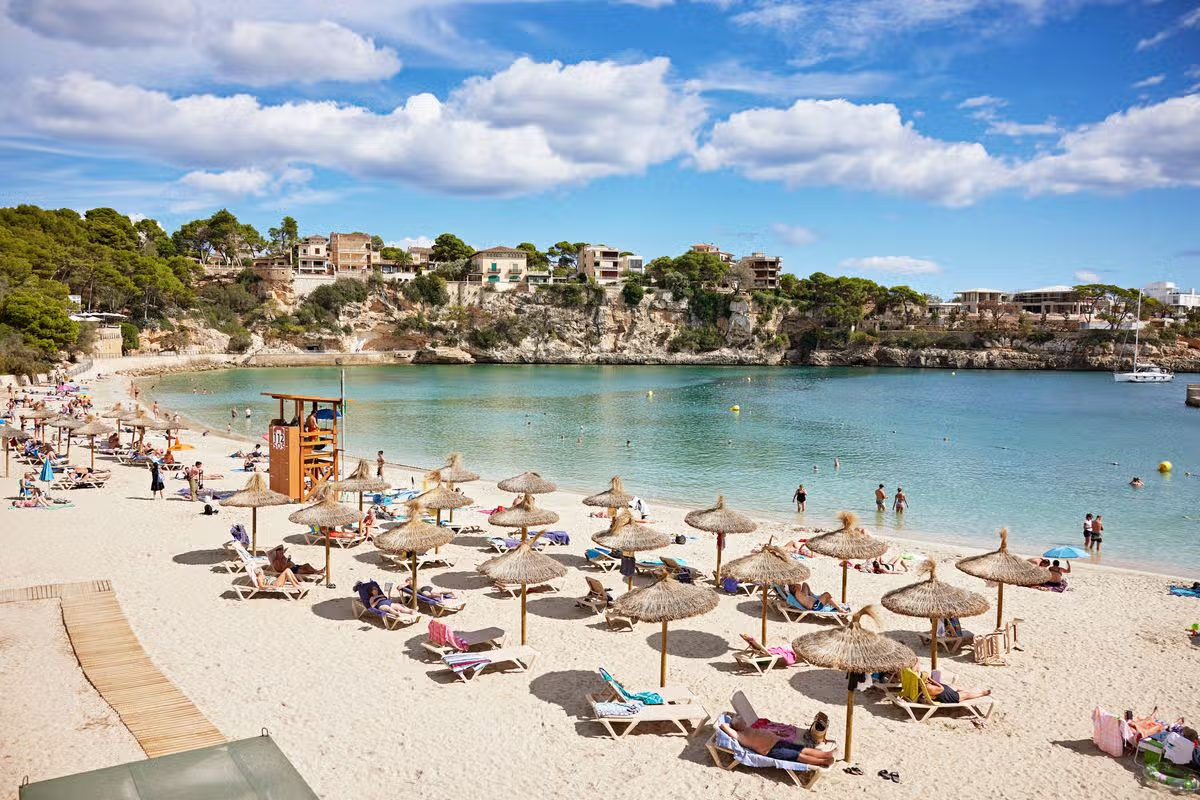
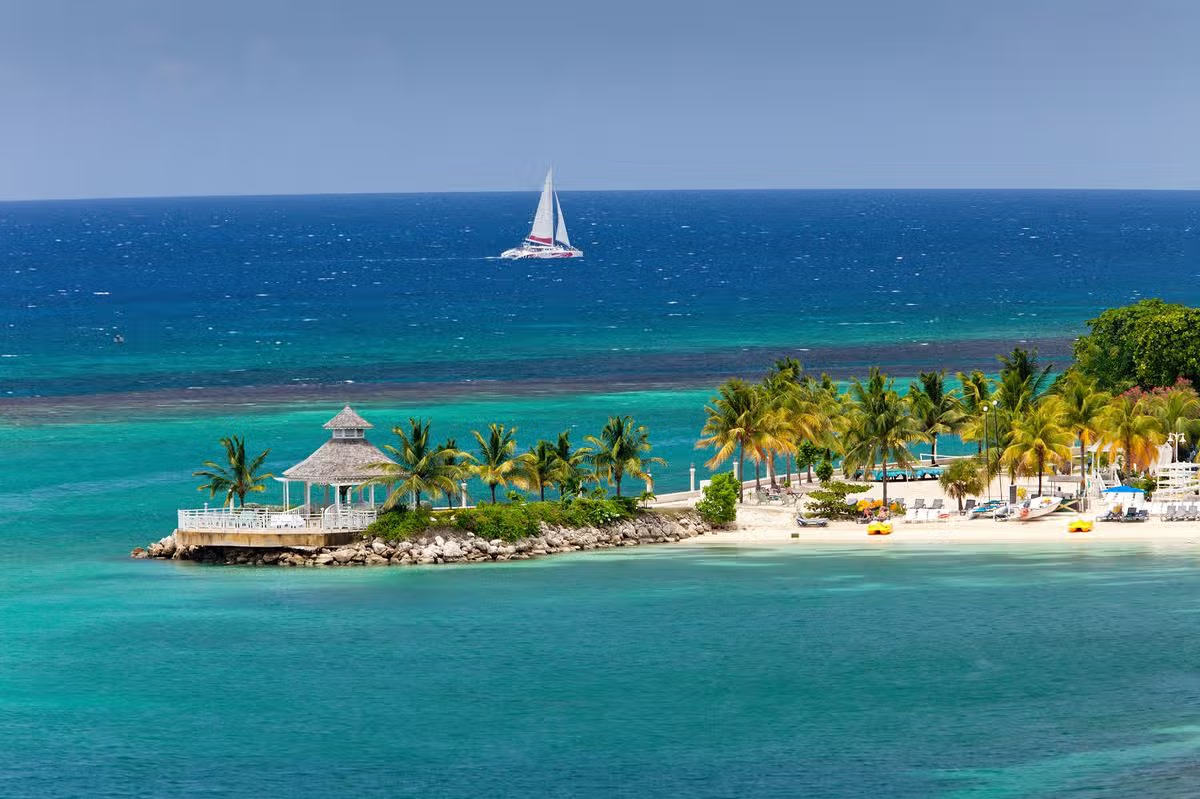
A beach popular with UK holidaymakers has closed again after mass bacteria levels were found in the water. The sunny spot popular with tourists has been fenced off from the public after being declared a no-swim zone.

Swimming has been banned by the local authorities after water samples were taken. La Pinta beach in Costa Adeje, Tenerife, has been shut since May 14. Adeje Town Hall has placed barriers on the seafront whilst the samples are reviewed.

Daily monitoring of the water detected signs of microbiological levels linked to enterococci bacteria. Exposure to contaminated water can lead to stomach illnesses as well as skin, eye and respiratory infections.

The beach is now covered with red flags, barriers and tape to deter holidaymakers from taking a swim. The picturesque spot usually features an inflatable assault course which is popular in the summer.

The beach will remain closed until the sample tests are cleared. Tourists were left fuming by the news.

One person said: “Again? This isn’t great.” Another added: “How sad.” One other person said: “Many tourists, many problems.”

One person said: “I was thinking yesterday, is the water clean? I had such a feeling.” Another person said: “It is at least good that it is tested to find these things out, but sad that something nasty was found.”

What is enterococci?

Enterococci are a large genus of lactic acid bacteria that can survive and grow whether oxygen is present or not. These bacteria are natural inhabitants of the gastrointestinal tracts of humans and other animals. In a healthy gut, they live harmoniously alongside other microbes and actually help maintain a balanced digestive system. They are also incredibly resilient organisms, capable of enduring extreme environments, high salt concentrations, and a wide range of temperatures.

While they are generally harmless in your gut, enterococci can turn into opportunistic pathogens if they escape the intestines and enter other parts of the body. This usually happens in hospital settings or in individuals with weakened immune systems. When they do cause trouble, they are notorious for triggering urinary tract infections (UTIs), blood stream infections (bacteremia), heart valve infections (endocarditis), and wound infections.

From a medical standpoint, two specific species cause the vast majority of human infections: Enterococcus faecalis and Enterococcus faecium. What makes enterococci particularly challenging for doctors is their natural resistance to many common antibiotics. Over the years, some strains have even developed resistance to vancomycin—one of the strongest antibiotics available—leading to a class of superbugs known as VRE (Vancomycin-Resistant Enterococci). Because they are tough to kill and spread easily on medical equipment and hands, hospitals enforce strict hygiene protocols to keep them in check.

Source link

Spain holiday warning as rule could see Brits kicked out of hotels

The UK’s Foreign Office has explained why

With warmer weather finally on the horizon, many Brits are turning their attention to the summer months and making holiday plans.

Spain continues to be the top choice for British tourists, with millions flocking to the European country each year, keen to bask in the sun, relax on its shores and enjoy the cuisine. When travelling overseas, it’s essential to get clued up on any local laws or rules you’ll be expected to follow while you’re there. And if Spain is in your sights this year, there’s one rule you may not know about.

The Foreign, Commonwealth and Development Office (FCDO) regularly provides travel advice for Brits visiting more than 220 countries and territories around the world. In its comprehensive guidance for Spain, the FCDO specifically highlights balconies.

While balconies are ideal for providing a vista and giving guests somewhere to relax outdoors, holidaymakers are required to behave responsibly. FCDO guidance for Spain warns: “Hotels and other establishments will evict you if you behave dangerously on balconies. You could also get a fine.”

Those travelling to Spain are also cautioned that they must present ID if asked by a police officer. The FCDO adds: “This includes the Guardia Civil and national, regional and local police forces.

“The police have the right to hold you at a police station until they have confirmed your identity. Ignoring direct requests of a police officer can be considered as ‘disobedience’, which is a criminal offence.”

Source link

‘Travel smart’ with Home Bargains £150 set ‘perfect for every trip’ reduced to £60

The bundle includes three suitcases in different sizes, designed to cover everything from short weekend breaks to longer holidays abroad

Holidaymakers hoping to upgrade their luggage without spending a fortune might want to pop into Home Bargains before jetting off on their next summer getaway. The discount retailer has quietly slashed the price of a travel essential by nearly £90, and it’s being hailed as “perfect for every trip”.

Home Bargains has cut the price of the Overlow Suitcase Set of 3, which normally sells for £149.99, down to a bargain £59.99. The set comprises three suitcases in varying sizes, catering for everything from quick weekend escapes to extended holidays overseas.

According to the product listing, each case is crafted from lightweight ABS material with a hard-shell construction designed to offer durability while minimising weight. The product description, available on the Home Bargains website, reads: “Travel smart with the Overlow Suitcase Set of 3 in sleek black – lightweight, durable ABS material with smooth 4-wheel glide for effortless airport navigation. Perfect for every trip, whether you pack light or heavy.

“Modern Suitcase. Lightweight. Whether you pack light or travel heavy, we’ve got you covered! The smooth 4-wheel glide makes navigating airports effortless, while the strong yet lightweight material ensures durability without adding extra weight.”

The largest case measures 70 x 48 x 29cm, while the medium and cabin sizes come in at 60 x 41 x 26cm and 50 x 35 x 20cm respectively. All three cases are designed to stack inside one another for convenient storage when not being used.

Home Bargains describes the set as “perfect for any trip”, emphasising its lightweight construction and smooth-rolling wheels as standout features designed to reduce travel hassle. Thanks to the current discount, shoppers can now save an impressive 60 per cent, with comparable sets elsewhere carrying significantly steeper price tags.

Budget-friendly suitcase sets such as this have grown increasingly sought-after amongst travellers seeking to reduce costs before holidays, especially as travel demand continues climbing during peak booking seasons. Retailers have noted strong appetite for affordable luggage bundles as families and solo travellers hunt for value-focused alternatives.

The set is also stocked in other colours including grey and navy through the same retailer, with prices staying uniform across the collection while stocks remain available. Shoppers keen on the offer can locate further information, including home delivery arrangements, via the Home Bargains website.

Source link

Restaurant in Spain has new charge for people who throw up

The all-you-can-eat venue says it has had a problem with ‘many customers’

An all-you-can-eat restaurant in Spain is introducing a “vomit fee” for diners who eat until they are sick on the premises. Sushi Toro, located in Gelves near Sevilla, said it had experienced a growing number of incidents in recent months involving customers “eating until they burst” and then vomiting.

The restaurant said the problem had affected tables and bathrooms, creating difficulties for staff and raising concerns over hygiene and customer service. In a statement shared on social media, restaurant staff said: “We have had many customers who keep ordering non-stop and eat until they burst, until they vomit. We have had vomit on the tables and in the bathrooms.”

They added that “the only solution” was to start charging vomiting fees. The restaurant, which promotes a fusion of “tradition and innovation”, offers a buffet menu featuring dishes prepared using fresh ingredients and specialist techniques. Prices range from €16.90 (£14.40) to €23.90 (£20.30), depending on the day and time of dining.

Sushi Toro bosses said their staff “strive hard to get orders out on time and maintain good hygiene” throughout all service periods. They urged diners to “order what you can eat” and apologised for any inconvenience caused by the new policy.

Demand for sushi has been surging in Spain in recent years, with diners increasingly opting for Asian seafood dishes over traditional Spanish fish fare.

Source link

Spain holiday warning as Brit tourists limited to six drinks

In response, Spanish authorities have imposed a crackdown on tourists and excessive alcohol consumption, particularly around the areas of Magaluf and San Antonio

Spanish holidaymakers could fall foul of the six-drink rule this summer, a travel expert has warned.

Tourists heading to the Balearic Islands may find themselves slapped with heavy fines, as Spanish authorities move to crack down on excessive partying as the holiday season gets underway.

Over 3.5 million Brits visit the Balearic Islands of Majorca, Ibiza, Menorca, and Formentera last year, jetting off in search of vitamin D and cheaper pints. However, amid a surge in unruly tourists and their booze-fuelled benders locals have begun to organise anti-tourism demonstrations, demanding action against rowdy behaviour, soaring rental prices, and overrun beaches in recent years.

In response, Spanish authorities have imposed a crackdown on tourists and excessive alcohol consumption, particularly around the areas of Magaluf and San Antonio. Under the 2024 ‘Decree for Responsible Tourism’, it’s now illegal to consume alcohol on the streets. Breaking these rules will land tourists a sizeable fine, ranging anywhere from €500 up to €3,000, depending on the severity of the violation.

READ MORE: I am saving £3,000 on each family holiday by taking the kids away during term-timeREAD MORE: Packing is ‘so much easier’ with ‘simple’ suitcase hack for ‘no creases’

Executive director of John Mason International, Simon Hood, has issued a warning to Brits jetting off to the party destinations of Majorca and Ibiza in the coming months. The travel expert has said that holidaymakers should avoid public drinking and excessive noise at night if they want to avoid facing penalties, with authorities planning stronger enforcement of key laws throughout the summer.

Simon has warned that anti-social behaviour from tourists will not be tolerated by the local authorities in the coming months, as they enforce stricter measures and potentially hand out sizeable fines to offenders.

Simon explains: “In response to recent overtourism protests, the islands of Majorca and Ibiza have implemented Responsible Tourism rules following some understandable concern from local residents.

“These laws were first introduced in 2024, however, new amendments have recently been proposed that many Brits are unaware of. Be careful you’re not caught out taking alcoholic drinks onto the street and spilling them. Being overly loud and drawing attention to yourself will also land you in trouble quicker.”

“Holiday-goers planning on booking all-inclusive packages or bar crawls are also affected by these laws. For example, limits on all-inclusive drinks have been introduced in the party resorts of Magaluf, Playa de Palma, and San Antonio.

“If you have booked an all-inclusive package, you’re only allowed a maximum of six alcoholic drinks per day, and these must be split between your lunch and evening meal. Make sure you’re not going over your allowance and trying to cheat hotel staff. Hotels are allowed to charge you more money for breaking all-inclusive rules.”

Gone are the days of two-for-one cocktails and happy hours, as the islands have tightened control on public drinking and alcohol promotions in bars and pubs. The Balearic law now forbids tourists from drinking alcohol on the streets and beaches, with penalties ranging from €750 (£650) to €3,000 (£2,600) for violations.

Off-licence alcohol sales have also been clamped down on, with sales prohibited between 9.30pm and 8am in specific areas in a further attempt to limit street drinking and curb anti-social behaviour.

Simon says: “At John Mason International, we always advise our clients to remain cautious and respect local rules and regulations. This Act hopes to crack down on excessive binge drinking, but it doesn’t mean you can’t still enjoy a few pina coladas by the pool and have a great vacation – it just means you need to be cautious of your surroundings.

“These rules may seem strict, but they’re trying to promote harmony between local residents who want to go about their lives and tourists enjoying their holidays. If I can provide one piece of advice, it’s have fun.”

Source link

I visited Europe’s best ’24 hour city’ to find out how much you can actually visit a single day

If you’re short on time then a day trip can be an excellent way to see the most iconic sights of a city. This sunny destination under two hours from the UK has been named the best for a 24-hour break thanks to its compact centre

Is 24 hours really enough to experience a new city?

For people short on time or those who want to see only the highlights of a city, a 24-hour day trip can be a great way to get a taste of a new destination, if not a full-blown portion of a place.

Transport provider Mozio recently put together a list of the best European cities for a 24-hour holiday, and at the top is Barcelona: an iconic city with a flight time of under two hours from London.

Keen for a city to explore, and without much time to spare away from my busy family life back home, I hopped on a plane to the Catalonian capital to see how much of Barcelona I could take in in a single day.

Lke most visitors to Barcelona, I started off at the Sagrada Família. In fact, it wasn’t that long after I landed before I stood at the foot of Gaudí’s masterpiece, in awe of the way the ornate spires seemed to stretch endlessly towards the sky. Rosa, an endlessly cheerful and knowledgeable tour guide, was on hand to help me navigate this architectural behemoth.

The small group tour meant there was no aimless wandering. Not only did we skip the lines outside, but we also learned so much about the building, its little details, and the fascinating life of Gaudí, whose passion and money were poured endlessly into the project.

A short walk away is the architect’s Casa Batlló, another attraction that is worth getting skip-the-line tickets for if you’re short of time. On the crowded pavement outside, crowds gather to take photos of the intricate facade, which features colorful mosaics resembling mermaid fins, skeletal columns, and balconies resembling masks with empty eyeholes.

Inside, Rosa led us through each beautifully designed room, explaining the features from the smooth, sleek, curved wood to the ombré tiles on the wall that get progressively darker as you climb the stairs. Every inch of the house has Gaudí’s architectural touches, down to the doorknobs.

A day isn’t a long time to try all the culinary delights that Spain has to offer, but one way to enjoy as much authentic cuisine as possible is to head to Mercat de la Boqueria. It was crowned the world’s best market by the New York Times, and it truly is a foodie heaven. The smell of jamón hangs in the air as you wander round stalls selling cones of cured meat, manchego cheese, olives, and other treats. Grab a bar stool and try some pintxos, a Spanish snack made up of small pieces of bread topped with seafood, meat, or cheese, best enjoyed alongside a cold beer or glass of wine.

For something more substantial, book a table at Can Culleretes, Barcelona’s oldest restaurant that sits off a winding side street near La Rambla. And I’m serious when I say book a table. The queues spill out into the street. Inside this charmingly rustic restaurant that dates back to the 18th century, we were served an incredible array of tapas, including anchovies, huge prawns doused in garlic, and plates of croquettes, washed down with Spanish wine. By the time the crema catalana came round for pudding, most of us were too full to make a proper go of it.

If you’re still standing after all that tapas, and many, many steps, then you may feel like heading somewhere a little more serene. Barcelona’s metro system connects to Funicular de Montjuïc, a short two-minute ride that costs around €3, (£2.60), yet gives you incredible hillside views across the city. From Montjuïc you can watch the sun go down and the lights of Barcelona twinkling below from the bustling city centre to the sandy beach.

Not bad for a day.

Book it

The Sagrada Família small guided tour including tower access starts at £70 per adult (11+), £51 per child (5-10), under 5s go free. A Casa Batilo private tour with skip the line entry for six people starts from £70 per person with early access. Both tours can be booked via TUI Musement.

TUI offers three-night city break packages to Barcelona, staying at the 4* H10 H10 Madison Hotel on a bed and breakfast basis, from £666 per person based on two adults sharing a classic double room, traveling on Ryanair from London Stansted Airport on September 15, 2026. Price includes 10kg of hand luggage.

Have a story you want to share? Email us at webtravel@reachplc.com
Source link

5 things not to miss in Barcelona including a stunning £3 view

Barcelona is the ultimate city break. It’s less than two hours from the UK, compact, and yet absolutely full of things to do. Here are five suggestions from iconic sights to inexpensive trips

Barcelona continues to be one of the top city break picks for Brits. Not only does it offer short flight times, it’s a destination that packs in plenty to do. And as a bonus, you’ve also got sunny weather and sandy beaches to enjoy alongside history, culture, and authentic Spanish food.

If you’re one of the many Brits heading to Barcelona this summer, here are five things not to miss, and how you can make the most of your break.

1. Sagrada Família

What else can be said about the Sagrada Família? It’s a must-see, no matter how long you’re in Barcelona for. But there are different ways to experience this spectacular basilica.

Many people simply walk around the outside, but definitely get tickets to go in if you can. The interior is perhaps even more breathtaking than the exterior, bathed in colorful lights from stained glass and featuring high ceilings inscribed with hundreds of tiny emblems and intricate details. For this reason, it’s worth taking a small private tour of Sagrada Familia with priority entrance from £57 per adult, as your guide can tell you so much about the vision behind the building and point out all the things you’re bound to miss.

2. Casa Batlló

Another attraction that’s best enjoyed on a tour is Casa Batlló. This Gaudí-designed home is also packed with the little details that the architect became famous for, so again, a tour is really worth it. You can get Casa Batilo early access with audio guide that allows you to avoid the queues that build during the day at this famous attraction and learn about Gaudí’s creative process, his vision that sculpted his iconic architecture, and the history of this incredible home.

3. Funicular de Montjuïc

Montjuïc is a 176-metre high hill that offers stunning views across Barcelona. It’s a great place to see the skyline, appreciating the scale of the Sagrada compared to the buildings around it, and seeing where the city meets the sandy beaches. You can take a cab or bus to the top, but the easiest option is to take the metro. A ticket costs €3( £2.60) and takes you up the steep hill in just a couple of minutes. Visit at sunset and watch the sun go down and this buzzing city come to life.

4. Bouquet d’Alella

If you’ve enjoyed Catalan wines at your dinner table, why not see where the grapes ripen in the sun? Bouquet d’Alella is just a short drive from the city, and from this charming winery you can enjoy views across the countryside, take a tour and learn about the traditional methods of wine making still used today, before sitting down for a tasting under the shade of the knotted trees.

You can visit this winery as part of TUI Musement’s full day e-biking, wine tasting, and sailing experience, which costs £122 per person and includes tasting different varieties of wine, plus snacks, including the best pan con tomate you’ll find in Barcelona. You can also organise an individual visit or book your own tour.

5.

La Boqueria is an incredible place to try authentic Catalan cuisine. Voted the world’s best market, it’s a maze of stalls selling Spanish cheeses, jamón, olives, and lots of tapas dishes you can try as you wander around. It also has a selection of small, independent restaurants where you can sit and have lunch amid the buzz of this always busy market. You can opt for a Barcelona food market tour with tastings, or simply visit and explore the stalls at your own pace.

Book it

TUI offers 3 night city break packages to Barcelona staying at the 4* H10 H10 Madison Hotel on a bed and breakfast basis, from £666 per person based on two adults sharing a classic double room travelling on Ryanair from London Stansted Airport on 15 September 2026. Price includes 10kg of hand luggage.

Have a story you want to share? Email us at webtravel@reachplc.com

Source link

Spain’s tourism boss issues warning for Brits ahead of summer

Holidaymakers planning a trip to Spain who haven’t yet booked their flights are being warned to do so know amid speculation that escalating oil prices could soon drive up the costs

A Spanish tourist boss has warned that Brits who haven’t yet booked their summer holidays should book flights as soon as possible to avoid “price fluctuations”.

Jordi Hereu, Spain’s Industry and Tourism Minister, made the comments to Spanish news outlet Expansion yesterday (April 27), warning that growth in the tourist industry could be dampened by rises in the cost of flights. Last year, Spain welcomed 97 million tourists through its borders, and was expected to hit the 100 million mark this year.

He said: “What ⁠we’re recommending is that ‌people buy their tickets now because it’s true that (airlines) are currently using kerosene that was purchased some time ‌ago, and therefore there’s an element of ‌price fluctuations involved.”

“It’s already clear that prices have risen and this could affect demand.” he added. He went on to reassure holidaymakers that authorities were looking at ways to prevent fuel shortages as the busy summer season looms.

READ MORE: Passport holders urged to act as issue could see them ‘turned away at airports’READ MORE: TUI issues Tuesday April 28 update for passengers with holidays to Europe booked

But Mr Hereu also warned: “If the countries ‌that send tourists to Spain had problems, we would have them too.”

Many airlines have been foreced to cancel flights this spring and summer due to the rising cost of jet fuel as supplies run law, as a consequence of the closure of the Strait of Hormuz following the Israeli and US attack on Iran.

Keir Starmer said the UK was doing “everything we can” to reopen the Strait, although the UK PM warned: “I don’t want anybody to think that, once the Strait is open, that that’s the end of the damage. It will go on longer than that.”

He went on to tell Sky News: “I can see that, if there’s more impact, people might change their habits… where they go on holiday this year, what they’re buying in the supermarket, that sort of thing.”

Corneel Koster, Virgin Atlantic’s chief executive, told the Telegraph: “I was looking at improving our financial results by a really significant chunk. And then this happens. We have never seen jet fuel at these levels, with prices more than doubling. The industry cannot absorb increases like this.”

In recent weeks, the cost of a barrel of jet fuel has increased from £63 to as high as £148 amid the conflict in the Middle East. The cost of fuel accounts for around a quarter or more of operating expenses for airlines, meaning it can have a big impact on profits.
According to reports by the BBC, the lowest-priced economy tickets currently cost 24% more on average than this time last year. In response, airlines have asked for measures such as a cut or suspension to Air Passenger Duty to be put in place to balance out the costs for consumers.

READ MORE: UK tourists face risk of new airline strikes in European country 1.3m visit a yearREAD MORE: ‘I cried every day in England so moved 10,000 miles away – now my salary’s doubled’

A number of airlines have already cut services, such as Lufthansa, which has axed 20,000 European short-haul flights, which it claims will save around 40,000 metric tons of jet fuel. The German airline will offer customers options, including refunding fares or booking them on alternative flights with other airlines.

Have a story you want to share? Email us at webtravel@reachplc.com

Source link

Major European hotspot looks to introduce ‘hotel ban’ as it doesn’t want to be ‘new Barcelona’

Tourists visiting this holiday hotspot may find it harder to book a hotel room in the future as local authorities are seeking to freeze new hotel licences in a bid to tackle tourist numbers

A European tourist hotspot that’s popular with Brits is eyeing plans to tackle overtourism, including potentially putting a freeze on the opening of new hotels.

The mayor of Athens, Haris Doukas, is desperate for his city not to become too overcrowded and overwhelmed by tourists. Haris previously oversaw a ban on new permits for short-term rentals such as Airbnbs in three neighbourhoods in central Athens.

Now, he has told Euronews that he wants to avoid the city becoming like other crowded spots. He said: “We really need to see if and how many more hotels we need and where. We need to see and think about how much extra tourist load we can lift and where.

“We must not become Barcelona. We have to understand that there are saturated areas that cannot afford new beds: whether short-term rentals or not. Talking at events around the globe, we see that capping is not only being put on short-term rentals but also on hotels; in specific, ‘saturated’ areas.”

READ MORE: Holidaymakers urged to leave these popular items at home or risk airport delaysREAD MORE: EU gives UK holidaymakers flight cancellations update in new statement on April 22

Across the Attica region, where Athens is located, there are 68,934 rental apartments, nearly half of which are found in the city center. Across Greece, tourist demand has seen a huge increase in the amount of accommodation available, with 450 new four- and five-star hotels opening between 2019 and 2024.

Should Athens enact the ban, it would join cities including Barcelona and Amsterdam, which already have similar initiatives to tackle the issue of overtourism.

Evgenios Vassilikos, President of the Athens – Attica & Argosaronic Hotel Association – spoke at the same event. He argued that there needed to be a careful planning process when it comes to expanding the number of hotel beds and short-term rentals.

He said: “There are practices abroad which have been implemented. We don’t need to reinvent the wheel. The example I gave is that in Barcelona they have completely banned short-term rentals from 2028 and from 2017 onwards no new hotel licences are being issued. So there are, therefore, these restrictions abroad. We will possibly have to see in Athens what we want in terms of where we want to be in 10 to 15 years. “

READ MORE: Ryanair warns passengers it’s changing its luggage rules in 2026READ MORE: Walt Disney World’s Free Dining offer is back – and families could save up to £400

He added: “We will definitely need hotel beds there. How many will these be? How many will be five-star, how many four-star, etc. There has to be a specific plan. And of course that drags in all kinds of beds, meaning non-primary tourist accommodation and short-term rentals.”

Athens has become the most popular tourist destination in Greece with about 12 million international arrivals in 2025. This included around 4.5 million British tourists, up from 3.5 million in 2019. The Acropolis alone receives millions of visitors a year, and at peak times can see over 17,000 visitors a day.

Have a story you want to share? Email us at webtravel@reachplc.com

Source link

Holiday alert as 14 UK tourist hotspots face ‘indefinite’ strikes from Friday, April 17

Air traffic controller strikes will cause ‘indefinite’ disruption to flights from April 17, affecting some of the most popular European holiday locations

British holidaymakers are facing the prospect of indefinite disruption starting from tomorrow at major European holiday destinations. A total of 14 airports at popular holiday locations are preparing for strike action from Friday, April 17.

Air traffic controller unions are warning that the strike action is ‘indefinite’. Spanish media reports indicate that the action by USCA kicks off on April 17 at the Canary Island hotspots of Lanzarote, Fuerteventura, La Palma, La Gomera and El Hierro – with nine further locations also affected.

Other popular holiday destinations set to be hit by airport strikes include the mainland locations of Jerez de la Frontera, La Coruña, Madrid-Cuatro Vientos, Vigo and Seville. Castellón, Burgos, Huesca and Ciudad Real are also set for strike action.

Travel website Travel On World is cautioning tourists that the greatest risk is likely to be “delays, late aircraft rotations, missed connections and short-notice timetable changes.”

The site notes that for many travellers, the main concern is not a complete shutdown of operations. Instead, it is planes departing late from earlier locations, inbound flights being held up, departure slots changing around, turnaround times tightening and passengers having to put up with long waits for clear details on what is happening.

Because air traffic control is classed as an essential service, Spanish authorities have the power to impose minimum service levels. This should mean that some flights continue to operate.

Some flights are therefore likely to depart close to schedule. Yet others may face significant delays, and some could be cancelled where airlines determine the knock-on effect has become too serious.

What are my rights over the Spain airport strikes?

According to the Civil Aviation Authority, if your UK flight is delayed, and a post-Brexit regulation known as UK261 applies to it, your airline must care for you while you are delayed. This includes supplying you with food and drink depending on the length of your delay, and accommodation if you are delayed overnight.

You may also be entitled to compensation if the delay results in you reaching your destination airport more than three hours late. If the delay exceeds five hours, you can opt not to travel and receive a refund.

What is the Spain strike action all about?

The airports affected by the industrial action share a common thread – all are operated by SAERCO. Further strikes had previously been anticipated at Lanzarote and Fuerteventura, linked to a separate ongoing dispute involving Groundforce baggage handlers. However, it emerged earlier this week that this action has now been suspended.

Travellers must now contend with this latest wave of industrial unrest. Air traffic control unions say they are taking strike action over staff shortages and shift scheduling disputes – and passengers should be ready for disruption.

USCA spokesman José Luis Feliú told El Espejo Canario that delays are a real possibility. And the sunspots are busy all year long. Aena reports that 5.7million British holidaymakers visited the Canary Islands in 2023 alone.

Even outside of the school holidays, the islands remain a firm favourite with British travellers – and for good reason. According to the Hello Canary Islands website, with 4,800 daylight hours a year, the Canary Islands have the most daylight hours of anywhere in Europe.

What the unions are saying about the Spain airport strikes?

USCA spokesman José Luis Feliú told Spanish media there is currently a “shortage of air traffic controllers,” which he said directly impacts the system’s operation. “It generates greater stress, more fatigue, and makes it impossible to guarantee service continuity,” he warns.

The union spokesman highlights that the surge in air traffic has worsened the situation, compelling professionals to shoulder heavier workloads under increasingly difficult conditions, reports El Espejo Canario. One of the most pressing concerns is shift management, he alleges. “The company unilaterally changes the schedule,” alleges Feliú, leaving workers unable to plan their personal lives, he claims.

He claims that air traffic controllers are forced to “give up leave, vacations, and planned changes,” a situation he regards as unsustainable in the long run. “In the end, you work the same hours, but without any planning,” he claims.

The strike is indefinite, although minimum services will remain in place, it is understood. Spanish website Larazon reports that the union cites “staff cuts of up to 33%” as the reason for this nationwide strike.

The website reports that the action is set to affect football fans using Seville airport. The Copa del Rey final will take place in Seville between Atlético de Madrid and Real Sociedad on Saturday, April 18.

According to Diario de Jerez, as of midday Thursday, the Jerez airport schedule still showed 18 commercial flights planned for Friday (nine landings and nine takeoffs). Meanwhile, another 18 commercial operations are scheduled for Saturday, two of them with Germany.

Source link

Spain airport delays update as one group hit with longest waits over April ‘change’

Many passengers are facing waits of up to three hours at Spanish airports due to the new controls

Travellers in Spain are experiencing significant delays at airports. And experts are warning that one particular group is bearing the brunt of new border controls, according to a Spanish travel organisation.

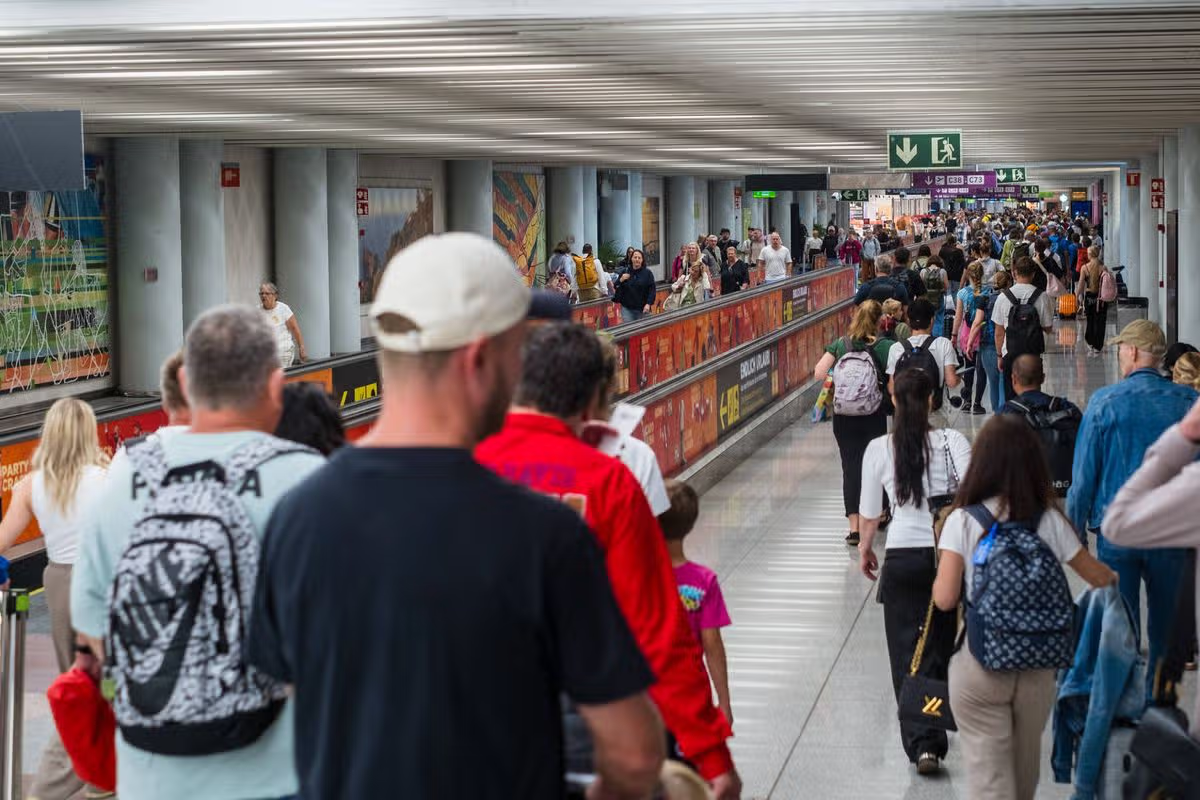
There have been widespread reports of waiting times of up to three hours. New regulations have been introduced, with some passengers in particular facing very long waits.

Spanish media reports indicate waiting times of up to three hours at Palma airport alone, with similar delays reported in France, Greece, Italy and beyond. Travel group Aviba is now calling for urgent measures to prevent chaos this coming summer.

Pedro Fiol, president of the travel association, is demanding immediate action to avert disruption this summer, and has revealed he has been pushing for such measures for months, according to Ultimata Hora. The new system has only just been introduced, having fully launched on April 10, following a trial period that began late last year.

The EU’s new Entry/Exit System (EES) initially began operations on 12 October 2025, with a phased rollout across 29 European countries. Now it is fully in place.

The system replaces passport stamping with digitally recorded entries, exits or refusals of entry of non-EU nationals arriving for short stays. Travellers’ facial images, fingerprints and personal data from the travel document will also be recorded.

Mr Fiol said: “The implementation of the new European Border and Security System (EES) is already beginning to be felt at the Balearic airports, especially at Son Sant Joan, the main gateway to Mallorca, where we are still operating with a hybrid model. At certain times, it is causing some slowdowns in the controls, particularly for non-EU passengers.”

He warned that “we are facing a structural change in how borders are managed across Europe: biometric registration is replacing manual passport stamping, and this means more time for the passenger’s first contact with their destination.” In his view, so far “the experience has been inconsistent: some days the operation runs relatively smoothly, while others, according to agencies and tour operators, can take more than two hours from the moment the plane lands until the traveller collects their luggage, and even nearly three hours in some specific cases.”

Ultima Hora reports that the National Police have acknowledged the delays, though they say they have seen no evidence of prolonged hold-ups. Sources close to the security forces have told Spanish media that additional staff have been deployed during peak hours in a bid to ease any difficulties that may occur during periods of heavy passenger congestion at checkpoints.

Travellers passing through airports in countries including France, Germany, Belgium, Italy, Spain and Greece are facing waits of several hours at border controls, according to the Airports Council International (ACI). Olivier Jankovec, the director of the ACI European division, told the Financial Times: “This situation, in the coming weeks and certainly over the peak summer months, is going to be simply unmanageable.

“We are seeing those queueing times now, at peak times, when traffic is just starting to build up.” A spokesperson for the European Commission told the Guardian: “What we can see from the first days of full operation is that the system is working very well. In the overwhelming majority of member states there are no issues.”

The commission said that the average registration of a passenger was 70 seconds, although the ACI has claimed that it can take up to five minutes. The spokesperson said there were a “few member states where technical issues have been detected” but that they “are being addressed”.

They said: “It is up to member states to ensure the proper implementation of the EES on the ground.” Luke Fitzpatrick, from independent travel agency Perfect Getaways, told the BBC this week that travellers should plan ahead to make border checks as smooth as possible.

“It’s about being as prepared as you can be,” Fitzpatrick told BBC Radio Merseyside. “There is a lot of uncertainty at the moment as people are getting used to the new system.”

While he said the advice was to arrive at the airport “at least three hours early”, he said it could be more difficult for people booked on a package holiday. “If you’re on a shared transfer back, everyone’s coming together at the same time,” he said.

EES changes and the impact on transfer and pick-ups

Pedro Fiol told Ultima Hora that “this situation is forcing a restructuring of transfer and pick-up operations at destinations to better co-ordinate exact times, avoid additional downtime, and guarantee the smoothest possible service.” Given this situation, he says that “travel agencies are concerned that if resources are not properly allocated at airports with such high tourist pressure as those in the Balearic Islands, significant queues and a negative first experience for visitors are possible.”

What do Brit tourists need to do with EES rules?

The govuk website states that “if you are travelling to a country in the Schengen area for a short stay using a UK passport, you may be required to register your biometric details, such as fingerprints and a photo, when you arrive. You do not need to take any action before you arrive at the border, and there is no cost for EES registration.

“EES registration is replacing the current system of manually stamping passports when visitors arrive in the EU. EES may take each passenger extra time to complete so be prepared to wait longer than usual at the border.”

The countries in the Schengen area are: Austria, Belgium, Bulgaria, Croatia, Czechia, Denmark, Estonia, Finland, France, Germany, Greece, Hungary, Iceland, Italy, Latvia, Liechtenstein, Lithuania, Luxembourg, Malta, Netherlands, Norway, Poland, Portugal, Romania, Slovakia, Slovenia, Spain, Sweden, and Switzerland.

Source link