Southend Airport

New July 8 UK airport rule will affect British families – ‘get through quicker’

Travel could be about to get faster for some families this summer at dozens of UK airports

Families are being reminded that a major change to a key rule across more than a dozen UK airports will come into effect this summer. From next week, on July 8, a security rule will be eased for certain primary school-age children.

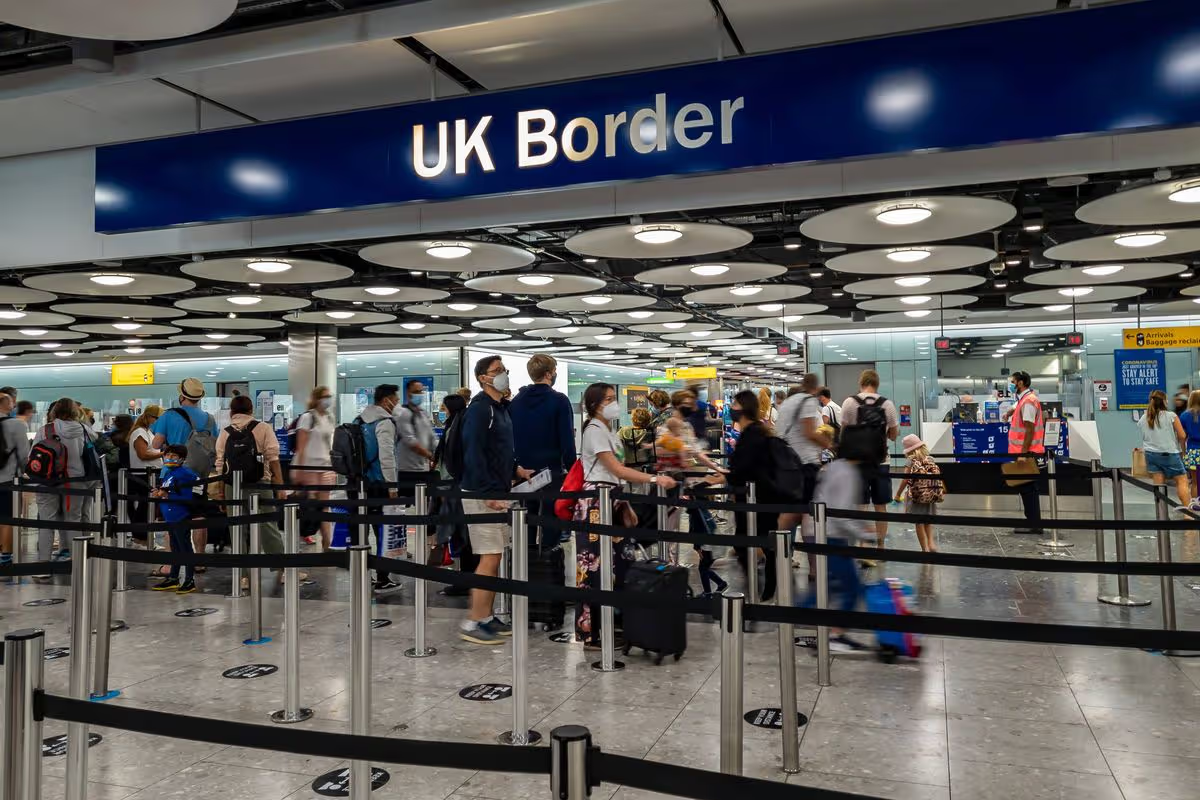
Back in May, the UK Government announced that up to 1.5 million more children would soon be able to use UK eGates, helping to speed up the process for them and their families during the summer holidays. Children aged eight and nine, who are at least 120cm (3ft 11in) tall and travelling with an adult, will become eligible under the new measures that come into force on Wednesday, July 8.

Officials say the change to the age threshold will be a welcome relief for families returning home from their holidays with young children in tow. The government claims that passing through an eGate typically takes just a matter of minutes.

With greater numbers of passengers making use of eGates, waiting times at passport control are also anticipated to fall. Prior to 8 July, eGates were generally available to those aged 10 and above, though children under 17 were required to (and must still be) accompanied by an adult, reports the Express.

Passengers are eligible to use an eGate if they have a biometric symbol on the front cover of their passport and are either:

  • a British citizen
  • a national of an EU country, Australia, Canada, Iceland, Japan, Liechtenstein, New Zealand, Norway, Singapore, South Korea, Switzerland or the USA
  • a member of the Registered Traveller Service
Content cannot be displayed without consent

Minister for Migration and Citizenship, Mike Tapp said: “Travel with young children can be stressful for parents. By expanding eGate access, more families can experience a swifter and smoother journey home – freeing up precious time this summer holiday season. We are delivering continued improvement to the passenger experience, while keeping our borders safe and secure.”

Border Force Director General, Phil Douglas said: “eGates are an essential part of keeping our border secure. Expanding access for families will deliver safe, smooth journeys whilst freeing up highly-skilled officers to focus on intercepting those who pose a threat to the UK.”

Karen Dee, Chief executive of AirportsUK, the trade body for UK airports, said: “This is a welcome development as it will give more families the ability to take advantage of this technology, speeding up the border process and reducing waiting times for many. Airports work very hard with border authorities to ensure the UK’s front door is both secure and welcoming, with those coming home and visiting enjoying a smooth experience.”

The UK first introduced ePassport gates at airports in 2008, with the very first gate going live at Manchester Airport. Initially, the automated gates were limited to UK, EU, and Swiss citizens but have since expanded to include eligible travellers from dozens of countries, including the US, Canada, Australia, and New Zealand.

Full list of UK airports with eGates (as of July 2026):

  1. London Heathrow
  2. London Gatwick
  3. London Stansted
  4. London Luton
  5. London City
  6. Manchester
  7. Birmingham
  8. Edinburgh
  9. Glasgow
  10. Bristol
  11. Newcastle
  12. Cardiff
  13. East Midlands
  14. Southampton
  15. Southend

Source link

EasyJet urges passengers to ‘switch off’ item on board or risk lifetime ban

easyJet passengers are being warned they could face serious consequences if they don’t completely switch off certain electronic devices

Holidaymakers travelling with easyJet this summer are being warned that they could unknowingly fall foul of strict cabin rules unless they fully switch off a commonly used electronic device before stepping on board. The trouble is that many passengers only discover the rule once they’ve already reached the airport or are on the verge of boarding, where last-minute slip-ups could spell serious problems.

According to EasyJet, the warning relates to e-cigarettes and vaping devices, which must be carried in hand luggage only and are strictly forbidden from being stowed in hold baggage under any circumstances. The airline’s official policy states: “All electronic cigarettes and vaping devices must be carried in the cabin, re-charging is strictly prohibited and the device must be completely switched off.”

It also advises passengers to keep their devices on their person where they can be kept an eye on throughout the flight, reducing the risk of accidental activation. These rules are in place due to concerns over lithium-ion batteries, which are used to power vaping devices and are well known for posing a fire risk if they become damaged or overheat.

The UK Civil Aviation Authority categorises lithium batteries as a significant safety risk in aviation due to their potential for ‘thermal runaway’, producing intense heat and flames that are notoriously difficult to extinguish in confined spaces. The International Air Transport Association has highlighted a worldwide rise in lithium battery-related incidents, which has gone hand in hand with the increasing prevalence of portable electronic devices, prompting airlines across the globe to tighten their rules considerably.

EasyJet also warns that passengers must take precautions to prevent their vaping devices from being switched on accidentally during flights, including ensuring they are fully powered down before boarding. The airline stipulates that travellers may carry no more than two spare batteries in their hand luggage, and that these must be properly protected to prevent them from coming into contact with metal objects.

Under UK aviation rules, vaping devices must be kept in hand luggage at all times. Official government guidance states that e-cigarettes are strictly prohibited from hold baggage.

Industry experts point out that confusion often arises because rules can vary between airlines and destinations, which can leave passengers unknowingly packing the wrong items before they even reach airport security. Aviation safety specialists also warn that using or charging vaping devices while on board flights is strictly prohibited by all major airlines, with penalties ranging from confiscation to fines or even travel bans in severe cases.

As summer travel demand picks up, holidaymakers are being urged to check airline regulations before they set off to avoid delays, confiscations, or being refused entry at the boarding gate.

Source link