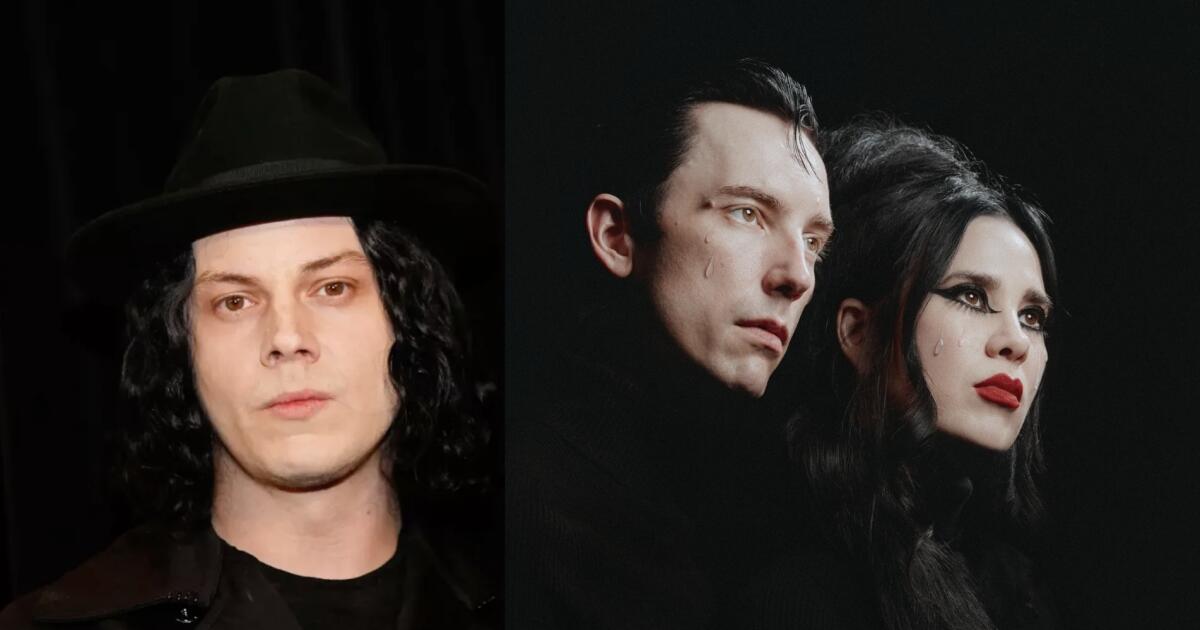
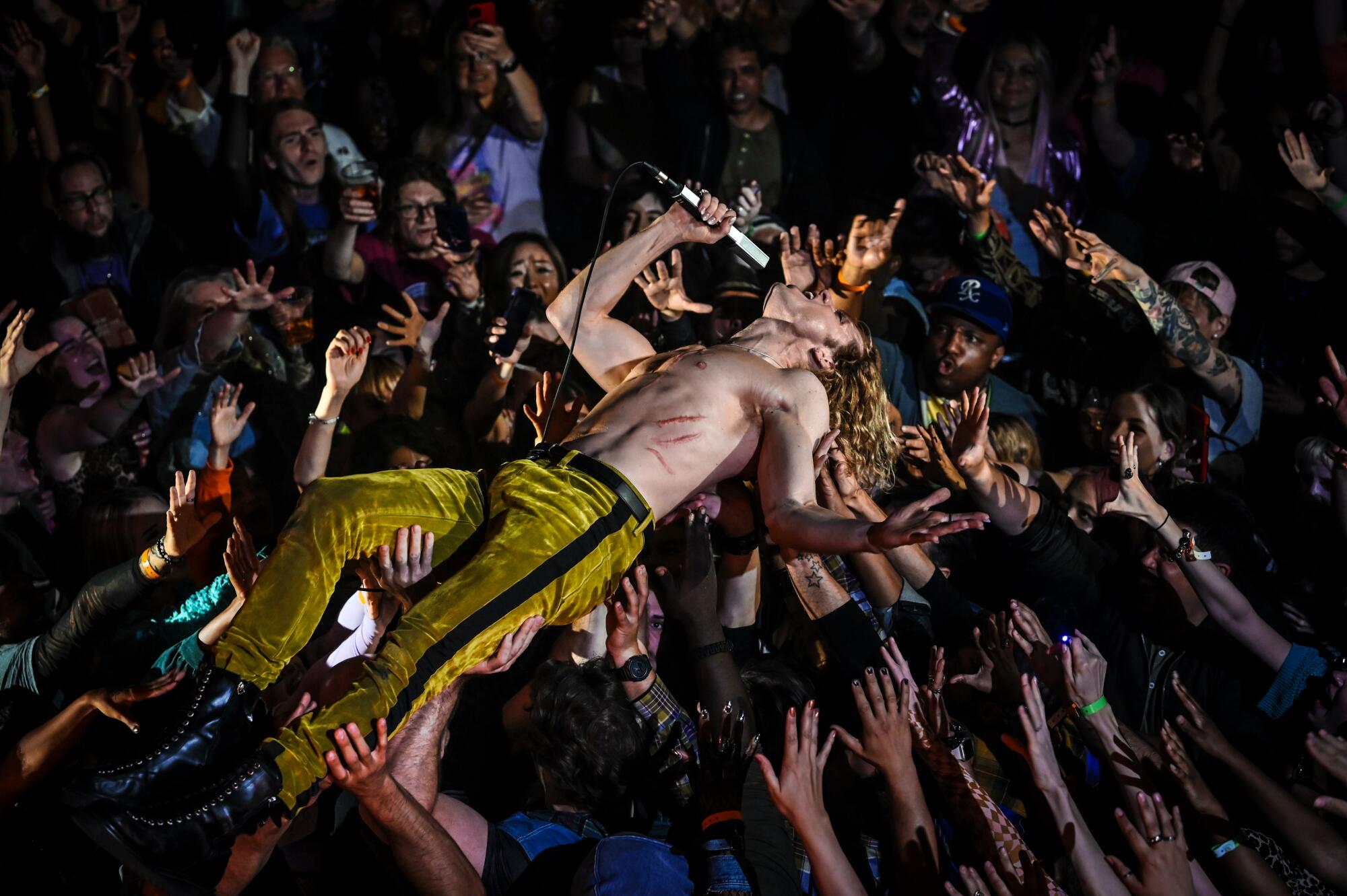
Jack White stepped in when Charley Crockett accidentally hired, then fired, a satanic doo-wop duo. Happens to everyone, right?
The outlaw country singer apparently thought the husband-and-wife duo known as Twin Temple were like Black Sabbath when he invited them to open two shows for him this week, a July 14 date in Troutdale, Ore., and another on July 18 in Paso Robles. With songs including “Satan’s a Woman,” “Lucifer, My Love,” “Let’s Have a Satanic Orgy” and “Burn Your Bible,” it’s anyone’s guess how Crockett missed the duo’s shtick.
“Today we were informed that Charley Crockett has decided to remove Twin Temple from his upcoming shows next week due to our Satanic imagery,” the musicians wrote on Instagram last week.
“Unfortunately, that means we will not be able to perform for you next week as planned. We are really disappointed as we were looking forward to getting back out and seeing you, and also what it meant as far as bringing different types of people and music lovers together. We are sorry to everyone who was planning to see us.
“We’re grateful for your support, not only of Twin Temple, but more importantly of artistic freedom. HAIL SATAN! 93/93”
Crockett, who dropped his 16th studio album, “Age of the Ram,” in April, posted his own since-deleted message on social media, writing, “Hail Satan? Not me Jack.”
Twin Temple, composed of married couple Alexandra and Zachary James, weren’t out of work for long. White, the former White Stripes frontman, who happened to be kicking off a world tour in support of his new album, “Frozen Charlotte,” caught wind of the debacle and stepped in.
“Twin Temple, Would you like to open my show in L.A. on September 29th at the Hollywood Palladium? Let me know,” White posted on Friday, adding, “Get in front of me Satan!”
The duo was quick to accept, commenting on White’s invite, “Unholy hell…. Sir Jack, you have no idea what this means to us. Lifelong fans- dead leaves on the dirty ground was one of the first songs I (Alex) ever learned on guitar. We were actually planning on coming to this show. It would be a most infernal pleasure to play the devils music with you.”
On Tuesday, Twin Temple announced their third record, “Doomed Lovers,” produced by Shooter Jennings (who also produced Crockett’s “Age of the Ram” and other recent albums). The album will drop Oct. 9 via their own Pentagrammaton Records. The duo told Rolling Stone on Tuesday that they were sad about the turn of events with Crockett but confirmed that their swanky Satan-loving doo-wop isn’t a sham.
“Satan’s the original outlaw, right? He’s a rebel angel,” Alexandra told the outlet. “He’s the one who questioned authority, fought for himself, refused to bow down or conform, and was like non serviam. That was a metaphor that resonated very strongly with me.”
She added, “It’s really fun to go shopping for a human skull and a Ronettes record in the same day, and we get to do that with our band.”
While Twin Temple has been booking shows and working on the album announcement, Crockett has continued to post about the drama from the road. “Well, now I know how it feels when they try to cancel you on the right AND the left,” he wrote on Facebook on Monday. “The thing is, I never subscribed. America can be a One Eyed Jack, but I’ve seen your other side.”
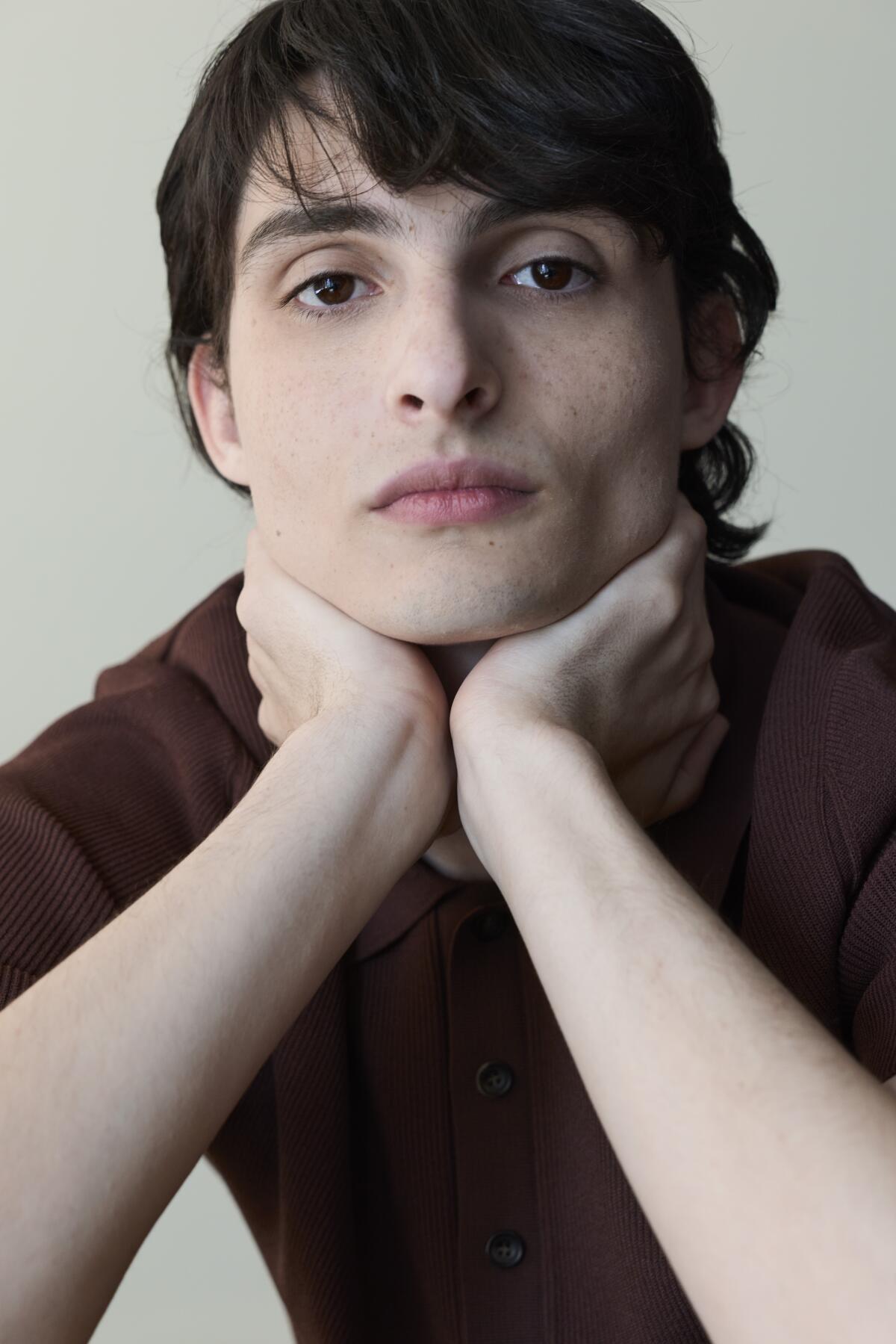
Thinking back on the last two years of his life full of album releases, filming schedules and tour dates, Finn Wolfhard requires squint-inducing concentration to keep it all straight.
“Jesus, a lot has happened,” he says, looking surprised. That’s an understatement.
In that time, the 23-year-old not only finished filming the Netflix hit show “Stranger Things,” which catapulted him to global stardom, and promoted the final season upon its premiere. He also released his feature film directorial debut (“Hell of a Summer,” co-directed with Billy Bryk, which hit theaters in April 2025). Then, he starred in another movie (A24’s creature feature “The Legend of Ochi”), directed a posthumous George Harrison stop-motion music video, wrote, recorded and put out his first solo album (“Happy Birthday”), and embarked on a 22-date tour before recording a new album.
On a video call from his family home in Vancouver, Canada, where he lives with his parents and older brother, he’s chatting about the release of that record, the eclectic, guitar-driven “Fire From the Hip,” which dropped Friday.
“I think it’s a nice day?” he offers when I ask what’s happening in Vancouver. “I don’t know. I’ve been in my basement studio all day, so I don’t … I think it’s nice.”
He’s been down in the basement doing press calls like this, he explains, undoubtedly a familiar routine after so many years in the limelight. He wears a baseball cap and an oversize brown sweater, tugging on the sleeves while he ponders.
Even if Wolfhard is exhausted by the press marathon, he doesn’t show it. He’s excited for the chance to be known on his own terms. He never fails to express gratitude for the projects that afforded him recognition and opportunity, but he’s ready to “take control of the narrative.”
“I spent my whole childhood standing on marks that other people told me to stand on and saying lines that other people told me to say,” he says. “Why wouldn’t I want to make my own stuff?”
Being in control also means being the face of the operation. Before “Happy Birthday” and “Fire From the Hip,” Wolfhard released a total of two records and an EP, plus a whole bunch of singles, with his previous bands, Calpurnia and the Aubreys. Being in a band was a natural fit for Wolfhard, who thrives in an ensemble where he can “hide behind the band name.”
Touring last year was his first time seeing his own name on the marquee.
“It’s just straight up me, and if I suck, I suck,” he laughs. “It’s not like I can be like, ‘Oh, man, we’re having disagreements in the band.’ It’s like, no, that’s you. So there was a little more pressure early on.”
Finn Wolfhard released “Fire From the Hip” on Friday.
(Victoria Stevens)
Stepping into the spotlight required Wolfhard, who admits he shies away from conflict, to own both the pressure and the power of being the one audiences came to hear.
When he got sick and had to cancel a show in Portland, Ore., he remembers feeling crushingly sad “letting down” his fans and bandmates — who, of course, assured him it was outside of his control and urged him not to be so hard on himself.
Wolfhard introduced many of the songs that ended up becoming “Fire From the Hip” to his bandmates while they were still on tour, and he says playing them live “cultivated the spirit” of the eventual recordings. Despite his collaborative ethos, there was a moment during the process where he had to learn how to put his foot down in real time.
“I remember suggesting something and people being like, ‘Ah, I don’t know if I want to do that.’ And I was like, ‘No, you don’t get to do that to me. It’s my record,’” he remembers. “It was very innocent — I don’t think there was much ego on either side. But I think I maybe set up too collaborative of an experience that day.”
“I think I sometimes make it feel like a democracy, which it is in a lot of ways,” he adds. “But also, in the end, it is up to me.”
That thought is echoed in the album’s cover art, an image of two miniature Finn Wolfhards facing off, donning colonial garb and brandishing weapons. It’s meant to represent dueling impulses inside of him, he explains.
Wolfhard, a true-blue music nerd, has been described online as an archetypical example of the “child of a Gen X cool dad,” in the same vein as Olivia Rodrigo. (His dad, a former screenwriter turned lawyer and Indigenous rights researcher, does sound cool, but it was his mom who first introduced him to the Beatles. His parents apparently met over a Stone Roses record.)
That sensibility is evident in his musical influences — “I wanted everything [on drums] to sound like the first two Wilco records,” he says — and in his approach to recording. “Happy Birthday” was recorded almost entirely on four-track cassette tapes, while “Fire From the Hip” uses 24-track reel-to-reel.
The album runs the gamut from its cheeky, surf-rock opener “I’ll Let You Finish” (yes, that is a reference to Kanye West’s infamous speech at the 2009 VMAs) to more ’90s alt-inspired tunes to a surprising dose of straightforward country-folk.
Lyrically, Wolfhard divides his songs into two categories: the “very personal” and the story songs written around books he was reading (“Knockemstiff” by Donald Ray Pollock) or quotes that made him laugh. The personal themes he explores are exactly what you would expect from an early-20s rocker raised in the public eye — namely, relationship expectations and existential fears about the future.
On the nostalgic piano ballad “Good Morning,” he imagines what it might be like to settle down somewhere “with a dog and a wife.”
“I haven’t lived that part of my life yet,” he says now. “So I can really easily get lost in thinking about what that looks like.”
When it comes to sharing his music, especially the more vulnerable tracks, Wolfhard knows his “Stranger Things” fame is the elephant in the room. Anything he sings can and might be used against him in the court of public opinion.
“I could either kind of say nothing and be totally private, because it is scary knowing that everything I say, at least one person will take it a certain way that I wouldn’t want them to. But I just don’t have the control,” he says.
“So if I don’t have the control, then there’s nothing really that I can do, other than try to be as truthful and passionate and well-meaning as I possibly can, you know?”
The double-edged sword of fandom hasn’t stopped Wolfhard or his musically-inclined “Stranger Things” co-stars from pursuing this path. Fellow Hawkins alums Joe Keery (who releases music under the moniker Djo) and Maya Hawke are indie darlings in their own right, and Wolfhard has previously referred to Keery as a mentor. None of them face the unique challenge of relatability in quite the same way, however.
“I’m aware that my specific problems are maybe not as relatable because of how specific of a life I have,” he said. “The only thing I can hope for is that some other person out there listens to it and relates to the same things that I do.”
Sometimes an air of wistfulness accompanies these admissions. When asked about how he feels about Los Angeles, he tells me that it’s complicated: “I think if I wasn’t a young actor, it would be a very different situation.” His favorite parts of the city are its repertory cinemas and lush neighborhoods like Mount Washington, where his godfather resides, because they look the most like Vancouver.
That said, he’s not through with Hollywood. He’ll be back in L.A. for an Oct. 13 show at the Fonda Theatre, and acting and directing are still on the agenda. He would like his next film project — other than the Matt Johnson and Bong Joon Ho projects he’s already committed to, of course — to be something more “personal.”
For now, though, the focus is music. Wolfhard launches a new tour this month, and he’s most looking forward to “doing dumb s—” with his friends.
He tells a quick story to illustrate: When he and the band last toured in Glasgow, Scotland, he was trying to leave the venue without being noticed. (“I have a hard time dealing with fan interaction,” he says.)
“We kind of made it into this joke thing, knowing it wouldn’t work, where me and Rand, my guitarist, were like, ‘let’s switch clothes.’ Rand pretended to be me and I pretended to be Rand,” he says. Miraculously, it worked up until the “very last second” before they stepped on the bus.
“I couldn’t help myself,” he says: He instinctively made eye contact with someone in the crowd. “They did a double take, like, ‘Wait, what?’”
It sounds like a scene straight out of “A Hard Day’s Night” — or maybe inspiration for his next film.
“I’m pretty in my head about things and want them to be a certain way,” he says. “The thing that I have to remind myself all the time is that, like, dude, you’re with your friends, you’re playing music — it’s the best.”
In 1975, 31-year-old Mick Jagger told People magazine that “I’d rather be dead than sing ‘Satisfaction’ at 45.” The Rolling Stones’ frontman is still very much alive, despite having performed that song in concert hundreds of times since then, most recently in 2024 during the band’s “Hackney Diamonds” tour. Jagger was 80 at the time.
“Time waits for no one,” as the Stones once sang, but apparently that doesn’t apply to the “World’s Greatest Rock and Roll Band.” To paraphrase the group’s first Top 10 U.S. hit in 1964, time is on their side. Yes, it is.
Consider the fates of the British Invasion superstars who emerged from England alongside the Stones in the 1960s. The Beatles broke up in 1970. The Kinks dissolved in 1996. The original Animals imploded in 1966. The Who called it quits in 1982 but has reunited repeatedly, including for its recent North American farewell tour.
And then there’s the indestructible, indefatigable Rolling Stones. With the partnership of Jagger and guitarist Keith Richards still front and center, the Stones will release their 27th studio album, “Foreign Tongues,” on Friday. Over the decades, they have produced classics such as “Exile on Main St.” and “Some Girls,” mediocrity like “Steel Wheels,” and abominations such as “Dirty Work.” We rank the group’s six-decade studio output from worst to first. All albums are the U.S. editions.
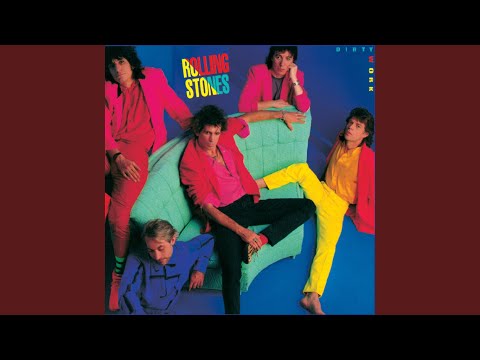
27. ‘Dirty Work’ (1986)
Never has an album cover so captured a band’s mood. “Dirty Work” features a photo of sullen, unsmiling Rolling Stones looking like they’d rather be anywhere else. The music reflects that disinterest. Apart from the cover of “Harlem Shuffle,” nothing here is memorable. It’s no surprise that the Stones nearly broke up during this period.
26. ‘Undercover’ (1983)
The follow-up to the brilliant “Tattoo You” landed with a thud. Although the song “Undercover of the Night” nicely melds a solid guitar riff with trenchant lyrics about political corruption and violence in South America, the rest of the album wilts.
25. ‘Bridges to Babylon’ (1997)
Another in a series of disappointing releases, “Bridges to Babylon” has one great song, “Saint of Me,” and lots of filler.
24. ‘Steel Wheels’ (1989)
Touted as a return to form, this album certainly outshines “Undercover” and “Dirty Work.” But that’s not saying much. With dated production and too many songs that make a good first impression but fail to stick, “Steel Wheels” has gathered moss over the years.
23. ‘Voodoo Lounge’ (1994)
Like its predecessor “Steel Wheels,” this is another attempt to recapture their classic sound. To an extent, the record succeeds. “You Got Me Rocking” sounds like a throwback to something on “Exile on Main St.,” while the ballad “Out of Tears” echoes “Angie.” With the exception of “Love Is Strong,” however, most of the songs here are little more than pleasant exercises in nostalgia.
22. ‘The Rolling Stones: England’s Newest Hitmakers’ (1964)
A solid debut, “England’s Newest Hitmakers” features covers of songs by Willie Dixon, Chuck Berry and Jimmy Reed, firmly grounding the group in its American blues and R&B influences. The sole Jagger/Richards original here, “Tell Me,” only hints at the duo’s future songwriting prowess.
21. ‘Black and Blue’ (1976)
After guitar virtuoso Mick Taylor’s departure from the Stones in late 1974, the band used “Black and Blue” to audition potential replacements. They settled on Ronnie Wood, a former member of the Faces who, ever since then, has engaged in the ancient art of guitar weaving with Keith Richards. Heavy on grooves and jams, this album sometimes feels unfocused and indulgent. The excellent ballads “Memory Motel” and “Fool to Cry” are essential.
20. ‘12X5’ (1964)
A step forward from their debut, “12X5” has the magnificent covers “Time Is on My Side” and “It’s All Over Now.” For those who like their Stones bluesy, early albums like this offer a cornucopia of treasures.
19. ‘Blue & Lonesome’ (2016)
Recorded in just three days, this album of blues covers sizzles. The Stones sound absolutely committed, with Jagger’s harmonica and vocals particularly strong.
18. ‘The Rolling Stones, Now!’ (1965)
On the band’s third U.S. album, the Stones rock harder and softer. Their version of Willie Dixon’s “Little Red Rooster” is a slow burn. The ballad “Heart of Stone,” one of their best early originals, made the Billboard Top 20.
17. ‘Foreign Tongues’ (2026)
The Stones have rarely sounded looser or more alive. Produced again by the classic-rocker whisperer Andrew Watt (Paul McCartney, Elton John, Pearl Jam), the band delivers a clutch of strong songs. In a just world, the single “In the Stars” would be a hit. “Back in Your Life,” fueled by some of Wood’s most sensitive and impassioned playing, is a stunner. At 14 songs and 62 minutes, the album would have benefited from trimming three or four of the more generic tunes. Still, it’s amazing that Jagger and Richards, both 82, and Wood, 79, have made such a fresh and vital record. Sometimes you can get what you want.
16. ‘A Bigger Bang’ (2005)
For the band’s first album of originals in eight years, the Stones remind you what makes them great. The first of their three late-career triumphs, “A Bigger Bang” brings attitude, funk, dirty rockers and dreamy ballads. The blazing “Rough Justice” and the slinky, sexy “Rain Fall Down” are topflight.
15. ‘Hackney Diamonds’ (2023)
Eighteen years passed between the release of “A Bigger Bang” and this album. It was worth the wait. “Hackney Diamonds” is another strong effort, with the banger “Angry” sounding urgent and, well, genuinely angry. The gospel-tinged “Sweet Sounds of Heaven,” featuring Lady Gaga, finds her and Jagger trading vocals and pushing each other to the stratosphere. It’s the best song the group has made since “Tattoo You’s” “Waiting on A Friend” and “Start Me Up” in 1981. The absence of late drummer Charlie Watts is felt, but Jagger and Richards prove that old geezers can still rock.
14. ‘Out of Our Heads’ (1965)
A very strong outing that includes originals “The Last Time,” “Play With Fire” and “Satisfaction,” one of the best rock songs ever written.
13. ‘It’s Only Rock ‘n Roll’ (1974)
Keith Richards’ deepening heroin problem meant Jagger had to carry more of the load himself. On this album, he acquits himself admirably. The anthemic title track positively swaggers. The poignant “Time Waits for No One” features one of Taylor’s most beautiful solos, a fitting coda to the end of his five-year career with the Stones. A fine album with several good songs and a couple great ones.
12. ‘December’s Children (And Everybody’s)’ (1965)
A hodgepodge of live cuts, outtakes, British LP tracks and singles, this album shows the Stones rapidly gaining confidence and playing with equal parts finesse and fire. Any album with “Get Off of My Cloud” and “As Tears Go By” is worth the price of admission.
11. ‘Their Satanic Majesties Request’ (1967)
Released months after “Sgt. Pepper’s Lonely Hearts Club Band,” this occasionally ill-advised foray into psychedelia pales in comparison to the Beatles’ masterpiece. That doesn’t mean it’s bad. In fact, the Stones never sounded as adventurous or experimental. When it works, as it does on “She’s a Rainbow” and “2000 Light Years From Home,” candy-colored bliss follows.
10. ‘Emotional Rescue’ (1980)
An underrated gem often overshadowed by its predecessor, “Some Girls,” and its successor, “Tattoo You,” “Emotional Rescue” finds the Stones in fine form at the dawn of a new decade. The rhythm section of bassist Bill Wyman and drummer Watts locks in, while Richards and Wood converse with their guitars as only they can. Jagger sounds energized on the rockers “Let Me Go” and “She’s So Cold” and sexy on the incredibly funky “Dance (Pt. 1).”
9. ‘Goats Head Soup’ (1973)
Considered a big letdown after the magisterial “Exile on Main St.,” this album has received a well-deserved critical reappraisal and aged like a fine wine. It’s not the Stones at their peak, but close enough. “Angie” is absolutely gorgeous, while “Star Star” captures the Stones at their most profane.
8. ‘Tattoo You’ (1981)
Needing new material for their 1981 tour, the Stones cobbled together “Tattoo You” from leftovers and half-finished songs dating back to “Goats Head Soup.” Jagger penned new lyrics, recorded new vocals, and presto — the band made its last classic. “Start Me Up,” the band’s best rocker since “Brown Sugar,” propelled the album to multiplatinum sales and shook stadiums around the world. It still does.
7. ‘Aftermath’ (1966)
The first Stones album composed entirely by Jagger and Richards, “Aftermath” represents a quantum leap forward or two. Brian Jones, before drugs and paranoia dimmed his creative spark, made some of his greatest contributions, elevating “Paint It Black” with his sitar and adding the indelible marimba riff to “Under My Thumb.” The Stones had finally lived up to all the hype.
6. ‘Between the Buttons’ (1967)
The American version kicks off with the one-two-three punch of “Let’s Spend the Night Together,” “Yesterday’s Papers” and “Ruby Tuesday” and doesn’t let up. Arguably the band’s poppiest album, it sounds like groovy Swinging London set to music.
5. ‘Some Girls’ (1978)
After the lackluster “Black and Blue” and the mixed critical reception of “It’s Only Rock ‘n Roll” and “Goats Head Soup,” some wondered if the Stones had lost their musical magic. They needn’t have worried. The band, hungry to prove the doubters wrong, made one of its strongest albums. With Wood now fully integrated into the group , punky, guitar-centric rockers like “Respectable,” “When the Whip Comes Down” and “Shattered” snarl. Jagger, entranced by the sounds coming out of New York’s discos at the time, contributed the No. 1 “Miss You.” Add “Beast of Burden” and the countryish “Far Away Eyes” to the mix and you have the ingredients for a stunning comeback.
4. ‘Beggars Banquet’ (1968)
The start of one of the strongest four-album runs in rock history, “Beggars Banquet” is a near-perfect listen from beginning to end. New producer Jimmy Miller helps strip the band down to its rawest, raunchiest essence on songs like “Sympathy for the Devil,” “Stray Cat Blues,” and “Street Fighting Man.” For the first time, the Stones had released an album on par with some of the Beatles’ best work. Indispensable.
3. ‘Sticky Fingers’ (1971)
Unbreakable love (“Wild Horses”); heartbreak (“I’ve Got the Blues”); slavery, interracial sex and heroin (“Brown Sugar”); addiction (“Sister Morphine”) — “Sticky Fingers” has it all, along with some of the most powerful music in the Stones’ catalog. If a Martian came to Earth and wanted to know what made the Stones special, a listen to “Sticky Fingers” would make it abundantly clear.
2. ‘Let It Bleed’ (1969)
By the end of the ’60s, the dream had faded. Vietnam, inner-city riots, and the assassinations of Robert F. Kennedy and Martin Luther King Jr. had cast a pall over the Day-Glo optimism of the Love Generation. The Rolling Stones were there to chronicle the impending hangover. “Gimme Shelter” reflected the growing dread of the times. It’s among the darkest, grittiest and most transcendent songs ever recorded, with Jagger singing about rape and murder over Richards’ shimmering guitar. In the powerhouse “Midnight Rambler,” Jagger takes on the persona of a killer, even name-checking the Boston Strangler. Dark stuff. Yet the superb “You Can’t Always Get What You Want,” replete with a gospel choir, the country stylings of “Let It Bleed” and “Love in Vain,” sung by Jagger with utter conviction, give the album incredible diversity and depth.
1. ‘Exile on Main St.’ (1972)
And then there was one. Recorded largely in the steamy, sweltering basement of Richards’ rented French villa, Nellecôte, “Exile” reeks of filth, decadence and decay. With Jagger’s vocals often buried deep in the muddy and murky mix, the album initially sounds like a druggy demo. But listen again. And again. Slowly, it reveals itself as quintessential Stones, a potent admixture of styles, sounds and soul. Richards tosses off one indelible riff after another, making “Rocks Off,” “Happy,” “Tumbling Dice” and “All Down the Line” rock and roll perfection. You like your Stones with a dash of Americana? “Sweet Virginia” might be the band’s best country rocker. Blues? Try “Ventilator Blues.” Gospel? “Shine a Light,” accented with Billy Preston’s piano and organ, transports listeners to a higher place. Other Stones records contain more classics and better production, but none holds together as well as a whole or comes as close to the sublime as this one.
Marc Ballon, a former Times, Forbes and Inc. Magazine reporter, teaches an advanced writing class at USC. He lives in Fullerton.
The World Cup final halftime show already was going to feature three superstar acts with 121 Billboard Hot 100 hits, 20 No. 1 singles and 12 Grammy Awards among them.
Somehow that must not have been enough star power, because another performer with 123 hits, eight chart toppers and two Grammys has been added to the lineup.
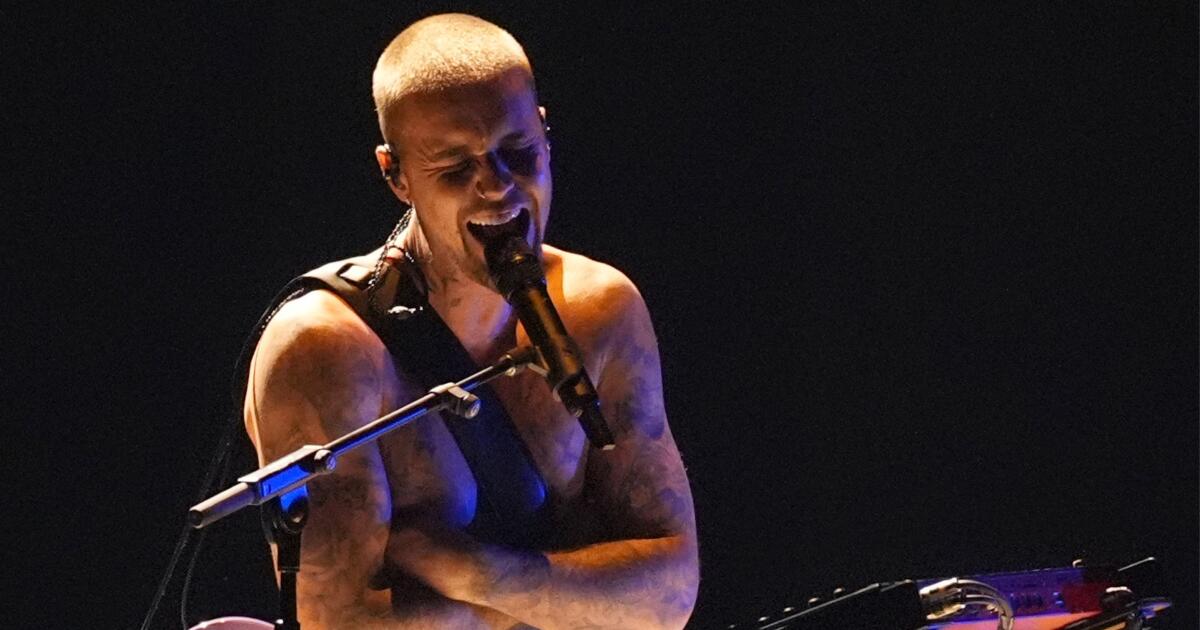
Bieber was announced Wednesday as the fourth co-headliner for the July 19 intermission extravaganza at MetLife Stadium in East Rutherford, N.J., joining South Korean boy band BTS, U.S. pop culture icon Madonna and Latin music superstar Shakira.
Four gigantic worldwide acts might seem like a lot to cram into an 11-minute (!) show, but apparently curator Chris Martin doesn’t see it that way. In addition to the quartet of headliners, Martin also has lined up Nigerian Afrobeats performer Burna Boy, soon-to-be-departing Los Angeles Philharmonic conductor Gustavo Dudamel and Staten Island elementary school choir the PS22 Chorus (which will be performing with Martin’s band Coldplay).
Oh yeah, the Muppets will be there, too. Bieber will be lucky if he gets a chance to sing a bar or two from a list of hits that includes “Peaches,” “Sorry,” “Love Yourself” and “Daisies.”
Nonetheless, he seems happy to be part of the festivities, which will support the FIFA Global Citizen Education Fund, weeks after attending the U.S.-Paraguay game at SoFi Stadium, where he gave a surprise performance of his song “Yukon” in a backstage area.
“The FIFA World Cup brings the world together in a way nothing else can,” Bieber said in a statement. “I’m grateful to be part of this Halftime Show, and even more grateful knowing it’s already helping expand access to education for children around the world.”
One song that is sure to be featured during the set is this year’s World Cup anthem, “Dai Dai,” by Shakira and Burna Boy. The two acts already performed the song during the tournament’s opening ceremony in Mexico City.
Speaking of hit collaborations, Madonna recently charted with “Bring Your Love,” a duet with Sabrina Carpenter. Not to start any rumors, but surely they can squeeze one more pop superstar onto that stage, right?
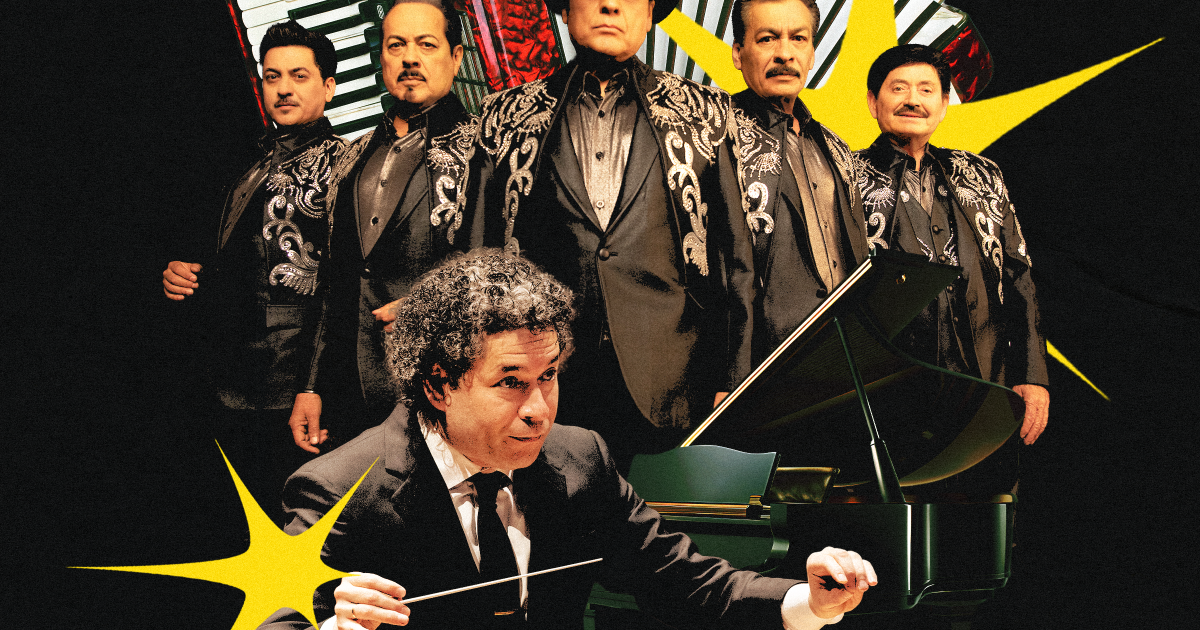
Storied norteño group Los Tigres del Norte announced Tuesday that they are teaming up with departing L.A. Philharmonic conductor Gustavo Dudamel for a special performance Aug. 21 at the Hollywood Bowl.
The show is part of a series titled “Celebrating Gustavo at the Bowl,” which looks to send off Dudamel in style as he transitions into his new role as the music and artistic director of the New York Philharmonic. The “Jaula de Oro” artist’s appearance is part of “Gustavo’s Fiesta,” which will also feature performances by other prominent Latino artists.
The norteño act has sold 37 million albums and recorded 500 songs over a career that’s spanned five decades. They have seven Grammy Awards, eight Latin Grammys and have had 66 songs land on Billboard’s Hot Latin Songs chart, the most of any Latin music act ever.
Recently, the “La Puerta Negra” hitmakers were immortalized in U.S. pop culture history when its members appeared in animated form in a December 2025 episode of “The Simpsons” and performed an original corrido about the escapades of Homer Simpson and Pedro Chespirito (also known as the Bumblebee Man).
The show will serve as Dudamel’s third-to-last performance as the music and artistic director of L.A. Philharmonic. On Aug. 22, he will be in concert with Foo Fighters. His farewell weekend will conclude Aug. 23 and will serve as a benefit for his homeland of Venezuela, which suffered catastrophic losses from twin earthquakes in late June.
Donations will benefit Dudamel’s Earthquake Recovery to Support Venezuelan Communities fund, in partnership with the United Nations Development Programme and the Development Bank of Latin America and the Caribbean fund.
One Wednesday evening in May, at the boutique hotel Dream Hollywood — located just off the Walk of Fame — a young hotel staff member shuffled over to her co-worker to discuss a special guest on the top floor. Together they exchanged whispers about an artist’s unknown whereabouts and whether or not they would catch him on his descent to the first floor.
The name “Tito Double P” slipped out, referring to the Mexican corrido singer who happened to be in town promoting his latest album, “Acomodo.”
I met the 28-year-old on the top floor, where he opted for a warm, friendly hug in lieu of a firm business handshake. We were quickly rushed into a side room to conduct his last interview of the evening.
Those who’ve followed Tito Double P’s musical journey since 2023 would likely describe him as a chaotic force, with weathered vocals, off-the-cuff ad libs, riotous pelvic thrusts and suggestive tongue expressions.
Come Sunday, he’ll bring the ruckus when he headlines Belico Fest in L.A.’s BMO Stadium. But when we spoke about his second solo album, “Acomodo,” the Nayarit-born, Sinaloa-raised singer, whose real name is Jesús Roberto Laija García, arrived polished, perfumed and poised.
“After this LP, don’t be surprised if you see different things from me,” said Laija García.
Released on May 28, the LP contains 23 corridos, which see Laija García strike the commanding tone of brazen CEO. In its focus track, “Me Vale V,” the singer firmly declares he is manifesting his dreams and not paying anyone else mind. Its lyrics reveal it all: “Ya van tres días que no paro, pero bien trabado” (I’ve been going nonstop for three days now, but I’m totally locked in).
But listeners also get a more vulnerable side of the músicana mexicana singer, who agonizes over heartbreak in “La Fama” — while simultaneously voicing his vice for women and boozy escapades. Throughout the record, the singer sprinkles in the catchphrase, “Bélico pero no tanto, mija,” which translates to “warlike, but not too much, my dear” — striking a balance between his hard-shelled exterior and inner tenderness, namely in the yearning jazzy corrido “Pase y Pase,” in which he pleads for a late-night booty call.
Most notably, “Acomodo” boasts no features whatsoever, a rarity in an industry where artist collaborations play a key role in bringing in bigger audiences (and bigger payouts).
“Many people called me to ask why they weren’t going to be on [the record],” he said. But the solo move marked a milestone achievement for Laija García, who had no designs of becoming an international musical marvel.
“I was never the child who sang, who played the guitar in school festivities or at family parties,” said Laija García in a calm tone — occasionally referring to his stage name in the third person.
The singer still can’t fathom his own success. He cut his teeth by penning career-defining songs for his famous cousin, Peso Pluma — including anthemic corridos like “El Belicon,” “Siempre Pendientes” and “AMG.” These standout ballads touted a rugged lifestyle with elements of organized crime, which aided his primo’s ascent to the mainstream.
Tito Double P released his second solo album “Acomodo.”
(Adan Ornelas Anta)
In the process of composing his cousin’s Grammy-winning 2023 album, “Génesis,” Laija García asked him if he could also release his own material. “Let’s go!” he recalled Peso Pluma saying. “Your first song will be a duet with me.”
The plan was to debut Tito Double P with “La People,” a fiery narcocorrido that details the inner life of a cartel’s tactical security guard, who narrowly escapes a police raid.
But Laija García’s rollout plan took a detour when an unmastered version of his track was leaked to TikTok in spring 2023 — a bouncy tune he later renamed “Dembow Belico,” which is characterized by a Dominican-style boom-chi-boom-chick rhythm and raw, spitfire lyrics. This party track introduced audiences to a version of Tito Double P that radiated a lighthearted madness — fueled by Skyy vodka and Old Parr whiskey, as per the song’s lyrics.
“I liked it, it was something new,” said Luis R. Conriquez, who called up the new singer to be a collaborator. “What makes him special is his voice, his sound. He’s his own person.”
Together with Conriquez and Joel De La P, “Dembow Belico” was released on June 5, 2023, and became Tito Double P’s official debut in the music world — even giving life to one of the most viral clips of Mexican boxer Canelo Alvarez, who can be seen awkwardly dancing to it.
“From there on, Tito Double P was another persona,” said Laija García. Throughout his lively retelling of the story, he added a series of sound effects to move the story line — among them, wacha, pum, pum, pum, gol. “More than anything, Tito Double P came across as a character, because that guy was totally crazy, he didn’t give a damn.”
“More than anything, Tito Double P came across as a character, because that guy was totally crazy, he didn’t give a damn,” said Jesús Roberto Laija García, better known as Tito Double P.
(Adan Ornelas Anta)
In real life, Laija García considers himself a timid, camera-shy guy. That’s why he chose an illustration for the cover of his 2024 debut album “Incómodo,” rather than a real-life image of himself; the LP title directly translates to “discomfort.”
“I was going to be one of those artists that [only] releases songs, because [I thought,] ‘How embarrassing would it be if I got up on stage?’” he mused. “But now, I dominate the stage from head to toe. And I don’t want to come down.”
The debut record also served as an experimental project for Tito Double P, whose hard-won swagger elevated every sound he toyed with — whether it was on the brass-heavy banda song “La 701” with Luis R Conriquez, the techno thump of “La Bandolera,” the heavy-hitting urban track “Linda” with Neton Vega and the guitar-powered ballad “Los Cuadros” ft. Peso Pluma).
Featuring collaborations with established acts, such as Natanael Cano, Junior H and Grupo Frontera, the album peaked at No. 11 on the Billboard 200 chart and helped the rising star distinguish himself from his high-profile cousin — who he toppled from the No. 1 spot on the Top Latin Albums chart, five weeks after his debut release.
Although Laija García hasn’t shied away from embracing that familial tie either; in May, both Tito Double P and Peso Pluma concluded their “Dinastía” tour following their joint 2025 album of the same name.
“I still see comments on TikTok where people are surprised that we are cousins,” remarked Laija García.
Now with “Acomodo” — which debuted at the top of both Spotify Top Albums USA and Top Global Charts across all genres — Tito Double P affirmed his rightful place in música mexicana upper echelons.
“That’s why it’s called ‘Acomodo,’ because everything is aligning itself as it should be,” he said.
As Tito Double P made his way to the lobby, a member of the Dream Hollywood valet — who likely bore witness to Hollywood A-listers and other luminaries — asked if he could take a picture with the singer. “Tito, Tito, a photo please!” asked the employee.
Laija García flashed a friendly smile. Thankfully for the attendant, Tito Double P is always camera-ready.
Donny Hathaway had already been expounding on the splendors and indignities of American life by the time he got to the Troubadour in West Hollywood in the last week of August 1971.
A classically trained pianist with a declamatory voice shaped by his years in the church, Hathaway closed Side 1 of his 1970 debut with an original called “Tryin’ Times” — “Maybe folks wouldn’t have to suffer,” he sang, “if there was more love for your brother” — and finished the LP with a stately rendition of Nina Simone’s “To Be Young, Gifted and Black.” Months after the album was released, he dropped a joy bomb of a holiday single, “This Christmas,” that unapologetically made space for a Black experience in the yuletide-industrial complex.
Donny Hathaway performs at Mister Kelly’s in Chicago in 1971.
(Val Mazzenga / Chicago Tribune / Tribune News Service via Getty Images)
Yet Hathaway captured something indelibly American during his week of shows at the Troubadour, which were recorded (along with a later gig at New York’s Bitter End) for the singer’s classic “Live” album that came out in February 1972. On an LP full of spine-tingling performances, the undeniable high point is Hathaway’s take on Carole King’s “You’ve Got a Friend” — a clear-eyed if optimistic portrait of resilience and cultural exchange.
King — who’d made her name in the 1960s as half of a prolific Brill Building songwriting duo with her husband, Gerry Goffin — wrote “You’ve Got a Friend” after leaving Goffin and moving to Los Angeles with her two young daughters. Here she remade herself as a low-key singer-songwriter dispensing wise yet unflashy tunes about love, home and family — part of a gentle resetting of pop’s mood after the turmoil of the previous decade.
Cut like the rest of the album at A&M Studios on La Brea Avenue, “You’ve Got a Friend” helped drive King’s 1971 “Tapestry” LP to sales of more than 10 million copies and to a boatload of trophies (including album, record and song of the year) at the Grammy Awards; the singer’s pal James Taylor, whom she’d performed with for the first time in late 1970 at the Troubadour, topped Billboard’s Hot 100 with his own cover of “Friend” featuring background vocals by Joni Mitchell.
On the advice of Atlantic Records’ Jerry Wexler, Hathaway also recorded “Friend” as a studio duet with Roberta Flack, a fellow Howard University alum; their take sat in the Top 20 of Billboard’s R&B chart as Hathaway began his run at the Troubadour — popular enough that the audience on “Live” erupts at the sound of Hathaway’s opening organ lick.
Carole King at A&M Studios in Los Angeles in 1970.
(Jim McCrary / Redferns via Getty Images)
Indeed, the crowd is really the thing in this live version of “You’ve Got a Friend.” Hathaway and his band — including guitarist Phil Upchurch, bassist Willie Weeks and 16-year-old Fred White (soon to be of Earth, Wind & Fire) on drums — are cooking, to be clear; the groove is funky and viscous, and Hathaway’s vocal is gorgeous, not least in his nimble ad-libs.
But it’s his interplay with the few hundred folks in the room that elevates the recording to a deeply moving piece of art.
For King (and Taylor), the song’s promise of unflagging support is an intimate one-to-one matter; their renditions use homey acoustic arrangements to create a picture of two people exchanging confidences. In Hathaway’s hands, “Friend” is about community: Before he even asks them to, the audience takes over for him on lead vocals in the song’s chorus, a congregation in all but name.
Given the proximity to the civil rights movement, it’s impossible to hear Hathaway’s “You’ve Got a Friend” as disconnected from the struggles of Black people. At the Troubadour (as in his and Flack’s duet), he nixes the song’s second verse to arrive more quickly at the bridge, in which he describes a cold world filled with those who’d “hurt you and try to desert you” — even “take your soul if you let them.”
As Emily J. Lordi notes in her 2016 book about “Donny Hathaway Live,” the crowd lays back during the bridge before rejoining Hathaway for the song’s second chorus; the decision, somehow spontaneous and collective at once, is an expert bit of record-making on the part of an audience that, according to legend, hadn’t been told the concert was being taped.
“From this perspective,” Lordi writes of Hathaway’s fans — some number of whom had surely availed themselves of the Troubadour’s bar, as she points out — “they are not stealing the show so much as they are holding him up, ensuring he won’t sing the duet alone.” Together, performer and audience are turning back (not that they necessarily had a choice) to the ugly truths that singer-songwriter music sometimes sought to move past.
In this way, Hathaway’s “Friend” becomes a reinvention of a reinvention — an act of moral imagination about as American as it gets.
This wasn’t the only instance of a Black soul singer interpreting a tune King had written as a single mom newly arrived in L.A.: In May 1972, the Isley Brothers released a sultry cover of “It’s Too Late”; a month after that, Aretha Franklin’s live “Amazing Grace” album mashed up “You’ve Got a Friend” with “Precious Lord, Take My Hand,” completing the gospel-ification that Hathaway had begun in a bastion of white rock culture temporarily remade as an African American church.
Yet in Hathaway’s “Friend” you can hear the whole story American music tells about identity and belonging (and about commercial ambition).
“This might be a record here,” Hathaway tells the crowd near the end of the song, and so it was — a document of adaptation, a testament to borrowing, a bulwark against pretty fictions.
The bass legend and superproducer Don Was didn’t expect to be covering Curtis Mayfield’s Civil Rights-era anthem “This Is My Country” on the road in 2026. But lately, the chaos in the United States made the song seem regrettably apropos.
“It wasn’t supposed to still feel potent. It was supposed to be something that served a moment,” said Was, who included the defiant single on his 2025 album “Groove In the Face of Adversity.”
“It’s shocking to be here in 2026 and, whatever distance we traveled from 1966 until now, to see it all get reset,” Was said. “That song’s a more powerful statement now than it was then. It was inconceivable that it would still be relevant — this is supposed to be the utopian age of Aquarius. This is not the way it was supposed to turn out.”
Was remembers the tumult, violence and hope that came out of that era in his hometown of Detroit. The city’s music, famed for rough-hewn virtuosity from blues to soul to techno, is the spring that waters “Adversity.” It is, remarkably, the 73-year-old’s first solo album after a career spanning the pioneering electro-pop band Was (Not Was) and deep producer relationships with the Rolling Stones, Bob Dylan and Bonnie Raitt.
He also spent years in Bob Weir & Wolf Bros with the late Grateful Dead founder, and will play from the Dead’s landmark “Blues for Allah” on his tour that stops at Lodge Room on July 7.
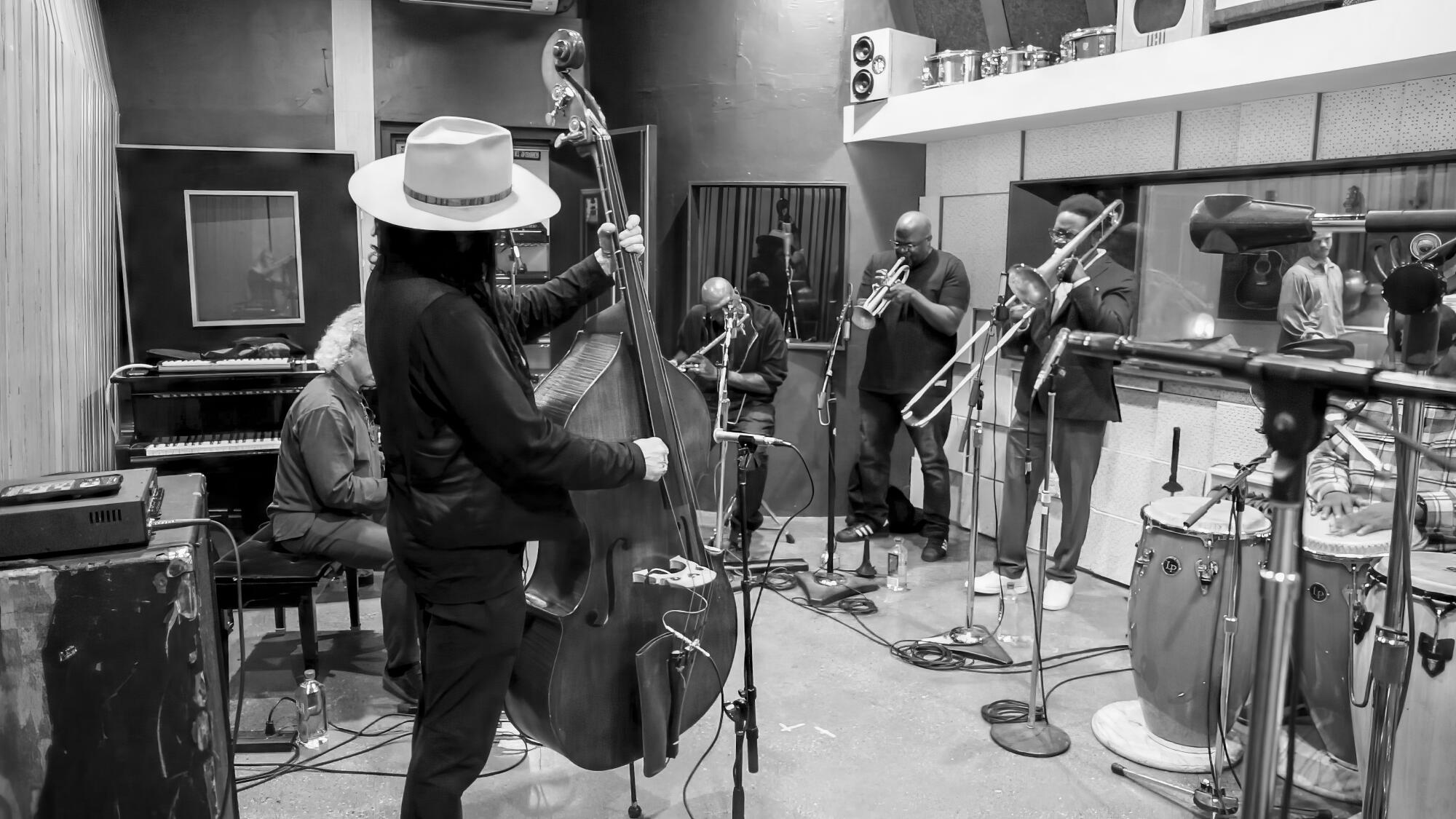
With a backing band of studio killers dubbed the Pan-Detroit Ensemble, “Adversity” has an expansive modern atmosphere, yet a lived-in, filament-bulb quality in the playing that carries through funk, jazz, rock and R&B. It’s largely a covers record, but you wouldn’t know it from the depth of the revisions — veering from the Yusef Lateef standard “Nubian Lady” to Hank Williams’ “I Ain’t Got Nothin’ But Time,” closing with funk group Cameo’s “Insane.”
“I’ve been carrying it around in my head for 30 years,” Was said. “This first album to me is really a handshake, a ‘nice to meet you,’ this jambalaya of Detroit sounds.” While much of the source material comes from elsewhere, the cumulative mood is extremely personal to an artist who has spent his life helping the greats find true expression.
“I’ve come to admire artists who are willing to go in deep inside their most personal thoughts for the sake of helping the listener understand their own lives,” he said. “To help them deal with the trauma of being human — especially in these times, man.”
Tops on that list is the late Grateful Dead founder Bob Weir — who died in January at 78 — as a model for a band staying fearless and uncompromising. Was, still heartbroken about the loss of his friend and bandmate, recalled their first time on tour.
“When Bobby called asking me to play bass with the Wolf Bros, I thought at the very least, this is going to be a master class in losing self-consciousness and forgetting about fear,” Was said. “If the band stumbled, the audience wouldn’t walk out. They appreciated the fact that you were trying to do something new for them. Then there’d be a couple moments every night with an incredible exchange between the musicians and you can feel the audience becoming a member of the band.”
Playing the Dead’s “Blues for Allah” on this tour — an LP rooted in Middle Eastern scales, pirouetting time signatures and improvisational telepathy — put him in communion with his old friend.
“I used to think that songs like ‘King Solomon’s Marbles’ were just jams and conversations on the spot. But when we really got into it, there’s a form underneath and you can take tremendous liberty with that form,” Was said.
Was’ production career was built on a similar principle.
His early band Was (Not Was) remains a visionary electro-pop act with subtle, salient politics. “Out Come the Freaks” is a favorite on Pride month dance floors — “If you just wanted to do poppers and dance all night, it worked, and if you wanted to think about the government careening out of control, it worked too,” Was said of the band’s club material.
The late Ozzy Osbourne sang on the band’s international hit “Shake Your Head,” alongside a winking, very game Kim Basinger. The actor was a replacement after Madonna backed out, leaving the proto-rave tune one of the era’s most unlikely collaborations.
He recalled Ozzy fondly. “In 1975, this folk group I was in booked us to open for Black Sabbath at the Toledo Sports Arena, playing for a bunch of 14-year-old white boys on amphetamines,” Was said. “They weren’t having it. I’ve heard the tape of that show, and the drummer was bleeding from being hit by so many bottles that we had to stop playing. That was my first exposure to Ozzy, so I was a little afraid to do the session, but he was up for an adventure.”
Don Was and the Pan-Detroit Ensemble
(Gemma Corfield)
A Stones confidant and producer from 1994’s “Voodoo Lounge” up until 2023’s “Hackney Diamonds” (where Andrew Watt took the helm), Was had nothing but praise for the band, and still admits to a twinge of fandom in their presence.
“There’s never been a day in the studio with the Rolling Stones where I didn’t look around the room and go, ‘Oh my God,’” he said. “I’ve known Mick for over 30 years, but the last time they played L.A. at SoFi Stadium, Mick came walking down that stage and I was like, ‘Wow, there he is, it’s 1965 again.’”
With Dylan, he recalled the mercurial genius’ impish side. “I was producing Dylan, and George Harrison came in to play guitar. Bob was messing with him, Bob pushed the engineer aside and he ran the tape machine. George had never heard the song before, didn’t know what key it was in, and Bob just starts the tape. George played a respectable solo, but clearly it was rough. Bob, just to be funny, stopped the machine and said ‘That’s it, perfect.’ George turns to me and said, ‘What do you think, Don?’ And Bob goes, “Yeah, what do you think, Don?’ I’m looking at these two guys and time slowed down. I remembered trying to sell my car to get a ticket to go to New York to see the Concert for Bangladesh. Now they’re asking me what I think. I was paralyzed.”
“A voice appeared in my head,” he said, “Telling me, ‘He’s not paying you to be a fan.‘ So I said to George, ‘It was good, man. Let’s see if we can beat it.’ You can’t allow the iconography to dictate the outcome in the studio. You have to put that aside.”
As president of Blue Note Records, the estimable jazz label he’s led for more than a decade, Was relentlessly looks forward. He’s released restless modern records by Domi & JD Beck, Fathers, Makaya McCraven and Julian Lage (the hotshot jazz guitarist now playing with Dylan). He’s refreshingly optimistic about challenging music in streaming’s ruthless economy.
“Don’t make music for the delivery system,” Was said. “I don’t think about streaming, I think about touching people. If you do that, nothing has changed fundamentally in the music business. If your purpose is to get under people’s skin and make them feel something, that’s the same job it was for Mozart. How people listen can keep changing, but I don’t think the palette of human emotion changes, and that’s who you’re addressing.”
Was came from a working-class industrial city, making music reflective of Detroit’s technological upheaval and economic neglect. “Adversity” is a beacon to keep playing in spite of everything.
“I think that the salvation of musicians is that no matter what happens, what technological advancements come along, there’s still nothing like the experience of being in the same room as people who are playing together,” Was said. “It’s always been tough, man. It’s harder these days to buy a Ferrari as a musician, but I don’t know that that’s necessary. I have total confidence that the opportunity is there for anybody who is willing to give the audience a meaningful experience.”
“I’ve talked about rain on this show more than I have in my entire life,” Kittrell says.
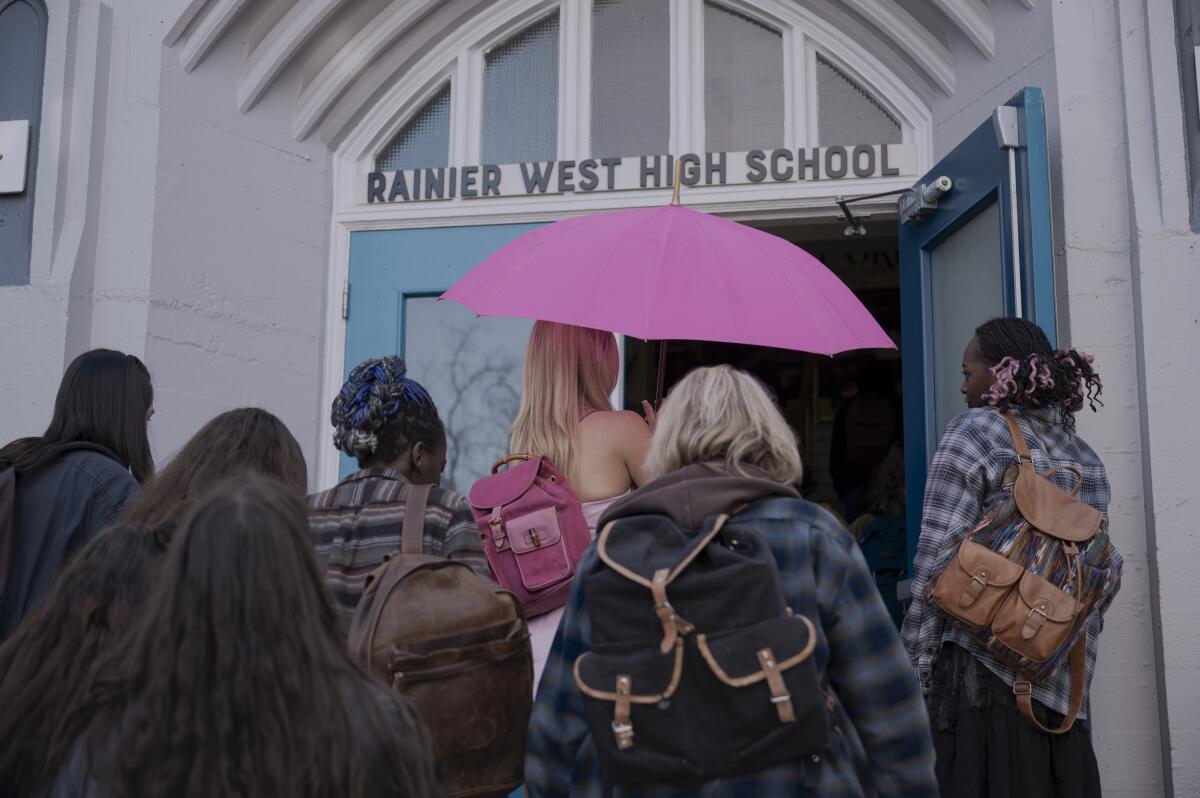
It was a constant consideration, both on set and in the writers room. Weather became a way to distinguish Elle from those around her in Seattle. The locals never carry umbrellas; Elle shows up with a pink one.
“We had a writer from Seattle who always said the city gets a bad rap because of the rain,” Kittrell says. “But the rain is what makes it beautiful — it makes Seattle green.”
Elle entering the halls of Rainier West High School with her pink umbrella.
(Kimberley French / Prime Video)
That philosophy stayed with the writers, later showing up in a line Miles (Jacob Moskovitz), Elle’s crush, says to her, and ultimately leading them to Garbage’s “Only Happy When It Rains” as the show’s theme. “We were like, of course,” says Kittrell. “This is what we’ve been talking about the entire time.”
The song was originally meant to end the pilot. “Then we decided we should just be hearing it in every single episode,” says Neustadter. (The pilot instead uses Radiohead’s “Creep,” which also bookends the series.) The main title sequence, an animated “saga sell” from the studio Shine, tells the story of Elle’s move from Bel-Air to Seattle.
“We’re constantly reminding the audience of the contrast between Elle’s essence and the world she’s now in,” Neustadter adds. “There’s an optimism to ‘Only Happy When It Rains’ that feels very Elle Woods. And the irony of it is so delightful.”
Herb Alpert walks up a long driveway at his rambling Malibu estate, wincing slightly after having woken up around 3 a.m. with a cramp in his left calf.
“It’s still kind of seizing,” the trumpeter says as he leads me past a garden lush with moist-looking tropical plants.
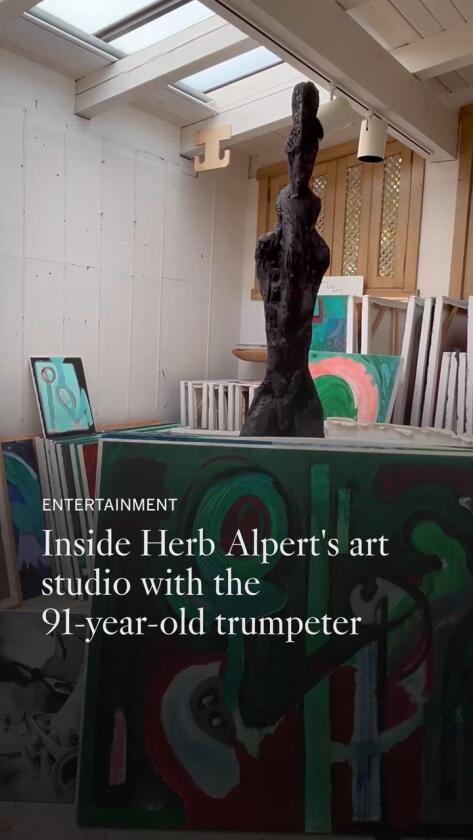
This, Alpert accepts, is the reality of life at 91. Yet the only reason he’s out here racking up steps by the hundreds on a recent morning is because he was tooling around in his sculpture studio before I arrived. And the only reason the sculpture studio is so far from his music studio — there’s also a studio devoted to his painting — is because of his huge success over the last 60 or so years.
“So I can’t really complain,” he says.
A Los Angeles native who got his start writing songs like Sam Cooke’s “Wonderful World,” Alpert has lived here in Malibu since 1972, a decade after he released “The Lonely Bull,” his debut album with the Tijuana Brass. The LP’s title track, inspired by a bullfight Alpert caught in Mexico, went to No. 6 on Billboard’s Hot 100; more than a dozen finger-snapping Top 40 hits followed, including “A Taste of Honey,” “Spanish Flea” (also heard as a theme song on TV’s “The Dating Game”) and “This Guy’s in Love With You,” which took a rare Alpert vocal turn all the way to No. 1.
Share via
What’s more, these inescapable tunes came out on Alpert’s own label, A&M Records, which he “formed on a handshake,” as he puts it, in 1962 with his business partner Jerry Moss. The label quickly became one of the biggest independent record companies in music, with acts such as Carole King, the Carpenters, the Police, Peter Frampton and Janet Jackson, as well as a beloved recording studio complex on La Brea Avenue. (Moss, who with Alpert sold A&M in 1989 for a reported $500 million, died in 2023.)
After years working on his own and with his wife, the singer Lani Hall, Alpert revived the Tijuana Brass name in 2024 and launched a tour that will stop Sunday night at the Hollywood Bowl. We sat down in his gear-stuffed music studio to talk about it and much more.
I’m sure you heard that John Mayer and McG bought the former A&M Studios last year. I wondered what your emotional investment is in the place at this point. I don’t have an emotional investment. Once I left the lot, I was out of there — I didn’t look back. I wanted to paint, I wanted to sculpt, I wanted to make music. I wasn’t thinking about the business.
What’s an A&M success story you took particular pride in? Cat Stevens. I heard this kid — he was a kid at the time — at the Troubadour, just him and a guitar, and I got goosebumps. It was so beautiful and so honest.
What was Karen Carpenter like? She was a doll. She didn’t know how great she was — didn’t think she was a great singer. One hell of a drummer too. Go onto YouTube and search Karen Carpenter’s solo on drums — it’ll knock your socks off. But she was innocent. She was lucky to have [her brother] Richard because Richard knew what to do with her in a very gentle way.
Even at the Carpenters’ smoothest, I hear deep sadness in Karen’s singing. I think that’s a standard ingredient to great artists. Listen closely to Miles Davis and you’ll hear the same thing.
Karen struggled with her mental health, which her fame didn’t help. Did you ever feel responsible for what she went through? I’ve gone over that question so many times in my head: If I hadn’t picked them out and signed them, would the same result have happened?
Where have you landed? I don’t have an answer.
In a recent documentary about you, you’re talking about “Wonderful World” and you say that nobody knows what a hit record sounds like. That’s your feeling now based on years of experience. But did you think you knew when you were young? I didn’t know then either. “Wonderful World” was a demo that Keen Records put on a shelf. When Sam started selling records on RCA Victor, they pulled it out as a lark, and it ended up one of the biggest-selling singles Sam ever had. I’ve told this story before, but at A&M a guy played a record for me — I said, “Man, this record stinks.” Well, I was turning down “Louie Louie.”
Why didn’t you understand “Louie Louie”? It was out of tune. It was too long. I didn’t know what the hell they were saying.
That’s why it’s great. Probably so. But did they have another hit record? Sam used to say, “Close your eyes when you listen to a new artist — don’t get swayed by whether they’re beautiful or they’re handsome or they can dance their ass off.”
OK, but you were like a heartthrob in the ’60s. What am I now — chopped liver?
I don’t think you can say your success had nothing to do with your looks. I don’t think it did. You know that sadness you were talking about? It’s in my horn.
I agree. But it didn’t hurt that you looked great. It didn’t hurt once I had a hit record. It wouldn’t have given me a hit record.
Jerry Moss, left, and Herb Alpert in 1974.
(Michael Putland / Getty Images)
Let’s talk about your song “Rise.” Got lucky with that.
In what way? My nephew Randy, who’s one of my managers, he wanted me to take some of the Tijuana Brass records and do a little disco number with them. So we go into the studio with a bunch of great musicians, start playing “Taste of Honey” at 120 beats per minute. I got nauseous — I said, “Man, I ain’t doing this.”
Nauseous? The record was big, and I didn’t want to tamper with it. But Randy had written this song called “Rise” with a friend of his. He wanted me to play that at 120 beats per minute too. I said, “Lookit, man — let’s slow this thing down and let people dance closer together.” We recorded it live in the studio. Julius Wechter was playing marimba — dear friend of mine. I said, “What do you think of this thing? Pretty cool, isn’t it?” He turns around and says, “I hate it. That beat — the four-on-the-floor is killing me.” I expected a different answer from him. But it didn’t matter.
What’d you make of the Notorious B.I.G.’s sampling “Rise” for his “Hypnotize”? How could you not like that record? These guys that take your bass line and make a record by pressing a button — I think that’s cheating a bit. But there’s 70 zillion streams on that song. Can’t deny it.
“Rise” was also sampled by the rapper Nas for his song “Power, Paper & P—.” I don’t know how to comment on that one.
A lot of musicians from your generation have been selling their catalogs lately. Have you considered it? There’s no reason to — I don’t need the money.
I wrote about Frankie Valli a few years ago, and he and Bob Gaudio seemed eager to have this company Primary Wave out there finding ways to — Monetize the catalog. I get it. But they don’t have to do that with us. I don’t know if you know what’s happening, but I’m in the heyday of my career right now.
Right now? It wasn’t my idea to get the Tijuana Brass back together again. My nephew, he’s a social media guy, and he went around the world to see what songs of mine were selling the most. Turned out there were about 18 songs. I started listening to the 18, and at the end, I felt happy, I felt joyous, I felt a smile was on my face. I thought, Man, let’s try this — this might be interesting. We started doing it, and we’ve been sold out 50 concerts in a row.
It strikes me that without the Tijuana Brass, you weren’t playing the Hollywood Bowl. Hell no, I wasn’t.
What’s that say to you? That the music is touching people. The times we’re living in, there’s a lot of doubt with what’s going on, and I think people are getting some positive energy from it.
You’re a lifelong Angeleno. Lots of well-to-do folks say that L.A. has gone to hell in a handbasket. What’s your take? I think it’s pretty much the same all over the country.
Which is? Gone to hell in a handbasket. People are confused about where they’re going, whether they’re gonna be able to have enough food on the table, whether they can afford gasoline. I’m not saying it’s all bad — it’s just hard to make sense of a lot of it for a lot of people, including the guy you’re talking to.
Your music has pulled from any number of cultures. Do you think it speaks of your Jewish identity? Most definitely. My father was born in a shtetl outside Kyiv — didn’t speak Russian, spoke Yiddish. He brought his mandolin with him when he was 16 years old on a boat by himself and landed at Ellis Island. He used to play songs for me on the mandolin. When his nostrils flared, I knew he was into it. That kind of got me.
Jewish meets Mexican feels very L.A. to me. I think we’re all a product of our surroundings. In high school I used to go see Gerry Mulligan and Chet Baker, and I was touched by them. Of course, they were loaded.
What kind of guy was Chet Baker? A troubled guy who was a brilliant musician. I gave him one of my horns, and he pawned it the next day. He was sweet but he didn’t have a hold on his emotions.
Not great for living, obviously. But good for music? Well, you’re opening up a whole can of worms. I mean, why did so many great jazz musicians get hooked on drugs? Maybe guys that were hung up on being a human being, they found that getting stoned helped them through the struggle. I recorded Stan Getz the first time he ever recorded without drugs. It was at A&M — he was wearing this red silk shirt that had sweat stains under both arms. He had like 75 reeds on the ground because he couldn’t pick out the right one. He finally found the right reed, got over the anxiety and started playing — same Stan Getz you heard throughout his career. These guys were under the assumption that being stoned would change what they played. I don’t think that holds any water.
Was there a time you thought it might be true? I did experiment with grass once. Turned on a recorder, took a puff, started playing some jazz. Took another puff, started playing some more jazz. I listened to that recording the next morning — it was terrible.
(Robert Gauthier / Los Angeles Times)
Can we do a little Herb Alpert trivia to finish? Do I have a choice?
“A Taste of Honey” won record of the year at the Grammys in 1966. You’re gonna ask why.
You beat the Beatles’ “Yesterday.” No kidding?
The year after “Taste of Honey,” you were nominated for record of the year again with “What Now My Love.” That one you lost. Remember what you lost to? Not “Louie, Louie.”
“Strangers in the Night.” That’s a real pop song. Love the guy, but not my favorite by him.
What’s your favorite Sinatra song? “Only the Lonely.”
“This Guy’s in Love With You” — great vocal performance. Why didn’t you do more? I’m not a singer.
Sure you are. I know it’s a great performance. But it was one take, man — I did that in one take.
This is what I’m saying. Look, I had an interesting guy in the sound booth who did the arrangements named Burt Bacharach.
I read that you talked with Burt a few times a week until he died. I did, and not about music. We talked about football, basketball, politics, you name it.
What’s your basketball team? Lakers.
Hard to be a Lakers fan these days. Easy to be a critic.
In an era hallmarked by what experts call a “sexrecession,” Six Sex is a symbol of liberation.
The Argentine baddie fashions herself as a baby-voiced, bikini-clad fembot, beamed in from the clubs of Buenos Aires — and has become known for cheeky, instructive celebrations of desire. Her songs are designed to galvanize like-minded club rats into Dionysian revelry, or, in the case of the song “How to Make Your Ass Bigger,” squats.
To a certain subset of the Latine underground, she represents a pure-hearted hypersexuality. Yet, for the artist behind the persona, Francisca Agustina Cuello, this wasn’t always the intention.
“I don’t know if it was because I still had to keep my innocence or what, but I didn’t envision the project that way,” she said, calling from a hotel room in Barcelona. “That response sort of came about from the people, towards me. So, I said OK, I’m making it my own.”
In doing so, Cuello has churned out six thumping EPs as Six Sex, a campy character that she describes as a “fable” — a mix of “fantasía y hedonismo.”
That dynamic is taken to extremes on her debut album, “Ultra”, released June 6. It’s a dark and propulsive journey through decades of electronic dance music, best described by its own opening words portending “ultra terrorific fantasy.” (The phrase conjures up images of grandeur, but really, it evokes that “Blades of Glory” quote: “no one knows what it means, but it’s provocative.”)
“I feel like nothing I say is all that serious,” she said about her lyrics. “It’s a thing about my personality to be silly and goof around.”
“Ultra” centers Cuello’s winking, suggestive sense of humor. “Not Your Mom” features a conversation with a garbled, omnipotent voice akin to the parents in Charlie Brown; “FUchi!” features schoolyard taunts about “low dickie energy;” the album ends with “No More Porn,” a playful yet powerful subversion of sexual expectations.
“At the same time, for me, that acts as a filter,” she added with a laugh. “Weeding out the people who get scandalized by it, and identifying the people who get it and say: ‘Yas, yo también quiero tener cuatro novios.’”
Earlier this year, Cuello took the stage at Don Quixote, performing in front of a sold-out crowd for her Los Angeles debut. The smell of sweat permeated the air as she ripped through several of her hits — including collaborations with Reysha Rami and German producer MCR-T. Every single one of her signature ponytail flips sent the room into hysterics. The audience screamed every word at the top of their lungs; it was the loudest, most raucous show I’d been to in years.
Cuello took a breather in the middle of her world tour to chat with De Los over Zoom about all things Six Sex: her new record, her writing style and how it feels to connect with fans spun into febrile intensity.
This interview has been condensed for clarity and was translated from Spanish to English.
“[I’m] weeding out the people who get scandalized,” says Six Sex of her provocative music.
(Catalina Jacobo)
I was really taken by the “Ultra” album cover. You’re wearing a white bikini and in this “come to Jesus” pose. What was the goal? [laughs] It was hard, because I wanted the cover to represent what the entire journey of the album meant to me. I was looking for something strong and heavy in visual terms, because with “Ultra”, this is the first time I’ve finished a long, heavy project and I see the start of something. It’s like something new was unlocked. I found a new way to convey feelings, and a new way to create as well. It’s not like I just finished, and it is what it is. Rather, it is the beginning of something bigger.
Is there an element of separation at all between the artistry and you as a person? I think they’re pretty close. It’s as if Six Sex was sort of a fable, or like a hentai or comic [version of] my life. It’s also happened that things I wrote as a joke later became reality. But generally, I draw inspiration from things that actually happened to me.
Is it weird to put those intimate experiences on an album? No, not for me. Because I’m not speaking so seriously, I don’t feel exposed. Even though my persona and my character are very close to one another, I don’t have to prove anything to anyone. I’m not trying to make you believe in something. The songs stop being about me as soon as someone else listens to them. There are certain things we can all see ourselves represented in, and I think my music aims for that, too.
I want to ask about your performance style. I saw you live in Los Angeles and was really taken by the energy exchange between yourself and the crowd. How do you approach live performance? Nowadays, I’m in a balance between performance and being a human being that connects with people and can pause to look in the eyes of the audience to register how they feel. I like being in a showgirl role, and at the same time, knowing when to step out of it.
Sometimes I go up there after having a crappy day, thinking that I’m gonna screw it up. And when I get up there and connect with the people, everything flows in a perfect way.
Does the music transform when it’s performed live, versus on a record? A lot of your music seems designed to be played in the club. I think it’s very personal. For me, I’m a bit autistic; sometimes when I’m at a show, I get different sensations. It really depends on the person. I like seeing people’s reactions live when I start playing these songs for the first time. People were super hyped. They were enjoying them and jumping around a lot. It feels really fresh.
You reference ‘90s club classics all over “Ultra,” including by U.K. band the Prodigy on “Bitch Up.” How did these sounds come into your life? These sounds evoke a special kind of nostalgia for me. Even though I hadn’t been listening to them lately, they sounded like something I wanted to bring back to the table — songs my uncle used to listen to when I was really young. Like a CD [of] pirated songs that somehow ended up at my house, and at the time I was like, “Wow, what is this music?”
There’s an element of Six Sex that gives “fembot,” like a female, sexy robot. I’m curious if you feel that playing out in your work. [laughs] I didn’t know about the fembot thing. I don’t use Twitter. I [keep] a bubble… against some things that I don’t know. But I’ve always liked the idea that people have that perception of me, to some extent.
How do you feel about the rise of AI as a musician, especially considering your persona adopts that perception? I mean… I don’t have a formed opinion on the matter. I do think that, I don’t know, it’s all very relative. For one thing, I obviously feel like it strips away the human value, but at the same time, it’s also a tool for humans. So it’s kind of contradictory. I feel weird about it…. I don’t know.
Zooming out, I’ve noticed Argentina has been having a musical moment over the last few years between yourself, Ca7riel y Paco Amoroso, Juana Rozas… How do you feel Argentina being represented or even challenged in your music? I feel that culturally, Argentina is a very rich country. However, I do feel like, over generations, a paradigm was broken, and new sounds have been created that don’t necessarily abandon the roots of our music, but were created out of counterculture.
That same kind of counterculture is what makes Argentina be in such turmoil. It’s also the context of our country. Economic, political, social. The key Argentinian figures we refer to nowadays are constantly changing. And that allows you to listen to a variety of genres from Argentina, from people doing different things, and at the same time raising the flag and saying: “Yo soy argentino.” And we love that.
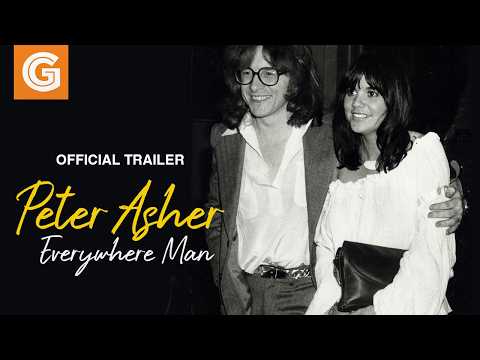
When David Jacks published a biography of Peter Asher in 2022, the veteran record producer and manager expressed surprise that anyone would have deemed his life worthy of the treatment. Four years later, he’s no less baffled to have become the subject of a new documentary, “Peter Asher: Everywhere Man,” directed by the filmmakers Dan Geller and Dayna Goldfine.
“It just seemed to me,” he says, “that I wouldn’t be that fascinating.”
The movie, in theaters now, argues otherwise: A child actor alongside his two younger sisters, the bespectacled Asher became an unlikely pop star during the British invasion as half of the duo Peter & Gordon, whose debut single, “A World Without Love” — written by Paul McCartney — hit No. 1 on Billboard’s Hot 100 in 1964. (McCartney offered the song to Asher while the Beatle was dating Asher’s sister Jane.) In 1968, the Beatles made Asher head of A&R at Apple Records, where he signed James Taylor; the two soon moved to Los Angeles and turned Taylor into music’s biggest heartthrob folkie.
Asher went on to shepherd Linda Ronstadt to stardom and to produce records by Diana Ross, Cher, Bonnie Raitt, Randy Newman, Neil Diamond and 10,000 Maniacs, among many others. And at 82 he’s still at it: Last year he produced Barbra Streisand’s latest duets album — they’re due to start work on a new Streisand solo LP, he says — and he’ll perform a show of his own July 19 at the Grammy Museum. Asher, who broke his leg in a recent fall, spoke about it all the other morning at his home in Malibu, where he walked into the kitchen using a cane before sitting down at a table set with pastries and several of the day’s newspapers.
What unites the jobs of musician, producer, executive, manager? What’s the through line? Love of music and admiration for the people who do it. They’re very different jobs, and I came at them from very different perspectives. Record production was something I set out to do once I understood what a record producer did. Hire musicians much better than yourself and tell them what to do? That’s a cool job — how do I get in on that racket? Whereas I never had any ambitions to be a manager. It’s just that when James and I decided to go out on our own and try to put a career together, we didn’t know who we trusted to do it, so I kind of went, I’ll do it.
What’d you discover about the job of management? The ingredients are common sense, not being a crook and having a great client.
Which is the hardest of those three? The last one. I got to induct the first managers inducted into the Rock & Roll Hall of Fame: Brian Epstein and Andrew Loog Oldham — the Beatles and the Stones. That’s the hard part. The only thing that would tempt me back into management would be lightning striking for a third time — to see James, to see Linda, then to see somebody comparably brilliant, which I occasionally do. But usually they have a manager already.
What’s the last new act that knocked you out? Ed Sheeran.
Was that just because he looks like he could be your grandson? That certainly crossed my mind.
As a producer, your records helped define the sound of rock in the ’70s. The so-called California sound.
Then the zeitgeist shifted. One became aware of that. Pop music got very electronic, which I loved.
Was there a place for you in that style? I didn’t consciously try to make records in that style because I don’t think I could have — not as well as they were being made anyway.
What’s a record from the early ’80s that made you think that? “Sweet Dreams (Are Made of This).” I couldn’t do that.
Back to the ’70s: The doc is filled with pictures of James looking — Like a movie star. With the cover of “JT,” I finally went all the way and said, “We’re doing the the glamour shot.” Then we did “Flag,” which everyone hated.
With the maritime flag. A truly perverse album cover. I loved it. James loved it. Everyone thought we were crazy.
How crucial do you think James’ good looks were to his whole proposition? I don’t know.
Oh, come on. I really don’t. I mean, how would you gauge that? There’s probably girls who fell in love with him without listening to the record.
I think you just gauged it. If he was ugly, would he be as big a star? Probably not.
(Evan Mulling / For The Times)
Same applies to Linda, right? When I first saw Linda, it was stages of realization. Someone said to me, “You’ve got to go down and see this girl at the Bitter End.” I walk in and she’s singing so well — unspeakably good. Then she looks incredibly great — barefoot, short-shorts. Oh, my God, my heart. Then you meet her, and it turns out she’s a remarkably brilliant woman — extremely well read. You just kind of go, “All these things together — how can it be?” It’s the same thing talking about the Beatles: If you cast it like the Spice Girls, you still couldn’t have gotten four to fit together so perfectly.
Did you like the Spice Girls? Terrific. “Tell me what you want / What you really, really want” — it’s a smash. And yet none of them are particularly good singers, which is kind of the point.
I went to an event not long ago where Paul McCartney played his new album for a small group of fans. It was fascinating to see the spell McCartney casts over people. He’s had to get used to it — to admit to himself that he can’t meet people who aren’t amazed that they’re meeting him. Even as someone who’s known him off and on for a long time, you still get the wave of: Holy s—.
You’re still amazed to be around him? Of course. I get it less — I’m ready for it. But you can’t pretend he’s not Paul McCartney. And he’s gotta live with that his whole life.
You grew up a member of the upper crust, I think it’s fair to say. I don’t think we were that crusty. But upper, probably, yes.
I wondered how that situated you to live and work among artistic types. If anything, the upper crust have more time to be artistic — less preoccupied with getting a job and making a living. But my parents worked incredibly hard — we weren’t upper crust in the sense of inherited wealth. My father was a doctor, my mother was a professor of music. But I never struggled, to be honest. I had a comfortable allowance, and then I went to school and worked hard. Everyone talks about sharing a flat with a million people, living on borrowed sandwiches — I skipped that phase.
Did that shape you in any meaningful way? I don’t know. But I think when people do struggle, it becomes a meaningful part of their lives to get away from it. With someone like James, the struggle was a struggle with drugs. Now he says the worst thing about drugs is they’re a complete waste of time — you waste time doing nothing except looking for drugs. And I think that made him anxious to succeed and to be taken seriously.
I’m sure you saw the New York Times’ list of the 30 greatest living American songwriters. You knew it was gonna be silly. Randy Newman, for God’s sake — you just cannot not include him.
No Neil Diamond either. Insane.
And no Billy Joel. [Shrugs].
How’s your health? High blood pressure, high cholesterol, need to work out more — old man stuff. Other than that and a broken leg, great.
You’re OK with the cane? It’s a considerable upgrade from the wheelchair. I like the cane — it’s kind of elegant.
What seems scarier: the body going or the mind going? The mind going. And it is, slightly. I had a stroke, and bits of my brain aren’t quite working right. But compared to other people I know, I’m fine.
We’re at a moment when a lot of foundational rock ’n’ roll figures — Are dying. It’s all the rage.
What’s it feel like to see your friends and colleagues go? Better them than me.
Couple more for you: You managed Courtney Love for a spell. I met her here in Malibu. I also managed Pamela Anderson for a while because she was a neighbor and asked me to help.
What, you put a shingle out? “Manager for hire.” I’m trying to remember how I first met Courtney — I think Merck Mercuriadis was talking to her about publishing and Kurt stuff. I liked her. Very smart. I like smart women.
She’s easy to work with? Hard to work with? Impossible to work with.
What’s James Taylor’s best album? “JT,” maybe.
What’s Linda Ronstadt’s best album? “Heart Like a Wheel.” With Linda, it’s unfair because they’re so radically different. How do you compare that to a mariachi record and then to Nelson Riddle?
Working with Riddle on those albums must have been a thrill. He told us all these incredible stories about Frank Sinatra, who he didn’t like although he admired him enormously. It was John David Souther who originally suggested Nelson. Linda had tried doing the album a different way — did some versions with Jerry Wexler and it didn’t work out. So we had a meeting with Nelson: Would he consider doing a couple of arrangements for us? He went, “No.” We said, “What?” He said, “I’ll do an album, though.”
“A World Without Love” was one of eight songs to top the chart in 1964 with “love” in the title. What’s that say about pop music in the mid-’60s? Same thing it says about pop music of all time: It’s either “I love you” or “She loves you” or “Why don’t you love me?” Weird Al pointed out to me that when you’re looking for a parody of a song, any song that has “love” in the title, substitute “lunch” and it’s funny. “A World Without Lunch” — I mean, who would want to live in such a place?
As La Cruz continues to break down barriers for the LGBTQ+ community in reggaeton, the rising Venezuelan star enjoys living out his gay fantasies in his music videos. Take the sultry video for his 2023 breakthrough single, “Quítate La Ropa,” which sees shirtless men perreando (twerking) before him in a locker room.
But at the same time, La Cruz has come to understand that his platform as a gay reggaeton artist coincides at a time when conservatism is sweeping the globe — and queer rights are receding.
“It fills me with happiness to represent a community that has been denigrated, treated badly and pushed into a corner for many years,” a bedheaded La Cruz says over Zoom from his New York City hotel room. (He had just performed at a Pride event the night before.)
“It’s a fact that [LGBTQ] rights are becoming progressive, but they’re rolled back even faster than they advance,” he adds. “This is very painful and concerning. This is happening in every country in different ways. During these difficult times, I’m going to keep putting my heart into my music more than ever.”
La Cruz is the stage name of Alfonso La Cruz. The native of La Guaira, a coastal city in Venezuela, pursued a music career after relocating to Spain in 2015. Following a brief stint on the singing competition “Operación Triunfo” three years later, La Cruz was closeted and found his momentum stifled. In 2022, he took the brave step of singing about his affection and lust for other men in his debut album, “Hawaira.”
Venezuelan reggaeton singer La Cruz released his new EP, “El Nene, Vol. 2,” on June 11.
(Maria Camila Pinzon)
Backed by the beats of reggaeton, a genre that had historically excluded the LGBTQ+ community, La Cruz found both his groove and his tribe with hits like “Te Conocí Bailando” and “Quítate La Ropa.” Early supporters included Colombian superstar Karol G, as well as Mexican American R&B singer Omar Apollo.
Alongside Puerto Rican provocateurs like Young Miko and Villano Antillano, La Cruz has continued to queer the heteronormative urbano space. He has also pushed his sound to broader horizons in his new EP, “El Nene, Vol. 2,” which includes “Sírveme,” a Brazilian funk banger with drag pop star Gloria Groove — and “Te Perdí,” a touching tribute to the victims and survivors of the 2016 Pulse nightclub shooting in Orlando, Fla.
La Cruz’s EP dropped on June 11, the day before the 10th anniversary of that tragedy, which largely impacted the queer Latino community. In an interview with The Times, he opened up about being a gay reggaetonero and “Te Perdi,” his tribute to the 49 people lost at Pulse.
It’s been three years since you first went viral with “Quítate La Ropa.” What have you learned about yourself during that time? There are songs that have brought me a lot of love and I’m thankful to my fans that consider that song to be a classic. It’s brought me a lot of blessings. At this moment, I feel like I have the best opportunities in my life. However, I feel like the industry is a bit uncomfortable with an artist that’s openly gay and wants to be a part of this. That hasn’t stopped me at all. It’s the gasoline in my motor. It’s what pushes me to keep working hard. My fans are what’s building my career and I won’t let them down. I’m sticking with this until the end.
You connected with Karol G early in your career. Did she give you any advice when you met her? I want to say publicly that I would love to open for her concerts on her Viajando Por El Mundo Tropitour. I’m very close to her. I love her so much. She has always treated me with so much love. I hope that something between me and her can happen sometime. I know everything happens in due time. I told her that I love the way she is and how she connects with her fans. When I see her singing and performing, I feel like she’s a sister to me. A big piece of advice that she gave me and that I’ll always carry with me is to never lose the humility and closeness that I have with my fans. The key to success is humility. I never want to be out of reach. I want people to see me and say, “I want to achieve my dreams like he has.”
How did your collaboration “Sírveme” with Gloria Groove come together? I love her so much! I’ve always been a big fan of hers. I’ve gotten close to a lot of artists in Brazil and Gloria has been one of them. We didn’t think twice about making this song. Gloria was coincidentally traveling to the amusement parks in Orlando. I told her: “Baby, let’s go! I’m ready for you in Miami.” She told me: “Baby, I’m going to Miami!” We met one afternoon to create this song. She paused her vacation to go to the studio with me. It was very beautiful. I love my Brazilian fans.
With “El Nene, Vol. 2,” why was it important for you to also shed a light on the 10th anniversary of the Pulse nightclub shooting? In 2016, when I recently arrived in Spain and my brother recently arrived in the U.S., we had a call with our family. My brother said, “There was a shooting close to where I live and it was in a gay club.” My family has supported me since I first told them about my sexuality. I thought that that could’ve happened to me.
I’m following up on this tragedy because it shaped my life. As the years go on, information about this attack has faded away. Each day people are talking less about it. It’s a tragedy that’s super important to remember, like 9/11 and the [2017] Las Vegas shooting, because it’s one of the worst attacks in U.S. history. Why are we not talking about it anymore? We have to keep talking about things so that they don’t happen again.
What inspiration did you pull from the Pulse tragedy for your song “Te Perdí”? On this path, I’ve gotten to know the stories of people that survived that shooting. For example, there was a boy with his mother that lost her life and he survived. There’s a lot of stories of love from that club that have [since] come out. When I went to the studio, I was inspired by loss, or a love that’s gone away, with respect and love for the community that supports me. It is my gift, to be a voice for this situation that should never be repeated. There are people that don’t know about this tragedy and I want to let the world know that this happened. I hope that the victims’ families and the people that survived are living lives of peace and calm.
I rose from my living room couch before Mexico’s World Cup match against Czechia when the Telemundo announcer stated it was time for the Mexican national anthem.
The public address system at Azteca Stadium in Mexico City played a short string intro. My back straightened. I pressed my right hand against my chest horizontally in the traditional gesture that accompanies the tune. And then I recited the opening lyrics to a song I’ve heard all my life but that I only began committing to memory this month:
Mexicanos al grito de guerra/El acero aprestad y bridón/Y retiemble en sus centros la tierra/Al sonoro rugir del cañon
Those florid 19th century words — “Mexicans, at the cry of war/Ready the steel and the bridle/and may the Earth tremble to its core/at the cannon’s resounding roar” — make “The Star-Spangled Banner” seem as anti-war as “Give Peace a Chance.” My kumbaya heart nevertheless jumped as the anthem continued.
Goosebumps blossomed on my skin as Mexico’s head coach Javier Aguirre, he of a stern face and gray haircut worthy of a drill sergeant, beamed while singing. My eyes watered as the camera panned over his arm-in-arm players as they shouted the line, “Think, o beloved homeland! That heaven/gave you a soldier in each son.”
Millions of Mexican Americans like myself have stumbled through the himno nacional during this World Cup, whereas in previous years, we might have just hummed some bars or stayed silent. It’s a boisterous way to connect with one half of our hyphenated lives and get in the right mindset to root for El Tri, but otherwise something we don’t really have to know all the way through given we’re in the U.S.
Yet seeing stadiums and bars packed with Latinos wearing the jerseys of their ancestral homes and warbling their national anthems during this World Cup has been a jolt of inspiration I wasn’t expecting. Those few minutes before each match have become a reminder of what we’re up against at this moment in the Western Hemisphere, as President Trump thirsts to smash Latin America into submission while persecuting too many of us stateside.
In downtown Santa Ana earlier this week, Alicia Rojas quietly recited Colombia’s national anthem word for word before a game against the Democratic Republic of the Congo, even though she was just one of a handful of Colombian fans at Chapter One: The Modern Bistro.
“It reconnects me to my roots, my family and the memories of home,” said Rojas, who was born in Bogotá and moved to the U.S. at age 12. The artist has helped to organize against federal immigration raids in Orange County and volunteers for local political races. “Those few minutes remind me that beyond our differences, we share a history, a culture and a love for the land that made us who we are.”
Latinos are a famously divided bunch, to the point that we don’t even like a catch-all label for “us.” A 2024 Pew Research Center survey found that 52% of Latinos prefer to refer to themselves by their family’s country of origin, while only 30% identify as Hispanic or Latino and just 17% use plain ol’ American.
One thing that can unite us all — and all lovers of liberty, for that matter — is those Latin American national anthems. Many were written in the aftermath of wars for independence. Most are bright, rousing listens, even if you don’t understand Spanish, because their chords reflect the Romantic classical music popular at the time of their composition in the 19th century. All call for their countrymen to fight against tyranny.
Fans cheer after Lionel Messi scores a goal against Algeria during a World Cup watch party at Mercado Buenos Aires on Tuesday, June 16 in Van Nuys.
(Ronaldo Bolaños/Los Angeles Times)
Cue up this soundtrack for your summer:
Paraguay’s national anthem starts by stating that the people of the Americas were “oppressed for three centuries” until they rebelled. Ecuador’s recalls how its founding fathers “cried out a holy voice to the heavens/that noble voice of a unbreakable pledge/to defeat that [Spanish] monster of blood.” Colombia’s similarly doesn’t shy away from how violent its fight for independence was, but takes solace that “in furrows of pain/good now germinates.”
On and on, these songs stir the soul. Argentina: “Hear the sound of broken chains/See noble equality enthroned.” Uruguay: “Tyrants: Tremble!/We shall cry out ‘Liberty’ in battle!” — a boast backed by flutes and violins that make it sound like a Rossini overture. I especially like how Panama’s national anthem concludes by urging “shovel and pick/to work without delay” — a reminder that the job of creating a better society is never done.
There’s nothing wrong with taking inspiration from the clarion calls of other countries. “O Canada” is as soaring as “God Save the King,” while revolutionaries across the world have chanted “La Marseillaise” for centuries. And yes: I sing “The Star-Spangled Banner” with all my heart as well — and I definitely know the words to it.
But the message of the U.S. national anthem isn’t enough for Latinos right now. Hailing survival against an invading force is important, but it’s a mindset too many of us have resigned ourselves to under Trump.
The theme of Latin America’s national anthems is the demand that we stand against despotism and push for a better world through sacrifice and valor. They should be a wake-up call, especially for Latinos, to lead the electoral charge against Trump this November. We helped put him in the Oval Office in 2024, and we have the power to take Congress away from his GOP vassals.
Alas, all those paeans to freedom have played out better in song than in real life. Latin America is swinging rightward again, electing presidents who promise to channel the strongmen of yore and rule the region through might, not right.
On the same night that Rojas was cheering on Colombia, she was bemoaning that her homeland had elected Abelardo de la Espriella, a millionaire criminal defense lawyer and political novice who earned Trump’s endorsement for his “tremendous accomplishments in life” — which include claiming that female voters would pick him because of the supposed size of his genitals.
We must channel the hopes and dreams of Simón Bolívar, Emiliano, Zapata, José Martí and other heroes of the Americas who fought for freedom for their countrymen, sought to cast off the long reach of colonialism and imperialism and urged pan-American alliances over forever wars.
Nothing like the World Cup’s unofficial pre-game soundtrack to reinforce this eternal, universal message.
Mexico dominated Czechia 3-0 and finished first in its group. When El Tri plays again on Tuesday in the first round of the knockout stage, I will stand at a packed Chapter One with other fans and so many more across the U.S. and sing again Mexico’s national anthem.
I will hope to have it all memorized by then instead of reading off my smartphone — the thing is hard! The Spanish is archaic, the intonations are complicated, and the words tumble over themselves like a hard charge toward the goal posts.
But I will do it — a little victory in the long battle for freedom that never ends.
JOEL CORRY is on the brink of his biggest collaboration yet, after striking up a bond with Jennifer Lopez.
He’s worked with, and remixed songs from, some of the biggest names on the planet, including Charli XCX, Raye and Sir Elton John.
Sign up for the Showbiz newsletter
Thank you!
Joel Corry is on the brink of his biggest collaboration yet, after striking up a bond with Jennifer LopezCredit: GettyJoel caught J-Lo’s attention after remixing her 2005 single Get Right, before he remixed her David Guetta collaboration Save Me Tonight in MarchCredit: Bryce Hall
But Joel caught J-Lo’s attention in December after remixing her 2005 single Get Right, before he remixed her David Guetta collaboration Save Me Tonight in March.
And after flying Bizarre’s Jack out to Ibiza to join him for a mad 24 hours on the party island, Joel says he’s working on getting a studio date with her.
“I’m still in touch with J-Lo and her team, and we’re trying to work on new music together,” Joel says.
“She loves dance music and doing a remix for Get Right for her last year was an honour.
“It was amazing to meet her and build that friendship.
“I look forward to her doing more of that.”
Of his close friend David, Joel adds: “I talk to him all the time.
“I am playing with him in a few weeks at Ushuaïa.
“He books me back every year to support him at Ushuaïa.
“He’s the best.
“He’s the King of Ibiza.”
Before he nails down his time with J-Lo, Joel has another project up his sleeve — and we did not see it coming.
He has recorded a track with Aleksandr Orlov, the animated aristocratic Russian meerkat who has been fronting ads with his “simples” catchphrase for Compare the Market since 2009.
Together they’re launching a bid for No1 with Simples featuring Scrufizzer [Joel Corry Remix].
Joel says with a laugh: “Listen, you know I’m the king of the summer bangers.
Joel says he’s working on getting a studio date with J-LoCredit: GettyJoel flew Bizarre’s Jack Hardwick out to Ibiza to join him for a mad 24 hours on the party islandCredit: Supplied
“And for Aleksandr the meerkat, it’s always been his dream to have a summer banger.
“So I’m just helping him out.
“Aleksandr for No1.”
Joel has big ambitions for his animated pal too, and is hoping ITV calls him up for a performance in the Love Island villa, three years after he played there with Becky Hill.
“I’ve done Love Island but we need to get the meerkat on Love Island,” Joel says.
“He would clean up in the villa, wouldn’t he?
“I’d love to go back and, this time, we’ll bring Aleksandr.”
During Jack’s whirlwind trip to Ibiza, he joined Joel in the DJ booth for his set at Wayne Lineker’s infamous O Beach, where he premiered Simples live.
He was accompanied by his girlfriend Coco Lodge, who found fame on series eight of Love Island, the same year he performed.
While he kept tight-lipped as to whether a proposal is on the cards, Joel has his heart set on Ibiza for the big day.
He says: “I’ve always said if I was ever gonna get married, Ibiza would be the place to do it.
“It has a special place in my heart.
“The first time I came here was when I was in my early twenties, and I’ve been back every year since.
“I’ve had residencies here for the last few years, and this is definitely my happy place.
“I think it’d be a perfect place to get married.”
While I’m sure Joel’s brother will be his best man, I wouldn’t put it past Aleksandr to wangle himself a role as ring bearer if all goes well with their track.
Barry Manilow has told the story behind his first big hit so many times that I had no intention of bringing up the half-century-old “Mandy” when I sat down with the singer on a recent afternoon at his home in Palm Springs. Among the questions I did ask was how he ended up recording the song that opens his new album, and the answer — as it’s so often been throughout Manilow’s career, beginning with that 1975 chart-topper — was Clive Davis.
“It was all Clive,” Manilow said of “Once Before I Go,” the Peter Allen/Dean Pitchford number that leads off his just-released “What a Time” LP. Davis, the star-making record executive with the so-called golden ears, had been urging him to record the song for years, Manilow told me, which inevitably brought him back to the well-rehearsed tale of “Mandy” — to Davis’ decision that Manilow’s debut for his Arista label lacked a breakout smash and to his suggestion that the singer cut a version of a modest hit called “Brandy” by Scott English.
“So I went in the studio and did it trying to sound like that guy,” Manilow recalled, stomping his foot to approximate a lumbering rock beat. “Clive came in and said, ‘That’s terrible.’ I said, ‘I know it’s terrible.’ But in order to learn the song, I’d slowed it down and changed the key — I found the love song hiding in ‘Brandy,’” Manilow continued. (He also changed the title to avoid any confusion with Looking Glass’ “Brandy,” which had recently reached No. 1.) Manilow played the tune in his more romantic style for the exec. “I’ll never forget it — Clive said, ‘Just do that.’ And that was the record.” He laughed.
“He’s a kind of a genius.”
Davis, who died Monday at age 94, didn’t sing or play an instrument. “I knew nothing about music,” he once said, looking back at his entry into the record business. Yet his instincts made him one of the surest spotters and nurturers of talent in pop history, with a long — and varied — line of success stories that included Manilow, Janis Joplin, Neil Diamond, Lou Reed, Patti Smith, Whitney Houston, Aretha Franklin, Dionne Warwick, Alicia Keys, Jennifer Hudson and Maroon 5, among many others. He even helped the Grateful Dead score a Top 10 single with “Touch of Grey” in 1987.
Davis, who got his start in Columbia Records’ legal department, could identify original voices and seemed to intuit which songs were likely to become hits. Sometimes the hits came from the voices themselves, as in the case of Bruce Springsteen, whom Davis cajoled into writing “Blinded by the Light” for his Columbia debut; sometimes the exec match-made performers and composers, as in the case of “Mandy” or “Freeway of Love,” a zippy Narada Michael Walden jam that launched Franklin’s comeback in the mid-1980s.
A natty dresser with a cosmopolitan air, Davis founded Arista in 1974 after he was fired from Columbia (where he’d ascended to the presidency) amid an embezzlement scandal of which he was later cleared. In 2000, he was ousted from Arista in a corporate shakeup — just months after the label won eight Grammy Awards with Carlos Santana’s 15-times-platinum “Supernatural” LP — then launched a new label, J Records, which scored an immediate blockbuster with Keys’ “Songs in A Minor.”
Clive Davis at the Beverly Hills Hotel in 2020.
(Christina House / Los Angeles Times)
Wherever he worked, Davis’ goal was shepherding hits that spanned formats and generations; he delighted in projects like “Smooth,” the inescapable Santana single pairing the rock guitarist and Rob Thomas of Matchbox Twenty, and a series of Great American Songbook albums by the once-scruffy Rod Stewart. He might also have been the music industry’s biggest believer in ballads, at least among suits: Between 1985 and 1992, Houston alone released almost a dozen of music’s all-timers, including “Saving All My Love for You,” “Didn’t We Almost Have It All” and — perhaps the greatest pop ballad ever recorded — her take on Dolly Parton’s “I Will Always Love You.” (It wasn’t a huge hit, but listen to Houston and Jermaine Jackson’s pedal-steel-drenched “Nobody Loves Me Like You Do,” from Houston’s debut, for an early instance of that crossover ambition.)
One of relatively few nonperformers inducted into the Rock & Roll Hall of Fame, Davis brought his flair for variety to the party he threw at the Beverly Hilton every year on the night before the Grammys — a famously hot ticket that drew A-list celebs from the worlds of music and Hollywood as well as business and politics. You could always count on the exec to have persuaded some number of the year’s splashiest new acts to perform; this year’s bash, in January, had Sombr, Olivia Dean and the women of “KPop Demon Hunters.” But my favorite part of the show was always seeing which veteran Davis had tapped to mix it up with the youngsters — Diamond or Manilow, for instance, or Johnny Mathis, who absolutely killed in 2015.
Davis horrified many in 2012 when he opted to proceed with his party just hours after Houston was found dead in a hotel room at the Beverly Hilton. In the years after the singer’s death, Davis drew criticism for taking too much credit for Houston’s artistic achievements; to some, he became a symbol of the music industry’s efforts to tone down Houston’s Blackness in order to reach white audiences. Five years ago, I asked Warwick, who was Houston’s cousin, whether she’d taken on any kind of consulting role on “I Wanna Dance With Somebody,” the 2022 Whitney biopic that Davis produced.
Bobby Brown, from left, Whitney Houston and Clive Davis in New York in 1998.
(Stuart Ramson / AP)
“Not one thing,” she told me. “I want them to let Whitney rest in peace. Leave her alone. Ten years [since she died] — it’s time to let her sleep.” (In a statement Monday, Warwick called Davis her “dear friend” and said she “can think of no other record man that seemed to have that magical ability to know a hit when he heard a song.”)
I spoke with Davis many times over the years and was always struck by his enthusiasm about music and about his recall of events from decades ago. In 2017, I interviewed the exec alongside Mathis and Kenneth “Babyface” Edmonds about a record the three made together that had Mathis singing newish pop songs like Adele’s “Hello” and Pharrell Williams’ “Happy” — a concept Manilow told me in March he and Davis had been talking about replicating. After my story ran, Davis emailed me and said he’d enjoyed the piece, which had a couple of lines about Davis’ tendency to go overboard hyping his projects.
“Yes, a few of your bites required a personal Band-Aid,” he wrote, “but I did appreciate your perspective of the Mathis album’s quality.”
He knew the music was good; Clive Davis always knew when the music was good.
Sitting in the control room of their home studio known as the Centre of Mental Arts (COMA for short), Long Beach husband-and-wife duo Scott Montoya and Julia Kugel smile as they discuss new music they recorded for their band Soft Palms. Their new album, titled “In Echo,” has been in the works for over five years. The 10-song album, out Friday on Everloving Records, was inspired by their frustration about how they feel the world has devolved since 2020.
“The first record I was like, ‘I want to give the world a hug,’” Kugel says. “And then this one I was like, f— this world.”
For Kugel and Montoya, the album serves as the latest chapter of their creative and personal journey. The pair met in 2012 at a music festival in Dallas (“The most romantic city,” Kugel quips), while playing in the Atlanta-based band the Coathangers and Orange County’s the Growlers, respectively. They bonded over a shared disgust at gladiator shoes, and soon thereafter, were in a relationship.
By 2017, they were married and settled in Long Beach. Despite Kugel’s role in the Coathangers at the time (Montoya left the Growlers in 2016), the couple wanted to form a band. Previously, they recorded a pair of songs that constituted Kugel’s second solo seven-inch single. That experience made them comfortable knowing they could balance their professional and personal lives.
“He’s super easy to work with,” Kugel says of Montoya, who sits beside her, trying to hide a smile. She looks at him and continues, “he’s very talented and very patient.”
“When we were in our other bands, we used to meet up on tour,” Montoya, who also produces and engineers for other artists, says. ”You see the absolute worst of people on tour … so this is nothing.”
To kickstart Soft Palms, Kugel drew from a batch of songs she had previously written that had no home. Being able to record in their own studio allowed the pair to craft songs without feeling any pressure to meet a deadline.
By late 2019, the pair put the finishing touches on their self-titled debut. When the record was released in July 2020, the pandemic was still in full force. The pair were disappointed and upset by the state of the world, and after a few years of stewing, Kugel and Montoya got started on a second album.
Don’t be fooled by its breezy ’60s-analog vintage pop sound. Soft Palms are angry, and that informs the spirit of “In Echo.”
The pair points to “Radio” as the album’s bellwether. First released in 2025, the song rails against how, over the past handful of years, people have fought for the sake of fighting, with no end in sight.
More strikingly, on the biting “Nervous as Hell,” Montoya points to Fox News as “infecting everyone’s parents.”
“I did some digging because I couldn’t believe something that hateful existed,” he says of the network, specifically its landmark $787-million settlement with Dominion Voting Systems. “It turned it from this horrible thing into this s— business that has taken advantage of the elderly and destroyed families.”
That anger continues on the angsty rocker “The Wedding Song.” Kugel points to attending a wedding where a family member married a “total raging maniac,” and how they dealt with the buildup of delicately balancing being cordial yet firm.
“He [the family member] goes, ‘I just want you to show up and shut up!” she says. “I was like, ‘Well, firstly, f— you. Then secondly, this is a song — you just handed me gold.”
Since settling in Long Beach, for the last 10 years Kugel and Montoya took it upon themselves to help foster a positive, artistic community. It’s that mindset that pushed them to found and operate their 501(c)(3) nonprofit called Studios for Schools with the goal of providing recording equipment to underprivileged schools.
Their DIY work ethic in entertainment was also the driving force behind Happy Sundays, a free Long Beach-based music festival. Running for 10 years, the fest created a block party in the city’s Zaferia neighborhood that eventually expanded into a full weekend of shows across stages set up at local businesses to host a diverse lineup of veteran and up-and-coming area bands. Though the event was paused this year so they can focus on the new album and book, the couple plan to bring it back in 2027.
“It was like a statement in that way of like f— these giant prices, VIP experiences and all of that stuff,” Kugel says. “It’s the anti-music festival and a celebration of community.”
Keeping with that spirit, and drawing from the experiences of their two-decade careers, last month the pair released a book titled “How to Be Self-Reliant in the Music Business.” The genesis of this self-published guidebook occurred when the pair realized they were not receiving a portion of a royalty stream they were owed. They knew that if they were in the dark on the issues they thought they knew, others likely were as well.
“We decided to turn it into a book because we realized there’s so much stuff that few artists know about on their own,” Montoya says. “I want people to understand the scope of what they’re actually getting into, and the reality of their situations.”
“It’s a very thorough overview,” Kugel adds.
The book includes information beyond what one would find in Donald S. Passman’s longstanding industry bible “All You Need to Know About the Music Business.” With assistance from a lawyer friend and a CPA family member, the pair addresses topics ranging from backstage etiquette to managing social media to dealing with record labels and publishing companies. They hope that it will provide a blueprint for bands old and new to better navigate music’s notoriously choppy waters. Their accessible, snack-size chapters move fluidly as they explain the realities artists face in 2026.
Battling through the disappointment of the first part of the decade allowed Kugel and Montoya to find their creative way. Armed with this infusion of activity across various disciplines, the couple is inspired to continue to shake their way out of the past. Though focused on their impending U.S. and European tour, the duo promise that the next Soft Palms album won’t take as long and are mulling over their next music-industry book project. For now.
“It’s a lot to keep up with all of these projects,” Montoya says. “We work all day, every day. And it’s been cool to see signs that it’s paying off.”
In early June, hundreds of fans dressed to the nines were in attendance at a rock star’s sold-out show at New York’s Beacon Theatre. There was lace everywhere and leather too. Chains dangled from belt loops and wrists. Some attendees arrived with dyed crimson hair, others with orange or pink.
Sheer black outfits that looked pulled from the pages of a gothic romance novel were draped on bodies. If “The Rocky Horror Picture Show” had collided with a modern concert, it might have looked something like this.
Then a man took the stage. Was it Lestat de Lioncourt, the immortal vampire-cum-rock star, or was it actor Sam Reid?
Moments earlier, attendees had watched the first episode of AMC’s “The Vampire Lestat,” the rebranded third season of “Interview With the Vampire” that premiered earlier this month. This season adapts Anne Rice’s novel of the same name, which is told from the perspective of Lestat, played by Reid, and transforms him into a touring musician.
Now Reid, dressed in black with his chest partially exposed beneath an open jacket revealing a scar, stepped on stage and into the role of Lestat in front of the audience. As he moved across the stage, phones shot into the air. Fans screamed. People sang along to a slew of songs, and for a moment, the line between actor and character seemed to disappear.
At first glance, the assignment to turn Lestat into a rock star seemed straightforward. The vampire at the center of Rice’s beloved novels has flirted with music before. In 2002’s “Queen of the Damned,” he emerged as a leather-clad nu-metal frontman capable of commanding massive crowds. But bringing Lestat into the present introduced a different challenge. Rock music no longer occupies the same place in popular culture. Fame is fragmented. Audiences are skeptical of celebrity. Social media can build a star overnight and tear them down just as quickly.
Yet “The Vampire Lestat” asks viewers to believe something as audacious as a centuries-old vampire still being able to captivate people, launch a music career and inspire a movement. Reid thinks part of what drives the character is something surprisingly modern.
“Nobody cares that I exist, nobody cares that I’m not relevant,” Reid said of Lestat’s mindset entering the season. “It’s really fun to see him struggle with that and see him try to find his place in the world and not immediately get world domination.”
Making that fantasy feel believable required far more than putting Lestat in leather and handing him a microphone. To pull it off, the show’s creative team had to build a rock star from the ground up, crafting a visual identity, creating music that could stand on its own outside the series, and transforming Reid into a performer capable of owning a crowd rather than simply acting in front of one.
Sam Reid’s Lestat de Lioncourt crowd-surfs in “The Vampire Lestat.”
(Sophie Giraud / AMC)
“Dropping Lestat down into 2025 and making the decision for him to play rock ‘n’ roll was a really great dramatic switch because while there are many great rock bands that are alive and kicking right now, their hold of the cultural landscape is quite small,” showrunner Rolin Jones said. “You couldn’t think of a worse way to get your message out than going to be a rock star right now.”
That challenge became the foundation of the season.
Step 1: Making the music
A polished aesthetic, marketing and, in Lestat’s case, book buzz can only take a musician so far. It’s the music that had to make diehard fans believe he’s an artistic genius, or at least a star in the making.
That challenge landed with composer Daniel Hart long before a single script was finished. In an unusual twist, many of the songs that would eventually appear throughout the season were written before the writers’ room fully mapped out the story.
“There were so many unknowns when we started,” Hart said. To find a way in, Hart and Jones started with their familiar reference point: David Bowie.
“We settled, I think sort of obviously, on David Bowie as the launch pad for our Lestat,” Hart said. “The way that Bowie was so mercurial, and he was a chameleon. He reinvented himself throughout his career.”
Hart also looked to artists as varied as Kurt Cobain and Chappell Roan, while drawing inspiration from classical music, blues and the old-world sound Lestat would have absorbed over his long life. One early writers’ room exercise even involved breaking down the influences embedded within “Long Face,” the Bowie-coded first single released from Lestat’s fictional album.
“‘Long Face’ feels like a Bowie rip-off to Daniel Molloy [played by Eric Bogosian], and so then Lestat breaks the song down for him and goes into all the other influences that are in there,” Hart said. “ ‘Long Face,’ you could say, was in some way influenced by Bach, and then [he] talked about Willie Dixon, and how the blues had influenced Lestat when he was around the … 1920s and ‘30s.”
“He’s been alive for 250 years,” Hart continued. “He’s seen and heard a lot of music.”
The creative team never set out to replicate the hard-rock sound that defined “Queen of the Damned.” If anything, Jones felt trying to outdo that soundtrack would have been a losing battle.
In “The Vampire Lestat,” Sam Reid sings every song himself, including “Long Face,” “Butterscotch Bitch,” “Your Biggest Fan,” “All Fall Down” and “Black Licorice.”
(Sophie Giraud / AMC)
“I mean, that soundtrack is deservedly very famous,” Jones said. “And I think if we decided to out-Korn Korn, we were going to be in trouble.”
Instead, their Lestat was a musician still searching for his voice. Jones says the season begins in a more performative glam-rock space before gradually evolving into something more personal.
“We thought ‘70s Bowie is where we would start, and that we would musically make a journey with him as we went deeper and deeper,” he said. “He would put his band on one tour, what a normal band would do, over four albums. The music just keeps changing. And as he gets more and more vulnerable, the songs begin to change. They get more raw. They get more exposure, and the music style evolves.”
Reid sang every song himself, including “Long Face,” “Butterscotch Bitch,” “Your Biggest Fan,” “All Fall Down” and “Black Licorice.”
“The more bombastic, the more over-the-top songs — he doesn’t seem to like them by the end of this season,” Hart said. “The more introspective songs that come later on are more in his new wheelhouse.”
That journey also shaped how Reid approached the material. While audiences will ultimately see the songs unfold within the context of the show, Reid encountered many of them before he fully understood where Lestat’s story was heading.
“I think in the beginning, he’s coming from an artificial kind of construct,” Reid says. “As the show goes on, the music becomes more personal, and he becomes less interested in actually finding love through his audience and more about finding who he is as an individual and as an artist.”
When Jones first began adapting “The Vampire Lestat,” he briefly considered making the character the sort of arena-filling superstar audiences might expect, like a Beyoncé or Taylor Swift. But the more the writers discussed it, the less interesting that version felt.
“If we were gonna start chipping away at all the armor that Lestat had, one of the great repetitive ways of a tour is you just can’t seem to break a ceiling,” Jones said. “He’s a niche star. And I think that is part of the gas that fuels this little journey.”
Hart also had the impression that Lestat would be a massive star.
“But it became more apparent that [he might] not exactly have the kind of success that he wanted and desperately felt like he needed — that was a more interesting story to tell,” he said.
Step 2: Getting the rock star look
While the audience has to believe Lestat is a rock star, they also have to believe he’s someone with the look — and worth staring at.
Lex Wood, the show’s costume designer, said that the challenge began long before cameras rolled on Season 3. Jones first floated the idea of rock star Lestat while the team filmed Season 2 in Prague in 2023, giving Wood time to begin imagining what a nearly 300-year-old vampire might wear while reinventing himself as a singer. During a production trip to Paris, she started sourcing pieces and collecting references that would eventually make their way into this season years later.
“The main aim of building costumes for Lestat was to maintain an element of the unachievable,” says show costumer designer Lex Wood. “To emphasize that Lestat is untouchable.”
(Sophie Giraud / AMC)
Being fashionable wasn’t the only goal.
“The main aim of building costumes for Lestat was to maintain an element of the unachievable,” Wood said. “To emphasize that Lestat is untouchable. Hence, building specific costume build shapes and patterns that we adapted throughout the season.”
That idea guided nearly every aspect of the wardrobe. While the first two seasons often presented Lestat through structured tailoring and muted palettes, Season 3 arrives in a much louder world.
“A big thing really was that we wanted to push more color into the season in general,” Wood said.
Wood said the choice reflected where Lestat finds himself emotionally. No longer confined to drawing rooms and period silhouettes, he’s navigating celebrity, performance and self-reinvention. Leather remains. Black remains. But so do bursts of color, softer fabrics and strange patterns.
“We wanted to break Lestat free of the suiting,” Wood said. “Though we wanted to remain true to his roots in the 18th century, we also wanted Lestat’s pieces to feel slightly otherworldly at times.”
That meant weaving in elements of garments from the 18th century and making them feel contemporary. This could look like a very specific cut of a sleeve of a shirt that nods to that time.
Wood also studied the backstage photography of Mick Rock, pulling references of Bowie, Iggy Pop and Freddie Mercury. She blended that with punk-inspired designs from Vivienne Westwood and Jean Paul Gaultier. Goth icon Siouxsie Sioux also became an influence, particularly in the use of layering, texture and attitude.
Wood said the scattered references reflect a character actively trying to figure out who he wants to be.
“He’s investigating social media himself,” she said. “As he’s discovering his presence as a rock star. He’s investigating what it means to be a rock star.”
“He’s finding his persona,” she continued. “And trying on different personas.”
That idea extends all the way down to accessories, with Lestat’s jewelry blending old and new — a custom necklace created by a U.K. silversmith recalls one worn by Mercury during Queen’s early years, while rings featuring sculpted teeth serve as subtle reminders of his vampiric nature.
“We purposefully wanted some of his wardrobe to not be recognizable to any particular brand — at other times, we wanted to celebrate high-end fashion, to explore his playfulness and unpredictable character through his clothing,” Wood said.
Even the shoes became part of the transformation. One of Wood’s earliest conversations with Reid centered on abandoning the heeled footwear that helped define earlier versions of the character. This Lestat needed something heavier for a performer who could pace a stage.
“He wanted something that felt more grounded,” Wood said. “Something he could bounce around more in.”
Wood said the redesigned footwear altered Reid’s posture and movement, helping create a version of Lestat that she noted feels more volatile and more comfortable captivating a crowd than charming one.
Step 3: Becoming the rock star
For all the work that went into the costumes, music and scripts, none of it mattered unless the watchers believed the actor tying it all together.
Reid had already spent two seasons playing Lestat through other characters’ memories and perspectives. This time around required him to carry the character’s story through his own reflections. More importantly, he had to answer a deceptively difficult question: Why would anyone follow Lestat in the first place?
“It’s not fame that he’s after,” says Reid of his character in “The Vampire Lestat.” “Fame is totally temporary for a creature that lives forever.”
(Sophie Giraud / AMC)
The surface answer might be fame. The character launches a music career, records songs and steps into the spotlight. But Reid doesn’t think that’s what drives him.
“It’s not fame that he’s after,” Reid said. “Fame is totally temporary for a creature that lives forever.”
Reid sees Lestat as someone searching for validation.
“Not for the vampire that he is, but for the human being that he was,” he said. “He’s been pretty heavily rejected. From Louis through the book, and then his mother knows exactly how to string him along, when to give him love and when to take it away. So he’s really looking for validation and going into an audience space is where he first experienced that.”
While developing the season, Reid says he became increasingly interested in the gap between the public version of Lestat and the person underneath it.
“His whole life has been performance,” Reid said. “His whole life has been a lot of adversity, and the way that he kind of climbs out of that is to build a construct that he can perform and operate in. It makes a lot of sense for him to do this rock star persona. Through this season you start to see him realize that the music and the art can allow him to access himself as opposed to it just being a performance.”
“He’s trying to discover his sound as a musician,” Reid continued. “But he’s also trying to discover who he is.”
Throughout the season, viewers see a musician struggling to connect.
“Why can’t I sell out 5,000 seats?” Jones says, describing the character’s mindset. “I used to be able to walk into a room and everyone would love me.”
For Jones, that’s ultimately what makes Lestat feel like a contemporary artist. Sure, he may be an immortal vampire, but he’s navigating the same questions that confront plenty of artists: How much of yourself to reveal? How much should one perform? Can admiration ever substitute for genuine connection?
By the time the season reaches its conclusion, Lestat is still larger than life. But he’s also a more complicated performer forced to reckon with the distance between being seen and understood. Jones said none of this would be possible without Reid in the role.
“I think his performance in Season 3 is one of the 10 greatest American TV performances of all time,” Jones says. “I’d put him right next to Carroll O’Connor, Walter White [played by Bryan Cranston] and James Gandolfini.”
“And I’d look at all of them and say, ‘You guys didn’t sing.’ ”
Koe Wetzel brought his brawny yet soulful new country-rock album, “The Night Champion,” to the Grammy Museum in Los Angeles on Monday night. It’s the 33-year-old Texas native’s follow-up to 2024’s hit “9 Lives,” which spun off a chart-topping single in “High Road”; it’s also his first LP since the birth last year of his daughter, Woods. After the show — in which he was accompanied by his producer Gabe Simon, who’s also known for his work with Noah Kahan — I spoke with Wetzel about the album’s inspirations and about the food-court staple that rhymes with his last name.
My favorite song, you didn’t play it: “I’ll Lock Up.” That’s a song where your vocal is mournful, but you’re resigned — it’s an emotionally sophisticated song. How’d you write it? We kind of came into it to be as realistic as possible. When people go through stuff like that — through breakups, whatever it is — no matter what it is, I’m probably still gonna take you back at the end of the day. And I think kind of being in that situation, kind of going back on past relationships, we just took a lot of past experiences from different folks and made it what it was. The scornful sadness from it, that might have came from a couple bottles of wine that I had before I got in the vocal booth.
Share via
You write about toxic relationships, but now you appear to be in a stable relationship with the mother of your child. Have you lost the juice? I don’t think so — I think it’s always gonna be there. Those are the easiest songs to write. It’s really hard for me to write a love song. And who knows, maybe this is the turning of the tide. I’ve got almost 12 years of toxic relationship songs, so maybe these next 10 years is the love, happy-go-lucky songs.
You’ve talked about cleaning up your act a little bit: drinking less, eating better, working out. Was there an animating head-on-the-floor moment? I think whenever I found out that I was gonna be a dad, that was obviously a moment for me. I’d started cleaning up before she got here. And then when she got here, it was like, “All right, you got to get your s— together.” Not to say that I’m completely reformed — I still have my nights.
Back in your dark days, best bar in L.A.? I never really went out a whole lot.
Drinking in the hotel room, huh? Dark. That’s where all the songs come from.
You have two bar-restaurants, Koe Wetzel’s Riot Room — one in Fort Worth, one in Houston. I want to have a salad tonight. Should I have the blackened chicken Caesar or the grilled chicken Cobb? Grilled chicken Cobb, for sure.
OK, great. Do we serve those at the restaurant?
Biggest mess you’ve ever gotten into as a restaurateur? I don’t know, honestly. I’m more on the party side of things, so they don’t ask me about, “Hey, we’re gonna make this tweak to the menu — what do you think about it?” It’s more like, “What are the bottle girls wearing tonight?”
One more food-service-related question: You’re at the mall, you want a pretzel. Auntie Anne’s or Wetzel’s Pretzels? Wetzel’s Pretzels all day, man. Go get you some — I get a little royalty there.
According to Mediabase, your song “High Road” was the most-played song on country radio in 2025. In what month did you start changing the channel when it came on? I started changing it before it even came out. We finally got the new record out, and I’m sick and tired of it, because I’ve been listening to it for a year and a half now. But that’s pretty much how it was with “High Road.” So grateful for all the success — it’s really cool that people have jived with it and listened to it the way they have. But whenever I hear it now, I kind of turn a deaf ear to it, if that’s possible.
Your friend Morgan Wallen had a viral moment recently where he tipped over a piano. What instrument have you smashed? Quite a few. Depending how much Jack Daniel’s I drank onstage, I was definitely smashing the bottle — glass everywhere. I destroyed the drums. There was actually a shirt we had that says “Koe Destroys Everything.” My bass player and guitar players, they know that whenever I get that stare, it’s kind of like: Protect your s—, or I’m gonna come smash it.
By my count, you say “f—” nine times on this record. Is that your favorite four-letter word? It’s a pretty good one, man. Only nine times on the record?
Seems low to you. I’m a big Tarantino and Scorsese fan, so I don’t know. I think it’s just such a fun word.
Last one: Your current radio single is called “Hurts Like You.” I’m gonna give you three songs that have “hurt” in the title, and you have to pick your favorite. OK.
“Hurt” by Nine Inch Nails or Johnny Cash. “Hurts So Good” by John Mellencamp. “Everybody Hurts” by R.E.M. “Hurt,” Johnny Cash.
I’m sorry, that’s not right. It’s not? What is it? Is there a right answer?
Your favorite song is John Coug, “Hurts So Good.” OK. [Sings] “Hurts so good…” Is that my favorite song?
Olivia Rodrigo has officially begun her new era, and this time she invited her fans to experience it alongside her.
To celebrate the release of her latest album, “You Seem Pretty Sad for a Girl So in Love,” Rodrigo collaborated with American Express to re-create the set of her music video for “The Cure.” The pop-up event, which opened last Thursday and ran until Sunday at Mica Studios, featured props from the video, storyboards, exclusive merchandise and several photo ops for fans.
With a beating felt heart and lab beakers to pose with, the pop-up transformed an industrial studio space in the Arts District into a pastel-painted cardboard hospital. Ahead of the public opening, Rodrigo surprised a small group of AMEX cardholders and select fans.
“I have an album that’s coming out today in about one hour, which is crazy,” Rodrigo said, wearing a blue “Nurses Do It Better” baby tee. “I figured since we’re all here, maybe we should just listen to a few of them together? Would that be cool?”
A little over an hour before the album’s release, Rodrigo played four songs from the album as the room brewed with excitement. She began with “Maggots for Brains,” a song about being so infatuated you can’t focus when your partner is away. Although it was their first listen, the song’s catchy chorus already had fans dancing along.
Banner for Rodridgo’s pop-up event hands above Mica Studios
(American Express)
Rodrigo explained that her next song, “Purple,” paid homage to the aesthetics of her previous albums, “Guts” and “Sour.”
“Obviously, this is my first non-purple album, but I just had to shout out purple somehow,” Rodrigo joked. “This song started out as a love song and sort of devolved from there, so I’ll let you guys be the judge.”
Playing off the somber vibes of “Purple,” Rodrigo played “Less” next. The piano ballad follows the dissolution of a relationship as the couple grows apart.
“I’ve been going back and forth on what the saddest song on the record is, but I think this one might be it,” Rodrigo said.
In a room full of fans, the song struck an emotional chord with many of the listeners. To bring the mood back up, Rodrigo finished the night by playing her new single, “Stupid Song.”
“This next one is a happy one, and it actually has a music video that comes out tonight,” Rodrigo said. “I love this song so much. It’s basically about having such an intense crush on someone that it drives you totally f— insane. I feel like we’ve all been there at some point in our lives.”
Rodrigo was all smiles at her event celebrating her latest album steeped in heartbreak and romance.
(American Express)
After Rodrigo previewed her music, “The Cure” music video exhibition was opened up to the fans. The showcase ranged from interactive photo ops to gallery walls featuring behind-the-scenes photos from the video shoot and Rodrigo’s nurse costume on display. The video’s props, which were primarily designed using cardboard and felt, were displayed in glass cases for visitors to admire.
Dressed in fun fashion including light pink and polka-dot outfits, fans posed throughout the set, re-creating scenes from the music video as “The Cure” played overhead. Many had thrown on a piece of the Los Angeles-exclusive merchandise on sale at the pop-up, with shirts and hats reading “You Seem Pretty Sad for a Girl in Los Angeles.”
So while some fans teared up at her lyrics and others beamed with excitement, everyone was hyped to experience Rodrigo’s new album.
“I really hope you enjoy this little exhibition. It is so gorgeous, and I am so proud of it,” Rodrigo said. “Thank you guys for being here, and I really hope you love ‘You Seem Pretty Sad for a Girl So in Love’ as much as I do.”
Oliver Tree, a genre-defying singer-songwriter and Santa Cruz native, was one of six people killed when two helicopters collided Sunday morning in Brazil, according to the Associated Press. He was 32.
Tree, a quirky artist known for his highly theatrical music videos and crisp bowl cut, had been traveling through South America as a part of his world tour. CNN Brazil reported Argentinian YouTuber Gaspar Prim, also known as Gaspi, was among those killed in the crash.
The mid-air collision occurred in Rio de Janeiro, with one of the helicopters landing in the parking lot of a car dealership, the AP reports. Local authorities have launched an investigation into the cause of the crash.
Tree, born Oliver Tree Nickell, broke out in the electronic music world first performing as, simply, Tree. He released an e.p., “Demons,” in 2013, which included a cover of Radiohead’s “Karma Police.” He later attended CalArts north of Los Angeles, and signed to Atlantic Records for his major-label debut e.p. “Alien Boy” in 2018.
To find his distinct look, he told the Santa Cruz Sentinel that “I was making a statement with it. Everybody’s trying to look so beautiful and sexy nowadays. It was my way of rebelling against that. So, I tried to make myself look as silly and ridiculous as possible.”
Tree was an instant hit on the festival circuit for his outlandish stage productions and outsider charisma, performing at Lollapalooza, Coachella and Outside Lands. He collaborated with Skrillex, David Guetta and Zeds Dead, and was fiercely protective of his meticulously weird visual identity and video concepts, telling Rolling Stone that “That’s kind of my signature. The people who do f- with me know me because of my videos..Music is my day job but my real dream is to be making feature films.
He released his major label debut LP, “Ugly Is Beautiful,” in 2020. His hit song “Life Goes On” and collaboration “Miss You” with German DJ Robin Schulz earned him international recognition and climbed onto the Billboard Hot 100. He released four full length albums as Oliver Tree, most recently April’s independent LP “Love You Madly Hate You Badly.”
Tree had performed in Buenos Aires on June 4.
From July to October, he had shows scheduled throughout Europe, Australia and China. This year, he performed at the Coachella Valley Music and Arts Festival this year as a special guest of electronic producer Subtronics. In one of his last social media posts, he made a point to spotlight an upcoming show on Aug. 9 in his hometown at the Quarry Amphitheater at UC Santa Cruz.
“I can’t believe Oliver is gone,” Schulz posted on Instagram. “You were such a lovely soul and a one of a kind character. Working with you on ‘Miss You’ was an honor. My deepest condolences to his family, friends and everyone who loved him.”
There was a time in the beginning of Sublime’s recent revival when Jakob Nowell, the son of the band’s late singer Bradley Nowell, saw himself simply as a good son trying to help his adoptive uncles — drummer Bud Gaugh and bassist Eric Wilson — restart his dad’s iconic Long Beach trio. The goal wasn’t to take the place of his frontman father who died of an overdose in 1996. “I’ll never look at it as my band. Sublime is my dad’s band, and I’m helping out, that’s all,” he told The Times in 2024. Luckily, he was wrong.
The journey of finding his own voice through his father’s sly, shambolic poetry and reggae rock anthems, along with his determination on the road with Gaugh and Wilson through a barrage of festivals and tour dates helped him eventually step into his own as a songwriter and Gen Z rock star. It’s all been done with the mission to preserving his dad’s legacy and having fun while doing it. Now it feels as natural as the trio sitting together on the waterfront in LBC’s shoreline marina within earshot of the bellowing horn of the Queen Mary earlier this year as they were finishing the recording of “Until the Sun Explodes,” the first album under the Sublime moniker in 30 years.
Just like the band’s original recipe of shoving punk, dub reggae, hip-hop and ska into a blender, the new songs dutifully stick to the formula along with Jakob’s soulful caterwauls that sound scarily similar to his dad. But what emerges from the 21-song tracklist is the evolution of a trademark sound that gives a nod to the past while standing strong on its own, just like Jakob, despite coming to the interview on crutches while healing from a performance-related knee injury. The band members chatted with The Times about recapturing the effortless essence of their immortal beach-ready sound and looking forward to a second chance to chase an endless summer.
This interview was edited for length and clarity
It’s kind of a rare thing for all three of you guys to be in one place at the same time. What was it like working in the studio together to finish the new album?
Bud Gaugh: Magical. Things are just coming together. We showed up, Jake had an idea for another song, and he sent us a little demo and said “Hey, this is what I’ve been thinking about.” And then we get down to the studio [in San Pedro], and he’s like, “Oh yeah, so I had another idea,” and kind of changed it. We jumped in there [and by the end of our sessions, we had written] brand new songs to the list of songs that we already had.
The band’s revival has been a long time in the making. I remember when you guys had your first show together, a surprise gig a couple years ago as part of a benefit show for the Bad Brains frontman H.R. Do you feel you’ve come a long way since then?
Eric Wilson: I never thought the chemistry would be like it was with Bradley.
Jakob Nowell: Especially now that we’ve been playing together this long, the chemistry is very much there. We’re just comfortable and having fun. Jamming together is the best. We get in there to do a take for a song, and I’m always like “Let’s just do like three more!” It’s just that much fun, and that’s how it feels playing live too.
When did the idea for creating a new album come about?
Gaugh: It was pretty much just while we were playing shows, At first, the idea was that we were getting together to do this benefit for H.R. [at Teragram Ballroom in December 2023]. We went from “How’s this going to work?” and then [after the show] it was like, “Wow, this is something special. We should definitely go out and play some more shows, and get this music out there and get the opportunity to bring the music to the people in the purest form that we possibly could.” As we’re doing that, it’s like we’re seeing the reaction in the fans, and we were feeling it emotionally. We realized this is going to be bigger than we ever thought. That’s when we really decided where it was going to go.
Jakob Nowell, right, once thought Sublime was only his late father’s band; now, fronting the Long Beach trio, he’s leading a new chapter that still honors Bradley Nowell’s legacy.
(Allen J. Schaben / Los Angeles Times)
Were any of the songs on the new album mined from previously unreleased material or did you start fresh?
Nowell: There was that song we did with Stick Figure [“Feel Like That”], so I think that kind of inspired us. [We realized] “Oh s—, there really is some meat on the bone.” And then I had found some old recordings of stuff that were just like jams without even like vocals or whatever. Then it became just this thing during sound check or maybe in the middle of sets, we’d just start jamming these random progressions and stuff, and it kind of just evolved from there naturally.
The new songs that I’ve heard fit right in the vein of what people love about Sublime. What was it like putting some of those new songs in the setlist as you were building them?
Nowell: It was like magic. We were joking yesterday that sometimes we’ll play a new song for the first time just randomly and I’d see people try mouthing the lyrics and stuff and I’ll say “you’ve never even heard this before! I know you haven’t. We don’t even really know what the hell we’re saying.”
Gaugh: You frontin’! [Laughs]
Nowell: But [the new material] sounded like it was supposed to be there, so it was kind of a rad little test in a lot of ways. We almost don’t even have to think about it. That’s always going to be the guiding goal of any band trying to make fun music that’s relatable.
Wilson: What if you’re Slayer? That’s not true if you’re Slayer.
Jakob, it seems like you’ve gotten a lot more comfortable in the frontman role since joining the band. What’s it like just taking the lead, not just for the sake of your dad, but for the fans?
Nowell: Oh, dude, it’s the best. I don’t even have to think about it. We really feel like this is — we’re a band, you know?
Gaugh: It’s [Jakob’s] band too. Now it’s our band. It’s us.
Nowell: It feels like that whenever we’re hanging out, just doing stuff, or at the studio or at these shows. So, this upcoming year feels like a really rad adventure. We got all these different eras [of fans] — people who were in their 50s when [Sublime’s] first stuff dropped, who are still alive, and then their kids and their grandkids and great grandkids. Everybody finds a piece of the discography they can relate to. That’s what is most exciting. It’s not just one or two songs, people sing along to everything.
I was at Warped Tour in Long Beach last year when you guys played and —
Nowell: That was my favorite set!
To me that felt like it encapsulated what you were talking about with the multigenerational groups of fans that have enjoyed you guys and associate you with Long Beach.
Gaugh: It was like a homecoming for me. I remembered playing the Chili Cook off, you know, right over there in the same area [as Warped Tour], and it was just bringing me back 30 years. It’s so meaningful to be in our backyard playing our music again, right there. This is where it all started. It’s come full circle.
Nowell: It was like playing at a local bar in a cool way. I had this huge group of people up front, they were just talking and shouting and saying stuff, like f–ing with us and joking around. I was like “Damn this is great!”
How about you, Eric? How’d you feel playing Warped?
Wilson: [Mumbles] It was f–ing awesome.
Now that you’ve played all these festival shows, from Coachella to No Values, you’ve got your own festival going on. Can you talk a little bit about Sublime Fest and your Sublime Reef Madness Cruise and how you came up with it?
Nowell: We could put on a bunch of the bands we love, and some of our boys, like Vandals, and make it our own vibe.
Gaugh: You walk around Coachella and there’s so many different elements there. Wouldn’t it be neat if we could make like all this like a Long Beach element, a Sublime element. Looking at this thing, it’s like “Oh wow. So we can actually get some of our friends and set up like a tattoo booth, and have our idea of art and everything out there, and mix it all together — food, art, music — bringing all these different elements, and friends of ours that play music. We get to decide who’s going to share the stage with us, so it’s really neat. It’s like planning a high school party or something like that.
Nowell: The biggest backyard party ever seen.
You guys always had your own sound going on, what’s it like to see that the fans still want it?
Wilson: It took a lotta years to catch on, but it did.
Nowell: Yeah, the kids really want that, like ‘90s, Y2K kind of vibe. That was the last era of like cool authenticity and stuff. You can see it when young people make stuff to look retro … when things get so high fidelity, we’re almost losing a little element, so I think these festivals kind of seek to bring some of that back in a way that everybody can get into.
With “Until the Sun Explodes,” Sublime’s first album in three decades, Jakob Nowell, Bud Gaugh and Eric Wilson rediscover their studio chemistry, jamming new songs that feel instantly familiar onstage.
(Allen J. Schaben / Los Angeles Times)
You guys also have the timeless iconography of the Sublime sun logo. The title of the album is “Until the Sun Explodes.” Does that title have any particular meaning to you?
Nowell: It’s almost just another way of saying “forever,” like “Oh baby I’m gonna love you till the sun blows up.” That’s gonna happen in billions of years, if at all. The fact that [Sublime’s] lasted this long and has this many fans is evidence to me that we wanna be here forever. I think that’s what everybody wants for themselves.
Jake, you’ve taken steps to advance your own aspirations and music with your label, Sunburnt Records, how does that fit into where Sublime is right now?
I was inspired by the whole Skunk Records thing [Sublime’s first label], Evan Zinger with [his lifestyle brand] SRH, and just all the local brands I grew up with when I was a kid. So just trying to do a cool, chill local thing that has that vibe of putting on small shows and kind of getting to use this new notoriety to be like, man, I have so many friends in these small bands like Strange Case and Eight Ball, and other bands up and down Southern California. Let’s put on shows and sneak them on a Sunburnt Stage at [Sublime Fest] and if people really like that Sublime sound here’s a bunch of kids who are carrying the torch like Slightly Stoopid did when they started out. Mike Watt always said “start your own band!” So the more we can inspire people to do that and be some small part of that, it’s a dream come true.
Do you feel like this version of Sublime is something Brad would be proud of?
Gaugh: We all kind of brought our own element to the music orignally. So we just kind of followed that recipe. Jake’s his own person, he’s got his own influences, and we just kind of stick with that idea. Jake brings in his feelings, and Eric brings in his and we sat there and recorded this song, and then as we were recording it, we’re coming up with ideas. It’s like, “Oh wait, we should do this here, slow that down there, stop here,” it’s all a conglomeration of ideas, everyone does their part, brings in their own spices and we mix it in a pot like gumbo.