Somalia

Somalis rally against government-ordered evictions in Mogadishu | Protests

NewsFeed

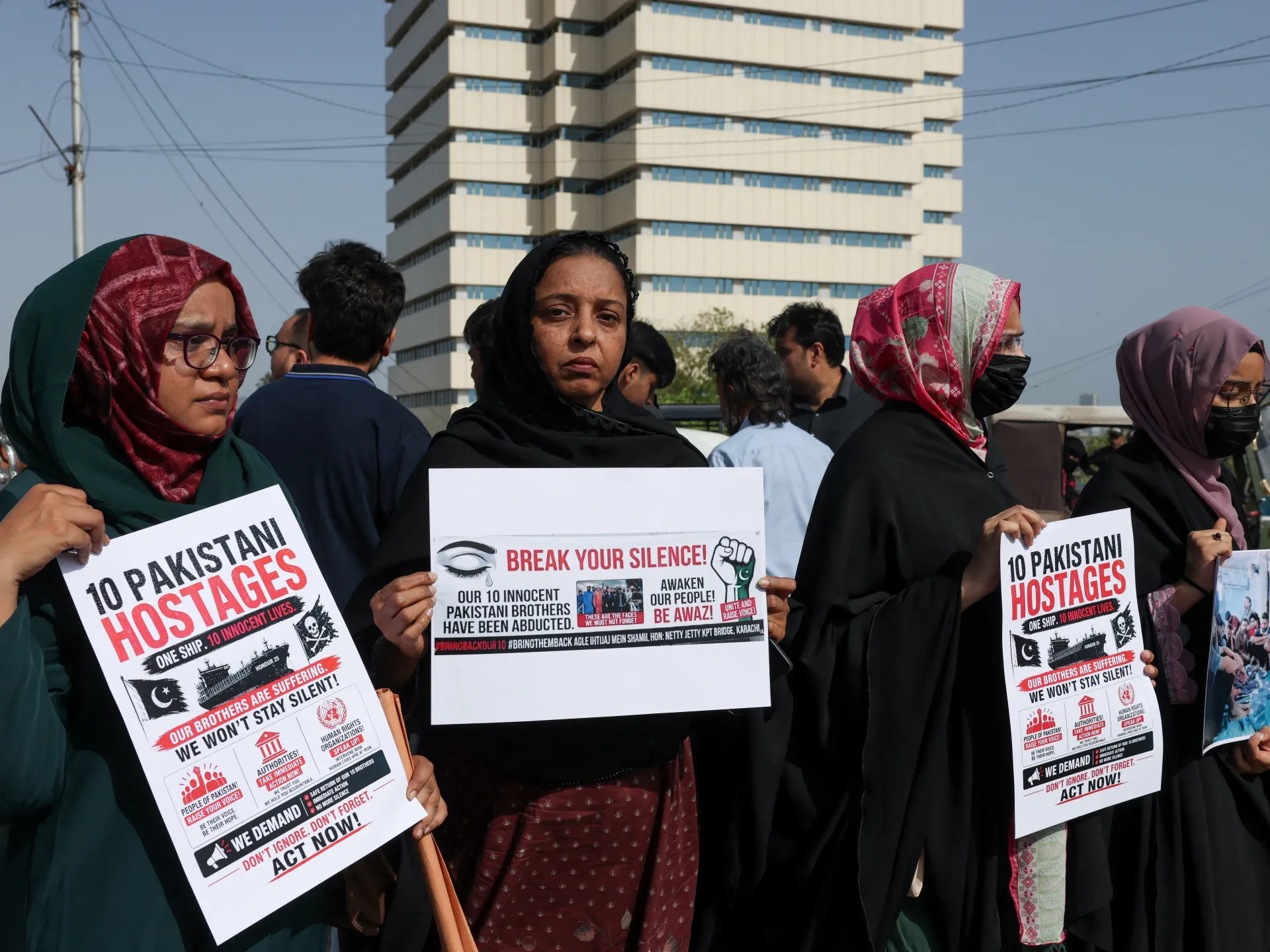
Demonstrators rallied across the Somali capital in support of families displaced by a wave of government-led home demolitions. Opposition figures, who organised the protests, say security forces shot and killed one person while trying to disperse the crowds.

Source link

Aid cuts, drought and conflict leave Somalis desperate | Drought News

Maryam watched her goats starve and her crops fail. She buried two of her children before she finally gave up hope and sought help from international aid agencies in southern Somalia.

She left her village with her remaining six children, making the long journey along the Jubba River to one of a clutch of makeshift settlements on the outskirts of Kismayo, the capital of Somalia’s Jubbaland state.

Three consecutive seasons of failed rains have doubled Somalia’s malnutrition rate. Maryam, 46, is among more than 300,000 Somalis forced to leave their homes since January alone.

Several international organisations have stopped operations in the Kismayo camp for internally displaced people (IDPs), largely due to aid cuts ordered by United States President Donald Trump last year.

“We are hungry. We need care and help,” said Maryam.

Haunted by the memory of her dead children’s swollen bellies, she says she will not return to her village, which is under the control of the al-Qaeda-linked armed group al-Shabab. Fighters there have started seizing the limited food supplies available.

Somali internally displaced children
Children play near their makeshift shelters at an IDP camp in Ceel Cad, Kismayo town [Simon Maina/AFP]

But the camp is hardly better. In March alone, five children died of malnutrition, its manager says.

Since the early 1990s, Somalia has endured near-constant civil war, armed rebellions, floods and droughts. The war-torn country ranks among the world’s most vulnerable to climate change, which scientists say is leading to more frequent and more intense episodes of extreme weather such as droughts and floods.

Africa, which contributes the least to global warming, bears the brunt.

The recent cuts in foreign aid have not helped. They have had “a huge impact on our work”, said Mohamud Mohamed Hassan, Somalia director for NGO Save the Children.

More than 200 health centres and 400 schools have closed since last year.

Farmers, whose herds and crops have been decimated, describe one of the worst droughts ever recorded in a country where a third of the population already lacked regular meals. Even if the forthcoming rainy season is normal, it will take months for affected populations to recover.

“We cannot afford to actually address all the needs of these people,” said Ali Adan Ali, a Jubbaland official managing the displaced.

At a mobile health clinic supported by Save the Children, the only one still operating for multiple camps in the area around Kismayo, a woman named Khadija tried to feed a high-calorie solution to her severely malnourished one-year-old daughter.

She came to the camp after last year’s drought killed her livestock, but here also “we have nothing to eat”, the 45-year-old said.

A newly displaced Somali woman holds her severely malnourished baby in a stabilization centre for children suffering severe accute malnutrition in Kismayo,
A displaced woman holds her malnourished baby in a stabilisation centre for children suffering severe acute malnutrition in Kismayo [Simon Maina/AFP]

A hospital in Kismayo is the only facility in the region capable of treating the most severe cases of malnutrition. But it is turning patients away due to a lack of space and staff.

Every bed is occupied by starving babies, some on ventilators with intravenous drips in their fragile arms. Cases have tripled since last year, and things are only getting worse.

The US-Israel war on Iran has increased fuel prices, affecting food and water supplies.

Those in the camp seek work in construction or cleaning jobs in Kismayo or sell firewood, but the options are limited.

Meanwhile, the United Nations Office for the Coordination of Humanitarian Affairs (OCHA) has had to steadily reduce its Somalia programme from $2.6bn in 2023 to $852m this year, especially since Washington slashed its donations. So far, only 13 percent of this year’s target has been raised.

“It’s a toxic cocktail of factors … Things are really, really desperate,” Tom Fletcher, head of OCHA, told the AFP news agency in an interview last week.

“Often we’re having to choose which lives to save and which lives not to save.”

Source link

Somalia shapes its own destiny in global security forums | Opinions

In international politics, the platforms a country sits on often matter as much as what it says. For decades, Somalia was largely the subject of global security discussions, rarely a decisive participant in them. Today, that reality is changing in ways that carry symbolic weight and practical consequences.

Somalia’s recent election to the African Union Peace and Security Council (AU PSC), alongside its membership in the United Nations Security Council (UNSC), marks a turning point in its diplomatic trajectory. For quite some time, Somalia was merely being discussed in the world’s most influential security forums. It is now shaping the agenda on the table.

This shift reflects more than a procedural achievement. It signals the maturity of Somalia’s diplomatic and security institutions, and the steady rebuilding of its international credibility after decades of conflict and state fragility.

For much of the past three decades, decisions affecting Somalia’s security were often made in rooms where Somali voices were either absent or marginal. External actors debated intervention strategies, sanctions regimes, peacekeeping mandates, and humanitarian responses, while Somalia struggled with internal instability.

This membership in the UNSC and AU PSC changes that dynamic fundamentally. These bodies are not symbolic; they make binding decisions, adopt resolutions, authorise peacekeeping operations, and shape international legal frameworks. For Somalia, this may seem something simple, but its impact is profound. Somalia is now part of the process that determines policies affecting its own security and development.

That participation strengthens state-building in several ways. It reinforces institutional capacity within Somalia’s foreign policy apparatus, promotes transparency and accountability through engagement with multilateral norms, and aligns Somalia more closely with international legal and diplomatic standards.

Somalia is transitioning from being a recipient of international decisions to becoming a contributor to them. Somalia’s role on these councils also carries representational significance beyond its own borders.

As a member of the UNSC and AU PSC, Somalia now occupies a rare diplomatic position. It simultaneously represents the interests of the African continent, the Arab and Muslim world, and the least developed countries (LDCs). The concerns of these categories of states have often been overshadowed by the priorities of more powerful nations. Somalia now stands for them.

Somalia’s own first experience in rebuilding institutions after conflict, managing complex security transitions, and balancing sovereignty with international cooperation enables it to advocate not only for itself, but also for broader principles: Inclusive peace processes, sustainable development approaches to security, and equitable participation in global decision-making.

Peace in the world, peace at home

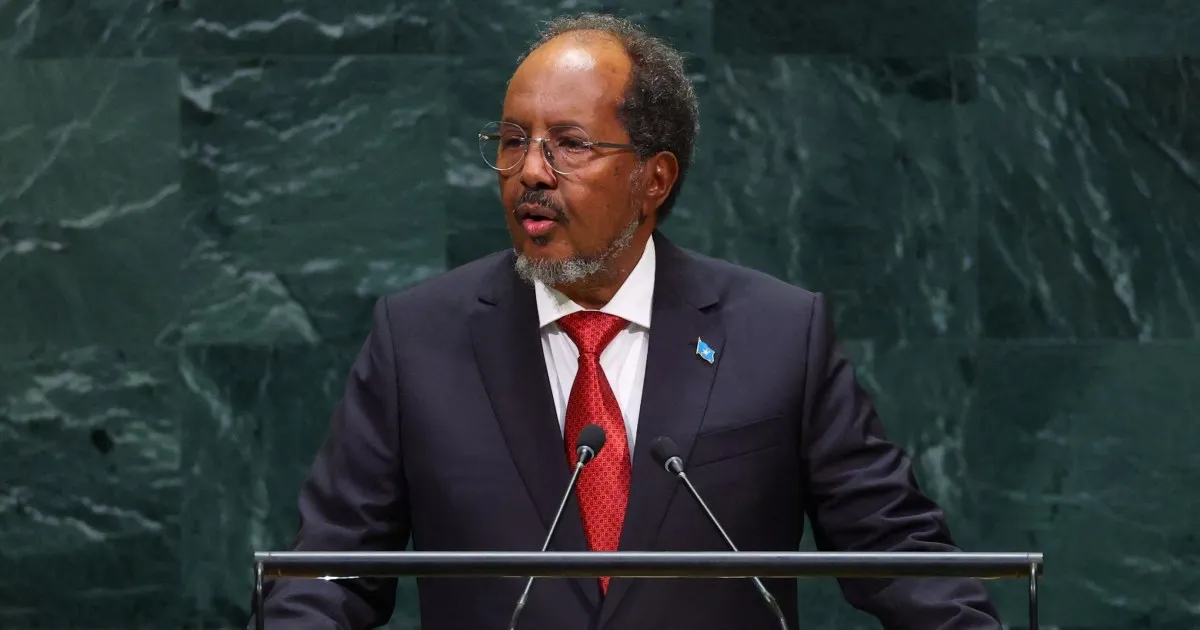
President Hassan Sheikh Mohamud’s 2022 political manifesto, “Somalia at peace with itself, and at peace with the world”, is increasingly reflected in these recent memberships. This vision is proving effective, as Somalia’s participation in global peace decision-making demonstrates a growing alignment between its external engagements and internal stabilisation efforts.

The seats at the UNSC and AU PSC will directly reinforce Somalia’s state-building process. Active involvement in shaping international peace also reflects and supports the way peace and security agendas are being handled domestically.

A defining moment in 2026

The year 2026 represents a rare convergence of opportunity. Somalia’s simultaneous presence at the AU PSC and UNSC provides a diplomatic platform unmatched in its recent history. This dual role should enable it to act as a bridge between regional and global security frameworks. It can ensure that Somalia’s security priorities are reflected in the AU decision, and forwardly, that African priorities are reflected in global resolutions. It can also translate international commitments into regional actions that qualify for alignment with local contexts.

This not only affects diplomacy and policy discussions but offers an opportunity to advocate for real change that directly affects the daily lives of Somalis. Such issues may include counterterrorism, stabilisation support, humanitarian access, development financing, climate security, and mechanisms for inclusive politics. By shaping the content and direction of relevant resolutions, Somalia can help align international commitments more closely with national priorities.

A future shaped by participation

With greater influence comes greater responsibility. Membership in these councils demands consistency and adherence to international norms. Somalia is now ready to navigate these complex diplomatic landscapes, balancing national interests with collective global security obligations. And it is now capable of maintaining credibility through constructive engagement, principled positions, and reliable partnerships.

With Somalia now seemingly committed to momentum on these fronts, its growing international stance will become self-reinforcing. Each diplomatic success will strengthen national institutions, which in turn will enhance future influence.

Somalia’s presence at the highest levels of global and regional security governance marks a significant milestone in its long journey towards recovery and stability. It reflects years of diplomatic effort, institutional rebuilding, and gradual restoration of international trust. It also signals a future in which Somalia is increasingly defined not by crisis, but by stability.

For a country that once stood on the margins of global decision-making, this transformation is both historic and hopeful. It signals a shift from isolation to engagement, from being acted upon to helping shape outcomes.

For young Somali generations who grew up hearing that Somalia could not advance, these diplomatic achievements offer a different narrative. They inspire pride, restore confidence, and help rebuild trust in the nation’s future.

That challenge lies ahead. But after a period of turmoil, Somalia is well positioned to meet it, not as a passive observer, but as an active shaper of its own destiny. This is also part of the broader Somalia policy on defence diplomacy, founded on global collaboration and mutual interdependency.

The views expressed in this article are the author’s own and do not necessarily reflect Al Jazeera’s editorial stance.

Source link

More than 6 million Somalis face hunger amid climate shocks and conflict | Climate Crisis News

On the outskirts of Somalia’s southern port city, the land has become an open graveyard for cattle. Some are left where they fell, while others are buried in shallow graves after consecutive failed rainy seasons.

For many families here, pastoralists who rely on livestock for milk, meat, and income, animals were everything, but what was once a lifeline of food and income has now become a stark symbol of loss.

The impact is not just felt in Kismayo, but across the country, with 6.5 million people forced to skip meals and go hungry every day. Drought and rising costs only pushing the country deeper into crisis.

The humanitarian director at Save the Children, Francesca Sangiorgi, says the crisis is being driven by repeated climate shocks that are compounding over time. “We’re seeing multiple rainy seasons that have failed across the country,” she tells Al Jazeera, adding that even when rain arrives, it is often too uneven and too late to restore livelihoods that have already collapsed.

What’s the scale of the crisis?

The scale of Somalia’s hunger crisis is severe and rapidly worsening.

With a third of the population facing severe food insecurity (classified as IPC Phase 3 and above), many households are struggling to get enough food to meet their basic daily requirements (PDF) — and in some cases going without food altogether, leaving them more vulnerable to malnutrition and illnesses such as diarrhoea, measles, and other infections.

Of these, more than 2 million people are in the most critical conditions short of famine (IPC Phase 4 or emergency levels), where families are facing extreme shortages and are increasingly forced into displacement in search of basic needs, moving towards already overcrowded aid camps where resources are rapidly dwindling.

Children are among the most affected. According to the UN, an estimated 1.8 million children under five in Somalia are at risk of acute malnutrition, putting their survival in immediate danger.

Sangiorgi notes that the deterioration has been unfolding rapidly, its effects already evident.

“The situation of children across the country is extremely concerning,” she explains. “We’re seeing the spread of child illnesses across the country. Dropout rates are extremely high right now, and they continue to rise because of the drought. We want to make sure that children have a chance at life—access to the health and nutrition services they need, as well as education.”

According to Doctors Without Borders, known by its French initials MSF, more than 3.3 million people have been displaced, severely straining the already limited resources and basic services in these communities.

What does the crisis look like on the ground?

Near Kismayo, one of Somalia’s largest camps for displaced people has formed, sheltering families who have nothing to eat and have travelled from across Jubbaland.

One woman describes how her herd has fallen from 200 cattle to just four, ending her very livelihood.

Barwaqo Aden, a displaced Jamame resident in Lower Juba, arrived at the camp only recently, but her eight-month-old daughter is already in the local hospital with severe malnutrition due to the lack of resources.

Others arrive after exhausting journeys, fleeing areas controlled by the armed group al-Shabab. A displaced resident, Hodhan Mohamed, walked for days and crossed the River Juba by boat before reaching a crowded settlement, unsure what she would find. Like many new arrivals, she now waits for assistance that is limited and uncertain.

Sangiorgi explains that secondary displacement – when people who have already been forced from their homes are displaced again – is becoming increasingly frequent. “As services and commodities continue to shrink across the country, the prices of essential goods keep rising as well.”

More than 3.8 million Somalis are currently displaced, making up 22 percent of the population. Many have been uprooted multiple times, moving from one settlement to another as aid resources dwindle and access to support becomes more limited.

What’s driving the crisis?

At its core, the crisis is primarily driven by climate shocks.

Somalia has had three consecutive failed rainy seasons in recent years, drying out rivers, wells, and pasturelands.

For livestock-dependent communities, the impact has been immediate: animals are dying, and with them, livelihoods are disappearing.

As local production collapses, families are forced to buy from markets even as food, fuel, and water prices continue to rise. In rural areas, especially, incomes no longer stretch far enough to meet needs.

Insecurity caused by armed conflict adds further strain, displacing communities and limiting access for aid workers in some regions.

Beyond Somalia, the global economic crisis linked to the US–Israeli war on Iran has also played a role in constricting supply chains. A UN aid chief told the Reuters news agency in March that these disruptions are compounding costs and weakening the ability to deliver assistance, as humanitarian systems come under growing strain.

MSF reported last month that transport costs have risen by up to 50 percent in parts of Somalia, making it harder for people to reach health facilities and increasing the cost of delivering care as fuel prices climb.

The organisation also said more than 200 health and nutrition facilities have closed since early 2025 due to sharp funding cuts, leaving critical gaps in already overstretched health services.

What does the aid collapse look like?

As the need for aid rises, humanitarian funding and response capacities are only shrinking.

The UN response plan for Somalia is currently funded at just 20 percent of what is required — with $1.42bn needed but only $288m received. That discrepancy has forced major cuts, reducing the number of people targeted for assistance from 6 million to just 1.3 million.

For Somalia, which relies heavily on imported food and external assistance, the consequences are immediate. Fewer supplies are reaching ports, while the cost of delivering essentials continues to rise, testing an already fragile system.

As UN humanitarian chief Tom Fletcher told Reuters in March, “These [constraints] will damage our humanitarian supply chains, reduce ‌the ⁠humanitarian supplies we can get to people who need them, but they’ll also drive up energy costs and food costs across the region, this really is a perfect storm of factors right now, and I’m seriously worried,” he stated.

The humanitarian response has been cut by 75 percent, meaning millions of Somalis are no longer receiving assistance, even as the crisis deepens on the ground.

Source link