soldiers

Israel says four soldiers killed as army pushes deeper into south Lebanon | Israel attacks Lebanon News

Hezbollah attempts to make Lebanon ground invasion ‘costly’ for Israeli army as it continues its advance.

The Israeli military has said four soldiers were killed in combat in southern Lebanon, where its forces are clashing with Hezbollah fighters after launching a ground invasion of the country.

An army statement on Tuesday named three soldiers from the same battalion who “fell during combat”. In a separate statement, it said another soldier had been killed in the same incident and two others wounded, without naming them.

Recommended Stories

list of 3 itemsend of list

Ten Israeli soldiers have been reported killed since fighting between Israel and Hezbollah flared up on March 2, following a United States-Israeli joint attack on Iran. More than 1,200 people have been killed in Israeli attacks on Lebanon, according to the Lebanese Ministry of Public Health, and more than a million displaced.

This comes a day after the United Nations Interim Force in Lebanon (UNIFIL) said two peacekeepers were killed “when an explosion of unknown origin destroyed their vehicle” near the southern Lebanese village of Bani Haiyyan. Another peacekeeper was killed by a projectile on Sunday near the southern Lebanese village of Aadchit el-Qsair.

Israeli Prime Minister Benjamin Netanyahu on Monday ordered the military to expand its invasion in southern Lebanon, pushing deeper to extend what he calls a “buffer zone” reaching the Litani River.

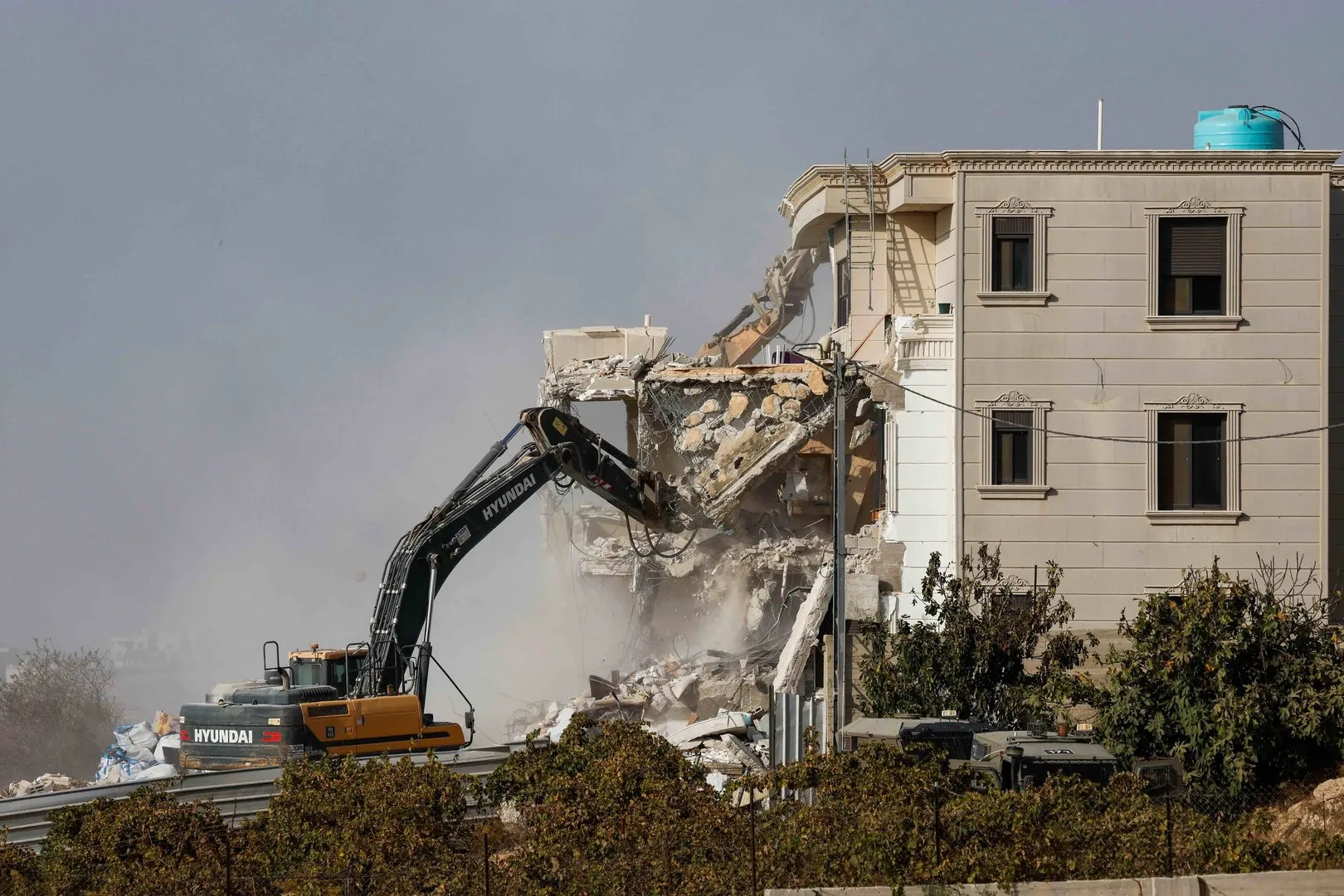
Israel’s far-right ministers have urged Netanyahu to annex southern Lebanon, as the military destroys bridges and homes to cut the area off from the rest of the country.

Al Jazeera’s Lebanon correspondent Zeina Khodr said Monday night marked a new escalation as Israel opened a new front in Lebanon’s Bekaa Valley, targeting roads that link towns known to be Hezbollah strongholds and strategic supply lines for the group.

“In the past weeks, [the Israeli army] hit bridges over the Litani, now they are trying to isolate the west Bekaa from southern Lebanon,” Khodr said, reporting from Beirut.

“Hezbollah Secretary-General Naim Qassem made it very clear they know the imbalance of power. They are not going to be able to stop this invasion, and the Israeli army will most likely reach until the Litani River, but they will not make it easy for them to consolidate control,” she continued.

“What Hezbollah is trying to do is make this a costly war for Israel.”

The escalation in Lebanon comes amid the ongoing US-Israel war on Iran, which has killed more than 1,340 people since February 28.

The Israel Hayom newspaper on Monday reported that Netanyahu told senior US officials that any future agreement between the US and Tehran would not stop Israel’s war in Lebanon.

Israel’s far-right Minister of Finance Bezalel Smotrich last week said in an Israeli radio interview that the war in Lebanon “needs to end with a different reality entirely”, which includes a “change of Israel’s borders”.

Source link

Ukraine says captured North Korean soldiers granted POW status

Yoo Yong-weon, a lawmaker of South Korea’s ruling People Power Party, speaks during an interview with Yonhap News Agency about his recent meetings with two North Korean soldiers captured by Ukraine at the National Assembly in Seoul, South Korea, 07 March 2025. The two photographs Yoo is holding were taken from his meetings with the soldiers in Kyiv on 25 February 2025. Photo by YONHAP / EPA

March 24 (Asia Today) — Ukraine’s Defense Ministry has told a South Korean civic group that two captured North Korean soldiers are recognized as prisoners of war and are being protected under the Geneva Convention on the treatment of POWs.

According to a reply disclosed Tuesday by an emergency committee campaigning for the soldiers’ transfer, the Ukrainian ministry said the men are being guaranteed contact with the outside world, access by international monitors and human rights organizations, and other protections required under international humanitarian law.

The ministry also said the principle of non-refoulement, which bars forced return to a country where a person may face harm, is being taken into account in their treatment.

The statement aligns with remarks made March 6 by South Korean Foreign Minister Cho Hyun, who said he had received assurances from his Ukrainian counterpart that the soldiers would not be repatriated to North Korea or Russia. (Yonhap News)

The civic group, however, said the two men remain in a military detention facility under the authority of Ukraine’s Defense Ministry and still hold legal POW status, leaving open the possibility that they could become subjects of negotiations between governments.

The group said the soldiers should be shifted from military custody to an internationally protected status. It called for their transfer to a civilian protection facility and urged direct involvement by the U.N. refugee agency, the U.N. human rights office and the International Committee of the Red Cross.

It also proposed that procedures begin to determine whether the two soldiers should receive refugee status or another form of international protection.

Photo made available by the Emergency Committee for the Free Repatriation of North Korean Soldiers shows a reply from Ukraine’s Defense Ministry regarding two captured North Korean soldiers. /Provided by the committee

— Reported by Asia Today; translated by UPI

© Asia Today. Unauthorized reproduction or redistribution prohibited.

Original Korean report: https://www.asiatoday.co.kr/kn/view.php?key=20260324010007333

Source link

Russia agrees to stop sending Kenyan soldiers to Ukraine

Russian Foreign Minister Sergey Lavrov (R) and Kenyan Foreign Minister Musalia Mudavadi announced on Monday that their nations have agreed that Russia will stop recruiting people from Kenya to serve in its military in its war in Ukraine, which follows a report indicating that more than 1,000 people have been duped into service on the front lines. Pool Photo by Tatyana Makeyeva/EPA

March 16 (UPI) — Kenya and Russia announced on Monday that Kenyans will no longer be recruited by the Russian military and sent to fight in Ukraine.

The move follows a Kenyan intelligence report indicating that more than 1,000 people from Kenya and other African nations in recent months have been recruited into deployment on the front lines of the war between Russia and Ukraine by “rogue” agencies participating in human trafficking.

The report, released in February, alleged that of Kenyans recruited for the war, 10 died, 28 were missing, 39 were hospitalized and others were fighting for Russia in Ukraine, The Kenyan Daily Post reported.

“We have agreed that Kenyans will no longer be enlisted for special operations through the defense ministry,” Kenyan Prime Cabinet Secretary Musalia Mudavadi said during a news conference. “They will no longer be eligible to be enlisted.”

The nations also were expected to sign a labor agreement aimed at protecting Kenyans working in Russia — specifically in drone manufacturing — which will cover people working specifically for the military or for other related industries, he said.

Mudavadi told The BBC that Kenya has shut down more than 600 agencies that were lying to Kenyans about a range of possible jobs in Russia and other countries, with many ending up in Ukraine.

Russia has not given answers to relatives at its embassy in Kenya, nor has it commented on reports that human traffickers were fooling people into being enlisted in the war with lies about well-paid jobs.

Russian Defense Minister Sergei Lavrov said during the news conference that all foreign fighters, including those from Kenya, had not been coerced or lied to and their voluntary service complied with Russian law.

“Once a contract is terminated, the individual is no longer bound and is free to make their own decisions,” Lavov said, although Kenyans who have volunteered to join the war have to find and pay for their own travel home.

Ukraine’s foreign minister, Andrii Sybiha, alleged in November that at least 1,400 people from Africa from 36 countries have been sent to Ukraine by Russia, many of whom have been captured as prisoners of war.

Iranians attend a funeral for a person killed in recent U.S.-Israel airstrikes at Behesht-e Zahra cemetery on the southern outskirts of Tehran in Iran on March 9, 2026. Photo by Hossein Esmaeili/UPI | License Photo

Source link

South African soldiers deploy in Johannesburg to tackle crime and gangs | Crime News

First troops touch down nearly a month after President Ramaphosa said organised crime threatened country’s democracy.

Soldiers have been deployed on the streets of South Africa’s biggest city nearly a month after the president announced the army would work alongside the police to tackle high levels of crime.

President Cyril Ramaphosa said in his annual State of the Nation address on February 12 that organised crime was the “most immediate threat” to South Africa’s democracy and economic development.

Recommended Stories

list of 3 itemsend of list

On Wednesday, troops touched down on the streets of Eldorado Park, a working class suburb in the country’s economic capital, Johannesburg, that has high levels of crime and gang violence.

Local media published pictures of armoured vehicles rolling into the area, and the Independent Online reported that local councillor Juwairiya Kaldine welcomed their arrival.

Soldiers were also seen in the Johannesburg suburb of Riverlea. Media reports said the soldiers were searching door-to-door.

South Africa’s national police service and the Department of Defence, which oversees the military, did not immediately provide details on the deployment. But the president said last month that the army will help the police service fight gang violence and illegal mining.

South African National Defence Force (SANDF) soldiers search a building during a patrol operation in Riverlea, near Johannesburg, on March 11, 2026.
South African soldiers search a building during a patrol operation in Riverlea, near Johannesburg [AFP]

Ramaphosa said in a notice to the speaker of parliament that 550 soldiers would be involved in an initial deployment in Gauteng province, which includes Johannesburg, to help combat crime and preserve law and order.

That deployment would last until the end of April, he said.

The government plans a wider deployment in five of its nine provinces, according to details submitted by police to parliament.

The deployment will focus on illegal mining in the Gauteng, North West and Free State provinces, and gang violence in the Western Cape and Eastern Cape provinces.

Parts of the national deployment could last more than a year, police officials said.

South Africa has high rates of violent crime. Police reported 6,351 homicides from October to December 2025, an average of nearly 70 a day in a country of about 63 million people.

However, not all residents of crime-affected communities are pleased about the plan to deploy the army.

In the Cape Flats, an impoverished area of the Western Cape with high levels of gang violence, where troops will also likely deploy, people told Al Jazeera last month that the military will not help fix the root causes of the violence or the social ills that make it easy to recruit people into gangs.

“It’s a very dangerous thing to bring the army because there’s an impatience with the fact that the police are not doing their job,” Irvin Kinnes, an associate professor with the University of Cape Town’s Centre for Criminology, told Al Jazeera at the time, calling the move “political”.

“It’s to show that the political leaders have kind of heard the public. But the call for the army hasn’t come from the community. It’s come from politicians,” he said.

Source link

Winter Paralympics 2026: Injured Russian soldiers would be allowed at future Games, says IPC president

The blanket ban imposed on Russian and Belarusian athletes in 2022 was reduced to a partial ban in 2023, allowing athletes from the two nations to compete as neutrals at the 2024 Paris Paralympics.

In September 2025, the IPC lifted that ban entirely but the four individual governing bodies in charge of the six sports contested at the Winter Paralympics decided to keep their bans in place.

In December, Russia and Belarus won an appeal against FIS – the governing body for skiing and snowboarding – at the Court of Arbitration for Sport (Cas), permitting their athletes in those sports to compete and accumulate ranking points.

As a result, 10 athletes were then awarded bipartite commission invitations to compete at the Winter Paralympics.

Bipartite commission invites are granted to individual athletes, rather than their international federation, and allow the participation of top athletes “who may not have had the opportunity to qualify through other methods due to extraordinary circumstances”, among other factors.

Ukraine’s president Volodymyr Zelensky called the decision “awful” while the country’s sports minister Matvii Bidnyi said it was “both disappointing and outrageous”.

“The general assembly lifted the suspension in September so we need to respect the democracy of our movement. The majority voted that way, so we need to implement their decision,” said Parsons.

“But I fully understand the disappointment, I understand the different opinions, and especially [those] coming from Ukraine.”

Asked what he would say to Ukrainian athletes, he said: “My message to them is that the best way to show the strength of Ukraine is on the field of play, by winning medals and by making sure their national anthem is played as many times as possible on Italian soil.”

In addition to Ukraine, teams from the Czech Republic, Estonia, Finland, Latvia, Lithuania and Poland are boycotting Friday’s opening ceremony in Verona in protest against the decision.

Officials from other nations, including the British government, will not attend for the same reason.

The Great Britain team will also not go to the Verona ceremony, but for logistical reasons – a decision that was made some time ago.

Many of the 25-strong British squad – including flagbearers Menna Fitzpatrick and Scott Meenagh – are in competitive action on Saturday morning, several hours’ drive from Verona.

Athletes from Belarus are expected to be in attendance at the opening ceremony, but at the time of BBC Sport’s interview with Parsons, no Russians were due to attend.

“Different countries, National Paralympic Committees, governments, athletes, they have been able to express their views freely, and that’s what we stand for as a democratic organisation,” said Parsons.

“We would like the focus to be more on sport rather than politics and this is what we are trying to do.”

Source link

FM Cho affirms captured N. Korean soldiers in Ukraine will not be sent back to Russia

Foreign Minister Cho Hyun attends a National Assembly session in Seoul on Friday. Cho said that Ukraine assured him that captured North Korean soldiers would not be sent to Russia. Photo by Yonhap

Foreign Minister Cho Hyun said Friday that Ukraine has assured him that two North Korean soldiers captured while fighting alongside Russia will not be repatriated to Moscow.

Cho made the remarks during a parliamentary session, responding to a lawmaker’s question regarding the captives who remain in Ukrainian custody since they were captured during combat on Russia’s side in the front-line Kursk region in January last year.

Earlier this month, Rep. Yu Yong-weon of the main opposition People Power Party said after visiting Ukraine that Russia had included the two soldiers on its list of prisoners it demanded be released in a prisoner-of-war (POW) exchange.

“I have received confirmation from my Ukrainian counterpart that the soldiers will not be repatriated (to Russia),” Cho said. “There is no need to worry about the possibility of them being sent back to North Korea or Russia.”

Asked to confirm whether the soldiers were on the POW exchange list, Cho avoided giving a straight answer, indicating that Ukraine would not share such details with Seoul.

Cho stressed that disclosing any details about the soldiers could jeopardize their safety, adding that the foreign ministry is making every effort to ensure their safety and bring them to South Korea in accordance with the Constitution.

Through media interviews, the soldiers have expressed their intention to come to South Korea rather than being sent back to the North.

Yu has called for sending a presidential envoy to Ukraine to discuss their defection, saying their repatriation to Pyongyang cannot be ruled out.

Copyright (c) Yonhap News Agency prohibits its content from being redistributed or reprinted without consent, and forbids the content from being learned and used by artificial intelligence systems.

Source link

Channel 4 Handcuffed cast in full with aristocrat and model competing for £100k

Jonathan Ross hosts Channel 4’s new social experiment Handcuffed, where 18 contestants are cuffed together as they compete to win a £100,000 prize

Handcuffed: Last Pair Standing is the brand new social experiment from Channel 4.

Hosted by Jonathan Ross, the new series sees 18 contestants cuffed together as they compete to win £100,000.

A synopsis for the new Channel 4 series reads: “Could you survive being handcuffed to a total stranger? In a brand new social experiment, Jonathan Ross is challenging 18 brave Brits to do just that, as they compete to win a £100,000 prize.

“The nine pairs will have to cope with being chained to each other 24/7, doing everything – quite literally – just inches apart. If it gets too much, they can uncuff at any time, but if they do they’ll be out of the competition. The last pair standing takes all. Jonathan’s starting the competition as he knows best, in a TV studio with a live audience.

“The competitors represent a complete cross section of British society, and have never met each other before. As the cuffs are locked in position with the duos either side of a special screen, they’ll only discover who they’ve been chained to once the divide goes back.

“In a divided Britain, Jonathan’s hoping living in such close proximity will force these opposites to talk, listen, and maybe even learn from each other. As the pairs set off for each other’s houses, to walk a mile in their partner’s shoes, we focus in on three of the couples.”

Among the participants are Somerset contestants Sir Benjamin Slade, 79, the 7th Baronet of Maunsel, and bus driver Morag, 64. They’re joined by London-based model Bambi, 29, and Suffolk’s millionaire businessman Anthony, 60, reports Somerset Live.

Here’s the complete roster for Handcuffed: Last Pair Standing.

Jo, 39, Manchester

Jo, a plus-size fashion brand owner, describes herself as “loud, mindful and crazy.”

When asked about her biggest concern, Jo admitted: “I’m nervous about the proximity. I’m on the autistic spectrum and being in close proximity to a stranger is going to be quite a challenge for me.”

Reuben, 29, Portsmouth

Reuben, a property developer, characterises himself as “confident, cocky, and disciplined.”

Discussing the toughest part of the experience, Reuben revealed: “The hardest thing about the experience was definitely the speed of walking and the chafe of the cuff after several hours, having my partner slow and drag me down was tedious.”

Sir Benjamin Slade, 79, Somerset

Benjamin, the 7th Baronet of Maunsel, reflected on his experience: “I was surprised by having some challenging and honest conversations about class,” adding: “The hardest thing was having sleep apnoea which means I don’t get any sleep and having to pee 6 times a night.”

George, 60, London

Prison Officer George describes himself as “pragmatic, empathetic, and lively” and joined the show “purely for the spirit of adventure,” which has led him to experiences ranging from topless waitering to skydiving from 15,000ft, and even volunteering as the first Officer in Belmarsh for the High Secure Unit.

Claire, 48, Hampshire

Claire, an “eccentric, persistent, bubbly,” horse trainer from Hampshire, was surprised by her own patience. She admitted: “The level of patience I’ve got. I was surprised! I didn’t think I had it in me. Also, how much of a bubble I live in- I didn’t realise how different other people’s lives are to mine.”

Bambi, 29, London

Model and content creator Bambi described herself as “loud, chill…but also not chill- I’m a bit of a contradiction!” When asked about her biggest worry, Bambi confessed: “The actual intricacies of the day to day; showering, going to the toilet- the basics. Also, as much as I’m a social butterfly and love being around people I like my own space and I do take a lot of time to myself. I think my biggest concern is I’m not going to have that time to relax and unwind and I think that’s going to really get to me.”

Nina, 42, London

Hairdresser Nina characterises herself as “moody, loud and fun,” and found the most challenging aspect of being handcuffed was being paired with someone whose beliefs were “completely opposite” to her own.

Sara, 55, Northhamptonshire

Mum-of-seven Sara describes herself as being “bubbly, annoying and kind.”

Reflecting on the most challenging aspect of her experience, Sara said: “Being involved in something so intense then the sad feeling afterwards when life returns to normal. To be honest looking back it felt like an out-of-body experience.”

Lin, 38, London

Political commentator Lin characterises herself as “Charismatic, opinionated, and a leader.”

Regarding her biggest concern, Lin said: “Going to bed, I’m a really private person, the whole going to bed and showering, I’m apprehensive about how it’s going to work.”

Frank, 27, Derbyshire

Green Party Councillor Frank explained his motivation for joining the programme: “As a politician, I spend every day trying to get someone else to agree with me, but what most elected representatives forget is that genuine understanding comes from putting yourself into the shoes of another and taking the opportunity to truly question yourself. Participating in Handcuffed was the only way for me to grow personally and professionally.”

Bob, 70, Yorkshire

Retired soldier Bob, who describes himself as “well-travelled and a musician.”

spoke about the toughest element of the programme: “Not knowing what was coming next and the lack of privacy from always having a camera nearby meant it sometimes felt quite restrictive, and that I maybe wasn’t able to get to know my partner as well as I would have liked.”

Chris, 38, London

Youth worker Chris admits he’s most apprehensive about his “everyday life,” when it comes to taking part in the show. He confessed: “I’m quite particular and I like things a certain way. When I get home, I take off all my clothes put them in the wash basket and put on my house clothes because who just sits on their bed when you’ve just been on the tube? I’ve got a lot of insecurities that I’m still trying to work through: I suffer with lupus so there’s a part of me that’s not comfortable looking at my own self let alone being around another person- it’s very exposing.”

Charlie, 44, West Sussex

Practical Homemaker Charlie describes herself as “determined, kind and strong-minded.”

On what surprised her about her journey, Charlie revealed: “I think learning about my own levels of resilience, to always be open minded and not to judge a book by its cover.”

Rob, 32, Staffordshire

Rob is an adult content creator who characterises himself as “eccentric, straightforward, kind.”

On what surprised him the most about the experience, he shared: “That two people, living two completely different lives worlds apart can become great friends. We put our judgements aside and listened to our hearts.”

Morag, 64, Somerset

School bus driver Morag identifies herself as being “enthusiastic, vegan and hippie.”

On what surprised her the most, Morag admitted: “I was surprised to find myself so emotional, particularly in the first few days.”

Angie, 44, Stourport

Salon proprietor Angie describes herself as “direct, impulsive and wild.”

Reflecting on the most challenging aspect of the experience, Angie explained: “Not having control of what I was doing, where I was going, and that what was in store for us. I became very hyper vigilant, and I went through a process of unwrapping all these things that I didn’t know about myself. I don’t like being told what to do so this was an adjustment for me to hand over control. Being away from my husband was so hard, it’s the first time we have spent that much time apart with zero contact.”

Tilly, 37, North London

Barmaid Tilly is “loud, loving and kind”. She frankly revealed her motivation for joining Handcuffed: “I wanted to win the money… and for the experience, but mainly the money.”

Anthony, 60, Suffolk

Business proprietor Anthony, who characterises himself as “generous, genuine and happy,” shared that the toughest element of the experience was having to reveal so many “deep and repressed” aspects of himself to a complete stranger.

Source link