Soldiers

Video shows Israeli soldiers shooting surrendering Palestinians in Jenin | Occupied West Bank

NewsFeed

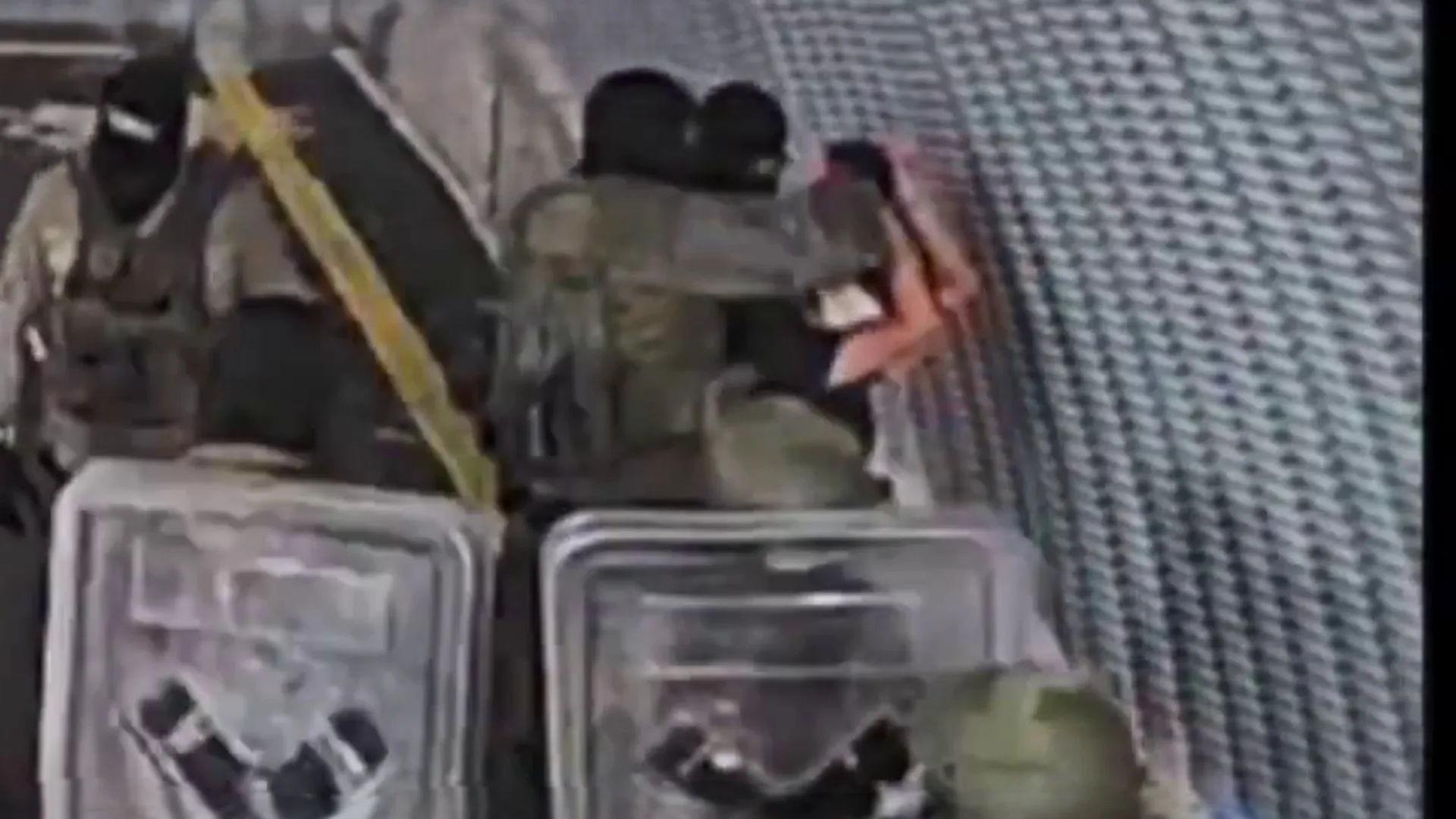
Israeli soldiers have been filmed shooting two Palestinians who were seen on their knees with their hands in the air. The men were shot dead during Israeli raids in Jenin in the occupied West Bank. The Israeli army says it’s investigating the incident. Al Jazeera’s Nour Odeh explains.

Source link

Soldiers Take To Berlin’s Subway Tunnels To Train For Defending The City From Below

The operation begins in the subway tunnel, at Jungfernheide station, in the west of Berlin. Around 30 soldiers storm down the staircase, onto the platform, then jump onto the tracks. A machine-gunner sets up his weapon on the platform and puts his sights on the stationary subway train. The platoon leader signals his soldiers to approach the train. There are screams from the rear compartment, and suddenly the tunnel is filled with smoke. The sound of automatic gunfire rings out from inside the train.

Residents of the German capital making their way home using the subway network this week may have had a surprise. For three nights, Berlin-based soldiers from the German Army were conducting drills in the tunnels, practicing how to fight saboteurs and other urban warfare contingencies. These included training for urban and house-to-house fighting, as well as the protection of critical infrastructure.

On the one hand, the maneuvers were a throwback to the Cold War days of the then-divided city, when NATO special operations forces regularly prepared to face off a Warsaw Pact invasion. On the other hand, they reflect changing priorities for the German military, which is increasingly orienting itself toward a potential future conflict with Russia.

19 November 2025, Berlin: During the Bundeswehr exercise "Operation Bollwerk Bärlin", Bundeswehr soldiers come running down a flight of stairs in Jungfernheide subway station. The training scenario takes place in the training tunnel at Jungfernheide subway station and depicts an attack on a subway train with many casualties in the middle of the night. Photo: Christophe Gateau/dpa (Photo by Christophe Gateau/picture alliance via Getty Images)
19 November 2025, Berlin: During the exercise Bollwerk Bärlin, German Army soldiers come down a flight of stairs at Jungfernheide subway station. Photo by Christophe Gateau/picture alliance via Getty Images picture alliance

For three nights this week, between the hours of 1:00 a.m. and 4:00 a.m., around 250 soldiers from the 2nd and 3rd Companies of the German Army’s Wachbataillon (Guard Battalion), trained to fight in the city. As well as at Jungfernheide subway station, maneuvers took place at a decommissioned chemical plant in Rüdersdorf, and at Ruhleben “Fighting City,” which was a NATO training area in the Cold War, but is now used by the German police.

The scenarios involved in the Bollwerk Bärlin III exercise focused on combating saboteurs in the German capital. As well as eliminating hostile elements, the soldiers practiced securing and evacuating the wounded, which would include members of the city’s population of roughly 3.9 million.

19 November 2025, Berlin: During the Bundeswehr exercise "Operation Bollwerk Bärlin", a Bundeswehr soldier lies on the ground in Jungfernheide subway station with an MG3 machine gun. The training scenario takes place in the training tunnel at Jungfernheide subway station and depicts an attack on a subway train with many casualties in the middle of the night.
Photo by Christophe Gateau/picture alliance via Getty Images

While the Guard Battalion is best known for its ceremonial duties, including providing an honor guard for the visits of foreign dignitaries, it’s part of the German Armed Forces’ Joint Service Support Command and has an infantry combat role. For this mission, the soldiers swap out their 1930s-era Karabiner 98k bolt-action rifles for Heckler & Koch G36 assault rifles.

Members of the Guard Battalion fulfill their more familiar duty. Bundeswehr/Steve Eibe

“We are training here because Berlin is our area of operation,” Lt. Col. Maik Teichgräber, commander of the Guard Battalion, told Die Welt newspaper. “In the event of tension or conflict, we protect the facilities of the federal government. And this is where they are located.”

“Ultimately, we have to think from the worst-case scenario,” Teichgräber continued. “It’s about being ready for whatever could happen in the worst-case scenario. Nothing is simulated down here. The terrain is as it is.”

19 November 2025, Berlin: During the Bundeswehr exercise "Operation Bollwerk Bärlin", Bundeswehr soldiers representing injured soldiers are placed on a trolley in a subway tunnel at Jungfernheide subway station. The training scenario takes place in the training tunnel at Jungfernheide subway station and depicts an attack on a subway train with many casualties in the middle of the night. Photo: Christophe Gateau/dpa (Photo by Christophe Gateau/picture alliance via Getty Images)
German Army soldiers representing injured soldiers are placed on a trolley in a subway tunnel at Jungfernheide subway station. Photo by Christophe Gateau/picture alliance via Getty Images picture alliance

By closing down part of the subway for the exercise, the Guard Battalion was able to practice in an entirely realistic environment, with confined spaces, poor visibility, and changing light.

In the scenario outlined at the start of this story, the battalion’s rapid response unit was called in once it was clear that enemy forces were on the subway train. The unit stormed the train, the carriages were secured, the enemy neutralized, and casualties among the friendly forces were evacuated. Throughout, the station was protected by additional forces positioned outside, including snipers.

Members of the Guard Battalion train for house-to-house combat during an urban warfare exercise. Bundeswehr/Anne Weinrich

Preparing to fight in the confines of subway stations and tunnels is a new development for the German Guard Battalion, but other nations are increasingly conducting similar maneuvers.

Earlier this year, TWZ reported on how Taiwanese forces use the Taipei subway to maneuver around the city of Taipei as part of a major annual exercise, named Han Kuang. In that particular case, the Taipei Metro could provide an inherently hardened means of moving troops and supplies around in the event of an invasion from the mainland, wherein key facilities above ground would be heavily targeted. Taiwan’s military already regularly trains for urban warfare, which would be a central feature of any future conflict with the People’s Republic of China, especially in Taipei.

Taiwanese personnel get off a subway car in Taipei carrying a Stinger missile during this year’s Han Kuang exercise. Military News Agency/Taiwan Ministry of National Defense capture via Focus Taiwan

Like in Germany, Taiwan’s military is putting a new emphasis on whole-of-society defense readiness, rather than just that of the armed forces.

Elsewhere, too, the challenges of fighting underground are becoming a more relevant topic.

The U.S. military has put a premium on this kind of warfare, especially for its special operations forces, not only due to the kinds of fortified structures that potential enemies have built, but also the fact that future wars will most likely be fought in megacities.

At the same time, the advent of large numbers of drones on the battlefield, and especially the introduction of autonomy, are further factors that will likely push conventional forces to move underground, if possible, on future battlefields.

During the Cold War, the NATO forces in West Berlin — American, British, and French — regularly trained in urban warfare, to be ready to try and slow down any Warsaw Pact move against the city, isolated 200 miles deep in East German territory. During this time, there was no West German military presence permitted in the city. Given the difficulty of reinforcing West Berlin and the overwhelming numbers of Warsaw Pact forces surrounding it, holding the city for any length of time was never a realistic proposition.

Instead, NATO would have relied primarily on special forces units, like the U.S. Army’s secretive Detachment “A,” the existence of which wasn’t formally disclosed until 2014. Trained in unconventional warfare, clandestine operations, sabotage, and more, it would have sent small teams across the city and deeper into Warsaw Pact-held territory to cause havoc should hostilities break out. It ceased operations in 1984.

Starting with the Battle of Berlin in 1945, during which the Soviets took the German capital from the Nazis, including via house-to-house fighting, the city was characterized by its military presence and strategic status. Flashpoints during the Cold War included the Berlin Airlift, when Stalin attempted to force the Western allies to give up their portions of the city, and the 1961 Berlin Crisis, when Soviet and U.S. tanks stood off at Checkpoint Charlie, leading to the partition of the city and the construction of the Berlin Wall.

On October 27, 1961, combat-ready American and Soviet tanks faced off in Berlin at Checkpoint Charlie. Tensions between the United States and the Soviet Union over access to the outpost city of Berlin and its Soviet-controlled eastern sector had increased to the point of direct military confrontation. U.S. Army

It’s worth noting, too, that during the Cold War, certain stations within the West Berlin subway network were constructed specifically with civil defense in mind. The stations at Pankstraße and Siemensdamm (on the same U7 line as Jungfernheide) were prepared as so-called Multi-Purpose Facilities, with blast doors, a filtered ventilation system, and emergency supplies. In case of nuclear attack, each could serve as a fallout shelter for more than 3,000 people over a two-week period. Today, the Pankstraße facility is protected as a historic monument, but Germany, overall, is increasingly looking at reactivating Cold War-era civil defense infrastructure.

This picture shows a corridor in the Pankstrasse nuclear fallout shelter in Berlin on May 10, 2022. - Built in 1977 during the Cold War, this multi-purpose facility was intended to protect the citizens of West Berlin in case of a nuclear conflict. The bunker serves not only as an U-Bahn stop for commuters but also, in an emergency, could have sheltered 3,339 people for up to two weeks. (Photo by John MACDOUGALL / AFP) (Photo by JOHN MACDOUGALL/AFP via Getty Images)
A corridor in the Pankstraße nuclear fallout shelter in Berlin on May 10, 2022. Built in 1977 during the Cold War, it was intended to protect the citizens of West Berlin in case of a nuclear conflict. Photo by JOHN MACDOUGALL/AFP via Getty Images JOHN MACDOUGALL

By 1994, however, the Cold War was over, and the last military occupying forces had left the city.

The fact that the German military is once again training to fight in the city is a measure of how much the security situation has changed.

By 2029, Germany is expected to spend €153 billion (around $176 billion) a year on defense, equivalent to around 3.5 percent of GDP. This amounts to the biggest military expansion since reunification, putting it ahead of France in terms of defense spending.

MUNICH, GERMANY - NOVEMBER 19: German Bundeswehr soldiers inspect a Leopard 2A8 main battle tank at the roll-out of the first Leopard 2A8 NOR for the Norwegian Army at a ceremony at the KNDS factory on November 19, 2025 in Munich, Germany. KNDS is supplying Norway with 54 Leopard 2A8 NOR tanks and the Bundeswehr, the German armed forces, with 123 Leopard 2A8 tanks. The Bundeswehr is alo aquiring a new batch of PzH 2000 armored howitzers to replace the ones Germany donated to Ukraine. (Photo by Alexandra Beier/Getty Images)
The first of 123 Leopard 2A8 tanks for the German Army, unveiled to the public in Munich this week. These are the first new-build main battle tanks for the German military in around 30 years. Photo by Alexandra Beier/Getty Images Alexandra BEIER

Speaking at a Berlin security conference earlier this week, U.S. Ambassador to NATO Matthew Whitaker said it was America’s “aspirational goal” that Germany take over command of NATO forces in Europe, given the country’s defense spending plans. That would be an unprecedented move, since the role of Supreme Allied Commander Europe (SACEUR) has always been held by a U.S. four-star general.

By most measures, Germany is probably far from being ready to assume command of the alliance, but, in the meantime, it is starting to prepare its military for new kinds of contingencies.

“What is happening 900 kilometers [560 miles] east of us is reality,” said Teichgräber, speaking at the Bollwerk Bärlin III exercise, and reflecting on Russia’s full-scale invasion of Ukraine. “No one can say whether this will eventually affect Germany. But we must be prepared.”

Contact the author: [email protected]

Thomas is a defense writer and editor with over 20 years of experience covering military aerospace topics and conflicts. He’s written a number of books, edited many more, and has contributed to many of the world’s leading aviation publications. Before joining The War Zone in 2020, he was the editor of AirForces Monthly.


Source link

Turkiye confirms all 20 soldiers died in its army plane crash in Georgia | Aviation News

A Turkish accident investigation has begun its work at the crash site in coordination with Georgian authorities.

All 20 personnel on board a Turkish C-130 military cargo aircraft that crashed in Georgia close to its border with Azerbaijan have died, the Turkish Defence Ministry says, as investigators examine the cause of the accident at the site.

The confirmation came on Wednesday, a day after the plane crashed after taking off from the nearby Azerbaijani city of Ganja.

Recommended Stories

list of 4 itemsend of list

“Our heroic comrades-in-arms were martyred,” Defence Minister Yasar Guler said in a social media post, alongside photographs of the deceased in their uniforms.

The ministry said a Turkish accident investigation, in coordination with Georgian authorities, had begun inspecting the wreckage at the crash site in the Sighnaghi municipality of Georgia’s Kakheti district early on Wednesday.

Debris is seen at a crash site of a Turkish military cargo plane in Georgia's Sighnaghi municipality, close to the Azerbaijani border
Debris at the site of a Turkish military cargo plane crash in Georgia’s Sighnaghi municipality [Zurab Tsertsvadze/AP Photo]

The crash, Turkiye’s deadliest military incident since 2020, happened about 5km (3.1 miles) from the Georgian-Azerbaijani border.

Georgia’s Sakaeronavigatsia air traffic control service said the aircraft disappeared from radar soon after entering the country’s airspace, sending no distress signal prior to the crash.

Dramatic footage published by Azerbaijani media appeared to show the aircraft sending a large cloud of black smoke into the sky after it crashed, leaving debris strewn across the ground.

Turkish President Recep Tayyip Erdogan said he was “deeply saddened” by the crash and expressed his condolences.

The leaders of Azerbaijan and Georgia, along with NATO Secretary-General Mark Rutte, have conveyed condolences over the crash, while the United States ambassador to Turkiye, Tom Barrack, also expressed his country’s solidarity.

US firm Lockheed Martin, the maker of the C-130 Hercules, also expressed its condolences and said it was committed to assisting the investigation in any way required.

The C-130 is a four-engine, turboprop transport aircraft that is widely used by militaries around the world to carry personnel, cargo and other equipment.

Source link

Thailand suspends truce with Cambodia after 4 soldiers hurt by landmine

Nov. 11 (UPI) — Thailand on Tuesday suspended the U.S. President Donald Trump-brokered truce with Cambodia after four soldiers patrolling near their shared border were wounded by landmines.

“Agreement suspended,” the Royal Thai Army said in a social media statement. “Cambodia has clearly shown hostility.”

Thailand and Cambodia signed the fragile agreement with Trump looking on, on Oct. 26 in Malaysia, bringing a halt to renewed fighting, which began in July, in their long-held border dispute.

The Royal Thai Army said four soldiers were injured in the Huai Ta Maria area, about a half mile inside Thailand from the Cambodia border.

The wounded soldiers were identified as Sgt. Maj. Thoedsak Samaphong, whose right foot was severed at the ankle, Pvt. Watchira Phanthana, who suffered a chest injury from the blast impact, Pvt. Apirak Srichomchai, whose leg was injured by shrapnel, and Pvt. Anucha Sujaree, who suffered eye irritation caused by chemicals from the detonation.

All four are receiving treatment at a local hospital.

The soldiers were injured while conducting a routine patrol along a familiar route used for patrols.

The Royal Thai Army said Thai forces discovered a section of barbed wire barrier along the border that had been disturbed on Sunday. The next day, the patrol team dispatched to inspect the disturbed area triggered a landmine at around 8:30 a.m. local time.

Three additional landmines were later found, it said.

“From the evidence, it is concluded that the barbed wire was illegally removed and new mines were planted inside Thai territory, targeting our patrols,” Maj. Gen. Winthai Suvaree said in a statement.

After the Thai military announced soldiers had been injured but before the agreement was suspended, the Thai Ministry of Defense put a planned prisoners of war exchange with Cambodia on hold.

Cambodia has denied the allegations that its troops had planted new landmines, stating that most minefields from Cambodia’s civil wars of the 1970s and 1980s near their border “have not yet been cleared due to difficult terrain and the undemarcated status of the border areas.”

“The Royal Government of Cambodia wishes to affirm that Cambodia remains committed to implementing the Joint Declaration, which was signed amid much applause from the international community,” Cambodia’s Ministry of Foreign Affairs and International Cooperation said in a statement.

Thailand’s Prime Minister’s Office confirmed the suspension of the Joint Declaration in a statement that said the decision was made during a meeting of the National Security Council.

Included in the suspension was the repatriation of 18 Cambodian prisoners of war.

The ministry said it is preparing to issue a formal protest, while Prime Minister Anutin Charnvirakul has instructed all security agencies to protect the lives of citizens and defend the country.

Source link