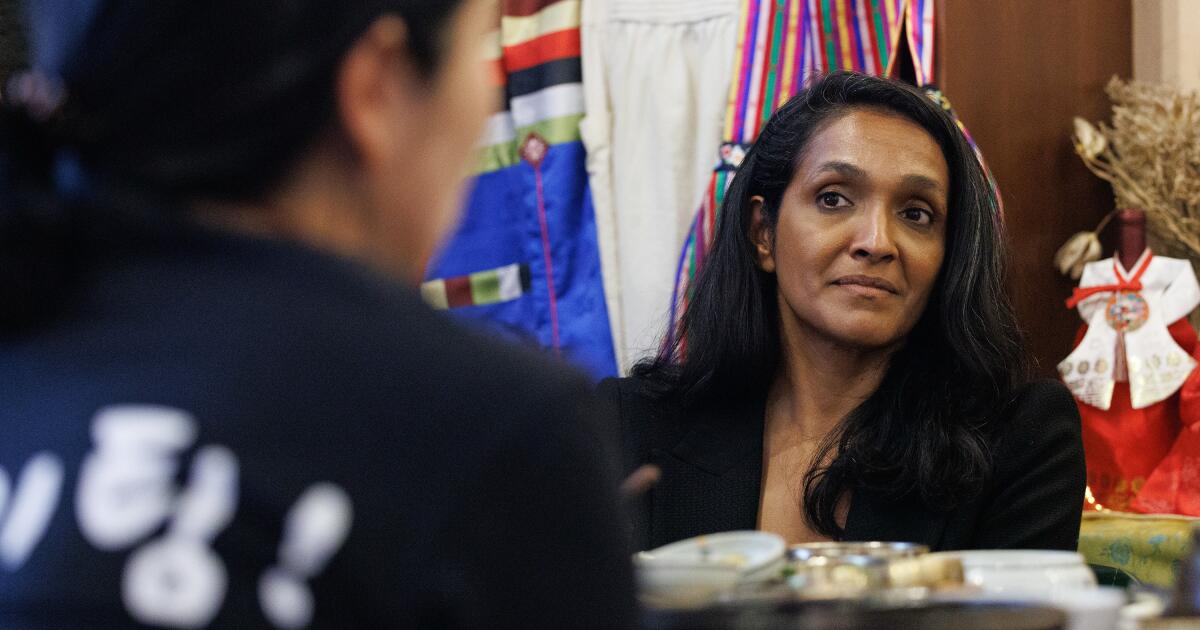
Democratic socialists are looking to extend their power in Los Angeles City Hall this fall with their biggest prizes yet: mayor and city attorney.
Mayoral candidate Nithya Raman and city attorney hopeful Marissa Roy, both members of the Los Angeles chapter of the Democratic Socialists of America, are heading into the Nov. 3 general election with strong showings in the June 2 primary as tailwinds.
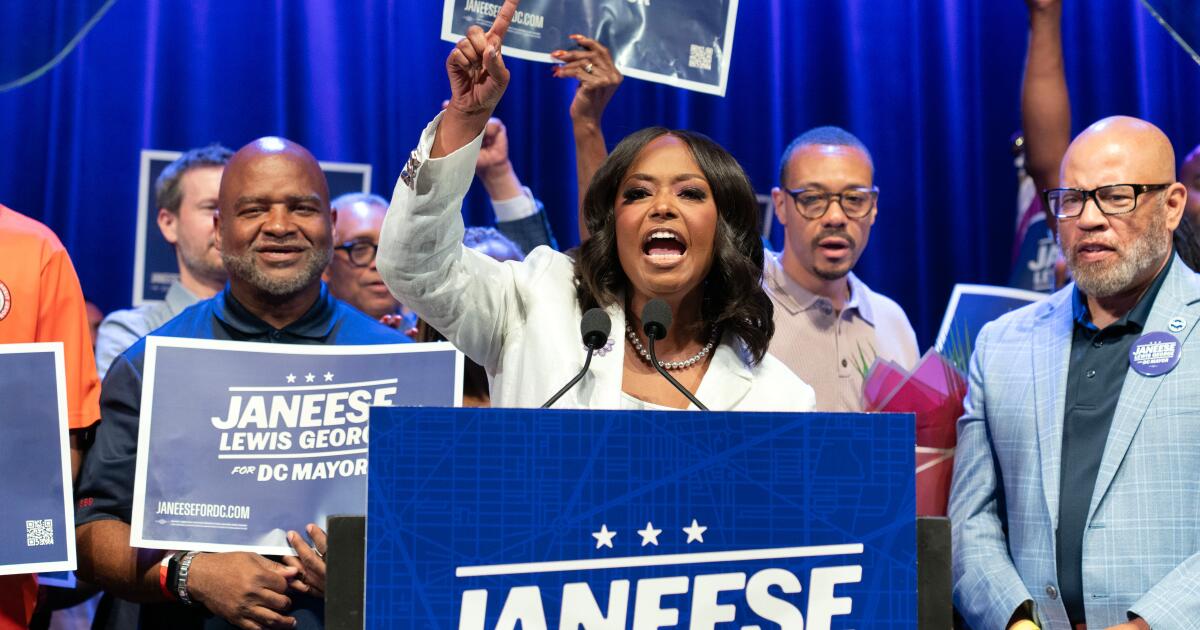
If she prevails in November, Raman would join the ranks of democratic socialists leading big U.S. cities, including New York’s Zohran Mamdani and Seattle’s Katie Wilson. Washington, D.C., looks to be next: Janeese Lewis George won the Democratic primary for mayor there this month, all but ensuring her a general election win in that deep-blue city.
In Los Angeles, a democratic socialist mayor and city attorney could mean added clout because of an ideological lockstep between the two offices, said Fernando Guerra, a political science professor at Loyola Marymount University. In such a scenario, he said, the city attorney’s office is less likely to be a check against the mayor’s authority to set policy on issues such as land use and public safety.
“It’s incredibly substantive that the city attorney will interpret much of the policy that the mayor may push to be the right policy, and not challenge it,” Guerra said.
The election of Raman and Roy would also underscore the leftward tilt of Los Angeles, which has four City Council members, including Raman, who are DSA members — two of whom were reelected in the primary. City Controller Kenneth Mejia, who was recommended (although not formally endorsed) by DSA, was also reelected.
The DSA champions ideas sharply to the left of more establishment Democrats, such as incumbent L.A. Mayor Karen Bass. The L.A. DSA chapter, for example, says its objectives include abolishing prisons and defunding the police.
DSA-L.A. co-chair Sean Wakasa said his organization is thriving in L.A. and across the country because it has destigmatized the concept of socialism.
“Democratic socialism ultimately, at the end of the day, is about making the politics that working-class Americans can see themselves in,” Wakasa said.
In Los Angeles, Wakasa said, a DSA mayor would be expected to build more public transit, strengthen protections for renters, fight for workers’ rights, raise the minimum wage and defend local immigrants from the federal government.
The city attorney, he said, would be expected to defend working-class Angelenos by enforcing renter protections, resolving wage-theft issues and enforcing sanctuary city policies.
Business groups and public safety advocates have voiced concerns over the prospects of DSA members calling the shots at City Hall.
“They would run roughshod over the city,” said Stuart Waldman, president of the Valley Industry and Commerce Assn. He said Raman and Roy “don’t just drink the DSA Kool-Aid, they live it.”
Waldman said he would expect Los Angeles under democratic socialist leadership to adopt overzealous tenant protection policies that would discourage new rental development. He said they would also seek to weaken the police, leading to a “free-for-all for crime.”
“They would run business out,” Waldman said.
Roy, who has promised to turn the city attorney’s office into “the largest public interest law firm in the city,” targeting wage theft, tenant harassment and other issues, disputed Waldman’s assertion.
“Allowing corporate bad actors to violate our laws doesn’t make L.A. safer or more affordable — enforcing protections for renters, workers, and consumers does,” Roy said in a statement.
Raman said in a statement that she shares “DSA’s commitment to fighting for working people and those who have been left behind by a political system that too often serves powerful interests instead of everyday Angelenos.”
But she also said “there is no liberal or conservative way to fill a pothole.”
“I’ve always believed the most progressive thing you can do is actually make government deliver,” Raman said. “Every time City Hall fails to do that— potholes that don’t get fixed, streetlights that stay dark, 911 calls that go unanswered — it erodes people’s faith that government can solve problems at all.”
Rick Cole, a former deputy mayor of L.A., said the DSA label for both candidates doesn’t mean they’ll adhere to the most dramatized versions of what DSA stands for. Neither candidate is an ideologue, he said.
Raman’s membership in DSA “is a signifier she’s going to be more skeptical of current policing,” said Cole, a Pasadena City Council member. “She’s going to be more focused on affordable housing. She’s going to be more focused on a humane approach to getting people off the streets.”
A poll by the UC Berkeley Institute of Governmental Studies that was co-sponsored by The Times showed that in a head-to-head runoff, Raman was supported by 32% of the registered voters polled, compared with 28% for Bass.
Bass finished first in the primary, ahead of Raman, with former reality TV personality Spencer Pratt finishing in third place.
With Pratt now out, the race is on for both campaigns to appeal to his voters, who are generally considered more conservative. Even so, the Bass campaign said it doesn’t plan to focus on Raman’s DSA affiliation.
“What’s important isn’t labels — it’s what her [Raman’s] record shows, and that’s voting over and over and over to allow encampments near schools and to shrink our police force. It goes against what L.A. needs and what most of L.A. believes,” Bass campaign spokesperson Alex Stack said in a statement.
Raman, who was twice elected to the City Council with DSA support, has voted against additional police hiring and spending and creating new anti-encampment zones around the city.
One irony is that the three other members of the DSA on the City Council — Eunisses Hernandez, Ysabel Jurado and Hugo Soto-Martínez — have all endorsed Bass, citing the mayor’s fierce resistance to the Trump administration’s immigration raids last year, among other factors.
In the primary, DSA’s L.A. chapter recommended Raman but didn’t endorse her, with the distinction being that an endorsement comes with active canvassing and support from DSA members. DSA-LA co-chair Leslie Chang said it wasn’t yet clear whether her group would endorse Raman in the runoff.
A DSA endorsement for Raman now might be a mixed blessing, given that Pratt’s support came from more conservative parts of the city, said Christian Grose, a political science professor at USC.
“Karen Bass is not popular with Pratt voters, and the DSA is not popular with Pratt voters, but that’s who will decide the mayor’s election,” he said.
Roy, a deputy state attorney general, finished first in the city attorney primary by a wide margin and will compete against John McKinney, a deputy district attorney, in the runoff.
McKinney said electing Roy to the city attorney’s office would be like “going back in time” to when George Gascón was the top prosecutor in Los Angeles County, which police and prosecutors said was a disaster for public safety.
In the recent City Council primaries, DSA-endorsed incumbents Hernandez and Soto-Martinez both won reelection easily, while DSA-endorsed Faizah Malik failed to push incumbent Traci Park into a runoff in her Westside district.
In the Council District 9 race, DSA-endorsed community organizer Estuardo Mazariegos will be in a runoff with Jose Ugarte, a former aide to termed-out incumbent Curren Price.
DSA leaders are pleased overall with how their candidates have performed.
“DSA has really claimed a foothold for ourselves in L.A. County politics,” Chang said.