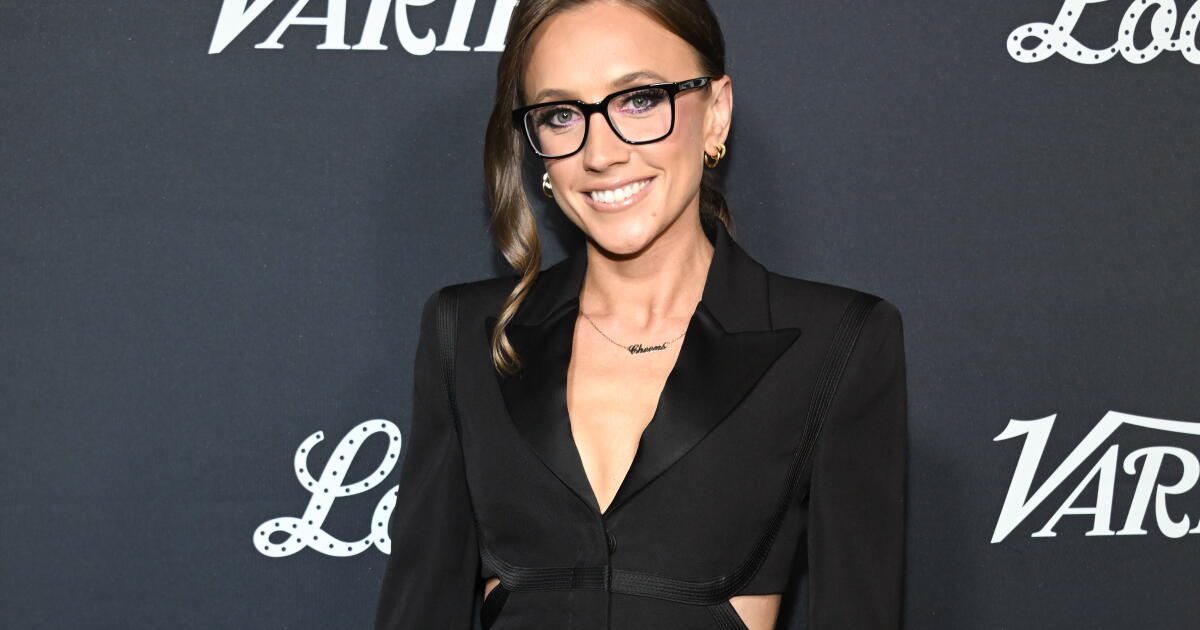
Two of our esteemed gubernatorial candidates, the cowboy and the dilettante, apparently could not find ties for the first debate Wednesday night, showing up with dress shirts casually unbuttoned.
Mr. Middleground sported a scruffy sorta-beard, apparently unable to pay for a razor in the midst of California’s affordability crisis. It’s a trademark look that always makes me think if this doesn’t work out, he’ll opt to live on a boat in some not-too-expensive slip by the Bay.
The billionaire wore Nikes instead of dress shoes, a sartorial nod perhaps to his bid to be the outsider-fighter. Or maybe his feet just hurt.
The last two contenders were remarkably unremarkable.
Why start with fashion? Honestly, it might be the most interesting, and telling, bit of insight that came from this first (of three) chances for our next governor to let us know who they are and what they’re made of. If the debate showed us anything, it’s that none of these candidates are hiding follow-me charisma or an excitement-inducing political vision for our collective future.
Yes, there were a few decent jabs here and there about Tom Steyer’s money, Katie Porter’s temper, Matt Mahan’s tech ties and Chad Bianco’s far-right world view. But even those were predictable.
Still, in between the yawns, there were a couple of answers worth noting, ones that might actually give us insight into how the Democratic candidates differ (Despite all the hype, it seems increasingly unlikely that two Republicans will come out of the primary, and even more unlikely that in a Democratic vs. Republican race, the Democrat would lose in blue California.)
I’ll start with a surprising place where I agreed with Steve Hilton, the Republican endorsed by President Trump.
The candidates were asked if they would support a ban on social media for kids under age 16. This is a quickly accelerating idea not beloved by tech companies. Australia and Indonesia already have bans in place. Other countries, including France and Portugal, have them in the works. Florida banned children under 14 from opening social media accounts on their own last year.
And a Los Angeles jury last month dealt a blow to Meta and YouTube when it found the platforms had damaged the mental health of a young woman with their addictive features.
Hilton took the ban question a step further, saying it “misses the point.” He has long argued that it isn’t just social media that is the problem, but having kids staring at a digital device for hours a day instead of interacting in the real world. It was one of the most genuine answers of the night.
“We’ve got to get to the heart of the problem, and that’s the devices and the screens,” he said. “I think that every parent in their heart knows that it’s wrong.”
While Steyer and Xavier Becerra, the former California attorney general, both said they would support such a ban, the remaining three candidates hedged or said they would not. Porter said no to a ban under age 16, but said she “might consider a different ban,” without being specific.
Mahan, who is backed by significant tech money, and Bianco both said they believed requiring parental consent was the way to go (though Mahan said he would ban devices in schools).
As Becerra pointed out, “kids have died as a result of their use of social media,” so it’s a place where policy matters. And if a candidate doesn’t see government’s role in controlling the dangers of social media, what will happen with artificial intelligence?
The candidates also had differences in how they would handle homelessness and the related crisis of housing affordability, though the devil was often buried in the details.
At least for Democrats. For Bianco, the difference was stark.
“We are not dealing with homeless. So stop calling it homeless,” he snapped at the moderators. “It has nothing to do with homes. This is drug- and alcohol-induced psychosis, mental illness.”
Of course, this is wrong. Last year, the UC San Francisco Benioff Homelessness and Housing Initiative released the results of the state’s most comprehensive survey of homeless people. It found that for most people living on our streets, “the cost of housing had simply become unsustainable.” It also found an increasing percentage of those folks were older — almost half were over the age of 50 — and had become homeless after a hardship such as an illness or a job loss.
“It’s also families who are fleeing intimate partner and domestic violence,” Porter said. “It’s people who are double and tripled up. It’s people who are living in their cars on our college campuses. Homelessness comes in a lot of different forms.”
Most of the Democratic candidates seemed to understand this and embraced the increasingly popular idea of putting more money into helping people stay housed after a hardship, instead of trying to get them housed after they lose their place.
“How can I help you keep your home?” Becerra said. “Because it costs me so much more money to pick you off the streets, provide you with the assistance in the shelter, than it does to keep you in the home.”
But the issue of homelessness is also where daylight emerged between the candidates. Steyer said he and his wife had helped finance low-barrier homes, not just shelter spaces, where people do not need to be addiction-free and where they can bring pets — two issues that are common hindrances for moving folks off sidewalks voluntarily.
Mahan, the mayor of San José, who often touts his city’s success at moving people indoors, agreed that emergency and interim housing was critical, but also voiced support for forcing folks to accept help. Last year, San José passed an ordinance he backed that some say criminalizes homelessness — a person can be cited twice for refusing shelter, and a third refusal within 18 months can lead to an arrest.
“When shelter was available, we required that people come indoors,” Mahan said, adding, “We have to be able to mandate treatment.”
It’s a controversial position, but also one that is increasingly popular. Gov. Gavin Newsom has backed mandated treatment, in a lighter form, with his CARE Court (which is technically voluntarily). And the movement to require people to accept a shelter space or face arrest is growing on the right and even the Democratic-middle.
But there is a fine and dangerous line with mandated treatment and shelter requirements that is often pushed further and further to the side in favor of the clean, safe streets argument. Whenever we start locking folks up — whether it’s in mental wards or immigration detention centers or jails — we should be careful that expediency isn’t trumping ethics.
Of course, the debate would not be complete without the Democratic candidates’ position on our president, speaking of ethics.
Steyer was gleeful that Trump has come after him on social media, a point of pride that he is a relevant figure in the fight against MAGA. He also said he would abolish Immigration and Customs Enforcement if he could, which he can’t.
Becerra highlighted his many lawsuits as California’s attorney general during Trump’s first term, and pledged to keep fighting. Porter leaned into her time in Congress and her efforts to help Democrats in other races win.
Mahan took a different route, pledging to fight when necessary, but adding, “We need a partnership, and we need to find common ground with this administration on certain issues.”
Newsom learned the hard way that common ground is what Trump says it is, and shifts without warning or reason.
So what’s the takeaway from all this?
Boring dad; feisty mom; rich do-gooder; striving newcomer; MAGA one; MAGA two.
None of them hit it out of the park, but no one struck out. Maybe next time.
Commentary: 90 minutes, 6 gubernatorial candidates, zero big moments — but some differences that matter
Two of our esteemed gubernatorial candidates, the cowboy and the dilettante, apparently could not find ties for the first debate Wednesday night, showing up with dress shirts casually unbuttoned.
Mr. Middleground sported a scruffy sorta-beard, apparently unable to pay for a razor in the midst of California’s affordability crisis. It’s a trademark look that always makes me think if this doesn’t work out, he’ll opt to live on a boat in some not-too-expensive slip by the Bay.
The billionaire wore Nikes instead of dress shoes, a sartorial nod perhaps to his bid to be the outsider-fighter. Or maybe his feet just hurt.
The last two contenders were remarkably unremarkable.
Why start with fashion? Honestly, it might be the most interesting, and telling, bit of insight that came from this first (of three) chances for our next governor to let us know who they are and what they’re made of. If the debate showed us anything, it’s that none of these candidates are hiding follow-me charisma or an excitement-inducing political vision for our collective future.
Yes, there were a few decent jabs here and there about Tom Steyer’s money, Katie Porter’s temper, Matt Mahan’s tech ties and Chad Bianco’s far-right world view. But even those were predictable.
Still, in between the yawns, there were a couple of answers worth noting, ones that might actually give us insight into how the Democratic candidates differ (Despite all the hype, it seems increasingly unlikely that two Republicans will come out of the primary, and even more unlikely that in a Democratic vs. Republican race, the Democrat would lose in blue California.)
I’ll start with a surprising place where I agreed with Steve Hilton, the Republican endorsed by President Trump.
The candidates were asked if they would support a ban on social media for kids under age 16. This is a quickly accelerating idea not beloved by tech companies. Australia and Indonesia already have bans in place. Other countries, including France and Portugal, have them in the works. Florida banned children under 14 from opening social media accounts on their own last year.
And a Los Angeles jury last month dealt a blow to Meta and YouTube when it found the platforms had damaged the mental health of a young woman with their addictive features.
Hilton took the ban question a step further, saying it “misses the point.” He has long argued that it isn’t just social media that is the problem, but having kids staring at a digital device for hours a day instead of interacting in the real world. It was one of the most genuine answers of the night.
“We’ve got to get to the heart of the problem, and that’s the devices and the screens,” he said. “I think that every parent in their heart knows that it’s wrong.”
While Steyer and Xavier Becerra, the former California attorney general, both said they would support such a ban, the remaining three candidates hedged or said they would not. Porter said no to a ban under age 16, but said she “might consider a different ban,” without being specific.
Mahan, who is backed by significant tech money, and Bianco both said they believed requiring parental consent was the way to go (though Mahan said he would ban devices in schools).
As Becerra pointed out, “kids have died as a result of their use of social media,” so it’s a place where policy matters. And if a candidate doesn’t see government’s role in controlling the dangers of social media, what will happen with artificial intelligence?
The candidates also had differences in how they would handle homelessness and the related crisis of housing affordability, though the devil was often buried in the details.
At least for Democrats. For Bianco, the difference was stark.
“We are not dealing with homeless. So stop calling it homeless,” he snapped at the moderators. “It has nothing to do with homes. This is drug- and alcohol-induced psychosis, mental illness.”
Of course, this is wrong. Last year, the UC San Francisco Benioff Homelessness and Housing Initiative released the results of the state’s most comprehensive survey of homeless people. It found that for most people living on our streets, “the cost of housing had simply become unsustainable.” It also found an increasing percentage of those folks were older — almost half were over the age of 50 — and had become homeless after a hardship such as an illness or a job loss.
“It’s also families who are fleeing intimate partner and domestic violence,” Porter said. “It’s people who are double and tripled up. It’s people who are living in their cars on our college campuses. Homelessness comes in a lot of different forms.”
Most of the Democratic candidates seemed to understand this and embraced the increasingly popular idea of putting more money into helping people stay housed after a hardship, instead of trying to get them housed after they lose their place.
“How can I help you keep your home?” Becerra said. “Because it costs me so much more money to pick you off the streets, provide you with the assistance in the shelter, than it does to keep you in the home.”
But the issue of homelessness is also where daylight emerged between the candidates. Steyer said he and his wife had helped finance low-barrier homes, not just shelter spaces, where people do not need to be addiction-free and where they can bring pets — two issues that are common hindrances for moving folks off sidewalks voluntarily.
Mahan, the mayor of San José, who often touts his city’s success at moving people indoors, agreed that emergency and interim housing was critical, but also voiced support for forcing folks to accept help. Last year, San José passed an ordinance he backed that some say criminalizes homelessness — a person can be cited twice for refusing shelter, and a third refusal within 18 months can lead to an arrest.
“When shelter was available, we required that people come indoors,” Mahan said, adding, “We have to be able to mandate treatment.”
It’s a controversial position, but also one that is increasingly popular. Gov. Gavin Newsom has backed mandated treatment, in a lighter form, with his CARE Court (which is technically voluntarily). And the movement to require people to accept a shelter space or face arrest is growing on the right and even the Democratic-middle.
But there is a fine and dangerous line with mandated treatment and shelter requirements that is often pushed further and further to the side in favor of the clean, safe streets argument. Whenever we start locking folks up — whether it’s in mental wards or immigration detention centers or jails — we should be careful that expediency isn’t trumping ethics.
Of course, the debate would not be complete without the Democratic candidates’ position on our president, speaking of ethics.
Steyer was gleeful that Trump has come after him on social media, a point of pride that he is a relevant figure in the fight against MAGA. He also said he would abolish Immigration and Customs Enforcement if he could, which he can’t.
Becerra highlighted his many lawsuits as California’s attorney general during Trump’s first term, and pledged to keep fighting. Porter leaned into her time in Congress and her efforts to help Democrats in other races win.
Mahan took a different route, pledging to fight when necessary, but adding, “We need a partnership, and we need to find common ground with this administration on certain issues.”
Newsom learned the hard way that common ground is what Trump says it is, and shifts without warning or reason.
So what’s the takeaway from all this?
Boring dad; feisty mom; rich do-gooder; striving newcomer; MAGA one; MAGA two.
None of them hit it out of the park, but no one struck out. Maybe next time.
Source link
Eddie Murphy and Martin Lawrence are new grandpas to baby Ari Skye
Eddie Murphy is celebrating not just his lifetime achievement award, but also the arrival of his third granddaughter, perhaps the funniest baby alive.
Murphy’s son Eric and Martin Lawrence’s daughter Jasmin have welcomed their first child together, baby Ari Skye.
On Saturday, Murphy was honored with the 51st AFI Life Achievement Award at a gala in Hollywood and told reporters that he had recently celebrated back-to-back milestones.
“I just had my first grandson two months ago, and I had my third granddaughter two weeks ago. And I turned 65 a month ago,” he told “Entertainment Tonight” ahead of the gala. “It’s raining blessings on me.”
The ceremony celebrated his storied career across comedy and film, and featured tributes from fellow funnyman Dave Chappelle and “Shrek” co-star Mike Myers. The special will premiere May 31 on Netflix.
The “Dr. Dolittle” star also gushed about his new grandbaby to E! News, and told the outlet that being honored for his work was “a wonderful thing” but that his legacy wasn’t his work.
“My legacy to me is my children,” he said.
Asked whether he or Lawrence offered their kids any parenting advice as they prepared to welcome Ari Skye, Murphy said he’s more of a lead-by-example kind of dad.
“You don’t give advice like that,” he told the outlet. “Your kids don’t go by your advice. Your kids go by the example you set. They watch you. Stuff you be saying, they don’t even pay that no mind. They watch and see what you do.”
In March, Jasmin and Eric posted photos from their lavish baby shower on social media. The shindig included a three-tiered pink cake, pink cocktails garnished with meringue that looked like clouds and balloons galore. “The most beautiful and special celebration for our baby girl,” the couple captioned the post. “Thank you to our parents and everyone that made this day so magical! Ari Skye Murphy, you are SO loved already!!”
Excitement around Ari Skye’s arrival had been brewing in the media long before the couple even announced they were expecting. Murphy joked about a potential grandbaby when Jasmin and Eric were dating back in 2024, during an interview with Gayle King.
“They’re both beautiful,” he said. “They look amazing together. And it’s funny — everybody’s like, ‘That baby gonna be funny!’ Like our gene pool is just going to make this funny baby.”
Murphy agreed, saying: “If they ever get married and have a child, I’m expecting the child to be funny.”
Source link
Victoria Beckham addresses feud with son Brooklyn in new interview
Victoria Beckham is speaking out about her rift with son Brooklyn Peltz Beckham.
In an interview with WSJ Magazine, the former Spice Girl shared insight into her relationship with her son, although she did not refer to him by name.
“I think that we’ve always — we love our children so much,” Beckham said. “We’ve always tried to be the best parents that we can be. And you know, we’ve been in the public eye for more than 30 years right now, and all we’ve ever tried to do is protect our children and love our children. And you know, that’s all I really want to say about it.”
The response comes after Peltz Beckham took to his Instagram Story in January to accuse his parents of “endlessly trying to run” his relationship with his wife, Nicola Peltz Beckham. The 27-year-old claimed his parents “repeatedly pressured and attempted to bribe” him into signing away the rights to his name, that his mother “hijacked” the first dance during his wedding and that his family “values public promotion and endorsements above all else.”
“My wife has been consistently disrespected by my family, no matter how hard we’ve tried to come together as one,” Peltz Beckham wrote. “Family ‘love’ is decided by how much you post on social media, or how quickly you drop everything to show up and pose for a family photo opp, even if it’s at the expense of our professional obligations.”
Peltz Beckham ended the post writing, “I do not want to reconcile with my family. I’m not being controlled, I’m standing up for myself for the first time in my life.”
After the Instagram bombshell, fans believe David Beckham broke his silence while speaking about the power of social media during an interview in January on CNBC’s “Squawk Box.”
“They make mistakes, but children are allowed to make mistakes. That is how they learn. That is what I try to teach my kids,” David Beckham said. “You sometimes have to let them make those mistakes as well.”
During Peltz Beckham’s birthday in March, his parents wished him happy birthday and shared that they love him on their Instagram Stories.
Source link
Ruby Rose vs. Katy Perry: Australian police investigating incident
Actor Ruby Rose’s public allegations of sexual assault against pop star Katy Perry have made their way to Australian officials, days after the former raised her claims on social media.
A spokesperson for the Victoria Police in Australia confirmed in a statement to The Times on Wednesday that its Melbourne Sexual Offences and Child Abuse Investigation Team launched an investigation into a “historical sexual assault that occurred in Melbourne in 2010” but did not confirm the identities of the involved parties. The spokesperson said police were informed that the alleged assault occurred “at a licensed premises” in Melbourne’s central business district, a metropolitan hub that hosts a number of nightclubs among other cultural establishments.
“As the investigation remains ongoing, it would be inappropriate to comment further at this stage,” the spokesperson said.
Representatives for Rose and for Perry did not immediately respond Wednesday to requests for comment.
Rose, the 40-year-old Australian actor known for “Orange Is the New Black” and the CW series “Batwoman,” accused Perry, 41, of sexual assault in a series of Threads posts over the weekend. In the comments section of a Complex Music post about Perry’s reaction to Justin Bieber’s Coachella set, Rose wrote “Katy Perry sexual assaulted me at spice market nightclub in Melbourne.” In other replies, Rose said the incident occurred when she was in “my early 20s” and alleged the “Teenage Dream” and “I Kissed a Girl” singer “bent down, pulled her underwear to the side and rubbed her disgusting” genitals on the actor’s face “until my eyes snapped open and I projectile vomitted on her.”
Perry — via a representative — denied the allegations in a Monday statement shared with The Times. “The allegations being circulated on social media by Ruby Rose about Katy Perry are not only categorically false, they are dangerous reckless lies,” Perry’s rep said.
“Ms. Rose has a well-documented history of making serious public allegations on social media against various individuals, claims that have repeatedly been denied by those named,” the statement said.
Rose, amid her departure from “Batwoman” in 2021, was accused by Warner Bros. Television of spreading “revisionist history.” When she publicly raised allegations of toxic working conditions against the series’ production team, the studio responded by noting it had parted ways with the actor after “multiple complaints” involving her workplace behavior.
Perry previously faced allegations of sexual assault in 2019 when an actor who starred in her “Teenage Dream” music video accused her of verbally bullying him during the video’s production and exposing his genitals to others without his consent during a party held separately from the shoot. Shortly after those allegations surfaced, a TV host in Georgia also reportedly accused the singer of harassing her that same year at an industry party.
During the weekend, Rose posted on Threads that she went to the police station to file a report about the alleged assault, despite expressing in an earlier post she had no interest bringing her allegations to officials. In another post shared Tuesday, Rose said she had “finalized all of my reports.”
“This means I am no longer able to comment, repost, or talk publicly about any of those cases, or the individuals involved,” she wrote, adding that she “can start the healing process now.”
Source link
Bondi won’t appear for House deposition next week in Epstein inquiry
WASHINGTON — The Department of Justice has indicated that former Atty. Gen. Pam Bondi will not appear for a scheduled deposition next week before a House committee investigating how the government handled its investigations into Jeffrey Epstein.
Jessica Collins, a spokeswoman for the House Oversight Committee, said Wednesday that the department signaled that Bondi, who was ousted by President Trump last week, will not appear for the deposition April 14 “since she is no longer attorney general and was subpoenaed in her capacity as attorney general.” The committee will contact Bondi’s personal counsel to discuss the next steps about scheduling the interview, she said.
Bondi has faced scrutiny for how the Justice Department handled what are known as the Epstein files, and the Republican-led committee subpoenaed her in a bipartisan vote last month. The department’s release of millions of case files on Epstein, the late financier who sexually abused underage girls, contained multiple errors and ran behind a deadline set by Congress.
After Trump announced Bondi’s ouster from his Cabinet on April 2, Bondi said on social media that over the next month she would be “working tirelessly to transition the office.” But Deputy Atty. Gen. Todd Blanche has been elevated to the top job, on at least an acting basis, and is performing the duties of the department’s top official. The Justice Department’s website on Wednesday still listed Bondi as attorney general.
Meanwhile, some Republicans who had joined Democrats to subpoena Bondi said they would insist on having her appear before the committee.
Rep. Nancy Mace, who initiated the motion to compel her appearance, said on social media Wednesday that “Bondi cannot escape accountability simply because she no longer holds the office of Attorney General.”
Mace (R-S.C.) added that the motion was done “by name, not by title” and that “we expect her to appear as soon as a new date is set.”
The top Democrat on the committee, Rep. Robert Garcia of California, also said he would push to enforce the subpoena and threatened to press for contempt of Congress charges if she does not appear.
In a statement, he said, “Now that Pam Bondi has been fired, she’s trying to get out of her legal obligation to testify before the Oversight Committee about the Epstein files and the White House cover-up.”
The committee’s head, Republican Rep. James Comer of Kentucky, enforced subpoenas on Bill and Hillary Clinton this year, making the former president and former secretary of State, respectively, among the highest-ranking former government officials to be subpoenaed by Congress.
Groves writes for the Associated Press.
Source link
Afroman wins ‘Lemon Pound Cake’ lawsuit over mockery of raid
Afroman has emerged victorious from an invasion of privacy and defamation case filed against him by seven members of Ohio’s Adams County Sheriff’s Office over mocking videos and social media posts the rapper put out after a failed 2022 raid on his home.
“We did it, America! Yeah, we did it! Freedom of speech! Right on! Right on! Yeah! God bless America!” the 51-year-old rapper, born Joseph Foreman, shouted outside the courthouse after the Wednesday evening verdict as supporters rallied behind him. In the clip, under a white fur coat, he was rocking the same American flag shades and red, white and blue suit and tie he had worn on the stand Tuesday.
Four deputies, two sergeants and a detective with the Adams County sheriff filed the lawsuit in March 2023, seeking to reclaim any money the rapper made from what they said was unauthorized use of their likenesses. The group wanted nearly $4 million in damages. Foreman used footage from the raid in videos for songs including “Lemon Pound Cake” to make money to pay for the damage done to his home during the raid, when his front gate was broken down and his front door smashed in.
The plaintiffs said in their lawsuit that the posts and videos caused them “humiliation, ridicule, mental distress, embarrassment and loss of reputation” and made it difficult to do their law enforcement work.
At trial, all seven plaintiffs testified about the harassment they had suffered because of the rapper’s music and videos. One, Deputy Lisa Phillips, had her gender identity called into question in Foreman’s videos and social media posts. She cried on the stand as a video suggesting she enjoyed sex with other women was played for the court.
The jury apparently agreed with the argument that the sheriff’s officers were acting in a public capacity during the raid and therefore were not shielded from criticism of their behavior.
“No reasonable person would expect a police officer not to be criticized. They’ve been called names before,” defense lawyer David Osborne said in closing arguments for the rapper and comedian, known for his breakout 2000 hit, “Because I Got High.”
In 2022, the sheriff’s team was acting on a warrant showing probable cause that drugs and drug paraphernalia would be found on the property and alleging that trafficking and kidnapping had happened there. No evidence of a crime was found, and no charges were filed.
Foreman wasn’t home during the raid but was able to see at least part of it via a video recorded by his ex-wife and footage captured on his home security system before law enforcement turned off those cameras. He said on the stand that the raid traumatized his children, who were 10 and 12 at the time.
“The whole raid was a mistake. All of this is their fault,” Foreman testified Tuesday. “If they hadn’t wrongly raided my house, there would be no lawsuit, I would not know their names, they wouldn’t be on my home surveillance system, and there would be no songs, nothing.”
Foreman also defended his right to use the raid footage as fodder for his work.
“After they left, I had the right to kick the can and to do what I had to do to repair the damage they brought to my house. Yes, I did,” he testified. “I have freedom of speech. I’m a rapper. I entertain.”
Foreman discussed his reaction to the lawsuit with local station WCPO Channel 9 in 2023. “From the first 10 seconds, I was offended. I was appalled. I was like ‘What?’ Then I started laughing,” he said. “These guys with their rifles are crying about my comedy songs.”
Meanwhile, as the jury deliberated Wednesday, an entirely different Adams County Sheriff’s Office was feeling online heat linked to the trial: the office in Colorado’s Adams County.
“The Adams County Sheriff’s Office has received a flood of social media comments, DMs, and phone calls about the #Afroman defamation trial,” the Colorado department said on X. “It’s clear this is important to a lot of people. There’s just one small issue: that’s the ACSO in Ohio. We are the ACSO in #Colorado. Different states, same name.”
The Associated Press contributed to this report.
Source link
California considers restrictions on social media for kids
Meta, YouTube and Snapchat are already under scrutiny for risks they pose for young people. Now they are facing another hurdle in their home state.
California lawmakers are considering legislation to restrict social media use for teens and children under 16 years old. Assemblymember Josh Lowenthal (D-Long Beach) and others introduced a bipartisan bill that would bar social media platforms from allowing users under 16 years old from creating or maintaining accounts.
The legislation comes amid mounting concerns about how social networks impact the mental health of young people. Anxiety among parents and lawmakers has heightened as platforms and AI chatbots become more intertwined with people’s daily life.
Last month, tech executives, including Meta’s chief executive and co-founder Mark Zuckerberg, testified in a landmark trial in Los Angeles over a lawsuit that alleges social media is addictive and harms children.
The trial centers on whether tech companies such as Instagram, which is owned by Meta, and YouTube can be held liable for allegedly promoting a harmful product and addicting users to their platforms.
California has passed legislation before aimed at making social media platforms and chatbots safer but faced pushback from tech industry groups that have sued to stop new laws from taking effect. Tech companies are have responded by releasing more parental controls and restrictions for young users.
Other countries have been moving forward with restrictions on social media. Last year, Australia barred children under 16 years old from having social media accounts.
TechNet, whose members include Meta and Google, said in a statement that it hasn’t taken a position on the California bill but doesn’t believe a ban will effectively achieve the Legislature’s goal’s.
“We support balanced, evidence-based solutions that strengthen protections for young people, equip parents with meaningful tools, and ensure accountability across platforms. Our companies have made significant investments in teen safety and parental controls, and we remain committed to building on that progress,” said Robert Boykin, TechNet Executive Director for California and the Southwest in a statement.
The use of social media by young people has divided tech executives.
Pinterest Chief Executive Bill Ready wrote in an op-ed in TIME published on Friday that governments should follow Australia’s lead and ban social media for kids under 16 years old if tech companies don’t prioritize safety.
“Social media, as it’s configured today, is not safe for young people under 16,” he said.”Instead, it’s been designed to maximize view time, keeping kids glued to a screen with little regard for their well-being.”
Lowenthal’s bill cited social media’s dangers such as “exposure to harmful content, compulsive use patterns, exploitation, and adverse impacts on mental health and well-being.”
“Existing age-based restrictions that rely primarily on user self-attestation have proven ineffective and place an unreasonable burden on children and families rather than on the entities that design, operate, and profit from social media platforms,” the bill states.
A spokesman for Lowenthal didn’t immediately respond to a request for comment.
Source link
Rainelle Krause dead: Coloratura soprano, aerialist was 37
Rainelle Krause, a coloratura soprano who went viral for singing a signature aria while hanging upside down from aerial silks, has died after a short hospitalization, her family announced “with immense sadness” Tuesday on social media. She was 37.
“Rainelle was a force in our lives, a brilliant talent defined by grit, fearlessness, curiosity, intelligence, integrity, and resilience,” the family said in a statement on Instagram. “Onstage, her voice matched the breathtaking power of her spirit. Offstage, she was a loving, caring soul whose vibrant energy lit up everyone around her. Our hearts are full from the years we shared, even as we’re shocked that her skyrocketing career was cut short.”
The family gave no further details about the circumstances of her death but said they were grateful to have Krause’s “preserved performances” to revisit. They said they would be planning a celebration of life “at a later date” but wanted to share the sad news now with friends and fans.
“Rainelle always gave her very best, pouring her heart into her art and those she loved,” the family said. “The best way we can honor her memory is by living her values every day. We encourage you to keep her memory alive by sharing her beautiful performances.”
Krause, whose website dubbed the Queen of the Night in “The Magic Flute” as her signature role, debuted in that role at the Metropolitan Opera over the holidays. She did the same last fall at Opera Atelier in Toronto.
“Although we knew Rainelle for only a matter of months, we will never forget her astonishing talent. We were awed by her bravery and daring and deeply moved by her willingness to draw all of us into her circle of friends,” Opera Atelier said Wednesday on social media. “Beautiful, generous, talented and kind, Rainelle is irreplaceable and will always hold a unique place in our memories.”
Born in Florida, Krause graduated from Indiana University’s Jacobs School of Music with a bachelor’s in music and a master’s degree in music in vocal performance. The English National Opera said she trained with the Sankt Goar International Music Festival and Academy in Germany, the OperaWorks Advanced Artist Program in Los Angeles, Opera Las Vegas, the Taos Opera Institute and Opera Nova Costa Rica.
She performed with opera companies in Nashville and Atlanta, and in Texas she sang with the Dallas Opera, with symphony orchestras in Irving and Plano, and with a master chorale in Amarillo. She was set to debut with the Santa Fe Opera in May.
Internationally, Krause’s “The Magic Flute” performances included gigs in Berlin, Copenhagen and elsewhere. Roles outside of the Queen of the Night included the title role in “Lucia di Lammermoor,” the princess in “The Snow Queen,” Zerlina in “Don Giovanni” and Pat Nixon in “Nixon in China.”
As for her viral acrobatic performances, those appeared to have been on hold in the year before her death.
“I can’t even begin to express how much I miss aerial work,” Krause wrote last March on social media. “I’ve been dealing with horrendous shoulder impingement for months, I’ve been in physical therapy since last summer, I’m continuously learning new ways to attempt to build strength and fluency in order to support my VERY hypermobile joints.
“I am in pain most days,” she continued. “But I’m not giving up, I’m seeing incremental improvements, and I will fly again — this time working in concert with the body I have, instead of forcing myself to ‘just put in the work’ with all the wrong pathways.”
Source link