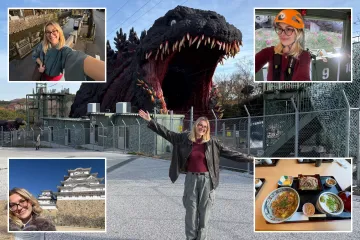
I went to the No.1 rated travel destination for 2026
IF you use social media to find your travel inspiration, I’m willing to bet you’ve come across plenty of videos of Japan.
Unbelievable theme parks, beautiful bamboo forests, unique foods – videos of Japan have been going viral since the dawn of social media.
According to social media research from Titan Travel, Japan is the most popular bucket list destination for Brits.
Not only that, but the country was rated the best in the world to visit this year.
The World Travel Index ranked Japan in first place in its list of the best countries to visit in 2026.
Japan came out on top thanks to its world-class infrastructure, safety, activities and value when it comes to costs and currency.


Plus, with the yen’s current weakness compared to the pound, you get a lot for your money when it comes to buying food, souvenirs and attraction tickets.
I set out to explore this bucket list country firsthand, skipping the crowds of Tokyo and other major cities to explore the country’s lesser-visited regions.
These areas are full of affordable gems such as unique theme parks, paradisaical beaches and jaw-dropping temples.
And let me tell you, this destination certainly lives up to the online hype.
I began in Shirahama, a seaside with stunning white sand beaches and natural wonders that I had no idea even existed in Japan.
Shirarahama Beach might be the most idyllic beach I’ve ever laid eyes on.
The resort feels like Pacific Ocean paradise, so its unsurprising that this beach shares a ‘sister beach’ relationship with Waikiki Beach in Hawaii.
Its spectacular sand was shipped over all the way from Australia in the 1990’s, as the original volcanic sands had eroded away.
A 15-minute public bus ride will bring you to Sandanbeki, where there is a hidden cave accessible only by a unique cave elevator.
Having once been a pirate hideout, this cave is now brimming with historical artifacts and a colourful shrine.
It’s said that wishes made in this legendary cave always come true – so I left one in the form of an adorable turtle.
Entry to Sandanbeki Cave costs ¥1,500 (£7.10), not too shabby a price for your dreams to come true.
Next I headed along the coast to Katsuura, an area known for its vast blue bay, scenic boat tours…and for auctioning giant tuna.
And what better place to sample some fresh sashimi than at an early morning tuna auction?
Katsuura Port in Wakayama is one of the leading tuna ports in Japan, hauling in the freshest of catches straight from the Pacific Ocean.
Japan’s tuna auctions have surged in popularity, thanks to viral social media clips and baseball superstar Shohei Ohtani, who famously ordered a 180kg tuna for an LA Dodgers team dinner.
In fact, what was once a daily routine for fishermen now draws in such large crowds that fish markets across Japan are adding viewing areas just for visitors.
Hence I found myself at 6:30am heading to Katsuura Market to witness (and taste) it for myself.
Visitors to the tuna auction can see the giant tuna fish up close, many of which weigh hundreds of kilos, and ready to be sold to the highest bidder.
Katsuura Market even has its own tuna museum, where you can learn all about the biggest tuna ever caught in Japan. Spoiler: it weighed a whopping 278kg and sold for ¥333.6 million (£1.5 million!)
Just next door is Nigiwai Market, where you can sample fresh tuna in a variety of forms like sashimi, sushi and hot grilled skewers.
Not keen on tuna for breakfast? Try out the freshly-squeezed juice stand instead – Wakayama is famous for its oranges.
Nachi-Katsuura also makes for a fantastic base for exploring one of Japan’s most beautiful walking trails: the Kumano Kodo.
The UNESCO-listed Kumano Kodo is a set of ancient pilgrimage trails that provide some of the very best natural sights in Japan.
Think huge waterfalls, impressive temples and intricate shrines, backed by tall forests and misty green mountains.
There are 190 miles of trails to choose from, but if you’re like me and just want to see the very best and save your legs, I recommend ticking off the following top sights.
Start by heading to Nachi Falls and Shrine. This breath-taking, brilliant red structure is backed by a giant waterfall – the kind of picture you’d only expect to see in a film or painting.
Then pay a visit to two more shrines, Kumano Hongu Taisha and Kumano Hayatama Taisha, and you’ve completed the three grand shrines of the region. And to prove it, you even get to collect a special stamp at each spot.
Head up further north through the mountains, and you’ll make your way into Nara prefecture.
Nara city is famous for its deer park, a 660 hectare area of the city where the animals have free roam – and they’re super friendly.
In fact, there are even “deer crackers” sold around the park, which you can purchase for around ¥200 (94p) and hand-feed them.
Try out a traditional tea ceremony experience whilst you’re in town, and you’ve ticked off some of the best experiences the region has to offer.
And if you really want to immerse yourself, head deep into the mountains of Nara to try out a stay in a Japanese ryokan.
A ryokan is a traditional Japanese inn known for its futon beds, tatami mat floors, and traditional meals – and they are a must-try on a bucket list trip to Japan.
Both dinner and breakfast are typically always included with a ryokan stay. I enjoyed multi-course dinner of crispy tempura vegetables, grilled fish, and plenty of freshly-boiled rice and miso soup.
From its unique interiors to its soul-warming food, you just can’t beat a stay in a ryokan.
Although they can be pricey (around £100 – £200+ a night) so if you’re on a budget, I recommend staying in hostels during your travels to save on accommodation costs. That way, you can treat yourself to a night or two for an unforgettable stay.
Speaking of top experiences, you can learn to throw shurikens and transport yourself back to samurai-era Japan at this lesser-known theme park.
Hidden in the mountains of Mie Prefecture you’ll find one of the world’s most unique theme parks: Ninja Kingdom Ise.
This family-friendly attraction is packed with carnival-style games and activities – all of which are made ten times more fun by ninja outfit rental.
There’s ninja outfits of all sizes, with a choice between red and black. Outfit rental costs ¥500 (£2.36), which is a bargain if you ask me.
Just walking around the attraction itself is an immersive experience.
The park is made up of traditional Japanese buildings that replicate a real 16th-century castle town, backed by dramatic mountains. It truly feels like you’ve stepped back in time.
There’s plenty of fairground-style games here to test your speed, reaction time and accuracy – key skills for any ninja.
I threw darts at a colourful spinning wheel to test my aim before heading to the shuriken-throwing experience, which was tougher than you might think.
I ended my visit by hopping on the free shuttle bus up to the giant replica of Azuchi Castle.
This hilltop slice of history is decorated with bright whites, reds and golds, reflecting 15th century Japan’s Sengoku era .
And if you’re wanting to relax after a long day of ninja activities, this attraction even has its own hot springs: the Azuchi Castle Baths.
Admission tickets to Ninja Kingdom Ise cost ¥1,500 (£7.10) for adults, ¥1,000 (£4.74) for ages 12-17 and ¥800 (£3.79) for ages 7-11.
With shrines, temples, beaches, seafood, ninja theme parks and more under my belt, it boggles me that most stick to the capital and skip these regions on a trip to the world’s most desirable destination.
So if you’re planning that bucket list trip to Japan, head out of the major cities and down into the regions of the Kii Peninsula for those rare, extra-magical experiences you just can’t find on socials.
This visit was supported by the Kii Peninsula. For more information, head to visit-kii.com.