snow

Europe’s ‘hidden gem’ ski resort where a five-day holiday costs less than you think

Ski holidays have gathered a reputation for being some of the most expensive getaways, but how much will a weekend on the slopes really set you back? Oliver Radcliffe went to find out

The truth about how much a ski holiday can really cost – is it just for the elites?

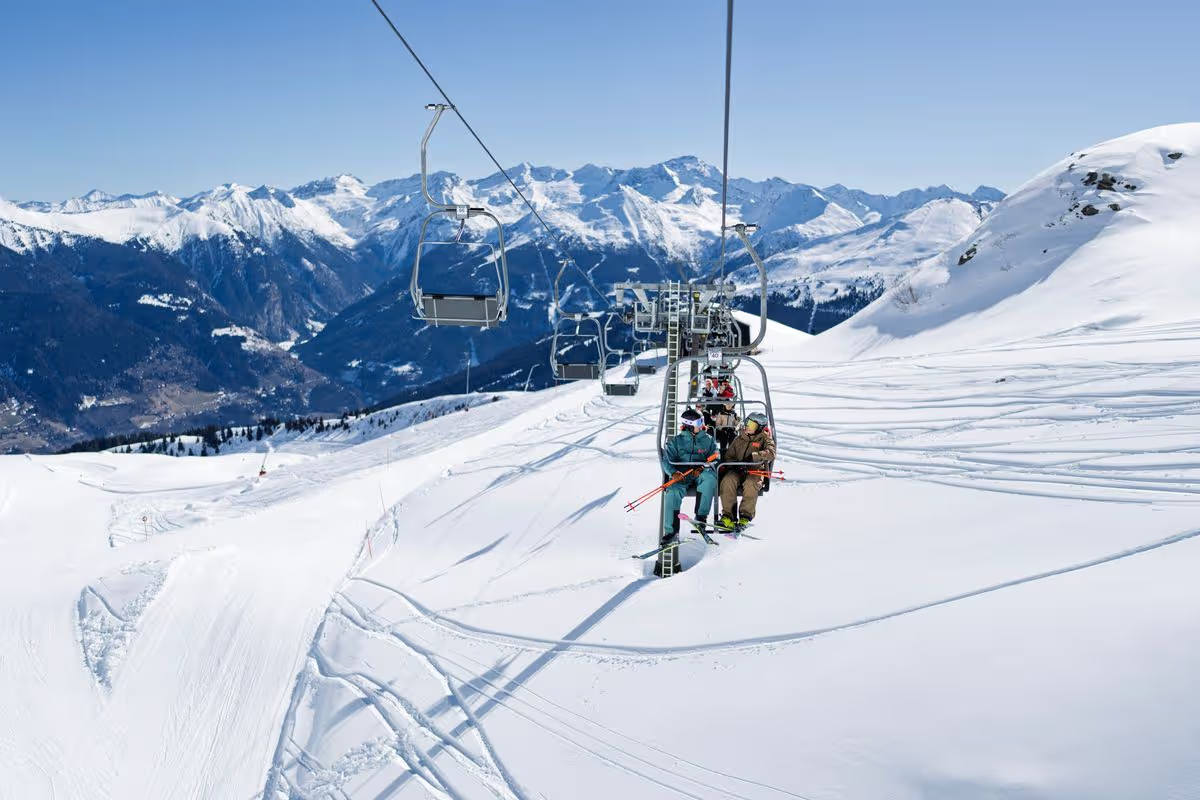
Ski holidays have a reputation for being on the pricey side. The very pricey side. Holidays to the Alps are increasingly thought of as a reserve for only the richest, as the Mirror’s trip to Megeve last year highlighted. But it doesn’t have to be. A day on the slopes in Austria’s Gastein Valley might not be as expensive as those new to the mountainside life may think (although it’s certainly all relative).

Spread across the trio of resorts of Bad Gastein, Bad Hofgastein, and Dorfgastein, the valley forms part of the region of SalzburgerLand, one of the lesser-known alpine destinations. Yet compared with some of Europe’s biggest-name resorts, the cost of skiing here remains reasonable.

While a local dry slope can offer a cost-effective start for beginners, nothing beats real snow for the authentic experience. A trip to the Angertal ski school could be the perfect place to build your skills and get you able to take on the slopes.

One really handy feature of the region is its Guest Mobility Ticket, which provides free public transport throughout the entire region.

So what does a realistic day on the mountains actually cost?

Do you have a travel story to tell? Email webtravel@reachplc.com

The lift pass

The biggest hidden expense for any skier is the lift pass. This is your ticket to the mountain’s ski lifts and gondolas, which transport you to the top of the slopes so you can ski down. Without a valid pass, you won’t be able to ride the lifts. Passes can range from single-day tickets to multi-day, weekly, or even season-long access, with prices varying widely.

In the Gastein ski area, a one-day adult ticket costs €69.50 (~£59). A six-day pass costs €344.50 (~£293), which works out at around €57.40 (~£49) per day, so staying for a few days noticeably reduces the daily cost.

The pass gives access to the main Schlossalm–Stubnerkogel ski area linking Bad Gastein and Bad Hofgastein, as well as the higher-altitude Sportgastein sector.

Ski hire

If you’re not travelling with your own equipment, rental is the next major cost. At the Angertal Skizentrum in Bad Hofgastein, a day’s rental starts from around €26 (£22) for skis and poles and €14 (£12) for boots.

For weekly rentals, expect to spend around €129 (£110) for skis and €65 (£55) for boots. Snowboard rental is priced similarly.

Ski lessons

For beginners, learning can also be the most expensive part. A three-day beginner’s course can set you back around €294 (£250), including 12 hours of lessons with a dedicated instructor.

Lunch on the mountain

Food prices in the mountains are slightly higher than at your local spot, but Austrian mountain huts are usually gentler on the wallet than some French mega-resorts.

A typical slope-side lunch might include €10–€15 (£8.50–£13) for dishes such as goulash soup or Tiroler gröstl, another €6 (£5) for a drink or coffee, and another €7 (£6) for a slice of strudel. Kaiserschmarrn, the sweetened shredded pancake, costs a little more at around €15 (£13)but it will keep you full well into the evening.

Altogether, €15–€25 (£13–£21) is a realistic spend for lunch and an espresso on the mountain.

One recommendation after a day on the slopes of Bad Hofgastein is the brand new Hirsch und Maus, perched at the mountain peak. A traditional Wiener Schnitzel costs the equivalent of €21 (£18). For those fed up with beige carbs, a Caesar salad is around €19 (£16).

Après ski

Après ski is a key part of the skiing experience, but it can be expensive. After a day on the nursery slopes, a half litre of the local Salzburg brew, Stiegl, costs the equivalent of €6 (£5.30) at the trendy Angertal 1180.

That overall figure can drop if you book lift tickets early, bring your own gear, or choose shorter passes such as half-day tickets. Skiing will never be a budget activity, but not every resort caters only to those on six figures, where single-day lift passes often exceed €80–€90 (~£68–£77).

After the lifts close, many skiers swap their boots for bathrobes and head to the valley’s famous thermal spas, soaking tired legs in steaming mineral waters surrounded by snow.

Accommodation

A classic double room at Hotel Zum Stern costs €294 (~£250) per room per night. Shared between two people, that’s about €147 (~£125) each per night.

Five-day holiday estimate (per person)

Based on the assumption that you’d buy a lift pass for each of the five days of a five-day ski holiday, hire skis and boots for the week, and each day have a mountain lunch, a Schnitzel-style dinner, and one beer Apres ski, this is how much you could expect to spend.

  • Lift pass, 5 days: €66–78.50 a day, €330–392 (£280–335) a week
  • Ski and boot hire, weekly: €194 (£165)
  • Lunch, 5 days: €15–25/day, €75–125 (£65–105) a week
  • Dinner, 5 days: £16–18/day, €94–106 (£80–90) a week
  • One beer a day, 5 days: €31 (£26.50)
  • Accommodation, 5 nights: €1,470 per room, halved to €735 (£625)

Total (no lessons): €1,474–1,536 (£1,255–1,305)

  • Optional 3-day beginners course: ~€294 (£250)

Total with lessons: €1,768–1,830 (£1,505–1,555)
Source link

‘I visited Europe’s most romantic ski resort that’s like being in a Wes Anderson film’

While many may flock to the huge French resorts of Val D’isere or Chamonix, for a more intimate romantic ski getaway one hidden Austrian getaway scoops the title

There are ski resorts built for thrill seekers, and there are ski resorts built for those searching for glamour. Then there is the Gastein Valley in Austria, a place that seems designed for something else entirely – romance.

Hidden deep within the Alps in the province of SalzburgerLand, the valley’s twin spa towns of Bad Gastein and Bad Hofgastein combine sweeping mountain scenery, healing thermal waters and classic wooden ski huts that ooze quintessential Austrian charm.

While German may not be known as a romantic language, the Austrian alpine culture all but makes up for it with its cosy wooden lodges with roaring fires, extremely good local wines (I promise it’s not just Riesling), and let’s not forget about the fondue. Something I indulged in for the first time on a recent trip, surrounded by a roaring fire in said cosy lodge, at Bellevue Alm Gastein. Washed down with a good quantity of schnapps, of course.

Do you have a travel story to share? Email webtravel@reachplc.com

I live next to one of the UK's coolest neighbourhoods – people are so wrong about it

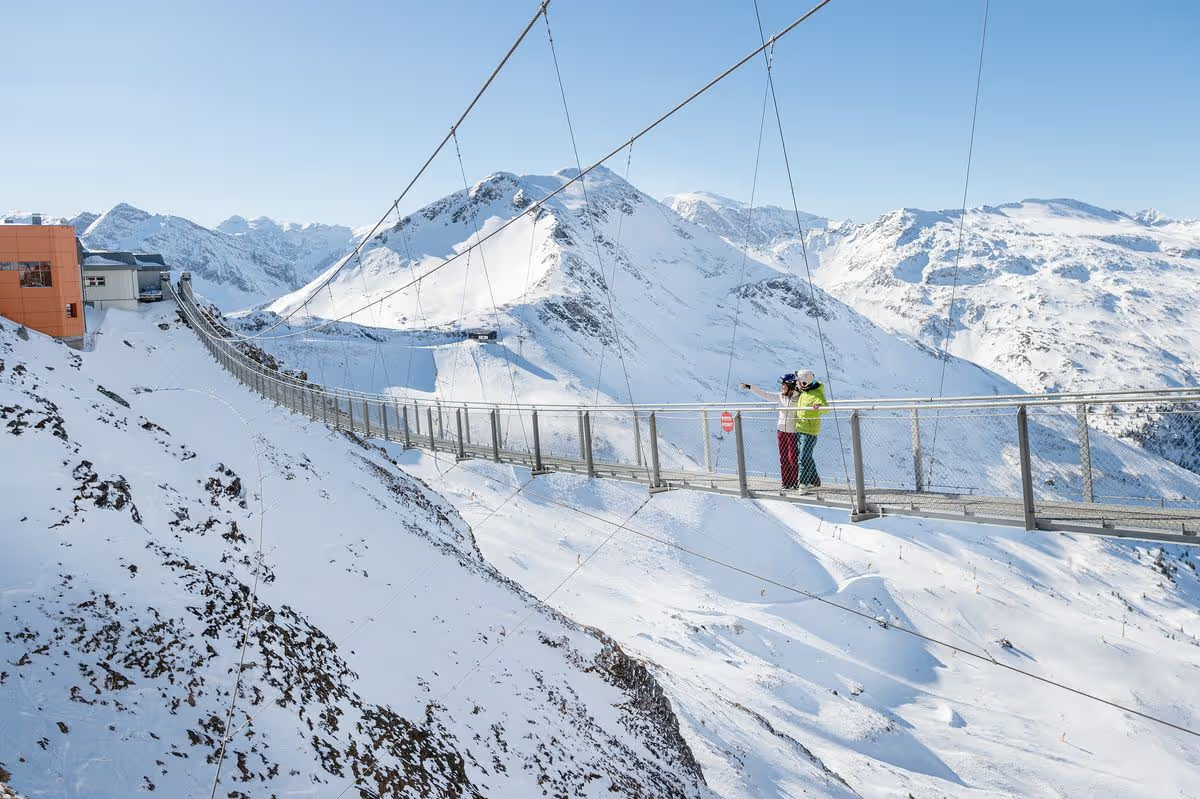
With plenty of lodges to curl up in, it’s clear why the region has quietly gained a reputation as one of the Alps’ most romantic winter destinations. The resort of Bad Gastein itself is unusual. Rather than spreading gently across a valley floor like most Alpine resorts, it clings dramatically to the side of a steep gorge.

After a walk around the town during golden hours on a brisk February evening, looking at the mountain views and the marvels of architecture that surrounded me, it hit me – I’m in a Wes Anderson film. The streets were lined with grand pastel coloured hotels perched perilously onto the mountainside, just like in one of my personal favorite films, The Grand Budapest Hotel. I walked through the flakes, feeling as though I had just stumbled onto a film set with Ralph Fiennes and Bill Murray.

But this wasn’t just a figment of my imagination. The cult-classic director is said to have traveled to Bad Gastein, seeking alpine inspiration for the Oscar-nominated hit. Clearly, he found it. It is especially easy to spot when looking up at the façade of the Grand Hotel de l’Europe. The hotel looks out over a cliff, a gentle waterfall crashing below, with all but a bright pink 19th-century funicular distinguishing it from the film itself.

As I continued my wander, the noise of the waterfall offered its own theatrical backing track – and one that becomes even more magical in winter, when mist from the waterfall freezes into crystals and snow dusts the pastel-coloured buildings. This is a magic that has been enchanting people for centuries, with the town having inspired many Romantic composers.

Franz Schubert and Johann Strauss found musical inspiration from the valley, while it is said Mozart himself was born in Bad Gastein before his pregnant parents moved to the nearby city of Salzburg.

Today, that historic grandeur remains, giving the resort a slightly surreal atmosphere that feels part Hollywood and the perfect place for a day together on the slopes.

Book it

Source link

5 European Christmas markets you can visit for the weekend for under £100

A weekend in Europe might seem like an expensive option in the run up to Christmas, but these festive weekend breaks could be cheaper than the train fare to another UK city and offer unforgettable Christmas market experiences

While the UK has some great Christmas markets, the ones found in Europe tend to be bigger and more traditional. If you’re dreaming of drinking mulled wine and wandering around wooden chalets to buy gifts, you don’t need to drain your bank account to enjoy a festive weekend away.

Here are some Christmas market breaks coming in at around £100 per person. Prices are correct at the time of going to press, but can change, especially air fares which are likely to become more expensive as the Christmas dates book up.

Christmas in Tivoli – Copenhagen – £96.50

Many Christmas markets are set in town squares, but Christmas in Tivoli takes over Copenhagen’s historic amusement park, turning it into a winter wonderland. Its beautifully decorated gardens are full of wooden stalls, often dusted with snow, and there are festive rides, freshly-baked Danish treats, and serious hygge vibes. Head to Christmas in Tivoli for its opening weekend, November 13, and you can take return flights from Bristol for £56 on Ryanair.

With just a two hour flight time it’s perfect for a weekend break, and you can return on Sunday to avoid taking extra annual leave. Generator Copenhagen is about a 15-minute walk away, or a quick metro ride, and has a lively bar, restaurant, and terrace. Stays start at £23.81 for a dorm. Another unique option, if you’d like a little more privacy, is the Urban Camper Hostel, which has indoor tents that come with twin or double beds and lockers. Prices start at £40.50 per person for the weekend based on two sharing. If you prefer a hotel, you can find stays from £82 for two nights with Kayak.

Spitalerstrasse Christmas Market – Hamburg – £99.34

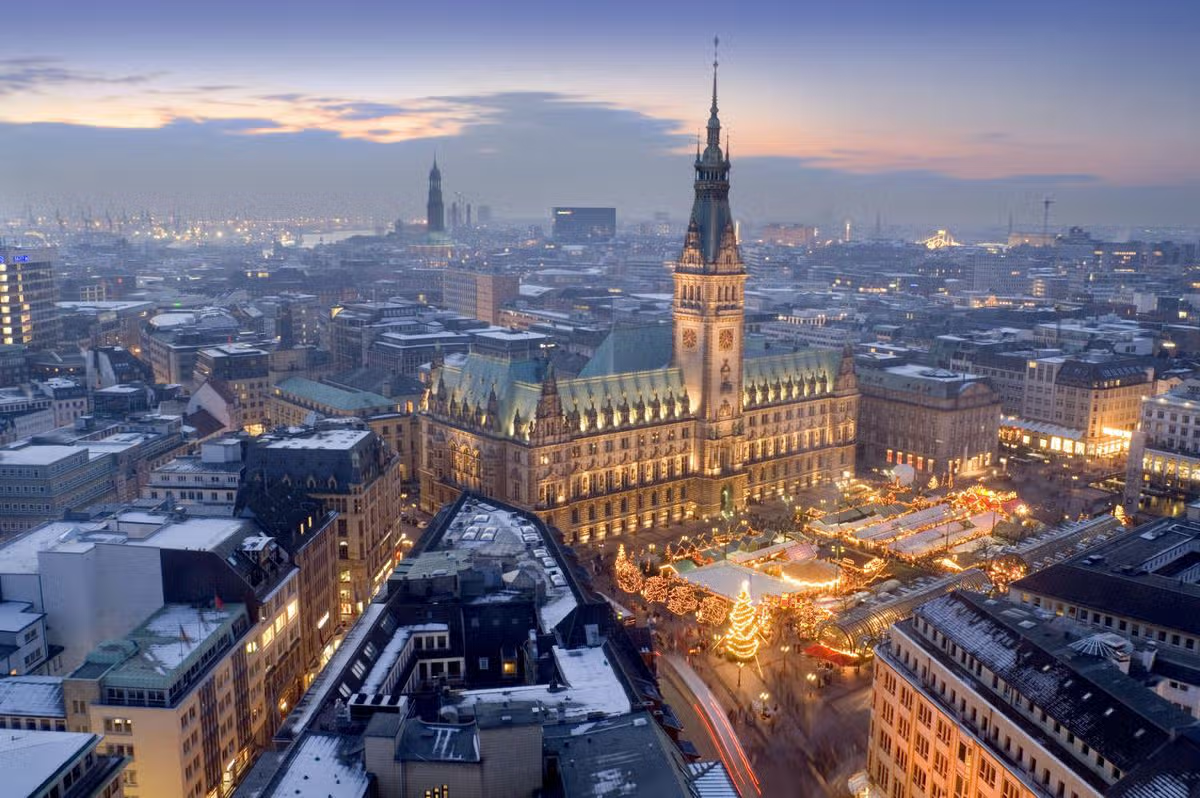
If traditional Christmas markets are your thing you can’t go wrong with Spitalerstrasse in Hamburg, which is basically a blueprint for every festive city centre event in Europe. Wooden chalets line the streets, vendors sell gingerbread, bratwurst, and mugs of glühwein, and it’s all set amid a backdrop of glorious medieval buildings covered in twinkly lights.

Hamburg has fewer options for direct flights from the UK – only London and Manchester offer this route – but there are bargains to be found. For example, if you travel between November 20 and 22, a return from London-Stansted costs £48, and the 90 minute flight time makes it perfect for a weekend away.

Next to Hamburg’s central station is the Generator Hamburg has basic dorms from £25.67 a night. Other budget options in the centre include the unique CAB20, which offers inexpensive cabin-style rooms for £164 for two nights based on two sharing.

Plaza Mayor Christmas Market – Madrid – £84.50

Enjoy Christmas with a Spanish flair at the Plaza Mayor Christmas Market, which runs from late November to December 31. The Spanish capital’s stunning historic square is the perfect backdrop for more than 100 red stalls, lit by fairy lights, where you can buy handcrafted nativity figures, unique decorations, and gifts. Enjoy freshly roasted chestnuts, turrón nougat, or churros with proper hot chocolate.

The cool weather means December tends to be an inexpensive time to visit Madrid, and if you fly from Bristol on Friday December 4, coming back Sunday, you can pick up flights from £38. If you’d like to stay in the city centre, one option is the Capsule Inn Madrid where couples can share a double capsule for £93 for two nights. Although it’s an extremely cosy space so you’d need to ensure you don’t fight at the airport before arriving.

Campo Santo Stefano Christmas Market – Venice – £94.56

Venice’s Campo Santo Stefano Christmas market kicks off on November 17, so it’s perfect for an early festive break. Stick to November dates and you can avoid the tourist crowds, and browse a wide range of Italian and European Christmas foods, artisan gifts, and canals lined with lights.

You can book flights from November 27 to 29, departing London-Luton on Wizz Air from £43, while the Generator Venice , housed in a historic building on Giudecca Island, has beds from £25.78 a night on those dates. Giudecca Island is about a 20-minute walk to the Christmas market, taking you across Venice’s bridges, or you can take a boat and enjoy the festive canal views. Meanwhile on Skyscanner you can find hotels with stays from £92 for two nights over a December weekend.

RAW Christmas Market – Berlin – £109.94

Berlin’s RAW Christmas Market is a unique experience. Set in a former railway repair yard in the hip, alternative neighbourhood of Friedrichshain, it has a medieval theme giving it vaguely Ren Faire vibes. Taking place from November 12 to December 22, you can enjoy this creative market which includes a wooden Ferris wheel, street entertainment, and lots of artistic stalls.

You can fly with Ryanair from London-Stansted to Berlin on November 20 to 22 from £51, making it an ideal time to visit the city. Continue the cool arty theme with a stay at Generator Berlin Mitte , a design-led hotel that has dorms, sleeping pods, and private rooms, from £18.99 a night. A single pod is £29.47 a night, if you’re feeling brave and not claustrophobic, while a private twin ensuite room for the weekend costs £92.82 a night.

Have a story you want to share? Email us at webtravel@reachplc.com

Source link

Ivy League play begins, and SoCal players seek balance

Jackson Renger, the star outside linebacker on Los Alamitos’ Southern Section Division 2 championship football team last season, packed his bags and boarded a flight on Aug. 14 to begin life as an Ivy Leaguer at Cornell University in Ithaca, N.Y.

Armed with a 4.4 grade-point average and memories of winning a championship with his best friends, Renger is entering the world of college football while competing in an academic environment featuring the best of the best.

“I’ve been told football might be the easiest part,” he said. “I’m coming in to be surprised.”

The Ivy League continues to recruit players from Southern California. Former St. John Bosco quarterback Caleb Sanchez is entering his junior year at Columbia, which has 10 Southland products on its roster. St. John Bosco defensive back Dorian Franklin is committed to Harvard.

Aiding Renger are eight other players from Southern California on the Cornell roster.

“They said it will be fine and help me,” he said of the transition.

Renger visited Cornell three times last year but has done little preparation this year for what he will be facing in his balancing act of football and academics. He’s going to trust his skills and previous experiences.

“My biggest concern is the academics,” he said. “Throw on top of that football, that’s going to be a real challenge. They said you have to be on top of your stuff and can’t let either get on top of you.”

When Renger left home last month, he packed what he could, flying to New Jersey to visit family, then drove to New York with his parents before moving in on a Sunday. He had hernia surgery in July and spent six weeks recovering and still believes he should be able to contribute on the field as a freshman.

One thing he didn’t bring to Cornell was a warm jacket for snow. He didn’t trust the stores in Orange County.

“That’s what I’m thinking,” he said. “They’re going to sell me something useless.”

So he’ll trust the stores in New York or maybe receive recommendations from teammates once the snow comes.

He’s going off to college to explore and test himself on and off the field. That’s what Ivy Leaguers do.

“Cornell is such a unique and big school,” he said. “I’m not sure what I want to do. I want to try different things when I’m there.”

Football has taught him the most important lesson for anyone who plays sports — never quit.

“This is a whole new challenge. I’ll put my head down and try,” he said.

Friends are welcome to send mittens, ski caps and hot soup when the snow comes. Football begins on Sept. 19. The Southern California natives are sure to shake hands after games and discuss happenings back home while never forgetting that “Winter is Coming.”

The breath of a dragon won’t save them but a warm coat will.

A look at players from local schools on Ivy League rosters:

Harvard: DB Chase Mason, San Juan Hills; DB Iroc Cordova, Inglewood; K Dylan Fingersh, Capistrano Valley; OL Nate Turk, Loyola; DL Mikhal Johnson, Sierra Canyon.

Brown: DL Caden Harman, Sierra Canyon; DL Mitch Mooney, San Marino.

Yale: DB Dillon Rickenbacker, St. John Bosco; WR Davis Wong, Brentwood.

Pennsylvania: LB Trevor Pajak, Mater Dei; WR Tyler George, Corona Centennial.

Columbia: WR Caden Butler, Chaparral; WR Bryce Coleman, Crean Lutheran; WR Elliot Cooper, Sherman Oaks Notre Dame; DB Ethan Fullerton, Sherman Oaks Notre Dame; QB Caleb Sanchez, St. John Bosco; DL Austin Coronado, Glendora; WR Jarod Sersansie, JSerra; DL Will Matthew, Orange Vista; TE Santiago Hernandez, Harvard-Westlake.

Cornell: WR Cameron Shannon, JW North; DL Darryl Davis, Culver City; TE Brandon Gilbert, Murrieta Valley; TE Adrian Ortiz, Redondo Union; LB Jackson Renger, Los Alamitos; K AJ Salo, Chaminade.

Dartmouth: OL Ryan Turk, Loyola; LB Timothy Ioane Jr., Tustin.

Princeton: LB Fifita Tauteoli-Moore, Corona Centennial; QB Wyatt Becker, Sierra Canyon; RB Kai Honda, Gardena Serra.

Source link