














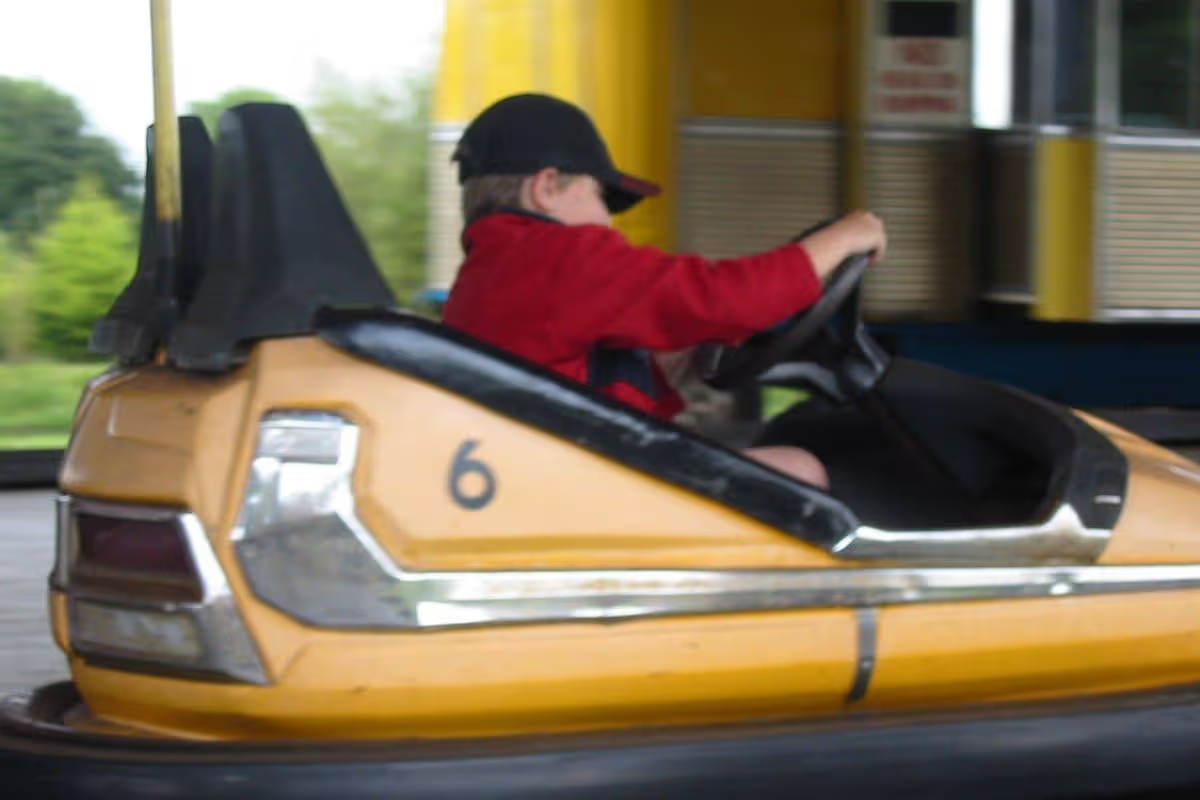
Many years on, thousands of visitors have cherished memories of its thrilling rides and attractions

The theme park many created treasured memories for kids and adults alike(Image: South Wales Evening Post archives)
When it comes to theme parks in Wales, most people would immediately associate the region with the now-sadly defunct Oakwood Park in Pembrokeshire. The Narberth attraction, which shut its doors in 2015, was a cherished part of many childhoods, with trips on Megafobia and Snake River Falls over the years becoming the stuff of legend.
However, it wasn’t the only theme park that once created treasured memories for many, and for some, it was a rival to its more celebrated neighbour.
Back in 1994, another attraction was opening its gates for the very first time. The £1 million Grove Land Leisure Park was constructed in St Clears in Carmarthenshire, transformed from a working dairy farm.
And it offered something for everyone, with unforgettable rollercoasters such as Thunderbolt, Cyclone and Cyber Space. There was also the ‘Dance Master’ waltzer, twist rides like the iconic ‘Rodeo Rider’, the Snake Slide, dodgems and go-karts, reports Wales Online.
There was also a pirate ship, laser clay pigeon shooting and pedalo boats.
Barmy Barny served as the park’s mascot, and appeared on its emblem. It was especially appropriate given the herd of pedigree Freisians, which had been bred at the dairy farm by the Williams family across four generations, earning recognition throughout the agricultural world.
It was their herd that inspired John and Janet Williams to transform 30 acres of their 210-acre Grove Farm into a theme park.
At the time, the couple explained how the enjoyment and experience they had gained from showcasing their herd and hosting large crowds, combined with a passion for sport and leisure, had driven the park’s creation — along with their recognition of “the pressing need to impede any further decline in the local rural economy.”
When it opened on a seasonal basis, the theme park was expected to give tourism a significant boost and create up to 70 jobs in its first year alone, rising to 300 over the following three years.
It was also anticipated that 75,000 visitors would pass through its gates in the opening season, eager to experience what was promised to be a “country show ground atmosphere”, complete with calf parades, animal showmanship, and a range of rides and attractions specifically chosen for their interactive appeal and suitability for the whole family.
The park was remarkably affordable, with adult tickets priced at £7.50 and children’s tickets at £5.60. Visitors paid at the gate, and once inside, all rides and shows were included at no extra cost.
Takeaways, burger bars and a picnic area were all on hand for families looking to take a breather from the excitement of the rides.
Jade Walsh worked at the park for two to three seasons from the age of 16, taking it on as a summer job. Miss Walsh, now 40, who worked as a ride operator, said: “I worked a lot on the bumper boats and the pedalos which I enjoyed. I remember people would often get stuck in the reeds and things so you would often have to go out and rescue them.
“The boats would also have to be tested in the morning, and it was all young people who would work there seasonally and we’d all enjoy that. Mr Williams who ran it was lovely, and was such a nice guy.
“Thunderbolt was a gravity rollercoaster and how fast it went would depend on how heavy you were. Sometimes we would have to load it with sandbags if there was only a couple of kids in it. If it got stuck at the top, you’d have to climb up it, run across the tracks, push it, then get down to the bottom so you could stop it at the end. Health and safety wasn’t a thing then, but I loved it!
“My favourite part of working there was the people. It was a nice environment to work in. If you can imagine a nice seventies movie with children working at a funfair, it was like that.
“We had a lot of people who would come over and over again. Some people would visit a couple of times in the summer and come back every year. It was better for smaller children than Oakwood and there was less queues and things like that. It was just a much more relaxed atmosphere. It felt very safe. You could literally see everything from one place so parents could relax and let their children run from ride to ride.
“Everyone was really sad when it went, because there wasn’t a hell of a lot to do around here. Everybody missed it.”
Gemma Daniels has treasured childhood recollections of visiting the park on frequent end-of-year school outings between the ages of six and nine when she was a pupil at Ysgol Llwyn Yr Eos School in Penparcau, Aberystwyth.
Miss Daniels, now aged 36, said: “Trips to Grove Land are a core childhood memory for me. One ride that sticks out for me the most was rodeo-themed and it had a big mechanical horse in the middle with a cowboy on it. Basically, it was a sizzler ride. They also had a rollercoaster where the carriage you were in, it looked like a gold mine.
“The ride that we all avoided was a slide, it was like a big dipper, and it was the first time I had ever seen a ride like that. I remember kids coming off it with friction burns! They had a protector mat but you would bounce off it, because it was really fast.”
She added: “I remember that it was never crowded like you see at theme parks these days, and you didn’t have to queue long for rides. You’d have a chance to go on everything and see everything. When we were on school trips they would let us go off and we’d have to meet at a picnic table to have our packed lunch at lunchtime. It was really safe.
“I remember the little shop they had there where people used to get those water worms, that was the fascination at the time, and kids would also used to get snap bangs and use them on the bus on the way home.
“If it was open now, it’s a place I’d take my son to. It’s somewhere that I’m pretty gutted my kids won’t get to go.”
Sadly, in 2005, it closed its doors for good, with its rides relocated, including Thunderbolt, which was transported to Loudoun Castle, and Cyclone, which found a new home at Killarney Springs Family Park.
In 2008, it emerged that the site was on the market for £3.3 million.
By April 2014, we reported how plans for a “massive development” at the site had been given the go-ahead by Carmarthenshire Council, which would create 32 new-build holiday cottages, 26 holiday accommodation units and supporting leisure facilities.
In 2018, we reported how the planned accommodation project had yet to materialise, though it’s believed that it eventually launched at the start of the year, taking the form of a static caravan park.
It’s now been 21 years since Grove Land welcomed its last visitors. Yet for the thousands who spent their summers visiting or working at the attraction, it has left behind memories that they continue to cherish fondly.