slams

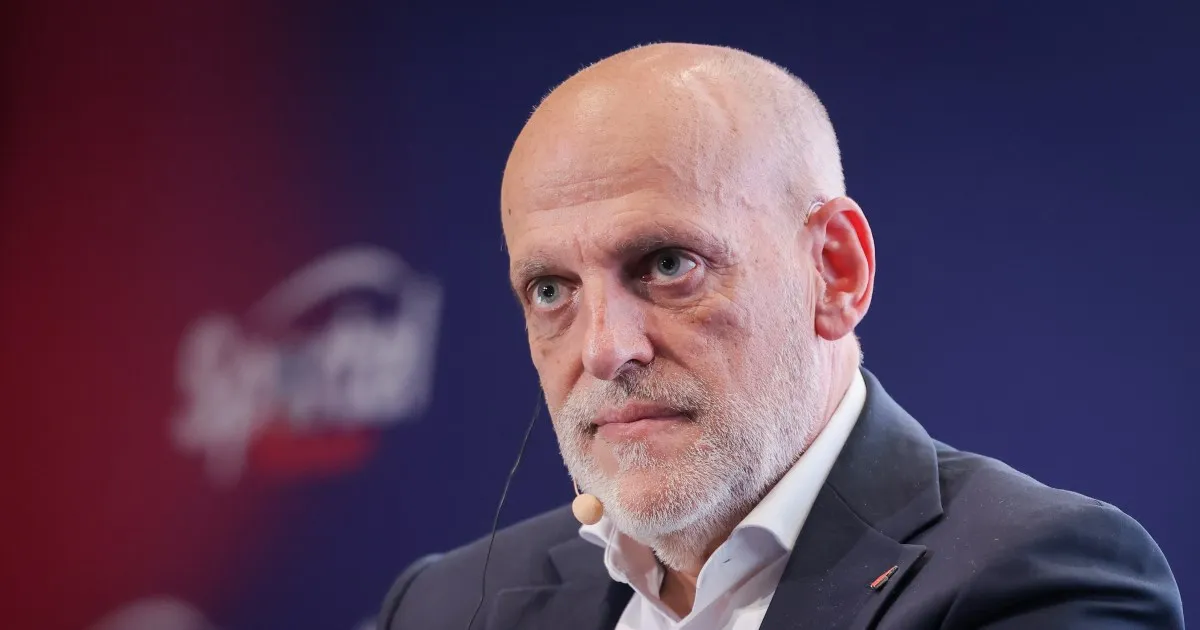
Paramount’s Delrahim slams ‘fear-mongering’ and partisan politics clouding Warner Bros. deal

Paramount Chief Executive David Ellison has been circling the globe, meeting government regulators who will ultimately decide the fate of his controversial $111-billion takeover of Warner Bros. Discovery.

Last week, Ellison spent two hours answering questions from U.S. Justice Department antitrust lawyers in a bid to secure a key government approval — one that few people believe is in doubt because of President Trump’s strong support of tech billionaire Larry Ellison and his son’s ambitions to amass more power.

Throughout his travels, David Ellison has been accompanied by a savvy wingman: Makan Delrahim.

Delrahim, Paramount’s chief legal officer, served as the nation’s top antitrust regulator in the Justice Department during Trump’s first term. The 56-year-old Iranian American, who grew up in Los Angeles, is the architect of shrewd moves that have brought Paramount within reach of its blockbuster merger that would redefine Hollywood.

Politics have permeated the process — even before Trump announced he would get involved. Opponents have been suspicious of the Ellisons, given the family’s ties to Trump and programming changes to redefine Paramount’s CBS, including last month’s departure of late-night comedian Stephen Colbert and a shakeup at “60 Minutes,” CBS’ newsmagazine.

Buying Warner Bros. Discovery would give the Ellisons control of both CBS News and CNN.

Paramount’s bid for Warner Bros. has sparked dread in Hollywood for another reason, too: Thousands of jobs already have vanished through a string of media mergers.

More than 5,000 artists and entertainment industry workers have signed an open letter, calling on California Atty. General Rob Bonta to try to block the deal on antitrust grounds.

In an interview with The Times, Delrahim responded to concerns and criticisms. This interview has been edited for length and clarity:

Where does the regulatory process stand?

We are still going through the regulatory approval process. We actually started planning for the regulatory approval filings last summer. We knew we were going to be pursuing this transaction but it took a few months longer to sign the transaction than we thought. There were some interveners [Netflix, Comcast], but we planned ahead.

Do you have a commitment from Trump or his administration that you’ll get a thumbs up?

There are no deals with the president. We have a deal with the Warner Bros. shareholders. We’ve submitted [applications] to the governments of Europe, Canada, U.K. and the U.S., and that’s where it is.

You got a head-start because you filed a regulatory approval in December — months before Paramount had a deal with Warner. Why so soon?

We were always very skeptical [the Netflix deal] would ever go through. The only way to really show the [Warner] board that our deal would get through — because it doesn’t have antitrust problems — was to move as fast as we could.

One of the benefits being a former [DOJ] enforcer and having a team of outside lawyers who are also former colleagues and enforcers was that we anticipated what the government would ask for. Those were questions that we would have asked, and so we provided those answers.

Your timeline is aggressive. Some suggest Paramount wants this deal done before the mid-term elections.

I don’t think it’s aggressive. It has nothing to do with the midterms. The midterms do not change the officials at the Justice Department or the FCC — we have that minor application there. The midterms have no effect on the European Commission or anybody else. We’ve been very transparent and proactive with members of Congress and with the state attorneys general and the federal authorities.

Are you preparing to defend a potential antitrust challenge from Atty. General Bonta?

Well, no matter what field you’re in, whether it’s antitrust or whether you’re preparing for a football game, you always prepare the best you can for the worst, and you hope it never gets there. So, we’re preparing for challenges from anybody and everybody. But I don’t think any serious antitrust enforcer who looks at the facts, the law, the economics of this transaction will see an antitrust violation.

Why are you so confident?

There’s no element of this merger that is anti-competitive. Once you look at it, it’s incredibly pro-competitive. It increases output, it increases jobs, and it lowers the cost to the consumers. If you actually try to block this deal, you’re going to harm consumers, you’re going to harm creative talent, because you’re going to harm the creative ecosystem — the vision that David [Ellison] is trying to deploy here. It’s transformative from the efficiencies that it creates.

David Ellison has promised to release 30 films a year. Was that commitment to show that this merger will not be a repeat of Walt Disney Co.’s 2019 purchase of Fox?

I’m quite familiar with that one because I was at the Justice Department and reviewed it. Disney-Fox was a transaction with a different thesis. Disney wanted to get into streaming and they wanted to get scripted series. It wasn’t about studios trying to increase output.

Our transaction, as David has described, is motivated to create more content to feed the theaters, then streaming. We have a natural economic incentive to create more content. We’ll still be in fourth place after this transaction on the streaming side — almost half the size of Netflix.

David Ellison hasn’t made any commitments on the television side or pledged pledge to keep the various TV studios intact. Why?

I don’t think there’s much of an overlap on the television studios. Look, you have incredible studios in HBO, Warner Bros. Television, certainly our own studio. We’re not paying money to limit supply. It’s the exact opposite.

There is overlap between CBS News and CNN. How are regulators looking at that issue?

We’re very proud of CBS News and hopefully CNN, post-transaction. There is very limited overlap. Why? Because CBS News only airs a few hours a week of programming whereas CNN is 24/7, and it has international reach.

Antitrust regulators are going to see that it’s going to create synergistic effects. You might be able to cross-program and more people will be exposed to the incredible programming of CBS News. They’ll benefit from each other’s independent strengths.

During the first Trump administration, you said merger conditions were problematic because it’s difficult for the government to enforce behavioral remedies. Has your thinking changed?

No, I’ve been quite consistent. If there’s an antitrust problem, you need a divestiture [selling assets]. I don’t think there’s a remedy needed in this transaction. But having said that, we’re happy to engage with regulators to discuss where they see a problem and a possible solution. We’re always wanting to engage in constructive dialogue.

Would Paramount spin off CNN?

I don’t see that. I can’t see any antitrust reason to do so. That would be a weaponization of the antitrust law, and that would not be appropriate.

Many people in Hollywood view the merger with trepidation because of the prospect of more job losses. Others see it through a political lens. How do you evaluate the politics?

Politics is part of life. It’s part of the beautiful process of democracy. Generally, we are very empathetic to the folks in Hollywood, but this transaction will actually create more and better and exciting jobs. David is an absolute lover of films; he’s a filmmaker himself. For the first time, you are getting an owner who comes from the creative side.

Let’s be honest. There’s a lot of fear-mongering, particularly from people in Washington, D.C. They are running a political campaign. Some of these people are trying to inflict harm on this transaction really because of their own antisemitic views. Regulators and law enforcement officials will see right through that.

Do regulators share others’ concerns about the merger debt — $79 billion — for the combined company?

Some regulators appropriately have asked about it. They say: ‘This is what we have heard, that you guys are not going to be around because of this debt,’ which is just silliness. David and his family are owner-operators. They’re not rented CEOs. They have over 50% ownership. They put their money at stake and my money is on them.

Source link

‘Arbitrary measures’: Lula slams US ‘terror’ designation for Brazil gangs | Government News

The president of Brazil, left-wing leader Luiz Inacio Lula da Silva, has denounced a decision by the United States to designate two of the South American country’s criminal networks as “terrorists”, warning that the label could be a “setback” for local law enforcement efforts.

The condemnation came in a 435-word message posted to Lula’s social media platforms on Friday.

Recommended Stories

list of 3 itemsend of list

In it, Lula drew a line between criminal activities and international terrorism, which is often understood to use violence for political or social aims.

“The terror inflicted by these organisations upon communities seeks to generate profit through crime — specifically through drug and arms trafficking,” Lula wrote.

Those activities, however violent, “must not be conflated with the ideologically, politically, or religiously motivated actions characteristic of international terrorism”, he added.

Lula’s statements came in response to an announcement a day earlier from the administration of US President Donald Trump.

Pushback against ‘terrorist’ label

On Thursday, US Secretary of State Marco Rubio revealed that he had designated Brazil’s two largest criminal groups — the Primeiro Comando da Capital (PCC) and the Comando Vermelho (CV) — “specially designated global terrorists”.

He also outlined plans to add the two groups to the list of “foreign terrorist organisations”, effective June 5.

Rumours had swirled for months that the Trump administration would apply the “terrorist” label to the two groups. But Lula and his ministers had pushed back, calling on Trump to hold off.

“Terrorist” designations freeze all US-based assets connected to the targeted groups, but they can also be used to penalise anyone who offers “material support or resources” to them.

Experts warn that such restrictions could potentially affect financial institutions and even the victims of such groups, including businesses and individuals who might be forced to pay extortion.

Lula has also expressed concern that the “terrorist” label could pave the way for US military intervention, a fear he reiterated in Friday’s statement, though he never named Trump outright.

“We remain fully prepared to develop joint solutions that yield mutual benefits for all nations involved,” Lula wrote.

“However, we will not tolerate the imposition of arbitrary measures from abroad, nor will we accept their use as a pretext to undermine our sovereignty or our economy. Unilateral, non-negotiated measures can undermine the fight against criminals and trigger actions that endanger the lives of people who have absolutely no connection to crime.”

A tight election in Brazil

A prominent left-wing leader in Latin America, Lula is in the midst of a heated election season, as he seeks a fourth nonconsecutive term as Brazil’s president.

Previously, he served as president from 2003 to 2011, before being re-elected to a third term in 2022.

In that race, he defeated the right-wing incumbent, Jair Bolsonaro, who would later be convicted of attempting to overturn the results of the race. Bolsonaro is currently serving a 27-year prison sentence.

His eldest son, Senator Flavio Bolsonaro, is thought to have been instrumental in Trump’s decision to issue the “terrorist” designations. The senator is currently running against Lula in the 2026 presidential election, and the two have been locked in a tight race.

This week, as he visited the White House, Senator Bolsonaro confirmed to reporters that he intended to seek “terrorist” designations for both the Primeiro Comando da Capital and the Comando Vermelho.

Trump has close ties to the Bolsonaro family, and he has previously intervened in elections around the world on behalf of right-wing candidates.

In Friday’s post, Lula accused Senator Bolsonaro of leveraging his family connections to “petition foreign authorities” for favour.

“It is deplorable that, once again, members of the Bolsonaro family have travelled to the United States to advocate for foreign intervention in Brazil,” Lula wrote.

He pointed to alleged efforts to stop the criminal prosecution of Jair Bolsonaro. Currently, one of the ex-president’s sons, Eduardo Bolsonaro, is facing obstruction charges related to efforts to lobby Trump to intervene in the case.

Trump ultimately did impose steep sanctions against Brazilian products in August 2025, citing the Bolsonaro trial as a reason.

Concerns about sovereignty

Under Trump, the US has taken an increasingly expansionist view towards the Western Hemisphere, reviving the 19th-century Monroe Doctrine, which described the Americas as Washington’s sphere of influence.

Trump himself has used crime as justification for taking unilateral military action in the region. Since September, his administration has conducted 59 strikes against alleged drug-trafficking boats in the Caribbean Sea and eastern Pacific Ocean, killing at least 196 people.

And on January 3, he launched an early-morning military operation against Venezuela, culminating in the abduction and imprisonment of then-President Nicolas Maduro on drug-trafficking charges.

While the Bolsonaro family has courted Trump in recent months, Lula has criticised those military-led actions as unjustified.

But security is expected to be a dominant issue in October’s presidential race. This week’s “terrorist” designations are likely to put Lula in an awkward position, forcing him to condemn the label without downplaying the extent of the violence.

Lula has attempted to brush off right-wing criticism that he has been lax on crime, pointing to his government’s recent $11bn investment in the “Brazil Against Organized Crime” programme.

That follows a separate $2bn programme in March to bolster the country’s prisons, improve homicide investigations and disrupt arms trafficking and other financial transactions carried out by criminal groups.

Still, Lula and Bolsonaro remain neck and neck in the lead-up to October’s election.

On May 16, the polling firm Datafolha found that both candidates would receive 45 percent of voter support in a one-on-one race, with 9 percent of voters indicating they would cast a null vote.

Another 1 percent identified as undecided.

Source link

Olivia Rodrigo slams babydoll disses, says it normalizes pedophilia

Some are calling the controversy over Olivia Rodrigo’s recent outfit choices babydoll-dress-gate, Olivia Rodrigo calls it “weird.”

The dress debacle kicked up in early May when Rodrigo released the music video for “Drop Dead,” in which she runs through the Palace of Versailles wearing a pink-and-blue ruffled babydoll set while singing about the intensity of a crush. Then on May 8, she wore a cottage-core pink-and-white floral babydoll dress with knee-high Dr. Martens during a live performance in Barcelona.

Rodrigo was drawing from subversive feminist and punk fashion of yore, but internet critics were quick to slam the “deja vu” singer, saying the ensemble was sexualizing child-like imagery. In an hour-and-a-half interview with the New York Times Popcast that dropped on Thursday, Rodrigo staunchly defended the dress and called the criticism disturbing.

“I have worn outfits that are maybe revealing on stage, like I’ve been on stage in a sparkly bra and little shorts — which is my right — that’s fun,” she said. “I felt cool and comfortable in that, and that wasn’t inappropriate, but me fully covered up in a dress that people deemed to be, like, childlike was inappropriate, and I think it shows how we really normalize pedophilia in our culture.”

Rodrigo further decried the criticism as rhetoric that girls are fed from a young age, “which is ‘don’t wear that, because then a man is going to sexualize your body, and it’s your fault’ — it’s so weird.”

Rodrigo said she didn’t think she looked “sexy” in the babydoll dress; she was going for a cool look à la Kathleen Hannah or like Courtney Love, musicians whom the pop star said are her heroes. Love appeared to defend Rodrigo on social media by resharing posts defending the singer-songwriter in since-expired Instagram stories.

“I just think if we start dressing in a way that’s like, ‘Oh, I don’t want some f— freak to think that I am sexy like a baby’ or some crazy thing like that, I think it’s losing the plot a little bit,” she said. “I’m very protective of younger women and girls, and I don’t ever want them to be fed that rhetoric. You shouldn’t be responsible for some guy sexualizing you in a way that was never your intention.”

Rodrigo’s third studio album, “You Seem Pretty Sad for a Girl So in Love,” which features hit singles “Drop Dead” and “The Cure,” will be released June 12.

Source link

Russia slams US for not granting visa to diplomat for UN meeting | United Nations News

Moscow’s envoy accuses Washington of failing to honour commitments under the 1947 UN Headquarters Agreement.

Russia has slammed the United States for failing to grant a visa to Deputy Foreign Minister Alexander Alimov to attend a United Nations Security Council meeting in New York, calling the decision a breach of Washington’s obligations.

Vassily Nebenzia told the Security Council on Tuesday that the country should have been represented by Alimov – “who oversees matters related to the United Nations” – at the meeting.

Recommended Stories

list of 3 itemsend of list

“However, despite all of our attempts to persuade the US side to issue a visa to him, that visa was ultimately not granted,” Nebenzia said.

The 1947 agreement that established the international body’s headquarters in New York requires the US to issue visas to foreign diplomats looking to attend UN functions “without charge and as promptly as possible”.

Nebenzia said not granting a visa to Alimov is a violation of that treaty and also a slight to Beijing, which is chairing the Security Council in May.

“We view this not just as a breach by Washington of its obligations under United Nations Headquarters Agreement, according to which access to United Nations needs to be provided for all officials and member states, barring none, but we also view this as an egregious instance of disrespect for the Chinese presidency of the Security Council,” he said.

The US Department of State did not immediately respond to Al Jazeera’s request for comment.

The visa controversy comes at a time of receding tensions between Washington and Moscow as US President Donald Trump pushes to end the war in Ukraine.

Trump has been regularly speaking with his Russian counterpart, Vladimir Putin. But Washington has continued to enforce sanctions against Moscow over the Ukraine invasion.

Both Putin and Trump have separately visited China and met with its president, Xi Jinping, in recent weeks.

Earlier this week, Iran’s Foreign Ministry said Abbas Araghchi, the country’s top diplomat, cancelled his participation in Tuesday’s Security Council meeting due to visa issues.

During last year’s UN General Assembly, in September 2025, the US imposed strict limits on the movement of the Iranian delegation in New York.

In 2019, the US also delayed then-Iranian President Hassan Rouhani’s visa for the General Assembly but eventually granted him entry.

Source link

James Corden slams iconic Gavin and Stacey episode branding it ‘very, very, very, bad’

JAMES Corden has revealed he’s actually not a fan of one of his iconic Gavin & Stacey episodes, branding it “awful”.

The actor and presenter created the popular sitcom alongside Ruth Jones, with it running for three seasons until 2010.

James Corden has revealed he dislikes one of Gavin & Stacey’s iconic episodes Credit: Getty
The writer and show star admitted that the series’ second episode was ‘very bad’ Credit: PA

Despite being much-loved by fans, James has revealed that he was not a fan of the show’s second ever episode – despite it being the one where the titular characters get engaged.

Describing the episode as a “very, very, very bad half hour” whilst talking at the BBC Comedy Festival, James explained that he felt they were “backed into a corner” by the episode ending with Gavin proposing to Stacey.

The episode sees Gavin – played by Mathew Horne – travel to Wales to make up with Joanna Page’s character Stacey following a dispute, and ends with him proposing.

Despite noting some “saving graces” in the writing, he added: “It’s an awful episode”.

the price is right

Real reason Katie Price came back to UK and refuses to return to Dubai


MORNING AFTER

Molly Mae and Tommy Fury spotted out day after he skipped Venezuela’s wedding

He created the show alongside pal Ruth Jones Credit: PA
The show went on to become one of the most popular sitcoms of all time Credit: PA

Despite ending over a decade ago, Gavin & Stacey returned in 2024 for one final Christmas Special episode, rounding off the popular series.

However, James has remained close friends with the show’s cast and his co-writer and close pal Ruth.

Back in September, The Sun revealed how the duo were once again working together on a new series.

James and Ruth have signed a multi-million pound deal with AppleTV+ for a follow-up series.

They will star in the ten-part comedy drama alongside an all-British cast.

Set in the UK, filming begins next year with the hotly-anticipated show due in 2027.

The deal, believed to worth up to £8million, was agreed amid interest from BBCNetflix and Amazon Prime.

A show insider said: “In what has unquestionably been a pretty miserable year for Brits, there is finally something to cheer — a new James and Ruth co-production.

“As you might expect, it is uplifting, gentle and very funny.

“They wanted to bring something full of heart and warmth back to screens; water cooler moments for all the family.”

Source link

Butlin’s boss slams Labour’s new holiday tax plans that will ‘hurt working families’

THE GREAT British break might not be so great very soon after it was announced that the overnight ‘holiday tax’ is set to be pushed forward.

Included in the King’s Speech was the dreaded new levy on staycations and one Butlin’s boss has hit back saying it will have big ‘consequences’ for families.

The overnight levy will add additional costs for families holidaying in England Credit: Butlins
Places like Butlin’s offer bargain breaks for Brits – but could be affected by the tax too Credit: Butlins

Follow The Sun’s award-winning travel team on Instagram and Tiktok for top holiday tips and inspiration @thesuntravel.

Plans to introduce the ‘Overnight Visitor Levy‘ for staycations in England was first announced late last year, and was spelled out again in the King’s Speech two days ago.

Essentially, the government’s plan is introduce levy overnight accommodation like hotels, B&Bs, campsites or holiday homes.

It would allow local authorities in England to charge visitors an additional fee on overnight stays which is similar to systems already used in parts of Europe.

GRUBS UP

Best pubs, fish and chip shops and cafes in Sussex – by Sun readers & locals


GO SEA IT

£9.50 holiday spot with shipwrecks, seals offshore & horseshoe-shaped waterfalls

According to UK Hospitality, the new tax could add £100 to a two-week family stay based on £2 per person per night.  

Unsurprisingly, the plans have not been met with positivity.

Matt Rake who is a resort director at Butlin’s in Bognor Regis – said the tax would have “consequences”, especially for working families.

The new tax could add £100 to a two-week family stay Credit: Alamy

He said: “It’s disappointing that the government is pressing ahead with the holiday tax despite how clear businesses, consumers and the hospitality sector have been about the potential consequences.

“In the Spring, the government said families being able to pay for a holiday should never be too much to ask, yet today they’ve confirmed the introduction of a measure that will hurt working families hard.

“We know how important domestic tourism is for Bognor Regis and the local businesses here. Holidays and short breaks support jobs and investment across our community throughout the year.”

He added that in a recent poll, 73 per cent of people would reduce or cut back on holidays in England if extra costs were introduced.

The ‘holiday tax’ was formally announced in the Autumn Budget in November 2025.

And two hundred bosses from firms including Butlin’s, Haven and Parkdean Resorts have written to the Chancellor hitting out at the plans.


Source link

Niger suspends nine French media bodies: Watchdog slams ‘abusive’ decision | Censorship News

Niger’s military government has banned many local and foreign reporters since seizing power in 2023.

Media watchdog Reporters Without Borders (RSF) has condemned Niger’s suspension of nine French media publications as the military government continues to crack down on journalists.

Niger announced the suspension on Friday, citing “repeated dissemination of content likely to seriously jeopardise public order, national unity, social cohesion, and the stability of the institutions of the Republic”.

Recommended Stories

list of 3 itemsend of list

The suspended organisations are France 24, RFI (Radio France Internationale), France Afrique Media, LSI Africa, AFP (Agence France-Presse), TV5 Monde, TF1 Info, Jeune Afrique and Mediapart, according to a TV statement from the National Communication Observatory (ONC).

It added that the decision was “immediate” and it included “satellite packages, cable networks, digital platforms, websites and mobile applications”.

RSF described the decision as “abusive”.

“RSF condemns a coordinated strategy to repress press freedom within the AES [Alliance of Sahel States] and calls for the immediate reversal of this abusive decision,” said a statement posted on X, referring to Niger and allies Mali and Burkina Faso, all ruled by military governments.

Niger’s military seized power in July 2023, toppling the democratically elected government of President Mohamed Bazoum and detaining him.

The government has since targeted local and foreign media outlets, particularly those critical of its policies, by issuing bans or suspensions.

RFI and France 24 were suspended a few days after the coup, and the BBC from Britain was suspended in December 2024.

The targeting of French and other foreign media comes as Niger’s military government has largely severed ties with its former colonial power, France, and turned away from Western allies.

In late 2023, Niger asked leaders in Paris to withdraw thousands of troops involved in missions against armed groups operating in Niger, neighbouring Mali and Burkina Faso.

The three AES states have since secured defence partnerships with other countries, notably Russia.

All three have regularly denounced France’s “imperialism”, saying they want to assert their “sovereignty”. French media and other foreign outlets have similarly been suspended or banned by the governments in Bamako and Ouagadougou.

Local journalists have also been affected. Two Nigerien journalists, Gazali Abdou, a correspondent for German broadcaster Deutsche Welle, and Hassane Zada, a regional newspaper editor, were released this week after being detained for months.

In 2024, leaders in the capital Niamey strengthened a law that criminalises the digital dissemination of “data likely to disturb public order”.

The United Nations said in November that 13 journalists were arrested in Niger and urged the government to release them. Local media organisations say six journalists are detained for allegedly “undermining national defence” and for “conspiracy against the authority of the state”.

According to AFP, Niger suspended nearly 3,000 local and foreign NGOs in 2025, accusing them of lacking transparency and supporting “terrorists” and armed groups.

Niger dropped 37 places in this year’s RSF World Press Freedom Index and now ranks 120th out of 180 countries. RSF and Amnesty International have repeatedly voiced concerns about the “decline” in press freedom in Niger.

Source link

Players v Grand Slams: Aryna Sabalenka says top players will boycott a major ‘at some point’ over prize money

Poland’s Swiatek said she would prefer continued discussions and negotiations with the majors instead of a boycott.

“I think the most important thing is to have proper communication and discussions with the governing bodies so we have some space to talk and maybe negotiate,” the Wimbledon champion said.

“Hopefully before Roland Garros there’s going to be opportunity to have these type of meetings and we’ll see how they go.

“But boycotting the tournament, it’s a bit extreme kind of situation.

“I guess we as players are here to play as individuals, and we’re competing against each other.

“So it’s really hard for me to say how it would work, if it’s even there on the picture. For now, I haven’t heard anything.”

But French Open champion Gauff thinks strike action would be a genuine possibility if the players come together as one.

“If we all collectively agree, then yes,” the American said.

“I wouldn’t want to be the only one, but we definitely can move more as a collective.

“From the things I’ve seen with other sports, usually to make massive progress and things like this, it takes a union. We have to become unionised in some way.”

World number two Elena Rybakina says she has not been involved in the campaign, but would go with the majority.

“If the majority say we are boycotting, then of course I’m up for it. It’s not an issue,” the Australian Open champion said.

World number five Jessica Pegula has been an articulate advocate of the players’ campaign, but virtually ruled out strike action during a BBC Sport interview in Indian Wells in March.

“We love playing the Slams – I don’t think anyone’s going to strike against the Slams,” the American said.

“I just think it’s us asking for what we think we deserve, but I do think that if the men and the women can come together – which we have on that front – and keep pushing, there’s nothing wrong with us just asking for what we think is right.”

Source link

Jimmy Kimmel slams ‘hypocritical’ Donald Trump after calls to have him fired

Jimmy Kimmel has suggest President Donald Trump should be unemployed amid low ratings and called him a “hypocrite” after the President’s repeated insistence that he be fired

Jimmy Kimmel has responded to Donald Trump’s repeated calls for him to be fired from his late night show with a fiery suggestion that if he has to go, so should the President.

Trump has called for Kimmel and his show Jimmy Kimmel Live to be sacked from his ABC late night slot multiple times. The President’s latest demand came after Kimmel made jokes about him and his wife during a sketch about the White House Correspondents’ Dinner.

He wrote on Truth Social: ““When is ABC Fake News Network firing seriously unfunny Jimmy Kimmel, who incompetently presides over one of the Lowest Rated shows on Television? People are angry. It better be soon!!!”

READ MORE: Jimmy Kimmel takes brutal dig at Donald and Melania Trump again after ‘widow’ digREAD MORE: Donald Trump makes very awkward joke to Melania about marriage

In response, Kimmel used his opening monologue during Thursday’s (30 April) show to hit back. He argued: “If incompetently presiding over not just one of, but the lowest rating in history, is the reason I should be fired we should both be out of a job, because you’re not doing too good either.”

Kimmel also praised Republican politicians Ted Cruz, Rand Paul and James Comer for not following in Trump’s footsteps. “Every one of these guys, I’ve made fun of repeatedly and viciously on this show and you know what not one of them has done? Pressured ABC to fire me.”

He then turned his attention to things Trump has said in the past about “muzzling people you don’t agree with”. After playing a clip of Trump from his presidential campaign, where the future president denounced censorship, Kimmel said: “I’m starting to think Donald Trump might be a hypocrite.”

Kimmel also joked that Trump’s feud with him was “getting crazy” and that they should “come up with a ceasefire”, referencing the ongoing conflict between the US and Iran. “I get to keep my job, you get to end your 11th war,” Kimmel said. “What do you say to that? We can help each other.”

Last week, Kimmel hosted an “alternative White House Correspondents’ Dinner” and joked that Melania Trump had the “glow of an expectant widow”. Days later, a gunman tried to storm the event. Following his jokes, the First Lady branded him a “coward” on X. She wrote: “His monologue about my family isn’t comedy – his words are corrosive and deepen the political sickness within America.”

Kimmel responded to her words on 27 April, saying he was sorry that the President and those at the dinner had to experience something so traumatic. He added that his sketch was light roast and not a “call to assassination”.

“I agree that hateful and violent rhetoric is something we should reject,” Kimmel said. “I do, and I think a great place to start to dial that back would be to have a conversation with your husband about it.”

Kimmel was previously in hot water after making remarks about the murder of right-wing activist Charlie Kirk, an ally of Mr Trump. He was taken off air.

He returned five days later after his removal sparked criticism from the public, famous faces of the screen and political figures who said it was an infringement of their freedom of speech and the freedom of the press.

Like this story? For more of the latest showbiz news and gossip, follow Mirror Celebs on TikTok , Snapchat , Instagram , Twitter , Facebook , YouTube and Threads .


Source link

Trump slams CNN, New York Times over coverage of Iran war – Middle East Monitor

US President Donald Trump on Thursday sharply criticized The New York Times and CNN over their coverage of the US-Israeli war on Iran, describing CNN as “stupid” and claiming the newspaper’s reporting was “seditious,” Anadolu reports.

Trump said he had “militarily decapitated” Iran, speaking to reporters at an Oval Office event where he signed an executive order aimed at expanding workers’ access to retirement savings, while also criticizing Democratic efforts to limit his war powers.

“And every day, I read about how well they’re doing militarily,” he said. “They’ve got nothing left, they’re done. And yet I read in The New York Times, I see on stupid CNN — which I only watch because you have to watch a little bit of the enemy.”

READ: Pentagon says Iran still has part of naval fleet despite Trump claims

Trump also said coverage by the two outlets implied that Iran is “winning the war,” criticizing their reporting on the war.

“If you read The New York Times — it’s actually seditious, in my opinion,” he said. “You read some of these columnists, but it all starts with the top. It’s a terrible thing.”

He said he did not “care, and everybody knows the facts. We are decimating the country.”

Earlier, the New York Times editorial board suggested that the US military is “losing its edge” in the Iran war, arguing that tactical gains have not translated into overall victory and may weaken Washington’s position.

READ: American journalist Tucker Carlson feels ‘betrayed,’ criticizes Trump on Iran war: Report

Source link