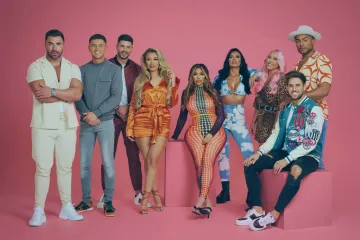
Chloe Ferry has revealed she’s gone under the knife againCredit: Instagram/chloegshore1She got her BBL reversed last year and revealed the results on social mediaCredit: chloegshore1/Instagram
And now she’s gone under the knife again to deal with the aftermath of the BBL reversal and the loose skin she was left with in its place.
Taking to Instagram to share a selfie from her hospital bed, Chloe penned: “This is something I’ve found really difficult to open up about because it’s incredibly personal and private to me.
Sign up for the Showbiz newsletter
Thank you!
“I’ve gone back and forth about whether to share it, but I feel like if my experience can help even one person, then it’s worth being honest about.”
She then got candid, writing: “A year ago, I had my BBL removed, and honestly, I thought that would be the end of my journey with it. I thought I could finally move on and put it all behind me.
She often displayed the BBL on social mediaCredit: InstagramAfter the BBL removal she suffered with loose skin but has now taken a step towards getting that removedCredit: Instagram
“Unfortunately, that hasn’t been the case. I’m now left with quite a lot of loose skin after getting my BBL removed around that area, and after a lot of thought, I’ve made the difficult decision to have it surgically removed.”
Chloe added: “What I’ve learned through all of this is that surgery is never as simple as it can look from the outside. Especially when it comes to cosmetic surgery, corrective procedures or removals, there can be consequences you never imagine when you’re making that initial decision.
“And I really wish I could go back and speak to the 19-year-old version of myself.
“I wish I could tell her that she was already enough. That her body didn’t need fixing. That she didn’t need to change herself to feel beautiful, accepted or worthy.
“At 19, you don’t always understand how permanent some decisions can be. You don’t always think about what happens years later, when your body changes and you’re left dealing with consequences you never expected.”
Concluding her post, she added: “I’m not sharing this to judge anyone who has had, or is considering, cosmetic surgery. Everyone has their own reasons, experiences and journeys. I’m simply sharing mine because I wish someone had shared something like this with me when I was younger.
“If this reaches even one young girl who is thinking about changing her body and makes her pause for a moment and ask herself, “Do I really need to do this?” then sharing something this personal will be worth it.”
Chloe had previously spoken out about being “unhappy” with her bum for a long time.
The Sun revealed she was going under the knife for a BBL reversal last Januaury.
“Chloe’s first priority is sorting out her bum,” a source spilled to The Sun at the time.
“She has been unhappy with it for a long time and she is in surgery today.
“She’s not sure yet if it will be fully removed or just reduced, but she just wants her old bum back,” they added.
Chloe previously shared how she had spent over £50,000 on cosmetic procedures.
To capitalize on growing demand for products developed for sensitive skin, Bath & Body Works (BBWI) launched Essentials, a new line of hypoallergenic body washes and lotions developed exclusively for sensitive skin.
Poorna Jagannathan has played everything from a ruthless gangster (“Deli Boys”) to an overbearing immigrant mom (“Never Have I Ever”). Now with HBO’s “Lanterns,” she adds an all-powerful galactic android to her acting resume.
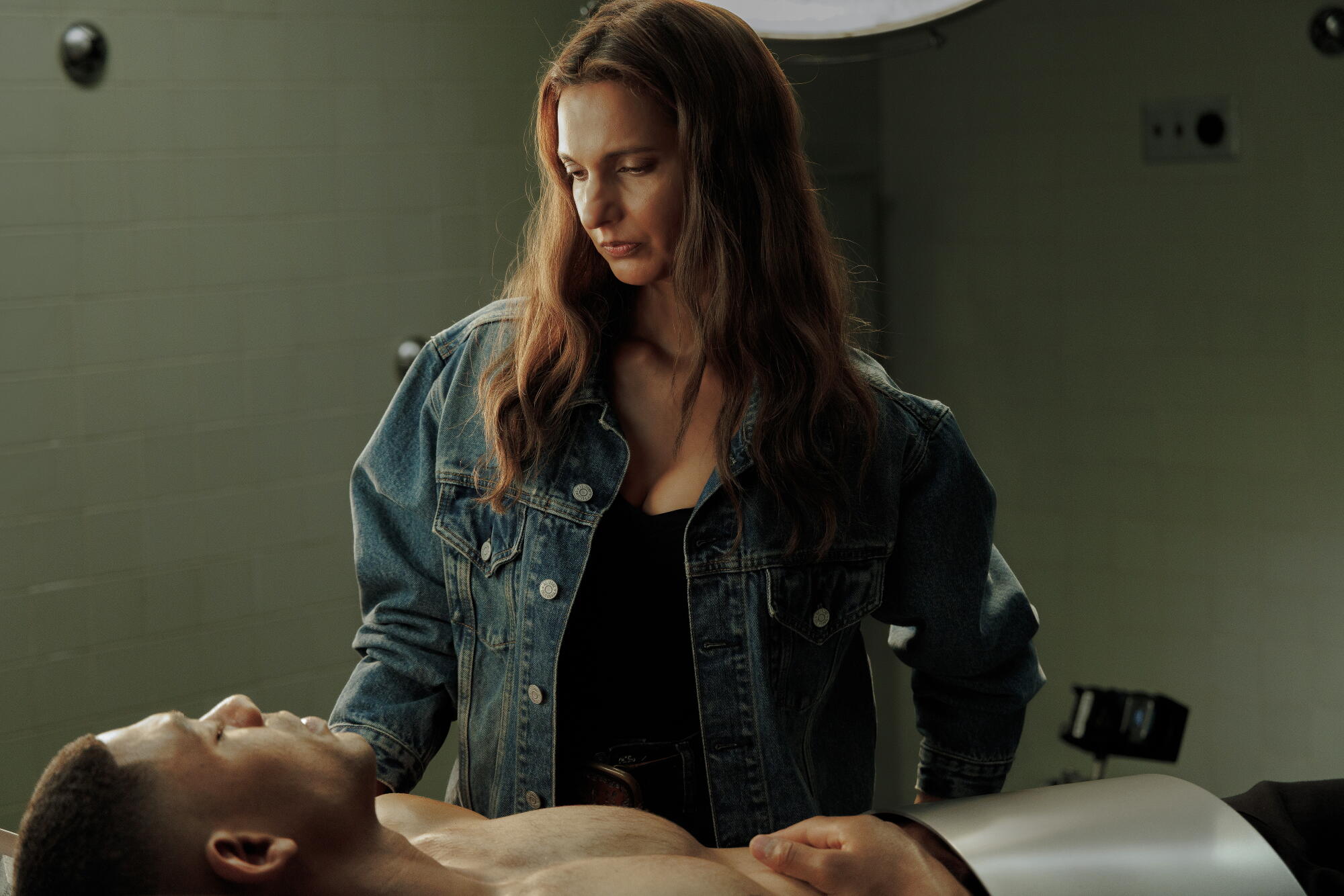
Her character’s identity was a secret for much of HBO’s DC Comics series until a reveal in Episode 4 that a rancher’s trophy wife, Zoe Macon (Jagannathan), was, in fact, the deadly Manhunter. Then another great surprise rocked the “Lanterns” universe Sunday when in Episode 5, she is killed by Lantern trainee, John Stewart (Aaron Pierre).
“She is dead, for sure. Maybe …” teases Jagannathan, who had to take a crash course in Green Lantern lore before assuming the role in the eight-episode series from showrunner and co-creator Chris Mundy (“Hell on Wheels,” “True Detective,” “Ozark”).
Jagannathan’s character belongs to an ancient, shape-shifting race created by the Guardians of the Universe as the galaxy’s first police force, but they’ve since gone rogue and are now out to eliminate the human race. Green lanterns are interstellar peacekeepers who wear rings that give them extraordinary powers. When veteran Lantern Hal Jordan (Kyle Chandler) and his mentee Stewart are tasked with solving a murder in rural Nebraska, they trip upon a great mystery that included ferreting out which resident in the small town of Rushville is the Manhunter.
The series has been lauded for elevating the superhero genre while presenting as a gritty crime drama. In this edited conversation, Jagannathan explains the demise of the Manhunter, how she morphed into a comic book villain for the role and what it’s like to feel all powerful at this stage in her career.
John Stewart (Aaron Pierre) and Zoe Macon (Poorna Jagannathan) in a scene from Episode 5 of “Lanterns.”
(HBO)
How much did you know about the DC universe before taking on this role?
I didn’t understand a lot of this world, but I did grow up on Wonder Woman. I twirled my way into my teens. So at least there’s that. It’s such a huge property, so there’s a lot to learn. But I realized that there’s a lot of similarities between Lucky (the gangster she played in “Deli Boys”) and Zoe. Lucky was originally written for a man. So with “Lanterns,” when I was first reading the script, I just kept looking at the cast of characters and thinking who might it be? I just expected a man would be playing the Maneater.
Maneater?
I mean Manhunter. I kept messing up and saying that when we started working on the show, too. It’s the name of an old Hall & Oates song. [Jagannathan hums, “She’s a man eater… .”]
Explain who or what a Manhunter is.
Manhunters were created by the galaxy as part of a police force, and then they went rogue. They were created to enforce justice, but it was a very particular kind of justice. There was no gray in the Manhunter. No emotion. It was either right or wrong, and they would eliminate what was wrong. But then they started feeling things.
The guardians saw it was an operation that went wrong so they closed it down. She [Zoe] is a sole survivor. She runs away to a place where she adapts quickly to the creatures around her, and learns how to feel. So she’s this feeling machine that battles against her own programming, but at the end of the day she can’t help her programming. When there’s a conflict, she resolves it by killing half the population.
Jagannathan on her character in “Lanterns”: “She’s a sole survivor. She runs away to a place where she adapts quickly to the creatures around her, and learns how to feel.”
(Christina House / Los Angeles Times)
Manhunters morph to fit in with the population around them, but the skin your character chooses is that of a brown Indian woman. She does not look like anyone else in the small, predominantly white town of Rushville. Her explanation of why she made that decision — to essentially not fit in — is really powerful. Can you recall what she said?
I remember that monologue. [John Stewart] asks, “Why did you choose this skin?” I say, “Power.” “How do you conquer a civilization and a people?” You come to it from the outside. “How do you learn about things from the outside?” In your world, you don’t want obstacles, but in my world, I need those obstacles to get a higher vantage point, to see a deeper purpose.
The absolute outsiderness is a relatable point. I did ask Chris about it and he basically said that as an Indian woman in Nebraska, you’re an outsider. You’re already alien. People are not going to ask you a lot of questions. You’re not going to be part of any power structure. So she just is an anomaly, and there’s no more questions around it.
Did you know Zoe would turn out to be the Manhunter when you first auditioned for the role?
No. The scenes that I got were the one at the bar where I’m picking up Stewart, and the scene right before I die, which is [when we’re] in bed and I’m trying to get him to leave. Like “You gotta go or you’ll die!” They didn’t indicate she was extraterrestrial in anyway. There was no E.T. flair to [the dialogue]. It was so grounded that it was easy to inhabit this character. I’m happy because if I had had even an inkling she was the Manhunter, I might have brought an alien touch to the scene. But I couldn’t quite figure out her place in the story. Definitely not during the audition, and definitely not till I read the last [scene].
Your first big breakthrough on American television was in 2016’s “The Night Of.” That was 10 years ago. Now you’re landing all these powerful, commanding and sometimes villainous roles.
I’m telling you, it’s like I couldn’t have imagined a future like this. If you’d asked me back then what kind of role do you want, I’d have no idea. Between Zoe and Lucky, they’re my two favorite TV baddies. Then Nalini (the overbearing mom in “Never Have I Ever”) and Salma (who has an affair with the title character in “Ramy”). All these characters are very strong women.
What is it that you channel to embrace these powerful roles?
The second I turned 50, I just felt an inexplicable comfort in my own skin that I never felt before. A belonging in my own skin. That translates into belonging in different spaces where I could have been uncomfortable in before, so it’s a great time to inhabit these characters. Before I would have really s— myself with a character like Lucky or Zoe, but now it feels a lot more accessible.
1
2
1.Jagannathan as Aunt Lucky in Hulu’s “Deli Boys.”(James Washington/Disney)2.Maitreyi Ramakrishnan as Devi, left, and Jagannathan as Nalini in Netflix’s “Never Have I Ever.”(Isabella B. Vosmikova/Netflix)
Do you see similarities between the characters you’ve played over the past few years?
They’re untethered, powerful women. They will do anything to keep their power. Their north star is power over anything else. Usually with female characters, everything always hearkens back to the family. Zoe is older. She is confident. She weaponizes her femininity right away, and she’s unafraid. She does it with nonchalance. She appears to not give a [damn].
All villains and warriors have an Achilles’ heel, and for female roles in particular, it’s usually sacrificing themselves to protect their family. Family is their kryptonite.
But a character like Zoe is willing to destroy everything, including her family, to keep power. She’s untethered from love and responsibility. You always expect a very masculine force to come in with this kind of power, and the fact that it never does with “Lanterns” is so unique.
You spoke on a “Lanterns” panel at San Diego Comic–Con? Describe the experience.
The [people who come in costume] are better humans than I am. To go somewhere and have your entire family dressed in Spider-Man regalia, roaming the streets of San Diego. It’s a manifestation of pure, unbridled passion from youth then passed down through generations. I wish I too had a passion like that.
“The second I turned 50, I just felt an inexplicable comfort in my own skin that I never felt before,” Jagannathan says. “That translates into belonging in different spaces where I could have been uncomfortable in before, so it’s a great time to inhabit these characters.”
(Christina House / Los Angeles Times)
Were you terrified somebody would ask you a complicated question …
… about Green Lantern?
Yes.
I had to be really upfront and honest and explain that I know so little. It’s Aaron [Pierre] who is really into comic books. He really got into this world. I did speak to a Green Lantern expert as part of the preparation for the role. I do remember him telling me how special John Stewart was in the universe. One of the first introductions of a Black superhero [in mainstream comics] was in Green Lantern, so it holds a very sacred space in comic book history.
Can you talk about your forthcoming Apple TV drama series, “Nocturne.”
It comes out Oct. 30, and it’s basically like if “Silence of the Lambs” was a documentary on Florence Nightingale. That makes it seem so tame, but it’s so, so frightening. The serial killer genre is new for me. I read the book [it’s based on] and had to install a security system in my home. I couldn’t sleep anymore! It’s with Stephen Graham, Liev Schreiber and Zazie Beetz. I play an overworked FBI agent who was brought in to help solve a crime that [law enforcement] initially tried to deal with internally and they messed it up. So they decided they decided to bring in the big guns.
You said earlier that Zoe is an outsider. Did you consider yourself an outsider, too?
Growing up, we moved around a lot. I was literally changing languages every three years. I needed to adapt quickly to whoever was around me, and it often came at the expense of never really knowing myself. You just had to quickly read the society. The language. The gestures. You had to decode quickly in order to fit in.
Even as an adult, I was not fully settled into a point of view until my 40s. That was maybe the allure of acting — getting to show a little bit of my insides through acting. It’s finding out who you might be.