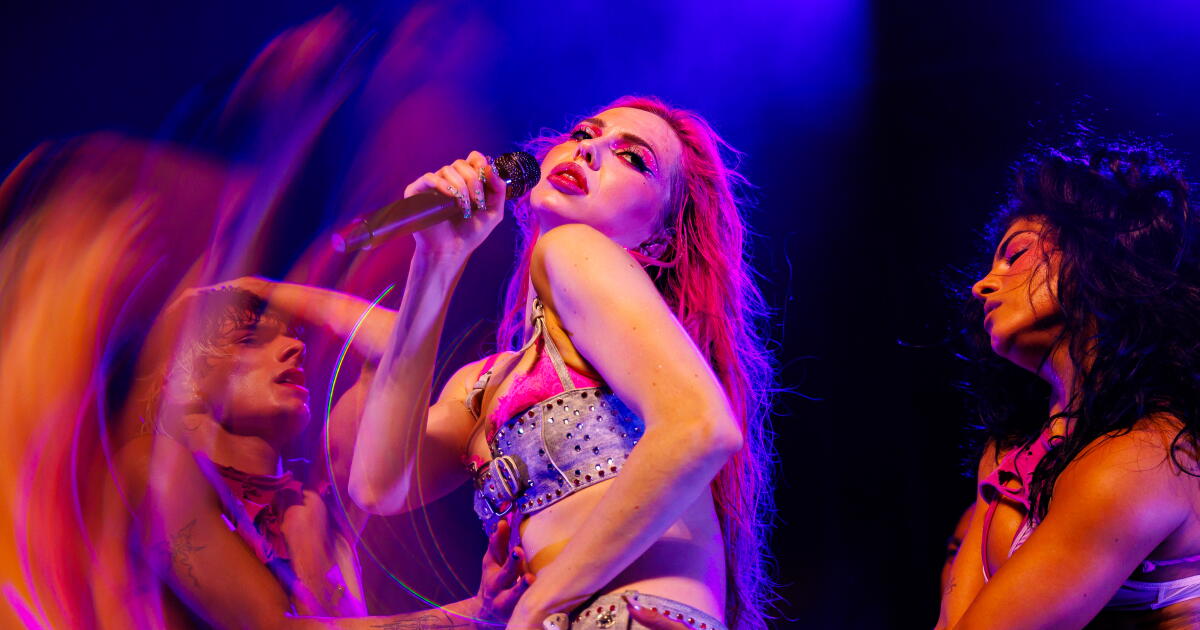
It was only Adéla’s second headlining show in Los Angeles — and she was only about 20 minutes into it — but the ascendant pop star already had an apology she needed to get off her chest.
“The next song that I’m gonna sing is a little bit awkward,” she said Thursday night at the Fonda Theatre. “So I’m gonna need y’all to bear with me as I explain why I made a song called ‘The Baddest Bitches Ain’t in L.A.,’ OK?”
Added Adéla: “Please don’t boo.”
To be precise, the song in question is titled “Ain’t in L.A.” — a woozy banger from the 22-year-old’s buzzy debut album, “Prima.” But you took her point: Here she was in front of a hyped-up crowd that included Chappell Roan and members of the girl group Katseye, and what she was about to tell us is that true coolness lies elsewhere.
Based on her assertion that the Hollywood dream machine is “all a lie,” “Ain’t in L.A.” looks back with scorn at Adéla’s experience as a first-round flameout on “Dream Academy,” the build-a-band reality series that documented Katseye’s creation under the watchful eye of the K-pop kingpin Bang Si-hyuk. At the Fonda, Adéla recounted moving here from her native Slovakia and working alongside the show’s other contestants to “try to become pop stars together,” she said.
“And guess what? That didn’t work out for me. But it did for them.” She peered up at the venue’s balcony. “Shout out to y’all,” she said.
Except now it’s working out for Adéla too: Thursday’s show was the first of two at the Fonda behind last month’s release of “Prima,” whose title nods to the singer’s background as a ballet dancer; in addition to “Ain’t in L.A.,” which has more than 190 million streams on Spotify, the album has spun off a second hit in “Nicole Kidman,” which reached No. 1 on that platform’s U.S. singles chart thanks in part to the enthusiastic embrace of the Hollywood meme queen herself.
This week, Kidman appeared in a viral TikTok video showing her, Kristen Wiig, Pedro Pascal and Dua Lipa lip syncing to “Nicole Kidman” at a Chanel fashion show in Paris.
Adéla’s breakthrough comes amid a broader surge by a generation of young pop singers — think of Slayyyter and think of Tinashe — finding success with music that plays up rather than sands down its rough edges; each is working in the wake of Charli XCX’s influential “Brat,” which offered new ways to think about how pop balances polish and filth, swagger and confession.
Adéla made “Prima” with the producers Dylan Brady (of the duo 100 gecs) and Blake Slatkin (who’s scored hits with Lizzo and Justin Bieber); together the three get an appealingly scuzzy sound that puts chirpy vocal hooks over serrated club beats à la “Blackout”-era Britney Spears. What I’m saying, basically, is that the indie-sleaze revival is real.
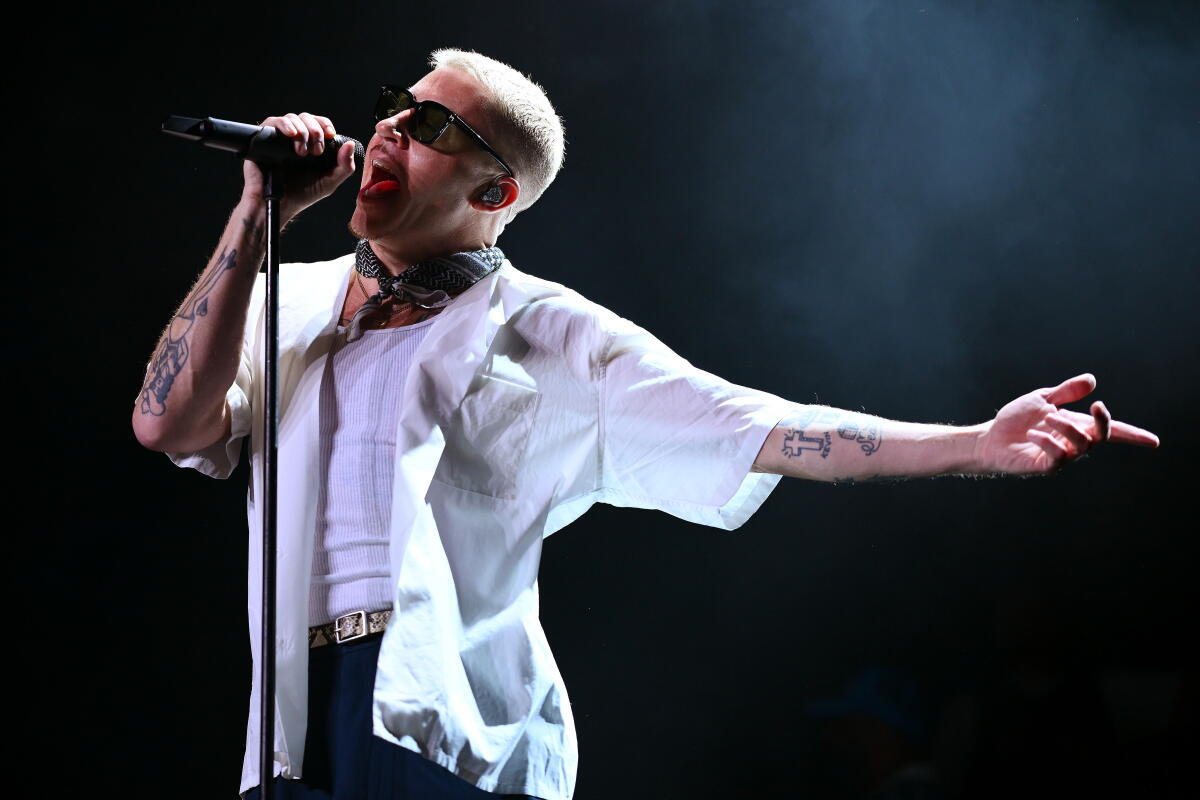
At the Fonda, Adéla brought her songs to life on a stage that was bare except for a ballet barre, which she and a small crew of dancers used to execute choreography that grew raunchier and more elaborate as the show progressed. Both she and a guy danced en pointe; Adéla never went long without whipping her long pink hair, which was one style choice widely replicated throughout the room.
Before she closed with “Nicole Kidman,” the singer sat down at the front of the stage with her journal and told the crowd she wanted to “take a second and manifest a little bit.” She asked the universe to give her a long career, and she asked that her fans, after having gotten home safe, remember this night forever. She also asked — again — that L.A. not be mad at her for writing “Ain’t in L.A.”
“I really do feel bad,” she said, and not a boo could be heard.
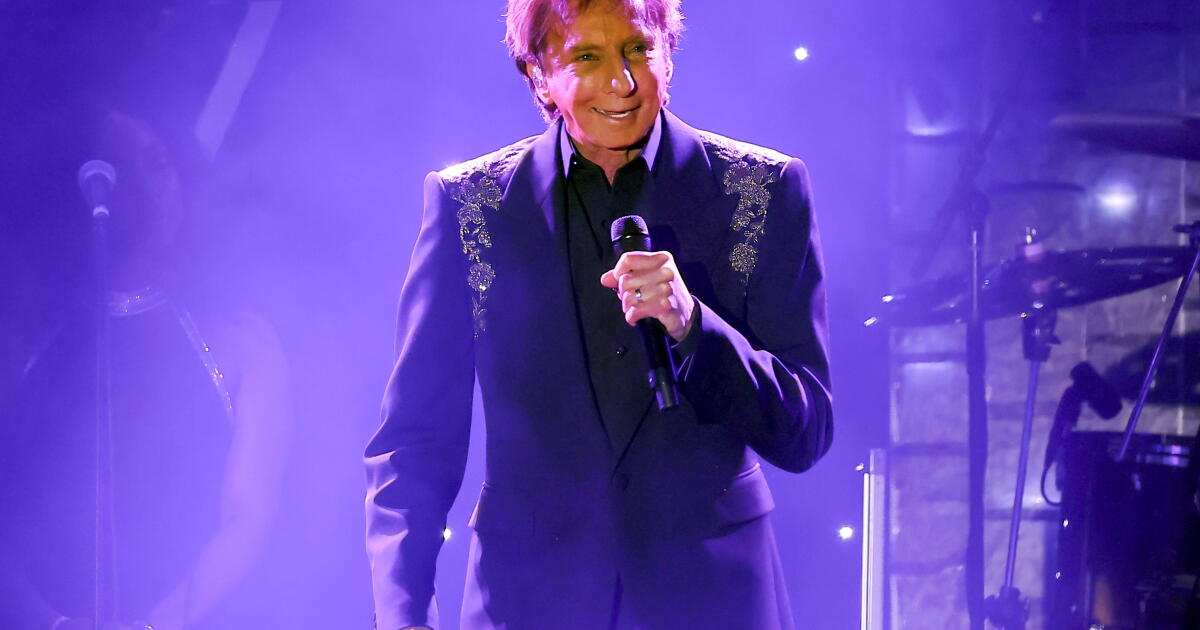
Barry Manilow has returned to the stage after taking a break following his summer tour.
Manilow performed at the International Theater at the Westgate Las Vegas Resort & Casino on Thursday night, telling the audience, “This is the first time back in a long time. I have some medical problems, but I’m back!”
The audience cheered and a couple of crowd members tossed underwear onto the stage. He picked up a pair of full-coverage briefs and asked if they needed to go to the laundry, and then a pink lacy thong and joked, “I’ll keep this pair.”
“God, I feel like I’m a teenage idol again.”
Last year, Manilow revealed that he had been diagnosed with lung cancer and that surgery would require him to postpone several performances. The star returned to the stage in June following a six-month hiatus, in support of his latest album, “What a Time,” his first LP loaded with new material in almost 15 years.
But in August, he canceled shows because of vocal and technical problems before telling fans he needed to pause. “We just finished a fantastic summer tour, 29 shows in 68 days,” the singer said. “The shows were fantastic. The audiences were fantastic. And I sounded fantastic. But it seems that we were pushing a little too hard.
“Now we all need to sit down and shut up,” Manilow said. “So, we’re going to take a break until we return to the Westgate Las Vegas on Oct. 8. When I’ll be singing like a bird. I hope to see you then.”
The “Copacabana” singer is slated to hit the stage again on Friday evening.
Minka Kelly and Dan Reynolds have ended their four-year relationship.
A source close to the couple confirmed the breakup, People first reported on Wednesday.
The “Friday Night Lights” actor and Imagine Dragons frontman first met in 2022 through a mutual friend — although their first month interacting was over phone calls as Kelly, 46, was in the U.K. for work and finishing her memoir, “Tell Me Everything,” which delved into her complex relationship with her mother.
Reynolds, 39, asked to read the book.
“You’ll either be terrified and run for the hills or you’ll see the beauty in all of it,” Kelly shared on “The Drew Barrymore Show” in November 2025. “He fortunately was the latter.”
The pair was first publicly spotted in November 2022 leaving Cafe Stella in Silver Lake; a month earlier, Reynolds announced his split from his wife, indie singer Aja Volkman, whom he married in 2011. His divorce from the Nico Vega vocalist was finalized in March 2024.
In July, Kelly shared an Instagram post of Reynolds featuring his four children (whom he shares with Volkman) at Disneyland, with the caption, “No place I’d rather be.”
In a 2024 interview with People, Reynolds shared that his kids had grown fond of Kelly.
“We view it as kind of bonuses to the family: more people to love, more people to help. We’ve just been really careful with that and slow with navigating how to bring Minka into that conversation,” he said. “She’s done a really incredible job of being sensitive and careful on her end as well.”
In 2025, Reynolds made a guest appearance on the first season of Netflix’s “Ransom Canyon,” which starred Kelly as Quinn O’Grady, a former concert pianist, opposite Josh Duhamel, who played rancher Staten Kirkland.
The show was canceled after two seasons this September.
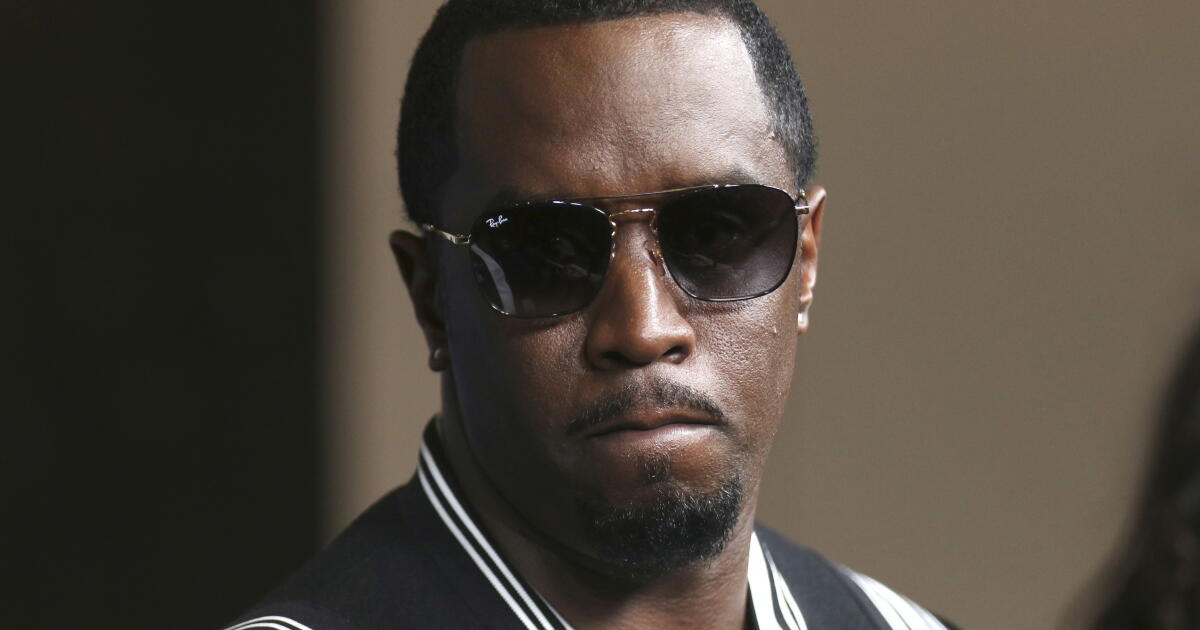
Sean “Diddy” Combs’ release date has been pushed back following allegations of a plush prison lifestyle.
The disgraced music mogul is currently serving a 50-month sentence after he was convicted of transporting prostitutes across state lines for drug-fueled sex performances known as “freak-offs.”
While earlier October reports indicated that the artist and producer would be released on Jan. 21, 2028 — which shaved months off his original June 2028 discharge — an updated search on the Federal Bureau of Prisons inmate database reveals his new revised date as March 2, 2028.
News of his release date comes as the “Bad Boy for Life” singer was reportedly placed and remained in solitary confinement at FCI Fort Dix, a low-security federal prison in New Jersey, following allegations of a pampered prison lifestyle.
On Sept. 29, an NBC report detailed the accounts of four anonymous inmates who claim that the 56-year-old had been paying men for special services.
Sources told NBC News that Combs paid inmates to clean and cook special meals for him, including curry chicken, pizza and empanadas, and that the hip-hop and R&B music producer also receives Chinese-style massages.
To pay for the labor, inmates allege that individuals outside of the prison are depositing thousands of dollars into the commissary accounts of those waiting on the “Satisfy You” singer.
The news outlet also published an image of Combs using a contraband phone, a prohibited item across state and federal prisons; multiple inmates said that he uses it to scroll Instagram and view explicit nude content shared by an old girlfriend.
Two sources also shared that Diddy has access to a “jailbroken” tablet where he watches movies and documentaries, including “Sean Combs: The Reckoning,” the Netflix docuseries produced by his adversary Curtis “50 Cent” Jackson.
Sources also allege that Combs is smuggling an illegal stash of alcohol and purchasing an antidepressant drug known as Remeron, or “rem-roms,” from other inmates.
“This is not some normal s— you see in jail. This is some rich s—. It looks crazy, but again, it’s Diddy,” one source told NBC.
The Times reached out to Combs’ representatives, but did not hear back.
A representative from the Federal Bureau of Prisons said they “do not comment on the conditions of confinement for any incarcerated individuals, including quarters assignment, release plans, or whether a particular individual is the subject of allegations, investigations, or sanctions.”
Legal troubles hit a high note last year for Combs when he was involved in a lengthy and public trial involving allegations of sexual assault and other violence. His former girlfriend Casandra “Cassie” Ventura and producer Rodney “Lil Rod” Jones lodged civil complaints against the music tycoon.
In July 2025, Combs was found guilty on two counts of a prostitution-related charge, but not guilty of racketeering conspiracy and sex trafficking, which carried heavier penalties, including a maximum sentence of life in prison.
LEGENDARY R&B singer Freddie Jackson has died at 70 as family and friends mourn the icon’s passing online.
The singer, known for his hit song Rock Me Tonight (For Old Times Sake), passed away on Monday, just days after his milestone birthday.
R&B legend Freddie Jackson has died, days after his 70th birthdayCredit: Getty ImagesFreddie is known for his hit songs Rock Me Tonight (For Old Times Sake) and You Are My LadyCredit: Getty Images
Freddie’s family announced the sad news on his Instagram on Tuesday.
“It is with profound sadness and heavy hearts that we share the passing of our beloved Freddie Jackson, who went home to rest last night,” the post read alongside a photo of the iconic vocalist.
Sign up for the Showbiz newsletter
Thank you!
“Freddie was more than a legendary voice. He was a kind, generous soul who loved his fans, his family, his friends, and his music with everything he had.
“For decades he gave us the songs that became the soundtrack to our love stories, our celebrations, and our most treasured memories. That gift will live on forever,” the caption continued.
“To everyone who ever sang along, danced, or felt something when Freddie took the stage: thank you. You were family to him, and he carried your love with him always.
“Please keep his family, friends, and loved ones in your prayers during this difficult time. Details regarding arrangements and how to honor his legacy will be shared in the coming days.”
The family concluded the post, writing, “Rest in peace, Freddie. Your legacy and your voice will live on forever.”
They did not reveal the artist’s cause of death.
Most read in Entertainment
Fans shared their grief and condolences to Freddie’s loved ones in the comments.
“Another Legend Gone…Another Legacy left behind. This sucks! Grateful for the gift he shared with an unforgiving world,” professional wrestler Elijah Burke (Da Pope), wrote.
“Oh man Freddie one of. The true greats!!!! I had the pleasure of working on a song duet with him and Natalie Cole! Superb!” singer Narada Michael Walden added.
“Three days after his birthday. Rest well and Thank you for all the wonderful songs throughout the years here with us on earth,” a fan said.
The singer’s cause of death was not disclosedCredit: GettyThe vocalist released his newest album, My First Love, in May 2023Credit: Getty
“Awww man. Such a cool brother. So talented too ! One of the Greats,” chimed in a fourth.
“Heartbreaking news!!! Rest in Paradise Freddie,” a fifth echoed.
Freddie’s music career took off in the 1980s, with his chart-topping hits, You Are My Lady, Have You Ever Loved Somebody, and Jam Tonight.
The New York native kept performing until his death, singing his old hits and songs from his newest album, My First Love, released in May 2023.
He hit the stage in June for a performance at a winery in Philadelphia and was among the headliners at an 80s Night Concert in Fort Worth, Texas, in April, per his recent Instagram posts.
In one of Freddie’s latest posts, he thanked fans “for all the love” on his birthday and shared a photo of himself in a white suit.
Former ‘American Idol’ singer Caleb Flynn has been sentenced to life without parole after being convicted of murdering his wife and attempting to cover up the crime.
LOUIS TOMLINSON has opened up about juggling being a globetrotting singer and a proud dad.
The former One Direction star said: “Being a dad is incredibly rewarding, but it’s also challenging.
Louis Tomlinson has opened up about juggling being a singer and a dadCredit: GettyLouis shared this pic online when son Freddie was bornCredit: PA:Press Association
“On my recent American run of shows, my son Freddie came to two shows.
“I normally do a really good job of splitting myself down the middle – me as dad, and me at work as a singer.
Sign up for the Showbiz newsletter
Thank you!
“When those two worlds meet, I find it incredibly stressful because all I want to do is give all of my time to Freddie, but the mental game to stand up on stage is also quite consuming.
“Me and my son almost pretend that I don’t do this job – we live our lives as normally as we possibly can.
“When home and work collide, it’s a bit uncomfortable as, truthfully, all I want to do is spend my time with him.”
Louis made the candid comments to The Snuts’ Jack Chochrane for the Finding Joy In Short Moments podcast with Calm.
Despite completing two as-good-as-sold-out world tours, Louis says he still doubts himself at times now he’s without his bandmates.
He added: “It can be tough for me. Sometimes I might not think I am good enough to be on the stage.
“But I never leave the stage with that feeling.”
Coming from a band is always hard – let alone one that contained superstar Harry Styles – but I think Louis is killing it.
LOLA STARS IN STRIPES
Lola Young in a bold, multicoloured co-ord as she performs at the 2026 Austin City Limits Music FestivalCredit: Getty
LOLA YOUNG is stripe on trend as she takes to the stage in Texas.
The Messy singer wore this bold, multicoloured co-ord as she performed at the 2026 Austin City Limits Music Festival at the weekend.
Lola’s set went down a treat with festivalgoers, but just days ago the star revealed she sometimes struggles to breathe due to her love of vapes.
Taking to TikTok, Lola explained: “Somebody once said to me, ‘Lola, there will be a day when you wake up, you’ll be 25 or 26, from a deep sleep, and you’ll start to feel the effects of vaping’.
“You know what I said? I said ‘nah’ and rolled my eyes.
“But let me tell you something, the day has come.
“My lungs feel like they’re battery-powered, like they’re just one big battery.
“Breathing feels like a chore, it feels like hard work, it feels like I should be paid for breathing. It feels like there will be no tomorrow.”
MARRIED JOY APPEALS TO TROYE
Aussie star Troye Sivan with Charli XCXCredit: Getty
AUSSIE star Troye Sivan says attending Dua Lipa and Charli XCX’s glitzy weddings gave him a kick up the bum to find a husband.
The Rush singer, who is 31, explained: “All of my friends in Australia, they all got married when we were young, early 20s vibe.
“I felt nothing because I was like, ‘I’m on such a different track of life from them. I’m living in the US, I’m gay and I’m surrounded by people who are not married’.
“Then I started to feel the pressure for the first time when I started to go to music peers’ weddings.”
Troye split from model Jacob Bixenman in 2020. He told the Therapuss podcast: “Seeing Charli and Dua get married, I’m like, ‘Oh, f**k, my excuse of I’m really busy . . . I’m nowhere near as busy as them and they managed to make it work’.
“So I’m like, ‘OK, yeah, I should try and lock this down somehow’.”
KAI’S SCARY TRIP IS STRICTLY BUSINESS
Kai Widdrington and Chloe Wells attend the VIP night of Shocktober Fest at Tulleys FarmCredit: Getty
IT seems Kai Widdrington has been getting in the mood for Strictly’s Halloween special later this month.
The pro dancer took time out from his gruelling training sessions with celeb partner Delta Goodrem for a date night at the weekend.
The buff star and his girlfriend Chloe Wells headed to the VIP launch of Tulleys Shocktober Fest – the largest scream park in Europe.
Luckily, the scare mazes were the only fright Kai got this weekend as last night he and Delta sailed through to the next week of Strictly.
I honestly think they could go all the way.
GLASTO’S A 42-MIN SELL OUT
Harry Styles is set to headline Glastonbury 2027Credit: Getty Images
CONGRATULATIONS to all who secured tickets to Glastonbury 2027.
Yesterday hundreds of thousands of hopefuls battled to get tickets to the greatest festival on earth.
Headliners are set to be announced soon – with Harry Styles a dead cert for one of the slots. I previously told how Lily Allen has also been officially asked to perform at Worthy Farm.
The last time she was on the bill was in 2014, so I’m sure her set next year will be a moment.
The Bizarre team will be there to bring you all the gossip.
BUSTED’s Matt Willis revealed neither he nor wife Emma thought she would manage to land the Strictly hosting job, but he couldn’t be more proud of her.
He said: “Strictly was a curveball. Taking the biggest job on TV was not on our bingo card for 2026, but I’m so proud of her.
“And if anyone can do it, it’s Emma. I’m stoked for her, she’s perfect for it, and loves the show so much.”
TAKE THAT £73M TO THE BANK
Gary Barlow, Mark Owen and Howard Donald earned £73million from their Circus Live stadium tourCredit: Mike Marsland/WireImage
In a report from Pollstar – the leading music analytics firm – the trio earned £4,299,605.67 every night of their two-hour celebration.
The bank-balance-busting fees break down to £195,436.62 a song, £35,830 a minute, or £597.17 a second.
I was invited to hang out with the lads for their first night in Sheffield, and honestly, it was one of the best nights of my life.
FEARNE IS IN A REAL HAPPY PLACE NOW
Fearne Cotton’s wellness brand Happy Place banked £2million last yearCredit: Getty
FEARNE COTTON’s wellness brand Happy Place has put her in just that, as it banked £2million last year.
The former Top Of The Pops host set up the company after mental health struggles left her too scared to continue as a live TV or radio host – and her venture has certainly paid dividends.
As well as Happy Place being a podcast, she now holds the Happy Place Festival, has written books, and has built a market place where she gets a cut if people make purchases.
Latest accounts filed at Companies House show the star’s firm paid £500,000 in tax last year. After paying bills, the company has £1.4m in equity, including close to £1.2m cash in the bank – a rise from £900,000 the year before.
Fearne has been in the spotlight since the age of 15, when she won a nationwide talent search to present TV’s The Disney Club.
While her career has had a few twists and turns over the years, this is sure to have helped put a smile back on her face.
THE WEEK IN BIZNESS
MONDAY: Vicky Pattison takes on her most ambitious challenge yet with Tyne To Thames – a five-day, 250-mile journey from Newcastle to London by kayak, bike and on foot for Global’s Make Some Noise charity.
WEDNESDAY: Danny Beard will host the Attitude Awards at London’s Roundhouse where a host of stars will receive awards ahead of performances from Sugababes and Orville Peck.
FRIDAY: The Social Reckoning, a sequel to The Social Network, starring Mikey Madison and Jeremy Allen White hits cinemas, as Oasis’ film Don’t Look Back In Anger airs on Disney+.
SUNDAY: Andrew Garfield will be in town for the London Film Festival gala screening of his new movie Artificial with Monica Barbaro and Chris O’Dowd, about the firing and reinstatement of OpenAI CEO, Sam Altman.
CANADIAN singer Sass Jordan has died aged 63, her family have announced.
Heartbreaking tributes have poured in for the Montreal rocker who passed away “peacefully” on Friday evening.
Sass Jordan during Molson Canadian Rocks for Toronto show in 2003Credit: GettySass was remembered by her family as a ‘force of nature’Credit: IMDB
Sharing the news of her death on social media, her family wrote: “On Oct. 2 2026, surrounded by her loving family, Sass Jordan peacefully crossed over to the other side.”
Her family remembered her as “an inimitable force of nature” and “an irreplaceable being of light and joy”.
Sign up for the Showbiz newsletter
Thank you!
Sass, behind iconic tracks Racine and Make You a Believer, was born in Birmingham, England.
She moved to Montreal aged three with her French literature professor father and former British Ballerina mother.
Aged 16 she was fronting bands in downtown Montreal clubs, later becoming singer and bassist for local favourites The Pinups.
Her debut album, Tell Somebody, won Sass the Juno Award for Most Promising Female Vocalist of the Year in 1989.
Three years later, after moving to Los Angeles, Billboard magazine named her Female Rock Artist of the Year after her album Racine.
It became the defining album of her career, selling an estimated 450,000 copies worldwide and 100,000 in Canada.
Sass Jordan was born in Birmingham, England before her family moved to MontrealCredit: GettySass performs for the Luminato arts festival opening night concert in 2010Credit: Getty
That same year she recorded the duet Trust in Me with Joe Cocker for ‘The Bodyguard’, a soundtrack that sold more than 45million copies.
Throughout her career Sass toured alongside Aerosmith, The Rolling Stones, AC/DC and Van Halen.
Later in 2003 she would join Canadian Idol as the only female judge on the panel.
She remained on the show for all six seasons.
Sass is survived by her husband, Derek Sharp, daughter Stella Jordan-Sharp, stepdaughter Brianne Sharp and brother Daniel Jordan.
Her family has asked for privacy to grieve and has thanked fans for their tributes to her remarkable life.
Tributes have flooded in for the late singer, with fans and fellow musicians paying tribute.
Deep Purple singer and bassist Glenn Hughes posted on Instagram: “So suddenly, I’m heartbroken.
“A true friend, we had so much love, joy and laughter and music together.
“RIP my Sasseroonie Girl.”
American rock and blues singer Ian Moore posted: “Love you Sass. Soul mama supreme.”
Others said her voice and art had “defined a generation”.
One user posted: “Thank you for everything and may your presence continue to be such a joy and comfort to us all.”
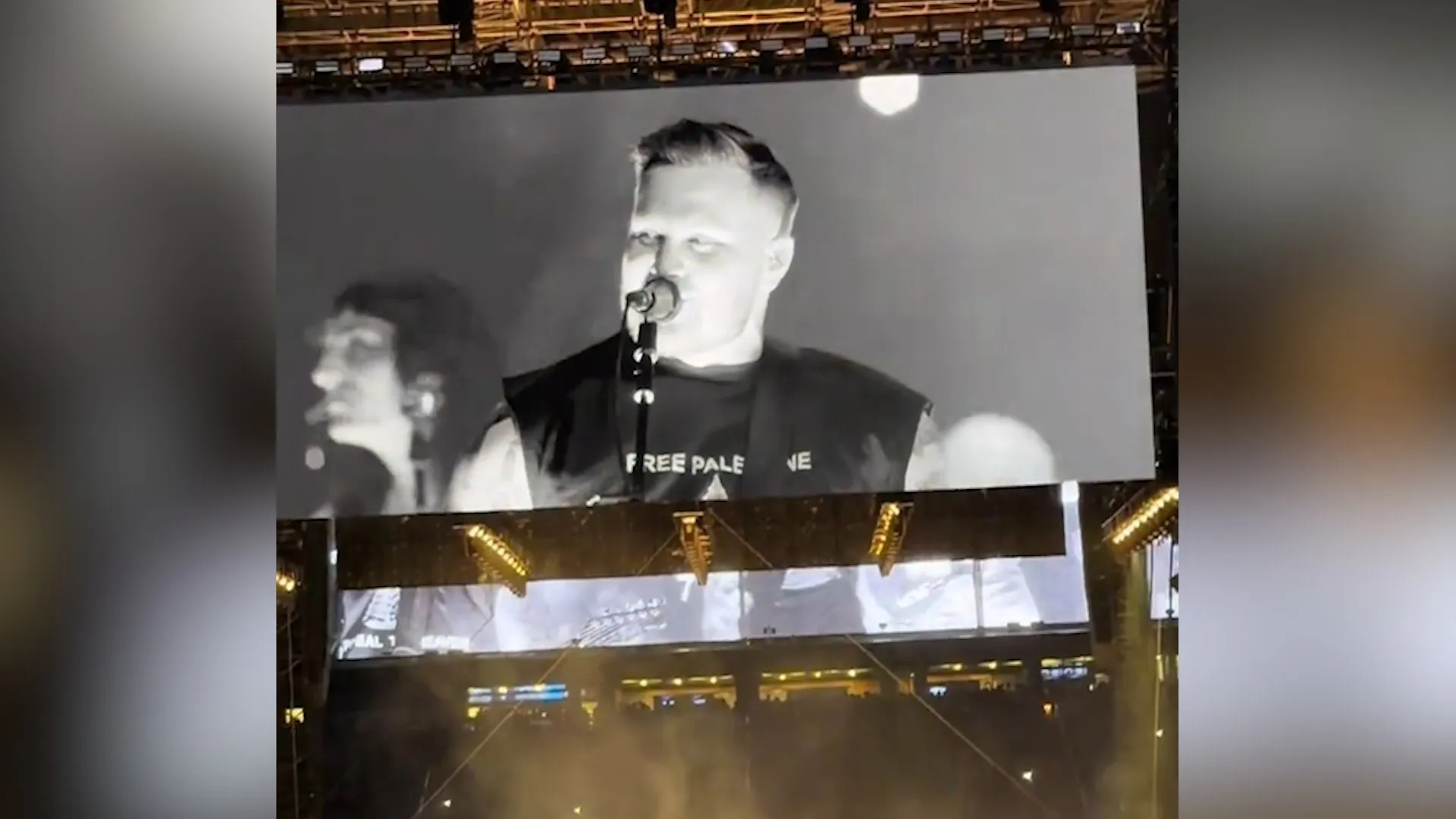
US country music star Zach Bryan wore a ‘Free Palestine’ shirt while performing at Gillette Stadium, owned by US businessman Robert Kraft. The pro-Israel billionaire recently prevented Macklemore performing there on a Ed Sheeran tour, over pro-Palestine remarks.
Radio personality, jazz singer and former BET host Angela Stribling died on Sunday of cancer.
Stribling “passed away peacefully at home … after a courageous two-year battle with brain cancer,” her husband, Ken Washington, posted to her Instagram account. “Her sister Darlene and I were by her side.”
A native of Buffalo, N.Y., Stribling attended the Fashion Institute of Technology in New York City and took a position with American Airlines at the Baltimore/Washington International Airport after college. She spent four years as host of BET entertainment news program “Screen Scene” and helped launch BET Jazz, hosting “Jazz Central,” “Jazz Discovery” and “Jazz Scene” for the network, according to a posting about her death by WHUR 96.3 Howard University Radio.
She worked as a reporter for “Evening Magazine” and co-host of “On Time” on Baltimore television and as a news intern at WTTG-TV and at WOL-AM in Washington, D.C., before joining WHUR-FM. That’s where she became the first woman to host “The Original Quiet Storm,” a program of “soulful slow jams and romantic melodies” that recently celebrated 50 years of being on air.
“Pillow Talk,” WHUR’s long-running late-night program hosted by Stribling, centered on relationships, conversation and music.
“Angela Stribling was a remarkable talent, but what made her truly special was the person she was,” WHUR general manager Sean Plater said in the station’s tribute. “Her voice was beautiful, her presence was calming, and her spirit was genuine. She had a way of making people feel welcome and valued, and that gift extended far beyond the radio. Angela was part of the WHUR family, and her loss is deeply felt by all of us. We will remember her not only for the incredible career she built, but for the love, kindness and light she shared with so many people.”
Stribling was also a classically trained jazz vocalist, who performed at New York City venues including the Rainbow Room, the Supper Club and the Soul Cafe. She traveled the world and shared the stage with legendary artists, including Stevie Wonder and Chaka Khan.
“Her sultry voice made her a staple on radio in the D.C. area and on Sirius. She did countless voiceover work, she sang and had parts in movies. I remember her calling me when she got a role in the Eddie Murphy movie ‘Distinguished Gentlemen,’ ” former BET colleague Ed Gordon wrote on Facebook. “She was a sweet soul.”
A singer from English band Massive Attack, Robert Del Naja, was arrested in Liverpool while protesting genocide in Gaza and denouncing the UK’s ban on Palestine Action. Demonstrators had gathered to demand the UK stops arming Israel ahead of the first Labour Party conference under new Prime Minister Andy Burnham.
Naked Eyes lead singer Peter Byrne died in Los Angeles on Sept. 14, according to the group’s website.
Byrne, who co-founded the synth-pop band with Rob Fisher in 1982, died “peacefully … after a brief illness,” the statement reads.
Naked Eyes’ Pete Byrne performs onstage in Los Angeles in 2019.
(Scott Dudelson / Getty Images)
Naked Eyes, a high note for the MTV generation, scored ’80s hits with their synth-pop version of Burt Bacharach and Hal David’s “Always Something There to Remind Me” and their original song “Promises, Promises,” with the former hitting No. 8 on the Billboard Hot 100 in 1983 and the latter reaching No. 11 that same year. “When the Lights Go Out” and “(What) in the Name of Love” also reached the Hot 100’s Top 40, hitting No. 37 in 1983 and No. 39 in 1984, respectively.
Byrne was born in Islington, North London, and began his music career in the mid-’70s. From 1979 to 1982, he was a member of the band Neon, which included Fisher and future Tears for Fears founders Curt Smith and Roland Orzabal. Byrne and Fisher released their debut album as Naked Eyes in 1983, according to the group’s website.
After Fisher died in 1999, Byrne released his 2001 solo album “The Real Illusion” and Naked Eyes albums “Fumbling With the Covers” in 2007 and “Disguise the Limit” in 2021. A remastered version of their self-titled debut album was released in 2025.
Byrne is survived by his siblings Eileen, Sandy, Carol and Steve; his three children, Merlin, Dylan and Chloe; and his ex-wife, Elena.
Did Justin Bieber perform at problem-plagued MacArthur Park? Never say never.
An impersonator may have tricked a Las Vegas nightclub last year, but those at the park Tuesday appeared convinced of their brush with Bieber. L.A. County’s district attorney was too.
According to social media posts, the singer and a few band members set up on a grass lawn near a Central American fried chicken shop on 6th Street. He reportedly performed several songs, including the 2025 hit “Yukon.”
L.A. County Dist. Atty. Nathan Hochman on Tuesday night pointed to the “Yukon” clip as proof that park conditions were improving.
L.A. D.A. Nathan Hochman, center left, walks with First Assistant U.S. Atty. Bill Essayli on June 4 as L.A. police and federal agents conduct an operation targeting narcotics use at MacArthur Park.
(Allen J. Schaben/Los Angeles Times)
Bieber’s performance, he said in a post on X, was a “testament to the progress we are achieving to take back the park from drug dealers and enliven it for families.”
“[He’s] definitely on the invite list for next year’s Labor Day weekend picnic!” Hochman said.
The Times reached out to Bieber’s representatives to confirm the pop singer’s appearance but did not immediately hear back.
The pop star has been leaning in to more intimate performances, notably appearing on the Grammys for a stripped-down rendition of “Yukon” (while wearing boxers and black socks).
In April, he made his Coachella headlining debut, playing a nearly 90-minute set. For a large portion of the set, he took Beliebers — as his fans are known — down memory lane, sitting behind a laptop and singing along to his old music videos.
Nearly every summer, Tove Lo finds herself itching for a change.
Typically, the sweltering season will prompt the Swedish singer-songwriter to do something new, like dye her hair black or switch up her personal style. But even in the midst of this annual metamorphosis, she tends to find her way back to the same place: a small Swedish fishing village called Torekov.
Between recovering from her first heartbreak and overcoming burnout from her debut album “Queen of the Clouds,” the remote town has offered her a seaside refuge ever since childhood. Yet, with the making of her latest studio album “Estrus,” Torekov officially solidified itself as a mainstay in the singer’s artistic process.
“It’s kind of an emotionally triggering place for me, both good and bad,” Lo said, as she sank farther into the booth at Thai Angel on a humid August afternoon. “I needed a second to be in a place without distractions, where I’m more like a person than an artist … It almost offers a creative force field that I need to enter every process now.”
Torekov, as Lo describes it, is what the neighborhood in “‘The Truman Show’ is like before they hit record.” It’s somewhat of an idyllic place where the seashore is lined with wooden houses; sheep graze along the grassy cliffsides and residents wander around the shops in bathrobes and clogs, right after their morning swims.
However, when Lo visited during the off-season, its emptiness was “ominous” — unintentionally stirring her inner want to cause chaos. In true Tove Lo fashion, the surrounding serene village made her turn to the familiar sounds of heavy club electronica, further building on the contradictory ethos that comprises “Estrus.”
“Every song feels different. It’s like every feeling I’ve ever felt condensed into 13 songs,” Lo said, in between sips of her iced tea. “[Listeners] are getting this horny, rolly, aggressive bass line, and these super intimate, knife-to-the-heart kind of emotions in a very intimate way. I feel like they’re going to be emotionally exhausted.”
Under the dim red light of the Koreatown bar, the singer exuded an air of comfort, as she’s somewhat of a Thai Angel regular. The Swede, who’s lived in L.A. for nearly a decade, hosts a secretive, recurring party at the bar called SOUP. Usually the bar is a rowdy reprieve filled with sweaty bodies and pounding bass lines, with Lo situated behind the DJ decks. But on that Monday afternoon, hours before the bar opens, she had the place almost entirely to herself.
Tove Lo outside Thai Angel, a Koreatown bar where she hosts a recurring party.
(Jason Armond / Los Angeles Times)
With only the swirling sounds of an overhead air conditioning vent to cloud her thoughts, she explained that, at the beginning, “Estrus” was bogged down by an unprecedented wave of writer’s block. The singer had initially tried to get a head start on her sixth studio album at home in Los Angeles, but she felt a new kind of pressure hanging over her head.
“I had this feeling that this is my sixth album and I had something to prove, like I needed to have a message or some kind of advice,” Lo said.
She credits the newfound tension to her career’s longevity. The 38-year-old, raised in the suburbs of Stockholm, got her start in music as a songwriter in the early 2010s, earning credits on tracks including Ellie Goulding’s “Love Me Like You Do” and Lorde’s “Homemade Dynamite.”
She gave in to her pop-star ambitions in 2014, with the release of her debut album, “Queen of the Clouds.” The record featured her breakout hit “Habits (Stay High),” which details her getting the munchies, throwing up in a tub and going to sex clubs to get over a heartbreak. Lo said she likes to think that, with the early success of the rebellious anthem, she was “very clear from the start.”
“I’m a hot mess,” Lo remarked, between laughs. “Here you go.”
Since then, she’s continued to develop her raw pop sound by collaborating with DJs like Flume and SG Lewis, while adding to her library of cult-classic tracks like “disco tits” and “Glad He’s Gone.” But at this point in her career, she said it also felt like she “should’ve had all the answers” by now.
“I had this idea that I had to prove that I had become a better, bigger person,” Lo said. “But I’m just the same f— messy girl.”
And the sound of “Estrus” follows suit. Immediately, the opening song, “a lot of feelings, no solutions,” hits listeners with a punchy bass line and blatant lyrics about having no advice to offer. Throughout the 13-track record, she flip-flops between being vulnerable and playful while also being hedonistic and making sacrifices. For example, on “the bad one,” she takes accountability for being a “problematic” partner over staccato percussion and a cinematic synth, while also being grateful she got out of the relationship. Similarly, on “F.A.M.T,” she leans into her avoidant tendencies on top of a choir of high-pitched cyber chimes and resorts to sexual endeavors instead of looking inward.
Tove Lo is set to perform at the Greek Theatre on September 27 as part of the Estrus tour.
(Jason Armond / Los Angeles Times)
“We suppress a lot to be respectful to other people, and there’s nothing bad in that,” Lo said. “But if you never let your vices drive you for a night or a day, I think you’ll go absolutely crazy. You just need to have moments where you don’t think about the consequences. Just be hedonistic for a second. Indulge.”
Like much of Lo’s music, the new project, named after a female mammal in heat, is centered around the age-old tension between the body and mind. On her previous album “Dirt Femme,” released in 2022, she opened up about being unsure if she wants children, while denouncing the societal expectations that come with being a married woman.
And it’s still something she’s trying to figure out on “Estrus.” The album’s final track, “source of life,” offers up a mantra of contradicting adjectives like “feral,” “euphoric” and “fragile,” while questioning if she ruined her chances of motherhood by “partying late.”
“My body [says] well, maybe we should just have like one baby, and my mind is like, absolutely not,” said Lo. “I don’t know who’s gonna win. But I do feel like I’m in the final boss of adventures.”
By the end of “Estrus,” it’s apparent that the tug-of-war between her body and mind isn’t over. And she’s not sure if there will be a resolution. It’s still an ongoing battle — and it’s precisely what Lo says she was aiming for.
“There’s no good advice on this album,” she playfully reiterated. “Just don’t ask me.”
Duncan Sheik, who earned a Grammy nomination for his ubiquitous 1990s hit “Barely Breathing” and won a Tony Award for composing the music for “Spring Awakening,” died Thursday. He was 56.
“It is with profound sadness that we confirm the passing of Duncan Sheik,” a statement posted Friday on Sheik’s Instagram account read. “The world has a lost a singular talent, and deeply influential voice in music and theater…. Duncan’s artistry touched many and leaves an indelible mark on the cultural landscape.
“Duncan was a father, husband, son, brother, and friend. He will be remembered for his sensitivity, wit, inteligence, and depth of spirit he brought to those who knew and loved him.”
The statement added that “Duncan passed away last night surrounded by love.”
His mother, Suzanne Sheik, told the New York Times that her son died of organ failure. A statement posted to his Instagram account Thursday said that Sheik was “receiving medical care and remains in critical but stable condition.”
Sheik, a New Jersey native, went to Brown University, where he played in an early band with singer-songwriter Lisa Loeb. His 1996 self-titled debut LP was a hit on the strength of “Barely Breathing,” an exemplar of the upbeat coffeeshop rock that emerged in the wake of grunge on the pop charts. The single stayed on the Hot 100 for over a year, and the album went gold, earning earned him a Grammy nomination for male pop vocal performance.
Sheik’s followup, 1998’s “Humming,” featured rich orchestration, but he already had an eye on Broadway (his sister Kacie Sheik is a stage actor who has appeared in “Hair,” “American Idiot” and “Because of Winn-Dixie,” for which Duncan wrote the score).
He wrote his 2001 album “Phantom Moon” with poet and playwright Steven Sater, whom he’d again collaborate with on the score for the musical “Spring Awakening” — based on the play by German Expressionist Frank Wedekind, which won him a Tony Award — and “Alice by Heart.” His 2009 album “Whisper House” yielded a companion musical of the same name. He also composed the score for the 2004 film “A Home at the End of the World.”
While Sheik sought treatment for alcohol addiction after canceling a tour in 2011, his stage and studio career never slowed. Other major stage credits include hit productions of “American Psycho,” “Bob & Carol & Ted & Alice,” the thriller “Noir” and “The Secret Life of Bees,” along with Shakespeare’s “Twelfth Night” and “The Taming of the Shrew.” His last album, “Claptrap,” came out in 2022.
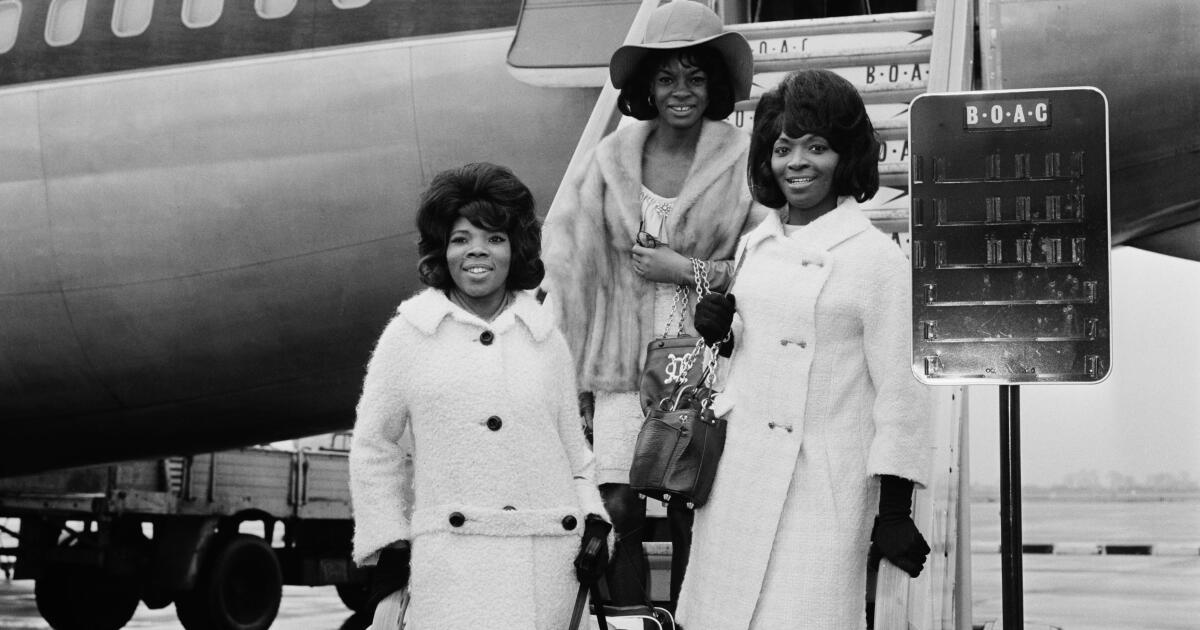
Rosalind Ashford, the soprano behind hits from Martha and the Vandellas including “Dancing in the Street” and “Heat Wave,” has died. She was 83.
The singer died of natural causes on Tuesday in the Michigan suburb of Redford Township, per the Detroit Free Press.
Ashford was an original member of the Motown girl group Martha and the Vandellas, best known for their timeless soul pop songs. She sang on more than 20 of the group’s top 40 singles on Billboard’s R&B chart, including “Heat Wave,” which hit No. 1, and “Dancing in the Street,” which peaked at No. 2 on the U.S. Billboard Hot 100 chart.
“I am deeply saddened to hear about the passing of Rosalind Ashford,” Martha Reeves said in a statement. “Rosalind played an important part in the early days of Martha and the Vandellas. Her voice will forever be with us through our great recordings together, and she will be missed, but never forgotten. Our Motown Family has just gotten a little smaller. My heart is heavy.”
In 1995, Martha and the Vandellas were inducted into the Rock & Roll Hall of Fame, becoming the second all-female group to land the acclaim.
Born on Sept. 2, 1943, to John and Mary Ashford, the budding soprano developed her chops singing in the church choir and then in the glee club at Wilbur Wright High School in Detroit. In 1957, the musically inclined teen landed an audition at the Detroit YMCA, and it was there that she, Annette Beard and Gloria Williams linked up with local music manager Edward “Pops” Larkins, and formed the girl group the Del-Phis.
According to the Motown Museum, the Del-Phis invited Reeves — then a secretary to William “Mickey” Stevenson, Motown’s Artists and Repertoire director — to join their girl group. Together, they took on gigs as backup singers, including on Marvin Gaye’s early songs “Hitch Hike” and “Pride and Joy.”
The Del-Phis became Martha and the Vandellas when “My Guy” singer Mary Wells missed a fortuitous recording session. Reeves, with the Del-Phis singing backup, filled in for Wells, and Motown was so impressed, the label signed the group to the Gordy label in 1962, sans Williams, who left the group around this time.
The trio’s breakout hit, “Come and Get These Memories,” was released in 1963 and performed well on the Billboard charts, reaching No. 6 on the R&B singles chart. “(Love Is Like a) “Heat Wave” dropped the same year and topped the charts, followed by “Quicksand,” which also became a top-10 hit. The 1967 song “Jimmy Mack” went to No. 1 on the Billboard R&B singles chart and was the final top-10 hit in the U.S. for the group.
“Heat Wave” scored the group a Grammy nomination for best R&B recording for 1964 and made the trio the first Grammy-nominated Motown group.
Ashford left the group and the music business behind in 1969, and worked at the Michigan Bell Telephone Co., though she would occasionally reunite with former Vandellas members for reunion performances.
Classic Motown posted a tribute to the singer on Thursday, writing that her harmonies served as the soundtrack to a generation. “The Motown family mourns the passing of a true icon, Rosalind Ashford,” read the statement. “As an original founding member of Martha and the Vandellas, Rosalind’s vocal talent helped define the golden era of the Motown sound.
“Rosalind’s contribution to American music and Motown history will never be forgotten. Rest in power, Rosalind. Thank you for the music.”
Chris Brown is speaking out after lawmakers honored him during his concert in Arlington, Texas, then apologized for the honor.
On Sept. 12, U.S. Rep. Jasmine Crockett (D-Texas) and Democratic Texas Rep. Venton Jones appeared at AT&T Stadium for Brown and Usher’s R&B Tour, where they honored both singers for their contributions to music. The politicians presented them with a Congressional Record recognition and state proclamation.
“Right now, we are experiencing Black joy to the highest level,” Crockett said on stage. “And I wanted to make sure we document that in the Congressional Record.”
Usher was not on stage when either honor was presented.
The incident sparked public backlash because of Brown’s history of domestic violence. In June 2009, the “Forever” singer pleaded guilty to one count of felony assault for physically attacking Rihanna.
On Monday, the 37-year-old singer and dancer took to social media to apologize to Crockett for the criticism she received following the recognition, uploading a photo of the two to his Instagram story with text that read: “I apologize for any backlash you have to deal with for awarding for me. I’m not political but I move off of frequency and energy and I’m so grateful. Once again, thank you.”
But by Tuesday, Jones released a statement apologizing to his constituents for his role in presenting Brown with a state resolution.
“Over the past few days, I have listened closely to the conversations, concerns, and heartfelt feedback shared across our community following my presentation honoring Chris Brown with a state resolution,” Jones said.
Jones, who first assumed his role in 2023, said that the presentation was an attempt to reach voters ahead of the Nov. 3 midterm election.
“First and foremost, I want to acknowledge the women, the Black women, whom my actions have hurt. In moments like these, I think it’s important to be specific and just as loud with an apology as our original actions were,” Jones added in his statement. “I apologize.”
After Jones’ statement, Brown called out the representative.
“I didn’t ask to be honored because I knew some s— like this would happen and [Venton Jones] immediately started tap dancing and apologizing because he didn’t wanna lose voters and support,” Brown wrote on Sept. 15 on his Instagram. “I have a great idea.. how about [y’all] leave me the f— alone and let me focus on the fans that spent their money to actually see and support me.”
Outside of the most widely recognized incident involving Rihanna — which occurred hours before the couple was set to appear at the 2009 Grammy Awards — there have been multiple domestic violence allegations against Brown, including by his ex-girlfriend Karrueche Tran. She was granted a restraining order against the singer in 2017.
Brown has been accused in several other cases of violence against women from 2018 to 2022, either dismissed, settled out of court, or the investigation dropped.
This summer, the singer pleaded guilty to beating up a man in a London nightclub with a glass bottle in 2023. There is an active $50-million suit against Brown and members of his entourage by four male concertgoers who allege they faced a “brutal, violent assault” backstage following a Fort Worth, Texas, show in 2024.
Ed Sheeran’s Loop tour, in the span of less than two weeks, became an unexpected lightning rod for controversy and conversation about artist activism amid Israel’s deadly war in Gaza. Still, the show will go on.
Sheeran’s tour will proceed as planned, The Times has learned. He is scheduled to play on Saturday at Lincoln Financial Field in Philadelphia. The venue also confirmed on Wednesday that the Saturday concert is still a go, but that supporting acts have yet to be finalized.
A representative for Sheeran’s tour did not immediately respond to requests for additional information, including who will be the new supporting acts.
In a rapid turn of events since rapper and former opening act Macklemore called for Palestinian liberation onstage earlier this month, Sheeran — the singer of inoffensive hits including “Thinking Out Loud” and “Shape of You” — fell out with the fellow Grammy winner, witnessed all supporting acts drop from his lineup and defended himself against accusations of complicity in silencing criticism of Israel. Additionally, Sheeran confronted scrutiny over his largely apolitical public presence. He attributed this to his longtime desire to “bring people from all backgrounds and cultures together” via his music and performances.
“I am not complicit. I have my personal views on this devastating conflict,” he wrote Tuesday on Instagram. “Just because I choose not to speak publicly, it doesn’t mean I don’t have them, and it doesn’t mean I don’t care. Nor does it mean I don’t support causes in my own, personal way.”
Ahead of Sheeran’s first concert since the scrutiny surrounding Macklemore’s performance, read on for what preceded the fallout of Sheeran’s Loop tour.
Macklemore goes from “Thrift Shop” to “Hind’s Hall”
Macklemore performs at Rod Laver Arena on May 15, 2024, in Melbourne, Australia.
(Morgan Hancock / Getty Images)
Before hitting the stage for Sheeran’s Loop tour, Macklemore famously burst onto the music scene in 2012 as part of the duo Macklemore & Ryan Lewis. The pair gained popularity for the then-inescapable hit “Thrift Shop,” the fourth single off their acclaimed debut album, “The Heist.”
The duo gained further notoriety with hits “Can’t Hold Us” and same-sex marriage anthem “Same Love.” They notoriously bested Kendrick Lamar at the 2014 Grammy Awards in the rap album category. Lamar was nominated for his striking debut “Good Kid, M.A.A.D City.”
A year after releasing their 2016 album, “This Unruly Mess I’ve Made,” the duo announced an indefinite hiatus. Macklemore focused on his solo work, including collaborations with Kesha, Lil Yachty and Skylar Grey. In recent years, Macklemore has taken on a new purpose with his platform.
Macklemore, like many musical acts including Kehlani, Finneas and Irish rap group Kneecap, became a vocal supporter of the Palestinian cause after Israel began its offensive in Gaza in the wake of the Hamas attacks on Oct. 7, 2023. The rapper has channeled his views on the conflict into his music, releasing his protest song “Hind’s Hall” in May 2024. The song calls for a ceasefire, an end to Israeli occupation in Gaza and highlights pro-Palestinian protests on college campuses.
Ed Sheeran announces his Loop tour
Ed Sheeran performs during iHeartRadio Kiss 108’s Jingle Ball 2025 at TD Garden on Dec. 14, 2025, in Boston, Mass..
(Scott Eisen / Getty Images for iHeartRadio)
Last September, Sheeran unveiled his plans to hit the road to promote his eighth studio album, “Play.”
The British “A Team” singer announced at the time that his tour would begin June 2026 with a stop at Arizona’s State Farm Stadium and would run through early November. The announcement did not disclose the supporting acts set to share the stage with him, but informed fans the singer would perform shows across large venues including Inglewood’s SoFi Stadium in August and a pair of performances at MetLife Stadium in New Jersey.
The concerts at MetLife Stadium would later embroil Sheeran, his tour, Macklemore — and somehow pop star Pink — in controversy.
Macklemore calls to ‘Free Palestine’: Performance or ‘propaganda?’
When Macklemore took the MetLife Stadium stage as the supporting act for Sheeran’s Sept. 4 and 5 concerts, he did not mince words in his message. During his set, Macklemore criticized Israel for its war in Gaza and accused it of genocide of Palestinians. He also projected an edited version of his “Hind’s Hall” music video, which features footage of pro-Palestinian college encampments and protests and military strikes in Gaza.
Video of Macklemore’s performance spread online, drawing ire from some Jewish advocacy groups including StopAntisemitism, which accused Macklemore on Instagram of turning “a mainstream event into a political nightmare against the Jewish state.” Pop star Pink, who is Jewish, shared StopAntisemitism’s post to her Instagram story. She faced backlash for the repost and later clarified in a three-part statement that she took issue with the imagery Macklemore displayed during his performance. She also accused the rapper of taking “the mic to tell all the Jews in the stadium that it wasn’t about them.”
In the wake of Macklemore’s performance, the Israeli American Council and the Anti-Defamation League also decried Macklemore’s performance on social media, with the former publishing a petition calling on Sheeran to remove the rapper from the remaining shows of his tour.
“Freedom of expression does not give anyone the right to turn someone else’s stage into a platform for political propaganda,” the Israeli American Council said on Instagram.
Amid the mounting backlash, Macklemore defended his stance and shared video on social media of his full address to the MetLife crowd. “I said ‘Free Palestine.’ I want those words to be loud and clear so that the people in Gaza all the way to the occupied West Bank know that we have not forgotten them,” he tells concertgoers in his introduction to “Hind’s Hall.”
“To all my Jewish brothers and sisters, criticism of Israel, criticism of apartheid, being against genocide in no way is a criticism of you,” he adds, according to video of his address. “My message is for peace, love for all human beings to be treated with dignity, respect and equality.”
The fallout begins: Macklemore fired from Loop tour
Whether Macklemore would remain on Sheeran’s tour amid the public outcry remained uncertain, until he confirmed his status earlier this week. He said in a lengthy statement shared to Facebook that his continued, vocal support for Palestinians amid Israel’s war in Gaza has cost him professionally.
The rapper said he was removed after “some difficult conversations” with Sheeran. He also went into depth about the inner workings that led to his removal from the tour, including conversations between Sheeran and wealthy venue owners, including billionaire Robert Kraft, whose Kraft Group owns Gillette Stadium in Massachusetts, where Sheeran is set to play later this month.
“Ed told me that Kraft said I would not be allowed to perform in his stadium,” Macklemore wrote. “Ed also told me that Kraft had rallied some of the other stadium owners and collectively they gave him an ultimatum: if Macklemore stays on the tour, you will not be allowed to play in our venues.”
Sheeran in a separate statement shared on Tuesday confirmed he had conversations with Kraft but did not speak to the alleged ultimatum. The singer also said removing Macklemore from the tour “was the promoter’s decision, it was not mine” and that Macklemore’s contract was with its promoter. Messina Touring announced on Monday it had dropped Macklemore from the remaining tour dates “after discussions with stakeholders.”
Additionally, Macklemore wrote that Sheeran’s “typical apolitical stance was being challenged” amid the public scrutiny and “he couldn’t get past his public facing, ‘I don’t take sides.’”
Sheeran appeared to address that criticism, writing in his missive that attendees at his concerts “do not expect a political forum.” The singer also wrote he thinks there can be different ways to work toward peace.
“If we only focus on shouting the loudest, nothing will ever change,” he wrote.
Macklemore said in his Monday statement he was hopeful this turn of events would not mean an end to his friendship with Sheeran and he was grateful for the opportunity to play on tour, regardless.
“I didn’t need 10 Shows from Ed. I needed 2,” he wrote. “Two chances to stand in front of 90,000 people and say … ‘Free Palestine.’”
Supporting acts depart tour in solidarity
Grammy winner Finneas was among the supporting acts who announced their departure from Ed Sheeran’s tour on Tuesday.
(Monica Schipper / Getty Images)
Hours after Sheeran shared his side to the controversy, numerous musical acts including Grammy winner Finneas and folk band Beoga, Sheeran’s backing band, pulled from the Loop tour in solidarity with Macklemore and in support of Palestinians.
“Artists must not be silenced when they speak up for the oppressed. I have decided to withdraw from my upcoming tour dates with Ed Sheeran,” wrote Finneas, who has been a vocal supporter of Palestinians. “I stand with Palestine and its people.”
Pop band Lukas Graham and Irish singer-songwriter Aaron Rowe, both billed as supporting acts for several upcoming dates on Sheeran’s tour, voiced support for the Palestinian people and spoke against the inner workings that led to Macklemore’s removal.
In its statement, Lukas Graham wrote: “Money doesn’t give you the right to own the conversation. Nobody’s bank balance should decide who gets to speak or which suffering we’re allowed to acknowledge.”
Rowe in his Instagram statement said that Sheeran “has been a friend to me and has changed my life” but that he is sympathetic to the Palestinian cause. “As Irish people we know all too well about genocide, forced famine and violent occupation,” he wrote. The “Hey Ma” singer accused elites of leveraging their power to “silence the rightful voices” and criticism of Israel.
“I need to be true to myself and my ancestors who resisted colonisation, and fought for a freedom that I enjoy today in Ireland,” Rowe continued.
Macklemore announced Wednesday that he will donate his earnings from his shows with Sheeran to charities supporting Palestinians. He also invited Kraft to match his donation and reaffirmed his dedication to the Palestinian cause.
“This is what this has always been about,” he wrote. “Not me. Not a tour. Not the headlines or the controversy.”
The North American leg of Sheeran’s Loop tour is scheduled to end Nov. 7 at Raymond James Stadium in Tampa, Fla. — the same venue that platformed controversial rapper Ye (formerly Kanye West) earlier this summer.
NOUGHTIES pop singer La Roux has said “she’s back” after disappearing from the spotlight – revealing a “nervous breakdown” ended her career.
La Roux – real name Elly Jackson – shot to fame in 2009 and is known for her number one single Bulletproof.
La Roux told fans she’s back after a long break away from the spotlightCredit: UnknownShe’s gearing up to drop a new album after her last release was affected by the pandemicCredit: Getty Images
But it’s been a long time since La Roux released a new album and, ahead of her upcoming LP Old Flames, she posted on TikTok to tell fans she’s back.
She wrote: “You think you can hurt me?
Sign up for the Showbiz newsletter
Thank you!
“I literally wrote and sung this song, lost my voice, had a nervous breakdown and disappeared for 10 years.”
Speaking about releasing new music, La Roux told Another: “It’s been a long time coming, so I’m very eager to get back out there.
“Supervision [my third album] being totally marred by the [Covid-19] pandemic wasn’t ideal, so I’m very excited.”
She added: “I’d only just finished my last album when the pandemic hit, so I wasn’t ready to start making a new record instantly. You need a gap before you make new work.
“I started f***ing around with new sounds and new ideas. It took a couple of years to know if I even wanted to make another record or if there was any point.”
La Roux’s mum is actress Trudie Goodwin, who drama fans will know best for playing Sergeant June Ackland in ITV’s The Bill.
She previously shared the advice Trudie, 74, gave her on dealing with fame.
La Roux said: “She’s really good at saying things like, ‘Never have a drink when you do an interview’ – which I don’t always take notice of! And ‘Only give away what you need to give away’.
“And she says that if there’s paparazzi, just give them a picture and they’ll f**k off.”
Mother Monster has reportedly welcomed her first baby.
Pop singer Lady Gaga and her fiancé, tech investor Michael Polansky, were recently photographed with a newborn child during an outing in Northern California, according to Page Six.
The “Bad Romance” singer and 16-time Grammy winner was seen wearing a large ring and holding the child, supported by a baby wrap, tightly to her chest, according to photos published by the outlet.
A representative for the singer, whose real name is Stefani Germanotta, did not immediately respond to a request for comment Friday.
She confirmed her engagement to Polansky at the 2024 Summer Olympics in Paris, where she was said to have introduced him to then-French Prime Minister Gabriel Attal.
The pair was first spotted together kissing at a Las Vegas party in 2019.