The travel expert previously shared his recommendations for a gorgeous yet affordable European summer holiday, and one place is well worth a visit.
Andrea Blazquez Editor of Spare Time and Nicola Roy Multimedia content creator
03:01, 21 Mar 2026
This article contains affiliate links, we will receive a commission on any sales we generate from it. Learn more
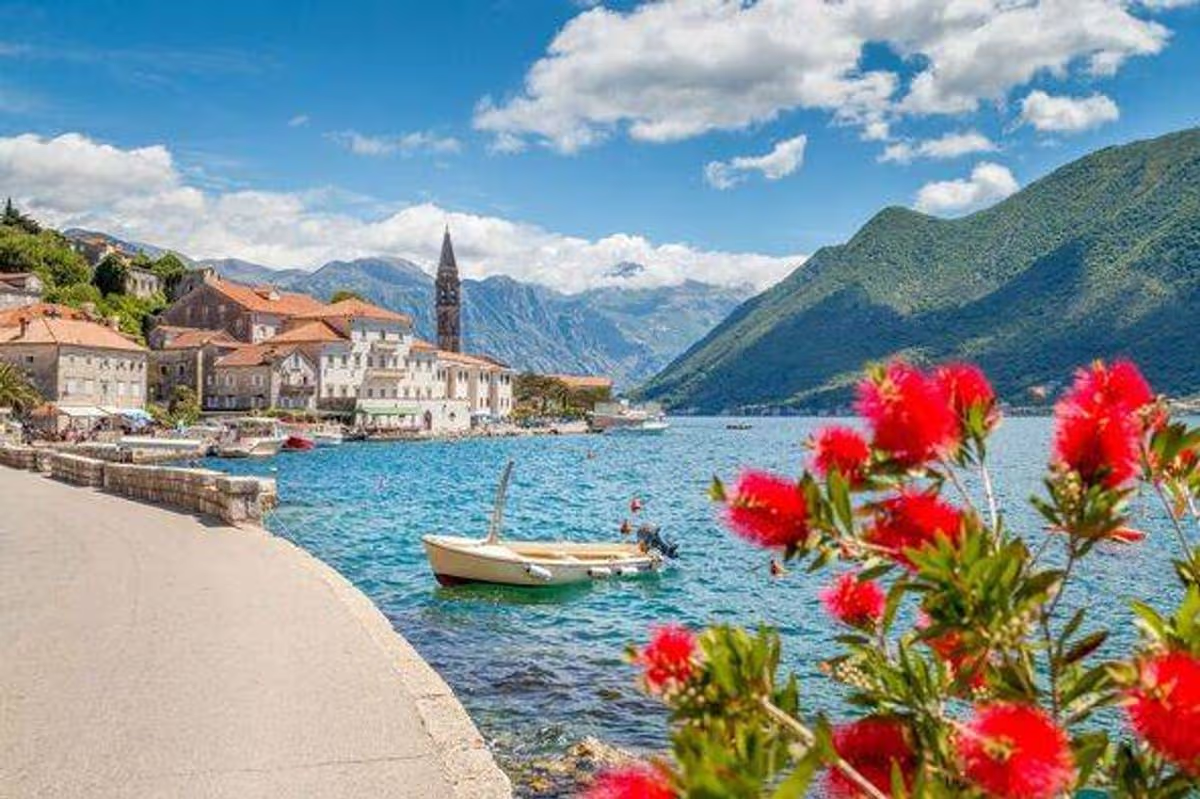
The gorgeous European gem is cheap too(Image: Getty)
If you’re still to book your holiday for 2026, Simon Calder is on hand to help with suggestions on where to go. The travel expert has previously spoken out about his favourite affordable spots to take a trip, and they’re all gorgeous too.
Simon highlighted Portugal, Bulgaria, Montenegro and Albania as some of the most stunning yet affordable holiday destinations. He said: “In Western Europe, it has to be Portugal and in Eastern Europe, Bulgaria – obviously a very popular package holiday destination.”
In fact, according to research in 2023 by holiday specialists Jersey Island Holidays, Montenegro topped the charts as Europe’s most affordable destination, reports the Express. Although this was a few years ago, the destination still remains very affordable.
For example, Brits can secure a seven-night break in an all-inclusive four-star resort in Herceg Novi next month for £419pp, including flights, according to Love Holidays.
The Iberostar Waves Slavija hotel, which is right by the beach, will only set you back £409 for seven nights — excellent value for money.
It’s cheap when you’re actually there too. According to Cost of Living, the average price of a beer in Montenegro is €2.50, which is around £2.15.
The average pizza costs €12, whereas pasta and meat dishes come in at around €15, according to Porto Montenegro. Flights in April start at just £16 one-way from Gatwick Airport.
But Simon Calder isn’t the only one singing the praises of this holiday destination, as travel bloggers at Wander-lush crowned Montenegro Europe’s most “underrated nation”.
Kotor Bay stands out as one of Montenegro’s most spectacular locations, and conveniently for tourists, the nearest city and airport is Podgorica.
The experts highlighted that whilst Kotor ranks among the most striking towns on Kotor Bay, if they “had to choose the most beautiful place in Montenegro overall, it would be the harbour town of Perast”.
Travel experts at Starsinsider agreed, declaring that Montenegro “is the most underrated jewel of the Mediterranean”.
In Podgorica, one of the top attractions is Saborni Hram Hristovog Vaskrsenja, a “beautiful and very impressive” church that’s “absolutely worth visiting”, according to some travellers on Tripadvisor.
Kotor Bay has earned praise on the platform as “the best coastal road in the world” and a “beautiful and peaceful” destination for a getaway.
“We fell in love with Montenegro. The water is so clear, the mountains come down to the water, and it’s stunning scenery.
“That said, what I love about it is that it’s so unspoiled. I sure hope it can stay that way. So peaceful and lovely,” one person shared in a review.
He has just returned from the UAE with crucial advice
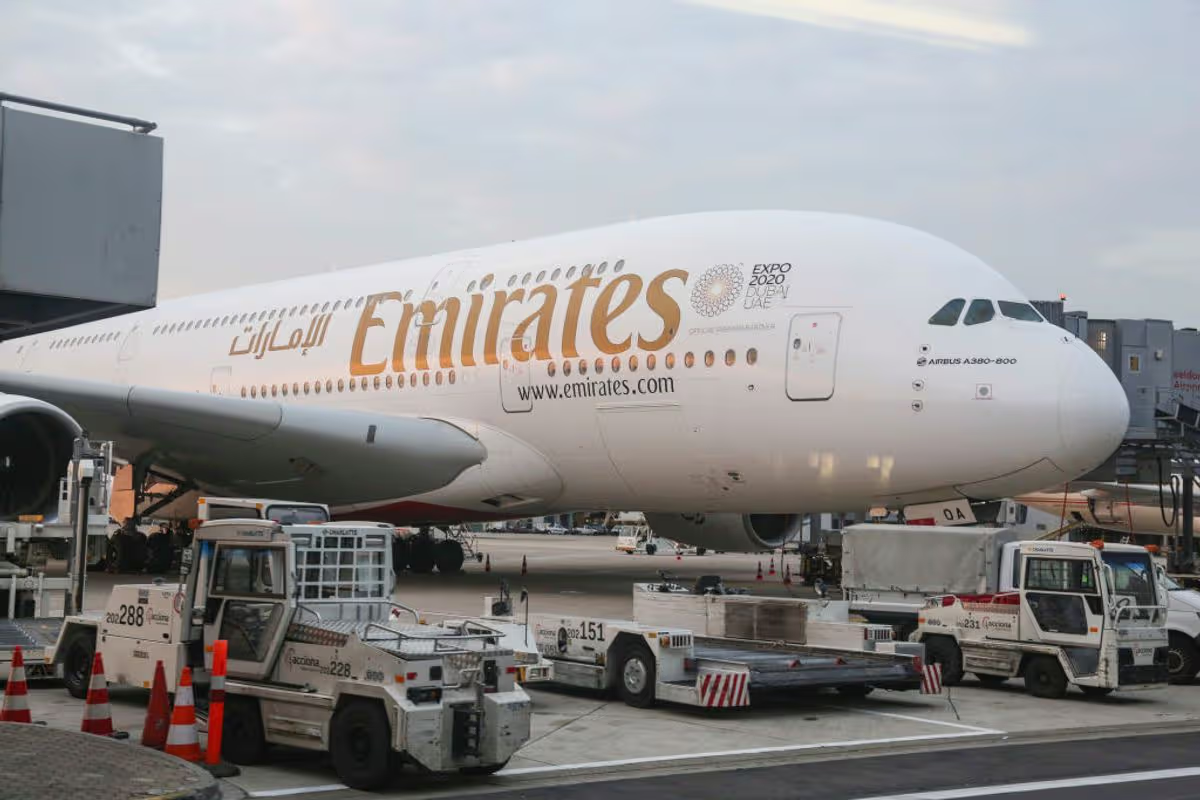
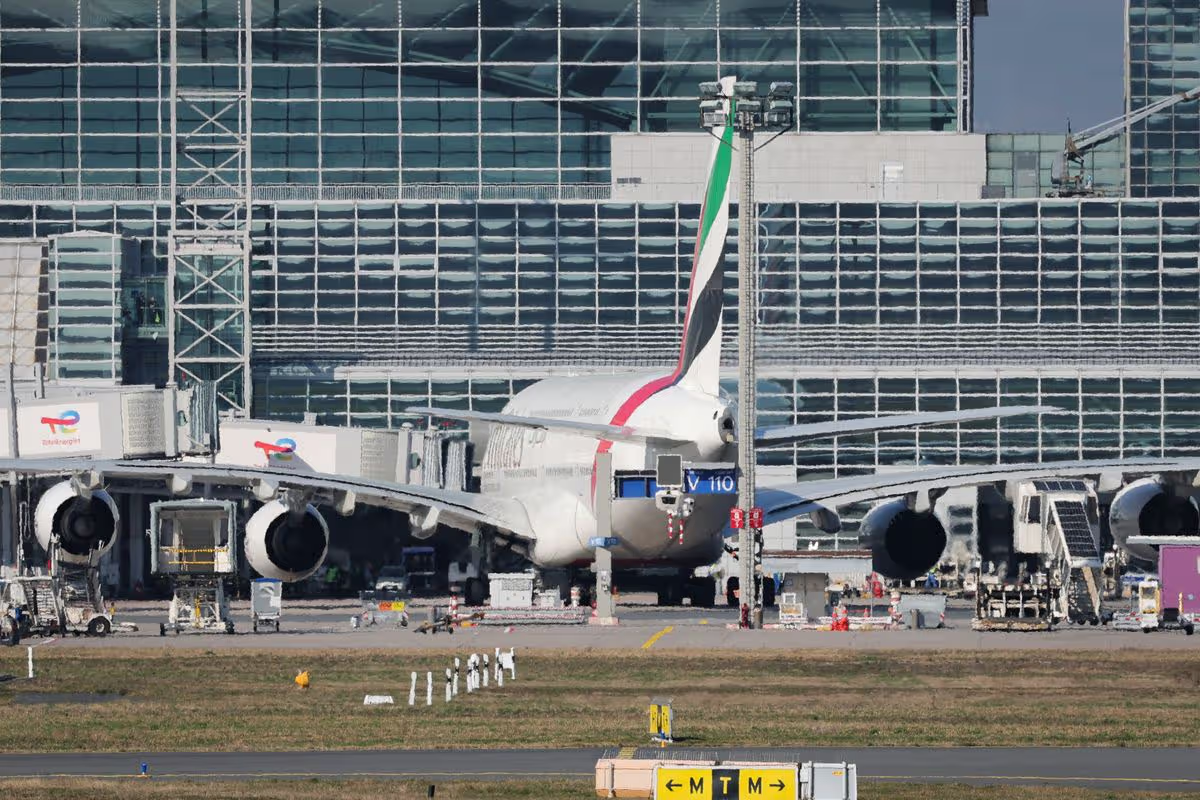
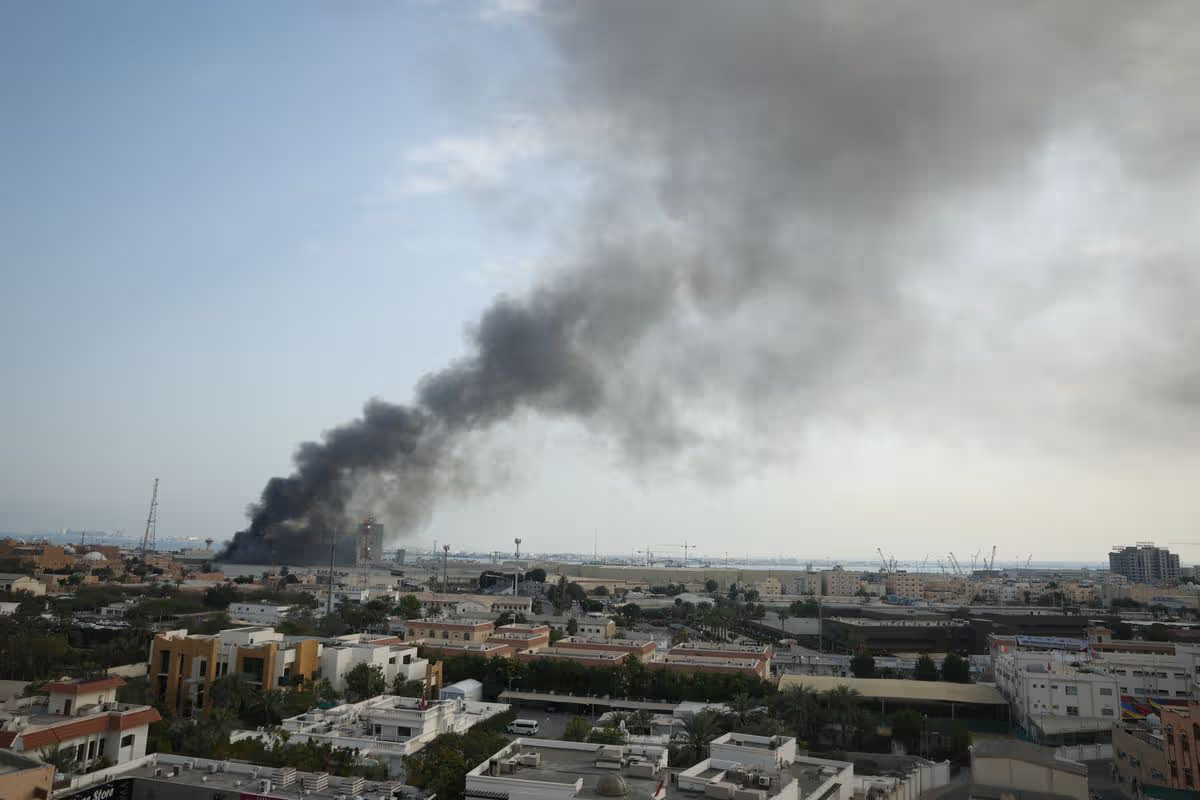
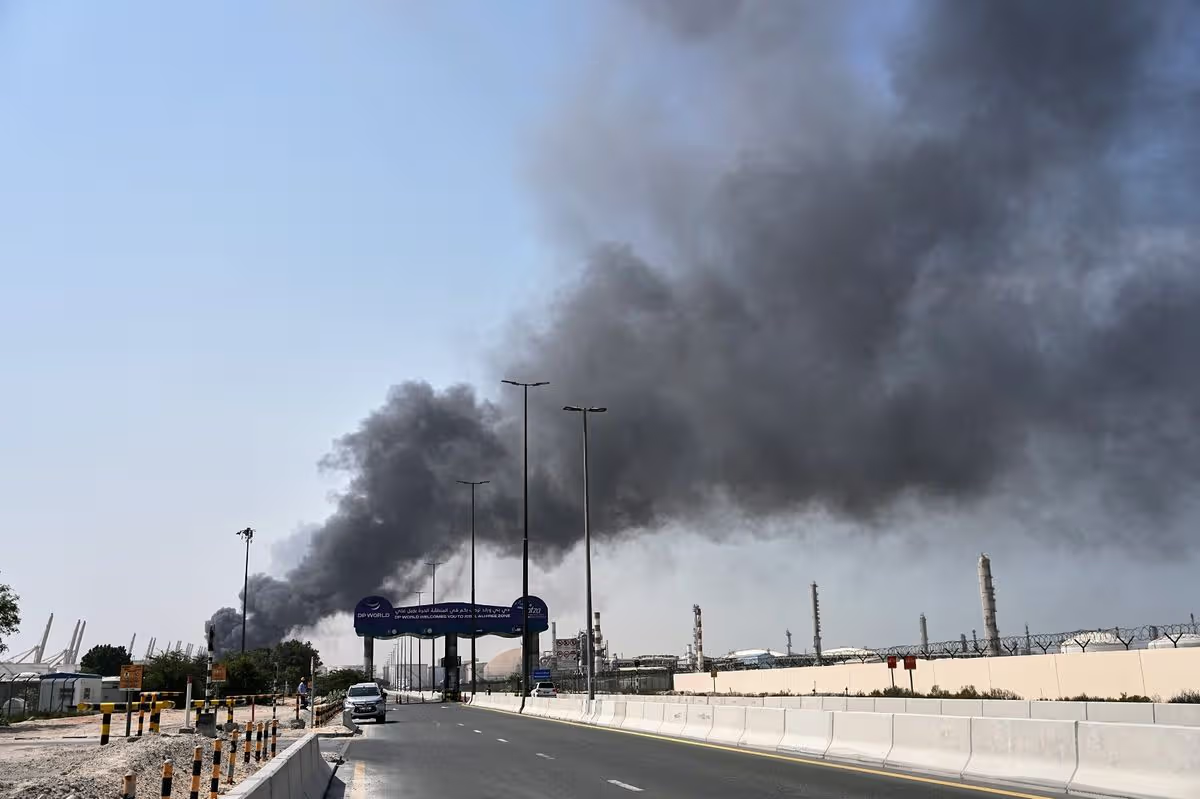
The war in the Middle East is having a major knock-on effect on international travel(Image: NurPhoto via Getty Images)
A travel expert has issued a warning to individuals with flights booked to or from the Middle East. The alert comes as tensions continue in the area, with Israel and the US maintaining their strikes on Iran which commenced over a fortnight ago.
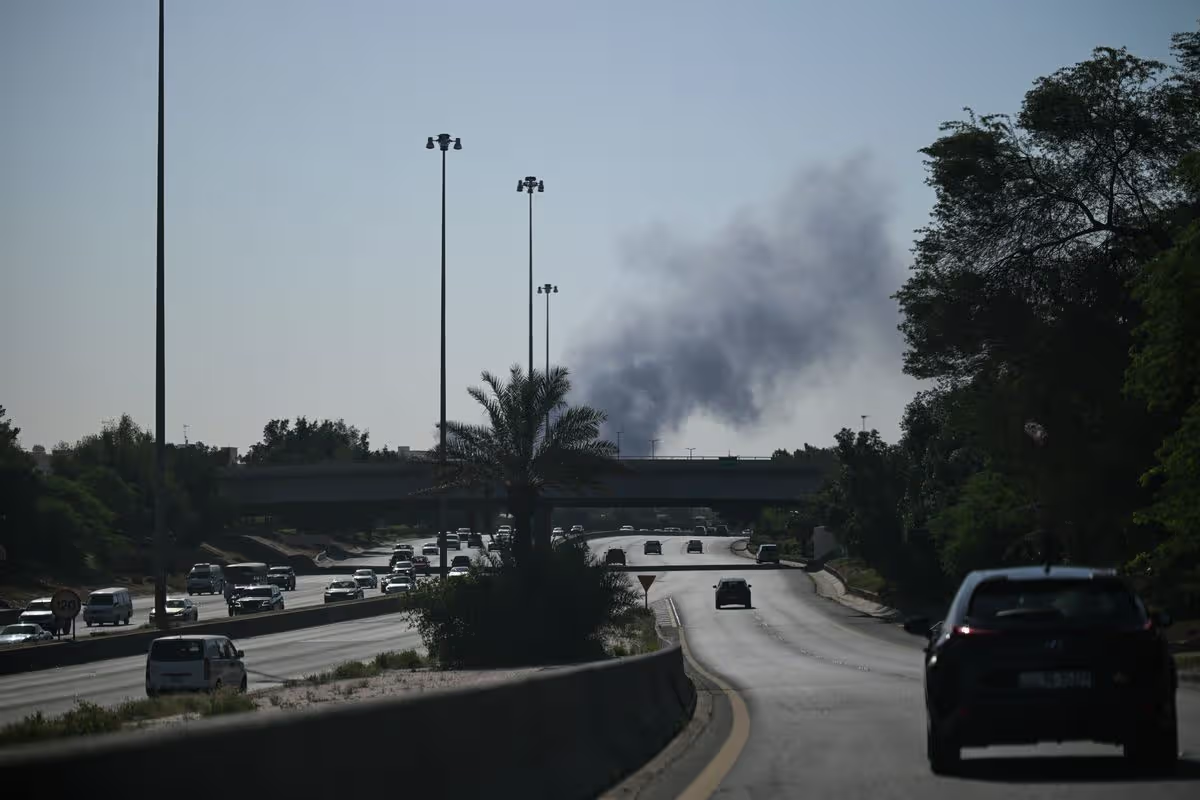
Iran continues to hit back with drone and missile attacks on several neighbouring and nearby nations. This resulted in Dubai, a major hub for international travel and home to the world’s busiest airport, temporarily closing its airspace for the second time in 48 hours due to strikes in the vicinity.
Simon Calder, a journalist with the Independent, has just returned from the United Arab Emirates. He provided an update on the current situation for those flying to or from the Middle East, including passengers transiting through the region en route to other destinations.
He stated: “I’ve just arrived at London Heathrow Terminal 4 after a fairly normal flight from Abu Dhabi on Etihad. What wasn’t normal was just how quiet it was when I arrived. Terminal 4, the main hub for the Middle East from London, is frankly a bit of a ghost town. Many of the flights that you would normally expect to see multiple departures on Qatar Airways to Doha and on Etihad to Abu Dhabi are not flying, and there’s also, for instance, Gulf Air based in Bahrain who are not going there.
Content cannot be displayed without consent
“Having said that, there’s perhaps more flights than you might expect, given that, for example, Qatar and the UAE are on the Foreign Office no-go list. There’s a departure this evening to Abu Dhabi on Etihad and one a little later on Qatar Airways overnight to Doha. As well as that, El Al is going out to Tel Aviv. Now, you might have heard that the airspace in Israel is closed; well, it kind of is, but if you’ve got permission, and El Al certainly has, then you can go in.
“And finally, Gulf Air is flying from here later on today, but not to the normal destination of Bahrain. Instead, it’s going to Dammam, which is very close by in Saudi Arabia, from where passengers can travel to that island quite happily over the causeway. But bear in mind that the UAE, Qatar, Kuwait, and Bahrain are all on the Foreign Office no-go list. If you choose to ignore that advice, then it’s likely your travel insurance will not be valid.
Unsurprisingly, the conflict has impacted international travel in numerous ways. Not only have passenger numbers and flights passing through the Middle East declined dramatically, but neighbouring countries favoured by Brits seeking spring sunshine, including Cyprus and Turkey, have also experienced a fall in visitor numbers.
Conversely, nations to the west boasting milder weather, including Spain and Portugal, have witnessed a surge in reservations – as has the Caribbean. The situation has not only left thousands of British holidaymakers stuck in the Middle East, but many are also anxious about their upcoming travel arrangements.
The Association of British Insurers attempted to address these worries with the following statement when questioned about whether insurance will cover the cancellation of a trip to the Middle East due to concerns over the conflict.
It stated: “As the situation evolves, we can understand why people may be reconsidering their future plans to travel to the region. If you wish to cancel your trip, contact your airline, accommodation provider or tour operator in the first instance. They may be able to rebook parts of your trip or offer a refund.
“Travel insurance may not cover cancellations linked to the conflict, depending on your policy’s terms, any war exclusions, and when you bought it. Policies differ, and insurers may take different approaches, so it’s important to check with your insurer to understand what’s covered.”
They revealed they were starstruck when Ginger Spice popped into their rehearsal at a West London studio last month, accompanied by her husband Christian Horner’s daughter.
Asked about their celebrity fans, Danny said: “The legend that is Geri Halliwell and her step-daughter came to the rehearsal studio to watch our set. They had wanted to come to our London show, but were due to be away when it was on, so we invited them to our rehearsals.
“Geri was like a pocket rocket. Petite and loads of personality.
Last month, they attended their first Brit Awards, in Manchester, and have told how they brushed shoulders with singers Lola Young and Sam Fender, as well as Happy Mondays maracas player Bez.
Cruz said: “I was partying with Bez in the DJ booth — he is funny. He and I have got to go to Ibiza one day.”
To celebrate Mother’s Day, the boys have been treating their mums after receiving their first big pay cheque.
Hendrik said: “I have been saving money to try and finish my mum and dad’s house. They have been wanting to finish it for years.”
Despite the global stardom that awaits, it sounds like the boys are keeping their feet on the ground.
SIMON ‘PROUD’ OF LADS
DECEMBER 10 have revealed how their mentor Simon Cowell was proud of them after their sold-out London show.
The music mogul and his fiancee Lauren Silverman attended their gig at the O2 Academy Islington, in North London, last month.
December 10 have revealed how their mentor Simon Cowell was proud of them after their sold-out London showCredit: Getty
Band member Nicolas said: “He really enjoyed that we incorporated instruments into the live show, and when he spoke to us, that was one of the main things that made him really happy and proud.”
John added: “He has also always said that he just wants great songs. Over the past few months that we have been recording music, we have been working towards that.”
And the boys reckon it still feels surreal seeing thousands of teenagers queuing to hear them play.
Nicolas said: “I wouldn’t say it’s overwhelming, it’s more of a strange feeling, because the first show was a bit of a shock.
“It is a feeling for me, personally, that I don’t think I will get used to.”
WIN A SIGNED T-SHIRT
DECEMBER 10 have signed a T-shirt exclusively for one lucky Biz on Sunday reader.
For your chance to win the prize, email sunday features @the-sun. co.uk by March 26.
For T&Cs, visit thesun.co.uk.
HE HAZ TO SEE MATES
HE is one of the biggest pop stars on the planet, but Harry Styles says he had to change his mindset so he did not become a recluse.
He explained: “When you shut out a lot of the things that are assumed can be negative, you also just unconsciously shut out a ton of positive things.
Harry Styles says he had to change his mindset so he did not become a recluseCredit: Getty
“It can be hard to go to a bar and hang out with friends because there’s maybe people who would act [in a certain] way.
“There’s also incredible people that you can meet in that bar – that you also shut yourself off from.”
He added on SiriusXM: “I was having some experiences where I was meeting some really great people that were kind of really planting the seed of, like, ‘Oh, I don’t want to shut myself off from this world’.”
It comes as his record Kiss All The Time. Disco, Occasionally has topped the albums chart, while his track American Girls is No1 in the singles rundown.
DENISE VAN OUTEN and Johnny Vaughan are creating a new Big Breakfast-style TV show 25 years after the original was axed.
I can reveal the pair, who presented the Channel 4 show in the Nineties, are working on a new format set to shake up TV schedules.
Denise said: “In my new touring show [An Evening With Denise], of all the things I’ve done, The Big Breakfast section gets the biggest reaction. I think people are still craving that chaos and the fun – we’ve lost it.”
She added: “I’m working on something with Johnny, it’s going to have that feel to it. It’s all come from the show and speaking to people. I was like, ‘Oh, people are missing this, they want this’.”
I cannot wait.
YOU’RE SO ROUGE, CHRISTINA
CHRISTINA AGUILERA was red hot on stage in this basque and matching gloves.
The US hitmaker teamed them with thigh-skimming black boots in Austin, Texas, as she headlined the Coca-Cola Sips & Sounds Music Festival.
Christina Aguilera was red hot on stage in this basque and matching glovesCredit: Shutterstock Editorial
Highlights included a performance of her 2001 hit Lady Marmalade, from film Moulin Rouge!, as fireworks lit up the sky.
MAYA’S VILLA TO VILLAIN
MAYA JAMA has revealed what her dream movie role would be – and it’s not what you might expect.
The Love Island host, who is set to star in the second series of Guy Ritchie’s Netflix crime-comedy The Gentlemen, said: “I’ve always said I don’t want to be what people expect me to be on camera.
Maya Jama has revealed what her dream movie role would be – and it’s not what you might expectCredit: Getty
“I’d want to be the complete opposite to that . . . so a monster or a mean, evil person. A villain maybe would be nice.”
The pair, who married in 2018, have both appointed legal teams and have quietly started proceedings.
Millie Mackintosh and Hugo Taylor have filed for divorceCredit: Getty
Reality star turned author Millie, who has two daughters with entrepreneur Hugo, has been through the process before, having split from rapper Professor Green, who she was married to from 2013 to 2016.
A pal said: “Fans will be sad to hear that their relationship is really over, but the pair just want a clean break.
“Millie and Hugo are committed to co-parenting their two young children and keeping everything stable. They are still very amicable with each other and have a lot of respect for one another.
“They want the divorce to go through as painlessly as possible and are focusing on work in the meantime.”
Professor Green has a son with model and actress Karima McAdams, who he dated for five years after splitting with Millie.
Now, he is back in touch with Millie and said: “There’s no resentment in me. She is gorgeous. We were not good for each other at that time.
“We spoke about our mutual diagnosis (ADHD) and our kids.”
The couple are eyeing up Son Marroig, a stunning, 17th century, clifftop temple on the Spanish island for their summer nuptials.
Molly Smith and Tom Clare are set to tie the knot in Majorca – home of the original dating show’s villaCredit: Supplied
The venue is popular among celebrities, with Pixie Geldof, weatherman Alex Beresford and Man City defender Nathan Ake all having held their ceremonies there.
A source said: “Majorca is a stunning destination for a wedding and there is plenty of privacy on the island. Many of the buildings are difficult to access by road and it has a secluded feel.
“There is guaranteed sun and it offers a beautiful backdrop with the most stunning sunsets.”
Tom and Molly do a weekly podcast called NearlyWeds and post regular vlogs about their planning.
Congrats guys . . .
EX-PM SNAPS GEM OF A SHOT
GEMMA COLLINS posed with an unlikely fan at the Cheltenham races this week – as I am told that former PM David Cameron asked for a photo.
And reality favourite Gemma was only too happy to oblige David and wife Samantha in the Royal Box.
Gemma Collins with David and Samantha Cameron at the Cheltenham racesCredit: Gemma Collins/Instagram
A source said: “Gemma was honoured that David asked her for a picture. They chatted about politics and her fondness of current Conservative leader Kemi Badenoch.”
Chuffed Gemma quickly shared the snap with her 2.2million Instagram followers.
She wrote: “It was lovely to be in the Royal Box and have a good chat with David Cameron and his lovely wife. We spoke politics and . . . what we were going to bet on next.”
Gemma, who is a face of bookmaker Paddy Power, won a mighty impressive £20,000 at Cheltenham – and £5,000 off just one bet.
The GC was spotted shouting, “I’m loaded” as she basked in her glory alongside stars including Danny Dyer and Peter Crouch.
Simon Calder gave his thoughts on when travel disruption will start to ease following the strikes on Iran
13:00, 11 Mar 2026Updated 16:05, 11 Mar 2026
Travel remains severely disrupted as strikes on Iran continue
A travel expert has shared his views on when ‘people will be able to travel again’ as the Middle East conflict continues to escalate. Journalist Simon Calder, who specialises in travel, discussed the crisis and its impact on worldwide travel.
American and Israeli strikes on Iran are approaching the end of their second week, with no resolution in sight. Travel to the Middle East remains limited, with airlines cutting back on the number of flights to and from the area.
Countries such as Oman, Qatar, and the United Arab Emirates serve as vital transport hubs for destinations including Asia and Australasia. The outbreak of hostilities has left hundreds of thousands of travellers stuck.
Speaking to Sky News, Mr Calder offered his perspective on when travel might become more straightforward. He said: “We’ve already seen missiles sent to Turkey and attacks on Cyprus. Now, personally, I think the chances of anything happening to a tourist in Turkey or Cyprus are microscopically low, but I also know that people are rebooking away. They’re going to the western Mediterranean – typically Spain and Portugal – because they believe they will be safer there.
Content cannot be displayed without consent
“If you’re flying from the UK to a holiday spot such as Turkey or Cyprus and that flight is cancelled, then, fortunately, air passenger rights rules are squarely on your side. The airline that cancels the flight has to get you to your destination as soon as possible, regardless of the cost. And if you can’t get there immediately, the airline has to provide meals and accommodation, if necessary, before you are able to get to your destination.
“The Foreign Office warns against travel to Kuwait, to Bahrain, to Qatar and, crucially, to the UAE, home to the busiest hub in the world: Dubai International Airport. But I’m also predicting that, actually, that ruling is going to lift fairly quickly, and people will be able to travel again.”
Flights are still operating through Dubai International Airport, despite two Iranian drones injuring four people after exploding at the facility. The Dubai Media Office, which releases statements on behalf of the city-state’s government, confirmed flights are continuing, and that the attack caused ‘minor injuries to two Ghanaian nationals and one Bangladeshi national, and moderate injuries to one Indian national’.
Officials have been attempting to restore its flight schedule, though the airport has been targeted amid the conflict. The war has created uncertainty for travellers with flights booked in the coming weeks, prompting Mr Calder to offer his guidance on what passengers should do.
“If your flight is due to go, I’d say, a week or more from now, well, all you can do is just hope that it goes ahead,” he stated. “If you’re going imminently and you do not know if your trip is running, well, the basic news is that if you go to Abu Dhabi, to Dubai, to Doha, you will be going against Foreign Office advice. So, be aware of that; your travel insurance will be invalidated.
“I’ve got some skin in the game. I am booked to fly out on Saturday night from Jakarta, the Indonesian capital, through to Abu Dhabi and connect onwards to London. Now, at the moment, along with many, many other travellers, I’m absolutely promised the flight will go ahead as normal, and I trust that it will. But I simply do not know.
“At the moment, I’m definitely not cancelling my flight because, well, bluntly, if you cancel the flight – which is what the airlines would really like you to do – you will simply be removing yourself from the problem. If, like me, you’re booked in a few days’ time and you do have a bit of flexibility, then absolutely keep your booking open.
“If you go for a refund, first of all, the airline will be delighted because you’ll be a problem that’s removed from their cares and, secondly, you could find yourself paying three times, five times, 10 times as much to get back. Much better to remain a problem for the airline; they’ve got to get you where you need to be.”
Travel in the region continues to be severely disrupted
15:18, 09 Mar 2026Updated 16:20, 09 Mar 2026
Thousands of tourists have been stranded across the Middle East following the US-Israeli air attacks against Iran
Travel expert Simon Calder has shared his thoughts on the prospect of ‘normality’ returning to airports in the Middle East. Flights to and from the region continue to be severely disrupted in the wake of the US-Israeli attacks on Iran.
A multitude of flights to and from Dubai, Qatar, and Abu Dhabi – all three being vital transport hubs for individuals travelling to and from the Gulf and Asia – have been cancelled. Approximately half a million passengers typically utilise these airports daily.
More than 37,000 Brits have made their way back to the UK from the Middle East since the crisis response commenced, with it believed that tens of thousands more remain stranded.
Mr Calder has been regularly updating on the crisis, which began on February 28. He stated that whilst he anticipates an increase in the number of flights departing from the region, there’s no definitive end to the disruption in sight.
Content cannot be displayed without consent
“There are tickets now being sold by Etihad out of Abu Dhabi,” he revealed. “Which is an interesting development. On top of that, I expect there to be a ramp-up in flights out of Doha and out of Dubai, but at the moment we are still a long way away from anything that could be described as normality, whatever that looks like.
“You know, the idea that you have half a million people flying to, through, and from the three big hubs of Dubai, Doha, and Abu Dhabi every day. And it’s an interesting question as to what on earth happens when, of course, the war is finally over, which cannot come soon enough. But anyway, so I hope that people will be able to get out.”
On Monday, 16 out of the 18 scheduled flights from the UK to Qatar were cancelled due to ongoing airspace closures, according to aviation analytics firm Cirium.
Eleven out of 33 flights from the UK to the United Arab Emirates – encompassing Dubai and Abu Dhabi – were also scrapped. It’s anticipated that clearing the backlog of stranded passengers caused by the conflict will take weeks.
“British Airways has taken the view that we’re not going into Dubai or Abu Dhabi or Doha,” Mr Calder explained. “If you want to fly out, we’re happy to do that, but we’re going to be arranging flights from Muscat and looking at Friday night’s Virgin Atlantic flight to Dubai, that was arguably a good call because the effect was that the flight got to within maybe a couple of hundred miles of Dubai over Saudi Arabia and then turned around because of the attack on Dubai airport.
“It flew back, couldn’t get all the way back, went to Budapest to refuel and then continued to Heathrow. So it was roughly, I think, something like an 18-hour flight to nowhere.”
Travel expert Simon Calder has shared one of his favourite destinations for an autumn escape and it’s perfect for pensioners
Simon Calder recommends walkable and ‘absolutely magical’ town that’s perfect for pensioners (Image: Marco Bottigelli via Getty Images)
Travel expert Simon Calder revealed one of his top picks for an autumn getaway: the picturesque seaside town of Cassis, located in the south of France. Simon highlighted that there are numerous budget-friendly flights from UK airports and mild temperatures in spring and autumn.
Cassis is also an extremely walkable town, making it ideal for pensioners seeking an inexpensive destination that’s also straightforward to explore.
The travel expert stated: “I just came back from Côte d’Azur on Friday, and it was absolutely magical, particularly the lovely town of Cassis. Beautiful port, very close to St Tropez. It’s just a gorgeous place, the food is great!”
“You can even take a bus from Marseille that costs £3 and takes you around one of the greatest drives in the world.”
Travel expert Sam wrote on her blog theblondescout that Cassis was “one of the nicest surprises” during her time living in France.
“This small fishing town is colourful, quaint and next to one of the most extraordinary landscapes I have ever witnessed: the dramatic limestone inlets that make up the Calanques between Cassis and Marseille.”
She noted that Cassis is a compact town, so it is “very walkable and easy to get around”.
“All of the streets are picture-perfect and have that colourful French Riviera vibe! Our favourite little square was at the bougainvillaea-filled Place Baragnon.”
Other locations suggested by travel expert Simon Calder include the Algarve, in southern Portugal, a stunning and “very affordable” coastal destination that’s not overly busy at this time of year.
Simon Calder said it ‘possibly points the way forward’ but there was still a long way to go
Strikes by US and Israeli forces are continuing on Iran
A travel expert has provided an update on when flights to and from the Middle East might resume normal service. Flights continue to be severely disrupted due to the US-Israeli strikes on Iran, which started over the weekend.
It is estimated that around 300,000 Brits are currently in the Gulf region. Airspace closures in the Middle East have led to numerous commercial flights being grounded, with over a third of today’s (Monday, March 2) scheduled flights to the area cancelled.
Major airlines such as British Airways, Virgin Atlantic, Qatar Airways, Etihad, and Emirates are among those to have cancelled flights. The Foreign, Commonwealth and Development Office is presently advising against all but essential travel to the United Arab Emirates.
Travel journalist Simon Calder gave an update on the Independent’s Instagram page about how the situation might unfold. He stated: “Day three of the crisis in the Gulf, which has seen all air operations cease at the key hubs of Dubai, Doha, and Abu Dhabi, and tens of thousands of passengers stranded as a result trying to head back to the UK.
Content cannot be displayed without consent
“The latest news is not encouraging from the airlines; Qatar Airways has just said we’re not going to tell you any more updates until Tuesday morning. Emirates says we will not be flying anything before 3:00 on Monday-I think it’s extremely unlikely that that will happen; similar story from Etihad, who are based in Abu Dhabi.
“At the moment, though, obey the Foreign Office advice, and if you are booked to travel on one of those airlines-Emirates, Etihad, or Qatar Airways-your flight will not be operating today, and I fear that it might be some time before we see those planes back in the sky.”
It is believed that out of the 300,000 Brits in the region, approximately 100,000 may require evacuation back to the UK. British citizens are being advised to heed the instructions of local authorities and keep a close eye on the Foreign Office’s travel advice, which officials anticipate will change rapidly.
One current proposal is that individuals may be transported overland to countries such as Oman and Saudi Arabia, before catching flights back from there. At present, these countries do not have any travel warnings against them.
Mr Calder added: “One development overnight, though, I think possibly points the way forward. A British Airways Boeing 787 flew out overnight from London Heathrow to Oman and landed at Muscat-that is the airport where there is no Foreign Office warning at the moment.
“It took on board pilots and cabin crew from British Airways who were stranded in the UAE when airspace was closed. Now, you might be thinking, ‘well, why didn’t they bring back any passengers?’ but there’s a good reason for that..
“The Foreign Office says, ‘no, you should not travel anywhere if you are in the UAE”. However, if the crisis drags on-and unfortunately, it shows every sign of doing that-then I fear we are going to be in a situation where the best option is to organise an airlift from Muscat, possibly another one also from Saudi Arabia for people travelling overland from Qatar.”
Simon Calder warned that, even if the major airports reopen, it will take some time for normal service to resume
15:42, 01 Mar 2026Updated 15:43, 01 Mar 2026
Hundreds of thousands of flyers have been disrupted
A travel expert claims international airports currently shut due to military action in Iran could reopen earlier than many anticipate. Journalist Simon Calder shared his forecast whilst boarding a flight from Istanbul, Turkey.
One individual has died and 11 others have been wounded at airports in Dubai and Abu Dhabi. Over 3,400 flights have been scrapped and airports in Dubai and Abu Dhabi in the United Arab Emirates (UAE), along with Qatar’s capital, Doha, and Manama in Bahrain were among those shuttered.
The Foreign Office is advising British nationals against all but essential travel to Bahrain, Kuwait, Qatar and the UAE. This means hundreds of thousands of travellers are stranded in the region, many of whom are believed to be either British or those attempting to fly to the UK.
In an Instagram video, Mr Calder stated: “The main question is when is the disruption going to stop?”.
“Dubai indefinitely closed; Emirates is kind of saying that sometime on Monday it might start up again. Doha, they’re going to give an update at 6 o’clock British time tomorrow. And Etihad and Abu Dhabi airport, they’re saying, well actually, yeah, we might be opening before that.
Content cannot be displayed without consent
“And I hope that the flight ban and also the travel advice from the Foreign Office saying do not go to these places will be lifted as soon as possible so that people can come back.
“I’m going to say, if you twisted my arm, we will probably see flights start up in the next couple of days but in a small way because, of course, planes and pilots and cabin crew and passengers are all out of position. So it’s going to take some time to get this back to normal and I simply hope that it is done with the maximum energy and indeed money just to try to make sure that people are back when they need to be as soon as possible.”
Mr Calder explained that – aside from the Covid-19 pandemic – disruption on the scale witnessed over the weekend hadn’t been seen since the 2010 Eyjafjallajökull volcano eruption and resulting ash cloud in Iceland.
During that week-long episode, approximately 20 countries shut their airspace to commercial aircraft, affecting roughly 10 million passengers. Mr Calder suggested things weren’t quite that severe ‘yet’ but described these as extraordinary circumstances and warned matters were ‘definitely heading in that direction’.
He also noted that, given the sheer scale of the airports affected and the extent of the chaos, it would require a substantial amount of time for the situation to resolve itself even once flights restarted.
He added: “Just bear in mind that every day that there are no flights going in and out of the world’s busiest international airport, Dubai, and Doha, and Abu Dhabi, that is two and a half thousand flights and about half a million people. The numbers are really staggering.
“Every hour generally, on average, 20,000 people land and depart from those airports, and so you have a massive problem building up. And certainly the numbers haven’t been added to because, of course, people are there, but what’s happening is that people’s holidays are ending and so they are being added to the back of the queue at the airport. It’s a desperate position for them to be in.
“It is going to be quite interesting to see how it is done, because you’ve got to remember that the numbers in Dubai rather exceed the current capacity of them.
“So let’s take a case of an expat who’s booked on the 5th of March, and let’s hope very much that flights are back on the 5th of March. That expat is expected to take her or his seat, and the fact that somebody’s been there for five days and really wants to get home isn’t relevant; it’s whoever’s got the booking in.
“And so I think there may well be shuttle services operated. They might even go to somewhere like Cyprus; they might just take people back and forth to a relatively short-haul destination from where people can board relatively short-haul flights. That would seem to cause the least amount of problem. I
” don’t know if this is going to happen, but I do know that there’s an awful lot of people out there who really want to be somewhere else and heavens, just imagine the stress and upset if you know that there’s somebody across the Gulf who is sending drones and missiles in your direction. A horrible situation for everybody.”
Thousands of Brits are thought to be stranded in the Middle East after US and Israeli airstrikes on Iran
Thousands remain stranded after military strikes rocked the Middle East(Image: AP)
A travel expert has issued three words of crucial advice for people stranded in the Middle East following US and Israeli air strikes on Iran. Simon Calder made the remarks after hundreds of thousands of travellers found themselves stuck in destinations such as Qatar and Abu Dhabi in the wake of the attacks.
Numerous airlines, including British Airways, Emirates, and Qatar Airways, grounded flights following Iranian retaliatory strikes throughout the region. When flights will resume normal service remains unclear, with thousands of Britons believed to be stranded.
Speaking on Radio 5 Live, Mr Calder had three key words he urged travellers to follow: “At the moment, the best advice I have for anyone who is stuck in various parts of the world is: just be patient.”
The situation will be resolved – I hope, very much sooner rather than later,” he added. “What we have seen is the extraordinary sight of the big three of Middle Eastern hubs – Dubai International, Doha, and Abu Dhabi – all closing because of the retaliatory strikes from Iran. We have never seen that. The last thing of this scale we saw in this area like that here was the Covid pandemic.
“Consider this. More than a quarter of a million passengers were due (on Saturday) to fly to and through Dubai International Airport alone. It is bigger than Heathrow Airport, handles more passengers, and everyone is desperate to get where they need to be.
“I have been speaking to people who were about to take off, they had the ‘boarding complete’ announcement, and suddenly the captain said, ‘Sorry, airspace closed, we are staying here’. It took them three hours to get off the aircraft because they all had to be processed through immigration, leaving them in a place where they really didn’t want to be. Many of them were just off a previous flight a few hours before and were waiting to travel on to their final destination of London Heathrow.”
It was subsequently confirmed that Iranian Supreme Leader Ayatollah Ali Khamenei was killed in the strikes, casting serious doubt over the future of the Islamic Republic. The death of Mr Khamenei, following decades in power, has triggered furious scenes across other parts of the Middle East and beyond, heightening the threat of potential regional instability.
Dubai International ranks as the world’s busiest airport, processing roughly 250,000 passengers daily. Doha Airport in Qatar handles approximately 150,000 travellers each day, meaning enormous travel chaos as both airports continue to be affected.
Doha holds particular significance for British passengers flying to and from the Middle East, Asia and the UK. Mr Calder went on to say: “Some people are in the difficult position of being stranded on the wrong side, and they are trying to get back to the UK but finding that air passenger rights rules – which are great when you are flying from Europe – don’t work the same way when you are flying to Europe on a non-UK or non-EU airline.
“They can basically just say, ‘well, good luck, we’ll try and get you there in a week or you can take a refund’. It’s really, really difficult Airlines like Emirates, Etihad, Qatar Airways, they are not legally obliged to find hotel accommodation for all these stranded passengers and get them back as soon as possible but hopefully they will do so.
“The other problem for people whose flights have been cancelled, when flights resume, they go to the back of the queue. If flights resume on Monday, anybody who has a flight booked on Monday will fly on Monday, and people whose flights were cancelled over the weekend – and we are talking hundreds of thousands now – they are going to be finding that they are at the back of the queue, scrabbling for whatever available seats there are.”