silence

Mel Schilling’s ‘heartbroken’ MAFS co-star John Aiken says ‘I’m struggling to breathe’ as he breaks silence on her death

MEL Schilling’s “heartbroken” MAFS co-star John Aiken has admitted he is “struggling to breathe”, as he broke his silence on her death.

The Australian relationship expert, 55, revealed his immense grief after Mel tragically died aged 54 following a brave battle with colon cancer.

MAFS Australia expert John Aiken penned an emotional tribute to Mel Schilling following news of her deathCredit: Instagram
John said he was ‘struggling to breathe’ following his friend’s passingCredit: Instgram
Mel and John appeared on the Aussie MAFS together for ten yearsCredit: Nine

The much-loved dating coach was known for her work on both the Married At First Sight Australia and UK versions of the show.

Today her MAFS Aus co-star John shared a picture of him with his pal from 2016 and one from the recent series, and penned an emotional message which read: “It’s with great sadness and heavy heart that today I lost my dear friend and fellow MAFS expert Mel Schilling.

“I am heartbroken, devastated and finding it hard to breathe.

“It was a privilege and an honour to sit beside her on the MAFS couch and watch her shine. She was warm, supportive and honest, and she deeply cared about all our participants. I had a front row seat to her remarkable skills and she truly believed in the experiment. At her core she loved love.”

Read more on mel shilling

FEARLESS MEL

How Mel Schilling hid cancer hell from legion of fans despite pain off camera


LAST OUTING

Final pictures of late Mel Schilling four months before tragic death

John also talked about their relationship off screen, and the “fun” they would have when the cameras weren’t rolling.

“And when her illness struck she never complained. She kept her challenges to herself and continued to deliver time and time again. She was an inspiration, a fighter, a leader,” the grief stricken star said.

“It’s not fair that my partner in crime is gone. She was one of the good ones. I am unravelling just thinking about it. I wanted to sit on our couch together forever. She knew my rhythms and I knew hers. But it’s simply not to be.

John admitted he was “distraught” that he had to accept she was now gone, and ended the heartfelt message with: “I love you and I miss you gorgeous.. xx”.

Mel and John were incredibly close having worked on MAFS Australia together for ten years, including the latest series which is airing right now on E4.

John said he was ‘heartbroken’ by Mel’s sad deathCredit: Channel 4

Mel’s MAFS UK co-star Charlene Douglas also paid an emotional tribute, where she reflected on their close bond.

Taking to Instagram, she wrote: “I’m both devastated and heartbroken to hear of the passing of my MAFS queen and friend Mel.

“I had the pleasure of spending time with Mel in her last days and will forever treasure the laughter, the memories and love we had for each other.

“Mel’s love for life, jokes and of course dancing will forever stay in my heart. What I wouldn’t give to be dancing to Beyoncé with you right now.

Mel’s MAFS UK co-star Charlene also penned a heartfelt tributeCredit: Channel 4

“Sleep in perfect peace Mel. Love you ♥️”

Mel was previously diagnosed with colon cancer in 2023, which later spread to her lungs and brain.

Her husband Gareth Brisbane announced the heartbreaking news today in an emotional Instagram post.

Alongside touching pictures of Mel, he said: “Melanie Jane Brisbane-Schilling passed away peacefully today, surrounded by love.

“In her final moments, when I thought cancer had taken away her ability to speak, she ushered me closer and whispered a message for Maddie and me that will sustain me for the rest of my life.

“It took all of her remaining strength, and that gesture summed up our wee Melsie perfectly. Even then, her only thought was for Maddie and me.”

He continued: “This is a woman who became a new mum and a TV star at 42 — and nailed both.

Mel’s husband Gareth Brisbane announced the heartbreaking news today in an emotional Instagram postCredit: Instagram

“This is a woman who, through two years of chemotherapy, when she could barely lift her head from the pillow, never complained and never stopped showing courage, grace, compassion and empathy, and never missed a day of filming.

“To most of you, she was Mel Schilling — matriarch of MAFS and queen of reality TV. To Maddie and me, she was our wee Melsie: an incredible mum, role model, and soulmate.”

Channel 4 hailed Mel as a friend who “radiated joy, warmth and optimism”.

Issuing a statement, it said: “Our thoughts and condolences are, first and foremost, with her family and loved ones.

“We’re privileged to be the channel that is home to Mel’s work, which was at the heart of Married At First Sight‘s phenomenal success, both in the UK and Australia.

“It reflected so much about her – her fierce advocacy for other women, her passion for healthy relationships and her mission to unite people in love.

“For many who work for Channel 4, Mel was not just a colleague but a friend, someone who radiated joy, warmth and optimism, who energized every room she walked into, with humour and positivity.

“Everyone who knew her will miss all this about her and much more. We share in the sorrow that we’re sure many viewers will now feel at this terrible loss.”

Mel had been battling colon cancerCredit: Instagram

Source link

‘My silence ends here’: The heartbreaking burden of Dolores Huerta

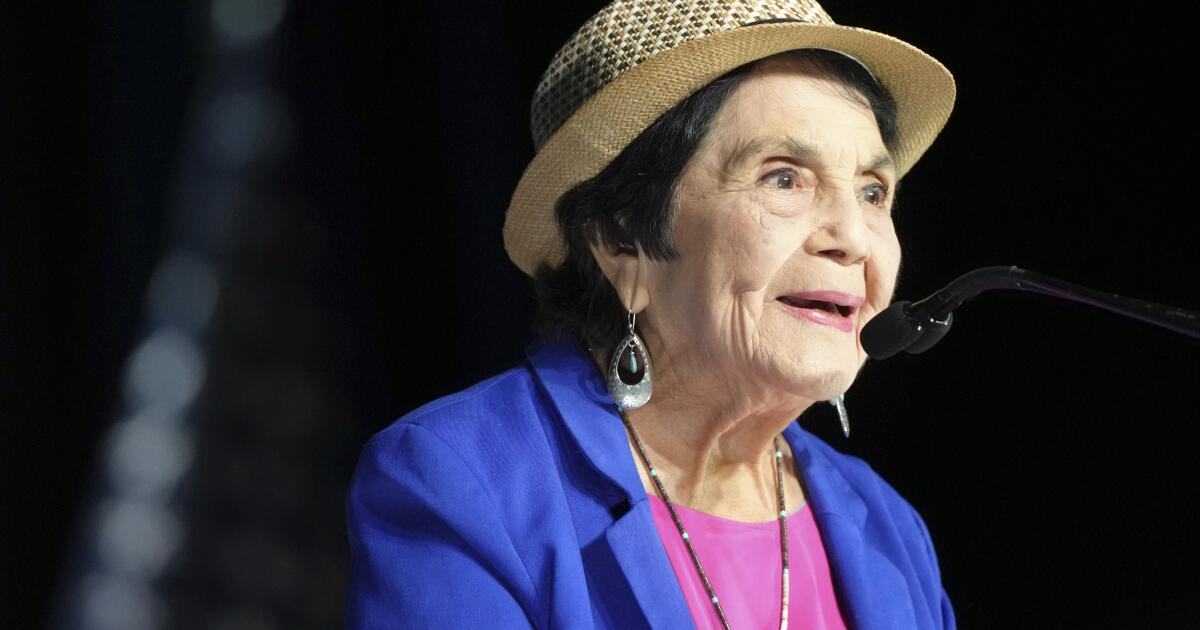
At 95, labor icon Dolores Huerta made a shocking and heartbreaking revelation Wednesday, in the wake of a New York Times investigation into sexual abuse allegations against her fellow icon, Cesar Chavez.

She was raped by Chavez, she said. Twice — both times resulting in pregnancies.

“I have never identified myself as a victim, but I now understand that I am a survivor — of violence, of sexual abuse, of domineering men who saw me, and other women, as property, or things to control,” Huerta wrote in a statement Wednesday. “I have kept this secret long enough. My silence ends here.”

Like so many women who have carried the burden of their own attacks behind an iron curtain of guilt and shame, Huerta now finds herself in the difficult, painful position of having not only to relive this trauma as it becomes public, but explain it to the rest of us.

Like the brave women of the Epstein files; like our First Partner Jennifer Siebel Newsom and the courageous women who spoke out against Harvey Weinstein; like Cassie Ventura; like E. Jean Carroll; like Christine Blasey Ford, Huerta joins the ranks of women forced to justify their response to abuse by powerful men.

Huerta shouldn’t have to engage in this rite of self-flagellation, of course, but she and Chavez are linked by their legacies as two of the greatest civil rights fighters in our history. Now, this hidden truth rewrites not just his story, not just hers — but the entire legend of a workers’ movement that grew from the grape fields of California into a defining story of Golden State fortitude and hope.

If Chavez was a predator, where do we even go from here? What do we believe in when even our heroes are ghosts, as Pink Floyd long ago warned?

“It’s just a very heavy day,” said Huerta’s spokesperson, Erik Olvera. “It is incredibly overwhelming for her.”

And for all of us, really.

Reports of abuse

The New York Times investigation detailed the molestation and abuse by Chavez of two women who were teens at the time the events took place. Huerta, the sharpest 95-year-old I’ve even seen, also told the reporters that Chavez had forced sex on her when she was in her 30s, once by manipulation and once by force.

“The first time I was manipulated and pressured into having sex with him, and I didn’t feel I could say no because he was someone that I admired, my boss and the leader of the movement I had already devoted years of my life to,” she wrote in her statement. “The second time I was forced, against my will, and in an environment where I felt trapped.”

Huerta had two daughters from these encounters and gave them to other families to be raised, though she is close to both of them, Olvera, the spokesman, said.

Olvera said that Huerta was unaware of the allegations of the two other women interviewed by the New York Times until the reporters contacted her several weeks ago.

“She literally thought she was the only one,” Olvera said. “The guilt is really heavy for her.”

As the news broke this week, shock — but not disbelief — rippled through the political and union worlds where Chavez remains revered (he died in 1993) and Huerta remains active. Despite her age, she speaks at multiple events each week and is a fixture at the state Capitol advocating for workers’ rights.

While Huerta has never spoken before about Chavez’s attacks on her, his infidelities and autocratic leadership style — and rumors of misconduct — have been documented for years. In her 2014 biography, journalist Miriam Pawel detailed some of these complaints as well as Chavez’s troubled relationship with his wife.

In a statement, the United Farm Workers union called the allegations “profoundly shocking.”

It canceled all events celebrating the upcoming Cesar Chavez Day — a state holiday — and is working on a survivor-centered response with outside experts to help ensure a fair and inclusive pathway for other people to tell their stories.

Sen. Alex Padilla, who has worked for years with Huerta but who was a child when Chavez was organizing, called for “zero tolerance for abuse, exploitation, and the silencing of victims, no matter who is involved.”

“Confronting painful truths and ensuring accountability is essential to honoring the very values the greater farmworker movement stands for — values rooted in dignity and justice for all,” Padilla said.

Changing times

If there is the slightest bit of solace to be found in this tragedy, it is in the response. So far, we have been spared the usual attacks on victims — though almost certainly they are happening outside the public eye.

Though Huerta may carry guilt, as all survivors so unfairly do, coming forward now has quickly and forcefully changed the narrative. I suspect there are few people who would dare call Huerta a liar, or challenge her motives. I suspect without her revelations, the other women coming forward would be treated differently.

I imagine that had she spoken out back then, as a young mother in the 1970s, a Latina woman in the male-dominated culture of the Central Valley, she would likely have found little relief.

What must it have been like for her all these years to know the man we idolized had this monstrous side?

But after 60 years of hard work, Huerta is now powerful in her own right. And after 60 years of silence, Huerta wanted to use that power to support the other women speaking out. Olvera said Huerta came to that decision reading the New York Times piece, and for the first time understanding that these other survivors were children when their abuse happened.

“When she learned that, that’s when she was like, I need to come out and tell my story,” he said. “She didn’t want them to stand alone.”

In the end, every survivor stands alone because what needs to heal is a soul shattered by the trivial evil of carnal greed, a pain so personal and unique even another survivor can’t fully understand it. It is daring and noble in the crucible of that personal destruction, which lasts years if not decades, to demand accountability. Not all of our heroes are ghosts.

“Your courage and your voices matter,” Siebel Newsom said. “They open the door for so many others to follow suit and tell their stories so that one day soon, we will break this horrific cycle of repetitive abuse by powerful men.”

These women have now made it clear: Chavez was a predator — a powerful man who used his authority to manipulate and force women and girls into sexual encounters.

In the end, all the good Chavez did, the strength and dignity he brought not just to farmworkers but to immigrants across the country, will forever be bound up with this ugly truth — though the movement is far more than one man.

Chavez earned this ending. Hopefully, for Huerta and the other survivors, speaking out is the beginning of healing.

You’re reading the L.A. Times Politics newsletter

George Skelton and Michael Wilner cover the insights, legislation, players and politics you need to know. In your inbox Monday and Thursday mornings.

What else you should be reading

The must-read: Cesar Chavez, a Civil Rights Icon, Is Accused of Abusing Girls for Years
The deep dive:Profoundly shocking’ allegations against Cesar Chavez spark soul-searching in movement
The L.A. Times Special: Democrats face the possibility of a historic upset in California governor’s race, poll finds

Stay Golden,
Anita Chabria

Was this newsletter forwarded to you? Sign up here to get it in your inbox.

Source link

Will there be an Ellis Season 3? Star breaks silence on return

Ellis has been a hit for Channel 5 and one star has opened up about returning for a potential third series

Channel 5’s Ellis has been a huge hit with viewers and as series two of the gripping drama comes to an end, fans have been left wondering if it will return for another series.

Season 1 first appeared on our TV screens back in 2024 and at the time it became a hit with detective drama fans, who couldn’t get enough of the drama.

It was a hit after featuring the UK’s first black solo female-led as award-winning actress Sharon D Clarke led the cast. After the success of Series 1, Channel 5 viewers were treated to another season that aired last week.

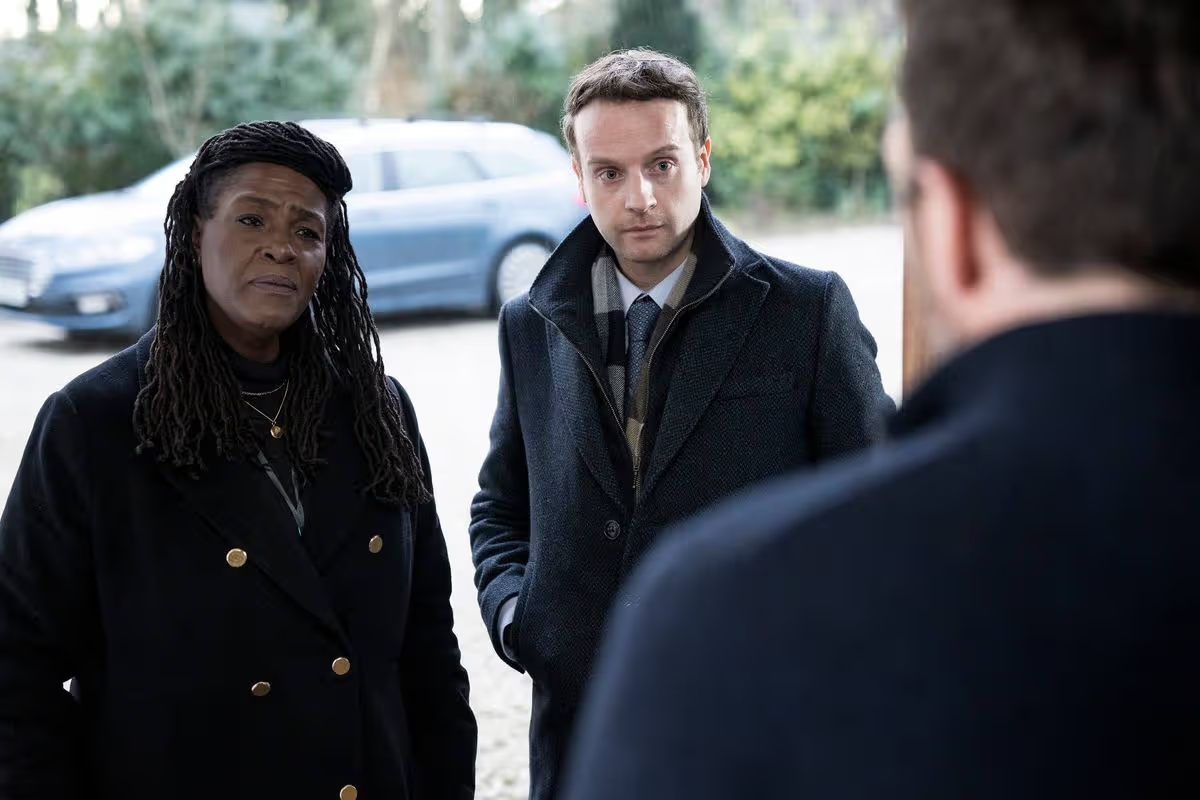
Fan once again saw DCI Ellis (Sharon D Clarke) and DS Harper (Andrew Gower) investigate the disappearance of a local boy, a murder that brought up a lot of old grudges and the death of a student who was found crushed underneath scaffolding. As the show came to an end tonight, everyone has been left wondering if Ellis and Harper make a return to our screens again.

As of now, Channel 5 are yet to confirm whether the show will continue, however, the good news as Andrew Gower, who plays DS Harper, is very keen to return to his role and the show.

When speaking to Radio Times on the idea of him filming the show again, he said: “Oh yeah, that’s a very easy ‘yes’. To work with Sharon and to keep giving life to Harper and Ellis.”

He continued: “I’ll keep reiterating this but it’s the audience, they always say it’s all about the audience, right? If we can keep entertaining audiences and they keep wanting more, then that’s what we’ll do with Ellis.

“I think the more series we have or the more episodes we have – films, whatever people call them – then that means that we’re doing something right and that means that this relationship can grow.”

The star added: “At some point maybe grow apart to come together, whatever. That’s the exciting thing about British detective shows, there’s scope where you can build from one series to however many. Long may it continue.”

Talking about the legacy of the detective drama, co-star Sharon D Clarke previously said: “The thing I love the most about Ellis is that she is on our screens! I love playing Ellis because I didn’t grow up seeing anybody like her on my television screen.

“So that is my joy, that this is a first, and I am getting to lead that brigade and hopefully pass that baton on to people coming behind me. We’ve waited a long time, but we’re here, and we’re here to stay.”

Channel 5 has since confirmed what show will be replacing Ellis next week in the 9pm slot on Tuesday night. On Tuesday, (March 24) the network will air Power: The Downfall of Huw Edwards, a feature-length drama starring Martin Clunes, Osian Morgan, Sian Reese Williams, and Jason Hughes.

Channel 5 said: “Power: The Downfall of Huw Edwards is a major, feature-length factual drama exploring the story of how a vulnerable 17-year-old boy was groomed by one of the most powerful figures in television – Huw Edwards.

“Starring Martin Clunes (Doc Martin, Wuthering Heights, Manhunt) as Edwards, the drama explores the newsreader’s double life as it spirals out of control, leading to his total exit from public life following his conviction for making indecent images of children.”

Ellis is available to stream on Channel 5

Source link

Amber Davies breaks silence with sharp statement amid ‘feud’ with Legally Blonde co-star

Amber Davies has broken her silence on an alleged feud with her Legally Blonde co-star Hannah Lowther amid rumours of ‘backstage tension’

Amber Davies has broken her silence on her alleged feud with her Legally Blonde co-star Hannah Lowther. The former Love Island star has been forced to pull out of her starring role as Elle Woods.

Giving an update to fans about her ill health, she wrote on Instagram earlier today: “Ok update: after talking to my DR, being on antibiotics and trying to recover whilst doing shows is getting me and my health NOWHERE. Been working on this lingering illness for a month now so I’ll be off again from my beautiful Elle Woods.

“This is the last thing I want but there’s no other way. I fear if I keep “pushing through” I will be battling with this for longer than I need to be. I can’t wait to be back on stage and feel like me again!!!”

However, there have been rumours about a feud between Amber and her co-star Hannah Lowther. Hannah found fame on TikTok in the pandemic and is a successful musical theatre star.

Insiders have said to the Daily Mail that “tension” had developed backstage after audiences seemed to be preferring Hannah’s portrayal of Elle over Amber’s. A source said: “When Hannah goes on, the energy is completely different.

“She gives it ten times more energy than Amber ever has, and just has that sparkle that Amber lacks. Everyone backstage is professional, but it would be fair to say the atmosphere between the two girls can be a bit tense at times.”

Now, Amber has appeared to address the feud head on. Taking to Instagram to comment on Hannah taking on the role, she also shared a personal message to Hannah, writing: “An extra special appreciate message to @hannahlowther who has given me all the grace and space to be poorly and recover. The show is in safe hands ALWAYS.”

Amber previously spoke out to defend herself, given her hectic schedule in the recent months. She added: “Also I keep having to remind myself I went from Gatsby, to a last min Strictly, then to Elle so my body’s evidently fighting for its life.

“I also keep reminding myself that it’s ok to be poorly, we are human. Just a reminder there’s absolutely never a right time to be poorly in a musical theatre schedule so you must, for your own sanity, go with the flow!”

At the time of writing, Hannah has not responded to the post but confirmed she would be playing Elle this evening.

Like this s tory? F or more of the latest showbiz news and gossip, follow Mirror Celebs on TikTok , Snapchat , Instagram , Twitter , Facebook , YouTube and Threads .


Source link

They Manufactured the Silence. We Called It Consensus

The international community has a structural problem in reading conflicts: it treats silence as neutrality, when in fact silence is a manufactured condition. When international monitors report the absence of civil protests or testimonies from conflict zones, they are not documenting consensus; they are documenting the success of propaganda operations. This article argues that conflicting parties are now actively exploiting the spiral of silence as a strategic weapon, and the international community’s failure to recognize this results in a structurally flawed diplomatic response even before analysis begins. This argument will be constructed in three layers: how the spiral is engineered, how Sudan proves it, and why the international interpretive framework must be updated immediately.

Elisabeth Noelle-Neumann (1974), in her theory Spiral of Silence, describes how individuals suppress their minority opinions to avoid social isolation. This theory is built on the assumption of a free society, where silence is an organic social choice. In conflict zones, this assumption collapses completely. Silence is not chosen; it is engineered. Propaganda actors flood information channels with dominant narratives not to convince audiences that these narratives are true, but to signal which voices are safe and which are not. The result appears to be consensus. But it is not.

Social media has transformed this architecture of silence into something almost invisible. Platforms give users real-time visibility into how much public response a particular view receives. When opposing content is systematically silenced through algorithmic deprioritization and coordinated mass reporting campaigns, people conclude that speaking out is pointless, or worse, dangerous. Jowett and O’Donnell (2019) note that bandwagon propaganda does not require audiences to believe in the dominant narrative, only to believe that others already believe it. At that point, the spiral becomes self-sustaining: it no longer needs external enforcement because the target population has internalized it themselves.

The agenda-setting theory proposed by McCombs and Shaw (1972) adds another layer to this problem and makes it much more difficult to detect. The media and information channels do not merely reflect reality; they determine what is considered worthy of discussion from the outset. When warring parties dominate the information space, they not only shape international perceptions. They also determine which testimonies are considered safe for local residents to give and which silences are necessary for survival. This is not a side effect of conflict. It is a deliberate targeting of the information environment itself, and the international community has been consistently slow to recognize this as such.

Two technical mechanisms make all this work, and neither requires direct violence to be effective. First, bandwagon propaganda floods channels with coordinated content until dissent appears marginal and irrelevant. Second, fear appeals work without needing to be explicitly stated. In conflict environments, people have witnessed what happens to those who oppose the dominant narrative, so self-censorship becomes a rational choice, not a sign of weakness. The combination of the two is the most dangerous: the spiral no longer requires external enforcement because its targets are already silencing themselves. This is not the moral failure of individuals who choose to remain silent; it is a system designed to work exactly as intended.

The case of Sudan illustrates this most clearly. Both the SAF and the RSF launched coordinated information operations from the early days of the conflict. RSF channels spread a narrative of civilian protection, while the SAF network framed the war solely as a counter-terrorism operation. These two narratives, although contradictory, both served to narrow the space for independent civilian testimony. Civilians in Khartoum and Darfur faced an information environment that made disclosure a risk calculation rather than a right. The internet blackouts recorded at various periods of the conflict were not merely technical obstacles; they were a very clear signal of the price to be paid for speaking out.

Zeitzoff (2017) shows that users in environments close to conflict significantly alter their disclosure behavior under perceived surveillance, even without direct threats. In Sudan, the threat is anything but hypothetical. The diplomatic consequences are immediately apparent: the UN’s initial assessment of the Sudanese conflict has been repeatedly criticized by humanitarian organizations for underestimating civilian casualties and displacement figures. This is not a methodological failure. It is the intended result of a deliberate information architecture, a condition in which the most relevant data is already missing before the verification process even begins.

What makes this a diplomatic crisis, not merely an information crisis, is that the international response is built on what is reported. When open-source assessments treat civilian silence as a neutral baseline, they are not accessing the truth on the ground. They are accessing whatever has made it through the spiral. This pattern repeats itself in various conflicts because it consistently works in Syria, in Myanmar, and in Ethiopia. In each case, the international community finds itself working with records that have been curated by the parties most interested in concealing crimes.

The solution is not more monitoring infrastructure. What is needed is a different interpretative framework. Silence must be treated as a data point that requires explanation, not as a default condition that requires nothing. When there are no reports from conflict zones, it does not mean that nothing is happening; rather, it means that the conditions for speaking out have been destroyed first. Protected witness pathways, verification networks from the diaspora, and analysis of anomalies in information flows are all useful, but only after a fundamental recognition that the problem is not a lack of information, but rather that engineered silence is constantly misinterpreted as the absence of anything worth investigating.

The Spiral of Silence was originally a theory about how even free societies can slowly and unconsciously silence themselves. In the hands of modern propaganda architects, the theory has been repurposed as a method to ensure that the most credible witnesses to crimes never speak out and that their silence is interpreted by the international community as proof that there are no crimes to investigate. The arguments in this article, from the mechanisms of spiral engineering to the role of social media to the case of Sudan, all point to the same conclusion: as long as silence is interpreted as absence, the international community is not conducting independent analysis. They are confirming the narrative of those most interested in concealing the truth. The loudest voices are not the most honest; they are simply the ones allowed to speak.

Source link

Argentine industrial groups break silence, call for respect from Milei

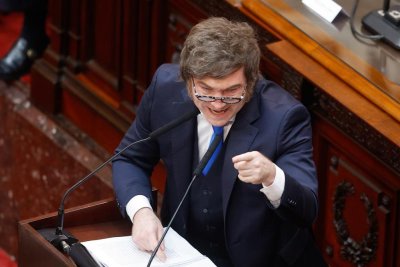
Argentinian President Javier Milei speaks during the opening of the 144th Ordinary Session of the National Congress in Buenos Aires on Sunday. Milei addressed the nation on key initiatives for his administration. Photo by Ignacio Roncoroni/EPA

March 5 (UPI) — Argentina’s main business organizations issued an unusual public warning to President Javier Milei’s government, calling for “respect” for the private sector and warning about the difficult situation facing the country’s industrial base.

The statements followed remarks by Milei during the opening of the legislative year in Congress, when the president sharply criticized industrial business leaders and accused them of benefiting for years from a protectionist and corrupt economic system.

The reactions came mainly from the Argentine Industrial Union, known by its Spanish acronym UIA, and the Argentine Business Association, or AEA, two of the most influential groups representing the country’s private sector.

Under the premise that “without industry there is no nation,” the UIA defended the productive sector in a statement responding to the president’s comments and expressed concern about the situation of factories across several provinces.

“In this stage of transformation, we want to be clear: respect is a basic condition for development. Respect for those who produce, invest and create jobs across the country. Respect is the starting point to rebuild the confidence Argentina needs, both domestically and internationally,” the organization said, according to a report by Argentine newspaper Perfil.

The UIA also said business leaders should not be blamed for economic distortions accumulated over decades and called for clear rules to guide the transition toward a more open economic model.

Industrial representatives warned that many companies, especially small and medium-sized firms, are facing a difficult period marked by falling consumer demand, heavy tax pressure and financial constraints.

The group said Argentina’s industrial sector produces about 19% of the country’s gross domestic product and contributes 27% of national tax revenue. It also generates 19% of formal employment, with about 1.2 million workers, and supports another 2.4 million indirect formal jobs throughout the production chain.

The AEA, which represents owners of some of the country’s largest companies, adopted a more moderate tone.

The organization acknowledged progress by Milei’s administration in stabilizing the economy, but said relations between the state and the private sector must be based on respect and cooperation to facilitate new investment.

Despite the critical tone, the business statements avoided a direct confrontation with the government and stressed the need for cooperation, digital outlet Infobae reported. Both organizations said economic stabilization must be accompanied by policies that encourage productive investment and support the industrial sector.

Although much of Argentina’s business community initially supported Milei’s economic reforms, the episode marks one of the first public criticisms by major companies since he took office.

A growing number of factory closures and a slowdown in industrial activity have begun to trigger concerns within the private sector.

Source link

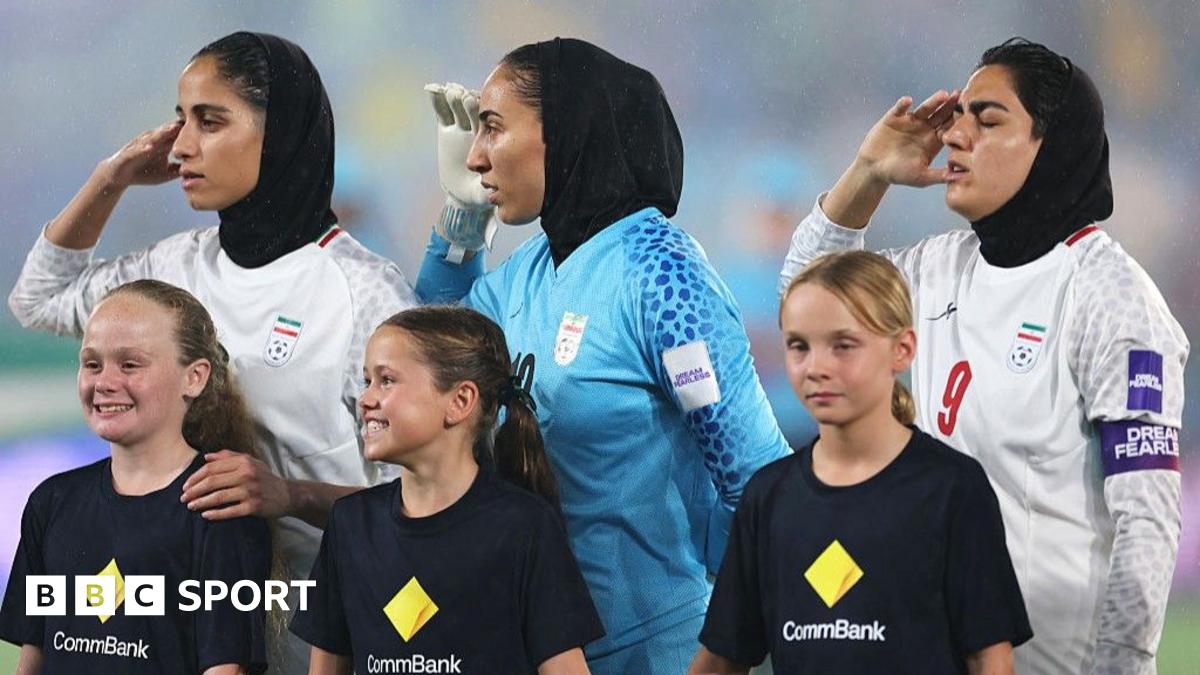
Iran footballers sing and salute to anthem at Asian Cup after prior silence

The Iranian team arrived in Australia well before the air strikes on their country by the US and Israel began last Saturday.

More than 1,100 Iranian civilians are estimated to have been killed according to the US-based Human Rights Activists News Agency, external (HRNA).

“No-one likes what’s happening, no-one wants war,” said head coach Marziyeh Jafari.

In the same news conference however, she insisted Iran have “come here to play football”.

A 4-0 defeat by Australia on Thursday means they now must beat Philippines on Sunday to have a chance of progressing to the knockout stages.

Their approach to the national anthem has matched that taken by the men’s team at the 2022 World Cup in Qatar, where they were silent before their first game against England and then sang along before their next match against Wales.

That campaign came against the backdrop of significant domestic protests in Iran over the death of 22-year-old woman Mahsa Amini while in police custody.

Before this game, dozens of Iranian-Australians gathered outside the stadium in Gold Coast waving Israeli, Australian and pre-revolution Iranian flags.

Source link

‘Voluntary migration’ doesn’t disguise Israel’s forced displacement campaign in Gaza amid deafening international silence

Israel is no longer concealing its intention to forcibly displace Palestinians from their homeland, as it now announces this plan more openly than ever before through official rhetoric at the highest levels, said Euro-Mediterranean Human Rights Monitor in a report issued today.

Through actions on the ground and institutional measures designed to reframe the crime as “voluntary migration”, explained Euro-Med Monitor, Israel has attempted to implement its displacement campaign by exploiting the international community’s near-total silence, which has enabled the continuation of the crime and Israeli impunity despite the unprecedented nature of humanity’s first livestreamed genocide.

“Israel is now attempting to carry out the final phase of its crime, and its original goal: the mass expulsion of Palestinians from Palestine, specifically from the Gaza Strip. For a year and a half, Israel has carried out acts of genocide, killing and injuring hundreds of thousands of people, erasing entire cities, dismantling the Strip’s infrastructure, and systematically displacing its population within the enclave. These actions aim to eliminate the Palestinian people as a community and as a collective presence.”

The current plans for forced displacement, said the Geneva-based rights group, are a direct extension of Israel’s long-standing, settler-colonial project, aimed at erasing Palestinian existence and seizing land. What distinguishes this stage, it added, is its unprecedented scale and brutality.

“Israel is targeting over two million people who have endured a full-scale genocide and have been stripped of even the most basic human rights, under coercive, inhumane conditions that make living any sort of a normal life impossible. Israel’s deliberate objective is to pressure Palestinians into leaving by making it their only means of survival.”

Having succeeded in revealing the weak principles of international law, such as protections for civilians based on their perceived racial superiority or lack thereof, Israel is now reshaping the narrative once again.

READ: Gaza reaches WHO’s most critical malnutrition level amid Israeli blockade

“Armed with overwhelming force and emboldened by the international community’s abandonment of legal and moral responsibilities, Israel seeks to portray the mass expulsion of Palestinians as ‘voluntary migration’,” said the group. “This is a blatant attempt to rebrand ethnic cleansing and forced displacement using dishonest language — like ‘humanitarian considerations’ and ‘individual choice’ — and is a direct contradiction of legal facts and the reality on the ground.”

Euro-Med Monitor emphasised that forced displacement is a standalone crime under international law, because it involves the removal of individuals from areas where they legally reside, using force, threats, or other forms of coercion, without valid legal justification.

“Coercion, in the context of Israel’s genocide in the Gaza Strip, goes beyond military force. It includes the creation of unbearable conditions that render remaining in one’s home practically impossible or life-threatening.” A coercive environment includes fear of violence, persecution, arrest, intimidation, starvation or other forms of hardship that strip individuals of free will and force them to flee.

“Israel has already committed the crime of forced displacement against Gaza’s population, having driven them into internal displacement without legal grounds and in conditions that violate international legal exceptions, which only permit evacuation temporarily and under imperative military necessity, while ensuring safe areas with minimum standards of human dignity,” said Lima Bustami, Director of Euro-Med Monitor’s Legal Department.

“None of these standards have been met. In fact, Israel has used this widespread and repeated pattern of displacement as a tool of genocide, aimed at destroying and subjecting the population to deadly living conditions.”

Bustami added that although the legal elements of the crime are already fulfilled, Israel is further escalating it to a more lethal level against the Palestinian people, manifesting its settler-colonial vision of expulsion and replacement. “Now it is attempting to market the second phase of forced displacement — beyond Gaza’s borders — as ‘voluntary migration’: a transparent deception that only a complicit international community — one that chooses silence over accountability — would accept.”

Today, the people of the Gaza Strip endure catastrophic conditions that are unprecedented in recent history, said Euro-Med Monitor. “Israel has obliterated all forms of normal life; there is no electricity or infrastructure, and there are no homes, no essential services, no functioning healthcare or education systems, and no clean water services.”

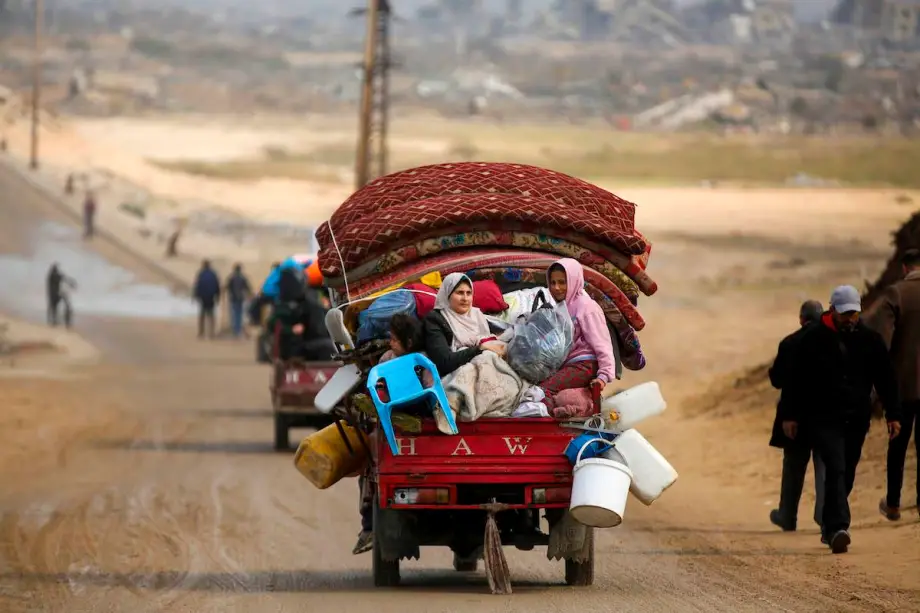
Indeed, the group’s report notes that around 2.3 million Palestinians are confined to less than 34 per cent of the Strip’s 365 square kilometres. Approximately 66 per cent of the territory has been turned into so-called “buffer zones”, or areas that are completely off-limits to Palestinians and/or that have been forcibly depopulated through Israeli bombings and displacement orders. “Most of the population is now living in tattered tents amid the spread of famine, disease and epidemics and an accumulation of waste, conditions symptomatic of the near-complete collapse of the humanitarian system.”

Moreover, Israel continues to systematically block the entry of food, medicine and fuel; destroy all remaining means of survival; and obstruct any efforts aimed at reconstruction or restoring even the minimum conditions for a healthy life.

“These conditions in place are not the result of a natural disaster,” the Euro-Med report says pointedly. “They have been deliberately engineered by Israel as a coercive tool to pressure the population into leaving the Gaza Strip. The absence of any genuine, voluntary alternative for Palestinians in the enclave renders this situation a textbook case of forcible transfer, as defined under international law and affirmed by relevant jurisprudence.”

READ: Israel advocate says, ‘I’m OK with as many dead kids as it takes’

According to Bustami, “While population transfers may be permitted in certain humanitarian contexts under international law, any such justification collapses if the humanitarian crisis is the direct consequence of unlawful acts committed by the same party enforcing the transfer. It is impermissible to use forced displacement as a response to a disaster one has created, a principle clearly upheld by international tribunals, particularly the International Criminal Tribunal for the former Yugoslavia.”

Framing this imposed reality as a “voluntary” migration and an option not only constitutes a gross distortion of truth, said Euro-Med Monitor, but also undermines the legal foundations of the international system, erodes the principle of accountability, and transforms impunity from a failure of justice into a deliberate mechanism for perpetuating grave crimes and entrenching the outcomes of such crimes.

“Repeated public statements from the highest levels of Israel’s political and security leadership have escalated in intensity over the past year and a half, and expose a clear, coordinated intent to displace the population of the Gaza Strip. In a blatant bid to enforce a demographic transformation serving Israel’s colonial-settler agenda, senior Israeli officials — including Prime Minister Benjamin Netanyahu, former Defence Minister Yoav Gallant, Finance Minister Bezalel Smotrich and National Security Minister Itamar Ben-Gvir — have publicly called for the expulsion of Palestinians from the Strip and for the settlement of Jewish Israelis in their place.”

Netanyahu expressed full support in February 2025 for US President Donald Trump’s plan to resettle Palestinians outside of the Gaza Strip, describing it as “the only viable solution for enabling a different future” for the region. Likewise, Smotrich announced in March that the Israeli government would back the establishment of a new “migration authority” to coordinate what he termed a “massive logistical operation” to remove Palestinians from the Strip.

Ben-Gvir, meanwhile, has openly advocated for the encouragement of “voluntary migration” coupled with calls to resettle Jewish Israelis in the territory.

The human rights organisation referred to the 23 March decision of the Israeli Security Cabinet to establish a dedicated directorate within the Ministry of Defence, to manage what it calls the “voluntary relocation” of the Gaza Strip’s residents to third countries. “This is evidence that this displacement is not a by-product of destruction or political rhetoric, but an official policy,” it noted. “This policy is being implemented through institutional mechanisms, directed from within Israel’s own security apparatus, with full operational powers, executive structures, and strategic goals.”

READ: Israel bombing kills 4-year-old twin girls as they slept in Gaza

Furthermore, current Defence Minister Israel Katz’s statement on the new directorate confirmed that it would “prepare for and enable safe and controlled passage of Gaza residents for their voluntary departure to third countries, including securing movement, establishing movement routes, checking pedestrians at designated crossings in the Gaza Strip, as well as coordinating the provision of infrastructure that will enable passage by land, sea and air to the destination countries.”

The true danger of establishing such a directorate, said Euro-Med Monitor, lies not only in its institutionalisation of forced transfer, but in the new legal and political reality it seeks to impose. “It rebrands displacement as an ‘optional’ administrative service while stripping civilians of their ability to make free, informed decisions, therefore cloaking a war crime in a veneer of bureaucratic legitimacy.”

Any departure from the Gaza Strip under current circumstances cannot be considered “voluntary”, it added, but rather constitutes, in legal terms, forcible transfer, which is strictly prohibited under international law. “All individuals compelled to leave the Strip retain their inalienable right to return to their land and property immediately and unconditionally. They also have the full right to seek compensation for all damages and losses incurred as a result of Israeli crimes and rights violations, including the destruction of homes and property, physical and psychological harm, the assault on human dignity, and the denial of livelihood and basic rights.”

Under its obligations as an occupying power responsible for the protection of the civilian population, Israel is prohibited from forcibly transferring Palestinians and bears full legal responsibility to ensure their protection from this crime.

The rules of international law, particularly customary international law and the Geneva Conventions, require all states not to recognise any situation arising from the crime of forcible transfer and to treat it as null and void. States are also obligated to withhold all material, political and diplomatic support that would contribute to the entrenchment of such a situation.

“International responsibility goes beyond mere non-recognition,” said the rights group. “It includes a legal duty for states to take urgent effective steps to halt the crime, hold perpetrators accountable, and provide redress to victims. This includes ensuring the safe, voluntary return of all displaced persons from the Gaza Strip, and providing full reparations for the harm and violations they have suffered. Any failure to act in this regard constitutes a direct breach of international law and complicity that could subject states to legal accountability.”

READ: Israeli air strike hits Gaza children’s hospital

Euro-Med Monitor said that the international community must move beyond deafening silence and abandon paltry rhetorical condemnations, which have come to represent the maximum response it dares to make in the face of the livestreamed genocide unfolding before its eyes. “It must act swiftly and effectively to halt Israel’s ongoing project of mass displacement in the Gaza Strip and prevent it from becoming an entrenched reality. This action must be based on international legal norms, a commitment to justice and accountability, and an honest reckoning with the root structural cause of the crimes: Israel’s unlawful presence in the Occupied Palestinian Territory since 1967.”

Endorsing or remaining silent about Israeli plans to forcibly transfer Palestinians out of the Gaza Strip not only exonerates Israel but rewards it for its illegal conduct by granting it gains secured through mass killing, destruction, blockade, and starvation, said the organisation. “This is not just a series of war crimes or crimes against humanity, it embodies the legal definition of genocide, as established by the 1948 Genocide Convention and the Rome Statute of the International Criminal Court.”

All states, individually and collectively, must uphold their legal obligations and take all necessary measures to halt Israel’s genocide in the Gaza Strip.

This includes taking immediate, effective steps to protect Palestinian civilians and to prevent the implementation of the US-Israeli crime of forcible transfer that is openly threatening the Strip’s population.

“The international community must impose economic, diplomatic, and military sanctions on Israel for its systematic and grave violations of international law. This includes halting arms imports and exports; ending all forms of political, financial and military support; freezing the financial assets of officials involved in crimes against Palestinians; imposing travel bans; and suspending trade privileges and bilateral agreements that offer Israel economic advantages that sustain its capacity to commit further crimes.”

The rights group insisted that states must also hold complicit governments accountable — chief among them the United States — for their role in enabling Israeli crimes through various forms of support, including military and intelligence cooperation, financial aid and political or legal backing.

“The ethnic cleansing and genocide taking place right now in the Gaza Strip would not be possible without Israel’s decades-long unlawful colonial presence in the Occupied Palestinian Territory. This is the root structural cause of the violence, oppression, and destruction in the besieged enclave,” concluded Euro-Med Monitor. “Any meaningful response to the escalating crisis in the Strip must begin with dismantling this colonial reality, recognising the Palestinian people’s right to self-determination, and securing their freedom and sovereignty over their national territory.

“As Israel and its allies must be compelled to abide by the law, international intervention is the only path to ending the genocide, halting all forms of individual and collective forcible transfer, dismantling the apartheid regime, and establishing a credible framework for justice, accountability, and the preservation of human dignity.”

OPINION: Palestinian voices are throttled by the promotion of foreign agendas

The views expressed in this article belong to the author and do not necessarily reflect the editorial policy of Middle East Monitor.

Source link

Delroy Lindo breaks silence after racist slur directed at him by Tourettes activist at Baftas

SINNERS star Delroy Lindo said he appreciates the “love and support” he has received after the N-word was shouted while he was on stage at last week’s Baftas.

The 73-year-old actor and co-star Michael B Jordan were presenting an award when Tourette’s sufferer John Davidson involuntarily blurted out the racial slur.

Delroy Lindo said he appreciates the ‘love and support’ he has received after the N-word was shouted while he was on stage at last week’s BaftasCredit: Reuters
Michael B. Jordan and Delroy Lindo at the film awards in LondonCredit: Stuart Wilson / Getty Images for BAFTA
Tourettes campaigner John Davidson at the 79th BaftasCredit: Shutterstock Editorial

Lindo addressed the controversy while on stage at the NAACP Image Awards in California on Saturday.

The British-born actor said: “We appreciate – I appreciate – all of the support and love we have been shown in the aftermath of what happened last weekend, it means a lot to us.

“It is an honour to be here amongst our people this evening, amongst so many people who have shown us such incredible support.

“And it’s a classic case of something that could’ve been very negative becoming very positive.

KELLY HITS BACK

Kelly Osbourne hits back at cruel trolls who ‘dehumanised her’ after Brits


priceless

Katie Price bares all on-stage thousands of miles from ‘travel-banned’ husband

“Thank you so much for the support.”

Lindo praised the ceremony as “a room where being fully seen is not rare, but it is expected”.

Campaigner John said he was “deeply mortified” by what happened.

Jordan and Lindo were acknowledged by actress Regina Hall as she presented the first award of the night.

Hall, best known for appearing in the Scary Movie franchise, said: “I just want to take a moment to the two kings who are in this audience and just send you so much love for your class.”

The 57th NAACP Image Awards were held in Pasadena and hosted by actor and comedian Deon Cole.

Cole took aim at the Bafta incident, joking: “If there are any white men out here in the audience with Tourette’s, I advise you to tell them they can read the room tonight.”

Robert Aramayo posed up with his two Baftas – Best Actor and Rising Star after his performance in I Swear

Source link

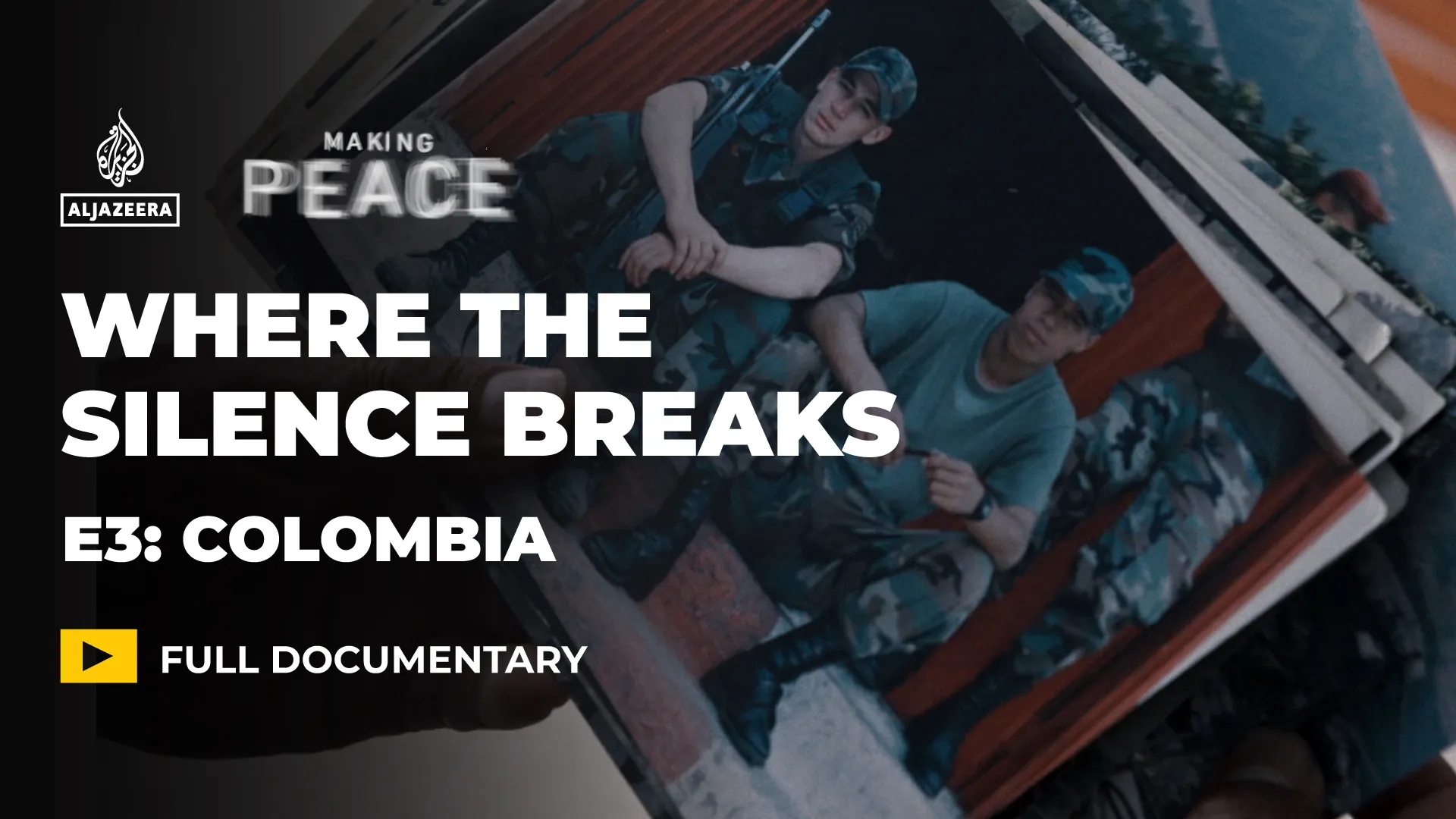
Where the Silence Breaks | Ep 3 – Colombia | Documentary

As part of Colombia’s peace process, former National Army soldiers confess to taking part in extrajudicial killings to the victims’ families.

Colombia continues to navigate the fragile aftermath of more than five decades of armed conflict. Although the 2016 peace agreement formally ended hostilities between the state and the FARC-EP rebels, sustaining peace has proven far more complex than signing it.

This episode follows former members of the national army accused of carrying out the so-called “falsos positivos” (false positives) — extrajudicial executions in which innocent civilians were executed, then falsely presented as combat casualties by the government as a way to bolster the numbers of enemies killed. Soldiers testified to their involvement in the assassinations to the families of the victims as part of the peace process. We also explore the suffering and anguish of those who have had their families devastated by these killings.

Their testimonies unfold within the framework of the Special Jurisdiction for Peace (JEP), the justice mechanism established under the peace agreement between the Colombian state and the Revolutionary Armed Forces of Colombia (FARC-EP).

The JEP applies a model of transitional and restorative justice centred on victims and with full guarantees of due process. Its mandate is to investigate, prosecute and sanction those most responsible for serious human rights violations. The system provides two pathways: a restorative process for those who acknowledge responsibility, provide full truth, and contribute to reparation and guarantees of non-repetition; and an adversarial process for those who do not.

Currently, more than 17,000 individuals are appearing before the JEP, including former FARC-EP members, members of the armed forces, and civilian third parties. The jurisdiction has issued indictments for maximum responsibility, delivered restorative and adversarial sentences, and conditionally waived criminal prosecution for non-most-responsible participants.

A film by Fatima Lianes

Source link

Tourettes campaigner breaks silence after racist Bafta slur as he’s left ‘deeply mortified’ following audience shout

TOURETTES campaigner John Davidson said he was mortified after sparking a race row by shouting out the N-word at the Baftas. 

John later voluntarily left the ceremony amid shock at his swearing as Delroy Lindo and Michael B. Jordan were on stage presenting an award. 

The incident happened at the 79th annual British Academy Film Awards, which took place at the Royal Festival Hall on Sunday nightCredit: BBC/UNPIXS
John Davidson said he was ‘deeply mortified’Credit: BBC/UNPIXS
The campaigner made the decision to leave the awards half way through after several involuntary ticsCredit: Getty

But the slur by John — whose life inspired the double gong-winning film I Swear — wasn’t cut from the BBC’s two-hour ceremony coverage at London’s Royal Festival Hall. 

Yesterday, bosses apologised and removed the episode from iPlayer. 

Last night John insisted he was “mortified if anyone considers my involuntary tics to be intentional or to carry any meaning”. 

And Bafta confirmed he left the room before the awards ended. 

BAFTA CHAOS

Row over Tourettes slur as Jamie Foxx says ‘he meant it’ but charity hits back


CUT OUT

Furious Adam Deacon launches attack on BAFTAs and claims he was cut out of show

In statement the organisation said: “Early in the ceremony a loud tic in the form of a profoundly offensive term was heard by many people. 

“Michael B. Jordan and Delroy Lindo were on stage at the time, and we apologise unreservedly to them, and to all those impacted.

“We would like to thank Michael and Delroy for their incredible dignity and professionalism. 

“John chose to leave the auditorium and watch the rest of the ceremony from a screen and we would like to thank him for his consideration of others on what should have been a night of celebration for him.” 

I Swear saw ­Robert Aramayo, 33, pick up Best Actor. It also won Best Casting. 

Scottish-born John, 54, is a campaigner for Tourette sufferers and aged 16 was the subject of a BBC documentary, John’s Not Mad, about living with the condition, which leads some to shout swear words. 

The Sun understands that Sunday night’s audience was not told a ­person with Tourette Syndrome was present.

Previously, at the Bafta TV awards, people have been warned in similar situations. 

A source said: “Neither host Alan Cumming nor any of the Bafta team warned people — the apology and comments came after the outbursts.” 

Cumming had said: “Tourette Syndrome is a disability. We apologise if you’re offended tonight.” 

Hannah Beachler, the production designer on movie Sinners, said: “What made the ­situation worse was the throwaway apology of, ‘if you were offended’. Of course we were.” 

It was reported BBC production staff did not hear the N-word — which meant it was left in the coverage.

However, a source added: “It was as loud and as clear as day.” 

The corporation said: “Some may have heard strong and offensive language.

“This arose from involuntary ­verbal tics associated with ­Tourette’s and, as explained during the ­ceremony, it was not intentional. 

“We apologise that this was not edited out prior to broadcast.” 

Campaigner John is the inspiration behind the movie I SwearCredit: Shutterstock Editorial
Robert Aramayo posed up with his two BAFTAs – Best Actor and Rising Star after his performance in I Swear
The pair backstage during the EE BAFTA Film Awards 2026Credit: Getty

The reality of living with Tourette syndrome

TOURETTE syndrome is a condition that causes a person to make involuntary sounds and movements called tics.

It usually starts during childhood, but the tics and other symptoms often improve after several years, and sometimes go away completely.

There’s no cure for Tourettes, but treatment can help manage symptoms.

The most common physical tics include:

  • Blinking
  • Eye rolling
  • Grimacing
  • Shoulder shrugging
  • Jerking of the head or limbs
  • Jumping
  • Twirling
  • Touching objects and other people

Examples of vocal tics include:

  • Grunting
  • Throat clearing
  • Whistling
  • Coughing
  • Tongue clicking
  • Animal sounds
  • Saying random words and phrases
  • Repeating a sound, word or phrase
  • Swearing

Swearing is rare and only affects about 1 in 10 people with Tourettes.

Some people can control their tics for a short time in certain social situations, like in a classroom.

But this can be tiring, and someone may have a sudden release of tics when they return home.

Aidy Smith, who was diagnosed with Tourettes aged nine, said these are the most common misconceptions about the condition:

  1. It is a ‘swearing disease’ characterised by repeated bad language
  2. People with Tourette’s can’t succeed in the workplace
  3. It’s impossible to control your tics
  4. ‘Tourettes’ is a ‘dirty’ word
  5. It’s OK to make jokes about the condition because it isn’t serious

Source: NHS and Aidy Smith

Source link