shutdown

Major UK airport begins shutdown of terminal after half a century in ‘end of an era’

A MAJOR UK airport has officially closed part of a terminal after 60 years of operation.

Large sections of the departures and arrivals halls have shut, with only one airline remaining in the terminal.

Manchester Airport is currently undergoing a £1.3 billion transformationCredit: Alamy
A section of Manchester Airport’s Terminal 1 has been closed as part of the massive restructureCredit: Alamy

Manchester Airport’s Terminal 1 has now closed to all passengers, except those travelling with Ryanair.

The terminal was opened by Prince Philip in 1962 and entered its final phase of closure last week.

Airport transformation

Meanwhile, Terminal 2 has undergone a 10-year, £1.3 billion transformation which has more than doubled its size.

After an extension to the terminal opened in 2021, the airport is now in the final stages of overhauling the original Terminal 2.

TAKING OFF

One of Europe’s busiest airports to get £8.7billion renovation with new terminal


GROUNDED

Major airports axe ALL flights tomorrow affecting hundreds of Brit passengers

In the meantime, Terminals 1 and 3 will operate as a temporary hybrid hub for Ryanair until the full closure of Terminal 1 in early 2026.

Airline passengers have described the Terminal closure as the “end of an era”.

Fond farewell

A spokesperson for the airport told the BBC staff have been “really touched by all the lovely comments and by people sharing their memories”.

“Since the 1960s, T1 has been the starting point for millions of journeys,” Manchester Airport said in an official post.

The airport, which ranks as the UK’s busiest outside of London, has become well-known for the unique chandeliers in Terminal 1.

These iconic Venetian glass chandeliers were removed in 2003 and were placed on display in various museums.

However, these iconic features will now be on display in Terminal 2, where they are being resurrected to form a new piece of art.

“Even though we love Terminal 1, we weren’t really prepared for just how many other people share our affection for it,” said an airport spokesperson.

“It may be the end of an era for Terminal 1 as we know it, but we wanted to take some time to really celebrate it because it’s truly a part of the history of the North and plays a key part in lots of people’s memories of international travel.”

The airport rep added that passengers will not need to worry about extra traffic in Terminal 2 as a result of the closure.

“There is absolutely nothing that anybody needs to worry about, we have invested in the terminal facility and the road network as well,” they said.

Top 10 busiest airports in the UK

Here are the top 10 busiest airports in the UK, according to Travel SOS

  • London Heathrow Airport
  • London Gatwick Airport
  • Manchester Airport
  • London Stansted Airport
  • London Luton Airport
  • Edinburgh Airport
  • Birmingham Airport
  • Glasgow Airport
  • Bristol Airport
  • Belfast International Airport

More on travel

One of Europe’s busiest airports is also set to get a £8.7 billion renovation, including a brand new terminal.

And TUI is set to launch more hotels in very affordable exotic countries, including locations with white sand beaches and £1 beers. 

Meanwhile, a major airport has cancelled all flights tomorrow affecting hundreds of British passengers.

LAVALEY VIEW

Huge volcanic eruption sends ash 6 miles high & poisonous gas toward villages


TRAITORS CHAOS

Bombshell evidence that proves Traitors star ISN’T dad to Charlotte’s baby

Plus, the £300 million attraction set to open with a huge new waterpark and the UK’s longest ski slope.

And the six best Black Friday cruise deals, from no-fly trips to Europe to £300 off Caribbean sailing.

Terminal 1 at Manchester Airport will now operate as a temporary hybrid alongside Terminal 3 for Ryanair passengersCredit: Alamy

Source link

US government to nix October inflation report after history-making shutdown | Donald Trump News

The United States Bureau of Labor Statistics (BLS) has announced it will not release inflation information for the month of October, citing the consequences of the recent government shutdown.

On Friday, the bureau updated its website to say that certain October data would not be available, even now that government funding has been restored and normal operations have resumed.

Recommended Stories

list of 3 itemsend of list

“BLS could not collect October 2025 reference period survey data due to a lapse in appropriations,” it wrote in a statement. “BLS is unable to retroactively collect these data.”

The cancelled data includes the Consumer Price Index (CPI) — a report that is commonly used to calculate inflation by measuring the changing costs of retail items — and the Real Earnings summary, which tracks wages among US workers.

For some of the reports, including the Consumer Price Index, the bureau said it would use “nonsurvey data sources” to make calculations that would be included in a future report for the month of November.

The November Consumer Price Index will also be published later than anticipated, on December 18.

The most recent government shutdown was the longest in US history, spanning nearly 43 days.

It began on October 1, after the US Congress missed a September 30 deadline to pass legislation to keep the government funded.

Republicans had hoped to push through a continuing resolution that made no changes to current spending levels. But Democrats had baulked at the prospect, arguing that recent restrictions to government programmes had put healthcare out of reach for some US citizens.

They also warned that insurance subsidies under the Affordable Care Act are set to expire by the end of the year. Without an extension to those subsidies, they said that insurance premiums for many Americans will spike.

Republicans rejected the prospect of negotiating the issue until after their continuing resolution was passed. Democrats, meanwhile, feared that, if they passed the continuing resolution without changes, there would be no further opportunity to address healthcare spending before the end of the year.

The two parties hit an impasse as a result. Non-essential government functions were halted during the shutdown, and many federal employees were furloughed.

Only on November 10 did a breakthrough begin to emerge. Late that night, seven Democrats and one independent broke from their caucus to side with Republicans and pass a budget bill to fund the government through January 30.

The bill was then approved by the House of Representatives on November 12, by a vote of 222 to 209. President Donald Trump signed the legislation into law that very same day.

Trump had openly sought to leverage the shutdown to eliminate federal programmes he saw as benefitting Democratic strongholds.

He also attempted to blame the political left for the lapse in government services, though he acknowledged public frustration with Republicans after Democrats won key elections in November.

“If you read the pollsters, the shutdown was a big factor, negative for the Republicans,” he told a breakfast for Republican senators on November 5. “That was a big factor.”

The Trump administration had warned as early as October that the month’s consumer price data would be negatively affected as a result of the shutdown.

In a White House statement, Trump officials touted Trump’s economic record while slamming a potential lapse in the government’s collection of data. Once again, they angled the blame for any slowed economic growth at the Democrats.

“Unfortunately, the Democrat Shutdown risks grinding that progress to a halt,” the statement said.

“Because surveyors cannot deploy to the field, the White House has learned there will likely NOT be an inflation release next month for the first time in history — depriving policymakers and markets of critical data and risking economic calamity.”

September’s Consumer Price Index, the most recent available, showed that inflation across all retail items rose about 3 percent over the previous 12-month period.

For food alone, inflation for that period was estimated at 3.1 percent.

Source link

A California Democrat broke with party to end government shutdown. His vote tells a broader story.

Rep. Adam Gray was one of only six House Democrats — and the only one from California — who voted with Republicans in favor of a deal to end the government shutdown, and there was a calculated reason behind that decision.

Gray, a first-term Democrat from the Central Valley, is running for reelection in a majority Latino district that national Republicans are expected to heavily target as they defend their narrow House majority in next fall’s midterm elections. Last year, Gray won his seat by 187 votes, and although redistricting has since made the 13th District more favorable to Democrats, it remains highly competitive.

The Merced Democrat’s vote reflects the political reality of representing one of the nation’s few battleground districts. Gray is positioning himself as an independent-minded Democrat willing to buck leadership on politically divisive issues. The shutdown deal gave him a rare opportunity to put that in practice, even at the risk of frustrating members of his own party.

“I know it is not comfortable, and I know there’s people that are going to be mad at me,” Gray told The Times. “But I am not here to win an argument. I am here to actually help fix problems with people in my community, and I know I did the right thing.”

Democratic representatives and senators for weeks were steadfast in opposing a shutdown deal that did not include language to extend Obamacare tax credits that are set to expire at the end of the year, and as a result, leave millions of Americans with higher healthcare costs.

In Gray’s district, more than half of residents rely on Medi-Cal or have coverage through the Affordable Care Act marketplace, making them vulnerable to rising healthcare costs — a pocketbook issue that is likely to factor into an already competitive congressional race.

Beyond healthcare, nearly 48,000 families in his largely rural district rely on food benefits through the Supplemental Nutrition Assistance Program, known as SNAP, according to the latest data provided by the Department of Agriculture. Those benefits were put at risk during the shutdown as funding for the federal program commonly called food stamps was caught up in legal disputes.

As the shutdown dragged on without meaningful negotiations on healthcare, Gray said, he grew concerned that Republicans were too comfortable “using vulnerable Americans as political leverage.”

Ultimately, Gray was among just 13 Democrats — six in the House, seven in the Senate — who went against their party to end the shutdown that had dragged on an historic 43 days.

“The government is reopening because Democrats were willing to compromise,” Gray said.

The deal, which was signed by President Trump last week, will fund the government through January 2026 and reinstate federal workers who were laid off during the shutdown. It will also fund SNAP through September 2026, a provision that Gray says he wanted to secure because he worries that partisanship could lead to another shutdown in January.

Republicans attack his position

Although Gray voted with Republicans over the shutdown, national Republican operatives still see his seat as a main target ahead of next year’s election — and there is good reason for that.

The seat has a history of party flipping.

In 2024, Gray won his seat by 187 votes, the slimmest margin of any race in the country. His opponent, Republican John Duarte, who cast himself a centrist in the race, had only held the seat for one term before being beat. (And he defeated Gray two years earlier by just 564 votes.)

President Trump carried the 13th last year by five points, underscoring the competitiveness of the Central Valley district which backed Joe Biden in the first Biden-Trump matchup of 2020.

The passage of Proposition 50 has made the district safer for Democrats as the new congressional map shifts parts of Stockton, Modesto and northern Stanislaus County into the district, while removing more conservative, rural territory west of Fresno. Still, it remains a highly competitive district.

Like Duarte, Gray has positioned himself as a centrist, but that hasn’t stopped Republicans from portraying him as being from the party’s far-left flank.

Christian Martinez, a spokesperson for the National Republican Congressional Committee, is now focusing on Gray’s voting history on the shutdown as a reason to criticize the incumbent. Specifically, how Gray in September abstained from voting on a bill that would have prevented the shutdown.

“Instead of delivering results for Californians, out-of-touch Democrat Adam Gray is too busy appeasing his radical socialist base, and now he’s fully responsible for holding Americans hostage with the longest government shutdown in history,” Martinez said.

Martinez added that “hardworking Californians paid the price for his refusal to vote to keep the government open, and next November, they’ll send him packing.”

Gray is now facing a Republican challenge from former Stockton Mayor Kevin Lincoln. When Lincoln announced his bid on Nov. 6, before the shutdown deal vote, he criticized Gray for not doing enough to prevent the shutdown in the first place.

“Washington politicians like Adam Gray have fallen in line with a failed liberal agenda that’s made life less affordable and less safe,” Lincoln said in a statement.

Moving forward, Gray sees the vote as an opportunity to reset negotiations and find a bipartisan solution before funding runs out again on Jan. 30, 2026.

“I think we’re moving in the right direction,” Gray said. “I hope my colleagues have the courage to do the right thing over the next days.”

Back in his district, Democrats have had a mixed reaction to his vote. As for his congressional colleagues, they have not offered up much criticism, choosing to let Gray explain his vote to the ever-changeable 13th District.

Source link

Court-appointed lawyers and their clients face fallout from government shutdown, funding crisis

The longest U.S. government shutdown in history is over, but the fallout will continue to hit two groups particularly hard for months to come: federally funded defense lawyers and the people they represent.

Thousands of court-appointed lawyers, known as Criminal Justice Act panel attorneys, along with paralegals, investigators, expert witnesses and interpreters, haven’t been paid since June after federal funding for the Defender Services program fell $130 million short of what the judiciary requested and ran out July 3. They had been told they would receive deferred payment once Congress passed a new budget, but as the government shutdown dragged on, many couldn’t move forward with trials or take on new clients.

Nationally, CJA lawyers handle about 40% of cases in which the defendant cannot afford an attorney. As many cases have ground to a halt, defendants’ lives have been put on hold as they wait for their day in court. Meanwhile, the federal government has continued to arrest and charge people.

“The system’s about to break,” Michael Chernis, a CJA panel attorney in Southern California, said during the shutdown. He hasn’t taken new cases since August and had to take out a loan to make payroll for his law firm.

Unpaid defense team members in several states said they had to dip into their retirement savings or turn to gig work, such as driving for Uber, to support their families.

Panel attorneys should begin receiving payment as early as next week. Judge Robert Conrad, the director of the Administrative Office of the U.S. Courts, said in a Thursday memo that the resolution Congress passed to fund the government through Jan. 30 provided an extra $114 million for the Defender Services program “to address the backlog of panel attorney payments.”

But the crisis isn’t over. Conrad said a spending bill pending for the 2026 fiscal year is still $196 million short and funding is likely to run out to pay CJA panel attorneys next June.

The problem is particularly severe in the Central District of California, the largest and one of the most complex federal trial courts in the United States. Out of the approximately 100 such lawyers for the district, about 80 have stopped taking on new cases.

Chernis has a client who lives in Sacramento, but neither Chernis nor a court-appointed investigator have been able to cover the cost of travel to meet with him to discuss the case. The expert they need for the trial will also not agree to travel to Los Angeles to work on the case without payment, Chernis said.

In New Mexico, one judge halted a death penalty case, which is costly and labor-intensive to prepare, and at least 40 lawyers have resolved not to take on new cases even after the shutdown ended if the overall funding shortfall is not resolved.

California’s Central District Chief Judge Dolly Gee wrote in an Oct. 30 letter to Sen. Adam Schiff that the situation had become “dire.”

“These attorneys have sought delays in cases when they cannot find investigators and experts who are willing to work without pay, which has added to the court’s backlog of cases, and left defendants languishing in already overcrowded local prison,” Gee said. “Without additional funding, we will soon be unable to appoint counsel for all defendants who are constitutionally entitled to representation.”

She said judges may have to face the prospect of having to dismiss cases for defendants who can’t retain a lawyer.

Just hours before the government shutdown ended, Judge John A. Mendez in the Eastern District of California did, tossing out a criminal case against a man indicted on a charge of distribution of methamphetamine.

“The right to effective assistance of counsel is a bedrock principle of this country and is indisputably necessary for the operation of a fair criminal justice system,” Mendez wrote.

Everyone in the United States has the right to due process — including the right to legal counsel and a fair and speedy trial, guaranteed by the 5th and 6th Amendments.

Critics of the Trump administration have argued that it is chipping away at that right. Immigrant advocacy groups have made the allegation in multiple lawsuits. Most notably, they cite the case of Kilmar Abrego Garcia, a Salvadoran-born man who was living with his family in Maryland when he was mistakenly deported to El Salvador and imprisoned at a notorious prison. He has since returned to the U.S., but he continues to face the threat of deportation as his case moves through the courts.

President Trump has been circumspect about his duties to uphold due process rights laid out in the Constitution, saying in an interview with NBC’s “Meet the Press” in May that he does not know whether U.S. citizens and noncitizens alike deserve that guarantee.

The funding upheaval has delayed Christian Cerna-Camacho’s trial by at least three months. His lawyer said in court filings that one investigator, who has spent hours poring over body-camera recordings, news reports and social media content, was unable to do more work until he is paid.

Cerna-Camacho was arrested in June and is accused of punching a federal officer during a June 7 protest in Paramount against Trump’s immigration raids. He is out on bond but cannot find a construction job while he wears an ankle monitor because it poses a safety risk at the site, his attorney Scott Tenley wrote in a recent court filing.

David Kaloynides, a CJA panel attorney in Los Angeles, couldn’t even communicate with some of his clients during the shutdown because they speak only Spanish, and interpreters were not being paid. His caseload is full to the point where he’s scheduling trials in 2027, while many clients wait in jail, he said.

“We don’t do this appointed work because of the money; we do it because we’re dedicated,” Kaloynides said. “But we also can’t do it for free.”

Ding writes for the Associated Press.
Source link

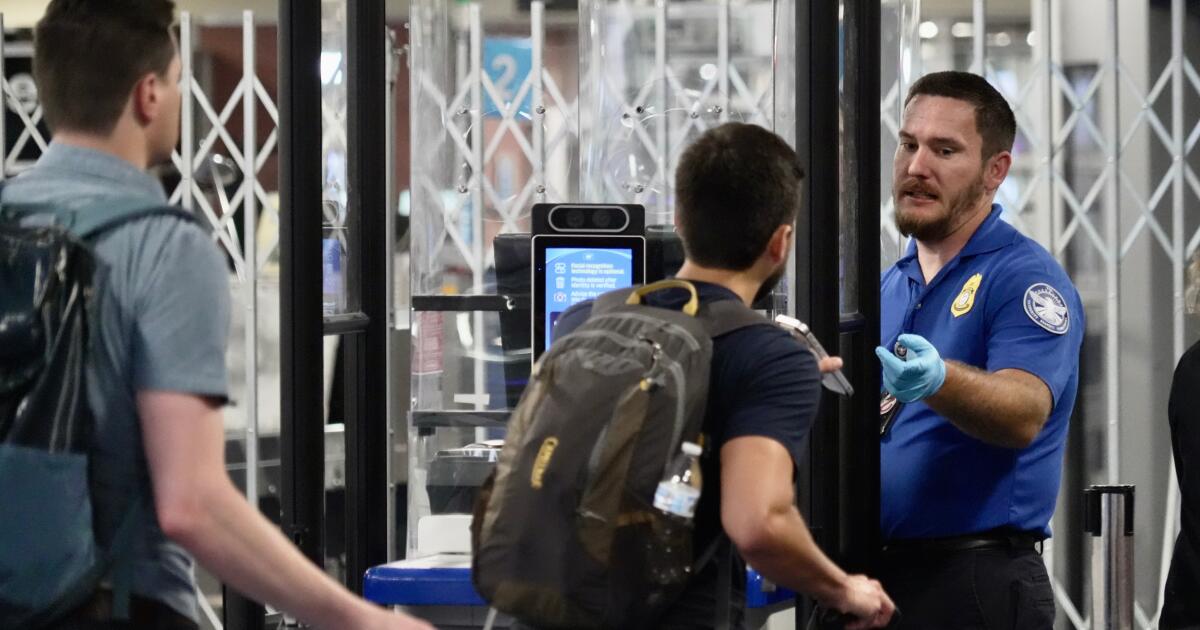
Noem: Some TSA workers to receive $10,000 bonus for working through shutdown

Nov. 14 (UPI) — Homeland Security Secretary Kristi Noem said the Trump administration is giving certain Transportation Security Agency workers a $10,000 bonus for going “above and beyond” during the 43-day government shutdown.

She made the announcement Thursday during a news conference in Houston.

“I’m pleased to announce that under President [Donald] Trump, we are giving a $10,000 bonus to TSA officers across our nation who went above and beyond during the Democrats’ shutdown,” Noem said. “They guaranteed that America wouldn’t shut down — no matter how badly the Democrats wanted average Americans to feel the pain.

“Their unsung patriotism deserves recognition. President Trump and I are so grateful for these patriots.”

Noem praised TSA workers who showed up to work throughout the shutdown despite not receiving pay. A news release from the department highlighted two TSA agents who had perfect attendance during the shutdown — Reiko Walker and Ashley Richardson, who both worked at George Bush Intercontinental Airport.

News outlet Semafor reported that back pay for Department of Homeland Security employees was expected to begin processing Wednesday.

Noem didn’t specify what metrics the Department of Homeland Security was using to determine who gets the bonus.

“We’re going to look at every individual that did exceptional service during this period of time when there were so many hardships,” she said during the news conference.

The Department of Homeland Security said it’s paying for the bonuses from leftover funds from fiscal year 2025.

Johnny J. Jones, secretary-treasurer of the American Federation of Government Employees’ TSA Council 100, described the bonuses as “great for some.”

“It’s better to give everybody a little something, because they all suffered and they all endured hard times during the last 43 days,” he said, according to The Hill.

The government shutdown caused thousands of flight cancellations and delays at U.S. airports amid a shortage in air traffic controllers. This shortage prompted the Federal Aviation Administration to cut flights by up to 6% at 40 major airports.

On Monday, Trump showed frustration with air traffic controllers who declined to show up to work without pay. He threatened to dock the pay of those who called out during the shutdown.

“For those Air Traffic Controllers who were GREAT PATRIOTS, and didn’t take ANY TIME OFF for the ‘Democrat Shutdown Hoax,’ I will be recommending a BONUS of $10,000 per person for distinguished service to our Country,” he wrote in a post on Truth Social.

President Donald Trump signs the funding package to reopen the federal government in the Oval Office of the White House on Wednesday. Photo by Bonnie Cash/UPI | License Photo


Source link

States scramble to send SNAP benefits to millions after shutdown ends

With the longest U.S. government shutdown over, state officials said Thursday that they are working quickly to get full SNAP food benefits to millions of people, though it could still take up to a week for some to receive their delayed aid.

A back-and-forth series of court rulings and shifting policies from President Trump’s administration has led to a patchwork distribution of November benefits under the Supplemental Nutrition Assistance Program. While some states had already issued full SNAP benefits, about two-thirds of states had issued only partial benefits or none at all before the government shutdown ended late Wednesday, according to an Associated Press tally.

The federal food program serves about 42 million people, or about 1 in 8 Americans, in lower-income households. They receive an average of about $190 monthly per person, though that doesn’t necessarily cover the full cost of groceries for a regular month.

A spokesperson for the U.S. Department of Agriculture, which runs the program, said in an email Wednesday that funds could be available “upon the government reopening, within 24 hours for most states.” But the agency didn’t say whether that timeline indicates when the money will be available to states or when it could be loaded onto the electronic cards used by beneficiaries.

West Virginia, which hadn’t issued SNAP benefits, should have full November benefits for all recipients by Friday, Gov. Patrick Morrisey said Thursday.

The Illinois Department of Human Services, which previously issued partial November benefits, said Thursday that it is “working to restore full SNAP benefits.” But it won’t happen instantly.

“We anticipate that the remaining benefit payments will be made over several days, starting tomorrow,” the department said in a statement, and that “all SNAP recipients will receive their full November benefits by November 20th.”

Colorado officials said late Wednesday that they are switching from delivering partial to full SNAP benefits, which could be loaded onto electronic cards starting as soon as Thursday.

Missouri’s Department of Social Services, which issued partial SNAP payments Tuesday, said Thursday that it is waiting for USDA guidance on how to issue the remaining November SNAP benefits but would move quickly once that guidance is received.

Paused SNAP payments stirred stress for some families

The delayed SNAP payments posed a new complication for Lee Harris’ family since his spouse was laid off a few months ago.

Harris, 34, said his North Little Rock, Ark., family got help from his temple and received food left by someone who was moving. With that assistance — and the knowledge that other families have greater needs — they skipped stopping by the food pantry they have sometimes used.

Harris’ family, including his three daughters, hasbeen able to keep meals fairly close to normal despite missing a SNAP payment this week. But they have still experienced stress and uncertainty.

“Not knowing a definite end,” Harris said, “I don’t know how much I need to stretch what I have in our pantry.”

Federal legislation funds SNAP for a year

The USDA told states Oct. 24 that it would not fund SNAP benefits for November amid the government shutdown. Many Democratic-led states sued to have the funding restored.

After judges ruled the Trump administration must tap into reserves to fund SNAP, the administration said it would fund up to 65% of its regular allocations. When a judge subsequently ordered full benefits, some states scrambled to quickly load SNAP benefits onto participants’ cards during a one-day window before the Supreme Court put that order on hold Friday.

Meanwhile, other states went forward with partial benefits, and still others issued nothing while waiting for further USDA guidance on the situation.

Amid the uncertainty over federal SNAP funding, some states tapped into their own funds to provide direct aid to SNAP recipients or additional money for nonprofit food banks.

The legislation to reopen the U.S. government provides full SNAP benefits not only for November but also for the remainder of the federal fiscal year, which runs through next September. Citing that legislation, the Justice Department on Thursday dropped its request for the Supreme Court to continue blocking a judicial order to pay full SNAP benefits.

Mulvihill and Lieb write for the Associated Press. AP writers John O’Connor in Springfield, Ill.; John Raby in Charleston, W.Va.; and Colleen Slevin in Denver contributed to this report.

Source link

Republicans promised healthcare negotiations after the shutdown, but Democrats are wary

Now that the government shutdown is over, House and Senate Republicans say they will negotiate with Democrats on whether to extend COVID-era tax credits that help tens of millions of Americans afford their healthcare premiums. But finding bipartisan agreement could be difficult, if not impossible, before the subsidies expire at the end of the year.

The shutdown ended this week after a small group of Democrats made a deal with Republicans senators who promised a vote by mid-December on extending the Affordable Care Act subsidies. But there is no guaranteed outcome, and many Republicans have made clear they want the credits to expire.

House Speaker Mike Johnson (R-La.) called the subsidies a “boondoggle” immediately after the House voted Wednesday to end the shutdown, and President Trump said the Obama-era healthcare overhaul was “disaster” as he signed the reopening bill into law.

It is far from the outcome that Democrats had hoped for as they kept the government closed for 43 days, demanding that Republicans negotiate with them on an extension before premiums sharply increase. But they say they will try again as the expiration date approaches.

“It remains to be seen if they are serious,” said House Democratic leader Hakeem Jeffries of New York. But he said Democrats “are just getting started.”

Republicans have been meeting privately to discuss the issue. Some want to extend the subsidies, with changes, to avoid the widespread increases in premiums. Others, like Johnson and Trump, want to start a new conversation about overhauling “Obamacare” entirely — a redo after a similar effort in 2017 failed.

Democrats push for extension

Healthcare has long been one of the most difficult issues on Capitol Hill, marked by deep ideological and political divides. Partisan disagreement over the 2010 law has persisted for more than a decade, and relationships are already strained from weeks of partisan tensions over the shutdown.

Connecticut Rep. Rosa DeLauro, the top Democrat on the House Appropriations Committee, said that while Republicans have promised negotiations and a Senate vote, Democrats are wary. She noted that Johnson has not committed to anything in the House.

“Do I trust any of them? Hell no,” DeLauro said.

If the two sides cannot agree, as many as 24 million people who get their healthcare from the exchanges created by the law could see their premiums go up Jan. 1. New Hampshire Sen. Jeanne Shaheen, one of the Democrats who struck a deal with Senate Majority Leader John Thune (R-S.D.) to reopen the government, said she thinks an agreement on the tax credits is possible.

During the talks that led to the shutdown’s end, Shaheen said she and other moderate Democrats sat across from Thune and “looked him eye to eye” as he committed to a serious effort.

“We’re going to have a chance to vote on a bill that we will write by mid-December, in a way that gives us a chance to build — hopefully build — bipartisan support to get that through,” Shaheen said.

While Democrats would like to see a permanent extension of the tax credits, most realize that is unlikely. Just before the shutdown ended, Senate Democratic leader Chuck Schumer of New York proposed a one-year extension and a bipartisan committee to address Republican demands for changes to the Affordable Care Act. But Thune said that was a “nonstarter” as the government remained shut down.

In the House, Democrats have proposed a three-year extension.

What Republicans want

While Republicans have long sought to scrap Obamacare, they have had challenges over the years in figuring out what would replace it. That problem plagued the 2017 effort, when then-Sen. John McCain (R-Ariz.) cast the deciding vote to kill a bill on the Senate floor that was short on detail.

Republican Sen. Bill Cassidy of Louisiana, chairman of the Senate Health Education Labor and Pensions Committee, and Sen. Rick Scott (R-Fla.) have proposed overhauling the law to create accounts that would direct the money to individuals instead of insurance companies. Those are ideas that Trump echoed as he signed the funding bill Wednesday evening.

“I want the money to go directly to you, the people,” Trump said.

It is unclear exactly how that would work, and scrapping the law in its current form would take months, if not years, to negotiate, even if Republicans could find the votes to do it.

Slow start to negotiations

Some moderate Republicans in the House have said they want to work with Democrats to extend the subsidies before the deadline, which is only weeks away. In a letter to Thune and Schumer on Wednesday, Pennsylvania Rep. Brian Fitzpatrick, the Republican co-chair of the Bipartisan Problem Solvers Caucus, encouraged negotiations.

“Our sense of urgency cannot be greater,” Fitzpatrick wrote. “Our willingness to cooperate has no limits.”

So far, though, Senate Republicans have been meeting on their own to figure out their own differences.

“Right now, it’s just getting consensus among ourselves,” Sen. Thom Tillis (R-N.C.) said Monday after GOP members of the Senate Finance Committee met to discuss possible ways forward.

Tillis is supportive of extending the tax credits, but said lawmakers also need to find a way to reduce costs. If the two sides cannot eventually agree, Tillis said, Republicans may have to try to figure out a way to do it on their own, potentially using budget maneuvers that enabled them to pass Trump’s “Big Beautiful Bill” this summer without any Democratic votes.

“We should have that in our back pocket too,” Tillis said.

Another shutdown?

Some House Democrats have raised the possibility that there could be another shutdown if they are unable to win concessions on healthcare. The bill signed by Trump will fully fund some parts of the government, but others run out of money again at the end of January if Congress does not act.

“I think it depends on the vulnerable House Republicans who are not going to be able to go back to their constituents without telling them that they’ve done something on healthcare,” said Rep. Pramila Jayapal (D-Wash.).

“We’ll just have to see” if there could be another shutdown, said Rep. Mark Takano (D-Riverside).

Rep. Jim McGovern (D-Mass.) said he is “not going to vote to endorse their cruelty” if Republicans do not extend the subsidies.

DeLauro said that Republicans have wanted to repeal the ACA since it was first enacted. “That’s where they’re trying to go,” she said.

“When it comes to Jan. 30 we’ll see what progress has been made,” she said.

Jalonick writes for the Associated Press.
Source link

Shutdown teed up Trump’s plan to use public lands for resource extraction

During the last government shutdown six years ago, the main narrative when it came to public lands was the damage caused by unsupervised visitors. Trash cans and toilets overflowed with waste. Tourists reportedly mowed down Joshua trees to off-road in sensitive areas of Joshua Tree National Park.

This time around, national parks were directed to retain the staff needed to provide basic sanitation services, as I reported in a recent article with my colleague Lila Seidman. But meanwhile, something bigger and more coordinated was unfolding behind the scenes, said Chance Wilcox, California Desert program manager for the National Parks Conservation Association.

“We’re not seeing Joshua trees getting knocked down, things getting stolen, damage to parks by the American people, but we are seeing damage to parks by this presidential administration on an even larger scale,” Wilcox told me last week before lawmakers struck a deal to reopen the government.

A view of Joshua Trees and rock formations at Joshua Tree National Park.

(Allen J. Schaben / Los Angeles Times)

You’re reading Boiling Point

The L.A. Times climate team gets you up to speed on climate change, energy and the environment. Sign up to get it in your inbox every week.

By continuing, you agree to our Terms of Service and our Privacy Policy.

Wilcox and other public lands advocates allege that President Trump’s administration used the shutdown to expedite an agenda that prioritizes extraction while slashing resources dedicated to conservation and education. What’s more, they fear the staffing priorities that came into sharp relief over the past 43 days offer a preview of how these lands will be managed going forward, especially in the aftermath of another potential mass layoff that could see the Interior Department cut 2,000 more jobs.

When I asked the Interior Department about its actions during the shutdown, a spokesperson responded via email that the administration “made deliberate, lawful decisions” to protect operations that sustain energy security and economic stability. “Activities that continued were those necessary to preserve critical infrastructure, safeguard natural resources, and prevent disruption to key supply chains that millions of Americans rely on,” the spokesperson wrote.

As a resident of the Mojave Desert on the outskirts of Joshua Tree National Park, I’ve taken particular interest in this topic. Out here, summer days can top 110 degrees, a trip to the grocery store is an hours-long excursion and there are rattlesnakes. Lots of rattlesnakes. But one huge bonus is the proximity to public lands: We’re surrounded by the park, the Mojave National Preserve and hundreds of miles of Bureau of Land Management wilderness.

These spaces not only provide endless entertainment for residents like my 3-year-old daughter, who would rather be turned loose in a boulder field than a jungle gym, but they play a key role in drawing visitors from around the world who support the stores, restaurants and other establishments that underpin our local economy.

Pedro Uranga, of Los Angeles, climbs Sentinel Rock in Hidden Valley, Joshua Tree National Park.

Sentinel Rock in Hidden Valley, Joshua Tree National Park.

(Allen J. Schaben / Los Angeles Times)

In short, the health of our community depends on the health of these landscapes. Now, their future seems increasingly uncertain.

During the shutdown, roughly 64% of National Park Service employees were furloughed, according to a Department of the Interior contingency plan. At Joshua Tree National Park, those sidelined included Superintendent Jane Rodgers, along with most of the staff responsible for scientific research, resource management and educational and interpretive programs, according to a source at the park who asked not to be named out of fear of retaliation.

Over at the BLM, roughly 26% of staffers were furloughed. Among those who were allowed to keep working: employees responsible for processing oil, gas and coal permits and leases, along with items related to other energy and mineral resources, according to the contingency plan, which cited the president’s declared national energy emergency as rationale. As a result, the federal government issued 693 new oil and gas drilling permits and 52 new oil and gas leases on federal lands during the shutdown, according to tracking by the Center for Western Priorities.

Also during the shutdown, the BLM continued to move ahead with plans to consider the expansion of the Castle Mountain Mine, which is surrounded by California’s Castle Mountains National Monument. Already, the Interior Department had approved a different nearby mine, the Colosseum, ending a years-long dispute in which the National Park Service had alleged the mine was operating without authorization.

In Alaska, the Trump administration moved to open the Arctic National Wildlife Refuge to oil and gas leasing and approved a long-disputed push to build a 211-mile industrial road through the Gates of the Arctic National Park and Preserve to allow for mining in a remote corner of the Northwest. The U.S. also took an equity stake in a company focused on mining exploration in that area, part of a growing trend that some experts have described as unusual.

And in Utah, the BLM is now reconsidering an application, which has been rejected seven times, to build a four-lane highway through desert tortoise habitats in the Red Cliffs National Conservation Area.

There’s real fear among federal employees and advocates that this dynamic — an emphasis on developing public lands, as stewardship and research efforts languish — will become the new reality, said Jordan Marbury, communications manager for Friends of the Inyo. What’s more, he said, is that some worry the administration will point to the shutdown as proof that public lands never really needed all that staffing in the first place.

“It could get to the point where conservation is totally an afterthought,” he said.

More recent land news

Operators of the 1,000-acre Inglewood Oil Field must stop pumping by the end of the decade, if a state edict holds up in court. My L.A. Times colleague Doug Smith looks at what will become of one of the Los Angeles region’s last great pieces of undeveloped land, which offers a rare opportunity to address the pressing needs of open space and affordable housing in underserved neighborhoods.

Homes sit in the shadow of the Inglewood Oil Field.

Homes sit in the shadow of the Inglewood Oil Field.

(Jason Armond / Los Angeles Times)

Five California tribes have established an intertribal commission to co-manage Chuckwalla National Monument, marking a historic step toward tribal sovereignty over sacred desert lands. Times environment reporter Tyrone Beason examines how this will work — and why it’s a big deal.

President Trump has tapped former New Mexico Rep. Steve Pearce to lead the BLM — which manages about 10% of land in the U.S. — after his first pick, oil and gas lobbyist Kathleen Sgamma, withdrew her name from consideration in the wake of reporting on comments she made criticizing Trump’s role in the Jan. 6 attack on the U.S. Capitol. Industry trade organizations are praising Pearce’s nomination, while environmental groups allege that the former Republican Party of New Mexico chair is a climate change denier with a record of supporting expanded oil and gas drilling on public lands and shrinking national monuments, the Santa Fe New Mexican reports.

Lawmakers have begun to use the Congressional Review Act, which enables Congress to overturn recent federal rules with a majority vote, in an unprecedented way: to revoke specific land management plans that limit mining and drilling in specific places, Inside Climate News reports. So far, lawmakers have rescinded BLM plans that ended new coal leasing in Montana’s Powder River Basin and that limited development in North Dakota and portions of Alaska. They are now seeking to do the same in Alaska’s National Petroleum Reserve. That’s despite warnings from legal experts, environmental organizations and hunting and fishing groups that these precedents could paralyze the ability of agencies to manage public lands.

A few last things in climate news

Negotiators for seven Western states say they are making progress in ongoing talks over how to share the diminishing waters of the Colorado River, according to our water reporter Ian James. Still, a deadline set by the Trump administration came and went Tuesday without any regionwide agreement on water cutbacks, Ian reports.

The Trump administration plans to allow new oil and gas drilling off the California coast, but energy companies may not be interested in battling the state’s strict environmental rules to try and tap into limited petroleum reserves, our climate policy reporter Hayley Smith writes. Citing these obstacles, some experts told Hayley the move may be politically motivated: It’s likely to set up a fight with California Gov. Gavin Newsom, who has said that any such proposal will be dead on arrival.

California Governor Gavin Newsom speaks to reporters

Gov. Gavin Newsom speaks to reporters at the COP30 Climate Summit in Belém, Brazil, on Tuesday.

(Alessandro Falco)

Speaking of Newsom and Trump, the California governor is in Belém, Brazil, for the annual United Nations climate policy summit, which the Trump administration is sitting out. My colleague Melody Gutierrez, who’s also there, looks at how California hopes it can fill in the gap left by America’s absence as Newsom positions himself for a 2028 presidential run.

Meanwhile, diplomats have accused top U.S. officials of threatening and bullying leaders from poorer or small countries to defeat a historic deal to slash pollution from cargo ships that was slated by be approved by more than 100 nations, according to a bombshell New York Times report. Federal representatives denied that officials made threats but “acknowledged derailing the deal and repeated their opposition to international efforts to address climate change,” the paper reported.

This is the latest edition of Boiling Point, a newsletter about climate change and the environment in the American West. Sign up here to get it in your inbox. And listen to our Boiling Point podcast here.

For more land news, follow @phila_lex on X and alex-wigglesworth.bsky.social on Bluesky.

Source link

Trump’s improv approach to policymaking doesn’t actually make policy

Democrats’ caterwauling this week after a few of their senators caved to end the government shutdown couldn’t completely drown out another noise: the sound of President Trump pinballing dumb “policy” ideas as he flails to respond to voters’ unhappiness that his promised Golden Age is proving golden only for him, his family and his donors.

On social media (of course) and in interviews, the president has been blurting out proposals that are news even to the advisors who should be vetting them first. Rebates of $2,000 for most Americans and pay-downs of federal debt, all from supposed tariff windfalls. (Don’t count on either payoff; more below.) New 50-year mortgages to make home-buying more affordable (not). Docked pay for air traffic controllers who didn’t show up to work during the shutdown, without pay, and $10,000 bonuses for those who did. (He doesn’t have that power; the government isn’t his family business.) Most mind-boggling of all, Trump has resurrected his and Republicans’ long-buried promise to “repeal and replace” Obamacare.

It’s been five years since he promised a healthcare plan “in two weeks.” It’s been a year since he said he had “concepts of a plan” during the 2024 campaign. What he now calls “Trumpcare” (natch) apparently amounts to paying people to buy insurance. Details to come, he says, again.

With all this seat-of-the-pants policymaking, Trump only underscores the policy ignorance that’s been a defining trait since he first ran for office. No other president in memory put out such knee-jerk junk that’s easily discounted and mocked.

In his first term, Trump didn’t learn how to navigate the legislative process, and thus steer well-debated ideas into law. He didn’t want to. Even more in his second term, Trump avoids that deliberative democratic process, preferring rule by fiat and executive order (even if the results don’t outlast your presidency, or they fizzle in court). For Trump, ideas don’t percolate, infused with expertise and data. They pop into his head.

But diktats are not always possible, as the shutdown dramatized when Republicans couldn’t agree with Democrats on the must-pass legislation to keep the government funded.

With Republicans controlling the White House and Congress (and arguably the Supreme Court: see recent decisions siding with the Trump administration to block SNAP benefits), the Democrats were never going to actually win the shutdown showdown — not if winning meant forcing Republicans to agree to extend health insurance tax credits for millions of Americans. Expanding healthcare coverage has never been Republicans’ priority. Tax cuts are, mainly for the wealthy and corporations, and Republicans pocketed that win months ago with Trump’s big, ugly bill, paid for mainly by cuts to Medicaid.

Yet Democrats won something: They shoved the issue of spiraling healthcare costs back onto politics’ center stage, where it joins the broader question of affordability in an economy that doesn’t work for the working class. Drawing attention to the cruel priorities of Trump 2.0 is a big reason that I and many others supported Democrats forcing a shutdown, despite the unlikelihood of a policy “W.” (I did not support the Senate Democrats’ caving just yet, not so soon after Democrats won bigger-than-expected victories in last week’s off-year elections on the strength of their fight for affordability, including health insurance.)

The fight isn’t over. The Senate will debate and vote next month on extending tax credits for Obamacare that otherwise expire at year’s end, making coverage unaffordable for millions of people. Even if the Democrats win that vote — unlikely — the subsidies would be DOA in the House, a MAGA stronghold. What’s not dead, however, is the issue of rising insurance premiums for all Americans. It’s teed up for the midterm election campaigns.

Such pocketbook issues have thrown Trump on the defensive. The result is his string of politically tone-deaf remarks and unvetted, out-of-right-field initiatives.

On Monday night, having invited Fox News host Laura Ingraham into the White House for an interview and a tour of his gilt-and-marble renovations, he pooh-poohed her question about Americans’ anxiety about the costs of living with this unpolitic rejoinder: “More than anything else, it’s a con job by the Democrats.” When Ingraham, to her credit, reminded Trump that he’d slammed President Biden for “saying things were great, and things weren’t great,” Trump stood his shaky ground, sniping: “Polls are fake. We have the greatest economy we’ve ever had.” (False.)

On Saturday, Trump had posted that Republicans should take money “from the BIG, BAD Insurance Companies, give it to the people, and terminate” Obamacare. He told Ingraham, “Call it Trumpcare … anything but Obamacare.” Healthcare industry experts pounced: Such direct payments could allow younger, healthy people to get cheaper, no-frills coverage, but would leave the insurance pools with disproportionately more ailing people and, in turn, higher costs.

As for Trump’s promised $2,000 rebates and reductions in the $37 trillion federal debt, he posted early Sunday and again on Monday that “trillions of dollars” from tariffs would make both things possible soon. On Tuesday night, he sent a fundraising email: “Would you take a TARIFF rebate check signed by yours truly?”

Maybe if he’d talked to Treasury Secretary Scott Bessent, who professed ignorance about the idea on ABC News’ “This Week” on Sunday, Trump would have learned that tariffs in the past year raised not trillions but $195 billion, significantly less than $2,000 rebates would cost. Not only would there be nothing to put toward the debt, but rebates would add $6 trillion in red ink over 10 years. That would put Trump just $2 trillion short of the amount of debt he added in his first term.

When Ingraham asked where he’d get the money to pay bonuses to air traffic controllers, Trump was quick with a nonanswer: “I don’t know. I’ll get it from someplace.” And when she told him the 50-year mortgage idea “has enraged your MAGA friends,” given the potential windfall of interest payment for banks, Trump was equally dismissive: “It’s not even a big deal.”

Not a big deal: That’s policymaking, Trump-style.

Bluesky: @jackiecalmes
Threads: @jkcalmes
X: @jackiekcalmes

Source link

Trump signs stopgap funding to end shutdown after narrow House OK

Nov. 12 (UPI) — President Donald Trump late Wednesday signed legislation to reopen the federal government, resuming programs and again paying millions of workers, blaming Democrats for the longest shutdown in history at 43 days.

The new stopgap bill will fund the government through Jan. 30, and provide a full year of funding for the Supplemental Nutrition Assistance Program and veterans programs. Furloughed employees are expected to return to report on Thursday.

The U.S. House, convening for the first time in two months, approved legislation sent two days earlier by the Senate. Most Democrats and Republicans have been on opposite sides on enhanced health insurance subsidies through the Affordable Care Act.

At 8:21 p.m., the House voted 222-209 to send the stopgap funding bill to the president. The outcome wasn’t strictly along party lines with six Democrats voting yes and two Republicans voting no. There were two not voting and two vacancies.

Two hours later, Trump appeared in the Oval Office with U.S. House Speaker Mike Johnson, Senate Majority Leader John Thune — both Republicans — as well as other House members. Also, financial industry leaders, whom he dined with earlier at the White House, watched the signing.

“I just want to tell the American people, you should not forget this when we come up to midterms and other things,” Trump said about elections in 2026 for the House and Senate. “Don’t forget what they’ve done to our country.”

In the public ceremony, Trump blasted the Affordable Care Act as “Obama madness,” bragged about the record-high stock market and spoke about gas prices around $2.50 a gallon. He didn’t take any questions from reporters.

Trump wants Obamacare to be scrapped.

“We’ll work on something having to do with healthcare,” said Trump, who hasn’t been able to find a replacement since first being president in 2017. “We can do a lot better.”

He has proposed bypassing providers with direct payment to users, who then could purchase their own plans.

“I’m calling today for insurance companies not to be paid,” Trump said, “but for this massive amount of money to be given directly to the people.” Basic Medicare is administered by the government rather than companies.

The House had been out of session since Sept. 19, when it passed the first version of a continuing resolution to temporarily fund the government. The Senate held 14 votes on the same legislation, but failed to reach the 60-vote supermajority needed to pass it.

The House originally approved the spending bill on a majority vote, but the Senate needed 60 votes and approval was held up in finding enough Democrats to agree to legislation that doesn’t guarantee enhanced health insurance subsidies starting Jan. 1.

The GOP holds a 53-47 edge.

Trump again on Wednesday night called for an end to the filibuster, saying “if we had the filibuster terminated, this would never happen again.”

Most Republicans have opposed this “nuclear option,” because Democrats could use it when they are in power.

After the House Rules Committee advanced the Senate bill Tuesday night, the full chamber convened at 4:08 p.m., and began debate for one hour at 4:36 p.m. The bill advanced 213-209.

The GOP has a 219-214 advantage, with Democrat Adelita Grijalvi having been sworn in when the House convened. She was elected Sept. 23. There are two vacancies.

Government reopens

At least 670,000 federal employees furloughed will return to work and roughly 730,000 essential workers, including air traffic control workers, will be paid, according to the Bipartisan Policy Center.

The White House’s Office of Management and Budget furloughed workers will return on Thursday.

“Agencies should take all necessary steps to ensure that offices open in a prompt and orderly manner on November 13, 2025,” the memorandum released Wednesday night reads.

Essential workers had to work without pay, including air traffic control personnel. This resulted in several thousand flights being canceled.

Government programs also will resume, including 42 million people receiving monthly payments from the Supplemental Nutrition Assistance Program. For the first time in history, November money wasn’t sent electronically.

“For 40 days, hardworking Americans have endured flight cancellations, missed paychecks and empty dinner tables – all because Democrats closed the government,” Johnson posted on X with a video before the vote.

“It was foolish, pointless, cruel and entirely avoidable. Republicans have been working every day to get the government reopened for the American people, and today we should finally be able to overcome the Democrats and accomplish our mission.”

Divided on insurance subsidies

The program, which became known as Obamacare, was approved in 2010 during Barack Obama’s presidency. A record 25 million were enrolled this year.

The credits were enhanced in 2021 by the American Rescue Plan Act during the pandemic and extended one year later through 2015. They increased the amount of financial assistance, expanded eligibility and capped the percentage of household income for the benchmark silver plan.

Eight senators who caucus with the Democrats voted Monday in favor of the new bill on Tuesday night, allowing the chamber to pass it with a vote of 60-40.

The Senate broke the impasse over the weekend after Republicans agreed to hold a separate vote on ACA tax credits in December.

On Wednesday night, Johnson told reporters that Republicans are “pulling together the best ideas that we think can, in the quickest fashion, bring premiums down.”

And that includes working with Democrats.

“I sent a note to Hakeem Jeffries and I said, ‘Look, we would love to do this in a bipartisan fashion,’ you know, and he and I exchanged texts yesterday about that.”

Democrats focus on healthcare

Jeffries unsuccessfully attempted a three-year extension of Obamacare by a discharge petition. There would be a vote if the minority party can secure support for a majority of the chamber — a total of 218 signatures. But there are only 214 Democrats and there wasn’t sufficient GOP backing.

“Affordable Care Act tax credits were extended by three years in the Inflation Reduction Act,” Jeffries said outside the Capitol before the House convened. “The legislation that we will introduce in the context of the discharge petition will provide that level of certainty to working-class Americans who are on the verge of seeing their premiums, copays and deductibles skyrocket in some cases, experiencing increases of $1,000 or $2,000 per year.”

Jeffries said Democrats will continue to fight on healthcae.

“We’ll continue to fight for the principle that in this great country, the wealthiest country in the history of the world, healthcare can’t simply be a privilege available only to the well-off, the wealthy and the well-connected.

“Healthcare must be a right available to every single American. And that’s the fight that House Democrats will continue to wage for the American people.”

Colorado Rep. Jeff Hurd said he wanted to extend the enhanced premium tax credits for time to work on “the underlying drivers that are pushing up those health care costs to begin with.”

Workers union wants healthcare addresses

The American Federation of State, County and Municipal Employees, with 1.4 million members, called on Congress to help Americans afford health insurance.

“AFSCME members have been clear from the start of this shutdown: we need to lower health care costs and fund public services,” AFSCME President Lee Saunders said in a statement to UPI.

“Unfortunately, this administration and the Project 2025 ideologues in Congress refused to come to the table to address the healthcare crisis gripping families across the country. We applaud all of the leaders in Congress who stood up and sounded the alarm about the massive insurance premium hikes affecting millions of Americans.

“The fight to protect families from these increases is far from over. Now that the government is reopening, we’re calling on members of Congress to keep their promise and hold a vote to extend the Affordable Care Act tax credits. Working families cannot afford to wait any longer to lower health care costs.”

Provision on suing DOJ

The legislation includes funds for eight senators to sue the Department of Justice for obtaining their phone records during an investigation when Joe Biden was president.

Rather than removing the provision and returning it to the Senate, Johnson said he plans to have separate legislation next week.

“I was very angry about it,” Johnson said. “I was, and a lot of my members called me and said, ‘Did you know about it?’ We had no idea. That was dropped in at the last minute. And I did not appreciate that, nor did most of the House members. Many of them were very – are very angry about that.”

Democrats also opposed the provision.

“What makes this corruption so staggering is that the payout is specifically designed to go to eight senators whose phone records were lawfully subpoenaed under due process by the Department of Justice,” Rep. Rosa DeLauro, the top Democrat on the House Appropriations panel, wrote in a statement.

She accused the senators of voting “to shove taxpayer dollars into their own pockets — $500,000 for each time their records were inspected.”

Daniel Haynes contributed to this report.

President Donald Trump speaks to members of the media during a swearing in ceremony for Sergio Gor, the new U.S. Ambassador to India, in the Oval Office of the White House on Monday. Photo by Craig Hudson/UPI | License Photo

Source link

House narrowly approves stopgap funding to end shutdown

Nov. 12 (UPI) — The U.S. House, convening for the first time in two months on Wednesday, approved legislation sent two days earlier by the Senate to reopen the federal government, resuming programs and paying millions of workers.

President Donald Trump plans to sign the legislation, ending the longest shutdown in history at 43 days.

The House originally approved a spending bill in September on a majority vote, but the Senate needed 60 days and approval was held up in finding enough Democrats to agree to legislation that doesn’t guarantee enhanced health insurance subsidies starting Jan. 1.

At 8:21 p.m., the House voted 222-209 to send the stopgap funding bill to the president. The outcome wasn’t strictly along party lines with six Democrats voting yes and two Republicans voting no. There were two not voting and two vacancies.

The White House said Trump would sign the legislation on camera at 9:45 p.m. from the Oval Office. He earlier attended a private dinner at the White House with financial industry leaders.

“I’ll abide by the deal,” he said earlier Monday. “The deal is very good.”

His signature means at least 670,000 federal employees furloughed will return to work and roughly 730,000 essential workers, including air traffic control workers, will be paid, according to the Bipartisan Policy Center.

Government programs will resume, including 42 million people receiving monthly payments from the Supplemental Nutrition Assistance Program. For the first time in history, November money wasn’t sent electronically.

After the House Rules Committee advanced the Senate bill Tuesday night, the full chamber convened at 4:08 p.m., and began debate for one hour at 4:36 p.m.

The bill advanced 213-209.

The GOP has a 219-214 advantage, with Democrat Adelita Grijalvi having been sworn in when the House convened. She was elected Sept. 23.

“For 40 days, hardworking Americans have endured flight cancellations, missed paychecks and empty dinner tables – all because Democrats closed the government,” Johnson posted on X with a video before the vote.

“It was foolish, pointless, cruel and entirely avoidable. Republicans have been working every day to get the government reopened for the American people, and today we should finally be able to overcome the Democrats and accomplish our mission.”

A provision was stripped from the House version regarding funds for eight senators to sue the Department of Justice for obtaining their phone records during an investigation when Joe Biden was president.

“House Republicans are introducing standalone legislation to repeal this provision that was included by the Senate in the government funding bill,” Johnson posted on X on Wednesday afternoon. “We are putting this legislation on the fast-track suspension calendar in the House for next week.”

Democrats have opposed the provision.

“What makes this corruption so staggering is that the payout is specifically designed to go to eight senators whose phone records were lawfully subpoenaed under due process by the Department of Justice,” Rep. Rosa DeLauro, the top Democrat on the House Appropriations panel, wrote in a statement.
She accused the senators of voting “to shove taxpayer dollars into their own pockets — $500,000 for each time their records were inspected.”

The House had been out of session since Sept. 19, when it passed the first version of a continuing resolution to temporarily fund the government. The Senate held 14 votes on the same legislation, but failed to reach the 60-vote supermajority needed to pass it.

A majority of Democrats in the Senate voted against the legislation, seeking to tie the funding bill to a renewal of enhanced Affordable Care Act tax subsidies set to expire in the new year.

The Senate broke the impasse over the weekend after Republicans agreed to hold a separate vote on ACA tax credits. Unnamed sources told ABC News that Republicans promised to hold a vote on the issue in December, though House Speaker Mike Johnson has yet to commit to voting on any ACA measure passed by the Senate.

The credits were enhanced in 2021 by the American Rescue Plan Act during the pandemic and extended one year later through 2015. They increased the amount of financial assistance, expanded eligibility and capped the percentage of household income for the benchmark silver plan.

Eight senators who caucus with the Democrats voted Monday in favor of the new bill on Tuesday night, allowing the chamber to pass it with a vote of 60-40.

The new stopgap bill will fund the government through Jan. 30, provide a full year of funding for the Supplemental Nutrition Assistance Program and veterans programs.

Democrats criticized the bill.

“As Democrats, we’re committed to addressing this affordability crisis. That’s what this fight has been all about,” House Minority Leader Hakeem Jeffries said outside the Capitol before the House convened. “We’ll continue this fight to fix our broken healthcare system.

“We’ll continue to fight for the principle that in this great country, the wealthiest country in the history of the world, healthcare can’t simply be a privilege available only to the well-off, the wealthy and the well-connected.

“Healthcare must be a right available to every single American. And that’s the fight that House Democrats will continue to wage for the American people.”

Jeffries unsuccessfully attempted a three-year extension of Obamacare by a discharge petition. There would be a vote if the minority party can secure support for a majority of the chamber — a total of 218 signatures. But there are only 214 Democrats and there wasn’t sufficient GOP backing.

“Affordable Care Act tax credits were extended by three years in the Inflation Reduction Act,” Jeffries said. “The legislation that we will introduce in the context of the discharge petition will provide that level of certainty to working-class Americans who are on the verge of seeing their premiums, copays and deductibles skyrocket in some cases, experiencing increases of $1,000 or $2,000 per year.”

Colorado Rep. Jeff Hurd said he wanted to extend the enhanced premium tax credits for time to work on “the underlying drivers that are pushing up those health care costs to begin with.”

The American Federation of State, County and Municipal Employees, with 1.4 million members, called on Congress to help Americans afford health insurance.

“AFSCME members have been clear from the start of this shutdown: we need to lower health care costs and fund public services,” AFSCME President Lee Saunders said in a statement to UPI.

“Unfortunately, this administration and the Project 2025 ideologues in Congress refused to come to the table to address the healthcare crisis gripping families across the country. We applaud all of the leaders in Congress who stood up and sounded the alarm about the massive insurance premium hikes affecting millions of Americans.

“The fight to protect families from these increases is far from over. Now that the government is reopening, we’re calling on members of Congress to keep their promise and hold a vote to extend the Affordable Care Act tax credits. Working families cannot afford to wait any longer to lower health care costs.”

President Donald Trump speaks to members of the media during a swearing in ceremony for Sergio Gor, the new U.S. Ambassador to India, in the Oval Office of the White House on Monday. Photo by Craig Hudson/UPI | License Photo

Source link

US House passes spending bill to end longest gov’t shutdown in history | Donald Trump News

BREAKING,

The successful vote means the long-delayed bill will now be passed on to President Trump to sign into law.

The House of Representatives has passed a federal government spending package, clearing the final hurdle and bringing an end to the longest government shutdown in United States history – at least for now.

In a vote held late on Wednesday evening in the Republican-held House, the bill was backed by 222 lawmakers – including six Democrats – while 209 voted against it, including two Republicans.

Recommended Stories

list of 3 itemsend of list

The long-delayed bill will now be passed on to President Donald Trump to sign into law.

On Monday night, the upper chamber of Congress had approved the spending package by a vote of 60 to 40 to fund the US government through January 30, reinstating pay to hundreds of thousands of federal workers after six gruelling weeks.

All but essential government services had ground to a halt amid the shutdown.

The breakthrough came following negotiations last weekend that saw seven Democrats and one independent agree to back the updated spending package and end the shutdown, which entered its 42nd day on Tuesday.

Crucially, however, the deal has not resolved one of the shutdown’s most central issues – healthcare subsidies for 24 million Americans under the Affordable Care Act, which the Trump administration planned to cut.

For weeks, Democrats repeatedly blocked the bill’s passage in Congress, saying the measure was necessary to force the government to address escalating healthcare costs for low-income Americans.

Shortly before Wednesday’s vote, Republican House Speaker Mike Johnson accused his Democratic colleagues of using American citizens as “leverage” in their “political game”, as he denounced them for preventing the resolution’s passage in September.

“Since that time, Senate Democrats have voted 14 times to close the government. Republicans have voted a collective 15 times to open the government for the people, and the Democrats voted that many times to close it,” he said.

As part of the deal breaking the impasse, Senate Republicans agreed to hold a vote on the issue by December, raising fears there could be another shutdown in January.

The agreement had also provoked anger among Democrats, who preferred to keep holding out, including Illinois Governor JB Pritzker – considered a contender for the 2028 presidential election – who called it an “empty promise” earlier this week.

David Smith, an associate professor at the University of Sydney’s United States Studies Centre, also described the agreement as “just a stopgap arrangement”.

“The deal that they’ve reached means most of the government will shut down again in January if they can’t come to another agreement,” he told Al Jazeera earlier this week.

Democrats who supported the deal were Senate Democratic Whip Dick Durbin from Illinois, John Fetterman from Pennsylvania, Catherine Cortez Masto and Jackie Rosen from Nevada, Maggie Hassan and Jeanne Shaheen from New Hampshire, and Tim Kaine from Virginia.

Angus King, an independent from Maine, also backed the deal.

This is a breaking news story. More to follow shortly.

Source link

Tribes that restored buffalo are killing some to feed people because of the shutdown

On the open plains of the Fort Peck Reservation, Robert Magnan leaned out the window of his truck, set a rifle against the door frame and then “pop!” — a bison tumbled dead in its tracks.

Magnan and a co-worker shot two more bison, also known as buffalo, and quickly field dressed the animals before carting them off for processing into ground beef and cuts of meat for distribution to members of the Fort Peck Assiniboine and Sioux Tribes in northern Montana.

As lawmakers in Washington, D.C., plod toward resolving the record government shutdown that interrupted food aid for tens of millions of people, tribal leaders on rural reservations across the Great Plains have been culling their cherished bison herds to help fill the gap.

About one-third of Fort Peck’s tribal members on the reservation depend on monthly benefit checks, Chairman Floyd Azure said. That’s almost triple the rate for the U.S. as a whole. They’ve received only partial payments in November after President Trump’s administration choked off funds to the Supplemental Nutrition Assistance Program during the shutdown.

Fort Peck officials say they anticipated such a moment years ago, when they were bolstering their herd with animals from Yellowstone National Park over objections from cattle ranchers worried about animal disease.

“We were bringing it up with the tribal council: What would happen if the government went bankrupt? How would we feed the people?” said Magnan, the longtime steward of Fort Peck’s bison herds. “It shows we still need buffalo.”

Treaty obligations

In October, the tribal government authorized killing 30 bison — about 12,000 pounds of meat. Half had been shot by Tuesday. A pending deal to end the shutdown comes too late for the rest, Magnan said. With Montana among the states that dispersed only partial SNAP payments, Fort Peck will keep handing out buffalo meat for the time being.

Tribes including the Blackfeet, the Lower Brule Sioux, the Cheyenne River Sioux and the Crow have done the same in response to Washington’s dysfunction: feeding thousands of people with bison from herds restored over recent decades after the animals were hunted to near extinction in the 1800s.

Food and nutrition assistance programs are part of the federal government’s trust and treaty responsibilities — its legal and moral obligations to fund tribes’ health and well-being in exchange for land and resources the U.S. took from tribes.

“It’s the obligation they incurred when they took our lands, when they stole our lands, when they cheated us out of our lands,” said Mark Macarro, president of the National Congress of American Indians. “It lacks humanity to do this with SNAP, with food.”

Fort Peck tribal members Miki Astogo and Dillon Jackson-Fisher, who are unemployed, said they borrowed food from Jackson-Fisher’s mother in recent weeks after SNAP payments didn’t come through. On Sunday they got a partial payment — about $196 instead of the usual $298 per month — Agosto said.

It won’t last, they said, so the couple walked 4 miles into town to pick up a box of food from the tribes that included 2 pounds of bison.

“Our vehicle’s in the shop, but we have to put food on the table before we pay for the car, you know?” Jackson-Fisher said.

Moose in Maine, deer in Oklahoma

Native American communities elsewhere in the U.S. also are tapping into natural resources to make up for lost federal aid. Members of the Mi’kmaq Nation in Maine stocked a food bank with trout from their hatchery and locally hunted moose meat. In southeastern Oklahoma, the Comanche Nation is accepting deer meat for food banks. And in the southwestern part of the state, the Choctaw Nation set up three meat processing facilities.

Another program that provides food to eligible Native American households, the Food Distribution Program on Indian Reservations, has continued through the shutdown.

Mi’kmaq is among the tribes that don’t have the program, though the tribe is eligible. The Mi’kmaq also get funding for food pantries through the federal Emergency Food Assistance Program, but that money, too, was tied up by the shutdown, tribal Chief Sheila McCormack said.

Roughly 80% of Mi’kmaq tribal members in Aroostook County are SNAP recipients, said Kandi Sock, the tribe’s community services director.

“We have reached out for some extra donations; our farm came through with that, but it will not last long,” Sock said.

The demise of bison, onset of starvation

Buffalo played a central role for Plains tribes for centuries, providing meat for food and hides for clothing and shelter.

That came to an abrupt end when white “hide hunters” arrived in 1879 in the Upper Missouri River basin around Fort Peck, which had some of the last vestiges of herds that once numbered millions of animals, Assiniboine historian Dennis Smith said. By 1883 the animals were virtually exterminated, according to Smith, a retired University of Nebraska-Omaha history professor.

With no way to feed themselves and the government denying them food, the buffalo’s demise heralded a time of starvation for the Assiniboine, he said. Many other Plains tribes also suffered hardship.

Hundreds of miles to the west of Fort Peck, the Blackfeet Nation killed 18 buffalo from its herd and held a special elk harvest to distribute meat to tribal members. The tribe already gave out buffalo meat periodically to elders, the sick and for ceremonies and social functions. But it’s never killed so many of the 700 animals at once.

“We can’t do that many all the time. We don’t want to deplete the resource,” said Ervin Carlson, who runs the Blackfeet buffalo program.

In South Dakota, the Cheyenne River Sioux Tribe has distributed meat from about 20 of its buffalo. The tribe worked to build its capacity to feed people since experiencing shortages during the COVID-19 pandemic. It now has a meat processing plant that can handle 25 to 30 animals a week, said Jayme Murray with the Cheyenne River Sioux Tribe Buffalo Authority Corp. Tribes from Minnesota to Montana have asked to use the plant, but they’ve had to turn some down, Murray said.

A former ‘food desert’ leans on its own herds

The Lower Brule Sioux Tribe in central South Dakota recently got its first full-fledged grocery store, ending its decades-long status as a “food desert” where people had to drive 100 miles round trip for groceries. The interruption to SNAP benefits stoked panic, tribal treasurer and secretary Marty Jandreau said.

Benefits for November were reduced to 65% of the usual amount.

But the Lower Brule have buffalo, cattle and elk in abundance across more than 9 square miles. On Sunday, the tribe gave away more than 400 pounds of meat to more than 100 tribal members, council members said.

“It makes me feel very proud that we have things we can give back,” tribal council member Marlo Langdeau said.

Brown and Brewer write for the Associated Press. Brewer reported from Oklahoma City, and Schafer, who reports for ICT, from Lower Brule, S.D.

Source link

House is poised to approve measure to end shutdown over Democrats’ opposition

The House is scheduled to be back in session Wednesday with a vote expected in the evening on a spending package that, if approved and signed by President Trump, will end the longest government shutdown in U.S. history.

The legislation, which the Senate passed Monday night, is expected to narrowly pass the House, where Republicans hold a slim majority. House Democrats are largely anticipated to oppose the deal, which does not include a core demand: an extension to Affordable Care Act healthcare tax credits that are set to expire at the end of the year.

Speaker Mike Johnson (R-La.) said he believes the deal is poised to pass by the end of the day.

“We believe the long national nightmare will be over tonight,” Johnson told reporters in Washington. “It was completely and utterly foolish and pointless.”

House Democrats were scheduled to meet ahead of the floor vote to discuss their vote. House Minority Leader Hakeem Jeffries said Tuesday night that there is a “strong expectation” that Democrats will be “strongly opposed” to the shutdown deal when it comes to final vote.

If the tax credits lapse, premiums will more than double on average for more than 20 million Americans who use the healthcare marketplace, according to independent analysts at the research firm KFF.

The spending bill, if approved, will fund the government through Jan. 30 and reinstate federal workers who were laid off during the shutdown. It will also guarantee back pay for federal employees who were furloughed or who were working without pay during the budget impasse.

Passage of the bill would mark a crucial moment on the 43rd day of the shutdown, which left thousands of federal workers without pay, millions of Americans uncertain on whether they would receive food assistance and travelers facing delays at airports across the country.

A vote is expected to begin after 4 p.m. EST — after Johnson swears in Adelita Grijalva (D-Ariz.), who was elected seven weeks ago. Once sworn in, Grijalva is set to become the final vote needed to force a floor vote on a petition demanding the Trump administration release files connected to Jeffrey Epstein.

The swearing-in ceremony will soon lay the groundwork for a House vote that Trump has long tried to avoid. It would come as the Epstein saga was reignited on Wednesday morning when Democrats on the House Oversight Committee released new emails in which the late sex trafficker said Trump “knew about the girls” that he was victimizing.

The emails are part of a trove of documents from Epstein’s estate released to the committee.

Source link

European shares hit record highs on US shutdown progress

European shares extended their rally to fresh record highs on Wednesday, buoyed by optimism over a potential resolution to the prolonged US government shutdown and a steady stream of upbeat corporate news.

The region-wide STOXX 600 index rose 0.5% in early trading to an all-time high of 583.4, with major bourses in positive territory.

Investor sentiment was lifted after the US Senate approved a temporary funding bill to end the record 43-day shutdown, with markets betting that the measure will secure full passage in the coming days. There were broad-based gains led by healthcare and luxury stocks, after a positive brokerage note on Novo Nordisk and speculation of a Chinese expansion by Louis Vuitton boosted sentiment across the region.

The euro remains under slight pressure, trading around $1.157 per € at 11.30 CET after a modest retreat. This comes as the US dollar steadies amid improving risk sentiment and hopes that the US government shutdown will soon be resolved. On the commodity front, energy prices are drifting slightly lower as crude oil futures slipped, reflecting calmer concerns about supply disruptions.

On this side of the ocean, yields on UK government bonds, or gilts, rose sharply as investors grew uneasy over the prospect that Prime Minister Sir Keir Starmer and Chancellor Rachel Reeves could face pressure to step down following the Budget. Downing Street said Starmer would resist any leadership challenge.

London’s FTSE 100 edged higher on Wednesday, hovering near the 10,000 mark to trade at fresh record highs, as investors shrugged off volatility in global tech shares.

“UK stocks made progress despite some volatility in the AI space in the US and Asia overnight,” said AJ Bell investment director Russ Mould.

Meanwhile, multinational energy company SSE saw its share price skyrocket by more than 12% after it unveiled an ambitious investment plan. It will nearly double its investment to £33bn (€37.5bn) by 2027 and will be partly financed by a £2bn equity raise with the remainder coming from debt, asset sales and existing cash flow.

Phil Ross, equity research analyst at Quilter Cheviot, said the market had begun to wonder whether SSE might raise capital to fund its strong future growth prospects, and this uncertainty had weighed on the shares in recent months.

“This morning’s announced equity raise puts those doubts to bed as part of the new CEO’s strategy, and leaves a clear pathway to profitable and reliable growth, focusing on the big opportunity in UK power networks,” Ross said, adding: “With the future runway for growth now in place, the company is in a great position to cement itself as one of the UK’s leading energy groups in the UK.”

UK-based BAE Systems reported strong performance for its financial year. The company said robust demand supported BAE’s expectations for further profit growth.

The defence giant has secured more than £27bn (€30.6bn) in orders so far this year, with additional deals expected before year-end.

The company reaffirmed its recently upgraded full-year guidance, forecasting sales growth of 8–10% and underlying operating profit growth of 9–11%. BAE plans to return about £1.5bn (€1.7bn) to shareholders through dividends and share buybacks in 2025. Shares were little changed in early trading.

One of the key developments shaping international market sentiment on Tuesday was SoftBank’s decision to sell its entire stake in Nvidia, worth $5.83 bn (€5bn). This move resulted in a 10% dive of the Japanese technology company’s share prices on Wednesday in the Asian trade, as equity markets reacted unfavourably to the surprise announcement.

“Corrections are a healthy and necessary fact of life in financial markets, but investors will be wary of any signs this is turning into a pronounced sell-off,” according to Mould, who added that attention is now turning to Nvidia’s third-quarter earnings update on 19 November.

Mould also highlighted that once the US government shutdown is resolved, investors will focus on a wave of upcoming US economic data, including third-quarter GDP.

In more corporate news, the world’s largest electronics maker, Foxconn, posted anticipation-exceeding results showing a jump in its third-quarter profit of 17% from a year earlier, fuelled by growth in its artificial intelligence server business.

The company said it was “optimistic” about the performance of AI and smart consumer electronics in the fourth quarter, which are expected to show significant growth momentum.

Source link

Duffy: Air travel crisis to get worse if government shutdown continues

Nov. 11 (UPI) — Transportation Secretary Sean Duffy on Tuesday warned that the crisis facing air travel in the United States, exasperated by the ongoing government shutdown, is going to get worse unless Congress acts.

Speaking to reporters at Chicago O’Hare International Airport, Duffy said air travel will “radically slow down” as the country approaches the weekend if lawmakers don’t vote to approve legislation that is before the House to fund the government through January.

“You’re going to see this Friday, Saturday and Sunday — big disruption thus far — massively more disruption as we come into the weekend, if the government doesn’t open,” he said during the press conference.

The United States was grappling with a air traffic controller shortage before the government shutdown, but the situation deteriorated after federal funding lapsed, with most air traffic controllers required to work without pay.

On Friday, the Federal Aviation Administration ordered a 4% reduction in flights at 40 airports, resulting in thousands of delayed and canceled flights.

The Transportation Department has seen what Duffy called “significant staffing shortages,” causing “very rough travel days” last weekend.

During the press conference, Duffy called on air traffic controllers to come into work, explaining that within 24 to 48 hours after the shutdown ends, they will receive 70% of their backpay and the remainder within a week.

“So I encourage all of them to come to work, to be patriots, and help navigate the airspace effectively for the American people,” he said.

On Monday night, the Senate passed legislation to end the record 42-day government shutdown, sending the bill to the House for consideration.

If passed by the House, it will go to the desk of President Donald Trump for his signature.

Source link

Republicans take a victory lap as House gathers to end shutdown

President Trump and Republican lawmakers took a victory lap on Tuesday after securing bipartisan support to reopen the government, ending the longest shutdown in U.S. history without ceding ground to any core Democratic demands.

House members were converging on Washington for a final vote expected as early as Wednesday, after 60 senators — including seven Democrats and an independent — advanced the measure on Monday night. Most Democratic lawmakers in the House are expected to oppose the continuing resolution, which does not include an extension of Affordable Care Act tax credits that had been a central demand during the shutdown negotiations.

The result, according to independent analysts, is that premiums will more than double on average for more than 20 million Americans who use the healthcare marketplace, rising from an average of $888 to $1,904 for out-of-pocket payments annually, according to KFF.

Democrats in the Senate who voted to reopen the government said they had secured a promise from Majority Leader John Thune, a Republican from South Dakota, that they would get a vote on extending the tax credits next month.

But the vote is likely to fail down party lines. And even if it earned some Republican support, House Speaker Mike Johnson, a Republican from Louisiana, has made no promises he would give the measure a vote in the lower chamber.

An end to the shutdown comes at a crucial time for the U.S. aviation industry ahead of one of the busiest travel seasons around the Thanksgiving holiday. The prolonged closure of the federal government led federal employees in the sector to call out sick in large numbers, prompting an unprecedented directive from the Federation Aviation Administration that slowed operations at the nation’s biggest airports.

Lawmakers are racing to vote before federal employees working in aviation safety miss yet another paycheck this week, potentially extending frustration within their ranks and causing further delays at airports entering the upcoming holiday week.

It will be the first time the House conducts legislative work in over 50 days, a marathon stretch that has resulted in a backlog of work for lawmakers on a wide range of issues, from appropriations and stock trading regulations to a discharge petition calling for the release of files in the Jeffrey Epstein investigation.

“We look forward to the government reopening this week so Congress can get back to our regular legislative session,” Johnson told reporters Monday. “There will be long days and long nights here for the foreseeable future to make up for all this lost time that was imposed upon us.”

To reopen the government, the spending package needs to pass the House, where Republicans hold a slim majority and Democrats have vowed to vote against a deal that does not address healthcare costs.

Still, Trump and Republican leaders believe they have enough votes to push it through the chamber and reopen the government later in the week.

Trump has called the spending package a “very good” deal and has indicated that he will sign it once it gets to his desk.

At a Veterans Day event on Tuesday, Trump thanked Thune and Johnson for their work on their work to reopen the government. Johnson was in the crowd listening to Trump’s remarks.

“Congratulations to you and to John and to everybody on a very big victory,” Trump said in a speech at Arlington National Cemetery. “We are opening back our country. It should’ve never been closed.”

While Trump lauded the measure as a done deal, House Minority Leader Hakeem Jeffries, the top Democrat in the chamber, said his party would still try to delay or tank the legislation with whatever tools it had left.

“House Democrats will strongly oppose any legislation that does not decisively address the Republican healthcare crisis,” Jeffries said in a CNN interview Tuesday morning.

Just like in the Senate, California Democrats in the House are expected to vote against the shutdown deal because it does not address the expiring healthcare subsidies.

Rep. Nancy Pelosi said the shutdown deal reached in the Senate “fails to meet the needs of America’s working families” and said she stood with House Democratic leaders in opposing the legislation.

“We must continue to fight for a responsible, bipartisan path forward that reopens the government and keeps healthcare affordable for the American people,” Pelosi said in a social media post.

California Republicans in the House, meanwhile, have criticized Democrats for trying to stop the funding agreement from passing.

“These extremists only care about their radical base regardless of the impact to America,” Rep. Ken Calvert of Corona said in a social media post.

Rep. Kevin Kiley (R-Rocklin) publicly called on Johnson to negotiate with Democrats on healthcare during the shutdown. He said in an interview last month that he thought there was “a lot of room” to address concerns on both sides of the aisle on how to address the rising costs of healthcare.

Kiley said Monday that he was proposing legislation with Rep. Sam Liccardo (D-San José) that proposed extending the Affordable Care Act tax credits for another two years.

He said the bill would “stop massive increase in healthcare costs for 22 million Americans whose premium tax credits are about to expire.”

“Importantly, the extension is temporary and fully paid for, so it can’t increase the deficit,” Kiley said in reference to a frequent concern cited by Republicans that extending the credits would contribute to the national debt.

Source link