Shut

Major European airport to shut for one month – Ryanair and easyJet flights affected

Travellers planning flights at the airport will have their plans changed as the hub undergoes a renovation with the hopes to increase footfall in the future

An airport in a popular European city will close in November, leaving busy airlines grounded at Naples Capodichino Airport. The airport is one of the busiest in Italy – but it will shut for major works.

The modernisation works come with the aim to increase passenger numbers. Around 13 million travellers pass through the hub annually, but this is expected to rise to 17.3 million by 2035. Footfall in November will slump however, with major airlines impacted by the closure.

The works include the refurbishment of the runway, a second terminal for non-Schengen flights, which would include flights to the UK, new aircraft stands, a new area for cargo and logistics and a new hotel, with road links and underground connections. The area surrounding the airport will also be redeveloped.

Naples Airport website states: “Naples Airport will be closed in November 2026 for extensive and planned runway upgrades, in compliance with stringent industry regulations and in line with GESAC’s priority commitment to ensuring the highest safety standards.”

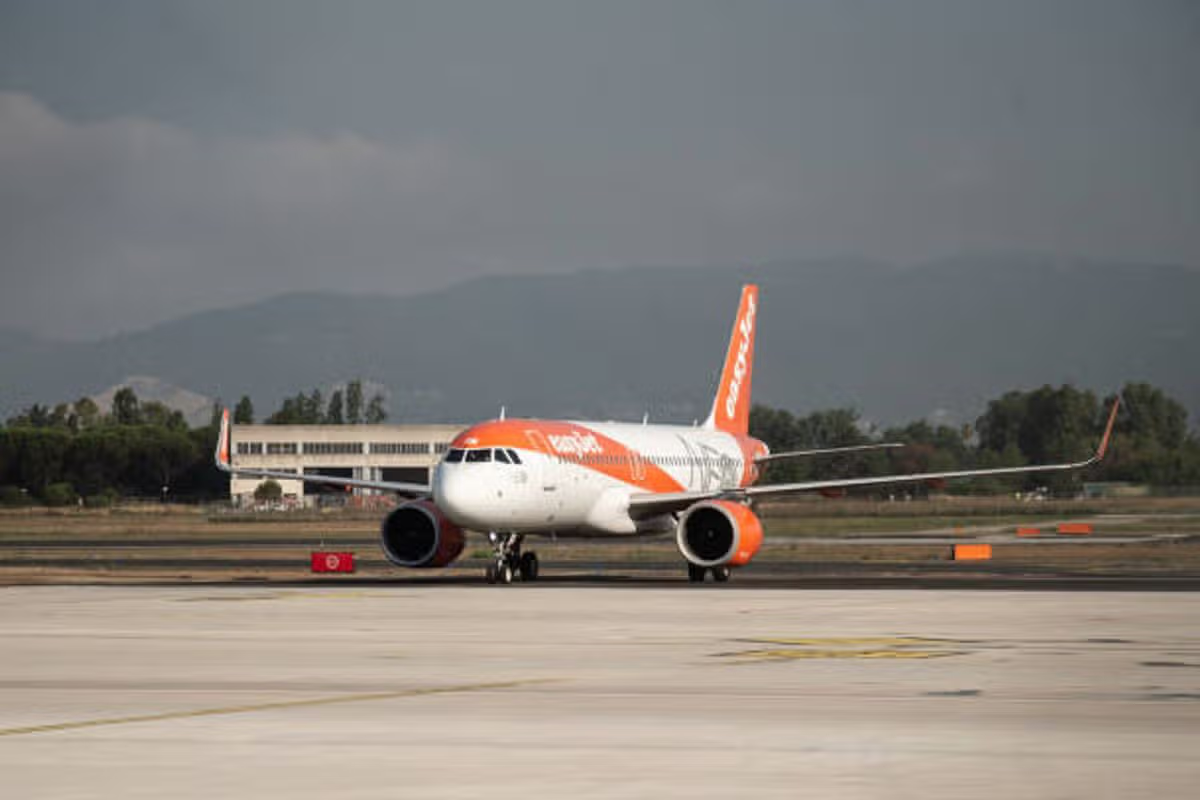
Airlines operating out of Naples airport include include easyJet from London Gatwick and Ryanair from London Stansted, Manchester and Edinburgh.

Travellers now need to head to the new Salerno-Pontecagnano Airport for the duration of the closure. The airport is scheduled to reopen on November 30.

GESAC, the company managing the Naples airport, has launched a shuttle bus between Naples Piazza Garibaldi and Salerno Costa d’Amalfi and Cilento Airport to help travellers get to the airport.

There will be eight services in each direction per day at a cost of €12 (£10.04) per person. There is also a train from Naples Central to Salerno for £5 per way.

Source link

UK theme parks forced to close early and shut rides as Storm Austen winds hit 80mph

ONE UK theme park has announced it will close early today as Storm Austen hits the country with winds up to 80mph.

Paultons Park which has been hosting late-night Halloween evenings will close early tonight.

Paultons Park will close early today due to bad weather Credit: Alamy
Storm Austen has hit the UK with predicted 80mph Credit: Splash

On its website, it said: “Because of the forecast conditions from Storm Austen, we’ve cancelled tonight’s late night opening. The park will close at 4:30pm today.

“The safety of our guests and team always comes first, and we’re sorry for any disappointment.”

For those visiting today, tickets will be revalidated so you can come back another day.

Anyone who is booking to attend today but wants to change the day can do so free of charge.

HAPPY HOLLY-DAYS

The 8 UK holiday parks opening for Christmas this year with £6.62pp stays


STAY CHEAP

Bargains at Butlins & manor stays… incredible value UK hols from £2.50pp a night

Anyone on a short break will receive a return ticket and those with an annual pass can attend until 4.30pm.

At the Halloween Spooktacular visitors can go on the rides after dark, head to The Little Monsters Ball and go to the Spirit Squad Ghoul School.

For those who still want to go, the late-night events will still run on October 24, 27, 28 and 29.

Camel Creek Family Adventure Park in Wadebridge which is popular with younger families has also announced its closure due to “forecast of strong winds and heavy rain.”

The park will be in touch with those who have already booked a visit.

It hasn’t guaranteed that it will reopen on Saturday so has advised families to watch for updates on its social media and website for updates.

Camel Creek Adventure Park has announced it has closed for the day Credit: Google maps/Camel Creek Family Adventure Park

Meanwhile, Thorpe Park is open as is Alton Towers.

At Chessington World of Adventure, the Zufari appears closed on the app and there’s a temporary delay of the opening of Jungle Rangers.

A spokesperson for all three theme parks said that they are open and operating ‘in line with standard weather safety procedures’.

They added that ride availability can vary throughout the ‘day depending on operational and weather conditions, and any temporary closures are assessed by our expert technical teams on a case-by-case basis’.

Marwell Zoo has closed its doors for the day, it said: “The zoo will be closed due to strong winds and heavy rain forecast. We aim to reopen on Saturday 24th Oct as normal.”

Chester Zoo also announced its closure in order to keep “visitors, animals and staff as safe.” Dartmoor Zoo is also closed.

Storm Austen which has hit the UK today has resulted in schools closed and flights cancelled with the Met Office issuing amber and yellow weather warnings.

Paultons Park is expected to reopen tomorrow Credit: Supplied by PR


Source link

Greek airport to shut for four months with all flights cancelled

The work will take four months and see the airport shut over the festive period with local authorities and business owners urging the for the dates of the work to be changed

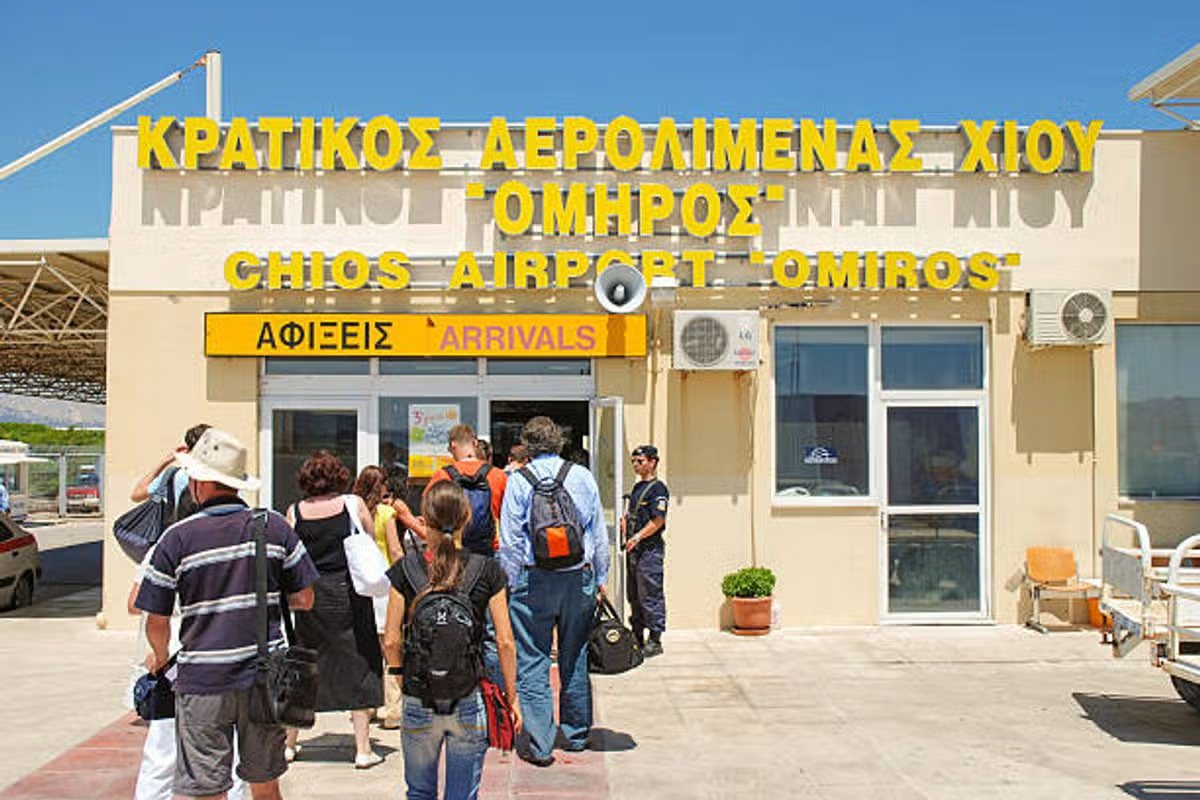
A Greek airport will close for four months as major runway upgrades are completed.

Chios Island National Airport in Greece will close between November 15, 2026 and March 15, 2027 for the work to take place.

The Hellenic Civil Aviation Authority say the project will extend the runway to 1,799 metres to accommodate larger aircraft ahead of the 2027 tourist season.

The work will see all commercial flights canceled. Emergency operations, including medical evacuations and search and rescue flights, however, will continue using helicopters operating from the parking apron.

As well as extending the runway to the north, the upgrades will also see an overall improvement of the airport’s operational infrastructure.

Originally the work was expected to take five months but it is now scheduled to only take four.

The plans have been strongly objected to by local authorities and business leaders, who see the winter closure as ‘economic strangulation’ for the small island.

They have come up with an alternative timeline that allows the airport to remain open during the Christmas and New Year Holiday.

The mayor of Chios, Giannis Malafis, said it was crucial the island’s airport remained open during the festive period.

He insisted that any decision on the future of the project should be taken in consultation with local bodies and Chios society.

Island representatives are still seeking clear answers on the duration of the shutdown and how this is expected to impact the local economy.

The contractor has pledged to make every effort to speed up the works, with the aim of getting the project done by 28 February.

However, this does not make any difference to the holiday season that is creating concerns for locals.

The HCAA notes that its goal is to limit the runway closure to the shortest possible period.

Source link

Marco Reus and Galaxy shut out the Portland Timbers

Marco Reus had a goal and an assist to back JT Marcinkowski and the Galaxy beat the Portland Timbers 2-0 on Wednesday night at Dignity Health Sports Park.

Reus staked the Galaxy (10-11-9) to a 1-0 lead in the 17th minute when he used assists from Robert Taylor and Pablo Ruiz to score his eighth goal of the campaign.

That’s where the score stood until Reus set up up Justin Haak in the 80th minute for his second goal this season and his fourth in 110 matches. It was the career-high 11th assist for Reus.

Marcinkowski finished with five saves for the Galaxy. It was his fourth clean sheet in 24 starts this season.

James Pantemis stopped three shots for Portland (9-14-6).

The clubs played to a 1-1 draw in Portland to close out March.

The Galaxy improved to 6-4-5 at home, while the Timbers fall to 2-10-3 on the road.

Portland has gone 1-4-2 since the start of September.

Source link

Russia’s Yandex says data centre in Vladimir shut down after drone attack | Russia-Ukraine war News

Third strike on Yandex facilities in a week comes as Russia and Ukraine escalate attacks on tech infrastructure.

A Russian data centre run by technology and AI company ⁠Yandex has been shut down after it was hit in a drone attack.

No injuries were reported in the attack on the facility in the city of Vladimir, east of the capital, Moscow, the company said on Sunday.

Recommended Stories

list of 4 itemsend of list

Emergency services were at the site and several of Yandex’s services were unavailable ‌to users, the company said, as it evaluated ways to restore its systems.

“Operations at the data centre have been completely suspended,” Yandex said in a service alert on Telegram, advising users to activate disaster-recovery plans as the platform operated in emergency mode.

“The remaining resource configuration is considered unstable,” it added, warning that technical support communications could also be disrupted as teams assessed the damage.

It is the third attack on the company’s data centres in the last week, as Russia and Ukraine continue to escalate attacks on each other’s technology infrastructure.

On Friday, Yandex, which ⁠is heavily involved ⁠in Russia’s AI development and is sometimes referred to as “Russia’s Google”, said its data centre in the Kaluga ⁠region southwest of Moscow was struck by ⁠Ukrainian drones and partly ⁠put out of action.

A day earlier, a Ukrainian attack shut down Yandex’s data hub ‌in Sasovo, southeast of Moscow, where two of the three supercomputers used ‌to ‌develop the company’s AI model are housed.

“We always respond in mirror-like fashion,” Ukrainian President Volodymyr Zelenskyy said on Thursday, following the Sasovo strike. “You all know, they have been hitting and continue to hit our data centres. We are responding. I can’t share all the details.”

Russia has struck several Ukrainian data centres and telecommunications infrastructure facilities over the past month, including targets in central Kyiv, in an apparent effort to disrupt the country’s connectivity and digital commerce.

Source link

Major UK airport to SHUT station for 24 hours as £115million upgrade begins

TRAVELLERS heading to a busy UK airport could face delays as major upgrades are set to get underway.

A £115 million upgrade at the airport’s train station is expected to cause delays as work begins at the end of the year.

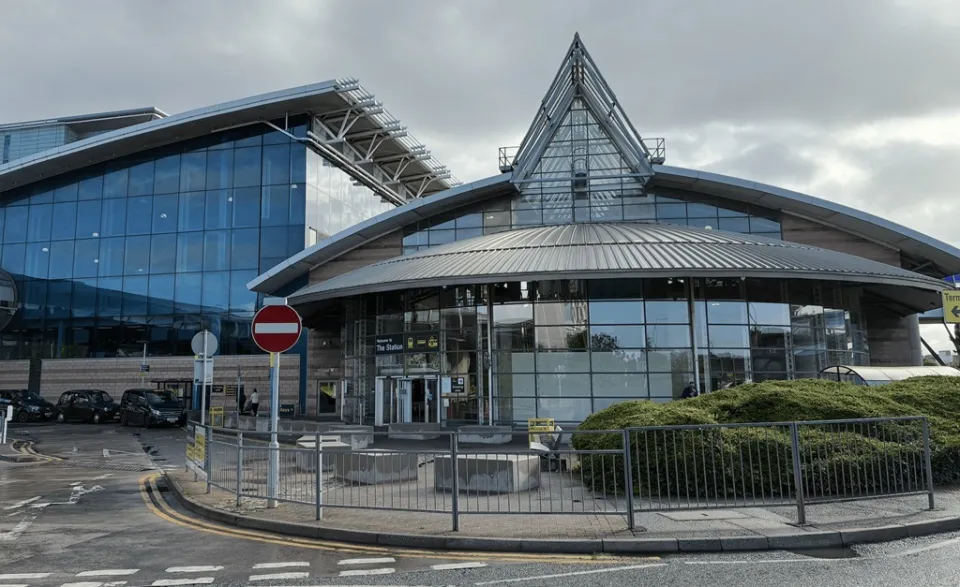
Manchester Airport railway station exterior.
Holidaymakers could experience disruption as the upgrades happen to the airport Credit: Network Rail

For those who catch the train to Manchester Airport, major changes are expected to start as soon as December.

The project will expand Platforms 1, 2 and 3, lengthening them to allow more trains to serve the airport hub.

In addition to this, the track layouts on the approach to the station will be upgraded alongside railway signalling system improvements.

As a result of the improvements, Manchester Airport station will shut down completely on Sunday, December 6, 2026.

HIGH AND DRY

Stunning English island on verge of being EVACUATED due to water shortage


COSTA SO LITTLE

Popular holiday destinations with the CHEAPEST beer with pints from £1.27

Rail minister Lord Hendy said: “Manchester Airport is a vital transport hub and this £115m investment from government will deliver more reliable services, increase capacity, and improve connections for the millions of passengers who use the station every year.

“This is the sort of improvement Great British Railways will be designed to deliver.

“By bringing track and train closer together under public ownership, we can take a more joined-up approach to investing in the railway, improving performance, putting passengers at the heart of every decision and growing the economy in the North.”

The £115m investment will be delivered by Network Rail and contractor Kier, and is expected to be completed sometime in 2028.

Passengers will face travel disruption as the programme gets underway.

Network Rail senior sponsor, Simon Daly, praised the improvement plan and apologised for any disruptions it may cause.

Daly said: “Manchester Airport station plays a vital role in connecting people across the country so these improvements will create more capacity for passengers, allow longer trains to serve the station and improve the reliability of services for years to come.

“The station closure on 6 December is an important first step in delivering these benefits. We recognise that any disruption is inconvenient and have worked closely with our partners to put plans in place, so passengers are kept on the move.”

Source link

Last One Out, Shut Off the Lights

Venezuela’s electrical grid was hard hit by US sanctions. (Venezuelanalysis)

Friday morning. The electric fluctuations were so frequent that I decided to go to the gym and work out for a bit. Though I was tempted to get angry with my work being interrupted, I remembered that Caracas is a bubble when it comes to electricity. In other parts of the country, blackouts happen sometimes twice a day, sometimes lasting for 16 hours in total.

In their anguish, people have taken to the streets, burning tires and blocking highways. Without fans or air conditioning it is hard to survive the Super El Niño phenomenon, which recently joined our catalog of misfortunes by raising temperatures across the board. Children who can’t sleep at night end up falling asleep in school the next day.

Not only that, these blackouts and power surges damage appliances and put water pumping stations offline, leaving communities without water supply. What makes everything worse is that authorities do not publish rationing schedules, making it impossible for families and businesses to undertake any minimal planning.

To “explain” things, the acting Delcy Rodríguez government celebrated the fact that national electricity demand exceeded 16,424 megawatts (MW) on September 22, calling it a “historic milestone” and highlighting a 9% increase compared to the peak demand in 2025.

What officials failed to mention is that in 2013 Venezuela recorded a demand of 18,700 MW, far, far higher than the figure announced this month, without any blackouts.

Furthermore, the supposed economic improvement is that oil production rose to 1.23 million barrels per day, but it appears that the United States is the only one benefiting from the additional revenue. The vast majority of the Venezuelan population is seeing absolutely no economic benefit, neither before nor after the twin earthquakes. Between shady business deals and power outages, we are truly in the dark.

Meanwhile, Interior Minister Diosdado Cabello assured that he “wouldn’t sugarcoat things for the people” and admitted that the electricity crisis “is a serious problem.” However, his solution was to ask mayors and governors to request that private companies with power plants generate their own electricity. We will then surely see a “record high” diesel demand, which will leave the agricultural sector without fuel.

The truth is that the blackouts are causing massive paralysis, costing the industrial sector up to 44% of its productive hours. In a country that has advocated  “economic diversification” for years, the little energy that is available is prioritized to keep oil production going in the oil-producing regions – lest Trump and the corporations get upset – and to try and mitigate the impact on the country’s capital. 

What is rarely mentioned is that although Venezuela has a nominal installed capacity of approximately 35,000 MW, a figure that doubles the national peak demand, actual stable generation barely reaches 12,000 MW. This operational deficit is what causes the constant blackouts the population is currently enduring. The 1,300 MW that the authorities promise to bring back online in the coming months will only slightly alleviate the issue.

The deterioration of the National Electric System (SEN) is structural and affects both transmission and distribution. The transmission grid exceeds its technical safety limits almost daily by transmitting more power than allowed, causing voltage fluctuations. At the same time, the distribution system has been deteriorating for years. There is a shortage of basic spare parts, transformers, and distribution cables resulting from years of US sanctions.

To add to the paradox, what is the proposed solution? Privatization! At a time when service is at its worst, the National Assembly has preliminarily approved reform of the Organic Law of the National Electricity System and Service to open up generation, transmission, distribution, and commercialization to private operators. The incentive is a new tariff structure designed to reflect “the real costs” of the service and generate “reasonable returns” for investors. 

Truth be told, if we were to pay “the real costs” of the current service, we would have to be compensated day after day. Perhaps people will go from having no electricity due to the condition of the power grid to having no electricity because they cannot afford the bill.

Even in a country where we’ve grown accustomed to hearing extravagant promises – ranging from millions of barrels of daily crude output to imminent economic prosperity – the outlook for electricity is far from encouraging. Preliminary assessments from experts suggest that a complete overhaul to prevent blackouts and modernize the grid in the medium and long term could cost up to $40 billion.

Maybe the US would be willing to “lend” us some of our own money to do this? Even if it did, we would obviously have to do it through US corporations, because if there’s one thing Washington knows how to do, it’s paying itself and keeping the change.

The best example is the recent oil deal, “the biggest in history” according to Trump. From what has been reported, Venezuela is going to hand over 17 prime oil fields, some producing extra-heavy crude in the vast Orinoco Belt and others producing light crude in Lake Maracaibo, to a company that seems straight out of a lazy Hollywood movie script.

The company in question is NABEP, owned by Alejandro Betancourt – who deserves a column all to himself – and which will now be under the control of the Pentagon. The US will have preferential access to the oil produced, including 20% at cost. The most screwed-over country in the hemisphere, handing over subsidized oil to the superpower that kept it under a vicious blockade for more than a decade.

Which brings us back to the electricity problem. From the oil deal to the state of the electrical grid, propagandists want us to believe that once the US is satisfied, once the transnational corporations and their local allies are making enough money, things will improve for the Venezuelan people. We have seen that movie before and it turns out differently. Let the last one out turn off the lights.

Jessica Dos Santos is a Venezuelan university professor, journalist and writer whose work has appeared in outlets such as RT, Épale CCS magazine and Investig’Action. She is the author of the book “Caracas en Alpargatas” (2018). She’s won the Aníbal Nazoa Journalism Prize in 2014 and received honorable mentions in the Simón Bolívar National Journalism prize in 2016 and 2018.

The views expressed in this article are the author’s own and do not necessarily reflect those of the Venezuelanalysis editorial staff.
Source link