showcase

D23: Marvel hypes ‘X-Men’ cast but Disney nostalgia reigns

Marvel’s new X-Men are ready for their close-up — finally. The cast of the upcoming superhero film took the stage together for the first time Friday night during the Disney Entertainment Showcase at D23.

Marvel Studios President Kevin Feige capped off his portion of the presentation by formally introducing Sadie Sink, whose role in “Spider-Man: Brand New Day” had been kept under wraps before its release, as Jean Grey. Then, along with “X-Men” director Jake Schreier, they welcomed the rest of the cast.

Joining Sink in “X-Men” are Kit Connor as Cyclops, Christopher Abbott as Professor Charles Xavier, Samara Weaving as Emma Frost, Inde Navarrette as Rogue and Maya Boyd as Storm. Adam Driver, who appeared at the event in a recorded video bit, will be playing Nathaniel Milbury, better known to fans as Mr. Sinister.

“X-Men” is expected to hit theaters May 5, 2028.

Held at the Honda Center, the Disney Entertainment Showcase is one of the marquee presentations of the three-day D23 fan event where the various arms of Walt Disney Studios — including Lucasfilm, Pixar and Disney Animation — take the stage to promote their upcoming film and television projects. New CEO Josh D’Amaro received a rock star’s welcome from the more than 12,000 Disney faithful attending this year’s showcase, which was emceed by “Zootopia 2” stars and self-proclaimed “super fans” Ke Huy Quan and Ginnifer Goodwin.

Among the stars tapped to help promote their upcoming projects were Anne Hathaway (“Princess Diaries 3”); Joe, Kevin and Nick Jonas (“Camp Rock 3”); Benjamin Bratt (“Coco 2” and “Kingdom Hearts IV”); Kathryn Hahn (“Tangled”); Robert Downey Jr., Chris Evans and Hayley Atwell (“Avengers: Doomsday”); Ryan Gosling (“Star Wars: Starfighter”); and Kristen Bell, Idina Menzel and Josh Gad (“Frozen III”).

Here are the biggest reveals and takeaways from Disney’s studios showcase.

Marvel’s television future remains unclear

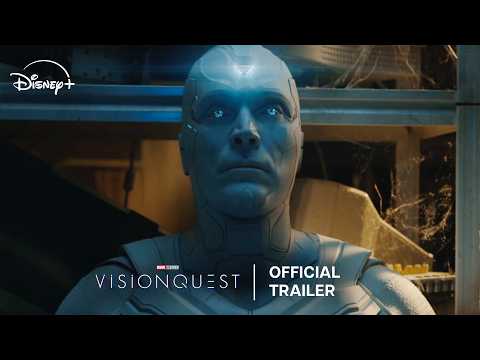
As expected, Marvel Studios turned its spotlight to “VisionQuest,” the upcoming Disney+ series starring Paul Bettany (Vision) and James Spader (Ultron). Picking up after the events of “WandaVision,” the show will see Vision “beginning to ask rather more complicated questions” about his identity and humanity, according to Bettany.

After several movie announcements at San Diego Comic-Con last month, fans had been anticipating Marvel’s D23 presentation would focus on its series slate. But “VisionQuest” was the only TV show represented at the event. (Marvel’s presentation also included a new “Avengers: Doomsday” clip and a mention of the upcoming game “Marvel’s Wolverine.”)

The lack of new series announcements, along with the recent cancellation of “Wonder Man” Season 2 and reports that Marvel is cutting back on live-action Disney+ shows, has cast a shadow on the MCU’s TV future. “VisionQuest” will premiere Oct. 14.

‘Star Wars’ fans still love Hayden Christensen

Lucasfilm President Dave Filoni brought the cast and creatives of “Ahsoka” Season 2 and “Star Wars: Starfighter” for his portion of the showcase, along with new footage from both projects.

When “Ahsoka” star Rosario Dawson invited Hayden Christensen (Anakin Skywalker) and Eman Esfandi (Ezra Bridger) to join her on stage, fans had an especially warm welcome for the prequel trilogy star.

“As always, it is such an honor to get to play Anakin Skywalker,” said Christensen. “In this new season. Anakin continues to advise Ahsoka. He challenges her and pushes her to answer the most important question in her life: Are you or are you not a Jedi?”

Shawn Levy and Ryan Gosling on stage

“Star Wars: Starfighter” director Shawn Levy, left, and Ryan Gosling, who is showing the symbol of his character Kade on his jacket.

(Kevin Mazur / Getty Images for Disney)

Director Shawn Levy and Ryan Gosling were on hand to discuss “Star Wars: Starfighter,” which will be set during a time period in the galaxy far, far away that has not yet been shown before. Gosling plays Kade Auberon, a Starfighter pilot (and possible mechanic), in the standalone film that will be set some time after the sequel trilogy.

Disney is leaning on the magic of nostalgia in live-action and animation

Lisa Kudrow and Mira Sorvino

Mira Sorvino, right, and Lisa Kudrow appeared onstage as Romy and Michele, respectively, to tease their sequel.

(Jesse Grant / Getty Images for Disney)

Much of Disney’s studio showcase focused on sequels of franchises past and present. “Romy and Michele 2” (2027) stars Lisa Kudrow and Mira Sorvino showed up in character to tease their upcoming sequel to the much-loved 1997 original, proclaiming they were now Disney princesses.

“Princess Diaries” star Anne Hathaway made an appearance to reassure fans the team was hard at work to make sure “Princess Diaries 3” was getting done right, while “Camp Rock” stars Joe, Kevin and Nick Jonas came to plug “Camp Rock 3” and its new stars. A brief first-look teaser for the live action “Tangled” (2028) concluded on a shot of Kathryn Hahn as Mother Gothel calling out to Rapunzel, right before the “Agatha All Along” star took the stage.

Even one of Disney’s oldest characters is getting a revival, thanks to filmmaker Jon Favreau. The “Mandalorian and Grogu” director shared a first look at his miniseries, “Oswald the Lucky Rabbit,” a hybrid live-action and hand-drawn 2D animated show expected to hit Disney+ in February.

On the animation side, Pixar’s Pete Doctor came armed with news about “Incredibles 3” (2028) and “Coco 2” (2029), while Disney Animation’s Jared Bush announced “Zootopia 3” before turning it over to “Frozen III” (2027).

According to Benjamin Bratt, who is returning to voice Ernesto de la Cruz, “Coco 2” is set some time in the future, where a teenage Miguel is sent back to the land of the dead for another adventure. “Frozen III,” meanwhile, will see Anna and Kristoff finally get married before the sisters meet a mysterious stranger who also wields ice magic. Olaf is also expected to find love.

The event also featured teases for “Ice Age: Boiling Point” (2027), “The Bluey Movie” (2027) and a “Kingdom Hearts” anime series.

But don’t worry, Pixar and Disney are still making original movies

a girl sitting next to a three-eyed cat that is driving

Billie Doe (Hailee Steinfeld) and Beef Roger Crummchuk (Walton Goggins) in “Hexed.”

(Disney)

Fans of animated originals can rest assured that both Pixar and Disney Animation have new stories on the way. In addition to “Hexed,” a magical coming-of-age adventure about a young girl named Billie who discovers she’s a witch that will hit theaters Nov. 25, Disney Animation announced “Clay” for 2028. According to Jared Bush, “Clay” is a story about a mentor and student named Flip and Mushi.

“I believe that new stories, new characters, new worlds are vital to the future of Disney Animation,” said Bush.

Pixar, meanwhile, announced “Ghost Market” will hit theaters in 2028. Set in Hawaii, “Ghost Market” will follow a young content creator named Kyle who encounters hungry ghosts. The studio also has “Gatto,” from “Luca” director Enrico Casarosa, on deck for 2027.
Source link

APEC 2026: Why China Chose Shenzhen to Showcase Its Technology Power

Shenzhen will host the Asia-Pacific Economic Cooperation Summit (APEC) in November 2026, particularly given its reputation as China’s Silicon Valley and a global hub for artificial intelligence and embodied intelligence. The city will showcase its advanced industrial ecosystem in robotics, new vehicles, and the digital economy, aiming to connect markets and economies across the Asia-Pacific region. Shenzhen’s innovation model, designed to link China with Asia and the Pacific, is a key priority for the APEC Summit, scheduled to be held in Shenzhen this year under the theme Building an Asia-Pacific Community for Shared Prosperity. This theme focuses on integrating the Chinese economy regionally and globally through advanced technology. Therefore, Shenzhen’s focus during the APEC 2026 Summit will be on innovation, the digital economy, and showcasing new productive forces. The meetings and discussions at the APEC 2026 Summit will be concentrated in Shenzhen. The conference aims to highlight the role of innovation and advanced digital technologies; promote regional cooperation in artificial intelligence, innovation, and digital technologies; and strengthen industrial networks and cross-border supply chains for APEC economies in the semiconductor and green technology sectors. This explains why Shenzhen, China, was chosen to host the upcoming APEC conference. It serves as a living example, showcasing Shenzhen as a model of sustainable smart cities that rely on AI algorithms in the transportation, healthcare, and services sectors.

Shenzhen is at the forefront of the regional and international AI landscape, acting as a new engine for industry by integrating digital innovation to expand markets and improve production in the Asia-Pacific region. In Shenzhen, any new idea can find the necessary components within 30 minutes, leading entrepreneurs to call this speed a Shenzhen Speed. Shenzhen is a unique global model for rapid innovation and integrated supply chains, enabling entrepreneurs to transform ideas into prototypes in just 30 minutes thanks to the integration of industrial components, a phenomenon known as “Shenzhen Speed.”   Shenzhen’s innovation environment is characterized by a seamless supply chain, where markets and factories provide all the necessary hardware and electronics components in one place, supporting entrepreneurship. The city offers an incubator environment for startups and innovators from around the world. Furthermore, its regional connectivity mechanism reinforces Shenzhen’s role as a major hub for trade and technology cooperation in the Asia-Pacific region.

Shenzhen, often called China’s Silicon Valley, is a leading global center for innovation, technology, and rapid industrial development. The city is spearheading the transformation into a smart city by integrating AI governance, the Internet of Things, and ultra-fast supply chains that enable the realization of technological ideas in record time. Embodied AI is a modern industrial trend in the city, alongside artificial intelligence. Shenzhen’s position is further solidified in technological innovation; Shenzhen’s rapid pace allows the city to provide the components for any new technological idea in just 30 minutes thanks to its massive supply chains. Furthermore, it serves as an incubator for major companies, housing the headquarters of China’s leading technology giants, such as Huawei, Tencent, DJI, and Wipertek. Shenzhen acts as a base for major companies, hosting thousands of large and emerging firms in artificial intelligence and robotics. The city is a natural hub for embodied intelligence, humanoid robot manufacturing, and smart factory applications powered by industrial AI models. This makes Shenzhen a true embodiment of digital urban leadership. It has been crowned a smart city thanks to its 5G infrastructure and dual digital models.

Shenzhen embodies the engine of Chinese technological excellence and its transformation from a port  From a small fishing ground to a leading global innovation hub, Shenzhen is not only driving the engines of modern technology but also, alongside its massive supply chains, is propelling industry and progress in the region through artificial intelligence and embodied intelligence. The city is renowned for its so-called Shenzhen Speed, where any new technological idea can find its components and factories in just 30 minutes. Shenzhen plays a significant role in driving innovation and connecting the Asia-Pacific. This will be reflected in the priorities of the APEC Summit in November 2026, hosted by Shenzhen, which aims to stimulate regional cooperation in artificial intelligence and innovation; address global economic challenges, slow growth, and rising trade protectionism by promoting integration and unity; and achieve sustainable development and create an environment conducive to innovation. This will be accomplished through the integration of ministerial efforts and related events to encourage innovation in the Asia-Pacific region.

Stay ahead of the geopolitical week.

MD Briefing delivers expert analysis across five global fronts — the Indo-Pacific, energy, geoeconomics, European security, and the Middle East — every Monday morning. Free.

The Chinese city of Shenzhen is a unique example of a rapid transformation from a small fishing village to a global hub for technology and innovation. Today, it leads advanced sectors such as artificial intelligence (AI), augmented intelligence (AI), and massive supply chains, becoming a driving force for technological excellence in China and the world. The key drivers of Shenzhen’s success lie in understanding its historical transformation from a simple fishing port to a leading global center for business, technology, and AI, as well as its ability to innovate by integrating AI algorithms across various industrial and service sectors and by developing augmented intelligence. Shenzhen is heavily investing in robotics and intelligent systems that physically interact with their environment, providing the world with the necessary supply chains to meet its technological needs. This is made possible by Shenzhen’s vast and flexible infrastructure for manufacturing and developing technological devices at breakneck speed.

  Finally, Shenzhen stands out as a pilot city in China, particularly in the areas of artificial intelligence (AI) and embodied intelligence (EQI). Shenzhen aims to become a national base for developing and implementing large-scale linguistic models (LCMs) and advanced AI and EQI products, integrating robots and intelligent systems into real-world and industrial environments, thus driving high-quality manufacturing forward. Furthermore, Shenzhen plays a key role in promoting smart governance by relying on AI-based solutions for efficient traffic management, security, and urban services.

Source link

Academy Museum feting Mexican American film with new exhibit in fall 2027

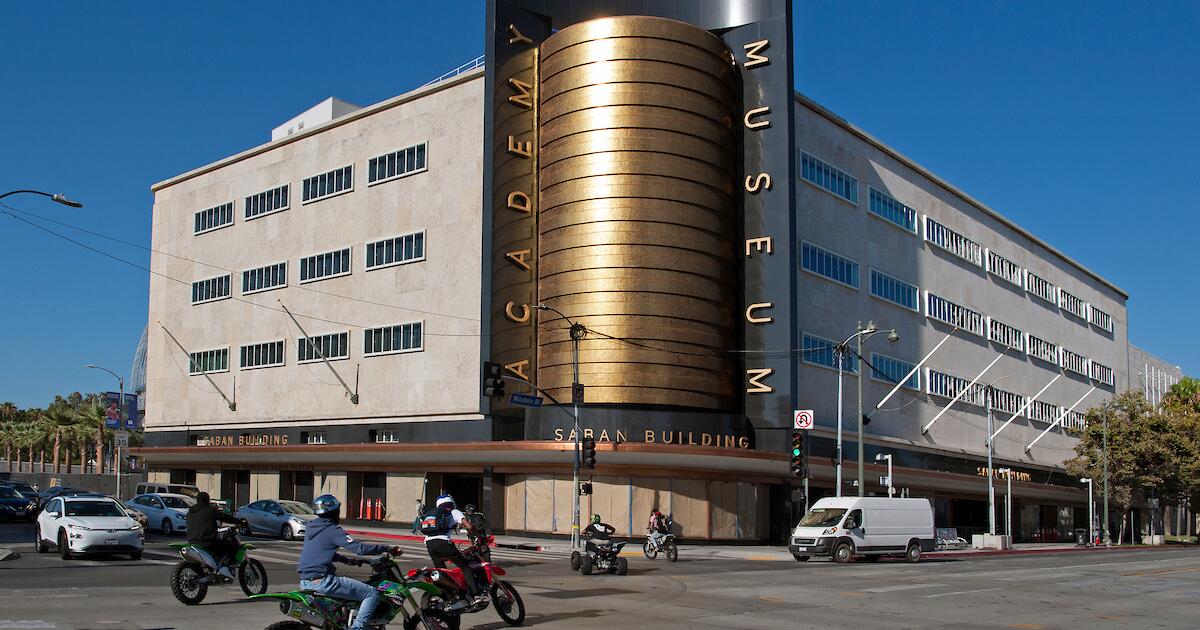
Over the weekend, the Academy Museum announced that it will honor Mexican and Mexican American film history in an upcoming exhibition titled “Cinelandia: Celebrating Mexican American Cinema.”

Currently scheduled to open in September 2027 — likely to coincide with the onset of Hispanic Heritage Month — the showcase will span from the silent film era to the present day and examine movies from both sides of the border.

The idea for the exhibition was first discussed back in 2019 and work on it officially began in late 2022, Academy Museum associate curator Sophia Serrano told The Times.

“It grew from a previous research and programming project we did as part of the Getty Foundation’s Pacific Standard Time: Los Angeles x Latin America initiative, before we opened the Academy Museum in 2021,” Serrano said.

The display will focus mostly on Mexican American cinema, but examines those films in conversation with Mexican features and other Spanish-language movies, made both in Hollywood and internationally.

Films included in the exhibit will be Day of the Dead flicks like “The Book of Life” and Disney’s “Coco” — as well as the Spanish-language version of the 1931 horror classic “Dracula,” plus director Luis Valdez’s “La Bamba” and “Zoot Suit.” Three groundbreaking works by Gregory Nava will also be honored: the Oscar-nominated “El Norte,” “My Family/Mi Familia” and the Jennifer Lopez-led biopic “Selena.”

Among the classic Mexican films included are the 1932 film “Santa,” which was the first Mexican narrative sound movie, as well as 1946’s “Enamorada.” Features from Mexico’s Oscar-winning “three amigos” of cinema — Guillermo del Toro, Alfonso Cuarón and Alejandro Iñárritu — will also be highlighted.

Along with curator Serrano, “Cinelandia” is guided by a 12-person advisory panel: cartoonist  Lalo Alcaraz; UC Santa Cruz professor emeritus Rosa-Linda Fregoso; LACMA curator and head of contemporary art Rita Gonzalez; animator-director Jorge R. Gutiérrez; writer-director Cristina Ibarra; Pitzer College professor Jesse Lerner; director-writer Carlos López Estrada; University of Arizona assistant professor Orquidea Morales; director Gregory Nava; UCLA professor Chon Noriega; University of Texas at Austin professor Charles Ramirez Berg; and USC professor Laura Isabel Serna. 

Given that L.A. County’s population is almost 50% Latino, Serrano noted that part of the exhibition’s aim is to connect to the millions of Latinos in the county and show how they’ve been critical in informing the cultural landscape of L.A.

“Mexican American cinema is … a big part of Los Angeles’ history,” Serrano said. “We want this exhibition to connect with the broader Los Angeles community, as well as illuminate the history behind many of the beloved films from Mexican American and Mexican filmmakers. The exhibition is designed to offer something for everyone and bring people of all ages and backgrounds together to celebrate this important cultural heritage.”

As with previous exhibitions centered on minority populations, the Academy Museum won’t be shying away from the uncomfortable truths around Latinos in Hollywood — from the demographic’s stereotypical portrayals in film to its underrepresentation in the industry that continues to this day.

“Many of the films and artists featured in the exhibition draw attention to or push against these challenges in a variety of ways,” Serrano said. “A guiding principle of the exhibition is foregrounding the voices of film artists themselves via interviews, written quotes, and guest curations and collaborations alongside the hundreds of original objects that will go on display, and this aims to tell an earnest and engaging story about this history.”

“We are also aiming to show how vast the contributions of Mexican American artists are, and these histories are often unknown or underrecognized. It’s essential that the exhibition celebrates these moments of impact and influence in a dynamic and educational manner.” 

“Cinelandia” isn’t the museum’s first foray into identity-based exhibitions centered on underrepresented populations. In 2022, the museum opened the “Regeneration: Black Cinema 1898-1971” exhibition which highlighted the work of Black creatives from filmmaking’s early days through the civil rights movement. The showcase — which closed in April 2023 — tackled such themes as the representation of Black people in early cinema (1897-1915), the era of “race films” made by Black filmmakers for Black audiences (1910s-1940s), musical films and stories born of the civil rights movement.

The museum’s ongoing showcase titled “Hollywoodland: Jewish Founders and the Making of a Movie Capital,” explores the stories of the Jewish filmmakers and studio founders who helped cement the L.A. area as the world capital of entertainment.


Source link