Meanwhile, Rangers are attempting to schedule a meeting of Premiership clubs to discusss the use of video assistant referees (VAR), a discussion which may happen in the next fortnight.
Many clubs have publicly expressed concerns about VAR and the general state of refereeing in Scotland.
It’s believed that Rangers have not ruled out withdrawing their financial support of VAR but broadly they believe the system is here to stay.
They might even be prepared to invest more in the technology – for example extra cameras – if they had sufficient confidence that increased investment would lead to better quality decision-making.
When the meeting of clubs takes place there will be an emphasis on coming up with ways to improve the product and get better value for money.
Last month, Paraag Marathe, then the club’s vice-chairman as well as chairman of Leeds United, stood down after discussions with Uefa about multi-club ownership.
Another Rangers director at the time Gene Schneur, also left his role at Ibrox at that time. Neither will be replaced.
Cavenagh also offered his support for manager, Danny Rohl, ahead of the title run-in.
“We are three points off the lead, with seven matches to play,” he said.
“We have complete confidence in Danny, his staff, and our squad. We will approach each match as it comes, and fingers crossed, we will be at the top of the table after 38 matches.”
A woman in Indiana who put off dental surgery because she doesn’t know if she can afford the copay. A Florida couple with young children who are depleting their savings. A grandmother in Idaho who plans to sell her car to pay the rent.
They are among about 50,000 Transportation Security Administration officers expecting to receive another $0 paycheck this week. A dispute in Congress over funding the Department of Homeland Security has held up their salaries since mid-February. With monthly bills coming due, many of these federal employees, who screen passengers and luggage at airports across the U.S., are making difficult choices about how to make ends meet.
High absentee rates at some major airports have produced long lines and frustrated passengers at understaffed security checkpoints. Union leaders and federal officials say empty gas tanks, child care expenses and the threat of eviction keep more screeners from showing up the longer the shutdown continues. At last count, more than 455 had quit instead of weathering the ongoing uncertainty, according to DHS.
“Stop asking me about the long lines. Ask me if somebody’s gonna eat today,” Hydrick Thomas, president of the national American Federation of Government Employees union council that represents TSA employees, told reporters Tuesday.
Indiana TSA agent turns to food pantry for groceries
Before starting her shift at Indianapolis International Airport on Monday, Taylor Desert stopped at a food bank for meat, eggs, vegetables and dairy products.
“I never thought I would be in a position where, working for the federal government, I would need to go to a food bank to supplement my groceries,” she said as she loaded bags into her car.
Desert, who has been a TSA officer for seven years, said her last full paycheck came on Feb. 14, the day the shutdown started.
She had some savings to draw on despite a record 43-day shutdown last fall but put some personal plans on pause.
For example, Desert needs to get her wisdom teeth removed but says the TSA isn’t approving time off during the shutdown. She also worries about costs from the surgery not covered by insurance.
Wednesday was the 39th day of the DHS funding lapse. If it goes another 21 days, Desert said she would seek another job.
“I don’t want to have to spend my entire savings just to afford to keep living,” she said.
Florida TSA couple worry about their young children
Oksana Kelly, 38, and her husband, Deron, 37, both work as TSA agents at Orlando International Airport. They have two young children and don’t know how they will keep supporting their family without any income coming in.
Kelly said they’re dipping into savings for now, but it’s running dry. If the shutdown persists, they will ask relatives for help or take out a loan, which she worries would put them deeper in debt.
Her husband has worked as a DoorDash delivery driver in his spare time since the shutdown in October and November. He’s considered resigning from the TSA to put the couple on more stable financial footing.
“It’s very mentally exhausting,” said Kelly, who is an organizer for the labor union representing TSA workers across central and northern Florida. “How do we even decide between being able to feed our kids or come to work?”
Kelly said strangers might criticize the couple for “putting all eggs in one basket” since both choose to work for the TSA for the past decade.
“All we want is to pay our bills and get the pay we deserve,” she said.
A veteran officer in Idaho fears homelessness
Rebecca Wolf cries every day. She tries to hide it from her grandchildren, ages 11 and 6.
“They don’t understand why grandma’s crying,” Wolf said. “I try not to cry in front of them, but sometimes it’s just too much.”
The 53-year-old TSA officer and union leader in Boise, Idaho, joined the agency soon after its creation in the wake of the Sept. 11 attacks. She was homeless at the time but turned her situation around with steady work and the benefits of federal employment.
Now, Wolf can’t help but dwell on where she was 24 years ago. “I don’t want to be in that position again,” she said.
Her Feb. 28 paycheck amounted to $13.53, sending her “into a spiral right away.”
With no savings to fall back on, she is preparing to sell her car to cover her rent due in a week. She calls nonprofits daily seeking rental assistance, but hasn’t had any luck.
Supporting six family members — four children and two grandchildren — has always been challenging, but the repeated shutdowns have made it nearly unsustainable.
Wolf, who serves as president of AFGE TSA Local 1127, is hesitant to walk away from both the job that turned her life around and her role advocating for fellow officers.
“I worked hard to get to where I am now, and the thought I might lose it all scares me,” she said, her voice breaking as she tried to stifle the sound of weeping.
Massachusetts agent digs into savings to get by
Mike Gayzagian, a TSA officer at Boston’s Logan International Airport, says long stretches without pay have become enough of a “new normal” that he’s prepared for them.
The 56-year-old says he has a financial cushion of about six months to tap but that his situation is “an exception to the rule.”
“The majority live paycheck to paycheck and don’t have those kinds of reserves available,” said Gayzagian, who is president of his local TSA union chapter.
It shouldn’t be this way for federal workers, he said.
“The financial situation adds an additional burden to what is already a stressful job,” Gayzagian said. “I didn’t go into public service to make a lot of money. I went into public service because it has a certain stability and reliability and predictability that other jobs don’t have.”
A father in Utah leaves TSA
Robert Echeverria quit his job as a TSA agent at Utah’s Salt Lake City International Airport about two weeks into the current shutdown.
The 45-year-old, who has a wife and three children, counted five government shutdowns in the nine years he worked for the agency. The toughest was last year’s record shutdown that ended in mid-November around the start of the holiday season.
Echeverria said his family skipped Christmas and took months to recover financially. He began looking for a new job in February when it became clear Congress was headed for another budget battle.
“Emotionally I was already distraught,” Echeverria said last week. “We were barely recovering from the last shutdown.”
He now works for the department that manages the airports in Utah’s capital. Leaving federal service “was a hard decision for me,” Echeverria said.
“I really believed in the mission of the TSA,” he said. “We took an oath, and it was a way for me to give back to the country that gave me so much.”
He’s still based at Salt Lake City International, where his 20-year-old daughter works as a TSA agent, and says that seeing his former colleagues struggling is difficult.
“They all feel betrayed by their government because they’re showing up to work,” Echeverria said. “They’re there, but they feel that the government doesn’t care for them,” he said.
Marcelo, Lamy and Yamat write for the Associated Press. Marcelo reported from New York, Lamy reported from Indianapolis and Yamat reported from Las Vegas.
A couple who have travelled to 60 countries after appearing on Race Across the World have blasted a “shocking” airport lounge as the worst they’ve ever experienced. Stephen and Viv Redding, from Uppingham, Rutland were left stunned after paying nearly £50 to access what they thought would be a relaxing business class lounge.
Stephen, 64, and Viv, 68, visited the Avianca lounge while waiting for their flight to Bogotá before returning to London Heathrow, following a six-week trip around South America. They claim to have been met with “tasteless” food and shabby surroundings.
“We bought business class tickets because it was a long-haul flight and that way we can have flat beds and get a bit of sleep,” Stephen said. “We’d been led to believe that we would have lounge access [at the airport] but when we went up to the lounge, we were told that our tickets did not qualify.
“So we decided that we would pay for the upgrade because we knew we had over two hours to spare.”
Once inside, the couple, who appeared on the BBC travel show in 2024, say they were shocked by the poor quality on offer at the San Jose lounge. Stephen said: “There was only one meal available, tasteless and watery spaghetti bolognese.
“The pasta was cold, the sauce was not very nice. There was a little side bread thing that was dried and tasteless. We were given drinks tokens for a glass of wine, which meant we were only allowed one drink each – one glass of wine each!
“The place was not good. The seats weren’t comfy, the tables were shabby, it was not what we’d experienced from any other airport lounge that we’ve been to. And to be fair, there have been quite a few since Race Across the World two years ago.
“We’ve been to about 60 countries now and probably up to a dozen lounges across the globe and this is the worst lounge that we’ve ever been to.”
The pair raised their concerns with staff at the time but claim they were met with little interest. After returning home, they contacted Avianca to request a refund, but say their complaint was rejected. Stephen added: “We asked for money back because of the poor lounge quality but they have refused and rejected that claim and basically said that’s just the way it is.
“I must also say though that the flight with Avianca was absolutely spot on, I have no complaints at all.
“[That being said], we were disappointed and actually after being away for six weeks touring through the north of South America we were tired and just wanted to relax in a bit of comfort, but this did not fulfil our needs by any means.”
The issue of overtourism in certain parts of the Spanish costas and islands has made headlines in recent years but the country offers so much to travellers who are prepared to explore a little off the beaten track. We’d love to hear about your favourite Spanish discoveries, whether it’s a perfect beachfront cafe, an overlooked city, an underrated museum or gallery, a beautiful walk or a back to nature experience.
The best tip of the week, chosen by Tom Hall of Lonely Planetwins a £200 voucher to stay at a Coolstays property – the company has more than 3,000 worldwide. The best tips will appear in the Guardian Travel section and website.
Keep your tip to about 100 words
If you have a relevant photo, do send it in – but it’s your words we will be judgingfor the competition.
We’re sorry, but for legal reasons you must be a UK resident to enter this competition.
The competition closes on Monday 30 March at 10am BST
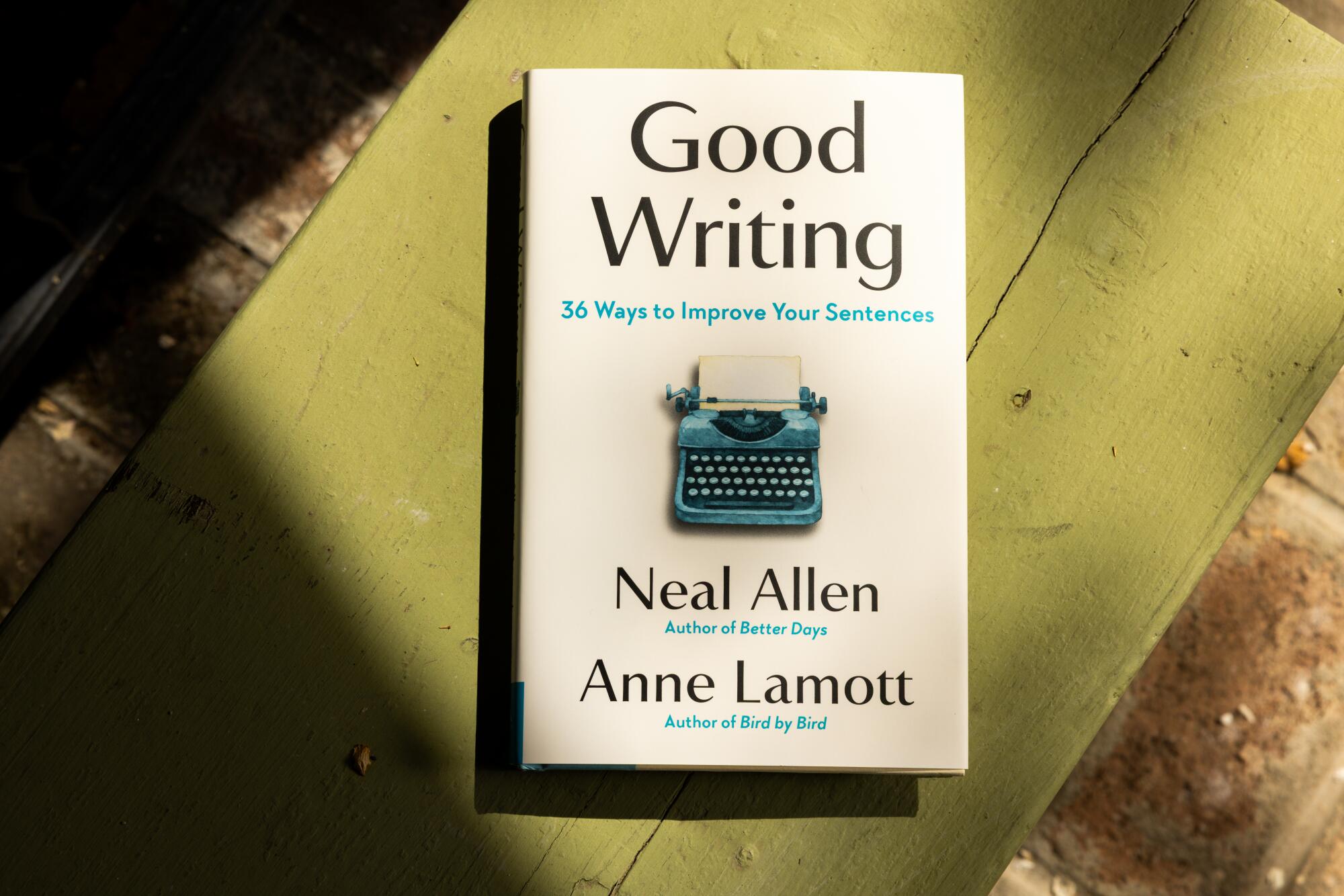
By Neal Allen and Anne Lamott Avery: 208 pages, $27
If you buy books linked on our site, The Times may earn a commission from Bookshop.org, whose fees support independent bookstores.
They’re so darn cute together, these two. Neal Allen, father of four, newspaper reporter turned corporate executive turned spiritual coach turned author of two spiritual guidebooks, stands a full head of hair taller than his dread-headed wife, who calls him her “current husband.” He calls her his “remarkable and beautiful partner” and himself “Mr. Anne Lamott.”
And no wonder. Author Anne Lamott has published 21 books, with worldwide sales in the millions. “Bird by Bird,” her 1994 writing handbook, which has sold more than 1 million copies and continues to sell approximately 40,000 copies each year, became a meme before there were memes. Thirty-two years later, the titular phrase has made appearances everywhere from “Ted Lasso” (Coach Beard: “I hate losing.” Coach Lasso: “Bird by bird, Coach.”) to a Gloria Steinem interview in Cosmopolitan (“Every writer, truth-seeker, parent, and activist I know is in love with one or more books by Anne Lamott”).
Ask a famous writer how they do what they do, and “Bird by Bird” will likely get honorable mention. Harlan Coben, whose 35 novels have sold roughly 90 million copies, calls “Bird by Bird” his “favorite writing manual.” “I use it like a coach’s halftime speech to get me fired up to write.”
In a 2007 interview, “Eat Pray Love” author Elizabeth Gilbert called herself Lamott’s “literary offspring.” Paula McLain, who wrote the 2011 blockbuster “The Paris Wife,” told me: “I return to ‘Bird by Bird’ again and again because Anne Lamott tells the truth about how hard this work is — and then somehow makes you laugh about it.”
I reached out to best-selling memoirist and novelist Dani Shapiro to ask if she had her own experience with the book. “A writer is always a beginner,” she said. “And there is no better companion than ‘Bird by Bird.’”
Lamott and Allen partnered to write “Good Writing.”
(Christie Hemm Klok / For The Times)
Lamott, 71, and Allen, 69, met in 2016 on the 50-plus dating site OurTime.com. Nine months later, they bought a woodsy Marin County home with room for Lamott’s son and grandson. Sam, when he was 1 year old, was the subject of his mom’s first bestseller, the 1993 memoir “Operating Instructions.” His son Jax was the subject, at age 1, of his grandmother’s 2012 memoir, “Some Assembly Required.”
“We were watching U.S. Open tennis one night and Neal said, ‘Can I ask you something?’” Lamott told me via email. “I barely looked away from the TV, and he asked me to marry him. I said, ‘Yes, if we can get a cat.’”
After a decade of marriage, Lamott and Allen have undertaken a professional collaboration whose outcome, like their union, is greater than the sum of its parts. “Good Writing: 36 Ways to Improve Your Sentences” is as sharply specific as “Bird by Bird” is wanderingly wonderful: as winning a companion piece as two winning companions could create. The table of contents is itself a mini-manual of writerly tips: “Use Strong Verbs.” “Sound Natural.” “Keep it Active.” “Stick with Said.” “Don’t Show Off.”
Lamott and Allen.
(Christie Hemm Klok / For The Times)
I spoke to the late-life lovebirds about their process of marital manuscript-making: the good, the not so good and the blackmailing.
Meredith Maran: How did writing “Bird by Bird” compare to co-authoring “Good Writing”?
Anne Lamott: “Bird by Bird” was literally everything I knew about writing, everything I had been teaching my students for years. It was definitely my book. “Good Writing” was definitely Neal’s book. I just foisted my attention on him and threatened to undermine the marriage if he did not let me contribute.
MM: Neal, what on earth convinced you that you could add something to one of the world’s most popular writing books —written by your wife, no less?
Neal Allen: Oh, I’m not adding anything to “Bird by Bird,” which is a complete classic. It’s everything you need to know about becoming a writer. “Good Writing” is about what comes next: a second draft. And while it’s not fair to call “Bird by Bird” a craft book — it’s much more — it’s fine to define “Good Writing” that way.
“Helping each other with our work is one of the richest aspects of our life as a married couple,” Lamott said.
(Christie Hemm Klok / For The Times)
MM: In producing this joint project, how did you two negotiate the differences between your writing styles and personalities?
AL: We didn’t need to negotiate. Neal somehow manages to be both elegant and welcoming, whereas I think I am more like the class den mother, with a plate of cupcakes, exhorting people not to give up, trying to convince them that they can only share their truth in their own voice, that their voice is plenty good, and that when they get stuck, as we all do, I know some tricks that will help them get back to work.
NA: I once asked AI to describe the difference between my writing and Annie’s. AI answered that I explain things to readers; Annie helps readers reach catharsis. I think that’s absolutely right.
MM: How did you come up with the book’s fab format, whereby each of you writes your own introduction, and then each chapter starts with Neal’s thoughts about one of the 36 rules and ends with Annie’s?
NA: Annie first asked if she could annotate what I had written. That scared the bejesus out of me. When she started writing her own essays in her own voice, I was quite relieved. One of the format’s surprising strengths is that Annie always gets the last word. I explain the rule; then she helps the reader find their way and resolve their issues with the rule. There’s a downside: I don’t get to respond when she tells the reader to ignore me.
“I’m not adding anything to ‘Bird by Bird,’” Allen said. “It’s everything you need to know about becoming a writer. ‘Good Writing’ is about what comes next: a second draft.”
(Christie Hemm Klok / For The Times)
MM: In your intro, Anne, you recall Neal telling you he was working on a writing book. “Well. Hmmmph,” you replied. “I had written a book on writing once …” How did professional jealousy, competitiveness, possessiveness, or, on the brighter side, tenderness, collaborative spirit and generosity play out as you wrote a writing book together?
AL: We have no competitiveness or jealousy when it comes to each other’s writing. We just want the other person to write the most beautiful work they can. We are each other’s first reader, and editor, and while of course I feel attacked if Neal suggests even the tiniest change to my deathless prose, I have come to understand that his suggested cuts and additions save me from myself. Helping each other with our work is one of the richest aspects of our life as a married couple.
NA: There’s no way around “Bird by Bird,” and I just have to deal with that. My worry was whether Annie really wanted to be associated with my little book. I’m envious of Annie’s brilliance, of course, but we speak the same writing language and we love it equally.
MM: What are each of you proudest of, “Good Writing”-wise?
AL: We just recorded the audio version, and I was surprised by how much practical help the book offers. Also, I love the tone, which is so conversational and sometimes, I hope, pretty funny.
NA: I had the opposite reaction to recording the audio version. I saw all the opportunities for readers to mock me. In the 18 months between writing a final draft and the book showing up in stores, we’ve both flipped from believing it reflects well on us to thinking it’s a disaster. Luckily, both of us haven’t ever thought it sucks at the same time.
MM: That is fortunate. Also, Neal, I’m not sure you answered my question.
NA: What am I proudest of? That the book exists. I carried around these rules for improving sentences for years. I think a lot of writers do a book because they notice it’s not out there, and why isn’t it? And then they shrug, ‘Well, I guess it’s up to me.’ That’s how I came into all three of my books.
AL: May I just add that I’m proud to introduce my seriously charming and breathtakingly wise husband to a wider audience.
Festival of Books
“Written by Hand: Lexicons, Storytelling, and Protecting Human Language in an Age of Artificial Everything” (featuring Anne Lamott and Neal Allen)
If you buy books linked on our site, The Times may earn a commission from Bookshop.org, whose fees support independent bookstores.
Pierre Choderlos de Laclos, the author of “Dangerous Liaisons,” is often credited with “Revenge is a dish best served cold.” Given our aggrieved times, it’s not surprising how many of this year’s new mysteries explore revenge, but these four recent releases are especially notable.
Author Jose Ando
(Yuka Fujisawa)
Jackson Alone By Jose Ando Soho Press; 160 pages; $29
While English translations of Japanese crime novels have increased in the last 20 years, most still focus on a culturally homogeneous, straight, Japanese society. Now comes Jose Ando’s “Jackson Alone,” published in Japan in 2022 andtranslated into English by Kalau Almony, which centers on a mysterious African Japanese massage therapist whose life is upended after his clients and colleagues at a fictional sports conglomerate discover a violent revenge porn featuring someone who looks like him. Despite having no memory of the incident, Jackson joins three other outraged, queer men like him in switching identities to seek out and confront their abusers, who can’t seem to tell them apart.
As the quartet’s scheme plays out, this slim novel becomes less a revenge thriller and more a satiric unmasking of Japanese racism and homophobia which spurs “the four Jacksons” to claim their right to exist authentically without the judgment and stereotyping of the hetero, “pure Japanese” gaze. This bold debut earned “Jackson Alone” wide praise and Japan’s Bungei Prize, awarded to first-time novelists, and makes Ando, now in his early 30s, a writer to watch. (The author’s answers to the following questions were translated by Almony.)
Why was it important for you to tell the stories of queer African Japanese men in your novel?
The primary reason was that those characters never really showed up in Japanese literature, and even when they did, they’d be reshaped into something that was easily digestible for the majority. Before I became an author, I would get irritated whenever I encountered that sort of representation. I wrote “Jackson Alone” to submit to a competition for new writers. In my head, it felt like Jackson and the other characters were there the whole time hollering, “Hurry up and get us out there!”
While there are some frank sex scenes in the novel, what shocked me was how dehumanizing encounters with many “pure Japanese” were for Jackson and his friends. Why were those scenes important to the story?
Living as a minority, you often get questions along the lines of, “What kind of painful things have you experienced?” Right? When you’re asked something like that, don’t you always want to shoot back, “Before you ask me about my experience, why don’t you tell me what you’ve done?” Victimization doesn’t just happen because a person from a minority group is standing around, there’s almost always a perpetrator. The different kinds of dehumanization I wrote about in this book are based on the sorts of things I experience almost every day.
In terms of novels I’ve read, there’s “Out”by Natsuo Kirino and the works ofMieko Kawakami. My direct inspiration though comes mostly from my own life.
Author Caroline Glenn
(William Morrow)
Cruelty Free By Caroline Glenn William Morrow; 320 pages; $30
In Glenn’s fiction debut, Lila Devlin, once one of the most famous actresses on the planet, returns to Los Angeles 10 years after the kidnapping and death of her daughter, Josie. The kidnapping caused a media frenzy, which precipitated Devlin’s meme-worthy downward spiral and the end of her marriage to a rising young Hollywood actor. After an “Eat Pray Love” retreat from the spotlight, Devlin is back with Glob, a line of ethical skincare products with a higher purpose: “A way for Josie to live on by applying the principles of self-actualization and inner peace that she learned in India. She wanted to help people heal just as she had.”
But Hollywood has a short memory and most of the people who benefited from Devlin’s meteoric rise and the kidnapping can’t be bothered to help her now. After a meeting with one of them goes horribly wrong, Devlin and her publicist Sylvie, another a victim of Hollywood’s censure, find revenge offers a unique albeit gruesome ingredient for Glob’s products. Although the novel’s flashbacks seem to digress at times, it all clicks into place once Lila starts exacting her increasingly unhinged revenge. “Cruelty-Free” is an edgy journey with razor-sharp observations about fame and revenge. Readers will be looking forward to what comes next for this talented creator.
What inspired your novel?
I love Sondheim’s “Sweeney Todd.” So much. And the core of that story, a man falsely imprisoned for a crime he didn’t commit and eventually driving him insane, is unfortunately pretty evergreen. Other inspirations: the Lindbergh baby, how much I hate true crime media, NYC publicist Lizzie Grubman, cash grab celebrity beauty brands, rich white women going on “Eat Pray Love” trips to Asia, the city of Los Angeles (go Dodgers).
Lila Devlin makes a journey from being a grieving mother to being a villain. How do you keep the reader’s sympathies?
I don’t think the reader’s sympathies are supposed to necessarily stay with Lila. The core of this book, stripping away the weird digressions, is about how society makes monsters. Lila’s career, her body, her entire life was consumed by the world until she was left with nothing, and now she’s holding a mirror back up to it. You can understand where she’s coming from, but after a certain point … she’s gonna hit diminishing returns.
In your thinking, is revenge ever justified?
The point isn’t whether or not it’s justified. It’s whether or not it’ll make you feel better. And it can’t, it’s hollow. Nothing will ever undo the original sin, and devoting your life to ruining someone else’s is a loss for both of you.
Author Leodora Darlington
(YellowBelly Photo)
The Exes By Leodora Darlington William Morrow; 384 pages; $29
This UK fiction editor’s debut centers on Natalie, driven into therapy to get to the root of her blackouts and the murderous impulses toward former boyfriends they may be hiding. But then Natalie meets “the one” — James, her boyishly handsome boss at a London start-up — and becomes even more terrified that the monster inside her may strike again.
In carefully interwoven flashbacks and letters to her exes, readers learn why: Natalie’s disastrous dating histories — and the deaths of her abusive boyfriends — are detailed as well as her early relationship with James and the family trauma she and her younger sister suffered at the hands of a father who they saw abuse, and almost kill, their mother.
But, empathy aside, does any amount of family or romantic trauma justify revenge, even murder? By the time Darlington builds her case for and against Natalie, James and the other characters in this tightly drawn circle, readers will be taken through a number of sometimes shocking reveals that suggest that the family ties that bind can also cut off opportunities for forgiveness. Darlington has crafted a dark, edgy thriller whose engaging protagonist and intriguing psychological insights linger in the mind long after the memory of that last, jaw-dropping twist fades away.
What inspired your novel? “The Exes” began with a title that just popped into my head: “To All the Boys I Killed Before.” I adore the romance genre — I’m a huge fan of tropes, from enemies-to-lovers to fake dating. But that love for romance exists alongside a growing frustration with the rollback of women’s rights globally. That convergence of feelings made me wonder: What kind of girl would write letters to former flames, not out of love, but out of despair?
For much of the novel, readers can’t be sure whether Natalie has murdered her exes in a fit of rage or if something else is at play. How did you draw on this uncertainty to build the reader’s sympathies for the character?
What felt important in drawing readers close to Natalie was letting them see through a window into her past and why she is the way she is. Understanding her as a vulnerable child or anxious teen feels crucial to making sure we’re invested in all of the twists that slam through the second half of the novel. I really do think a great twist requires deep character empathy as much as it does clever plotting.
In your thinking, is revenge ever justified? Yes. Ha! Well, in all seriousness, quite a few characters in this story are pursuing their own revenge plots. I do think it is possible to justify revenge to a jury, but never to oneself. Not in a soul-deep way. The pursuit of revenge takes a spiritual tax on a person that can sometimes cost more than they’ve bargained for, and we see the unraveling effects of that in “The Exes.”
Author W. M. Akers
(Gianna Smorto)
To Kill a Cook By W.M. Akers G.P. Putnam’s Sons; 384 pages; $30
After so much revenge, W.M. Akers has just the palate cleanser in “To Kill a Cook”, a homage to 1970s Manhattan and its fine dining temples. Bernice Black, a sharp-tongued restaurant critic for the Sentinel, a struggling newspaper, is meeting chef Laurent Tirel, her culinary mentor and friend, at his restaurant to plan her fiancé’s birthday party. But Tirel, once lauded as “King of the Butter Boys,” is struggling too. Caviar and truffle prices are skyrocketing, forcing Tirel to cut corners while clinging to his restaurant’s former glory. When Bernie finds the restaurant empty and a veal stock reduced to the consistency of “cold blood,” she thinks Tirel is making an aspic for the party. Instead, she finds Tirel’s head in the refrigerator, suspended in the aspic along with the decorative veggies.
Thus begins an intense romp through New York’s finest restaurants when Bernice — who realizes the NYPD doesn’t know their aspics from a hole in the ground — decides to get the scoop of the decade by finding Tirel’s killer herself. Akers nails 1970s New York’s glitz and grime as Bernie interviews an assortment of renowned chefs, fellow critics, criminals as well as Tirel’s business associates and son, Henri, who also happens to be an old flame. But the pièce de résistance of this delectable mystery is Bernice herself — a bold, brash feminist who’s trying to figure out her sexuality while being honest with the ones she loves. Here’s Bernice replying to an NYPD detective’s accusation that she’s not a lady: “I guess that was supposed to hurt my feelings, but I quit trying to be ladylike sometime around the first grade.” “To Kill a Cook” is a decadent treat, with enough loose ends in Bernice Black’s life and career to leave readers hungry for more.
Why did you decide to set your novel in 1970s Manhattan?
1972 was a key turning point in the history of American fine dining. It’s the moment when old-school French — think white tablecloths, heavy sauces and snooty maitre’d’s — faded into the background, allowing nouvelle cuisine and what we now call New American to take its place. It’s also a moment when exceptional, modern cooking would share a menu with “parsleyed ham in aspic” or something else that today’s diners would consider repulsive. That tension between old and new, and the question of what fine dining would become, drives a lot of the conflict in the book.
How did you research the restaurants you describe so well in the book? Did any of those chefs/restaurateurs inspire Laurent Tirel, the murder victim?
I have a big pile of old cookbooks that inspired a lot of the specific dishes in the book, but the best resource was the New York magazine archives, particularly Gael Greene’s old columns. Bernice Black’s name is a little nod to Greene. And Tirel is very much inspired by Henri Soulé, whose Le Pavillon was the definitive New York restaurant for a generation, and whom Greene wrote about beautifully.
Bernice spends a lot of time trying to perfect a Charlotte Russe for her fiancé. Why that particular dish?
The Charlotte Russe is a specialty of my mother, a former caterer who helped run New York’s Hard Rock Café in the ’70s. It’s the kind of lavish, creamy, boozy party dessert that you don’t see often anymore, and it’s involved enough to offer Bernice a challenge. Julia Child’s got a good recipe in “Mastering the Art of French Cooking,” but I relied on my mom’s recipe, whichreaders can find on my Patreon, and which my mom once cooked for Jacques Pépin!
Woods is abook critic, editor and author of several anthologies and crime novels.
France is one of the world’s most popular tourist destinations but there are still plenty of hidden corners where you can go to escape the crowds. We’d love to hear about your favourite under-the-radar places in France, whether it’s an underrated city break destination, a little-known museum, gallery or cultural attraction, a beautiful village, national park or stretch of coastline.
The best tip of the week, chosen by Tom Hall of Lonely Planetwins a £200 voucher to stay at a Coolstays property – the company has more than 3,000 worldwide. The best tips will appear in the Guardian Travel section and website.
Keep your tip to about 100 words
If you have a relevant photo, do send it in – but it’s your words we will be judgingfor the competition.
We’re sorry, but for legal reasons you must be a UK resident to enter this competition.
The competition closes on Monday 23 March at 10am GMT
Your responses, which can be anonymous, are secure as the form is encrypted and only the Guardian has access to your contributions. We will only use the data you provide us for the purpose of the feature and we will delete any personal data when we no longer require it for this purpose. For alternative ways to get in touch securely please see our tips guide.
If you’re having trouble using the form click here. Read terms of service here and privacy policy here.