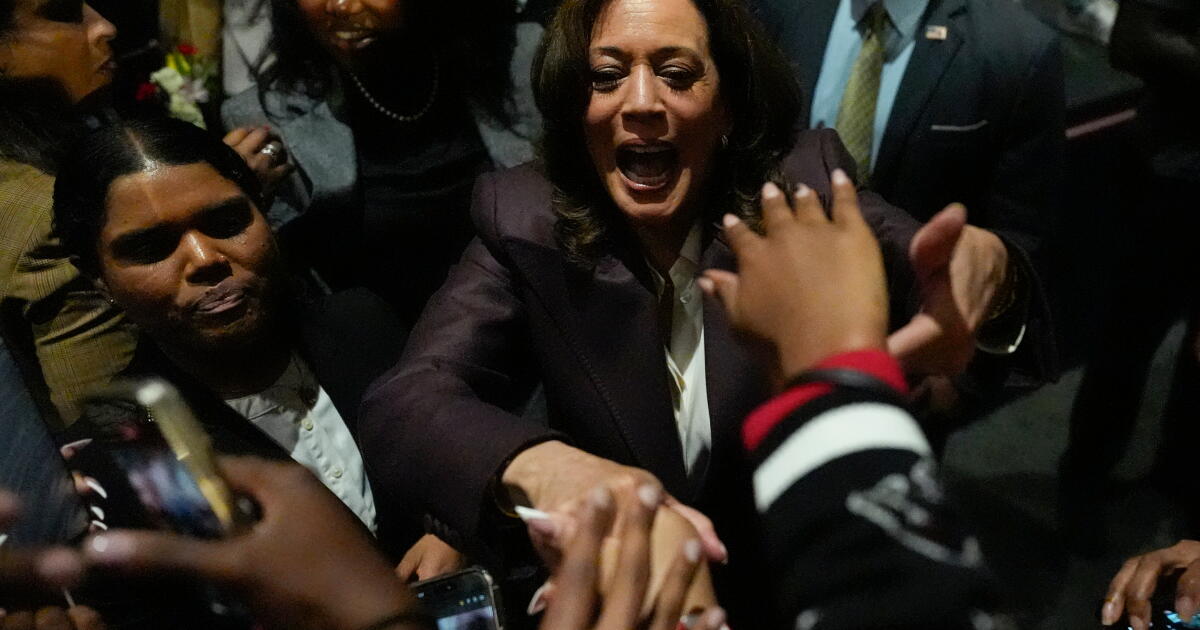
ATLANTA — Two years after Kamala Harris lost the presidential election to Donald Trump, she still delights Democratic donors and activists with jabs against him, saying the Republican is “callous, corrupt and incompetent” and calling him the “decorator in chief” for his White House renovations and gold adornments.
The former vice president also has plenty to say about what her party, the electorate and the country should do next as she also considers whether to run again.
“This is the moment where we turn that anger into action,” Harris said more than once during a busy schedule in the final stretch of the midterm campaign.
Harris campaigned for candidates across seven states, ending with a recent two-day visit to Georgia. It was, in part, the kind of nostalgic tour seen from Barack Obama and Bill Clinton — two-term presidents whose last campaigns are behind them — and the barnstorming from potential future contenders such as Govs. Gavin Newsom of California and Andy Beshear of Kentucky and Rep. Alexandria Ocasio-Cortez of New York.
As the first Black woman elected to nationwide office, Harris urged fellow Black Americans to “honor the ancestors” with their votes. She also said she has become unapologetically “transactional” by demanding more from politicians.
Harris, a U.S. senator and attorney general from California before joining Joe Biden on the 2020 ticket, also pushed fellow Democrats to govern aggressively and she called for “structural work” that she said was necessary to reinvigorate American democracy: Supreme Court expansion, statehood for the District of Columbia and Puerto Rico, and reconsideration of the electoral college.
“I think she’s hitting all the right notes,” said Melinda Johnson, a retired nurse who attended a Fulton County Democratic Party fundraising gala that Harris headlined in Atlanta.
Harris made it to early presidential primary states, including Nevada, New Hampshire and Michigan. She also went to Mississippi, not exactly a hotbed of presidential politics, on behalf of U.S. Senate candidate Scott Colom.
“The South is in play,” she said. “When Democrats invest in the South, we can win in the South.”
In Georgia, Harris delved into civil rights history as she accused the U.S. Supreme Court of “backdoor racism” with its decision to gut the Voting Rights Act and allow Republicans to redraw boundaries for congressional districts that now elect nonwhite lawmakers.
“Ruthlessness” is key, she said at the Democratic dinner in Atlanta. “Not ruthlessness in the sense of cruelty … but in our willingness to use our power to deliver on our commitments.” Democrats, she said, “can no longer let process stand in the way of progress.”
Throughout her stops, Harris nodded implicitly to her loss to Trump.
“You know we’ve been spending the last year and a half, so many of us, going through a range of emotions,” she told students. “Anger, depression, sadness, frustration, a sense of helplessness and powerlessness.”
Warning that Trump could try to meddle in Tuesday’s election, she echoed one of the president’s mantras to encourage people to vote.
“In this case,” she said at Atlanta’s Elizabeth Baptist Church, “we just need to turn out in really large numbers that would be too big to rig.”
Tribute specials are always a bit macabre. They exist, and are sometimes quickly thrown together, to honor and celebrate an artist who impacted so many. They are also ratings and advertising cash grabs that air on major TV and streaming platforms.
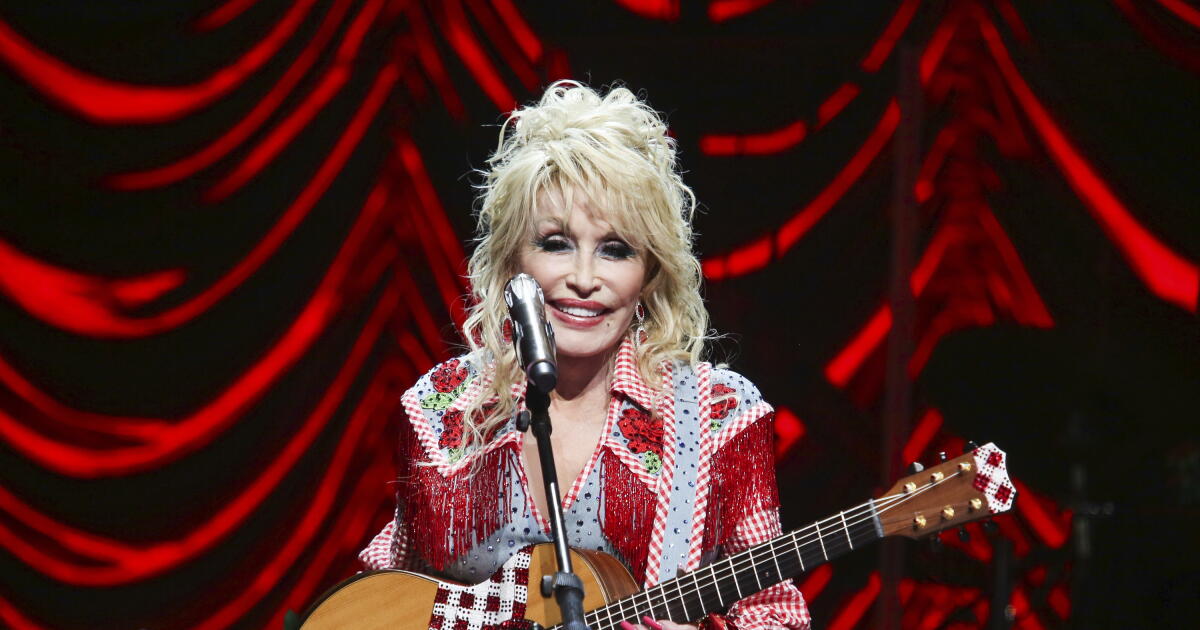
“CMA Presents I Will Always Love You: A Celebration of Dolly Parton,” which aired Wednesday on ABC and Disney+, was a lovely tribute to the music and cultural icon who died from cancer in August. It also was a missed opportunity. As music superstar Vince Gill said toward the end of the two-hour program, “this is not a memorial; but a celebration of an undeniable force of nature. Dolly was somebody that everyone loved: City, country, young, old.”
But most likely because the event was put on by the Country Music Assn. — which naturally wanted to showcase its own talent — it lacked a chance to really celebrate that she and her music could not be contained by one genre.
This isn’t just ironic because Parton’s most-known song — a song that was both the title of the special and the end performance of it — was made all the more famous by Whitney Houston, another iconic performer and also one who happens to have been a woman a color and who did not have any other direct ties to the Nashville scene. Dolly herself, famously, appreciated so many other kinds of music. After her passing, Eminem shared on social media a letter she’d written to him to congratulate him on his 2022 induction to the Rock & Roll Hall of Fame.
“She definitely didn’t have to take the time to do it,” he said as part of the post. “Even for a kid who mostly listened to rap music, she was an icon. A superstar in every sense.”
That said, from Reba McEntire opening the show with stories of just how kind her friend was in real life to a pre-recorded tribute from Bono where his Irish accent briefly attempts to slip into a Southern one while emulating her conversations with him, there were some touching and memorable moments. We’ve rounded up five of them here:
Reba McEntire, “He’s Alive”
Technically, the song is meant to be the apostle Peter singing about Jesus Christ’s resurrection. But McEntire’s take on Parton’s take of the Don Francisco gospel brought in the very modern-day sense of fear that so many parents and partners feel when their loved ones go out to dangerous jobs or even just leave the house for school or concerts.
Carrie Underwood, “I Will Always Love You”
There’s no denying that this is a perfect song and that Underwood is a once-in-a-lifetime voice. And credit must be due to Underwood for pulling off an undertaking where any little slip would be pounced on by critics. But staging her to stand in front of one of the many animatronic butterflies that lined the stage in such a way that it looked like she had angel wings was … a choice.
Carly Pearce and Kristin Chenoweth, “9 to 5”
Both of these women, especially Tony winner Chenoweth, are masters of stage presence. Their banter with each other before singing, not to mention their duet itself, embraced the liveliness and feminine feminist-ness of that song.
Ella Langley, “Jolene”
This was not the most powerful performance of the night, as Langley seemed happier to dance on the stage than belt out the music. And it didn’t boil with the grief and seething rage of a scorned woman the way that Beyonce’s 2024 cover did. But it was nice to see a symbolic baton be passed to the “Choosin’ Texas” singer.
Zac Brown, “Butterfly”
Brown’s backstory of writing, and then recording, what would become his 2025 duet with Parton came off as sweet and genuine. It also helped it not feel awkward or gratuitous when he and the producers opted not to recast the Parton half of the song and instead let her voice carry through the speakers.
LONDON — It’s the day after the London premiere of “Sense and Sensibility,” and its stars, Daisy Edgar-Jones and Esmé Creed-Miles, have shed the glamour of the evening before. Both are curled in chairs in an otherwise empty room in an upscale Hyde Park Corner hotel, modestly dressed in jeans, sneakers and casual tops. Each drinks from an enormous glass bottle of water rather than wasting time with a cup.
The spectacle of a blockbuster red carpet is familiar for Edgar-Jones, whose career took off after the 2020 limited series “Normal People” and has since included “Where the Crawdads Sing” and “Twisters.” But last night marked the biggest such occasion so far for Creed-Miles, best known for the Prime series “Hanna.”
“I was a bit nervous with my friends and family all there,” admits Creed-Miles, who plays the more emotional of Jane Austen’s Dashwood sisters, Marianne. “I’m very lucky because Daisy has done it before and she’s so cool about it.”
“Absolutely not,” says Edgar-Jones, who plays the sensible Elinor. She grins sheepishly. “If anything, I think I’m getting more nervous.”
Both actors understood the high stakes of remaking Austen’s 1811 debut novel, most famously adapted in 1995 by screenwriter and star Emma Thompson and director Ang Lee — a movie that became a generational touchstone nominated for seven Oscars. The new version, in theaters Friday, was adapted by Diana Reid and directed by Georgia Oakley, best known for her evocative 2022 feature debut, “Blue Jean.”
Oakley wanted to re-create the emotions of reading the book as a teenager.
“In comparison to other Austen novels, I remember it feeling quite wild,” Oakley says, speaking separately over Zoom. “I also wanted to capture the spirit of the two older sisters as the beating heart of the story. My memory of it was that their story was the main love story of the book.”
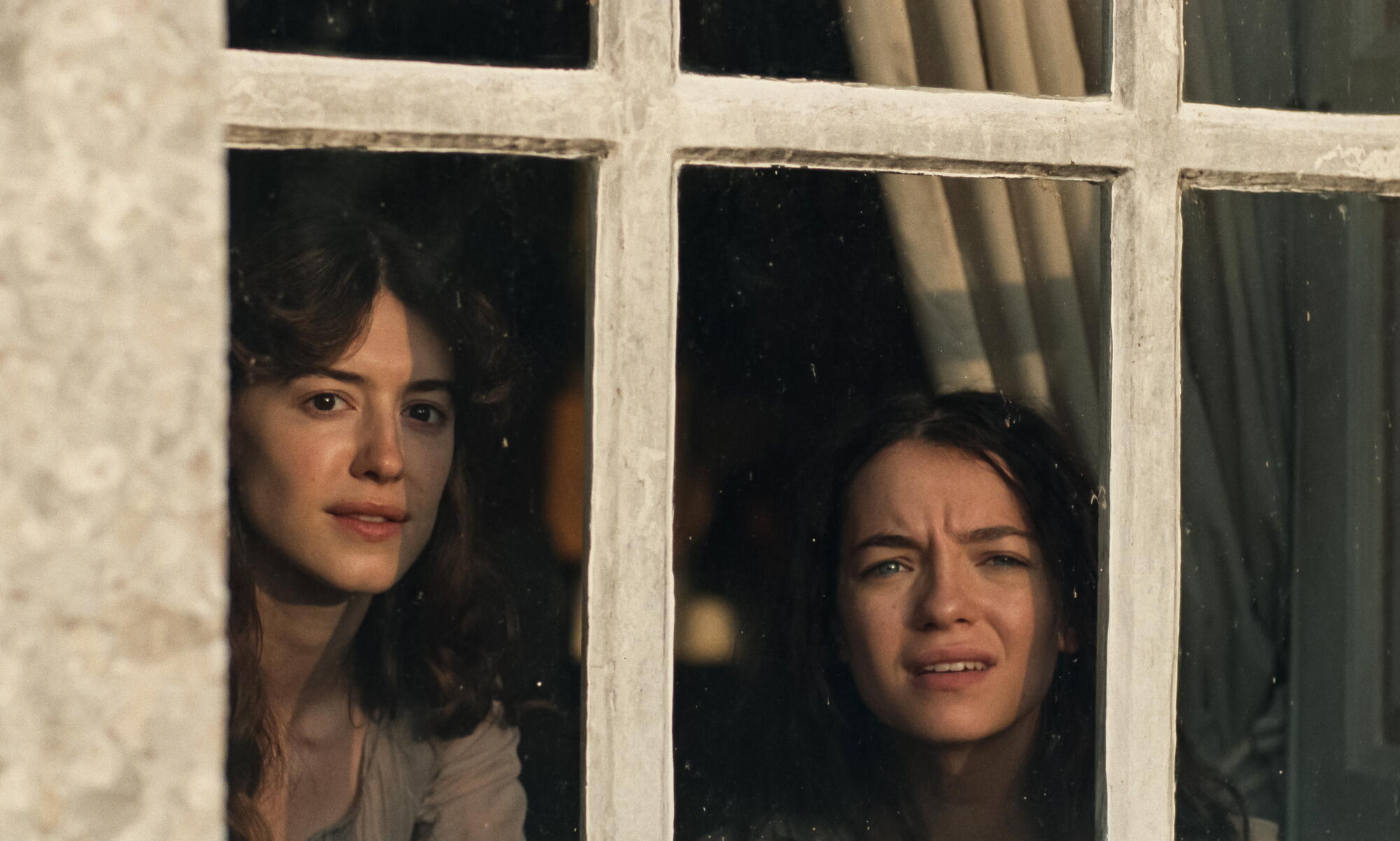
Daisy Edgar-Jones, left, as Elinor and Esmé Creed-Miles as Marianne in a new version of “Sense and Sensibility.”
(Focus Features)
Oakley’s “Sense and Sensibility” emphasizes that relationship between Elinor and Marianne. Although they approach the world differently, they find common ground in each other. It was essential to find the right actor for each role, but also to ensure there was both tension and chemistry between them. Edgar-Jones, 28, was cast first without an audition. There was never any question as to which sister she would play.
“I have played a significant Marianne before,” Edgar-Jones says in a nod to affluent, tortured outcast Marianne Sheridan, her role in “Normal People.” “And I love both characters, but I’m moving into my late 20s now. Elinor has a maturity and a wise older soul quality that I really liked and felt I was right to occupy. I have always been attracted to characters who don’t necessarily have the words to express how they feel.”
Oakley appreciated Edgar-Jones’ restraint. “She is able to show so much by seemingly doing very little,” Oakley says. “Elinor has a lot on her shoulders, so I was looking for an actor who could give a sense of that from the very beginning.”
Creed-Miles, 26, faced a more uphill climb to become Marianne. She describes her first audition as awful.
“It was really bad,” she says. “Maybe I was nervous. I can be a bit of a mess. But someone saw something in me, I guess, and they called me back. This time I worked my ass off and spent days preparing the scenes. They liked that audition enough to bring me in for chemistry reads with Daisy and some of the boys.”
“There’s an earthy, undone nature to the world Georgia made,” Edgar-Jones says of director Oakley’s take on Austen.
(Erik Carter / For The Times)
“The first audition didn’t go exactly to plan,” says Oakley, who didn’t expect to see the actor again. “But [the second time] I was so moved by Esmé performance. We have this idea of how we think people are supposed to speak in a period drama, and Esmé seemed to not be affected by any of that.”
Edgar-Jones and Creed-Miles had previously worked together on the 2018 drama “Pond Life,” which was an asset going into “Sense and Sensibility.”
“It’s a summer I have never forgotten,” Edgar-Jones says of the experience, her first film role. “I met Esmé and we fell in love. We watched a lot of ‘Love Island.’ And then COVID happened and we weren’t reunited until our chemistry read.”
Although they hadn’t completely stayed in touch, there was a natural rhythm between them. “We had so much history and nothing was ever overly discussed,” Edgar-Jones adds. “It was instinctual. That level of intimacy takes time to develop and the fact that I already had years with Esmé meant that it felt very lived in.”
“Sense and Sensibility” was filmed entirely on location around England, primarily in the sweeping countrysides and dramatic coasts of Devon and Dorset. Oakley wanted to emphasize nature and to show how the Dashwood women’s emotional landscapes evolved alongside the shifting landscapes around them, both in the countryside at Barton Cottage and in the more confining social landscape of London. There is a naturalistic aesthetic to the film, augmented by the locations, the costumes and the hair and makeup design. The characters wear muted, sweeping gowns, their hair often loose.
“There’s an earthy, undone nature to the world Georgia made,” Edgar-Jones says. “Sometimes there’s distance you can sometimes get from watching a period drama because obviously we no longer wear corsets and bonnets and ride in horse-drawn carriages. But even though this feels very much of the Regency time, it also feels very close.”
“I loved how authentic everything felt,” Creed-Miles adds. “It didn’t feel frilly for the sake of itself. The clothes helped me find a sense of Marianne. I needed the costumes to close that gap.”
“We wore no makeup, even to the point where sometimes I’d put on some lip balm and Georgia would be like, ‘Take it off,’ ” Edgar-Jones recalls.
“The characters started to feel like real people in my life who I knew,” says Creed-Miles. “It was almost like a split personality.”
(Erik Carter / For The Times)
Creed-Miles says the unbuttoned aesthetic felt more true to the time, even if some commenters online have claimed it’s not period accurate.
“We don’t have depictions of women’s internal lives in the way that we do now,” she says. “When you look at a portrait there’s a composure that’s not the same as having a phone picture of someone when they’re getting out of bed in the morning.”
Oakley fills the screen with a palpable yearning. The camera often lingers over the actors’ faces, revealing Elinor’s inner turmoil and Marianne’s dramatic heartbreak. For many scenes, Oakley asked the cast to do silent takes.
“We wanted to tell a story that had space for some quieter moments,” the director says. “The actors were free to speak or make noises, but they couldn’t say the words of the scene.”
“In making this, I realized Elinor isn’t devoid of emotion,” Edgar-Jones says. “She’s full of it, but she’s learned how to govern it. Realizing that she was an extraordinarily passionate person and not a stone was really important for me. By the end, I felt completely marinated in it.”
“The characters started to feel like real people in my life who I knew,” Creed-Miles agrees. “It was almost like a split personality.”
“Circumstances have changed for young women quite drastically over the past 200 years,” director Oakley says. “But the fundamental contradictions around what it means to be a young woman haven’t changed nearly as much as we would like to think.”
(Erik Carter / For The Times)
Oakley’s interpretation of “Sense and Sensibility” has a wistful, almost Brontë-like quality. You can feel each character’s pain and joy and hopefulness. At the premiere, the audience audibly gasped and cheered, even though Austen’s story is well known to many. Oakley didn’t want to make her film overly contemporary, but she feels the story resonates today because Austen is so timeless.
“Circumstances have changed for young women quite drastically over the past 200 years,” Oakley says. “But the fundamental contradictions around what it means to be a young woman haven’t changed nearly as much as we would like to think. There’s this enormous gap between what we tell young women that they can reasonably expect from their lives and what the world is prepared to offer them.”
Creed-Miles admits that she’s recently fought with someone on Instagram about whether Austen was a feminist.“They didn’t have that terminology back then, but she was a rebellious author in that she used these sociocultural structures to explore the trials and tribulations of femininity,” Creed-Miles says. “It was really important to Georgia that we kept that alive. Reading Austin as an adult, I have so much respect and admiration for the themes she was exploring with a really deft hand. It’s never rammed down your throat.”
Edgar-Jones, an Austen fan, agrees that she captured a truth about the human experience. That’s what allows the author’s work to be retold and reimagined over decades.
“The joy of adaptation is that every new person who says these words will bring a piece of themselves and give it new meaning,” Edgar-Jones says. “And every time we explore something again, it will be colored with the context of today. Great art, like this, should be brought to life again and again.”
It has been five years since Michael Che’s last stand-up special. Of course, he has a good excuse, being busy much of the year co-writing and performing “Weekend Update” on “Saturday Night Live,” and he also wrote and starred in two series of his acclaimed sketch comedy show, “That Damn Michael Che.”
But he feels more like himself on the stage, he said in a recent interview. “I really miss stand-up when I’m not doing it because I can really let loose on stage and say all the words I want,” he says.
In his new Netflix hour, with the pointed title, “Michael Che: Shot in Minnesota,” he wastes no time in getting into it, opening with a series of jokes saying a lot of words about Charlie Kirk’s murder: He believes that it happened because “straight white conservative Christian men are being silenced.”
He clearly loves poking at people’s sensitive spots. His favorite joke, he says onstage, is, “Men want anal sex the way women want a sensitive man. It just sounds nice… until you see them crying.”
He talks about race (“I don’t care what color you are — if you’re rich, you’re white”) and goes after President Trump and people who try to police language, but he also talks up how much fun he had at a Pride parade and about growing up poor, with his mother cleaning houses to help make ends meet. In our interview done via Zoom (without a camera on) while he was stuck in traffic on the way to 30 Rockefeller Center and then in an elevator and then in the SNL offices, he discussed it all.
This interview has been edited for length and clarity.
Did anyone in your family shape your humor and your storytelling?
My family has a different kind of humor. It’s a little meaner, if I’m being honest with you.
I’d like to see Thanksgiving at your house.
A lot of people would. It’s kind of crazy.
But the one person was my grandfather who was a pastor. He knew how to hold court and tell a story and he was a funny guy. He could be silly or absurd or dry. So maybe there’s a lot of him in what I do. But he did it week after week with different material.
Speaking of week after week, which is closer to your real self, the “Weekend Update” persona or your stand-up persona?
The stand-up is the most me; “Update” is a job and it’s a character. On stage you get to hear more nuances — on “Weekend Update” it’s a short segment, and I’m splitting time with Colin and guests. There are more needs being met than just mine. I say that respectfully, but there are things we have to touch on that I wouldn’t in my personal work and there are things other people write so it’s never all me.
I can listen, I can build, I can take you on a journey, I can make you think this is a bad joke, but it’s actually a good joke. I can make you think it’s a dirty joke, but it’s a clean joke.
I miss doing stand-up full time, but maybe that’s only because I don’t do it full time. But maybe if I did it full time, I’d miss doing it part time. Getting this hour together for the special, Lorne [Michaels, SNL’s iconic boss] was nice enough to let me go on the road even during show weeks, and he didn’t ask as much of me this past season. He was really kind, and I really appreciate it.
Colin Jost, left, and Michael Che on “Weekend Update” on “Saturday Night Live” on Saturday, March 11, 2023. Che has been doing “Weekend Update” for 12 years, as has Jost.
(Will Heath / NBC)
Your stand-up persona is definitely more thoughtful and open-minded than your “Weekend Update” one. Are you conscious of revealing yourself onstage or just thinking about what’s funny?
They tell you in the criminal world that the longer you talk to the police the more chances there are you’re going to reveal something. And I feel like it’s true for comedy, too. A lot of the stuff that I do is just thoughts that we haven’t said out loud and explored yet. I start with the thought, and if I can get a joke, a one liner out of the thought, that’s then I start to explore it onstage. I only write one line because I can’t write in a vacuum. I need to be able to listen to see what an audience gives me; otherwise, I only know how it makes me feel.
You open this special with that riff on Charlie Kirk’s murder. Your audience is not filled with Turning Point members, but people still may be hesitant to laugh. Are you starting there to challenge yourself or challenge your audience, or is it just because you think it’s funny?
I think all three of those things can be true. Those jokes are funny, but it is hard to laugh at. That’s the sort of feat I seek to pull off, to make people laugh about things that they’re not necessarily expecting to hear without being gross and gratuitous. I did those jokes on Shane Gillis’ show and his audience reacted favorably.
None of this is to make any kind of larger point other than I want you to laugh at the things that horrify you. It’s just horrifying on the surface so people think you can’t make a joke about it. People are afraid of the attempt. And I say, “Well, what about this one?” I do like that.
Then you move on to the R-word and the N-word. Are you simply pushing buttons for laughs or pushing people to think about their own biases and preconceptions about language and their political sensibilities?
I don’t want to let words dictate my next emotions. I want you to put the responsibility of self-control on yourself. People are going to say nasty things literally just to get a rise out of you, and it’s up to you to decide how you’re going to handle that. Also, I’m trying to be consistent. If I start with jokes about Charlie Kirk, but then somebody wants to call me the N-word, I can’t say, “Well, that’s crossing the line.” Right now there ain’t no more lines. We’re in a culture war and bombs are going to fly. So let’s see who’s got the stomach for it.
When you refer to a guy buying you drinks in a bar as “visibly gay,” the audience gets uncomfortably quiet in a way. How do you feel when they hush over a line like that?
With a lot of these jokes it’s like dribbling a football, you just don’t know where it’s going to land. But I like putting people on their heels and being a Black comic of my generation, they expect the joke to go one way because they’ve heard the jokes that come from others so they’re apprehensive. I expect them to be apprehensive and then talk them through it. When the joke lands differently with a punchline they’re not expecting, they’re pleasantly surprised.
Who doesn’t love a Hollywood ending — or a beginning?
The only guide you need for fall entertainment.
As summer gives way to the inevitable grunts of awards-season jockeying, how wonderful it is to crawl back into the head of our favorite portal John Malkovich, returning with his most complex work in years in “Wild Horse Nine” (hitting theaters Nov. 6). Meanwhile, Jordan Firstman made his name with viciously funny online “Impressions” and a spotlight-stealing turn on HBO’s “I Love LA,” but did you know he was Trojan-horsing in a triple threat? “Club Kid” (out Nov. 6) marks the arrival of a serious screenwriter, director and star making a feature debut of rare wisdom.
Read on for features about those two movies, and if you’d like more options, here are 17 fall titles worth getting excited about in the coming months.
‘Resident Evil’ (Sept. 18)
Austin Abrams in “Resident Evil,” directed by Zach Cregger.
(Sony Pictures Releasing)
Milla Jovovich brought stony-faced supermodel moxie to 2002’s underrated first film and her subsequent franchise was a mixed bag. But there’s a whole global fandom of obsessives who feel that none of these movies truly got the crux of what made Capcom’s original games such an all-night fixation. One of those people turns out to be filmmaker Zach Cregger, who, between “Barbarian” and his Oscar-winning “Weapons,” can now write his own ticket. As unlikely as it seems, this reboot is a project he has spent a considerable amount of his newfound Hollywood capital pursuing and you have to love him for it. Apocalyptic Raccoon City and a viral zombie outbreak are sure to figure, but also, given the Cregger of it all, spooky subterranean passages and confident performances, this time from Austin Abrams and Paul Walter Hauser. — Joshua Rothkopf
‘Digger’ (Oct. 2)
Tom Cruise in the movie “Digger.”
(Warner Bros. Pictures)
Tom Cruise has been busy these last 15 years, starring in five “Mission Impossible” movies, reboots of “The Mummy” and “Top Gun” and a handful of other would-be blockbusters best forgotten. In nearly all of them, he plays a version of the unstoppable Cruise persona. And that’s a performance for sure. But we haven’t seen him play a real character in a long time, which makes his new movie my most-anticipated of the fall, even if the trailer makes it look like it could be a tonal train wreck. Billed as a “comedy of catastrophic proportions,” “Digger” has Cruise playing a Texas oil man charged with saving the world from an environmental disaster that he appears to have caused. The writer-director, Alejandro González Iñárritu, is a five-time Oscar winner, but not a filmmaker known for his humor. That makes the trailer’s absurdist tone and visual style intriguing (and also concerning). Iñárritu clearly loves “Dr. Strangelove,” as do we all. Fingers crossed. — Glenn Whipp
‘Fjord’ (Oct. 9)
Sebastian Stan and Renate Reinsve in the movie “Fjord.”
(Neon)
Winner of the Palme d’Or at this year’s Cannes Film Festival — the second for writer-director Cristian Mungiu and an astonishing seventh in a row for distributor Neon — this is a gripping morality tale specifically designed to make viewers question their instinctive reactions no matter where they sit on the political spectrum. A conservative religious couple (Sebastian Stan and Renate Reinsve, both giving quietly riveting performances) relocate from Romania to a small village in Norway and soon find that the outwardly progressive locals are less than welcoming. The Gheorghius’ five children are taken into protective custody amid allegations of abuse and soon enough, it seems that their beliefs and values are being put on trial. Fans of “Anatomy of a Fall” (another Neon title) will appreciate the detailed glimpse inside another international legal system, as the courtroom scenes are full of tension, emotion and surprise. — Mark Olsen
‘The Social Reckoning’ (Oct. 9)
Jeremy Strong as Mark Zuckerberg in the movie “The Social Reckoning.”
(Leah Gallo / Columbia Pictures)
It’s been 16 years — an eon in internet time — since David Fincher made gripping drama out of coding, depositions and bruised male egos in “The Social Network.” Facebook’s story has since then taken a far darker turn: Russian troll farms, growing concerns about worsening teenage mental health and election misinformation. Aaron Sorkin, who scripted the first film, both writes and directs the follow-up, drawing on internal Facebook documents that whistleblower Frances Haugen (Mikey Madison) leaked to Wall Street Journal reporter Jeff Horwitz (Jeremy Allen White) for the paper’s “Facebook Files” investigation. In a particularly inspired bit of casting, Jeremy Strong succeeds Jesse Eisenberg as Mark Zuckerberg. After playing Kendall Roy, a would-be mogul desperate to seize power in HBO’s “Succession,” and Roy Cohn, a fixer who wielded it ruthlessly in the Trump biopic “The Apprentice,” Strong may have been preparing for Zuck all along. That alone might be reason enough to log back onto Facebook. — Josh Rottenberg
‘Sense and Sensibility’ (Oct. 16)
Daisy Edgar-Jones, left, and Esmé Creed-Miles in the movie “Sense and Sensibility.”
(Focus Features)
You come to “Sense and Sensibility” for sisterly love, for Edward and Elinor, for wit and cleverness, for nosy neighbors, for passionate longing, brooding, Byronic suitors and happily-ever-afters. The 1995 film adaptation of the Jane Austen classic, directed by Ang Lee with Emma Thompson starring and writing the screenplay, was damn near perfect, setting a high bar for any and all comers. So it’s with pleasure (and relief) that I can report that the latest version, directed by talented British filmmaker Georgia Oakley, will delight Janeites and anyone else who appreciates a smart, charming costume drama. The film faithfully adheres to the text, foregrounding the relationship between the Dashwood sisters, the passionate Marianne (Esmé Creed-Miles) and the pragmatic Elinor (Daisy Edgar-Jones). It’s fresh without needing to lunge for all the compulsively shocking aesthetics that undid Emerald Fennell’s “Wuthering Heights” earlier this year. Oakley crisply delivers everything you want, everything you need. — G.W.
‘Whalefall’ (Oct. 16)
Austin Abrams in the movie “Whalefall.”
(20th Century Studios)
If you’re a sucker for that “Pinocchio” sequence in which Geppetto gets swallowed by a whale, you’ll dig Pulitzer Prize-winning novelist Daniel Kraus’ “Whalefall,” a drama about a Californian scuba diver stuck in the stomach of a 60-ton behemoth. That’s bad enough. Worse, the kid’s oxygen tank is running low. One part survival quest, one part ghost story, the narrative centers on the young man hallucinating his abusive dead father, who advises him on how to escape. I devoured the book in one weekend, but couldn’t imagine how this claustrophobic nightmare could possibly translate to film. Director Brian Duffield (“Spontaneous,” “No One Will Save You”) has braved the challenge. Austin Abrams plays the trapped swimmer; Josh Brolin is his seafaring dad. It’s a reunion for two of the leads in last year’s “Weapons.” Steel yourself for slimy bile, sticky emotions and wet tears. — Amy Nicholson
‘Clayface’ (Oct. 23)
Tom Rhys Harries in the movie “Clayface.”
(Warner Bros. Pictures)
Even comic-book obsessives will mention a dozen other DC villains before digging out Clayface, the nom de gloop of a disfigured actor transformed into human Play-Doh. But after the animated series “Harley Quinn” stretched the character into a squishy, vulnerable showboat, I’m curious to see what he looks like in the hands of James Watkins, director of the mischievous 2024 thriller “Speak No Evil.” Watkins has a vicious sense of humor and the casting of Welsh theater actor Tom Rhys Harries in the title role is a signal that the film might be a performance showcase in the vein of Tom Hardy’s roiling split-personality turn in “Venom.” Early glimpses of footage at CinemaCon hint that the script by Mike Flanagan and Hossein Amini is most hyped to mix the superhero genre with icky body horror. Apparently, there are images in which Clayface doesn’t even have a face. — A.N.
‘Fatherland’ (Oct. 23)
Sandra Hüller and Hanns Zischler in the movie “Fatherland.”
(Agata Grzybowska / Mubi)
Paweł Pawlikowski has made a specialty of looking at European history from close range: the aftermath of the Holocaust in the Oscar-winning “Ida” and the Iron Curtain era in “Cold War.” Eight years after the latter, Pawlikowski returns with this spare black-and-white drama, for which he left Cannes with a directing honor. Hanns Zischler plays author Thomas Mann, the Nobelist and critic of Hitler, returning to Germany in 1949 after 16 years in exile, with his daughter Erika (Sandra Hüller) behind the wheel. Their journey takes them through a ruined country eager to reclaim one of its greatest writers without dwelling too much on why he fled. After the moral minefields of “Anatomy of a Fall” and “The Zone of Interest,” Hüller seems ideally cast as Erika, a writer and committed anti-Nazi unlikely to let her father, or the country around him, off the hook. — J. Rottenberg
‘Klara and the Sun’ (Oct. 23)
Jenna Ortega in the movie “Klara and the Sun.”
(Sony Pictures)
When novelist Kazuo Ishiguro published “Klara and the Sun” in 2021, a book narrated by an artificial intelligence still felt safely like science fiction. Five years and one AI boom later, the future has arrived early. Jenna Ortega plays Klara, a solar-powered “artificial friend” purchased as a companion for an ailing teenager (Mia Tharia) whose mother is played by Amy Adams. Klara observes the humans around her with extraordinary attentiveness but only a partial understanding of their behavior, gradually forming her own ideas about love, loneliness and what makes one person irreplaceable to another. Taika Waititi, whose movies have ranged from the antic Nazi satire “Jojo Rabbit” to the candy-colored superhero spectacle of the “Thor” films, is an unexpected match for Ishiguro’s quiet, melancholy story. But with people already turning to chatbots for companionship, the film’s central question no longer feels quite so theoretical: What happens when the machine stops feeling like a machine? — J. Rottenberg
‘Wicker’ (Oct. 23)
Alexander Skarsgård and Olivia Colman in the movie “Wicker.”
(Kristof Galgoczi Nemeth / Black Bear Pictures)
Most of the questions you have following the recent trailer that sent the internet into a tizzy are in fact answered by seeing the movie itself. Set in an indistinct Mitteleuropean village of an uncertain era, the story follows an unmarried fisherwoman (Olivia Colman) who asks her friend, a master basketweaver (Peter Dinklage), to make her a husband. And does he ever, sending over a mass of reeds fashioned into Alexander Skarsgård. Their little community goes berserk, full of curiosity and more than a hint of jealousy at their loving and compatible albeit unconventional union. Adapted from an Ursula Wills-Jones short story by the husband-and-wife writer-director team of Alex Huston Fischer and Eleanor Wilson, the film never overlooks how absurd its premise is, but also finds tender emotional notes within it as well. “Wicker” is a wise, warm allegory examining community and relationships — and why we need the things we do. — M.O.
‘Godzilla Minus Zero’ (Nov. 6)
A scene from the movie “Godzilla Minus Zero.”
(2026 TOHO)
Three years ago, the post-World War II period thriller “Godzilla Minus One” was a monster smash, earning the 72-year-old franchise its first Oscar win and biggest box office haul to date. (What, you thought the radioactive lizard wouldn’t come back?) Takashi Yamazaki’s sequel — the 39th Godzilla movie, if you’re counting — takes place in 1949 Tokyo after disgraced kamikaze pilot Kōichi (Ryunosuke Kamiki) has begun to rebuild his life with new wife Noriko (Minami Hamabe). In still-traumatized Japan, simply having hope for tomorrow is brave and foolhardy with an angry kaiju sulking in the Pacific. Yes, Godzilla exploded in the last film. Since when has that mattered? “Godzilla Minus Zero” has giant shoes to fill, but personally, I couldn’t care less if the green guy wins another Academy Award as long as the multiplex enjoys a shivery blast of his atomic breath. — A.N.
‘Paper Tiger’ (Nov. 13)
Adam Driver in the movie “Paper Tiger.”
(Neon)
A favorite of international festival programmers and film critics for decades now, James Gray has never quite had his breakthrough with mainstream audiences. That may finally change with his latest, which finds him again exploring the rich, complicated bonds of family amid the betrayals and uncertainties of New York’s outer-borough criminal underworld in a way that feels totally fresh and new. Miles Teller is a family man drawn into a business scheme by his ex-cop brother (Adam Driver) that puts them both afoul of the Russian mob in a story set in Queens in the 1980s. Scarlett Johansson plays Teller’s wife. All three give what are easily among their career-best performances as Gray steadily ratchets up the tension with a master’s hand, melding the crime thriller with domestic drama in a distinctive way. With a tremendous payoff in its devastating climactic sequence, this feels like the film Gray has been building toward his entire career. — M.O.
‘Elsinore’ (Nov. 20)
Andrew Scott as Ian Charleson in the movie “Elsinore.”
(Anthony Dickenson / Focus Features)
The Scottish actor Ian Charleson would forever be an Olympic runner on the beaches of “Chariots of Fire,” head tipped back in a kind of spiritual ecstasy. The role brought him international acclaim, but there weren’t enough of them, and a secret battle with HIV and AIDS took its toll. But what Charleson didn’t know was that, near the end, he would embark on the run of his life, performing a legendary Hamlet onstage in a race with death. Andrew Scott carries the whole of this exhilarating biopic on his knitted brow, diving deeply into the metaphysical darkness of Shakespeare’s text, into the rituals and camaraderie of actors and, ultimately, into the defiance of an artist who only wants to disappear once more into his art. Inexplicably overlooked for “All of Us Strangers” and “Blue Moon,” Scott is just now arriving at a kind of effortless humility, dazzling yet approachable, that puts him in the company of the all-time greats. — J. Rothkopf
‘Josephine’ (Nov. 20)
Mason Reeves in the movie “Josephine.”
(Sumerian)
If we are to have things like a “Sundance Film Festival” or “independent cinema,” it should be to support and nourish movies like Beth de Araújo’s powerful San Francisco-set thriller, about a violent sex crime witnessed by an 8-year-old, who is altered by the experience but then called upon to be a courtroom voice in the world of adults. Everyone who has come together to make this tricky but meaningful project seems to be operating on a higher plane: For Channing Tatum, playing a dad increasingly out of his depths, it’s an opening door to the kind of complex roles he has earned from being a dependable goof. For Gemma Chan, as a parent dealing with the unthinkable, the film is a promise fulfilled. But for young Mason Reeves, imbuing the title character with an evolving mystery that suggests a prodigy, “Josephine” is a revelation. — J. Rothkopf
‘Minotaur’ (Nov. 20)
A scene from the movie “Minotaur.”
(Mubi)
The whispers were fierce at a recent Academy Museum screening of Adrian Lyne’s windy erotic thriller “Unfaithful” as plugged-in attendees looked for points of similarity with Andrey Zvyagintsev’s sleek domestic drama, one that dominated this year’s Cannes conversation. Both movies are remakes of Claude Chabrol’s 1969 “The Unfaithful Wife,” but Zvyagintsev kicks the concept up to expert level, turning an affair and its brutal repercussions into a referendum on Russia’s new-money detachment: eating, lying and screwing with the Ukraine war out of mind. Was Zvyagintsev able to shoot in Russia itself? Of course not — he needed to film in look-alike Latvia. That’s how dependably infuriating he is to the authorities. But it’s a miracle he’s shooting anywhere at all: A case of long COVID, a coma and a yearlong hospital stay almost snuffed out one of the boldest filmmakers on the planet. His return to action is a grand piece of fortune. — J. Rothkopf
‘The Further Mis-Adventures of Cliff Booth’ (in Imax Nov. 25; on Netflix Dec. 23)
Brad Pitt and Leonardo DiCaprio in a scene from 2019’s “Once Upon a Time … in Hollywood.”
(Andrew Cooper / Sony Pictures Releasing)
Three years ago, Quentin Tarantino teased that his 10th and final film would be “The Movie Critic,” centered on a film reviewer for a 1970s porno rag, but he scrapped it and pivoted to a sequel featuring Brad Pitt’s stuntman from “Once Upon a Time … in Hollywood.” Tarantino didn’t want to direct it, though, preferring to challenge himself with something more ambitious for his sign-off. So he handed the screenplay — an “unwieldy thing,” he calls it — to David Fincher, tasking him to shrink it down. And that’s how we’ve arrived at a collaboration between two defining American filmmakers who came to prominence in the ’90s and share an interest in dark impulses that often turn violent. How Fincher will meld his clinical precision to Tarantino’s yo-gabba-gabba gonzo spirit is the movie question of the season. — G.W.
‘All of a Sudden’ (Nov. 25)
Tao Okamoto, left, and Virginie Efira in the movie “All of a Sudden.”
(Neon)
It still feels like a magic trick, the way Japan’s Ryusuke Hamaguchi turned “Drive My Car,” a three-hour movie about grief and chauffeuring (among other subjects), into a 2022 Oscar juggernaut. The director is back to remind you of everything you loved about that one, plus he’s got even more in the trunk. Many filmmakers are indulged with long running times; few of them make them as worthy and unnoticeable as Hamaguchi. He’s also in a class with Richard Linklater and virtually no one else when it comes to the lingering, evolving conversation, the kind that drifts into flirtation, debate and something soul-revising. Here it’s between two women (Tao Okamoto and the emotionally reverberant Virginie Efira) who, over the course of a walk along the Seine as dusk turns to night, find themselves bonded by something unexpected. “All of a Sudden” has death on its mind, but also how we live and care for each other en route to that destination. It’s a conversation we all need to have. — J. Rothkopf
Like any other building from 1971, or a democracy created in 1776, the Kennedy Center could use some attention and possibly some structural repair. But I was a vice president at that arts center in Washington, and I can tell you that maintenance is almost certainly not why it closed its doors last month.
Officially, it’s closed because a section of the Grand Foyer ceiling gave way in a storm, plaster crashing to the floor, and the building needed to be shut down for safety. The Justice Department itself has argued in court filings that there is no real emergency requiring the closure. The board, meanwhile, has approved a quarter-billion-dollar renovation plan, put together without competitive bidding, while the president muses openly about tearing the building down altogether if his own name isn’t affixed to it. This administration is effectively bulldozing arts infrastructure in an attempt to abolish an infrastructure of the imagination.
I watch all of this from the outside now. When the new “leadership” took over last year, my team and I were among the first let go. My department worked on free public programming, on creative equity, on cross-sector community development and on measuring the social impact of art. That we were among the first out the door probably tells you everything you need to know about who was put in charge of the place.
As an American, as an artist and as a former member of its labor force, I understand that the Kennedy Center is more than a building. It is a living memorial to a president who was taken from us too soon, a man who had the audacity to aim for the moon before the science existed to get us there. To honor that kind of visionary, this country built a center for the creative impossible, and gave it his name.
And true to that name, my job at the Kennedy Center was to investigate the correlation between the arts economy and the economy of civic aspiration. As a team, we believed that inspiration erodes apathy and yields empathy. The building is a container of federal infrastructure, but the arts that imbue the Kennedy Center make the argument that inspiration itself is part of the infrastructure of our democracy. An arts center is built to ask: “What are the conditions necessary to dream together in public?”
Who, if not artists, are the authors of the public imagination? When a baby is born, or your daughter gets married, do you read a piece of legislation to commemorate the occasion or do you quote a poem, or dedicate a song? Who, if not artists, might light the path to a post-fear economy?
So why invade an arts center? What could possibly be gained by shuttering a national citadel for creative excellence? How perverse that a president whose policies have underfunded education and the arts would gut a national sanctuary for curiosity, and then demand that his name be emblazoned on the shell of what was. This president has used executive orders to intimidate artists, banned writers and journalists, sabotaged arts education, created oppressive red lines within the National Endowment for the Arts and threatened philanthropic organizations that fund arts and culture, and then he turns around and wants his name on our national cultural center.
When I worked there, the Kennedy Center wasn’t perfect. No institution is. But the business was viable, the staff was talented and reliable, and the work we made together would, often enough, touch something close to the sublime. Our job, like those of so many arts workers across the country, was to activate creative magic in service of social cohesion and well-being.
This is what gets lost in the noise of storms and lawsuits and renovation budgets: Entertainment is everywhere, but inspiration is rare. Sometimes you are sitting in a dark theater with strangers and the right note gets struck, and you hear it with your ears but you feel it somewhere else entirely. In the gut and heart. And the person next to you, a stranger, feels it too, at the exact same moment. You can practically feel the room change. All that magic can happen in one theater, and the Kennedy Center has nine of them. If a solar panel uses the energy of the sun to power a building, an intentionally run theater can use the energy of its inspired audiences to power a city.
Art holds memory. It also holds the horizon, the sense of what a country could still become. Patriotism as enacted by the creative community takes the American experiment seriously enough to question, examine, remember what we’ve forgotten and catalyze collective American dreaming. That is what the Kennedy Center was named for: a president who dreamed of a country unafraid of beauty, unafraid of grace.
Thankfully, America’s creative labor force tirelessly stewards that sense of creative provocation and patriotic inquiry. It is alive everywhere, including in the work of individual artists such as Carrie Mae Weems or in the work of collectives such as For Freedoms and their “America, the Beautiful” initiative.
We, the chronically underwhelmed citizenry of the United States, can’t afford one less pillar of creativity. We should be fighting to reconstitute any and all artistic institutions with an eye toward an inspired future.
Marc Bamuthi Joseph, a spoken-word artist and actor, was vice president for social impact at the Kennedy Center.