senator

GOP Sen. Bob Packwood of Oregon dies

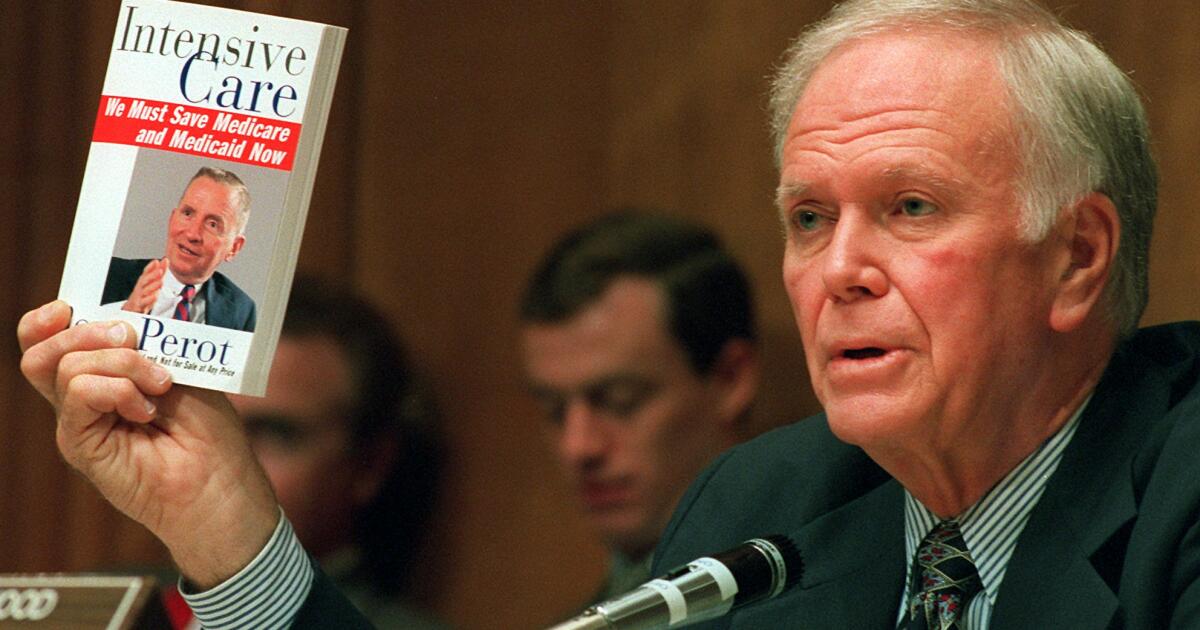
Former Sen. Bob Packwood, a moderate Oregon Republican whose reputation as a champion of women’s rights was tainted late in his career by a sexual harassment scandal, has died. He was 93.

Packwood’s death Saturday was announced in an obituary sent to media outlets by his family. The release didn’t include additional details.

As the scandal unfolded, Packwood initially refused to quit the chamber in which he had served for 27 years, saying he didn’t want to be remembered only for that.

Before the #MeToo era, Packwood stood out as an example of private behavior undermining a man’s public image. He previously had been praised by Planned Parenthood and others.

The great-grandson of a member of the 1857 Oregon Constitutional Convention, Packwood established himself as a social moderate and fiscal conservative who often voted across party lines. He considered running for president in 1980.

Elected to the Senate in 1968, Packwood was best known as the leading Republican advocate of abortion rights — at a time when the position had bipartisan support — and was widely admired by women’s groups throughout the country until the Senate Ethics Committee launched an investigation into the allegations of sexual and official misconduct in 1993.

More than two dozen women, former employees and acquaintances, accused him of making unwanted or uninvited sexual advances.

The allegations remained the target of an ethics inquiry that widened to include other alleged acts of official misconduct. He resigned in September 1995, and went on to start a lucrative lobbying business in Washington.

Democratic Sen. Ron Wyden, who replaced Packwood in 1996, said that although he should be praised for his record on abortion rights and tax reform, how Packwood treated women overshadows it all.

“His horrible history as documented in his own diaries will forever overshadow that public record. Simply put, historians’ first line about Bob Packwood must include those women who he abused and assaulted for years and years,” Wyden said in a statement.

As chair and then ranking Republican on the Senate Finance Committee, Packwood was a master of cutting deals and forging compromises needed to pass tax legislation through Congress. He was most proud of the lead role he played in a sweeping tax reform of 1986 that lowered the top income tax bracket and eliminated many itemized deductions.

Over his career, he was described as a blunt, independent, outspoken politician who was a boat-rocker, loose cannon, skilled partisan, and — for most of his career — political survivor.

“I think they probably all ring true,” Packwood told the Associated Press in December 1992.

“I would like to think that I am nobody’s lackey. I try to reach conclusions independently and then I’m willing to fight for those conclusions; if necessary, having to fight against my party or my party’s president,” he said.

Packwood won his first Senate election at age 36, narrowly defeating Democratic Sen. Wayne L. Morse, an Oregon legend who had held the seat for 23 years. He quickly grabbed attention as a rising star in the GOP. By 1980, he was elected chairman of the National Republican Senatorial Committee.

But he lost the seat when the White House backed a competitor after Packwood publicly accused President Reagan of alienating women, African Americans and Jews.

Just two weeks after Packwood’s reelection in 1992, the Washington Post printed allegations from former female employees and acquaintances that the senator had subjected them to uninvited sexual advances.

The Senate Ethics Committee also investigated allegations that Packwood solicited jobs from lobbyists for his ex-wife, used his staff to try to threaten the female accusers into keeping quiet and obstructed the investigation by altering his personal diaries.

The Senate held two days of extraordinary debate in 1993 over whether Packwood should have to comply with an Ethics Committee subpoena for his diaries, in which he reportedly made entries relevant to the investigation. The Senate voted 94 to 6 to enforce the subpoena.

Packwood took the case to federal court and lost, ending when Supreme Court Chief Justice William Rehnquist refused the senator’s request for the high court to intercede.

Packwood launched his lobbying business, Sunrise Research Corp., in 1997. By 1999, the firm was grossing $1.5 million a year. His business slowed in later years, but he told a City Club of Portland audience in 2010 that he was still spending about half his time in Washington lobbying for a number of clients.

It was interesting work, Packwood told the audience, according to the Oregonian, but “it is not as much fun as being in the Senate.”

As Congress became increasingly partisan after his departure, Packwood continued to advocate a centrist tack and in his 2010 City Club speech called for Oregon to create nonpartisan elections.
Source link

Cornyn went to great lengths to avoid Trump’s wrath. The Texas senator lost his seat anyway

As it turned out, it would never be enough.

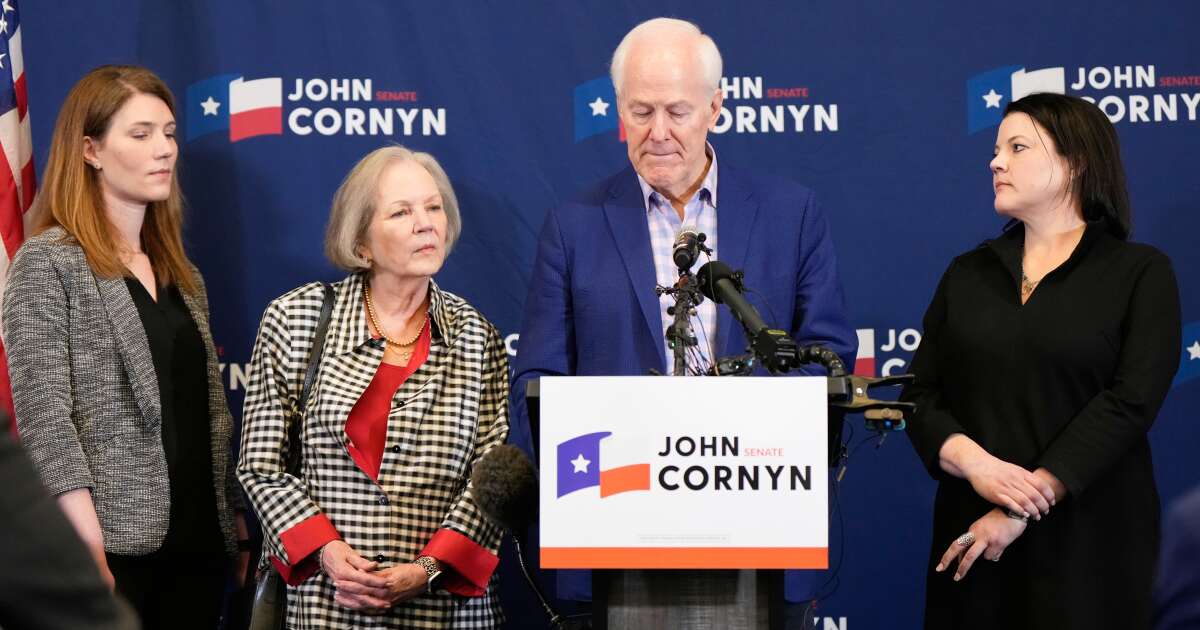
U.S. Sen. John Cornyn tried for more than a year to show President Trump and Texas Republicans that he and the president were on the same team.

Cornyn posted a photo of himself reading Trump’s “The Art of the Deal.” He proposed legislation to rename a stretch of interstate in Trump’s honor. Perhaps most glaringly, the Senate institutionalist who long supported the filibuster reversed his position in a failed effort to advance voting restrictions that are a priority for the president.

None of it worked. On Tuesday, Cornyn became the latest in a line of Republicans who lost their primaries after falling out of favor with a president with little tolerance for dissent and a seemingly insatiable appetite for retribution. The four-term senator lost by double digits to Texas Attorney General Ken Paxton, who Trump endorsed last week as “a true MAGA Warrior.”

Cornyn, on the other hand, “was VERY disloyal to me,” Trump wrote on social media.

Trump’s intervention in the Texas runoff came after weeks of successfully backing primary challengers in Indiana, Louisiana and Kentucky as revenge against incumbents who broke with his agenda.

Cornyn’s attempt to avoid the same fate made even some of his supporters wince.

“You look at the positions he took to please the president and the groveling and whatever,” said former Sen. Jeff Flake of Arizona, a Republican and Trump critic who didn’t seek reelection during the president’s first midterm in 2018. “It was rather painful to watch.”

Trump took an uncommonly equanimous approach to Tuesday’s results the following morning.

“Congratulations to Ken Paxton on such a tremendous win, and to John Cornyn for having run a strong and powerful race but, more importantly, having had a truly great career,” he wrote on social media. “John will remain my friend for a long time to come, as we both watch Ken become a fantastic, common sense Senator, one who is respected by all.”

Cornyn started early with ad touting pro-Trump voting record

Cornyn’s loss wasn’t for a lack of political gymnastics and astronomical campaign spending.

His campaign began running an advertisement last summer — part of an astounding nearly-$100-million air war by the senator and allied groups — with Cornyn looking into the camera and saying, “I voted with President Trump 99% of the time.”

On Cornyn’s campaign homepage, Trump and Cornyn stand side-by-side with thumbs pointed upward in an image aimed at projecting solidarity. Deeper in the website, the category titled “The Trump-Cornyn Record” notes the senator’s role securing votes for Trump’s signature 2017 tax cut bill.

Cornyn has also been championing provisions in Trump’s signature tax-and-spending legislation to finance work on the U.S.-Mexico border wall.

The senator had dismissed the project as “naive” during Trump’s 2016 campaign. But in January, he stood along a section of completed wall in Texas’ Rio Grande Valley touting the measure’s $11 billion for Texas contractors’ work at “the direction of the president of the United States, to whom I am very grateful.”

Cornyn’s 2023 dismissal of Trump’s return glares in background

Cornyn’s praise for his party’s leader and president were not unusual, but they clash with a statement Cornyn made in May 2023, when Trump was mounting his presidential comeback campaign.

“Trump’s time has passed him by,” he told reporters. “I don’t think President Trump understands that when you run in a general election, you have to appeal to voters beyond your base.”

Trump would go on to easily win the nomination and carry every battleground state in the general election.

Cornyn would hew closely to the president for the first 16 months of his second administration, hoping at the outside chance of his endorsement or to keeping him from weighing in at all.

But Trump did not forget the past slights.

“John Cornyn is a good man, and I worked well with him, but he was not supportive of me when times were tough,” he wrote on social media while endorsing Paxton.

Smaller gestures, and one big one

Cornyn has playfully worked to promote Trump fandom, last year posting a picture on social media of himself thoughtfully peering into the pages of Trump’s 1987 memoir and business advice book, “The Art of the Deal.”

In a more obvious gesture, he proposed designating a section of a U.S. highway from the Texas Gulf Coast to Montana as “Interstate 47,” to honor a 47th president with a well-documented love of naming things after himself. In a news release about the proposal, filed just over two weeks before Tuesday’s runoff, Cornyn said it would be known as the “Trump Interstate.”

The more tectonic shift occurred in March, after Trump had teased a possible endorsement of either Cornyn or Paxton in the runoff.

Paxton swiftly said he would consider dropping his candidacy if the Republican-controlled Senate lifted the filibuster and passed the SAVE America Act, a series of voting restrictions that Trump has described as an essential part of his agenda.

The following week, Cornyn wrote an op-ed in the New York Post — Trump’s favorite hometown newspaper — backing away from his previous support of the filibuster. He vowed to “support whatever changes to Senate rules that may prove necessary” to get the bill “through the Senate and on the president’s desk for his signature.”

Flake watched with unease.

“I know John and his long-held positions on the filibuster and the Senate’s institutions,” he said. “No office is worth that.”

Beaumont and Bedayn write for the Associated Press. Bedayn reported from San Antonio. AP writer Mary Clare Jalonick in Washington contributed to this report.

Source link