senator

How the DHS deal unraveled and split Republican leaders

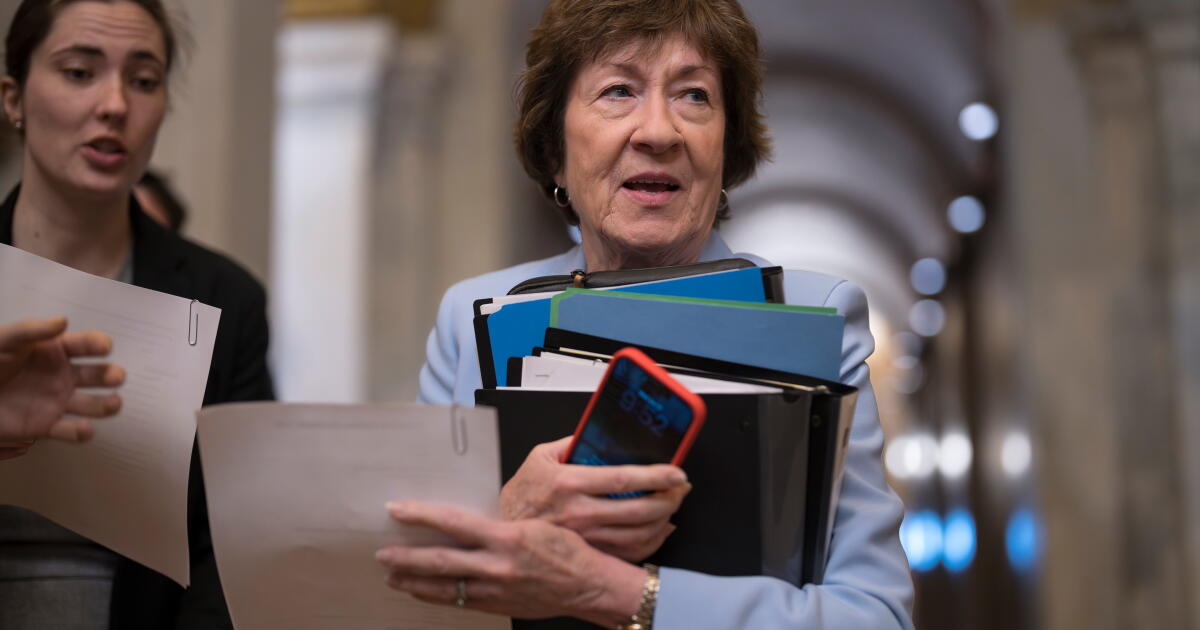
For several hours Friday, in the stillness before dawn, the Senate appeared to have finally figured out how to fund most of the Department of Homeland Security before it faced the longest partial shutdown in U.S. history.

Senators handed House Speaker Mike Johnson (R-La.) their deal and headed for the airports, seemingly confident of success.

Then it collapsed. Spectacularly.

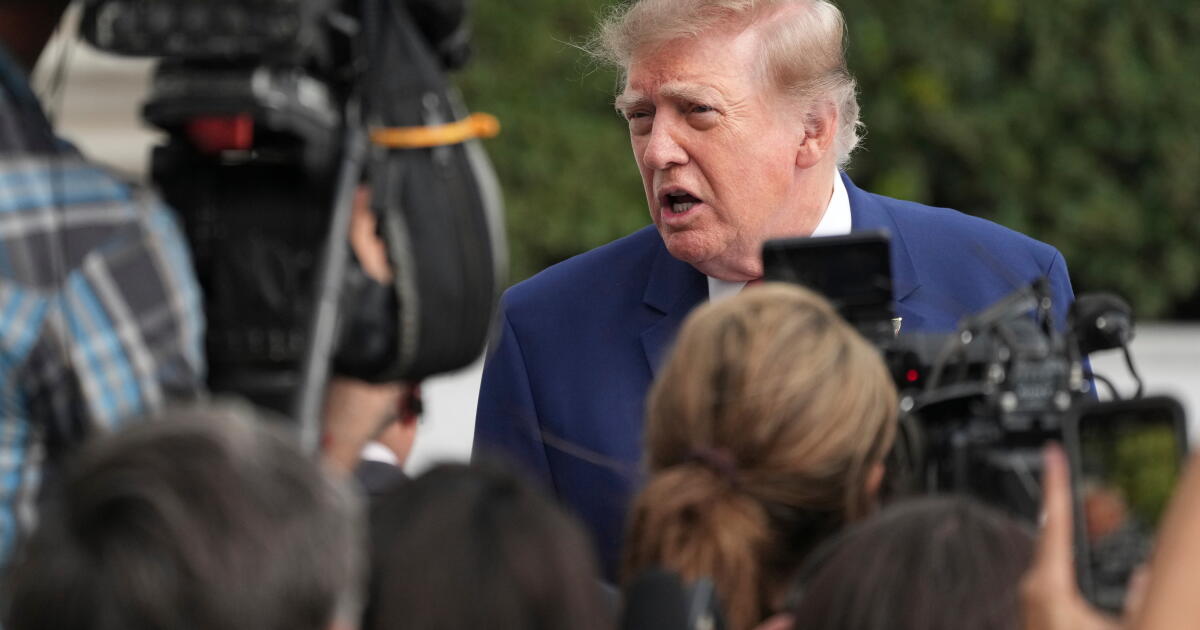
An incensed Johnson marched out of his office Friday afternoon. He angrily denounced the plan that the Senate had unanimously agreed to as a “joke.”

“I have to protect the House, and I have to protect the American people,” Johnson told reporters.

It was a dramatic denunciation of a deal that his counterpart, Senate Majority Leader John Thune (R-S.D.), had negotiated after weeks of effort, and was the latest abrupt turn in a funding saga that has bedeviled top Republicans for much of the year.

The collapse of the deal leaves Congress, now on a two-week spring break, with no easy way out of the impasse that has put the Homeland Security Department into a shutdown since mid-February. It also has exposed a rare rupture between the two Republican leaders in Congress, testing their alliances as they labor to move another set of President Trump’s priorities into law before the November elections.

Nothing ahead is likely to be easy.

How the deal collapsed

Thune had a deal with Democratic senators after negotiating for weeks on their demands for new restrictions on the department’s immigration enforcement work. Offers were traded several times. The talks moved along at a stop-start pace. Votes failed again and again.

Out of time and patience, senators essentially settled on a draw for the bill: They would not include funding for U.S. Immigration and Customs Enforcement and for U.S. Border Patrol, as Democrats had proposed repeatedly in the last week, but while setting aside all the Democratic demands for new limits on the agencies.

Thune pointed out that Congress had allotted money for immigration enforcement and he told reporters that “we can get at least a lot of the government opened up again and then we’ll go from there.”

Asked if he had cleared the compromise with Johnson, Thune said the two had texted.

“I don’t know what the House will do,” the senator said early Friday as the deal came together.

But as House Republicans woke up to the news, their outrage was swift.

Rep. Nick LaLota (R-N.Y.) said that on a GOP conference call that morning to discuss their path forward, a few dozen members ranging from moderates to hard-line conservatives spoke in opposition to what the Senate had done.

“The Senate chickened out,” he said. “The cowards there, only a few of them in the middle of the night with I think only three to five senators present on the floor, chickened out because they wanted to go home for two weeks. We need to raise the bar.”

What’s next for Republicans?

The bitter split threatens to make the job for Republican leaders more difficult as they try to advance their priorities while they still have guaranteed control of both chambers. Trump has said that legislation to impose strict new proof of citizenship requirements on voting is his top priority, but there is no real path for that plan in the Senate with its 60-vote threshold for advancing legislation.

Some Republicans have pushed instead for a budget package that could potentially put some parts of the voting law in place. Republicans are also contemplating how to pass an expected request from the White House to fund the war with Iran that could total more than $200 billion, among other priorities.

Meanwhile, the flop of the funding deal has given Democrats another chance to pin the partial shutdown on House Republicans.

“They know this is a continuation of the shutdown because the Senate is gone,” said Massachusetts Rep. Katherine Clark, the No. 2 Democratic leader. “So they know fully well what they’re doing.”

It is not clear what the Senate will do next. A quick resumption of talks is unlikely. Negotiations ended acrimoniously on both sides, with each blaming the other as moving the goalposts along the way.

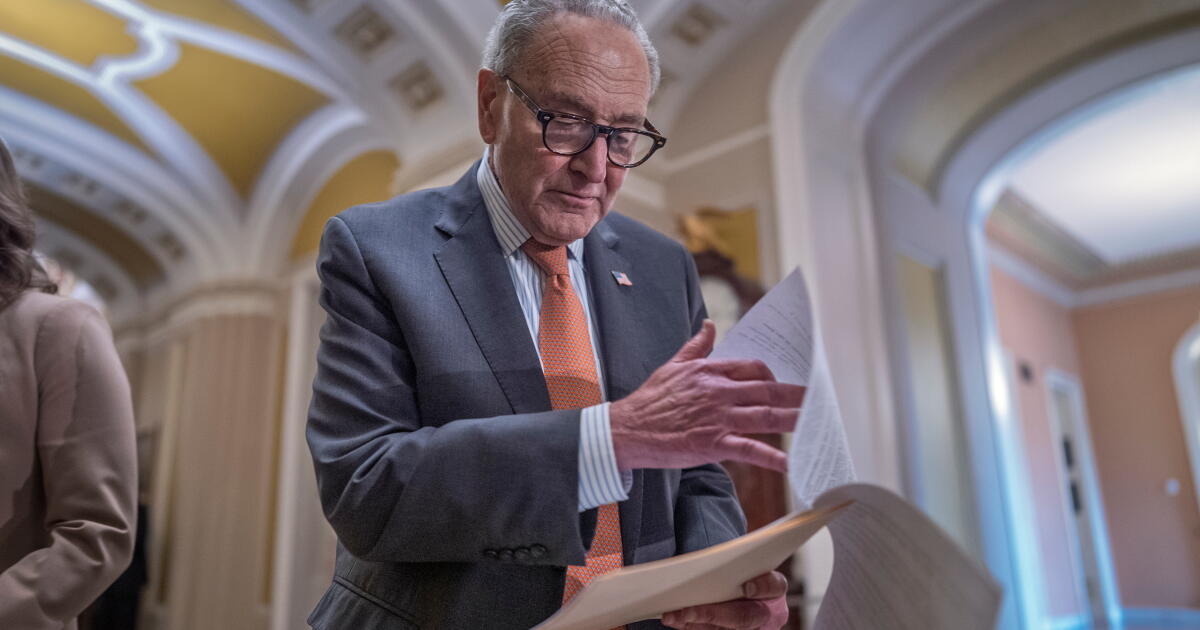
Senate Democratic leader Chuck Schumer of New York said he was proud of his caucus for “holding the line.” But Republican Sen. Susan Collins of Maine, who leads the Senate Appropriations Committee, said Democrats were “intransigent and unreasonable.”

Thune said he believed that Democrats never wanted a deal and would not vote for ICE funding under any circumstances.

“I felt like from the beginning, they just didn’t want to get to ‘yes,’” Thune said after the vote.

The dynamic left senators convinced that the deal was the only way to move past their disagreements and reopen the Homeland Security Department.

But House Republicans on Friday night seemed to revel in the fact they had defied the wishes of the Senate. GOP members said that they work from a perspective that is closer to the will of their constituents.

To Rep. Virginia Foxx (R-N.C.), the Senate’s proposal was “nothing more than unconditional surrender masquerading as a solution.” She said the House ”will not bend itself into submission by acquiescing.”

Those searching for a way out of the shutdown seemed discouraged.

“This takes two chambers to get the job done,” said Pennsylvania Rep. Brian Fitzpatrick, a moderate Republican. “Apparently, there’s not enough communication between those chambers.”

Groves, Jalonick and Cappelletti write for the Associated Press. AP writer Kevin Freking contributed to this report.

Source link

Missed paychecks and airport delays: Pressure mounts on Congress to end the funding shutdown

Pressure is mounting on Congress to end the funding shutdown that has resulted in travel disruptions, missed paychecks and even warnings of airport closures, but lawmakers have yet to resolve the underlying issue of reining in President Trump’s immigration enforcement operations.

Senators intend to vote Thursday on a Republican proposal that would fund the Transportation Security Administration and much of the Department of Homeland Security, except the enforcement and removal operations conducted by U.S. Immigration and Customs Enforcement. That plan is expected to fail.

Democrats argue it does not go far enough at putting guardrails on officers from ICE, Customs and Border Protection and other federal agencies who are engaged in the immigration sweeps, particularly after the deaths of two Americans protesting the actions in Minneapolis.

Trump, who has largely left the issue to Congress to resolve, threatened to send the National Guard to airports, in addition his deployment of ICE agents who are now checking travelers IDs — a development drawing concerns.

“They need to end this shutdown immediately or we’ll have to take drastic measures,” Trump said Thursday during a Cabinet meeting at the White House.

With Congress set to leave town by week’s end for its own spring break recess, calls are intensifying for an end to the 41-day stalemate that’s put the livelihoods of TSA officers at risk as they provide airport security without pay.

Multiple airports are experiencing greater than 40% callout rates of TSA workers and more than 480 of its nearly 50,000 transportation security officers have now quit during the shutdown. Nationwide, nearly 11% of TSA workers — more than 3,200 on a single day — missed work.

Trump stays out of the fray

The Republican president initially signed off on the plan the GOP senators brought to him late Monday. By Tuesday, he said he would not be happy with any deal.

Trump did not directly address the status of negotiations late Wednesday evening during an annual fundraising dinner for the House Republicans’ campaign committee as Speaker Mike Johnson, R-La., works to keep majority control of the chamber in the November elections.

But Trump criticized Democrats for refusing to settle their demands on immigration changes. On Thursday, he revived his campaign for senators to end the filibuster as a way to overpower opposition to GOP policies, something most Republican senators do not want to do.

The GOP’s big tax cuts bill that Trump signed into law last year funneled billions to DHS, including $75 billion for ICE operations, ensuring the money is flowing for his immigration and deportation agenda even with the funding shutdown. ICE and other immigration officers are still being paid.

The situation is partly of Trump’s making, a strategy the president put in place last fall when he cut a deal with Democrats to end a previous federal shutdown. At that time, Trump agreed to fund the federal government, except for DHS, which was then put on temporary funding that has expired.

A stopgap measure

The Republican offer added one new restraint on immigration officers, funding the use of body cameras that had previously been agreed to. It excluded other policies that Democrats have demanded, such as that federal agents wear identification, remove their face masks and refrain from conducting raids around schools, churches or other sensitive places.

Senate Democratic leader Chuck Schumer of New York said they needed to see real changes. “We’ve been talking about ICE reforms from day one,” he said.

Democrats had been in several days of talks with the White House, including with border czar Tom Homan, that appeared to be making progress toward a deal. The White House presented its own offer with several items Democrats had been demanding, including officer IDs and training.

But those negotiations broke down over the weekend.

Republicans say Democrats are putting the country at risk. They say the Trump administration has already made strides to meet Democrats’ demands and has shown a new approach to its immigration operations, swearing in Oklahoma Sen. Markwayne Mullin as the new homeland security secretary to replace Kristi Noem.

But conservative Republicans also panned the proposal, demanding full funding for immigration operations and skeptical of the promise from GOP leaders that they would address Trump’s proof-of-citizenship voting bill in a subsequent legislative package.

Senate Majority Leader John Thune, R-S.D., said late Wednesday that if Democrats put a “more realistic offer on the table, we’ll be back in business.”

Asked if Congress would consider a stopgap measure to temporarily fund the department, Thune said: “We’ll see.”

Airport lines grow as TSA workers endure hardships

Passengers are facing more four-hour waits to clear security at George Bush Intercontinental Airport in Houston.

The airport’s website said Thursday morning that travelers should expect to wait two hours, 30 minutes in the security line at one of its open terminals and four hours at the other.

Lines and wait times are expected to grow Thursday and Friday because of “significantly higher passenger traffic,” according to an update on the airport’s website.

“This is a dire situation,” the acting TSA administrator, Ha Nguyen McNeill, testified at a House hearing Wednesday.

She described the multiple hardships facing unpaid TSA workers — piling up bills and eviction notices, even plasma donations to make ends meet — and warned of potential airport closures if more employees refuse to come to work.

“At this point, we have to look at all options on the table,” she said. “And that does require us to, at some point, make very difficult choices as to which airports we might try to keep open and which ones we might have to shut down as our callout rates increase.”

She cited the growing financial strain on the TSA workforce.

“Some are sleeping in their cars, selling their blood and plasma, and taking on second jobs to make ends meet,” she said.

McNeil also said TSA officers working at the nation’s airports have experienced a more than 500% increase in the frequency of assaults since the shutdown began.

“This is unacceptable, and it will not be tolerated,” McNeill said.

Mascaro and Freking write for the Associated Press. AP writers Rebecca Santana and Ben Finley in Washington; Wyatte Grantham-Philips in New York; Rio Yamat in Las Vegas; Russ Bynum in Savannah, Ga., and Gabriela Aoun Angueira in San Diego contributed to this report.

Source link

Means’ surgeon general nomination is stalled as senators question her experience and vaccine stance

Wellness influencer Dr. Casey Means’ nomination to be U.S. surgeon general is stalled a month after senators of both major political parties grilled her on vaccines and other health topics during a tense confirmation hearing, deepening doubts about her ability to secure the votes she needs for the role.

The nomination has languished despite ongoing efforts from the White House and Make America Healthy Again activists, revealing how intractable rifts over health policy can be even when Congress has shown deference to President Trump. It’s become the latest snag in Health Secretary Robert F. Kennedy Jr.’s agenda after two legal setbacks last week.

Means, a 38-year-old Stanford-educated physician who became disillusioned with traditional medicine and did not finish her surgical residency program, has faced scrutiny for her lack of experience and potential conflicts. Another sticking point has been her close alignment with Kennedy, whose efforts to dramatically pull back vaccine recommendations have been slammed by lawmakers and medical groups.

To advance to a full Senate vote, Means likely needs every Republican on the Senate Health, Education, Labor and Pensions Committee to support her nomination. But after last month’s hearing, two of them — Sens. Lisa Murkowski of Alaska and Susan Collins of Maine — told reporters they still had questions for her.

Murkowski told reporters Tuesday that “I’m just in the same spot” when it comes to those hesitations. Collins and Republican committee chairman Sen. Bill Cassidy, a physician from Louisiana who interrogated Means about vaccines during the hearing, didn’t respond to multiple inquiries about the delay.

White House spokesman Kush Desai said in a statement that the Trump administration has been having “productive conversations with the Senate” to advance Means. He added that her “elite academic credentials, research background and advocacy on America’s chronic disease epidemic will make her a critical asset for President Trump’s push to Make America Healthy Again.”

Kennedy spokesman Andrew Nixon reinforced the Republican administration’s support for Means and praised her message calling for healthier lifestyle choices rather than “sick care.”

Contentious hearing set the stage for a tough path to confirmation

Means promotes ideas popular with the MAHA movement, including that Americans are overmedicalized and that diet and lifestyle changes should be at the center of efforts to end widespread chronic disease.

But she’s been criticized for having an inactive medical license, for sometimes failing to disclose financial relationships with brands she promotes and for some of her past health-related comments.

Senators asked her during her hearing about how she would speak to the public about vaccines.

Murkowski and Cassidy pressed Means about her past doubts about the birth dose of the hepatitis B vaccine, which the U.S. Centers for Disease Control and Prevention stopped recommending for all children late last year in a move later temporarily blocked by a federal judge. Means called the hepatitis B vaccine important and lifesaving but said parents should make their own decisions with their doctors.

Cassidy also asked Means whether she would advise Americans to vaccinate against the flu and measles amid outbreaks across the country. She didn’t make that commitment, instead emphasizing the importance of informed consent.

Collins asked Means about her past advocacy for the therapeutic use of psychedelic mushrooms. Means, who has spoken positively of her own experience with the drugs, said she wouldn’t recommend psychedelics for the American public.

Kennedy’s supporters put pressure on hesitant senators

Once it appeared Murkowski and Collins were undecided, MAHA activists orchestrated a push to support Means’ bid by surging phone calls to the two senators.

“Please call both of them. Call them time after time. Get your friends to call them,” Tony Lyons, head of the Kennedy-aligned group MAHA Action, told supporters earlier this month.

Others have loudly opposed Means’ nomination. Dr. Jerome Adams, Trump’s first-term surgeon general, has repeatedly called her unqualified for her lack of an active medical license. He said in an interview that Republicans in Congress and in the Trump administration have told him they disapprove of the pick but see it as Kennedy’s choice.

“What I keep hearing from folks is, ‘This is what Bobby wants,’” he said.

While surgeons general aren’t mandated by law to have an active medical license, they are required to be part of the U.S. Public Health Service Commissioned Corps, a group of health professionals that says members should have up-to-date licenses.

Means said during her confirmation hearing that she had voluntarily made her Oregon medical license inactive, and that Adm. Brian Christine, who runs the Commissioned Corps, had testified that she was eligible to serve.

Even if Means advances out of committee, she might have difficulty securing confirmation by the full 100-member Senate. Republican Sen. Thom Tillis of North Carolina, who isn’t seeking another term, told the Associated Press that he’s leaning against voting for Means.

“Her resume already puts me on alert — and then I don’t think she did herself any favors in the hearing,” Tillis said.

Means’ confirmation delay is unusually long

At nearly 300 days since her nomination in May, Means’ confirmation process has taken almost twice as long as the average presidential pick in Trump’s second term, according to data from the nonprofit Partnership for Public Service. The group found that in the first 400 days, the average time between nomination and confirmation for Trump’s nominees was 157 days.

Sometimes the process has gone far more quickly. Markwayne Mullin, the new Department of Homeland Security secretary sworn in Tuesday, had his confirmation hearing, floor vote and swearing-in all within a weeklong period.

One reason for Means’ drawn-out nomination is the birth of her son, which happened last October on the day of her initially scheduled confirmation hearing.

But Chris Piper, manager of public policy and stakeholder engagement at the Partnership for Public Service, said the length of time that has passed since Means’ rescheduled confirmation hearing also is unusual. He said candidates are often voted out of committee within a week of their hearing.

“A monthlong delay following a hearing is atypical for most nominations, particularly at this level of position,” he said.

Swenson writes for the Associated Press. AP writers Joey Cappelletti and Stephen Groves in Washington contributed to this report.

Source link

Senators consider deal to fund Homeland Security but not ICE enforcement

Senators raced Tuesday to clinch an emerging proposal to end the Homeland Security shutdown by funding much of the department, including the Transportation Security Administration airport workers going without pay, but excluding ICE enforcement operations that have been core to the dispute.

The sudden sense of urgency comes as U.S. airports are snarled by long security lines, with travelers being told to arrive hours before their flights in Houston, Atlanta and Baltimore Washington International. Routine Homeland Security funding was halted in mid-February ahead of the busy spring travel season. Nearly 11% of TSA workers — more than 3,200 — missed work Monday, and at least 458 have have quit altogether since the shutdown began, according to Homeland Security.

Democrats are refusing to fund the department without restraints on Trump’s immigration and deportation agenda after agents killed two citizens in Minneapolis.

A potential breakthrough came late Monday, after a group of Republican senators met at the White House with President Trump after his decision to deploy federal immigration officers at some airport security checkpoints — a move some lawmakers warned could lead to heightened tensions.

“All I can say is that the discussions have been very positive and productive, and hopefully headed in the right direction,” said Senate Majority Leader John Thune (R-S.D.) late Monday evening.

Senate Democratic Leader Chuck Schumer sounded a similarly hopeful tone: “Both sides are working in a serious way.”

Hopes high for a quick deal

Next steps in Congress could move quickly, if lawmakers can reach a deal, or sputter out just as fast.

The contours of the deal under consideration would fund most of Homeland Security, but not one main part of ICE — the enforcement and removal operations that are core to Trump’s deportation agenda.

Under the proposal being floated, ICE’s Homeland Security Investigations would be funded as well as Customs and Border Protection. But that would come with guardrails — keeping officers from those divisions in their traditional roles, rather than deploying them in urban immigration roundups.

The plan would also include a number of changes in immigration operations that Democrats have demanded, including mandating that officers wear body cameras and identification. The ICE officers manning airports are already going without face-covering masks, another key demand Democrats want as part of any deal.

Since so much of ICE is already funded through Trump’s big tax breaks bill, and immigration officers are still receiving paychecks despite the shutdown, senators said the new restraints would also be imposed on operations that rely on that funding source, as well.

Republican Sen. Katie Britt of Alabama, a chief negotiator, returned from the White House meeting hopeful they had a solution to “land this plane.”

Both chambers of Congress are controlled by the Republican president’s party, and any deal reached in the Senate would also have to be approved by the House.

Political standoff, long airport lines

Key to the standoff appears to have been the senators’ ability to shift the president’s attention off his plan to link any department funding to his push to pass the so-called SAVE America Act, a strict proof-of-citizenship and voter ID bill that has stalled in the Senate ahead of the midterm elections.

Over the weekend Trump injected his demand for the voting bill as a condition for ending the funding standoff. Some GOP senators have pitched the idea of tackling it in the months ahead as part of a broader legislative package the party could pass on its own, similar to last year’s big tax cuts bill.

Sen. Chris Coons (D-Del.) who was not part of the group at the White House, said his understanding was that there was a “sense of urgency” coming from the talks as the airport disruptions worsen.

Senators are expected to discuss the proposals during their private caucus lunches Tuesday afternoon. “First step is to get the proposal in writing,” said Sen. Angus King, an Independent from Maine. “I want to see exactly what that means.”

Changes at Homeland Security

The deal could provide a political exit from the standoff over the embattled Homeland Security department, which was stood up in the aftermath of the Sept. 11, 2001, attacks but has come to symbolize Trump’s aggressive mass deportation agenda, with its goal of removing 1 million immigrants this year.

Under mounting political pressure, Trump ousted Homeland Security Secretary Kristi Noem amid the public outcry over the immigration operations, and senators late Monday confirmed one of their own, Markwayne Mullin, as the president’s handpicked replacement.

Mullin, an Oklahoma senator who aligns with Trump’s agenda, provides a potentially new face for the department. During his confirmation hearing, Mullin touched on another key demand of Democrats — ensuring a judge has signed off on warrants that immigration officers use to search people’s homes, rather than simply relying on administrative warrants issued by the department.

“This is significant,” Sen. Peter Welch (D-Vt.) said about the progress toward changes. “Noem is gone. That’s a big deal.”

ICE’s budget nearly tripled under last year’s bill, to $75 billion, which has been untouched by the shutdown. Rather its routine annual funding, some $10 billion, would be cut almost in half under the proposal.

After weeks of missed paychecks, many TSA agents have called in sick or even quit their jobs as financial strains pile up. Union leaders representing the workers have pushed Congress to reach a deal.

Mascaro and Cappelletti write for the Associated Press. AP writers Rio Yamat, Wyatte Grantham-Philips, Kevin Freking and Seung Min Kim contributed to this report.

Source link

Montana senator pulls a fast one to boost preferred successor

For months, the senior U.S. senator from Montana pondered his political future.

Or so he said.

Wrapping up his second term and facing a glide path to a third, Steve Daines unexpectedly opted this month against seeking reelection, saying in an aw-shucksy video he planned to spend more time back home in Montana and enjoy more cherished moments with his seven grandkids.

Notably, after long “wrestling with this decision,” Daines announced his intent a scant two minutes after the deadline passed for candidates to put their names on the ballot. March 4 at 5:02 p.m local time, to be precise.

More notable still, Daines’ preferred successor, Republican former U.S. Atty. Kurt Alme, jumped into the race at 4:52 p.m. that very same day.

There are relay runners who might learn a thing or two from their timing and coordination.

As part of the seamless handoff, Alme was swiftly endorsed by President Trump, Montana’s Republican governor, Greg Gianforte, and its other Republican senator, Tim Sheehy, for all intents settling the GOP contest and, quite likely, choosing the state’s next member of the U.S. Senate.

Never mind what voters might have wished, or other prospective candidates might have had in mind.

“There are a lot of Republicans in the state, folks with political ambitions, who are extremely peeved right now,” said Kal Munis, a Montana native and political science professor at Auburn University, who closely tracks politics in his home state.

Moreover, Munis said, with enough notice a heavy-hitting Democrat might have entered the contest, instead of the lowly bunch now running hopeless campaigns.

Montana, which has a rich Democratic history, has become a solidly Republican state, though the makeover took some time to complete.

As recently as 2008, Barack Obama made a serious run there, losing to John McCain by less than 3 percentage points. Montana had a Democratic governor until Gianforte was elected in 2020 and a Democratic U.S. senator until Jon Tester was defeated in 2024.

Still, while Daines’ seat hardly appeared at great risk for the GOP, a fight for the party’s nomination might have been a costly distraction, diverting money and attention that could go elsewhere as Republican prospects for the midterm election grow increasingly dim. (An unpopular war and shaky economy that’s been knee-capped by a sudden spike in oil prices will do that.)

Of all people, Daines certainly appreciates the bigger political picture, having led Republicans’ Senate campaign committee during the 2024 cycle. So he and his allies short-circuited the election process by laying hands on Alme, who stepped down as U.S. attorney to sidle into the Senate.

Seth Bodnar was among those who quite rightly criticized Daines for, as Bodnar put it, having “so little respect for Montana Republicans that he withdrew at the last minute to coronate his handpicked successor instead of giving them a voice at the ballot box.”

It just goes to show, Bodnar suggested, “the disgusting arrogance of Washington politicians and their party bosses who trade power back and forth like candy.”

Bodnar, the former president of the University of Montana, is running for Senate as an independent, conspicuously steering clear of the toxic Democratic brand. There is speculation the high-handed behavior of Daines, Trump and other Republicans might be enough to give Bodnar’s steep-odds candidacy a decent shot in November.

Munis, for one, is doubtful.

“There are a number of activist types who are deeply angered by this,” he said. “But when it comes to tallying votes in an election, that’s just a drop in the bucket.”

Unfortunately, Daines’ scheming, stick-it-to-the-voters approach isn’t just a Montana Republican thing.

Democratic Rep. Chuy Garcia of Illinois announced in the fall that he would not seek a fifth term this year. The last-second move — which came after Garcia had earlier filed paperwork to run for reelection — made it so his chief of staff and preferred successor, Patty Garcia (no relation), was the only major Democrat to appear on the ballot, virtually guaranteeing her election in November.

The cynical maneuver so disgusted Rep. Marie Gluesenkamp Perez, a maverick Democrat from rural Washington state, that she defied party leaders and introduced a resolution rebuking Garcia.

His actions were “beneath the dignity of his office and incompatible with the spirit of the Constitution,” said Gluesenkamp Perez, who was jeered and booed by fellow Democrats during the floor debate for having the temerity — heavens to Betsy! — to put principle above knee-jerk partisanship. The measure passed the House, 236 to 183, with only 22 Democrats joining Gluesenkamp Perez in support.

In California, the law prevents incumbents from pulling off the kind of underhanded stunt that Garcia and Daines managed. That’s because the filing deadline is automatically extended for an extra five days whenever a sitting lawmaker opts against seeking another term.

So, for instance, when Rep. Darrell Issa suddenly announced this month he would not run for reelection, he endorsed his favored replacement, San Diego County Supervisor Jim Desmond, but couldn’t grease the process to see to it that Desmond takes his place.

Legislators in other states should pass a law like the one in California to prevent the undemocratic shenanigans that in effect neutered voters in Montana and the Chicago area.

That is, if they truly believe elections matter and voters should have a choice and not stand by powerless as their government representatives are anointed from on high.

Source link

Senate rejects resolution to limit hostilities in Iran

Senate Republicans blocked a war powers resolution Wednesday designed to withdraw U.S. forces from hostilities in Iran, as the Trump administration accelerates its military campaign in a conflict that has killed hundreds, including at least six American service members.

The motion failed in a vote of 47-53.

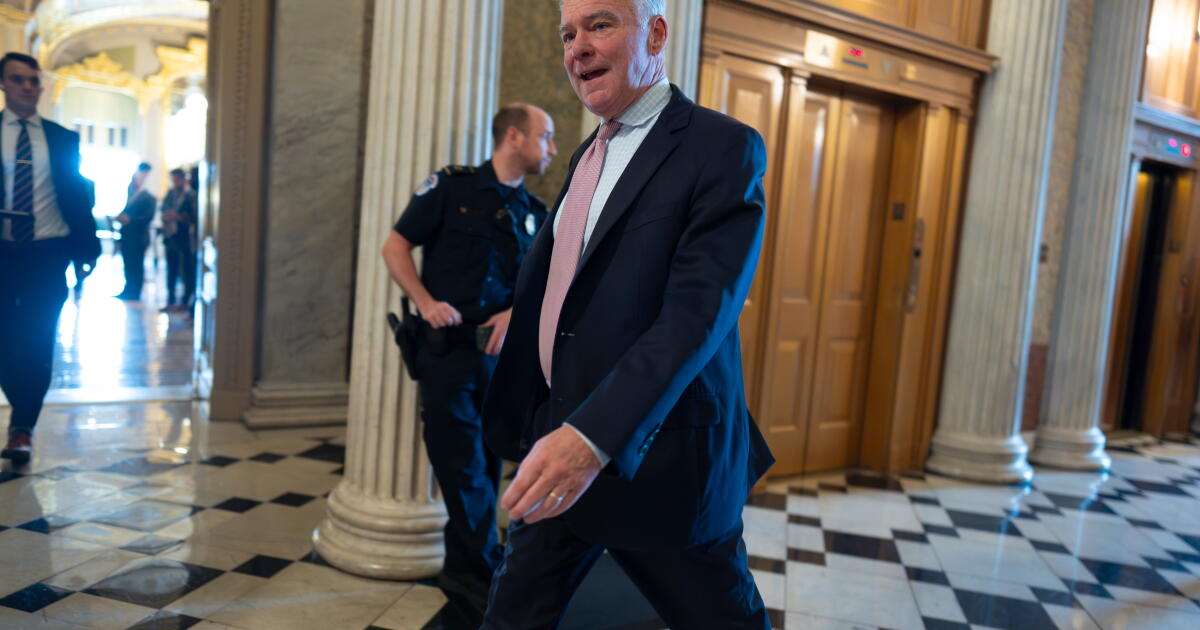
In addition to pulling out military resources from the Middle East, the measure — introduced by Sens. Chuck Schumer (D-N.Y.), Adam Schiff (D-Calif.) and Tim Kaine (D-Va.) — would have required Congress’ explicit approval before future engagement with Iran, a power granted to the legislative branch in the Constitution.

The House, where Republicans also hold an advantage, is scheduled to weigh in on a similar measure Thursday. Even if both Democratic-led measures were to succeed, President Trump was widely expected to veto the legislation.

“We are doing very well on the war front, to put it mildly,” President Trump said at a White House event on Wednesday afternoon. The president, who has come under scrutiny for offering shifting explanations on the war’s endgame, said that if he was asked to scale the American military operation from one to 10, he would rate it a 15.

Democrats dispute that Trump possesses the authority to wage the ongoing operation in Iran without explicit congressional approval.

Acknowledging the measure was unlikely to succeed, they framed the vote as a strategy to force lawmakers to put their support for or opposition to the war on record.

“Today every senator — every single one — will pick a side,” Schumer said. “Do you stand with the American people who are exhausted with forever wars in the Middle East, or stand with Donald Trump and Pete Hegseth as they bumble us headfirst into another war?”

Senate Majority Leader John Thune (R-S.D.) and most of his Republican colleagues have maintained that the president carried out a “pre-emptive” and “defensive” strike in Iran, giving him full authority to continue unilateral military operations.

Republicans saw the vote as the “last roadblock” stopping Trump from carrying out his mission against the Islamic Republic.

“I think the president has the authority that he needs to conduct the activities and operations that are currently underway there. There are a lot of controversy and questions around the war powers act, but I think the president is acting in the best interest of the nation and our national security interests,” Thune said at a news conference.

Senators largely held to party loyalties, with the exception of Kentucky Republican Rand Paul, who broke ranks to support the measure, and Pennsylvania Democrat John Fetterman, who opposed it.

The vote comes as Defense Secretary Pete Hegseth said Wednesday that the war against Iran is “accelerating,” with American and Israeli forces expanding air operations into Iranian territory. He pointed to evidence released by U.S. Central Command of a submarine strike on an Iranian warship, and also lauded other strikes throughout the region as civilian casualties in Iran surpassed 1,000 on the fourth day of the conflict, according to rights groups.

“We’re going to continue to do well,” Trump said Wednesday. “We have the greatest military in the world by far and that was a tremendous threat to us for many years. Forty-seven years they’ve been killing our people and killing people all over the world, and we have great support.”

Republicans blocked a similar war powers vote in January after the president ordered U.S. special forces to capture and extradite Venezuelan President Nicolás Maduro in Caracas on drug trafficking charges.

GOP leaders argued that the outcome of that mission equated to a quick success in the Middle East, despite an uncertain timeline from the Department of Defense.

In the House, lawmakers will vote on a separate war powers effort Thursday. That bill is led by Rep. Ro Khanna (D-Calif.) and Rep. Thomas Massie (R-Ky.), the two lawmakers who authored the Epstein Files Transparency Act.

“Instead of sending billions overseas, we need to invest in jobs, healthcare, and education here,” Khanna said on X.

In addition to that proposal, moderate Democrats in the House have introduced a separate resolution that would give the administration a 30-day window to justify continued hostilities in the Middle East before requiring a formal declaration of war or authorization from Congress.

Source link