Trump is heading all the way to Alaska in a sign of just how close its Senate race may be
ANCHORAGE, Alaska — It’s a long way from Washington, has a small population and hasn’t backed a Democrat for Senate in nearly 20 years.
Yet President Trump on Tuesday will devote a big chunk of his dwindling time ahead of crucial midterm elections to head all the way to Alaska — attempting to bolster a Republican incumbent senator in another sign of GOP fears about retaining control of Congress after Election Day on Nov. 3.
Trump is headlining a rally for Sen. Dan Sullivan in Wasilla, about 45 miles north of Anchorage — famous for being the hometown of former Republican vice presidential nominee Sarah Palin and the headquarters of the Iditarod sled dog race across the state.
Trump’s stop is part of a western swing also taking him to rallies in Arizona and Montana on Wednesday.
“I’m right now going to Alaska to try and help Dan Sullivan. That’s a long way away,” Trump told reporters as he left the White House for the trip on Tuesday. “I would only do it if I thought he was good. And he’s very good. And so, I’m going to Alaska to help Dan Sullivan, and then I’m stopping in numerous places.”
Democrats last won a Senate seat in Alaska in 2008, and the state hasn’t elected a governor from that party since 1998. The only time Alaska didn’t vote Republican for president was during Lyndon B. Johnson’s landslide 1964 reelection.
Yet high gasoline prices from the Iran war and persistently elevated inflation have damaged Trump’s approval ratings enough to leave Democrats dreaming of Alaska upsets.
Trump and Vance have been trying to boost Sullivan repeatedly
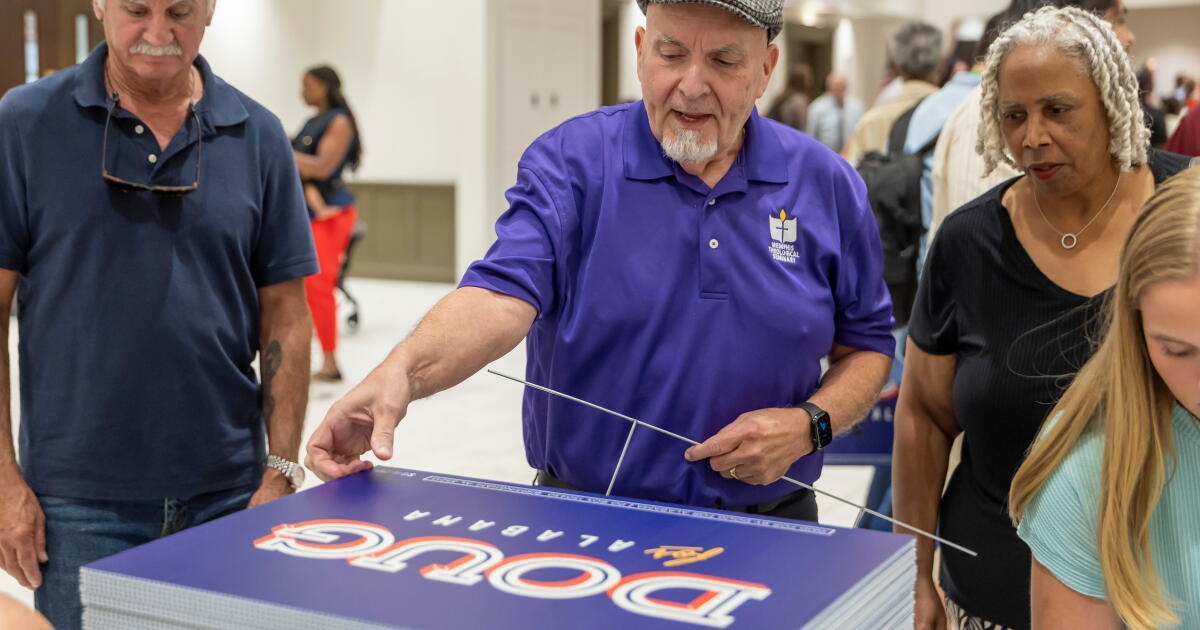
Seeking his third Senate term, Sullivan faces Democrat Mary Peltola, a former congresswoman running to put “Alaska First,” emphasizing cost-of-living issues.
Alaska pollster Ivan Moore said he’s seen a decline in Trump’s support statewide that mirrors the president’s falling approval ratings nationally — meaning the Senate race may be decided by Trump 2024 voters who are now unsure they still back him.
“The visit is certainly appropriate. Whether the visit will be effective or not is another matter,” said Moore, who said when he first heard that Trump would visit Alaska, he didn’t believe it would actually happen.
The Trump administration has prioritized the opening of more of Alaska to oil and gas drilling. Vice President JD Vance already campaigned in Fairbanks for Sullivan.
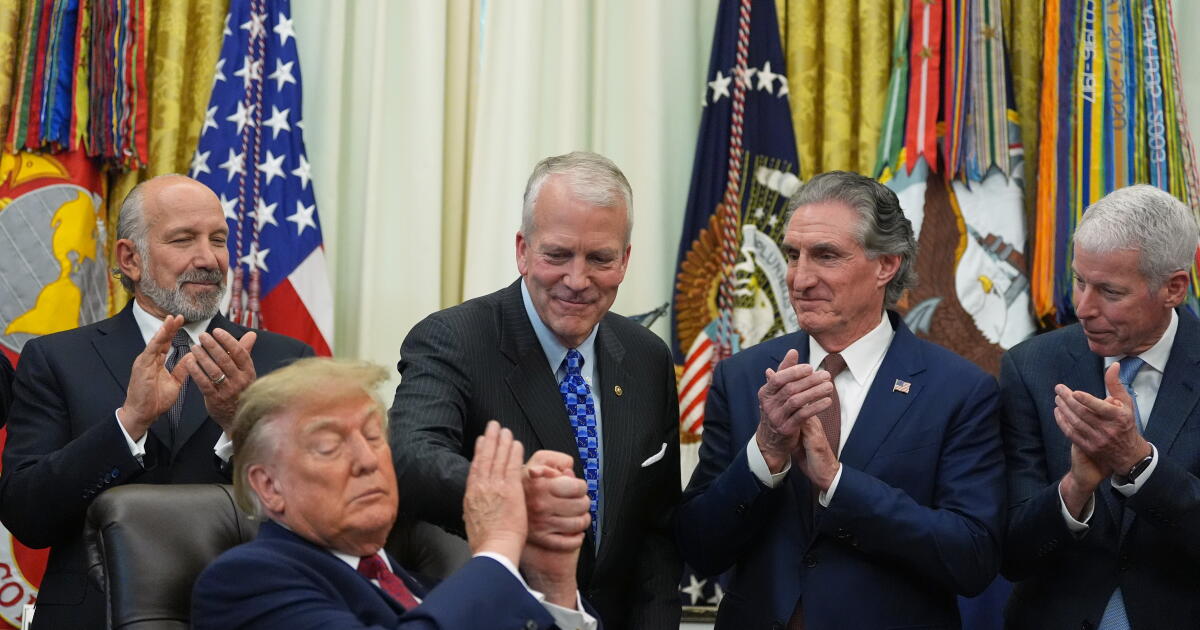
The senator also recently joined Trump in the Oval Office where the president announced a $54 billion investment by South Korea’s government into an Alaska natural gas project. That’s despite South Korea saying the deal, and its total value, haven’t been finalized.
Still, Trump trekking four time zones west to get to Sullivan’s home turf — an unusually long trip so close to the midterms — is his strongest show of support.
Trump last campaigned in Alaska to try to defeat a fellow Republican
Alaska is home to around 740,000 people, making it slightly less populous than Denver. It ranks 48th out of 50 states in population, smaller than all but Vermont and Wyoming.
Trump nonetheless headlined a 2022 rally in Anchorage opposing Republican Alaska Sen. Lisa Murkowski after she voted to convict him on a charge of incitement of insurrection during his second impeachment trial, following the attack on the U.S. Capitol by a mob of his supporters on Jan. 6, 2021.
Trump endorsed Kelly Tshibaka, who challenged Murkowski that year, but that didn’t stop incumbent Murkowski from winning reelection.
This year, there are two Dan Sullivans on the ballot
Trump has complained about Alaska’s unique elections system. The state has open primaries, in which the four top vote-getters — regardless of party affiliation — advance to the general election, which uses ranked choice voting.
That’s led to a scenario where there also will be another Dan Sullivan on the ballot on Nov. 3: retired teacher Dan J. Sullivan, whom Trump and other allies of Sen. Sullivan have called a sham candidate. Dan J. Sullivan has denied this.
At his rally, Trump also plans to stump for Republican Rep. Nick Begich. Begich is facing a competitive challenge from Bill Hill, an independent.
Alaska has a history of rewarding candidates with an independent streak — something Vance acknowledged during his trip to Fairbanks last week. “In very deep red years, Alaska is competitive. In very deep blue years, Alaska is still competitive,” Vance said. “I think it’s just a reality of the politics of the state.”
Independence has been hard to find in the Republican Party where Trump for years had total control. Some Republicans facing tough elections have begun tiptoeing away from Trump on key issues like Iran and tariffs, but not Sullivan, who has been vocal in supporting both.
In a post last week, Trump questioned why three Republicans were running against a Democrat for governor. “How stupid are we to do this?” he said on social media. This comes at the same time state Republican party leaders are urging voters to rank Republicans on the ballot and leave the Democrats blank.
“We want to be clear: we do not support ranked choice voting. It is a confusing, burdensome and costly voting scheme,” party leaders, including GOP chair Carmela Warfield, said in a statement Saturday. “That said, ranked choice voting is the system Alaska will use for the 2026 General Election, and we must work within it for this election to keep Alaska’s recent momentum going strong.”
Trump’s trade war with Canada may also be a factor
Trump has also triggered a trade war with Canada, which shares a 1,500-plus-mile border with Alaska and is among the state’s most important trading partners.
The U.S. banned nearly $1 billion worth of imports from its neighbor to the north — including alcoholic beverages, dairy products and motorcycles — after previously imposing 50% tariffs on about $20 billion in Canadian products. Canada has responded with reciprocal bans and its own import levies, and the back-and-forth could raise prices for Alaska consumers.
Making Canada an enemy of sorts is “discomforting” for many Alaskans, said pollster Moore.
“We associate, I think, probably more closely with the Canadians — more than a lot of the Lower 48,” he said.
Weissert and Bohrer write for the Associated Press. Weissert reported from Washington. AP reporter Michelle L. Price contributed to this report.