semiconductors

The Weaponisation of Supply Chains: Chips, Rare Earths, and Economic Warfare

The rise of artificial intelligence (AI) and the move toward a green transition built on renewable energy are fundamentally restructuring the global economy. While unleashing unprecedented opportunities, these developments also provide new geopolitical weapons due to the unequal distribution of critical minerals, in particular rare earths, the advanced technology and expertise involved in manufacturing, and the omniscient and inexorable role of the resulting products like semiconductors and batteries for the operation of today’s technologised societies. Thus, countries like China and the United States (US) increasingly seek to safeguard national access to these crucial components and products. This weaponization has implications for global business interests, supply chains, technological development and existing geopolitical tensions in the Middle East and between the US and China.

Semiconductors—the new oil?

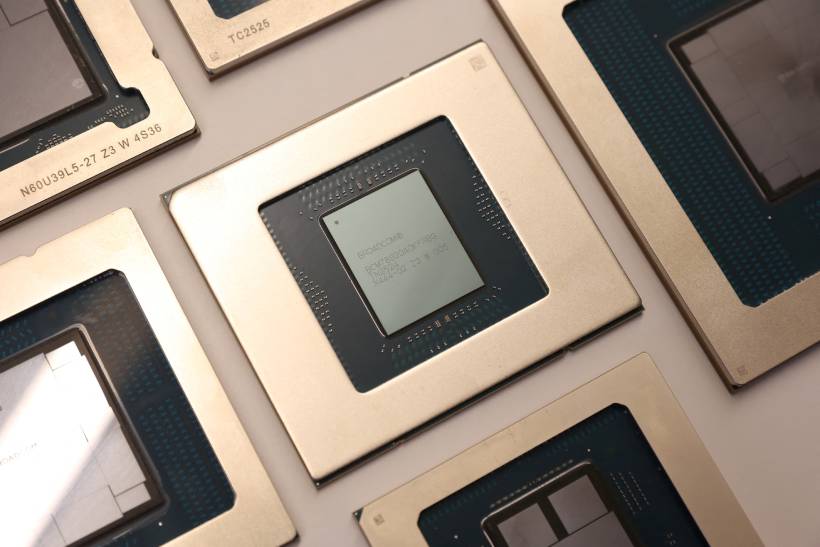
Semiconductors, or advanced chips, have been likened to the oil of the 21st century. Just as in the 20th century, oil formed the basis for global economic activity, semiconductors form crucial parts of everything from critical infrastructure like 5G data networks, military technology like missiles and AI data centers, to smartphones, fridges and electric vehicles. Indeed, the semiconductor market, growing rapidly since the launch of large language AI models in 2022, is projected to hold a value of $1 trillion by 2030. Hence, whoever controls the supply of semiconductors holds the power to bring rivaling economies to a standstill. This capability is reinforced by the fact that advanced microchips, and the rare earths contained in them, lack ready substitutes.

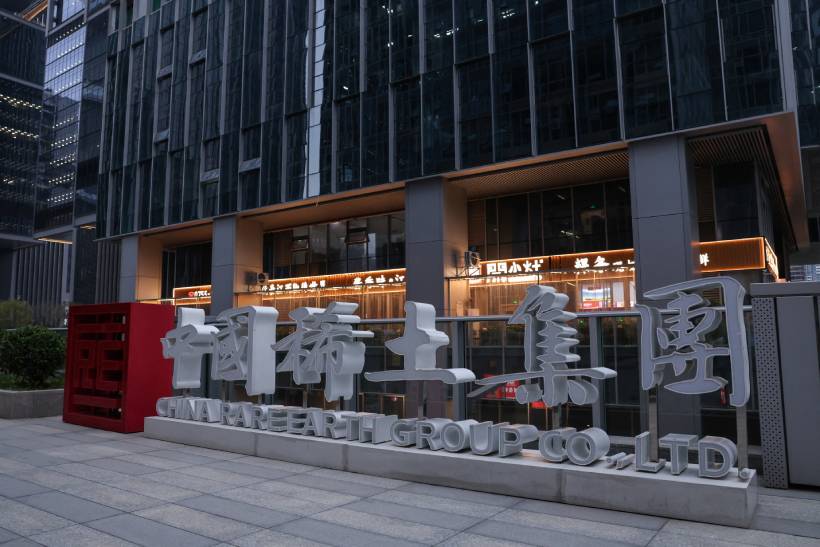
Assuredly, oil still offers geopolitical leverage—brought to the fore by the current energy crisis resulting from the closure of the Strait of Hormuz. Yet, semiconductors offer a more potent geopolitical weapon. For example, European sanctions on Russian oil and natural gas following the invasion of Ukraine in 2022 has been largely ineffective in crippling the oil-reliant Russian economy, as Russia has been able to find alternative supply routes like the Caspian Sea and alternative buyers such as India, Türkiye and China. By contrast, semiconductor supply chains are more concentrated due to differential geography, and economic, technological and intellectual capital. For example, Taiwan produces over 90% of the world’s advanced chips, while China controls 60% of global rare-earth production, and 90% of mineral refinement. Similarly, the US enjoys supremacy in semiconductor manufacturing equipment (SME) and expertise, while the Netherlands is the world’s sole producer of extreme ultraviolet lithography required to imprint circuits on semiconductors. Hence, the highly concentrated supply chains of semiconductors gives a handful of countries significant strategic leverage as countries are willing to go far to secure access to these crucial components.

Capitalising on critical mineral supply

This power is reinforced by the fact that the majority of the planet’s critical minerals—such as copper, cobalt and lithium—used in semiconductors and batteries are concentrated in developing countries in Africa and Latin America like Brazil, Chile and the Democratic Republic of Congo (DRC). Thus, the capital-intensity of mineral extraction has allowed major powers like the US and China to expand their influence over supply chains through massive investment in the mining industries of these regions. Hence, supply chains are further concentrated in the hands of a few states, enhancing the weaponisability of these resources. This is bolstered by the rarity and geographic disparity of these elements, meaning that countries cannot easily find substitutes or alternative suppliers for these critical resources, should the aforementioned mineral ‘gatekeepers’ choose to wield their strategic leverage and restrict supply.

Global business caught in the crossfire

This development subjects international business activity, especially within emerging technologies like AI, to geopolitical tensions. For example, the US introduced export controls in 2022, banning US semiconductor company Nvidia from exporting its advanced H2000 chips to China to protect US technological dominance. And Nvidia is not an isolated case—in the last few years, the amount of US companies on the Commerce Department’s Entity List restricting exports has quadrupled. In effect, US companies are losing global competitiveness and access to China—one of the biggest markets in the world. This effect might be hard to reverse. Although the Trump administration relaxed export restrictions in early 2026, no Nvidia chips had arrived in China by mid-May. Part of the reason is that China in response to US restrictions has built up its domestic production, and legally favored domestic chips producers like Huawei to reduce its strategic vulnerability to foreign powers. For similar reasons, China prevented US-based Meta in 2025 from buying up Manus, a Chinese-founded AI company. Thus, business interests are highly susceptible to the weaponisation of concentrated critical supply chains in the geopolitical rivalry between US and China.

Semiconductors—beyond oil

Hence, semiconductors and related products may not simply be the economic and strategic, 21st-century equivalent of 20th-century oil, but may indeed hold greater geopolitical leverage than oil ever did. While the US dominates global oil production, China does not have to import oil from its geopolitical rival at the expense of Chinese strategic power—despite China relying on imports for over 70% of its oil—as diversified global energy markets allow for alternative energy sources like coal and natural gas, and alternative suppliers like the UAE, Iran and Qatar. By contrast, China’s ability to manufacture the most advanced semiconductors without the currently unique US SME is highly limited, with Chinese semiconductor development 3 years behind the US. Consequently, China accounts for over half of the semiconductor exports of US-allied Taiwan.

Taiwan in the crossfire

This in turn increases the strategic importance of the Taiwan dispute. While China has long claimed Taiwan to be part of China, the US endorses Taiwanese independence. The importance of semiconductors has cemented this conflict, with China desiring reunification to gain control over global semiconductor manufacturing, while the US for the same reason favors Taiwanese independence from China to maintain US access to its semiconductor supply, in extension of current efforts to induce TSCM to offshore its production to the US, and reduce semiconductor exports to China. Similarly, China has leveraged its global dominance of refined rare earths and battery production by introducing export restrictions on batteries, refined critical minerals, and rare earths in response to US SME restrictions, exploiting the fact that the US has limited ability to employ its SME to manufacture semiconductors without these Chinese inputs. In response, the US and its allies are scrambling for alternative access to critical minerals by expanding trade partnerships with mining countries like the DRC, investment in battery-production, and by launching Project Vault, a $12-billion investment to create a national critical minerals reserve.

The weaponisation capacity of semiconductors has only begun. As countries are approaching the deadlines of net-zero emissions goals outlined in the Paris Agreement, increased dependency on renewable energy will increase susceptibility to global supply chains for batteries, rare earths and semiconductors for products like EVs, solar panels and energy storage.

Source link

United States China Tech Rivalry Delays Nvidia AI Chip Exports

The latest developments surrounding Nvidia’s H200 chip sales to China highlight the growing complexity of the technological rivalry between the United States and China. Although Washington has reportedly approved several major Chinese firms to purchase Nvidia’s advanced artificial intelligence chips, no deliveries have taken place so far.

The situation reflects how geopolitical competition is increasingly disrupting even officially approved commercial agreements in the semiconductor sector.

Nvidia, the world’s leading artificial intelligence chip manufacturer, now finds itself caught between United States export control policies and China’s push for technological self reliance.

What Is the H200 Chip?

The H200 is Nvidia’s second most powerful artificial intelligence chip and is designed for advanced AI model training and data center operations.

The chip is particularly valuable for companies developing large language models, cloud computing systems, and next generation AI applications.

Before export restrictions tightened, Nvidia dominated China’s advanced AI chip market with an estimated market share of around 95 percent.

China also represented a major source of revenue for Nvidia, making access to the Chinese market strategically important for the company’s long term growth.

Which Chinese Companies Were Approved?

According to reports, the United States Commerce Department approved around ten Chinese firms to purchase H200 chips.

These reportedly include major Chinese technology companies such as:

  • Alibaba
  • Tencent
  • ByteDance
  • JD.com

Several distributors were also reportedly approved, including:

Under the licensing terms, each approved customer could reportedly purchase up to 75,000 chips.

However, despite these approvals, no actual sales or deliveries have yet been completed.

Why Have the Sales Stalled?

The delays appear to stem from concerns on both the United States and Chinese sides.

Chinese Concerns

Chinese authorities reportedly fear that reliance on Nvidia chips could undermine Beijing’s efforts to strengthen its domestic semiconductor industry.

China has invested heavily in local AI chip development, particularly through companies such as Huawei.

Beijing increasingly sees semiconductor self sufficiency as a national security priority amid escalating technological competition with Washington.

There are also concerns within China regarding supply chain security and possible vulnerabilities linked to imported American technology.

Recent Chinese regulations aimed at reducing foreign dependence in critical technology sectors have reportedly intensified scrutiny of these chip purchases.

United States Restrictions

The United States has simultaneously imposed strict export control requirements on advanced semiconductor sales to China.

Chinese buyers must reportedly prove that the chips will not be used for military purposes and that adequate security procedures are in place.

Nvidia must also satisfy inventory and compliance conditions under American export laws.

Additionally, reports suggest the Trump administration negotiated an unusual arrangement in which the United States would receive a portion of revenue generated from the chip sales. This reportedly requires the chips to pass through American territory before shipment to China.

Such conditions have further complicated the transaction process.

Jensen Huang’s Diplomatic Push

Nvidia Chief Executive Officer Jensen Huang has emerged as a key figure in efforts to preserve Nvidia’s access to the Chinese market.

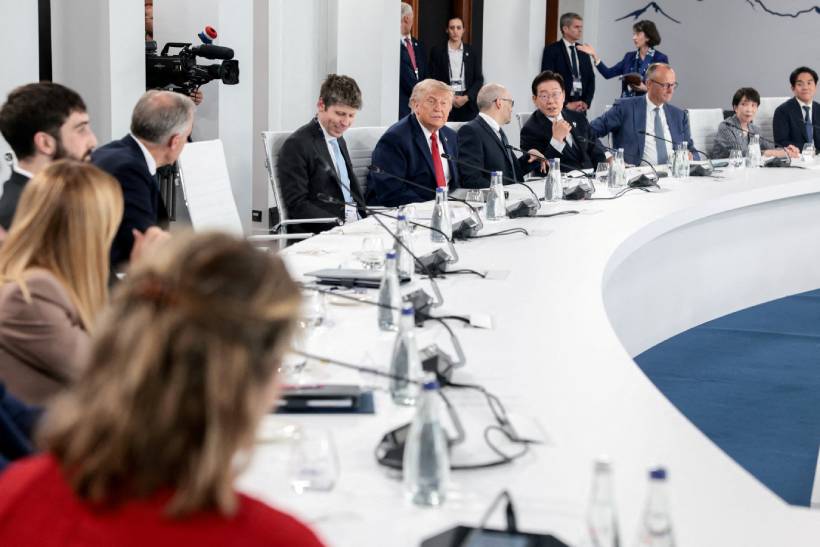
Huang reportedly joined President Donald Trump during a diplomatic visit linked to talks with Chinese President Xi Jinping.

His participation underscores the economic significance of the semiconductor dispute and the importance of China to Nvidia’s business strategy.

Huang has repeatedly warned that export controls risk permanently weakening Nvidia’s position in China while encouraging Chinese firms to accelerate domestic alternatives.

The Larger Strategic Battle

The Nvidia dispute reflects a broader struggle between the United States and China over technological dominance in artificial intelligence.

Washington increasingly views advanced semiconductor technology as a strategic national security asset. American policymakers fear that unrestricted access to advanced AI chips could strengthen China’s military and technological capabilities.

China, meanwhile, sees semiconductor independence as essential to reducing vulnerability to foreign pressure and sanctions.

As a result, both sides are attempting to balance economic interests with long term strategic competition.

Implications for the Global AI Industry

The uncertainty surrounding Nvidia’s China business could have major implications for the global artificial intelligence industry.

If Chinese companies lose access to Nvidia chips, they may accelerate investment in domestic alternatives, potentially reshaping the global semiconductor market over time.

At the same time, restrictions on AI chip trade risk fragmenting the global technology ecosystem into competing American and Chinese spheres.

This could reduce international collaboration, disrupt supply chains, and intensify geopolitical competition over emerging technologies.

Future Outlook

Despite current delays, neither the United States nor China appears willing to completely sever technological and commercial ties.

However, the Nvidia case demonstrates that semiconductor trade between the two powers is becoming increasingly politicized and strategically sensitive.

The future of AI competition may ultimately depend not only on innovation, but also on which country can build the most resilient and independent technology ecosystem.

For Nvidia, maintaining its position between the world’s two largest economies will likely remain one of its greatest strategic challenges.

Conclusion

The stalled Nvidia H200 deal illustrates how deeply geopolitical tensions now shape the global technology industry.

Although the United States has approved limited chip exports to China, political distrust, national security concerns, and strategic competition continue to obstruct implementation.

As artificial intelligence becomes central to economic and military power, semiconductor trade is no longer simply a commercial issue. It has become a defining arena in the broader contest between Washington and Beijing for technological leadership in the twenty first century.

With information from Reuters,

Source link

ASML Raises 2026 Outlook as AI Driven Chip Demand Accelerates

ASML occupies a critical position in the global semiconductor supply chain as the sole producer of extreme ultraviolet lithography systems. These machines are essential for manufacturing the most advanced chips used in artificial intelligence applications. As demand for AI computing has surged, driven by data centre expansion and high performance processing needs, the semiconductor industry has entered a new investment cycle focused on capacity growth.

Strong earnings and upgraded forecast

ASML reported first quarter earnings that exceeded expectations and raised its 2026 revenue outlook to between 36 billion and 40 billion euros. This revision signals stronger than anticipated order inflows and reinforces the scale of demand emerging from the AI sector.

The company’s performance reflects a broader trend in which chip demand is outpacing supply. According to CEO Christophe Fouquet, customers are accelerating expansion plans well beyond the near term, indicating confidence in sustained AI driven growth.

ASML as a strategic enabler of AI growth

Investors increasingly view ASML as a foundational player in the AI ecosystem rather than a conventional manufacturer. Its tools are used by leading chipmakers such as TSMC, which produces advanced processors for firms like Nvidia and Apple.

This positioning places ASML at the upstream end of the value chain. Instead of competing in chip design or production, it supplies the essential infrastructure that enables both. As a result, its growth is tied to the entire semiconductor sector rather than any single company.

Supply constraints and industrial limits

Despite strong demand, structural constraints remain significant. Semiconductor fabrication plants require years to build and involve complex global supply chains. ASML itself faces production bottlenecks due to the precision and cost of its machines, which can reach hundreds of millions of dollars per unit.

Even with plans to increase shipments of its leading systems in 2026 and 2027, capacity expansion is gradual. This creates a persistent imbalance where demand continues to exceed supply, reinforcing pricing power across the industry.

Geopolitical and regulatory risks

A key uncertainty for ASML lies in export controls, particularly regarding sales to China. Proposed restrictions in the United States, including the MATCH Act, could limit the company’s ability to supply Chinese customers. Currently, China represents a significant portion of ASML’s revenue.

However, the global shortage of advanced chips may mitigate this risk. Reduced access to one market could be offset by demand from others, especially as countries and companies compete to secure semiconductor supply chains.

Market response and valuation concerns

ASML’s share price has risen sharply, reflecting investor optimism around AI driven growth. The company is often described as a “picks and shovels” investment, benefiting from the broader expansion of the industry regardless of which firms dominate end products.

At the same time, analysts caution that valuations are elevated. The current pricing assumes sustained high growth, leaving limited room for setbacks related to supply constraints or regulatory changes.

Analysis

The upgrade in ASML’s forecast highlights a structural shift rather than a temporary cycle. AI is not only increasing demand for chips but also reshaping the entire semiconductor value chain. ASML’s monopoly in EUV technology gives it a unique strategic advantage, effectively making it a gatekeeper for next generation chip production.

However, this dominance also exposes the company to geopolitical pressures and operational challenges. The interplay between technological leadership, supply limitations, and regulatory dynamics will determine whether current growth trajectories can be maintained.

ASML’s stronger outlook underscores the depth of the AI driven semiconductor boom. While demand momentum remains robust, the company operates within a constrained and politically sensitive environment. Its future performance will depend on balancing rapid industry expansion with the physical and geopolitical limits shaping the global chip ecosystem.

With information from Reuters.

Source link