semiconductors

Japan Finds Rare Earth Rich Deep Sea Mud Near Remote Island

Japan has identified a high concentration of valuable heavy rare earth elements in deep sea mud recovered from waters near the remote Pacific island of Minamitori, marking another step in its efforts to reduce dependence on Chinese critical mineral supplies.

The Japanese government said on Friday that analysis of rare earth rich mud collected earlier this year showed medium and heavy rare earth elements accounted for about 54% of the total rare earth content. However, officials did not disclose the overall size of the deposits, saying the limited scope and duration of sampling meant the available data was insufficient to estimate total reserves.

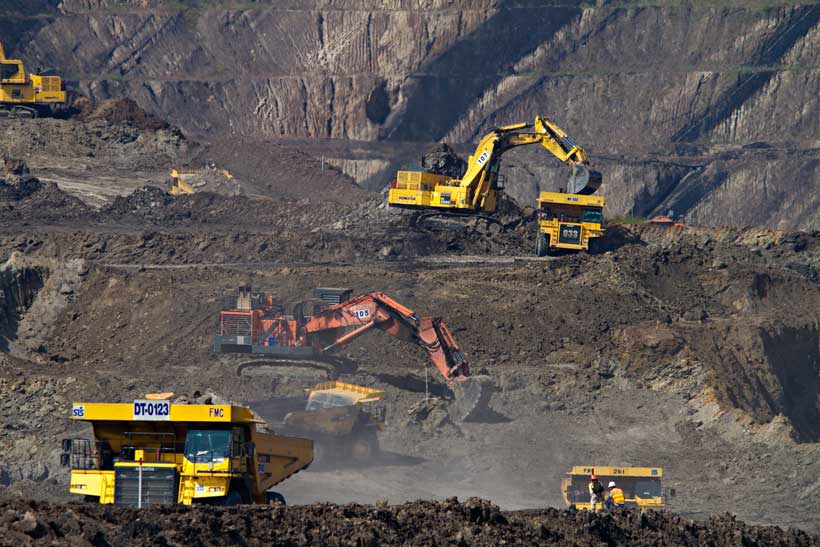
The samples were collected during a month long expedition in February by Japan’s scientific drilling vessel Chikyu near Minamitori Island, approximately 1,900 kilometres southeast of Tokyo. The mission marked the world’s first successful continuous recovery of rare earth bearing seabed mud from depths of around six kilometres beneath the ocean surface.

Strategic Push for Mineral Security

The project forms part of Japan’s broader strategy to strengthen supply chain security for critical minerals following tighter Chinese export restrictions on heavy rare earth elements and magnets, which are widely used in defence systems, electric vehicles, semiconductors and other advanced technologies.

Stay ahead of the geopolitical week.

MD Briefing delivers expert analysis across five global fronts — the Indo-Pacific, energy, geoeconomics, European security, and the Middle East — every Monday morning. Free.

Researchers recovered approximately 50 metric tons of seabed mud during the expedition.

Analysis identified several strategically important rare earth elements, including yttrium, used in aerospace, semiconductor and energy technologies; gadolinium, widely used in medical imaging and other high technology applications; and dysprosium, a key component in high performance permanent magnets used in electric vehicle motors.

Commercial Mining Trial Planned

Japan plans to conduct a month long large scale mining trial in the same waters beginning in February 2027.

The trial aims to recover approximately 350 tons of seabed mud each day. The material will first be dewatered on Minamitori Island before being transported to mainland Japan for separation, refining and smelting tests.

The project will evaluate whether domestic deep sea rare earth production can become commercially viable. A comprehensive assessment of industrial scale production is expected by March 2028, according to Kazushige Kikuchi, project manager at the Japan Agency for Marine Earth Science and Technology, which operates the Chikyu research vessel.

China Remains Dominant Supplier

Japan’s exploration efforts come amid growing concern over China’s control of global rare earth supplies.

Beijing introduced export controls on several heavy rare earth elements and related magnets in April 2025 and later tightened restrictions on exports to Japan in January, followed by two additional rounds of measures the following month targeting major Japanese companies.

Rare earth elements are essential components in advanced manufacturing, including electric vehicles, renewable energy systems, military equipment, consumer electronics and semiconductor production.

Analysis

Japan’s latest findings highlight the growing strategic importance of securing independent supplies of critical minerals as geopolitical competition increasingly shapes global supply chains. Although the newly analysed deposits have yet to be proven commercially viable, the discovery strengthens Japan’s long term effort to reduce reliance on Chinese exports. If future mining trials demonstrate economic feasibility, deep sea resources could become an important pillar of Japan’s critical minerals strategy while encouraging other resource poor countries to accelerate investment in seabed mining technologies despite ongoing environmental concerns.

With information from Reuters.
Source link

G7 Launches Critical Minerals Alliance to Reduce Dependence on China

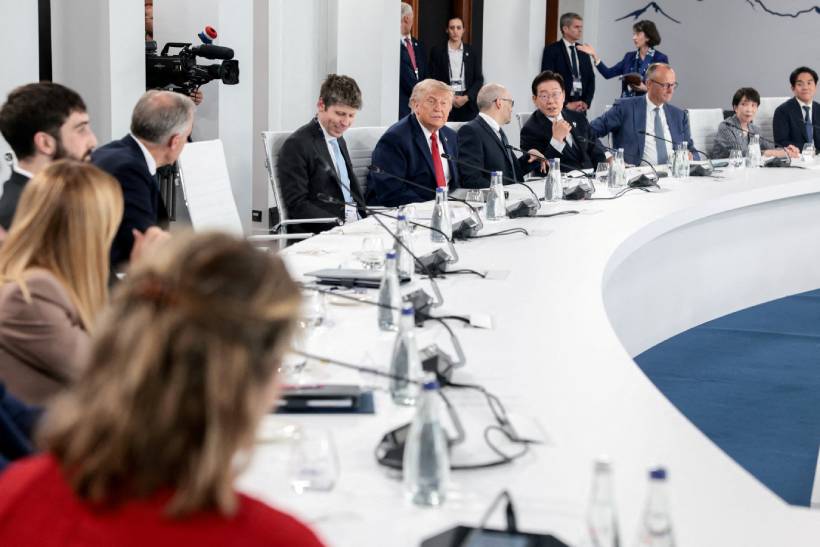
Leaders of the Group of Seven agreed to deepen cooperation on critical minerals and establish a new coordination platform aimed at reducing reliance on China for materials essential to defense, technology, electric vehicles, and renewable energy industries.

The move comes as Western economies seek to strengthen supply chain security following disruptions caused by Chinese export restrictions on rare earth related products and permanent magnets, which exposed the vulnerability of global industries dependent on a single dominant supplier.

New Targets for Supply Chain Diversification

The G7 outlined ambitious goals to reduce dependence on any single supplier outside the group and its partners. Leaders said they aim to lower reliance on one source for rare earths and permanent magnets to below 60 percent by 2030, with a longer term objective of reducing that figure to 50 percent as soon as possible.

Initial cooperation will focus on lithium and nickel, two minerals that play a crucial role in battery manufacturing and clean energy technologies. The framework is expected to expand gradually, adding several new minerals each year with particular attention on rare earth elements.

New Monitoring Platform and Investment Push

A central part of the initiative is the creation of a new platform that will coordinate policy responses, improve information sharing, and monitor potential supply disruptions.

The platform will work closely with the International Energy Agency, which will provide market analysis and early warnings about supply risks, shortages, and distortions.

G7 leaders also stressed the need for greater investment across the entire supply chain, from mining and processing to manufacturing and recycling. Development finance institutions, export credit agencies, and private investors are expected to play a larger role in funding strategic projects.

According to the summit statement, nearly 200 critical mineral projects have already been announced since the start of 2026, representing tens of billions of dollars in planned investment.

Economic Security Becomes a Strategic Priority

The initiative reflects a broader shift in Western economic policy, where critical minerals are increasingly viewed as a national security issue rather than simply a trade matter.

Rare earths, lithium, nickel, cobalt, and other strategic minerals are essential for advanced military systems, semiconductors, electric vehicles, batteries, renewable energy infrastructure, and artificial intelligence technologies.

Spend

Western governments have become increasingly concerned that geopolitical tensions could disrupt access to these resources, creating economic and security vulnerabilities.

Analysis

The G7 initiative represents one of the most coordinated attempts yet by advanced economies to reduce strategic dependence on China. While the statement avoids directly confronting Beijing, the objectives clearly target vulnerabilities that became apparent after China’s export restrictions disrupted global industries.

The challenge, however, extends beyond mining. China has spent decades building dominance across processing, refining, manufacturing, and logistics networks. Replicating those capabilities will require sustained investment, government support, and international coordination over many years.

The inclusion of measures such as joint procurement, subsidies, quotas, and price support mechanisms suggests governments are increasingly willing to intervene in markets to secure strategic resources. This marks a significant departure from the free market approach that previously dominated global trade policy.

Success will depend on whether G7 members can maintain political unity and attract sufficient private investment. If implemented effectively, the alliance could gradually reshape global critical mineral supply chains and reduce China’s leverage over key industries. If not, Western economies may continue to face supply risks despite ambitious targets and large investment commitments.

What Comes Next

The G7 is expected to begin implementing pilot programs focused on lithium and nickel while expanding cooperation with allies such as Japan and the European Union. The United States is also expected to pursue new trade and supply agreements related to critical minerals in the coming months.

Attention will now shift to whether governments can translate commitments into operational projects, increase domestic processing capacity, and build alternative supply chains quickly enough to reduce dependence on China before future disruptions occur.

With information from Reuters.

Source link