Texts lit up my phone this morning from friends who had wasted most of their lives rooting for the Angels: Arte Moreno finally was selling the team.
“First order of business: it’s the Anacrime Angels,” Nelson Rodriguez cracked before sending a meme of Stringer Bell in “The Wire” wearing an old-school California Angels cap and saying, “I want you to put the word out there that we back up.”
“This news honestly made my year,” texted Anaheim City Councilmember Natalie Rubalcava, who graduated a year ahead of me from Anaheim High and whose daughter works at my wife’s restaurant. “Excited to leave the controversy and negativity behind and look forward to a new era of Anaheim baseball.”
“Shame this didn’t happen when [Shohei] Ohtani was an Angel,” the Mountain shared on a group text thread of childhood friends who call each other by long-standing nicknames — I’m the Consigliere.
“I get invited to the games but hell no,” replied the Butcher, who’s been a fan since the days of Hall of Famer Nolan Ryan in the 1970s.
“I’ll finally go back” to a game in person, my cousin Plas added. “A Trumper [Latino] what could’ve gone wrong …” he wrote, referencing Moreno, before asking if Kurt Suzuki was still manager because “that’s how little I’ve kept up with the team.”
Those are the texts I can print in a family newspaper.
Moreno is selling to Los Angeles Rams owner Stan Kroenke, whose company also owns perennial contenders in the NBA (Denver Nuggets), NHL (Colorado Avalanche) and England’s Premier League (Arsenal). Sources told my colleagues that the price was $4 billion, which would be a baseball record and speaks to the Halos’ untapped potential.
Major League Baseball still needs to approve the deal, but I guarantee that Commissioner Rob Manfred and the 29 other team owners are reacting with the silly swaying dance that Dodgers players do every time they get on base.
“The Moreno Family has been honored to steward the Angels for 23 years,” the soon-to-be-ex-Angels owner said in a statement.
You stewarded nada, Arte: You destroyed.
You started with so much hope and ended up with fans like my friends shooting venom at you like pissed-off cobras. There’s a reason why you’ll leave as one of the most loathed owners in baseball history. Your underperforming reign makes the McCourts of Dodgers infamy seem as amazing and beloved as the O’Malleys.
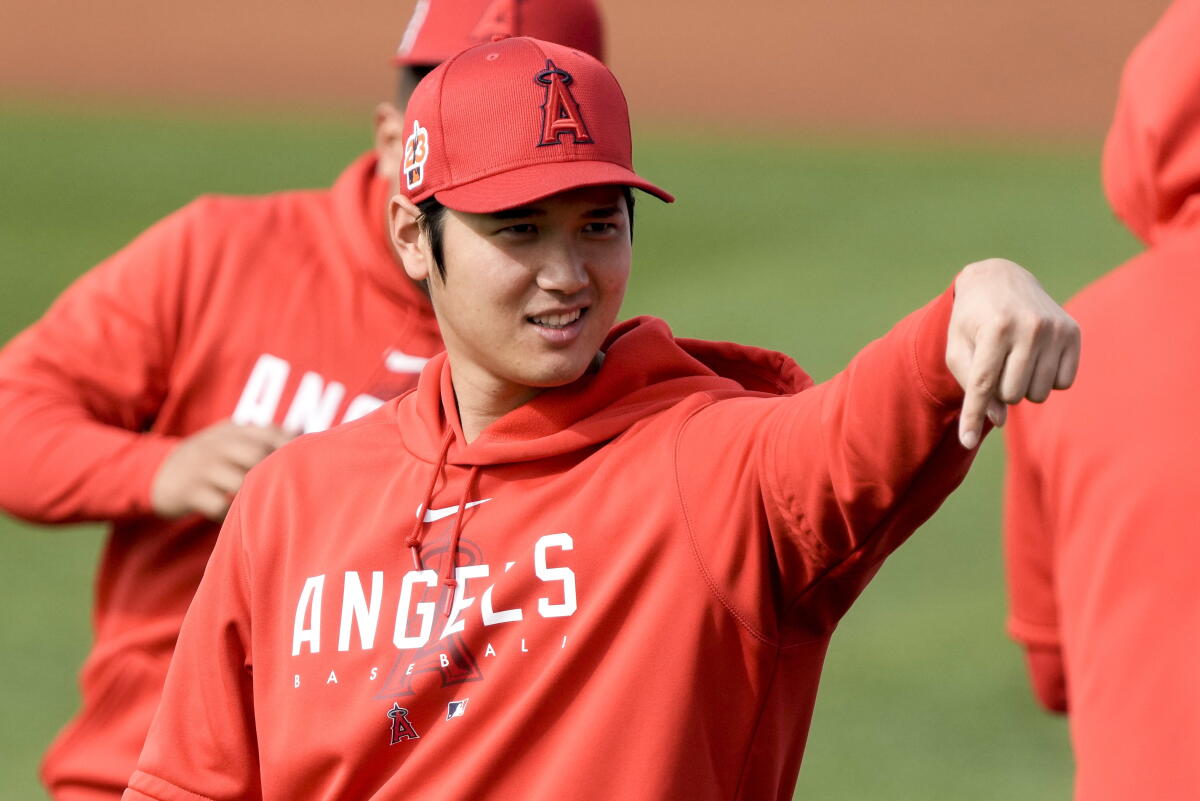
Not even Shohei Ohtani, at spring training when he played for the Angels in 2023, could change the team’s fortunes under Moreno.
(Morry Gash/Associated Press)
The Tucson native, who made his billions in the billboard industry, bought the Angels from Disney in 2003, the year after they won their sole World Series championship. At a festive press conference, Moreno handed a sombrero to then-skipper Mike Scioscia to wear, then announced that the first order of business was to cut beer prices.
The new owner quickly signed the best players in baseball — slugger Vladimir Guerrero and pitcher Bartolo Colón. Moreno walked Angel Stadium during games to ask fans what they wanted, what they needed, what they dreamed of. That first decade, he made the Angels what they never had been for a prolonged period: winners.
Fans packed the stands — more than 3 million each year from 2003 to 2019, the third-longest streak in baseball. Anaheimers donned Halos jerseys and hats like never before. More incredibly, Moreno was at the cusp of the impossible: convincing a generation of Latino baseball fans in Orange County to side with the Halos instead of the Dodgers.
But there were always signs that something was off.
Moreno renamed the team the Los Angeles Angels two years after he bought them, a ridiculous moniker that made them a national punchline. The renaming also cost Anaheim millions of dollars in legal fees after the city unsuccessfully sued to force Moreno to keep my hometown in the team’s name.
Moreno openly talked about moving the Angels to a city that would build him a new stadium. He also fell into the terrible habit of signing conservative-leaning, past-their-prime ballplayers like Josh Hamilton, Albert Pujols and Anthony Rendon to massive contracts that weighed down the team for years, like one of Angel Stadium’s legendary cinnamon rolls.
Die-hards like my pals trudged on, buoyed by generational talent Mike Trout and the occasional flash-in-the-pan prospect. But even they were turned off by the last three years.
That same year, the Halos let Ohtani — who was on his way to a second most valuable player award and already had established himself as one of the most talented baseball players ever — walk away as a free agent while gaining nothing in return.
This season kicked off with Moreno telling the Orange County Register about a survey supposedly revealing that winning wasn’t “a top priority” for Angels fans. The Angels hadn’t made the playoffs in 11 years, hadn’t finished with a winning record since 2015, had landed in last place in their division for the last two years — and that’s what he offered as a speck of hope? No wonder the team is on pace to lose 100 games for the first time in franchise history. No wonder disgusted fans have protested both inside and outside Angel Stadium all summer.
At the only game I went to this year — a sparsely attended afternoon snoozer against the Chicago White Sox — I found the stadium more beat-up than ever: peeling paint, beat-up seats, tinny PA system. For about $25 each, my friends and I bought tickets behind the first-base dugout that would have cost hundreds of dollars at Dodger Stadium.
Billboards along Southern California freeways have broadcast the Angels’ desperate attempts to draw in fans via pathetic promotions. Fireworks every Saturday. A bobblehead giveaway of light-hitting shortstop Zach Neto, who never has made an All-Star team. A “yard sale” that sounds like a giant casting off of crappy memorabilia a week away from the trash can.
Angels fans wave signs and urge owner Arte Moreno to sell the team to an ownership group willing to invest more in winning during a pregame protest at Angel Stadium.
(Joaquin Ruiz / For The Times)
I never cared for the Angels, but I always wanted them to do well. Any success they achieved rubbed off on my hometown, as it did during that magical 2002 run.
I also wanted Moreno, the first Latino to own a major professional sports team, to succeed, so his fellow Trump supporters might know that our kind can excel at the highest echelons of American society, if only we get the chance.
But for the last few years, I cheered each time the Angels lost. I wanted them to tank, to forever seal Moreno’s legacy as a loser. To serve as a warning to all professional sports owners that they can abuse a host city and its fan base for only so long before people revolt by just not caring.
Good luck to Kroenke as he tries to resuscitate a franchise deader than a stump in the Petrified Forest.
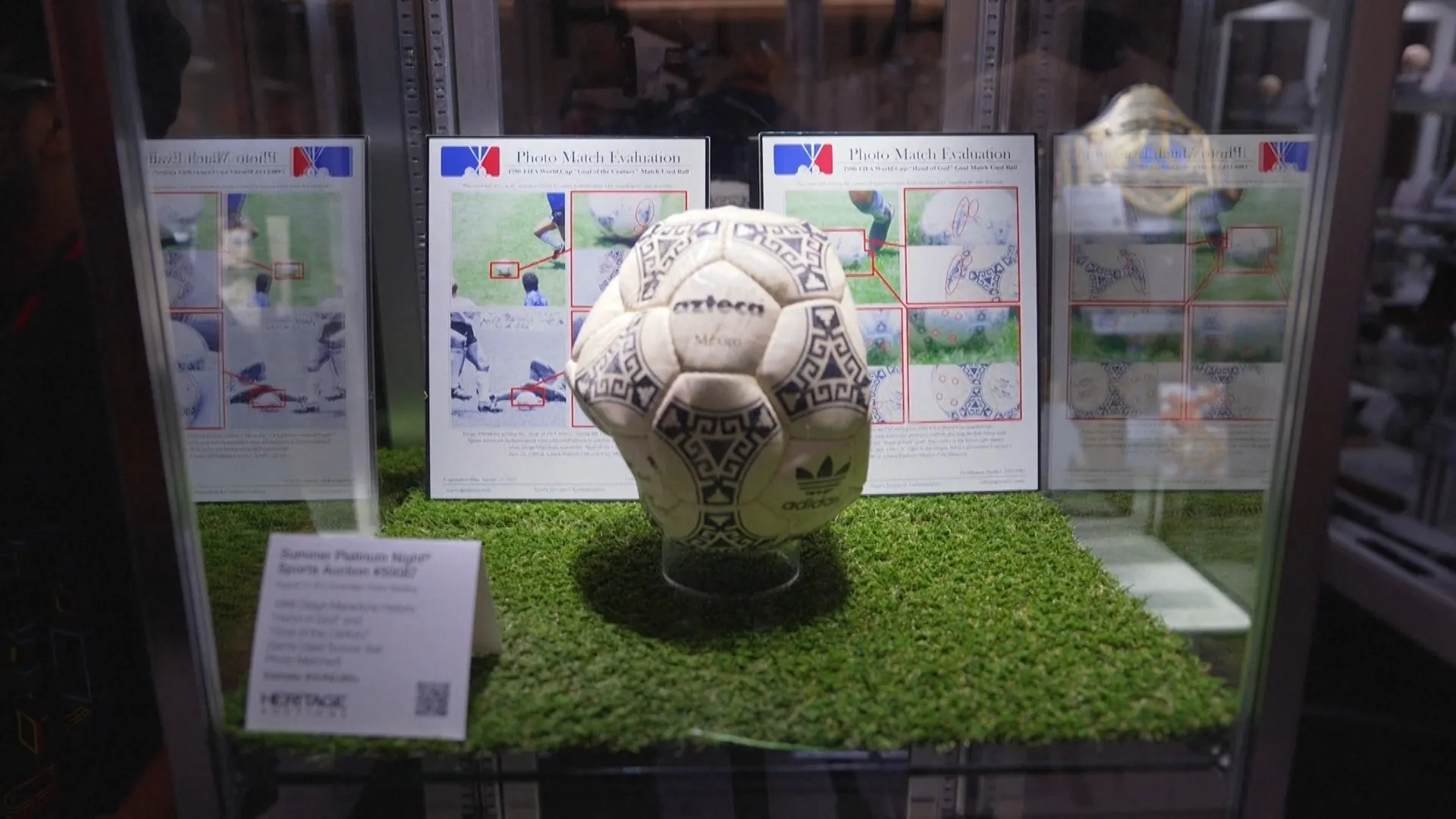
Diego Maradona’s 1986 World Cup ball has sold for $3.35m. Maradona scored against England with his hand, later calling it the ‘Hand of God’. Four minutes later, he beat five players to score the ‘Goal of the Century’. Argentina won 2-1 and went on to lift the World Cup.
GEMMA Collins looked great in a bikini as she makes a bit of extra cash by selling her old clothes for just a tenner.
The former Towie star, 45, took to her Instagram story to tell her 2.3 million followers that she’s uploaded some bits from her wardrobe on app Vinted.
Sign up for the Showbiz newsletter
Thank you!
Gemma Collins wowed in a paisley patterned bikini as she sold her clothes on VintedCredit: Instagram / gemmacollinsGemma Collins flashes her stomach in bikini as she sells off old clothes for a tenner, https://www.instagram.com/stories/gemmacollins/3922907988476705664/Credit: Instagram / gemmacollins
The GC wowed in a blue paisley bikini and matching sarong.
She completed the look with long beach waves.
“Make me crazy prices on Vinted today, it’s all got to go,” she captioned the post.
In the next post she shared a screen shot of her Vinted profile, named “gcwardrobe1”, to display the clothes that she has on the platform for sale
Former Top Gear host Jeremy Clarkson headed to the auction house on the Prime Video series
Jeremy Clarkson’s net worth after farm show proves massive success BigCityLife
Jeremy Clarkson and Kaleb Cooper bid farewell to an iconic member of Diddly Squat Farm.
Season five of Clarkson’s Farm saw Jeremy selling off the fan-favourite Lambo tractor after it wasn’t getting much use, following his purchase of the AgBot in the new series.
The AgBot, a fully autonomous, driverless tractor, was busy ploughing the fields of Diddly Squat Farm and sowing seeds.
Jeremy and Kaleb could monitor the tractor’s progress on their computer while they got on with other things on the farm, which meant the 2016 Deutz-Fahr tractor wasn’t getting much use.
The veteran broadcaster decided to sell it off, explaining in voiceover: “”The green Lambo hadn’t turned a wheel in weeks, so I decided to sell it, which meant getting it valued by an agricultural auctioneer.”
The valuation on the prized piece of agricultural kit from Oliver Godfrey left Jeremy somewhat surprised and dismayed.
Oliver responded: “It’s not the easiest thing to sell in the world, I’ll be honest, but I would look somewhere in the region of between £50,000 and £60,000.”
Jeremy revealed that the valuation was “quite a lot less” than he’d initially paid for it when he bought it for £80,000.
On the day of the auction, Jeremy didn’t appear too hopeful about his Lambo’s prospects and said: “Here it is. There’s going to be a frenzy of bidding…”
However, the bidding did start to pick up as people put in their offers for the green tractor that Jeremy had customised and adorned with Lamborghini badges.
As the offers went up, Jeremy remarked: “We are actually getting closer to the £80,000 that I had paid for it.”
Despite the valuation, both Jeremy and Kaleb were left astonished and rather relieved when the Lambo ended up getting snapped up for the sum of £70,500.
Get 30 days of Prime Video totally free
This article contains affiliate links, we will receive a commission on any sales we generate from it. Learn more
TV lovers can get 30 days’ free access to binge great shows like Clarkson’s Farm by signing up to Amazon Prime. Just remember to cancel at the end and you won’t be charged.
Once the hammer went down, Jeremy said: “Well, it was a financial hit, but it wasn’t a financial kick in the nuts.”
The auction comes ahead of tomorrow’s Clarkson’s Farm season five finale, when audiences will get the final two episodes titled Sickening and Reaping – referring to the TB outbreak and the harvest at Diddly Squat.
Clarkson’s Farm season 5 concludes tomorrow on Prime Video
Comstock Resources (CRK) said Monday it sold a 27% equity interest in its Pinnacle Gas Services midstream subsidiary to investment firm Sixth Street for $600M, valuing Pinnacle at a $2.2B enterprise value.
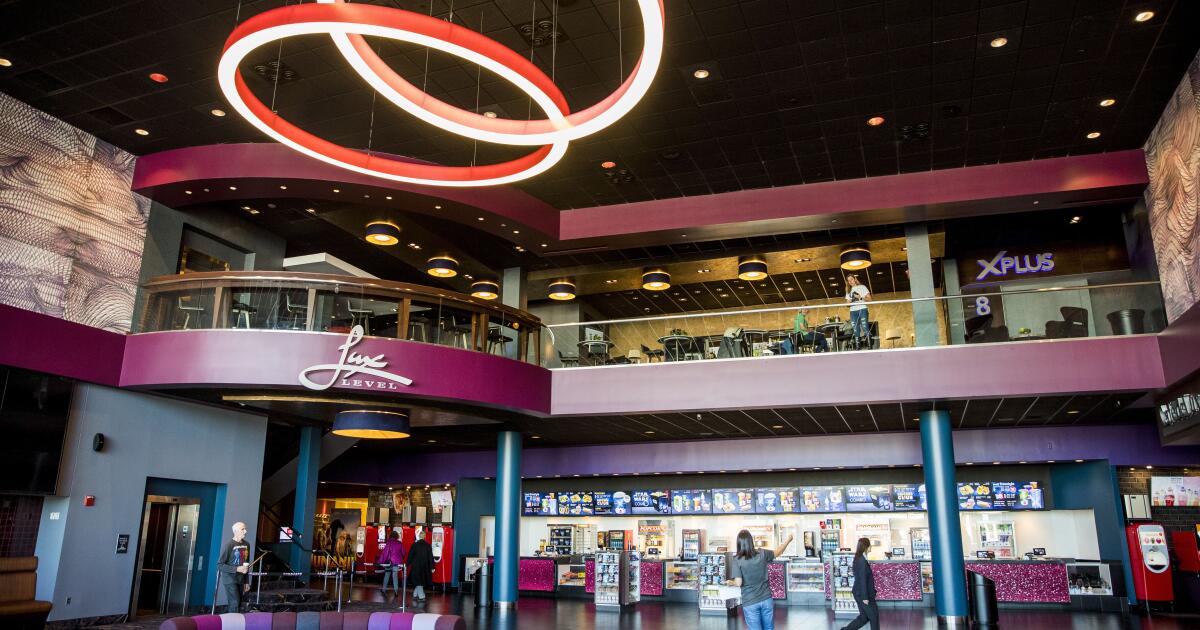
The Ellison family-controlled Harbor Lights Entertainment has sold its Showcase Cinemas theater chain to a major European cinema group in a $30-million deal.
Belgium-based Kinepolis will soon operate 13 cinemas across the United States. Seven are in Massachusetts, four in New York, one in Ohio and one in Rhode Island.
David Ellison, who is now in charge of Paramount Skydance, acquired National Amusements last year from the Redstone family. He renamed the company Harbor Lights. National Amusements was the start of Redstone’s media empire, which at one point included control of CBS, Paramount and Viacom.
The deal is awaiting regulatory approval, but officials in several state states recently announced plans to try to block the merger. The potential lawsuit would seek to challenge the proposed merger on antitrust grounds, arguing it would decrease competition, lower wages and lead to widespread job losses.
With the sale of the theaters, Kinepolis will add 164 screens to its portfolio. The company was formed in 1997 and currently operates 63 cinemas in Europe and nearly 60 theaters in the U.S. and Canada.
The newly acquired theaters welcomed about 4 million visitors and generated more than $90 million in revenue last year.
“This acquisition allows us to expand our market position in the U.S. from Michigan to the East Coast with an asset and a team that enable us to implement Kinepolis’ operational model and corporate strategy, ultimately enhancing the experience for moviegoers in these markets,” Eddy Duquenne, Kinepolis’s chief executive, said in a statement.
The company said Showcase Cinemas would retain its name. It expects the acquisition to be complete by the end of the summer.
Times staff writer Wendy Lee contributed to this report.