seizure

Lawmakers send bills to Newsom shoring up ballot security, transparency for paid political posts

California lawmakers on Sunday approved bills aimed at preventing interference in this fall’s midterm elections and requiring more transparency from social media influencers who are paid by political campaigns.

They join a growing pile of bills on Gov. Gavin Newsom’s desk as the legislature nears the end of its two-year session, which adjourns early this week.

Social media influencers took on a more visible role in California’s 2026 gubernatorial primary. Candidates including Democratic billionaire Tom Steyer paid thousands of dollars to influencers who posted videos endorsing Steyer or talking about him in a positive light. These videos did not always disclose that influencers were paid by a candidate’s campaign.

Assemblymember Marc Berman (D-Menlo Park) said his bill would ensure “that voters are not misled by paid content” by requiring a disclosure on paid posts and videos. Campaigns will also be required to report funds spent on social media posts.

If Newsom signs the law, it could result in fines for influencers and campaigns that fail to disclose such payments.

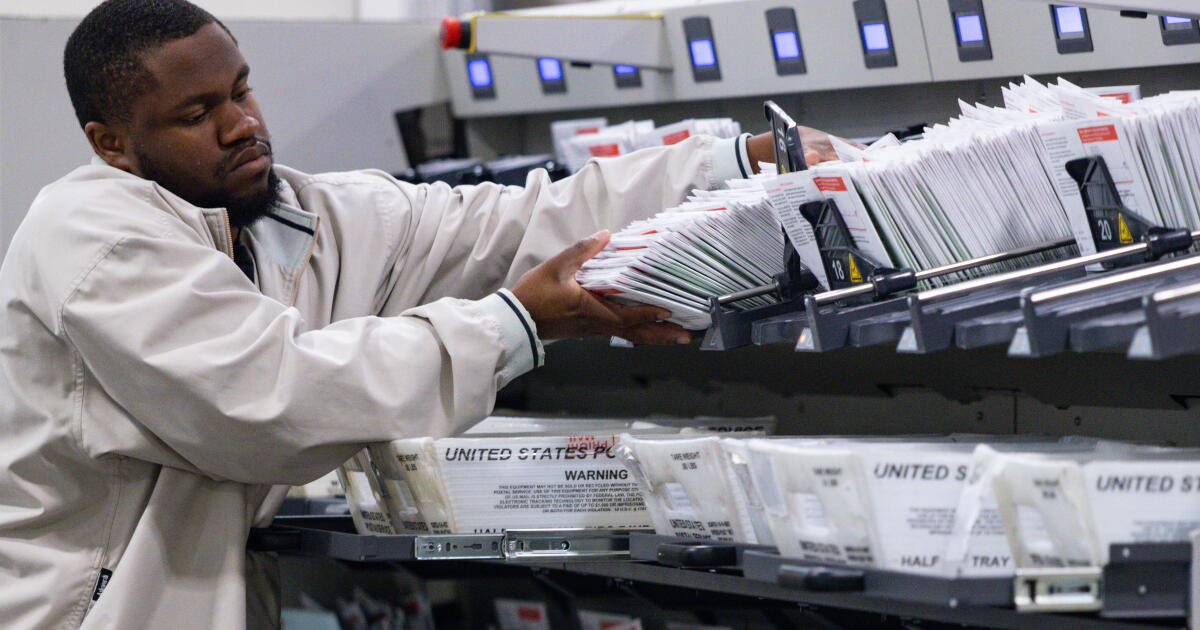
Two other bills sent to Newsom on Sunday would make it a felony to interfere with mail ballots or to seize ballots and other election materials before an election is certified. They come amid concern from Democratic lawmakers that President Trump or his supporters will seek to interfere with the casting and counting of ballots in the Nov. 3 election.

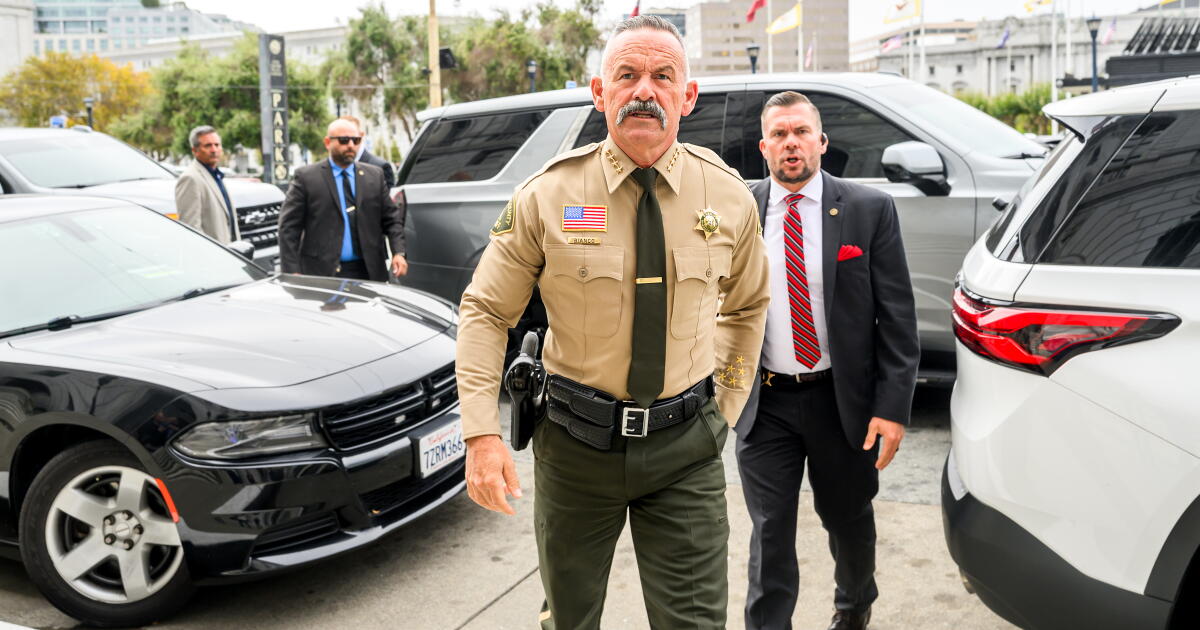
Riverside County Sheriff Chad Bianco drew outrage and legal challenges when he ordered his deputies to take more than 650,000 ballots from the county elections office over unproven claims of fraud. The case was argued before the California Supreme Court last week.

Newsom earlier this year signed a bill preventing local and federal law enforcement agencies from taking ballots without a warrant.

Legislation by Assemblymember Gail Pellerin (D-Santa Cruz) goes even further by making it a felony to take or order the seizure of ballots, election records or voting machines. Such actions would be punishable by up to four years in prison.

“The federal administration and those seeking to spread lies about our democracy continue to call for interference in elections in ways we have never seen before in this country,” Pellerin said Sunday. “AB 282 helps ensure that every lawfully cast vote can be counted, and that the will of the voters of every political party will be respected.”

Republican lawmakers argued in previous hearings that the bill is unnecessary because it is already a crime to steal ballots.

Another bill, SB 259, makes it a crime to interfere with a mail ballot on the way to or from a voter or order the seizure of ballots that are in transit to a local elections office.

Newsom has until Sept. 30 to sign or veto bills.

Source link

UNRWA chief condemns Israeli seizure of East Jerusalem facility | Israel-Palestine conflict News

The head of the UN agency for Palestinian refugees (UNRWA) has condemned an Israeli seizure of its East Jerusalem training centre, calling the raid part of a campaign designed to weaken the agency and, in turn, eliminate Palestinian rights.

In comments to Al Jazeera, acting Commissioner-General Christian Saunders on Wednesday accused Israel of violating UN premises, but insisted that “might doesn’t win out” in resolving the conflict and that the agency is “not going anywhere”.

Israeli forces raided and seized the Qalandiya Training Centre in the Kafr Aqab neighbourhood on Tuesday, expelling UNRWA employees and ordering them not to return.

Five Palestinians were injured by Israeli gunfire near the site, according to the Jerusalem governorate.

Far-right Israeli National Security Minister Itamar Ben-Gvir took part in the raid and said there was “no place for the agency in Jerusalem and Israel”. Israeli Prime Minister Benjamin Netanyahu said the evacuation was lawful and carried out under legislation passed by Israel.

The takeover of the facility deprives hundreds of young Palestinians of education and violates the protections afforded to UN premises under international law, Saunders said.

“Three hundred and forty young people are not going to get the education, not going to get the training they need,” he remarked. He lamented that the students – mostly from disadvantaged families – will now miss out on learning the skills to give them the “opportunity to lead a full and dignified life”.

The Qalandiya centre is part of UNRWA’s wider network of services for Palestinian refugees. It serves about 16,000 refugees from Qalandiya refugee camp and other parts of the occupied West Bank.

The raid followed the closure of the nearby Qalandiya checkpoint and a heavy Israeli military deployment in the area.

Israeli authorities said the property was owned by the Jewish National Fund and has now been allocated to the Jerusalem Municipality for a planned educational and community complex. They also cited Israeli legislation, passed in October 2024, restricting UNRWA’s activities.

UNRWA rejected the claims and maintained that the centre is a United Nations facility protected under international law.

Wider campaign

UNRWA has come under severe pressure amid Israel’s genocidal war on Gaza and abuse in the occupied West Bank, with several workers having been killed.

Saunders said the wider campaign against UNRWA is intended to weaken the agency and cut its funding, and links these efforts to the broader question of Palestinian refugee rights.

“If UNRWA is defunded and UNRWA is eliminated then they are hoping that the issue of the refugees, the Palestine refugees, will go away,” Saunders said. “Which means that the right of return, reparations, and compensation would go away, as well.”

The aid group chief pointed out that its mandate comes directly from the United Nations General Assembly and its role is to provide humanitarian and public services while the wider political dispute between Israel and Palestinians remains unresolved.

“We’re a humanitarian organisation; we’re a development organisation. We are given our mandate by the United Nations General Assembly to provide critical services,” Saunders said.

UNRWA will continue doing so “until the General Assembly decides otherwise, or there is a durable solution to the Palestine question,” he declared.

However, Saunders also acknowledged the limits of the UN’s ability to prevent further incursions without collective action from member states.

“I don’t think the United Nations has the power to say: ‘You know, this is not going to continue to happen,’” he said.

“The United Nations is the sum of its member states, and its member states need to have the collective determination to address this issue. And for over seven decades, this has not happened.”

Source link

California Supreme Court appears skeptical of sheriff’s ballot seizure

California Supreme Court justices hammered Riverside County Sheriff Chad Bianco over his seizure of hundreds of thousands of Proposition 50 ballots in a pair of back-to-back hearings on Monday, appearing poised to order the ballots returned and sharply limit the sheriff’s power to snatch similar election materials in the future.

Bianco, a Republican who came in fourth in this spring’s crowded California gubernatorial primary, carted off truckloads of ballots from the Riverside County Registrar of Voters in February, after securing a warrant based on claims that the office allowed fraudulent votes in the special election to redraw California’s congressional districts last fall.

According to a sworn declaration by one of Bianco’s sergeants, armed deputies from Riverside County’s Special Investigations Bureau, Emergency Response Team and SWAT unit were sent to sweep up pallets of sealed votes and bring them to the Moreno Valley Sheriff’s Station on Feb. 26 — a day after California Atty. Gen. Rob Bonta and Secretary of State Shirley Weber ordered Bianco to stand down.

In the days that followed, deputies began their own ad hoc recount — an activity they’d never been trained for, and which state officials and civil liberties groups say flies in the face of the plain language of the state’s election law that says “in no event shall ballots be moved.”

Voters sued. So did Bonta. In oral arguments on both cases Monday morning, California‘s seven Supreme Court justices appeared at times flabbergasted by claims that the move was not only permitted but blessed under state law — and that California’s top cop had no power to block it.

“I’m just wondering … why didn’t the sheriff’s office contemplate the available routes under the elections code for resolving the alleged disparity?” asked Associate Justice Goodwin H. Liu. “Isn’t there a procedure for resolving this?”

“Certainly there are other paths,” said Bianco’s attorney, Bradley W. Hertz.

Hertz, who argued the sheriff’s case after Riverside’s county counsel largely sided with the plaintiffs, said Bianco simply exercised his legal discretion.

“This wasn’t come in with guns blaring and take the documents,” Hertz said.

The dispute began over handwritten notes made as part of an experimental program to increase voter confidence in the county’s election procedures. That informal tally fell about 46,000 votes short of the official count, prompting accusations of fraud.

Officials contend the discrepancy between the computer count and the paper tally is “a good deed that went punished” — the result of exhausted officials being handed an extra-credit project they couldn’t quite execute.

“It was a pilot program that the registrar implemented at the request of the public, on top of all their other duties, to do these handwritten logs to try to track 350,000 pieces of mail that come in,” said Dale Larson, who represented Riverside County Registrar of Voters Art Tinoco at the hearing.

Both times it was attempted, the hand tally produced a significant undercount, prompting officials to cancel the pilot, Larson said.

Bianco and his allies insist the difference is evidence of maleficence, and that criminal law authorizes the sheriff to sidestep the state’s detailed election code and the attorney general’s sweeping authority to get to the bottom of it.

The justices repeatedly pressed on Hertz to explain how the general authority conferred to the sheriff under criminal law could trump the specificity of the state’s election rules — a position that would seem to upend foundational rules of American law.

They also cast doubt on Bianco’s “counterintuitive” claim that Bonta’s “supervisory” role over the state’s elected sheriffs was merely advisory and did not carry the authority of law.

“It’s not just counterintiitive — again, we’ve said a million times, we’ve got to just look at the plain language,” said Associate Justice Joshua P. Groban. “Nobody would think that’s what ‘supervised’ means, so why should we think that here?”

For the record:

4:55 p.m. Aug. 24, 2026An earlier version of this story said a lawsuit against Bianco was brought by the ACLU. It was brought by the UCLA Voting Rights Project.

The court battle has played out with the UCLA Voting Rights Project bringing the suit on behalf of voters, and the Riverside County district attorney’s Office and the California State Sheriffs’ Assn. backing many of Bianco’s claims.
But it has also pitted the sheriff against the registrar, who was named as a co-defendent in the UCLA suit despite siding with plaintiffs in all but a narrow subset of its claims.

In court filings, Riverside County Counsel Minh C. Tran co-signed claims that Bonta and the voters had it right, carving out a narrow disagreement over whether Tinoco should have ignored the sealed warrant and faced arrest rather than allow ballots to be taken. They also questioned whether he was obligated to go to court himself to stop the seizure.

UCLA hit back at that claim, saying it was “the responsibility of the registrar to go to jail rather than hand over the ballots.”

“I know that’s strong medicine,” said Chad W. Dunn of the UCLA Voting Rights Project. “The registrar has a duty to announce publicly and get into court immediately, or at least allow the public to get into court immediately to contest the movement of ballots before it occurs.”

The decision looms as the Trump administration has moved to restrict mail-in voting and signaled it could contest results of the upcoming midterms — partisan flash points UCLA urged the court to address.

“This is bound to be repeated again,” Dunn said. “These are the public’s ballots, that’s why the election code is crafted the way it is, so that the public have a right to weigh in.”

Source link