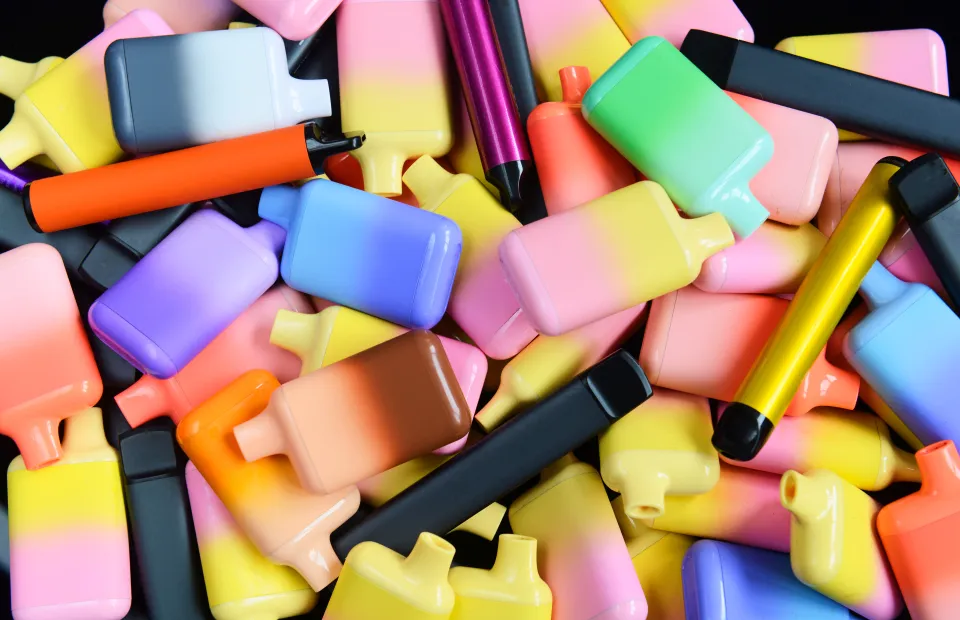
seized

Bags and suitcases will be seized at airport if they hold this ‘common’ 60p item

Overlooking one item in particular could ignite some travel disruption which is not ideal for holidaymakers

Packing for a holiday often means working your way through a seemingly never-ending checklist. From remembering your passport and boarding pass to making sure you’ve packed enough clothes, there’s also the important task of checking your bags for items that could cause problems before you even board your flight.

The warning applies to anyone flying with major airlines, including Ryanair, Jet2, TUI, easyJet and British Airways, among others. While each carrier has its own baggage policies, dangerous goods rules are governed by international aviation regulations and enforced during airport security checks.

Non-safety matches, for example, can cost as little as 60p in supermarkets, but packing them could end up costing you precious holiday time. Although they may seem harmless, they are classed as dangerous goods and are prohibited in both hand luggage and checked baggage under aviation safety rules.

This could spell bad news for anyone heading off on a camping holiday, planning to light birthday candles abroad or travelling with matches tucked away in a backpack without giving them a second thought. Even if they were packed by mistake, finding them during screening could trigger additional inspections and slow your journey through the terminal.

According to the UK Civil Aviation Authority, non-safety matches are not permitted on commercial flights because they present a fire risk. If they’re discovered during baggage screening, they may be confiscated and your luggage could be held back while officers carry out further checks.

Depending on when they’re found, this could mean anything from a manual bag search at the checkpoint to checked luggage being removed from the aircraft before departure. While procedures vary between airports, prohibited items are routinely removed to ensure flights comply with aviation safety rules.

The restrictions are not specific to one airline or airport. Instead, they are based on international standards set by the International Civil Aviation Organization (ICAO) and the International Air Transport Association (IATA) Dangerous Goods Regulations, which are designed to reduce the risk of fire onboard aircraft.

There is, however, one important exception. The Civil Aviation Authority says passengers are generally allowed to carry one small packet of safety matches on their person for personal use, but they must not be packed inside either hand luggage or checked baggage. “Strike anywhere” matches and all non-safety matches remain prohibited.

Before travelling, it’s worth taking a few moments to check coat pockets, backpacks and suitcases for forgotten items.

A 60p box of matches might seem insignificant, but packing the wrong type could leave you facing unnecessary delays before your holiday has even begun.

Source link

Packing ‘innocent’ 10p item will see bags and suitcases seized at airport

Several major airlines including Ryanair, TUI, easyJet, British Airways and Jet2 ban this item

Preparing for a summer getaway can seem like an endless to-do list, particularly if you’re jetting off for a birthday, wedding or other special event. However, one budget-friendly item many holidaymakers pop into their suitcase could wind up being seized before they even step onto the aircraft.

Multiple major airlines, including Ryanair, TUI, easyJet, British Airways and Jet2, ban passengers from bringing party poppers. Leaving them behind could spare you needless hassle and hold-ups at the airport.

The item in question is party poppers, and despite appearing innocent, they are forbidden on most commercial flights. They may only set you back a few pence at around £2 for a pack of 20, but they must never be packed in either hand luggage or checked baggage, and doing so could lead to your bags being inspected, with the items likely seized.

This ban exists because party poppers contain a small explosive charge used to create the popping effect. Although the quantity is minuscule, aviation safety regulations classify them as explosive articles and forbid them from being transported on aircraft.

The UK Civil Aviation Authority (CAA) includes party poppers among the dangerous goods that passengers must not carry in either cabin baggage or hold luggage. The regulations also extend to other novelty explosives, including sparklers, fireworks and flares.

If security personnel find banned items during checks, they may confiscate them from your baggage before departure. Depending on the situation, travellers could also experience hold-ups while bags are inspected or further security procedures are undertaken.

Airport security regulations can differ marginally between nations and carriers, but dangerous goods rules are extensively implemented throughout the aviation sector. Passengers are therefore urged to verify both their airline’s luggage policy and official government advice prior to flying.

Party poppers are frequently packed by mistake following birthdays, weddings or other celebrations, especially when families are travelling with youngsters. While they might appear like a harmless addition to your suitcase, they are handled in the same manner as other banned explosive items under aviation safety regulations.

The government also reminds travellers that security personnel have the ultimate say on whether an item is allowed through screening. Even where an object seems innocent, it can still be confiscated if it is deemed a safety hazard or violates airport security rules.

Inspecting your baggage before heading to the airport could help prevent needless delays, extra security checks and the frustration of having belongings seized before your relaxing holiday away even gets underway.

Source link

Netflix is under contract to buy L.A. studio lot seized by Goldman

Netflix Inc. is under contract to buy Radford Studio Center, a historic Los Angeles movie studio space, for a fraction of its 2021 $1.85-billion sale price after lenders including Goldman Sachs Group Inc. repossessed the property.

The price is close to $400 million, according to two people with knowledge of the transaction, which is expected to close in the third quarter.

The Times reported in April that Netflix had plans to buy the studio property.

The one-time silent movie lot has been home to many popular TV series over the decades, including “Gunsmoke,” “Gilligan’s Island” and “Seinfeld.”

Netflix wants to consolidate its real estate footprint in one place and has been considering relocating from a group of Hollywood buildings it leases from Hudson Pacific Properties Inc. The Hudson Pacific leases expire in 2031.

Radford’s current owner, Hackman Capital Partners, defaulted on $1.1 billion of bondholder debt and turned the property over to lenders led by Goldman after it was unable to reach a refinancing deal last year. The sale will wipe out close to two-thirds of the debt.

The value of Los Angeles studio real estate has tumbled since interest rates climbed and production plummeted following strikes in 2023 by unions representing writers and actors. Landlords unaffiliated with studios, such as Hackman, have been hit particularly hard as production moved to space owned by the entertainment giants. Occupancy of L.A. soundstages fell to 62% in the first half of last year, according to FilmLA, a local permitting group.

Representatives of Goldman and Netflix declined to comment. A Hackman representative didn’t immediately provide a comment.

Netflix, which has historically leased rather than owned real estate, has stepped up investing in studio lots. It’s currently developing a $1-billion production center in Fort Monmouth, N.J. The streaming service reported $12.3 billion in cash and equivalents in its most recent quarter. Netflix was paid a $2.8-billion breakup fee by Paramount Skydance Corp., which won a bidding war for Warner Bros. Discovery Inc.

Before the recent slowdown, Hackman went on a buying spree of movie lots, banking on ever-growing demand for streaming TV production. In March, Deutsche Bank AG sued Hackman to foreclose on its Kaufman Astoria Studios in New York. Hackman-owned Television City in Los Angeles and Manhattan Beach Studios in nearby Manhattan Beach are both being marketed after lenders led by Deutsche Bank pushed for the sale, Bloomberg reported in May.

Brokerage Cushman & Wakefield Ltd. is selling the $240-million loan on the 22-acre Manhattan Beach property, which it describes in a marketing document as “one of the most strategically positioned opportunities in coastal Los Angeles, combining an institutional-quality operating asset with some of the most irreplaceable underlying land in the South Bay.”

The Radford Studio lot was only 71% leased as of March, according to mortgage filings.

Gittelsohn writes for Bloomberg.

Source link

2 S. Koreans seized on Gaza-bound aid vessels return home

Activists Kim Ah-hyun (L) and Kim Dong-hyeon speak to reporters at Incheon International Airport on Friday following their release after being captured by Israeli forces aboard Gaza-bound aid flotillas. Photo by Yonhap

Two South Korean activists returned home Friday after being released by Israeli forces that had captured them aboard aid vessels bound for the Gaza Strip.

Kim Ah-hyun was aboard an aid vessel seized by Israeli forces in waters off the Gaza Strip, while Kim Dong-hyeon’s ship was intercepted near Cyprus — both earlier this week.

They were released Wednesday and flew home together, arriving at Incheon International Airport, west of Seoul, at 6:24 a.m.

“Many people are dying not only from bombings, but also from starvation,” Kim Ah-hyun told reporters at the airport. “Because there are people there, I thought that I had to attempt the voyage again, no matter how dangerous the situation in the Middle East was.”

The activist had earlier attempted to enter the territory via an aid flotilla in October without authorization. She had been detained by Israeli forces during her first attempt and was later released.

Before her latest attempt, the South Korean government had revoked her passport.

The activist claimed she had been assaulted by Israeli forces in the face after her latest capture and that she couldn’t hear properly in her left ear.

Kim Dong-hyeon, the other activist, said Israeli forces had “tortured” the activists, claiming they had suffered “unendurable violence.”

Israel has faced criticism following the release of images of captured activists kneeling on the ground with their hands bound.

On Wednesday, President Lee Jae Myung criticized Israel’s seizure of the vessels, accusing the country of violating international rules as the ships were not in Israel’s territorial waters when they were seized.

Copyright (c) Yonhap News Agency prohibits its content from being redistributed or reprinted without consent, and forbids the content from being learned and used by artificial intelligence systems.

Source link

Cruise lines can be held liable for using docks seized under Castro, Supreme Court rules

The Supreme Court on Thursday broadly upheld lawsuits by U.S. companies whose property was seized in Cuba prior to 1960, including claims against cruise ship lines that docked there in the past decade.

These suits do not seek compensation from Cubans but from those who “traffic in property which was confiscated by the Cuban government.”

In a 8-1 decision, the justices revived a $400-million judgment against four cruise lines whose ships stopped in Havana between 2016 and 2019.

All of them used docks that were built early in the 20th century by the Havana Docks Corporation, an American company.

Justice Clarence Thomas pointed to a rarely enforced 1996 law that authorized suits against those who “use property tainted by a past confiscation.”

Past presidents had suspended enforcement of the law, but President Trump allowed such claims to go forward.

That change in policy exposed “traffickers in confiscated property of United States nationals” to brings claims in federal courts, Thomas said.

The four cruise line companies — Caribbean Cruises, Norwegian Cruise Line Holdings, Carnival Corporation, and MSC Cruises — transported nearly a million paid passengers to Cuba, he wrote.

They paid the Cuban government tens of millions of dollars to do business in Cuba. They collectively earned hundreds of millions of dollars in revenue from voyages that included a stop in Havana, he said.

A federal judge in Florida ordered each of the cruise lines to pay $100 million in damages, but the U.S. appeals court in Atlanta blocked the decision by a 2-1 vote. It said Havana Docks Corporation had a contract to run the docks had expired in 2004.

Justice Elena Kagan made the same argument in dissent.

She said “the docks belonged to the Cuban Government — not Havana Docks — all along. What Havana Docks owned was only a property interest allowing it to use those docks for a specified time. And that time-limited interest expired in 2004 — more than a decade before the cruise lines ever used the docks.”

Still pending before the court is a similar claim from Exxon Mobil Corp., which was argued on the day in late February.

Source link

UKMTO says Honduran-flagged vessel seized by Iran near UAE

A container ship sails on the Strait of Hormuz, as seen from Ras Al Khaimah, United Arab Emirates, in June 2025. The UK’s Maritime Trade Operations said Thursday that a Honduran-flagged vessel was seized by Iran northeast of Fujairah, United Arab Emirates. File Photo by Ali Haider/EPA-EFE

May 14 (UPI) — The U.K.’s Maritime Trade Operations said Thursday that a Honduran-flagged vessel was seized by Iran northeast of Fujairah, United Arab Emirates.

The Hui Chuan, described by UKMTO as a “floating armoury,” was in the Gulf of Oman when it was seized by Iranian forces. The vessel is moving toward Iranian waters.

UKMTO said in a statement that the seizure was reported about 38 nautical miles northeast of Fujairah.

“The CSO has reported that the vessel has been taken by unauthorized personnel [whilst] at anchor and is now bound for Iranian Territorial Waters,” UKMTO said in its report. “UKMTO continue to investigate.”

The vessel had been anchored in the Gulf of Oman for about a month. Its operators said it was storing weapons used to protect ships from pirate attacks.

The Hui Chuan is at least the second vessel to be attacked on the Gulf of Oman in as many days. On Wednesday, the Indian-flagged vessel Haji Ali sank off the coast of Oman after an explosion.

Security firm Vanguard said the explosion was believed to have been caused by a “drone or missile.”

Tensions in the Persian Gulf remain high during an uneasy ceasefire between the United States and Iran. The United States has imposed a naval blockade on the Strait of Hormuz, pursuing any vessels using Iranian ports. Iran has meanwhile threatened vessels traversing the strait since the United States and Israel launched strikes on Iran on Feb. 28.

Wreathes are seen amongst the statues at the Korean War Veterans Memorial during Memorial Day weekend in Washington on May 27, 2023. Memorial Day, which honors U.S. military personnel who died while in service, is held on the last Monday of May. Photo by Bonnie Cash/UPI | License Photo

Source link

Rebel checkpoints reported around Mali’s capital, northern town seized | Conflict News

Jamaat Nusrat al-Islam wal-Muslimin (JNIM) and Tuareg separatists continue their attacks against Mali’s military government.

Al-Qaeda-linked rebel fighters have reportedly set up checkpoints around Mali’s capital, Bamako, and seized the town of Tessalit in the north.

Reuters reported on Friday that Jamaat Nusrat al-Islam wal-Muslimin (JNIM) has called on Malians to rise up to “bring down the junta”, and adopt Islamic law.

Recommended Stories

list of 3 itemsend of list

The latest developments come days after a series of attacks by JNIM and Tuareg separatists from the Azawad Liberation Front (FLA) resulted in the killing of the country’s defence minister, Sadio Camara.

Videos shared on social media by local accounts on Friday show armed fighters inside the Amachach base in Tessalit, with several military vehicles seen driving around.

Video verified by Reuters shows fighters driving through the town and raising the FLA flag.

Media outlets close to the Azawad armed movement, which seeks the independence of northern Mali, said the scenes show fighters in control of the base following the withdrawal of elements of the army and Russia’s African Corps, according to their description.

Russia is the principal foreign backer of Mali’s military-run government.

JNIM said on Thursday that it had captured the base of Hombori in central Mali and taken over two checkpoints near Bamako, after earlier threatening to completely besiege the city.

Russia’s African Corps said in a statement that the JNIM statement about the abandonment of the Hombori base was “not true”.

It said that its helicopters delivered ammunition and other items to Malian military personnel at a base in Hombori on Thursday, “after which soldiers of the Malian Armed Forces injured in battles with terrorists were evacuated”.

It noted that JNIM and AFL “continue to regroup, conduct reconnaissance of the bases of the units of the African Corps of the Russian Armed Forces and the Malian Army, and propaganda work is actively underway aimed at reducing the morale of the Malian Army”.

Al Jazeera’s Nicolas Haque, reporting from Dakar in Senegal, reports that the absence of a response from the Malian military to the rebel advances is surprising, and that four major military camps in the north of the country are now in the hands of armed groups.

“That’s a big development,” Haque said. “It seems that Malian forces are not even putting up a fight up north.”

Mali’s military leaders seized power in coups in 2020 and 2021, with a brief period of civilian rule in between. Official authorities are yet to issue a statement on the latest reports at the time of writing.

Source link