China reacted angrily to the CIA’s public campaign, launched in February 2026, to recruit spies from within the ranks of the Chinese military, vowing to take “all necessary measures” to protect its national security. The Chinese response to the “recruitment video” included an official warning: Foreign Ministry spokesperson “Lin Jian” stated that the attempts by forces hostile to China “will not succeed,” emphasizing that Beijing would resolutely counter foreign infiltration and sabotage operations. In addition to Beijing’s accusation that the United States engaged in blatant political provocation, the Chinese Embassy in Washington described the American recruitment video targeting Chinese military personnel as a “blatant political provocation” and an explicit admission by the United States of its attempts to steal other countries’ secrets. This was especially true given the nature of the video, released by the CIA, which featured Mandarin Chinese and targeted “disillusioned” Chinese military officers, exploiting corruption within the Chinese army and recent purges within the Chinese military leadership. While other foreign intelligence agencies typically maintain contact with sources and agents within both friendly and hostile militaries, observers noted that the 95-second CIA video was “unusually explicit,” as described by Newsweek magazine. This angered China, prompting it to lodge a formal protest through the Chinese Embassy in Washington.
To counter this American intelligence campaign, official Chinese measures to contain Western and American intelligence intensified. Beijing pursued a multi-pronged strategy to tighten the noose on espionage activities, including expanding the Anti-Espionage Law: China amended its laws to broaden the definition of “espionage” to include any data or documents that threaten national security, granting authorities greater powers to search and access electronic devices. (Increasing Public Awareness and “Reporting Hotlines”): The Chinese Ministry of State Security, which acts as China’s intelligence agency, encouraged citizens to report suspicious activities through substantial financial rewards and released educational videos on how to detect “foreign spies” who might be disguised as researchers or diplomats. (Chinese Technological Counter-Response): China used artificial intelligence and simulation tools to mock American recruitment videos, releasing videos that mimicked the same style to highlight “Wall Street corruption” and internal American crises. With (China’s purge of sensitive leaders): Beijing launched a widespread purge within the People’s Liberation Army, targeting high-ranking generals such as “Zhang Youxia” on charges of corruption and leaking sensitive information. With China’s expansion in drafting and enacting counter-sanctions laws: In March 2025, China activated new regulations for its Foreign Counter-Sanctions Law, allowing it to freeze assets and impose visa bans on any foreign individuals or entities that interfere in its internal affairs or threaten its security interests.
This confrontation comes at a time when reports indicate that the CIA is seeking to rebuild its human network in China after most of it was dismantled between 2010 and 2012. China has begun intensifying its internal security measures to counter Western espionage, particularly American espionage, by updating its anti-espionage laws, strengthening cybersecurity, and raising public awareness, targeting the activities of the CIA and Mossad. These efforts include strict data controls, protecting sensitive technology, dismantling spy recruitment networks, and considering Western espionage a direct security threat. Among the most prominent Chinese measures to contain Western and American intelligence activities are the following (updating anti-espionage laws): China has broadened the definition of espionage in its laws to include any documents, data, or materials related to national security, granting authorities wider powers to search and investigate suspects. (Strengthening cybersecurity): Beijing is conducting intensive campaigns to secure sensitive networks and data and is working to protect its digital infrastructure from infiltration, especially after reports indicating widespread cyber operations by Western actors. This is in addition to (Chinese security awareness campaigns): The Chinese Ministry of State Security (MSS) is urging citizens to report any suspicious activities, considering counter-espionage a societal responsibility. It has also published warnings about methods used to recruit spies. Along with Chinese authorities tightening control over foreigners and foreign companies in China, control has been intensified over foreign consultancies and companies that could be used as cover for intelligence activities, with a focus on uncovering foreign spies, whether affiliated with the CIA or any other foreign agency. Along with China’s emphasis on protecting technology and scientific research: Here, Beijing is taking strict measures to protect its technological and industrial secrets from theft, especially in the fields of artificial intelligence and computing, to prevent their exploitation to advance the interests of foreign countries.
This Chinese escalation comes at a time when US intelligence reports have described China as the “greatest overall military and security threat” to the interests of the United States and its allies, further intensifying the intelligence conflict between the two sides. Therefore, China began taking strict and decisive measures to contain Western and American intelligence activities within the People’s Liberation Army (PLA). These measures include strengthening information security through the Information Support Force, enforcing anti-espionage laws, and increasing internal oversight to ensure the protection of national security and development interests from infiltration and sabotage. The most prominent measures include tightening digital surveillance by enhancing capabilities in electronic espionage, signals intelligence, and cybersecurity to counter any breaches; strengthening internal security by tightening security measures around personnel and sensitive data to prevent recruitment or leaks; and activating the role of the Ministry of State Security domestically. The Chinese intelligence ministry, “MSS,” has become highly effective in combating foreign espionage, particularly American espionage, and in maintaining political security within military and civilian institutions. The Chinese authorities also established the Information Support Force: this force was created to promote the development and implementation of secure network information systems, thereby enhancing the army’s ability to repel infiltrations. With China’s keenness to modernize its anti-espionage laws, it has taken strict measures against infiltration and sabotage activities, pledging to protect China’s national security.
Based on the preceding analysis, we understand that these Chinese security measures are a response to intensive US intelligence efforts to recruit informants within the Chinese military, which has provoked Beijing’s ire and resentment. This is especially true given the sensitive timing for the Chinese military establishment, coming just weeks after another senior officer was implicated in President Xi Jinping’s anti-corruption campaign within the army. The video released by the CIA showing the recruitment and targeting of Chinese military personnel represents the latest episode in a US intelligence campaign targeting Chinese military personnel on social media. This campaign, which openly targets China, has been described by CIA Director “John Ratcliffe” as the agency’s top intelligence priority amidst what he called a generational competition with Beijing.
The routine of gently but skillfully pushing wooden canoes into the water body at the shores of Kainji Lake each dawn has been part of the lives of generations of fishermen in North-central Nigeria.
The lake was not always calm – vigorously exhaling and flooding the banks, then intermittently receding – but was inevitably connected to the lives that many communities have held firmly to across Kebbi, Niger, and Kwara states.
Today, that ancestral connection between the communities and the lake is evaporating rapidly. And it is not merely ecological. In some villages where government presence is absent, and terrorists have assumed authority, fishermen now wait for permission from non-state actors before casting their nets. In other areas within the Kainji region, they pay informal levies to armed groups operating from the forests. For decades, Nigeria’s national parks were imagined as spaces apart: buffers of nature against human pressure and political failure. Sambisa Forest shattered that illusion long ago when the Boko Haram terror group took control of it, transforming from a conservation zone into the most notorious symbol of jihadist insurgency in the country. Now, further west, a quieter but no less consequential transformation is unfolding.
The Kainji Lake National Park (KLNP), sprawling across three states and bordering Benin, has slipped from a wildlife sanctuary into a strategic corridor where poverty, climate stress, criminal enterprises, violence, jihadist ideology, and Sahelian militancy intersect.
Kainji Lake National Park spans three states in Nigeria’s northern region and borders two countries. Map illustration: Mansir Muhammed/HumAngle.
A corridor
Security analysts increasingly describe Sambisa as a “fortress-base” model of insurgency: entrenched, ideological, territorially assertive. Kainji Lake fits a different and more elusive pattern—a “corridor-node” model.
Here, armed actors do not raise flags or announce governance structures. They pass through, networking, training, recruiting, and trading, before vanishing. The park links Nigeria’s troubled North West to the Middle Belt and, increasingly, to the destabilised Sahel. It connects Kebbi to Benin Republic’s Alibori and Atacora regions, Niger State to Niger Republic’s Tillabéri zone, and local grievances to transnational jihadist ambitions.
This distinction matters. Sambisa attracted relentless military pressure for more than a decade because it became a visible symbol of territorial breach. Kainji Lake did not. It appeared peripheral, quiet, manageable. In that absence of sustained attention, the park matured into something arguably more dangerous: a fluid connector for multiple armed actors rather than a single-group stronghold.
Communities along the lake, from Yauri and Ngaski in Kebbi to Borgu in Niger State and Kaiama in Kwara, depend on a fragile interweaving of fishing, floodplain farming, pastoralism, and cross-border trade. Fishing sustains thousands of households. Smoked and dried fish move through informal networks to Ilorin, Ibadan, southern Niger, and beyond. Seasonal farming follows the lake’s unpredictable pulse: millet, sorghum, maize, rice, and cowpea are cultivated on land that appears and disappears with the water’s rise and fall.
Fishing sustains thousands of households. Map illustration: Mansir Muhammed/HumAngle
Pastoralism runs through it all. Herders move cattle along routes that long predate colonial borders, grazing across Nigeria, Benin Republic, and Niger Republic as if the lines on maps were suggestions rather than laws. Weekly markets in Bagudo, Wawa, Babana, Kaiama, and Borgu draw traders from Benin’s north and Niger’s Tillabéri. Grain, livestock, fuel, kola nuts, dried fish, and cloth circulate through these hubs. Some of it is smuggling.
These networks matter because armed groups do not need to invent new pathways. They insert themselves into existing ones. The same tracks used by herders and traders now carry militants, arms couriers, recruiters, and ideological emissaries.
Climate stress as an accelerant
Climate change has exacerbated existing security vulnerabilities around Kainji Lake.
Erratic rainfall patterns and fluctuating water levels have made fishing yields unpredictable. Floodplains that once reliably supported seasonal farming now vanish early or arrive late. Pasture availability shifts without warning, intensifying competition between herders and farmers. Each shock further compresses livelihoods, forcing households to adapt through debt, migration, or risk-taking.
In this environment, armed groups offer something deceptively valuable: predictability. Access to grazing land. Protection from rivals. Permission to fish or farm. Even informal dispute resolution. Where the state provides uncertainty – sporadic enforcement, unclear rules, delayed response – armed actors provide immediate answers, enforced by violence if necessary.
Climate stress, in this sense, is not just an environmental issue but a governance crisis multiplier.
Fieldwork conducted by HumAngle across several local government areas in Kebbi, Niger, and Kwara states identified at least five active extremist factions operating within and around the park. These include the Mahmudawa (Mahmuda faction), Lakurawa, elements of Ansaru and Jama’atu Ahlis Sunna Lidda’awati wal-Jihad (JAS) led by Sadiku and Umar Taraba, and a newly emerged cell linked to Jama’at Nusrat al-Islam wal-Muslimin.
The groups do not operate in isolation. Many originate from northwest Nigeria and southern Niger, with local cover, as they undertake terror attacks in distant locations and return to their various hideouts within the region. What has emerged is a hybrid threat ecosystem where ideology, criminality, climate stress, and grievance reinforce one another.
Brokers, enforcers, and ideologues
The Mahmudawa illustrate the new logic of this ecosystem. Despite sustained air and ground operations by the Federal Government between September and December 2025, the group remains influential. Fragmented into smaller camps, some closer to the Benin border, they act as brokers linking criminal networks of jihadist actors. They facilitate training, arms movement, ransom negotiations and sanctuary for fighters arriving from outside the region.
Official claims regarding the arrest of their leader, Malam Mahmuda, remain unconfirmed in border communities, where continued attacks and coordinated leadership are still attributed to the group.
If the Mahmudawa are brokers, the Lakurawa are enforcers. With an estimated 300 fighters, they have become one of the most active jihadist–terrorist hybrids affecting Kebbi’s border communities. Operating from within and around KLNP, they routinely launch incursions into Bagudo and Suru LGAs, combining attacks on military targets with ideological messaging aimed at delegitimising the Nigerian state.
Their leadership shows signs of Sahelian exposure. Their fighters are drawn from local nomadic tribal networks and northwest terrorist pools. Kebbi, long considered peripheral, is now firmly part of the frontline.
Get our in-depth, creative coverage of conflict and development delivered to you every weekend.
Subscribe now to our newsletter!
The relocation of Sadiku and Umar Taraba, both veteran jihadist operatives, to the Kainji axis in 2024 marked a shift. Their presence injected technical expertise into a space previously dominated by loosely organised armed groups.
IED knowledge, structured training, and a sharper focus on high-value targets followed. Collaboration with criminal terrorist groups deepened. The abduction of foreign nationals near Bode Sa’adu illustrated this fusion starkly: JAS elements, Mahmudawa fighters, and allied terrorists executing a single operation where ideology and profit were indistinguishable.
JNIM’s shadow on the lake
The most alarming development emerged in late November 2025: the appearance of a group believed to be affiliated with JNIM along the Kebbi–Benin border corridor.
Witnesses describe predominantly foreign fighters, many believed to be Tuareg, moving at night in disciplined formations, wearing military-style uniforms with turbans on their heads, and engaging communities with a calculated restraint unfamiliar to local armed groups. So far, they have avoided major attacks.
That restraint is likely strategic.
Their presence suggests Kainji Lake could become a staging ground for Sahelian expansion into northwestern Nigeria — a shift that would fundamentally alter the region’s security calculus. Unlike local groups, JNIM brings external financing, battlefield experience, and a long-term vision.
Communities adapting under pressure
Communities in the lake basin are not passive observers. They are recalibrating in real time. Some negotiate access quietly to avoid displacement. Others maintain layered loyalties, sharing information selectively as a survival strategy. Vigilante groups that once patrolled forest edges retreat under sustained pressure. Traditional rulers face coercion or marginalisation. In certain settlements, schools and community buildings are repurposed by armed actors for operational use.
Access to fishing grounds, farmlands, and trade routes increasingly depends on permissions issued by commanders operating from forest camps rather than on decisions by local councils or chiefs. Authority has shifted, not through formal declaration, but through incremental control of movement and livelihoods.
How conservation and governance hollowed the ground
The transformation of Kainji Lake into a security corridor is as much the product of ideology as it is the cumulative outcome of governance failure layered over decades.
The creation of Kainji Lake National Park in 1976 displaced communities and restricted access to land and water without meaningfully integrating residents into conservation planning. Fishing zones were closed, grazing was curtailed, and farming was criminalised in places where alternatives did not exist. Promised livelihoods rarely materialised.
Park rangers – tasked with enforcing vast conservation boundaries – were underpaid, poorly equipped, and often absent. Their presence, when felt, was frequently punitive rather than protective.
Local governments in Bagudo, Suru, Kaiama, Borgu, and Ngaski remain chronically weak.
When armed violence escalated across the northwestern region, security deployments focused on Zamfara, Katsina, and parts of Niger State. Kebbi’s borderlands were treated as peripheral, stable, and low-risk. That assumption proved costly.
Border governance failed as well. Coordination with Benin and the Niger Republics remains distant, reactive, and politicised. Joint patrols are rare. Intelligence sharing is uneven. Communities know this. Armed actors understand it better.
Armed groups arrived first as guests, then as protectors, and finally as power brokers, filling gaps the state created—sometimes violently, sometimes persuasively.
Poverty caused by the absence of authority
In the absence of legitmate sate authority, people seek alternative systems of order. Armed groups exploit this vacuum expertly. They tax, regulate, punish, and reward. In some communities, the question is no longer whether armed groups are legitimate, but whether they are avoidable. Increasingly, they are not.
The Kainji axis experienced seven major attacks between 2025 and Feb. 2026: The Nov. 2025 abduction of 303–315 students from St. Mary’s School in Papiri (Niger State); the market raid in Kasuwan Daji that claimed the lives of about 30-42 people on Jan. 3, 2026; the Jan. 23 park ambush killing six; the Feb. 1 raids in Agwara and Mashegu (dynamiting a police station and church), and the Feb. 4 massacre in Kaiama. Map illustration: Mansir Muhammed/HumAngle.
Once a symbol of Nigeria’s conservation ambition, KLNP has become a largely ungoverned hub exploited by a mix of violent actors: jihadist cells, armed terrorist factions, and transnational militants with roots beyond Nigeria’s borders.
From the northwest’s perspective – particularly Kebbi State – the park functions as a rear operational hub. Armed groups operating in border local governments use it for recruitment, logistics, training, and cross-border movement into the Benin Republic. Its sheer size, rugged terrain, and weak oversight enable a dangerous convergence: criminal armed groups blending with jihadism.
This shift carries national implications
Kainji’s forests and waterways provide mobility, with the lake economy providing revenue streams and border proximity offering escape and reinforcement routes.
While Sambisa became synonymous with territorial insurgency, Kainji signals the maturation of a corridor-based conflict economythat binds Nigeria’s northwest to wider Sahelian instability through forest reserves and lake communities.
When conservation spaces double as conflict connectors, the impact extends beyond biodiversity loss. Human buffers weaken first as communities negotiate survival under parallel authorities. Ecological buffers follow as enforcement fractures and resource exploitation become embedded in armed group financing.
Communities adapt under the rule of local armed terror groups in the absence of state and local government authorities. Density map of settlements in the Kainji axis where terrorists control.
The lake basin lies close to Kainji dam, a critical energy infrastructure, touches sensitive international borders, and anchors trade and livelihood systems that extend deep into the country’s interior.
In 2026, the geographic corridor surrounding the lake and its forest reserves recorded some of the highest levels of mass killings and large-scale abductions in Nigeria. Armed groups operate with increasing confidence, widening their reach across rural settlements and mobility routes connecting Niger State to Kebbi, Zamfara, and beyond toward the Sahelian belt.
The warning signs are not limited to a single park
In April 2025, the Conservator-General of Nigeria’s National Park Service, Ibrahim Musa Goni, told HumAngle that six national parks across the country were overrun by terrorists. Two years earlier, the federal government had created 10 additional parks to prevent further takeovers. However, only four of those new parks are currently operational. In addition to the seven existing parks, only eleven national parks are currently functioning nationwide.
Even where reclamation has occurred, the process is complex. The Conservator General pointed to Kaduna State as an example, describing what he termed a “mutual understanding” between authorities and armed groups.
“They have agreed to resolve their issues,” he said. “[As a result], most of the forest and game reserves, and even the national park in Kaduna State, have today been freed of banditry.” This, he argued, has brought “relative peace” and enabled forest and game guards, including officers in Birnin Gwari, to resume operations.
The National Park Service has also redefined its institutional posture. “The government classified the National Park Service as a paramilitary organisation,” Goni explained. “And as a paramilitary organisation, the act provides that we can bear arms.” Rangers affiliated with the Service have received training from the United Nations Office on Drugs and Crime to address wildlife crime and respond to terror-related takeovers. According to Goni, this training has strengthened Nigeria’s capacity to confront forest-based criminality linked to armed groups and insurgents.
The approach is not solely security-driven. The Service engages surrounding communities through alternative livelihood programmes, skills training, and starter packs intended to reduce dependence on park resources. “This has, in a great deal, diverted the attention of most of them from the resources of the national parks,” Goni said, adding that it has helped contain hunting and wildlife trafficking.
Yet resource limitations remain significant. “Apart from managing wild animal resources and the plants, we also have to manage the human population,” he acknowledged, noting that the Service cannot meet the needs of every community bordering the parks.
The Government Accountability Office (GAO), a congressional watchdog, highlighted how Sentinel will impact Air Force Security Forces units in a brief report released earlier today. This comes a day after the Air Force put out its own update on the new ICBM program, stating that the current goal is for the restructuring effort to wrap up before the end of the year and for the first launch of a prototype LGM-35A to occur in 2027. The hope now is that Sentinel will begin entering operational service sometime in the early 2030s. The original schedule had called for the missiles to reach initial operational capability in 2029.
A three-stage test booster used in the ongoing development of the LGM-35A Sentinel intercontinental ballistic missile. USAF
“DOD will need to complete Sentinel launch facility test and evaluation activities early in the transition to inform DOD and Air Force security policy updates,” the GAO report says. “Because security forces incorporate these updates into unit-level operating instructions, these policy updates will be needed to train Air Force security forces for the transition.”
A rendering of a complete LGM-35A Sentinel missile. Northrop Grumman
The report does not elaborate on the changes that will be required. As noted, Security Forces personnel currently assigned to Air Force Missile wings train to protect the Minuteman III force above and below ground. There are currently 400 LGM-30Gs loaded into silos spread across five states. Sentinel is said to offer greater range and improved accuracy, as well as reliability and sustainability benefits, over the aging Minuteman IIIs, which first entered service in 1970. The development of a new ICBM also offers the opportunity for the inclusion of survivability improvements and other additional capabilities.
An infrared picture of a Minuteman III during a test launch. USAF An infrared image of an LGM-30G Minuteman III ICBM taken during a routine test launch. USAF
“The training simulated a hostile’s attempt to capture a nuclear asset. Security forces Airmen, who arrived by both Humvee and helicopter, began to combat the threat and worked their way toward retaking control of the launch facility. After neutralizing the threat, recapturing and securing the launch facility, the Airmen performed self-aid buddy care and tactical combat casualty care.”
The video below shows scenes from a recapture and recovery exercise conducted as part of the larger Global Thunder 23 exercise.
91st Missile Wing participates in Global Thunder 23
Terrorists or other hostile actors could also seek to break into silos or launch facilities just to damage or destroy them. Even if they could not trigger a nuclear detonation, blowing up an ICBM inside its silo would have significant operational, environmental, and other ramifications.
The Air Force had originally said it would reuse Minuteman III silos and other existing infrastructure for Sentinel, but subsequently determined that was no longer a viable course of action. As such, new silos and launch control facilities could easily come with substantially different physical layouts that would affect the tactics, techniques, and procedures for securing them. The LGM-35A missiles will also be completely different from the existing LGM-30Gs, and there could be additional notable differences in how the Sentinels are married together with their new ground-based infrastructure. All of this could further impact how Security Forces personnel prepare themselves for a variety of contingencies, including any potential for accidental detonations or launches.
Graphics depicting existing Minuteman III silos and launch facilities from the report that GAO released today. GAOA rendering of a future Sentinel launch facility, including the silo, which dates back at least to 2023. Northrop Grumman
In its update about Sentinel yesterday, the Air Force shared that prime contractor Northrop Grumman is set to start building a prototype launch silo at the company’s facility in Promontory, Utah, this month. “This crucial effort will allow engineers to test and refine modern construction techniques, validating the new silo design before work begins in the missile fields,” according to the release.
There’s a strong possibility that a prototype silo could also be used to help develop and refine new Security Forces TTPs in future, as well.
Site defense is also just one aspect of the elaborate and costly security ecosystem in place now for the Minuteman III force. This includes protection for ICBMs while they are being transported via transporter-erector trucks, as well as loaded or unloaded into silos. All of this will also have to adapt to the future Sentinel missiles and their new facilities. The Air Force has already been modernizing certain aspects of nuclear force protection capabilities, including the acquisition of new MH-139A Grey Wolf helicopters to replace aging UH-1Ns used to provide air support over the silo fields and for convoys on the move. An MH-139A was used to escort a Minuteman III convoy for the first time in January.
An MH-139A helicopter seen helping escort a Minuteman III convoy for the first time on January 8, 2026. USAF
In terms of other Sentinel-related infrastructure work, “this summer, prototyping activities at F.E. Warren AFB [Air Force Base, in Wyoming] will validate innovative utility corridor construction methods, which are key to streamlining the installation of thousands of miles of secure infrastructure and fielding the system faster,” the Air Force’s release added. “Meanwhile, foundational construction on permanent facilities is already well underway. The first of three new Wing Command Centers is taking shape at F.E. Warren AFB, and critical test facilities are being erected at Vandenberg SFB [Space Force Base, in California] to support the future flight test campaign.”
So-called Site Activation Task Force (SATAF) detachments are also helping lay the groundwork for the transition from Minuteman III to Sentinel at F.E. Warren and Vandenberg, as well as Malmstrom Air Force Base in Montana and Minot Air Force Base in North Dakota. It should be noted that Vandenberg does not currently host operational ICBMs, and is not set to do so in the future, but is used for routine test launches. The Air Force also says that the planned first launch of a Sentinel in 2027 will be from a pad rather than a silo.
US Air Force launches Minuteman III ICBM from Vandenberg in unarmed test
The Air Force is otherwise hopeful that the ongoing restructuring effort will reduce the chance for further schedule risks to the Sentinel program and, by extension, cost growth.
“We certainly have not lowered the bar, and we certainly have not taken on any risk by doing this,” Air Force Gen. Dale White, the new Direct Reporting Portfolio Manager (DRPM) for Critical Major Weapon Systems (CMWS), told Breaking Defense in an interview published yesterday. The DRPM CMWS role was established last August to create a “single empowered leader” to manage Sentinel and other top-priority Air Force weapon systems programs, including the F-47 sixth-generation fighter and B-21 Raider stealth bomber.
“The restructured program incorporates key lessons learned to ensure maximum efficiency,” the Air Force’s release explained. “The decision to build new silos, for example, avoids the unpredictable costs and safety hazards of excavating and retrofitting 450 unique structures built over 50 years ago, and is a prime example of choosing a path that delivers capability with greater speed and less risk.”
“Sentinel program officials continue to evaluate options to potentially redesign portions of the weapon system for cost reductions and are looking at avenues to minimize further schedule delays,” GAO’s report today also noted. “For example, the Air Force is reevaluating system requirements and evaluating changes to the acquisition strategy – both of which could limit further cost and schedule growth.”
GAO’s report did still highlight continued concerns about potential challenges for Sentinel, including in relation to software development for the missiles and work on the extensive new ground infrastructure. As noted, the need for all-new silos has already been a central factor in delays and cost overruns, despite the hope that this will prove less risky in the long run. There are also concerns about sustaining the Minuteman III force beyond 2036, when the transition to Sentinel was originally supposed to be complete. A seamless replacement process is critical to ensuring that the land-based leg of America’s nuclear triad remains a credible deterrent capability throughout.
A transporter-erector seen loading a Minuteman III into a silo at Malmstrom Air Force Base. USAF
“I think Sentinel is going to be a bit easier with some of the things we’re designing into the program, the digital infrastructure, the open architecture,” Air Force Gen. Stephen Davis, head of Air Force Global Strike Command (AFGSC), told TWZ in an interview last month. “I think it will make it easier to upgrade and keep that missile relevant. I don’t have any worries about being able to do that in the future.”
Overall, the Sentinel is categorized as “megaproject” by GAO, defined as something that “costs $1 billion or more, affects 1 million or more people, and runs for years.” Such efforts “are extremely risky ventures, notoriously difficult to manage, and often fail to achieve their original objectives,” according to the Congressional watchdog.
A revised cost for Sentinel has yet to be released. However, when the Air Force announced the restructuring effort back in 2024, the total acquisition costs were projected to rise to approximately $140.9 billion, an 81 percent increase over the original estimates.
Even if the restructured Sentinel plan holds going forward, the program will still be immensely complex and resource-intensive, and have many different facets, including changes to how Security Forces units operate going forward.
Democrats have called for a ban on immigration agents wearing masks and are pushing for increased oversight of their operations.
Published On 16 Feb 202616 Feb 2026
Share
The United States Department of Homeland Security (DHS) ran out of funding over the weekend, leading to the third partial government shutdown of President Donald Trump’s second term, as negotiations between Republicans and Democrats remain stalled while Congress is in recess until February 23.
Democrats are calling for changes to the DHS’s immigration operations after two fatal shootings of US citizens in the city of Minneapolis last month. Alex Pretti and Renee Good were shot dead by federal officers from Immigration and Customs Enforcement (ICE) and Border Patrol during such operations.
Recommended Stories
list of 4 itemsend of list
On Monday, state officials in Minnesota said that the FBI has refused to share evidence with state law enforcement following Pretti’s killing on January 24.
“This lack of cooperation is concerning and unprecedented,” Minnesota’s Bureau of Criminal Apprehension superintendent, Drew Evans, said in a statement.
DHS entered a shutdown on Saturday, but will continue operations deemed essential. Cuts affect agencies under the DHS, including the Transportation Security Administration (TSA), the Federal Emergency Management Agency (FEMA), Customs and Border Protection (CBP) – which runs Border Patrol – ICE, and the US coastguard.
At US airports, 2,933 of the TSA’s 64,130 employees have been furloughed for the duration of the shutdown. The remaining 95 percent of staff will remain on duty but will work without pay until the DHS is funded.
Earlier this month, Democrats sent Republicans a list of 10 demands to rein in immigration enforcement. In a letter, authored by House of Representatives Minority Leader Hakeem Jeffries, the politicians called for increased oversight of the DHS.
The letter called for DHS officers not to enter private property without a judicial warrant and to require verification that someone is not a US citizen before placing them in immigration detention. It also called for DHS to mandate that its officers do not wear masks, have visible identification, and wear clear uniforms.
Democrats are also seeking to prohibit immigration enforcement actions near courts, medical facilities, houses of worship, schools, and polling places.
They further called for increased coordination with local and state agencies after the federal government blocked state and local law enforcement from participating in investigations related to the deaths in Minneapolis.
“Federal immigration agents cannot continue to cause chaos in our cities while using taxpayer money that should be used to make life more affordable for working families,” Jeffries said in the letter.
“The American people rightfully expect their elected representatives to take action to rein in ICE and ensure no more lives are lost. It is critical that we come together to impose common sense reforms and accountability measures that the American people are demanding.”
Tom Homan, Trump’s border chief, dismissed the calls from Democrats on CBS’s Face the Nation, referring to the requests as “unreasonable”.
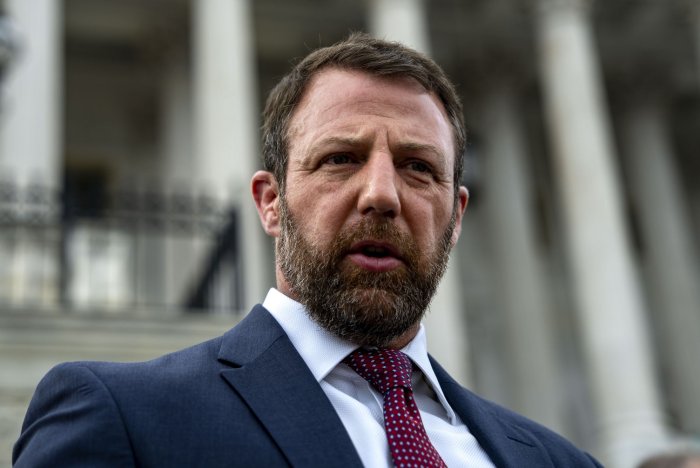
Republican Senator Markwayne Mullin of Oklahoma, meanwhile, echoed Homan’s stance. On CNN’s current affairs programme, State of the Union, he claimed that Democrats are engaging in “political theatre”.
Leaders gathered in Ethiopia’s capital for the African Union summit to discuss regional challenges. United Nations Secretary-General Antonio Guterres spoke to Al Jazeera’s Haru Mutasa and said Africa should have a permanent seat on the UN Security Council.
US Secretary of State of Marco Rubio recalled the long-shared history between the US and Europe at this year’s Munich Security Conference, as he made it clear that Washington does not plan on abandoning the transatlantic alliance.