security

The Houthis and the Rise of Asymmetric Strategy: War is No Longer the Monopoly of States

The Houthi attack on merchant ships in the Red Sea shows that asymmetric strategies have become one of the most disruptive forces in international security, often more effective than conventional state military power. The operations of these non-state groups not only disrupt global trade routes but also expose fundamental weaknesses in the international maritime security architecture. This phenomenon marks a major shift in the character of modern conflict: war is no longer the monopoly of states, and non-state actors are now capable of altering global strategic calculations at a much lower cost. This article argues that the Houthi operations reflect the failure of the traditional security paradigm and underscore the urgency of understanding irregular threats as a determining factor in contemporary geopolitical dynamics.

The Houthis’ success is rooted in the use of asymmetric strategies that combine low cost, high flexibility, and significant strategic impact. Unlike 20th-century insurgencies that relied on guerrilla tactics, the Houthis have increased the scale of the threat by utilizing kamikaze drones, ballistic missiles, and inexpensive surveillance systems. They direct these low-cost weapons at commercial vessels worth billions of dollars. When a single drone damages or threatens a merchant ship, dozens of global companies are forced to reroute, increase logistics costs, and face widespread economic risks. Asymmetric strategies work by avoiding the opponent’s main strengths and attacking points that render those strengths irrelevant. This is what is happening in the Red Sea: the superiority of modern warships is useless when the threat comes from small drones that are difficult to track and cheap to replace (Baylis and Wirtz, 2016).

The limitations of the navies of major countries in responding to these attacks highlight problems in traditional defense doctrine. The United States and Britain have deployed advanced combat fleets, but Houthi attacks continue and hit strategic targets. Major powers designed defense systems to deal with interstate threats, not irregular attacks from irregular actors who have no diplomatic obligations and do not submit to international norms. Modern insurgencies thrive by exploiting institutional gaps and the unpreparedness of states to respond to rapidly changing conflict dynamics. The Houthis are a case in point: they operate in a grey area that is not accounted for in conventional defense frameworks (Kilcullen, 2009).

The Houthis’ strategic strength stems not only from their military capabilities but also from their ability to exploit global economic interdependence. The Suez–Red Sea route is one of the world’s logistics hubs. When this region is disrupted, the consequences immediately affect the global energy market, European and Asian supply chains, and logistics costs for almost all sectors of international trade. Houthi attacks, although physically limited, have a huge psychological effect. When an attack occurs, dozens of international companies immediately review their navigation routes. This fear has a much greater economic impact than the physical damage to the ships that are targeted. In a strategic context, the Houthis have understood that creating uncertainty is a very cheap and very effective strategic weapon.

Moreover, Houthi operations are not merely military actions but part of broader geopolitical dynamics in the Middle East. They function as non-state actors and instruments in regional competition, particularly between Iran, Saudi Arabia, and the United States. With technological and logistical support from patron states such as Iran, the Houthis play a role in a larger regional strategy. This blurs the line between state and non-state actor strategies. Attacks on merchant ships are an effective way to put pressure on major countries without the political risks that usually accompany direct military action.

The involvement of non-state actors in the architecture of modern conflict reveals that the conventional concept of international security is no longer adequate. The doctrine of global maritime security was designed on the assumption that the main threat comes from rival states. However, the greatest threats today come from groups that do not have official navies, do not hold sovereign territory, and are not accountable to the international community. While states remain fixated on traditional threats, groups such as the Houthis are able to move quickly, flexibly, and effectively, exploiting every available opportunity. This is why international stability is increasingly vulnerable, even as the military power of major states continues to advance technologically.

The Red Sea crisis highlights the need for a major paradigm shift in global security strategy. Countries can no longer rely on interstate deterrence as the main pillar. A new model is needed that combines counter-drones, supply chain security, regional diplomacy, and conflict stabilization policies on land. Without a multidimensional approach, countries will continue to be stuck in short-term reactions rather than long-term strategies.

Ultimately, the Houthi attacks in the Red Sea are not merely a disruption to international trade but a warning that the global security order is undergoing a fundamental repositioning. The arguments in this paper show that asymmetric strategies have eroded state dominance and revealed the unpreparedness of international security structures to deal with irregular threats. If states fail to update their paradigms, the future of global stability will increasingly be determined by actors who have no international obligations, are not subject to the norms of war, and are able to maximize their power at minimal cost. The world is entering a new era of strategy, and the Red Sea is proof that state dominance is no longer the mainstay of contemporary warfare.

Source link

A billionaire’s think tank complains that Trump’s budget doesn’t cut Social Security and Medicare enough

President Trump’s budget landed with a thud this week on Capitol Hill, where even conservative Republicans pronounced it “dead on arrival” and quailed at its proposed sharp cuts to social welfare programs such as food stamps, Meals on Wheels and Medicaid.

Yet some conservatives found plenty to like in the document. Consider the reaction of the Committee for a Responsible Federal Budget, a Washington think tank heavily funded by hedge fund billionaire Pete Peterson.

“The President deserves credit for setting a fiscal goal and working to meet it,” the CRFB said in its gloss on the budget. Trump “should be commended for putting forward a number of specific and significant spending cuts to help address the debt.”

Instead of relying on phony growth and unachievable cuts, the President should focus on controlling the rising costs of Social Security and Medicare.

— Committee for a Responsible Federal Budget

But one aspect of the budget plan really stuck in CRFB’s craw: It leaves Social Security and Medicare alone. “The President should focus on controlling the rising costs of Social Security and Medicare, two of the nation’s largest and fastest growing programs, which the budget almost completely ignores.”

Followers of CRFB’s history will recognize that caveat as classic Pete Peterson. As we reported in 2012, the 90-year-old billionaire has been on a long crusade to cut Social Security and Medicare benefits. In a 1994 essay in the New York Review of Books, for example, he laid out his view that the only way to eliminate the federal deficit was by “reforming the entire system of entitlements — the fastest-growing part of the federal budget.” Where have we heard that line before?

In the piece, Peterson called Social Security, Medicare and Medicaid a “vast and largely unearned windfall we now give to the more affluent half of all American households.” By “more affluent half,” he meant all households then earning $32,000 or more. That figure would be about $53,520 in today’s dollars, close to the median income in the U.S. (In other words, after accounting for inflation, the standard of living of the median household hasn’t noticeably progressed in 23 years.)

The CRFB describes itself as “an independent source of objective policy analysis,” but in reality it’s joined to Peterson by the pocketbook. From 2012 through March 2016, the Peter G. Peterson Foundation, the billionaire’s chief pipeline of grants to nonprofits, contributed $8 million to the organization. Peterson sits on its board.

That board is replete with members of what the late muckraking journalist Jack Newfield called “the permanent government” — former members of Congress, agency heads, lobbyists, well-heeled academics, etc., etc. Their board service is unpaid. CRFB President Maya MacGuineas, a frequent speaker and editorialist on the deficit, collected about $394,000 in compensation in 2015, the latest year reported.

The CRFB’s viewpoint on Social Security typically echoes Peterson’s. Its emphasis on bringing the program into fiscal balance leans heavily on benefit cuts. Last December it praised a Social Security “permanent save” offered by conservative Rep. Sam Johnson, R-Texas, that achieved its goal entirely through benefit cuts, without a dime of new revenues such as higher payroll taxes on the wealthy.

The CRFB tends to fret about proposals to raise the payroll tax, even though removing the cap on earned income subject to the tax (currently $127,200) would deliver the single biggest improvement to Social Security’s fiscal condition of any proposal on the table. “Solvency can’t be achieved simply by making the rich pay the same as everyone else or means-testing their benefits,” the committee lectured reformers last month.

In general, the committee approaches budget matters almost entirely through the blinkers of deficit reduction, giving very little attention to the street-level consequences of budget and spending policies. That mind set bubbles through its commentary on the Trump budget, many elements of which it labels “sensible and thoughtful reforms… worthy of consideration.”

The committee doesn’t specify which policies it’s referring to. It observes that the program cuts in the budget “fall disproportionately on programs that benefit children, low-income individuals, and promote investment,” but places that caveat in the context of the “almost inevitable consequence of virtually ignoring the rapid growth of Social Security and Medicare.” The committee does acknowledge, implicitly, that the budget’s $72-billion cut in disability benefits is a Social Security cut — it specifies that it’s Social Security’s Old-Age and Survivors’ Insurance program that remains “largely untouched.”

The CRFB, to its credit, doesn’t give the Trump budget a free pass on its well-documented mathematical mendacity. Like other commentators, it labels the budget’s projection of annual growth exceeding 3% in the economy “rosy,” “extremely optimistic,” even “phony.” Responsible economic analysts place the likely annual growth rate closer to 1.8% to 1.9%.

The committee concludes, “tough choices, not wishful thinking, are needed to fix the debt.” As is typical of the analyses of this billionaire’s pet think tanks, the question it leaves unanswered is “tough for whom?” The inescapable implication is: tough on the beneficiaries of Social Security, Medicare and Medicaid. If those choices are made, the board members and officers of the Committee for a Responsible Federal Budget will do just fine.

Keep up to date with Michael Hiltzik. Follow @hiltzikm on Twitter, see his Facebook page, or email [email protected].

Return to Michael Hiltzik’s blog.


Source link

Taiwan Drops $40B Defence Bombshell as China Pressure Mounts

Taiwan has unveiled a T$1.25 trillion (US$39.9 billion) supplementary defence budget, marking one of its most significant military spending increases in recent years. The announcement comes after a sustained period of Chinese military pressure, including near-daily incursions into Taiwan’s air defence identification zone and expanding naval activities. Beijing continues to assert that Taiwan is its territory, while Taipei rejects these claims and argues that China’s actions threaten regional stability. President Lai Ching-te, who has previously signaled a desire to strengthen Taiwan’s defences, aims to increase military expenditure to 5% of GDP by 2030 a major shift for an island long reliant on the United States for support. The new spending plan reflects Taipei’s conclusion that the security environment has deteriorated to a point requiring a rapid buildup of deterrence capabilities.

WHY IT MATTERS

This defence package is significant because it signals that Taiwan is preparing for a prolonged period of heightened tension with China. By raising spending above 3% of GDP for the first time since 2009, Taiwan is accelerating efforts to modernize its armed forces and expand asymmetric capabilities a key strategy for countering a much larger Chinese military. The move also has implications for broader Indo-Pacific security, as Taiwan sits at the center of major global supply chains, especially semiconductors. Any conflict involving the island would have worldwide economic repercussions. Additionally, the announcement tests the United States’ commitment under its legal obligation to help Taiwan defend itself, particularly as the Trump administration has so far approved only a limited number of arms sales this year. The overall decision underscores the growing sense in Taipei that deterrence, rather than diplomacy alone, is essential for survival.

A range of actors will be directly affected by Taiwan’s expanded defence spending. For Taiwan itself, the budget reflects both political determination and public concern, as leaders balance the urgency of national security with domestic expectations about economic priorities. China stands on the opposite end of the debate, condemning the move as wasteful, provocative, and orchestrated by foreign powers, and warning that it will only destabilize cross-strait relations. The United States remains a pivotal player, as Taiwan’s primary security partner and arms supplier, and its actions in the coming months will shape Beijing’s and Taipei’s strategy alike. Regional governments such as Japan, South Korea, and Southeast Asian nations are also stakeholders, because escalation in the Taiwan Strait would directly affect their own security and trade routes. Beyond governments, the global technology sector especially companies dependent on Taiwan’s semiconductor production is intricately tied to the island’s stability and therefore to its defence posture.

WHAT’S NEXT

The supplementary defence budget will now move to Taiwan’s legislature, where it is expected to pass given the governing party’s support for military strengthening. Once approved, the government is likely to detail specific procurement plans, which may include new air-defence systems, long-range missiles, drone platforms, and naval upgrades aimed at deterring a potential blockade or invasion. Attention will also focus on Washington, where upcoming decisions on arms transfers will indicate the level of U.S. engagement in Taiwan’s defence strategy. China is expected to respond with a combination of military signaling such as increased air and naval patrols and sharper rhetoric accusing Taiwan of escalating tensions. Regionally, allies and partners may adjust military planning and enhance coordination as they assess the implications of Taiwan’s defence buildup for broader Indo-Pacific stability. Over the next several months, the situation is likely to remain fluid as each stakeholder reacts to the shifting balance of power across the Taiwan Strait.

With information from Reuters.

Source link

What the UN Resolution 2797 Means for Western Sahara

In October 2025, a group of powerful states attempted to do in a few days what fifty years of occupation, war and repression had failed to achieve: close the file of Western Sahara in Morocco’s favour at the UN Security Council.

Using diplomatic blitzkrieg tactics, Morocco’s allies pushed a strongly pro-Moroccan “zero draft” resolution that they hoped to pass as a fait accompli. Had it gone through unchanged, Western Sahara would have been pushed closer toward erasure as a decolonisation question and recast as an internal Moroccan matter.

Instead, on 31 October 2025, the Council adopted Resolution 2797. Far from rubber-stamping Morocco’s claims, the final text reaffirmed every previous Security Council resolution on Western Sahara and restated an essential truth: any political solution must be just, mutually acceptable and consistent with the purposes and principles of the UN Charter, including the right of the Sahrawi people to self-determination.

Several Council members pushed back against the original US-circulated draft, which had aligned closely with Morocco’s position. Their amendments restored the text to the legal framework that has governed this issue for decades. The result is not perfect, but it is unmistakable: Western Sahara remains an unfinished decolonisation process. It is not a settled dispute, and it is not Morocco’s to absorb.

Had the Council endorsed the early draft, it would have risked becoming a 21st-century version of the Berlin Conference, a chamber where great powers redraw Africa’s map without Africans present. In 1884–85, European states divided a continent in ways that still shape its borders. The danger today is subtler but no less serious: that the future of Western Sahara might once again be written in foreign ink, this time on UN letterhead.

Western Sahara in International Law: An Unfinished decolonisation

Legally, Western Sahara’s status is unambiguous. It remains listed by the UN as a Non-Self-Governing Territory, one of the last awaiting decolonisation. International law recognises the Sahrawi people as possessing an inalienable right to self-determination and independence.

When Spain withdrew in 1975, it failed to organise the required act of self-determination. Instead, it divided the territory between Morocco and Mauritania. Mauritania later withdrew; Morocco did not. Its military occupation sparked a long war with the Sahrawi liberation movement, the Frente Polisario.

The 1991 UN-brokered ceasefire created MINURSO, the UN Mission for the Referendum in Western Sahara. The mission’s very name is a reminder of the international commitment made: a referendum in which Sahrawis would choose between independence and integration with Morocco. That referendum has never taken place.

Today, around 200,000 Sahrawis remain in refugee camps near Tindouf, Algeria, waiting in harsh conditions for the vote they were promised. In the occupied territory, Sahrawis face systematic repression and severe constraints on political expression. Yet they remain the only people with no seat at the table where their future is being debated.

Autonomy and the Logic of Conquest

The current situation cannot be understood without the US administration’s 2020 recognition of “Moroccan sovereignty over the entire Western Sahara territory” in exchange for Morocco’s normalisation with Israel. This reversed decades of US adherence to UN-led self-determination and signalled that territorial questions could once again be traded as diplomatic currency.

Support for Morocco’s autonomy proposal is the political expression of that bargain. Marketed as a pragmatic compromise, it is predicated on accepting Moroccan sovereignty upfront, removing independence from consideration and redefining self-determination as ratification of annexation. A solution that excludes independence is not self-determination. It is the formalisation of conquest.

Those who insist that independence is “unrealistic” are elevating raw power above law. As scholars such as Stephen Zunes have warned, accepting autonomy as the final settlement would mark an unprecedented moment: the international community would be endorsing the expansion of a state’s territory by force after 1945. Every aspiring land-grabber on the planet would take note.

This argument that diplomacy must conform to power rather than principle dresses surrender up as pragmatism. “Realism” that ignores law and rights is not realism; it is complicity. The entire post-1945 legal order was built to end the idea that war and annexation are acceptable methods of drawing borders. Undermining that norm in Western Sahara does not make the world safer; it normalises the very behaviour many of these same states claim to oppose elsewhere.

A proposal is not a peace plan. A “solution” written by one side and handed to the other as the only acceptable outcome is not a negotiation — it is an ultimatum for surrender.

A Call to President Trump: A chance to stand on the Right Side of History

There is still time, and still a path, for the United States to reclaim a constructive role in resolving this conflict. For President Donald Trump in particular, the question of Western Sahara offers a rare opportunity to stand on the right side of history, to uphold the very Wilsonian principle of self-determination that the United States once championed, and to return American policy to its long-standing position of neutrality and respect for international law.

For decades, Republican and Democratic administrations alike supported a UN-led process and recognised Western Sahara as a decolonisation question, not as a bargaining chip. Restoring that principled approach would not only correct the 2020 departure from US tradition, but would reaffirm the American commitment to a world where borders cannot be changed by force and where the rights of small nations are protected from the ambitions of larger ones.

If President Trump were to bring the United States back to its historical role, supporting a fair, just and lasting solution rooted in genuine self-determination, he would achieve something that eluded every administration before him. He would be remembered not as a participant in a geopolitical trade, but as the president who helped resolve one of the world’s longest-running and most clear-cut decolonisation cases. He would be remembered as the leader who chose law over expediency, principle over pressure, David over Goliath.

There is a rare chance here: to correct a historic wrong, to end a conflict that has defeated presidents, prime ministers and UN Secretaries-General, and to bring justice to a small, peaceful and long-suffering people. Standing with the Sahrawi right to self-determination is not only the moral choice; it is the choice that aligns the United States with its own ideals and its own stated values and ultimately its interests.

Anything else, any endorsement of the logic of conquest or any attempt to force a people to accept subjugation as “autonomy”, would be a political act that history will not forget, and the Sahrawi people will not forgive.

Call for International Solidarity

Behind every debate in New York are people living under occupation, in refugee camps and in exile, waiting for a vote they were promised decades ago. The Sahrawi people are not seeking special treatment. They are asking for the same right that helped dismantle colonial rule from Asia to Africa: the right of a people to freely determine their political future.

What was right for Timor and Namibia is right for Western Sahara.

History offers many examples of colonial powers that looked immovable until, suddenly, they were not. East Timor, Namibia, Eritrea, all show that no amount of repression or diplomatic engineering can extinguish a people’s demand for freedom. In each case, global civil society, more than great powers, ultimately helped shift the balance.

The Sahrawi people are determined to reclaim their homeland. Determination alone, however, cannot overcome tanks, drones, a 2,700-kilometre sand berm, prisons and diplomatic horse-trading. Stronger international solidarity is urgently needed—not only in support of a just cause, but in defence of the international system itself. The Sahrawi struggle today stands at the frontline of protecting both the right to self-determination and the principles on which the United Nations was built.

To stand with Western Sahara is to defend the rule that borders cannot be changed by force and that colonialism cannot be rebranded as “autonomy”. States that champion a “rules-based international order” should match their rhetoric with action: refuse to recognise Moroccan sovereignty; support a free and fair act of self-determination that includes independence; and ensure that UN resolutions are implemented rather than endlessly recycled.

Civil society and solidarity networks also have important roles to play, from advocacy to material support for Sahrawi institutions and refugee communities.

The Final Question

The UN Security Council is not mandated to rubber-stamp an illegal occupation and baptise it as decolonisation. Doing so would violate the UN Charter, particularly Article 24. Under the Charter and decolonisation law, the Council’s room for manoeuvre is constrained by the peremptory right of self-determination. It cannot lawfully override that foundational right. Article 24(2) requires the Council to act in accordance with the purposes of the Charter—including self-determination—and its decisions cannot derogate from jus cogens norms.

Decolonisation remains the only lawful path to ending this conflict. The core question is simple: does the international community still believe that peoples, especially colonised peoples, have the right to choose their own future? If the answer is yes, then sovereignty in Western Sahara remains, in law and in principle, with the Sahrawi people.

The map of Africa was once drawn in imperial ink. Whether Western Sahara remains the last stain of that era or becomes part of a different future depends on whether the world insists that decolonisation means what it says.

Source link

UN Endorses Trump’s Gaza Plan, Greenlights International Force

The UN Security Council adopted a U.S.-drafted resolution endorsing President Donald Trump’s 20-point plan for Gaza, which includes a ceasefire, hostage-release deal, and the creation of an international stabilization force. The resolution aims to legitimize a transitional governance body, known as the Board of Peace, that would oversee reconstruction, economic recovery, and demilitarization efforts in the Palestinian enclave. Israel and Hamas agreed to the plan’s first phase last month, but Hamas has rejected disarmament, raising concerns about potential clashes with the international force.

Why It Matters

The resolution represents a significant step in stabilizing Gaza after years of conflict, offering a framework for reconstruction and a potential pathway to Palestinian self-determination. For the U.S., it is a diplomatic milestone showcasing leadership in Middle East peace efforts. For Israel and Hamas, the resolution intensifies scrutiny over control, security, and political authority in the region. It also highlights the influence of major powers at the UN, as Russia and China abstained rather than vetoing, signaling cautious acceptance despite reservations.

Key stakeholders include the Palestinian Authority, which welcomed the resolution and pledged cooperation; Hamas, which rejects disarmament; Israel, which opposes the recognition of Palestinian statehood and remains focused on security concerns; and the international community, including countries potentially contributing troops to the stabilization force. The U.S. plays a central role in steering the plan, while UN diplomats monitor compliance and oversee the legitimacy of the governance and stabilization mechanisms.

What’s Next

Implementation of the Board of Peace and the international stabilization force will be closely watched in the coming weeks, with announcements expected on participating countries and operational details. The success of the plan depends on Hamas’ cooperation, reconstruction progress, and adherence to the demilitarization agenda. Diplomatic tensions are likely to continue as Israel balances internal political pressure with compliance, while the Palestinian Authority works to advance reforms and rebuild Gaza under international oversight.

With information from Reuters.

Source link

UN Security Council passes US resolution backing Gaza international force | Israel-Palestine conflict News

DEVELOPING STORY,

The measure mandates transitional administration for Gaza and floats ‘credible pathway’ for Palestinian statehood.

The United Nations Security Council has approved a resolution mandating a transitional administration and an international stabilisation force in Gaza, which envisions a “credible pathway” to Palestinian statehood.

The resolution, drafted by the United States as part of President Donald Trump’s 20-point peace plan, passed in a 13-0 vote on Monday, paving the way for the crucial next steps for the fragile ceasefire between Israel and Hamas. Russia and China abstained from the vote.

Recommended Stories

list of 3 itemsend of list

Arab and other Muslim countries that expressed interest in providing troops for an international force had previously indicated that a UN mandate was essential for their participation. At their behest, the US had included more defined language about Palestinian self-determination in the draft to get it over the finish line.

The draft now says that “conditions may finally be in place for a credible pathway to Palestinian self-determination and statehood” after the Palestinian Authority, which has limited self-governance in the occupied West Bank, carries out reforms and advances are made in the the redevelopment of Gaza.

That language angered Israeli Prime Minister Benjamin Netanyahu, who said on Sunday that Israel remained opposed to a Palestinian state and pledged to demilitarise Gaza “the easy way or the hard way”.

US ambassador to the UN Mike Waltz said after the vote that “today’s resolution represents another significant step that will enable Gaza to prosper and an environment that will allow Israel to live in security”.

Amar Bendjama, Algeria’s ambassador to the UN, said his country was grateful to Trump “whose personal engagement has been instrumental in establishing and maintaining the ceasefire in Gaza”.

“But we underline that genuine peace in the Middle East cannot be achieved without justice. Justice for the Palestinians who have waited for decades for the establishment of their independent state,” he said.

Hamas rejects resolution

The US resolution says the stabilisation troops will help secure border areas, along with a trained and vetted Palestinian police force, and they will coordinate with other countries to secure the flow of humanitarian aid into Gaza. It says the force should closely consult and cooperate with neighbouring Egypt and Israel.

It also calls for the stabilisation force to ensure “the process of demilitarising the Gaza Strip” and “the permanent decommissioning of weapons from non-state armed groups”, authorising it to “use all necessary measures to carry out its mandate”.

Hamas, which has not accepted disarmament, rejected the resolution, saying that it failed to meet Palestinians’ rights and demands and sought to impose an international trusteeship on the enclave that Palestinians and resistance factions oppose.

“Assigning the international force with tasks and roles inside the Gaza Strip, including disarming the resistance, strips it of its neutrality, and turns it into a party to the conflict in favour of the occupation,” the group said.

As the international force establishes control and brings stability, the resolution says Israeli forces will withdraw from Gaza “based on standards, milestones, and timeframes linked to demilitarisation”. These would be agreed by the stabilisation force, Israeli forces, the US and the guarantors of the ceasefire, it says.

Russia’s rival resolution

Trump said on Truth Social that the Board of Peace overseeing Gaza would “include the most powerful and respected Leaders throughout the World”, thanking countries that “strongly backed the effort, including Qatar, Egypt, United Arab Emirates, The Kingdom of Saudi Arabia, Indonesia, Turkiye, and Jordan”.

Russia had circulated a rival resolution stressing that the occupied West Bank and Gaza must be joined as a contiguous state under the Palestinian Authority and underlining the importance of a Security Council role to provide security in Gaza and for implementing the ceasefire plan.

Reporting from New York, Al Jazeera’s Gabriel Elizondo said: “There is some certain criticism of [the US] draft resolution. A lot of people are saying that it simply changes the dynamics, but it still leaves Gaza essentially occupied, just by a different entity.”

Washington and other governments had hoped Moscow would not use its veto power on the UN’ most powerful body to block the adoption of the US resolution.


Source link

Hard-right former lawmaker José Antonio Kast leads in Chile’s polarizing presidential runoff

A hard-right former lawmaker and admirer of President Trump held the upper hand as Chile headed to a polarizing presidential runoff against a member of Chile’s Communist Party representing the incumbent government.

José Antonio Kast, an ultraconservative lawyer opposed to abortion and same-sex marriage, appears to be in pole position after nearly 70% of votes went to right-wing candidates in Sunday’s first round. Many Chileans worry about organized crime, illegal immigration and unemployment in one of Latin America’s safest and most prosperous nations.

The father of nine, who pushed his traditional Catholic beliefs and nostalgia for aspects of Chile’s brutal dictatorship into the political mainstream after founding his own Republican Party in 2019, came in second with nearly 24% of the vote. He campaigned on plans to crack down on gang violence, build a giant border wall and deport tens of thousands of immigrants.

Jeannette Jara, a former labor minister in President Gabriel Boric’s left-wing government, eked out a narrower-than-expected lead with 27% of the vote. She wants to expand Chile’s social safety net and tackle money laundering and drug trafficking to stem organized crime.

Neither contender received more than 50% of the overall vote count, sending the poll to a second round of voting on Dec. 14.

‘Voters are upset’

The mood was ebullient at Kast’s campaign headquarters early Monday, where young Chileans wrapped in national flags drank beer and rolled cigarettes as workers took down the stage where Kast had pledged a radical transformation in the country’s security.

“We needed a safe candidate, someone with a firm hand to bring economic growth, attract investment, create jobs, strengthen the police and give them support,” said Ignacio Rojas, 20. “Chile isn’t safe anymore, and he’ll change that.”

The results seemed set to extend a growing regional shift across Latin America, as popular discontent with the economy simmers and right-wing challengers take over from leftist politicians who shot to power in the wake of the pandemic but largely failed to deliver on their lofty promises of social change and more equitable distribution of wealth.

“Economies are not growing, there are no new jobs, and people remember that 10 years ago they used to pay lower prices for almost everything,” said Patricio Navia, a Chilean analyst and professor at New York University.

“Voters are upset with governments all over the region,” he added.

Conservatives led the pack in Chile’s eight-candidate field, with populist businessman and celebrity economist Franco Parisi surprising pundits by securing 20% of the votes and third place, reflecting the power of his anti-establishment message.

He also ran a tough law and order campaign, vowing to plant land mines along Chile’s porous northern border to prevent people from crossing.

Another 14% of the votes went to Johannes Kaiser, a libertarian congressman and a former YouTube provocateur who campaigned as an even more radical alternative to Kast.

Chile’s traditional center-right coalition landed in fifth place, with establishment candidate Evelyn Matthei winning 12.5% of the vote.

Conservative runners-up endorse Kast

Not all of the divided right is guaranteed to go to Kast, whose conservative moral values have previously alienated voters concerned about the rollback of hard-won rights for women and LGBTQ+ community. His promise to cut up to $6 billion in public spending within his first 18 months has also been criticized by traditional conservative politicians as unrealistic. He has lost two presidential races before.

But it’s also unlikely that many voters who supported Kaiser’s plans to deport migrants who entered the country illegally to prison in El Salvador, or Matthei’s plans to consider bringing back the death penalty, would vote for a lifelong member of Chile’s hard-line Communist Party, which supports autocratic governments in Venezuela and Cuba.

There were no other left-wing front-runners, as all six parties in Chile’s governing coalition threw their weight behind Jara.

After learning of the election results late Sunday, Matthei rushed to Kast’s party headquarters to profess her support for her right-wing rival. “Chile needs a sharp change of direction,” she said.

Kaiser also promised to back Kast, saying his libertarian party would “ensure that a sound doctrine and defense of freedom are not abandoned.”

Parisi was coy after the results came out, saying, “We don’t give anyone a blank check.”

“The burden of proof lies with both candidates,” said the political outsider, whose voters eschew elites on the left and right. “They have to win people over.”

Economic travails and fervent anti-incumbent sentiment appear to have fueled a gradual pendulum swing away from the left-wing leaders who were ascendant across the region just a few years ago.

In Argentina, radical libertarian President Javier Milei, elected in late 2023 on a vow to break with years of left-leaning populism, has doubled down on his close bond with Trump and reshaped Argentina’s foreign policy in line with the U.S.

Elections during the last year in Ecuador, El Salvador and Panama have kept right-wing leaders in office, while in Bolivia, restive voters outraged over a currency crisis punished the Movement Toward Socialism party and elected a conservative opposition candidate for the first time in nearly 20 years last month.

Gains for the right could buoy the U.S. as it competes for regional influence with China, some analysts say, with a new crop of leaders keen for American investment. Chile is the world’s largest copper producer and home to vast reserves of other minerals key to the global energy transition.

Like many hopeful leftists four years ago, Boric, a young former student activist elected on the heels of Chile’s 2019 mass protests over widening inequality, saw his ambitions to raise taxes on the rich and adopt one of the world’s most progressive constitutions run into major legislative opposition.

Analysts warned that Kast could face the same fate if he caved to his most radical allies or pushed morally conservative measures. Although early legislative election results indicated that right-wing parties would hold a majority in the 155-member lower house of Congress, left-wing parties appeared to hold a slight edge in the Senate on Monday.

“There is a path forward for Kast,” Navia said. But “if he tries to govern as a radical right-winger, he will hit a wall, just like outgoing President Gabriel Boric did.”

Debre writes for the Associated Press.

Source link

U.N. Security Council to vote on Trump peace plan for Gaza

Nov. 17 (UPI) — The U.N. Security Council is scheduled to vote Monday on a draft resolution supporting U.S. President Donald Trump‘s 20-point peace plan for Gaza, which would include the establishment of an international security force and a transitional government.

The plan, if approved, would see a Board of Peace put in place for two years in Gaza that would work to disarm Hamas and other militants, according to the draft resolution viewed by CNN. This body would be overseen by Trump and would control redevelopment of Gaza.

In addition to an international security force, a Palestinian police force would be created and trained by Egypt. Previous police forces in Gaza were operated by Hamas.

Hamas issued a statement overnight calling the draft resolution under consideration “dangerous” and an “attempt to subject the Gaza Strip to international authority,” according to the BBC. The group rejected disarmament efforts.

The Trump administration put forth the 20-point peace plan in September, the basis for a suspension of most fighting and a hostage and prisoner exchange between Israel and Hamas.

Though Israeli Prime Minister Benjamin Netanyahu originally agreed to the plan, some members of the Israeli government have opposed it, CNN reported. The plan could be vetoed by China or Russia, the latter of which has proposed its own plan.

The plan also proposes a possible separate Palestinian state, added later under pressure from Arab States. Netanyahu, though, pushed back against the idea.

Thousands of displaced Palestinians walk along the Rashid coastal road toward Gaza City on October 10, 2025, after the implementation of a cease-fire agreement between Israel and Hamas. Photo by Hassan Al-Jadi/UPI | License Photo

Source link

UN Security Council to vote on Trump peace plan for Gaza

The UN Security Council is expected to vote on a draft resolution backing Donald Trump’s peace plan for Gaza.

The text, submitted by the US, would give a mandate for the deployment of an International Stabilization Force (ISF) and to set up transitional governance there.

The US says multiple unnamed countries have offered to contribute to the ISF, though it is unclear whether it would be required to ensure Hamas disarms or function as a peacekeeping force.

Its formation is a central plank of Trump’s 20-point plan which last month brought a ceasefire between Israel and Hamas in their two-year war.

The draft also raises the possibility of a Palestinian state – something Israel strongly opposes.

There have been intense negotiations over the draft text of the resolution, with Washington warning that any vote against it could lead to a return to fighting with Israel.

As well as authorising an ISF, which it says would work with Israel and Egypt – Gaza’s southern neighbour – the draft also calls for creation of a newly trained Palestinian police in Gaza. Until now, the police there have operated under the authority of Hamas.

According to reports on the latest draft, part of the ISF’s role would be to work on the “permanent decommissioning of weapons from non-state armed groups” – including Hamas – as well as protecting civilians and humanitarian aid routes.

This would require Hamas to hand over its weapons – something it is meant to do under Trump’s peace plan.

But in a statement published overnight, Hamas called the draft resolution “dangerous” and an “attempt to subject the Gaza Strip to international authority”.

It said Palestinian factions rejected any clause relating to the disarmament of Gaza or harming “the Palestinian people’s right to resistance”.

The statement also rejected any foreign military presence inside the Gaza Strip, saying it would constitute a violation of Palestinian sovereignty.

The draft goes on to endorse the formation of a Board of Peace, expected to be headed by President Trump, to oversee a body of Palestinian technocrats that will temporarily administer Gaza and take charge of its redevelopment.

Following pressure from key Arab states, the latest text mentions a possible future Palestinian state, though without calling for one as the goal.

Even so, the inclusion of such a reference drew sharp reaction from Israel’s Prime Minister Benjamin Netanyahu after allies in his governing coalition criticised the draft, including threatening to leave the government if Netanyahu did not push back.

“Regarding a Palestinian state,” he said on Sunday, “our opposition to a Palestinian state in any territory west of the Jordan [River], this opposition is existing, valid, and has not changed one bit.”

Trump’s peace plan in effect suspended the fighting between Israel and Hamas which had raged since Hamas-led gunmen attacked Israel on 7 October 2023. About 1,200 people were killed and 251 taken hostage in that attack.

More than 69,483 Palestinians have been killed by Israeli military action in Gaza since then, according to the Hamas-run health ministry.

Source link

Syria detains members of security forces over Suwayda violence | Syria’s War News

Chief investigator declines to say how many arrested; some were identified by videos on social media.

Syria has arrested members of the country’s security and military services as part of a probe into sectarian violence in the southern province of Suwayda earlier this year that left hundreds dead.

Judge Hatem Naasan, head of a committee investigating the eruption of violence in Suwayda in July, said that members of security services and the military “who were proven to have committed violations” based on findings and videos posted online had been detained.

Recommended Stories

list of 3 itemsend of list

“Videos posted on social media clearly showed faces, and they were detained by the authorities concerned,” Naasan said, adding that security personnel were detained by the Interior Ministry while members of the military are being held by the Defence Ministry.

Videos that surfaced online had shown armed men killing Druze civilians kneeling in public squares and shaving the moustaches off elderly men in an act of humiliation.

Naasan did not specify how many arrests were made. Nor did he announce a death toll, saying this would come in the final report that is expected by the end of the year.

He acknowledged that “some foreign fighters randomly and individually entered the city of Suwayda”, saying that some had been detained and questioned. He stated that none of them were members of the Syrian armed or security forces.

Fighting broke out in the Druze-majority province after a Druze truck driver was abducted on a public highway, drawing in Bedouin tribal fighters from other parts of the country.

Government forces were deployed to restore order, but were accused of siding with the Bedouins. Hundreds of civilians, mostly Druze, were killed, many by government fighters.

A ceasefire was established after a week of violence.

Claiming that it was protecting the Druze, Israel also intervened, launching dozens of air attacks on government forces in Suwayda and even striking the Syrian Ministry of Defence headquarters in the centre of the capital Damascus.

Israel has carried out hundreds of air strikes around the country since the end of the 54-year al-Assad dynasty in December, mainly targeting, it says, assets of the Syrian army, but also carrying out incursions.

After the acts of violence in July, many in Suwayda now want some form of autonomy in a federal system. A smaller group is calling for total partition.

President Ahmed al-Sharaa has been painstakingly trying to usher Syria back into the international fold, with notable successes. In September, he was the first Syrian leader to address the United Nations General Assembly in six decades, and he was invited to the White House on Monday for a second meeting with United States President Donald Trump.

Al-Sharaa, who wants to unify his war-ravaged nation and end its decades of international isolation, was the first-ever Syrian leader to visit the White House since the country’s independence in 1946.

Both the US and European Union have dropped sanctions against Syria, and major Gulf Arab investment is giving the war-devastated nation a critical economic lifeline.

But al-Sharaa’s quest for national unity after a 14-year ruinous civil war still faces major internal and external challenges ahead.

Source link

10 years after Paris terror attacks, stadium security guard says he’s ‘more victim than hero’

Salim Toorabally’s mental scars from the Paris terror attacks 10 years ago have not healed with time and the images of that night at Stade de France remain indelible.

The November 2015 attacks began at France’s national stadium and spread across the city in assaults that killed 132 people and injured more than 400. One person died and least 14 were injured outside Stade de France that night, but casualties there could have been far heavier without Toorabally’s vigilance.

It was Toorabally who stopped Bilal Hadfi — one of the three terrorist bombers who targeted the national stadium when France’s soccer team played Germany — from getting inside.

Toorabally was praised for his actions, by then-President François Hollande, by the Interior Ministry and also by the general public. Yet his own suffering, unrelenting since that night, went unnoticed.

“I was seen more as a hero than as a victim,” Toorabally told the Associated Press in a recent interview. “But this part of being a victim is equally inside me.”

Later on Thursday, France played Ukraine in a World Cup qualifier at the Parc des Princes stadium in Paris, where a commemoration was planned and Toorabally was invited by the French Football Federation.

“I will be there but with a heavy heart,” he said. “Ten years have passed like it was yesterday we were attacked.”

Stopping the bomber

Toorabally was positioned at Gate L as a stadium security agent.

Hadfi tried to enter but was stopped by Toorabally when he spotted him trying to tailgate another fan through the turnstile.

“A young man showed up. He was sticking close behind someone, moving forward without showing his ticket. So I said to him, ‘Sir, where are you going? Show me your ticket.’ But he just kept going, he wasn’t listening to me,” Toorabally told the AP. “So I put my arm out, put my arm in front of him so he couldn’t go inside, and then he said to me, ‘I have to get in, I have to get in.’ It made me suspicious.”

Toorabally kept an eye on the 20-year-old Hadfi, who was now standing back a few yards away.

“He positioned himself right in front of me, he was watching me work and I alerted [fellow security agents] over the radio: ‘Be careful at every gate, there’s a young man dressed in black with a young face, very childlike, who is trying to get in. Do not let him in,’” Toorabally recalled. ”He stood in front of me for about 10 minutes, watching me work, and that’s when I got really scared. I was worried he’d go back in, that I wouldn’t see him. I watched him intently, he stared at me intently and suddenly he disappeared in the crowd, he slipped away.”

Toorabally’s warning worked. Hadfi was denied entry elsewhere, before later detonating his explosive vest.

The explosions

There were two explosions close together during the first half of the match; the first ones around 9:20 p.m. near Gate D, and a third explosion approaching 10 p.m. close to a fast food outlet.

Toorabally vividly remembers them.

“I could feel the floor shaking,” he said. “There was a burning smell rising into the air, different to the smell of [smoke] flares.”

He also tended to a wounded man that night.

“I took charge of him, I lay the individual down. He had like these bolts [pieces of metal] lodged in his thigh,” said Toorabally, who still speaks to the man today. “I looked at my hands, there was blood. I didn’t have gloves on, and there were pieces of flesh in my hands.”

Keeping fans in the dark

Toorabally said he and other security agents were told not to inform spectators of the attack, to prevent a potential situation where 80,000 people tried leaving at the same time.

“The supporters inside couldn’t know the Stade de France had been attacked otherwise it would have caused enormous panic,” Toorabally explained. “At halftime some fans came up to us and asked, ‘What happened? Was there a gas explosion at the restaurants in front of the stadium?’ We didn’t answer them so as not to cause panic.”

After the game the stadium announcer told spectators which exit gates to use and many went home by train, including Toorabally.

Traumatic images

Five days after the attack he was called to a police station to help identify Hadfi as one of the bombers. Toorabally was given no forewarning of what he was about to see.

“They showed me a photo, his [Hadfi’s] head was separated from his body. The forensic police [officer] was holding his head,” Toorabally said. “I formally recognized him. It was indeed the man who had been in front of me, who had stood there, who had been alive and was now lifeless.”

Hadfi’s face remains imprinted on Toorabally’s mind.

“The image is very violent, someone’s head separated from his body. Then there’s the explosion, the odor of burning and my hand filled with human flesh. These images have stayed in my mind for 10 years.”

Toorabally‘s wage that night was 40 euros ($46). “I suffer from post-traumatic stress, it is very severe, very violent.”

Horrific memories can appear at any moment.

“I could be with you and talking with you and then all of sudden my mind goes back there,” Toorabally said. “This is something very, very difficult to deal with. It handicaps you.”

Talking helps

Toorabally talks to a psychiatrist and says it helps to tell people about what happened. But at the time of the attacks and in the months afterward he received no psychological support.

“That’s how traumatism sets in,” Toorabally said. “The proof being it stayed 10 years.”

He dealt with his mental anguish alone, having potentially saved hundreds of lives.

“Every time I go back to the Stade de France, I can’t help thinking about it,” Hollande told L’Équipe newspaper. “I realize what could have happened if an attack had taken place inside the stadium, or if panic had gripped the crowd.”

Former France midfielder Blaise Matuidi called Toorabally “more than a hero” and added “if the terrorists had entered, what would have happened? Just talking about it gives me chills.”

Pugmire writes for the Associated Press.

Source link

Justice Department to investigate UC Berkeley after protesters try to disrupt Turning Point USA campus event

The U.S. Department of Justice announced Tuesday that it would investigate security at two liberal California bastions — the campus of UC Berkeley and the city of Berkeley — after multiple people were taken into custody following clashes as protesters tried to shut down a Turning Point USA event.

“I see several issues of serious concern regarding campus and local security and Antifa’s ability to operate with impunity in CA,” Harmeet K. Dhillon, assistant attorney general for Civil Rights at the U.S. Department of Justice, posted on X.

Conflict erupted when a large group of anti-fascist protesters showed up Monday afternoon to voice opposition to the conservative group’s event at UC Berkeley’s Zellerbach Hall, which sits on the campus’ famed Sproul Plaza, ground zero of the historic 1960s campus free speech movement.

The event was Turning Point USA’s first in California since Charlie Kirk, the group’s founder, was shot and killed at Utah Valley University on Sept. 10. It was also the final stop on the group’s “American Comeback Tour.”

As Kirk’s killing has intensified concerns about how colleges balance free speech and safety in an era of rising political intolerance and violence, Turning Point seized on the Berkeley protests to present the college as a case study of illiberal, leftist extremism.

“UC Berkeley currently looks like a war zone,” Frontlines TPUSA, a video journalism offshoot of Turning Point USA, posted on X Monday evening as it shared footage of a protester lighting a flare outside the event.

It then posted a stream of videos of protesters jostling metal barricades, a woman hurriedly herding two young women past a screaming crowd, and a protester pointing to his neck — a reference to the part of Kirk’s body that was shot — as he held a sign that said “Freedom of speech does not equal freedom from consequences.”

Dan Mogulof, a spokesperson for UC Berkeley, initially downplayed the conflict that occurred as about 150 protesters gathered outside the event on the edge of campus.

About 900 people attended the Turning Point event, Mogulof said, and four people were arrested. The Berkeley Police Department arrested two people who fought with each other off campus, he said, and an additional two arrests were made on campus by university police.

“At this point, we’re aware of a single incident of violence between two individuals who fought with each other,” Mogulof said Tuesday morning. “And that was the arrest made by the city that happened, not on the campus, but on the streets.”

According to Mogulof, university police arrested a 48-year-old with no affiliation to the school and booked him into the Santa Rita jail for willfully resisting, delaying or obstructing a public officer or peace officer and interfering with peaceful activities on campus. A 22-year-old current or former student was also cited for willfully resisting, delaying or obstructing a public officer or peace officer and refusing to leave private property.

“Nearly 1,000 people went to the event,” Mogulof said. “It occurred without disruption. We don’t have a single reported incident of any member of the audience being injured or prevented from attending.”

But later Tuesday, Mogulof updated his account and said an injury had taken place: a 45-year-old man who arrived at Berkeley to attend the Turning Point event reported being struck in the head with a glass bottle or jar.

“The victim suffered a laceration to his head and was transported to Highland Hospital for further treatment,” Mogulof said.

  • Share via

Dhillon, an attorney who ran a San Francisco law practice focused on free speech before she was appointed by President Trump, has long complained of UC Berkeley’s liberal bias.

In 2017, Dhillon filed a lawsuit against the university on behalf of two conservative groups — Berkeley College Republicans and Young America’s Foundation — after the college placed restrictions on hosting conservative commentators Ann Coulter and Milo Yiannopoulos on campus, citing security concerns.

“We saw all of this at Berkeley back in 2017,” Dhillon said on X. “@UCBerkeley was sued, and settled the case.”

Frontlines TPUSA depicted Monday’s nights protests as chaotic and out of control.

“An ANTIFA member just lit off a flare resulting in TPUSA event attendees being rushed inside,” the group posted on X. “A car then comes and starts backfiring visibly scaring multiple attendees who feared they were hearing gunshots.”

On Tuesday, Dhillon took to social media to warn the university and the city of Berkeley that they should expect correspondence from the Justice Department.

“In America, we do not allow citizens to be attacked by violent thugs and shrug and turn our backs,” Dhillon posted on X. “Been there, done that, not on our watch.”

Atty. Gen. Pam Bondi also weighed in, saying that the FBI-led Joint Terrorism Task Force is investigating Monday night’s “violent riots.”

“Antifa is an existential threat to our nation,” Bondi said. “We will continue to spare no expense unmasking all who commit and orchestrate acts of political violence.”

Since Trump issued a September executive order designating Antifa a domestic terrorist organization, Bondi said, her agency has been working with law-enforcement partners to dismantle “violent networks that seek to intimidate Americans and suppress their free expression and 1st Amendment rights.”

Mogulof said the university would cooperate with any investigation but had yet to receive any communication from the Justice Department. He disputed Dhillon’s suggestion that the event was out of control.

“Was there a protest?” Mogulof added. “Yes, there was a protest. Were there isolated incidents of people misbehaving during the protest? Yes, there were. Did our police force react? Yes, it did.”

In the run up to the event, the anti-fascist group By Any Means Necessary handed out flyers dubbing Turning Point USA a “White Nationalist, Neofascist organization.”

“They have fooled people into thinking that what Charlie Kirk stood for was freedom of speech and open debate,” Haku Jeffrey, BAMN national organizer, said in a videotaped speech on Sproul Plaza ahead of the event. “But all Charlie Kirk and Turning Point stood for is organizing racist, bigoted violence to intimidate and bully us into silence. And we refuse to be silenced.”

As dusk fell Monday, Frontlines TPUSA posted footage of tense scenes on the edge of Berkeley’s campus.

In one video, a crowd banging pots and chanting “Fascists out of Berkeley” faced off with a line of police officers in helmets and wearing batons. A masked protester at the front of the crowd repeatedly veered toward the police line as he held up a placard.

Suddenly, the officers pulled the protester behind the police line. The crowd roared as they dragged the protester away.

Andrew Kolvet, a spokesperson for Turning Point USA, emphasized that a large group of conservatives defied the protesters to gather inside the Berkeley auditorium.

“Despite Antifa thugs blocking our campus tour stop with tear gas, fireworks, and glass bottles, we had a PACKED HOUSE in the heart of deep blue UC Berkeley,” Kolvet said. He shared a video on X of a crowd standing up, holding placards of Charlie Kirk’s face and chanting “Charlie Kirk! Charlie Kirk!”

Asked about reports of incendiary devices and the video showing protesters lighting flares outside the event, Mogulof said “the flames were not there for a long time.”

“The crowd was controlled, and the event happened without disruption,” Mogulof said.

Yet later Tuesday, Mogulof said that UC Berkeley would conduct a full investigation into the incident and work with the FBI-led Joint Terrorism Task Force to identify “outside agitators” who tried to disrupt the event.

“There is no place at UC Berkeley for attempts to use violence or intimidation to prevent lawful expression or chill free speech,” Mogulof said in a statement.

Ultimately, Mogulof stressed, efforts to shut down Turning Point on campus did not succeed.

“The University remains steadfast,” he said, “in its commitment to uphold open dialogue, respect, and the rule of law.”

Source link

Homeland Security OKs additional $155M for Helene recovery in N.C.

Nov. 7 (UPI) — The U.S. Department of Homeland Security has dispersed an additional $155 million for western North Carolina to fund 130 projects from Tropical Storm Helene.

The funding is the most allocated in the state for the storm, which struck the western Appalachian region Sept. 27, causing widespread river flooding and landslides with 30 inches of rain in some areas. There were 85 direct and indirect deaths in the state.

The 2024 storm was the costliest and deadliest in North Carolina’s history at $60 billion. Helene had intensified into a Category 4 hurricane and made landfall in western Florida before hitting the Carolinas. The total impact was $79.8 billion, according to the National Oceanic and Atmospheric Administration.

More than $957 million has been provided for road repair, debris removal, infrastructure repair and emergency protective measures. Since Donald Trump became president Jan. 20, more than $632 million in public assistance reimbursements have been approved to support the recovery efforts in North Carolina. 

A senior HHS spokesman said Trump and HHS Secretary Kristi Noem “are committed to streamlining aid and supporting North Carolina’s recovery from Tropical Storm Helene and other disasters. These millions of dollars in federal assistance will help communities repair critical infrastructure, restore essential services and continue rebuilding stronger for the future.”

The grants from the Federal Emergency Management Agency include $54 million to the North Carolina Department of Transportation to rebuild roads and bridges.

Also, $40 million was awarded for two utilities — French Broad Electric Co. and Rutherford Electric Membership Corp. — for repairs and emergency protective measures.

Other funding includes $14.8 million to Henderson County, $9.6 million to Buncombe County, $1.6 million for city of Boone, $1.4 million for Paddy’s Creek Beach and Catawba Beach, $1.3 million to the Buncombe County School District.

State officials are awaiting on other funding, NC Newsline reported.

A $1.4 billion pool of grant money for a homebuilding program that now has more than 4,000 applicants. Also, another grant program allows FEMA to buy out private properties with applications pending for months.

Source link

French auditor: Louvre should spend more on security, less on acquisitions

Nov. 6 (UPI) — An evaluation of the Louvre Museum’s security measures — underway long before a costly break-in last month — found Thursday that the Paris institution had fallen “considerably behind” in upgrading its technical infrastructure and security.

The report from the French Court of Auditors took a look at both the facilities of the museum and the Louvre Museum Endowment Fund from 2018 to 2024. It was completed before the Oct. 19 break-in during which thieves made off with eight bejeweled items worth millions.

The report said the theft highlighted “the importance of long-term investments in modernizing the museum’s infrastructure and restoring the palace.”

The authors of the report took issue with the Louvre’s acquirement of 2,754 items over eight years, one-fourth of which were on display. These items — and renovations of displays — represent an investment of $167 million, double what the Louvre allocated for maintenance, upgrades and building restoration.

“Throughout the period under review, the court observed that the museum prioritized visible and attractive operations, such as the acquisition of works, and the redesign of its displays, to the detriment of the maintenance and renovation of buildings and technical installations, particularly those related to safety and security,” the report said.

The report recommended that the Louvre eliminate a rule that requires the museum spend 20% of its ticket revenues — $143 million in 2024 — on acquiring new works. This would allow the facility to redirect funds to update the building without additional state funding. Auditors said the museum could also lean more heavily on its endowment fund to make the upgrades.

Police in France have arrested several people believed to be connected to the October heist. The theft saw four people use a truck with a ladder to break into the upper-floor Apollo Gallery and steal jewelry from display cases.

Among the items stolen were items once owned by French Emperor Napoleon Bonaparte and his wife, Empress Joséphine de Beauharnais.

Source link

From Conflict to Peace: Cambodia’s Dedication to UN’s Global Peacekeeping Missions

Obviously, the devasting Pol Pot regime plunged Cambodia into genocide, armed conflict, destruction and isolation during the dark period between 1970s to 1990s. This tragic history left Cambodia in social, economic and political ruins. As a war-torn country, despite these historical scars of the catastrophic decades, the government has implemented various policies and initiatives to reach national reconciliation and unity as well as to build peace and political stability, leading to economic growth and enhancement of living standards for its people. Prior to the pandemic, from 1998 to 2019, Cambodia’s economic growth remarkably flourished leading to the attainment of lower middle-income status in 2015, with the impressive average annual increase rate of 7.7 percent, making Cambodia one of the fastest-growing economies in the world.

Having seen the immense importance of regional integration and cooperation as the pivotal catalysts for national security, peace and sustainable development, Cambodia has actively engaged in the regional and international organizations such as the Association of Southeast Asia Nations (ASEAN), Asia-Europe Meeting (ASEM), the United Nations (UN) and other not mentioned international organizations and blocs. Noticeably, Cambodian foreign policy puts strong emphasis on the crucial role of ASEAN. Phnom Penh recognizes the key role of this regional bloc in safeguarding stability and peace in Southeast Asia and the broader Indo-Pacific region. Since its accession to ASEAN in 1999, Cambodia has assumed the role of ASEAN chair on three occasions—2002, 2012, and 2022, fostering regional cooperation, integration and solidarity for the sake of regional peace, stability and development.  

Additionally, since its membership in 2004, Cambodia has played a vital role in ASEM through its active participation in various discussions and initiatives, promoting cooperation and understanding between Asia and Europe. Noticeably, in spite of the pandemic, Cambodia successfully hosted the virtual 13th Asia-Europe Meeting Summit in 2021, offering the platform for leaders from over 50 countries to have fruitful dialogues in order to explore ways and means to tackle regional and global issues for collective interest.

More importantly, one of the main aspirations of Cambodia’s foreign policy is to establish international peace on the basis of the principles of equality and rights for all people. In this sense, since 2006, notwithstanding the limited resources, Cambodia has emerged as an active participant in peacekeeping missions under the UN’s umbrella by transforming itself from being a host country of UNTAC (United Nations Transitional Authority in Cambodia) to a country that has contributed blue berets to 12 missions involving nine countries. These missions have involved 9,205 personnel, including 726 female peacekeepers. In fact, sending Cambodian peacekeeping forces to join the peace-keeping endeavors under the UN framework is also one of the priorities stipulated in Cambodia’s defence white paper 2022 for strengthening Cambodian armed forces’ capacities in the areas of humanitarian assistance and disaster relief.

Furthermore, to promote the gender equality and women empowerment, Cambodia has acknowledged the women’s ability of performing tasks as capable as men. This acknowledgement has been concretely evidenced by their constant accomplishments. In this regard, Cambodia has enlarged the number of its female troops dispatched to all levels of UN peacekeeping operations. Consequently, for its participation in UN peacekeeping operations, the UN rated Cambodia third in ASEAN (after Indonesia and Malaysia) and 28th out of 122 countries in the globe. In terms of deploying female peacekeepers overseas, Cambodia was placed 13th in the world and second among ASEAN nations, behind Indonesia. This gender equality promotion is also in line with the UN’s Sustainable Development Goals.

More essentially, Cambodia’s essential role in the UN peace keeping mission was also highly praised by the UN Secretary-General Antonio Guterres during his discussion with Cambodian Prime Minister Hun Manet on the sidelines of the 78th UN General Assembly (UNGA). Additionally, while receiving the courtesy visit from the UN representative in Cambodia last year, Cambodian Foreign Minister Sok Chenda Sophea ensured the Cambodia’s resolute commitment to its continued support to the UN peacekeeping missions by stressing the country’s firm dedication to global peace and security. The top diplomat also revealed the Kingdom’s ambitious plan to expand its peacekeeping operations to other UN frameworks.

Noticeably, the world’s political and socio-economic landscapes is uncertain and unpredictable due to its rapid evolution. On top of this, the ongoing Russian-Ukraine war, the escalated crisis in the Middle-East, geopolitical rivalry among the superpowers just to name a few has considerably affected the regional and global cooperation, security, and stability. Bitterly experienced falling victim of the geopolitical competition during the Cold War, Cambodia intends to maintain its current course of “independent and neutral foreign policy, grounded in the rule of law, equal mutual respect and adherence to the principles of the UN Charter” in order to further foster its domestic interests, nourish current friendships, and build more harmonious relationships.

Like other small states, Cambodia places utmost significance on peace and security for its survival. Hence, Cambodia vehemently opposed an aggression against other sovereign states, meddling in their domestic affairs, and the threat or use of force in international relations. Through bilateral, regional, and international frameworks, Cambodia will proactively pursue the possibility of strengthening and broadening close cooperation with other countries in order to support global peace, security, stability, sustainable development, and prosperity that can be shared and cherished by all.

As such, Cambodia is firmly dedicated to promoting peacekeeping operations and partaking in this righteous endeavor. Undoubtedly, as one of the regional outstanding contributors to the UN peacekeeping missions, Cambodia has chosen to run for membership in the Organizational Committee of the Peacebuilding Commission for the years 2025–2026 aimed at further contributing to this noble humanitarian task, eventually benefiting the humanity as a whole.

Obviously, this membership will enable Cambodia to play more roles and responsibilities in advocating the global peace, security, and stability, all of which are the essential prerequisites for sustainable development. Most significantly, being part of this body will also provide Cambodia with a platform to share its experiences, best practices and lessons learned in the process of peacebuilding, national reconciliation, and socio-economic development to other warring nations which are eager to taste the blissful flavors of peace and development like the rest of the world.

Source link

Russia Halts Tuapse Fuel Exports After Ukrainian Drone Strike

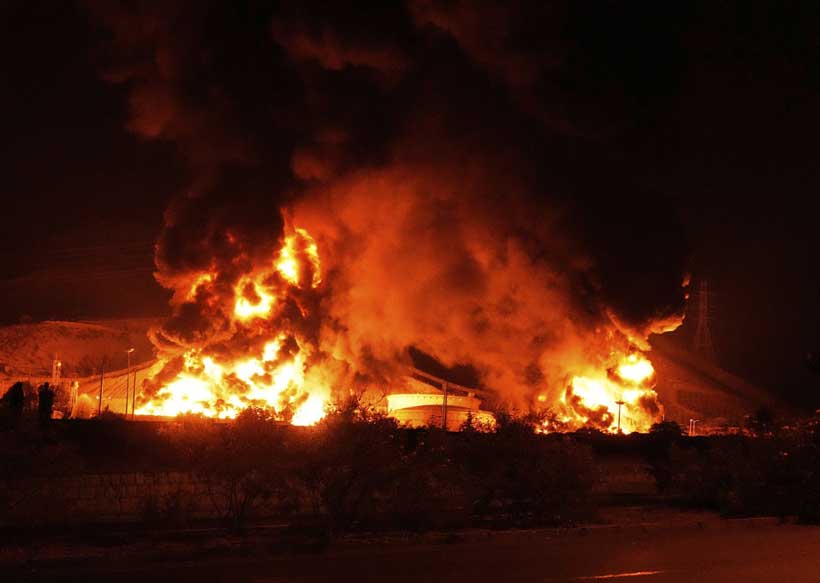
Russia’s key Black Sea oil port of Tuapse has suspended all fuel exports after Ukrainian drones struck its infrastructure on November 2, igniting a fire and damaging loading facilities. The attack also forced the nearby Rosneft-operated refinery to halt crude processing, according to industry sources and LSEG ship tracking data.

Tuapse is one of Russia’s major export hubs for refined oil products, including naphtha, diesel, and fuel oil. The port plays a crucial role in supplying markets such as China, Malaysia, Singapore, and Turkey. The refinery, capable of processing around 240,000 barrels of oil per day, exports most of its production.

Why It Matters

The suspension underscores Ukraine’s ongoing campaign to weaken Russia’s wartime economy by targeting energy infrastructure deep inside Russian territory. These strikes not only disrupt export revenues but also stretch Russia’s military and logistical resources. For Moscow, losing Tuapse an export-oriented refinery on the Black Sea adds pressure to its already strained oil supply chain amid international sanctions and logistical bottlenecks.

The attack also signals Kyiv’s growing drone capabilities, with long-range operations increasingly aimed at strategic Russian energy sites. As the conflict nears its fourth year, energy infrastructure on both sides has become a critical front in the economic war underpinning the battlefield.

The regional administration in Tuapse confirmed the drone strike and subsequent fire but offered few details. State oil company Rosneft and Russia’s port agency did not respond to Reuters’ requests for comment.

According to data reviewed by LSEG, three tankers were docked during the attack, loading naphtha, diesel, and fuel oil. All vessels were later moved offshore to anchor safely near the port. Before the incident, Tuapse had been expected to increase oil product exports in November.

Ukraine has not directly claimed responsibility for the specific attack but reiterated that its drone strikes aim to erode Russia’s capacity to finance its invasion through energy exports.

What’s Next

Repair timelines for the Tuapse refinery and port infrastructure remain unclear, but the temporary halt is expected to disrupt Russia’s short-term fuel exports and trading flows in the Black Sea region. The strike may prompt Moscow to bolster air defenses along its southern coast and diversify export routes to reduce vulnerability.

Meanwhile, Ukraine is expected to continue leveraging drone warfare to target high-value Russian infrastructure as part of its asymmetric strategy to offset Moscow’s battlefield advantages.

With information from an exclusive Reuters report.

Source link

Rail security to be reviewed after train stabbings, says minister

Jennifer MeierhansBusiness reporter

PA Media Two armed policemen walking through St Pancras International station, LondonPA Media

There will be increased visible patrols at mainline stations over the coming days, the Transport Secretary said

There will be a review of rail security in the UK following a mass stabbing on a train, Transport Secretary Heidi Alexander has said.

A man has been charged with 10 counts of attempted murder after the knife attack on a Doncaster to London service on Saturday night.

Alexander told the BBC the government would “review security arrangements” and respond “swiftly and in a proportionate way”.

But she did not think airport scanning technology “is the right solution for stations in the UK”.

Home Secretary Shabana Mahmood is expected to make a statement about the attack to MPs in the House of Commons on Monday afternoon.

Questions about passenger safety on the UK’s rail network have been raised after a a black British national, who boarded a train at Peterborough station, attacked passengers with a knife.

Eleven people were treated in hospital including a member of train staff who is said to be in a “critical but stable condition”.

Anthony Williams, 32, from Peterborough has been charged with 10 counts of attempted murder, one count of actual bodily harm and one count of possession of a bladed article, British Transport Police (BTP) said on Monday morning.

Alexander told BBC Breakfast that BTP officers would increase visible patrols at mainline stations over the coming days “because I do understand that people will want to feel reassured following what happened”.

“Thankfully incidents like this on the public transport network are very, very rare,” she added.

She said the rail network in the UK was a “low crime environment” and for every one million passenger journeys only 27 crimes were committed.

Asked what steps the government would take to improve security on trains, she said: “We are investing in improved CCTV in stations and the Home Office will soon be launching a consultation on more facial recognition technology which could be deployed in stations as well.”

Asked about luggage scanners similar to those used in some major train stations abroad she said: “At the moment that type of airport scanning technology I don’t think is the right solution for stations in the UK.”

‘Real concerns’

Andy Trotter, former British Transport Police Chief Constable told BBC Breakfast Saturday’s attack illustrates “people’s real concerns about being trapped with an offender or with someone causing disorder”.

“I hope this results in a broader review of security, the need for more British Transport Police, the need for more security from the rail companies themselves.”

Asked about reports that BTP had carried out a training exercise a few months ago based on a scenario similar to what happened he said: “I know they did have a very similar exercise, as in the few weeks before 7/7 we had an exercise similar to the outcome on that day as well.

“It does make it work a lot better on the day, you learn from experience from those exercises what went well what didn’t go well.

“The police and the other emergency services also look at every event immediately afterwards to make sure you do learn lessons.”

Shadow home secretary Chris Philp told BBC Radio 4’s Today programme he was calling for “a dramatic increase in the use of stop and search to take knives off the streets and potentially prevent attacks like the one was saw on the train”.

When asked for what reason the suspect in Saturday’s stabbing should have been stopped and searched before boarding the train when only his age, gender and ethnicity was known, he said “it would depend if there was an indication of suspicion”.

“But in high crime hot-spot areas there should actually be stop and search undertaken without suspicion,” he added.

Asked if he was suggesting the man should have been stopped and searched purely based on the colour of his skin he said “categorically not I am absolutely not saying that”.

The Conservative government in 2024 described laws on knife crime in England and Wales as “already among the toughest in the world”.

Challenged on why these same laws were no longer good enough, he said: “We need to go further with tougher knife crime laws, with more stop and search, and the use of technology like live facial recognition to identify wanted criminals and dangerous people so they can be arrested.”

Senior Reform UK politician Zia Yusuf on Sunday said he would not like to see increased security at train stations.

He told the BBC’s Sunday With Laura Kuenssberg programme it would impose “enormous friction” on the lives of law-abiding people “as a result of the actions of a tiny minority”.

He argued for a significant increase in the use of stop-and-search powers “to saturation”, saying this would remove deadly weapons from circulation.

There is no single knife crime statistics publication in the UK but as far as England and Wales goes, police recorded 51,527 offences across both nations in the year to June 2025, according to the latest figures, published by the Office for National Statistics (ONS).

However, these figures show knife crime is falling by 5% compared with the same period last year and 7% compared with five years ago. Homicides involving a knife also fell by nearly a fifth in the latest year to 196 offences, compared with 239 the year before.

Source link

Nigeria’s Former President Buhari Dies: What His Legacy Means for Security

In December 2014, an incumbent president lost a re-election bid for the first time in Nigeria’s history. 

It was a time characterised by widespread anguish and anger at how insecure the Nigerian life had become. Boko Haram, the extremist insurgent group fighting to establish what it calls an Islamic State, had intensified its violence, killing hundreds of thousands, displacing millions more, and abducting hundreds of teenage girls from school. Bombs were also being detonated in major cities at an alarming rate. For Nigerians, the incumbent President Goodluck Jonathan simply had to go. And so Muhammadu  Buhari was voted in with unflinching hope that things would get better. That hope quickly turned into disillusionment and, in some cases, anger as things began to take a different turn than was hoped for.

Today, July 13, the former president, Muhammadu Buhari, passed away at 82, signalling the conclusion of a significant political chapter. As tributes from dignitaries continue to emerge and headlines reflect on his ascent and legacy, HumAngle analyses the impact of his presidency on the lives of Nigerians beyond the halls of power, in displacement camps, remote villages, and troubled areas.

An examination of the security legacy

During his time in office from 2015 to 2023, Nigeria faced increasing violence on various fronts: the Boko Haram insurgency in the North East, a resurgence of militants in the Niger Delta, and the rising threat of terrorism and conflicts between farmers and herders in the North West and Middle Belt. 

Buhari’s administration initiated multiple military operations, including Operation Lafiya Dole, Operation Python Dance, Operation Safe Corridor, etc., yielding mixed outcomes and levels of responsibility. While some campaigns succeeded in pushing back armed groups, others faced criticism due to evidence of excessive force, extrajudicial killings, and displacements within communities. Non-kinetic counter-insurgency operations such as the Operation Safe Corridor, which was launched in 2016, also came under heavy criticism. Though the programme was designed for Boko Haram members or members of similar insurgent groups in the northeastern region to safely defect from the terror groups and return to society, HumAngle found that civilians were finding their way into these programmes, due to mass arbitrary arrests prompted by profiling and unfounded allegations. The International Crisis Group also found that, beyond innocent civilians being forced to undergo the programme, other kinds of irregularities were going on. 

“The program has also been something of a catch-all for a wide range of other individuals, including minors suspected of being child soldiers, a few high-level jihadists and alleged insurgents whom the government tried and failed to prosecute and who say they have been moved into the program against their will,” the group said in a 2021 report. At the time, more than 800 people had graduated from the programme.

The programme also did not – and still does not – have space for women, and HumAngle reported the repercussions of this.

During Buhari’s reign, terrorists were also forced out of major towns but became more entrenched in rural communities. The former president launched aggressive military campaigns against them, reclaiming villages and cities. Boko Haram retreated into hard-to-reach areas with weaker government presence, operating in remote parts of Borno, Yobe, and Adamawa States. In these areas, the group imposed strict rules, conscripted fighters, and punished dissenters, often with brutal force.

A HumAngle geospatial investigation also showed how insurgency wrecked hundreds of towns and villages in Borno state. Many of the rural settlements were overrun after Boko Haram lost urban ground under Buhari’s watch.

Even with significant investment in security, a large portion of rural Nigeria remains ungoverned to date. As the former president failed to curb the forest exploits of Boko Haram, the terror group expanded control over ungoverned spaces, particularly in the North Central and North East regions. In Niger State alone, terrorists took over communities in Shiroro, Rafi, Paikoro, and Munya LGAs, uprooting thousands and launching multiple attacks. The lack of accessible roads and communication infrastructure made rapid response nearly impossible, allowing the terrorists to operate with impunity.

HumAngle found that, under Buhari, Nigeria lost many forest areas to terrorists, especially in Niger state. In areas like Galadima Kogo, terrorists imposed taxes, enforced laws, and ran parallel administrations. The withdrawal of soldiers from key bases emboldened the terrorists. This shift from urban insurgency to rural domination underscores the failure to secure Nigeria’s vast ungoverned spaces. Analysts who conducted a study on alternative sovereignties in Nigeria confirmed that Boko Haram and other non-state actors exploited the governance gaps under Buhari’s administration to expand their influence, threatening national security.

Perspectives from areas affected by conflict

For individuals beyond Abuja and Lagos, Buhari’s governance was characterised more by the state’s tangible influence than by formal policy declarations.

In Borno and Yobe, civilians faced military checkpoints and insurgent violence. School abductions like the Dapchi abduction and many others were recorded..

In Zamfara and Katsina, the president’s silence on mass abductions often resounded more than his condemnations. In Rivers and Bayelsa, the Amnesty Programme faltered, and pipeline protection frequently took precedence over human security.

What remained unaddressed

While some lauded his stance against corruption, numerous victims of violence and injustice during Buhari’s time in office did not receive restitution or formal acknowledgement of the wrongdoing. The former President remained silent during his tenure, as significant human rights violations were recorded. The investigations into military abuses, massacres, forced disappearances, and electoral violence either progressed slowly or ultimately came to an end.

Police brutality was a major problem during his tenure, leading to the EndSARS protests that swept through the entire nation in October 2020, with Lagos and Abuja being the major sites. The peaceful protests sought to demand an end to extrajudicial killings and extortion inflicted by the now-defunct Special Anti-Robbery Squad (SARS). For two weeks, Nigerians trooped into the streets with placards and speakers, memorialising the victims of police brutality and demanding an end to the menace. The protests came to a painful end on the night of October 20, when the Nigerian military arrived at the Lekki Toll Gate in Lagos and fired live rounds into the crowd of unarmed civilians as they sat on the floor, singing the national anthem. It is now known as the Lekki Massacre. Though the government denied that there was any violence, much less a massacre, a judicial panel of inquiry set up to investigate the incident confirmed that there had, in fact, been a massacre. 

No arrests were made, and activitsts believe some protesters arrested then may still be in detention to date.

Five years before this, on December 13 and 14, the Nigerian military opened fire on a religious procession in Zaria, containing members of the Islamic Movement of Nigeria (IMN), killing many and leaving others wounded. The incident is now known as the Zaria Massacre. HumAngle spoke to families of some of the people who were killed and children who were brutalised during this time.

Though these massacres have all been well documented, there has been little to no accountability for the aggressors or compensation for victims and their families. 

“My life became useless, losing three children and my husband to soldiers for committing no offence…I have never gone three days without my husband and all my children. This has affected my last-born, who is now in a psychiatric facility,” Sherifat Yakubu, 60, told HumAngle. 

“I feel a great wrench of sadness anytime I remember the injustice against my people, and I don’t think the authorities are ready to dispense justice,” another victim told HumAngle in 2022, highlighting the gap and lack of trust in the system created by the absence of any accountability after the incident.

Key achievements 

Beyond the headlines, Buhari played a crucial role in establishing a framework for centralised security authority. Choices regarding law enforcement, military presence, and national security circumvented local leaders and established institutions, exacerbating conflicts between the central government and regional entities. This centralisation continues to influence Nigeria’s democratic journey, disconnecting many experiences from those who are supposed to safeguard them.

Buhari rode into power on a widely hailed anti-corruption campaign, a promise honoured with the swift implementation of the already-proposed Single Treasury Account (TSA). By 2017, the programme, which consolidated up to 17,000 accounts, had saved the country up to ₦5.244 trillion. Buhari’s Presidential Initiative on Continuous Audit (PICA) eliminated over ₦54,000 ghost jobs, and Nigeria reclaimed ₦32 billion in assets in 2019. Under the same administration, Nigeria got back $300 million in Swiss-held Abacha loot. 

From 2.5 million MT in 2015, rice production rose to four million MT in 2017. In an effort to deter rice, poultry and fertiliser smuggling, the former president closed Nigeria’s land borders on August 20, 2019, a move believed to have bolstered local food production significantly. His government’s Presidential Fertiliser Initiative also produced over 60 million 50 kg bags, saving about $200 million in forex and ₦60 million yearly.

Infrastructural achievements under the late president include the completion of the Abuja-Kaduna, Itakpe-Warri and  Lagos-Ibadan railway projects, as well as the extension of the Lagos-Ibadan-Port Harcourt rail line. Notably, his government completed the Second Niger Bridge and the Lekki Deep Seaport.

Fatalities from Boko Haram reduced by 92 per cent, from 2,131 deaths in 2015 to 178 in 2021. Under the same administration, over a million Internally Displaced Persons (IDPs) were resettled, and 13,000+ hostages, including some Chibok and Dapchi schoolgirls, regained freedom. The same government acquired 38 new aircraft and Nigeria’s first military satellite (Delsat-1).

In 2021, the Buhari government signed the Petroleum Industry Act (PIA), restructuring the Nigerian National Petroleum Commission (NNPC) into a commercial entity and setting the stage for significant transformation in the country’s oil and gas sector.

Confronting the past may be the path forward

The passing of a president demands more than mere remembrance or the crafting of political narratives. It should create an opportunity for national reflection. As Nigeria faces fresh challenges of insecurity, displacement, and regional strife, Buhari’s legacy presents both insights and cautions. 

As official tributes accumulate, Nigerians reflect not only on what Buhari accomplished but also on what remains incomplete.

Source link