Africa Shield: Why securing development is becoming a new security priority | News
As Africa’s economies expand and become more technologically advanced, governments face a growing challenge: protecting the chemical, biological, radiological and nuclear (CBRN) materials used in healthcare, industry, research and mining from theft, diversion or misuse.
For decades, security discussions on the continent focused largely on armed groups, “terrorism” and conflict. But as healthcare systems expand, mining grows and trade accelerates, governments are managing increasing quantities of sensitive CBRN materials essential to development.
Their growing use is driving demand for stronger regulation, oversight and enforcement.
CBRN security covers radioactive sources used in cancer treatment, chemicals used in manufacturing and mining, biological materials handled in laboratories, and technologies with both civilian and security applications.
Most materials are used safely every day, but weak regulation, inadequate oversight or theft can allow them to be diverted for criminal or malicious purposes.
“The same materials that strengthen healthcare, scientific research, mining and industry can also become security risks if poorly managed,” Mubarak Aliyu, a Nigeria-based political and security risk analyst, told Al Jazeera. “The challenge is not to restrict development, but to ensure that innovation is matched by effective oversight, secure handling practices and robust regulatory systems that prevent diversion or misuse without slowing economic progress.”
Securing growth
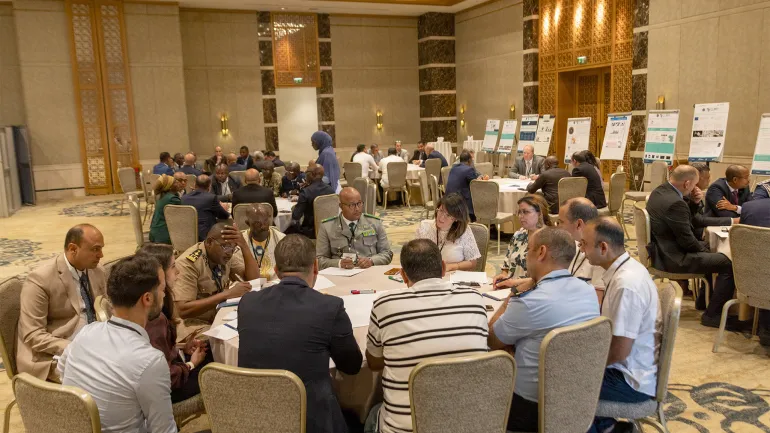
Held July 14-16 in Tunis, Tunisia, the Africa Shield 2026 Regional Counterproliferation Workshop brought together more than 100 participants from across Africa, including law enforcement officials, military representatives, policymakers and national coordinators responsible for implementing United Nations Security Council (UNSC) Resolution 1540, which requires states to prevent non-state actors from acquiring weapons of mass destruction and related materials.
The workshop was led by the International Counterproliferation Program of the US Defence Threat Reduction Agency (DTRA), in partnership with the European Union Chemical, Biological, Radiological and Nuclear Centres of Excellence Risk Mitigation Initiative and the United Nations Interregional Crime and Justice Research Institute.
Now in its sixth edition, Africa Shield helps African governments strengthen their ability to prevent, detect and respond to CBRN risks through training, coordination and capacity building.
The workshop examined how governments can ensure that materials used for peaceful purposes remain secure as industries expand and cross-border links deepen.
The discussions highlighted a practical challenge: ensuring that the systems protecting these materials develop alongside the industries and services that depend on them.
From response to prevention
Africa Shield reflects a move from responding to CBRN incidents after they occur towards preventing vulnerabilities before they are exploited.
Rather than reacting only after a crisis, the programme focuses on reducing risks through stronger border controls, export monitoring, emergency preparedness and closer coordination between agencies.
![Law enforcement, military and policy officials participate in discussions during the Africa Shield 2026 workshop in Tunis [Handout/Andrea Chaney/Defense Threat Reduction Agency]](https://i0.wp.com/occasionaldigest.com/wp-content/uploads/2026/07/africa_shield_2026_strengthening_counterproliferation_efforts_across_africa-1-1784438713.jpg?w=640&ssl=1)
Through partnerships with African governments and international organisations, Africa Shield contributes to the implementation of UNSC Resolution 1540.
Major Brittany Brown, the coordinator of DTRA’s Global Threat Reduction Africa Region Counter Weapons of Mass Destruction Program, said Africa Shield provides an opportunity for participating countries to “exchange expertise and lessons learned” while deepening partnerships to address increasingly complex transnational security challenges.
Brown said the programme had enabled African countries to “clearly demonstrate their ownership of the counterproliferation problem set”, describing it as “a critical multilateral investment” that strengthens cooperation across the continent.
Her comments reflect a wider shift in international security cooperation, with external partners increasingly focusing on strengthening national institutions and capabilities rather than creating long-term dependency.
Tunisia’s hosting of the workshop underscored the regional nature of the challenge. Positioned between North Africa, the Mediterranean and the Sahel, the country sits at the intersection of major trade and transport routes.
As those networks become more interconnected, the same corridors that facilitate commerce can also be exploited to move chemicals, radioactive sources and other controlled materials across borders.
The enforcement gap
The success of Africa Shield will depend not only on training and cooperation, but on whether governments can translate those efforts into stronger institutions and more effective enforcement.
Many African countries already have legal frameworks regulating chemicals, radioactive materials and strategic trade, but implementation remains uneven.
Authorities often face shortages of funding, specialised personnel and modern equipment needed to inspect shipments, monitor facilities and investigate possible violations.
Existing trafficking networks involving weapons, narcotics and other illicit goods demonstrate the difficulty of monitoring Africa’s vast borders and expanding trade routes. The same weaknesses could create vulnerabilities around the diversion and unauthorised movement of controlled materials.
The expansion of trade under the African Continental Free Trade Area adds another layer of complexity. Governments must strengthen security measures without undermining the trade and investment the agreement is designed to promote.
Managing that balance will require governments to strengthen security systems without creating barriers that slow legitimate trade.
“Monitoring shipments, securing materials and sharing intelligence across borders are daily struggles compounded by limited resources and exploited smuggling routes,” Phil Efe Benard, country director of the African Chamber of Content Producers (ACCP) Nigeria, told Al Jazeera. “We cannot rely solely on foreign partners. Building our own intelligence, forensic capacity and regional networks is essential, ensuring partnerships are built on African capacity, not dependency.”
Why it matters
Africa Shield reflects a broader evolution in Africa’s security priorities, expanding the focus beyond traditional threats to the institutions, regulations and technical expertise needed to safeguard increasingly modern economies.
For African governments, that means stronger customs systems, closer coordination between regulators, border agencies and security services, and greater investment in specialised capabilities.
For the challenge is ensuring that security and development advance together.
“Economic development and security should mutually reinforce each other. By enhancing oversight and promoting the responsible management of sensitive and hazardous materials, we can create an environment where innovation can thrive safely,” Kupagme told Al Jazeera.
Ultimately, Africa Shield is about more than preventing the misuse of controlled materials. It reflects a growing recognition that economic transformation brings new security responsibilities.
“One of the biggest obstacles is that CBRN security depends on consistent implementation rather than policy commitments alone,” Aliyu said. “Many countries still struggle with monitoring cross-border shipments, securing sensitive materials, enforcing regulations and sharing timely information with neighbours. Closing these gaps requires sustained investment, stronger institutions and greater trust between national authorities.”