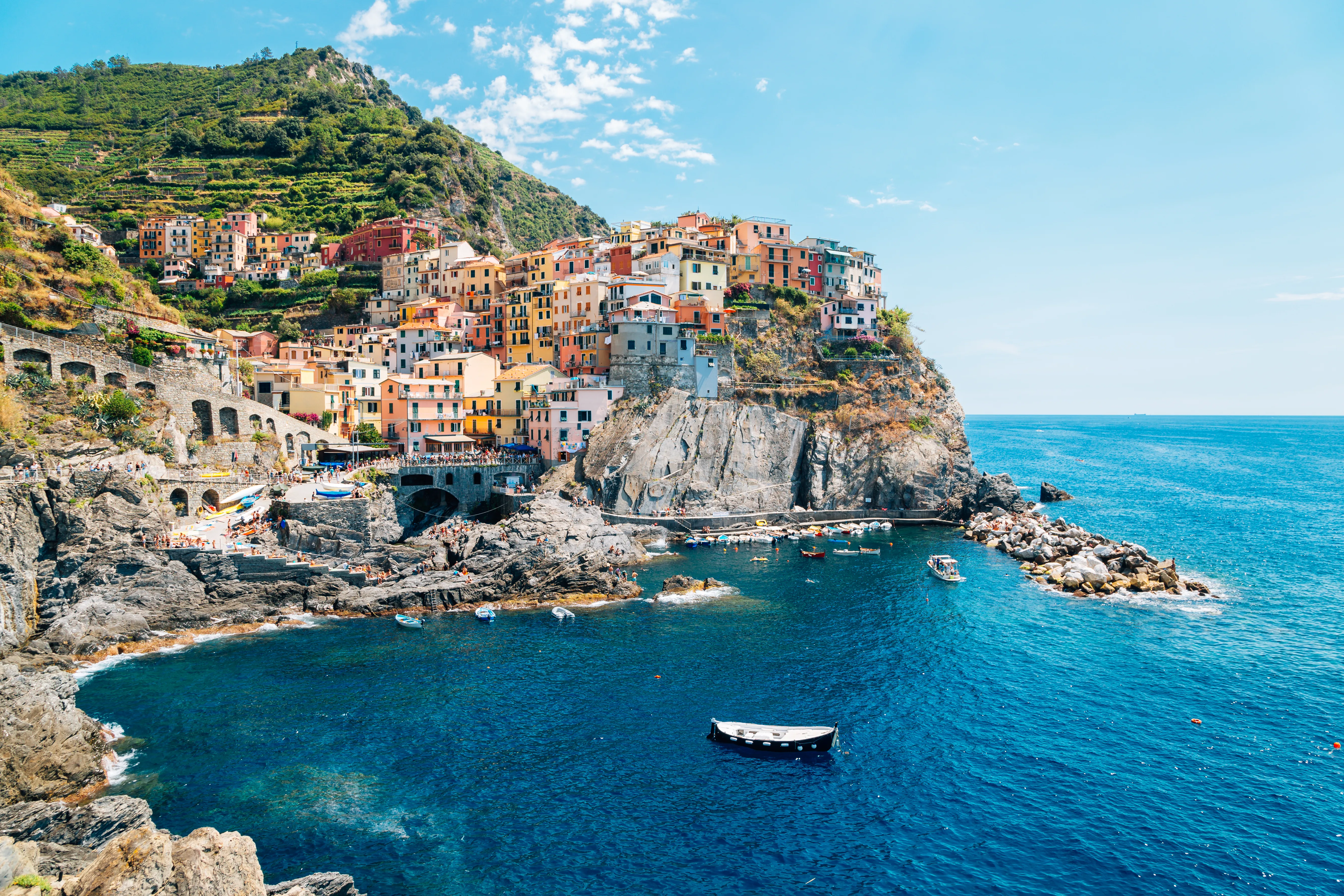
In fact, any shoes deemed unsuitable for the trails – along with flip flop and sandals – could score you a fine of between €50 (£43.15) to €2,500 (£2,157.31).
Staff across the park, as well as guards, can carry out checks including stopping visitors to check they have the right footwear.
If you are caught wearing them on the hiking trails you could be fined over £2,000Credit: Getty
If you don’t have the right footwear, you could get fined on the spot or not be allowed to use the trails.
One trail where flip flops are banned is the famous Blue Path, which connects all five villages in the park.
The path takes between five and eight hours to walk from end-to-end, or longer if you want to explore the villages.
To do the Blue Path, you will usually need a Cinque Terre Card, which gives you access to the trails as well as local shuttle buses and museum discounts.
Flip flops are allowed in some areas though, including the villages in the park – Monterosso al Mare, Vernazza, Corniglia, Manarola and Riomaggiore.
The park isn’t the only spot in Italy where you can’t wear flip flops though.
In Capri, a law that was created back in the 1960s bans people from wearing noisy shoes.
This includes flip flops, as well as squeaky sandals and even wooden clogs.
IT’S NO lie that Brits love a European break but behaving badly could turn your trip into a holiday nightmare.
Across Europe, countries have their own rules relating to tourists – from banned beach items to strict curfews.
Sign up for the Travel newsletter
Thank you!
And if you want to avoid a hefty fine this summer, you’ll want to know what the rules are for each country.
France
A number of major cities in France and holiday hotspots ban drinking alcohol between 4pm and 8pm, including along the Paris riverbanks and the French Riviera.
When it comes to heading to the beach, make sure to not take any of it home with you as a souvenir.
Taking shells for example, is considered environmental theft and you could be fined €250 (£216.60) for doing this.
Swimming is always a fun activity, but men heading to the pool need to make sure you leave the swimming shorts at home.
Due to health and hygiene laws in the country, men in France must wear Speedos.
Some places ban drinking alcohol on the streetsCredit: Getty
Spain
Most cities in Spain have banned drinking alcohol on the streets, such as Madrid, Barcelona and Valencia.
Also don’t jump from your hotel balcony into a pool – you can get kicked out of the hotel and fined.
Across Spain, make sure to not smoke or vape on the terraces of bars or restaurants or at pools.
Make sure to not jump from a hotel room into a pool as you could get kicked outCredit: Alamy
But in Barcelona and popular Balearic and Canary Islands spots, smoking and vaping are banned across all beaches.
Fines for this range from €30 (£25.99) to €2,000 (£1,732.79).
In Barcelona, Malaga and Majorca, make sure not to walk through the streets in a bikini or swimming trunks. If you do, you could face a fine of up to €300 (£259.92).
Also when you are at the beach in Cullera, Calpe or Tenerife, don’t reserve a spot with a towel as you could have your belongings confiscated and be fined up to €3,000 (£2,599.18)
Portugal
In Albufeira, Portugal, there is a Code of Conduct in place for touristsCredit: Getty
In Portugal, there are some rules to be aware of when visiting.
Portable speakers are not allowed to be loud on beaches or you could be fined or it could be confiscated from you.
Fines vary between €200 (£173.28) and €4,000 (£3,465.58) for this.
Also in Albufeira, a Code of Conduct introduced last year is still in place for tourists this year.
The rules basically reinforce that visitors must act respectfully, with public nudity and drinking alcohol on the street banned.
Italy
There are a number of different rules across Italy you’ll need to follow.
In Florence, there are a number of streets where you can’t sit and eat outdoors.
The rule has been introduced to ease congestion.
In Italy, you cannot wear flip flops on the Cinque Terre hiking trailCredit: Getty
Also in Florence, e-scooters are banned in the city centre.
In Liguria, Portofino, over the summer, travellers who walk the cobbled streets either barefoot, in swimwear or topless can be fined.
You could also get fined between €50 (£43.32) to €2,500 (£2,165.99) if you are caught hiking Cinque Terre in flip flops.
Drinking alcohol in the streets is also banned with fines up to £2,568.
And make sure not to sit or lie down on a path, wall or park as this can also get you fined. Fines range from £22 to £433.
Over in Milan, you cannot smoke outdoors unless you are 10 metres away from other people. If caught breaking the rule, you could be fined between €40 (£34.66) to €240 (£207.93).
In Rome, you cannot drink out of a glass bottle on the streets after 10pm and all outdoor drinking is banned after midnight.
While in the city it is also worth being aware that when you visit the famous Spanish Steps, not to sit, eat or drink on them.
And in Venice, it is illegal to feed the pigeonsCredit: Getty
This is to protect the 18th century marble from damage and stains and if you are caught doing this, you could get a fine between €250 (£216.60) and €400 (£346.56).
And if you are visiting the Italian island of Sardinia, make sure you don’t dig a hole, build a sandcastle or take sand or shells from the beach as you could be fined up to €3,000 (£2,599.18).
Heading to Venice? Make sure you don’t feed the pigeons – it is illegal and you can be fined between €25 and €500.
Greece
In Greece, there are some different rules compared to other countries.
For example, at archaeological sites like the Acropolis and the Parthenon you cannot wear high heels.
If you are caught with high heels, you could be fined up to £760.
Drinking on the streets is also not allowed.
And if you are caught topless in public you could face a fine of up to £250.
Even though it may be tempting, make sure you don’t take pebbles from Greek beaches either as you could be slapped with a £771 fine.
It is also worth knowing that across Greece, sunbeds and umbrellas have been banned on 251 beaches and the beaches that do have sunbeds allowed, at least 70 per cent of the sand must be without sunbeds.
A TRAVEL agent with decades of experience has revealed the ultimate throwback destination and says you can still get holidays for the retro pricing too.
Spain is a classic summer destination for Brits and one spot remains popular for good reason.
Sign up for the Travel newsletter
Thank you!
Claire Watters has been a travel agent for 40 years and still thinks Majorca in Spain is the best spotCredit: First Choice/Claire WattersShe recommends Alcudia, saying it is the best spot for familiesCredit: Alamy
But Claire Watters, a First Choice travel agent, revealed that Majorca is the island that she sold more than anywhere else in the 90s.
She said: “In the ‘90s, if a family walked in wanting guaranteed sunshine, a short flight and a holiday that wouldn’t break the bank, Majorca was usually my first recommendation.
“Thirty years later, despite how much travel has changed, my advice remains exactly the same.”
Back in the 90s, a holiday to Majorca for a family of four cost around £349, which would be about £719 now.
And holidays today could cost you the same… or even less.
A seven-night break for a family of four to Playa Moreia in Majorca, flying from London Southend on October 10 via First Choice costs £179 per person – £716 total.
The area has waterparks, nature parks and lots of hotels with family entertainmentCredit: First Choice/Claire Watters
When it comes to recommendations for travellers heading to the Spanish spot, Claire has loads.
She said: “Alcudia is the best area for families for me.
“It has a long, sandy beach with shallow water and a calm sea, which is ideal for younger children to paddle safely.
“You’ll find waterparks and plenty of watersports, boat trips, cycling routes, and nature parks, and there are also playgrounds, kids’ clubs, and family entertainment in many hotels.
“The all-inclusive options make things simple and budget-friendly, and you can walk around in a calmer resort that is more geared up for families.”
And for when it comes to discovering a beach spot, Claire recommends heading to the Blue Flag Playa de Muro.
She said: “The sea is very shallow for 50–100 metres, staying knee-deep for a long distance.
“The beach stretches nearly four miles, making it one of the longest beaches in Majorca.
Claire recommends heading to the Blue Flag Playa de MuroCredit: Alamy
“The water is calm, warm, and clear, with hardly any currents.
“Regular water testing, lifeguards, and rescue services keep standards very high. This makes it perfect for families, non-swimmers, and relaxing swims.”
For a day where you want to head off for a day trip somewhere, Claire says to head to Sóller and the historic railway, Caves of Drach tour & sunset boat trip.
She said: “Sóller and the historic railway is one of the best day trips for me.
“You can step back in time because the train dates from 1912, with original wooden carriages still in use.
“The scenery is incredible, as the route crosses the Serra de Tramuntana, which is a UNESCO World Heritage mountain area, with tunnels, viaducts, and views of orange groves.
And for a day trip head to Soller, which has a historic railwayCredit: Alamy
“It is a unique experience because it’s not just transport, it’s a slow, scenic journey through the countryside that you wouldn’t normally see.”
Another spot is the Caves of Drach tour which “allows you to explore a huge underground cave system”.
Claire added: “It features Lake Martel, one of the largest underground lakes in the world.
“The visit ends with a live classical music concert on the water, which is so lovely.”
For something a little more romantic, Claire suggests hopping on a sunset boat trip.
She said: “Sunsets over the water give clearer, more intense colours and are great for those Insta-worthy photos and stories, with golden-hour views across the ocean and coastline.
One of the hotels in the area is Alcudia Pins, which Claire says was great in the 90s and is still todayCredit: First Choice
“It often includes swimming, drinks, music, or food onboard, and it is great for families and couples wanting different scenery away from the hotel.”
Another must-visit spot for Claire is Cap de Formentor – a scenic drive with lots of different viewpoints.
“Each stop reveals a completely different view, so it’s like multiple viewpoints in one trip,” she revealed.
“It is an incredible sunrise and sunset spot, and it’s one of the most photographed spots in Majorca – I get that rare feeling of standing at the edge of the island.”
In the ’90s, two properties dominated Claire’s booking screen, and both remain icons of Majorcan tourism today: Club Mac and TUI BLUE Alcudia Pins.
“I must have sent thousands of families to Club Mac and Alcudia Pins,” Claire says.
Another spot to explore are the Caves of Drach with a huge underground lakeCredit: Alamy
“Back then, they were the gold standard for a hassle-free family holiday, and they’re still available to book on First Choice today, although I’m glad to say they’ve been updated.”
And when it comes to places to stay Claire still recommends Alcudia Pins, costing from £421 per person in October.
“Alcudia Pins is the location is hard to beat – it sits right on Playa de Muro, which is one of the best beaches in Majorca making this an ideal and great spot for families; the beachfront access alone makes a big difference,” Claire shared.
“It’s genuinely family-focused with lots of Kids’ clubs and activities, pools and entertainment and it’s close to the resort town for trips outside of the hotel.
“Also a good overall value hotel where customers can choose a self- catering or an all inclusive option giving them the choice to decide their board basis.”
Claire added: “In the ’90s, people thought Majorca was just cheap and cheerful.
“But even back then, those of us in-the-know knew it had some of the most stunning scenery in Europe.
“Today, the island has managed to preserve its traditional charm while upgrading its offering.”
It still warns that the situation is “unpredictable and attacks could resume at short notice”.
However, the lifting of the ban means holidays can resume to the region.
A drone attack hit Dubai’s main airport back in MarchCredit: AFP
Last year, 1.4million Brits visited Dubai alone, which have since massively dropped due to the travel ban.
British Airways and Virgin Atlantic have already suspended flights to Dubai until October 2026 and winter 2027, respectively.
However, Emirates continues to operate flights between the UK and the UAE.
The travel ban being lifted also affects Abu Dhabi, where holidays can also resume.
The UK Foreign Office has lifted the travel ban for Qatar as well, which includes flights going through Doha.
In response, Qatar Airways has increased the number of flights operating between the UK and Doha, including 49 flights a week from London Heathrow and 14 a week from Edinburgh.
What does this now mean for your holiday?
The Sun’s Head of Travel Lisa Minot explains more:
It’s back!
Travel to the Middle East plummeted in the wake of the Iran war and our Foreign Office advising against all but essential travel to the UAE, Qatar, Bahrain and Kuwait.
For decades, British sun-seekers have been used to flying via the Middle Eastern hubs. Airlines like Emirates, Etihad and Qatar aggressively took on the legacy carriers like British Airways and Singapore Airlines with value flights and unbeatable service.
All that came shuddering to a halt when the war in Iran saw missiles fired at the glitzy skyscrapers of Dubai and drones were shot down over Qatar’s major hub airport in Doha.
Overnight, hotels emptied and travellers scrabbled for direct flights to destinations in the Far East and Australia, or switched to the traditional hub airports in Singapore and Hong Kong.
With the peace plan now agreed, there is light at the end of the tunnel.
It is fantastic news that the Foreign Office has moved swiftly to lift the blanket ban that threw the holiday plans of millions into chaos.
Demand to Dubai and its neighbouring emirates including Abu Dhabi will no doubt bounce back quickly.
Those tourism-dependent countries are desperate to tempt us back. Expect a wave of great holiday deals and rock bottom fares in the coming weeks to encourage us to pack our bags.
But there is still a sting in the tail – the shocking rise in oil prices due to the closure of the Hormuz Straits hit the industry hard. Airfares will have to rise as airlines attempt to balance their books after such a sustained period of unrest.
But for now, for those who loved the Dubai beach clubs or appreciated the chance to travel seamlessly across the globe via the Middle East, there’s cause for celebration.
The gateway to these sun-drenched spots is open once more.
This affects long-haul holidays to places like Sri Lanka, the Maldives and Australia, who often use these Middle East hubs as stopover destinations.
Many destinations have seen a drop in tourism because of the war – Thailand predicted as many as 11million long-haul arrivals this year, but has since dropped this to 10million.
BRITISH holidaymakers going to France may be forced to cover their bare chests or risk being slapped with a £130 (€150) fine.
Men have been banned from walking around shirtless in several seaside resort towns – with one mayor citing concerns over hygiene and decency.
Sign up for the Travel newsletter
Thank you!
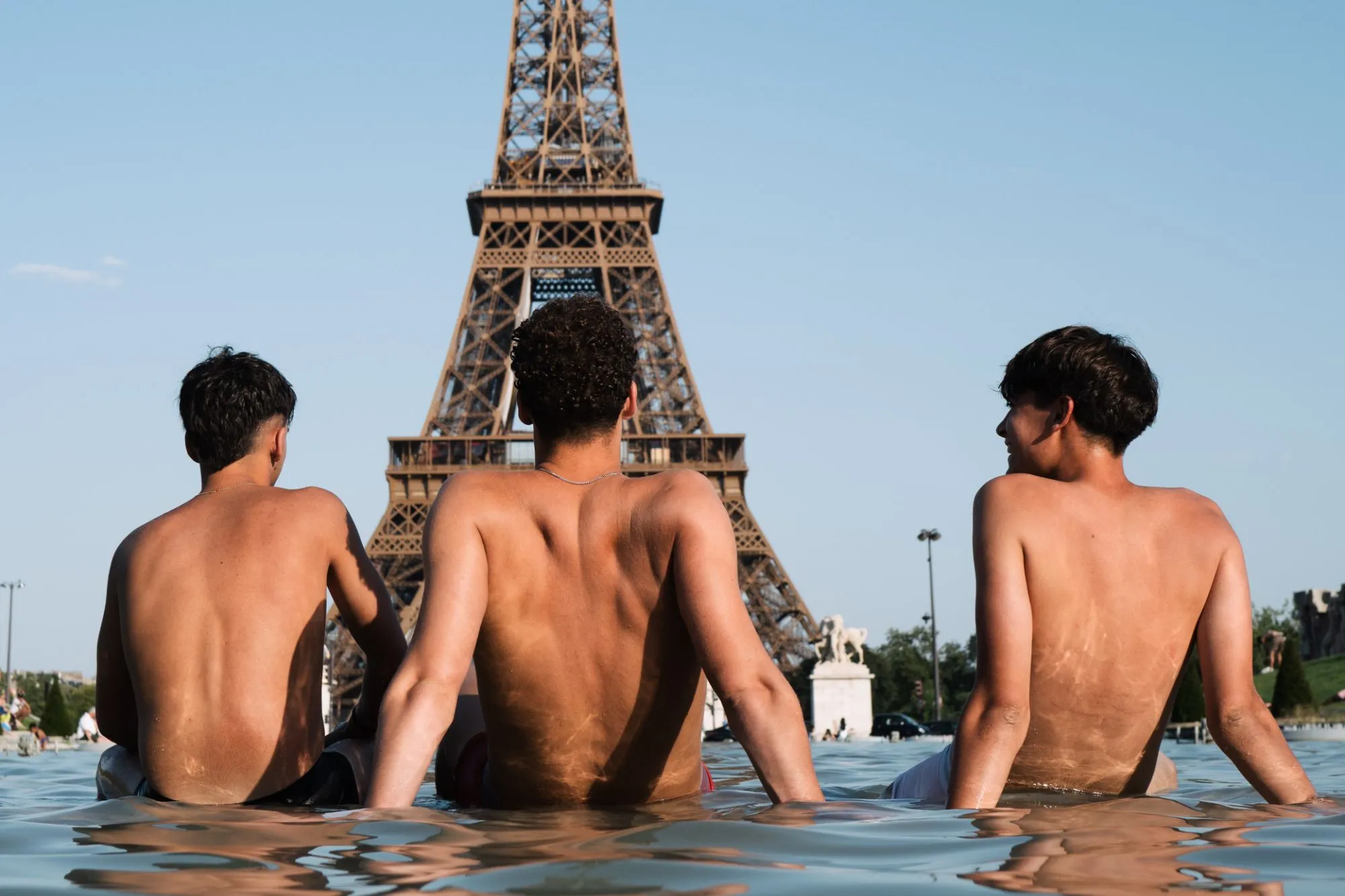
Tourists and locals alike ripped their shirts off amid blistering temperatures in July last yearCredit: GettyA shirtless tourist at a water fountain in ParisCredit: Alamy
Topless sunbathing is still legal in France – but around 20 towns are clamping down on locals and tourists from baring their chests in city centres.
The glamorous resort of Deauville has hiked up its token fine of £15 (€17) to a heftier £130 (€150).
And in the southern French city of Narbonne – which last year saw blistering highs of 43 degrees – men are barred from going shirtless all summer.
The ban came into force on Monday and will end only at the end of September.
The mayor of the resort town claimed it was common sense for a tourist hotspot to crack down on bare-chests.
“It’s about hygiene and avoiding exhibitionism,” he said.
One Narbonne restaurant owner hailed the crackdown as “a very good thing”, saying that “this isn’t something the staff of our café can easily police on their own without getting into arguments with customers”.
“Having bare-chested guys on the terrace can put off other customers”, added Anthony Hill, 53, who runs Le 89 cafe in the city centre.
But as a heatwave swept across the holiday hotspot – hitting highs of 34 degrees – not everyone welcomed the ban.
Tourists cool off in the fountains opposite the Eiffel TowerCredit: AFPTwo women marching shirtless at a Gay pride event in 2019Credit: Alamy
“This excessive puritanism is disturbing. Let people live a little. A bare chest never killed anyone”, complained one user named Gabriel on X.
Another seaside port – La Grande‑Motte – has imposed the same restriction and local resident Marie welcomed the change with open arms.
“If I’m out with my kids in the town centre I really don’t want to see guys without shirts. It’s a matter of decency — and there’s also the smell when they walk past you”, the 37-year-old told French TV.
But one holidaymaker, 55, questioned whether the £130 (€150) was “a bit steep” – though he added that he found rule logical.
French law forbids women from going topless – but there is no nationwide ban on men’s shirtlessness.
If a woman walks around bare-chested anywhere other than on a beach she risks being arrested for “sexual exhibitionism” and thrown in jail.
She may also be charged a fine of around £13,000 (€15,000).
In 2020 a row erupted across the nation after cops asked three topless women sunbathing on a southern French beach to cover up.
A family had complained that the women’s bare breasts had upset their children – but when police took action they were blasted for betraying the “French way of life”.
THE upcoming Eden Project Morecambe has unveiled its biggest attraction yet – a £4.5million immersive experience.
Called ‘The Elder Tree’ it will guide visitors through a unique journey when it opens in 2028.
Sign up for the Travel newsletter
Thank you!
Eden Project Morecambe will have ‘The Elder Tree’ as its focal pointCredit: Eden ProjectThe new Eden Project will consist of two domes in Morecambe BayCredit: Eden Project
The £100million garden attraction set to be built on Morecambe Bay has revealed its centrepiece called ‘The Elder Tree’.
It has been described as “one of the most significant elements” of the attraction.
It’s being built at the cost of £4.5million, which was donated from a charity lottery.
The 65 foot tree will guide visitors on a journey from its roots to the trunk hollows in a one-of-a-kind immersive experience.
It is set to show people how to “reconnect” with and “restore nature”.
The Eden Project in Morecambe will be the newest of its kind in 25 years with the only other attraction being in Cornwall.
Inside the new attraction will be two very different experiences called The Realm of the Sun and The Realm of the Moon.
The Realm of the Sun has been described as “a bright, lush landscape of the near future — a place where humanity has rediscovered how to repair and re-engage with the broken rhythms of the natural world”.
The Realm of the Moon is as an immersive but “darker” space with a hyper-real rockpool which will have sped-up cycles of tides.
Also inside the domes will be 1.5 acres of landscaped gardens, which will open earlier than the other exhibits in 2027.
The garden attraction will have a light and a dark realmCredit: Eden Project
Other details that have been previously mentioned include hanging plants, mini gardens, a multi-sensory area, a waterfall and a ‘Town Square’.
Between the two realms, there is expected to be an area called Metronome, where visitors will buy their entry tickets.
There will be a 750-capacity Tidal Theatre, a 300-capacity restaurant and a shop at the attraction as well.
Once open, Eden Project Morecambe is expected to bring in around £80million to the local area.
Andy Jasper, Eden Project CEO, said: “The funding has specifically secured The Elder Tree – which will sit at the heart of the experience for visitors.
“More than a striking landmark, it will help tell the story of our changing relationship with the natural world and inspire people to imagine what an incredibly positive future could look like.”
THE world’s BIGGEST bouncy castle is coming to the UK – and it won’t just be for kids.
‘Mega Bounce’ is set to open at Braintree Village in Essexnext month, and will run until the end of the summerholidays.
Sign up for the Travel newsletter
Thank you!
Inside will be giant slides, obstacle courses, sports challenges and, of course, dedicated bouncing arenasCredit: Jam Press/Mega BounceIt will run for six weeks
The massive attraction spans 2,500 square metres – the size of two football pitches – and is more than eight metres tall.
Inside will be giant slides, obstacle courses, sports challenges and, of course, dedicated bouncing arenas.
And outside of it will be other entertainment zones with food vendors, games such as giant Jenga and Connect 4, and music.
Visitors will also find giant Jenga, Connect 4, ping-pong, food stalls and drink vendors throughout the event arena.
There will be day-time quieter sessions designed for guests who prefer a more relaxed environment, before moving into all-ages sessions featuring music, lighting effects and entertainment throughout the day.
And it’s not just aimed at children – during the six-week run, a number of adult-only sessions will launch.
Once family sessions finish each evening, there will be adults-only events featuring DJs, karaoke, a fully stocked bar and even foam parties..
Josef O’Sullivan, centre director at Braintree Village, said: “After the success of The Monster at Braintree Village last summer, we wanted to come back with something even bigger and better this year.
Tickets will last for one hour sessionsCredit: Jam Press/Mega Bounce
“Mega Bounce making its UK debut here at Braintree Village is incredibly exciting, and we expect to see visitors from far and wide.”
The bouncy castle was previously in Dubai.
Mr O’Sullivan added: “We’re certain that this is going to be one of the best attractions available in the country over the summer holidays.”
Visitors booking a bounce session will get unlimited access to the attraction during a 60-minute slot.
General admission tickets are priced at £18, with discounts available for larger groups and members of Braintree Village’s PLUS+ rewards scheme.
THE top 10 destinations offering five-star stays on a budget have been revealed – starting from just £70 a night.
They’ve been identified by Hotels.com, which used search data to determine the most appealing locations for Brits.
Sign up for the Travel newsletter
Thank you!
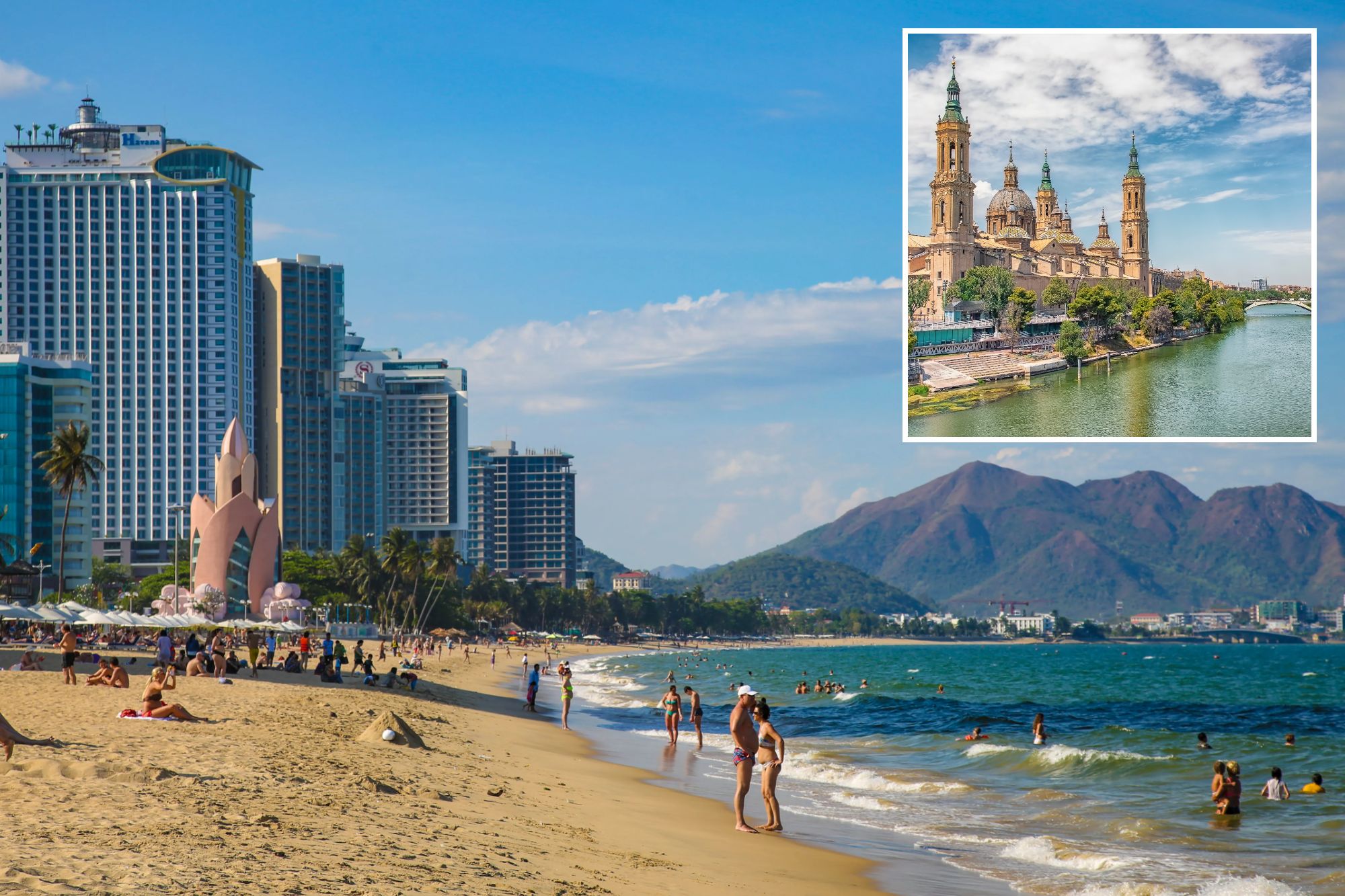
Nha Trang was named the best place for cheap five star hotelsCredit: GettyZaragoza came in a close secondCredit: Getty
Despite volatile travel prices, it’s possible to go on a 5-star holiday on a budget – with high-end range accommodation available for as low as £70 in Nha Trang, Vietnam.
You can also enjoy luxury stays in Zagreb, Croatia, for £130 and Tallinn, Estonia, for £140, with the likes of Zaragoza, Spain (£120) and Sofia, Bulgaria (£135) also cheap.
The data was revealed as part of the global marketplace’s 2026 Hotel Price Index.
The report also includes findings from a global study of 11,000 adults who’ve ever stayed in a hotel – covering the UK, USA, Canada, Mexico, Brazil, France, Sweden, Denmark, Norway and South Korea.
It revealed how they define luxury accommodation, with offering great food (31 per cent), a room with a view (30 per cent) and premium in-room amenities (28 per cent) coming top.
Travel expert and spokesperson Melanie Fish said: “Travellers may be feeling the squeeze, but they’re also getting smarter.
“With increasing volatility in travel prices this summer, fuel costs may be dominating the conversation, but hotel prices are where travellers are making real trade-offs.”
The Hotel Price Index also revealed other cheap but luxurious options include nights in Wrocław, Poland (£120), Tirana, Albania (£130) and Riga, Latvia (£130).
Heraklion, Crete (£135) and Santo Domingo, Dominican Republic (£140) are also offering high-end accommodation at a lower cost.
TEN OF THE CHEAPEST FIVE-STAR STAYS ABROAD:
Nha Trang, Vietnam (£70)
Zaragoza, Spain (£120)
Wrocław, Poland (£120)
Tirana, Albania (£130)
Riga, Latvia (£130)
Zagreb, Croatia (£130)
Sofia, Bulgaria (£135)
Heraklion (Crete), Greece (£135)
Tallinn, Estonia (£140)
Santo Domingo, Dominican Republic (£140)
There are five-star offerings available in the UK too – including the likes of Brighton (£115), Cornwall (£135) and Liverpool (£170).
In addition to finding 10 of the cheapest, 10 notable locations which have seen major price drops during the past year were revealed – including Loire, France (down by 32 per cent) and Edmonton, Canada (down 31 per cent).
Further places include St. Thomas, US Virgin Islands (down 30 per cent), Dortmund, Germany (down 21 per cent) and Turin, Italy (also down 21 per cent).
The report also found it pays to book holidays at the last minute, with hotel rates up to 26 per cent lower if booking close to departure.
TEN OF THE CHEAPEST FIVE-STAR STAYS IN THE UK:
Brighton (£115)
Bristol (£115)
Chichester (£120)
Llandudno (£125)
Worcester (£125)
Bournemouth (£130)
Cornwall (£135)
Leeds (£145)
Cardiff (£155)
Liverpool (£170)
If you’re looking to keep costs down further still, the data also found prices are 14 per cent lower for Sunday stays – with Saturdays the most expensive.
Getting away in January offers the lowest prices, while the second week of July is the priciest – at least domestically.
Hotels.com’s global study, carried out through OnePoll, also revealed what’s top of everyone’s luxury dream wish list – a hot tub with a view (44 per cent) followed by a penthouse suite (41 per cent).
When asked what they consider a truly luxury hotel to offer, great food at the hotel (31 per cent), a room with a view (30 per cent) and premium in-room amenities (28 per cent) came top.
TEN OF THE BIGGEST INTERNATIONAL PRICE DROPS YEAR-ON-YEAR:
WITH its flowing red rivers and rocky landscape, this attraction has been described as looking ”more like Mars than Earth’.
The open-air mining park is in the Huelva region of southern Spain and visitors can take a tour onboard a vintage train.
Sign up for the Travel newsletter
Thank you!
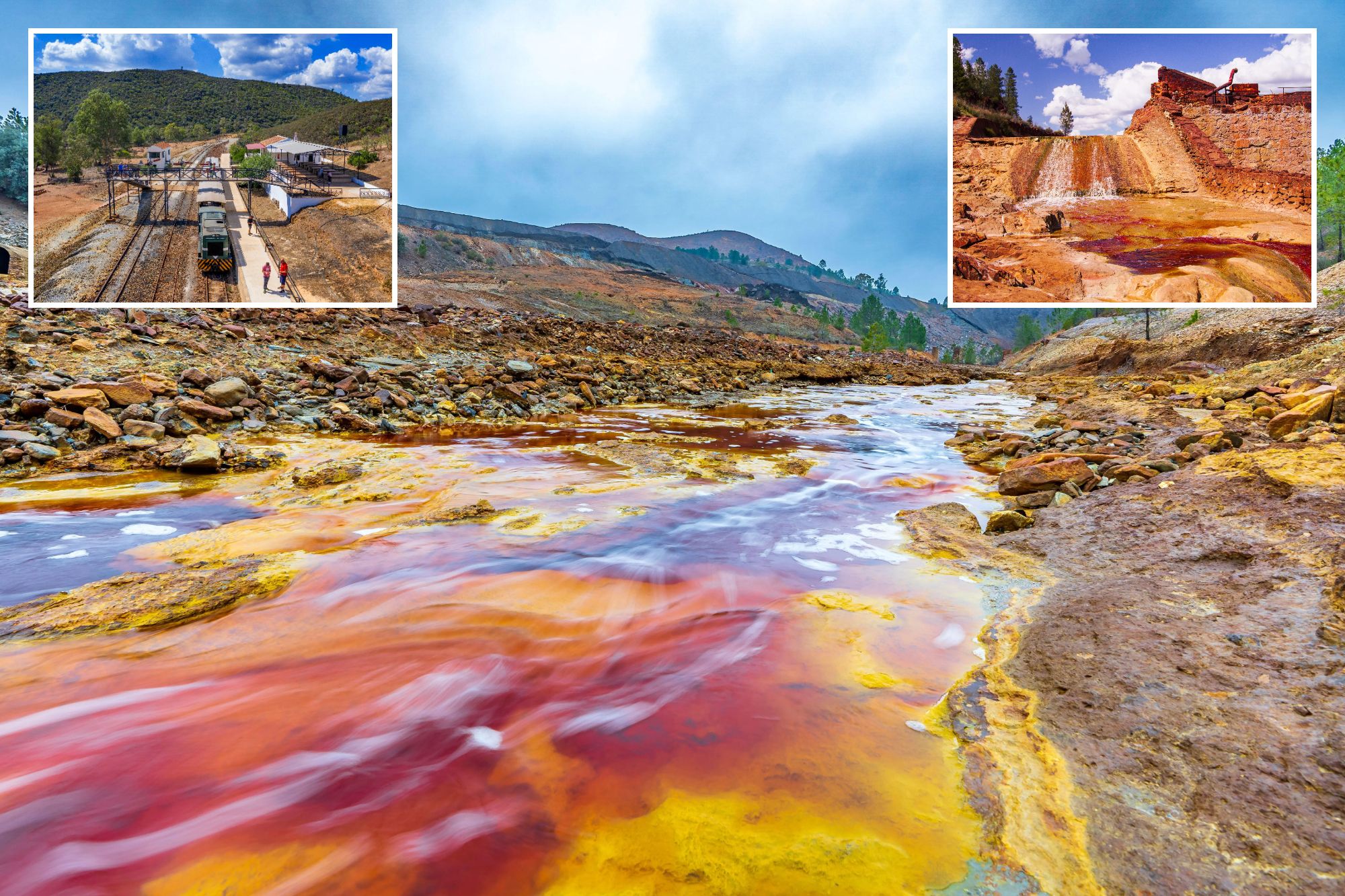
Rio Tinto Mining Park has been compared to Mars thanks to its red river and rocksCredit: AlamyVisitors can explore the mine site on a restored tourist trainCredit: Alamy
It’s appeared in movies like The Heart of Earth, which tells the story of miners working at Rio Tinto in 1888.
The area has also been used by the likes of NASA for space testing as it has an ‘extreme environment’ just like that found on Mars.
One visitor wrote on Tripadvisor that is look “more like Mars than Earth” with another calling it “truly breathtaking.”
Dotted around the site are viewpoints, underground walks to view excavated spaces and there’s a chance to explore its museum too.
Another way to tour the mines is onboard a refurbished mine train.
The Rio Tinto railway itself was built in the late 1800s and once had 186 miles of track.
The red river is toxic and runs through the middle of the siteCredit: Alamy
Now, the tourist railway ride covers just over seven miles of that on its restored railway line inside vintage diesel trains.
From the windows, visitors can look out over the bright red river and rocks.
The train journey is up to two hours long and there’s a chance of a pit stop in the middle before it loops back around.
The park is open daily with day tours that can be up to six hours long.
On Saturdays, there’s a chance to do the ‘Mars on Earth‘ circuit which starts at the Mining Railway Station and heads through the Red Planet-like scenery.
If you want to visit Rio Tinto Mining Park the closest airport is in Seville which is around an hour a half away by car.