secret service

Report finds holes and delays in how Secret Service updates its protection policy

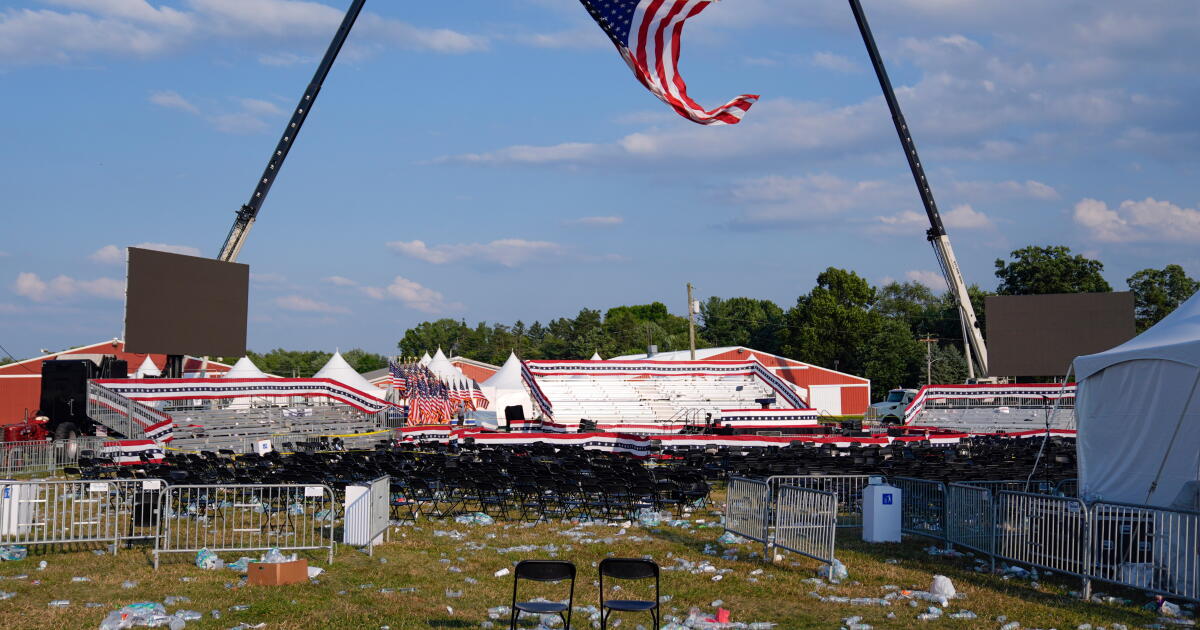
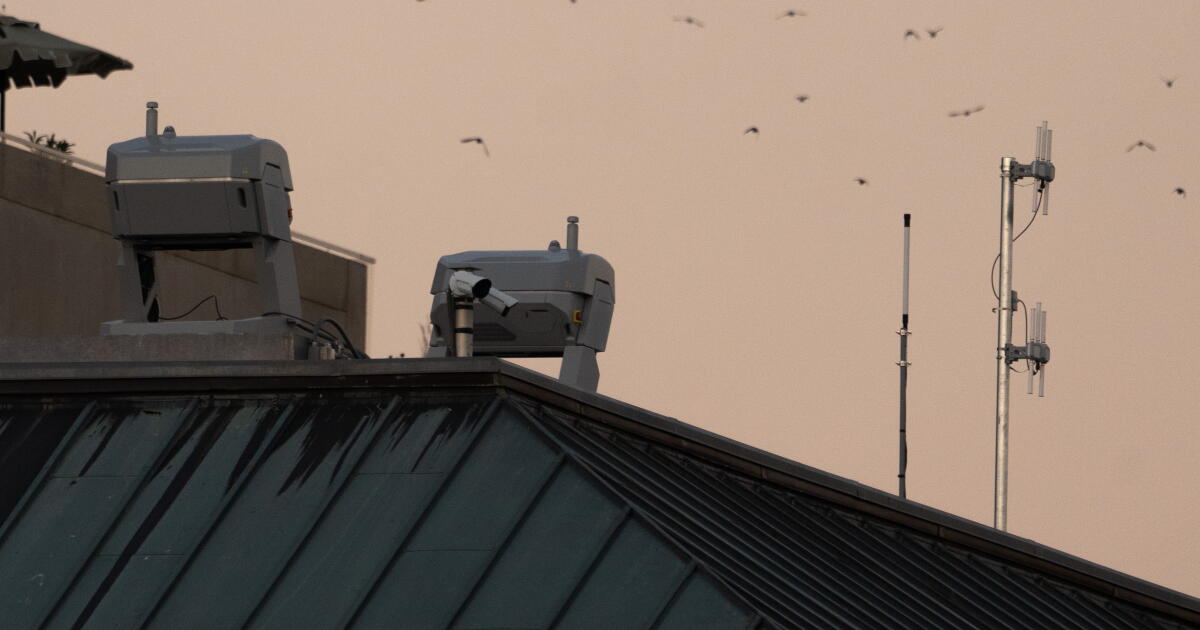
The U.S. Secret Service dealt with several drone-related incidents without adjusting its protection policies or documenting why it didn’t, according to a government report released Thursday. That information may have helped illustrate the emerging threat of civilian drone use before one was used in the 2024 assassination attempt on then-candidate Donald Trump in Butler, Pa.

The report from the Government Accountability Office found delays and holes in how the Secret Service updates its policies regarding threats, and arrives after a few turbulent years for the agency charged with the president’s protection.

The would-be assassin in Butler positioned himself on a roof left unsecured, nicking the president’s ear with a bullet. Months later, a man with a rifle got surprisingly close to Trump at his West Palm Beach, Fla., golf course. And in April, an armed man got beyond security barriers at the White House Correspondents’ Assn. dinner, where the president sat.

The report found that between 2015 and 2025 the Secret Service dealt with 83 security incidents and that it updated its protection policies in response to 25 of them. Among the incidents was a drone that made contact with President Obama’s motorcade in 2015 and another flown about 200 feet over a rally for then-presidential candidate Bernie Sanders.

Failing to document why the Secret Service decided not to change its policy is the concern, said Nathan Tranquilli, acting director of the Government Accountability Office, adding that the drone incidents were a “compelling example” of that.

“Some of the missing information has been relevant to subsequent attacks,” the report read. It cited the Butler incident, where the culprit flew a drone for 11 minutes over the crowd, which helped him position himself to get a clear shot at Trump.

The Secret Service also failed to update eight of 22 protection policies within a required time frame of four years. A memorandum of understanding between the Secret Service and the Diplomatic Security Service, which designates each agency’s responsibilities for the president’s overseas security, hasn’t been updated since 1991, even though an annual review and update are required. As a consequence, the memorandum doesn’t address newer threats, such as drones.

“When you look at the Secret Service and you look at their mission, really it’s a zero-fail mission, and they’ve got a ton of challenges,” Tranquilli said. “When decisions were being made about where to put time and energy, some of these things fell to the side, and, as a result, there were some delays.”

The report recommended three fixes, including that the Secret Service revise its policy to require that, when a security incident doesn’t warrant a policy update, that the rationale is documented.

A spokesperson for the Secret Service did not immediately respond to a request for comment, but the report stated that the Department of Homeland Security, which oversees the Secret Service, agreed with all recommendations and plans to implement changes.

Bedayn writes for the Associated Press.

Source link

Secret Service confirms awareness of Iranian state media video threatening Barron Trump’s life

The U.S. Secret Service has confirmed it is aware that Iranian state media has aired a video that appears to threaten the life of Barron Trump, President Trump’s youngest son.

“The U.S. Secret Service is aware of the video and investigates anything that can be perceived as a threat toward our protectees,” Secret Service spokesman Nate Herring said in a statement. “Out of concern for operational security, we do not discuss matters of protective intelligence.”

Since the U.S. assassination of Iran’s Ayatollah Ali Khamenei, Iranian media have on multiple occasions circulated content threatening the president and family members. The assassination came at the start of the war in Iran that Trump launched alongside Israel.

CNN previously reported that the Secret Service had knowledge of the Barron Trump threat.

Source link

Federal panel reviews park fencing plan and White House visitor screening center

The Trump administration is proposing to improve security around the White House by putting up a fence around nearby Lafayette Park to help limit public access when law enforcement authorities determine doing so is necessary.

The proposal is scheduled for consideration on Thursday by the U.S. Commission of Fine Arts, according to a meeting agenda and the plans posted on the agency’s website. The agency has oversight over the design of construction on federal land in Washington.

The commissioners are also set to take another look at the design for an underground facility to screen the thousands of tourists and others who visit or work at the White House. All seven commissioners were appointed by the Republican president.

The proposals are being considered at a time when security for the president has become a top concern. President Trump has been the target of multiple assassination attempts, including two during the 2024 campaign and a third this past April as he attended a dinner in Washington with White House journalists.

Those concerns were heightened the following month after U.S. Secret Service officers fatally shot a man who opened fire near a White House security checkpoint.

The administration says the projects will be an improvement over temporary structures that have long been used to aid perimeter security, like barriers fashioned out of bicycle racks, and for screening the many guests who access the White House and its grounds.

A look at both projects:

Lafayette Park last had a permanent fence in the late 1800s

Trump was accompanied by Interior Secretary Doug Burgum on a recent tour of the park to see updates being made at his direction. The president has worked with the Interior Department and one of its agencies, the National Park Service, to restart dormant park fountains.

“We’re really doing a job at Lafayette Park, which is really the entrance to the White House, and that’s going to be completed very shortly and it’ll be incredible,” Trump said in June.

The administration’s 79-page proposal for the 8-acre (3-hectare) park calls for fencing it all the way around with gates at the north and south entrances to control public access. Options call for either including or excluding four monuments located at each of the park’s four corners.

The proposal, which is backed by the Secret Service and the Executive Office of the President, in coordination with the Interior Department and National Park Service, notes that leaving out the monuments would expose them to vandalism.

The report says the goal of the plan is to “enhance long-term safety,” preserve the Lafayette Park’s identity as a significant National Park Service landscape and “maintain public access to this nationally symbolic space.” Throngs flock to the park to protest or celebrate major events.

Lafayette Park has not had a permanent fence around it since the 19th century. The Secret Service anticipates the fence would start going up sometime next year.

The administration wants similar fencing along Pennsylvania Avenue on the north side of the White House complex, from the Treasury Department building at 15th Street to the Eisenhower Executive Office Building at 17th Street. The report said that will be treated as a separate proposal and submitted to the commission at a later date.

White House visitor screening facility could replace currently used tents

The commission is set to review a revised design for the facility, which would be built beneath Sherman Park, federal land southeast of the White House, to support screening for public tour participants, guests attending large events, White House staff and contractors.

The original design called for locating the facility’s entrance at the southern end of the park, but meetings and consultations led to a revised proposal that shifted the entrance to the western edge of the park to avoid conflicts with infrastructure and minimize the impact on the surrounding views, according to the report submitted for the commission’s review on Thursday.

The administration said the permanent facility will eliminate the need for a series of temporary screening tents currently used for events, improve security on the White House complex and enhance the experience for visitors.

The Secret Service, Interior Department, National Park Service and Executive Office of the President want to start construction in August on the 33,000-square-foot (3,066-square-meter) underground facility. They have set a July 2028 date for it to be operating.

White House visitors would face an initial ID check before they enter the facility through a pavilion located above ground, then head down to a lower level and a second checkpoint. After they are cleared, visitors will ride escalators that will take them up to the White House grounds.

Superville writes for the Associated Press.

Source link

Democrats say money from Trump’s tax cuts bill is paying for White House ballroom project

More than $350 million from President Trump’s “big, beautiful bill” has been quietly directed to White House security, an allotment that Democrats warn appears to be helping fund his new ballroom project — despite the president’s insistence that no taxpayer dollars would be used.

The apportionment of funds, which the White House’s Office of Management and Budget made late Friday, comes from two accounts that were intended to provide the U.S. Secret Service with extra money for hiring and training in the aftermath of last year’s assassination attempts on the president, according to Democrats on the Senate Budget Committee. The shift was made days after Congress rejected a $1-billion request for the White House in a Homeland Security bill that Trump signed into law and as the ballroom project is tangled in legal challenges.

Senate Judiciary Committee chairman Chuck Grassley, whose panel initially drafted the security funding, said Thursday he was unaware of the allocations.

“The president said that it was all going to be paid for with private money,” said Grassley (R-Iowa). “And that’s what the country expects.”

Sen. Jeff Merkley of Oregon, the top Democrat on the Senate Budget Committee, charged that Trump’s actions are potentially illegal.

“After repeatedly telling the American people that zero taxpayer dollars would be spent on his gold-plated ballroom boondoggle, now Trump appears to be using a smoke and mirrors tactic,” Merkley said in a statement.

“Trump has proven that he can’t be trusted to follow the law,” Merkley said. “He only cares about wasting taxpayer money on his vanity projects.”

Ballroom project hits setbacks

Trump has faced setbacks in his attempts to build the ballroom on the White House grounds, where he ordered the demolition of the storied East Wing to make way for it.

Touring the construction site last month, Trump called the development a “gift” to the American people. He has repeatedly said that it is being paid for by donations — which has also run into ethics questions from watchdogs concerned about potential corruption and conflicts of interest.

Congress refused the Trump administration’s request for $1 billion for the ballroom last month. The administration wanted the money as part of a Homeland Security bill, but Republican and Democratic lawmakers rejected efforts to tack it on. It became politically toxic at a time when Americans are reeling from inflationary high costs of living.

The Washington Post reported earlier this week that the price tag for the project has ballooned to $600 million, according to a project summary prepared by the contractor, with more than half of that funding coming from taxpayers. Roll Call first reported on the apportionment of new funds for White House security.

At its core, arguments are swirling over how much of the White House project is to bolster security underground, with bomb shelters and a medical facility, and how much of the costs are related to the president’s promised 999-seat ballroom on top.

White House says Trump and donors are paying for the ballroom

A spokesman for the White House said that Trump and donors are funding some $400 million for the ballroom development, and that the coordination with the Secret Service had been noted in the initial announcement of the project.

“The East Wing Modernization Project is inextricably tied to the security of the President, the White House grounds and the certain security infrastructure assets,” said White House spokesman Davis R. Ingle in a statement.

He said the events over the past weekend, including an alleged attack plan targeting the UFC Freedom 250 event at the White House, proves why the project is needed.

“President Trump and generous American patriots are funding the ballroom to the tune of approximately $400 million, which will be a secure and appropriate venue for Presidents for generations to come,” he said.

Government lawyers have argued that the project includes critical security features to guard against a range of threats, such as drones and missiles.

The White House has said in court documents that the East Wing project would be “heavily fortified,” including bomb shelters, military installations and a medical facility underneath the ballroom. The Secret Service told senators last month that $220 million of the White House’s $1-billion request would go to harden the ballroom addition, with bulletproof glass, drone detection technologies, chemical and other systems.

The rest of the money would go for other security improvements, according to a document provided to Senate Republicans, including $180 million for a new, “long overdue” White House visitors screening facility.

Congress holds power of the purse

The shifting funds are certain to ignite growing concerns in Congress over the separation of powers, and the president’s use of federal funds allocated by lawmakers.

The money comes from Trump’s big tax breaks and spending cuts bill that the president signed into law last summer. It provided more than $1 billion for Secret Service resources, including “personnel, training facilities, programming, and technology; and performance, retention, and signing bonuses.”

The provision was uncontested at the time, even as Democrats voted against the broader bill. Democrats said they did not challenge this section or try to strip it out from the package.

Under the Constitution, only Congress has the specific authority to allocate funds across the federal government, including the executive and judicial branch operations.

While the president holds the power to sign — or veto — those appropriation bills, once the funding becomes law, it largely must stand.

Mascaro writes for the Associated Press.

Source link

NYC imposes stringent security as Trump becomes 1st sitting U.S. president to attend NBA Finals game

Donald Trump is set to be the first sitting U.S. president to attend an NBA Finals game, bringing strict security measures that will require New York Knicks fans to navigate an extensive safety perimeter around Madison Square Garden and an expected lengthy wait to get inside the building.

The security for Game 3 between the Knicks and San Antonio Spurs and the scene around the arena more closely resembled New Year’s Eve in Times Square, and for fans, it might seem more akin to a trip to the airport. They were asked to get to the game two hours early and will be required to provide a ticket to get past various checkpoints along with passing through a TSA-style magnetometer.

Trump’s appearance led the New York Police Department and Secret Service to establish a multi-block security perimeter around the arena, cancel a watch party outside and institute a no-bag policy for ticket-holders. Fans had gathered around the Garden to watch games during this playoff run, during which the Knicks have won 13 games in a row to reach the final for the first time since 1999 and move two victories from their first NBA title since 1973.

“The NYPD in coordination with the Secret Service made the decision for Game 3, where we have a presidential visit, that we could not support watch parties right outside of the Garden,” Police Commissioner Jessica Tisch said at a news conference Monday. “We are looking forward to bringing back watch parties for Game 4. But I think New Yorkers are used to presidents coming to town, and they understand that that generally means lockdowns of areas and that’s what you’re going to see tonight at the Garden.”

Trump has attended several major sporting events in his time as president, and the security measures have created major hassles for fans.

Thousands of fans missed the start of last year’s U.S. Open men’s singles final between Carlos Alcaraz and Jannik Sinner because of lengthy security lines. Even though the U.S. Tennis Association pushed back the start of the match by a half-hour, many fans still couldn’t get in because added measures meant that they had to go through screening not only when they arrived at the Billie Jean King National Tennis Center but again in front of the steps into Arthur Ashe Stadium, where Trump watched from a suite.

Asked his thoughts on Trump attending, Knicks center Mitchell Robinson said: “Cool, I guess. We can still get out there and play (no matter) who’s here and who’s not.”

Mayor Zohran Mamdani and other dignitaries are also expected to be at the game Monday night.

It was already hard enough for Knicks fans to get inside Madison Square Garden because of astronomical ticket prices. The get-in price for a ticket is higher than the average cost of monthly rent in New York, surging over $6,000. The best seats are tens of thousands of dollars. Mamdani said he bought his ticket for about $1,000 directly from Madison Square Garden.

The difficulty of seeing the game in-person has prompted fans to crowd bars, streets and watch parties all over the city. The watch party near the Garden has become a major event all through the playoffs, but with Trump attending, that event will be moved a few blocks away outside the security perimeter, at Bryant Park.

“We improvise,” said Knicks guard Jose Alvarado, who is a New York native. “We’re New Yorkers. We’re going to find a way to watch a game, and that’s what we’re doing.”

Whyno writes for the Associated Press. AP writer Brian Mahoney contributed to this report.

Source link