San Francisco 49ers receiver Mike Evans may have earned a spot in the trash-talking hall of fame on Sunday without even trying.
Or so he says.
Late in the second quarter of the 49ers’ 32-29 victory in Seattle, Fox Sports cameras showed Evans and Seahawks cornerback Trevon Diggs jawing after a play. In one of the season’s most meme-able moments so far, Evans put his hands on Diggs’ shoulder pads and turned the two-time Pro Bowl selection around to look at his name, as if to say, “Who are you?”
Diggs, a seven-year veteran who led the league with 11 interceptions in 2021 as a member of the Dallas Cowboys, appeared to be offended and shoved Evans in the facemask.
Retired cornerback and renowned trash-talker Richard Sherman, who played for both the Seahawks and 49ers during his 11-year career, gave Evans some high praise on X.
“Mike Evans Checking to see the name on the back of the Jersey is an all-time Gif and trash talk moment that I wish I would have thought of,” Sherman wrote.
Evans’ move was very similar to one from a 2019 viral clip in which Toronto Maple Leafs star Auston Matthews checked the back of then-career minor leaguer Scott Sabourin of the Ottawa Senators during a preseason game. (Sabourin would go on to play in 74 NHL games for four teams over seven seasons.)
But Evans, a five-time Pro Bowler in his first season with San Francisco after 12 years with the Tampa Bay Buccaneers, told reporters after the game that he was just trying to figure out his vocal opponent‘s identity.
“I was blocking him until the whistle, and then he said something, like I’m doing extra, something like that,” said Evans, who finished with seven catches for 113 yards and one touchdown. “I didn’t know that was him at first, because I played against him a few times and we always been cool, you know? He was a good player. I honestly didn’t know it was him, because in the helmet, it’s hard to tell sometimes.
“And we were just talking trash, and I think I like pushed him and then I was like, ‘Who are you?’ And I looked to make sure. ‘Oh, it’s f— Diggs.’”
Hmmmm, Diggs was a good player? Maybe Evans is a trash-talking master after all.
“I want to know if Justin Herbert can dance,” the impassioned Bruschi said on ESPN. “Really, like dance on a dance floor. Does he have rhythm?”
Because, Bruschi said, quarterback Tua Tagovailoa seemed much more attuned to McDaniel’s offense when the two teamed up for the Miami Dolphins.
“When Tua ran this offense, he was dancing,” Bruschi continued. “All the fakes, all the rhythmic, on time, left-handed. I mean, you would watch Tua and it was like boom, boom, boom, boom, gone [throwing an imaginary football]. He was dancing back there in the pocket. It was smoke and mirrors. That, at its best, is what this system is.
“And you’ve got a cyborg back there [in Herbert], a quarterback who can do everything under the sun, and now he has to learn to dance? ‘No, man, I don’t dance. I play football.’ So there’s just a little bit of conflict going on.”
The Chargers are 0-3 and Herbert has yet to hit his stride heading into Sunday’s game at Seattle. He has three touchdowns, four interceptions and a ho-hum passer rating of 73.4 after never finishing a season with a rating lower than 93.2. Granted, it’s early and there’s plenty of time for him to course correct, and his receivers have had several key bobbles and drops. But the schedule doesn’t get any easier soon for the Chargers, whose next games are against Denver, Kansas City, the Rams, Houston and Baltimore.
In short, the Chargers had better learn to navigate that dance floor. The night is not so young anymore.
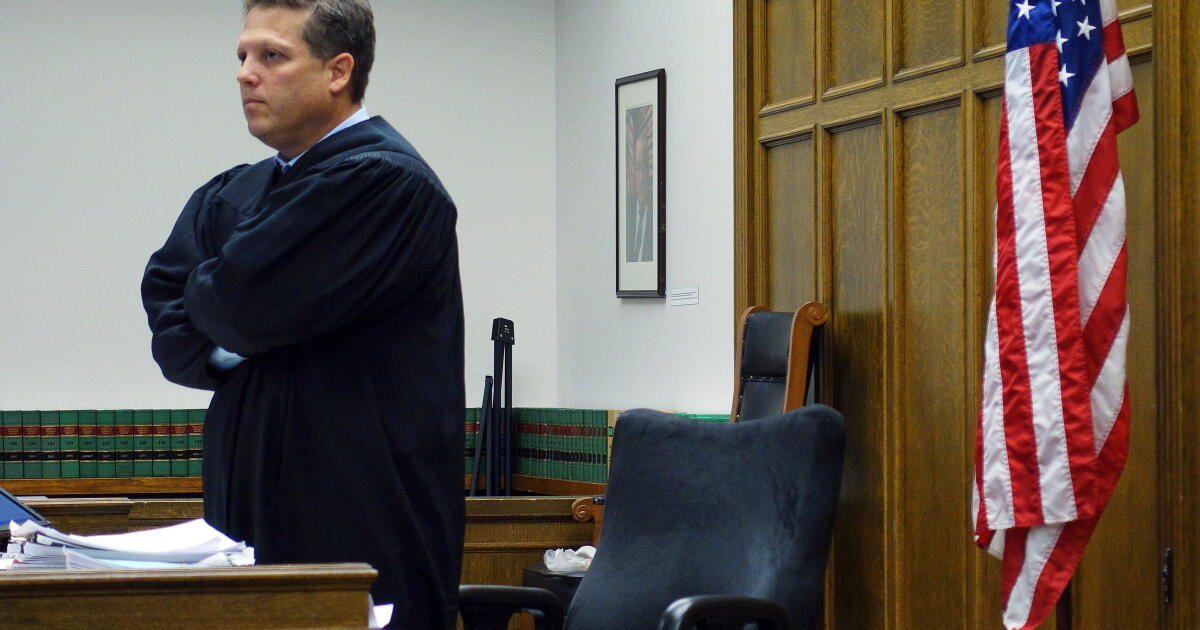
SEATTLE — A judge on Thursday overturned President Trump’s decision to fire the court-appointed top U.S. prosecutor in Seattle, the latest development in a legal tug-of-war over the administration’s efforts to control who occupies the powerful Justice Department posts.
The 17 active and senior judges in the Western District of Washington unanimously named Roger Rogoff, a former judge and veteran prosecutor, U.S. attorney in July, after Trump failed to fill the post with a nominee confirmed by the U.S. Senate.
The president fired Rogoff less than an hour later. Rogoff sued, and in a ruling Thursday, U.S. District Judge Stanley Bastian found the termination unlawful and reinstated him.
Bastian noted that when presidents fail to fill a U.S. attorney post with a nominee confirmed by the Senate, federal law authorizes the judges of that district to appoint someone “until the vacancy is filled.”
“It does not say ‘until the president fires the person selected,’” Bastian said.
He concluded: “Mr. Roger Rogoff is the United States attorney for the Western District of Washington and has been the rightful holder of that office since July 15, 2026, when he took the oath of office.”
The Justice Department said in a written statement it disagreed with the decision and would appeal.
Rogoff is the latest in a series of judicially appointed U.S. attorneys to be ousted by the Trump administration, and he is believed to be the first to sue over the removal, setting up a direct legal battle over the issue.
Presidents normally appoint U.S. attorneys, the top federal prosecutor in each judicial district. The positions require Senate confirmation, except in temporary appointments, which can last up to 120 days. When temporary appointments expire before a nominee is confirmed, the judges in a judicial district can name a U.S. attorney.
But under Trump, the Justice Department has sought to leave unconfirmed prosecutors in their positions indefinitely, often through novel personnel maneuvers. Trump named Charles Neil Floyd, who previously served as an immigration judge, interim U.S. attorney in Seattle in October 2025 but never forwarded his nomination to the Senate.
When Floyd’s time as interim U.S. attorney expired, Trump simply shifted his title, a tactic the administration has also tried in other federal judicial districts: It named him first assistant U.S. attorney, while leaving the top post empty.
Trump last month nominated Pete Serrano, the first assistant U.S. attorney in eastern Washington, to be the U.S. attorney in Seattle. But Serrano has not been confirmed, and his nomination is opposed by Washington’s senior Democratic senator, Patty Murray.
“Today’s ruling is an important victory for the rule of law and the people in Western Washington who deserve a U.S. attorney that answers to the law, not Donald Trump,” Murray said in a written statement Thursday.
Bastian is the chief judge in eastern Washington. He heard the case because the judges in western Washington were recused.
In December, Alina Habbaresigned as the top federal prosecutor for New Jersey after an appeals court said she had been serving in the post unlawfully.
Lindsey Halligan, who pursued indictments against a pair of Trump’s adversaries, left her position as an acting U.S. attorney in Virginia after a judge concluded her appointment was unlawful and that indictments she brought against James and former FBI Director James Comey must be dismissed.
The judges there named James Hundley, who had handled criminal and civil cases for more than 30 years, but the administration fired him. It also fired a court-appointed U.S. attorney in northern New York.
Nneka Ogwumike answered the same question she’s been facing for almost two months.
Why now? Why leave the WNBA when she still leads the Sparks in scoring and rebounding, has played a central role in helping the league negotiate a transformative new collective bargaining agreement and returned to the city where her pro career began?
Ogwumike is at peace with her decision. And when she steps onto the court in a Sparks jersey for the last time Thursday, she will do it without regrets.
“I’m mostly grateful,” Ogwumike said. “I haven’t really been thinking much else besides just being grateful for the opportunity to have had a 15-year career in the WNBA and also to finish in a Sparks jersey.”
There is a lot for which to be grateful.
Ogwumike entered the WNBA as the No. 1 overall pick of the Sparks in 2012. Now, 15 seasons later, she is leaving the league as one of its most accomplished players — and as the most prolific scorer in Sparks history.
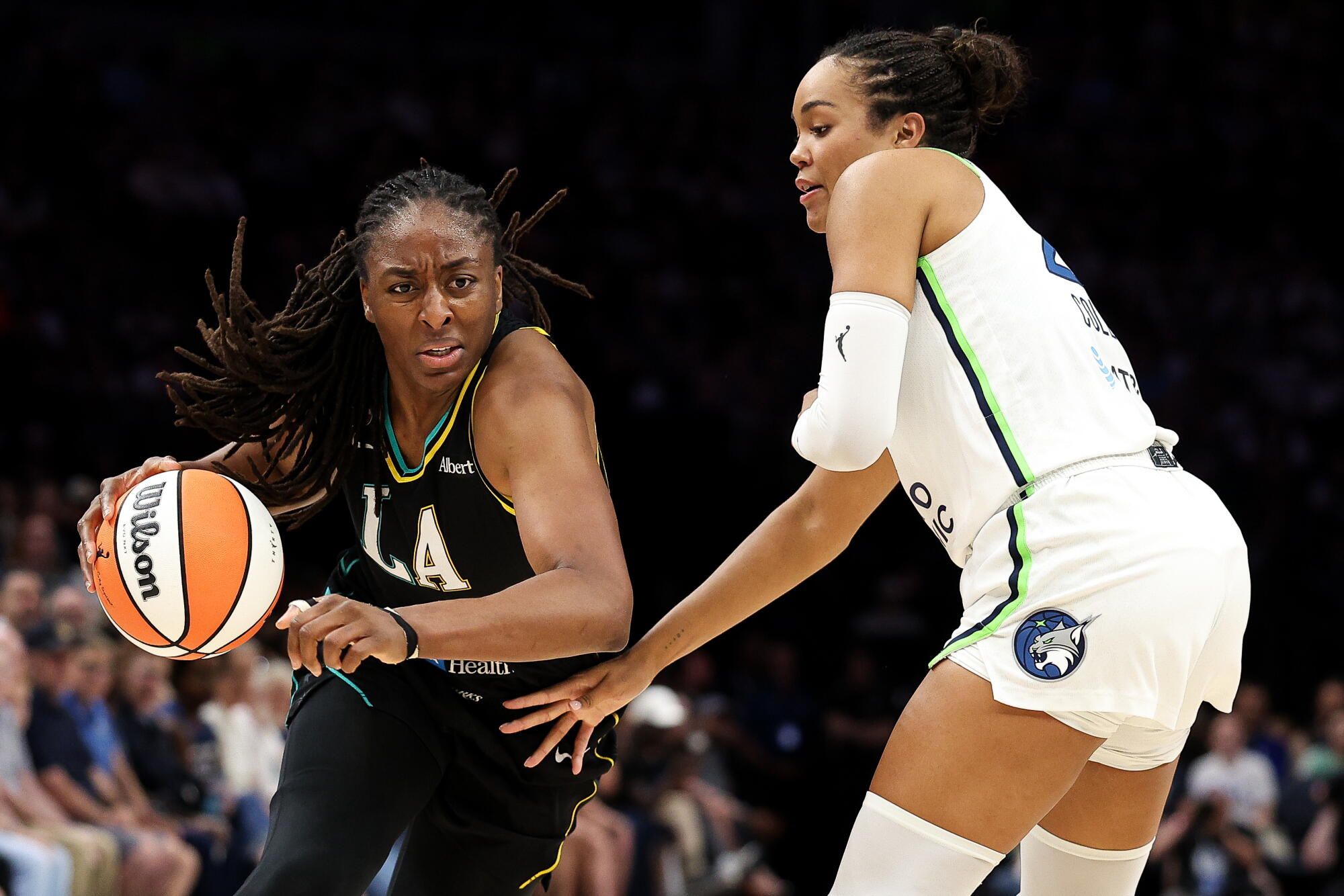
Sparks forward Nneka Ogwumike, left, tries to drive past Lynx forward Napheesa Collier during a game in Minneapolis.
(Matt Krohn / Getty Images)
“It feels freeing,” Ogwumike said of her decision to retire. “It feels like there’s a level of autonomy that I’m able to have, and I’m very happy about that.”
The numbers only begin to tell the story.
Ogwumike was rookie of the year after averaging 14 points and 7.5 rebounds per game. Four years later, she produced the best season of her career, averaging 19.7 points per game, winning MVP and leading the Sparks to their third WNBA championship.
She spent 12 seasons with the Sparks before leaving for Seattle, then returned to Los Angeles this season to finish her career.
Along the way, she established herself among the most productive players in league history. Ogwumike will finish her career fourth all-time in scoring with 8,013 points, behind Diana Taurasi, Tina Charles and DeWanna Bonner. She is third all-time in rebounds with 3,571 and third in steals with 716.
And on July 17, she added one more piece of history to the résumé, passing Lisa Leslie to become the Sparks’ all-time leading scorer.
Sisters Chiney, left, and Nneka Ogwumike pose for a photo at the Bird’s Eye View After Party during WNBA All-Star weekend.
(Daniel Boczarski / Getty Images for Vox Media)
“This is where it all started [for me],” Ogwumike said. “So very happy to be able to share this time, both the beginning and the end of my career in L.A., and I had a majority of my career playing for this organization, so it really does mean a lot to be able to finish in it as well.”
The return, however, did not unfold quite the way Ogwumike or the Sparks had envisioned.
Los Angeles entered the season with playoff expectations after bringing Ogwumike back, signing Erica Wheeler and trading for Ariel Atkins. The Sparks had not made the postseason since 2020, and the hope was that Ogwumike’s return could help change that.
Instead, the season became a struggle. The Sparks will finish 10 games out of a playoff spot, leaving Ogwumike’s final games less about a postseason push and more about what she could leave behind.
“The season is not at all what I expected, but it doesn’t mean that I can’t come out here to do my job and try and be great, and be great as a result,” Ogwumike said. “And as always, playing with my teammates as well.”
That has meant spending time with the young players who will carry the Sparks forward after she is gone.
Sparks coach Lynne Roberts and Nneka Ogwumike talk on the sideline during a win over the Indiana Fever in July.
(Katelyn Mulcahy / Getty Images)
Ogwumike has particularly focused on Cameron Brink, the young forward who represents a significant part of the organization’s future.
“I think right now I’m really spending a lot of my time trying to pour into Cam as well,” Ogwumike told reporters this week. “I really do think that she’s the future of the league. … I’m happy to be able to leave whatever I can before I throw my feet up.”
It is a fitting final role for a player whose career has stretched across generations of the WNBA.
“She’s poured into me since I got into the league,” Dream forward Angel Reese said in August. “Kind of like one of my first vets, always being there for me, always texting me, and also really like educating me on the things that were going on, knowing that it was a big CBA coming up.”
Her final contribution might not be something that appears in a box score. It might be what she passes on.
“She’ll be missed,” said Valkyries forward Gabby Williams, who played with Ogwumike in Seattle the previous two seasons. “As a friend, but also as a fan. I’ll miss watching her in the W.”
Williams knows what Ogwumike’s career has meant to the league, but she also understands what comes next.
“I’m really happy for her,” Williams said. “Happy she gets to take that next step. I know what it means to her. I’m glad her last year was pivotal for the CBA and she’ll always have her name written on that.”
Ogwumike, though, isn’t spending much time looking backward.
She hasn’t thought about what her final moments in the WNBA will feel like, only the gratefulness she feels to have had her 15-year career.
“I haven’t,” Ogwumike said when asked if she has thought about her last moments in the league. “Still just focused on playing.”
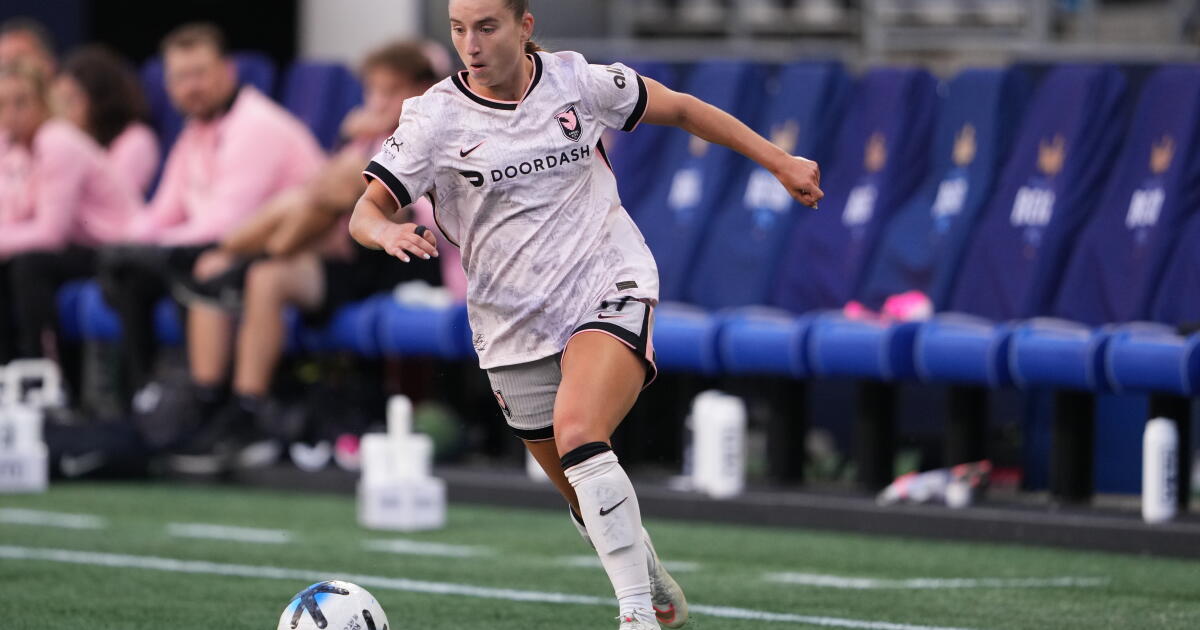
Ally Sentnor, Ary Borges and Taylor Suarez scored in Angel City’s 3-1 victory over the Seattle Reign on Wednesday night at BMO Stadium.
In the 18th minute, Angel City midfielder Maiara Niehue’s volley attempt drew a handball on Seattle Reign midfielder Angharad James-Turner. Sentnor converted her second penalty kick in consecutive weeks to open the scoring.
Off a corner kick from defender Evelyn Shores in the 40th minute, an unmarked Borges headed it home to double the lead. Within 30 seconds of subbing on, Suarez raced past multiple defenders and placed it in the side-netting for the 3-0 lead in the 81st minute.
Defender Sofia Huerta’s long-range blast in stoppage time provided the Reign with their lone goal of the game.
Angel City (10-8-6) is unbeaten four matches unbeaten and now only trails the Reign by a point for the last spot in the playoffs. The loss ended a three-game winning streak for Seattle (11-9-4).
Cal Raleigh had two hits and three RBIs, Josh Naylor had two hits and two RBIs and the Seattle Mariners kept their slim playoff hopes alive with a 7-2 victory over the Angels on Wednesday night.
Randy Arozarena also walked, singled and scored three runs for Seattle, which is 5 1/2 games behind Texas and Houston in the American League West and 6 1/2 games behind the Chicago White Sox for the third AL wild-card spot with nine games left.
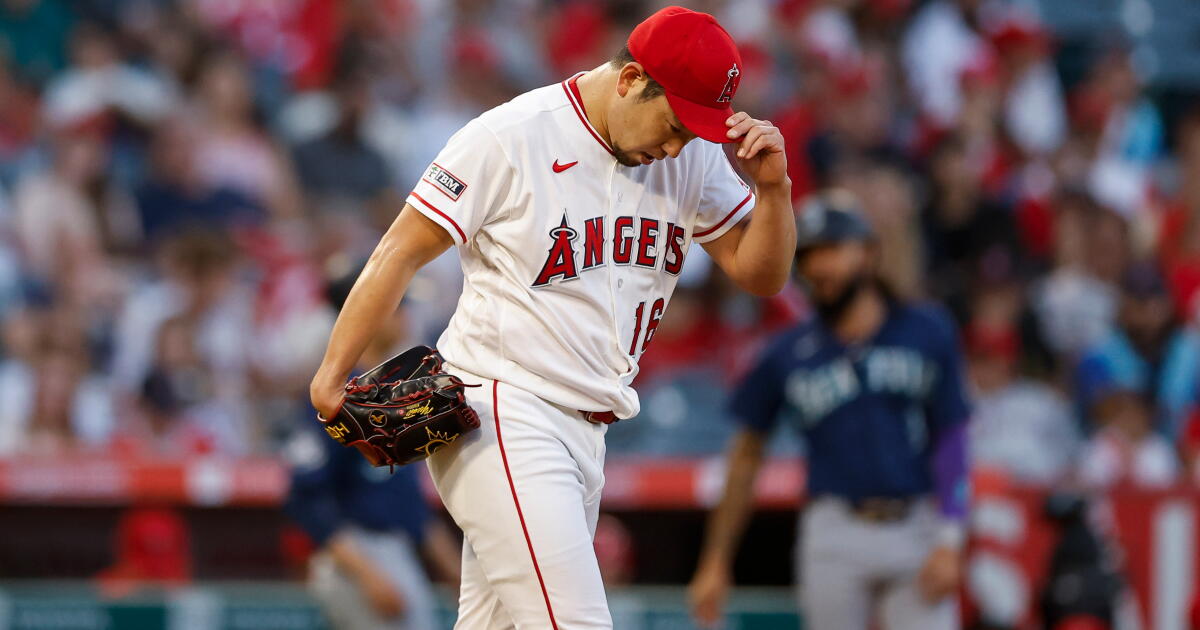
It was 2-2 when Angels starter Yusei Kikuchi (1-6) walked Arozarena and Dominic Canzone with one out in the fifth. Raleigh roped an RBI double to left for a 3-2 lead, and Julio Rodriguez was walked intentionally to load the bases.
Angels first baseman Vaughn Grissom made a sliding, backhand stop of Naylor’s potential double-play grounder, but his throw to second sailed into left field for an error, two runs scoring on the play for a 5-2 Seattle lead.
Mariners reliever Carlos Vargas (1-0) struck out Josh Lowe and Christian Moore — each on three pitches — with the bases loaded to end the bottom of the fifth, and Seattle pushed the lead to 7-2 on RBI singles by Canzone and Raleigh in the sixth.
Kikuchi threw 37 pitches during a two-run, three-hit first in which the Mariners scored on Raleigh’s sacrifice fly and Naylor’s RBI single.