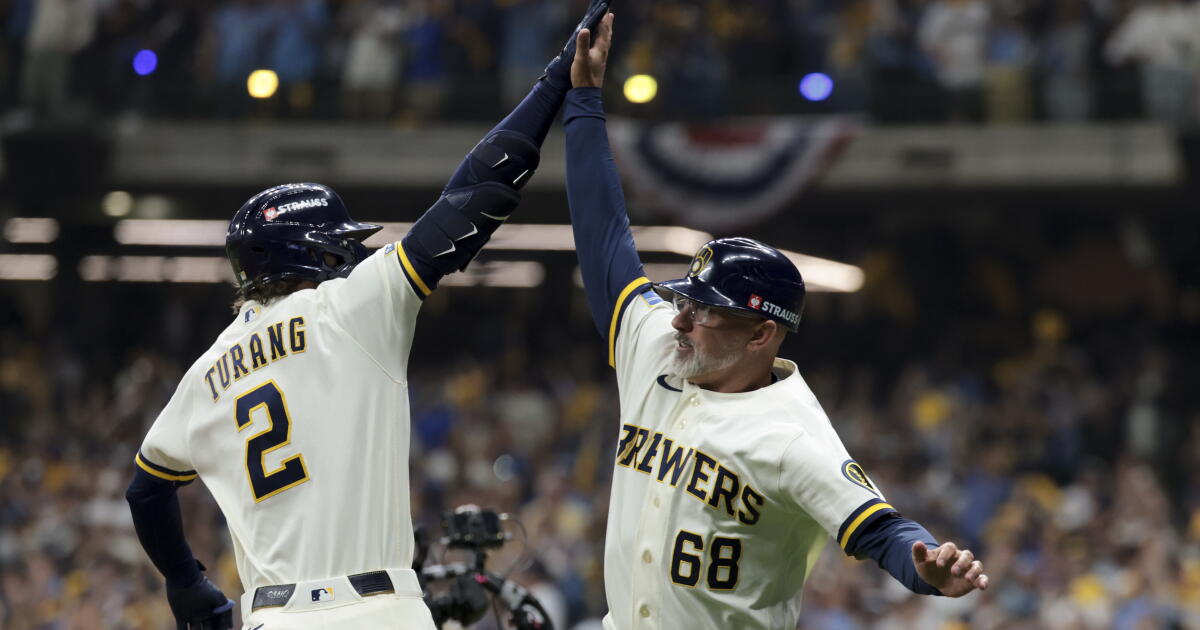
Wade Meckler and Jo Adell keyed a five-run second inning with two-run doubles, and Walbert Ureña navigated heavy traffic through five shutout innings to lead the Angels to a 10-1 victory over the Houston Astros on Tuesday night.
Houston put two runners on in the first, second and fifth and loaded the bases in the third, but Ureña (4-4) pitched out of each jam to lower his ERA to 2.44 on the season and 1.84 in eight starts since early May.
The 22-year-old right-hander gave up three hits, struck out seven and walked five in his 107-pitch effort, which included a 97-mph fastball to whiff Joey Loperfido with the bases loaded to end the third.
The Angels scored two unearned runs off starter Kai-Wei Teng (3-5) in the first, one when Nolan Schanuel was hit by a pitch with the bases loaded and the other on Oswald Peraza’s RBI grounder.
Backup catcher Sebastián Rivero sparked the Angels’ second-inning rally with a one-out single. Zach Neto was hit by a pitch and Mike Trout ended an 0-for-22 slump with a single to load the bases.
Meckler doubled to left-center for two runs and a 4-0 lead. Adell doubled to left to make it 6-0, and Peraza’s RBI groundout extended it to 7-0.
The Angels added three insurance runs in the eighth on Trey Mancini’s sacrifice fly and RBI groundouts by Peraza and Denzer Guzman. Relievers Brent Suter, Drew Pomeranz and Kirby Yates covered the final four innings.
Schanuel, who has been slowed by a left ankle injury, exited after three innings because of left calf tightness.
Rivero, who also singled in the third and has seven hits in his last seven at-bats, was removed in the fifth because of a left wrist injury.
Jack Kochanowicz to have Tommy John surgery
Angels pitcher Jack Kochanowicz needs Tommy John surgery, the team said Tuesday, and the 25-year-old right-hander is expected to be sidelined through the 2027 season.
The Angels also said that third baseman Yoán Moncada will have surgery on his balky right-knee. But, the specifics of the procedure and a timetable for the switch-hitter’s return were not known.
Kochanowicz went 2-5 with a 6.19 ERA in 13 starts this season, striking out 47 and walking 36 in 64 innings.
The hard-throwing sinker-ball specialist went 2-1 with a 3.05 ERA in his first seven starts, but was ineffective during his next six starts, going 0-4 with an 11.91 ERA, striking out 17 and walking 15 in 22 2/3 innings.
Kochanowicz’s fastball averaged 97 mph and touched 99 mph against the Dodgers, but he said after the game that his arm bothered him when he threw his changeup.
“Honestly, I didn’t think this was in the cards,” Kochanowicz said before Tuesday’s game against Houston. “I really thought it was just a little angry.
“I mean, my velo was fine, the fastballs, everything was fine. It really was just the changeup.
“I thought it was just kind of general soreness. … I thought I was going to hear back today that it was all right, but man, it is what it is.”
Manager Kurt Suzuki said the Angels are “still evaluating” their options for Kochanowicz’s replacement in the rotation. Among the candidates are left-hander Sam Aldegheri and triple-A right-handers Caden Dana and George Klassen.
Moncada, 31, who signed a one-year, $4-million deal with the Angels in February, was placed on the injured list because of right-knee inflammation on May 22 and transferred to the 60-day injured list on Monday.
He hit .189 with a .605 OPS, three homers and 10 RBIs in 41 games.
His 7-6 record at USC in 2024 would go down as the worst mark of Lincoln Riley’s career as a head football coach. But in his third and rockiest year at the helm of the Trojans, Riley was still compensated like one of the kings of the sport.
Riley was paid more than $11.8 million in total compensation during the fiscal year 2024, according to USC’s latest federal tax returns, which were obtained by The Times. That total includes a $100,000 bonus and $10.4 million in base pay, believed to be more than all but three college football coaches that season: Georgia’s Kirby Smart, Clemson’s Dabo Swinney and Ohio State’s Ryan Day. All three have won a national title.
For Riley, his pay in 2024 marks just a slight increase from the 2023 season, when USC paid Riley more than $11.5 million in total compensation. The coach’s base pay increased by $145,143 between fiscal years 2023 and 2024, slightly less than it rose following his debut season in 2022 ($168,000).
At least in 2024, USC only had to pay one football coach, after paying Clay Helton a combined $9 million not to coach over the two previous years.
The school would, however, have to pay up a bit to bring in a new men’s basketball coach.
After Andy Enfield left to coach Southern Methodist after the 2023-24 season, USC shelled out more than $6.1 million total in 2024 to lure coach Eric Musselman from Arkansas, according to the university’s latest federal tax records. One million of that was paid to Arkansas to buy out Musselman’s contract.
That puts Musselman at a reported $5.1 million in total pay and benefits from the school in 2024, according to the school’s tax records. That total likely includes additional costs unique to a coaching change. But altogether, it would have ranked Musselman among the highest-paid coaches in the Big Ten for the 2024-25 season.
Musselman didn’t exactly deliver on that investment during the 2024-25 season, as USC bottomed out during its first Big Ten men’s basketball slate. The Trojans finished 17-18 and 7-13 in the Big Ten.
After including her information in tax forms from the previous year, the university did not disclose compensation figures from 2024 for USC athletic director Jennifer Cohen. Federal tax returns filed last May had credited Cohen with more than $3 million in reportable compensation in her first year on the job, $1 million of which was used to buy out Cohen from her Washington contract.
Raducanu had looked far from her best in her past two matches following illness but, 16 days after her first-round exit at Roland Garros, the Briton made afresh on Andy Murray Arena.
The 2021 US Open champion held a commanding 3-0 lead before rain halted play – but that would not disrupt her rhythm.
She captured the first set without reply after just 20 minutes on court, winning 25 of the 31 points played – hitting 11 winners and just two unforced errors.
Raducanu maintained that excellent level to begin the second set with a break of serve – although she would not have it entirely her own way.
A Queen’s quarter-finalist last year, Raducanu was hampered by double-faults as she allowed Blinkova back in – with four successive breaks of serve tying the set at three games apiece.
However, Raducanu broke again, courtesy of a fortuitous net cord, to set up the chance to serve out the match, and she wore a beaming smile in the sunshine as a closing backhand winner down the line on her second match point was met by huge cheers.
Writing ‘back home’ with a heart on a TV camera lens before exiting the court, Raducanu will return to face either Romanian Sorana Cirstea or Australia’s Maddison Inglis in the second round.
Angels first baseman Trey Mancini, a cancer survivor and former Baltimore slugger, had three hits in his first major league game since 2023 on Monday night in a 5-4 loss to the Houston Astros in 10 innings.
Mancini delivered a run-scoring single in the second inning in his first at-bat. He singled again leading off the fourth before adding a third single in the eighth.
The Angels selected the contract of Mancini and put him in the lineup at first base against the Astros after putting infielders Vaughn Grissom (left oblique strain) and Adam Frazier (right elbow inflammation) on the 10-day injured list.
Mancini, 34, agreed to a minor league contract with the Angels in February, a deal that included an invitation to major league spring training. Mancini hit .273 with six homers, 29 RBIs and three steals for triple-A Salt Lake this year.
Mancini has batted .263 with 129 homers and 400 RBIs over parts of seven seasons in the majors. He played parts of six seasons with the Orioles and hit a career-high 29 homers in 2019.
Mancini then missed the 2020 season after surgery to remove a malignant tumor from his colon. He made a successful return to the Orioles in 2021, and he won a World Series ring in 2022 after Baltimore traded him to Houston.
He spent part of the 2023 season with the Chicago Cubs. He has since played in the minor league systems of the Reds, Marlins and Diamondbacks.
Mancini opted out of a minor league deal with Arizona last July after batting .308 with 16 homers for triple-A Reno.
Grissom’s move to the IL was retroactive to Friday. Frazier’s move was retroactive to Saturday.
The Angels also recalled infielder Denzer Guzman from Salt Lake and transferred infielder Yoán Moncada to the 60-day injured list.
Aaron Donald has made no public pronouncements that he will remain retired or return to play for the Rams.
But the three-time NFL defensive player of the year and future hall of famer remains a hot topic, and Rams players are aware of the buzz.
“When you have a guy that’s that serious about even considering coming out, it’s like ‘OK, we might have a chance,’” safety Quentin Lake said Monday after the Rams completed an organized-team activity workout.
The possibility of pairing Donald with Garrett — a two-time defensive player of the year — continues to intrigue both in and out of the Rams’ facility.
Like Lake, defensive lineman Kobie Turner insistently cautioned that whatever Donald decides to do or not do was his former teammate’s prerogative.
But the possibilities…
“To just have two historic, if you will, defensive players on that line together,” Turner said of pairing Donald and Garrett, “and to have the rest of us who are trying to build up our reputations, and to build to that level of greatness that they’ve been able to garner, I think that would be cool for L.A.”
Said defensive coordinator Chris Shula: “Would love to have him back — with open arms.”
Shula enters his third season overseeing a defense remade by the March trade for All-Pro cornerback Trent McDuffie, the signing of cornerback Jaylen Watson and the trade for Garrett.
With or without Donald, the Rams are regarded as a favorite to win Super Bowl LXI, which will be played in February at SoFi Stadium.
But the Rams are not hoisting the Lombardi Trophy just yet, Lake said.
“Some people say if he were to come back, just hand the Lombardi to us on a silver platter — but that’s never the case,” Lake said. “Is he a fantastic player? Yes.
“Are there so many things we could do in terms of pressures and blitzes and all that stuff? Of course. … It would be a fun year, I’ll say that.”
With quarterback Matthew Stafford — the NFL most valuable player — back to lead the offense, and McDuffie and Watson solving the team’s greatest weakness, the Rams already were regarded among the favorites to play in the Super Bowl for the first time since winning Super Bowl LVI at SoFi Stadium in 2022.
Then general manager Les Snead engineered the deal for Garrett, sending edge rusher Jared Verse, a 2027 first-round draft pick and future second- and third-round picks to the Cleveland Browns for a player who has 125½ sacks in nine seasons.
Lake, Turner and Shula lamented losing Verse — “a brother for life,” Turner said — but they have welcomed Garrett.
“You give a great player to get a great player,” Lake said, “and luckily, we’ve got arguably the best defensive player in the NFL. … We’re not asking Myles to do anything but just be himself.”
Last season, Garrett amassed an NFL season record 23 sacks.
Rams defensive end Myles Garrett sits between Rams general manager Les Snead and coach Sean McVay, right, during a news conference on June 2.
(Ric Tapia / For The Times)
“We’re going to let him do what he does best,” Shula said, “and we all know exactly what he does best.”
McDuffie and Watson were part of Kansas City Chiefs teams that played in three consecutive Super Bowls, winning titles in 2023 and 2024. Those teams featured dominating pass rusher Chris Jones, so McDuffie knows how a player such as Garrett enables the defense to “flip the script” and attack offenses.
“You just talk about mentality,” McDuffie said, “and a swag.”
Donald, who has 111 sacks, would certainly add to that.
Not every player in their mid-30s could return and play at a high level after sitting out two seasons.
“I don’t think you do that if you’re a normal person,” Turner said, chuckling. “But A.D.’s not a normal person.”
The show that has had everyone clamoring for tickets this spring, Joe Mantello’s cobweb-clearing production of Arthur Miller’s “Death of a Salesman,” won, as expected, for best revival.
Mantello, who received a Tony for his direction (his third such award), swept away the cliches that have accumulated around this American classic to reveal a “Salesman” like none we’ve experienced before. The Loman family home isn’t depicted in a literal fashion but instead fluidly suggested in a warehouse space that allows the actors to move unfetteredly between past and present. (The physical production was honored with awards for Mikaal Sulaiman’s sound design, Jack Knowles’ lighting and Chloe Lamford’s scenic design.)
Laurie Metcalf, confirming her standing as the First Lady of the American Theater, won for her portrayal of Linda Loman, a more formidable than usual interpretation of Willy’s stalwart wife. Metcalf, who endowed her characterization with a sharp-edged autonomy and transfixing gravitas, added another Tony to her two previous acting wins (“Three Tall Women,” “A Doll’s House, Part II”).
Joe Mantello wins the Tony for his direction of “Death of a Salesman.”
(Evelyn Freja / For The Times)
Nathan Lane was in a tight race with John Lithgow, who won for his ruthlessly uncompromising portrayal of a wrathful and dyspeptic Roald Dahl in Mark Rosenblatt’s “Giant.” Lane’s Willy leaves a lasting memory in “Salesman,” but it would be hard to imagine “Giant” having the same impact without Lithgow, who provides a terrifying human foundation to this explosive play about a writer’s political commitments tipping over into toxic antisemitism. (The performance slips into a sinkhole of animus in the uncanny way of one of Dahl’s recognizably terrifying, psychologically plausible stories.) In his almost but not quite valedictory acceptance speech, the 80-year-old Lithgow acknowledged that this Tony win, his third, comes 53 years after his first — and feels every bit as satisfying.
Aya Cash and John Lithgow in “Giant.”
(Joan Marcus)
Rather than a slight to Lane, Lithgow’s win is a sign of the dramatic depth that characterized this otherwise squirrely season. Indeed, Lithgow’s performance was as thrilling to experience as that of British powerhouse Lesley Manville, who won for her portrayal of Jocasta in Robert Icke’s modern reworking of “Oedipus.” The play was categorized by the Tony committee as a revival, but it’s really an original drama — one that gave rise to one of the most enthralling productions of the year.
In a season lifted up by Bess Wohl’s magnificent “Liberation” and capacious enough to include a first-rate “Salesman,” a searing “Oedipus” and a smartly contentious “Giant,” it should be no surprise that there were more great performances than statuettes to dole out.
It was a strange year on Broadway, but then it’s been strange everywhere. Our world at times seems downright unrecognizable, with politicians acting like mob bosses, AI transforming not just the internet but potentially the entire economy, the cost of living leaving only the super rich able to keep up, and I won’t even mention the climate crisis, but the forecast calls for more doom and gloom.
Good work, however, won’t be denied, even if Broadway producers have perhaps overlearned the lesson of last year’s sleeper, Cole Escola’s “Oh, Mary!” Parody with a heavy dose of camp has become all the rage in a theatrical season in which the best musical winner, “Schmigadoon!,” is an affectionate sendup of golden age classics by Rodgers and Hammerstein, Lerner and Loewe and their inspired descendants.
If Broadway is changing faster than the old guard can keep pace, the same is true for the culture in general. The economics of producing have scrambled the old playbooks. Unusual risk has occasionally brought unexpected rewards. “Schmigadoon!” fended off the competition to take the night’s top prize along with awards for both its book and score by Cinco Paul.
Michael Arden’s spectacular production of “The Lost Boys” — the staging won awards for Dane Laffrey’s scenic design and Jen Schriever and Arden’s lighting — enriched the 1980s cult film on which the show is based with human substance and high-flying showmanship. Shoshana Bean’s win for her featured performance as a persevering single mom, is a testament to the musical’s capacious heart. Ali Louis Bourzgui’s somewhat unexpected yet eminently worthy triumph for his featured performance as the vampire with front-man magnetism, catalyzed the production’s thrilling virtuosity. But few would describe this year’s ragtag selection of new musicals as robust.
The only overriding lesson may be that there are no overriding lessons. Two-time Oscar winner Adrien Brody made his Broadway debut in “The Fear of 13,” reprising his acclaimed Olivier-nominated London performance. But he didn’t even receive a nomination for his work — a snub that I found unaccountable.
Spoofs like best musical nominee “Titanique,” a zany burlesque of James Cameron’s “Titanic” and all things Celine Dion, found new respectability on Broadway. And “Two Strangers (Carry a Cake Across New York”), the two-person British musical by Jim Barne and Kit Buchan, endeared itself to audiences (if not so much to Tony voters) with its rom-com appeal. But what does it say about a season in which musical revivals upstaged new work?
“Ragtime,” the Lincoln Center Theatre production directed by Lear deBessonet that originated at New York City Center, was not only the most operatic offering of the season but was all the most emotionally stirring and dramatically ambitious. The show, which justly received the Tony for best musical revival contained perhaps the season’s most seismic tour de force. Joshua Henry’s Tony-winning lead performance as Coalhouse Walker Jr., the path-breaking pianist tragically ahead of his time, was astonishing in both its theatrical might and its generosity, which allowed everyone around him to shine, especially Caissie Levy, who picked up a Tony for her lead performance as a white matriarch whose political consciousness courageously awakens.
“Cats: The Jellicle Ball” pulled off the seemingly impossible by making Andrew Lloyd Webber’s megamusical look cool on Broadway. The production’s radical concept brings the queer audacity of Harlem Ballroom culture to these feline proceedings. For their imaginative daring, co-directors Zhailon Levingston and Bill Rauch were justly honored as were costume designer Qween Jean and choreographers Omari Wiles and Arturo Lyons, among the production’s notable awards.
“Chess,” which was strangely overlooked in the best musical revival category (“The Rocky Horror Show” strutted in instead), may not have managed to overcome the challenge of this over-elaborate geopolitical tale, even with a puckish new book. But the production made Nicholas Christopher a likely future Tony winner star.
What was old was new again on Broadway, but let’s hope that producers can still believe that the best is ahead of us.
The Angels flipped the script on the Dodgers, preventing a Freeway Series season sweep with a 13-5 win Sunday afternoon at Dodger Stadium.
Emmet Sheehan’s start only lasted 1 ⅓ innings, as he struggled to keep his pitch count low. He threw 35 of his 49 pitches in the second inning alone. Many of those went to Nick Madrigal, who battled Sheehan in a 14-pitch at-bat in which Madrigal won two ABS challenges.
“I thought the stuff was good coming in,” said manager Dave Roberts about Sheehan. “After the first inning, I just didn’t feel comfortable getting him past the 40-pitch mark in one inning. I’m not going to put this guy in harm’s way.”
The Angels third baseman drew a walk, marking the beginning of the end for Sheehan, who already allowed a single. The 26-year-old pitcher loaded the bases with another walk. Angels catcher Sebastián Rivero drove in two runs with a center-field single.
“Frustrating,” Sheehan called his outing. “Couldn’t put guys away, not efficient.”
The game shifted into an unexpected bullpen game, and the Dodgers shuffled through seven pitchers. Edgardo Henriquez retired five consecutive batters. But the Dodgers’ spiral continued. Jo Adell reached first after a ball deflected off the glove of Miguel Rojas. Adell then moved to second on a passed ball by catcher Dalton Rushing. Reliever Blake Treinen then gave up a walk and before Rivero hit another two-run single.
Madrigal beat the Dodgers (42-24) in another double-digit pitch plate appearance in the fifth. Home plate umpire Dan Iassogna called a third strike, but Madrigal argued with the umpire, emphatically slapping his head. After an ABS review, the pitch was determined to be a ball. Rushing, seemingly not pleased with a borderline check-swing call, argued with Iassogna. In the end, a 12-pitch at-bat resulted in another walk.
Coupled with a missed call for a walk on a foul-tip earlier in the game, the check-swing call added to a frustrating afternoon for the Dodgers.
“It should be reviewable,” Roberts said of the foul tip. “That changed the game, and obviously the Madrigal check-swing. I felt that he went. That did impact the game.”
Dodgers manager Dave Roberts walks on the field during the seventh inning Sunday against the Angels.
(Eric Thayer / Los Angeles Times)
Roberts replaced Alex Vesia with Jonathan Hernández, who gave up a two-run single to Jose Siri. Miguel Rojas threw out Madrigal at home on the hit to limit the damage.
In the third inning, Kyle Tucker drove in a run on a groundout that landed a foot away from home plate, but it gave Shohei Ohtani just enough time to sprint home after Rivero threw to first.
Still, the Dodgers, who had outscored the Angels 41-5 in games this season before Sunday, struggled. Twice, Rushing hit singles. Twice, Ryan Ward, the next batter, grounded into a double play, dashing any momentum. Rushing and Ward hit back-to-back home runs to right field in the sixth, but the Dodgers couldn’t capitalize on the momentum.
Rushing received more playing time than predicted this series, but he said he embraced the opportunity. He matched his career-high with four hits on Sunday. His home run was his first since April 20.
“This year, my whole goal was make sure if there’s an opportunity that I can pick a day that Will [Smith] needs rest, make sure that I can provide just as much as he does with the bat as well as behind the plate,” Rushing said Saturday. “He knows I’ll catch every game if he can’t go back there.”
Catcher Will Smith did not play Sunday because of neck stiffness, despite Roberts predicting the catcher would return for the series finale. Imaging on Smith’s neck came back negative, though it’s unclear if he’ll play Tuesday against Pittsburgh.
“It’s not anything serious, but it’s something that is preventing him from playing,” Roberts said. “It’s kind of a day-to-day thing.”
Rushing’s and Ward’s home runs were quickly negated when Adell hit a two-run homer to left-center field. Zach Neto also hammered a seventh-inning, three-run home run. By the time the game concluded, the bottom of the Angels lineup batted 13 for 15, walking four times. The Angels (25-41) could’ve scored more if not for Neto and Mike Trout, who hit a combined one for 12.
“The bottom half of the order, they were fouling off a lot of balls, we couldn’t put those guys out,” Roberts said. “But, yeah, the Madrigal at-bat really was a difference today.”
Glasnow talks about his injury
Dodgers starting pitcher Tyler Glasnow (back spasms), who was put on the 60-day injured list Saturday, attributed his slow recovery to trying to come back too soon. He plans to rest a few days before building back up.
“It’s uncomfortable,” Glasnow said. “When I get into my load, something feels weird. The more I go, the more it starts to aggravate it. Generally, before I start to throw, as long as it’s completely gone, it gets over the hump, it’s gone, and then I can get back to full speed. I just feel like I haven’t gotten there yet.”
The quarter mark of a season isn’t necessarily a make-or-break point, but for the Sparks, it was starting to feel like it was close to it.
An 89-72 win over the expansion Portland Fire on Sunday to close a 1-2 homestand felt more necessary than the Sparks might have wanted to admit. But after struggling on the road before losing consecutive games at home against Las Vegas and Dallas amid a three-game losing streak, the Sparks needed something to go right.
Especially defensively, where the Sparks had seemingly been getting worse. They had their best defensive game of the season Sunday, holding Portland to 36% shooting — the second-lowest mark against them this season.
Kelsey Plum finished with 16 points and six assists and Nneka Ogwumike had a double-double with 20 points and 17 rebounds. Dearica Hamby had 22 points with 12 rebounds, a solid response for the veteran forward following her struggles in recent games.
Before the game, coach Lynne Roberts admitted that she would consider benching some players if things didn’t improve.
“That’s the stage we’re at,” she said. “So that’s where we’re at. So stay tuned.”
The Sparks (5-6) stuck with their usual rotation and held the Fire to 72 points, the fewest they’ve allowed in a game this season.
Plum didn’t register a shot attempt until early in the third quarter when she hit a mid-range jumper to go ahead 45-43. The Fire defense smothered her, and while Erica Wheeler and Ogwumike made some shots early, the Sparks mostly didn’t make Portland (6-7) pay for doubling up their star.
The Sparks went on an 8-0 run in the first quarter while the Fire struggled to make shots around the rim.
But the Sparks’ offense went cold in the second quarter, allowing Portland to come back to lead by two at halftime. Portland also dominated on the boards to get extra possessions.
The Sparks adjusted to open the third quarter with six consecutive points. Portland struggled to hold on to the ball and turned it over nine times in the third quarter, allowing the Sparks to outscore them 23-12.
Portland couldn’t recover and the Sparks capitalized on turnovers to pull ahead by as much as 18.
The Sparks will play at the Seattle Storm (3-9) next on Wednesday.
If you buy books linked on our site, The Times may earn a commission from Bookshop.org, whose fees support independent bookstores.
At the recent glitzy PEN America Literary Gala at the Natural History Museum in New York City the evening’s MC, B.J. Novak, declared that the crowd was there to celebrate more than just freedom of speech — they were there for “literary glamour.”
“Writing is glamorous,” he declared. “Reading is glamorous.”
For Novak, bestselling novelist Ann Patchett — who has also worked tirelessly on behalf of independent booksellers and in support of her fellow writers, and was one of the event’s honored guests — epitomizes that allure. “I think it’s great that Ann Patchett is a smoke show. She doesn’t have to be,” he quipped. “It’s just cool that she is.”
With “Whistler,” Patchett’s 10th novel, she definitively proves that the “smoke show” moniker, if at all relevant, is icing on the cake. This exquisite writer has once again delivered an incandescent work of fiction — sweet, but never sentimental, infinitely wise and suffused with love. It’s also an ode to New York City itself.
“Whistler” is narrated by protagonist Daphne Fuller, a 54-year-old English teacher married to Jonathan, a restlessly retired doctor and hospital administrator who dotes on his wife and whom he regards as “extraordinary.” When we first encounter the couple, they’re roaming the Metropolitan Museum of Art — which, one gets the sense, they know by heart. As Daphne ponders the sculpture “Two Horses,” by Charles Ray, Jonathan spots an elderly stranger eyeing his wife, casting glances in her direction. The stranger follows them from room to room fixated on Daphne. Jonathan’s curiosity is piqued, and he slips away from his wife’s side to get to the bottom of why they’re being followed — which is revealed to be the novel’s inciting incident.
Turns out that stranger is no stranger at all. He is Eddie Triplett, a long-lost stepfather whose divorce from Daphne’s mother, Abigail, remains an unhealed wound. Running into Eddie now for the first time in more than four decades, Daphne is startled by the rush of emotion she feels: “I hadn’t known there was something in me to break,” she reflects, “but there it was and break it did. I stepped into an open crack in time and fell backwards.”
Eddie, as it happens, is but one of Daphne and her sister, Leda’s, three dads. By the time Abigail marries her third husband, mild-mannered Lucas, and the couple go on to have three sons, Daphne has grown a protective shell. These facts are narrated with detachment by the protagonist herself. As she and Eddie gently unspool their memories and together fill in the blanks, their bond deepens. The “falling backwards” Daphne experiences in Eddie’s company — traversing time — soothes, softens and delights her.
As the novel unfolds, what becomes ever clearer is that Daphne and her author are undeniably similar, though Patchett has observed: “I am normally careful to make sure there is a big wall between my life and my fiction.” In “Whistler,” she throws that caution to the wind. Easter eggs are scattered throughout. Like Daphne, Patchett is married to an older man — also a doctor — whom she adores. She too had three dads, as she chronicled in a 2020 New Yorker piece aptly titled “My Three Fathers.” Patchett and her heroine also appear to share this enviable trait: They navigate life with grace, generosity and utter competence. IRL, Patchett returns emails on the day she receives them, is an outspoken advocate for free expression, is generally renowned for her good deeds. She’s also widely known for her many devoted friendships, though she doesn’t suffer fools. You’d want to be her ride or die. As you would … Daphne’s.
In an interview 10 years ago, Patchett observed that it wasn’t until she read a piece by Jonathan Franzen, “in which he insisted that the novelist had to do what scares him most, and for him, that had been writing about his family,” that she considered following that path in her fiction. “I thought ‘oh nothing would scare me more. I would happily ride down the Amazon in a canoe and deal with snakes’ ” (as she did for “State of Wonder”) “ ‘than face my family.’ ” In 2016 she wrote “Commonwealth,” which drew on her personal experience of divorce and dysfunction, themes she revisits in “Whistler.” But in “Whistler,” it’s as if Patchett herself is in the reader’s ear. (And, by the way, should you pick up the audio version of the book, she narrates and is literally in your ear.)
Patchett has said she had an ulterior motive for writing “Whistler.” She’d been in the midst of writing a different book, a novel about a Wyoming rancher and her horse, Whistler, but it wasn’t clicking. As she pressed on over the better part of a year, a second idea came to her “like a fever dream.” She immediately filed away the messy work-in-progress and began writing a fictional ode to a cherished friend, former publishing executive Jim Fox, to whom “Whistler” is dedicated. Fox had died two years before, on his 85th birthday, and Patchett was still grieving. Her aim, with “Whistler,” she has said, is to put down on paper how much they loved each other. Fox is reborn as Eddie Triplett in the book, a charming and erudite book editor who radiates joie de vivre and is among the loves of his stepdaughter Daphne’s life.
Patchett’s literary style isn’t of the show-offy variety packed with dazzling sentences and edge-of-your-seat cliffhangers. The drama is quiet. Her words accrue and gain power through their spareness and clarity, and a level of character development that forges an easy intimacy with the reader. There’s also a sly wit and sagacity that have become Patchett signatures, honed to perfection in “Whistler,” whether wrestling with the legacy of family trauma, or the human struggle to accept the transitory nature of it all. Or, as Patchett’s mother once admonished after the failure of her daughter’s first marriage: “Stop trying to make everything permanent. It doesn’t work.”
While Patchett has clearly drawn on actual events and individuals to produce this luminous work, she exhibits the expert novelist’s knack for following a plot where the imagination takes it. I don’t recommend consuming “Whistler” in one enormous gulp. I dipped in and out, savoring scenes, reflecting on them, occasionally shedding a tear. In other words, I didn’t want it to end.
Haber is a writer, editor and publishing strategist and co-founder of the Ink Book Club on Substack. She was director of Oprah’s Book Club and books editor for O, the Oprah Magazine.
Because this time, with the newest historical exhibit at Dodger Stadium, the team got it right.
Amid all the historical installations and tributes in the open-air museum that is the Centerfield Plaza, and just a few feet from a Fernando Valenzuela mural, a new display honors Glenn Burke and Billy Bean, two former Dodgers outfielders who were the first and second professional baseball players to come out as gay.
It’s not a fleeting mention on Pride night, it’s a permanent record. A static reminder of progress made — and still to be made. And a much-deserved thank-you.
A wall inside Dodger Stadium honors former Dodgers and LGBTQ+ pioneers Billy Bean and Glenn Burke.
(Ronaldo Bolanos/Los Angeles Times)
“It’ll be here tomorrow, it’ll be here on the weekend and if you come next month, it’ll be here,” said the Dodgers’ team historian Mark Langill, who pointed to a spot just down the hall where in 1976 he was an 11-year-old getting Burke’s autograph.
Baseball is steeped in such history. The personal, the statistical, the societal. And the Dodgers’ is incomplete without their stories — Burke’s and Bean’s.
But the Dodgers have not, of course, always gotten this stuff right.
In 1978, they did Burke wrong, trading him — he believed — after management learned he was gay.
In his three seasons in L.A., Burke had proved himself a capable reserve outfielder who was popular with his teammates.
As far as we know, in 1977, he was the first guy to initiate a high five — spontaneously reaching above his head to slap hands with Dusty Baker after the home run that made Baker the fourth Dodger, along with Ron Cey, Steve Garvey and Reggie Smith, to hit at least 30 home runs that season, a MLB first.
Glenn Burke, left, goes to give a high-five to teammate Dusty Baker after Baker hit a home run in 1977. It is believed to be the first instance a high five was exchanged.
(Los Angeles Times)
There’s a fantastic photo of the historic high five included in the tribute to Burke and Bean, which is situated on a hallway wall beneath the left-field bleachers, beside the “Dodger Dugout” augmented reality photo booth.
Burke was also the first guy in that Dodgers clubhouse to crack a joke when the team needed it, his former teammate Rick Monday said.
“When called upon, he could play really well,” Monday said before the Dodgers took the field against the Angels on Friday, when the Dodgers and many of their rainbow-sporting fans celebrated the team’s 13th annual LGBTQ+ Pride Night. “And when we needed a moment of levity, Glenn was not afraid to come forward and put a smile on people’s face.”
But shortly before he died of AIDS in 1995 at 42, Burke published an autobiography, “Out at Home,” in which he described the team’s management being “afraid of my sexual orientation, even though I never flaunted it. To this day, the Dodgers deny trading me because I was gay. But it was painfully obvious.”
“Oh, what he had to deal with and keep it hid,” said Joyce Burke-Henderson, one of Glenn’s sisters at Friday’s pregame unveiling, where family members of both players gasped and cried and cheered the installation’s reveal.
“But as time went on, people did know. And then I think he came to the point where he just didn’t care and he just told it like it was.”
Joyce Henderson, sister of Glenn Burke, speaks about her brother during a ceremony honoring the former Dodger and LGBTQ+ pioneer at Dodger Stadium Friday.
(Ronaldo Bolanos/Los Angeles Times)
Burke came out in 1982, three years after playing his 225th and final big league game, in an Inside Sports article, “The Double Life of a Gay Dodger.”
“We just appreciate that now people are opening their eyes and just trusting in the Lord,” Burke-Henderson said Friday, “that things will go forward and work out and everybody will be loved regardless of their situation.”
The Dodgers first honored Burke in 2022, at their ninth Pride Night.
The next season, they made a mess of the Pride festivities, inviting and uninviting and then reinviting the Sisters of Perpetual Indulgence, a group known for its work in support of AIDS patients and whose members dress in drag, as nuns.
In 2023, the Dodgers also invited Bean — who was MLB’s senior vice president for Diversity, Equity and Inclusion. He appeared in a pregame ceremony on the field while protesters gathered outside the stadium.
Bean died the next year, at 60, 11 months after being diagnosed with acute myeloid leukemia.
Greg Baker, husband of the late Billy Bean, wipes away tears during a tribute honor Bean as a LGBTQ+ pioneer at Dodger Stadium on Friday.
(Ronaldo Bolanos/Los Angeles Times)
Once a Northeast Santa Ana Little Leaguer, Bean became valedictorian at Santa Ana High, played for Loyola Marymount and went on to appear in 272 big-league games — including 51 for the Dodgers in 1989 — before abruptly walking away from baseball in 1995.
It got to be too much, he’d explain later, continuing to hustle to keep his baseball career afloat while keeping his sexuality secret, acutely aware of the blowback he’d get if it got out.
“For nine years,” he told the New York Times, “I felt as though I had one foot in the major leagues and one on a banana peel.”
“When he left baseball suddenly, I knew something was wrong,” Bean’s mother, Linda Kovac, said Friday, pausing to wipe away tears. “He was playing very well, it wasn’t like he was kicked out or anything. And it just didn’t make any sense.”
When Bean finally told his family he was gay, in 1996 — three years before clueing in an unsuspecting public via a Miami Herald article — none of his loved ones blinked. That included his stepfather, Ed Kovac, the homicide cop and former Marine who’d had a partner on the force who was gay.
“He worked with someone that he respected, side by side, on criminal cases,” Linda said. “We’re still friends with that guy.”
Linda and Ed Kovac, parents of Billy Bean, hold hands in front of a tribute dedicated to their son at Dodger Stadium on Friday.
(Ronaldo Bolanos/Los Angeles Times)
Knowing someone — or of someone — who is gay or lesbian has long tended to dispel falsehoods and quell fears that might exist.
“One of the most important things any one of us can do in our community is be out, to be proud,” said Greg Baker, Bean’s husband. “The fact that someone can be out in a world that typically doesn’t have a lot of role models of the same ilk, it’s a brave thing to stick your neck out. It’s also very important.”
And it’s not a surprise, Baker said, that more athletes aren’t out in sports like baseball. Not with Gallup polling released last week telling us that with public acceptance of same-sex marriage and relationships in the U.S. has flattened after two-plus decades of growing support — down from 71% to about 65%.
“I want to thank the Dodgers organization,” Baker said. “It’s brave of them in this day and age to spotlight someone in our community when other organizations are trying to erase us.”
The Dodgers have done the opposite, putting up a permanent marker. A long time coming, a tribute to last.
What was the moment from the season finale of “The Pitt” that finally broke you?
Was it the shot of the day-shift staff watching the Fourth of July fireworks from the hospital roof, the sound of “America the Beautiful” playing in the distance? Maybe it was Dr. Al-Hashimi (Sepideh Moafi) crying in her car, realizing she can’t work around the seizure disorder that makes her a liability in the ER. Or perhaps it came when Noah Wyle’s Dr. Robinavitch (a.k.a. Dr. Robby) swaddled Baby Jane Doe, telling her that “everything’s gonna be just fine,” because she has “so many wonderful things to see and so many people to love.”
But what opened the floodgates for me, after the last half-hour of the episode left me completely dazed and dumbfounded, was Drs. Santos (Isa Briones) and King (Taylor Dearden) exorcising the day’s demons by belting out Alanis Morissette’s “You Oughta Know” at a karaoke bar and demonstrating that primal scream therapy is alive and well three decades into the 21st century.
Sign up for The Envelope
Get exclusive awards season news, in-depth interviews and columnist Glenn Whipp’s must-read analysis straight to your inbox.
By continuing, you agree to our Terms of Service, which include arbitration and a class action waiver. You agree that we and our third-party vendors may collect and use your information, including through cookies, pixels and similar technologies, for the purposes set forth in our Privacy Policy such as personalizing your experience and ads.
Which is all to say: “The Pitt” is the only television show I’ve watched that gives me the same feeling I have when I read a great, immersive novel. When the end is near, I’m bereft. I’m Al-Hashimi in her car, wanting to pound the dashboard. I do not want to let these characters go. They’ve given me 15 hours and I still crave more. I would devour a series of short films about odd couple Santos and Whitaker (Gerran Howell) sharing an apartment or a summer spinoff showing Dr. Abbot (Shawn Hatosy) working off-hours as a SWAT medic. Anything to fill the long, “Pitt”-less weeks between seasons.
“The Pitt” won five Emmys from 13 nominations, including best drama series, for its celebrated first season, a 15-episode run that began with Dr. Robby up on the hospital roof talking down Dr. Abbot after an intense shift. The season ended with Dr. Abbot returning the favor after Robby and his staff ground their way through a day that included a mass shooting, a child drowning and a patient assaulting LaNasa’s no-nonsense charge nurse.
How do you follow that?
For a few episodes this new season, it looked like “The Pitt” wasn’t up to the task. We watched the ER staff dealing with a series of bloody, messy (the disimpaction!) medical maladies, an avert-your-eyes spectacle that felt like the writers were trying to one-up themselves and find the worst possible affliction to make viewers double over. Worse, the thrill of discovery that kept us invested throughout the first season, the slow drip of information about the characters, wasn’t quite there. Something was missing, and it wasn’t just Dr. Robby’s motorcycle helmet.
But the luxury of having 15 episodes is that the writers can take their time laying the groundwork for the story they want to tell.
And what a story it was.
Over the course of the season, we watched Dr. Robby disintegrate, his mental health more precarious than ever because he has done nothing to address his apparent PTSD. “You need help,” Dr. Langdon (Patrick Ball) tells Robby, confronting him in the finale. “Be honest with yourself.”
Robby isn’t the only one struggling, as Dr. Abbot puts it, to “dance through the darkness.” Langdon is back, managing his sobriety. Dr. Mohan (Supriya Ganesh) is having panic attacks. Santos is still dealing with self-harm. Dana remains haunted by that Season 1 patient assault and now carries a syringe containing a heavy sedative just in case somebody emerging from that overcrowded waiting room crosses the line again.
“I’ve seen so many people die that I feel like it’s leaching something from my soul,” Robby says. “I’m tired of feeling like I’m drowning every day.”
And there you have it, the subject of Season 2 of “The Pitt.” Medical professionals are gasping for air, and the American healthcare system, with its focus on profit above all else, is failing them and the patients they treat.
Remember Orlando, the patient with severe diabetic ketoacidosis who arrives at the ER after fainting? Orlando had to ration his insulin because he lacked insurance and felt he had to cut corners. He ends up leaving the hospital early, fearing the cost of treatment. Later he returns, having fallen (jumped) from a catwalk at his construction job, fracturing his skull. But good news: He now qualifies for Medicare and Medicaid due to long-term disability.
It’s a tragedy, one of many reasons the season finale shot of the ER staff holding back tears as they watched the Fourth of July fireworks felt like a body blow. “America the Beautiful”? How can that be true when the current administration is seeking $1.5 trillion for defense spending — nearly 50% more than this year — while cutting healthcare and social safety nets? How can that be true when an act known as the “Big, Beautiful Bill” removed funding from an already frayed healthcare system and exacerbated the shortage of care in rural areas of the country?
That one scene, the culmination of hours of careful, patient storytelling, said more about the disconnect between American ideals and America’s reality than anything else I’ve read or watched this year.
Give “The Pitt” all the Emmys. It has more than earned them.
USC baseball lost 4-0 in Game 2 of the NCAA Chapel Hill Super Regional, meaning its season and quest to break a 25-year College World Series drought will come down to a single game on Sunday.
North Carolina (49-12-1) turned to DeCaro with its season on the line, the seventh career NCAA tournament start for the veteran right-hander. DeCaro delivered a complete-game masterpiece, allowing just two hits — singles in the first and fifth innings — with eight strikeouts and one walk on a career-high 117 pitches.
Outside of giving up a solo home run to Colin Hynek in the second inning, Govel had a strong performance. After throwing 153 pitches across two appearances in the NCAA regionals, including 64 pitches in Monday’s clinching win over Texas A&M, he gave up just five hits and struck out three over five innings and 83 pitches to keep the Trojans in the game. His final pitch was a crucial one, inducing an inning-ending double play with runners on the corners to hold the game at 1-0.
But for all of his great work, the day was all about DeCaro’s dominance.
North Carolina found success against the Trojans’ bullpen in the sixth. Erik Paulsen hit a 339-foot home run over the left-field corner wall to double the Tar Heels’ lead, just the second home run given up by USC’s Sax Matson all season. The Tar Heels added two more on sacrifice flies in the sixth and seventh innings, but failed to drive in more with the bases loaded in the seventh and ninth innings.
Game 3 will be Sunday, with time and broadcast information still to be determined.
No stranger to coming through in a big moment, the Dodgers star was hoping to see a fastball up in the zone from Angels reliever Kirby Yates.
So Freeman stayed patient, working his way into a full count.
Then Yates gave him what he wanted — and Freeman delivered the 20th walk-off hit of his career.
The Dodger Stadium crowd erupted in celebration as Freeman watched the ball soar over the right-center field wall in the ninth inning of a 1-0 victory over the Angels.
Freddie Freeman hits a walk-off home run for the Dodgers in a 1-0 win over the Angels at Dodger Stadium on Friday night.
Freeman grinned as he rounded the bases. He threw a thumbs up at his teammates before they swarmed him in celebration. He finally had given the Dodgers something to cheer for after being held to just two hits over 25 at-bats.
“I’ve been feeling good lately,” Freeman said. “I was tweaking things early on, just trying to find a consistent feel for things. Sometimes it’s just get a couple of hits, get confidence and get going. Nothing really crazy. It’s the same routine, hitting some soft line drives at the shortstop, and things have been working.”
Through most of the game, the excitement was contained to a pitcher’s duel — a chess game of defensive plays, waiting to see who flinched first.
Dodgers pitcher Roki Sasaki was red hot in what would tie for his longest outing of the season. Sasaki, for the first time this season, threw triple digits in back-to-back appearances, topping 100.6 mph. The Japanese pitcher threw all three of his pitches harder than his yearly average.
Freddie Freeman watches his walk-off home run clear the wall in right-center field to cap a 1-0 win over the Angels at Dodger Stadium on Friday night.
(Ronaldo Bolanos / Los Angeles Times)
“I’ve been experiencing a lot of good and bad since 2024,” Sasaki said through interpreter Kensuke Okubo. “But I feel like I’m able to maintain this velocity. I think I’m confident about that, but I’m just keeping working on it to make sure I’m in a better place.”
With the speed uptick, Sasaki has also seen an inverse downtick in the earned runs column on his statline. His monthly ERA reached its zenith at 7.23 in his April starts, descending to its current 4.03 ERA.
In Sasaki’s best starts, the elevated velocity and pitch mix makes the right-hander lethal, giving him extended runway to pitch further into the game. Against the Angels (24-40), the elevated velocity allowed him to throw 4⅓ hitless innings in his career-high 11th appearance of the season. He pitched seven innings, giving up two hits and two walks while striking out 10.
It’s a return to how Sasaki looked when he played in Japan, manager Dave Roberts said. Confidence might be the clearest sign things are clicking. Sasaki thumped his chest after striking out Adam Fraizer in the fifth inning, a rare show of emotion.
“I certainly think we can all agree that the floor for Roki is much higher, and the expectation every time he takes the ball is high, and he’s earned that,” Roberts said. “If you look at the last six or seven stats, it’s been as good as any starter in the big leagues in the consistency of performance. So really proud of him and I know that he wants more, and the floor has just been raised.”
Dodgers pitcher Roki Sasaki delivers in the first inning of a 1-0 win over the Angels at Dodger Stadium on Friday night.
(Ronaldo Bolanos / Los Angeles Times)
Some quick thinking from second baseman Miguel Rojas also helped preserve Sasaki’s strong start. On Nick Madrigal’s sharp line drive in the third inning, the pitcher reached for the ball and popped it up with the tip of his glove. The ball ricocheted off its intended course, but Rojas nabbed it with his bare hand, throwing it to first where a lunging Freeman caught it. The play was initially ruled as an infield single, but it was overturned on review.
“When it hits off a pitcher — you’re already going, committed to one way, then you gotta make another,” Freeman laughed. “The old guy’s still got it.”
Madrigal would break the Angels’ hitless run in the fifth with a double off the left-field wall. But, he was left stranded when Sasaki induced a groundout before his strikeout of Frazier.
The Dodgers (41-23) didn’t fare much better against Angels starter Reid Detmers. In the fourth, Freeman singled and moved to third on a forceout on Kyle Tucker. But, with two outs on the board, Will Smith struck out.
Andy Pages squandered a potential scoring opportunity when he was caught stealing in the sixth. The center fielder, who went one for four, has struggled at the plate in recent games. Against Arizona this week, Pages batted .176, collecting only three hits.
As the innings dragged, both the Dodgers and the Angels failed to find momentum. Reliever Chase Silseth took over in the seventh for Detmers, who gave up just two hits, walked two and struck out six. Silseth silenced the opposing batters, issuing only a walk to Smith.
Edgardo Henriquez took over in the eighth, striking out the first two batters he faced. Then, he hit Zach Neto with a pitch, and after Neto stole second, the Dodgers found themselves in a precarious position with Mike Trout at the plate. Not for long, though, as Henriquez struck out Trout.
Roberts, who had watched Rojas and Santiago Espinal go a combined 0 for 4, pinch-hit for both in the eighth. To a roaring applause, Max Muncy entered the batter’s box, his first plate appearance since a scary collision with the Arizona Diamondbacks’ Ildemaro Vargas on Thursday. Muncy, though, went down swinging.
Tanner Scott took the mound in the ninth a day after he gave up a walk-off home run to Arizona’s Ketel Marte. Jo Adell hit a one-out single then moved to second on a sacrifice bunt by Donovan Walton. Roberts then put Blake Treinen into the game, and he got Oswald Peraza to ground out to first.
With Freeman’s sixth career walk-off home run, the Dodgers beat the Angels for the fourth consecutive time this season.
“Freddie just has aura,” Roberts said. “There’s not too many guys in baseball that you’d want in a game-winning situation, and Freddie does it once again.”
Angels second baseman Oswald Peraza walks back to the dugout after grounding out during the ninth inning against the Dodgers.
Anyone who has been a new parent knows it’s not easy to do on your own — it really does take a village. And in the latest season of “The Four Seasons,” which returned to Netflix last week, Ginny, played by Erika Henningsen, finds her village as she navigates single parenthood after the sudden death of Nick, played by Steve Carell. While that may sound gloomy — no, terrifying — the comedy series created by Tina Fey, Lang Fisher and Tracey Wigfield keeps the laughs coming, whether they involve the central friend group spreading Nick’s ashes — morbid, I know, but I promise you’ll laugh — a malfunctioning breast pump or making friends with someone who loves to dig really big holes in the sand at the beach. Henningsen dropped by Guest Spot to talk about her character and what she hopes comes next if the show gets a third season.
And if you breeze through the second season’s eight episodes, there’s plenty else to watch this weekend. For more laughs, Mindy Kaling’s latest comedy series, “Not Suitable for Work,” premiered this week with three episodes. The TV creator spoke to Times TV writer Yvonne Villarreal about how the series touches on the heightened feelings Kaling experienced living in New York in her 20s, trying to break into comedy writing. But if you are looking for the complete opposite, the first two episodes of the newest iteration of “Cape Fear” are out today on Apple TV (you may remember the 1991 film version directed by Martin Scorsese and starring Robert De Niro, or even the 1962 version starring Robert Mitchum). The series, which inserts some modern elements and twists, stars Javier Bardem as the villainous Max Cady and Amy Adams as lawyer Anna Bowden, who our television critic says “is low-key forceful as his primary opponent.”
You are reading Screen Gab newsletter
Sign up to get recommendations for the TV shows and streaming movies you can’t miss, plus exclusive interviews with the talent behind your favorite titles, in your inbox every Friday
By continuing, you agree to our Terms of Service, which include arbitration and a class action waiver. You agree that we and our third-party vendors may collect and use your information, including through cookies, pixels and similar technologies, for the purposes set forth in our Privacy Policy such as personalizing your experience and ads.
Also in this week’s Screen Gab, our critics recommend a web short that will give you some background on “Backrooms,” as well as a horror film with a similar vibe, and a new nature documentary series. — Maira Garcia
Turn on
Recommendations from the film and TV experts at The Times
Chiwetel Ejiofor in “Backrooms,” which was inspired by Kane Parson’s surrealist web videos.
Last weekend, 20-year-old Kane Parsons became the youngest filmmaker to hit No. 1 at the box office with “Backrooms,” a surrealistic experiment about a furniture salesman (Chiwetel Ejiofor) drawn into a maze of humdrum office space. Peek into the movie’s lore on Parsons’ YouTube channel where his eight and a half minute short, “Presentation,” hints at why Mark Duplass was running around in a lab coat. Or let the feature stand as its own work and watch Simon Glassman’s “Buffet Infinity” instead. Told through snippets of local TV commercials, this morbidly hilarious horror tale is like plopping down on one of the backroom’s couches to channel surf. The bland muzak and cinematography are spot-on, as are the familiar breeds of low-budget pitchmen: the car salesman, the personal injury lawyer, the housewife. But once two neighboring restaurateurs duel over the rights to a special sauce — and one gets defamed and disappeared — these escalating, tense ads reveal a town under siege. Things have gotta be bad when the pawn broker starts rapping about his vast selection of knives. — Amy Nicholson
A pilosaurs in NBC’s “Surviving Earth.”
(NBC)
“Surviving Earth” (NBC, Peacock)
If computer animation is good for anything, it is its ability to bring prehistoric creatures to convincing conjectural life. From Willis O’Brien‘s stop-motion dinosaurs in “The Lost World,” to “Jurassic Park,” to the BBC’s “Walking With Dinosaurs,” we are ever glad to take that trip backward, in increasingly sharp detail. “Surviving Earth,” an eight-part nature documentary cum disaster movie cum action film, adds a thematic twist: extinction. With titles like “When the Earth Burned,” “When the Seas Died” and “When the Forests Collapsed,” it is, on the one hand, a dark tour through a long history of climate crises and population collapse; on the other, per its title, its relatively cheering theme is that life, generally speaking, can handle whatever the planet (or stray asteroid) throws at it. (Humans are not left off the hook; the two episodes out for review each conclude with a visit to our destructive modern world.) As in many nature films, the animals are framed in cute or suspenseful stories that largely involve family and community; territory and travel; and looking for food and not being food. (The more adorable the animal, the more likely it is to escape uneaten, and some of those baby dinos are precious.) It premieres Thursday at 8 p.m. on NBC, and new episodes air weekly, followed by a rebroadcast of “The Americas,” the network’s earlier present-day nature series, and stream on Peacock the next day. — Robert Lloyd
Guest spot
A weekly chat with actors, writers, directors and more about what they’re working on — and what they’re watching
Kerri Kenney-Silver as Anne and Erika Henningsen as Ginny in Season 2 of “The Four Seasons.”
(Emily V. Aragones/Netflix)
What if you found out you were pregnant? And then your partner died suddenly. Oh, and he hadn’t divorced his wife yet, so there’s no money to support yourself and a new baby. For some people, it would be enough to cause a meltdown and an existential crisis. But in Season 2 of “The Four Seasons,” Ginny takes it all in stride. The character, played by actor Erika Henningsen, forges ahead, has the baby — fathered by the now-deceased Nick — and ends up getting help from the most unexpected person: Anne, her partner’s ex.
The comedy series once again follows the close-knit friend group consisting of Jack (Will Forte) and Kate (Tina Fey), Danny (Colman Domingo) and Claude (Marco Calvani), and the new odd couple, Anne (Kerri Kenney-Silver) and Ginny. This season, they take trips to the Catskills, the Jersey Shore and Italy as they try to navigate grief following Nick’s death, supporting Ginny despite the awkwardness of her situation with Anne, and an international move by Danny and Claude after they decide not to have a child.
Henningsen discussed Ginny’s arc this season and how she connects with Anne, who finds purpose in caring for baby Gino (or Eugene, depending on whom you ask), and what it was like juggling multiple projects along with filming “The Four Seasons.” — M.G.
At the end of the first season of “The Four Seasons,” viewers were hit with a big surprise: Ginny is pregnant. And in Season 2, we see her further along and eventually with a baby. What was it like to play Ginny at this stage in her life, navigating single motherhood? Did you look to anyone for inspiration?
I feel like Ginny’s character arc in this season was a tightrope walk that our writers executed flawlessly. Because, let’s be honest, the situation between Anne and Ginny is a bit bizarre. To quote our show, “there is no Beyoncé song” for what to do when your recently deceased ex-husband’s pregnant girlfriend shows up on the group hiking trip! What myself and the writers really tried to highlight, especially in those early spring episodes, is how scared Ginny feels to be entering motherhood without a partner by her side and how that fear and grief become the dominating force behind her actions. She’s just scrambling for some semblance of confidence and security, to feel like she’s going to be “ready” when the baby arrives. But, as any real mom can attest, there is no ‘“ready” when it comes to a baby. You just take it one day at a time and figure it out as you go. I love that Ginny has that realization toward the middle of the season. She may not be the perfect mom to Gino, but she’s his mom, and getting to play the beach scene where Ginny takes one tiny bold step, alone, into motherhood was super special. In terms of inspiration, I was constantly texting two friends of mine who had just had babies for ways to walk, ways to lay down, ways to stretch, etc. Also, our incredible hair department head, JT Franchuk (shoutout, JT!), was on set with me every day, and I was lucky to have her as a confidant and sounding board as she was seven months pregnant when we began shooting Season 2.
You share many great scenes with Kerri Kenney-Silver, who becomes a surrogate mother to Ginny and grandmother to her baby, despite the history between them. How did you two navigate this dynamic, and what was it like working together?
Kerri Kenney-Silver is truly the greatest scene partner an actor could have for a litany of reasons. Kerri comes from an improv background but is also a technical wordsmith. She’s constantly throwing out new line readings and physical comedy to bounce off of, but is also deeply respectful of the words Tina Fey and company have crafted, so she’s equal parts anchor to a scene as well as a playmate. Kerri and I never tried to nail down one exact “right” way to play a scene. We were constantly adjusting the levers with each take, digging into one another versus backing off, casually throwing away a sentimental line versus staring into one another’s eyes. What we did agree on was to never judge these two characters. Some people might look at our character’s choices as debilitating or selfish, but we both found that Anne and Ginny deeply needed and wanted to be there for one another. In their own little “odd couple” way, they were choosing one another to get through the next tenuous, unknown chapter of life. Oh, and working with Kerri? As I’ve said, “if you’re gonna lose a Steve Carrell, just wait til you gain a Kerri-Kenney Silver.” She is obviously so talented, but also one of the warmest and most welcoming humans I have worked with. And she makes me snort-laugh on a regular basis.
You came up in theater and originated the role of Cady Heron in the Broadway production of “Mean Girls,” based on the film by Fey. You were on Broadway in “Just in Time” last year, too. What has it been like to balance your stage work with your TV work lately?
Honestly? It’s been a lot! I say that with 98% gratitude and 2% “so tired when is vacation?” exhaustion. Last year, I was doing press for “The Four Seasons” while opening a brand-new original Broadway show, while also recording Season 3 of the hit animated series I currently star in, “Hazbin Hotel” [Prime Video]. My days were spent doing interviews in the morning, rushing to Circle in the Square theater for “Just in Time” preview rehearsals in the afternoon, recording episodes of “Hazbin Hotel” on my dinner break, all before heading back to the theater for an 8 p.m. curtain. I remember there was one night I did a SAG panel with Tina, Kerry and Marco on 55th and Broadway that ended at 7:45, and I was in pincurls and fake eyelashes, ready to go onstage opposite Jonathan Groff at 8:15. It is definitely a balancing act, and one I would not be able to navigate without my team and my husband. Nonetheless, I wouldn’t have it any other way. I love how each discipline has started to inform the other: I’ve taken my spontaneity in the voice-over booth onto set, I’ve taken my trust in stillness in front of the camera onto the stage, and I’ve taken my discipline doing eight shows a week into everything. Getting to dip a toe into multiple pools of the entertainment industry is, I think, the only way my brain wants to operate.
If “The Four Seasons” gets a third season, where would you like to see Ginny go?
In a perfect world? I’d love if Danny/Claude planned a fabulous trip to a gay destination like Mykonos that the rest of the group somehow gloms onto. I remember visiting Fire Island for the first time a few summers ago at Tina’s recommendation and loving it so much. I texted her that I never wanted to leave and she basically wrote back, “Yup. Always follow the gays.” So, maybe we will do exactly that in Season 3. Also, on a very specific Ginny note, I will hopefully have a toddler in Season 3 as opposed to a baby (our babies on set were under 6 months old so they definitely fell into the “handle with care” category!), and my dream is to be able to hold one the way Diane Keaton holds her toddler in “Baby Boom.” It’s a perfect moment of physical comedy, and I aspire to re-create it.
What have you watched recently that you are recommending to everyone you know?
“Beef” Season 2 and the recent Rafael Nadal documentary, “Rafa.” Both Netflix. What can I say? I’m loyal. The entire cast in “Beef” is spectacular, and I love the genre-bending the showrunner weaves throughout. You never quite know where you stand, but the twists feel earned and character-driven as opposed to gimmicky. There’s one quasi-bottle episode set in an ER that felt perfectly surreal, claustrophobic and exactly what it feels like to be in the ER on bad health insurance (speaking from 21-year-old experience). “Rafa” is just … no words. I love a sports doc (“The Last Dance” [Netflix], “Prefontaine” [VOD], “The Endless Summer” [Tubi] — you name it), probably because, in my heart of hearts, I just want to be an athlete.
What’s your go-to comfort watch, the movie or TV show you go back to again and again?
I will never tire of watching “The Parent Trap” [Disney+]. It’s perfect. Chessy is a queer icon, Meredith Blake is the “villain” but also get that vineyard honey, one of Lindsay Lohan’s best performances, and what I wouldn’t give to have an ounce of the class that was Natasha Richardson. Every scene is perfect, there’s not a single “skip” on the soundtrack. Also a flawless Maggie Wheeler cameo! Nancy Jane Meyers: You outdid yourself.
CHAPEL HILL, N.C. — Dean Carpentier popped up with the biggest swing of his life, and the Trojans won their biggest game in more than two decades.
USC baseball stormed back to defeat No. 5 overall seed North Carolina 9-5 in Game 1 of the Chapel Hill Super Regional, a loud start to the program’s first appearance on this stage since 2005.
Carpentier smoked a go-ahead grand slam off North Carolina (48-12-1) reliever Walker McDuffie in the sixth inning, turning a 5-2 deficit into a 6-5 lead and shutting down a previously charged-up Boshamer Stadium. The swing was Carpentier’s first career grand slam and just his 10th home run in his 132-game collegiate career, the defining moment of the day as USC (48-16) tied its largest comeback victory of the season.
“I was sitting on a slider,” Carpentier said. “He’s a slider guy. I got a good pitch to hit, put a good swing on it and it found a way out of here.”
Ace Mason Edwards struggled through his shortest outing of the season, yielding three earned runs in just three innings with four walks. But the Trojan bullpen picked him up, and kept the game close enough for the offense to rally. Chase Herrell, Ben Cushnie and Andrew Johnson gave up just one run over six innings, with Johnson retiring the first eight batters he faced.
USC’s Adrian Lopez (5) celebrates during Game 1 of an NCAA super regional against North Carolina on Friday in Chapel Hill, N.C.
(Laura Wolff/For The Times)
“He’s done that now a couple of times with the bases loaded where he strikes out the side and gets out of it,” USC coach Andy Stankiewicz said of Edwards’ first inning. “It’s in there. That was huge. It was a big momentum swing to get out of that. Unfortunately it’s taxing though; it made him jump up in his pitch count a little bit.”
His successful but ultimately draining first inning led to UNC scoring four in the next two innings, knocking the Trojans into a huge hole and forcing its bullpen to stem the tide. But eventual winning pitcher Herrell picked up two innings with just one earned run given up. Cushnie retired the only batter he faced and the offense went to work from there.
“The job that Chase Herrell did, the job he did in College Station, it’s two back-to-back outings where he has been tremendous for us,” Stankiewicz said. “It’s always Mason and Grant [Govel] — which is great, they deserve all the recognition — but there’s more guys down there that are doing it.”
With the lead and all of the momentum after Carpentier’s grand slam, Stankiewicz pushed his chips to the middle of the table knowing the importance of winning the opener of a best-of-three series. He brought usual Game 3 starter Johnson in out of the bullpen, and he delivered a sensational performance.
Johnson retired the first eight batters he faced and ended up getting the final 11 outs of the game with just two singles allowed, slamming the door shut for his first save of the season.
“You saw the job that he did over in College Station,” Stankiewicz said of Johnson. “It was a big moment, and we needed that again today. He throws strikes, he’s unafraid, he attacks the strike zone and we felt like he was going to make the pitches.”
Johnson’s dominance meant the go-ahead grand slam would have been enough, but USC added three more runs in the seventh. Isaac Cadena drove one in with an RBI groundout, Jack Basseer plated one on on a fielder’s choice and Andrew Lamb — who started the scoring for USC with a solo home run off Ryan Lynch back in the third inning — tacked on one more with a perfectly executed squeeze bunt.
The Trojans have outscored opponents 64-19 during their five-game NCAA tournament winning streak. And are one win away from advancing to the College World Series for the first time since 2001. Game 2 is set for 11 a.m. PDT Saturday on ESPN.
Hi, and welcome to another edition of Dodgers Dugout. My name is Houston Mitchell and I’m wondering why no one ever talks about Roy Hobbs as one of the all-time greats. It’s like he didn’t even exist.
Are you a true-blue fan?
Get our Dodgers Dugout newsletter for insights, news and much more.
By continuing, you agree to our Terms of Service, which include arbitration and a class action waiver. You agree that we and our third-party vendors may collect and use your information, including through cookies, pixels and similar technologies, for the purposes set forth in our Privacy Policy such as personalizing your experience and ads.
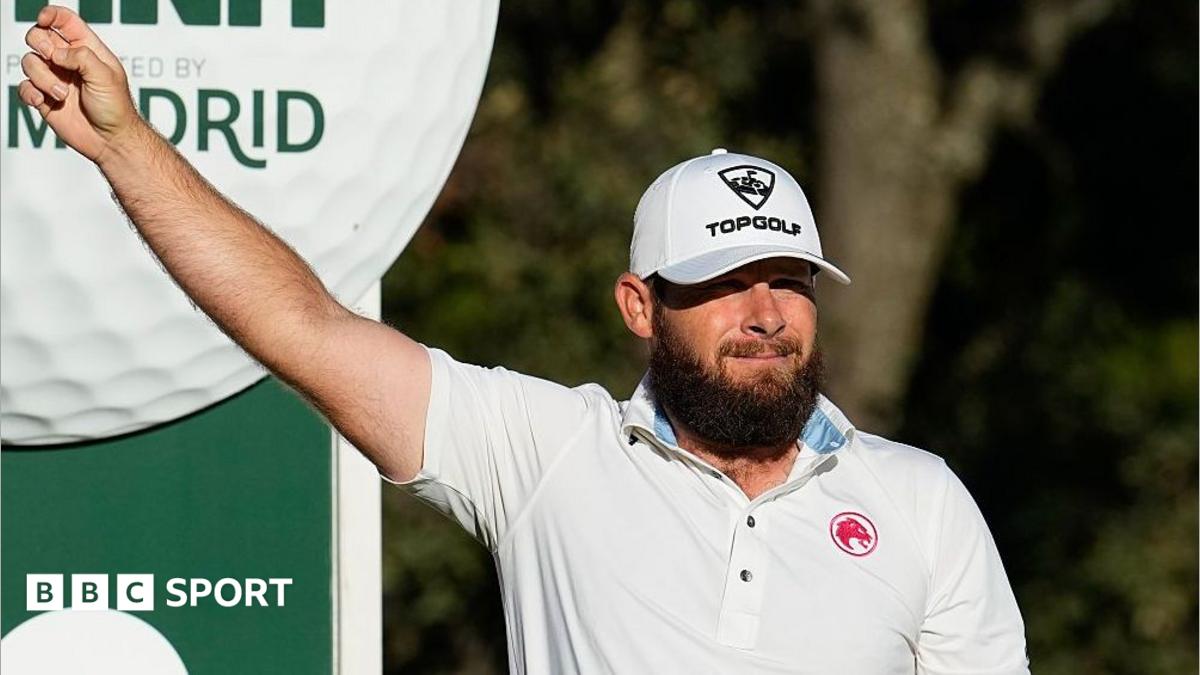
The next part of our “Ask …” series is here, and it’s a big one. Former Dodgers third baseman Justin Turner, now playing for the Tijuana Toros in the Mexican League, has agreed to answer selected questions from Dodgers Dugout readers.
Do I really need to remind you of who Turner is and his feats as a Dodger? I don’t think so. He is one of the most beloved Dodgers in recent times.
Turner agreed to answer questions from readers of this newsletter. Please send me an email with your question to houston.mitchell@latimes.com. Please make sure the subject line reads Ask Justin Turner. I will select some questions for him to answer. His answers will appear in a future newsletter. You have until Sunday at 6 p.m. to send in your question.
Ohtani is a decent player
It appears reports of Shohei Ohtani‘s demise were greatly exaggerated.
On April 24 against the Chicago Cubs, he went 0 for 3, striking out all three times. His batting splits (batting average/OB%/SLG%) dropped to .237/.361/.433), his worst numbers in a few seasons. Stories started to appear everywhere that pitching and hitting is too much for him. The Dodgers needed to give him a lot more days off, or, have him stop pitching altogether, since no one can do what he is trying.
Ohtani heard all of that, I’m guessing, and used it to stoke his competitiveness.
His numbers since April 24:
Hitting: .344/.461/.576. He’s now hitting .301/.420/.521 this season. Last season he hit .282/.392/.622. His power is down, but power is down across the majors this season. At current projections, there will be 400 fewer home runs this season.
On the mound since April 24, Ohtani is 4-2 with an 0.97 ERA.
Will he become the first person to win MVP and Cy Young in the same season? Well, on Wednesday, MLB.com announced the results of a survey of 35 experts, asking them to vote as if the season ended that day. Here are the results:
They didn’t do voting for Cy Young, but most places have Ohtani third right now, behind Cristopher Sánchez of the Phillies and Jacob Misiorowski of the Brewers.
Comparison
The Dodgers have played 63 games this season and are 40-23. How do they compare to last season’s team at the same point in the season?
Record 2026: 40-23 2025: 38-25
Runs per game 2026: 5.24 2025: 5.69
Batting average 2026: .264 2025: .265
OB% 2026: .343 2025: .341
SLG% 2026: .443 2025: .466
Doubles 2026: 108 2025: 106
Triples 2026: 7 2025: 9
Home Runs 2026: 85 2025: 101
Walks 2026: 249 2025: 234
Batter Strikeouts 2026: 483 2025: 515
Grounded into double play 2026: 56 2025: 47
Left on base 2026: 438 2025: 416
Stolen bases 2026: 27 2025: 40
ERA 2026: 3.08 2025: 4.12
Starters’ ERA 2026: 2.96 2025: 3.69
Relief ERA 2026: 3.31 2025: 4.27
Hits per 9 IP 2026: 6.87 2025: 8.09
Walks per 9 IP 2026: 2.79 2025: 3.54
K’s per 9 IP 2026: 8.99 2025: 9.13
IRS% 2026: 26.8% 2025: 23.4%
Don’t be like these people
I’m sure some readers get annoyed when during my semi-annual reminder that it’s only a game, and if you are angry five minutes after a game is over, perhaps you should find a new hobby.
But there was a reminder last week as to why it is so necessary to keep it in mind. The world is a much angrier place now than when I was younger (uh oh, old man rant). I blame social media. Everyone can find their own echo chamber of people who agree with them and never have to see an opposing opinion. And when they do, they can’t handle it (generally speaking, of course).
And the anonymity of social media gives people false bravado, causing them to say things they never would in person. Such was the case Saturday, after Dodgers reliever Tanner Scott had his first blown save in what has been a good season for him.
The next day his wife, Maddie, shared some messages the Scott family received on social media. One of them was, ““Hope this mutt d i e s soon,” on a photo of the Scott’s child on Instagram. And that was the most tame of the messages. All because Tanner Scott blew a save and the Dodgers lost.
Disturbing? That doesn’t begin to describe it. While I’m sure none of the Dodgers Dugout readers are this depraved, it serves as a reminder that these people are human beings trying their best. Be critical of their performance when warranted. But don’t get angry. You should see some of the emails I get after the Dodgers lose two in a row. Some people are just beyond furious, calling players names, etc.
“I don’t speak out often. Ever actually,” Maddie Scott wrote over a screenshot of the hatred she received. “I promise you, you don’t know what it’s like unless you’re living it. When did it stop being a game?”
Astros pitcher Lance McCullers Jr. received death threats after a loss last season, telling reporters, “I understand people are very passionate and people love the Astros and love sports, but threatening to find my kids and murder them is a little bit tough to deal with just as a father, I think. So just as a father, I think there have been many, many threats over the years aimed at me. But I think bringing kids into the equation, threatening to find them or next time they see us in public they’re going to stab my kids to death, things like that, it’s tough to hear as a dad,” McCullers said, in the understatement of the year.
I realize the stupid people doing this are a small, small percentage of any team’s fan base. But, don’t give in to the anger when the Dodgers lose. Be disappointed, sure. But just think, if the worst thing in your day is that the Dodgers lost, then you’ve had a pretty good day.
Scott got the loss Thursday when he gave up a walk-off homer. Disappointing? Sure. Ruin the rest of your night? I hope not.
It’s All-Star time
Time to vote for who you think should start in this year’s All-Star game. You can click here to vote. I still miss the days at Dodger Stadium when ushers (wearing their straw hats) would hand people stacks of ballots. Some ushers even had ballots with the Dodgers already selected for you.
Justin Turner‘s walk-off homer against the Cubs in Game 2 of the 2017 NLCS. Watch and listen here.
Until next time …
Have a comment or something you’d like to see in a future Dodgers newsletter? Email me at houston.mitchell@latimes.com. To get this newsletter in your inbox, click here.
COLLEGE STATION, Texas — As USC baseball coach Andy Stankiewicz noted the next additions that will be made to USC’s refurbished baseball stadium, he paused Monday night as a train rumbled loudly behind Blue Bell Park.
Stankiewicz, 61, smirked at the fitting metaphor after the Trojans clinched their first NCAA super regional berth in 21 years. He, after all, has rebuilt the USC program over his four seasons as head coach.
“Now we have a beautiful stadium,” he said of Dedeaux Field. “We’re going to have a beautiful clubhouse next year, batting cages and all that.”
As Stankiewicz attempted to utter another sentence, the train’s ear-piercing horn sounded.
USC baseball coach Andy Stankiewicz has guided the Trojans to the NCAA super regionals for the first time in 21 years.
(USC Athletics)
“That’s appropriate because we tell people the train’s moving,” Stankiewicz said. “Now we have a train honking its whistle. The train’s moving. We’re certainly excited to see where we’re going.”
The Trojans are definitely going places these days thanks to many players who believed in Stankiewicz’s vision despite knowing their on-campus stadium would be under construction for at least two seasons.
The Trojans had six players on the College Station Regional’s All-Tournament Team. Three of them — Abbrie Covarrubias, Kevin Takeuchi and Andrew Lamb — are upperclassmen who could have been tempted to transfer after they learned that they would be without a home field for two years. Junior shortstop Dean Carpentier is another upperclassman who believed in Stankiewicz.
“You talk about just kind of cornerstones,” Stankiewicz said. “Abbrie and Takeuchi … and Dean Carpentier and Andrew Lamb, these guys, they could have left. … They got here when we had a field, and they chose to stay.
“That’s something that I’m grateful for. It just tells you the quality of young men that they are. They’re here. They got two feet in and said, ‘I’m not going anywhere. I want to help build this program. Then to see the success that, not just Abbrie, but all of them have had, they’re great leaders. They lead by example.”
While Dedeaux Field was under construction, the Trojans played most of their home games in 2024 and 2025 at Irvine’s Great Park, 47 miles and another county away. They practiced at East L.A. College.
Yet, they still reached a regional final in 2025. They have gone a step further this year by climbing out of the losers’ bracket in the regional to eliminate Texas A&M and reach a super regional for the first time since 2005.
The Trojans didn’t just climb out of the losers’ bracket. They rumbled through like a runaway train, dominating with 55 runs over four losers’-bracket wins. They scored 21 of those runs over two victories against SEC power Texas A&M in the regional final.
The Trojans made themselves at home while playing in one of the SEC’s most hostile environments. It was as though the Trojans have grown accustomed to making themselves at home on the road in recent years.
Although parts of Dedeaux Field are still under construction, the Trojans were 32-1 there for the best home record in school history. USC (47-17) eclipsed the 40-win mark for the first time since 2005.
“Obviously being able to play at home this year has been a blessing,” designated hitter Augie Lopez said after he was named the Most Outstanding Player of the College Station Regional. “But the last couple of years we’ve just kinda showed up every day — whether that was in Irvine or East L.A. Community College for practice — just with the same mentality of we’re going to show up and put our work in and dominate no matter where we are.
“Just showing up every day and punching that time card and going to work and just putting your head down and knowing that no matter where you are (or) what home field you have or you don’t have a home field, we’re going to get it done and play quality baseball.”
USC pitcher Grant Govel throws to home against Texas State during an NCAA regional on May 29.
(Sam Craft / Ap Photo/sam Craft)
The 12-time national champions will face North Carolina at the Chapel Hill Super Regional in hopes of reaching their first College World Series since 2001. No player on the current roster was alive when the Trojans won their last national title in 1998.
Only a few were even born when USC made its last super regional appearance in 2005 at Oregon State.
“With the history that this program has, it’s been an honor to wear the Trojan brand on the front of my chest,” Lopez said. “Honestly just knowing that this team is the team to bring USC back to the super regional it’s incredible.
“Honestly, it hasn’t hit me until right now, but we’re just feeling absolutely grateful. I’m super blessed.”
You don’t need to hear the horn to realize USC’s train is moving in the right direction in Stankiewicz’s fourth season at the helm.
Sparks guard Kelsey Plum should be set to return to action on Friday against the Dallas Wings.
Plum, who leads the WNBA in scoring, missed the last three games with a sprained ankle injury she sustained in practice. She practiced in full on Thursday, and head coach Lynne Roberts seemed optimistic that she would play.
“I think so,” Roberts said when asked if Plum would play. “She looks good. Hopefully she can play.”
Plum led the Sparks to a 101-95 win in Las Vegas on May 23 and has been one of the best shooters in the league.
She said she feels ready to play on Friday.
“I hated it,” she said of watching from the bench. “I have been just rehabbing like a maniac, sleeping in a hyperbaric chamber, red lighting my way back.”
In her absence, the Sparks went 1-2 and averaged 83 points, including their worst offensive game of the season on Tuesday in a loss to the Aces.
“She’s kind of the engine that makes everything go,” Roberts said on Thursday. “We’ve sputtered a little bit offensively.”
Before this injury, Plum had missed only four games in her nine-year career because of injury.
The Sparks are 4-5 after starting the season with high hopes to make a return to the postseason.
Since launching at the start of 2025, “The Pitt” has emerged as more than just a hyperrealistic depiction of an embattled American emergency department. Using its hospital setting as a social microcosm, HBO Max’s Emmy-winning juggernaut has explored various systemic issues — including the misogyny that women of color face in the workplace.
“Some of the stories from real physicians and nurses that I’ve spoken to are so crazy. The system feels like it’s 15, 20 years behind other industries,” says Sepideh Moafi, who portrays attending Dr. Baran Al-Hashimi. “There is still this older culture of a boundaryless style of work where [there’s] a lack of understanding and compassion,” with respect to pregnancy and childcare, for working women.
“The Pitt’s” depiction of such subjects includes unflinching attention to microaggressions and unconscious biases. Isa Briones, who plays second-year resident Dr. Trinity Santos, recalls hearing from qualified on-set doctors that “a lot of female physicians will wear their lab coats, because it makes them look like more of an authority.”
“We have a female, half-Asian doctor on our set who consistently says that people talk to the nurse in the room if they’re a white man instead of her,” adds Supriya Ganesh, whose character, fourth-year resident Dr. Samira Mohan, is mistaken for a nurse in Season 2, despite having “DOCTOR” emblazoned on her name tag.
Supriya Ganesh.
(Justin Jun Lee / For The Times)
Nor is the series reluctant to show the other side of the dynamic, as doctors Robinavitch (Noah Wyle) and Langdon (Patrick Ball) lash out against their colleagues in lieu of acknowledging their own flaws. Although the women of “The Pitt” would never compare acting to saving lives, Briones believes that the experiences of women — especially from marginalized communities — share commonalities across many male-dominated industries.
“The entertainment business constantly feels like a boys’ club that you cannot penetrate no matter what you do, because it’s still always going to be these older white men who are making all the decisions,” she says. “That’s why seeing the storyline with Langdon and Robby informed my performance so much, because I know this feeling of being like, ‘Why the f— are these men fist-bumping each other? I’m also here! I’m doing my job too!’”
“As a woman in any field, if you express emotion, if you make your opinion or your voice heard, then it’s like, ‘You’re talking too much. You’re being hysterical,’” Moafi says.
Sepideh Moafi.
(Justin Jun Lee / For The Times)
In holding up a mirror to the healthcare system, showrunner R. Scott Gemmill also wanted to explore the linguistic diversity of its practitioners, allowing his actors of color to reconnect with their mother tongues.
“Language shapes who you are, how you see the world,” Moafi says. Al-Hashimi became a polyglot — speaking English, Farsi and Armenian — in part to curb the effects of a seizure disorder on her temporal lobe, which is crucial for language comprehension. “[Language] connects you to different registers in the body. The rhythms are different, and the emotional access is more immediate.”
During Season 1, Santos — who, like Briones, is half-Filipino — surprised nurses Princess (Kristin Villanueva) and Perlah (Amielynn Abellera) by chiming in on their gossip session in Tagalog. But wanting to show “a more vulnerable side of Santos” this season, Briones worked with her own actor father, Jon Jon, to find a Filipino lullaby that she could sing to baby Jane Doe.
To reflect the 100-plus languages spoken in the Philippines, they selected a Hiligaynon lullaby called “Ili Ili Tulog Anay.” Briones advocated for the scene not to have subtitles: “It should be just this quiet moment that you don’t have to understand [the language] to understand, but also it’s a great moment for people who do speak it to feel that little secret joy.”
For Briones, speaking Tagalog at work has opened up difficult conversations with her immigrant father, who feels shame about not passing down enough cultural knowledge to his children. “I’ve been starting with Rosetta Stone, so I can start conversing with my dad and then he can help me, because I want to be able to talk to my lola and she doesn’t have to work through English,” she says. “This show has reminded me of how important that is to me.”
Isa Briones.
(Justin Jun Lee / For The Times)
Ganesh, who grew up in New Delhi, felt strongly that Mohan should not be fluent in Hindi because of its similarities to Nepali, the language that doctors struggled to identify when treating a patient in the first season. Instead, the actor chose to infuse her own heritage into the character, who uses Tamil as a way to feel connected to her late father.
“She chooses to speak it with her mom, because maybe that’s the only other person she has in her life who she can speak it to,” explains Ganesh, who recalls consulting multiple generations of her own family — and even her on-set coach’s family — for the Tamil dialogue. “She wants to preserve that as much as she can, even though it’s already filtered through her being American and being born in this country.”
That part of Indian American culture will be lost next season, with Ganesh officially departing at the end of Season 2. The actor reiterates that the “creative decision” to write Mohan off was made by executive producers Gemmill, Wyle and John Wells: “They work with such intention on the show and make all the choices that they make for that reason, so I think it’s better to ask them for answers.”
“I’m going to treasure all the memories I had working with these two and everyone else,” Ganesh adds. “It’s been so great just getting all the love from the fans. I feel sad for them, too, that they won’t get to see this character.”
“The representation that you brought to the show is so beautiful,” Briones chimes in. “Seeing the fans ride for you so hard and be like, ‘This was the first time I felt represented on camera,’ it’s really gorgeous to see everyone coming out and celebrating that and celebrating you.”
For her part, Moafi believes that Dr. Mohan will be remembered for the way “she won’t compromise humanity in how she delivers care.” “The power of strength comes from vulnerability, and in order to go fast, you have to slow down,” she adds. “That’s something that is so ingrained in us, as women.”
Williams was a key player for Forest last term, playing in 53 games as they maintained their Premier League status and reached the Europa League semi-finals.
He was named Forest’s player of the season and the City Ground club have opened talks with the Wrexham-born player over a contract extension.
“It’s physically and mentally tough, but we’re professional enough to deal with what gets put in front of us,” Williams added.
“If that’s games every other few days or the travelling, we’re prepared for that and I’ve enjoyed it.
“I’ll be going straight on holiday, having a few cocktails and putting my feet up on the beach.
“We’ll get a couple of weeks off and then straight back into it.”
Nonfiction films and series are among some of the most-watched (and most-discussed) programming on TV. As Emmy season heats up, the directors of six notable contenders share thoughts about their projects.
‘The Yogurt Shop Murders’ (HBO)
“It’s just a famous, famous story in Texas, but particularly Austin,” director Margaret Brown says of the bewilderingly complex case of four teenage girls slain at a yogurt shop in the state’s capital in 1991. “You heard about it all the time at parties. My best friend was like, ‘That story is rabbit hole upon rabbit hole upon rabbit hole — no one knows what really happened. It’s impossible to figure out.’ I liked the idea of something that was impossible to figure out. But when I started doing the interviews, I was like, ‘This is dark, this is deep trauma.’ I’d never watched or done true crime before. I didn’t realize what it would be like to sit with people who hadn’t known what happened to their siblings and children for over 30 years. I remember [thinking], ‘I’ve got to get this right. I can’t mess this up. There’s just too much pain here.’”
‘The American Revolution’ (PBS)
“Leading up to it, I said I just don’t want us drowning in fife-and-drum treacle,” director Ken Burns says of his expansive treatment of America’s origin story, which draws out the experiences of Native Americans and enslaved people as well as the era’s atmosphere of civic discord. “Clearly it’s not, because we’re so existentially challenged by the moment. But the revolution gives us a sense of perspective. Times were more challenging then. More division. More division in the Civil War. More division in Reconstruction. Yes, the threats are unprecedented, but they’re not totally unfamiliar. Mark Twain is supposed to have said history doesn’t repeat itself, but he’s [also] supposed to have said it rhymes. I love that. So like Odysseus, I tie myself to the mast and resist the temptation to put a little neon sign in the film saying, ‘Isn’t this so much like today?’”
‘Sean Combs: The Reckoning’ (Netflix)
“There was so much noise,” says director Alexandria Stapleton, who tracks hip-hop mogul Sean “Diddy” Combs’ rise and shocking fall in this series, executive produced by 50 Cent. “I’m scared for my safety, I’m scared for my career. Then there was every journalist, every giant corporation, trying to chase the same story. Because there was a feeding frenzy, there were a lot of people that were not truthful. It was making sure that we were going after the right people to speak with, and then … making sure that they felt safe emotionally. No one knew who I was interviewing while I was making it. In making a project about a man who’s very connected in media and very good at whatever he wants his narrative to be, there was a very deliberate decision to not drop this project until we literally were a week out.”
‘Ocean With David Attenborough’ (National Geographic)
(Keith Scholey / Silverback Films and Open Planet / National Geographic)
“It’s been weird, because I’ve got older, and he sort of stayed the same, like the Dorian Gray picture,” says Keith Scholey, one of the film’s directors, of the 100-year-old broadcasting legend and naturalist. “He’s still got that huge power and presence and commitment. It comes from the heart. He’s got a huge depth to him, in terms of knowledge, experience, personality … but he’s also very self-effacing. The most boring thing in the world for David Attenborough is David Attenborough. He’s interested in every aspect of the truth, and he loves uncovering that and passing that on to the world. He knows how to present in a way that it’s a performance, but it’s not a performance.”
‘Neighbors’ (HBO)
“Neighbor disputes are a great leveler,” says Harrison Fishman, who co-directs this gonzo excursion into neighborhood feuds with Dylan Redford. “If you think about class and race and politics, all that stuff gets thrown out the window when people are dealing with such small, concrete problems. You quickly start learning why people care so much about the things that they’re fighting for. It becomes a bit like a Trojan horse into learning about aspects of America and things about people that have nothing to do with the dispute. Those tangents are so valuable to us, because it gives context to the dispute. But it also helps people understand who everybody is in our country.”
‘Mr. Scorsese’ (Apple TV)
“We would get together and have these very long conversations,” says director Rebecca Miller, who interviewed American cinema’s great poet of tortured masculinity over five years. “But then in terms of the other voices, I thought, ‘Who knows him best?’ There was this wonderful movie called ‘Crumb,’ by Terry Zwigoff. He interviewed [cartoonist R. Crumb’s] ex-girlfriend at a certain point, and I felt like I got a view into the person, not in a gossipy way, but … trying to get a rounded view. If you only get the front-facing part, you’re not going to get a full sense of who they are. It was very important to me that we hear from the daughters or his wife, that there’s a sense of a person in there.”