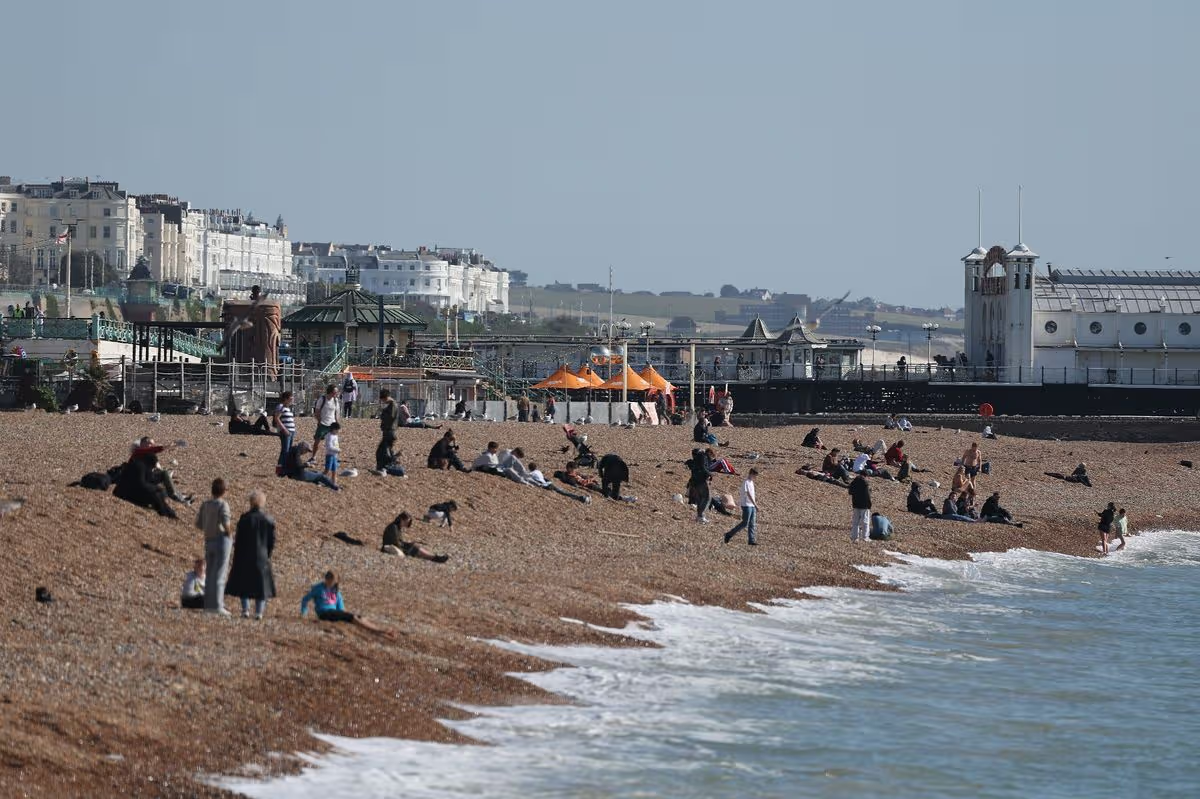
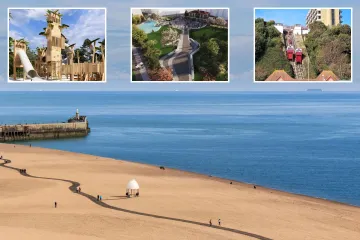
This seaside hotel is arguably one of the most famous in the UK, and it overlooks the city’s long shingle beach and lively promenade, as well as being just steps from the easily-recognised pier
The hotel overlooks a famous beach with classic seaside vibes(Image: Adam Gerrard / Daily Mirror)
A weekend at a seaside hotel is a classic British staycation. From windswept walks on the promenade to fish and chips on the beach, it’s fun no matter what the weather.
Seaside accommodation can vary massively from independent B&Bs to chains, and a recent article by Which? uncovered some of its inspectors’ favorite seaside hotels from across the UK, with properties from Fife to Kent making the list.
However, clinching the number one spot is a five-star property that overlooks the famous Brighton Beach. The Grand is over 155-years old, and has had a complete refurb in recent years, restoring much of the former glory to this long-running hotel.
Even among Brighton’s long promenade which hosts many huge hotels, the Grand stands out as a landmark of the city. Its marble columns and iron balconies harking back to when Brighton was a stylish seaside destination for Victorians.
The hotel has over 200 rooms, from simple doubles with comfy beds to grand sea-view suites, and each room has suitably nautical colors and touches that will get you in the mood for seaside fun.
Downstairs, guests can relax in the thermal suite with a hydrotherapy pool, jacuzzi, and steam room, or can book a spa treatment such as a facial or massage, the perfect end to a long day exploring the city. It also has a stylish restaurant overlooking the seafront, where you can enjoy a classic afternoon tea or a dinner menu featuring freshly caught seafood.
Staying at the Grand means you’re just a short stroll from many of Brighton’s attractions. Brighton Palace Pier is a must-see. Dating back to 1899, it’s another example of Brighton’s ornate Victorian architecture, and you can enjoy amusements, fairground rides, bars, and colourful end-of-the-pier shows.
Explore the Royal Pavilion and gardens, a unique Regency-era palace inspired by Indian architecture. This ornate building is often compared to the Taj Mahal on the outside thanks to its dramatic domes and minarets. A newer addition to the skyline is the Brighton i360, an observation tower that gently lifts visitors 138-metres into the sky. Walk around the glass viewing pod and you can enjoy sea views on one side and the city and the South Downs on the other.
Holidaymakers bringing kids along, or just those who love seeing colourful creatures, will enjoy SEA LIFE Brighton. It’s the world’s oldest continuously-running aquarium, having been open since 1872, and includes the classic glass tunnel for spotting sea animals up close.
The Lanes and North Laine are also must-visit areas when you spend a weekend in Brighton. North Laine is full of colourful independent shops offering vintage clothes, unique household items, and artworks, while The Lanes include boutique shops, stylish cafés and upmarket restaurants. As the name implies, these are found down narrow, pedestrianised streets where you can wander for hours and find the city’s hidden gems.
Have a story you want to share? Email us at webtravel@reachplc.com
The once-bustling holiday resort – popular with the likes of Elizabeth Taylor – was abandoned in the 1970s but has since become a haven for one niche but growing tourist market
14:05, 04 Apr 2026Updated 14:21, 04 Apr 2026
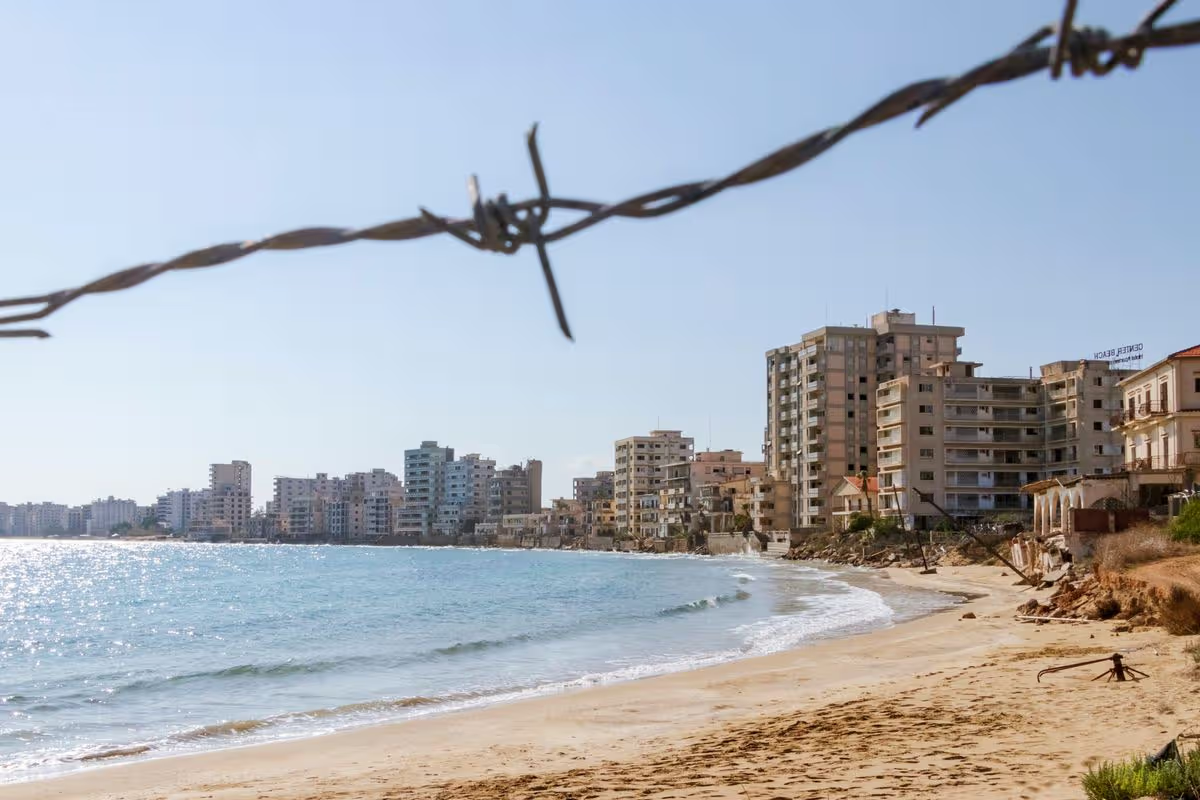
The town is now ghostly and empty – but that’s why it’s becoming a tourist hotspot once again(Image: Getty Images)
Once a playground for Hollywood’s elite, this coastal resort has transformed into an unsettling ghost town. Yet this Cypriot location has found new purpose amongst travellers, emerging as a destination for ‘dark tourism’.
A short distance from well-known Cyprus holiday spots such as Paphos and Limassol lies Varosha. Varosha was formerly a glamorous getaway destination in its own right, attracting Elizabeth Taylor and other luminaries of the 1960s.
However, when Turkish forces invaded Cyprus’s northern territory on July 20, 1974, the seaside resort was altered forever. Five days earlier, there had been a coup attempt backed by the Greek junta. The 15,000 inhabitants of Varosha were compelled to evacuate en masse following the military incursion, leaving behind their homes, businesses and pristine beaches.
Consequently, the district became a ghost town with structures left predominantly vacant. Even now, the neighbourhood remains frozen in time under Northern Cyprus’s jurisdiction. Unsurprisingly, the area lost all attraction for holidaymakers, as vegetation began reclaiming the pavements and sea turtles made nests on Varosha’s formerly sunbather-packed beaches.
Yet in October 2020, a decision was taken by Turkish President Recep Tayyip Erdogan and the then prime minister of Northern Cyprus, Ersin Tatar, to reopen the district to visitors. Varosha has since begun drawing a markedly different type of tourist than it did during its 1960s golden era.
More than 1.8 million tourists have descended on the ghost town over the past four years, according to figures published in 2024. Visitors appear to be drawn in by the town’s chilling historical significance and its crumbling, derelict landscape.
Speaking to the Daily Express, Hubert Faustmann, a professor at the University of Nicosia, said: “The section found itself in the top tourist sites in terms of dark tourism, so they started to open up certain parts of Varosha, and it’s now a tourist destination with guided tours, with e-bikes, vehicles and coffee shops.”
Faustmann continues: “Varosha is being used as a tourist destination, as a tourist attraction, without a single inhabitant prior to 1974 returning. It’s changed in the sense that it’s open to the public, but it’s not open for return.”
In a bid to shed its decaying reputation, Varosha has undertaken clean-up efforts ahead of its reopening. The town now boasts a range of amenities catering to all types of visitors, from beach umbrellas to canteens.
PACE rapporteur for Varosha Piero Fassino, who had visited the ghost town in mid-May, presented his findings to the assembly during the gathering. The Italian senator expressed his hopes that Varosha could be transformed back into a “living town” following his visit.
That being said, dark tourism has been a longstanding element of the travel sector, achieving widespread attention through the Netflix programme, Dark Tourist. The series explores the bizarre, eerie and superstitious customs and folklore connected to numerous locations across the globe.
Speaking to The Mirror, dark tourism enthusiast Louise Joy explained: “Traditionally, dark tourism is visiting places associated with death and tragedy.” Joy is a blogger and founder of The Morbid Tourist and reveals she routinely seeks out “spooky” locations when travelling.
Joy suggests TikTok has also made a substantial impact on the dark tourism sector in recent years. “The individuality on TikTok [helps] people seeing stuff that is different and you don’t necessarily see that out there offline, like in books,” says Joy.
Visit this beautiful seaside which is a wonderful place to spend time by the coast, with the countryside nearby. There are beaches, forests and so many cultural activities to do
Christine Younan Deputy Editor Social Newsdesk
04:10, 04 Apr 2026
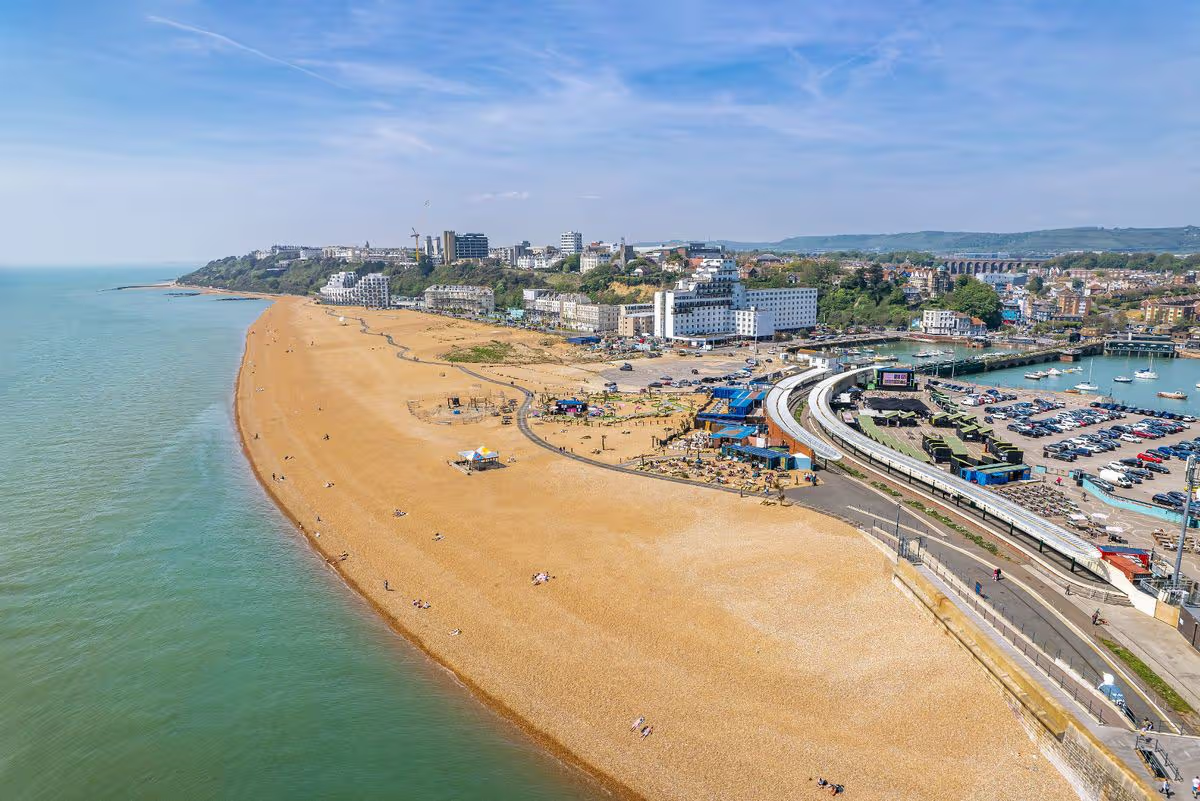
If you’re coming from London, it’s less than an hour by train(Image: Getty Images)
Fancy a little adventure where you can enjoy the sights and smell of the coast? Whether you’re up for a walk in the forest or to visit the village named the “prettiest in England”, it’s nice to venture outside of the borough at times.
Now with spring in full swing, there’s no better way to spend your long bank holiday weekend than by heading to the seaside. This location has been named the “most beautiful in the UK” with beaches, forests and so much more to enjoy. Not only can you spend time by the coast, it’s also close to the countryside. And the place people are raving on about is Folkestone, Kent.
This is a wonderful place to spend time by the beach where you can visit gorgeous little cafes along the cobbled streets, tuck into some fish and chips by the sea, and take in the views.
Folkestone is a coastal town on the English Channel, it lies on the southern edge of the North Downs at a valley between two cliffs.
A travel account on TikTok recently named the location as the “most beautiful seaside in the UK”.
In the caption, the user added: “Is this the cutest seaside town in the UK?” Meanwhile a lot of people in the comments section claimed to “love Folkestone”, while another added: “How beautiful.”
Content cannot be displayed without consent
How to get to Folkestone:
If you’re travelling by car from London, it’s around 75 miles (about a 1 hour and 40 minute drive). It’s along the M20 which includes tolls.
Meanwhile, the fastest journey would be a train from London St Pancras to Folkestone Central, which takes about 56 minutes. A return ticket could cost around £30-£40 depending on times.
London Charing Cross is also another option to take the train from, although this adds nearly an hour onto the travel time.
What to do in Folkestone:
The seaside town offers a mix of sandy beaches, creative art and pure coastal charm.
There are many attractions for all members of the family, from the bustling Harbour Arm for food and drinks to the scenic Lower Leas Coastal Park.
Also the Creative Quarter’s has the Old Street for cafes, independent boutiques and coffee stops.
And don’t forget the Zig Zag Path where you can walk the restored Victorian path which offers dramatic views through the shady, landscaped greenery.
You can also check out the Folkestone Artworks where there’s over 70 contemporary artworks dispersed across towns, beaches and cliffs.
SEASIDE lovers are in for a treat as an iconic pier is finally re-opening today.
The historic 145-year-old pier is back in business after a grueling six-month closure that left locals and tourists high and dry.
Sign up for the Travel newsletter
Thank you!
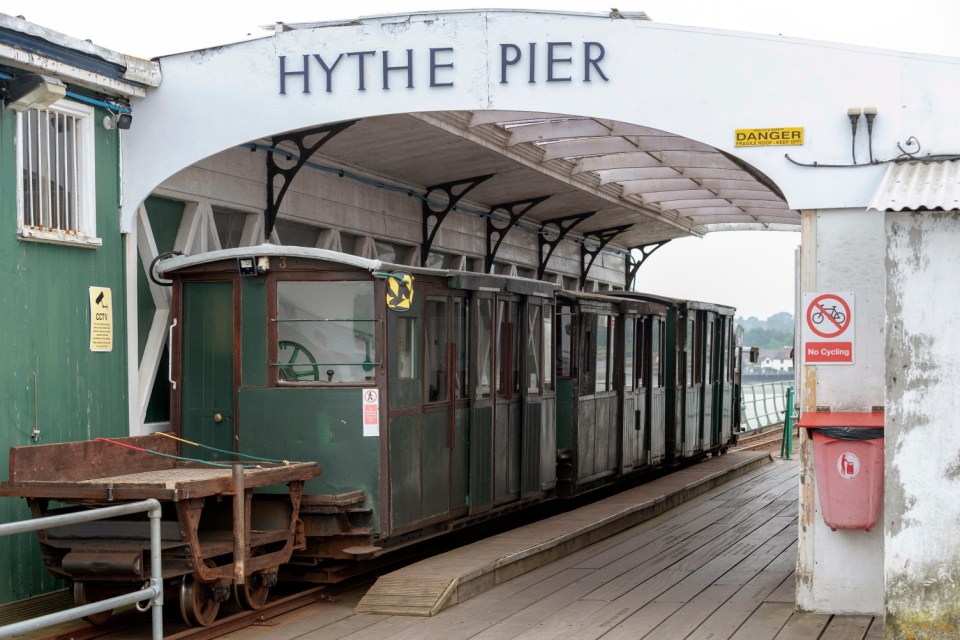
A historic 145-year-old pier is officially re-opening todayCredit: Alamy
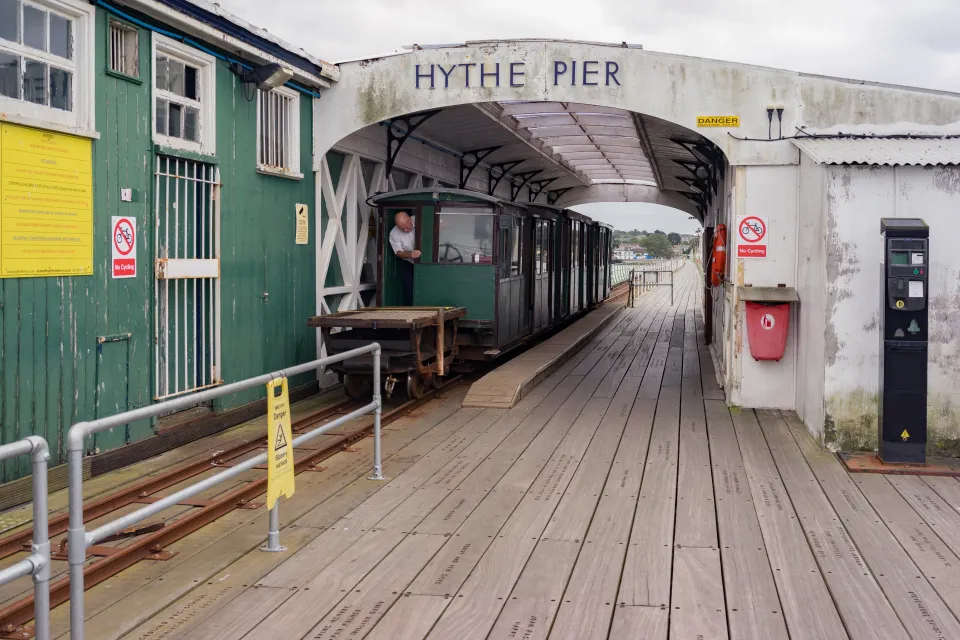
Hythe Pier, which stretches a whopping 700 yards into Southampton Water, has undergone a massive “deep clean” and vital electrical upgrades to make it ship-shape for the public.
And the best part is it’ll cost sun-seekers just £1 to take a stroll and soak up the stunning coastal views.
Local leaders are hailing the move as a massive “first step” in bringing the Hampshire town’s “beating heart” back to life.
The pier, which first opened its doors in 1881, was forced to shut last year due to safety concerns and infrastructure wobbles.
But thanks to a band of dedicated volunteers and local businesses, the Grade II-listed structure is ready for action once again.
A spokesperson for the Hythe Pier, Train and Ferry Group previously said: “We could see how incredibly important it was that we bring our much-loved pier back to the community.
“Every £1 you spend goes back into the pier, supporting its future. Come and walk the full length, take in the views, and be part of this next chapter.”
While the walkway is officially open from 10am today, fans of the pier’s world-famous railway will have to wait a little longer.
Work is still ongoing to get the vintage carriages and the ferry service back on track, but bosses are “hopeful” the full service will be restored soon.
Hythe councillor Malcolm Wade said: “It’s really good news that it has been opened so residents can go up and down the pier again.”
The pier’s reopening is a major shot in the arm for the quaint town, which relies on the landmark to draw in thousands of visitors every year.
Hythe Pier’s reopening is a major shot in the arm for the quaint townCredit: Alamy
“More visitors, more energy, more reasons to spend time by the sea.”
The post added that there will be “pop-ups landing throughout the year” as well.
The pier can be found on Bournemouth Beach, which features golden sand and stretches for seven miles.
On the pier, there are a number of different attractions including RockReef – an indoor climbing centre at the end of the pier, that has 28 themed walls of different difficulties, costing from £20 per session.
There’s also PierZip – the world’s first pier-to-shore zip line – which costs £27 per person.
Kids can have a go at the aerial course, suspended six metres above the ground, costing £11.50 per person.
And they can venture into the Piercave, which features three tunnels to crawl through and a large ball pit.
It also costs £11.50 per person.
Or they could try the Leap of Faith or drop down the Vertical Slide.
A two-hour session including the climbing, aerial course, Piercave, Vertical Slide and Leap of Faith costs £36 per person.
After burning energy at the different attractions, visitors can grab something to eat at Key West Restaurant where you can pizza costs as little as £14.95 or a cream tea will set you back £9.50.
If you just need a caffeine fix, then you can opt for Coffee Reef, where you can pick up a latte, cappuccino or flat white for £4.50.
There’s also a news and gift shop as well as a beach shop selling seaside essentials such as buckets and spades.
It comes after the pier suspended its entry fee last yearCredit: AlamyThe pier is located on Bournemouth Beach which stretches for seven milesCredit: Alamy
The pier is also a 10 to 15-minute walk from Bournemouth town centre.
Many people have taken to social media to express their excitement for the news.
One person said: “Love this! The right decision.”
The pier previously announced in April last year that it was temporarily suspending the entry fee for 2025, to make it more accessible to the local community.
Since the entry fee was scrapped, the pier has seen more visitors and engagement.
According to the Bournemouth Echo, Sarah Hunter, Managing Director of Adventure Attractions, said: “Increasing accessibility to the pier has always been our ambition, and the response over the past year has been incredibly positive.
“Continuing the toll suspension allows us to build on that momentum and ensure the pier remains a place everyone can enjoy, all year round.”
The entry fee will be suspended until the end of the current pier operator’s term, which includes 2026, 2027, 2028 and up to the end of October 2029.
Our favourite UK hotels
*If you click on a link in this box, we will earn affiliate revenue.
Margate House, Kent
This stylish boutique hotel is in a seaside townhouse, a short walk from Margate’s coolest bars and restaurants. Decked out with plush velvet sofas, candles flickering and striking independent art, inside feels like a warm welcome home. Rooms are stunning, especially the ones that give you a glimpse of the sea.
The Alan looks extremely grand, being built into a beautiful Grade II listed building. Spread across six floors, with 137 rooms, each one looks like a fancy design magazine. From the concrete coffee tables to the pink plastered walls, the industrial-inspired designs perfectly replicate the history of the city.
This historic hotel has welcomed the likes of Charles Dickens and Lillie Langtry through its doors. Rooms have richly-patterned carpets with super soft bed linen and premium toiletries in the bathroom. Go for a superior room for extra goodies including bathrobes and snack boxes.
This Cambridge hotel is in the ideal spot, within walking distance to bars, shops and hotspots like the university colleges and Parker’s Piece. The inside couldn’t be prettier, with huge stained glass windows, grand chandeliers, and rooms with enormous clawfoot bath tubs.
A NEW nature retreat holiday park has got the go-ahead near the seaside town of Deal and could open as soon as 2027.
New Park will have 96 cabins tucked away within a historic park and garden.
Sign up for the Travel newsletter
Thank you!
The seaside town of Deal is getting a new holiday parkCredit: AlamyA nature retreat has been approved at the Northbourne EstateCredit: Dover District Council
Dover District Council has given the green light to having 96 cabins built on a park in Betteshanger, around 15-minutes from Kent’s coastline.
Illustrations of New Park reveal plans to build small wooden and glass-panelled cabins with outdoor seating areas.
Inside are double beds, a small sofa and dining area made from natural materials.
Alongside the lodges, the grounds’ woodland will be extended.
There will also be two new wildlife ponds built and dark skies compliant lighting so it won’t be too bright.
In its planning report submitted in 2025, it detailed that a “group space building would include indoor and outdoor space for event activities”.
Also planned were spots for picnic tables, log benches and a fire pit area.
The holiday park will form part of the Northbourne Estate which is a historic park and garden dating back to the Jacobean era.
There are even plans for a shuttle service connecting the site to a nearby railway station.
On its website, it states that work is planned to start in summer 2026, with the holiday park hoped to be completed in 2027.
The site sits around a 12-minute drive from Deal’s seafront.
Check out another beautiful seaside spot in Kent…
*If you click on a link in this box, we will earn affiliate revenue
Margate House, Kent
This stylish boutique hotel is in a seaside townhouse, a short walk from Margate’s coolest bars and restaurants. Decked out with plush velvet sofas, candles flickering and striking independent art, inside feels like a warm welcome home. Rooms are stunning, especially the ones that give you a glimpse of the sea.
WITH the UK’s unpredictable weather, summer always feels far away – but a new weather-proof attraction is soon opening in a popular seaside town.
A multi-activity indoor attraction is set to welcome people in a few months in Blackpool.
Sign up for the Travel newsletter
Thank you!
A new £3million attraction is opening in Blackpool this JuneCredit: Tenpin UKTenpin will feature 24 bowling lanes, as well as other activitiesCredit: Tenpin UK
Tenpin will feature 24 bowling lanes which can be used for parties, groups and casual play.
But there will also be other activities in the venue, including two karaoke rooms.
For those wanting to burn some steps there will be a laser tag arena too.
And if you like a challenge, there will be three immersive escape rooms to have a go at.
Families visiting with younger children can also use a soft play area and there will be an area for adult visitors as well, with interactive darts and pool tables.
To extend the fun, there will also be a fully equipped arcade.
While enjoying the different activities in the venue, visitors can enjoy a tipple from the cocktail bar and lounge area where live sport will be shown.
Laura Barlow, Regional Manager from Tenpin said: “This is a significant investment in Blackpool’s leisure offering and, most importantly, in its residents.
“We wanted to create a space that families, friends and local groups can use week in and week out.
“Blackpool deserves high-quality, modern entertainment that is accessible all year round, and this venue has been designed to deliver exactly that.”
Construction on the new venue has already started and the attraction will officially open on June 5.
Another new venue will be opening in Wakefield, also with 24 bowling lanes, two karaoke rooms, a laser tag arena, three escape rooms, an arcade area and pool tables.
Tenpin already has 58 sites across the UK.
A game of bowling usually costs around £9.95, when booked in advance, and often different venues have offers on, including ‘Tenpin Tuesdays’ where you can get 50 per cent off bowling and some drinks, and £10 Thursdays where you can get two games of bowling for a tenner.
Other activities include laser tag, karaoke rooms and immersive escape roomsCredit: Tenpin UK
If heading to Blackpool before June 5, there are plenty of other things you can do.
For example, you could head to Blackpool Pleasure Beach Resort, where from April 4 you can head to Twilight Thrills, where the park extends its opening hours until 9pm.
The Twilight Thrills evenings will also have live DJ sets, entertainment and roaming characters.
Between April 10 and 12, there will also be a three-day festival at the seaside attraction called Turn It Up Festival with music by Harry Styles and Sabrina Carpenter among others.
Tenpin isn’t the only project going on in Blackpool either.
The venue will officially open on June 5Credit: Tenpin UK
There are some overlooked UK seaside destinations that offer a serene escape with golden sand beaches and dramatic scenery that are set to rival those in Cornwall
There are some beautiful UK seaside spots set to rival those in Cornwall(Image: Getty Images)
A travel expert has outlined some underrated UK seaside escapes that are a far cry from the crowds in Cornwall.
Cornwall is one of the most popular UK seaside destinations, with its sprawling golden-sand beaches, surfing waves, culinary scene, and charming towns like St Ives and Falmouth. Every year, it’s thought to welcome around 4million overnight visitors and a whopping 14million day trippers.
Its busiest time is notoriously during the school holidays and summer months, as thousands of Brits flock down to the coast to soak up the rays on the picturesque coastline. According to ONS figures, a staggering 710,860 short-time holiday let nights were recorded in August alone.
Not only can a break to the Cornish coast become overrun by tourists, but it can also come with a hefty price tag for the privilege, as demand soars. But all is not lost for that desirable escape to the British coast, as there are some underrated UK destinations that are just as beautiful, and far quieter.
“Cornwall is magnificent, and the popularity is completely understandable,” Mark Hutchins, founder of Beach Stays, said. “But there are stretches of coastline in this country that are just as stunning, far less crowded, and meaningfully cheaper. Most people never consider them simply because they’re less familiar. That’s their loss, and the gain of anyone willing to look a little further.”
Mark argues that some lesser-known locations are not a compromise and still offer picturesque coastal vistas alongside stunning beaches. The travel expert recommends West Wales and Northumberland for a seaside escape, and they’ll be a fraction of the price you’d pay for the same time in Cornwall.
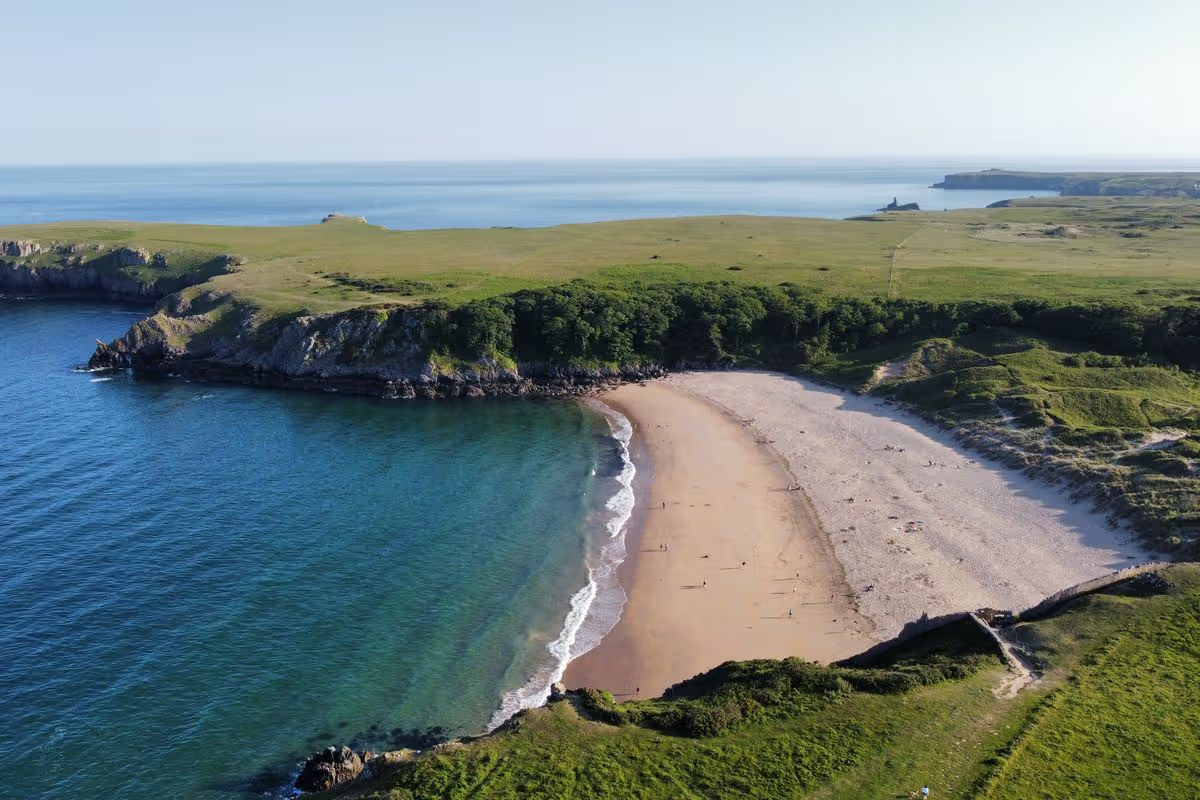
West Wales is characterised by its dramatic cliffs, stretches of pristine beaches, secluded coves, and charming seaside towns, such as Cardigan and Aberaeron. Some of the most well-known beaches in the area include Barafundle Bay, Pendine Sands, and Whitesands Bay, which have miles of golden sand shores against the blue waters.
One visitor to Pendine Sands shared on TripAdvisor: “What a beautiful beach, miles of beach, beautiful views, plenty of parking, loads of shops to visit, there is also a museum of speed there, lots of food options to choose from, I would highly recommend.”
Following a trip to their favourite spot in West Wales, another holidaymaker said: “We have been coming to Whitsand Bay for our holiday almost every year. Beautiful, gorgeous, sandy beaches, still unspoiled, hardly anyone around. So peaceful.”
The region of Wales is also home to the Pembrokeshire Coast National Park, the only one of its kind in the UK, which stretches 186 miles along the scenic coastline. It offers ample hiking opportunities and some of the most breathtaking views of winding estuaries, enormous beaches, and rugged cliffs.
Northumberland is also home to some of the most spectacular scenery, with unspoilt sand beaches lined by dunes, rolling hills, and heather moorlands. One of its most famous beaches is the dramatic Bamburgh, with golden sand that stretches for around three miles, backed by the majestic Bamburgh Castle, and offering panoramic views of the Farne Islands.
It’s an uncrowded paradise and a haven for dog walkers, much like the beaches in Northumberland, which are often open to dogs year-round. Following a visit to Bamburgh beach this year, one holidaymaker noted: “A fantastic beach with breathtaking views of the Farne Islands and Holy Island with Lindisfarne castle.
“It was a lovely walk where you could easily spend hours with family, and it’s great to tire the dogs out! Overlooked by Bamburgh castle, it also offers great photo opportunities, and is near a few local cafes for after your walk.”
Other notable beaches in Northumberland include the sweeping coast of Budle Bay, the horseshoe-shaped Beadnell Bay, and Embleton Bay, which is overlooked by the ancient ruins of Dunstanburgh Castle. Known as the ‘castle county’, there’s also the famed Alnwick Castle that has been used as a filming location for Harry Potter and Downton Abbey.
There are also plenty of charming towns to explore, including the historic Alnwick and Hexham, which has been named as one of the happiest places to live in the UK. There’s also the village of Corbridge, offering scenic riverside walks, along with the coastal towns of Bamburgh and Berwick-upon-Tweed, with their mix of English and Scottish heritage.
With West Wales and Northumberland offering a catalogue of pristine beaches, delightful towns and picture-postcard coastal vistas, it might just be the time to switch it up from the Cornish coast.
Do you have a travel story to share? Email webtravel@reachplc.com
THE North Norfolk Fryer is returning to the tracks this summer.
Onboard, passengers can enjoy chippy tea and ice cream dessert to make it feel like being at the seaside – but on a heritage steam train instead.
Sign up for the Travel newsletter
Thank you!
You can hop onboard a fish and chip train this summer in NorfolkCredit: North Norfolk RailwayTickets start from £87.50 for twoCredit: North Norfolk Railway
The Norfolk Fryer picks passengers up from Sheringham Station in Norfolk and embarks on a 90-minute return journey to Holt.
Onboard, guests will be served up local fish and chips – and to finish, a tub of Ronaldo’s ice cream.
There’s also a bar onboard for anyone wanting to enjoy a tipple.
The trains run from Sheringham to Holt and back with the return journey taking around 90 minutes.
Diners will get to enjoy their chippy tea and countryside views in either the Gresley Buffet Car, which has been fully restored with a 1930s art deco interior or in one of the 1950s British Railways carriages.
A table for two in First Class starts from £87.50 while a table for two in regular seating is £79.50.
There are also options to sit in tables of three or four if you fancy gong as a group.
Seats are bound to go quickly and you’ll need to book in advance on their website.
The trains set off every Wednesday from April 1, 2026 at 6.30PM.
There are other experiences onboard too from sausage and mash dinners, to brunch, cream tea and even gin trains.
For even more fish and chips, fans of the seaside classic should head up to Whitby.
The awards are considered the ‘Oscars’ of the fish and chip industry and at this spot you can eat in or take away their seaside fish suppers.
You can opt for plaice with chipped potatoes, lemon and homemade tartare sauce for £20.95.
Or try out the cod with chipped potatoes, lemon and homemade tartare sauce in three sizes: small for £15.95; medium for £19.95 and large for £21.95.
Then for takeaway, you could grab cod and chips, haddock and chips or scampi and chips all for £13.50 each.
There’s a children’s menu too.
If you fancy a full on stay in Whitby – check out this hotel…
*If you click on a link in this box, we will earn affiliate revenue
Whitby, North Yorkshire With a history of sailors and vampires, a dramatic coastal path, and the very best in pints and scampi, it takes a lot to beat Whitby. Pop in the amusements, eat award-winning fish and chips, and board the all-singing Captain Cook boat tour on the harbour. The Royal Hotel overlooks the harbour with stays from just £68 per room.
Trains will travel from the town of Sheringham to Holt in NorfolkCredit: AlamyFish and chip train is back this summer with trips across the countrysideCredit: North Norfolk Railway
A UK seaside town is brimming with charm, with vibrant beach huts lining the golden beach and a high street packed with independent businesses that serves up its famed oysters
This picturesque seaside town is just a short train journey from London (Image: Getty Images)
A charming coastal town, just a short train ride from London, offers an idyllic day out, adorned with colourful beach huts and an independent high street.
The seaside town of Whitstable in Kent is perhaps one of the best ways to make the most of the warmer weather, with its sprawling beach, thriving harbour and high street brimming with independent businesses. Nestled between Herne Bay and Seasalter, the Kentish town is just over an hour’s train journey from London, making it a favourite among those who want to escape the smoke for a break by the picturesque coast.
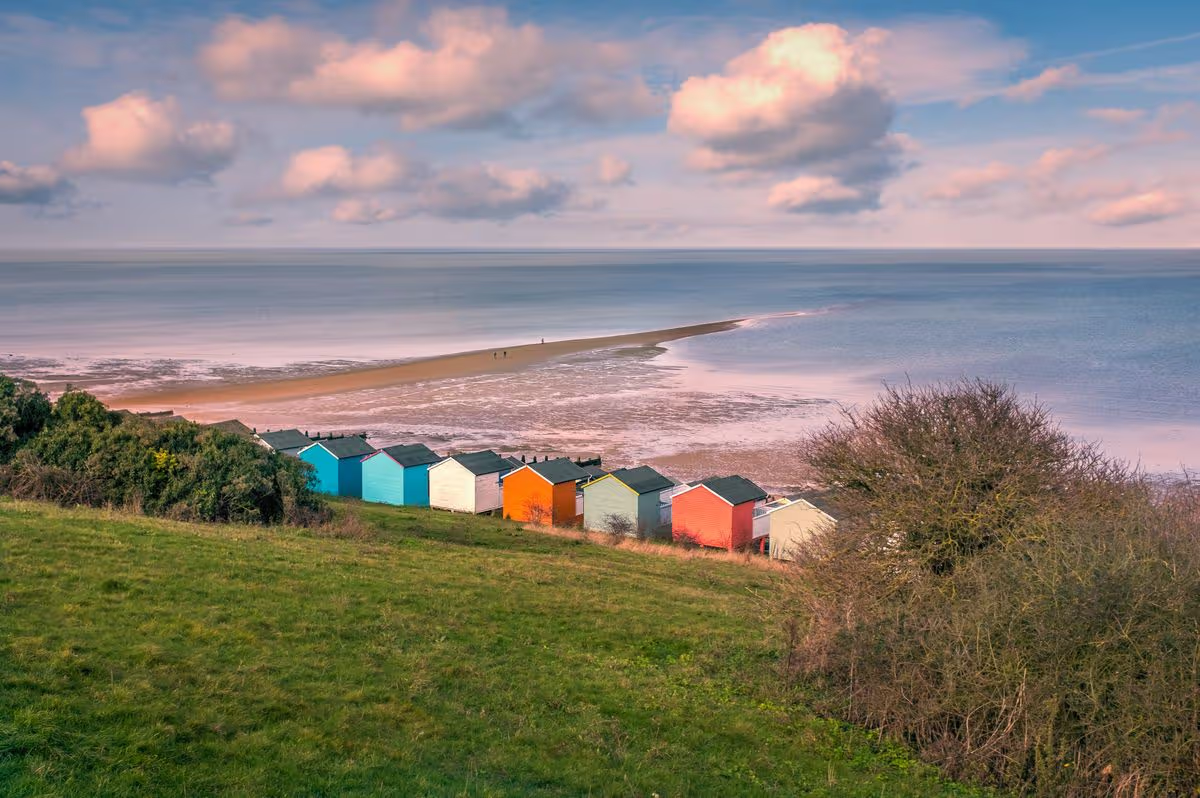
The shingle beach is at the heart of this town, with its picturesque pastel-hued beach huts lining the promenade for a quintessential British seaside. While it may lack the pier or rides you might find at other seaside towns, its stretches of golden beach have previously earned it the recognition of the ‘best of the traditional British seaside’ by Beach Guide, thanks to its ‘quirkiness and charm’.
It’s a place where families can spend hours playing along the shore, taking a refreshing dip in the seawaters, or simply walking along its stretching promenade, admiring the colourful beach huts. If you fancy a pint in the sun, there’s the famed Old Neptune pub, with outdoor seating offering views across the coast, and where fishermen take in their daily catch.
Whitstable also has a bustling harbour and is renowned for its oysters. Its heritage of seafood dates back to around 80AD, when the Romans reportedly sent oysters back to Rome because they loved them so much, and the town built a thriving industry based on mollusc business that remains in place today.
A trip to Whitstable wouldn’t be complete without sampling its famed oysters with the acclaimed Whitstable Oyster Company and Wheelers Oyster Bar, providing the perfect spot. But with an array of restaurants nestled around the town, you’ll never be far from fresh seafood, and the town even holds its very own Whitstable Rocks Oyster Festival to celebrate its historic connection.
Away from oysters, the town, which has been dubbed the ‘jewel of the Kent coast’, is also known for its thriving high street. Whitstable has hundreds of independent businesses, from vintage shops and art galleries to cafés, bakeries, hardware stores, and family-run eateries, with just a few chain stores surviving.
A stroll along Harbour Street and the High Street will reveal shopfronts bursting with character, including George’s Whitstable, an authentic Aladdin’s cave that has been a fixture for around 50 years. Some of its other notable highlights include the elegant jewellery shop Pearl Shop, the independent toy shop Buttercup, and Harbour Books.
Whether you’re looking to spend time on the beach, browse around the extensive selection of independent shops or simply stroll around the charming town, a day trip to this ‘oyster paradise’ is well worth it. And with a direct train from London Victoria to Whitstable taking just over an hour, it couldn’t be easier to experience the seaside charm along the Kent coast.
Do you have a travel story to share? Email webtravel@reachplc.com
ONE of the UK’s most popular seaside towns is undergoing a £750,000 revamp to its historic promenade.
Brighton has long been a popular destination for holidaymakers but its famous Victorian promenade has been partially closed to the public since 2012 following safety concerns.
Sign up for the Travel newsletter
Thank you!
Brighton’s famous Victorian promenade has been partially closed to the public since 2012 following safety concernsCredit: AlamyBut it is currently having £750,000 spent on it and will reopen later this yearCredit: purcelluk.The structure was originally built to create a sheltered promenade for Victorian touristsCredit: purcelluk.
Now, the promenade is expected to reopen this winter after an extensive restoration project.
Known as the Madeira Terrace, the historic promenade structure stretches 865metres-long with 151 large arches and was built between 1890 and 1897.
Parts of the cast iron railing decorations depict Poseidon – the Greek god of the sea – and Aphrodite – the goddess of love – as well.
The structure is also Grade II listed and thought to be the longest continuous cast-iron structure in the UK.
The first phase of the project includes restoring 28 of the arches between the Royal Crescent steps and Concorde 2, as well as installing a new lift.
The new lift will create step-free access to and from Madeira Drive.
Work on the lift has already begun with the next stage involving 20,000 bricks being placed around a frame that has been built.
Parts of the cast iron structure of Madeira Terrace have already been returned to the promenade after being sent to a specialist foundry for repairs.
The structure was originally built to create a sheltered promenade for Victorian tourists and was designed by Philip Lockwood – the same man behind the Bandstand, also known as the Birdcage, on Brighton seafront.
As wealthy visitors arrived by train, the terrace would allow them to promenade along the beach no matter the weather.
Over the decades it has become a key part of Brighton’s image as well as appearing in a number of productions such as films Wimbledon (2004) and TV series Dr Who.
Councillor Julie Cattell said: “We’re moving forward with very visible and eye-catching elements of the restoration, and I know residents and visitors are enjoying seeing the structure take shape.
“There has been huge interest in the work being done to create the lift and residents will continue to see real progress being made over the coming months.
“It is great that so many people are really captivated and engaged in this project – and have such goodwill towards the work being done.
As wealthy visitors arrived by train, the terrace would allow them to promenade along the beach no matter the weatherCredit: purcelluk.Parts of the cast iron railing decorations depict Poseidon – the Greek god of the sea – and Aphrodite – the goddess of love – as wellCredit: Alamy
“We know Madeira Terrace is a vital part of our city’s architectural heritage and is something people really care about.
“That is partly why we are taking a firm, heritage-led approach.
“Restoring the existing structure does take more time than simply replacing it – particularly with the testing required – but it is the correct approach.
“We’re determined to get this restoration right – and see Madeira Terrace once again become a thriving and important part of our iconic seafront.”
The renovations to the terrace are also part of a wider multi-million-pound project that will develop the area around the Brighton Centre – a conference and exhibition space where previously The Who, Queen and Bob Marley have performed.
The project includes opening a new lift that will create step-free accessCredit: Getty
Dubbed the Waterfront Project, work will expand Churchill Square shopping centre as well as establish a new conference centre and entertainment venue.
In 2024, plans were also submitted to widen the beach in Brighton’s neighbour – Hove.
The plans were later approved for the coastal defense works, which includes widening and adding new pebbles and groynes to the beach.
THERE’S no better way to make the most of the sun coming out than heading off on a beach holiday.
2026 is shaping up to be a record year for staycations, with Brits keen to stay close to home and explore the coastal gems across the UK.
Sign up for the Travel newsletter
Thank you!
You could stay at Sandaway Beach or Combe Martin Beach resort with Hols from £9.50Credit: Alamy
Plus with thousands more breaks being added to the Hols from £9.50 website, including dates in the spring and summer, its not too late to bag that last-minute holiday.
Hols from £9.50 are set to be restocked this Tuesday, with thousands of new holidays AND new holiday parks – and you can get priority access with Sun Club.
If you fancy signing up to Sun Club to access the £9.50 Hols deals early, head tothesun.co.uk/club and join for £1.99 a monthor £12 for a year.
Once you’re a member, go to the Sun Club Offers huband find the Hols From £9.50 page.
Follow the link from the offers page, and you can book your break from midnight on Tuesday, March 31.
If you’re looking for some inspiration on where to book, here’s some of our favourite beach resorts across the UK, plus our pick of £9.50 holiday parks nearby…
Combe Martin, Devon
Combe Martin is a small seaside resort in North Devon, home to Combe Martin Bay.
Combe Martin Bay is split into two main beaches: the sandy beach by the harbour, and the stony Newberry beach. Both are beautiful, with calm shallow waters protected by the cove.
As an Access for All beach, Combe Martin Bay is fully accessible. There’s plenty of parking, loos and even beach wheelchairs to rent with easy access down to the shore if needed.
This village also sits on the edge of Exmoor National Park, where wild horses roam the rolling hills and moorland.
Bring your bikes and cycle one of the many paths, go fishing in the rivers, or rent a canoe at Wimbleball Lake.
In the village itself, take your pick of cosy pubs like The Dolphin and The Pack O’Cards – pub culture is very big here, and you’ll be welcomed in to enjoy a local pint.
The coastal town of Looe is a working fishing port split into two halvesCredit: Getty
Looe, Cornwall
If you’re looking for a classic Cornish escape, Looe is the ultimate catch.
This traditional fishing town is split into two by a large arched bridge. The east side full of shops and pubs, and the west has a quieter feel with rockpools and beach walks.
Over in East Looe you can walk the Banjo Pier (named after its shape) and laze out on East Looe Beach, the main and largest beach in the area.
Or for somewhere quieter, head towards Hannafore Point in West Looe.
On the way you will come across a small stretch of sand which is also home to Nelson, the bronze seal statue that overlooks the village.
Popular pubs include The Jolly Sailor Inn and The Fishermans Arms, both of which serve local pints and food with a home-cooked feel.
The pink, thatched-roof cottage in Shanklin Old Village is the Old Thatch TeashopCredit: GettyThe beach at Shanklin in the Isle of Wight is accessible via a giant lift down from the townCredit: Getty
Shanklin, Isle of Wight
Shanklin in the Isle of Wight is popular for its pretty Old Village with thatched roof houses, as well as picturesque beach with dramatic cliffs.
Shanklin Beach sits on the south east coast of the Isle of Wight, and has a bustling seafront with arcades, fish and chip shops and an ice cream parlour.
Here you can have a go at the colourful Caddyshack 18-hole mini golf, which costs £8.50 per adult, £7.50 per child or £30 for a family of four.
The beach is just as colourful as the village behind it, lined with colourful beach huts and blooming flowers.
You can get up to the Old Village from the beach via a giant lift. Here you can wander its famous old-fashioned streets – plus the famous pink thatched-roof cottage which you’ll see on postcards.
The pink cottage is a tearoom called the Old Thatch Teashop, where inside you can sit down to traditional afternoon tea or cream tea starting at £7.95. Plus there’s even a fairy garden inside.
Tenby in Pembrokeshire, Wales is a coastal gem that offers boat trips to a nearby islandCredit: Getty
Tenby, South Wales
Tenby is a walled Welsh seaside town, famous for its rows of pastel-coloured houses and three soft sand beaches.
There’s several beaches to pick from at Tenby, from the two-mile long golden stretch of the South Beach to the smaller Castle Beach, which is popular for watersports.
There’s lots of family attractions here too, like the Folly Farm Adventure Park with its vintage fairground, and go-karting or bumper boating at Heatherton World of Activities.
For something more relaxing, you can wander the historic harbour, which runs regular boat trips to Caldey Island from April through to October.
It’s well worth taking a day trip to the island, where you’ll find forests with red squirrels and the magnificent Caldey Abbey.
Food and drink in Tenby is both budget-friendly and tasty. Tuck into a Neopolitan pie at Top Joe’s Pizza, or listen to live music with sea views at Salty’s Beach Bar and Restaurant.
Dumfries is a coastal resort with plenty to do for both adults and childrenCredit: Alamy
Dumfries, Scotland
In south west Scotland, Dumfries is a Scottish seaside town with plenty of activities for kids and fascinating history for grown-ups.
Southerness beach is a vast stretch of sand overlooked by a striking white lighthouse, which is one of the oldest in Scotland.
The shallow waters are ideal for paddling or swimming, and at low tide plenty of rockpools are revealed, which make for fun family explorations.
Another option in Sandyhills Bay, a quiet, sheltered cove surrounded by greenery. The giant rock arch here, called the Needle’s Eye, makes for a great photo spot.
For families, Dumfries is a total playground.
Dalscone Farm Fun (admission £10) and (£12) offer soft play and animal feeding, while the nearby Dino Park (adults £6, kids £12) lets kids hunt for fossils among life-sized dinosaurs.
If you want to take in the history of the town, you can wander down the River Nith past the 15th-century Devorgilla Bridge, or explore the Robert Burns House to see where the famous writer penned his last works.
Whitley Bay has a long sandy stretch of beach overlooked by St Mary’s lighthouseCredit: Alamy
Whitley Bay, North Tyneside
Whitley Bay is a traditional North East seaside town, with an unspoilt Blue Flag beach where you can paddle, swim or surf.
The beach is the star of the show here, and runs from the main promenade north to St Mary’s Lighthouse, which sits on a tiny island.
You can visit the lighthouse by walking across a causeway – just make sure to check the tide times so you don’t get stranded!
For a bit of local history, head into Spanish City. Once a fairground, it’s now a beautiful building full of restaurants and tea rooms.
Inside you can grab try award-winning fish and chips at Trenchers, or enjoy an ice cream looking out over the sea.
Families will love the dinosaur-themed Lost World Adventure Golf, which is £5 per adult and £6 for children. There are also plenty of traditional arcades along the seafront to dip into.
If you like a coastal walk, follow the coastal path south to the trendy coastal village of Tynemouth to see the historic Priory and Castle.
Book online: Simply collectcodewords printed in The Sun paper up until Wednesday, April 1. Then enter them at thesun.co.uk/holidays to unlock booking from April 1.
Book with Sun Club: Join Sun Club at thesun.co.uk/club for £1.99 per month or £12 for the year. Go to the Sun Club Offers hub and click through to the Hols from £9.50 page. You do not need to collect any codewords or Sun Savers codes. Booking opens for Sun Club members onTuesday, March 31.
Book with Sun Savers: Download the Sun Savers app or register at sunsavers.co.uk. Then go to the ‘Offers’ section of Sun Savers and click ‘Start Collecting’ on the ‘Hols From £9.50’ page. Collect TWO Sun Savers codes from those printed at the bottom of the Sun Savers page in the newspaper up until April 1. Then enter or scan the codes on Sun Savers to unlock booking.
Book by post: Collect TWO of the codewords printed in The Sun each day up until Wednesday, April 1. Cut the codeword out and send it back with the booking form – found in paper onApril 1 or online at thesun.co.uk/holidays.
Book with The Sun Digital Newspaper: Sign up to The Sun Digital Newspaper at thesun.co.uk/newspaper. Then download the Sun Savers app or sign up at sunsavers.co.uk, log in to Sun Savers with your Sun account details (the same email and password you use for your Digital Newspaper) and enjoy automatic access to Hols, without the need to collect Sun Savers codes daily. Booking opens onApril 1.
BUCKETS and spades, ice creams on the promenade, whizzing around on the dodgems… family trips to the seaside are where the best memories are made.
And seaside staycations are made even better when there’s a thrilling theme park nearby.
Sign up for the Travel newsletter
Thank you!
These UK seaside towns have beaches, fairgrounds, theme parks – plus holiday parks from £9.50Credit: Getty
With tens of thousands of new dates and breaks being added to Sun Hols from £9.50, you’ll have plenty of cool coastal spots to choose from.
Hols from £9.50 are set to be restocked this Tuesday, with thousands of new holidays AND new holiday parks – and you can get priority access with Sun Club.
If you fancy signing up to Sun Club to access the £9.50 Hols deals early, head tothesun.co.uk/club and join for £1.99 a monthor £12 for a year.
Once you’re a member, go to the Sun Club Offers huband find the Hols From £9.50 page.
Follow the link from the offers page, and you can book your break from midnight on Tuesday, March 31.
If you’re looking for some inspiration, these are some of our top seaside towns across the UK with theme parks and fairgrounds… plus the nearby holiday parks you can book with Hols from £9.50.
Great Yarmouth, Norfolk
Great Yarmouth on Norfolk‘s east coast has been welcoming holidaymakers as a seaside resort since 1760.
The town boasts a soft sand beach known as ‘the golden mile’, with plenty of shops, cafes and restaurants within a short walking distance.
Smack-bang on the beachfront is Joyland, a historic amusement park with plenty of classic rides that are sure to fill you with nostalgia.
This colourful family theme park is perfect for little ones, home to mini rollercoasters and the award-winning Super Snails. The attraction is free to enter, with ride tokens costing £3 each.
For the older kids, Great Yarmouth Pleasure Beach is sure to go down a treat with an exciting mix of white-knuckle thrills, child friendly rides and even a 4D cinema.
Undoubtedly the star of the show is a traditional wooden roller coaster, which first opened in 1932 and one of only two still standing in the UK.
You can enter Pleasure Beach with either a wristband or fun card. Wristbands give you unlimited rides, starting at £20 for younger children and £27 for ages 7+.
Fun Cards can be purchased for just £5 per person and come pre-loaded with 5 credits that can be used on rides, food or drinks, and they even come with unlimited park entry for the 2026 season.
Keep the good times rolling with a stroll down Britannia Pier to take in the coastal views from the Victorian promenade, or try your luck in the arcades.
The mix of sun, fresh sea air and entertainment will be sure to leave you feeling delightfully exhausted!
Great Yarmouth Britannia Pier is packed with amusement arcades and ridesCredit: AlamyStroll the pier on a visit to Skegness, or visit Pleasure Beach for thrill ridesCredit: Alamy
Skegness, Lincolnshire
The seaside resort of Skegness is a huge hit with families, with a seemingly-endless amount of exciting activities and things to do.
Find the fun of fairground rides and more at Pleasure Beach Skegness, with classic bumper cars all the way up to the swinging heights of Freakout.
Get competitive at the Pebble Beach 9-hole adventure golf course, or make a splash at the Wild River Log Flume.
The theme park is free-to-enter, with rides costing credits. You can purchase an all-day access wristband online (from £17.50) or make the most of the Token Savers scheme if you want to only visit particular rides.
There’s plenty of tickets to be won at the classic amusement arcades on Skegness Pier which can be exchanged for prizes, but the entertainment doesn’t stop there.
With ten pin bowling, Captain Kids Soft Play, escape rooms and Laser Quest, there really is something for everyone in the family.
And after a busy day, there’s no better place to unwind than Playa at the Pier, a seaside bar that’s perfect for watching the sun go down.
You can even enjoy your drink in one of the bar’s stylish pool pods, perfect for cooling down after a day of sun.
Clacton Pier in Essex is Europe’s largest pleasure pierCredit: Getty
Clacton-on-Sea, Essex
As the largest town on Essex‘s aptly-named Sunshine Coast, Clacton-on-Sea delivers on the classic British seaside holiday experience.
The main attraction at Clacton-on-Sea is Clacton Pier, Europe‘s biggest pleasure pier with its own fairground.
The pier is packed with activities like bowling, mini golf, arcades, a soft play, thrill rides and more – not to mention plenty of cafes and restaurants to retreat into for a sit down once you’ve burned off all of your energy.
When it comes to rides, there’s plenty of crowd-pleasing classics like a helter skelter, dodgems and loop-the-loop coasters.
However there’s plenty for the little ones too, like the gentle Wild Mouse Coaster and Dumbo ride.
Rides cost between 2-7 credits, which you can load onto a fun card from a ticket box or online. £1 = 1 credit.
Just next door you’ll find Clacton Pavillion and Fun Park where another 20 rides await, including a swinging pirate ship, high ropes course and even a waterpark.
An unlimited-ride wristband here costs £15 and includes a ticket to the soft play – not too shabby for a full day out!
Luna Park in Scarborough, North Yorkshire has lots of rides for mixed-ages familiesCredit: Alamy
Scarborough, North Yorkshire
With its sweeping golden beaches, spectacular castle ruins plus your pick of family attractions, Scarborough is a top seaside holiday destination.
The seafront is dotted with colourful beach huts, sweet shops selling rock and ice cream, and plenty of coastal walking paths.
There are two main bays, North and South, both of which have wide beaches with flat sands and calm waters that are perfect for paddling.
You could easily spend a day walking along the seafront, stopping to build sandcastles and dipping into the arcades, but there’s also amusement parks and rides for the thrill-seekers.
Luna Park is an amusement park with plenty for kids of all ages. There’s traditional activities like a carousel and hook-a-duck, plus more thrilling rides like the twisting Cyclone and jump ride King Frog.
Rides are paid for in credits, which are loaded onto fun cards with 1 credit costing £1. Fun cards are purchased on-site.
There’s also waterpark Alpamare Scarborough, with four adrenaline-fuelling waterslides and its own spa.
And if you don’t mind a 30-40 minute drive, Flamingo Land is renowned for its 33 rides and attractions.
There’s plenty for the whole family here, from a CBeebies Peter Rabbit experience to the terrifying cliff hanger ride Pterodactyl. Admission starts at £29 online, with under 3’s going free.
Fans of loop-the-loop coasters will love Pleasurewood Hills in LowestoftCredit: TripAdvisorThe beaches at Lowestoft are vast with flat, soft sands and shallow waters – perfect for familiesCredit: Alamy
Lowestoft, Suffolk
Lowestoft is a seaside town on the coast of East Suffolk, with its beaches such as South Beach winning awards for its cleanliness, safety and beauty.
South Beach is also an RNLI lifeguarded beach, and has its own Children’s Corner with activities such as crazy golf, making it the perfect pick for families.
The North Beach sits between Claremont and South Pier, with a bustling seafront with plenty of snack kiosks and souvenir shops.
Lowestoft’s family theme park, Pleasurewood Hills, is home to the biggest roller coaster in East Anglia: Wipeout.
Plus there’s plenty of other thrill rides, like the ultra-fast Cannonball Express and seaside-themed Jolly Roger.
There’s also a miniature train called the Pleasurewood Hills Express, and you may want to bring a change of clothes for water rides like the Wavebreaker.
Admission tickets to Pleasurewood Hills start from £18.75 online, which includes access to all of the rides.
Towyn in Wales has a beautiful secluded beach, but the joys of Knightly’s Fun Park are nearbyCredit: Alamy
Towyn, North Wales
Towyn in Conwy is a seaside resort with plenty of activities to keep families entertained, plus plenty of spectacular scenery for nature lovers.
The secluded shores of Towyn Beach are backed by sloping green cliffs, and you can even see the mountains of Snowdonia on the horizon.
Further along the seafront, Knightly’s Fun Park is a free-to-enter amusement park with day-to-night entertainment including kids discos, bingo and karaoke.
There’s also 20 rides and attractions at the funfair, including Waltzers, go karts and a fun house.
Rides cost credits, and if you stock up on ride credits online you can get up to 120 extra .
There’s plenty of jaw-dropping sights a short drive away, too. The Grade-II llisted Gwyrch Castle is a 12-minute drive away, and looks like something straight out of a fairytale.
History lovers will enjoy strolling through its Gothic ruins with sea views, which looks especially fantastic at sunset. Plus you can enter the castle for £11.50 per adult and £7 per child.
Eight minutes away in Rhyl you’ll find Britain’s oldest miniature railway line, which first opened in 1911. The railway fare is £4 per adult and £3 per child.
Book online: Simply collectcodewords printed in The Sun paper up until Wednesday, April 1. Then enter them at thesun.co.uk/holidays to unlock booking from April 1.
Book with Sun Club: Join Sun Club at thesun.co.uk/club for £1.99 per month or £12 for the year. Go to the Sun Club Offers hub and click through to the Hols from £9.50 page. You do not need to collect any codewords or Sun Savers codes. Booking opens for Sun Club members onTuesday, March 31.
Book with Sun Savers: Download the Sun Savers app or register at sunsavers.co.uk. Then go to the ‘Offers’ section of Sun Savers and click ‘Start Collecting’ on the ‘Hols From £9.50’ page. Collect TWO Sun Savers codes from those printed at the bottom of the Sun Savers page in the newspaper up until April 1. Then enter or scan the codes on Sun Savers to unlock booking.
Book by post: Collect TWO of the codewords printed in The Sun each day up until Wednesday, April 1. Cut the codeword out and send it back with the booking form – found in paper onApril 1 or online at thesun.co.uk/holidays.
Book with The Sun Digital Newspaper: Sign up to The Sun Digital Newspaper at thesun.co.uk/newspaper. Then download the Sun Savers app or sign up at sunsavers.co.uk, log in to Sun Savers with your Sun account details (the same email and password you use for your Digital Newspaper) and enjoy automatic access to Hols, without the need to collect Sun Savers codes daily. Booking opens onApril 1.
It offers world-famous sporting and medieval history, amazing food, and charming independent shops perfect for an Easter weekend staycation
Nicola Roy Multimedia content creator
03:08, 28 Mar 2026
The town is an absolute must-visit in spring(Image: Nicola Roy)
The Easter bank holiday weekend is nearly upon us, and if you’ve managed to get a few days off work and want to make the most of it, a staycation is ideal.
And if you’re after somewhere boasting exceptional food, stunning scenery, rich heritage and an truly charming atmosphere, there’s one destination that’s worth a visit.
Home to one of Britain’s oldest universities, St Andrews on Scotland’s east coast is genuinely one-of-a-kind. Where else could you stumble upon a 170 year old pub just moments away from an Oliver Bonas? It’s a place I’ve returned to so many times, but every visit reveals something different to explore.
On a recent weekend getaway to Lower Largo, a small village in Fife, we decided to spend the afternoon exploring St Andrews. From Edinburgh it’s roughly an hour and a half by car, while from Glasgow it takes about an hour and three quarters.
Whether you’re passionate about the sport or not, most people probably know that St Andrews is best known for its golfing heritage.
The Old Course, one of the world’s most famous courses, features an iconic structure that you have to get a photo with, regardless of how often you’ve visited.
The Swilcan Bridge, built over 700 years ago, was our first stop on this trip. Positioned on the course’s 18th hole, strolling onto the green feels surreal, but it offers the perfect photography moment.
You’ll inevitably encounter fellow tourists there, so you may need to queue briefly for your picture, but it’s worthwhile. Conveniently, there’s a fantastic pub named the Jigger Inn just a two-minute stroll away, which was our next stop for some food.
With roots dating back to the 1850s, the Jigger Inn is a cosy, inviting pub with crackling fires that overlooks the golf course. There’s an excellent array of beverages at the bar, or you can settle down and order food, which is exactly what we did.
You can’t convince me there’s a better combination than a caesar salad, chips and wine, and the Jigger Inn did all of these perfectly.
Well nourished, it was then time to venture into the actual town itself. It’s not the biggest, and most of the shops and attractions are located on one of about three main streets, but you could easily wander around for hours without getting bored.
St Andrews is a truly unique place with distinct medieval influences that remain very apparent as you wander around the town. The university began teaching in 1413, which is utterly mind-boggling to think about, especially as it’s still a flourishing educational institution today.
There’s no denying that it’s an incredibly affluent area. Students from across the globe flock here to study, and the multiculturalism only enhances its appeal. It’s also famously the location where William and Catherine met and sparked their romance.
One of the main attractions is the remains of St Andrews Cathedral, situated near the seafront. Constructed way back in 1158, it was formerly Scotland’s largest church. Little remains of the original structure today, and it has since been converted into a graveyard.
Unfortunately, protective barriers surrounded numerous graves due to possible safety concerns, but it’s still a haunting yet fascinating spot to wander through.
There’s so much going on in St Andrews that you can easily forget that the sea is right there. Just past the Old Course sits the West Sands Beach, which famously appeared in that memorable opening sequence of Chariots of Fire.
Had the weather been warmer, this would have been an ideal spot for a walk, but the fierce wind was battering us from all directions so we opted to retreat to the shelter of the town centre.
St. Andrews boasts an excellent range of shops, from high street names like H&M and Jo Malone to unique boutiques and retailers you won’t find elsewhere. As a passionate book lover, I was eager to check out Topping and Company, a well-known family-run bookshop with a handful of branches throughout the UK.
The team were welcoming and helpful, and the range of titles available was outstanding. An entire display of signed first editions greeted visitors at the shop entrance, and the bookcases appeared to extend upwards and deeper into the shop endlessly.
It’s the sort of place where you could easily spend hours browsing – and rack up quite a bill too. Luckily, I succeeded in limiting myself to just one book, which demonstrated admirable self-control on my part.
There was just one final destination to visit on our trip, and if you like a sweet treat, you’ll want to hear about it.
You can’t visit St Andrews without stopping at Fisher and Donaldson. Founded in Fife in 1919, this family bakery is known for one thing and one thing only – its fudge doughnuts.
Widely regarded as the very best in Scotland, these indulgent delights are filled with fresh custard and topped with a delicious fudge icing.
Naturally there are other cakes and biscuits available, but the fudge doughnut honestly beats everything else on offer. We brought some home to enjoy with a coffee later on, and it’s fair to say they didn’t last very long.
St Andrews is just a wonderful place to spend the day or even the weekend if you prefer taking things at a slightly more relaxed pace. It’s brilliant regardless of the weather, but I can’t wait to return in the summer when it’s a little warmer.
This beautiful seaside town has been named among the best places to relocate to in America
Best city in the US to relocate to that Americans say is frozen in time(Image: Getty)
A recent study conducted by The Law Offices of James Scott Farrin examined working and living standards throughout the United States to identify the most desirable location to move to in America. The investigation took into account elements including annual earnings, insurance provision, living expenses, safety rankings, housing affordability, and general standard of living.
New Jersey was identified as one of the finest states to relocate to in 2026, for both living and employment purposes. Expatriates in New Jersey can anticipate generous wages, a secure setting, and pleasant weather conditions.
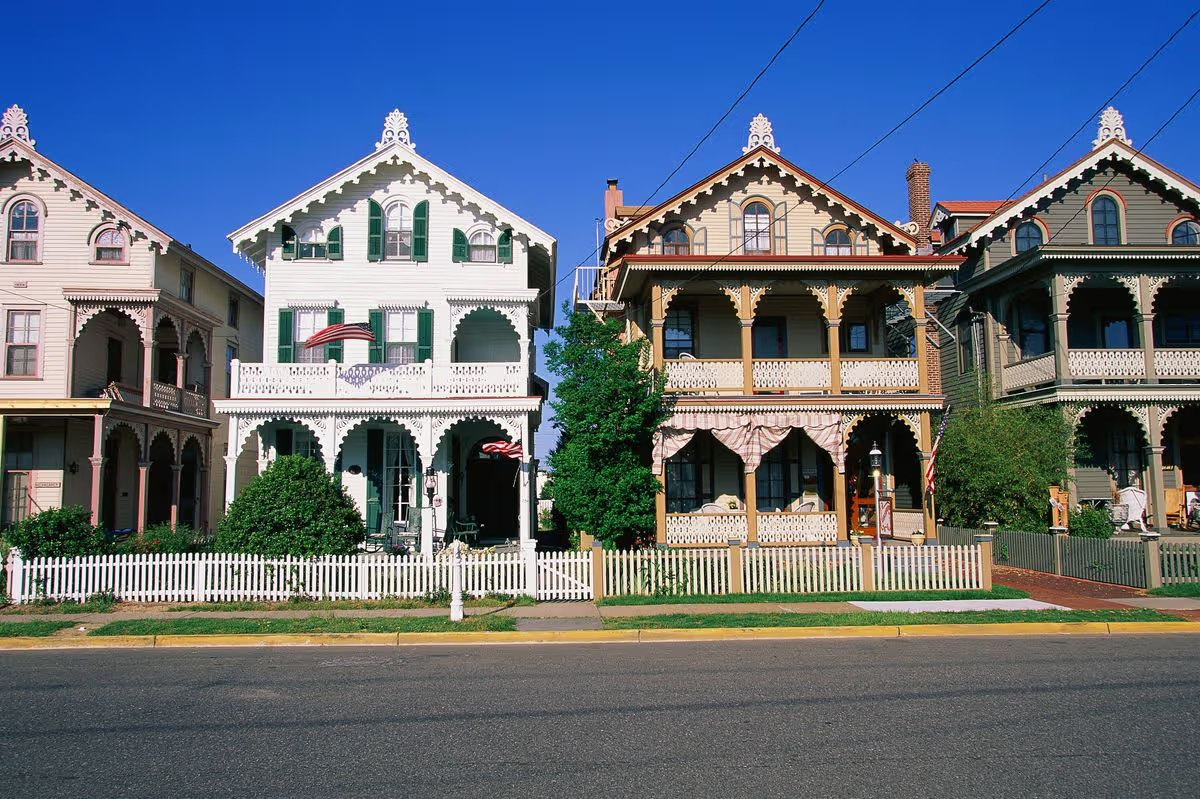
Among the premier retirement destinations in New Jersey is Cape May, a stunning coastal resort that “feels frozen in time”.
Cape May is a pedestrian-friendly historic town, and ranks amongst the most established seaside resorts, boasting 19th-century Victorian properties, delightful shops and excellent restaurants.
The area experiences a humid subtropical climate characterised by sweltering, muggy summers. According to Great Family Vacations, Cape May ranks as one of the top places to retire in the United States.
The picturesque town provides pensioners with a tranquil seaside way of life, picturesque shores, and a lively and hospitable community. The travel specialists stated: “Cape May, on the southernmost tip of New Jersey, is much more than another seaside retreat.”
American pensioner Michael Potts remarked: “Cape May is a nice Victorian town. It has terrific restaurants, great beaches and is laid-back. It has exactly what we were looking for.” Another pensioner remarked: “There’s endless walking in town and a path along the beach. The beaches are clean; the architecture is beautiful.”
British expats flocked to Tripadvisor to voice their opinions, with one noting that the American town feels like travelling back in time as it boasts “the largest concentration of Victorian houses in the US”.
Another resident said it brought back memories of Brighton. “The shops are especially similar. The beach in Brighton was all stones, which made it quite hard to walk. The pier in Brighton reminded me of some of the boardwalks in Wildwood or Ocean City, NJ.”
A HISTORIC Hampshire pier is set to reopen to the public for the first time since its closure in 2024 after undergoing months of work.
Hythe Pier will reopen on Thursday, April 2 following major electrical improvements and a subtle revamp.
Sign up for the Travel newsletter
Thank you!
Located in Hampshire, the pier is a crucial stopping point for the Hythe FerryCredit: Getty
Under the management of Hythe Pier Companies, it will cost visitors £1 to walk along the pier, but children under five will be allowed on for free.
A spokesperson for the Hythe Pier, Train and Ferry Group said: “Every £1 you spend goes back into the pier, supporting its future as we begin our transition into a charity.
“Come and walk the full length of the pier (700 yards / 640 meters) take in the views, and be part of this next chapter.”
The attraction is the UK’s seventh-longest pier but has been shut for more than a year and has kept essential ferry services closed, disrupting life for locals.
A crucial stopping point for the Hythe Ferry, which ran regular services to Southampton before the closure, the pier has been essential to the community.
Although the reopening is good news for tourists, the essential ferry and train services that once connected the village to Southampton are not yet back on track.
Local councillor Malcolm Wade explained that the pontoon, owned by ferry operator Red Funnel, has been broken for almost two years, leaving commuters, football fans and day trippers cut off.
“We’re waiting for Red Funnel to decide what they’re going to do, because they’ve already written to us to say they’re not interested in running the ferry anymore and we want our ferry back”, he said.
Hythe Pier, Train and Ferry Group said: “We could see how incredibly important it was that we bring our much-loved pier back to the community.
“This is hopefully the first step towards restoring the service.”
The attraction is the UK’s seventh-longest pierCredit: Getty
THE EASTER school holidays are just around the corner and with the kids off school, you might want to head on a staycation to fill some of their time.
There are loads of seaside towns across the UK, but Sun Travel has picked out some of the cheapest spots across England – all of which are great for family breaks this Easter.
Sign up for the Travel newsletter
Thank you!
The UK is home to a number of cheap seaside spots including BlackpoolCredit: Alamy
Blackpool, Lancashire
Blackpool is often thought to be one of the cheapest seaside destinations in the UK, with arcades and a long-stretching beach.
For a one-night break over the Easter holidays, you could stay at The Merlin Hotel for £56 a night for two adults and two children (or £14 per person).
The hotel is in the city centre and is an eight minute walk from Blackpool Central Beach.
You can also head to Blackpool Winter Gardens Theatre just 400 metres away and Coral Island, 500 metres away.
When it comes to activities, you can head to Joyland – one of the oldest theme parks in the UK – and it is completely free to visit.
Rides are then priced separately so you can spend as little or as much as you like.
For example, the Super Snails ride costs £2.50 a turn.
Travel writer, Helen Wright, recently visited and for food suggests heading to Grelly’s, where you’ll be able to grab a hot sausage roll and chips for only £3.60.
Or you could head to Great Yarmouth, with a hotel costing around £86 per nightCredit: Alamy
When it comes to finding somewhere to stay, you could head to Parkdean Resorts Crimdon Dene Holiday Park from April 10 to 13 for £228 for four people (or £19 per person per night).
The holiday park is just a short walk to Crimdon Dene Beach, which offers amazing views of the north east coastline.
There is also a restaurant and bar on site in case you want to grab a bite to eat.
If you head into Hartlepool town, the Museum has free entry as well.
In Hartlepool, you could opt for Parkdean Resorts Crimdon Dene Holiday Park from April 10 to 13 for £228 for four peopleCredit: Alamy
Weston-Super-Mare, Somerset
Found in Somerset, Weston-Super-Mare was a popular 19th-century Victorian seaside resort and is still loved today for its long beach and Grand Pier.
Stay at the Savoy Hotel from £99 a night for four people over the Easter holidays.
If you don’t mind being a little out of Weston-Super-Mare, in the next town along – Brean – you could stay at Unity Beach holiday park for three nights from April 10 to 13 for £189 for a family of four (£15.75 per person per night).
Visiting the Grand Pier will set you back £2 per person and an unlimited all-day ride wristband costs £15 per toddler and £20 per child.
Attractions on the pier include a mirror maze, Helter Skelter and soft play.
There are a number of eating spots on the pier as well where you can grab fish and chips for £12, sausage and chips for £7.50 and a range of kids meals for £6.
Weston-Super-Mare has a number of cheap attractions including the Grand Pier, which will set you back £2 per personCredit: Alamy
Penzance, Cornwall
Despite many thinking Cornwall is one of the more expensive places to head on a staycation, if you are heading to the county then visit Penzance, which is one of the more affordable spots.
For example, you could head to Seaview Holiday Park, costing around £60 a night for a family of four over the Easter holidays.
The accommodation has a kitchenette as well, so you can cut even more costs by cooking for yourself.
And there’s also an outdoor swimmingpool, indoor play area and games room.
The beach is then about a 25-minute walk away.
Sun Hols from £9.50 returns next week
WANT to discover more bargains? Well, Sun Hols from £9.50 is returning with thousands of new breaks ready to book for this spring and summer.
And if you’re a Sun Club member (you can sign up here for £1.99 a month) you get priority access to these new bargain breaks.
The Hols from £9.50 website will be updated with new holidays on Wednesday, April 1.
Those collecting codes from the paper will unlock access to the website on Wednesday morning, but if you’re a Sun Club member, you can unlock those holidays on Tuesday March 31.
This means you can beat the online crowds and take your pick of holidays at a range of award-winning resorts earlier than the rest.
Once you’re signed up to Sun Club, head to the Sun Club offers hub. Then simply click through to the Hols from £9.50 website on Tuesday March 31 to access the holidays early.
And yes – you can book a holiday at a range of Hols from £9.50 resorts from as little as £9.50 per person. Find out more at Hols from £9.50.
If you want to head to Cornwall, but are looking for a cheaper spot than Penzance is a great optionCredit: Alamy
Whitley Bay, Tyne and Wear
According to Which?, Whitley Bay’s average room rates cost just £69 -which makes it the second cheapest UK seaside town after Southport (£66).
Over Easter though, prices are obviously a little more expensive – but there are still some affordable options.
For example, a one-night stay at The Windsor Hotel costs £77 for a family of four.
The hotel is on South Parade and within sight of the sea, with the beach just 270 metres away.
That works out at just £14.12 per person, per night.
According to Which?, Whitley Bay’s average room rates cost just £69 -which makes it the second cheapest UK seaside town after Southport (£66)Credit: Alamy
Bognor Regis, West Sussex
Bognor Regis on the south coast of England is known for its award-winning Butlin’s resort.
A three-night break at Butlin’s Bognor Regis from April 10 to 13 costs from £316 – that’s around £26.34 per person per night.
And for that price, you get all the entertainment, the indoor waterpark and fairground rides – but it doesn’t include food.
If you do want to include food, this would cost an extra £186.54 (around £15.55 per person per day) for the family food court dining plan which includes a buffet experience.
In Bognor Regis, you could head to Butlin’s and make the most of their facilitiesCredit: Alamy
Ramsgate, Kent
Ramsgate is well known for having the UK’s only Royal Harbour, as well as sandy beaches and over 450 listed buildings.
And for Easter, there are still some affordable breaks.
You could head to Dog and Duck Holiday Park for three nights from April 10 to 13 for £234 for four people (or £19.50 per person per night).
You’d stay in a static caravan with an open plan lounge and kitchen area.
The holiday park has a pub onsite where you can grab a pizza for as little as £12, as well as an outdoor play area.
Ramsgate is also home the UK’s largest Wetherspoons as well, where you can grab a pint of Ruddles ale for just £1.99.
Or grab a pint of Worthington’s Creamflow ale for £1.99.
Ramsgate is well known for having the UK’s only Royal Harbour, as well as sandy beaches and over 450 listed buildingsCredit: Alamy
Paignton, Devon
When it comes to finding a place to stay in Paignton, you won’t be short for choice.
The bustling seaside town has a great mix of campsites, holiday parks, hotels and B&Bs.
For example you could stay at Devon Hills Holiday Park in a caravan with a hot tub for three nights from April 10-13 for £199 for four people (or £16.59 per person per night).
The holiday park features an 18metre pool, gym, sauna and steam room and play area.
And if you are wanting a bite to eat, there is an onsite cafe too where you can grab two pizzas, fries and garlic bread for £29.95.
The beach is a bit further away (three miles), but once there you’ll be in the bustling resort town of Paignton with red sand beaches and a pier full of different attractions including penny slot machines.
Paignton in Devon has a bustling town centre and a vast choice of hotels, holiday parks and B&BsCredit: Alamy
Clacton-on-Sea, Essex
Over in Essex, you could head to Clacton-on-Sea, which is full of souvenir shops and ice cream spots.
You could stay at Haven’s Orchards Holiday Village for £129 for three nights for a family of four – that’s just £10.75 per person, per night.
This is for a break between April 10 and 13, and includes access to the restaurants, takeaways and arcades but not to the swimming pools, activities and entertainment venues.
In Clacton-on-Sea, you can head to the pier which has a variety of amusement arcades and rides, such as a Helter Skelter costing just £1 a turn.
And if you are looking for a cheap spot for lunch Flags Cafe has a variety of dishes including curry, vegan options and cakes or a toastie and drink for a fiver.
Or head to Haven’s Orchards Holiday Village in Clacton-on-Sea for £129 for three nights for a family of four – that’s just £10.75 per person, per nightCredit: Alamy
This seaside town has been named the best in the country and has a resort pedigree that stretches back well over 150 years, but it also has plenty of modern day challenges
This article contains affiliate links, we will receive a commission on any sales we generate from it. Learn more
Blackpool in winter: grey skies, bright spirit
Everyone has a story to tell about Blackpool. Usually a bad one.
Whether it’s tales of optimistic family holidays that turned into washouts, hotels mysteriously burning down, or stag-dos that bump into far-right protests, it’s the kind of place that people enjoy dunking on.
“What’s going on around here?” I asked the bartender of one town centre pub on my first evening in town.
“F*** all!” he said joyfully, before handing over my £3 pint.
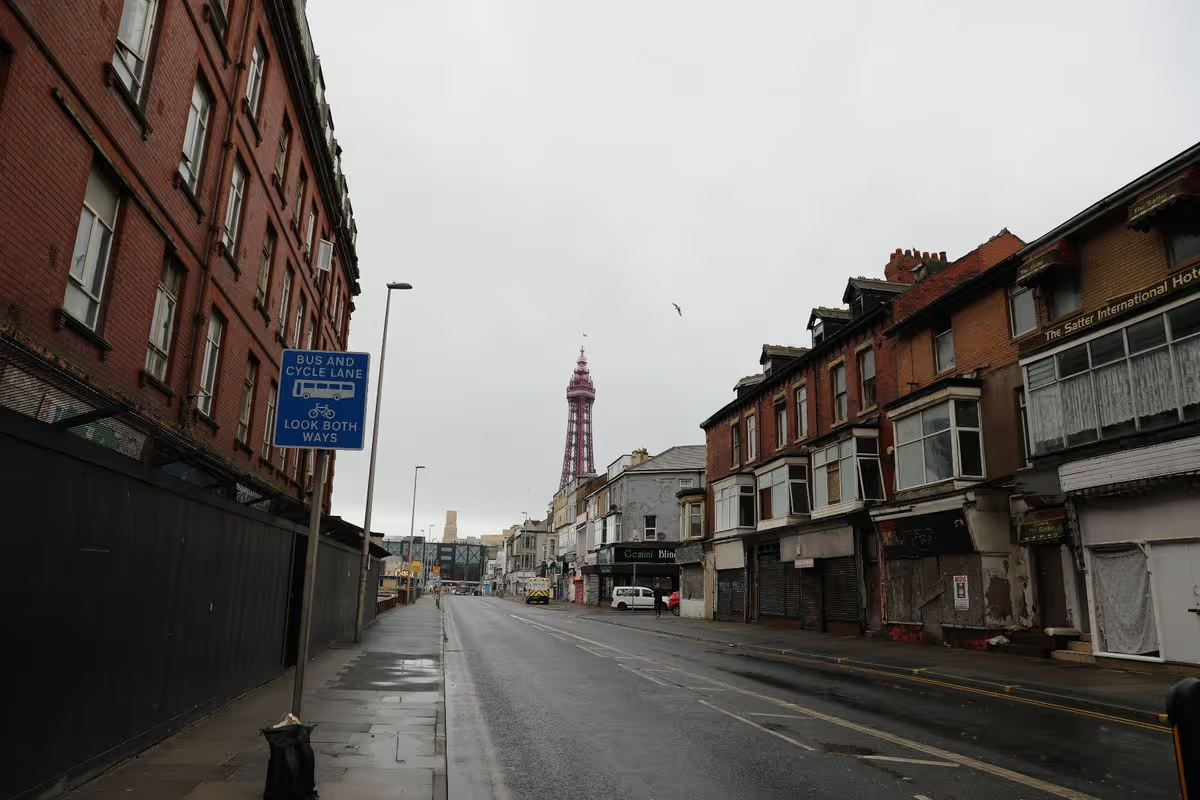
In one, quite literal way, he was onto something. Blackpool has a big problem with emptiness. Specifically, empty shops. Wander five minutes down the road from the Tower, and there are rows of crumbling units with boarded-up windows, clearly long vacated. Others seem occupied but shuttered against the winter winds and lack tourists. It’s a jarring experience, walking from the flashing lights and boinging sounds of the mega-arcades into a deserted lot piled with rubble.
The statistics don’t make for good reading. The town of 144,000 has the third-highest rate of empty shops in the country, according to the Centre for Cities, with 17.6% closed. In some areas, like Central Drive, the figure is 30%. Blackpool also has the second-most abandoned buildings, with one for every 45 people.
Some, such as the £7.6m easyJet Hotel on the prom that never materialised, or the vast, long-empty Odeon, are particularly annoying for residents. And for the newly elected Labour MP for Blackpool North, Chris Webb, who beat Tory Scott Benton partly by promising to tackle the problem.
“I am greatly concerned about it. There are far too many empty properties in the town,” he told the Mirror.
“Once you go past South Pier, you get to Bloomfield. It is the most deprived place in the county. The boarded-up shops there have an impact on whether people travel further out to great places like Waterlow Road and Bond Street.”
While a lot needs to be done, progress is being made. When I visited, builders were hammering away inside the Odeon building, which was adorned with a ‘Coming Soon – June 2026’ banner promising a family entertainment megaplex. An ‘Empty Properties Task Force’ was launched last month to target landlords of long-term vacant properties with Compulsory Purchase Orders, while cash is being splashed on modern retail units and green spaces in Central Drive. Under the new ‘High Street Rental Auctions’ initiative, the council can now sell off five-year leases for shops that have remained empty for over a year, which should help to inject a bit of life into the harder-hit areas.
As much as a lick of paint and Pride of Place funding won’t fix all of Blackpool’s deeply rooted deprivation issues or significantly lower its crime rate, it could help to bring the two versions of the town closer together.
In the summer, Blackpool is the same buzzing pleasure resort that has been enthralling millions of beach-dwelling, rock-chomping Brits since the Victorian age.
In the winter, however, it is a different story.
As soon as I stepped off the train on a dark February afternoon, a frosty gust of wind doused me in the famous North West precipitation. Somehow, I’d arrived in the only part of the country that wasn’t enjoying the first sunny shoots of Spring.
The combination of crumbling properties and miserable weather creates a stark vibe, utterly different from the sandcastle-and-donkey-rich summer months.
“It’s dead quiet out,” the Holiday Inn hotel receptionist remarked as we watched a few hunched raincoated figures push through the wind. For a town that relies on tourism to bring in £2 billion a year and support 30% of its jobs, becoming a relative winter wasteland is a big problem. And one that Blackpool might finally be answering.
Trainline data show that Blackpool is at the beginning of an off-season popularity boom.
Sajjad Motamed, the firm’s UK country manager, explained: “We’ve seen winter rail trips to Blackpool rise by more than 90% compared to last year, with particularly strong demand for weekend breaks. What’s striking is that the growth isn’t just coming from the North West – we’re seeing demand from right across the UK, for example, bookings from Edinburgh have more than tripled year-on-year. It suggests people nationwide are rediscovering classic seaside destinations outside of the traditional summer season, whether for a short getaway or to explore somewhere they may not have previously considered.”
Although the particular Thursday afternoon I’d turned up on was grim to the point that everyone sensible decided to stay inside, the spike in train bookings to a town recently named the country’s best by the Telegraph is borne out by official council figures. In 2023, Blackpool welcomed a record 21.5million visitors, a 5.3% rise in just a year. There are high hopes that 2024 and 2025 will increase the numbers further, once the stats are in.
So why are people coming in the winter?
One reason is cost. Blackpool was recently crowned the UK’s cheapest seaside resort, thanks to delights such as £1 burgers at Higgitt’s Las Vegas Arcade, £3.90 fish and chips at Bentley’s on Bond Street, and £6 breakfasts at Peekaboos. Come winter, room rates are slashed as hotels fight to fill the thousands of rooms in a town with the third cheapest property prices in England and Wales, according to Land Registry data.
Another is the growing selection of off-season activities.
I dropped into the 2024 opened Showtown Museum, which tells the story of Blackpool’s entertainment history through highly interactive exhibits and tapdancing staff members. Until April, a fascinating exhibition is telling the story of little people in the entertainment industry. It is difficult to imagine today, but the Blackpool Tower’s skygardens were once converted into a miniature village “populated” by little people.
Now visitors to the town can stop off at Showtown before heading up the Tower and down into the dungeons on the same Blackpool BIG Ticket that delivers 50% savings and costs £31
Throughout the year, there are plenty of free exhibitions on show at the listed Central Library, home to the Grundy Art Gallery.
After soaking up a bit of culture, you can head to the town’s iconic, year-round Coral Island. I’d bet a tub of 2ps that there is no bigger, more impressive or absurd arcade in the country. Stretching across a good number of football pitches’ worth of lurid carpeting, Coral Island is packed with one-armed bandits, coin droppers, the latest VR tech, and an indoor rollercoaster that wheels over the heads of the gamblers below.
Who cares if the Pleasure Beach is shut for the winter when you’ve got that?
As much as Mr Webb insists the town’s “reputation for stag and hen dos is greatly diminished”, it’s hard to argue that Blackpool isn’t a booze town. Whatever the season, across its 166 bars and pubs, you’ll find dozens of drinks deals cheap enough to make any Up From Londoner swoon. For a quiet but affordable pint, the Churchill is a good bet. For something a bit more late-night and rowdy, the Galleon delivers live music and a great atmosphere most nights.
For Mr Webb, the “missing piece” to the winter tourism slump puzzle would be an all-purpose indoor arena, designed for expos and eSports. Its arrival is uncertain and some way off yet, but talks with the owners of a Premier League football club are promising, the MP says.
This seems like a natural step for a town with a deep-rooted entertainment pedigree. From Strictly to George Formby, people have long come to Blackpool for a show. When I visited, Derren Brown was at the Grand as part of his Only Human tour. At the start of the performance, he uncorked several big cannisters of laughing gas into the auditorium to lull the crowd into a pliable state before having his mystifying, merry way with us.
Whether the gas was real or not, what wasn’t fake was the uproarious laughter of the audience throughout his two-hour set. Lancastrians are a friendly bunch. Whether it’s the charming staff in Stefani’s Pizza joint, a smily mum who stopped her pram for an impromptu chat, or the jovial reaction of an audience member publicly outed as a thief by Brown, there’s a good chance Blackpool will offer you a warm welcome, however miserable the weather.
The Norfolk holiday park has won the coveted AA award, with sandy beach access and an indoor pool among the many reasons to check out this charming and affordable place
08:44, 19 Mar 2026Updated 08:44, 19 Mar 2026
Hopton clinched the prestigious AA Holiday Park of the Year award(Image: Pristine_Images via Getty Images)
The country’s top holiday park for 2026 has been revealed, and it sits along a breathtaking stretch of the Norfolk coast near two beloved seaside destinations.
Haven’s Hopton Holiday Village is situated between Lowestoft and Great Yarmouth, just shy of the Suffolk border. The AA granted it five stars within its rating framework, with inspectors highlighting it provided: “Excellent leisure and entertainment facilities for all ages.”
The AA Caravan and Camping Awards for 2025-26 examined parks across the UK, spanning multiple award categories, from Small Campsite of the Year to Glamping Site of the Year. Hopton clinched the prestigious AA Holiday Park of the Year award, with inspectors commending its magnificent seaside setting, attractive countryside backdrop, and outstanding range of on-site facilities.
The park, which features 775 static caravans, is located in the village of Hopton, renowned for its sweeping sandy beach, which becomes especially busy during the summer season. Visitors enjoy direct beach access, enabling them to relax on the golden sands or wander along the tranquil grassy clifftops.
The village itself boasts a traditional seaside character, with fish-and-chip shops, lively amusements, and numerous handy shops. It’s merely a ten-minute journey to the more bustling and vibrant Great Yarmouth, where families can enjoy the rides at the Pleasure Beach, explore the SEA LIFE Centre, or sample seaside entertainment on the pier, reports the Express.
Further north, roughly a 40-minute journey from Hopton, travellers can discover Horsey Gap, a beach famous for its substantial grey seal colony. Pupping season, which runs from late October through to February, is the ideal time to witness them, and visitors can use the viewing platforms to catch a glimpse of the delightful seals without disturbing them.
Another classic day out is Pleasurewood Hills Theme Park, approximately 15 miles from the park. This beloved theme park features attractions for all ages, from a Kiddie Zone for younger visitors to thrilling rollercoasters. In 2026, the park has plans to expand and add four new rides.
It also has wildlife areas where visitors can observe colourful birds and sea lions, plus a soft play area included in the admission price. If you’d prefer not to venture too far, there’s plenty to do on Hopton Holiday Village’s site. There’s an indoor pool with flumes, alongside a covered outdoor pool that opens during the warmer months.
Families can enjoy a round of six-hole golf or play tennis, hire bikes or karts, or enjoy the inflatable arena during the summer months. At a Haven park, many activities are available for booking, such as a climbing wall, archery, and arts and crafts.
The park boasts a substantial entertainment complex, housing a fish and chip shop, amusements, fast food outlets, and The Marina Bar and Stage, where Haven’s entertainment team perform shows. Evening entertainment kicks off with The Seaside Squad, featuring games to keep youngsters amused, followed by attractions such as bingo and family-friendly performances.
Early April will also introduce a fresh food and drink option to the park. It’ll become the latest Haven park to welcome its own JD Wetherspoon pub, meaning families can savour their ‘Spoons favourites even whilst on holiday.
Breaks at Hopton Holiday Village start from £49 for a three-night family of four sharing a saver caravan. View prices and book your getaway on the Haven website.
Have a story you want to share? Email us at webtravel@reachplc.com
WE’RE spoilt for choice when it comes to seaside towns here in England – from retro to cool, there’s something for everyone.
But some of our favourites are the ones that feel like you’re stepping back in time to a different era – less penny slot machines and more stone fishermans’ cottages.
Sign up for the Travel newsletter
Thank you!
Kara says you should visit her local beach in BroadstairsCredit: AlamyHead of Sun Travel Lisa suggests heading north to SeahousesCredit: Alamy
The Sun Travel team reveals our favourite old fashioned seaside spots…
Sandgate, Kent
“Sandgate is often forgotten about as a day trip destination, being just outside of Folkestone with no train station of its own.
“But it’s one of my favourites to visit with far fewer crowds, and has retained its old-worldy feel.
“It doesn’t have attractions, only Sandgate Castle which was built by Henry VIII but is now a private residence. So instead it’s a great spot for relaxing by the beach, as well as an up-and-coming food and drink scene.
“There’s The Ship Inn overlooking the beach which, on a windy day, is the cosiest spot for a local beer and pie. But the high street itself is just as beautiful, lined with vintage antique stores, coffee shops and bars.
“Start your day with a coffee at Orchard Lane Coffee House, and get tempted by one of their rotating pastry options, or opt for brunch at Loaf just down the road.
“Then go for a long walk on the promenade lining the beach, watching the wind surfers and even canoers (or go for a sea swim yourself in the summer).
“Or if visiting in the evening, John Dory is the best place for some wine tasting with the owners really knowing their stuff.” – Deputy Travel Editor, Kara Godfrey
Brixham, Devon
“The English Riviera in Devon – formed of the three towns of Paignton, Torquay and Brixham – is a great holiday spot, but Torquay and Paignton can often be busy with tourists.
“If you fancy a quieter spot but still want a taste of the English Riviera, then head to Brixham, which remains today one of the busiest fishing ports in the UK.
“The harbour is great for spotting pretty boats and gazing at the swans. And definitely head to the Breakwater as this is where you are most likely to see the town’s resident seals.
“This is also where you’ll find the main beach, Breakwater Beach, which is a Blue Flag spot.
“If dipping into the sea is too daunting, check out the 53-metre saltwater tidal pool, just a couple of minutes’ walk from the beach.” Travel Reporter, Cyann Fielding
“The arrival of the railway in 1861 saw the picturesque town embrace leisurely pursuits with its pier and promenade still remarkably similar to its earliest days.
“Also still delighting tourists is its cliff tramway, a water-powered funicular that connects the town at the top of the lift to the seafront and pier below.
“With the Valley Gardens and Italian Gardens to stroll through and the Saltburn Miniature Railway to hop aboard, the town offers a delightful throwback to simpler holidays.” – Head of Sun Travel, Lisa Minot
Watergate Bay, Cornwall
“A little north of the popular surfing shores in Newquay’s city centre, Watergate Bay is a peaceful and rugged two-mile stretch of sand overlooking foaming, choppy waters.
“The swell ensures it remains a preferred bay for surfers, but outside of the busy summer months you’ll find it’s rather quiet, with just a few dog walkers scattered about.
“Views are breathtaking from pretty much every angle, but especially so from the coastal path that flanks it, winding high above sea level along grassy cliffs.
“Down on shore are craggy caves that kids will be desperate to explore as well as patches of windswept rocks carpeted in mussels that cling to the wet surface.
“A beautiful restaurant, The Beach Hut, overlooks the sands and it’s a great spot for a proper bite to eat, with specials of crab linguine often featuring on its typically Cornish menu.
“For something more casual, WAX serves up pints and burgers in a fuss-free setting.” – Assistant Travel Editor, Sophie Swietochowski
Sophie loves exploring on the two-mile stretch of sand at Watergate BayCredit: Sophie SwietochowskiJenna is a fan of Old Hunstanton in her stomping ground of NorfolkCredit: Jenna Stevens
Old Hunstanton, Norfolk
“Old Hunstanton is the quieter, prettier sister of mega Norfolk seaside resort Hunstanton.
“Whilst Hunstanton has a massive arcade and bowling alley practically smack-bang on the promenade, a 15-minute walk along the clifftops will lead you to a beautiful and less busy alternative.
“The walk there overlooks the town’s famous striped limestone cliffs, plus you’ll pass a Victorian lighthouse and 13th century ruins on your way, too.
“The beach boasts soft, golden sands with rolling dunes and colourful beach huts, backed by a pretty pinewood forest. It makes for a great bucket-and-spade spot for families, with loos, a cafe and plenty of car parking spots all close by.
“I recommend trying a fry-up at the Old Hunstanton Beach Cafe, a dog-friendly spot that serves up a fantastic breakfast, as well as homemade cakes and an entire library of loose-leaf teas.
“Plus the Old Hunstanton RNLI station opposite is often open to let visitors see its impressive hovercraft up close.” – Travel Reporter, Jenna Stevens
Seahouses, Northumberland
“The many working fishing boats bobbing in its compact harbour are the reason why this historic village on the Northumberland coast offers an authentic, classic British seaside break.
“The catch still lands daily – guaranteeing some of the freshest and best fish and chips in the region and the place has no modern distractions like flashing arcades.
“A stroll along the beach and a poke about in the rockpools on land and the chance to take to a boat for a trip over to the Farne Islands.
“It’s home to one of the UK’s largest colonies of Atlantic grey seals – it’s simple classic British coastal charm.” – Head of Sun Travel, Lisa Minot
Salcombe, Devon
“Tucked away on the South Devon coast, Salcombe is well-known for its golden sands beaches.
“The town is often dubbed ‘Chelsea on Sea’ because of its picturesque houses and pretty harbour. Head to North Sands if you want a family-friendly spot.
“Or venture to South Sands, which is accessible by a sea tractor. The town has lots of independent businesses and cost-effective restaurants as well.
“And if you happen to be there in April, make sure to spend time at the Salcombe Crabfest.
“One of the best things to do in the coastal town – no matter the time of year – is to try Salcombe Dairy Ice Cream, which is simply heavenly, especially the honeycomb.” Travel Reporter, Cyann Fielding
Saltburn-by-the-Sea has a cliff lift that’s been operating since 1884Credit: AlamyAlice’s favourite seaside resort is Sidmouth in Devon where you’ll find Jacob’s LadderCredit: Alamy
Frinton-on-Sea, Essex
“I consider Frinton-on-Sea to be the more chilled out sister of Clacton – it’s so much quieter, and very peaceful, but still just as fun for a beach break.
“The Essex town of Frinton has a huge sweeping beach lined with the classic brightly coloured beach huts – a mark of any beach day trip – along with a retro ice cream parlour.
“You can pop into The Lock and Barrel which is minutes away from the beach, and when it opened was the town’s very first pub.
“When the weather is a little breezy and it’s not warm enough to sit on the beach, take a stroll along the many walking paths.
“If you head slightly up the coast, you should try to spot some seals in nearby Harwich.” – Travel Reporter, Alice Penwill
Broadstairs, Kent
“So while Broadstairs technically has a small arcade, it’s a blink-and-you’ll-miss-it one tucked away from the beach.
“Put on the map by Charles Dickens who raved about its beauty, you can even go back in time by visiting the Dickens House Museum.
“But the seaside town is threatening to become a trendy new Kent destination thanks to some new openings.
“There is the new Smith’s Townhouse, a beautiful boutique hotel, as well as the small plates restaurant Bar Ingo, recently named in the top 100 UK restaurants by OpenTable.
“You’re spoilt for choice for trendy cafes, from Giant Coffee and Salt to Forts and Kope + Loke. But it has kept its Victorian seaside charm, with traditional chippy The Mermaid as well as the best ice cream sundaes at Morelli.
“And while the beach certainly welcomes the tourists in droves, you can rent a deckchair and watch the yachts come in for some old-fashioned charm, while listening to live music from the bandstand above.” – Deputy Travel Editor, Kara Godfrey
Robin Hood’s Bay, North Yorkshire
“Any picture you take in Robin Hood’s Bay could immediately become a postcard.
“A visit to the North Yorkshire fishing village feels like stepping back in time, with winding narrow streets snaking through a maze of red-roofed cottages.
“On the steep but scenic walk down to the shore, you’ll pass unique miniature pubs with room for only a bar and a couple of bar stools.
“If you manage to bag yourself a seat in one, you’re lucky – make sure to soak up the ambience of hundreds of years of maritime history.
“The village used to be the smuggling capital of the North coast, and today you can see the same narrow ginnels and cellars where tea, tobacco and gin were once hidden.
“Once you’ve made it down to the beach, you’ll find smooth sands and calm waters equally enjoyed by families and dog walkers.
“Both little ones and four-legged members of the family will enjoy racing across the flat, sprawling sands.
“Plus, at low-tide, there are always fascinating finds and fossils collected in the shallow rockpools.” – Travel Reporter, Jenna Stevens
Sidmouth, Devon
“One of my favourite spots on the Jurassic Coast is Sidmouth.
“It’s famous for its Grade-II listed steps called Jacob’s Ladder which lead down to the shingle beach.
“Or if you don’t fancy them – because they are very steep – you can still get to the beach by walking down the hill instead.
“As the beach is shingle rather than sand, I’d suggest taking something to lie on if you plan on sunbathing.
“Later on, make sure to explore the town, walk along the promenade and check out the independent shops and boutiques. Make sure to pop into Ice Cream Paradise for a frozen treat later on.
“During my visit I stayed in the incredible Harbour Hotel & Spa which has an outdoor pool, beautiful gardens with sunloungers.
“It’s elevated position means it has unbeatable views across the coastline.” – Travel Reporter Alice Penwill
I was one of the first to visit the UK’s biggest beach saunaSea Scrub Sauna is on Folkestone’s main beachThere are two saunas to choose from, including the 10-person shepherds hut
According to the British Sauna Society, the number of public saunas in the UK has increased 1,200 per cent in the last three years – from 48 in 2023 to more than 600 today.
And as one of the newest, Sea Scrub Sauna is set to be a huge attraction for tourists visiting the seaside town.
Its co-founder, Robin Bartlett, said: “We’re seeing an exciting shift in the UK from exclusive, high-end spa, to more accessible, communal, and ‘wild’ sauna experiences and it’s brilliant to be part of this.
“We can’t wait to welcome new faces and grow a community of sauna enthusiasts in Folkestone, from regular locals to intrepid day trippers and holidaymakers.”
The fourth of its kind by the company – with others in Margate, Whitsable and Faversham – the complex is certainly the fanciest as well.
As I entered the reception, the smell of new wood hit me as I was handed a glass of prosecco.
There’s a full menu of wines and beers (although perhaps save them for after the session to avoid any woozy heads).
Floor to ceiling glass windows meant I had full views of the sea, which on a clear day can sometimes even include seeing France.
What sets this sauna apart is the extra facilities. There’s men’s and women’s changing rooms, a HOT shower, and onsite bathrooms.
But onto the sauna experience.
The site has two saunas to choose from – the 16-person Scandinavian sauna, and the smaller Shepherds Hut Sauna, for up to 10 people.
I recommend the one on the right if visiting in the evenings, for some of the best orange sunsets over the beach.
I settle in on my towel, embracing feeling the warmth after months of the freezing winter.
Ten minutes in, and I’m drenched in sweat. We’re all playing a silent game of chicken to see who can last the longest in here.
I bail out first, sliding off the wooden bench and fleeing for the chilly air.
It’s over to plunge pools in the middle, with the steamy hot tub calling me.
But first, a cold plunge. My breath is taken from me as I slowly lower myself into the 7C tub, focusing on my breathing as I was told.
This is where the health benefits kick in, with everything from improved circulation and reduced muscle aches to better sleep and mood levels.
The Scandinavian sauna can fit up to 16 peopleBoth of the saunas were perfect for warming up in
My overheated skin prickles as it goes from too hot to too cold.
Yet I last barely a minute, much to the enjoyment of my friend who is already submerged.
My relief is loud as I sink into the much warmer pool right next to her, letting my body temperature heat back up again.
And its not just saunas and pools that you can enjoy there too, with experiences such as silent sessions and even Aufguss rituals, a German sauna ceremony with fragranced oil infused water.
I try the latter, and the heat is waved over me with a fan as smells of lemongrass and eucalyptus clear my chest.
After all that, I’m on a high, but ravenous.
And the sauna has you covered there too, with warming bowls of ramen to take the edge off. As well as a second glass of fizz…
Even better, the Harbour Arms is right next door so you can pop over for drinks and dinner there afterwards as well.
It costs £20 for an hour-long session, and can be booked from 8:30am to 8:30pm.
I imagine the early sessions will be popular with sea swimmers, although you can also rent it out for private sessions – perfect for birthdays or hen dos.
My bowl of ramen and prosecco was needed after my hour-sessionSafe to say I chose the warmer pool over the cold plunge…