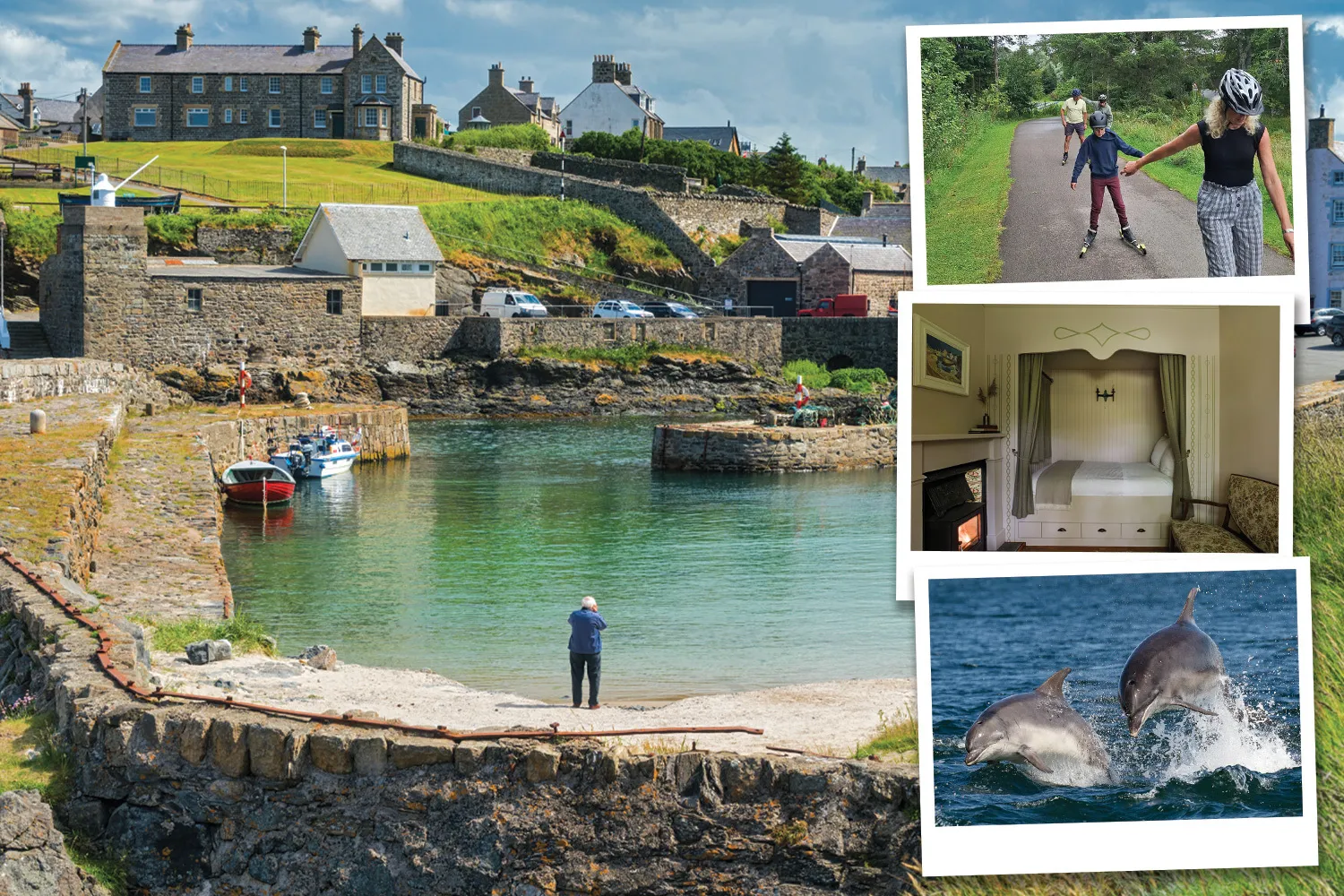
I visited the dreamy Scottish destination with beautiful cottages, dolphins in the bay and cross-country skiing

A DREAMY cottage in the highlands is a perfect destination to escape for a retreat.
It can also be a base for an action-packed family adventure break – with dolphin spotting among the highlights. Janice Hopper reveals all…
With our feet strapped into boots atop skis with wheels, coach Logan advises us to glide just like him.
Our wobbly attempts at roller-skiing aren’t great, so we soon move on to cross-country skiing on the dry-slope matting instead, where my husband Eamon and our sons Samuel, 12, and Joseph, 11, and I do actually glide.
We’ve booked a family session at Huntly Nordic And Outdoor Centre, which ends with us all flinging ourselves, whooping and screaming, down a slope on rubber rings.
It’s a fun way to experience the Scottish hills. Three-hour activity sessions cost £18.15 per adult, £12.15 per child (Livelifeaberdeenshire.org.uk).


ESTATE OF MIND
After all the exhilaration, it’s time to check into our two-bedroom cottage on the elegant Mayen Estate.
With a classy colour palette, the cosiest stove and a beautiful ”box bed” in the master, plus a fire pit and hot tub in the garden, Butlers Cottage is a gorgeous hideaway.
We task the boys with rolling out dough and sprinkling on the cheese and salami from our pre-ordered pizza kit, from £21, before popping it in the outdoor pizza oven as the sun starts to wane.
The next morning, we wake to the sound of Highland cows nearby, before taking a peaceful riverside stroll along the Deveron and exploring Mayen’s stunning two-acre Walled Gardens, open exclusively to holiday guests for £20 per cottage.
It’s August, so everything is in full bloom as we wander through walkways of lavender, white lilies and glorious glasshouses.
Huntly is also home to a cinema, castle, shortbread factory and swimming pool, but we head to scenic Greenmyres Lochan for Canadian canoeing and standup paddleboarding, £28 per person for an hour and a half.
Jumping in and swimming is a valid option, too, as my youngest discovers (Huntlydt.org/what-we-do/greenmyres).
After peeling off our wetsuits, we reward ourselves with a Sunday roast at The Bank Cafe & Restaurant.
Here, choose your carvery meat and three sides, such as sticky red cabbage and macaroni cheese, for just £15, or seven sides for £21 (Thebankrestauranthuntly.com).
Buttery orange biscuits from Dean’s Shortbread, £2.49 (Deans.co.uk) and Irn Bru ice cream, £3 a scoop, from long-standing Rizza’s wrap up our day nicely (Rizzas.co.uk).
While Butlers Cottage is set amid rolling hills, the golden sands of Banff Bay are only half an hour away.
After wandering along the shoreline, we warm up with hot chocolate, £4.50, and a dainty Victoria sponge tower, £3.40, at Annie’s Cakery (Facebook.com/anniescakery7).
Housed in the town’s former railway station, AKA The Platform, there’s a lovely homeware and fashion shop, too (Theplatform-macduff.co.uk).
Also close by is Portsoy, famous for its salmon. After learning more about the local catch at the free Salmon Bothy museum (Salmonbothy.org), we buy flavoursome smoked fillets, £4 each, from Messrs J Smith at the historic harbour to cook later, before hitting Spey Bay’s free Scottish Dolphin Centre, half an hour away (Dolphincentre.whales.org).
There are binoculars for trying to spot the bay’s resident 200 bottlenose dolphins and the chance to listen to recordings of their calls.
The local dolphins are considered the world’s “chubbiest”, thanks to their extra layers for keeping warm in the chilly waters.
We’re alright though, we have a hot tub to return to. . .