



schools

The Testaments is the most radical TV show of 2026 and should be shown in schools

The sequel to The Handmaid’s Tale focuses on the young teens of Gilead

The Testaments teased in trailer from Disney+

The Testaments couldn’t have come at a more depressingly relevant time given the state of the world.

From the reversal of the historic Roe vs Wade ruling in America, to the erosion of women’s bodily autonomy across the world, to Incel culture via Andrew Tate and the Manosphere, to the continuing unfolding horrors emerging from the Epstein Files, being a woman in 2026 has never been a more frightening prospect.

That’s why I believe Disney+ and Hulu drama The Testaments should be compulsory viewing in all schools and serves as a warning that if we don’t try to change things now, all hope could be lost forever.

The series is adapted from Canadian author Margaret Atwood’s Booker Prize-winning 2019 novel The Testaments, which itself was a sequel to her seminal 1985 classic The Handmaid’s Tale.

The follow-up novel came about thanks to the success of Hulu’s adaptation of The Handmaid’s Tale starring Mad Men’s Elisabeth Moss in the title role. The original series first hit screens in 2017 – not long after Brexit and newly elected President Trump’s first term in office – and instantly captured the zeitgeist thanks to its dystopian, Black Mirror take on the world.

Get Disney+ for £5.99

This article contains affiliate links, we will receive a commission on any sales we generate from it. Learn more
Content Image

£5.99

Disney+

Get Disney+ here

A Disney+ subscription now starts at £5.99 and includes hit series like The Testaments, The Handmaid’s Tale and The Bear, plus countless titles from Marvel, Star Wars, Pixar and more.

Atwood has previously said how The Handmaid’s Tale was originally based on things that had already happened across history and were still happening, however, since she published her novel over 40 years ago, it appears those times have become a disturbing and tangible new reality for us.

The Testaments TV show follows a group of teenage girls from the upper echelons of Gilead society preparing to become Wives to Commanders, many of whom are much older than them. Their destined husbands are determined by the Aunts in a series of arranged marriages to ensure there isn’t any accidental incest, given the use of Handmaids and babies getting handed over to Gilead’s finest families.

The girls known as ‘Plums’ – thanks to the Cadbury shade of purple they wear – are forbidden from reading or writing at the risk of losing a finger; their sex education is non-existent; they witness Gilead’s harsh brand of Old Testament justice; and they are constantly warned not to tempt men, who apparently can’t control their urges.

Amid the Plums is Pearl Girl Daisy (played by Lucy Halliday), a Canadian teen from Toronto posing as a Gilead convert after she’s sent into Gilead by the resistance movement Mayday. Street-wise and sex-savvy, Daisy serves as the audience’s perspective in the show as she challenges the Plums in the face of the regime’s fallacies.

While the drama isn’t as dark as its predecessor, The Testaments delves into issues of consent and sexual abuse in a more age-appropriate way. The Testaments shows why we all need to be educated about sex and making informed choices about our bodies.

The Testaments is also one of the few shows to feature periods and menstruation so prominently. Gilead celebrates menstruation as a sign of fertility to the point that the Plums ring a bell heralding the news and then embark on a catwalk of sorts while their fellow pupils cheer them on. Not since reading Judy Blume have I seen so much discussed about periods, if only there were more positive depictions of period in media.

Sadly, it’s a double-edged sword for the girls as it means it’s now time for them to find a husband as they essentially become child brides. Again, this complexity is intriguing and one that feeds into grooming teens – the way the Commanders eye up Agnes MacKenzie (Chase Infiniti) as a potential bride-to-be when she greets her father during a meeting is chilling.

But amid all the bleak dystopian misogyny, hope springs: Daisy is trying to stoke a fire from within Gilead and give the Plums agency. It’s this message that’s so important: you may be a teenage girl but you still have the power to shape the world and make your voice heard.

I’ve always believed that TV has the power to change things for the better in this world. If you can see it, then you can be it. Whether it’s onscreen representation from the likes of Netflix’s Heartstopper depicting blossoming queer love, to soaps brilliantly covering a myriad of topics from domestic violence and stillbirth, to Adolescence, which led to discussions in Parliament about male radicalisation. Meanwhile, a whole generation of women pursued STEM careers thanks to Gillian Anderson’s iconic performance as medical doctor and scientist, FBI agent Dana Scully in The X-Files.

If The Handmaid’s Tale was sounding the alarm for my generation, then The Testaments is the wake-up call for this generation. The future of the world is in your hands, and you have the chance to change it right now.

The Testaments airs weekly on Hulu and Disney+ on Wednesdays

Source link

Children to be banned from using phones in schools in England by law

The British government said Monday that it will pass legislation to bar smartphones from schools in England amid broader political and societal debate over whether to ban social media for children younger than 16. File photo by Sascha Steinbach/EPA

April 21 (UPI) — The British government announced it will pass legislation to ban children from using smartphones in schools in England.

The plans unveiled Monday in the House of Lords by Baroness Jacqui Smith, the education minister, formalize what is already policy in many schools but introduces a “clear legal requirement” that would empower them to enforce it — including removing phones from children before class.

The proposed amendment to the Labour administration’s Children’s Wellbeing and Schools Bill came after repeated efforts by members of the upper chamber over the past few months to tack on a social media ban for children younger than 16.

Further “ping pong” opposition and blocking, with the Lords repeatedly refusing to pass the legislation and sending it back to the House of Commons, could risk the flagship bill running out of time to become law in the current session of parliament, which is due to end within weeks.

“We recognize the strength of feeling on this issue, both in this House and beyond,” said Baroness Smith.

“Notwithstanding the fact that we think the guidance already in place provides head teachers and schools with a range of approaches to be able to deliver the objective that we all share, we are committing to tabling an amendment in lieu, which will place the existing guidance on a statutory footing in the Bill, creating a clear legal requirement for schools.

“We’ve listened to concerns about how we support headteachers in delivering on this policy and we have listened to parliament,” added Baroness Smith.

The law will only apply to schools in England because education is an area where power is devolved to the parliaments and assemblies of the other countries of the United Kingdom — Scotland, Wales and Northern Ireland.

The move came two months after the Department for Education issued new guidance to schools that they should be phone-free environments, including during lessons, between lessons, breaktimes and at lunch, but stops short of an outright ban, stating only that phones must be off and in a bag or jacket.

Baroness Smith rejected criticism from some Lords that while the government’s proposal removes the “not seen, not heard” policy from guidance to schools — because phones remain a distraction even when off and out of sight — there was confusion with schools assuming the existing policy remains unchanged and “will continue to be the norm in schools.”

“We have now taken that out of the guidance, and we would be willing to consider whether we should be stronger on that. It is a complex area where different schools and different head teachers might have different ways of achieving the outcome, but it is not possible for me to say that it would be impossible [for children to still use their phones],” said Baroness Smith.

Kemi Badenoch, the leader of the opposition Conservative Party opposition, said Tuesday that her party had been battling Prime Minister Keir Starmer for a ban for over a year and that it had only been realized due to the efforts of her education secretary, Laura Trott.

“In March last year, I asked Starmer to ban phones in schools. He dismissed it as ‘completely unnecessary.’ Now it’s the latest Government U-turn. This is a testament to the relentless work of Laura Trott and our shadow cabinet,” Badenoch wrote on X.

“Now, let’s get under-16s off social media,” she added.

In a post online, Laura Trott, credited the efforts of teachers, parents and health professionals for what she said was “the right step for improving behaviour and raising attainment in our classrooms,” but vowed to hold the government to its word on making sure phones were actually banned.

“We’ll push the government to make clear that ‘not seen & not heard’ policies aren’t allowed,” wrote Trott.

Children race to push colored eggs across the grass during the annual Easter Egg Roll event on the South Lawn of the White House in Washington on April 21, 2025. Easter this year takes place on April 5. Photo by Samuel Corum/UPI | License Photo

Source link

Los Angeles schools avoid strike, make deals with unions

In 2023, 30,000 service workers joined in sympathy as about 30,000 teachers walked off the job in Los Angeles to begin an anticipated three-day strike in demand of higher wages. On Monday, the school district prevented another strike by making deals with three unions in the school district. File Photo by Jim Ruymen/UPI | License Photo

April 14 (UPI) — Los Angeles schools will not close for a strike after the district reached a deal with the third and final union Monday evening.

Hours before the 2 a.m. PDT strike deadline, the district announced it had struck a deal with the Service Employees International Union Local 99, which represents 30,000 custodians, food workers, special education assistants and bus drivers.

LAUSD announced on its website that schools would be open Tuesday.

“We are proud to have reached resolution with all of our labor partners, UTLA, SEIU, and AALA Teamsters Local 2010, ensuring stability for our schools and continuity for the students and families we serve,” Acting Superintendent Andrés E. Chait said.

The district had already reached tentative contract agreements with the unions that represent teachers and administrators over the weekend. Those unions were prepared to strike with the SEIU members if an agreement wasn’t made.

“We are pleased to announce that we have reached an agreement in principle with SEIU Local 99 that will allow schools to be open today,” the district said in a statement. “LAUSD and SEIU teams will continue to work together to finalize the details of a tentative agreement.”

According to SEIU Local 99, the deal includes a 24% wage increase; more work hours ensuring health insurance benefits; rescinding layoffs for IT professionals; expansion of health care benefits for teacher assistants, after-school workers and others; and no subcontracting to outside vendors.

The SEIU must still vote to ratify the deal.

“This agreement was won through the bold action and courage of thousands of workers who were willing to sacrifice to improve conditions in their schools and their lives,” SEIU Local 99 Executive Director Max Arias said. “A strike was always the last resort, and we are proud that we could work with the school district and [Los Angeles] Mayor Karen Bass to reach an agreement that recognizes the contributions of front-line workers in our schools.”

Bass said on Instagram that she worked with both sides to help them find a deal “because a strike would disrupt the lives of hundreds of thousands of kids and their parents, who need childcare and need to go to work.”

Associated Administrators Los Angeles, which represents about 3,000 administrators, reached an agreement with the district Sunday night. United Teachers Los Angeles, the union representing its roughly 35,000 educators, reached an agreement earlier in the day.

The three unions represent about 70,000 LAUSD employees, who serve about 400,000 students.

Left to right, Queen Maxima of the Netherlands, King Willem-Alexander of the Netherlands, President Donald Trump and first lady Melania Trump pose during an arrival ceremony outside the White House on Monday. Photo by Salwan Georges/UPI | License Photo


Source link

The original ‘Faces of Death’ has a dark history in California schools

It’s been decades since “Faces of Death” stirred panic among parents of teens trading the 1978 pseudo-snuff VHS. The “video nasty” spawned a number of sequels, spinoffs and now a remake starring Barbie Ferreira and Dacre Montgomery that hit theaters this month.

But back in the 1980s, the original film caused an uproar at Southern California schools.

Days before school was out for summer in 1985, Escondido High School math teacher Bart Schwartz, then 28, used a spare two hours during finals week to squeeze in a film screening with his class. Schwartz wanted to show the film because it was “interesting.”

According to the Times coverage of the incident and subsequent lawsuit, the scenes shown in the classroom included autopsies, decaying cadavers and live animals being butchered, mutilated and tortured. The original “Faces of Death” also includes scenes of a man being electrocuted, a decapitation and an orgy during which a man is gutted by a flesh-eating cult.

Although today’s audiences might be more desensitized to such gruesome scenes thanks to hyperrealistic special effects in modern horror movies, and the commonplace spread of graphic clips online, audiences of the ‘80s were reportedly traumatized and scandalized. Not only was the film considered macabre, but it also was widely believed to be composed entirely of real footage.

“The ultimate taboo,” “100% real” and “banned in 46 countries!” were taglines for the original film. It wasn’t until decades after the film’s release that director John Alan Schwartz publicly confirmed that while some footage was real and pulled from news and autopsy archives, much of the movie was staged and the shockumentary’s host pathologist, Dr. Gröss, was an actor.

“Each new generation discovers it,” Schwartz told New York Public Radio in 2012. “And even though things look hokey now, there are still segments that people actually believe are real that aren’t.”

The 2026 remake, by comparison, is clear about its fictional plot, but also includes real clips of death that were “carefully trimmed,” according to director Daniel Goldhaber.

Back to 1985 — Escondido High’s Schwartz, who had previously been named “teacher of the year,” reportedly would not allow students to leave the classroom while the film played. One student, then 16-year-old Diane Feese, said the teacher fast-forwarded through the dialogue and forced students to watch the film’s most gruesome scenes. She covered her eyes, according to reports from the time, but was still subjected to other students’ commentary and the audio of the deaths depicted on-screen.

That fall — when school was back in session — Feese sued the teacher and the school principal for $3 million. Schwartz was suspended with pay for 30 days, then an additional 15 days without pay.

In 1986, another student in Schwartz’s math class, Sherry Forget, followed suit and took the math teacher to court for being subjected to the film. In 1987, the lawsuits were settled with Feese receiving $57,500 and Forget, who asked for $1 million, netting $42,500.

Less than a decade later, a Los Angeles high school teacher was also sued by his students for showing “Faces of Death.”

Verdugo Hills High School social sciences teacher Roger Haycock showed his cultural awareness class the film in December 1993. Students Jesse Smith and Darby Hughes alleged in their lawsuit that they were required to watch the film and write a paper on it. The teen boys said they suffered nightmares, emotional problems and were harassed by other students for their reaction to the film.

According to The Times, Haycock showed excerpts from “Faces of Death” to five classes that day and gave students the option to write a paper for extra credit or go to the library if they didn’t want to see the film. Haycock said he showed only parts of the film depicting animals being killed and did not show portions of the film that depict human death.

“Basically it had to do with the treatment of animals and the way we get our food, which was the lesson,” Haycock said at the time. “We go to the supermarket and get our meat, and we think it sanitizes us because it’s wrapped in plastic. But it has to be slaughtered for us by someone else. I was trying to show how other cultures provide food for themselves versus the way we do, living in the city.”

The judge dismissed the lawsuit, siding with the district’s argument that students shouldn’t be able to sue based on what they are taught in class.

Source link

Bible stories would be part of a new Texas public schools reading list drawing attention

Biblical stories like Jonah and the whale would be required reading for Texas public schools students under proposals that are putting the state at the center of another contentious wrangling over the role of religion in classrooms.

Religious leaders, teachers, parents and students spent hours Tuesday before the state education board arguing about the reading list for the state’s 5.4 million kindergartners to 12th-graders. The debate is part of widening efforts in the U.S. to incorporate religion in schools, mostly in Republican-led states, driving legislation and legal action.

Nationally, President Trump has pledged to protect and expand religious expression in public schools. And Texas, a red state that is home to about 1 in 10 of the nation’s public school students, often helps set the agenda.

Texas became the first state to allow chaplains, in 2023. And just last year, a Republican-led mandate that the Ten Commandments be displayed in public schools took effect in the state, although around two dozen districts took them down because of a lawsuit.

But while the debate over Texas’ reading list could have national implications, to the speakers the issue boiled down to whether the passages are essential to understanding the nation’s history and morals — or unconstitutional.

“Our children need truth,” said Nathan Irving, a pastor and father of eight from Myrtle Springs, Texas. “Truth is the only currency that never devalues. Investing truth into our children is the most loving thing that we can do for them. This is the truth. This country and this state were founded upon a Christian worldview. Like it or not, it is true.”

Final vote on the changes still ahead

A final vote on the list is expected in June, and if approved by the Texas State Board of Education, the changes would take effect in 2030.

Several speakers cited the “establishment clause” of the 1st Amendment, which states that “Congress shall make no law respecting an establishment of religion.”

“This list is a tool of proselytization that has no place in our public schools,” Rabbi Josh Fixler, of Congregation Emanu El, a reform synagogue in Houston, told the board. “There is a difference between teaching about religion and teaching religion, and this list will force teachers to cross that line.”

Megan Boyden, a mother of three from Denton, Texas, described is as a direct attack on her private faith.

“As a Christian mother, it is my right and responsibility to teach our family’s religion,” she said. “It is not the state’s job to shed through the lens of a teacher who may not share the same beliefs I do. Will Bible passages be taught in conflict with my beliefs?

“What,” she asked, “of non-Christian students?”

The list stems from a state law passed in 2023, which called for the creation of a state-approved list of high-quality materials.

Third-graders would learn about the Road to Damascus, which tells the story of Paul’s transformation from an early persecutor of Christians into a follower. Seniors, meanwhile, would learn about the Book of Job, a story about a man whose faith is tested when he loses everything.

The list also includes classics like Dr. Seuss’ “The Cat in the Hat,” stories about the national folk hero Daniel Boone. And there are also works by famous African Americans like Frederick Douglass and Martin Luther King Jr. and a book about Harriet Tubman of the Underground Railroad fame.

Texas has already approved optional curriculum that incorporates the Bible

The GOP-leaning board previously approved a new Bible-infused curriculum that is optional for schools to incorporate in kindergarten through fifth grades.

The board also is considering social studies standards that have been criticized as too state-centric, not focused enough on world events and rife with an undercurrent of American exceptionalism. They call for students to “identify the Texas flag as a symbol of Texas pride,” and recognize the state song “Texas, Our Texas.”

Students also are supposed to be able to understand stories about Texas Independence.

Curriculum debates crop up occasionally. Over the years, state boards in places such as Kansas have debated whether the teaching of evolution should reflect doubt about the well-established scientific theory — and leave room for arguments that the universe’s complexity points to an intelligent design.

Allison Cardwell, a mother of a fourth-grader and a fifth-grade social studies teacher, urged the board to rethink the standards. She said fifth grade would be the only time most Texas students would receive instruction in U.S. history until high school.

“We have to ask ourselves, how can we expect to create citizens who value liberty, responsibility, and the principles this country was founded on, if we don’t ensure that they truly understand those foundations?” she said.

Hollingsworth writes for the Associated Press.

Source link

Trump administration terminates agreements to protect transgender students in several schools

The Education Department said Monday it has terminated agreements that previous administrations reached with five school districts and a college aimed at upholding rights and protections for transgender students.

The decision means the department will no longer play a role in enforcing those agreements, which called for schools to take steps to comply with federal civil rights law. The districts affected are Cape Henlopen School District in Delaware, Fife School District in Washington, Delaware Valley School District in Pennsylvania, and La Mesa-Spring Valley School District, Sacramento City Unified and Taft College in California.

Under the Biden and Obama administrations, the department interpreted Title IX, which prohibits sex discrimination in education, to include protections for transgender and gay students.

The Trump administration has penalized schools that have made efforts to accommodate students based on their gender identity. It has filed lawsuits in California and Minnesota over state policies permitting transgender students to participate in interscholastic sports, and opened civil rights investigations into schools and universities over their policies on transgender students.

But the announcement Monday appeared to involve the first known cases of the administration terminating civil rights settlements that had been negotiated with schools.

Assistant Secretary for Civil Rights Kimberly Richey said the action reflects the administration’s efforts to keep transgender students from participating in girls’ and women’s sports teams and accessing shared locker rooms.

“Today, the Trump Administration is removing the unnecessary and unlawful burdens that prior Administrations imposed on schools in its relentless pursuit of a radical transgender agenda,” she said in a written statement.

Ma writes for the Associated Press.

Source link

I took my kids to the huge slime ‘playground’ at UK’s most famous toy store

FEW questions could strike fear into the hearts of parents faster than being asked by their children, “Can we play with slime?”

Messy, sticky, often neon in colour, kids seem to universally LOVE slime, while all grown-ups can think of is the nightmare clearing up.

A person stretching green slime with both hands in front of their face.
Kids universally LOVE slime toysCredit: Supplied

Which is why iconic toy shop Hamleys has come up with a brilliantly clever workaround this spring.

It has transformed the basement of its flagship store in London’s Regent Street into a hands-on sensory, slime playground.

For £15 a ticket, parents can book children into a professional slime-making workshop run by Gootopia, who you might call professional “slimologists”.

I took my three children aged five, eight, and 12, and they all loved getting messy in the hands-on class – and best of all it wasn’t taking place in my kitchen!

SWISS GRAND TOUR

I went on Europe’s ‘Route 66’ with 46 attractions and beautiful beaches


TEMPTED?

Tiny ‘Bali of Europe’ town with stunning beaches, €3 cocktails and £20 flights

Kids are allocated their own work station and all the components to mix their own slime in a big metal bowl.

Then, under instruction, they are let loose to create their gooey concoction from scratch, mixing it and watching in wonder as it seemingly transforms into slime before their eyes.

They can then knead and stretch to their hearts content.

Once they have created the perfect gooey consistency, an array of paint colours are on offer to turn their masterpiece whichever shocking shade of their choice.

Kids are also invited to wield glitter – that other kryptonite substance for parents – and shake it with abandon over their slime.

And my little girl Estella also loved adding strawberry- shaped sprinkles to hers.

Once their creation is complete, the real fun starts.

The Gootopia experts, who patrol the class, show the children how to perform fun tricks with their slime, such as turn it into giant bubbles.

And at the end of the experience, the slime can be safely contained in screw-top plastic pots for transportation home, much to my kids’ delight.

Of course, there’s plenty more entertainment to be had elsewhere in Hamleys, with additional events throughout the Easter holidays including treasure hunts and Lego experiences.

We finished off our craft-making visit by visiting all seven floors of this wondrous toy store, taking in the free toy demos, new magic shows and meeting costumed characters.

We also checked out the newly opened Pokemon area of the store, crammed full of cuddly teddies, themed games and merchandise.

Messy craft and toy shopping in one day, no wonder my three had the slime of their lives.

  • GO: Gootopia at Hamleys costs £15pp. The experience runs until April 12 and can be booked at hamleys.com.

Source link

Lawmaker Urges Probe of Schools

A leading member of Congress said Wednesday he is seeking a Justice Department investigation of a Utah-based group of “tough love” schools, in which he believes the health and welfare of hundreds of American children may be in jeopardy because of “an extensive and consistent pattern of abuse.”

Rep. George Miller of the Northern California city of Martinez, the senior Democrat on the House Committee on Education and the Workforce, has asked Atty. Gen. John Ashcroft to investigate allegations of child abuse, human rights violations, deceptive advertising, fraud and unjust enrichment under the Internal Revenue Code at the 11 schools belonging to the World Wide Assn. of Specialty Programs and Schools, headquartered in St. George, Utah. The privately owned schools for troubled teens have facilities in the United States and overseas.

“We just continue to get reports from various organizations and individuals and media about mistreatment of children, about parents in many cases who are in very desperate situations trying to get suitable care for their children,” Miller said in a telephone interview from Washington. “They are lured into these programs with promises of care and treatment and professional standards, and then find none of this exists.”

At WWASPS schools, the congressman said, there “is a very long laundry list of abuse toward children: deprivation of food, deprivation of contact with their peers, physical abuse, mental abuse, sexual abuse.” In a letter he sent Monday to Ashcroft, a copy of which was provided to The Times, Miller referred to “allegations that hundreds of children have been mistreated.”

Miller wrote: “We believe that the Department of Justice should investigate whether federal laws concerning child abuse and neglect, interstate commerce or unfair or deceptive advertising have been broken by WWASPS or those operating these facilities.” He asked Ashcroft to report in writing by Nov. 17 on what actions the government would take.

Justice Department spokesman Jorge Martinez said Wednesday evening that the department will review the letter and “determine whether any federal action is warranted.”

Interviewed after learning of Miller’s request, WWASPS President Ken Kay said no one had presented proof of wrongdoing.

“Where is the evidence?” Kay asked by telephone from St. George. “Our schools have been investigated by government officials, law enforcement, parents, educational consultants, accrediting authorities, child protective services — and there is no proof.”

Currently, 2,200 children are enrolled in the 10 WWASPS schools that are open in locations from New York state to the Caribbean island of Jamaica. “Overall, the one encapsulating term is, the schools … are in the business of saving lives,” Kay said.

In July, The Times published a story that detailed claims from parents and former students that boys and girls enrolled in the schools were subjected to brutal discipline, filthy living conditions and physical abuse by staff members who frequently lacked professional qualifications. Similar allegations were reported in the New York Times.

Last May, police in Costa Rica raided Dundee Ranch Academy, a WWASPS school, after reports that the human rights of students there were being violated. Kay said the school’s operator has voluntarily closed the facility while authorities in the Central American country conduct an investigation.

In his letter to Ashcroft, Miller said that no fewer than seven facilities affiliated with WWASPS or its marketing arm, Teen Help, had been shut since 1996 after running afoul of the law, including schools in Mexico, Utah and Western Samoa. In September, Bell Academy in Terra Bella, Calif., closed after failing to meet state licensing requirements, Miller said.

The congressman, who has long been active in children’s issues, estimated that parents pay WWASPS schools between $30,000 and $50,000 in yearly tuition and fees. “Big money is being paid for services not rendered,” Miller said. Because hundreds of minors may be at risk, he said, the government needs to intervene.

“These kids are obviously crossing state boundaries, international boundaries,” Miller said. “They [WWASPS schools] are really trafficking in these kids for profit.”

Kay responded: “If he had concerns, he could at least have had someone contact me or our schools. I checked, and none of them has any record of being contacted by him.”

Source link

Our £9.50 Holidays Agony Aunt reveals how to get the best deals, her favourite spot and the parks even teens will love

OUR Queen of the £9.50 Holiday is back to answer your burning questions – ahead of the launch of THOUSANDS more cheap breaks going on sale.

This time, she’s giving her tips for holidaying with teenagers, top things to do, and how to go away for cheap during the school holidays.

Queen of Hols from £9.50 Tracy Kennedy owns a Facebook group with 200,000+ followersCredit: Paul Tonge

Tracy Kennedy is an expert on Hols from £9.50, having taken Sun holidays for the past 30 years.

This week, Sun reader Julie Dale has been awarded best question of the week, which means she’s been selected to win a £100 Amazon voucher. Congratulations, Julie!

Hols from £9.50 are set to be restocked this Tuesday, with thousands of new holidays AND new holiday parks – and you can get priority access with Sun Club.

If you fancy signing up to Sun Club to access the £9.50 Hols deals early, head to thesun.co.uk/club and join for £1.99 a month or £12 for a year.

Read more on £9.50 holidays

PARK UP

10 of our fave £9.50 holiday parks in the UK – with MORE breaks added from today


PARK UP

£9.50 Holiday expert picks best parks for entertainment and top beach resorts

Once you’re a member, go to the Sun Club Offers hub and find the Hols From £9.50 page.

Follow the link from the offers page, and you can book your break from midnight on Tuesday, March 31.

What are some great UK parks that can even keep teenagers entertained?

Glenn Jones

Going away with teenagers, you’ll want something with plenty of activities to keep them entertained.

I’d say Billing Aquadrome is perfect for families of all ages, there’s especially loads to do for the older kids, too.

There’s outside entertainment in the evenings, and they have outdoor cinema screenings.

There’s also a giant inflatable course on the water that teens love to jump off to burn off some energy, and pool and snooker tables to hang out around.

Plus you can take the younger ones to the ball pit or slime making when the teenagers are busy exploring.

Seal Bay is another great choice, there’s loads there for the older teenagers.

Billing Aquadrome holiday park has a giant inflatable obstacle courseCredit: Instagram/willowlakewaterpark

They’ve got a really cool machine called a Wave Rider, which is like a surf simulator. It looks like a big bouncy slide with water gushing down it, very good for teenagers!

But if your teenagers are anything like mine, they won’t always want loads of sporty things to do.

My teenage daughter has had enough of arcades these days, she really likes going out on walks and exploring – she’s getting a bit like me now!

We love visiting castles and cathedrals, Hastings is great for that.

Teenagers do like dining out, though! So make sure to research the food options.

Parkdean have a good selection of foods, like Papa John’s pizza and fried chicken shacks.

And Seal Bay has a lovely outdoor seating area where you can have Greek gyros, burritos and ice cream. Teenagers love takeaways!

Would you opt for a £9.50 holiday over booking through the company direct?

Jamie Tebboth

You are often going to get your holiday for a cheaper price booking through £9.50 holidays.

Especially if you’re visiting as a family of four, as you can get a family holiday for only £38.

Looking at direct company sites on the same dates, it can be almost twice the price.

If you book through £9.50 holidays, that same holiday can be miles cheaper – even if you add on entertainment passes.

I always check on the actual company website to see how much I’m saving. I’ve saved £51 on a stay at Unity Beach, £112 at Solway and £211 on a trip to Bognor Regis.

For a family of four, the cheapest break you can get is a £38 holiday out of season (£9.50 each). If you add passes on, for say £10 a person, that’s still under £100!

My stay at Riverside in Bognor Regis and Parkdean Ty Mawr were both only £38. We’re not bothered about the extra entertainment passes, and its free linen there as well. If you’re not fussed in adding on the extras, it’s not going to get cheaper than that.

Seal Bay was the most popular holiday park booked with Hols from £9.50 in 2025Credit: Seal Bay

What are your top tips to get the best deals in the school holidays?

Julie Dale

The Midnight Service – be online as soon as that code comes! Just make sure you’ve joined Sun Club to get instant access after midnight. They go like wildfire!

There’s going to be new availability with this holiday restock, so if you haven’t booked yet, you can still get a holiday this year booked.

It can also definitely be cheaper to go away during school holidays and half term breaks that aren’t in the six-week summer holiday.

I’ve been away in the October holidays and it was much cheaper than the prices in the hotter months.

And if you want a really good deal, you should check if the school half term dates are different in the places you want to go to.

Quite a few people I know plan their holidays around the kids breaking up earlier in the destination they want to go to.

You then get a holiday that’s technically in the school holidays, for a really cheap price. I know someone who got a holiday for £14.50 per person during her children’s half term dates, and she had a great time.

What is a town in the UK you think that everybody should visit?

Elisabete Fortes

I’d say Glastonbury. It’s more than just the music festival. In fact, they have lots of other mini festivals and events throughout the year. We visited during the Medieval Fayre.

When I first went to Glastonbury, I was wowed. The streets are like a real life Diagon Alley from Harry Potter.

There’s Glastonbury Tor, Chalice Well and loads of other things to do. And Glastonbury has plenty of history, too, with Glastonbury Abbey and the links to King Arthur.

The nearest £9.50 holiday site will be Unity in Brean. It’s actually one of the most popular holiday parks I know of.

It’s got its own fair, a massive swimming pool, indoor and outdoor entertainment, plus a fantastic beach. And it’s close to Brean Down, with nature walks and a historical fort.

Tracy recommends a stay at Unity Beach to enjoy a day-trip out to GlastonburyCredit: Unity Holidays
Upgrade your accommodation at some Hols from £9.50 parks and have an outdoor hot tubCredit: st ives bay beach resort

Can you pay extra to upgrade your accommodation?

Emma Wright

Yes you can! Sometimes when you book, you can upgrade and choose the grade of your caravan.

The upgrade options tend to have really good amenities. When we stayed at The Lakes in Rookley, we stayed in a three-bedroom cottage with its own back garden and washing line. It was absolutely stunning.

It makes for a really luxurious experience, especially if you’re going as a big group or for a special occassion.

But I’ve never had a bad experience in any of the caravans, even staying in the cheap ones.

All the ways to book a holiday from £9.50

There are five routes to book our Hols From £9.50

  1. Book online: Simply collect codewords printed in The Sun paper up until Wednesday, April 1. Then enter them at thesun.co.uk/holidays to unlock booking from April 1.
  2. Book with Sun Club: Join Sun Club at thesun.co.uk/club for £1.99 per month or £12 for the year. Go to the Sun Club Offers hub and click through to the Hols from £9.50 page. You do not need to collect any codewords or Sun Savers codes. Booking opens for Sun Club members on Tuesday, March 31.
  3. Book with Sun Savers: Download the Sun Savers app or register at sunsavers.co.uk. Then go to the ‘Offers’ section of Sun Savers and click ‘Start Collecting’ on the ‘Hols From £9.50’ page. Collect TWO Sun Savers codes from those printed at the bottom of the Sun Savers page in the newspaper up until April 1. Then enter or scan the codes on Sun Savers to unlock booking.
  4. Book by post: Collect TWO of the codewords printed in The Sun each day up until Wednesday, April 1. Cut the codeword out and send it back with the booking form – found in paper on April 1 or online at thesun.co.uk/holidays.
  5. Book with The Sun Digital Newspaper: Sign up to The Sun Digital Newspaper at thesun.co.uk/newspaper. Then download the Sun Savers app or sign up at sunsavers.co.uk, log in to Sun Savers with your Sun account details (the same email and password you use for your Digital Newspaper) and enjoy automatic access to Hols, without the need to collect Sun Savers codes daily. Booking opens on April 1.

Source link

I visited posh seaside town with famous bakery and iconic 700-year-old landmark

It offers world-famous sporting and medieval history, amazing food, and charming independent shops perfect for an Easter weekend staycation

The Easter bank holiday weekend is nearly upon us, and if you’ve managed to get a few days off work and want to make the most of it, a staycation is ideal.

And if you’re after somewhere boasting exceptional food, stunning scenery, rich heritage and an truly charming atmosphere, there’s one destination that’s worth a visit.

Home to one of Britain’s oldest universities, St Andrews on Scotland’s east coast is genuinely one-of-a-kind. Where else could you stumble upon a 170 year old pub just moments away from an Oliver Bonas? It’s a place I’ve returned to so many times, but every visit reveals something different to explore.

On a recent weekend getaway to Lower Largo, a small village in Fife, we decided to spend the afternoon exploring St Andrews. From Edinburgh it’s roughly an hour and a half by car, while from Glasgow it takes about an hour and three quarters.

Whether you’re passionate about the sport or not, most people probably know that St Andrews is best known for its golfing heritage.

The Old Course, one of the world’s most famous courses, features an iconic structure that you have to get a photo with, regardless of how often you’ve visited.

The Swilcan Bridge, built over 700 years ago, was our first stop on this trip. Positioned on the course’s 18th hole, strolling onto the green feels surreal, but it offers the perfect photography moment.

You’ll inevitably encounter fellow tourists there, so you may need to queue briefly for your picture, but it’s worthwhile. Conveniently, there’s a fantastic pub named the Jigger Inn just a two-minute stroll away, which was our next stop for some food.

With roots dating back to the 1850s, the Jigger Inn is a cosy, inviting pub with crackling fires that overlooks the golf course. There’s an excellent array of beverages at the bar, or you can settle down and order food, which is exactly what we did.

You can’t convince me there’s a better combination than a caesar salad, chips and wine, and the Jigger Inn did all of these perfectly.

Well nourished, it was then time to venture into the actual town itself. It’s not the biggest, and most of the shops and attractions are located on one of about three main streets, but you could easily wander around for hours without getting bored.

St Andrews is a truly unique place with distinct medieval influences that remain very apparent as you wander around the town. The university began teaching in 1413, which is utterly mind-boggling to think about, especially as it’s still a flourishing educational institution today.

There’s no denying that it’s an incredibly affluent area. Students from across the globe flock here to study, and the multiculturalism only enhances its appeal. It’s also famously the location where William and Catherine met and sparked their romance.

One of the main attractions is the remains of St Andrews Cathedral, situated near the seafront. Constructed way back in 1158, it was formerly Scotland’s largest church. Little remains of the original structure today, and it has since been converted into a graveyard.

Unfortunately, protective barriers surrounded numerous graves due to possible safety concerns, but it’s still a haunting yet fascinating spot to wander through.

There’s so much going on in St Andrews that you can easily forget that the sea is right there. Just past the Old Course sits the West Sands Beach, which famously appeared in that memorable opening sequence of Chariots of Fire.

Had the weather been warmer, this would have been an ideal spot for a walk, but the fierce wind was battering us from all directions so we opted to retreat to the shelter of the town centre.

St. Andrews boasts an excellent range of shops, from high street names like H&M and Jo Malone to unique boutiques and retailers you won’t find elsewhere. As a passionate book lover, I was eager to check out Topping and Company, a well-known family-run bookshop with a handful of branches throughout the UK.

The team were welcoming and helpful, and the range of titles available was outstanding. An entire display of signed first editions greeted visitors at the shop entrance, and the bookcases appeared to extend upwards and deeper into the shop endlessly.

It’s the sort of place where you could easily spend hours browsing – and rack up quite a bill too. Luckily, I succeeded in limiting myself to just one book, which demonstrated admirable self-control on my part.

There was just one final destination to visit on our trip, and if you like a sweet treat, you’ll want to hear about it.

You can’t visit St Andrews without stopping at Fisher and Donaldson. Founded in Fife in 1919, this family bakery is known for one thing and one thing only – its fudge doughnuts.

Widely regarded as the very best in Scotland, these indulgent delights are filled with fresh custard and topped with a delicious fudge icing.

Naturally there are other cakes and biscuits available, but the fudge doughnut honestly beats everything else on offer. We brought some home to enjoy with a coffee later on, and it’s fair to say they didn’t last very long.

St Andrews is just a wonderful place to spend the day or even the weekend if you prefer taking things at a slightly more relaxed pace. It’s brilliant regardless of the weather, but I can’t wait to return in the summer when it’s a little warmer.

Source link

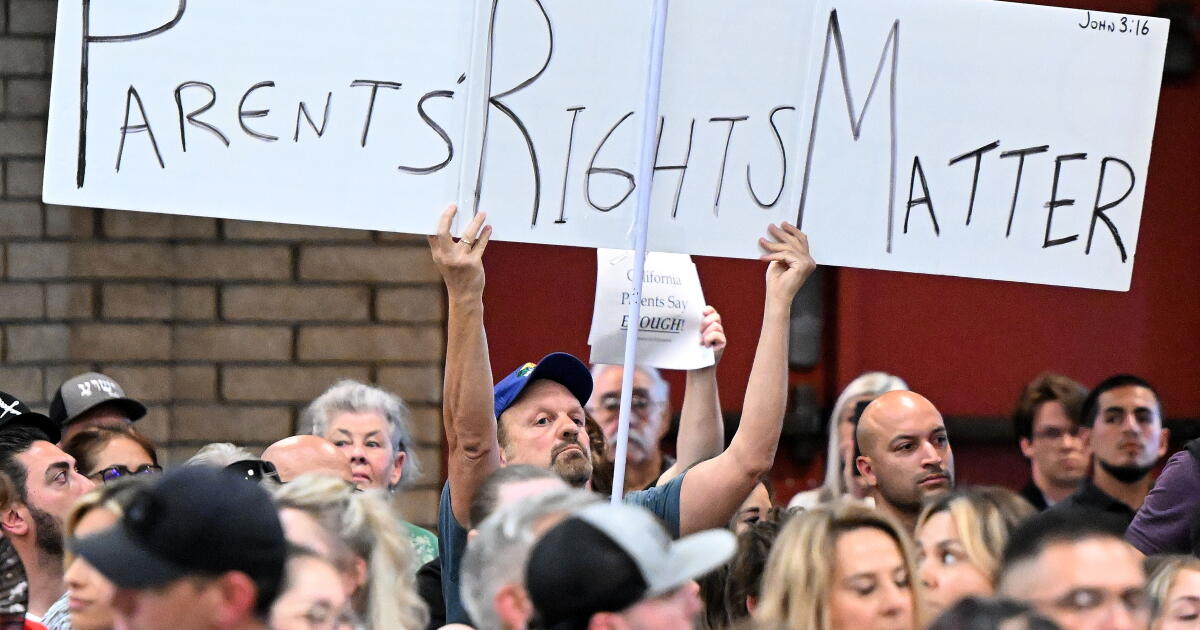
Schools left wondering how to proceed after ruling on transitioning students

The Supreme Court broke new ground this month when it ruled the Constitution forbids school policies in California that prevent parents from being told about their child’s gender transition at school.

But the reach of this new parental right remains unclear.

Does it mean all parents have a right to be informed if their child is using a new name and pronouns at school?

Or is the right limited to parents who inquire and object to being “shut out of participation in decisions involving their children’s mental health,” as the high court said in Mirabelli vs. Bonta.

Both sides in this legal battle accuse the other of creating confusion and uncertainty. And that dispute has not subsided.

UC Davis law professor Aaron Tang says understanding the Supreme Court’s order calls for a close reading of the statewide injunction handed down by U.S. District Judge Roger Benitez in San Diego.

That order prohibits school employees from “misleading” or “lying” to parents. It did not say school officials and teachers had a duty to contact parents whenever they saw that a student changed their appearance or used a new name, he said.

By clearing this order to take effect, the Supreme Court’s decision “means that schools must tell parents the truth about their child’s gender presentation at school if the parents request that information,” Tang said.

“But the initial burden is on the parents. This is not a rule that schools have an affirmative obligation to inform any and all parents if their child is presenting as a different gender,” he said.

The high court’s 6-3 order also indicated the reach of the judge’s injunction was limited.

It “does not provide relief for all the parents of California public school students, but only those parents who object to the challenged policies or seek religious injunctions.”

Religious conservatives who sued say they seek to end “secret transition” policies that encourage students to adopt a new gender identity without their parents knowing about the change.

The lawsuit challenging California’s “parental exclusion” policies was first filed by two teachers in Escondido.

Peter Breen, an attorney for the Thomas More Society, said many of the parents in Escondido “had no clue” their children were undergoing a gender transition at school.

“We need to activate parents,” he said.

Ruling for them, Benitez said the state’s “parental exclusion policies are designed to create a zone of secrecy around a school student who expresses gender incongruity.”

His injunction also said schools must notify their employees that “parents and guardians have a federal constitutional right to be informed if their public school child expresses gender incongruence.”

The Supreme Court’s order cited a dramatic example of nondisclosure.

Two parents who joined the suit had gone to parent-teacher meetings and learned only after their eighth-grade daughter attempted suicide that she had been presenting as a boy at school and suffered from gender dysphoria.

John Bursch, an attorney for Alliance Defending Freedom, argues the Supreme Court’s opinion goes further to empower parents.

“Fairly read, the Mirabelli opinion creates an affirmative obligation on school officials to disclose,” he said. “It’s consistent with the way [the court] describes the parental right: ‘the right not to be shut out of participation in decisions regarding their children’s mental health.’ School officials’ silence (rather than lying) is not notice to and is shutting out parents.”

“All that said, the California attorney general is obviously not getting that message,” Bursch said.

He said the Supreme Court needs to go beyond an emergency order and fully decide a case that squarely presents the issue of parents rights.

“School officials should not be socially transitioning children without parental notice and consent. Period,” he said.

He filed an appeal petition with the Supreme Court in a case from Massachusetts that dissenting Justice Elena Kagan described as a “carbon copy” of the California dispute.

It takes only four votes to grant review of a case, but since November, the justices have repeatedly considered the case of Foote vs. Ludlow and taken no action.

The case is set to be considered again on Friday in the court’s private conference.

Meanwhile, California Atty. Gen. Rob Bonta went back to the 9th Circuit Court of Appeals seeking a clarification to limit the potential sweep of Benitez’s order.

He objected to the part of the judge’s order that said schools must post a notice that “parents and guardians have a federal constitutional right to be informed if their public school student child expresses gender incongruence.”

Bonta said that goes beyond what the Supreme Court approved.

This “could be understood to suggest that public school officials have an affirmative constitutional duty to inform parents whenever they observe a student’s expression of ‘gender incongruence,’ effectively imposing a mandatory ‘see something, say something’ obligation in all circumstances,” he said.

But the 9th Circuit said it would not act until he first presented this request to Benitez.

Meanwhile, transgender rights advocates say the voices and the views of students have been ignored.

“This case has been about states’ and parents’ rights but students have been left out of the conversation. Their voices have not been heard at all,” said Andrew Ortiz, an attorney for the Transgender Law Center. “School should be a place where young people can feel safe and confident they can confide in a teacher.”

“We’re hearing about fear and anxiety,” said Jorge Reyes Salinas, communications director for Equality California, the nation’s largest statewide LGBTQ+ civil rights organization.

“There are students who are unable to speak with their parents. Teachers can encourage them to have a conversation with their parents. But this will weaken the trust they have in their teachers,” he said.

In the past, the court had been wary of reaching into the public schools to decide on education policies and the curriculum, but it took a significant step in that direction last year.

In a Maryland case, the court said religious parents had a right to “opt out” their young children from classes that read “LGBTQ+-inclusive” storybooks.

The 1st Amendment protects the “free exercise of religion” and “government schools … may not place unconstitutional burdens on religious exercise,” wrote Justice Samuel A. Alito, the lone conservative who attended public schools.

The same 6-3 majority cited that precedent to block California school policies that protect the privacy of students and “conceal” information from inquiring parents if the student does not consent.

But the California case went beyond the religious-rights issue in the Maryland “opt out” case because it included a “subclass of parents” who objected without citing religion as the reason.

The justices ruled for them as a matter of parents’ rights.

“Parents — not the state — have primary authority with respect to the upbringing and education of children,” the court said.

That simple assertion touches on a sensitive issue for both the conservative and liberal wings of the court. It rests on the 14th Amendment’s clause that says no state may “deprive any person of life, liberty or property without due process of law.”

In the past, a liberal majority held that the protection for “liberty” included rights to contraceptives, abortion and same-sex marriages.

Conservatives fiercely objected to what was dubbed “substantive due process.”

In the California case, Kagan, speaking for the liberals in dissent, tweaked the conservatives for recognizing a new constitutional right without saying where it came from.

“Anyone remotely familiar with recent debates in constitutional law will understand why: Substantive due process has not been of late in the good graces of this Court — and especially of the Members of today’s majority,” she wrote.

She noted that when the court struck down the right to abortion in the Dobbs case, Justice Clarence Thomas said he would go further and strike down all the rights that rest on “substantive due process.”

In response to Kagan, Justice Amy Coney Barrett filed a concurring opinion that staked out a moderate conservative position.

Since 1997, the court has said it would stand behind rights that were “deeply rooted in the nation’s history and tradition,” she wrote. That includes “a parent’s right to raise her child … and the right to participate in significant decisions about her child’s mental health.”

She said California’s “non-disclosure policy” is unconstitutional and violates the rights of parent because it applies “even if parents expressly ask for information about their child’s gender identification,” she wrote.

Chief Justice John G. Roberts and Justice Brett M. Kavanaugh signed on to her opinion.

While Kagan dissented on procedural grounds, she did not disagree with bottom-line outcome.

“California’s policy, in depriving all parents of information critical to their children’s health and well-being, could have crossed the constitutional line,” she said. “And that would entitle the parents, at the end of the day, to relief.”

Source link

Schools rugby union: Northampton School for Boys – the state school at the top of English rugby

NSB are also an official partner school with Northampton Saints.

This year, they provided the most players from any school to Saints’ under-18s.

Four players will also be offered first-team academy contracts this year.

“The boys have to manage their time really well,” says assistant first team coach Adam Baker.

“When we get into sixth form and into that first-team setting, we will try and put them through a programme that matches up with an academy programme, so if they go into that pathway, they are fully aware and prepped as to what that day-to-day life looks like.”

However, NSB aren’t the only state school making an impact.

They beat Campion School from Essex in the Continental Tyres School Cup semi-finals.

It was a compelling contest which went down to the wire, with two state schools playing high-octane rugby in front of a passionate crowd of over a thousand people.

The Rugby Football Union has a network of rugby managers to try to embed the game in state schools.

Twenty-two of the best state schools compete in the ACE (Academy, Colleges and Education) League. England internationals George Martin, Joe Heyes and Harry Randall all came through that route.

The programme is designed to support players who may not attend traditional rugby-playing schools, providing daily coaching, competitive fixtures, and opportunities to train alongside academy players.

Northampton Saints have two state school partnerships which play in the ACE League: Moulton College in Northampton and Sigma Sixth Colchester, located at Philip Morant School and College.

“Growing state school rugby is a one step at a time process,” said Beaumont.

“This is over 10 years of hard work. But it can be done.

“My advice to other schools is find a way to get more numbers in training, organise a game.

“Put a tournament on, you don’t need posts. Make it a habit. Get kids playing.

“Rugby needs every state school to push and develop rugby. This is the perfect time. State school rugby could be really special.”

One of NSB’s biggest stars is their 18-year-old captain Jack Lewis, who plays in the back row.

He has been at NSB for the past two years and in the Saints academy since he was 14.

This year he made his debut for Northampton Saints. Now he’s preparing to lead his school for the final time in a Twickenham final.

“NSB taught me how to act, it’s the closest thing to a professional environment,” he said.

“A lot of people work hard behind the scenes, they sacrifice their time. It’s given me so much as a player and a student.

“I’ve never played at Twickenham, it would be a great achievement if we could lift the cup there. We want to show what NSB stands for.”

Source link