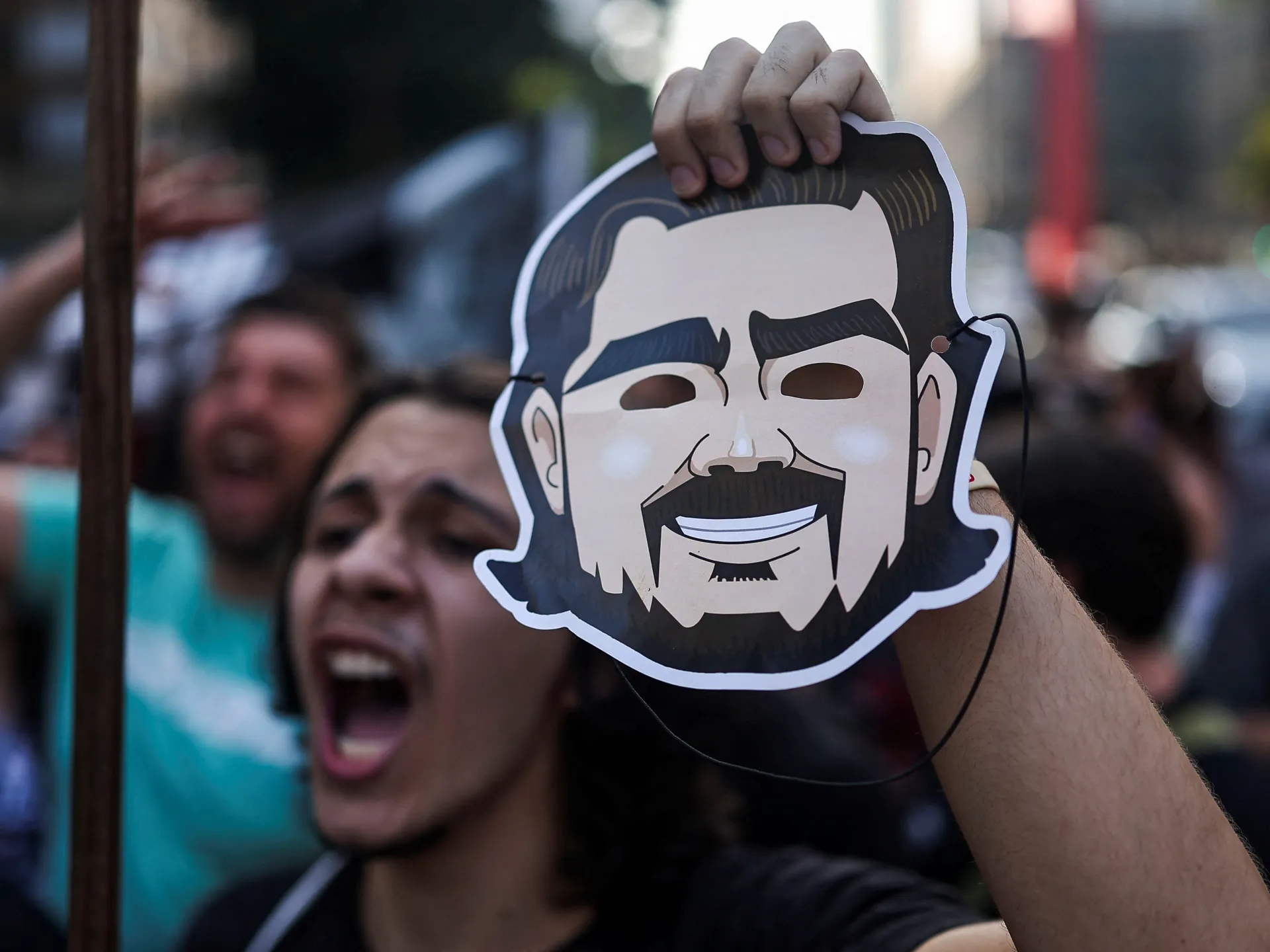
President Javier Milei’s role in cryptocurrency launch does not translate into a fraudulent scheme, judge says.
Published On 24 Oct 202624 Oct 2026
An Argentinian federal judge has dropped a criminal investigation into President Javier Milei and his sister Karina Milei over the collapse of a cryptocurrency he promoted online.
Judge Marcelo Martinez de Giorgi issued the decision on Friday, according to court records, ending an inquiry into Milei’s role in the launch of the $Libra token, which crashed after a brief rally.
Recommended Stories
list of 3 itemsend of list
“The reported events do not constitute a criminal offence,” the judge said in a ruling. He also wrote that investor losses and the rise and fall in the currency’s price were insufficient to establish fraud.
In his ruling, Martinez de Giorgi said that Milei’s institutional standing could have given the launch “greater impact” when he posted about it, but that does not translate into a fraudulent scheme.
Javier Milei recommended the little-known meme coin in a post on X in February 2025. He later deleted the post and denied any link to the cryptocurrency, whose value soon plunged.
The judge also dismissed an investigation into US businessman Hayden Davis, who described himself as a “launch adviser” for the token. Davis has acknowledged that he held close to $100m after the crash and denies any wrongdoing.
“For the first time in history, a President of the Nation was investigated with complete freedom, resulting in absolute proof of his innocence,” read a post shared on X by the official presidential office.
“The question that remains is this: Who will take responsibility for having wasted Argentine taxpayers’ money and the President of the Nation’s time in a failed attempt at an institutional coup?”
Milei’s friendship with Trump
Milei is one of US President Donald Trump’s closest allies. Trump firmly backed him a year ago and has called him his “favourite president”.
Trump made clear the support hinged on a victory for Milei’s party.
“I’m with this man because his philosophy is correct,” he said ahead of a White House lunch with the Argentinian leader last year. “If he wins, we’re staying with him. And if he doesn’t win, we’re gone.”
Earlier this month, Milei urged Trump to emerge stronger from the US midterm elections, saying the vote mattered for the West as a whole.
Austerity at home
Since taking office in 2023, Milei has laid off thousands of state employees, shut ministries, cut subsidies and reduced government-funded programmes. The measures were meant to fight high inflation, which has fallen to about 2 percent a month.
Milei says his plan is working, claiming that Argentina has grown for 27 consecutive months and is expanding at four times its historical rate.
When the coin crashed, Milei said he had acted “in good faith” and accused his political rivals of trying to exploit the situation.
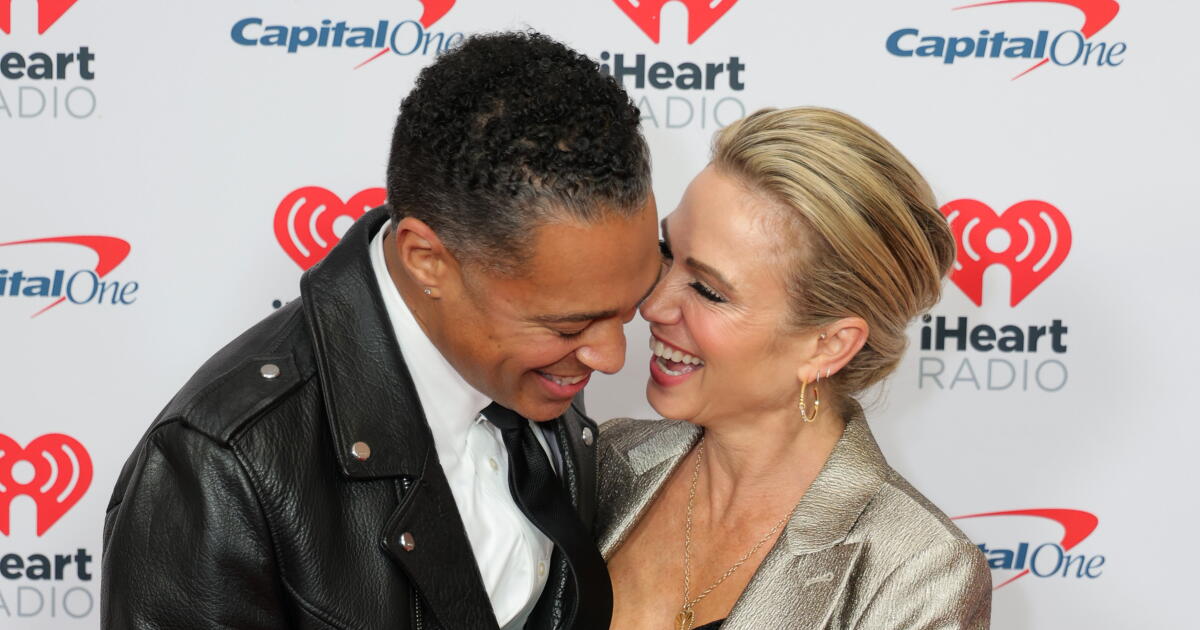
The former “Good Morning America” anchors tied the knot in a private Arkansas ceremony back in September. The marriage license, obtained by People, confirmed the Washington County nuptials.
Last October, the couple announced their engagement on the “Amy & T.J.” podcast. “We’re actually surprised we’re just now talking about it,” Holmes said. “We wanted to let you all know before anybody was able to. We learned that lesson I guess in the past about our relationship: We want to be the first to talk about it.”
The lesson Holmes is referencing is the couple’s big relationship reveal, which happened while they were both anchors on “GMA3” and married to other people.
In 2022, the paparazzi leaked photos of the two holding hands, nestled into each other at a New York bar, and Holmes patting Robach on the rear. Chaos broke loose in the media and behind the scenes at ABC. Holmes’ then-wife, attorney Marilee Fiebig, filed for divorce shortly thereafter, followed by the divorce of Robach and her second husband, “Melrose Place” actor Andrew Shue, months later.
The same month that news of the scandal broke, ABC parted ways with the anchors, and they deactivated their social media accounts. A year later, the broadcasting duo embraced their coupledom, naysayers be damned, and teamed up with iHeartPodcasts to launch “Amy & T.J.,” marketed as “informative, entertaining, and above all, authentic; it will mark the first time Robach and Holmes speak publicly since their own names became a part of the headlines.”
In the debut episode, Robach and Holmes detailed how the scandal unfolded and insisted they’d been quietly separated from their spouses before their love affair began. Both said that the scandal dominating the headlines and the loss of their dream jobs sent them into the depths of despair.
“But we have had each other through it all,” Robach said. “It has been the most beautiful relationship I have had in my life.”
You’re reading the Essential California newsletter
L.A. Times reporters guide you through the most important news, features and recommendations of the morning.
By continuing, you agree to our Terms of Service, which include arbitration and a class action waiver. You agree that we and our third-party vendors may collect and use your information, including through cookies, pixels and similar technologies, for the purposes set forth in our Privacy Policy such as personalizing your experience and ads.
Sunday morning, Oct. 9, 2022, around 8 a.m., I was about to take a shower when I decided to check my cellphone one more time. Thank God I did: If I hadn’t, I would’ve been half an hour late on assisting in one of the most explosive stories ever to hit L.A. politics.
Via Slack, Times assistant managing editor Steve Clow asked if I could serve as a second set of ears on audio that my colleagues had unearthed involving four of the most powerful L.A. políticos at the time: City Council President Nury Martinez, Councilmembers Gil Cedillo and Kevin de León, and L.A. County Federation of Labor President Ron Herrera. I was still in my birthday suit (sorry for the visual, gentle readers, but I’m sworn to report the facts on this job) when I played the snippet Clow shared: Martinez describing the Black son of then-Councilmember Mike Bonin as “su negrito” — his darky.
I put on my shorts and told my wife I wouldn’t be helping at her restaurant that day.
Clow sent me more clips over the next hour, each crasser than the other — I remember gasping audibly at the part when the four were laughing as Martinez referred to Oaxacans as “ugly.” That morning, my colleagues Benjamin Oreskes, Dakota Smith, Julia Wick and David Zahniser published their first story on the fiasco, which turned out to be a secretly recorded conversation from a year earlier that someone had posted on Reddit just the day before.
The scandal quickly became a national sensation, with even then-President Joe Biden weighing in. L.A. wretched in collective disgust and demanded action, which definitely came: Martinez and Herrera quickly resigned, while Cedillo — who had already lost his reelection bid — would stay on until his bitter end, and De León wouldn’t leave until challenger Ysabel Jurado destroyed him in his 2024 reelection bid. The electoral repercussions of the audio leak can still be felt four years later in this election, as Nithya Raman stages a strong challenge against incumbent Karen Bass — a sentence no one would’ve believed in the fall of 2022, when Bass was on the cusp of winning her first term, and Raman was the lone democratic socialist on the council.
I would’ve figured the anniversary of something as titanic as all of the above would’ve sparked more commemorations than just my columna this week. Nope! L.A. has moved on to the point that Cedillo wasn’t booted from a group photo that included current District 9 council candidate Jose Ugarte, former Assemblymember Wendy Carrillo, former Mayor Antonio Villaraigosa and current Assemblymember Mark Gonzalez — because even Chicanosauruses can survive a political asteroid, I guess?
Having political leaders spew racist, homophobic nonsense now seems like the good ol’ days in an era where infernos destroy or stink up swaths of L.A., immigration agents terrorize immigrants from Westwood to the Eastside, and a spokesperson for a sitting American president denies that the commander in chief suggested Iran bomb the City of Angels, even though he said it during a campaign rally.
I shouldn’t really be surprised, I guess: L.A. infamously loves to forget its own history. But I would urge all you readers to read the great, Pulitzer Prize-winning coverage my colleagues did in the aftermath of the audio leak scandal, because it captured the city at its worst — but also its finest as residents fought back and demanded politicians do better.
Four years later, we can only hope this upcoming election shows more of the same.
The week’s biggest stories
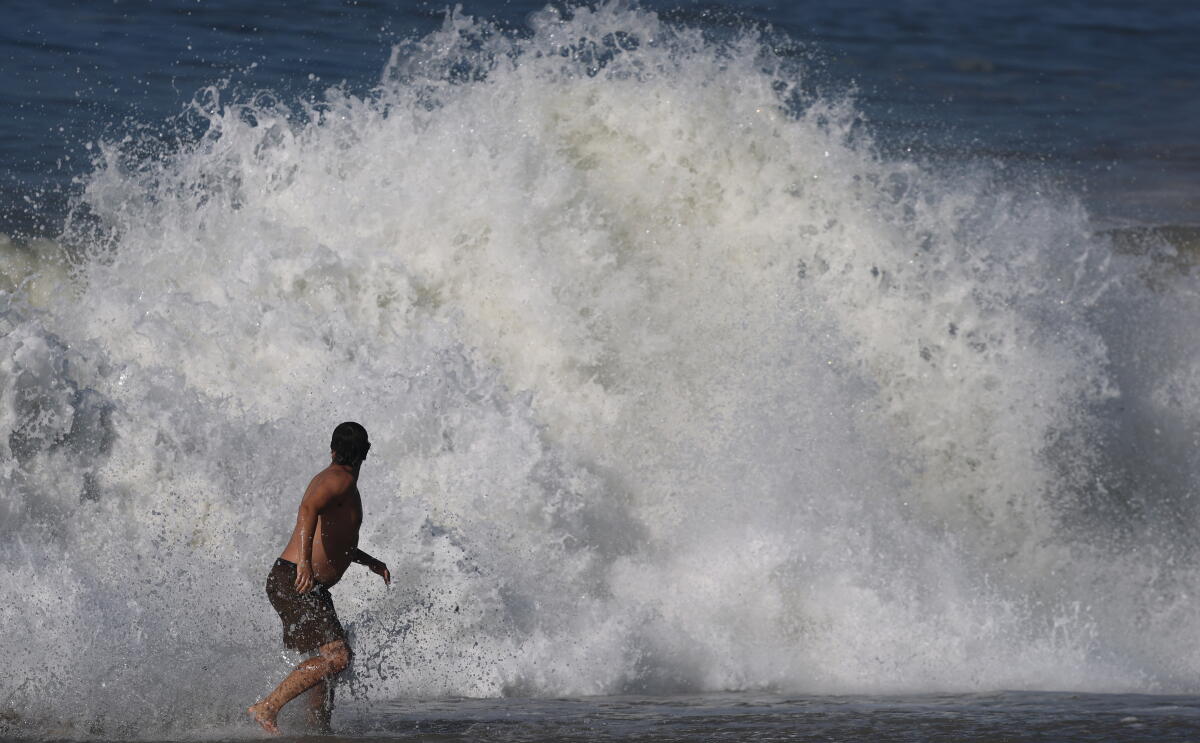
Domenic Hix looks back as a large wave crashes on the shoreline in Laguna Beach on Friday.
(Allen J. Schaben / Los Angeles Times)
Tropical Storm Rachel in SoCal
California real estate
California crime
In memoriam
More news
Editor’s pick
More picks
Things to do
(Illustrations by Lindsey Made This; photograph by Charles Phoenix)
Today’s recipe
(Rebecca Peloquin / For The Times)
This recipe makes apple butter that is less sweet than most; use more sugar if you like, but don’t use less or there won’t be enough to properly preserve the pureed apples.
Have a great day, from the Essential California team
Jack Dolan, investigative reporter Hugo Martín, assistant editor, fast break desk Kevinisha Walker, multiplatform editor Andrew Campa, weekend writer Karim Doumar, head of newsletters
If I ever need to humble myself — if my head inflates with grand visions of becoming the next Steve Lopez or Bill Plaschke — I pull up the transcript of the secret recording that upended Los Angeles politics after The Times broke the story exactly four years ago.
It’s like a modern-day version of “Ozymandias,” except far more vulgar, nowhere near as poetic and a better warning against hubris than anything Shelley could have penned.
“The thing for us is to exercise our power,” said then-City Councilmember Gil Cedillo, about halfway through an hourlong conversation he was having with three of the city’s most powerful political figures.
Oh, did they ever — and nowhere near the way they intended.
Nury Martinez and Ron Herrera, the president of the City Council and head of the Los Angeles County Federation of Labor, respectively, quickly resigned for their roles in the racist, homophobic drivel on the recording. Cedillo — who was finishing out his term — and Councilmember Kevin de León refused to step down, besmirching their well-earned reputations as progressive lions.
The L.A. they sought to create — where Latinos ascend at the expense of the Black community, and anyone who gets in the way is crushed — never came to be. And the recording that exposed their machinations ultimately destroyed the type of ethnic politicking that made the careers of too many self-serving power grabbers, including this quartet.
The transcript of their back-and-forth now reads as prophecy — and we’re far better for it.
Much of the discussion, which happened in October 2021 at the headquarters of the L.A. County Federation of Labor, was devoted to whining that L.A.’s Latino-majority council districts, and some cities elsewhere in the county, were represented by Black leaders instead of Latinos, even as Latino residents far outnumbered Black ones.
“F—, the way I see it, all of the seats are Latino,” said Herrera, who hailed the rise of a “little Latino caucus of our … own” that he felt should reign permanently.
He and the others predicted a future in which vengeful Black politicians would try to sabotage future Latino leaders on their way out of office, creating “poor Latino districts with nothing,” as Martinez put it.
She was referring to redistricting proposals that would chop off assets like the Coliseum and Exposition Park from South L.A.’s District 9 — the most Latino district in the city, represented by a Black council member, Curren Price.
“So they f— a future Latino for CD 9,” De León whined. “That’s how arrogant, just how arrogant it is.”
That’s not what ended up happening.
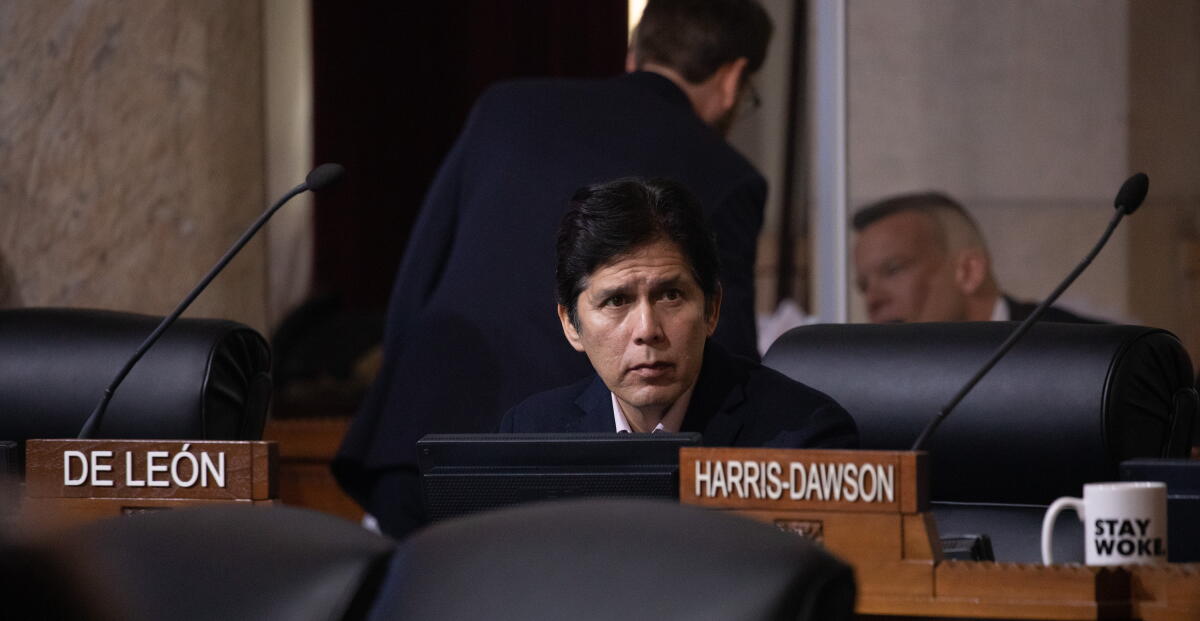
Los Angeles City Councilmember Kevin de León at a council meeting in December 2022 after a two-month absence following his role in that year’s audio leak scandal.
(Myung J. Chun / Los Angeles Times)
District 9 didn’t lose any assets. Black leaders saw the writing on the wall and didn’t run a serious Black candidate to replace the termed-out Price this year. That created space for two Latinos — Estuardo Mazariegos and Jose Ugarte — to make it to the general election. No matter which candidate wins in November, the City Council will have fewer than three Black members for the first time in 63 years.
Both Mazariegos and Ugarte say that the anti-Black scheming of the audio leak villains inspired them to run campaigns focusing on Black and Latino residents as one constituency, reflecting how life is actually lived in South L.A., not how Latinos from elsewhere in the city imagine it to be.
Mazariegos attended the first City Council meeting after The Times dropped the audio leak bombshell in October 2022. He remembers Cedillo peeking at the angry audience and temporarily returning to the council’s back room.
“No community should have to lose power for another to gain it,” said Mazariegos, who would become the first Central American immigrant to serve on the council if he were to win. “Our power grows when we build it together.”
Ugarte, formerly one of Price’s top aides, agreed. He argued that the best way to lead in South L.A. as a Latino council member is “with respect for those who came before us, the humility to listen to those doing the work today, and the understanding that District 9 is strongest when [Black and Latino residents] move forward together.”
Born in Oaxaca, Ugarte would become L.A.’s first Indigenous council member if he wins. That would be a rich coda to the audio leak, considering that Oaxacans received some of the nastiest insults. Martinez described them as “ little short dark people” who were feos — ugly. Cedillo joked that they were “little ones,” while Herrera cracked that they were “indios.”
Who’s laughing now?
The Feos Four also spent time kvetching about Nithya Raman, who was finishing her first year on the council. In 2020, she had upset an incumbent to become the first democratic socialist council member.
At the time of the recording, rivals were trying to diminish Raman’s power by drawing boundaries that would put her district “in the blender and chop [it] up, left and right,” as De León described it.
“She’s not our ally,” Cedillo said. “She’s not going to help us. Her district is not a district we can count on.”
Give credit to Cedillo and his pendejo pals: They were already seeing Raman and other democratic socialists as an emerging force, even while downplaying the DSA’s chances. De León said that Raman’s politics were “about just her as an individual.” Herrera dismissed Hugo Soto-Martínez, then a no-name union organizer aiming to unseat Councilmember Mitch O’Farrell, as a “kid.” Nury Martinez blithely mispronounced Eunisses Hernandez’s name while cackling about the first-time candidate’s challenge to Cedillo.
If Cedillo and De León weren’t so convinced of their own political immortality, they could have helped check the DSA’s rise that has so vexed L.A.’s liberal leaders. Instead, Hernandez beat Cedillo in a shocking upset in 2022, while Soto-Martínez won in the fall. And fellow democratic socialist Ysabel Jurado took out De León in 2024. Those triumphs paved the path for DSA-LA-backed candidate Marissa Roy to make a strong run for city attorney this year. Mazariegos is also endorsed by DSA-LA, which is backing Raman for mayor against incumbent Karen Bass.
Then-Councilmember Gil Cedillo at the Los Angeles City Council meeting on Oct. 11, 2022, two days after the release of explosive audio involving him led to protesters demanding his resignation.
(Gary Coronado / Los Angeles Times)
The group should send Cedillo and De León bouquets of red roses as gracias for assisting their ascendancy. All of us owe the foursome a thanks for hastening the demise of the old Latino political machines that birthed them and kept the city stuck in tribalism for too long.
Now, Latino politicians must run on their bona fides for all Angelenos, instead of just their latinidad. Soto-Martínez and Hernandez won reelection outright in the June primary because their constituents appreciated their sewer socialism approach, focusing on quality of life issues instead of ideological revolution. Meanwhile, Chicanosauruses are wheezing with diminished power as they urge Latinos to back Bass. The message doesn’t seem to be landing: A recent Berkeley IGS/Times poll found that 45% of Latino voters favored Raman to Bass’ 21%, with 34% undecided.
Gone are the days when Latino voters blindly believed Latino leaders. Why bother, after Martinez and her crew proved the folly of ethnic politics?
Near the start of the recording, Martinez complained that voters and the media always seemed to forgive Black politicians caught up in scandal, while Latinos didn’t get the same treatment.
“They’re never done,” she complained. “They never close a chapter on us.”
L.A. did close the chapter. Now, the Feos Four’s only legacy is “that colossal wreck” of their conversation, to quote the finale of “Ozymandias,” left to rot forever.
Tonda Eckert let off with fine and reprimand but avoids ban and will continue in his role with the club.
Published On 8 Oct 20268 Oct 2026
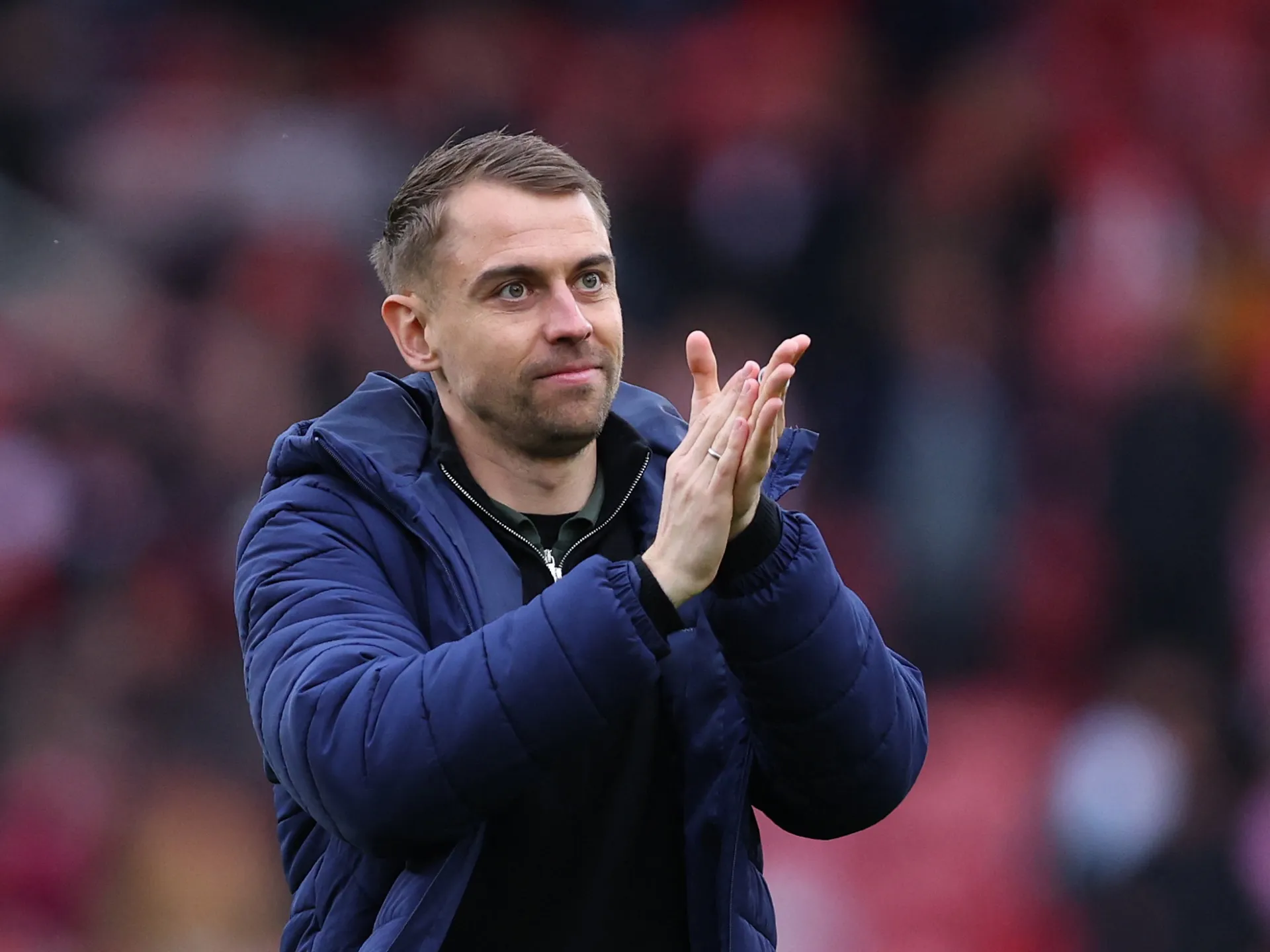
Southampton boss Tonda Eckert has escaped major punishment for his role in the so-called “spygate” scandal after the English Football Association (FA) announced a suspended ban.
Eckert was fined 28,000 British pounds ($37,000) and given a reprimand but avoided a lengthy ban in the announcement on Wednesday, and he is free to continue in his role at the English Championship club.
The Saints were kicked out of last season’s Championship playoff final and were docked four points in the current campaign after admitting to three breaches of English Football League (EFL) regulations following being caught snooping on semifinal opponents Middlesbrough and two other teams.
An EFL independent disciplinary commission ruled in May that Eckert had “specifically authorised” the spying, throwing his future at the English second-tier club into doubt.
The 33-year-old accepted full responsibility and was charged by the FA with misconduct.
The German coach attended an FA hearing at the start of the current international break. The outcome means he can continue in his role against rivals Portsmouth on Sunday.
“Tonda Eckert subsequently admitted the charges, and an independent regulatory commission imposed a six-week suspension from all football and football-related activity, which is suspended until the end of the 2027-28 season, a £28,000 fine and a reprimand following a hearing,” the FA said in a statement on Wednesday.
“The suspended sanction will come into effect in the event he is found to have committed a breach of rules or regulations by requesting, authorising, taking, or using information from any observation of the training of another club, in whatever guise that observation may take.”
Southampton said in a statement that this brings a “regrettable period of our history to a conclusion”.
The club, which sits 13th in the Championship, said that “measures have been put in place to ensure that such errors in judgement never happen again at our club”.
Southampton owner Dragan Solak said, “I’m pleased that the independent panel has come to a decision and that we have an outcome.
“We have already suffered enough, and we appreciate the panel’s recognition of that.
“We are confident the manager has learned from this matter, and a suspended sentence allows him to continue in his role.”
Eckert was appointed permanent Southampton boss in December 2025, leading the club to fourth spot in the Championship table after a poor start to the season.
One factor in the widespread disillusionment has been the Banco Master scandal. The financial imbroglio has delivered a black eye to both ends of Brazil’s political spectrum.
A range of business leaders, political figures, regulators and judges have been swept up in the scandal.
A mid-sized lender, Banco Master grew aggressively over the last decade by selling high-yield deposit certificates. Some of those certificates offered returns of up to 140 percent relative to Brazil’s benchmark interbank rate.
But Banco Master did not have the assets needed to sustain that output.
It lacked the money to pay back its risky loans, and what assets it did have were diverted to shell accounts, according to prosecutors.
Brazil’s Central Bank ultimately liquidated Banco Master in 2025, as the lender faced a major funding squeeze.
Its owner, Daniel Vorcaro, was subsequently arrested, accused of an array of financial crimes, including money laundering and fraud.
The collapse of Banco Master triggered a nearly $7.7bn payout from Brazil’s Credit Guarantee Fund, the largest disbursement in the nonprofit insurance’s history.
Investigators have suggested that Vorcaro protected his fraud scheme by cultivating influence among power brokers among Brazil’s elite.
Among those implicated in the scandal is Senator Flavio Bolsonaro, the presidential candidate.
Last month, the Supreme Court unsealed documents showing he is under investigation for alleged corruption and money laundering in connection with Vorcaro.
Audio recordings have also surfaced, appearing to show Bolsonaro soliciting the disgraced bank leader for millions in funding. The money was slated as financing for Dark Horse, a film about his imprisoned father, Jair Bolsonaro.
Flavio Bolsonaro has denied any wrongdoing. He described the interaction as a private sponsorship opportunity, unrelated to the Banco Master scandal.
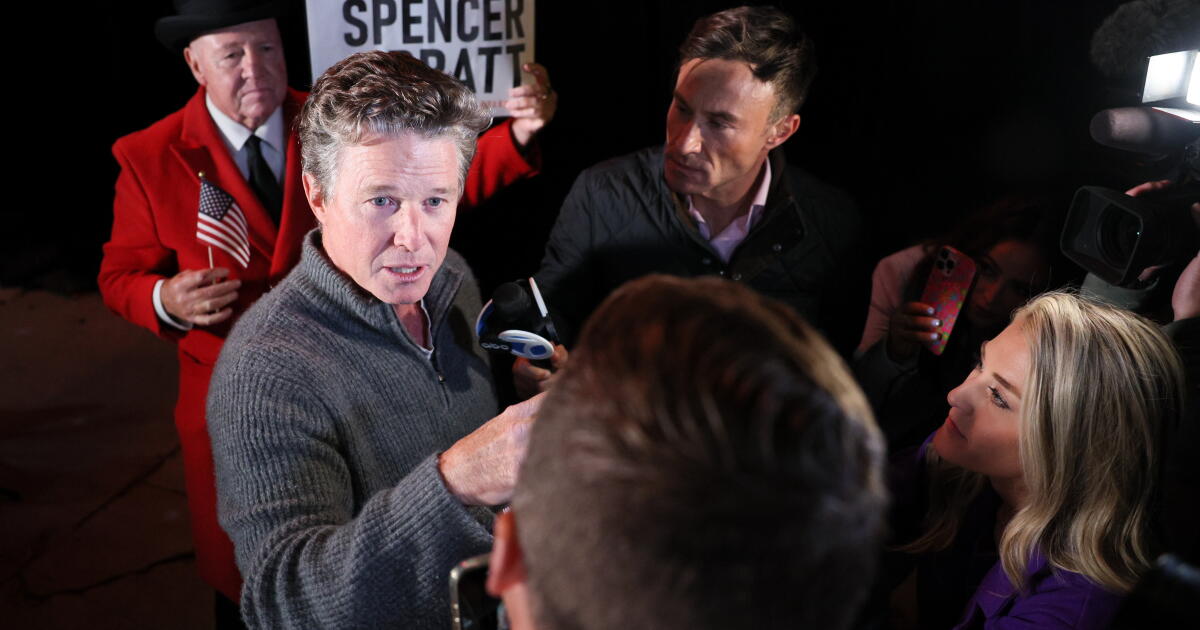
Former “Today” show host Billy Bush feel from grace a decade ago when a tape leaked of him giggling on a hot mic while then “Apprentice” star Donald Trump boasted about grabbing women.
This week it was announced that Bush was joining Fox News Media as a contributor covering pop culture, entertainment, and cultural issues.
Bush joins other right-leaning personalities who’ve rebuilt their careers at Fox following scandals elsewhere.
It’s not surprising that former “Today” host Billy Bush joined Fox News as a regular contributor this week. What is surprising is that it took so long.
Ten years have passed since Bush, cousin to former President George W. Bush, was caught on a hot mic giggling while then-“Apprentice” star Donald Trump boasted about grabbing women “by the pussy.” The “Access Hollywood” clip, filmed in 2005 when Bush hosted the entertainment news program, was leaked a month before the 2016 presidential election, meaning just about everyone in America saw it.
A disgraced Bush lost his job and reputation. Trump won the White House.
Once known for his boyish charm and impressive collection of cowboy boots, Bush spent a decade re-ingratiating himself to the public on the syndicated television news magazine “Extra,” a considerable step down from the “Today” show. He reported on Hollywood and celebrity culture before launching his own digital show and podcast more than a year ago.
Now he finally has gone where popular conservative public figures go following scandals, stumbles or mishaps that all but destroy their livelihoods: Fox News. Rupert Murdoch’s crown jewel has given a second chance to more than a few successful, right-leaning personalities who have been shamed by mainstream media or canceled by a public who doesn’t find sexual assault boasts particularly funny.
Jeanine Pirro’s political career was derailed in 2006 after tapped phone calls she had with former New York City Police Commissioner Bernard Kerik were revealed. She had been plotting to bug her then-husband’s yacht in an attempt to catch him in an affair. After the transcripts went public, she lost the race for state attorney general to Andrew Cuomo. The scandal marked the end of her political career in New York — but the start of her career as a Fox News contributor and host. She stayed with the network for two decades. Pirro left last year when Trump nominated her to serve as the U.S. attorney for the District of Columbia. She subsequently was confirmed by the Senate.
Pete Hegseth joined Fox News as a full-time host in 2017 after reportedly being forced out of leadership positions at two prominent veterans advocacy nonprofits, Veterans for Freedom and Concerned Veterans for America. Multiple disturbing accusations were made within the organizations about his sexual impropriety, financial misconduct and heavy drinking. Hegseth left Fox in 2024, when Trump announced him as the nominee for secretary of Defense. He subsequently was confirmed by the Senate.
The pipeline from scandal to Fox News to Capitol Hill was noted when Bush, now 52, made his debut Tuesday night on “Jesse Watters Primetime.” Host Watters joked that “Trump might hire you for the Cabinet” now that he had joined Fox News. Bush suggested a role for himself as White House press secretary. Watters countered that, saying, “Trump is expected to hire a woman.”
Bush joked that he has “female energy.”
The joke was tone deaf, even if Bush does deserve a second chance for his part as the dumb sidekick to Trump’s abhorrent comments during that “Access Hollywood” segment so long ago.
In a statement about his new role at the network, Fox said Bush would host “as a contributor, where he will appear across all platforms” The press release failed to mention his 2016 hot mic leak but managed to name-check Bush’s digital talk show and video podcast, “Hot Mics With Billy Bush.”
Bush may have dashed his chances of moving into Trump’s inner, or even outer, circle when on his “Hot Mics” show he said this of the president: “I had two relatives who served in that role and both had deep, deep, deep reverence for that office. The man that’s in there now has turned it into a bordello.”
He was taking issue with Trump’s ban on CNN, Politico and MS Now. The trio of news networks was denied access to the White House complex last week and had their press badges revoked after the president took issue with their coverage of him. In an unusual display of solidarity across the industry, more than 50 media organizations called for the immediate reversal of the ban. Bush praised the networks — including Fox — for their show of support.
How will Bush navigate his dislike for Trumpian policy at a news organization that’s devoted years of coverage to propping up Trump? By walking a fine line, apparently.
“I’m excited to join FOX News Media and its loyal audience to share my perspective on the people, ideas and moments shaping today’s culture … as well as the ones trying to undo it!” Bush said about his new job shaping culture.