Sanitation

Faecal waste pollutes drinking water in Mexico’s Yucatan, Greenpeace says | Environment News

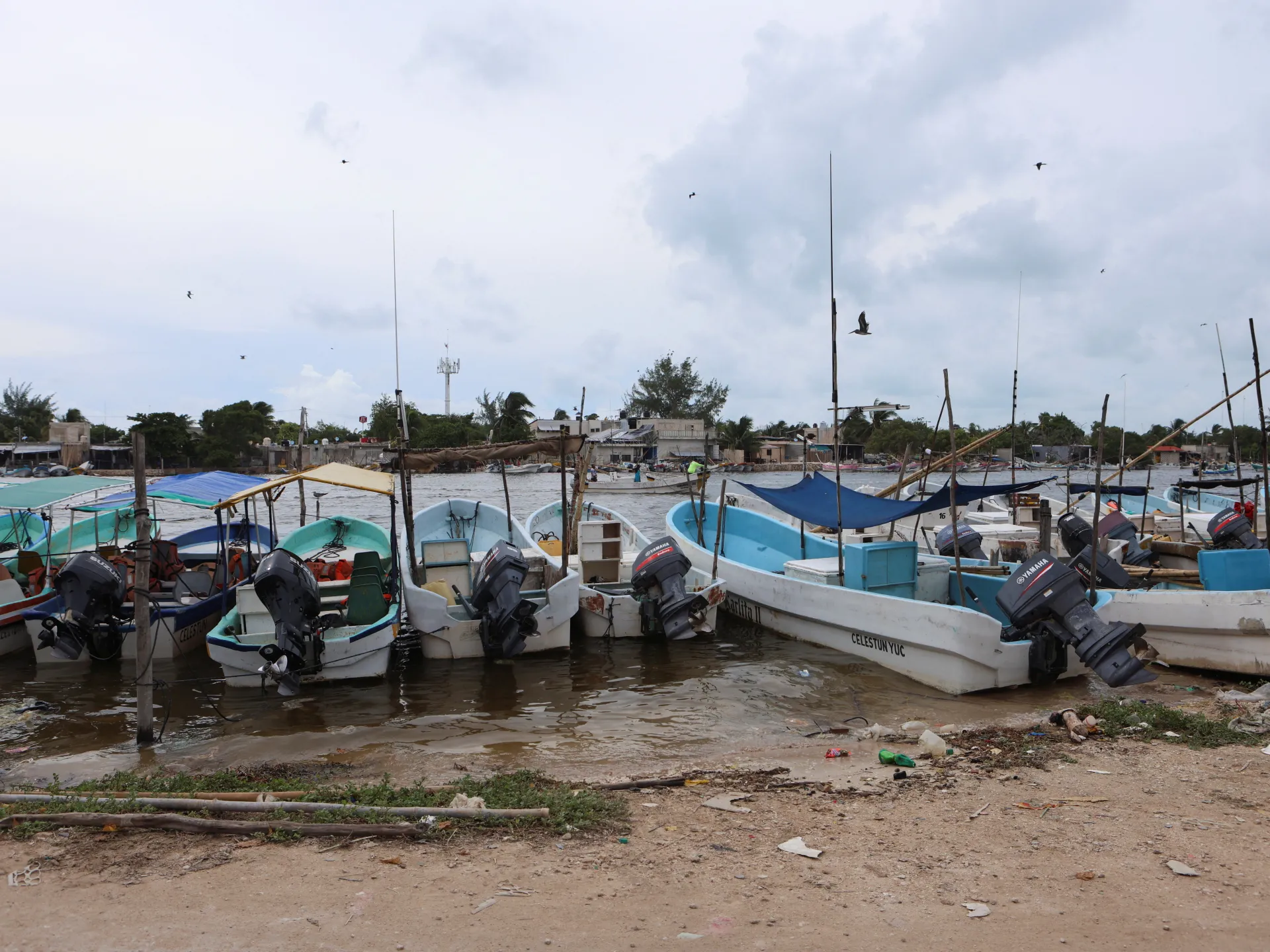
Faecal bacteria are contaminating water in wells and sinkholes in Mexico’s Yucatan state, which are a vital source of drinking water, according to a report by Greenpeace, a global environmental organisation.

The report, published on Tuesday, said nearby pig farms and municipal wastewater were likely sources of the pollution in the southeastern coastal state.

Recommended Stories

list of 3 itemsend of list

“A range of chemical and microbiological indicators reveal a complex mosaic of severe, localised organic pollution,” it said.

Greenpeace called for an immediate moratorium on new industrial livestock operations and farm expansions in the peninsular state, which was once home to the ancient Maya civilisation.

With no above-ground rivers, groundwater is the Yucatan’s only freshwater source, and the area’s porous limestone bedrock lets pollutants quickly seep into the aquifer.

Laboratory results

The global environmental watchdog group commissioned an independent laboratory to test water at 17 sites near the state capital, Merida, in August.

The sites included household and farm wells, community water points and cenotes, the natural sinkholes that dot the Yucatan Peninsula, which is one of Mexico’s most popular tourist destinations.

According to the report, every sample showed some degree of contamination likely linked to faecal waste, and several sites appeared heavily polluted. Total coliform bacteria reached the test’s upper limit in 16 of 17 samples, and faecal coliforms did so in 13.

However, the tests cannot show whether the waste came from people or animals, and leaking septic tanks and municipal sewage may also contribute to contamination.

Greenpeace said, however, that separate testing using Pig2Bac, a pig-specific DNA marker method, detected pig faecal matter in samples analysed at laboratories at Johns Hopkins University in the US and Mexico’s National Autonomous University (UNAM).

Greenpeace said the results raise “critical accountability questions” about nearby pig farms.

Maya communities joined Greenpeace in demanding action from environmental authorities over the contamination.

Industrial pig farms

A UN report published in July found that there are more than 500 industrial pig farms across Yucatan state with more than 50,000 animals, many located near the lands and territories of Indigenous Peoples.

Marcos Orellana, a former UN special rapporteur who authored the report, said waste and chemicals from industrial farms “find their way very quickly” into the water communities use for bathing, cooking and drinking. He said most farms lack required permits and that regional government initiatives “remain insufficient”.

“The contamination of the waters that have sustained Mayan culture for millennia is predominantly coming from the industrial operations of the growth of animals,” Orellana said.

But Antonio Zumarraga, vice president of the Yucatan Citizen Scientific Water Observatory, defended the local pork industry, saying the sector has invested in water treatment and supports conservation programmes. He blamed local authorities for their inaction.

“It’s an issue that, as long as it doesn’t carry political weight for the government, they won’t do anything about it,” Zumarraga said.

The Yucatan state government was not available for comment, while Mexico’s national water commission, CONAGUA, did not immediately respond to a request for comment. Merida’s Association of Pig Farmers also did not respond to a Reuters request for comment.
Source link

Kenya confirms eighth Ebola case amid widening regional outbreak | Ebola News

Kenyan health authorities say latest patient was likely exposed to the country’s first Ebola case.

Kenyan health authorities say an eighth Ebola case has been detected, bringing the total number of known infections in the East African nation to eight.

Director-General for Health Patrick Amoth told Kenya’s Citizen TV that of the 38 people tested on Sunday, one had returned a positive result.

Recommended Stories

list of 3 itemsend of list

“He is a 49-year-old man who is not a healthcare worker. He developed fever, headache and muscle pain,” he said.

Amoth said the man, who worked as a patient attendant cleaning utensils and linens, was likely exposed to Kenya’s first Ebola case, discovered earlier this month.

He developed symptoms on Saturday, was quarantined and tested for the virus, a Ministry of Health source said.

The ministry reported four new cases on Saturday, three of whom were health workers who treated the country’s first Ebola patient, a man who travelled from the Democratic Republic of the Congo (DRC) to Nairobi and died at a Nairobi hospital on October 5.

In a post on X, the ministry said the fourth person was related to the deceased patient.

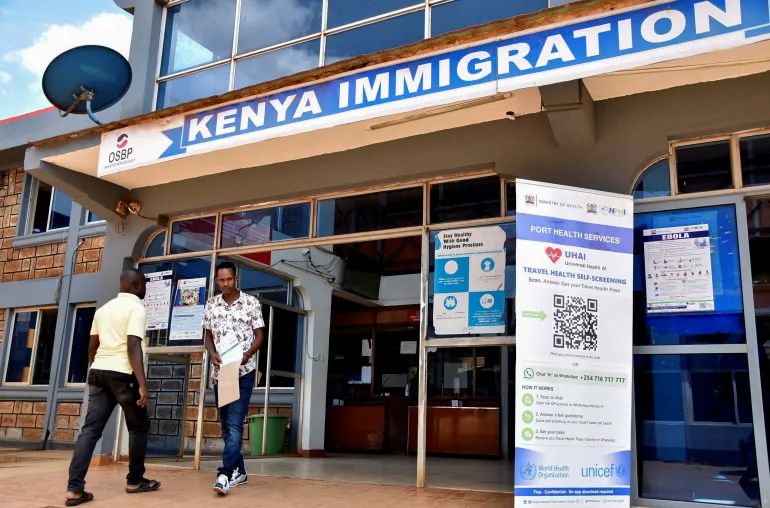
Travellers walk at the Kenya immigration services to access port health services at the Busia One Stop Border Post, crossing-point between Kenya and Uganda, after a man who had been living in the Democratic Republic of Congo travelled and died of a new Ebola outbreak involving the Bundibugyo species at the Nairobi Hospital, in Busia, Kenya October 8, 2026 [James Keyi/Reuters]
Travellers enter Kenya’s immigration services to access port health services at the Busia One Stop Border Post, a crossing point between Kenya and Uganda, in Busia, Kenya, on October 8, 2026 [James Keyi/Reuters]

Kenya has been on heightened alert, as the Ebola outbreak has spilled across the border from the DRC. The current outbreak is of the Bundibugyo strain of the virus, for which there is no vaccine or specific treatment.

The DRC has recorded at least 9,400 cases, including more than 4,500 deaths, in the deadliest outbreak in the country’s history, which started in May.

Ituri province in eastern DRC remains the disease’s epicentre, accounting for almost three quarters of confirmed cases, according to the government’s most recent data. It announced on Sunday that the virus has reached an eighth province, North Ubangi.

State-run news agency ACP reported on Sunday that authorities in North Kivu province, where the World Health Organization said substantial transmission continues, are introducing a one-week ban from Monday on people entering the province from Ituri in an effort to slow the spread.

Other measures set to be introduced include restrictions on passenger numbers in cars and on motorbikes and suspension of large public gatherings.

Neighbouring Uganda recorded 20 confirmed cases, including 15 imported from the DRC, and two deaths, before it was declared Ebola-free in August.

Source link

Cholera cases surge in Yemen as conflict intensifies, WHO says | Humanitarian Crises News

Yemen has reported 8,034 suspected cases and 27 deaths this year, with a quarter of cases from the last four weeks.

Suspected cholera cases in Yemen have tripled in the past three weeks, the World Health Organization (WHO) has warned, as civilians have fled renewed fighting and sought safety in unsanitary camps.

Ramped up combat, which has pushed more than 200,000 people to flee their homes, the WHO added in a report on Tuesday, driving suspected cases from 217 in the week of September 6-12 to 647 in the week of September 27 to October 3.

Recommended Stories

list of 3 itemsend of list

“Families fleeing conflict are now facing another threat from diseases that can be prevented and treated,” said Annette Heinzelmann, the UN agency’s emergency director for the region.

“Without urgent funding and unimpeded access to safe water, vaccination and essential health services, outbreaks could spread rapidly among already vulnerable communities.”

This year, the global health watchdog said, Yemen had reported 8,034 suspected cases and 27 deaths, with a quarter of the suspected cases occurring in the last four weeks.

Five governorates hosting large numbers of displaced people in the southwest – Abyan, Lahij, al-Dhalea, Taiz and Aden – account for 92 percent of reported cases, they reported. The disease has also reached remote displacement camps in Hadramout in the country’s east that are particularly difficult for medical teams to access.

Displaced Yemenis wait in the shade to receive medical treatment provided by Doctors Without Borders (MSF) at the Al-Kod Al-Othmani displacement camp in Sheikh Othman district, Aden, Yemen, Thursday, Oct. 8, 2026. (AP Photo/Abdulnasser Alseddik)
Displaced Yemenis wait to receive medical treatment provided by Doctors Without Borders (MSF) at the al-Kod al-Othmani displacement camp in Aden, Yemen, Thursday, October 8, 2026 [Abdulnasser Alseddik/AP]

Emergency response underfunded

Cholera has ebbed and flowed for years as the conflict in Yemen has continued. In 2024, the WHO warned that the country was facing the “highest burden” of a global cholera outbreak. In 2017, a wave of the disease infected hundreds of thousands and killed at least 2,000.

Yemen was already suffering one of the “world’s worst humanitarian crisis” and has seen an escalation of circumstances since fighting reignited between the Houthis – an armed group known as Ansar Allah (Arabic for Supporters of God), and the internationally recognised Yemeni government.

Cholera is an acute intestinal infection that spreads through food and water contaminated with the bacterium Vibrio cholerae, often from faeces. It causes severe diarrhoea, vomiting and muscle cramps.

Contracting the illness can be deadly when not treated with oral rehydration or antibiotics for more severe cases.

The Geneva-based WHO said it had only secured $3.78m of the $31m needed for its 90-day emergency response in Yemen.

The funding is intended to help expand disease surveillance in displacement sites, deploy rapid response teams, strengthen cholera treatment and improve infection prevention in health facilities and cholera treatment sites.

Source link
